

The PRISMA Statement for Reporting Systematic Reviews and Meta-Analyses of Studies That Evaluate Health Care Interventions: Explanation and Elaboration
Open accessThe DOI matches its Crossref record; 242 of the 251 references it cites were found in a registry or an index; 22 of the 138 sources its claims cite were checked for support.
Abstract
Systematic reviews and meta-analyses are essential to summarize evidence relating to efficacy and safety of health care interventions accurately and reliably. The clarity and transparency of these reports, however, is not optimal. Poor reporting of systematic reviews diminishes their value to clinicians, policy makers, and other users.Since the development of the QUOROM (QUality Of Reporting Of Meta-analysis) Statement--a reporting guideline published in 1999--there have been several conceptual, methodological, and practical advances regarding the conduct and reporting of systematic reviews and meta-analyses. Also, reviews of published systematic reviews have found that key information about these studies is often poorly reported. Realizing these issues, an international group that included experienced authors and methodologists developed PRISMA (Preferred Reporting Items for Systematic reviews and Meta-Analyses) as an evolution of the original QUOROM guideline for systematic reviews and meta-analyses of evaluations of health care interventions.The PRISMA Statement consists of a 27-item checklist and a four-phase flow diagram. The checklist includes items deemed essential for transparent reporting of a systematic review. In this Explanation and Elaboration document, we explain the meaning and rationale for each checklist item. For each item, we include an example of good reporting and, where possible, references to relevant empirical studies and methodological literature. The PRISMA Statement, this document, and the associated Web site (http://www.prisma-statement.org/) should be helpful resources to improve reporting of systematic reviews and meta-analyses.
Overview
CoChat Summary
TL;DR
The paper is an explanation-and-elaboration companion to the PRISMA Statement, aimed at improving how systematic reviews and meta-analyses are reported. It provides item-by-item guidance, examples, and rationale for transparent reporting, not a primary empirical study.
Key findings
- PRISMA was developed by a group of 29 review authors, methodologists, clinicians, medical editors, and consumers after a three-day meeting in 2005 and 11 revisions of the checklist, flow diagram, and explanatory paper.
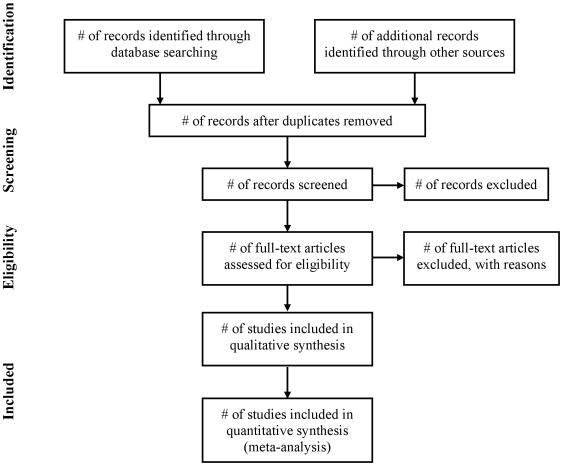
- The final guidance is a 27-item checklist plus a four-phase flow diagram for reporting systematic reviews and meta-analyses.
- The paper notes that systematic review reporting was often poor: for example, a survey found 50% of 300 authors did not mention “systematic review” or “meta-analysis” in the title or abstract, and in another survey, funding sources were not reported in 41% of reviews.
- It cites evidence that reporting deficiencies matter: in one review of antidepressant trials, meta-analysis of only published trials gave effect estimates 32% larger on average than analyses using all trials sent to the drug agency.
Methods
- This is a guideline/explanatory paper, not an original intervention or observational study.
- The authors describe the development process of PRISMA: consensus-based work by a multidisciplinary group, informed by evidence where possible, resulting in the checklist and flow diagram.
- The paper does not report a new study sample or a statistical analysis of original data; instead, it uses examples and prior literature to justify each reporting item.
Limitations
- The paper explicitly states that no systematic literature search was carried out to identify exemplars and evidence for the explanatory document.
- It also notes a general limitation of the guideline itself: PRISMA is aimed at reporting, not at directly addressing the conduct of systematic reviews.
- Evidence is uneven across checklist items; the text makes evident that for some recommendations, supporting evidence is limited or absent, and some items rely on expert judgment rather than direct data.
Model-written summary. Check it against the paper before relying on it.
Integrity signals
Registry
Cites
Statistics
Figures
Verification
Claims the paper makes
19 Valid · 2 Not valid · 72 Not checked · 60 Own results and interpretations
The sources with a verdict support this claim; the rest weren’t checked yet, have no full text we could read, or their verdicts aren’t rated yet.
In the paper
“Bias from selective outcome reporting in randomized trials has been well documented [42],[43].”
§ The PRISMA Statement for Reporting Systematic Reviews and Meta-Analyses of Studies That Evaluate Health Care Interventions: Explanation and Elaboration > The PRISMA Checklist > METHODS
What the sources say
- Not checked yetcites [42] AW Chan, 2004, Empirical evidence for selective reporting of outcomes in randomized trials: Comparison of protocols to published articles., JAMA source
- Supportedcites [43] K Dwan, 2008, Systematic review of the empirical evidence of study publication bias and outcome reporting bias., PLoS ONE source
The Introduction describes direct empirical evidence of outcome reporting bias in randomized controlled trials. The Methodology/Principal Findings section reports that significant outcomes were more likely to be fully reported and that 40–62% of studies had at least one primary outcome changed, introduced, or omitted compared with the protocol. This supports the broad statement that selective outcome-reporting bias in randomized trials is well documented. (LLM, conf=0.94)
boosted- Asserted: passes — The authors put it forward as true.
- Checkable: passes — It can be checked against evidence.
- Load-bearing: unclear — It is unclear whether the paper’s conclusions depend on it.
- Based: passes — The paper gives a reason why it holds.
The cited sources support only part of this claim — read each source’s verdict below.
In the paper
“However, despite advances, the quality of the conduct and reporting of systematic reviews remains well short of ideal [3],[4],[5],[6].”
§ The PRISMA Statement for Reporting Systematic Reviews and Meta-Analyses of Studies That Evaluate Health Care Interventions: Explanation and Elaboration > The QUOROM Statement and Its Evolution into PRISMA
What the sources say
- Partly supportedcites [3] D Moher, 2007, Epidemiology and reporting characteristics of systematic reviews., PLoS Med sourceExperimental — accuracy not yet measured
The Conclusions say the quality of systematic-review reporting is inconsistent, and the Introduction describes reporting as less than optimal. The Discussion cautions that reviews may have been conducted more completely than their reports indicate, so this paper does not establish that the quality of their conduct remains well short of ideal. No page numbers are available in our copy. (LLM, conf=0.88)
- Partly supportedcites [4] E Dixon, 2005, Evaluating meta-analyses in the general surgical literature: A critical appraisal., Ann Surg sourceExperimental — accuracy not yet measured
The Abstract and Discussion report low overall quality, frequent methodological flaws, and weaknesses in reporting search strategies. But the appraisal covers meta-analyses on general surgical topics, so it does not establish the claim for systematic reviews generally. (LLM, conf=0.85)
- Not checked yetcites [5] ME Hemels, 2004, Quality assessment of meta-analyses of RCTs of pharmacotherapy in major depressive disorder., Curr Med Res Opin source
boosted- Asserted: passes — The authors put it forward as true.
- Checkable: passes — It can be checked against evidence.
- Load-bearing: passes — The paper’s conclusions depend on it.
- Based: passes — The paper gives a reason why it holds.
- Partly supported
The cited sources support only part of this claim — read each source’s verdict below.
In the paper
“A recent survey found that 50% of 300 authors did not mention the terms “systematic review” or “meta-analysis” in the title or abstract of their systematic review [3].”
§ The PRISMA Statement for Reporting Systematic Reviews and Meta-Analyses of Studies That Evaluate Health Care Interventions: Explanation and Elaboration > The PRISMA Checklist > TITLE and ABSTRACT
What the sources say
- Partly supportedcites [3] D Moher, 2007, Epidemiology and reporting characteristics of systematic reviews., PLoS Med sourceExperimental — accuracy not yet measured
The Abstract (Methods and Findings) and Results (Reporting Characteristics Related to Potential for Bias) state that 150 of 300 systematic reviews (50%) used neither term in the title or abstract. The claim correctly conveys the percentage but calls the 300 units authors; the paper counted reviews, not authors. (LLM, conf=0.88)
plain- Asserted: passes — The authors put it forward as true.
- Checkable: passes — It can be checked against evidence.
- Load-bearing: passes — The paper’s conclusions depend on it.
- Based: passes — The paper gives a reason why it holds.
- Partly supported
Every source the paper cites for this claim was checked and supports it.
In the paper
“methods are available for estimating the desired quantities from other reported information [111].”
§ The PRISMA Statement for Reporting Systematic Reviews and Meta-Analyses of Studies That Evaluate Health Care Interventions: Explanation and Elaboration > The PRISMA Checklist > METHODS
What the sources say
- Supportedcites [111] JF Tierney, 2007, Practical methods for incorporating summary time-to-event data into meta-analysis., Trials source
The Abstract (Background) states that in the absence of IPD 'methods are available to obtain HRs and/or associated statistics by carefully manipulating published or other summary data', directly supporting the claim. The Background section ('Basic requirements for a meta-analysis based on hazard ratios') adds that where the lnHR and its variance are not reported, 'it is necessary to estimate the O-E and V or the lnHR and V* for each trial', and Appendix 1 sets out the previously published formulae for doing so from reported summary statistics (HR, CI, p-value, events). (LLM, conf=0.90)
plain- Asserted: passes — The authors put it forward as true.
- Checkable: passes — It can be checked against evidence.
- Load-bearing: unclear — It is unclear whether the paper’s conclusions depend on it.
- Based: passes — The paper gives a reason why it holds.
- Supported
The cited sources support only part of this claim — read each source’s verdict below.
In the paper
“Inclusion or not of non-English language literature [51],[52],[53],[54],[55], unpublished data, or older data can influence the effect estimates in meta-analyses [56],[57],[58],[59].”
§ The PRISMA Statement for Reporting Systematic Reviews and Meta-Analyses of Studies That Evaluate Health Care Interventions: Explanation and Elaboration > The PRISMA Checklist > METHODS
What the sources say
- Not checked yetcites [51] M Egger, 1997, Language bias in randomised controlled trials published in English and German., Lancet source
- Partly supportedcites [56] S Hopewell, 2007, Grey literature in meta-analyses of randomized trials of health care interventions., Cochrane Database Syst Rev sourceExperimental — accuracy not yet measured
Our copy strongly supports the unpublished-data half of the claim: the Results ('Effect of methods', Table 6) report that all five included studies found published trials showed a greater treatment effect than grey trials, with a pooled ratio of odds ratios 1.09 (95% CI 1.03–1.16) and Burdett 2003's hazard ratios 1.08 vs 1.04, and the Discussion concludes that 'excluding grey trials from a systematic review and or meta-analysis may artificially inflate its results and conclusions.' What our copy does not support is the other two levers attributed here: the language section (Results, Table 3) only descriptively reports that the majority of trials in three of five studies were in English and that 'no language restrictions appear to have been imposed', with no comparison of effect estimates by language; and although year of publication of the trials was among the extracted data (Abstract, Data collection and analysis), no passage in our copy reports that older versus newer trials changed pooled estimates (searched: 'year of publication', 'older trials', 'language restrictions', 'non-English'). (LLM, conf=0.78)
- Could not verifycites [59] PC Gotzsche, 2006, Believability of relative risks and odds ratios in abstracts: Cross sectional study., BMJ sourceExperimental — accuracy not yet measured
Our copy of Gøtzsche (2006) concerns the distribution of P values and relative risks/odds ratios in the abstracts of 260 randomised trials, 130 cohort and 130 case-control studies (Methods; Results), and its Discussion addresses selective outcome reporting, multiple testing, subgroup analyses and blinding — not meta-analytic inclusion criteria. Searches for 'non-English language studies meta-analysis bias', 'unpublished data meta-analysis effect estimates', 'meta-analysis systematic review pooling studies language bias publication bias' and 'non-English articles excluded search restrictions' returned no passage stating that inclusion or exclusion of non-English literature, unpublished data or older data influences effect estimates in meta-analyses; indeed Table 1 shows pooled results from several studies were excluded from the analysis. The copy is not truncated, so the point is simply absent rather than contradicted. (LLM, conf=0.72)
plainstates a possible cause- Asserted: passes — The authors put it forward as true.
- Checkable: passes — It can be checked against evidence.
- Load-bearing: passes — The paper’s conclusions depend on it.
- Based: passes — The paper gives a reason why it holds.
55 more claims · 11 with their cited sources checked
Create a free account to see all 153 claims and to verify the 116 references still open.
- Probably not a substantial claim. 72
- It may state two separate claims as one. 33
Claims other papers make about this one
Each is checked against this paper’s own text: does it say what the citing paper says it does?
The source backs part of the claim, not all of it — or backs it for a different population, condition or comparison.
In the citing paper
“If the authors felt as though a non-English study should be included in the review, it was instructed that the paper be appropriately translated to minimize the risk of missing important data during the development of recommendations.4”
From International Consensus Statement on Allergy and Rhinology: Allergic Rhinitis (2018) · cites this paper as [4]
Experimental — accuracy not yet measuredThe source backs part of the claim, not all of it — or backs it for a different population, condition or comparison.
In the citing paper
“The most commonly used reporting guidance for systematic reviews, which covers the literature search component, is the Preferred Reporting Items for Systematic reviews and Meta-Analyses Statement, or PRISMA Statement [9].”
From PRISMA-S: an extension to the PRISMA Statement for Reporting Literature Searches in Systematic Reviews (2021) · cites this paper as [9]
Experimental — accuracy not yet measuredThe source backs part of the claim, not all of it — or backs it for a different population, condition or comparison.
In the citing paper
“Without being able to assess the quality of the search strategies used, readers are unable to assess the quality of the systematic review [9, 11, 17].”
From PRISMA-S: an extension to the PRISMA Statement for Reporting Literature Searches in Systematic Reviews (2021) · cites this paper as [9]
Experimental — accuracy not yet measuredThe source backs part of the claim, not all of it — or backs it for a different population, condition or comparison.
In the citing paper
“For this paper, we draw on the PRISMA methodological approach by Liberati et al. [25], since it contains a complete and independently validated framework for the article selection process and a thorough checklist for the contents and structure of the survey paper itself, thus ensuring the quality of the process and the outputs of the survey.”
From A Review of Design and Evaluation Practices in Mobile Text Entry for Visually Impaired and Blind Persons (2023) · cites this paper as [25]
Experimental — accuracy not yet measuredThe source backs part of the claim, not all of it — or backs it for a different population, condition or comparison.
In the citing paper
“Many groups have called for the widespread preparation and registration of systematic review protocols in order to increase the availability and accessibility of a priori methods for systematic reviews [12–14].”
From Preferred reporting items for systematic review and meta-analysis protocols (PRISMA-P) 2015 statement (2015) · cites this paper as [12]
Experimental — accuracy not yet measured
46 more claims about this paper
Create a free account to see every claim other papers make about this one.
Citations
Cites
Preferred Reporting Items for Systematic Reviews and Meta-Analyses: the PRISMA statement
Moher, D., Liberati, A., Tetzlaff, J., Altman, D. G., & for the PRISMA Group (2009) · BMJ · doi:10.1136/bmj.b2535 · Cited by 83,823
Self-citationPreferred Reporting Items for Systematic Reviews and Meta-Analyses: The PRISMA Statement
Moher, D., Liberati, A., Tetzlaff, J., Altman, D. G., & The PRISMA Group (2009) · PLoS Medicine · doi:10.1371/journal.pmed.1000097 · Cited by 64,042
Self-citationMeasuring inconsistency in meta-analyses
Higgins, J. P. T., Thompson, S. G., Deeks, J. J., & Altman, D. G. (2003) · BMJ · doi:10.1136/bmj.327.7414.557 · Cited by 63,139 · cited 3×
“I represents the percentage of the total variation in estimated effects across studies that is due to heterogeneity rather than to chance; some authors consider an I value less than 25% as low [202].”
BackgroundMethodInfluentialSelf-citationBias in meta-analysis detected by a simple, graphical test
Egger, M., Smith, G. D., Schneider, M., & Minder, C. (1997) · BMJ · doi:10.1136/bmj.315.7109.629 · Cited by 56,722 · cited 1×
“Strictly speaking, such analyses investigate ‘‘small study bias’’; there may be many reasons why smaller studies have systematically different effect sizes than larger studies, of which reporting bias is just one [218].”
BackgroundPreferred reporting items for systematic reviews and meta-analyses: the PRISMA Statement.
(2009) · PubMed Central · Cited by 44,859
Meta-analysis in clinical trials
DerSimonian, R., & Laird, N. (1986) · Controlled Clinical Trials · doi:10.1016/0197-2456(86)90046-2 · Cited by 39,552 · cited 1×
“In a random-effects model it is believed that the included studies represent a random sample from a larger population of studies addressing the question of interest [198].”
BackgroundQuantifying heterogeneity in a meta‐analysis
Higgins, J. P. T., & Thompson, S. G. (2002) · Statistics in Medicine · doi:10.1002/sim.1186 · Cited by 36,763 · cited 1×
“By contrast, the I2 statistic quantifies the amount of variation in results across studies beyond that expected by chance and so is preferable to Q (202, 203).”
BackgroundGRADE: an emerging consensus on rating quality of evidence and strength of recommendations
Guyatt, G. H., Oxman, A. D., Vist, G. E., Kunz, R., Falck-Ytter, Y., Alonso-Coello, P., & Schünemann, H. J. (2008) · BMJ · doi:10.1136/bmj.39489.470347.ad · Cited by 23,305 · cited 1×
“Second, there have been many conceptual advances, such as “outcome-level” assessments of the risk of bias (10, 11), that apply to systematic reviews.”
Backgroundvon Elm, E., Altman, D. G., Egger, M., Pocock, S. J., Gøtzsche, P. C., Vandenbroucke, J. P., & Initiative, F. T. S. (2007) · PLoS Medicine · doi:10.1371/journal.pmed.0040296 · Cited by 23,020
Self-citationWang, G., Ma, R., Qiao, G., Wada, K., Aizawa, Y., & Satoh, T. (2015) · Integrative Medicine International · doi:10.1159/000368408 · Cited by 18,657
Research works printed but not linked: 4
- S Green, 2008, Chapter 1: What is a systematic review? In: Higgins JPT, Green S, editors. Cochrane handbook for systematic reviews of interventions version 5.0.0 [updated February 2008]. The Cochrane Collaboration.
- G Brunton, 2008, Chapter 2: Preparing a Cochrane review.
- K Bergerhoff, 2004, Do we need to consider ‘in process citations’ for search strategies? 12th Cochrane Colloquium; 2–6 October 2004; Ottawa, Ontario, Canada.
- M McDonagh, 2000, A systematic review of public water fluoridation. Protocol changes (Appendix M). NHS Centre for Reviews and Dissemination
Cited by
Items 2,801–2,900 of 2,912
Different types of fruit intake and colorectal cancer risk: A meta-analysis of observational studies
Wu, Z.-Y., Chen, J.-L., Li, H., Su, K., & Han, Y.-W. (2023) · World Journal of Gastroenterology · doi:10.3748/wjg.v29.i17.2679 · Cited by 26
Treatments for Co-Occurring Depression and Substance Use in Young People: A Systematic Review
Deady, M., Teesson, M., & Kay-Lambkin, F. (2014) · Current Drug Abuse Reviews · doi:10.2174/1874473707666141015220608 · Cited by 25
“Consistent with methods detailed in the Cochrane Collaboration’s Handbook: Systematic Reviews of Health Promotion and Public Health Interventions [85] and PRISMA statement for systematic reviews [86], the search strategy comprised two steps.”
MethodPsychological therapies for depression in older adults residing in long-term care settings
Davison, T. E., Bhar, S., Wells, Y., Owen, P. J., You, E., Doyle, C., Bowe, S. J., & Flicker, L. (2024) · Cochrane Database of Systematic Reviews · doi:10.1002/14651858.cd013059.pub2 · Cited by 25
Lorentzen, R., Kjær, J. N., Østergaard, S. D., & Madsen, M. M. (2020) · Acta Psychiatrica Scandinavica · doi:10.1111/acps.13154 · Cited by 25
Effect of dupilumab on allergic contact dermatitis and patch testing
Jo, C. E., Mufti, A., Sachdeva, M., Pratt, M., & Yeung, J. (2021) · Journal of the American Academy of Dermatology · doi:10.1016/j.jaad.2021.02.044 · Cited by 25
Migratory grief: a systematic review
Renner, A., Schmidt, V., & Kersting, A. (2024) · Frontiers in Psychiatry · doi:10.3389/fpsyt.2024.1303847 · Cited by 25
Tsao, J., Liang, C. X., Nogues, C., & Wong, A. (2026) · AI & SOCIETY · doi:10.1007/s00146-025-02667-2 · Cited by 25
What's The Talk on VUI Guidelines? A Meta-Analysis of Guidelines for Voice User Interface Design
Murad, C., Candello, H., & Munteanu, C. (2023) · Proceedings of the 5th International Conference on Conversational User Interfaces · doi:10.1145/3571884.3597129 · Cited by 36
Jones, C., Edwards, R. T., & Hounsome, B. (2012) · Health and Quality of Life Outcomes · doi:10.1186/1477-7525-10-142 · Cited by 24
Li, S., Lan, X., Liu, Y., Zhou, J., Pei, Z., Su, X., & Guo, Y. (2024) · Journal of Alzheimer’s Disease · doi:10.3233/jad-231031 · Cited by 24
Schwingshackl, L., Chaimani, A., Bechthold, A., Iqbal, K., Stelmach-Mardas, M., Hoffmann, G., Schwedhelm, C., Schlesinger, S., & Boeing, H. (2016) · Systematic Reviews · doi:10.1186/s13643-016-0302-9 · Cited by 23
“Full texts of all potentially eligible records passing the title and abstract screening level will be retrieved and examined independently by two reviewers (for each database) with the abovementioned eligibility criteria/exclusion criteria [19, 20].”
MethodIpsen, E. Ø., Madsen, K. S., Chi, Y., Pedersen-Bjergaard, U., Richter, B., Metzendorf, M.-I., & Hemmingsen, B. (2020) · Cochrane Database of Systematic Reviews · doi:10.1002/14651858.cd013516.pub2 · Cited by 23
Li, M., Ma, W., Fan, F., Yi, T., Qiu, L., Wang, Z., Weng, H., Zhang, Y., Li, J., & Huo, Y. (2023) · Journal of Cardiology · doi:10.1016/j.jjcc.2023.01.010 · Cited by 22
Johannsen, M., Frederiksen, Y., Jensen, A., & Zachariae, R. (2017) · Journal of Pain Research · doi:10.2147/jpr.s124665 · Cited by 22
“: CRD42017062218) and conducted in accordance with the Preferred Reporting Items for Systematic Reviews and Meta-Analyses criteria.(26) Data sources and search strategy The electronic databases PubMed, PsycINFO, Web of Science, and CINAHL were searched independently by two authors (MJ, YF) for relevant records publish…”
Michelet, D., Julien-Marsollier, F., Vacher, T., Bellon, M., Skhiri, A., Bruneau, B., Fournier, J., Diallo, T., Luce, V., Brasher, C., et al. (2019) · Sleep Medicine · doi:10.1016/j.sleep.2018.09.027 · Cited by 22
Sindet-Pedersen, C., Pallisgaard, J. L., Olesen, J. B., Gislason, G. H., & Arevalo, L. C. (2015) · Thrombosis Research · doi:10.1016/j.thromres.2015.07.022 · Cited by 22
Reporting and methodological quality of meta-analyses in urological literature
Xia, L., Xu, J., & Guzzo, T. J. (2017) · PeerJ · doi:10.7717/peerj.3129 · Cited by 22
Sarink, F. S. M., & García-Montes, J. M. (2023) · Frontiers in Psychiatry · doi:10.3389/fpsyt.2022.1049476 · Cited by 21
Xie, X.-X., Liu, P., Wan, F.-Y., Lin, S.-G., Zhong, W.-L., Yuan, Z.-K., Zou, J.-J., & Liu, L.-B. (2016) · International Journal of Cardiology · doi:10.1016/j.ijcard.2016.01.197 · Cited by 21
Beyond PRISMA: Systematic reviews to inform marine science and policy
O’Leary, B. C., Bayliss, H. R., & Haddaway, N. R. (2015) · Marine Policy · doi:10.1016/j.marpol.2015.09.026 · Cited by 21
He, X., Pan, B., Ma, N., Li, D., Kong, W., Liu, Q., Liu, X., Wang, X., Deng, X., & Yang, K. (2025) · Frontiers in Psychiatry · doi:10.3389/fpsyt.2025.1640263 · Cited by 21
Bauer, A., Newbury-Birch, D., Robalino, S., Ferguson, J., & Wigham, S. (2018) · PLOS ONE · doi:10.1371/journal.pone.0190144 · Cited by 21
“PROSPERO Registration number: CRD42015026341”
MethodGoal setting with caregivers of adults in the community: a mixed methods systematic review
Tang Yan, H. S., Clemson, L. M., Jarvis, F., & Laver, K. (2014) · Disability and Rehabilitation · doi:10.3109/09638288.2014.884173 · Cited by 21
Pang, Y., Zhang, X., Gao, R., Xu, L., Shen, M., Shi, H., Li, Y., & Li, F. (2021) · BMC Psychiatry · doi:10.1186/s12888-021-03396-8 · Cited by 21
Oliveira, M. M. D., Andrade, K. F. D. O., Lima, G. H. S., & Rocha, T. C. (2022) · Einstein (São Paulo) · doi:10.31744/einstein_journal/2022rw6155 · Cited by 21
Potthast, R., Vervölgyi, V., McGauran, N., Kerekes, M. F., Wieseler, B., & Kaiser, T. (2014) · PLoS ONE · doi:10.1371/journal.pone.0092067 · Cited by 20
“reviews and Meta-Analyses (PRISMA) Statement, also recommends searching trial registries [54].”
BackgroundMartinez-Calderon, J., Flores-Cortes, M., Morales-Asencio, J. M., & Luque-Suarez, A. (2021) · Pain Medicine · doi:10.1093/pm/pnaa331 · Cited by 21
Khatlani, K., Njike, V., & Costales, V. C. (2019) · Metabolic Syndrome and Related Disorders · doi:10.1089/met.2019.0049 · Cited by 20
“Using the Preferred Reporting Items for SystematicReviews and Meta-Analyses flow diagram, two independent reviewers initially identified 850 potential articles by their titles and abstracts 20 (Fig.”
(2015) · PubMed Central · Cited by 20
Le Fourn, E., Giraudeau, B., Chosidow, O., Doutre, M.-S., & Lorette, G. (2013) · PLoS ONE · doi:10.1371/journal.pone.0070717 · Cited by 19
Psychosocial interventions for siblings of children with cancer: A mixed methods systematic review
Guan, T., Chapman, M. V., Qan'ir, Y., & Song, L. (2021) · Psycho-Oncology · doi:10.1002/pon.5684 · Cited by 20
Trivedi, D., Goodman, C., Dickinson, A., Gage, H., McLaughlin, J., Manthorpe, J., Ashaye, K., & Iliffe, S. (2013) · Systematic Reviews · doi:10.1186/2046-4053-2-70 · Cited by 19
Yuan, Q., Wu, Y., Li, F., Yang, M., Chen, D., & Zou, K. (2021) · BMC Health Services Research · doi:10.1186/s12913-021-06408-1 · Cited by 19
Pediatric Osteopathic Manipulative Medicine: A Scoping Review
DeMarsh, S., Huntzinger, A., Gehred, A., Stanek, J. R., Kemper, K. J., & Belsky, J. A. (2021) · Pediatrics · doi:10.1542/peds.2020-016162 · Cited by 19
Oori, M. J., Mohammadi, F., Norouzi, K., Fallahi-Khoshknab, M., & Ebadi, A. (2019) · Current Hypertension Reviews · doi:10.2174/1573402114666181022152313 · Cited by 19
“In order to ensure the extraction of all relevant related articles, the screening and selection process of the articles were carried out according to the PRISMA guideline [18] (Fig.”
MethodMeursinge Reynders, R., Ladu, L., & Di Girolamo, N. (2019) · Journal of Clinical Epidemiology · doi:10.1016/j.jclinepi.2019.07.001 · Cited by 18
A Systematic Review of Usability and Accessibility in Tele-Rehabilitation Systems
Luis Pérez Medina, J., Acosta-Vargas, P., & Rybarczyk, Y. (2019) · Assistive and Rehabilitation Engineering · doi:10.5772/intechopen.85869 · Cited by 18
Cao, D. X., Wong, E. Y., Vela, M. N., & Le, Q. T. (2021) · Annals of Nutrition and Metabolism · doi:10.1159/000518677 · Cited by 18
Determinants of consumer behavior in short food supply chains: a systematic literature review
Herzig, J., & Zander, K. (2025) · Agricultural and Food Economics · doi:10.1186/s40100-025-00370-w · Cited by 18
“2, this systematic literature review followed the PRISMA guidelines for selecting relevant studies (Liberati et al. 2009).”
Tareke, A. A., Melak, E. G., Mengistu, B. K., Hussen, J., & Molla, A. (2024) · BMC Nutrition · doi:10.1186/s40795-024-00960-9 · Cited by 18
“We wrote this review according to the preferred reporting items for systematic reviews and meta-analysis (PRISMA) guidelines [19].”
Does cognitive behavioral therapy for anxiety disorders improve threat reappraisal?: A meta-analysis
Draheim, A. A., & Anderson, P. L. (2021) · Journal of Behavioral and Cognitive Therapy · doi:10.1016/j.jbct.2020.12.004 · Cited by 18
Pelland, J. C., Remmert, J. F., Robinson, Z. P., Hinson, S. R., & Zourdos, M. C. (2026) · Sports Medicine · doi:10.1007/s40279-025-02344-w · Cited by 18
Liu, T., Jiang, S., Teng, X., Zhong, L., Liu, M., Jin, Y., & Dong, M. (2023) · Immunopharmacology and Immunotoxicology · doi:10.1080/08923973.2022.2112222 · Cited by 17
“This meta-analysis was performed following the guidelines of the preferred reporting items for systematic reviews and meta-analysis (PRISMA) statement [15,16].”
MethodTsujimoto, Y., Fujii, T., Onishi, A., Omae, K., Luo, Y., Imai, H., Takahashi, S., Itaya, T., Pinson, C., Nevitt, S. J., et al. (2020) · Journal of Clinical Epidemiology · doi:10.1016/j.jclinepi.2019.10.004 · Cited by 17
Masson, W., Lobo, M., Barbagelata, L., Lavalle-Cobo, A., & Molinero, G. (2021) · Diabetes & Metabolic Syndrome: Clinical Research & Reviews · doi:10.1016/j.dsx.2021.06.001 · Cited by 17
Gao, S., Tang, J., Yi, G., Li, Z., Chen, Z., Yu, L., Zheng, F., Hu, Y., & Tang, Z. (2021) · Diabetes Therapy · doi:10.1007/s13300-021-01149-0 · Cited by 17
Andualem, Z., Nigussie Azene, Z., Dessie, A., Dagne, H., & Dagnew, B. (2020) · Multidisciplinary Respiratory Medicine · doi:10.4081/mrm.2020.710 · Cited by 17
“The results of this review were reported according to the Preferred Reporting Items for Systematic Reviews and MetaAnalysis (PRISMA) checklist [13] (Supplementary file 1).”
MethodZhao, C., Wang, Y., Xiao, L., & Li, L. (2022) · Frontiers in Endocrinology · doi:10.3389/fendo.2022.913749 · Cited by 19
Claudino, F. C. D. A., Gonçalves, L., Schuch, F. B., Martins, H. R. S., & Rocha, N. S. D. (2020) · Frontiers in Psychiatry · doi:10.3389/fpsyt.2020.00445 · Cited by 17
Liu, C., Li, L., Li, B., Liu, Z., Xing, W., Zhu, K., Jin, W., Lin, S., Tan, W., Ren, L., et al. (2024) · Neuromodulation: Technology at the Neural Interface · doi:10.1016/j.neurom.2023.08.009 · Cited by 17
Kuppili, P. P., Menon, V., Sathyanarayanan, G., Sarkar, S., & Andrade, C. (2021) · Journal of Neural Transmission · doi:10.1007/s00702-020-02292-x · Cited by 16
Adobes Martin, M., Santamans Faustino, S., Llario Almiñana, I., Aiuto, R., Rotundo, R., & Garcovich, D. (2021) · BMC Medical Research Methodology · doi:10.1186/s12874-021-01223-y · Cited by 16
“This time window was chosen considering that 2009 was the year of publication of the PRISMA statement [9], whereas in 2013, the PRISMA for abstracts guidelines was published [8].”
MethodSiddiqui, W. J., Aggarwal, S., Rafique, M., Singh, S., Kutalek, S., & Eisen, H. J. (2018) · Heart Failure Reviews · doi:10.1007/s10741-018-9671-6 · Cited by 16
Komninos, A., Stefanis, V., & Garofalakis, J. (2023) · Multimodal Technologies and Interaction · doi:10.3390/mti7020022 · Cited by 16
Li, W., Chuanlin, Z., Shaoyu, M., Yeh, C. H., Liqun, C., & Zeju, Z. (2018) · Revista Latino-Americana de Enfermagem · doi:10.1590/1518-8345.2309.2990 · Cited by 15
“We followed the Preferred Reporting Items for Systemic Reviews and Meta-Analysis (PRISMA) statement for reporting the results of this metaanalysis(9).”
MethodPianta, M. J., Makrai, E., Verspoor, K. M., Cohn, T. A., & Downie, L. E. (2018) · Journal of Clinical Epidemiology · doi:10.1016/j.jclinepi.2018.07.015 · Cited by 15
Sheehan, K. J., Fitzgerald, L., Lambe, K., Martin, F. C., Lamb, S. E., & Sackley, C. (2021) · Archives of Osteoporosis · doi:10.1007/s11657-021-00963-0 · Cited by 15
Gatti, S., Gelzoni, G., Catassi, G. N., & Catassi, C. (2021) · Frontiers in Pediatrics · doi:10.3389/fped.2021.742830 · Cited by 14
Pharmacological treatment of mixed states
Cuomo, A., Nikolova, V. L., Yalin, N., Arnone, D., Fagiolini, A., & Young, A. H. (2017) · CNS Spectrums · doi:10.1017/s1092852917000013 · Cited by 14
Grewal, S., Zaman, N., Borgatta, L., Nudy, M., Foy, A. J., & Peterson, B. (2021) · The American Journal of Cardiology · doi:10.1016/j.amjcard.2021.05.043 · Cited by 14
Veiga, E. C. D. A., Melo, B. L. D., Vieira, S. D. S., Simões, R. S., Valenti, V. E., Campos, M. F., Vale, J. E. T. M. R. D., Rica, R. L., Soares-Júnior, J. M., Baracat, E. C., et al. (2020) · Clinics · doi:10.6061/clinics/2020/e1293 · Cited by 14
Ross, L. J., Byrnes, A., Hay, R. L., Cawte, A., & Musial, J. E. (2021) · Nutrition & Dietetics · doi:10.1111/1747-0080.12649 · Cited by 14
Effects of tooth extraction on smile esthetics and the buccal corridor: A meta-analysis
Cheng, H.-C., Wang, Y.-C., Tam, K.-W., & Yen, M.-F. (2016) · Journal of Dental Sciences · doi:10.1016/j.jds.2016.04.003 · Cited by 14
Non-surgical therapies for Peyronie’s disease
Rosenberg, J. E., Ergun, O., Hwang, E. C., Risk, M. C., Jung, J. H., Edwards, M. E., Blair, Y., & Dahm, P. (2023) · Cochrane Database of Systematic Reviews · doi:10.1002/14651858.cd012206.pub2 · Cited by 14
Xing, N.-N., Ren, F., & Yang, H. (2024) · Food & Nutrition Research · doi:10.29219/fnr.v68.9835 · Cited by 13
“The PRISMA guidelines were followed in this systematic review and meta-analysis (23).”
MethodSocial Media Etiquette for the Modern Medical Student:A Narrative Review
Harrison, B., Gill, J., & Jalali, A. (2014) · International Journal of Medical Students · doi:10.5195/ijms.2014.86 · Cited by 13
Shi, L., Wang, J., Xu, S., & Lu, Y. (2016) · Drug Design Development and Therapy · doi:10.2147/dddt.s122085 · Cited by 13
“Methods PRISMA guidelines were followed to draft the study protocol for this project.(16)”
MethodRadl, K., Ianuale, C., & Boccia, S. (2022) · Epidemiology, Biostatistics, and Public Health · doi:10.2427/8846 · Cited by 13
Shochet, I. M., Orr, J. A., Kelly, R. L., Wurfl, A. M., Saggers, B. R., & Carrington, S. B. (2020) · International Journal for Equity in Health · doi:10.1186/s12939-020-01247-8 · Cited by 13
Systematic Reviews and Cancer Research: a Suggested Stepwise Approach
Kelley, G. A., & Kelley, K. S. (2018) · BMC Cancer · doi:10.1186/s12885-018-4163-6 · Cited by 13
Ribeiro, T. F., Carriello, M. A., de Paula, E. P., Garcia, A. C., Rocha, G. L. D., & Teive, H. A. G. (2023) · Frontiers in Neuroscience · doi:10.3389/fnins.2023.1195066 · Cited by 13
Steubl, L., Sachser, C., Baumeister, H., & Domhardt, M. (2019) · Systematic Reviews · doi:10.1186/s13643-019-1190-6 · Cited by 12
“To illustrate the study selection process and reasons for exclusion, a PRISMA-P flow chart [60] will be provided.”
MethodNoto, H., Goto, A., Tsujimoto, T., & Noda, M. (2016) · Journal of General and Family Medicine · doi:10.14442/jgfm.17.1_60 · Cited by 12
Miller, L. E., Bhattacharyya, R., & Miller, V. M. (2020) · Scientific Reports · doi:10.1038/s41598-020-63966-w · Cited by 12
Impact of Sodium Ingestion During Exercise on Endurance Performance: A Systematic Review
McCubbin, A. J., & Costa, R. J. S. (2018) · Monash University Research Portal (Monash University) · doi:10.5923/j.sports.20180803.05 · Cited by 12
Martins, M. J. R. V., Castilho, P., Carvalho, C. B., Pereira, A. T., Santos, V., Gumley, A., & de Macedo, A. F. (2017) · European Psychologist · doi:10.1027/1016-9040/a000283 · Cited by 11
Ramírez-Vélez, R., García-Hermoso, A., Martínez-Velilla, N., Zambom-Ferraresi, F., L. Sáez de Asteasu, M., Recarey, A. E., & Izquierdo, M. (2021) · Journal of Clinical Medicine · doi:10.3390/jcm10020290 · Cited by 11
“The PRISMA flow diagram is shown in Figure 1.”
MethodPrevention of self-harm and suicide in young people up to the age of 25 in education settings
Sharma, V., Marshall, D., Fortune, S., Prescott, A. E., Boggiss, A., Macleod, E., Mitchell, C., Clarke, A., Robinson, J., Witt, K. G., et al. (2024) · Cochrane Database of Systematic Reviews · doi:10.1002/14651858.cd013844.pub2 · Cited by 11
Evmorfopoulos, K., Marsitopoulos, K., Karachalios, R., Karathanasis, A., Dimitropoulos, K., Tzortzis, V., Zachos, I., & Vlachostergios, P. J. (2024) · Cancers · doi:10.3390/cancers16020428 · Cited by 11
“This systematic review was conducted according to the criteria included in the Preferred Reporting Items for Systematic Reviews and Meta-Analyses (PRISMA) guidelines [13,14].”
MethodYavchitz, A., Ravaud, P., Hopewell, S., Baron, G., & Boutron, I. (2014) · BMC Medical Research Methodology · doi:10.1186/1471-2288-14-123 · Cited by 11
“To improve the transparency of abstracts [9,10], methodologists, researchers and editors have established recommendations for the presentation of systematic reviews in the PRISMA statements [11] with an extension for reporting abstracts [12].”
BackgroundKelstrup, L., & Carlsson, J. (2022) · Psychiatry Research · doi:10.1016/j.psychres.2022.114604 · Cited by 11
“Prisma guidelines were adhered to (Liberati et al., 2009) (see Figure 1).”
BackgroundMethodNoori, A., Mezlini, A. M., Hyman, B. T., Serrano-Pozo, A., & Das, S. (2021) · Data in Brief · doi:10.1016/j.dib.2021.106863 · Cited by 11
A systematic review and meta-analysis of the acute effect of caffeine on attention
Kløve, K., & Petersen, A. (2025) · Psychopharmacology · doi:10.1007/s00213-025-06775-1 · Cited by 10
Marí-Bauset, S., Peraita-Costa, I., Donat-Vargas, C., Llopis-González, A., Marí-Sanchis, A., Llopis-Morales, J., & Morales Suárez-Varela, M. (2022) · Autism · doi:10.1177/13623613211039950 · Cited by 10
Dutta, D., Jindal, R., Kumar, M., Mehta, D., Dhall, A., & Sharma, M. (2021) · Indian Journal of Endocrinology and Metabolism · doi:10.4103/ijem.ijem_789_20 · Cited by 10
Danilewitz, M., & Bahji, A. (2021) · Canadian Journal of Addiction · doi:10.1097/cxa.0000000000000128 · Cited by 10
“We followed the Preferred Reporting Items for Systematic Reviews and Meta-Analyses (PRISMA) guidelines.(22) We registered our review with PROSPERO (CRD42021227922).”
MethodLippmann, M., Laudel, H., Heinzle, M., & Narciss, S. (2019) · Journal of Medical Internet Research · doi:10.2196/12497 · Cited by 10
Faraone, S. V., Ward, C. L., Boucher, M., Elbekai, R., & Brunner, E. (2025) · Neuroscience & Biobehavioral Reviews · doi:10.1016/j.neubiorev.2025.106275 · Cited by 10
“…was registered with the international prospective register of systematic reviews, PROSPERO (CRD42024526906), and the review processes were conducted following the guidelines of the Preferred Reporting Items for Systematic Review and Meta-analysis (PRISMA) (Page et al., 2021; Liberati et al., 2009).”
Efficacy and experiences of telephone counselling for informal carers of people with dementia
Lins, S., Rücker, G., Motschall, E., Langer, G., Antes, G., & Meyer, G. (2011) · Cochrane Database of Systematic Reviews · doi:10.1002/14651858.cd009126 · Cited by 10
Alves Guimarães, M. S., Araújo dos Santos, C., da Silva Castro, J., Juvanhol, L. L., Canaan Rezende, F. A., Martinho, K. O., & Ribeiro, A. Q. (2021) · Clinical Nutrition ESPEN · doi:10.1016/j.clnesp.2020.11.004 · Cited by 10
Thomas, J., Ravichandran, R., Nag, A., Gupta, L., Singh, M., & Panjiyar, B. K. (2023) · Cureus · doi:10.7759/cureus.45278 · Cited by 8
“This systematic review was conducted in adherence to the Preferred Reporting Items for Systematic Reviews and Meta-Analyses (PRISMA) guidelines 2020 [13].”
MethodFace-to-face health professional contact for postpartum women: a systematic review
Brodribb, W., Hawley, G., Mitchell, B., Mathews, A., & Zakarija-Grković, I. (2020) · Women and Birth · doi:10.1016/j.wombi.2019.11.003 · Cited by 8
Zhao, M., & Wang, P. (2025) · PsyCh Journal · doi:10.1002/pchj.70034 · Cited by 8
“This systematic review and meta-analysis was reported following the Preferred Reporting Items for Systematic Reviews and Meta-analyses (PRISMA) reporting guideline (Liberati et al. 2009).”
Huda, M. H., Rahman, M. F., Zalaya, Y., Mukminin, M. A., Purnamasari, T., Hendarwan, H., Su’udi, A., Hasugian, A. R., Yuniar, Y., Handayani, R. S., et al. (2024) · PLOS ONE · doi:10.1371/journal.pone.0312001 · Cited by 8
Khalil, I., Rahman, M. T., & Hossain, I. (2025) · The American Journal of Cardiology · doi:10.1016/j.amjcard.2025.04.013 · Cited by 8
Systematic reviews and meta-analysis in rheumatology: a gentle introduction for clinicians
Kelley, G. A., & Kelley, K. S. (2019) · Clinical Rheumatology · doi:10.1007/s10067-019-04590-6 · Cited by 8
“In accordance with established guidelines [17], the methods section should usually consist of the following subsections: (1) study eligibility, (2) data sources, (3) study selection, (4) data abstraction, (5) risk of bias assessment, and (6) data synthesis.”
BackgroundMethodInfluentialOral Interventions for Obstructive Sleep Apnea
Koretsi, V., Eliades, T., & Papageorgiou, S. N. (2018) · Deutsches Ärzteblatt international · doi:10.3238/arztebl.2018.0200 · Cited by 7
Is musical ability related to second-language acquisition? A meta-analysis
Thompson, R. M., Salig, L. K., & Slevc, L. R. (2025) · Royal Society Open Science · doi:10.1098/rsos.241193 · Cited by 7
Légaré, S., Chagnon, M., Palijan, A., Kojok, K., & Bissonnette, R. (2022) · Journal of the European Academy of Dermatology and Venereology · doi:10.1111/jdv.17743 · Cited by 6
Complications of Cartilage Sparing Otoplasty: A Systematic Review and Meta-Analysis
Alanazi, H. (2024) · Journal of Craniofacial Surgery · doi:10.1097/scs.0000000000009976 · Cited by 6
Metadata
- Authors
- Liberati, A., Altman, D. G., Tetzlaff, J., Mulrow, C., Gøtzsche, P. C., Ioannidis, J. P. A., Clarke, M., Devereaux, P. J., Kleijnen, J., & Moher, D.
- Affiliations
- University of Modena and Reggio Emilia (IT)
- University of Oxford (GB)
- Ottawa Hospital Research Institute (CA)
- Cochrane (DK)
- University of Ioannina (GR)
- Trinity College Dublin (IE)
- McMaster University (CA)
- Maastricht University (NL)
- University of Ottawa (CA)
- Corresponding author
- Liberati, Alessandro
- ORCID
- Venue
- PLoS Medicine
- Publisher
- Public Library of Science (PLoS)
- Published
- 2009-07-21
- Volume
- 6
- Issue
- 7
- Pages
- e1000100
- ISSN
- 1549-1277 (ISSN-L)
- 1549-1676
- PMC
- PMC2707010
- OpenAlex
- W3022903699
- Cited by
- 28,164
- References
- 251
- Citations by year
- 2026: 467 · 2025: 953 · 2024: 1251 · 2023: 1449 · 2022: 1655 · 2021: 3958 · 2020: 3951 · 2019: 3120 · 2018: 2345 · 2017: 2022 · 2016: 1836 · 2015: 1640 · 2014: 1289 · 2013: 981 · 2012: 653
- FWCI
- 30.22
- Type
- journal article
- Language
- en
- Open access
- gold
- doi.org
- Locations
- PLoS Medicine (publishedVersion, cc-by)
- PubMed Central (publishedVersion, cc-by)
- PubMed (publishedVersion)
- Research Portal (Queen's University Belfast) (submittedVersion, cc-by)
- RePEc: Research Papers in Economics (submittedVersion)
- Archivio Istituzionale della Ricerca (Universita Degli Studi Di Milano) (submittedVersion, other-oa)
- DOAJ (DOAJ: Directory of Open Access Journals) (submittedVersion, cc-by-sa)
- Figshare (submittedVersion, cc-by)
- Funders
- GlaxoSmithKline
- Health Services Research and Development
- Johns Hopkins University
- University of Ottawa
- University of Bern
- Ottawa Hospital Research Institute
- McMaster University
- Cancer Research UK
- National Institute for Health and Care Research
- University of Ioannina
- Johns Hopkins Bloomberg School of Public Health
- Canadian Institutes of Health Research
- Medical Research Council
- Care and Public Health Research Institute, Universiteit Maastricht
- Topics
- Social Sciences › Decision Sciences › Statistics, Probability and Uncertainty › Meta-analysis and systematic reviews
- Health Sciences › Medicine › Public Health, Environmental and Occupational Health › Clinical practice guidelines implementation
- Social Sciences › Sociology and Political Science › Delphi Technique in Research
- Keywords
- PRISMA statement, reporting guidelines, systematic reviews, meta-analysis, health interventions, reporting quality, transparency, flowcharts
- MeSH terms
- Humans, Terminology as Topic, Publishing, Quality Control, Review Literature as Topic, Meta-Analysis as Topic, Evidence-Based Medicine
About these checks
Registry, retraction, Cites and statistics results are computed, not judged, with one exception: a printed reference that no index lists is read once by a model before it counts as a citation error. Claims are extracted by a model and kept only when their quote appears verbatim in the text; each cited source is then checked, with a model’s help, for whether it says what the claim relies on. Those verdicts can be wrong — read the claim’s quote and the cited source before relying on one.
The claim verdicts this report counts are experimental: their accuracy is not yet measured.
A language model drew the claims from the paper on 2026-10-11, under version 3 of the claim definition (model deepseek-v4.1-flash, prompt extract-v3).
A second model labelled each claim on 2026-10-11 (model jev-1.13-20260917, definition revision gold-guideline-v0.2).
Cited sources are checked with a language model’s help (gpt-6-sol and qwen3.8-omni-flash).
Statistics and arithmetic are recomputed, not judged.
Confidence bands are shown only for fields calibrated on our annotated test set. None is calibrated yet, so no band is shown.
What counts as a claim ›How we measure confidence ›How we check this ›
Are you an author, or do you see a problem with this page? Request a review
Data sources
Bibliographic data: Semantic Scholar, OpenAlex, Crossref.
Contains information from the Semantic Scholar Academic Graph Datasets, made available under the ODC Attribution License (ODC-BY 1.0).
Semantic Scholar’s data is described in: Kinney, R., et al. (2023). The Semantic Scholar Open Data Platform. arXiv:2301.10140.
