

The DOI matches its Crossref record; 51 of the 52 references it cites were found in a registry or an index.
A Post-Synaptic Scaffold at the Origin of the Animal Kingdom
Open accessAbstract
BACKGROUND: The evolution of complex sub-cellular structures such as the synapse requires the assembly of multiple proteins, each conferring added functionality to the integrated structure. Tracking the early evolution of synapses has not been possible without genomic information from the earliest branching animals. As the closest extant relatives to the Eumetazoa, Porifera (sponges) represent a pivotal group for understanding the evolution of nervous systems, because sponges lack neurons with clearly recognizable synapses, in contrast to eumetazoan animals. METHODOLOGY/PRINCIPAL FINDINGS: We show that the genome of the demosponge Amphimedon queenslandica possesses a nearly complete set of post-synaptic protein homologs whose conserved interaction motifs suggest assembly into a complex structure. In the critical synaptic scaffold gene, dlg, residues that make hydrogen bonds and van der Waals interactions with the PDZ ligand are 100% conserved between sponge and human, as is the motif organization of the scaffolds. Expression in Amphimedon of multiple post-synaptic gene homologs in larval flask cells further supports the existence of an assembled structure. Among the few post-synaptic genes absent from Amphimedon, but present in Eumetazoa, are receptor genes including the entire ionotropic glutamate receptor family. CONCLUSIONS/SIGNIFICANCE: Highly conserved protein interaction motifs and co-expression in sponges of multiple proteins whose homologs interact in eumetazoan synapses indicate that a complex protein scaffold was present at the origin of animals, perhaps predating nervous systems. A relatively small number of crucial innovations to this pre-existing structure may represent the founding changes that led to a post-synaptic element.
Overview
The claims and statistics of this paper haven’t been checked yet.
Run the check — free, no account needed. It reads the open-access text and checks the sources it cites.
Integrity signals
Registry
Cites
Statistics
Figures
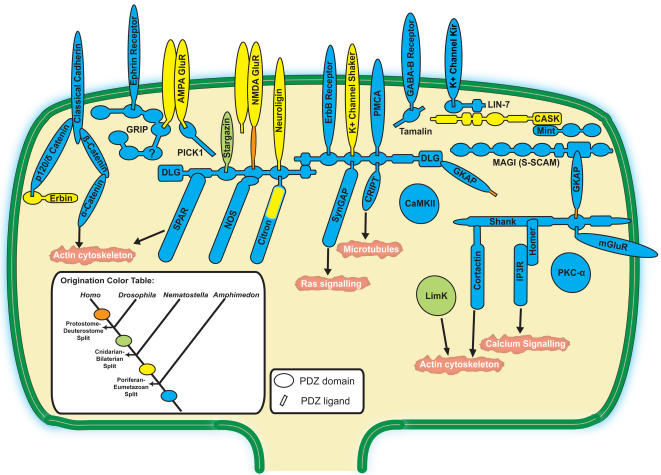
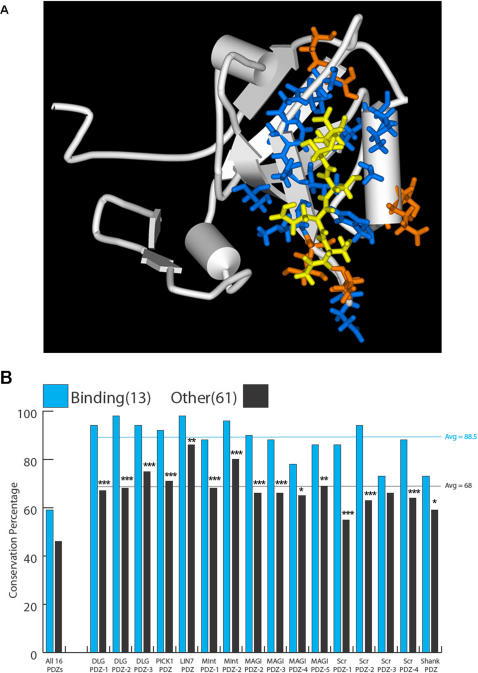
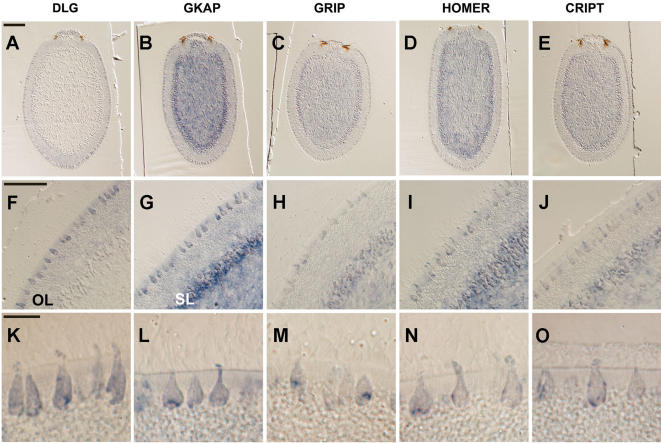
Verification
Claims the paper makes
The claims and statistics of this paper haven’t been checked yet.
Run the check — free, no account needed. It reads the open-access text and checks the sources it cites.
Claims other papers make about this one
Each is checked against this paper’s own text: does it say what the citing paper says it does?
In the citing paper
“An “ancestral complexity” of cnidarians in terms of synaptic proteins is therefore apparent [28,32].”
From Back to the Basics: Cnidarians Start to Fire (2017) · cites this paper as [28]
In the citing paper
“most of the structural components of the post-synaptic density (PSD) are present in the sponge Amphimedon [22,28], and some have clear homologs in choanoflagellates and other unicellular holozoans [29,30]”
From Back to the Basics: Cnidarians Start to Fire (2017) · cites this paper as [28]
Self-check
Percentages, sums and reported differences re-computed from the paper’s own numbers.
The self-check needs the paper’s full text.
Citations
Cites
Gapped BLAST and PSI-BLAST: a new generation of protein database search programs
Altschul, S. (1997) · Nucleic Acids Research · doi:10.1093/nar/25.17.3389 · Cited by 73,302
Thompson, J. D., Higgins, D. G., & Gibson, T. J. (1994) · Nucleic Acids Research · doi:10.1093/nar/22.22.4673 · Cited by 64,617
Berman, H. M. (2000) · Nucleic Acids Research · doi:10.1093/nar/28.1.235 · Cited by 40,196
MrBayes 3: Bayesian phylogenetic inference under mixed models
Ronquist, F., & Huelsenbeck, J. P. (2003) · Bioinformatics · doi:10.1093/bioinformatics/btg180 · Cited by 29,194
PROCHECK: a program to check the stereochemical quality of protein structures
Laskowski, R. A., MacArthur, M. W., Moss, D. S., & Thornton, J. M. (1993) · Journal of Applied Crystallography · doi:10.1107/s0021889892009944 · Cited by 24,581
MAFFT: a novel method for rapid multiple sequence alignment based on fast Fourier transform
Katoh, K. (2002) · Nucleic Acids Research · doi:10.1093/nar/gkf436 · Cited by 17,027
A Simple, Fast, and Accurate Algorithm to Estimate Large Phylogenies by Maximum Likelihood
Guindon, S., & Gascuel, O. (2003) · Systematic Biology · doi:10.1080/10635150390235520 · Cited by 16,923
All-Atom Empirical Potential for Molecular Modeling and Dynamics Studies of Proteins
MacKerell, A. D., Bashford, D., Bellott, M., Dunbrack, R. L., Evanseck, J. D., Field, M. J., Fischer, S., Gao, J., Guo, H., Ha, S., et al. (1998) · The Journal of Physical Chemistry B · doi:10.1021/jp973084f · Cited by 14,429
The Pfam Protein Families Database
Bateman, A. G. (2002) · Nucleic Acids Research · doi:10.1093/nar/30.1.276 · Cited by 14,075
CHARMM: A program for macromolecular energy, minimization, and dynamics calculations
Brooks, B., Bruccoleri, R., Olafson, B. D., States, D., Swaminathan, S., & Karplus, M. (1983) · Journal of Computational Chemistry · doi:10.1002/jcc.540040211 · Cited by 13,736
Cited by
Sorted by citations
Dennis, E. A., Cao, J., Hsu, Y., Magrioti, V., & Kokotos, G. (2011) · Chemical Reviews · doi:10.1021/cr200085w · Cited by 1,241
The Amphimedon queenslandica genome and the evolution of animal complexity
Srivastava, M., Simakov, O., Chapman, J., Fahey, B., Gauthier, M. E. A., Mitros, T., Richards, G. S., Conaco, C., Dacre, M., Hellsten, U., et al. (2010) · Nature · doi:10.1038/nature09201 · Cited by 1,049
Self-citationThe Trichoplax genome and the nature of placozoans
Srivastava, M., Begovic, E., Chapman, J., Putnam, N. H., Hellsten, U., Kawashima, T., Kuo, A., Mitros, T., Salamov, A., Carpenter, M. L., et al. (2008) · Nature · doi:10.1038/nature07191 · Cited by 889
The origin and evolution of cell types
Arendt, D., Musser, J. M., Baker, C. V. H., Bergman, A., Cepko, C., Erwin, D. H., Pavlicev, M., Schlosser, G., Widder, S., Laubichler, M. D., et al. (2016) · Nature Reviews Genetics · doi:10.1038/nrg.2016.127 · Cited by 764
Croset, V., Rytz, R., Cummins, S. F., Budd, A., Brawand, D., Kaessmann, H., Gibson, T. J., & Benton, R. (2010) · PLoS Genetics · doi:10.1371/journal.pgen.1001064 · Cited by 772
The Genome of the Ctenophore Mnemiopsis leidyi and Its Implications for Cell Type Evolution
Ryan, J. F., Pang, K., Schnitzler, C. E., Nguyen, A.-D., Moreland, R. T., Simmons, D. K., Koch, B. J., Francis, W. R., Havlak, P., Program, N. C. S., et al. (2013) · Science · doi:10.1126/science.1242592 · Cited by 682
Six major steps in animal evolution: Are we derived sponge larvae?
Nielsen, C. (2008) · Evolution & Development · doi:10.1111/j.1525-142x.2008.00231.x · Cited by 343
Invertebrate neurophylogeny: suggested terms and definitions for a neuroanatomical glossary
Richter, S., Loesel, R., Purschke, G., Schmidt‐Rhaesa, A., Scholtz, G., Stach, T., Vogt, L., Wanninger, A., Brenneis, G., Döring, C., et al. (2010) · Frontiers in Zoology · doi:10.1186/1742-9994-7-29 · Cited by 334
Riesgo, A., Farrar, N., Windsor, P. J., Giribet, G., & Leys, S. P. (2014) · Molecular Biology and Evolution · doi:10.1093/molbev/msu057 · Cited by 266
The origin and evolution of synapses
Ryan, T. J., & Grant, S. G. N. (2009) · Nature reviews. Neuroscience · doi:10.1038/nrn2717 · Cited by 535
Adamska, M., Degnan, S. M., Green, K. M., Adamski, M., Craigie, A., Larroux, C., & Degnan, B. M. (2007) · PLoS ONE · doi:10.1371/journal.pone.0001031 · Cited by 257
Self-citationExploring phylogeny to find the function of sleep
Anafi, R. C., Kayser, M. S., & Raizen, D. M. (2019) · Nature Reviews Neuroscience · doi:10.1038/s41583-018-0098-9 · Cited by 259
A Review on Iron Oxide Nanoparticles and Their Biomedical Applications
Sangaiya, P., & Jayaprakash, R. (2018) · Journal of Superconductivity and Novel Magnetism · doi:10.1007/s10948-018-4841-2 · Cited by 252
Anatomy and development of the nervous system of Nematostella vectensis , an anthozoan cnidarian
Marlow, H. Q., Srivastava, M., Matus, D. Q., Rokhsar, D., & Martindale, M. Q. (2009) · Developmental Neurobiology · doi:10.1002/dneu.20698 · Cited by 247
Structural and functional diversity of cadherin at the adherens junction
Oda, H., & Takeichi, M. (2011) · The Journal of Cell Biology · doi:10.1083/jcb.201008173 · Cited by 237
The Premetazoan Ancestry of Cadherins
Sigg, M. A., & King, N. (2008) · Science · doi:10.1126/science.1151084 · Cited by 240
Diverse evolutionary paths to cell adhesion
Sigg, M. A., & King, N. (2010) · Trends in Cell Biology · doi:10.1016/j.tcb.2010.08.002 · Cited by 244
The Genomic and Cellular Foundations of Animal Origins
Richter, D. J., & King, N. (2013) · Annual Review of Genetics · doi:10.1146/annurev-genet-111212-133456 · Cited by 196
Non-overlapping neural networks in Hydra vulgaris
Dupre, C., & Yuste, R. (2017) · Current Biology · doi:10.1016/j.cub.2017.02.049 · Cited by 197
Evolutionary expansion and anatomical specialization of synapse proteome complexity
Emes, R. D., Pocklington, A., Anderson, C. N. G., Bayés, À., Collins, M., Vickers, C., Croning, M., Malik, B., Choudhary, J., Armstrong, J., et al. (2008) · Nature Neuroscience · doi:10.1038/nn.2135 · Cited by 202
Coordinated contractions effectively expel water from the aquiferous system of a freshwater sponge
Elliott, G. R. D., & Leys, S. P. (2007) · Journal of Experimental Biology · doi:10.1242/jeb.003392 · Cited by 190
MAGUKs, Synaptic Development, and Synaptic Plasticity
Zheng, C.-Y., Seabold, G. K., Hořák, M., & Petralia, R. S. (2011) · The Neuroscientist · doi:10.1177/1073858410386384 · Cited by 201
What nervous systems do: early evolution, input–output, and the skin brain thesis
Keijzer, F., van Duijn, M., & Lyon, P. (2013) · Adaptive Behavior · doi:10.1177/1059712312465330 · Cited by 181
Sponge Genes Provide New Insight into the Evolutionary Origin of the Neurogenic Circuit
Richards, G. S., Simionato, E., Perron, M., Adamska, M., Vervoort, M., & Degnan, B. M. (2008) · Current Biology · doi:10.1016/j.cub.2008.06.074 · Cited by 165
Self-citationThe Evolution of Early Neurogenesis
Hartenstein, V., & Stollewerk, A. (2015) · Developmental Cell · doi:10.1016/j.devcel.2015.02.004 · Cited by 161
Back to the Basics: Cnidarians Start to Fire
Bosch, T. C. G., Klimovich, A., Domazet-Lošo, T., Gründer, S., Holstein, T. W., Jékely, G., Miller, D. J., Murillo-Rincon, A. P., Rentzsch, F., Richards, G. S., et al. (2017) · Trends in Neurosciences · doi:10.1016/j.tins.2016.11.005 · Cited by 144
Reconstructing ordinal relationships in the Demospongiae using mitochondrial genomic data
Lavrov, D. V., Wang, X., & Kelly, M. (2008) · Molecular Phylogenetics and Evolution · doi:10.1016/j.ympev.2008.05.014 · Cited by 155
Evolution of Synapse Complexity and Diversity
Emes, R. D., & Grant, S. G. N. (2012) · Annual Review of Neuroscience · doi:10.1146/annurev-neuro-062111-150433 · Cited by 161
Extensive conservation of ancient microsynteny across metazoans due to cis -regulatory constraints
Irimia, M., Tena, J. J., Alexis, M. S., Fernandez-Miñan, A., Maeso, I., Bogdanović, O., de la Calle-Mustienes, E., Roy, S. W., Gómez-Skarmeta, J. L., & Fraser, H. B. (2012) · Genome Research · doi:10.1101/gr.139725.112 · Cited by 146
Elements of a ‘nervous system’ in sponges
Leys, S. P. (2015) · Journal of Experimental Biology · doi:10.1242/jeb.110817 · Cited by 138
Scaffolds: interaction platforms for cellular signalling circuits
Zeke, A., Lukács, M., Lim, W. A., & Reményi, A. (2009) · Trends in Cell Biology · doi:10.1016/j.tcb.2009.05.007 · Cited by 158
The origin and evolution of the neural crest
Donoghue, P. C. J., Graham, A., & Kelsh, R. N. (2008) · BioEssays · doi:10.1002/bies.20767 · Cited by 152
Cavalier‐Smith, T. (2016) · Philosophical Transactions of the Royal Society B Biological Sciences · doi:10.1098/rstb.2015.0476 · Cited by 142
Early evolution of metazoan transcription factors
Degnan, B. M., Vervoort, M., Larroux, C., & Richards, G. S. (2009) · Current Opinion in Genetics & Development · doi:10.1016/j.gde.2009.09.008 · Cited by 137
Self-citationKenny, N. J., Francis, W. R., Rivera-Vicéns, R. E., Juravel, K., de Mendoza, A., Díez-Vives, C., Lister, R., Bezares-Calderón, L. A., Grombacher, L., Roller, M., et al. (2020) · Nature Communications · doi:10.1038/s41467-020-17397-w · Cited by 129
Chapter 2 Synapse Formation in Developing Neural Circuits
Colón‐Ramos, D. A. (2009) · Current topics in developmental biology/Current Topics in Developmental Biology · doi:10.1016/s0070-2153(09)01202-2 · Cited by 141
Ludeman, D. A., Farrar, N. R., Riesgo, A., Paps, J., & Leys, S. P. (2014) · BMC Evolutionary Biology · doi:10.1186/1471-2148-14-3 · Cited by 133
MicroRNAs and Cellular Phenotypy
Kosik, K. S. (2010) · Cell · doi:10.1016/j.cell.2010.09.008 · Cited by 124
Self-citationAre we there yet? Tracking the development of new model systems
Abzhanov, A., Extavour, C. G. M., Groover, A. T., Hodges, S. A., Hoekstra, H. E., Kramer, E. M., & Monteiro, A. (2008) · Trends in Genetics · doi:10.1016/j.tig.2008.04.002 · Cited by 122
Epithelia and integration in sponges
Leys, S. P., Nichols, S., & ADAMS, E. D. M. (2009) · Integrative and Comparative Biology · doi:10.1093/icb/icp038 · Cited by 120
LeDoux, J. E. (2021) · Philosophical Transactions of the Royal Society B Biological Sciences · doi:10.1098/rstb.2021.0292 · Cited by 125
The molecular and gene regulatory signature of a neuron
Hobert, O., Carrera, I., & Stefanakis, N. (2010) · Trends in Neurosciences · doi:10.1016/j.tins.2010.05.006 · Cited by 109
Evolution: like any other science it is predictable
Morris, S. C. (2009) · Philosophical Transactions of the Royal Society B Biological Sciences · doi:10.1098/rstb.2009.0154 · Cited by 116
Miniaturization of Nervous Systems and Neurons
Niven, J. E., & Farris, S. M. (2012) · Current Biology · doi:10.1016/j.cub.2012.04.002 · Cited by 109
Epithelia, an Evolutionary Novelty of Metazoans
Leys, S. P., & Riesgo, A. (2011) · Journal of Experimental Zoology Part B Molecular and Developmental Evolution · doi:10.1002/jez.b.21442 · Cited by 107
Elliott, G. R. D., & Leys, S. P. (2010) · Journal of Experimental Biology · doi:10.1242/jeb.039859 · Cited by 108
Bioinformatic prediction of Trichoplax adhaerens regulatory peptides
Nikitin, M. (2015) · General and Comparative Endocrinology · doi:10.1016/j.ygcen.2014.03.049 · Cited by 93
The Physiology and Molecular Biology of Sponge Tissues
Leys, S. P., & Hill, A. (2012) · Advances in Marine Biology · doi:10.1016/b978-0-12-394283-8.00001-1 · Cited by 128
Evolution of the MAGUK protein gene family in premetazoan lineages
de Mendoza, A., Suga, H., & Ruiz‐Trillo, I. (2010) · BMC Evolutionary Biology · doi:10.1186/1471-2148-10-93 · Cited by 100
Transposable element small RNAs as regulators of gene expression
McCue, A. D., & Slotkin, R. K. (2012) · Trends in Genetics · doi:10.1016/j.tig.2012.09.001 · Cited by 95
Origin of animal epithelia: insights from the sponge genome
Fahey, B., & Degnan, B. M. (2010) · Evolution & Development · doi:10.1111/j.1525-142x.2010.00445.x · Cited by 109
Self-citationEreskovsky, A. V., Borchiellini, C., Gazave, E., Ivanišević, J., Lapébie, P., Pérez, T., Renard, E., & Vacelet, J. (2009) · BioEssays · doi:10.1002/bies.080058 · Cited by 93
Pushpavalli, R., Krishnamurthy, L., Thudi, M., Gaur, P. M., Rao, M. V., Siddique, K. H. M., Colmer, T. D., Turner, N. C., Varshney, R. K., & Vadez, V. (2015) · BMC Plant Biology · doi:10.1186/s12870-015-0491-8 · Cited by 94
Gauthier, M. E. A., Pasquier, L. D., & Degnan, B. M. (2010) · Evolution & Development · doi:10.1111/j.1525-142x.2010.00436.x · Cited by 96
Self-citationNickel, M. (2010) · Invertebrate Biology · doi:10.1111/j.1744-7410.2010.00193.x · Cited by 93
Evolution of sensory structures in basal metazoa
Jacobs, D. K., Nakanishi, N., Yuan, D., Camara, A., Nichols, S., & Hartenstein, V. (2007) · Integrative and Comparative Biology · doi:10.1093/icb/icm094 · Cited by 89
Ganot, P., Zoccola, D., Tambutté, É., Voolstra, C. R., Aranda, M., Allemand, D., & Tambutté, S. (2014) · Molecular Biology and Evolution · doi:10.1093/molbev/msu265 · Cited by 84
Windsor, P. J., & Leys, S. P. (2010) · Evolution & Development · doi:10.1111/j.1525-142x.2010.00434.x · Cited by 84
Bridging the Synaptic Gap: Neuroligins and Neurexin I in Apis mellifera
Biswas, S., Russell, R. J., Jackson, C. J., Vidovic, M., Ganeshina, O., Oakeshott, J. G., & Claudianos, C. (2008) · PLoS ONE · doi:10.1371/journal.pone.0003542 · Cited by 86
Savin, K. W., Cocks, B. G., Wong, F. Y. K., Sawbridge, T., Cogan, N. O. I., Savage, D., & Warner, S. (2010) · Virology Journal · doi:10.1186/1743-422x-7-308 · Cited by 82
Data Availability in Political Science Journals
Gherghina, S., & Κατσανίδου, Α. (2013) · European Political Science · doi:10.1057/eps.2013.8 · Cited by 81
Alié, A., & Manuel, M. (2010) · BMC Evolutionary Biology · doi:10.1186/1471-2148-10-34 · Cited by 79
A two‐step process in the emergence of neurogenesis
Galliot, B., & Quiquand, M. (2011) · European Journal of Neuroscience · doi:10.1111/j.1460-9568.2011.07829.x · Cited by 77
Keijzer, F. (2015) · Biology & Philosophy · doi:10.1007/s10539-015-9483-1 · Cited by 78
Hartmann, A., Tesch, D., Nothwang, H. G., & Bininda‐Emonds, O. R. P. (2013) · Molecular Biology and Evolution · doi:10.1093/molbev/mst225 · Cited by 77
Convergence of ion channel genome content in early animal evolution
Liebeskind, B. J., Hillis, D. M., & Zakon, H. H. (2015) · Proceedings of the National Academy of Sciences · doi:10.1073/pnas.1501195112 · Cited by 76
Senatore, A., Raiss, H., & Le, P. (2016) · Frontiers in Physiology · doi:10.3389/fphys.2016.00481 · Cited by 77
Evolution: Ctenophore Genomes and the Origin of Neurons
Marlow, H., & Arendt, D. (2014) · Current Biology · doi:10.1016/j.cub.2014.06.057 · Cited by 71
Where is my mind? How sponges and placozoans may have lost neural cell types
Ryan, J. F., & Chiodin, M. (2015) · Philosophical Transactions of the Royal Society B: Biological Sciences · doi:10.1098/rstb.2015.0059 · Cited by 73
Nakanishi, N., Yuan, D., Jacobs, D. K., & Hartenstein, V. (2008) · Development Genes and Evolution · doi:10.1007/s00427-008-0239-7 · Cited by 71
Degnan, S. M., & Degnan, B. M. (2010) · Philosophical Transactions of the Royal Society B: Biological Sciences · doi:10.1098/rstb.2009.0248 · Cited by 71
Self-citationUeda, N., Richards, G. S., Degnan, B. M., Kranz, A. M., Adamska, M., Croll, R. P., & Degnan, B. M. (2016) · Scientific Reports · doi:10.1038/srep37546 · Cited by 75
Self-citationInsights into the early evolution of animal calcium signaling machinery: A unicellular point of view
Cai, X., Wang, X., Patel, S., & Clapham, D. E. (2014) · Cell Calcium · doi:10.1016/j.ceca.2014.11.007 · Cited by 66
Complex Homology and the Evolution of Nervous Systems
Liebeskind, B. J., Hillis, D. M., Zakon, H. H., & Hofmann, H. A. (2015) · Trends in Ecology & Evolution · doi:10.1016/j.tree.2015.12.005 · Cited by 72
Choanoflagellate models — Monosiga brevicollis and Salpingoeca rosetta
Hoffmeyer, T. T., & Burkhardt, P. (2016) · Current Opinion in Genetics & Development · doi:10.1016/j.gde.2016.05.016 · Cited by 66
Prenatal Nicotine Exposure Increases GABA Signaling and Mucin Expression in Airway Epithelium
Fu, X. W., Wood, K. J., & Spindel, E. R. (2010) · American Journal of Respiratory Cell and Molecular Biology · doi:10.1165/rcmb.2010-0109oc · Cited by 67
Occluding junctions of invertebrate epithelia
Jonusaite, S., Donini, A., & Kelly, S. P. (2015) · Journal of Comparative Physiology B · doi:10.1007/s00360-015-0937-1 · Cited by 67
Chemosensory organs as models of neuronal synapses
Shaham, S. (2010) · Nature reviews. Neuroscience · doi:10.1038/nrn2740 · Cited by 62
Sensing the world and its dangers: An evolutionary perspective in neuroimmunology
Kraus, A., Buckley, K. M., & Salinas, I. (2021) · eLife · doi:10.7554/elife.66706 · Cited by 68
Mahmood, K., Webb, G. I., Song, J., Whisstock, J. C., & Konagurthu, A. S. (2011) · Nucleic Acids Research · doi:10.1093/nar/gkr1261 · Cited by 62
Ereskovsky, A. V., Renard, E., & Borchiellini, C. (2012) · Development Genes and Evolution · doi:10.1007/s00427-012-0399-3 · Cited by 62
The origin and evolution of synaptic proteins – choanoflagellates lead the way
Burkhardt, P. (2015) · Journal of Experimental Biology · doi:10.1242/jeb.110247 · Cited by 59
Gauthier, M., & Degnan, B. M. (2008) · Development Genes and Evolution · doi:10.1007/s00427-007-0197-5 · Cited by 61
Self-citationRivera, A. S., Hammel, J. U., Haen, K. M., Danka, E. S., Cieniewicz, B., Winters, I. P., Posfai, D., Wörheide, G., Lavrov, D. V., Knight, S. W., et al. (2011) · BMC Biotechnology · doi:10.1186/1472-6750-11-67 · Cited by 61
Functionalization of a protosynaptic gene expression network
Conaco, C., Bassett, D. S., Zhou, H., Arcila, M. L., Degnan, B. M., Degnan, B. M., & Kosik, K. S. (2012) · Proceedings of the National Academy of Sciences · doi:10.1073/pnas.1201890109 · Cited by 60
Self-citationMukherjee, S., Krishnan, A., Tamma, K., Home, C., Navya, R., Joseph, S., Das, A., & Ramakrishnan, U. (2010) · PLoS ONE · doi:10.1371/journal.pone.0013724 · Cited by 59
Farris, S. M. (2008) · Brain Behavior and Evolution · doi:10.1159/000139457 · Cited by 64
Three homologous subunits form a high affinity peptide-gated ion channel in Hydra
Dürrnagel, S., Kuhn, A., Tsiairis, C. D., Williamson, M., Kalbacher, H., Grimmelikhuijzen, C. J. P., Holstein, T. W., & Gründer, S. (2010) · Journal of Biological Chemistry · doi:10.1074/jbc.m109.059998 · Cited by 58
Evolutionary origin of synapses and neurons – Bridging the gap
Burkhardt, P., & Sprecher, S. G. (2017) · BioEssays · doi:10.1002/bies.201700024 · Cited by 60
Evolutionary insights into premetazoan functions of the neuronal protein homer
Burkhardt, P., Grønborg, M., McDonald, K., Sulur, T., Wang, Q., & King, N. (2014) · Molecular Biology and Evolution · doi:10.1093/molbev/msu178 · Cited by 56
Conaco, C., Neveu, P. A., Zhou, H., Arcila, M. L., Degnan, B. M., Degnan, B. M., & Kosik, K. S. (2012) · BMC Genomics · doi:10.1186/1471-2164-13-209 · Cited by 63
Self-citationStructural evolution of cell types by step-wise assembly of cellular modules
Achim, K., & Arendt, D. (2014) · Current Opinion in Genetics & Development · doi:10.1016/j.gde.2014.05.001 · Cited by 56
Dunlap, W. C., Starčević, A., Baranas̆ić, D., Diminić, J., Žučko, J., Gaćeša, R., van Oppen, M. J. H., Hranueli, D., Cullum, J., & Long, P. F. (2013) · BMC Genomics · doi:10.1186/1471-2164-14-509 · Cited by 56
Predation and the Origin of Neurones
Monk, T., & Paulin, M. G. (2014) · Brain Behavior and Evolution · doi:10.1159/000368177 · Cited by 55
Capra, J. A., Stolzer, M., Durand, D., & Pollard, K. S. (2013) · Trends in Genetics · doi:10.1016/j.tig.2013.07.001 · Cited by 56
Riesgo, A., Taylor, C., & Leys, S. P. (2007) · Evolution & Development · doi:10.1111/j.1525-142x.2007.00200.x · Cited by 57
Migraine classification and diagnosis. International Headache Society criteria.
Olesen, J., & Lipton, R. B. (1994) · PubMed · Cited by 56
Krishnan, A., Dnyansagar, R., Almén, M. S., Williams, M. J., Fredriksson, R., Manoj, N., & Schiöth, H. B. (2014) · BMC Evolutionary Biology · doi:10.1186/s12862-014-0270-4 · Cited by 57
Santamaria, F., Gonzalez, J., Augustine, G. J., & Raghavachari, S. (2010) · PLoS Computational Biology · doi:10.1371/journal.pcbi.1000780 · Cited by 53
Risk Communication and Ebola-Specific Knowledge and Behavior during 2014–2015 Outbreak, Sierra Leone
Winters, M., Jalloh, M. F., Sengeh, P., Jalloh, M. B., Conteh, L., Bunnell, R. E., Li, W., Zeebari, Z., & Nordenstedt, H. (2018) · Emerging infectious diseases · doi:10.3201/eid2402.171028 · Cited by 52
Metadata
- Authors
- Sakarya, O., Armstrong, K. A., Adamska, M., Adamski, M., Wang, I.-F., Tidor, B., Degnan, B. M., Oakley, T. H., & Kosik, K. S.
- Affiliations
- University of California, Santa Barbara (US)
- MIT Computer Science and Artificial Intelligence Laboratory (US)
- The University of Queensland (AU)
- Corresponding author
- Kosik, Kenneth S.
- ORCID
- Venue
- PLoS ONE
- Publisher
- Public Library of Science (PLoS)
- Published
- 2007-06-06
- Volume
- 2
- Issue
- 6
- Pages
- e506
- ISSN
- 1932-6203 (ISSN-L)
- PMC
- PMC1876816
- OpenAlex
- W2079236594
- Cited by
- 291
- References
- 52
- Citations by year
- 2026: 2 · 2025: 5 · 2024: 6 · 2023: 2 · 2022: 3 · 2021: 8 · 2020: 13 · 2019: 15 · 2018: 8 · 2017: 16 · 2016: 21 · 2015: 28 · 2014: 20 · 2013: 12 · 2012: 18
- FWCI
- 24.18
- Type
- journal article
- Language
- en
- Open access
- gold
- doi.org
- Locations
- PLoS ONE (publishedVersion, cc-by)
- PubMed Central (publishedVersion, cc-by)
- PubMed (publishedVersion)
- DOAJ (DOAJ: Directory of Open Access Journals) (submittedVersion, cc-by-sa)
- Figshare (submittedVersion, cc-by)
- OSTI OAI (U.S. Department of Energy Office of Scientific and Technical Information) (submittedVersion)
- Funders
- U.S. Department of Energy
- Joint Genome Institute
- Topics
- Life Sciences › Agricultural and Biological Sciences › Animal Science and Zoology › Marine Invertebrate Physiology and Ecology
- Life Sciences › Neuroscience › Cellular and Molecular Neuroscience › Neuroscience and Neuropharmacology Research
- Life Sciences › Biochemistry, Genetics and Molecular Biology › Molecular Biology › Developmental Biology and Gene Regulation
- Keywords
- sponge genome, Amphimedon queenslandica, PDZ domain, protein interaction motifs, ionotropic glutamate receptors, Eumetazoa, protein complex formation
- MeSH terms
- Animals, Humans, Nerve Tissue Proteins, Porifera, Synapses, Genome, Evolution, Molecular
About these checks
Registry, retraction, Cites and statistics results are computed, not judged, with one exception: a printed reference that no index lists is read once by a model before it counts as a citation error. Claims are extracted by a model and kept only when their quote appears verbatim in the text; each cited source is then checked, with a model’s help, for whether it says what the claim relies on. Those verdicts can be wrong — read the claim’s quote and the cited source before relying on one.
Statistics and arithmetic are recomputed, not judged.
Confidence bands are shown only for fields calibrated on our annotated test set. None is calibrated yet, so no band is shown.
What counts as a claim ›How we measure confidence ›How we check this ›
Are you an author, or do you see a problem with this page? Request a review
