

The DOI matches its Crossref record; 46 of the 46 references it cites were found in a registry or an index.
An Ancient Pathway Combining Carbon Dioxide Fixation with the Generation and Utilization of a Sodium Ion Gradient for ATP Synthesis
Open accessAbstract
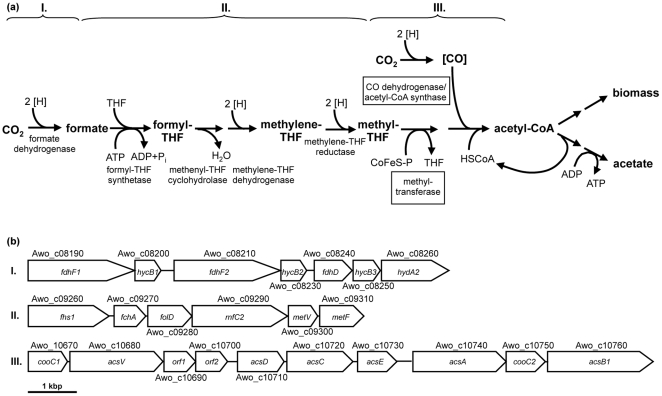
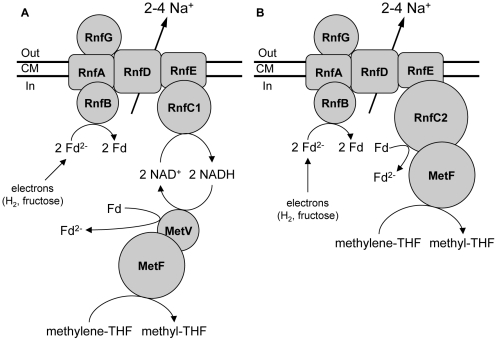
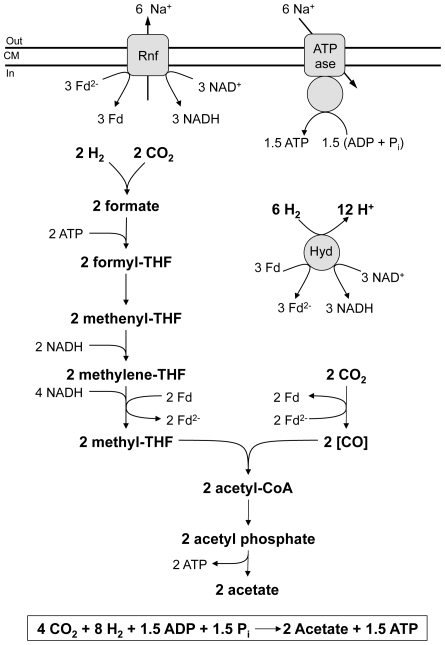
Synthesis of acetate from carbon dioxide and molecular hydrogen is considered to be the first carbon assimilation pathway on earth. It combines carbon dioxide fixation into acetyl-CoA with the production of ATP via an energized cell membrane. How the pathway is coupled with the net synthesis of ATP has been an enigma. The anaerobic, acetogenic bacterium Acetobacterium woodii uses an ancient version of this pathway without cytochromes and quinones. It generates a sodium ion potential across the cell membrane by the sodium-motive ferredoxin:NAD oxidoreductase (Rnf). The genome sequence of A. woodii solves the enigma: it uncovers Rnf as the only ion-motive enzyme coupled to the pathway and unravels a metabolism designed to produce reduced ferredoxin and overcome energetic barriers by virtue of electron-bifurcating, soluble enzymes.
Overview
The claims and statistics of this paper haven’t been checked yet.
Run the check — free, no account needed. It reads the open-access text and checks the sources it cites.
Integrity signals
Registry
Cites
Statistics
Figures
Verification
Claims the paper makes
The claims and statistics of this paper haven’t been checked yet.
Run the check — free, no account needed. It reads the open-access text and checks the sources it cites.
Claims other papers make about this one
Each is checked against this paper’s own text: does it say what the citing paper says it does?
The cited source says what the claim attributes to it.
In the citing paper
“Acetogens that lack cytochromes use their version of the WL-pathway to make methyl-H4F, as sketched in figure 3b, which is modified from Pohlein et al. [146] and Buckel & Thauer [143] for Acetobacterium woodii.”
From Early bioenergetic evolution (2013) · cites this paper as [146]
Self-check
Percentages, sums and reported differences re-computed from the paper’s own numbers.
The self-check needs the paper’s full text.
Citations
Cites
Energy conservation in chemotrophic anaerobic bacteria
Thauer, R. K., Jungermann, K., & Decker, K. (1977) · Bacteriological Reviews · doi:10.1128/br.41.1.100-180.1977 · Cited by 4,146
Self-citationCDD: a conserved domain database for interactive domain family analysis
Marchler‐Bauer, A., Anderson, J. B., Derbyshire, M. K., DeWeese-Scott, C., Gonzales, N. R., Gwadz, M., Hao, L., He, S., Hurwitz, D. I., Jackson, J. D., et al. (2006) · Nucleic Acids Research · doi:10.1093/nar/gkl951 · Cited by 851
On the origin of biochemistry at an alkaline hydrothermal vent
Martin, W., & Russell, M. J. (2007) · Philosophical Transactions of the Royal Society B: Biological Sciences · doi:10.1098/rstb.2006.1881 · Cited by 771
Clostridium ljungdahlii represents a microbial production platform based on syngas
Köpke, M., Held, C., Hujer, S., Liesegang, H., Wiezer, A., Wollherr, A., Ehrenreich, A., Liebl, W., Gottschalk, G., & Dürre, P. (2010) · Proceedings of the National Academy of Sciences · doi:10.1073/pnas.1004716107 · Cited by 660
Self-citationThe Autotrophic Pathway of Acetate Synthesis in Acetogenic Bacteria
Ljungdhal, L. G. (1986) · Annual Review of Microbiology · doi:10.1146/annurev.mi.40.100186.002215 · Cited by 575
Cord-Ruwisch, R., Seitz, H.-J., & Conrad, R. (1988) · Archives of Microbiology · doi:10.1007/bf00411655 · Cited by 549
Schut, G. J., & Adams, M. W. W. (2009) · Journal of Bacteriology · doi:10.1128/jb.01582-08 · Cited by 447
Li, F., Hinderberger, J., Seedorf, H., Zhang, J., Buckel, W., & Thauer, R. K. (2008) · Journal of Bacteriology · doi:10.1128/jb.01417-07 · Cited by 420
Self-citationEnergy conservation via electron-transferring flavoprotein in anaerobic bacteria
Herrmann, G., Jayamani, E., Mai, G., & Buckel, W. (2008) · Journal of Bacteriology · doi:10.1128/jb.01422-07 · Cited by 407
Enzymology of the Wood–Ljungdahl Pathway of Acetogenesis
Ragsdale, S. W. (2008) · Annals of the New York Academy of Sciences · doi:10.1196/annals.1419.015 · Cited by 405
Research works printed but not linked: 1
- F Li, 2008, Coupled ferredoxin and crotonyl coenzyme A (CoA) reduction with NADH catalyzed by the butyryl-CoA dehydrogenase/Etf complex from Clostridium kluyveri., J Bacteriol, 190, 843, 10.1128/JB.01417-07 · DOI · Paper page
Cited by
Sorted by citations
Schuchmann, K., & Müller, V. (2014) · Nature Reviews Microbiology · doi:10.1038/nrmicro3365 · Cited by 845
Self-citationBuckel, W., & Thauer, R. K. (2013) · Biochimica et Biophysica Acta (BBA) - Bioenergetics · doi:10.1016/j.bbabio.2012.07.002 · Cited by 797
Self-citationKracke, F., Vassilev, I., & Krömer, J. O. (2015) · Frontiers in Microbiology · doi:10.3389/fmicb.2015.00575 · Cited by 748
Cross-feeding in the gut microbiome: Ecology and mechanisms
Culp, E. J., & Goodman, A. L. (2023) · Cell Host & Microbe · doi:10.1016/j.chom.2023.03.016 · Cited by 562
Liew, F., Martin, M. E., Tappel, R. C., Heijstra, B. D., Mihalcea, C., & Köpke, M. (2016) · Frontiers in Microbiology · doi:10.3389/fmicb.2016.00694 · Cited by 485
The origin of membrane bioenergetics
Lane, N., & Martin, W. F. (2012) · Cell · doi:10.1016/j.cell.2012.11.050 · Cited by 452
Commercial Biomass Syngas Fermentation.
Daniell, J., Köpke, M., & Simpson, S. (2012) · Energies · doi:10.3390/en5125372 · Cited by 444
Direct and Reversible Hydrogenation of CO 2 to Formate by a Bacterial Carbon Dioxide Reductase
Schuchmann, K., & Müller, V. (2013) · Science · doi:10.1126/science.1244758 · Cited by 430
Self-citationThe Origin of Life in Alkaline Hydrothermal Vents
Sojo, V., Herschy, B., Whicher, A., Camprubí, E., & Lane, N. (2016) · Astrobiology · doi:10.1089/ast.2015.1406 · Cited by 341
Buckel, W., & Thauer, R. K. (2018) · Frontiers in Microbiology · doi:10.3389/fmicb.2018.00401 · Cited by 333
Self-citationNonenzymatic Metabolic Reactions and Life’s Origins
Muchowska, K. B., Varma, S. J., & Moran, J. (2020) · Chemical Reviews · doi:10.1021/acs.chemrev.0c00191 · Cited by 317
Sousa, F. L., Thiergart, T., Landan, G., Nelson-Sathi, S., Pereira, I. A. C., Allen, J. F., Lane, N., & Martin, W. F. (2013) · Philosophical Transactions of the Royal Society B: Biological Sciences · doi:10.1098/rstb.2013.0088 · Cited by 286
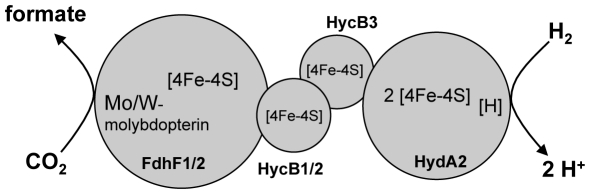
“The A. woodii formate dehydrogenase probably uses H2 directly as substrate [146], whereas the remaining two reduction steps are NADH-dependent [143,146].”
BackgroundInfluentialFrom Chemical Gardens to Chemobrionics
Barge, L. M., Cardoso, S. S. S., Cartwright, J. H. E., Cooper, G. J. T., Cronin, L., Wit, A. D., Doloboff, I. J., Escribano, B., Goldstein, R. E., Haudin, F., et al. (2015) · Chemical Reviews · doi:10.1021/acs.chemrev.5b00014 · Cited by 302
Energetics and Application of Heterotrophy in Acetogenic Bacteria
Schuchmann, K., & Müller, V. (2016) · Applied and Environmental Microbiology · doi:10.1128/aem.00882-16 · Cited by 297
Self-citationPan, X., Zhao, L., Li, C., Angelidaki, İ., Lv, N., Ning, J., Cai, G., & Zhu, G. (2020) · Water Research · doi:10.1016/j.watres.2020.116774 · Cited by 305
Bajracharya, S., Srikanth, S., Mohanakrishna, G., Zacharia, R., Strik, D. P. B. T. B., & Pant, D. (2017) · Journal of Power Sources · doi:10.1016/j.jpowsour.2017.04.024 · Cited by 253
Metabolic engineering of Clostridium autoethanogenum for selective alcohol production
Liew, F. E., Henstra, A. M., Köpke, M., Winzer, K., Simpson, S. D., & Minton, N. P. (2017) · Metabolic Engineering · doi:10.1016/j.ymben.2017.01.007 · Cited by 254
New insights into the evolutionary history of biological nitrogen fixation
Boyd, E. S., & Peters, J. W. (2013) · Frontiers in Microbiology · doi:10.3389/fmicb.2013.00201 · Cited by 264
C1-carbon sources for chemical and fuel production by microbial gas fermentation
Dürre, P., & Eikmanns, B. J. (2015) · Current Opinion in Biotechnology · doi:10.1016/j.copbio.2015.03.008 · Cited by 250
Wang, S., Huang, H., Kahnt, J., Mueller, A. P., Köpke, M., & Thauer, R. K. (2013) · Journal of Bacteriology · doi:10.1128/jb.00678-13 · Cited by 247
Self-citationMock, J., Zheng, Y., Mueller, A. P., Ly, S., Tran, L., Segovia, S., Nagaraju, S., Köpke, M., Dürre, P., & Thauer, R. K. (2015) · Journal of Bacteriology · doi:10.1128/jb.00399-15 · Cited by 220
Self-citationA Bacterial Electron-bifurcating Hydrogenase
Schuchmann, K., & Müller, V. (2012) · Journal of Biological Chemistry · doi:10.1074/jbc.m112.395038 · Cited by 218
Self-citationThe Origin and Nature of Life on Earth: The Emergence of the Fourth Geosphere
Smith, E., & Morowitz, H. J. (2016) · doi:10.1017/cbo9781316348772 · Cited by 215
Bacterial synthesis gas (syngas) fermentation
Bengelsdorf, F. R., Straub, M., & Dürre, P. (2013) · Environmental Technology · doi:10.1080/09593330.2013.827747 · Cited by 219
Tremblay, P., Zhang, T., Dar, S. A., Leang, C., & Lovley, D. R. (2012) · mBio · doi:10.1128/mbio.00406-12 · Cited by 206
Pathways and Bioenergetics of Anaerobic Carbon Monoxide Fermentation
Diender, M., Stams, A. J. M., & Sousa, D. Z. (2015) · Frontiers in Microbiology · doi:10.3389/fmicb.2015.01275 · Cited by 208
Latif, H., Zeidan, A. A., Nielsen, A. T., & Zengler, K. (2014) · Current Opinion in Biotechnology · doi:10.1016/j.copbio.2013.12.001 · Cited by 199
An origin-of-life reactor to simulate alkaline hydrothermal vents
Herschy, B., Whicher, A., Camprubi, E., Watson, C., Dartnell, L., Ward, J., Evans, J. R. G., & Lane, N. (2014) · Journal of Molecular Evolution · doi:10.1007/s00239-014-9658-4 · Cited by 194
Takors, R., Kopf, M., Mampel, J., Bluemke, W., Blombach, B., Eikmanns, B. J., Bengelsdorf, F. R., Weuster‐Botz, D., & Dürre, P. (2018) · Microbial Biotechnology · doi:10.1111/1751-7915.13270 · Cited by 203
Syngas Fermentation: A Microbial Conversion Process of Gaseous Substrates to Various Products
Phillips, J. R., Huhnke, R. L., & Atiyeh, H. K. (2017) · Fermentation · doi:10.3390/fermentation3020028 · Cited by 196
Agneessens, L. M., Ottosen, L. D. M., Voigt, N. V., Nielsen, J. L., de Jonge, N., Fischer, C. H., & Kofoed, M. V. W. (2017) · Bioresource Technology · doi:10.1016/j.biortech.2017.02.016 · Cited by 184
On the universal core of bioenergetics
Schoepp‐Cothenet, B., van Lis, R., Atteia, A., Baymann, F., Capowiez, L., Ducluzeau, A., Duval, S., ten Brink, F., Russell, M. J., & Nitschke, W. (2012) · Biochimica et Biophysica Acta (BBA) - Bioenergetics · doi:10.1016/j.bbabio.2012.09.005 · Cited by 184
Blank, L. M., Narančić, T., Mampel, J., Tiso, T., & O’Connor, K. E. (2019) · Current Opinion in Biotechnology · doi:10.1016/j.copbio.2019.11.011 · Cited by 182
Huang, H., Wang, S., Moll, J., & Thauer, R. K. (2012) · Journal of Bacteriology · doi:10.1128/jb.00385-12 · Cited by 177
Self-citationThe inevitable journey to being
Russell, M. J., Nitschke, W., & Branscomb, E. (2013) · Philosophical Transactions of the Royal Society B: Biological Sciences · doi:10.1098/rstb.2012.0254 · Cited by 174
Nagarajan, H., Sahin, M., Nogales, J., Latif, H., Lovley, D. R., Ebrahim, A., & Zengler, K. (2013) · Microbial Cell Factories · doi:10.1186/1475-2859-12-118 · Cited by 170
Bacterial Anaerobic Synthesis Gas (Syngas) and CO 2 + H 2 Fermentation
Bengelsdorf, F. R., Beck, M. H., Erz, C., Hoffmeister, S., Karl, M. M., Riegler, P., Wirth, S., Poehlein, A., Weuster‐Botz, D., & Dürre, P. (2018) · Advances in applied microbiology · doi:10.1016/bs.aambs.2018.01.002 · Cited by 173
Self-citationCofactor engineering for advancing chemical biotechnology
Wang, Y., San, K., & Bennett, G. N. (2013) · Current Opinion in Biotechnology · doi:10.1016/j.copbio.2013.03.022 · Cited by 163
Straub, M., Demler, M., Weuster-Botz, D., & Dürre, P. (2014) · Journal of Biotechnology · doi:10.1016/j.jbiotec.2014.03.005 · Cited by 162
CO 2 reduction driven by a pH gradient
Hudson, R., de Graaf, R., Strandoo Rodin, M., Ohno, A., Lane, N., McGlynn, S. E., Yamada, Y. M. A., Nakamura, R., Barge, L. M., Braun, D., et al. (2020) · Proceedings of the National Academy of Sciences · doi:10.1073/pnas.2002659117 · Cited by 158
Metabolism the Difficile Way: The Key to the Success of the Pathogen Clostridioides difficile
Neumann‐Schaal, M., Jahn, D., & Schmidt‐Hohagen, K. (2019) · Frontiers in Microbiology · doi:10.3389/fmicb.2019.00219 · Cited by 145
Hess, V., Schuchmann, K., & Müller, V. (2013) · Journal of Biological Chemistry · doi:10.1074/jbc.m113.510255 · Cited by 162
Self-citationA physiological perspective on the origin and evolution of photosynthesis
Martin, W. F., Bryant, D. A., & Beatty, J. T. (2017) · FEMS Microbiology Reviews · doi:10.1093/femsre/fux056 · Cited by 158
Physiology and central carbon metabolism of the gut bacterium Prevotella copri
Franke, T., & Deppenmeier, U. (2018) · Molecular Microbiology · doi:10.1111/mmi.14058 · Cited by 155
Beating the acetyl coenzyme A-pathway to the origin of life
Nitschke, W., & Russell, M. J. (2013) · Philosophical Transactions of the Royal Society B: Biological Sciences · doi:10.1098/rstb.2012.0258 · Cited by 143
ATP synthases from archaea: The beauty of a molecular motor
Grüber, G., Manimekalai, M. S. S., Mayer, F., & Müller, V. (2014) · Biochimica et Biophysica Acta (BBA) - Bioenergetics · doi:10.1016/j.bbabio.2014.03.004 · Cited by 140
Self-citationWang, S., Huang, H., Kahnt, J., & Thauer, R. K. (2013) · Journal of Bacteriology · doi:10.1128/jb.02158-12 · Cited by 140
Self-citationAcetone production with metabolically engineered strains of Acetobacterium woodii
Hoffmeister, S., Gerdom, M., Bengelsdorf, F. R., Linder, S., Flüchter, S., Öztürk, H., Blümke, W., May, A., Fischer, R.-J., Bahl, H., et al. (2016) · Metabolic Engineering · doi:10.1016/j.ymben.2016.03.001 · Cited by 139
New Horizons in Acetogenic Conversion of One-Carbon Substrates and Biological Hydrogen Storage
Müller, V. (2019) · Trends in Biotechnology · doi:10.1016/j.tibtech.2019.05.008 · Cited by 135
Self-citationCO Metabolism in the Acetogen Acetobacterium woodii
Bertsch, J., & Müller, V. (2015) · Applied and Environmental Microbiology · doi:10.1128/aem.01772-15 · Cited by 141
Self-citationEnergy Metabolism during Anaerobic Methane Oxidation in ANME Archaea
McGlynn, S. E. (2017) · Microbes and Environments · doi:10.1264/jsme2.me16166 · Cited by 129
Physiology and Sporulation in Clostridium
Dürre, P. (2014) · Microbiology Spectrum · doi:10.1128/microbiolspec.tbs-0010-2012 · Cited by 128
Overcoming Energetic Barriers in Acetogenic C1 Conversion
Katsyv, A., & Müller, V. (2020) · Frontiers in Bioengineering and Biotechnology · doi:10.3389/fbioe.2020.621166 · Cited by 132
Self-citationWestphal, L., Wiechmann, A., Baker, J., Minton, N. P., & Müller, V. (2018) · Journal of Bacteriology · doi:10.1128/jb.00357-18 · Cited by 129
Self-citationPark, C. K., & Horton, N. C. (2019) · Biophysical Reviews · doi:10.1007/s12551-019-00602-6 · Cited by 132
Adaptations of anaerobic archaea to life under extreme energy limitation
Mayer, F., & Müller, V. (2013) · FEMS Microbiology Reviews · doi:10.1111/1574-6976.12043 · Cited by 119
Self-citationKöpke, M., Gerth, M. L., Maddock, D. J., Mueller, A. P., Liew, F. E., Simpson, S. D., & Patrick, W. M. (2014) · Applied and Environmental Microbiology · doi:10.1128/aem.00301-14 · Cited by 111
First insights into the syntrophic acetate‐oxidizing bacteria – a genetic study
Müller, B., Sun, L., & Schnürer, A. (2012) · MicrobiologyOpen · doi:10.1002/mbo3.50 · Cited by 113
Philips, J. (2020) · Frontiers in Microbiology · doi:10.3389/fmicb.2019.02997 · Cited by 115
Electrical-biological hybrid system for CO2 reduction
Tashiro, Y., Hirano, S.-I., Matson, M. M., Atsumi, S., & Kondo, A. (2018) · Metabolic Engineering · doi:10.1016/j.ymben.2018.03.015 · Cited by 114
Schuchmann, K., Chowdhury, N. P., & Müller, V. (2018) · Frontiers in Microbiology · doi:10.3389/fmicb.2018.02911 · Cited by 113
Self-citationShen, Y., Jarboe, L. R., Brown, R. C., & Wen, Z. (2015) · Biotechnology Advances · doi:10.1016/j.biotechadv.2015.10.006 · Cited by 112
Electro-stimulated microbial factory for value added product synthesis
Roy, S., Schievano, A., & Pant, D. (2016) · Bioresource Technology · doi:10.1016/j.biortech.2016.03.052 · Cited by 109
Méheust, R., Castelle, C. J., Carnevali, P. B. M., Farag, I., He, C., Chen, L.-X., Amano, Y., Hug, L. A., & Banfield, J. F. (2020) · The ISME Journal · doi:10.1038/s41396-020-0716-1 · Cited by 110
Evidence for a Hexaheteromeric Methylenetetrahydrofolate Reductase in Moorella thermoacetica
Mock, J., Wang, S., Huang, H., Kahnt, J., & Thauer, R. K. (2014) · Journal of Bacteriology · doi:10.1128/jb.01839-14 · Cited by 99
Self-citationWorm, P., Koehorst, J. J., Visser, M., Sedano‐Núñez, V. T., Schaap, P. J., Plugge, C. M., Sousa, D. Z., & Stams, A. J. M. (2014) · Biochimica et Biophysica Acta (BBA) - Bioenergetics · doi:10.1016/j.bbabio.2014.06.005 · Cited by 104
Parameters affecting acetate concentrations during in-situ biological hydrogen methanation
Agneessens, L. M., Ottosen, L. D. M., Andersen, M., Olesen, C. B., Feilberg, A., & Kofoed, M. V. W. (2018) · Bioresource Technology · doi:10.1016/j.biortech.2018.02.102 · Cited by 105
Turnstiles and bifurcators: The disequilibrium converting engines that put metabolism on the road
Branscomb, E., & Russell, M. J. (2013) · Biochimica et Biophysica Acta (BBA) - Bioenergetics · doi:10.1016/j.bbabio.2012.10.003 · Cited by 105
D’Silva, T. C., Isha, A., Chandra, R., Vijay, V. K., Subbarao, P. M. V., Kumar, R., Chaudhary, V. P., Singh, H., Khan, A. A., Tyagi, V. K., et al. (2021) · Renewable and Sustainable Energy Reviews · doi:10.1016/j.rser.2021.111536 · Cited by 105
Sousa, F. L., & Martin, W. F. (2014) · Biochimica et Biophysica Acta (BBA) - Bioenergetics · doi:10.1016/j.bbabio.2014.02.001 · Cited by 100
Jeong, J., Bertsch, J., Hess, V., Choi, S., Choi, I., Chang, I. S., & Müller, V. (2015) · Applied and Environmental Microbiology · doi:10.1128/aem.00675-15 · Cited by 96
Self-citationGas fermentation: cellular engineering possibilities and scale up
Heijstra, B. D., Leang, C., & Juminaga, A. (2017) · Microbial Cell Factories · doi:10.1186/s12934-017-0676-y · Cited by 97
Schlegel, K., Welte, C. U., Deppenmeier, U., & Müller, V. (2012) · FEBS Journal · doi:10.1111/febs.12031 · Cited by 90
Self-citationTreu, L., Kougias, P., de Diego-Díaz, B., Campanaro, S., Bassani, I., Fernández-Rodríguez, J., & Angelidaki, İ. (2018) · Bioresource Technology · doi:10.1016/j.biortech.2018.05.070 · Cited by 91
Comparative reaction engineering analysis of different acetogenic bacteria for gas fermentation
Groher, A., & Weuster‐Botz, D. (2016) · Journal of Biotechnology · doi:10.1016/j.jbiotec.2016.04.032 · Cited by 91
Methanol metabolism in the acetogenic bacterium Acetobacterium woodii
Kremp, F., Poehlein, A., Daniel, R., & Müller, V. (2018) · Environmental Microbiology · doi:10.1111/1462-2920.14356 · Cited by 90
Self-citationHydrogen or formate: Alternative key players in methanogenic degradation
Schink, B., Montag, D., Keller, A., & Müller, N. (2017) · Environmental Microbiology Reports · doi:10.1111/1758-2229.12524 · Cited by 88
CO2 Fixation through Hydrogenation by Chemical or Enzymatic Methods
Beller, M., & Bornscheuer, U. T. (2014) · Angewandte Chemie International Edition · doi:10.1002/anie.201402963 · Cited by 84
An Electron-bifurcating Caffeyl-CoA Reductase
Bertsch, J., Parthasarathy, A., Buckel, W., & Müller, V. (2013) · Journal of Biological Chemistry · doi:10.1074/jbc.m112.444919 · Cited by 80
Self-citationPoehlein, A., Cebulla, M., Ilg, M. M., Bengelsdorf, F. R., Schiel-Bengelsdorf, B., Whited, G., Andreesen, J. R., Gottschalk, G., Daniel, R., & Dürre, P. (2015) · mBio · doi:10.1128/mbio.01168-15 · Cited by 80
Self-citationFormate metabolism in the acetogenic bacterium Acetobacterium woodii
Moon, J., Dönig, J., Kramer, S., Poehlein, A., Daniel, R., & Müller, V. (2021) · Environmental Microbiology · doi:10.1111/1462-2920.15598 · Cited by 79
Self-citationBertsch, J., Öppinger, C., Hess, V., Langer, J. D., & Müller, V. (2015) · Journal of Bacteriology · doi:10.1128/jb.00048-15 · Cited by 78
Self-citationGas Fermentation for Commercial Biofuels Production
Min, F., Köpke, M., & Dennis, S. (2013) · InTech eBooks · doi:10.5772/52164 · Cited by 83
Hess, V., Poehlein, A., Schoelmerich, M. C., Daniel, R., & Müller, V. (2014) · BMC Genomics · doi:10.1186/1471-2164-15-1139 · Cited by 75
Self-citationOvercoming the energetic limitations of syngas fermentation
Molitor, B., Marcellin, E., & Angenent, L. T. (2017) · Current Opinion in Chemical Biology · doi:10.1016/j.cbpa.2017.10.003 · Cited by 73
Thermodynamics-based design of microbial cell factories for anaerobic product formation
Cueto-Rojas, H. F., van Maris, A. J. A., Wahl, A., & Heijnen, J. J. (2015) · Trends in biotechnology · doi:10.1016/j.tibtech.2015.06.010 · Cited by 64
Engineering Acetogenic Bacteria for Efficient One-Carbon Utilization
Lee, H., Bae, J., Jin, S., Kang, S., & Cho, B. (2022) · Frontiers in Microbiology · doi:10.3389/fmicb.2022.865168 · Cited by 70
Clostridium difficile Is an Autotrophic Bacterial Pathogen
Köpke, M., Straub, M., & Dürre, P. (2013) · PLoS ONE · doi:10.1371/journal.pone.0062157 · Cited by 67
Ibrahim, I., Salehmin, M. N. I., Balachandran, K., Me, M. F. H., Loh, K. S., Bakar, M. H. A., Jong, B. C., & Lim, S. S. (2023) · Frontiers in Microbiology · doi:10.3389/fmicb.2023.1192187 · Cited by 65
Oehler, D., Poehlein, A., Leimbach, A., Müller, N., Daniel, R., Gottschalk, G., & Schink, B. (2012) · BMC Genomics · doi:10.1186/1471-2164-13-723 · Cited by 63
Self-citationThe Purine-Utilizing Bacterium Clostridium acidurici 9a: A Genome-Guided Metabolic Reconsideration
Hartwich, K., Poehlein, A., & Daniel, R. (2012) · PLoS ONE · doi:10.1371/journal.pone.0051662 · Cited by 63
Self-citationDrouilhet, L., Achard, C. S., Zemb, O., Molette, C., Gidenne, T. N., Larzul, C., Ruesche, J., Tircazes, A., Segura, M., Bouchez, T., et al. (2015) · Journal of Animal Science · doi:10.2527/jas.2015-9402 · Cited by 63
Analysis of the Core Genome and Pan-Genome of Autotrophic Acetogenic Bacteria
Shin, J., Song, Y., Jeong, Y., & Cho, B. (2016) · Frontiers in Microbiology · doi:10.3389/fmicb.2016.01531 · Cited by 65
It does not always take two to tango: “Syntrophy” via hydrogen cycling in one bacterial cell
Wiechmann, A., Ciurus, S., Oswald, F., Seiler, V., & Müller, V. (2020) · The ISME Journal · doi:10.1038/s41396-020-0627-1 · Cited by 63
Self-citationSchmidt, O., Horn, M. A., Kolb, S., & Drake, H. L. (2014) · Environmental Microbiology · doi:10.1111/1462-2920.12507 · Cited by 59
Timmers, P. H. A., Vavourakis, C. D., Kleerebezem, R., Damsté, J. S. S., Muyzer, G., Stams, A. J. M., Sorokin, D. Y., & Plugge, C. M. (2018) · Frontiers in Microbiology · doi:10.3389/fmicb.2018.03039 · Cited by 61
Jain, S., Dietrich, H. M., Müller, V., & Basen, M. (2020) · Frontiers in Microbiology · doi:10.3389/fmicb.2020.00059 · Cited by 57
Self-citationCarbon Isotope Fractionation of 11 Acetogenic Strains Grown on H 2 and CO 2
Blaser, M. B., Dreisbach, L. K., & Conrad, R. (2013) · Applied and Environmental Microbiology · doi:10.1128/aem.03203-12 · Cited by 56
A genetic approach for microbial electrosynthesis system as biocommodities production platform
Shin, H. J., Jung, K. A., Nam, C. W., & Park, J. M. (2017) · Bioresource Technology · doi:10.1016/j.biortech.2017.05.077 · Cited by 55
Song, Y., Shin, J., Jeong, Y., Jin, S., Lee, J.-K., Kim, D. R., Kim, S. C., Cho, S., & Cho, B. (2017) · Scientific Reports · doi:10.1038/s41598-017-14123-3 · Cited by 53
Metadata
- Authors
- Poehlein, A., Schmidt, S., Kaster, A.-K., Goenrich, M., Vollmers, J., Thürmer, A., Bertsch, J., Schuchmann, K., Voigt, B., Hecker, M., Daniel, R., Thauer, R. K., Gottschalk, G., & Müller, V.
- Affiliations
- University of Göttingen (DE)
- Goethe University Frankfurt (DE)
- Max Planck Institute for Terrestrial Microbiology (DE)
- Universität Greifswald (DE)
- Corresponding author
- Müller, Volker
- ORCID
- Venue
- PLoS ONE
- Publisher
- Public Library of Science (PLoS)
- Published
- 2012-03-29
- Volume
- 7
- Issue
- 3
- Pages
- e33439
- ISSN
- 1932-6203 (ISSN-L)
- PMC
- PMC3315566
- OpenAlex
- W2091506898
- Cited by
- 274
- References
- 46
- Citations by year
- 2026: 7 · 2025: 10 · 2024: 10 · 2023: 18 · 2022: 13 · 2021: 21 · 2020: 24 · 2019: 25 · 2018: 24 · 2017: 19 · 2016: 17 · 2015: 22 · 2014: 24 · 2013: 24 · 2012: 16
- FWCI
- 11.06
- Type
- journal article
- Language
- en
- Open access
- gold
- doi.org
- Locations
- PLoS ONE (publishedVersion, cc-by)
- Europe PMC (PubMed Central) (publishedVersion, cc-by)
- PubMed Central (publishedVersion, cc-by)
- PubMed (publishedVersion)
- DOAJ (DOAJ: Directory of Open Access Journals) (submittedVersion, cc-by-sa)
- Max Planck Institute for Plasma Physics (submittedVersion)
- Figshare (submittedVersion, cc-by)
- GoeScholar The Publication Server of the Georg-August-Universität Göttingen (Georg-August-Universität Göttingen) (submittedVersion, cc-by)
- Publication Server of Goethe University Frankfurt am Main (Goethe University Frankfurt) (submittedVersion, cc-by)
- MPG.PuRe (Max Planck Society) (submittedVersion)
- Funders
- Deutsche Forschungsgemeinschaft
- Max-Planck-Gesellschaft
- Topics
- Life Sciences › Biochemistry, Genetics and Molecular Biology › Molecular Biology › Microbial metabolism and enzyme function
- Physical Sciences › Environmental Science › Environmental Engineering › Microbial Fuel Cells and Bioremediation
- Physical Sciences › Energy › Renewable Energy, Sustainability and the Environment › Anaerobic Digestion and Biogas Production
- Keywords
- acetate production, CO2 fixation, molecular hydrogen, Acetobacterium woodii, acetogenesis, ATP production, electron bifurcation, ferredoxin, acetyl-CoA, membrane potential, genome sequence
- MeSH terms
- Acetyl Coenzyme A, Adenosine Triphosphate, Bacterial Proteins, Carbon Dioxide, Cell Membrane, Energy Metabolism, Ferredoxins, Models, Biological, Oxidation-Reduction, Oxidoreductases, Sodium, Genome, Bacterial, Acetobacterium, Biosynthetic Pathways, Carbon Cycle
About these checks
Registry, retraction, Cites and statistics results are computed, not judged, with one exception: a printed reference that no index lists is read once by a model before it counts as a citation error. Claims are extracted by a model and kept only when their quote appears verbatim in the text; each cited source is then checked, with a model’s help, for whether it says what the claim relies on. Those verdicts can be wrong — read the claim’s quote and the cited source before relying on one.
Statistics and arithmetic are recomputed, not judged.
Confidence bands are shown only for fields calibrated on our annotated test set. None is calibrated yet, so no band is shown.
What counts as a claim ›How we measure confidence ›How we check this ›
Are you an author, or do you see a problem with this page? Request a review
