

Auditory Processing in High-Functioning Adolescents with Autism Spectrum Disorder
Open accessThe DOI matches its Crossref record; 148 of the 148 references it cites were found in a registry or an index.
Abstract
Autism Spectrum Disorder (ASD) is a pervasive developmental disorder including abnormalities in perceptual processing. We measure perception in a battery of tests across speech (filtering, phoneme categorization, multisensory integration) and music (pitch memory, meter categorization, harmonic priming). We found that compared to controls, the ASD group showed poorer filtering, less audio-visual integration, less specialization for native phonemic and metrical categories, and a higher instance of absolute pitch. No group differences were found in harmonic priming. Our results are discussed in a developmental framework where culture-specific knowledge acquired early compared to late in development is most impaired, perhaps because of early-accelerated brain growth in ASD. These results suggest that early auditory remediation is needed for good communication and social functioning.
Overview
The claims and statistics of this paper haven’t been checked yet.
Free: it reads the open-access text and checks the first 5 claims that cite a source we can check. Create a free account to check every claim.
Integrity signals
Registry
Cites
Statistics
Figures


Verification
Claims the paper makes
The claims and statistics of this paper haven’t been checked yet.
Free: it reads the open-access text and checks the first 5 claims that cite a source we can check. Create a free account to check every claim.
Claims other papers make about this one
Each is checked against this paper’s own text: does it say what the citing paper says it does?
In the citing paper
“These hypersensitivities cannot be explained as outcomes of abnormally enhanced sensation (29 -31).”
From Autism as a disorder of prediction (2014) · cites this paper as [29]
Self-check
Percentages, sums and reported differences re-computed from the paper’s own numbers.
The self-check needs the paper’s full text.
Citations
Cites
Proceedings of the National Academy of Sciences of the United States of America
Dowling, J. E., & Wald, G. (2009) · Nutrition Reviews · doi:10.1111/j.1753-4887.1981.tb06752.x · Cited by 17,893
The Proceedings of the National Academy of Sciences
Richards, J. W. (1915) · Science · doi:10.1126/science.42.1074.161 · Cited by 13,983
Lord, C., Rutter, M., & Le Couteur, A. (1994) · Journal of Autism and Developmental Disorders · doi:10.1007/bf02172145 · Cited by 9,065 · cited 1×
“Among the ASD group, 16 participants had diagnoses (ADOS and ADI) [88,89] that were completed at the Offord Centre in Hamilton and 11 confirmed through a letter from their family doctor (diagnosis outside of Hamilton) because ADOS and ADI scores were not available.”
MethodHearing lips and seeing voices
MCGURK, H., & MACDONALD, J. (1976) · Nature · doi:10.1038/264746a0 · Cited by 6,183 · cited 2×
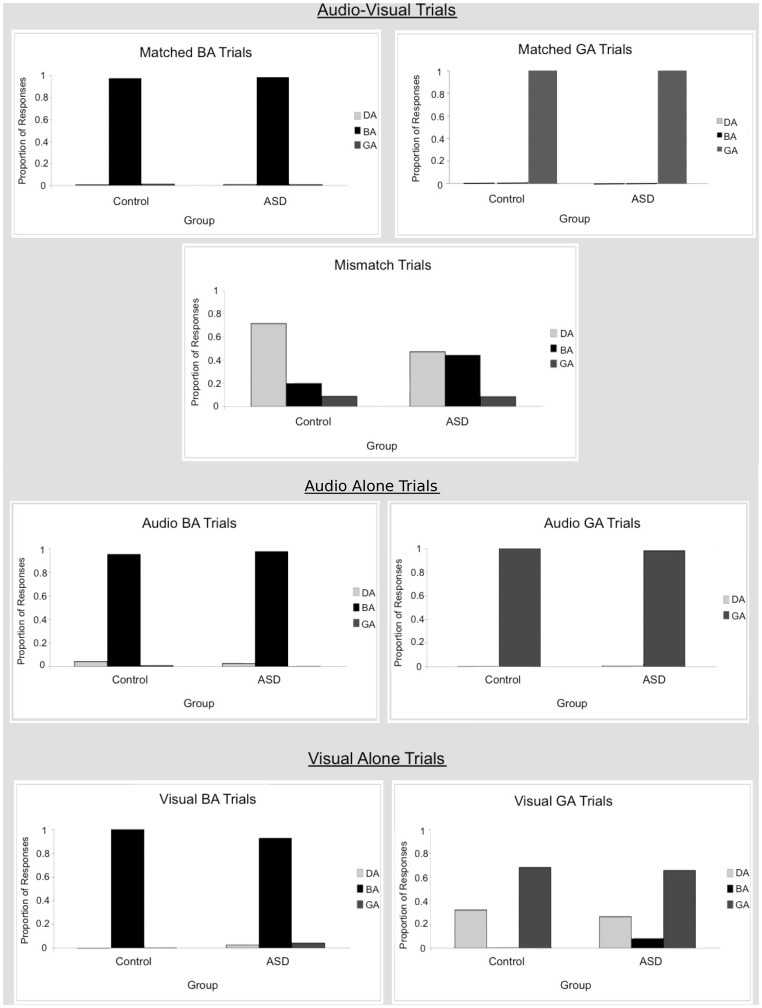
“For example, when presented with a visual ‘‘ga’’ and an audio ‘‘ba’’, people report hearing a third percept ‘‘da’’ which represents a fusion between what they see and what they hear [58].”
THE JOURNAL OF THE AMERICAN MEDICAL ASSOCIATION
(1911) · Journal of the American Medical Association · doi:10.1001/jama.1911.04260070032017 · Cited by 3,361
American Journal of Mental Retardation
Staff (2008) · Encyclopedia of Special Education · doi:10.1002/9780470373699.speced0106 · Cited by 2,972
The weak coherence account: detail-focused cognitive style in autism spectrum disorders
Happé, F., & Frith, U. (2006) · Journal of Autism and Developmental Disorders · doi:10.1007/s10803-005-0039-0 · Cited by 2,884
Philosophical Transactions of the Royal Society B: biological sciences
(2026) · Philosophical Transactions of the Royal Society B Biological Sciences · doi:10.1098/rstb · Cited by 2,876
(1989) · UCL Discovery (University College London) · Cited by 2,724
Quest: A Bayesian adaptive psychometric method
Watson, A. B., & Pelli, D. G. (1983) · Perception & Psychophysics · doi:10.3758/bf03202828 · Cited by 2,410 · cited 1×
“A Bayesian adaptive psychometric procedure [99] was used such that the test ended when the standard deviation of the signal threshold estimate reached 1.”
MethodMethods for dealing with reaction time outliers.
Ratcliff, R. (1993) · Psychological Bulletin · doi:10.1037/0033-2909.114.3.510 · Cited by 2,123 · cited 1×
“Response times that were less than 250 msec or greater than 2,500 msec were excluded from the analyses, which are considered to be conservative cutoffs for outliers for reaction time data [100].”
BackgroundLord, C., Rutter, M., Goode, S., Heemsbergen, J., Jordan, H., Mawhood, L., & Schopler, E. (1989) · Journal of Autism and Developmental Disorders · doi:10.1007/bf02211841 · Cited by 2,030
The Journal of the Acoustical Society of America
Watson, F. R. (1939) · The Journal of the Acoustical Society of America · doi:10.1121/1.1916000 · Cited by 1,611
Just, M. A. (2004) · Brain · doi:10.1093/brain/awh199 · Cited by 1,589
Unusual brain growth patterns in early life in patients with autistic disorder: An MRI study
Courchesne, E., Karns, C. M., Davis, H. R., Ziccardi, R., Carper, R. A., Tigue, Z. D., Chisum, H. J., Moses, P., Pierce, K., Lord, C., et al. (2001) · Neurology · doi:10.1212/wnl.57.2.245 · Cited by 1,487
Dawson, G., Toth, K., Abbott, R., Osterling, J., Munson, J., Estes, A., & Liaw, J. (2004) · Developmental Psychology · doi:10.1037/0012-1649.40.2.271 · Cited by 1,477 · cited 1×
“Auditory processing is of particular interest in this regard as there are reports of both hypersensitivity to sound [12–17] and hyposensitivity to sound [15,18–21], both of which could interfere with the quality of communicative exchanges and thereby interrupt language and communication development.”
BackgroundCastelli, F. (2002) · Brain · doi:10.1093/brain/awf189 · Cited by 1,377
Journal of Autism and Developmental Disorders
(2013) · Journal of Autism and Developmental Disorders · doi:10.1007/10803.1573-3432 · Cited by 1,361
Early recognition of children with autism: a study of first birthday home videotapes
Osterling, J., & Dawson, G. (1994) · Journal of Autism and Developmental Disorders · doi:10.1007/bf02172225 · Cited by 1,290
Kuhl, P. K., Tsao, F.-M., & Liu, H.-M. (2003) · Proceedings of the National Academy of Sciences · doi:10.1073/pnas.1532872100 · Cited by 1,237 · cited 2×
“Interestingly, in typically developing infants, a context involving human social interaction is much more effective than an equal amount of exposure in a non-interactive context for phonemic learning to occur [53].”
BackgroundJournal of Child Psychology and Psychiatry: Volume 49, No. 3, May 2008
&NA; (2008) · Journal of the American Academy of Child & Adolescent Psychiatry · doi:10.1097/01.chi.0000313990.41405.42 · Cited by 1,222
American Journal of Occupational Therapy
Holcomb, E. (2014) · Encyclopedia of Special Education · doi:10.1002/9781118660584.ese0113 · Cited by 1,209
Evidence of Brain Overgrowth in the First Year of Life in Autism
Courchesne, E. (2003) · JAMA · doi:10.1001/jama.290.3.337 · Cited by 1,120 · cited 3×
“months of age) and slows sooner compared to normal development [22–24].”
BackgroundJust, M. A., Cherkassky, V. L., Keller, T. A., Kana, R. K., & Minshew, N. J. (2007) · Cerebral Cortex · doi:10.1093/cercor/bhl006 · Cited by 1,081
Children with Autism Fail to Orient to Naturally Occurring Social Stimuli
Dawson, G., Meltzoff, A. N., Osterling, J., Rinaldi, J., & Brown, E. (1998) · Journal of Autism and Developmental Disorders · doi:10.1023/a:1026043926488 · Cited by 1,065 · cited 1×
“Autism Spectrum Disorder (ASD) is a pervasive developmental disorder that includes abnormalities in perceptual processing [1], language and communication [2], and social interaction [3].”
BackgroundBaranek, G. T. (1999) · Journal of Autism and Developmental Disorders · doi:10.1023/a:1023080005650 · Cited by 1,027 · cited 1×
“Auditory processing is of particular interest in this regard as there are reports of both hypersensitivity to sound [12–17] and hyposensitivity to sound [15,18–21], both of which could interfere with the quality of communicative exchanges and thereby interrupt language and communication development.”
BackgroundSchultz, R. T., Gauthier, I., Klin, A., Fulbright, R. K., Anderson, A. W., Volkmar, F., Skudlarski, P., Lacadie, C., Cohen, D. J., & Gore, J. C. (2000) · Archives of General Psychiatry · doi:10.1001/archpsyc.57.4.331 · Cited by 1,000 · cited 1×
“People with ASD also find faces less salient than do people without ASD [54–56], so infants who go on to develop ASD might have impoverished visual input during the process of learning native phoneme categories.”
BackgroundDawson, G., Webb, S. J., & McPartland, J. (2005) · Developmental Neuropsychology · doi:10.1207/s15326942dn2703_6 · Cited by 989 · cited 1×
“People with ASD also find faces less salient than do people without ASD [54–56], so infants who go on to develop ASD might have impoverished visual input during the process of learning native phoneme categories.”
BackgroundCourchesne, E., & Pierce, K. (2005) · Current Opinion in Neurobiology · doi:10.1016/j.conb.2005.03.001 · Cited by 968 · cited 2×
“short-distance neural connectivity [25–27] and reduced longdistance neural connectivity [27–33].”
BackgroundCalvert, G. A., Campbell, R., & Brammer, M. J. (2000) · Current Biology · doi:10.1016/s0960-9822(00)00513-3 · Cited by 954 · cited 1×
“The ventral bank of the superior temporal sulcus of the left hemisphere has been implicated in audio-visual speech integration [123] so it would be interesting to examine activation patterns in those with ASD”
BackgroundJoint music making promotes prosocial behavior in 4-year-old children
Kirschner, S., & Tomasello, M. (2010) · Evolution and Human Behavior · doi:10.1016/j.evolhumbehav.2010.04.004 · Cited by 896
An islet of ability in autistic children: a research note
Shah, A., & Frith, U. (1983) · Journal of Child Psychology and Psychiatry · doi:10.1111/j.1469-7610.1983.tb00137.x · Cited by 888
Minicolumnar pathology in autism
Casanova, M. F., Buxhoeveden, D. P., Switala, A. E., & Roy, E. (2002) · Neurology · doi:10.1212/wnl.58.3.428 · Cited by 846 · cited 1×
“connectivity [25,26], it would be interesting to determine whether the brains of those with ASD and with absolute pitch also show this feature.”
BackgroundWhite matter structure in autism: preliminary evidence from diffusion tensor imaging
Barnea-Goraly, N., Kwon, H., Menon, V., Eliez, S., Lotspeich, L., & Reiss, A. L. (2004) · Biological Psychiatry · doi:10.1016/j.biopsych.2003.10.022 · Cited by 782 · cited 2×
“short-distance neural connectivity [25–27] and reduced longdistance neural connectivity [27–33].”
BackgroundEarly recognition of 1-year-old infants with autism spectrum disorder versus mental retardation
OSTERLING, J. A., DAWSON, G., & MUNSON, J. A. (2002) · Development and Psychopathology · doi:10.1017/s0954579402002031 · Cited by 738 · cited 1×
“People with ASD also find faces less salient than do people without ASD [54–56], so infants who go on to develop ASD might have impoverished visual input during the process of learning native phoneme categories.”
BackgroundBest, C. T., McRoberts, G. W., & Goodell, E. (2001) · The Journal of the Acoustical Society of America · doi:10.1121/1.1332378 · Cited by 684
Rogers, S. J., Hepburn, S., & Wehner, E. (2003) · Journal of Autism and Developmental Disorders · doi:10.1023/b:jadd.0000006000.38991.a7 · Cited by 609 · cited 1×
“Questionnaire-based research on this topic suggests that those with ASD score high on items that tap into auditory filtering problems [37–41].”
BackgroundCross-language speech perception: Initial capabilities and developmental change.
Werker, J. F., & Lalonde, C. E. (1988) · Developmental Psychology · doi:10.1037/0012-1649.24.5.672 · Cited by 607 · cited 2×
“Typically developing infants are able to discriminate between all possible speech contrasts at 6 months of age, but by 12 months, infants have already become specialized for categorical contrasts used in their native language and have difficulty discriminating contrasts used in foreign languages but not their native l…”
BackgroundLeiter International Performance Scale
McCloskey, G. (1987) · Digital Commons - PCOM (Philadelphia College of Osteopathic Medicine) · Cited by 575
Sensory Processing Subtypes in Autism: Association with Adaptive Behavior
Lane, A. E., Young, R. L., Baker, A. E. Z., & Angley, M. T. (2010) · Journal of Autism and Developmental Disorders · doi:10.1007/s10803-009-0840-2 · Cited by 543 · cited 1×
“Questionnaire-based research on this topic suggests that those with ASD score high on items that tap into auditory filtering problems [37–41].”
BackgroundThe scientist in the crib : minds, brains, and how children learn
Alison Gopnik, C., Meltzoff, A. N., & Kuhl, P. K. (1999) · Medical Entomology and Zoology · Cited by 534
Ashburner, J., Ziviani, J., & Rodger, S. (2008) · American Journal of Occupational Therapy · doi:10.5014/ajot.62.5.564 · Cited by 515
The pattern of sensory processing abnormalities in autism
Kern, J. K., Trivedi, M. H., Garver, C. R., Grannemann, B. D., Andrews, A. A., Savla, J. S., Johnson, D. G., Mehta, J. A., & Schroeder, J. L. (2006) · Autism · doi:10.1177/1362361306066564 · Cited by 514
European Archives of Psychiatry and Clinical Neuroscience
(2013) · European Archives of Psychiatry and Clinical Neuroscience · doi:10.1007/406.1433-8491 · Cited by 507
Being Together in Time: Musical Experience and the Mirror Neuron System
Overy, K., & Molnar-Szakacs, I. (2009) · Music Perception · doi:10.1525/mp.2009.26.5.489 · Cited by 499 · cited 1×
“making can increase prosocial behavior, including co-operation and eye contact [129].”
BackgroundExperimental Evidence for Synchronization to a Musical Beat in a Nonhuman Animal
Patel, A. D., Iversen, J. R., Bregman, M. R., & Schulz, I. (2009) · Current Biology · doi:10.1016/j.cub.2009.03.038 · Cited by 496 · cited 1×
“Few species can entrain to an auditory beat, and all those who do so appear to be vocal learners [101,102].”
BackgroundJoint drumming: Social context facilitates synchronization in preschool children
Kirschner, S., & Tomasello, M. (2009) · Journal of Experimental Child Psychology · doi:10.1016/j.jecp.2008.07.005 · Cited by 494 · cited 1×
“Furthermore, rhythmic entrainment between people during music making has been shown to increase social bonds and promote prosocial behavior [103,104].”
BackgroundMusic acquisition: Effects of enculturation and formal training on development
Hannon, E. E., & Trainor, L. J. (2007) · Trends in Cognitive Sciences · doi:10.1016/j.tics.2007.08.008 · Cited by 493 · cited 2×
“Just as exposure to a language early in development leads to perceptual processing specialized for that language, exposure to a musical system, such as Western tonality, results in specialized perceptual processing for that musical system [73,74].”
BackgroundSelf-citationPreference for geometric patterns early in life as a risk factor for autism
Pierce, K., Conant, D., Hazin, R., Stoner, R., & Desmond, J. (2011) · Archives of General Psychiatry · doi:10.1001/archgenpsychiatry.2010.113 · Cited by 486 · cited 1×
“Although a diagnosis on the basis of social behavior and language delay is often not possible until a child is at least 3 years old, recent evidence suggests that perceptual processing differences are apparent in the infancy period [4–7].”
BackgroundWerner, E., Dawson, G., Osterling, J., & Dinno, N. (2000) · Journal of Autism and Developmental Disorders · doi:10.1023/a:1005463707029 · Cited by 482 · cited 1×
“Auditory processing is of particular interest in this regard as there are reports of both hypersensitivity to sound [12–17] and hyposensitivity to sound [15,18–21], both of which could interfere with the quality of communicative exchanges and thereby interrupt language and communication development.”
BackgroundTuning in to musical rhythms: Infants learn more readily than adults
Hannon, E. E., & Trehub, S. E. (2005) · Proceedings of the National Academy of Sciences · doi:10.1073/pnas.0504254102 · Cited by 477 · cited 1×
“Such specialization occurs for both the rhythm (meter) structure [75–77] and the pitch (tonal) structure [64,78], and this musical enculturation is essential for appreciation of the music in one’s culture.”
BackgroundZwaigenbaum, L., Bryson, S., Lord, C., Rogers, S., Carter, A., Carver, L., Chawarska, K., Constantino, J., Dawson, G., Dobkins, K., et al. (2009) · Pediatrics · doi:10.1542/peds.2008-1606 · Cited by 444 · cited 1×
“Although a diagnosis on the basis of social behavior and language delay is often not possible until a child is at least 3 years old, recent evidence suggests that perceptual processing differences are apparent in the infancy period [4–7].”
BackgroundMetrical Categories in Infancy and Adulthood
Hannon, E. E., & Trehub, S. E. (2005) · Psychological Science · doi:10.1111/j.0956-7976.2005.00779.x · Cited by 441 · cited 5×
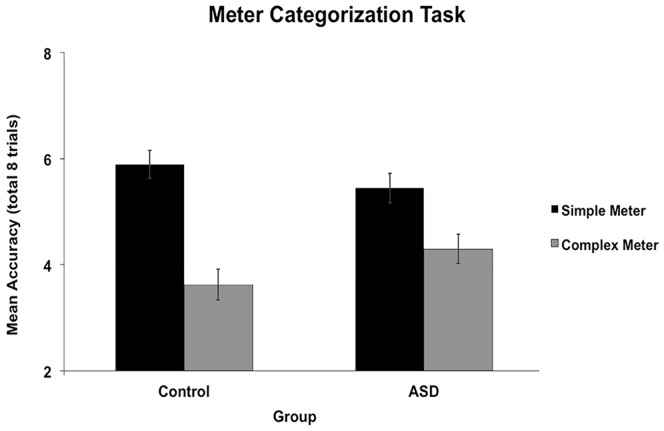
“Using the stimuli of [75], on each trial participants were first familiarized for 15 seconds with a melody based on traditional Eastern European folk music that either (4 trials) had a Western-typical simple meter (8 note measure subdivided into 2+2+2+2 250 msec beats) or (4 trials) had a Western-atypical complex mete…”
BackgroundMethodInfluentialPlaisted, K., Swettenham, J., & Rees, L. (1999) · Journal of Child Psychology and Psychiatry · doi:10.1111/1469-7610.00489 · Cited by 409
Rosenhall, U., Nordin, V., Sandström, M., Ahlsén, G., & Gillberg, C. (1999) · Journal of Autism and Developmental Disorders · doi:10.1023/a:1023022709710 · Cited by 403 · cited 1×
“Auditory processing is of particular interest in this regard as there are reports of both hypersensitivity to sound [12–17] and hyposensitivity to sound [15,18–21], both of which could interfere with the quality of communicative exchanges and thereby interrupt language and communication development.”
BackgroundA Research Note: The Relations Among Social and Task Perceptions in Small Groups
Wheeless, L. R., Wheeless, V. E., & Dickson-Markman, F. (1982) · Small Group Behavior · doi:10.1177/104649648201300307 · Cited by 386
Werker, J. F., & Tees, R. C. (2005) · Developmental Psychobiology · doi:10.1002/dev.20060 · Cited by 381 · cited 2×
“Typically developing infants are able to discriminate between all possible speech contrasts at 6 months of age, but by 12 months, infants have already become specialized for categorical contrasts used in their native language and have difficulty discriminating contrasts used in foreign languages but not their native l…”
BackgroundSensory integration and the perceptual experience of persons with autism
Iarocci, G., & McDonald, J. (2006) · Journal of Autism and Developmental Disorders · doi:10.1007/s10803-005-0044-3 · Cited by 376 · cited 1×
“It is possible that the reduction of long-range connectivity in ASD results in inadequate integration of auditory and visual information and perhaps a lack of top-down modulation of activity in sensory regions [29,30,122].”
BackgroundSpontaneous Motor Entrainment to Music in Multiple Vocal Mimicking Species
Schachner, A., Brady, T. F., Pepperberg, I. M., & Hauser, M. D. (2009) · Current Biology · doi:10.1016/j.cub.2009.03.061 · Cited by 372 · cited 1×
“Few species can entrain to an auditory beat, and all those who do so appear to be vocal learners [101,102].”
BackgroundRosenblum, L. D., Schmuckler, M. A., & Johnson, J. A. (1997) · Perception & Psychophysics · doi:10.3758/bf03211902 · Cited by 367
Baker, A. E. Z., Lane, A., Angley, M. T., & Young, R. L. (2008) · Journal of Autism and Developmental Disorders · doi:10.1007/s10803-007-0459-0 · Cited by 366 · cited 1×
“Questionnaire-based research on this topic suggests that those with ASD score high on items that tap into auditory filtering problems [37–41].”
BackgroundParents of Children with Asperger Syndrome: What is the Cognitive Phenotype?
Baron-Cohen, S., & Hammer, J. (1997) · Journal of Cognitive Neuroscience · doi:10.1162/jocn.1997.9.4.548 · Cited by 363
Musical Predispositions in Infancy
TREHUB, S. E. (2001) · Annals of the New York Academy of Sciences · doi:10.1111/j.1749-6632.2001.tb05721.x · Cited by 321 · cited 2×
“By at least as young as 6 months of age, infants process pitch using this type of code [63–66].”
BackgroundMethodSpeech‐in‐noise perception in high‐functioning individuals with autism or Asperger's syndrome
Alcántara, J. I., Weisblatt, E. J. L., Moore, B. C. J., & Bolton, P. F. (2004) · Journal of Child Psychology and Psychiatry · doi:10.1111/j.1469-7610.2004.t01-1-00303.x · Cited by 321 · cited 2×
“Behavioral tasks [43,44], auditory cortical event-related potentials (ERPs), and auditory brainstem responses (ABRs), the latter two derived from electroencephalogram (EEG) recordings [45,46–48], indicate filtering problems in ASD.”
BackgroundAbnormal asymmetry in language association cortex in autism
Herbert, M. R., Harris, G. J., Adrien, K. T., Ziegler, D. A., Makris, N., Kennedy, D. N., Lange, N. T., Chabris, C. F., Bakardjiev, A., Hodgson, J., et al. (2002) · Annals of Neurology · doi:10.1002/ana.10349 · Cited by 314 · cited 1×
“superior temporal gyrus (or Wernicke’s area) [36].”
Brain development in autism: Early overgrowth followed by premature arrest of growth
Courchesne, E. (2004) · Mental Retardation and Developmental Disabilities Research Reviews · doi:10.1002/mrdd.20020 · Cited by 298 · cited 2×
“months of age) and slows sooner compared to normal development [22–24].”
BackgroundAbsolute Pitch: An Approach for Identification of Genetic and Nongenetic Components
Baharloo, S., Johnston, P. A., Service, S. K., Gitschier, J., & Freimer, N. B. (1998) · The American Journal of Human Genetics · doi:10.1086/301704 · Cited by 297 · cited 1×
“In the typical population, the presence of absolute pitch is associated with early experience on a fixed-pitch instrument, leading researchers to speculate that it develops when there is a genetic predisposition combined with a particular environment [111].”
BackgroundReceptive and Expressive Prosodic Ability in Children With High-Functioning Autism
Peppé, S., McCann, J., Gibbon, F., O’Hare, A., & Rutherford, M. (2007) · Journal of Speech, Language, and Hearing Research · doi:10.1044/1092-4388(2007/071 · Cited by 296
A comparison of infants' and adults' sensitivity to Western musical structure.
Trainor, L. J., & Trehub, S. E. (1992) · Journal of Experimental Psychology: Human Perception and Performance · doi:10.1037//0096-1523.18.2.394 · Cited by 288 · cited 1×
“Such specialization occurs for both the rhythm (meter) structure [75–77] and the pitch (tonal) structure [64,78], and this musical enculturation is essential for appreciation of the music in one’s culture.”
BackgroundSelf-citationInfants'Perception of Melodies: The Role of Melodic Contour
Trehub, S. E., Bull, D., & Thorpe, L. A. (1984) · Child Development · doi:10.1111/j.1467-8624.1984.tb03819.x · Cited by 286 · cited 2×
“By at least as young as 6 months of age, infants process pitch using this type of code [63–66].”
BackgroundMethodJournal of Developmental and Physical Disabilities
(2013) · Journal of Developmental and Physical Disabilities · doi:10.1007/10882.1573-3580 · Cited by 270
Autism : nature, diagnosis, and treatment
Dawson, G. (1989) · Guilford Press eBooks · Cited by 247
Baranek, G. T., Boyd, B. A., Poe, M. D., David, F. J., & Watson, L. R. (2007) · American Journal on Mental Retardation · doi:10.1352/0895-8017(2007)112[233:hspiyc]2.0.co;2 · Cited by 239
Perception of Complex Sounds in Autism: Abnormal Auditory Cortical Processing in Children
Boddaert, N., Chabane, N., Belin, P., Bourgeois, M., Royer, V., Barthelemy, C., Mouren-Simeoni, M.-C., Philippe, A., Brunelle, F., Samson, Y., et al. (2004) · American Journal of Psychiatry · doi:10.1176/appi.ajp.161.11.2117 · Cited by 237 · cited 2×
“when listening to speech sounds, whereas controls show more left hemisphere activation [35].”
BackgroundFace recognition and lip-reading in autism
Gelder, B. D., Vroomen, J., & van der Heide, L. (1991) · European Journal of Cognitive Psychology · doi:10.1080/09541449108406220 · Cited by 235
Shukla, D. K., Keehn, B., & Müller, R. (2011) · Journal of Child Psychology and Psychiatry · doi:10.1111/j.1469-7610.2010.02342.x · Cited by 230 · cited 2×
“short-distance neural connectivity [25–27] and reduced longdistance neural connectivity [27–33].”
BackgroundKey membership and implied harmony in Western tonal music: Developmental perspectives
Trainor, L. J., & Trehub, S. E. (1994) · Perception & Psychophysics · doi:10.3758/bf03213891 · Cited by 223 · cited 3×
“Some implicit knowledge of harmonic structure can be seen by ages 4 to 7 [74,78,81,82], and explicit judgments emerge between 6 and 12 years of age [106].”
BackgroundSelf-citationNewborn infants can organize the auditory world
Winkler, I., Kushnerenko, E., Horváth, J., Čeponienė, R., Fellman, V., Huotilainen, M., Näätänen, R., & Sussman, E. (2003) · Proceedings of the National Academy of Sciences · doi:10.1073/pnas.2031891100 · Cited by 210 · cited 1×
“The ability to group sounds into different perceptual streams develops early, with evidence for segregation of both simultaneous sounds [113] and sequential sounds [114–118] during infancy, although this ability continues to improve until 9 to 11 years of age [119].”
BackgroundAudiovisual speech integration and lipreading in autism
Smith, E. G., & Bennetto, L. (2007) · Journal of Child Psychology and Psychiatry · doi:10.1111/j.1469-7610.2007.01766.x · Cited by 208 · cited 3×
“In an experimental task where the auditory and visual information was not in conflict and so no third percept was produced, Smith and Bennetto [62] examined multisensory integration by comparing speech perception performance with the audio alone and with the audio and visual information together.”
BackgroundResultAttention does not modulate neural responses to social stimuli in autism spectrum disorders
Bird, G., Catmur, C., Silani, G., Frith, C., & Frith, U. (2006) · NeuroImage · doi:10.1016/j.neuroimage.2006.02.037 · Cited by 201 · cited 1×
“It is possible that the reduction of long-range connectivity in ASD results in inadequate integration of auditory and visual information and perhaps a lack of top-down modulation of activity in sensory regions [29,30,122].”
BackgroundSchoen, S. A. (2009) · Frontiers in Integrative Neuroscience · doi:10.3389/neuro.07.029.2009 · Cited by 197 · cited 1×
“Questionnaire-based research on this topic suggests that those with ASD score high on items that tap into auditory filtering problems [37–41].”
BackgroundPoor-Pitch Singing in the Absence of "Tone Deafness"
Pfordresher, P. Q., & Brown, S. (2007) · Music Perception · doi:10.1525/mp.2007.25.2.95 · Cited by 196 · cited 1×
“on [90]), Absolute Pitch (based on [63,91]), Harmonic Priming”
BackgroundHearing Lips and Seeing Voices
Boston, D. (1977) · British Journal of Audiology · doi:10.3109/03005367709078839 · Cited by 190
Sensory versus cognitive components in harmonic priming.
Bigand, E., Poulin-Charronnat, B., Tillmann, B., Madurell, F., & D'Adamo, D. A. (2003) · Journal of Experimental Psychology Human Perception & Performance · doi:10.1037//0096-1523.29.1.159 · Cited by 185 · cited 1×
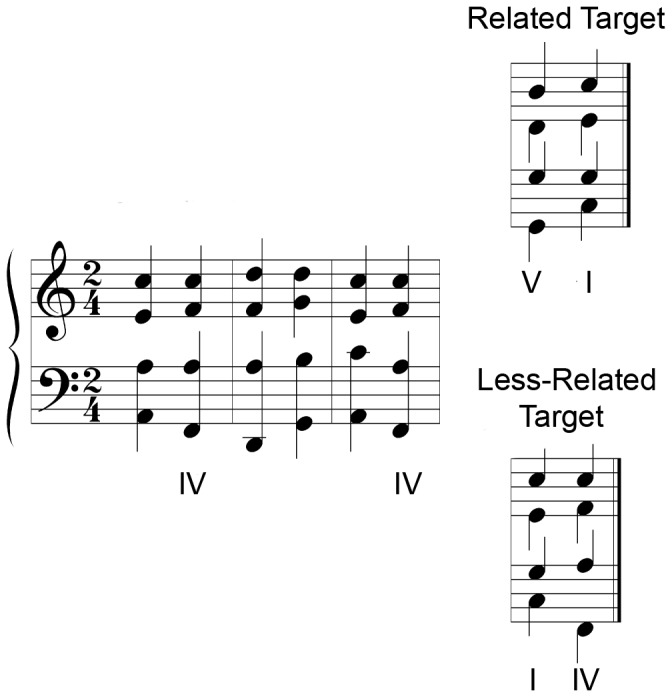
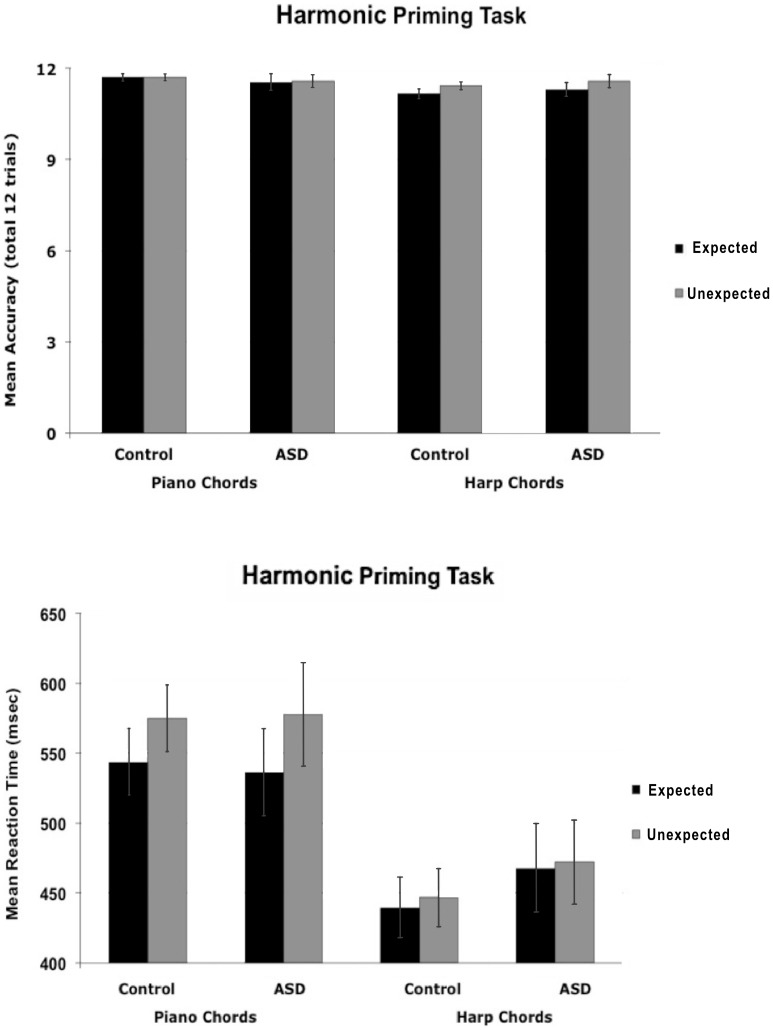
“Note that the target chord repeats in the prime context for the less-expected subdominant target chord (IV chord), but not for the expected tonic target chord (I chord), ruling out sensory priming explanations of observed processing differences (adapted from [130], Figure 2).”
BackgroundSelf-citationBrief report: A pilot study of auditory integration training in autism
Rimland, B., & Edelson, S. M. (1995) · Journal of Autism and Developmental Disorders · doi:10.1007/bf02178168 · Cited by 180 · cited 1×
“Auditory processing is of particular interest in this regard as there are reports of both hypersensitivity to sound [12–17] and hyposensitivity to sound [15,18–21], both of which could interfere with the quality of communicative exchanges and thereby interrupt language and communication development.”
BackgroundBrainstem transcription of speech is disrupted in children with autism spectrum disorders
Russo, N., Nicol, T., Trommer, B., Zecker, S., & Kraus, N. (2009) · Developmental Science · doi:10.1111/j.1467-7687.2008.00790.x · Cited by 179 · cited 1×
“Behavioral tasks [43,44], auditory cortical event-related potentials (ERPs), and auditory brainstem responses (ABRs), the latter two derived from electroencephalogram (EEG) recordings [45,46–48], indicate filtering problems in ASD.”
BackgroundVisual–auditory integration during speech imitation in autism
Williams, J. H. G., Massaro, D. W., Peel, N. J., Bosseler, A. N., & Suddendorf, T. (2004) · Research in Developmental Disabilities · doi:10.1016/j.ridd.2004.01.008 · Cited by 178 · cited 1×
“Critically, some of these studies indicate that these deficits might contribute to problems with the audio-visual integration of speech [60,61].”
BackgroundMethods for dealing with reaction time outliers.
Ratcliff, R. (1993) · Psychological Bulletin · doi:10.1037//0033-2909.114.3.510 · Cited by 170
From music making to speaking: Engaging the mirror neuron system in autism
Wan, C. Y., Demaine, K. L., Zipse, L., Norton, A. C., & Schlaug, G. (2010) · Brain Research Bulletin · doi:10.1016/j.brainresbull.2010.04.010 · Cited by 169 · cited 1×
“a scaffold for the organization of sensory input [126–128].”
BackgroundMental Retardation and Developmental Disabilities
(2008) · Encyclopedia of Counseling · doi:10.4135/9781412963978.n98 · Cited by 165
Effect of global structure and temporal organization on chord processing.
Bigand, E., Madurell, F., Tillmann, B., & Pineau, M. (1999) · Journal of Experimental Psychology Human Perception & Performance · doi:10.1037//0096-1523.25.1.184 · Cited by 165 · cited 1×
“For example, when the final chord of the sequence functions as the tonally related (supposed to be expected) tonic chord, response times on this chord were faster than when the final chord functions as the lessrelated (supposed to be less-expected) subdominant chord [82,83,85,86].”
BackgroundSelf-citationEnhanced Cortical Connectivity in Absolute Pitch Musicians: A Model for Local Hyperconnectivity
Loui, P., Li, H. C., Hohmann, A., & Schlaug, G. (2011) · Journal of Cognitive Neuroscience · doi:10.1162/jocn.2010.21500 · Cited by 158 · cited 1×
“Recent research suggests that in the general population, those with absolute pitch ability show local hyperconnectivity between the posterior superior and middle temporal gyri [112].”
BackgroundBerry, H., & Rl, B. (1976) · PubMed · Cited by 149
Finnigan, E., & Starr, E. M. (2010) · Autism · doi:10.1177/1362361309357747 · Cited by 144 · cited 1×
“[109,124,125].”
Auditory spatial localization and attention deficits in autistic adults
Teder-Sälejärvi, W. A., Pierce, K., Courchesne, E., & Hillyard, S. A. (2005) · Cognitive Brain Research · doi:10.1016/j.cogbrainres.2004.10.021 · Cited by 140 · cited 1×
“Furthermore, those with ASD show less evidence of segregating incoming sounds into the auditory objects that compose them [46], and greater difficulty ignoring distracting sounds in peripheral spatial locations [45] compared to normal controls.”
BackgroundArousal, attention, and the socioemotional impairments of individuals with autism.
Dawson, G., & Lewy, A. (1989) · Cited by 138
Effects of Background Noise on Cortical Encoding of Speech in Autism Spectrum Disorders
Russo, N., Zecker, S., Trommer, B., Chen, J., & Kraus, N. (2009) · Journal of Autism and Developmental Disorders · doi:10.1007/s10803-009-0737-0 · Cited by 135 · cited 1×
“Behavioral tasks [43,44], auditory cortical event-related potentials (ERPs), and auditory brainstem responses (ABRs), the latter two derived from electroencephalogram (EEG) recordings [45,46–48], indicate filtering problems in ASD.”
BackgroundAuditory stream segregation in infancy
Demany, L. (1982) · Infant Behavior and Development · doi:10.1016/s0163-6383(82)80036-2 · Cited by 130 · cited 1×
“The ability to group sounds into different perceptual streams develops early, with evidence for segregation of both simultaneous sounds [113] and sequential sounds [114–118] during infancy, although this ability continues to improve until 9 to 11 years of age [119].”
BackgroundMusical Enculturation in Preschool Children: Acquisition of Key and Harmonic Knowledge
Corrigall, K. A., & Trainor, L. J. (2010) · Music Perception An Interdisciplinary Journal · doi:10.1525/mp.2010.28.2.195 · Cited by 128 · cited 2×
“Some implicit knowledge of harmonic structure can be seen by ages 4 to 7 [74,78,81,82], and explicit judgments emerge between 6 and 12 years of age [106].”
BackgroundSelf-citationOrganization and discrimination of repeating sound sequences by newborn infants
McAdams, S. E., & Bertoncini, J. (1997) · The Journal of the Acoustical Society of America · doi:10.1121/1.420349 · Cited by 124 · cited 1×
“The ability to group sounds into different perceptual streams develops early, with evidence for segregation of both simultaneous sounds [113] and sequential sounds [114–118] during infancy, although this ability continues to improve until 9 to 11 years of age [119].”
BackgroundMusical structure modulates semantic priming in vocal music
Poulin-Charronnat, B., Bigand, E., Madurell, F., & Peereman, R. (2004) · Cognition · doi:10.1016/j.cognition.2004.05.003 · Cited by 122
Intact Spectral but Abnormal Temporal Processing of Auditory Stimuli in Autism
Groen, W. B., van Orsouw, L., Huurne, N. T., Swinkels, S., van der Gaag, R.-J., Buitelaar, J. K., & Zwiers, M. P. (2009) · Journal of Autism and Developmental Disorders · doi:10.1007/s10803-008-0682-3 · Cited by 120
Heaton, P., Hudry, K., Ludlow, A., & Hill, E. (2008) · Cognitive Neuropsychology · doi:10.1080/02643290802336277 · Cited by 116
Brown, W. A., Cammuso, K., Sachs, H. T., Winklosky, B., Mullane, J., Bernier, R., Svenson, S., Arin, D., Rosen‐Sheidley, B., & Folstein, S. E. (2003) · Journal of Autism and Developmental Disorders · doi:10.1023/a:1022987309913 · Cited by 115 · cited 2×
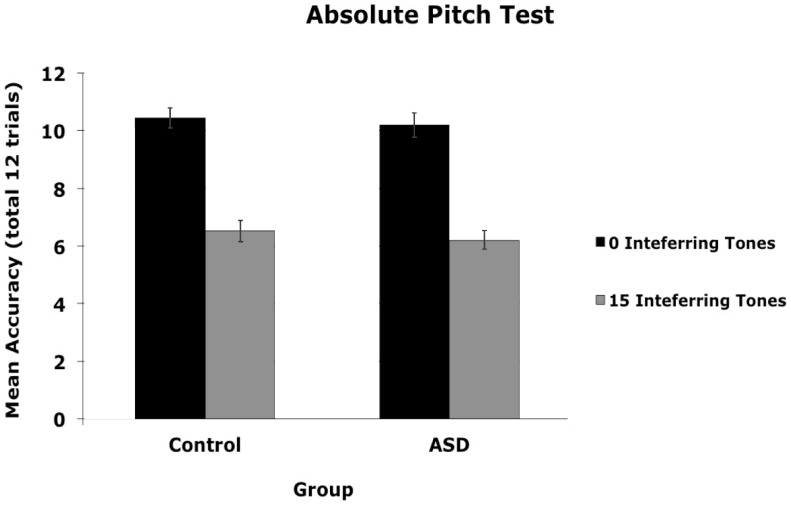
“To determine whether the ASD sample differed from the normal population, we used the binomial distribution and set the probability of absolute pitch to 5/10,000 [67,68].”
BackgroundMethodConventional rhythms enhance infants' and adults' perception of musical patterns
Trehub, S. E., & Hannon, E. E. (2008) · Cortex · doi:10.1016/j.cortex.2008.05.012 · Cited by 115
Assessing musical skills in autistic children who are not savants
Heaton, P. (2009) · Philosophical Transactions of the Royal Society B: Biological Sciences · doi:10.1098/rstb.2008.0327 · Cited by 113 · cited 1×
“Heaton [107] argues that absolute pitch in individuals with ASD is acquired differently than in the rest of the population with absolute pitch, and that anatomical features associated with absolute pitch in the normal population, such as the relative size of the planum temporale, are not present in those with ASD.”
BackgroundMusic Acquisition and Effects of Musical Experience
Trainor, L. J., & Corrigall, K. A. (2010) · Springer handbook of auditory research · doi:10.1007/978-1-4419-6114-3_4 · Cited by 110
Self-citationChildren's implicit knowledge of harmony in Western music
Schellenberg, E. G., Bigand, E., Poulin‐Charronnat, B., Garnier, C., & Stevens, C. (2005) · Developmental Science · doi:10.1111/j.1467-7687.2005.00447.x · Cited by 109 · cited 3×
“For example, when the final chord of the sequence functions as the tonally related (supposed to be expected) tonic chord, response times on this chord were faster than when the final chord functions as the lessrelated (supposed to be less-expected) subdominant chord [82,83,85,86].”
BackgroundUnusual brain growth patterns in early life in patients with autistic disorder: An MRI study
Courchesne, E., Karns, C., Davis, H., Ziccardi, R., Carper, R., Tigue, Z., Chisum, H. J., Moses, P., Pierce, K., Lord, C., et al. (2011) · Neurology · doi:10.1212/01.wnl.0000399191.79091.28 · Cited by 103 · cited 3×
“months of age) and slows sooner compared to normal development [22–24].”
BackgroundThe abilities of a musical savant and his family
Young, R. L., & Nettelbeck, T. (1995) · Journal of Autism and Developmental Disorders · doi:10.1007/bf02179286 · Cited by 94 · cited 2×
“Consistent with previous literature [69–72] we found a high instance of absolute pitch processing in our population with ASD (11% compared to 0% in the control group).”
BackgroundResultAllen, R., Hill, E., & Heaton, P. (2009) · Autism · doi:10.1177/1362361307098511 · Cited by 91
Absolute pitch in autism: A case study
Mottron, L., Peretz, I., Belleville, S., & Rouleau, N. (1999) · Neurocase · doi:10.1080/13554799908402744 · Cited by 90 · cited 1×
“Given that harmonic enculturation likely relies on relative pitch processing, this suggests that individuals with ASD may use absolute pitch processing in one task (pitch memory) and relative pitch processing in another task (harmonic priming), consistent with previous research [71].”
ResultA pseudo-savant: A case of exceptional musical splinter skills
Heaton, P., Pring, L., & Hermelin, B. (1999) · Neurocase · doi:10.1080/13554799908402745 · Cited by 87 · cited 1×
“At the same time, it should be pointed out that children and adults with ASD appear to perceive emotion in music similarly to normal controls [70,105].”
BackgroundEffects of Kindermusik training on infants’ rhythmic enculturation
Gerry, D., Faux, A. L., & Trainor, L. J. (2009) · Developmental Science · doi:10.1111/j.1467-7687.2009.00912.x · Cited by 86 · cited 1×
“Similar to the enculturation that occurs in language, infants exposed to Western music lose the ability to perceive complex meters in favour of simple meters that are common in their environment by 12 months of age [75,80].”
BackgroundSelf-citationEvidence for reduced domain‐specificity in auditory processing in autism
Järvinen‐Pasley, A., & Heaton, P. (2007) · Developmental Science · doi:10.1111/j.1467-7687.2007.00637.x · Cited by 86 · cited 2×
“This finding is also generally consistent with the research of Heaton and colleagues [107– 109], which suggests that musical pitch processing is more spared than speech processing in those with ASD.”
ResultInfants' Perception of Melodies: The Role of Melodic Contour
Trehub, S. E., Bull, D. H., & Thorpe, L. A. (1984) · Child Development · doi:10.2307/1130133 · Cited by 83
Visual influences on speech perception in children with autism
Iarocci, G., Rombough, A., Yager, J., Weeks, D. J., & Chua, R. (2010) · Autism · doi:10.1177/1362361309353615 · Cited by 79
Autism, Music, and the Therapeutic Potential of Music in Alexithymia
Allen, R., & Heaton, P. (2010) · Music Perception · doi:10.1525/mp.2010.27.4.251 · Cited by 76 · cited 1×
“a scaffold for the organization of sensory input [126–128].”
BackgroundAuditory stream segregation in children with Asperger syndrome
Lepistö, T., Kuitunen, A., Sussman, E., Saalasti, S., Jansson-Verkasalo, E., Nieminen-von Wendt, T., & Kujala, T. (2009) · Biological Psychology · doi:10.1016/j.biopsycho.2009.09.004 · Cited by 75 · cited 2×
“This latter difficulty persisted in the ASD group even after accounting for receptive vocabulary, which is consistent with other reports of difficulty filtering non-speech stimuli [46].”
BackgroundResultSussman, E. S., Wong, R., Horváth, J., Winkler, I., & Wang, W. (2007) · Hearing Research · doi:10.1016/j.heares.2006.12.013 · Cited by 74
Experimental Evidence for Synchronization to a Musical Beat in a Nonhuman Animal
Patel, A. D., Iversen, J. R., Bregman, M. R., & Schulz, I. (2009) · Current Biology · doi:10.1016/j.cub.2009.05.023 · Cited by 67
Neural pathways for language in autism: the potential for music-based treatments
Wan, C. Y., & Schlaug, G. (2010) · Future Neurology · doi:10.2217/fnl.10.55 · Cited by 66 · cited 1×
“a scaffold for the organization of sensory input [126–128].”
BackgroundYoung Children's Harmonic Perception
Costa-Giomi, E. (2003) · Annals of the New York Academy of Sciences · doi:10.1196/annals.1284.058 · Cited by 64 · cited 1×
“Some implicit knowledge of harmonic structure can be seen by ages 4 to 7 [74,78,81,82], and explicit judgments emerge between 6 and 12 years of age [106].”
BackgroundAuditory hypersensitivity in children and teenagers with autistic spectrum disorder
Gomes, E., Rotta, N. T., Pedroso, F. S., Sleifer, P., & Danesi, M. C. (2004) · Arquivos de Neuro-Psiquiatria · doi:10.1590/s0004-282x2004000500011 · Cited by 61 · cited 1×
“Auditory processing is of particular interest in this regard as there are reports of both hypersensitivity to sound [12–17] and hyposensitivity to sound [15,18–21], both of which could interfere with the quality of communicative exchanges and thereby interrupt language and communication development.”
BackgroundBeyond Perception: Musical Representation and On-line Processing in Autism
Heaton, P. F., Williams, K., Cummins, O., & Happe, F. G. E. (2006) · Journal of Autism and Developmental Disorders · doi:10.1007/s10803-006-0283-y · Cited by 61 · cited 2×
“One study asked participants with ASD to report aloud if chord sequences sounded complete or not [87].”
BackgroundTeaching Young Children with Autism Graphic Symbols Embedded Within an Interactive Song
Simpson, K., & Keen, D. (2009) · Journal of Developmental and Physical Disabilities · doi:10.1007/s10882-009-9173-5 · Cited by 59 · cited 1×
“[109,124,125].”
Harmonic priming in an amusic patient: The power of implicit tasks
Tillmann, B., Peretz, I., Bigand, E., & Gosselin, N. H. (2007) · Cognitive Neuropsychology · doi:10.1080/02643290701609527 · Cited by 58 · cited 1×
“For example, when the final chord of the sequence functions as the tonally related (supposed to be expected) tonic chord, response times on this chord were faster than when the final chord functions as the lessrelated (supposed to be less-expected) subdominant chord [82,83,85,86].”
BackgroundSelf-citationA nonmusical paradigm for identifying absolute pitch possessors
Ross, D. A., Olson, I. R., Marks, L. E., & Gore, J. C. (2004) · The Journal of the Acoustical Society of America · doi:10.1121/1.1758973 · Cited by 58 · cited 1×
“on [90]), Absolute Pitch (based on [63,91]), Harmonic Priming”
BackgroundAuditory Stream Segregation Improves Infants’ Selective Attention to Target Tones Amid Distracters
Smith, N. A., & Trainor, L. J. (2011) · Infancy · doi:10.1111/j.1532-7078.2011.00067.x · Cited by 57 · cited 1×
“The ability to group sounds into different perceptual streams develops early, with evidence for segregation of both simultaneous sounds [113] and sequential sounds [114–118] during infancy, although this ability continues to improve until 9 to 11 years of age [119].”
BackgroundSelf-citationThe influence of musical relatedness on timbre discrimination
Tillmann, B., Bigand, E., Escoffier, N., & Lalitte, P. (2006) · The European Journal of Cognitive Psychology · doi:10.1080/09541440500269548 · Cited by 52 · cited 5×
“For example, when the final chord of the sequence functions as the tonally related (supposed to be expected) tonic chord, response times on this chord were faster than when the final chord functions as the lessrelated (supposed to be less-expected) subdominant chord [82,83,85,86].”
BackgroundMethodResultInfluentialSelf-citationClayton, M. R. L. (2008) · Oxford University Press eBooks · doi:10.1093/acprof:oso/9780195339680.001.0001 · Cited by 44 · cited 1×
“, 3:2) [73,79].”
Han, L. A., & Poulsen, T. (1998) · Scandinavian Audiology · doi:10.1080/010503998420342 · Cited by 43
Constantino, J. N., Yang, D., Gray, T., Gross, M. M., Abbacchi, A. M., Smith, S. C., Kohn, C. E., & Kuhl, P. K. (2006) · Journal of Autism and Developmental Disorders · doi:10.1007/s10803-006-0269-9 · Cited by 41
Processing simultaneous auditory objects: Infants’ ability to detect mistuning in harmonic complexes
Folland, N. A., Butler, B. E., Smith, N. A., & Trainor, L. J. (2012) · The Journal of the Acoustical Society of America · doi:10.1121/1.3651254 · Cited by 40
Self-citationAbsolute pitch in autism: a case study
Mottron, L. (1999) · Neurocase · doi:10.1093/neucas/5.6.501 · Cited by 40
Chawarska, K., Constantino, J., Carter, A., et al. (2020) · Carolina Digital Repository (University of North Carolina at Chapel Hill) · doi:10.17615/mrg5-b045 · Cited by 30
Absolute Pitch in a Four-Year-Old Boy With Autism
Brenton, J. N., Devries, S. P., Barton, C., Minnich, H. M., & Sokol, D. K. (2008) · Pediatric Neurology · doi:10.1016/j.pediatrneurol.2008.05.004 · Cited by 23 · cited 2×
“Consistent with previous literature [69–72] we found a high instance of absolute pitch processing in our population with ASD (11% compared to 0% in the control group).”
BackgroundResultA pseudo-savant: a case of exceptional musical splinter skills
Heaton, P. F. (1999) · Neurocase · doi:10.1093/neucas/5.6.509 · Cited by 19
A retrospective journal-based case study of an infant with autism and his twin
Rutherford, M. D. (2005) · Neurocase · doi:10.1080/13554790590925529 · Cited by 14
Infants' Memory for Isolated Tones and the Effects of Interference
Plantinga, J. A., & Trainor, L. J. (2008) · Music Perception An Interdisciplinary Journal · doi:10.1525/mp.2008.26.2.121 · Cited by 14 · cited 1×
“on [90]), Absolute Pitch (based on [63,91]), Harmonic Priming”
BackgroundSelf-citationIntroduction: Mild cognitive impairment—cognitive, behavioral, and biological factors
Salmon, D. P., & Hodges, J. R. (2005) · Neurocase · doi:10.1080/13554790590927464 · Cited by 13
Organization and discrimination of repeating sound sequences by newborn infants
McAdams, S. E., Bertoncini, J., & Bobrow, J. (1990) · The Journal of the Acoustical Society of America · doi:10.1121/1.2029218 · Cited by 12
Allen, R., Hill, E. L., & Heaton, P. (2009) · Cited by 9
Introduction to Target Article
Bell, M. A. (2010) · Infancy · doi:10.1111/j.1532-7078.2010.00063.x · Cited by 8
The Audiovisual Tau Effect in Infancy
Kawabe, T., Shirai, N., Wada, Y., Miura, K., Kanazawa, S., & Yamaguchi, M. K. (2010) · PLoS ONE · doi:10.1371/journal.pone.0009503 · Cited by 7 · cited 1×
“Audiovisual integration is also present during the infancy period, both for speech and non-speech stimuli [120,121].”
BackgroundIntracortical circuitry: One of psychiatry?s missing assumptions
Casanova, M. F. (2004) · European Archives of Psychiatry and Clinical Neuroscience · doi:10.1007/s00406-004-0457-6 · Cited by 6 · cited 1×
“connectivity [25,26], it would be interesting to determine whether the brains of those with ASD and with absolute pitch also show this feature.”
BackgroundGriffiths, T. D. (2007) · Neuron · doi:10.1016/j.neuron.2007.11.004 · Cited by 3
Cook, E. H. (2009) · Autism Research · doi:10.1002/aur.82 · Cited by 2
Cited by
Autism Spectrum Disorder: Classification, diagnosis and therapy
Sharma, S. R., Gonda, X., & Tarazi, F. I. (2018) · Pharmacology & Therapeutics · doi:10.1016/j.pharmthera.2018.05.007 · Cited by 673
Autism as a disorder of prediction
Sinha, P., Kjelgaard, M. M., Gandhi, T. K., Tsourides, K., Cardinaux, A. L., Pantazis, D., Diamond, S. P., & Held, R. M. (2014) · Proceedings of the National Academy of Sciences · doi:10.1073/pnas.1416797111 · Cited by 563
Foxe, J. J., Molholm, S., Del Bene, V. A., Frey, H.-P., Russo, N. N., Blanco, D., Saint-Amour, D., & Ross, L. A. (2015) · Cerebral Cortex · doi:10.1093/cercor/bht213 · Cited by 263
“In a similar vein, DePape et al. (2012) asked ASD adolescents (n = 27) to repeat sentences presented to one ear while they tried to ignore competing sentences presented to the other ear.”
BackgroundVeridical mapping in the development of exceptional autistic abilities
Mottron, L., Bouvet, L., Bonnel, A., Samson, F., Burack, J. A., Dawson, M., & Heaton, P. (2013) · Neuroscience & Biobehavioral Reviews · doi:10.1016/j.neubiorev.2012.11.016 · Cited by 234
DePape, A.-M., & Lindsay, S. (2016) · Focus on Autism and Other Developmental Disabilities · doi:10.1177/1088357615587504 · Cited by 153
“These problems are documented in other research reporting sensory and perceptual problems among those with ASD (DePape, Hall, Tillmann, & Trainor, 2012; Kern et al., 2006).”
BackgroundSelf-citation
Metadata
- Authors
- DePape, A.-M. R., Hall, G. B. C., Tillmann, B., & Trainor, L. J.
- Affiliations
- McMaster University (CA)
- Lyon 1 Université (FR)
- Baycrest Hospital (CA)
- Corresponding author
- Trainor, Laurel J.
- Venue
- PLoS ONE
- Publisher
- Public Library of Science (PLoS)
- Published
- 2012-09-12
- Volume
- 7
- Issue
- 9
- Pages
- e44084
- ISSN
- 1932-6203 (ISSN-L)
- PMC
- PMC3440400
- OpenAlex
- W2050650787
- Cited by
- 139
- References
- 148
- Citations by year
- 2026: 5 · 2025: 13 · 2024: 18 · 2023: 13 · 2022: 14 · 2021: 10 · 2020: 9 · 2019: 14 · 2018: 7 · 2017: 8 · 2016: 1 · 2015: 7 · 2014: 11 · 2013: 6 · 2012: 2
- FWCI
- 4.25
- Type
- journal article
- Language
- en
- Open access
- gold
- doi.org
- Locations
- PLoS ONE (publishedVersion, cc-by)
- Europe PMC (PubMed Central) (publishedVersion, cc-by)
- PubMed Central (publishedVersion, cc-by)
- PubMed (publishedVersion)
- DOAJ (DOAJ: Directory of Open Access Journals) (submittedVersion, cc-by-sa)
- Funders
- Natural Sciences and Engineering Research Council of Canada
- Social Sciences and Humanities Research Council of Canada
- Topics
- Life Sciences › Neuroscience › Cognitive Neuroscience › Autism Spectrum Disorder Research
- Life Sciences › Neuroscience › Cognitive Neuroscience › Neuroscience and Music Perception
- Social Sciences › Psychology › Experimental and Cognitive Psychology › Multisensory perception and integration
- Keywords
- autism spectrum disorder, auditory processing, adolescents, auditory filtering, phoneme categorization, multisensory integration, audiovisual integration, pitch memory, absolute pitch, developmental framework
- MeSH terms
- Acoustic Stimulation, Adolescent, Auditory Perception, Child, Child Development Disorders, Pervasive, Demography, Humans, Male, Music, Phonetics, Speech Perception, Task Performance and Analysis, Signal-To-Noise Ratio
About these checks
Registry, retraction, Cites and statistics results are computed, not judged, with one exception: a printed reference that no index lists is read once by a model before it counts as a citation error. Claims are extracted by a model and kept only when their quote appears verbatim in the text; each cited source is then checked, with a model’s help, for whether it says what the claim relies on. Those verdicts can be wrong — read the claim’s quote and the cited source before relying on one.
Statistics and arithmetic are recomputed, not judged.
Confidence bands are shown only for fields calibrated on our annotated test set. None is calibrated yet, so no band is shown.
What counts as a claim ›How we measure confidence ›How we check this ›
Are you an author, or do you see a problem with this page? Request a review
Data sources
Bibliographic data: Semantic Scholar, OpenAlex, Crossref.
Contains information from the Semantic Scholar Academic Graph Datasets, made available under the ODC Attribution License (ODC-BY 1.0).
Semantic Scholar’s data is described in: Kinney, R., et al. (2023). The Semantic Scholar Open Data Platform. arXiv:2301.10140.
