

The Burden Attributable to Mental and Substance Use Disorders as Risk Factors for Suicide: Findings from the Global Burden of Disease Study 2010
Open accessThe DOI matches its Crossref record; 58 of the 58 references it cites were found in a registry or an index.
Abstract
BACKGROUND: The Global Burden of Disease Study 2010 (GBD 2010) identified mental and substance use disorders as the 5th leading contributor of burden in 2010, measured by disability adjusted life years (DALYs). This estimate was incomplete as it excluded burden resulting from the increased risk of suicide captured elsewhere in GBD 2010's mutually exclusive list of diseases and injuries. Here, we estimate suicide DALYs attributable to mental and substance use disorders. METHODS: Relative-risk estimates of suicide due to mental and substance use disorders and the global prevalence of each disorder were used to estimate population attributable fractions. These were adjusted for global differences in the proportion of suicide due to mental and substance use disorders compared to other causes then multiplied by suicide DALYs reported in GBD 2010 to estimate attributable DALYs (with 95% uncertainty). RESULTS: Mental and substance use disorders were responsible for 22.5 million (14.8-29.8 million) of the 36.2 million (26.5-44.3 million) DALYs allocated to suicide in 2010. Depression was responsible for the largest proportion of suicide DALYs (46.1% (28.0%-60.8%)) and anorexia nervosa the lowest (0.2% (0.02%-0.5%)). DALYs occurred throughout the lifespan, with the largest proportion found in Eastern Europe and Asia, and males aged 20-30 years. The inclusion of attributable suicide DALYs would have increased the overall burden of mental and substance use disorders (assigned to them in GBD 2010 as a direct cause) from 7.4% (6.2%-8.6%) to 8.3% (7.1%-9.6%) of global DALYs, and would have changed the global ranking from 5th to 3rd leading cause of burden. CONCLUSIONS: Capturing the suicide burden attributable to mental and substance use disorders allows for more accurate estimates of burden. More consideration needs to be given to interventions targeted to populations with, or at risk for, mental and substance use disorders as an effective strategy for suicide prevention.
Overview
The claims and statistics of this paper haven’t been checked yet.
Free: it reads the open-access text and checks the first 5 claims that cite a source we can check. Create a free account to check every claim.
Integrity signals
Registry
Cites
Statistics
Figures
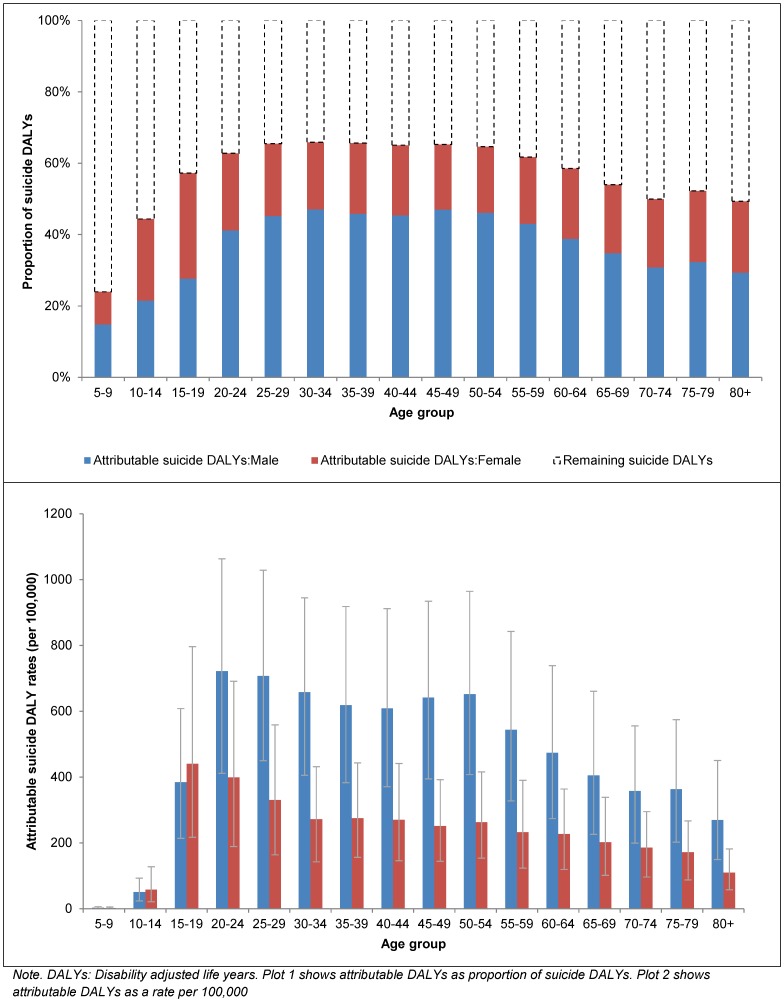
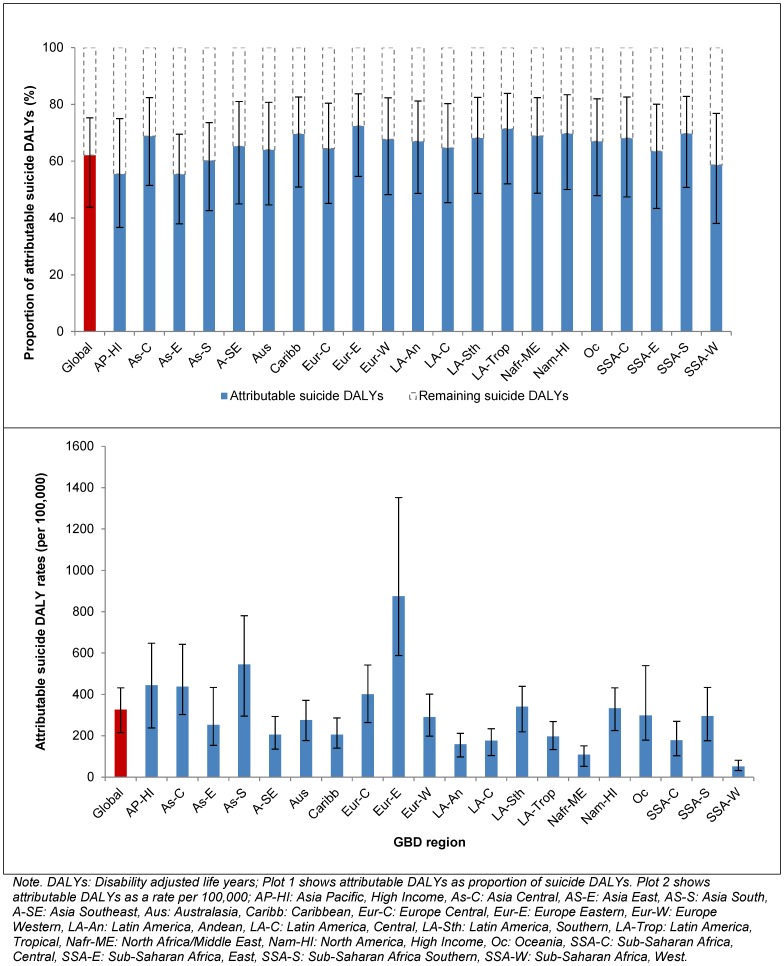
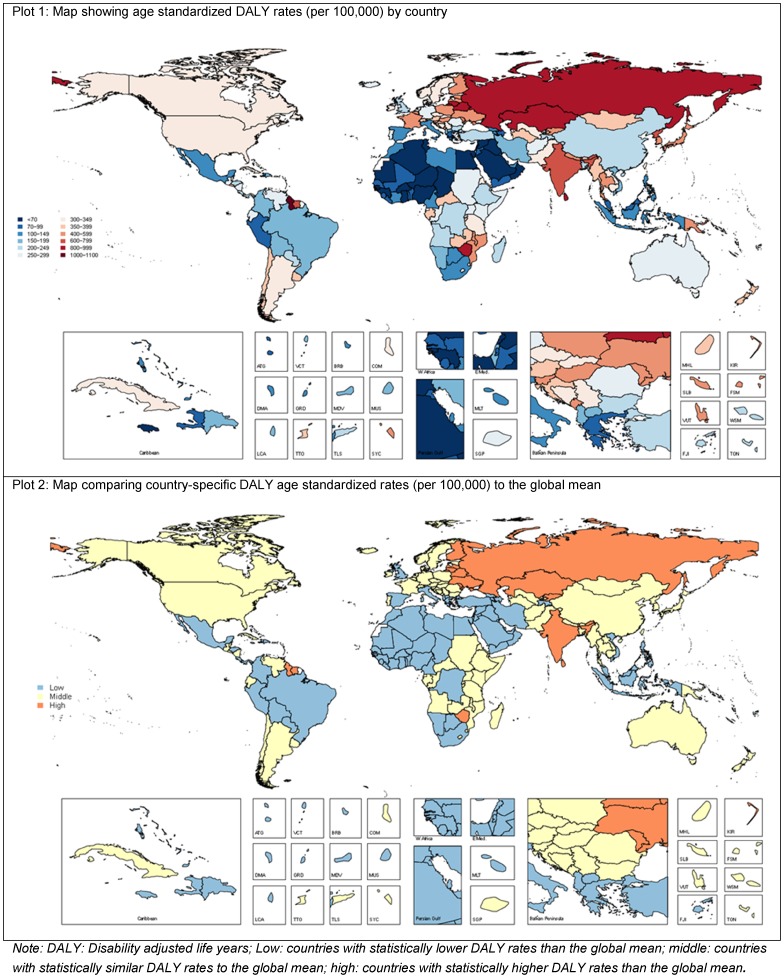
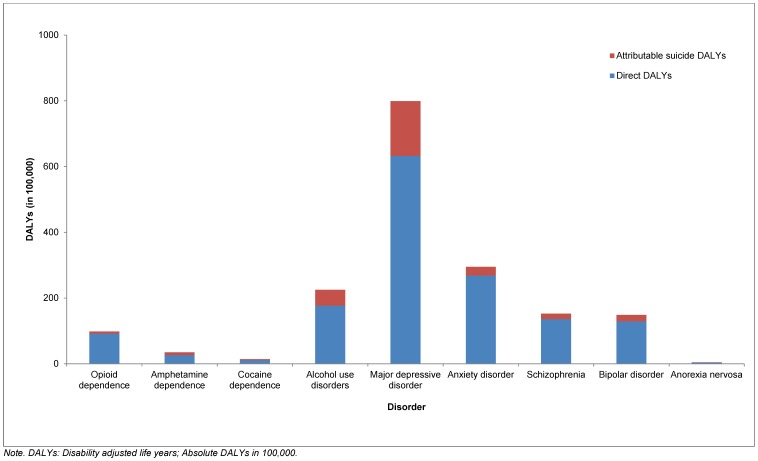
Verification
Claims the paper makes
The claims and statistics of this paper haven’t been checked yet.
Free: it reads the open-access text and checks the first 5 claims that cite a source we can check. Create a free account to check every claim.
Claims other papers make about this one
Each is checked against this paper’s own text: does it say what the citing paper says it does?
The cited source says what the claim attributes to it.
In the citing paper
“Supplementary GBD 2010 analyses found that the inclusion of attributable suicide DALYs would have increased the overall burden of mental and substance use disorders from 7·4% to 8·3% of all global DALYs, increasing their global ranking from fifth to third.36”
Self-check
Percentages, sums and reported differences re-computed from the paper’s own numbers.
The self-check needs the paper’s full text.
Citations
Cites
Preferred Reporting Items for Systematic Reviews and Meta-Analyses: the PRISMA statement
Moher, D., Liberati, A., Tetzlaff, J., Altman, D. G., & for the PRISMA Group (2009) · BMJ · doi:10.1136/bmj.b2535 · Cited by 83,823
Preferred Reporting Items for Systematic Reviews and Meta-Analyses: The PRISMA Statement
Moher, D., Liberati, A., Tetzlaff, J., Altman, D. G., & The PRISMA Group (2009) · PLoS Medicine · doi:10.1371/journal.pmed.1000097 · Cited by 64,042
Preferred reporting items for systematic reviews and meta-analyses: the PRISMA Statement.
(2009) · PubMed Central · Cited by 44,859
Lozano, R., Naghavi, M., Foreman, K., Lim, S., Shibuya, K., Aboyans, V., Abraham, J., Adair, T., Aggarwal, R., Ahn, S. Y., et al. (2012) · The Lancet · doi:10.1016/s0140-6736(12)61728-0 · Cited by 14,070
Self-citationLim, S. S., Vos, T., Flaxman, A. D., Danaei, G., Shibuya, K., Adair-Rohani, H., AlMazroa, M. A., Amann, M., Anderson, H. R., Andrews, K. G., et al. (2012) · The Lancet · doi:10.1016/s0140-6736(12)61766-8 · Cited by 11,805
Self-citationMurray, C. J. L., Vos, T., Lozano, R., Naghavi, M., Flaxman, A. D., Michaud, C., Ezzati, M., Shibuya, K., Salomon, J. A., Abdalla, S., et al. (2012) · The Lancet · doi:10.1016/s0140-6736(12)61689-4 · Cited by 8,888
Self-citationVos, T., Flaxman, A. D., Naghavi, M., Lozano, R., Michaud, C., Ezzati, M., Shibuya, K., Salomon, J. A., Abdalla, S., Aboyans, V., et al. (2012) · The Lancet · doi:10.1016/s0140-6736(12)61729-2 · Cited by 8,291
Self-citation(1996) · Cited by 6,884
Whiteford, H. A., Degenhardt, L., Rehm, J., Baxter, A. J., Ferrari, A. J., Erskine, H. E., Charlson, F. J., Norman, R. E., Flaxman, A. D., Johns, N., et al. (2013) · The Lancet · doi:10.1016/s0140-6736(13)61611-6 · Cited by 6,006
Self-citationHiggins, S. M. F., Macken, A. P., Cullen, W., Saunders, J., Dunne, C. P., & O’Gorman, C. S. (2013) · PubMed · doi:10.34961/9953 · Cited by 4,806
Research works printed but not linked: 2
- Flaxman AD, Vos T, Murray CJL, editors (2013) An integrative metaregression framework for descriptive epidemiology. Washington: University of Washington Press, In press.
- Bonita R, Beaglehole R, Kjellstrom T (2006) Basic epidemiology. Geneva World Health Organization
Cited by
Vos, T., Lim, S. S., Abbafati, C., Abbas, K. M., Abbasi, M., Abbasifard, M., Abbasi-Kangevari, M., Abbastabar, H., Abd-Allah, F., Abdelalim, A., et al. (2020) · The Lancet · doi:10.1016/s0140-6736(20)30925-9 · Cited by 19,358
Self-citationWang, H., Naghavi, M., Allen, C., Barber, R. M., Bhutta, Z. A., Carter, A., Casey, D. C., Charlson, F. J., Chen, A. Z., Coates, M. M., et al. (2016) · The Lancet · doi:10.1016/s0140-6736(16)31012-1 · Cited by 6,596
Self-citationEstimating the true global burden of mental illness
Vigo, D., Thornicroft, G., & Atun, R. (2016) · The Lancet Psychiatry · doi:10.1016/s2215-0366(15)00505-2 · Cited by 2,494
Why is depression more prevalent in women?
Albert, P. R. (2015) · Journal of Psychiatry and Neuroscience · doi:10.1503/jpn.150205 · Cited by 1,785
Global Burden of Disease and the Impact of Mental and Addictive Disorders
Rehm, J., & Shield, K. D. (2019) · Current Psychiatry Reports · doi:10.1007/s11920-019-0997-0 · Cited by 1,388
Epidemiology of suicide and the psychiatric perspective
Bachmann, S. (2018) · International Journal of Environmental Research and Public Health · doi:10.3390/ijerph15071425 · Cited by 1,377
Bennett, J. E., Stevens, G. A., Mathers, C. D., Bonita, R., Rehm, J., Kruk, M. E., Riley, L. M., Dain, K., Kengne, A. P., Chalkidou, K., et al. (2018) · The Lancet · doi:10.1016/s0140-6736(18)31992-5 · Cited by 1,336
Whiteford, H. A., Ferrari, A. J., Degenhardt, L., Feigin, V., & Vos, T. (2015) · PLOS ONE · doi:10.1371/journal.pone.0116820 · Cited by 1,175
Self-citationTime for united action on depression: a Lancet–World Psychiatric Association Commission
Herrman, H., Patel, V., Kieling, C., Berk, M., Buchweitz, C., Cuijpers, P., Furukawa, T. A., Kessler, R. C., Kohrt, B. A., Maj, M., et al. (2022) · The Lancet · doi:10.1016/s0140-6736(21)02141-3 · Cited by 1,104
Naghavi, M. (2019) · BMJ · doi:10.1136/bmj.l94 · Cited by 1,043
Patel, V., Chisholm, D., Parikh, R., Charlson, F. J., Degenhardt, L., Dua, T., Ferrari, A. J., Hyman, S., Laxminarayan, R., Levin, C., et al. (2016) · The Lancet · doi:10.1016/s0140-6736(15)00390-6 · Cited by 889
Self-citationMarx, W., Penninx, B. W. J. H., Solmi, M., Furukawa, T. A., Firth, J., Carvalho, A. F., & Berk, M. (2023) · Nature Reviews Disease Primers · doi:10.1038/s41572-023-00454-1 · Cited by 768
Erskine, H. E., Moffitt, T. E., Copeland, W. E., Costello, E. J., Ferrari, A. J., Patton, G., Degenhardt, L., Vos, T., Whiteford, H. A., & Scott, J. G. (2015) · Psychological Medicine · doi:10.1017/s0033291714002888 · Cited by 688
“…response to the absence of suicide YLLs from mental and substance use disorder burden, supplementary comparative risk assessment (CRA) analyses have been conducted to quantify the additional burden attributable to mental and substance use disorders as risk factors for suicide (Ferrari et al. 2014).”
BackgroundMethodInfluentialSelf-citationGlobal Burden of Disease Pediatrics Collaboration, Kyu, H. H., Pinho, C., Wagner, J. A., Brown, J. C., Bertozzi-Villa, A., Charlson, F. J., Coffeng, L. E., Dandona, L., Erskine, H. E., et al. (2016) · JAMA Pediatrics · doi:10.1001/jamapediatrics.2015.4276 · Cited by 618
Self-citationThe prevalence and burden of bipolar disorder: findings from the Global Burden of Disease Study 2013
Ferrari, A. J., Stockings, E., Khoo, J., Erskine, H. E., Degenhardt, L., Vos, T., & Whiteford, H. A. (2016) · Bipolar Disorders · doi:10.1111/bdi.12423 · Cited by 583
Self-citationHadlaczky, G., Hökby, S., Mkrtchian, A., Carli, V., & Wasserman, D. (2014) · International Review of Psychiatry · doi:10.3109/09540261.2014.924910 · Cited by 433
An overview of links between obesity and mental health
Avila, C., Holloway, A. C., Hahn, M. K., Morrison, K. M., Restivo, M., Anglin, R., & Taylor, V. H. (2015) · Current Obesity Reports · doi:10.1007/s13679-015-0164-9 · Cited by 366
Moitra, M., Santomauro, D., Collins, P. Y., Vos, T., Whiteford, H., Saxena, S., & Ferrari, A. J. (2022) · PLOS Medicine · doi:10.1371/journal.pmed.1003901 · Cited by 355
Self-citationDepression and Self-Harm Risk Assessment in Online Forums
Yates, A., Cohan, A., & Goharian, N. (2017) · Proceedings of the 2017 Conference on Empirical Methods in Natural Language Processing · doi:10.18653/v1/d17-1322 · Cited by 323
“Therefore identifying individuals at risk of selfharm and providing support to prevent it remains an important problem (Ferrari et al., 2014).”
BackgroundKnipe, D., Padmanathan, P., Newton-Howes, G., Chan, L. F., & Kapur, N. (2022) · The Lancet · doi:10.1016/s0140-6736(22)00173-8 · Cited by 331
Castelpietra, G., Knudsen, A. K. S., Agardh, E. E., Armocida, B., Beghi, M., Iburg, K. M., Logroscino, G., Ma, R., Starace, F., Steel, N., et al. (2022) · The Lancet Regional Health - Europe · doi:10.1016/j.lanepe.2022.100341 · Cited by 347
Self-citationA meta-analysis of acute use of alcohol and the risk of suicide attempt
Borges, G., Bagge, C. L., Cherpitel, C. J., Conner, K. R., Orozco, R., & Rossow, I. (2017) · Psychological Medicine · doi:10.1017/s0033291716002841 · Cited by 335
“25%), only behind major depressive disorder (Ferrari et al. 2014).”
BackgroundInfluentialGender, mental health and ageing
Kiely, K. M., Brady, B., & Byles, J. (2019) · Maturitas · doi:10.1016/j.maturitas.2019.09.004 · Cited by 316
Psychosocial interventions for self-harm in adults
Hawton, K., Witt, K. G., Taylor Salisbury, T. L., Arensman, E., Gunnell, D., Hazell, P., Townsend, E., & van Heeringen, K. (2016) · Cochrane Database of Systematic Reviews · doi:10.1002/14651858.cd012189 · Cited by 310
Responding to global stimulant use: challenges and opportunities
Farrell, M., Martin, N. K., Stockings, E., Bórquez, A., Cepeda, J. A., Degenhardt, L., Ali, R., Tran, L. T., Rehm, J., Torrens, M., et al. (2019) · The Lancet · doi:10.1016/s0140-6736(19)32230-5 · Cited by 310
Self-citationWiens, K., Bhattarai, A., Pedram, P., Dores, A., Williams, J., Bulloch, A., & Patten, S. (2020) · Epidemiology and Psychiatric Sciences · doi:10.1017/s2045796020000281 · Cited by 285
Suicidal Ideation Detection: A Review of Machine Learning Methods and Applications
Ji, S., Pan, S., Li, X., Cambria, E., Long, G., & Huang, Z. (2021) · IEEE Transactions on Computational Social Systems · doi:10.1109/tcss.2020.3021467 · Cited by 257
“[4] found that mental health issues and substance use disorders are attributed to the factors of suicide.”
BackgroundUncovering the hidden impacts of inequality on mental health: a global study
Yu, S. (2018) · Translational Psychiatry · doi:10.1038/s41398-018-0148-0 · Cited by 253
Moitra, M., Santomauro, D., Degenhardt, L., Collins, P. Y., Whiteford, H., Vos, T., & Ferrari, A. (2021) · Journal of Psychiatric Research · doi:10.1016/j.jpsychires.2021.02.053 · Cited by 252
Self-citationSocial media, big data, and mental health: current advances and ethical implications
Conway, M., & O’Connor, D. (2016) · Current Opinion in Psychology · doi:10.1016/j.copsyc.2016.01.004 · Cited by 231
“Mental illness (including substance abuse) is the fifth greatest contributor to the global burden of disease [1, 2].”
BackgroundA literature review and meta-analyses of cannabis use and suicidality
Borges, G., Bagge, C. L., & Orozco, R. (2016) · Journal of Affective Disorders · doi:10.1016/j.jad.2016.02.007 · Cited by 214
Du, X., & Pang, T. Y. (2015) · Frontiers in Psychiatry · doi:10.3389/fpsyt.2015.00032 · Cited by 205
Vicarious Social Defeat Stress Induces Depression-Related Outcomes in Female Mice
Iñiguez, S. D., Flores-Ramirez, F. J., Riggs, L. M., Alipio, J. B., Garcia-Carachure, I., Hernandez, M. A., Sanchez, D. O., Lobo, M. K., Serrano, P. A., Braren, S. H., et al. (2018) · Biological Psychiatry · doi:10.1016/j.biopsych.2017.07.014 · Cited by 208
Individual-level risk factors for suicide mortality in the general population: an umbrella review
Favril, L., Yu, R., Geddes, J. R., & Fazel, S. (2023) · The Lancet Public Health · doi:10.1016/s2468-2667(23)00207-4 · Cited by 193
Degenhardt, L., Baxter, A. J., Lee, Y. Y., Hall, W., Sara, G. E., Johns, N., Flaxman, A., Whiteford, H. A., & Vos, T. (2014) · Drug and Alcohol Dependence · doi:10.1016/j.drugalcdep.2013.12.025 · Cited by 187
Self-citationThe Burden of Mental Disorders in the Eastern Mediterranean Region, 1990-2013
Charara, R., Forouzanfar, M., Naghavi, M., Moradi-Lakeh, M., Afshin, A., Vos, T., Daoud, F., Wang, H., El Bcheraoui, C., Khalil, I., et al. (2017) · PLOS ONE · doi:10.1371/journal.pone.0169575 · Cited by 183
Self-citationCharlson, F. J., Baxter, A. J., Dua, T., Degenhardt, L., Whiteford, H. A., & Vos, T. (2015) · Epidemiology and Psychiatric Sciences · doi:10.1017/s2045796014000687 · Cited by 185
Self-citationPublic mental health: required actions to address implementation failure in the context of COVID-19
Campion, J., Javed, A., Lund, C., Sartorius, N., Saxena, S., Marmot, M., Allan, J., & Udomratn, P. (2022) · The Lancet Psychiatry · doi:10.1016/s2215-0366(21)00199-1 · Cited by 177
Semaglutide reduces alcohol intake and relapse-like drinking in male and female rats
Aranäs, C., Edvardsson, C. E., Shevchouk, O. T., Zhang, Q., Witley, S., Blid Sköldheden, S., Zentveld, L., Vallöf, D., Tufvesson-Alm, M., & Jerlhag, E. (2023) · eBioMedicine · doi:10.1016/j.ebiom.2023.104642 · Cited by 158
Hirvikoski, T., Boman, M., Chen, Q., D'Onofrio, B. M., Mittendorfer-Rutz, E., Lichtenstein, P., Bölte, S., & Larsson, H. (2020) · Psychological Medicine · doi:10.1017/s0033291719001405 · Cited by 157
Manyema, M., Norris, S. A., & Richter, L. (2018) · BMC Public Health · doi:10.1186/s12889-018-5767-0 · Cited by 187
“Mental, neurological and substance use disorders constitute a significant global disease burden, with 10% of global disability-adjusted life years (DALYs) attributed to these disorders in 2010 [12, 13].”
BackgroundRole of neuro-immunological factors in the pathophysiology of mood disorders
Bhattacharya, A., Derecki, N. C., Lovenberg, T. W., & Drevets, W. C. (2016) · Psychopharmacology · doi:10.1007/s00213-016-4214-0 · Cited by 149
“…(WHO) ranks MDD as the highest global cause of " years of life lived with disability " for all age groups, and projects that in 2030, MDD will rank first in global disease burden as measured in disability-adjusted life years (DALYs) (Ferrari et al. 2014; Kessler 2012; Whiteford et al. 2013).”
BackgroundCai, H. X., Jin, Y., Liu, S., Zhang, Q., Zhang, L., Cheung, T. C. C., Balbuena, L., & Xiang, Y. (2021) · Journal of Affective Disorders · doi:10.1016/j.jad.2021.05.115 · Cited by 169
Whiteford, H. A., Ferrari, A. J., Degenhardt, L., Feigin, V., & Vos, T. (2016) · Disease Control Priorities, Third Edition (Volume 4): Mental, Neurological, and Substance Use Disorders · doi:10.1596/978-1-4648-0426-7_ch2 · Cited by 137
Self-citationPalagini, L., Bastien, C. H., Marazziti, D., Ellis, J. G., & Riemann, D. (2019) · Journal of Sleep Research · doi:10.1111/jsr.12841 · Cited by 133
Psychosocial interventions for self-harm in adults
Witt, K. G., Hetrick, S. E., Rajaram, G., Hazell, P., Taylor Salisbury, T. L., Townsend, E., & Hawton, K. (2021) · Cochrane Database of Systematic Reviews · doi:10.1002/14651858.cd013668.pub2 · Cited by 124
Global burden of disease studies: implications for mental and substance use disorders
Whiteford, H., Ferrari, A., & Degenhardt, L. (2016) · Health Affairs · doi:10.1377/hlthaff.2016.0082 · Cited by 130
Self-citationFonseka, T. M., Bhat, V., & Kennedy, S. H. (2019) · Australian & New Zealand Journal of Psychiatry · doi:10.1177/0004867419864428 · Cited by 126
“Email: KennedyS@smh.ca; Sidney.Kennedy@uhn.ca Australian & New Zealand Journal of Psychiatry, 53(10) increase risk (Ferrari et al., 2014), with a previous suicide attempt being among the most potent predictors (Bostwick et al., 2016).”
BackgroundNeuroinflammation in Mood Disorders: Role of Regulatory Immune Cells
Bauer, M. E., & Teixeira, A. L. (2021) · Neuroimmunomodulation · doi:10.1159/000515594 · Cited by 121
Näher, A.-F., Rummel-Kluge, C., & Hegerl, U. (2020) · Frontiers in Psychiatry · doi:10.3389/fpsyt.2019.00898 · Cited by 111
“On the other, quantitative meta-studies reveal associations of mental disorders and suicide (24, 25), avoiding the methodological problems of psychological autopsy (26).”
BackgroundCarvalho, A. F., Stubbs, B., Vancampfort, D., Kloiber, S., Maes, M., Firth, J., Kurdyak, P. A., Stein, D. J., Rehm, J., & Koyanagi, A. (2019) · European Psychiatry · doi:10.1016/j.eurpsy.2018.10.006 · Cited by 111
Recognizing the role of the vagus nerve in depression from microbiota-gut brain axis
Tan, C., Yan, Q., Ma, Y., Fang, J., & Yang, Y. (2022) · Frontiers in Neurology · doi:10.3389/fneur.2022.1015175 · Cited by 130
Song, M., Ruan, J., Zhang, R., Deng, J., Ma, Z., & Ma, S. (2018) · Acta Pharmacologica Sinica · doi:10.1038/aps.2017.208 · Cited by 110
Pervin, Z., & Stephen, J. M. (2021) · AIMS neuroscience · doi:10.3934/neuroscience.2021021 · Cited by 125
Undergraduate nursing students’ attitudes toward mental health nursing
Thongpriwan, V., Leuck, S. E., Powell, R. L., Young, S., Schuler, S. G., & Hughes, R. G. (2015) · Nurse Education Today · doi:10.1016/j.nedt.2015.03.011 · Cited by 105
Collaborators, G. 2. E. M. R. M. H. (2018) · International Journal of Public Health · doi:10.1007/s00038-017-1006-1 · Cited by 105
“It is worth mentioning that some The burden of mental disorders in the eastern Mediterranean region, 1990–2015: findings from … S31 highly disabling conditions, such as acute schizophrenia, do not rank high in YLDs owing to their low prevalence (Ferrari et al. 2014).”
Psychiatric comorbidity increases mortality in immune-mediated inflammatory diseases
Marrie, R. A., Walld, R., Bolton, J. M., Sareen, J., Patten, S. B., Singer, A., Lix, L. M., Hitchon, C. A., El-Gabalawy, R., Katz, A., et al. (2018) · General Hospital Psychiatry · doi:10.1016/j.genhosppsych.2018.06.001 · Cited by 102
Long-term PM2.5 exposure and depressive symptoms in China: A quasi-experimental study
Xue, T., Guan, T., Zheng, Y., Geng, G., Zhang, Q., Yao, Y., & Zhu, T. (2020) · The Lancet Regional Health - Western Pacific · doi:10.1016/j.lanwpc.2020.100079 · Cited by 113
“[1] Ferrari AJ , Norman RE , Freedman G , et al.”
BackgroundHamdani, S. U., Huma, Z., Zafar, S. W., Suleman, N., Baneen, U.-U., Waqas, A., & Rahman, A. (2022) · International Journal of Mental Health Systems · doi:10.1186/s13033-022-00541-y · Cited by 129
“Given the high burden of youth mental health problems [4], evidencebased psychological interventions for prevention and treatment of anxiety and depression in adolescents have been developed [5, 6]; however, it is not fully understood which ‘ingredients’ of these interventions are effective to prevent and treat anxiet…”
BackgroundPalagini, L., Geoffroy, P. A., Miniati, M., Perugi, G., Biggio, G., Marazziti, D., & Riemann, D. W. (2021) · CNS Spectrums · doi:10.1017/s1092852921000018 · Cited by 108
Depression Screening in Humans With AI and Deep Learning Techniques
Wani, M. A., ELAffendi, M. A., Shakil, K. A., Imran, A. S., & El‐Latif, A. A. A. (2022) · IEEE Transactions on Computational Social Systems · doi:10.1109/tcss.2022.3200213 · Cited by 117
“These issues prevent such patients from getting timely treatment, this aggravates their condition, increases their anxiety levels and in some cases leads to suicidal attempts [5], [6].”
BackgroundWeye, N., Momen, N. C., Christensen, M. K., Iburg, K. M., Dalsgaard, S., Laursen, T. M., Mortensen, P. B., Santomauro, D. F., Scott, J. G., Whiteford, H. A., et al. (2020) · JAMA Network Open · doi:10.1001/jamanetworkopen.2020.6646 · Cited by 96
Self-citationSwannell, S., Martin, G., & Page, A. (2016) · Australian & New Zealand Journal of Psychiatry · doi:10.1177/0004867415615949 · Cited by 91
“These stressors are likely to also be associated with mental disorders, which are key antecedents to suicidal behaviour, particularly affective disorders (including depression), substance use disorders, anxiety disorders and schizophrenia (Ferrari et al., 2014; Li et al., 2011; Mann et al., 2005).”
BackgroundSelf-citationImmune-based strategies for mood disorders: facts and challenges
Colpo, G. D., Leboyer, M., Dantzer, R., Trivedi, M. H., & Teixeira, A. L. (2018) · Expert Review of Neurotherapeutics · doi:10.1080/14737175.2018.1407242 · Cited by 89
“burden as measured in disability-adjusted life years [6].”
BackgroundAlcohol, cannabis and other drugs and subsequent suicide ideation and attempt among young Mexicans
Borges, G. L. G., Benjet, C. L., Orozco, R., Medina‐Mora, M. E., & Menéndez, D. (2017) · Journal of Psychiatric Research · doi:10.1016/j.jpsychires.2017.02.025 · Cited by 93
Assessing Development Assistance for Mental Health in Developing Countries: 2007–2013
Gilbert, B. J., Patel, V., Farmer, P. E., & Lu, C. (2015) · PLOS Medicine · doi:10.1371/journal.pmed.1001834 · Cited by 89
Occhipinti, J., Page, A., Wells, R. W., Milat, A., & Wilson, A. J. (2015) · Implementation Science · doi:10.1186/s13012-015-0221-5 · Cited by 98
Self-citationStelmach, R. D., Kocher, E. L., Kataria, I., Jackson-Morris, A. M., Saxena, S., & Nugent, R. A. (2022) · BMJ Global Health · doi:10.1136/bmjgh-2021-007759 · Cited by 98
Pharmacological interventions for self-harm in adults
Hawton, K., Witt, K. G., Taylor Salisbury, T. L., Arensman, E., Gunnell, D., Hazell, P., Townsend, E., & van Heeringen, K. (2015) · Cochrane Database of Systematic Reviews · doi:10.1002/14651858.cd011777 · Cited by 81
Suicidal Thoughts, Attempts and Motives Among University Students in 12 Muslim-Majority Countries
Eskin, M., AlBuhairan, F. S., Rezaeian, M., Abdel‐Khalek, A. M., Harlak, H., El-Nayal, M., Asad, N., Khan, A. A., Mechri, A., Noor, I. M., et al. (2018) · Psychiatric Quarterly · doi:10.1007/s11126-018-9613-4 · Cited by 84
Is There an App for That? A Review of Popular Apps for Depression, Anxiety, and Well-Being
Wasil, A. R., Palermo, E. H., Lorenzo‐Luaces, L., & DeRubeis, R. J. (2021) · Cognitive and Behavioral Practice · doi:10.1016/j.cbpra.2021.07.001 · Cited by 103
Lee, J. E., Goh, M. L., & Yeo, S. F. (2023) · Heliyon · doi:10.1016/j.heliyon.2023.e14512 · Cited by 100
Bonadiman, C. S. C., Passos, V. M. D. A., Mooney, M., Naghavi, M., & Melo, A. P. S. (2017) · Revista Brasileira de Epidemiologia · doi:10.1590/1980-5497201700050016 · Cited by 123
Syme, K., & Hagen, E. H. (2019) · American Journal of Physical Anthropology · doi:10.1002/ajpa.23965 · Cited by 92
“In a related study, Ferrari et al. (2014) estimated that two-thirds of suicide DALYs were attributable to mental disorders, notably depression.”
BackgroundRao, G., Zhang, Y., Zhang, L., Cong, Q., & Feng, Z. (2020) · IEEE Access · doi:10.1109/access.2020.2973737 · Cited by 88
Limpanopparat, S., Gibson, E., & Harris, D. A. (2024) · Computers in Human Behavior: Artificial Humans · doi:10.1016/j.chbah.2024.100081 · Cited by 62
Komariah, M., Amirah, S., Faisal, E. G., Prayogo, S. A., Maulana, S., Platini, H., Suryani, S., Yosep, I., & Arifin, H. (2022) · Healthcare · doi:10.3390/healthcare10071224 · Cited by 70
Depression and anxiety following acute myocardial infarction in women
Liblik, K., Mulvagh, S. L., Hindmarch, C. C. T., Alavi, N., & Johri, A. M. (2021) · Trends in Cardiovascular Medicine · doi:10.1016/j.tcm.2021.07.005 · Cited by 77
Risk of suicide ideation in comorbid substance use disorder and major depression
Onaemo, V. N., Fawehinmi, T. O., & D’Arcy, C. (2022) · PLoS ONE · doi:10.1371/journal.pone.0265287 · Cited by 78
Lessons from a decade of suicide surveillance in India: who, why and how?
Dandona, R., Bertozzi-Villa, A., Kumar, G. A., & Dandona, L. (2016) · International Journal of Epidemiology · doi:10.1093/ije/dyw113 · Cited by 80
Palagini, L., Cipollone, G., Masci, I., Caruso, D., Paolilli, F., Perugi, G., & Riemann, D. (2019) · Comprehensive Psychiatry · doi:10.1016/j.comppsych.2018.12.009 · Cited by 70
Stockings, E., Tran, L. T., Santo, T., Peacock, A., Larney, S., Santomauro, D., Farrell, M., & Degenhardt, L. (2019) · Addiction · doi:10.1111/add.14706 · Cited by 65
Self-citationSpagnolo, J., Champagne, F., Leduc, N., Rivard, M., Piat, M., Laporta, M., Melki, W., & Charfi, F. (2018) · International Journal of Mental Health Systems · doi:10.1186/s13033-018-0243-x · Cited by 72
“Stigmatization may lead to disinterest, especially among primary care staff, underdiagnoses and/or under-reporting, limited options for treatment beyond specialized care, and few research initiatives in the field [79, 80].”
BackgroundCostanza, A., Rothen, S., Achab, S., Thorens, G., Baertschi, M., Weber, K., Canuto, A., Richard-Lepouriel, H., Perroud, N. A., & ZULLINO, D. F. (2020) · International Journal of Mental Health and Addiction · doi:10.1007/s11469-020-00259-3 · Cited by 73
Suicide among people treated for drug use disorders: a Danish national record-linkage study
Hesse, M., Thylstrup, B., Seid, A. K., & Skogen, J. C. (2020) · BMC Public Health · doi:10.1186/s12889-020-8261-4 · Cited by 75
Sex Differences in Anxiety Disorders in Older Adults
Vasiliadis, H., Desjardins, F., Roberge, P., & Grenier, S. (2020) · Current Psychiatry Reports · doi:10.1007/s11920-020-01203-x · Cited by 71
Bai, Z.-G., Bo, A., Wu, S.-J., Gai, Q.-Y., & Chi, I. (2018) · Journal of Affective Disorders · doi:10.1016/j.jad.2018.07.057 · Cited by 59
Liu, S., Li, D., Zeng, H.-Y., Kan, L.-Y., Zou, W., Zhang, P., Gu, H., & Tang, X. (2017) · The International Journal of Neuropsychopharmacology · doi:10.1093/ijnp/pyx030 · Cited by 58
“The limited efficacy and serious side effects of current antidepressant drugs emphasize the demand for better approaches to the treatment of depression (Tanti and Belzung, 2010; Ferrari et al., 2014).”
BackgroundSuicide prevention in psychiatric patients
Wasserman, D., Carli, V., Iosue, M., Javed, A., & Herrman, H. (2021) · Asia-Pacific Psychiatry · doi:10.1111/appy.12450 · Cited by 77
Rehm, J., & Probst, C. (2018) · European Addiction Research · doi:10.1159/000488328 · Cited by 56
The androgen model of suicide completion
Lenz, B., Röther, M., Bouna-Pyrrou, P., Mühle, C., Tektas, O. Y., & Kornhuber, J. (2018) · Progress in Neurobiology · doi:10.1016/j.pneurobio.2018.06.003 · Cited by 62
“Alcohol use accounts for 22% of all global deaths from self-harm (WHO, 2014c) and 13% of disability-adjusted life years caused by suicides (Ferrari et al., 2014).”
Charlson, F. J., Baxter, A. J., Dua, T., Degenhardt, L., Whiteford, H. A., & Vos, T. (2016) · Disease Control Priorities, Third Edition (Volume 4): Mental, Neurological, and Substance Use Disorders · doi:10.1596/978-1-4648-0426-7_ch3 · Cited by 55
Self-citationHamdan, S., & Peterseil-Yaul, T. (2019) · Psychiatry Research · doi:10.1016/j.psychres.2019.06.024 · Cited by 57
Arenas, Á., Gómez–Restrepo, C., & Rondón, M. (2016) · Revista Colombiana de Psiquiatría · doi:10.1016/j.rcp.2016.03.006 · Cited by 81
Brooks, H. L., Syarif, A. K., Pedley, R., Irmansyah, I., Prawira, B., Lovell, K., Opitasari, C., Ardisasmita, A., Tanjun, I. S., Renwick, L., et al. (2021) · Child and Adolescent Psychiatry and Mental Health · doi:10.1186/s13034-021-00410-5 · Cited by 70
Global Priorities for Addressing the Burden of Mental, Neurological, and Substance Use Disorders
Patel, V., Chisholm, D., Parikh, R., Charlson, F. J., Degenhardt, L., Dua, T., Ferrari, A. J., Hyman, S., Laxminarayan, R., Levin, C., et al. (2016) · Disease Control Priorities, Third Edition (Volume 4): Mental, Neurological, and Substance Use Disorders · doi:10.1596/978-1-4648-0426-7_ch1 · Cited by 53
Self-citationOsteopathy and Mental Health: An Embodied, Predictive, and Interoceptive Framework
Bohlen, L., Shaw, R., Cerritelli, F., & Esteves, J. E. (2021) · Frontiers in Psychology · doi:10.3389/fpsyg.2021.767005 · Cited by 59
O’Leary-Barrett, M., Ryan, N. C., Pihl, R. O., & Conrod, P. (2016) · Journal of Consulting and Clinical Psychology · doi:10.1037/ccp0000082 · Cited by 58
“This includes an increased risk for mental health problems (Ferrari et al., 2014; McGue, Iacono, Legrand, Malone, & Elkins, 2001) and addiction in adulthood.”
InfluentialAudet, C. M., Ngobeni, S., Graves, E., & Wagner, R. G. (2017) · PLoS ONE · doi:10.1371/journal.pone.0188433 · Cited by 62
Metadata
- Authors
- Ferrari, A. J., Norman, R. E., Freedman, G., Baxter, A. J., Pirkis, J. E., Harris, M. G., Page, A., Carnahan, E., Degenhardt, L., Vos, T., & Whiteford, H. A.
- Affiliations
- The University of Queensland (AU)
- University of Washington (US)
- The University of Melbourne (AU)
- Western Sydney University (AU)
- Corresponding author
- Ferrari, Alize J.
- Norman, Rosana E.
- Freedman, Greg
- Baxter, Amanda J.
- Pirkis, Jane E.
- Harris, Meredith G.
- Page, Andrew
- Carnahan, Emily
- Degenhardt, Louisa
- Vos, Theo
- Whiteford, Harvey A.
- ORCID
- Venue
- PLoS ONE
- Publisher
- Public Library of Science (PLoS)
- Published
- 2014-04-02
- Volume
- 9
- Issue
- 4
- Pages
- e91936
- ISSN
- 1932-6203 (ISSN-L)
- PMC
- PMC3973668
- OpenAlex
- W2026768928
- Cited by
- 480
- References
- 58
- Citations by year
- 2026: 18 · 2025: 25 · 2024: 37 · 2023: 53 · 2022: 74 · 2021: 47 · 2020: 61 · 2019: 31 · 2018: 43 · 2017: 25 · 2016: 30 · 2015: 22 · 2014: 14
- FWCI
- 35.90
- Type
- journal article
- Language
- en
- Open access
- gold
- doi.org
- Locations
- PLoS ONE (publishedVersion, cc-by)
- Europe PMC (PubMed Central) (publishedVersion, cc-by)
- PubMed Central (publishedVersion, cc-by)
- PubMed (publishedVersion)
- QUT ePrints (Queensland University of Technology) (submittedVersion, cc-by)
- DOAJ (DOAJ: Directory of Open Access Journals) (submittedVersion, cc-by-sa)
- Minerva Access (University of Melbourne) (submittedVersion, cc-by)
- Funders
- Bill and Melinda Gates Foundation
- University of Washington
- Australian Government
- University of New South Wales
- Department of Health and Aged Care, Australian Government
- Medical Research Council
- National Health and Medical Research Council
- National Drug and Alcohol Research Centre
- Topics
- Social Sciences › Psychology › Clinical Psychology › Suicide and Self-Harm Studies
- Health Sciences › Medicine › Psychiatry and Mental health › Mental Health Treatment and Access
- Social Sciences › Sociology and Political Science › Homicide, Infanticide, and Child Abuse
- Keywords
- suicide, mental illness, substance use disorders, depression, anorexia nervosa, disability-adjusted life years, attributable burden, population attributable fraction, suicide prevention, global burden of disease
- MeSH terms
- Suicide Prevention, Mental Disorders, Female, Humans, Male, Cost of Illness, Substance-Related Disorders
About these checks
Registry, retraction, Cites and statistics results are computed, not judged, with one exception: a printed reference that no index lists is read once by a model before it counts as a citation error. Claims are extracted by a model and kept only when their quote appears verbatim in the text; each cited source is then checked, with a model’s help, for whether it says what the claim relies on. Those verdicts can be wrong — read the claim’s quote and the cited source before relying on one.
Statistics and arithmetic are recomputed, not judged.
Confidence bands are shown only for fields calibrated on our annotated test set. None is calibrated yet, so no band is shown.
What counts as a claim ›How we measure confidence ›How we check this ›
Are you an author, or do you see a problem with this page? Request a review
Data sources
Bibliographic data: Semantic Scholar, OpenAlex, Crossref.
Contains information from the Semantic Scholar Academic Graph Datasets, made available under the ODC Attribution License (ODC-BY 1.0).
Semantic Scholar’s data is described in: Kinney, R., et al. (2023). The Semantic Scholar Open Data Platform. arXiv:2301.10140.
