

The DOI matches its Crossref record; 85 of the 86 references it cites were found in a registry or an index.
Gut microbiome diversity is associated with sleep physiology in humans
Open accessAbstract
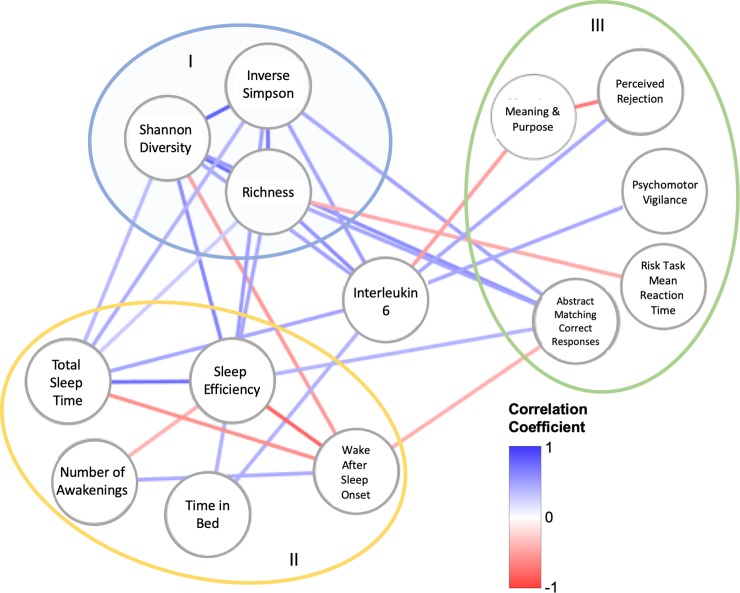
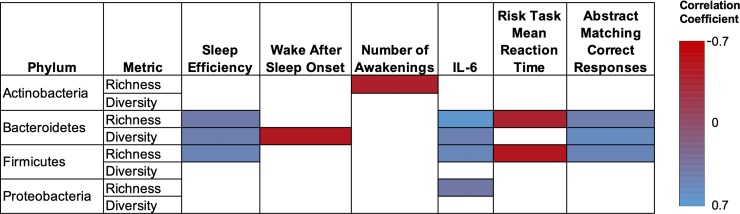
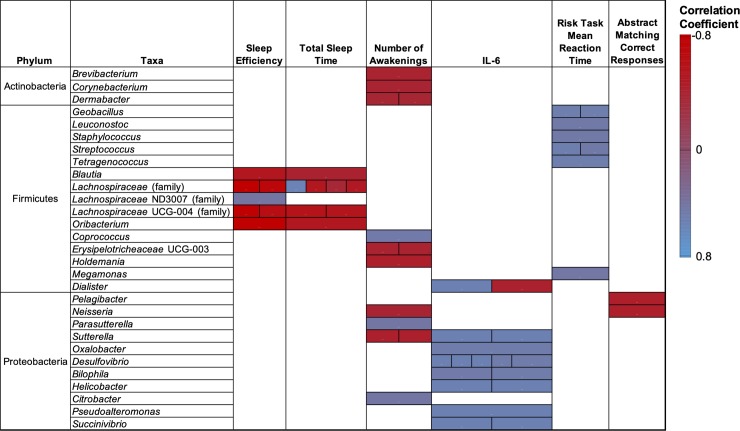
The human gut microbiome can influence health through the brain-gut-microbiome axis. Growing evidence suggests that the gut microbiome can influence sleep quality. Previous studies that have examined sleep deprivation and the human gut microbiome have yielded conflicting results. A recent study found that sleep deprivation leads to changes in gut microbiome composition while a different study found that sleep deprivation does not lead to changes in gut microbiome. Accordingly, the relationship between sleep physiology and the gut microbiome remains unclear. To address this uncertainty, we used actigraphy to quantify sleep measures coupled with gut microbiome sampling to determine how the gut microbiome correlates with various measures of sleep physiology. We measured immune system biomarkers and carried out a neurobehavioral assessment as these variables might modify the relationship between sleep and gut microbiome composition. We found that total microbiome diversity was positively correlated with increased sleep efficiency and total sleep time, and was negatively correlated with wake after sleep onset. We found positive correlations between total microbiome diversity and interleukin-6, a cytokine previously noted for its effects on sleep. Analysis of microbiome composition revealed that within phyla richness of Bacteroidetes and Firmicutes were positively correlated with sleep efficiency, interleukin-6 concentrations and abstract thinking. Finally, we found that several taxa (Lachnospiraceae, Corynebacterium, and Blautia) were negatively correlated with sleep measures. Our findings initiate linkages between gut microbiome composition, sleep physiology, the immune system and cognition. They may lead to mechanisms to improve sleep through the manipulation of the gut microbiome.
Overview
The claims and statistics of this paper haven’t been checked yet.
Run the check — free, no account needed. It reads the open-access text and checks the sources it cites.
Integrity signals
Registry
Cites
Statistics
Figures
Verification
Claims the paper makes
The claims and statistics of this paper haven’t been checked yet.
Run the check — free, no account needed. It reads the open-access text and checks the sources it cites.
Claims other papers make about this one
Each is checked against this paper’s own text: does it say what the citing paper says it does?
The cited source says what the claim attributes to it.
In the citing paper
“In recent years, studies have shown that sleep is closely related to the diversity of the intestinal flora.”
From Probiotics Regulate Gut Microbiota: An Effective Method to Improve Immunity (2021) · cites this paper as [90]
In the citing paper
“the regulation of intestinal flora may lead to novel sleep intervention strategies [90].”
From Probiotics Regulate Gut Microbiota: An Effective Method to Improve Immunity (2021) · cites this paper as [90]
In the citing paper
“the diversity of the gut microbiome promotes healthier sleep.”
From Probiotics Regulate Gut Microbiota: An Effective Method to Improve Immunity (2021) · cites this paper as [90]
In the citing paper
“transplanting fecal microbes to regulate gut microbes can improve sleep efficiency.”
From Probiotics Regulate Gut Microbiota: An Effective Method to Improve Immunity (2021) · cites this paper as [90]
In the citing paper
“short-term sleep control has little effect on intestinal microbial diversity, but intestinal microbial diversity can have a long-term impact on sleep quality.”
From Probiotics Regulate Gut Microbiota: An Effective Method to Improve Immunity (2021) · cites this paper as [90]
In the citing paper
“Smith et al. [90] demonstrated that the diversity of the gut microbiota would decrease because of sleep fragmentation, but increase due to good sleep quality and enough sleep time.”
From Probiotics Regulate Gut Microbiota: An Effective Method to Improve Immunity (2021) · cites this paper as [90]
In the citing paper
“Both REM and NREM sleep states also bidirectionally interact with the gut microbiome particularly affecting the delicate balance of the gut microbiota ( 33 ).”
From Prodromal dreams (2025) · cites this paper as [33]
Self-check
Percentages, sums and reported differences re-computed from the paper’s own numbers.
The self-check needs the paper’s full text.
Citations
Cites
R: A Language and Environment for Statistical Computing
R Core Team (2000) · doi:10.32614/r.manuals · Cited by 355,893
Cytoscape: A software Environment for integrated models of biomolecular interaction networks
Shannon, P., Markiel, A., Ozier, O., Baliga, N. S., Wang, J. T., Ramage, D., Amin, N., Schwikowski, B., & Ideker, T. (2003) · Genome Research · doi:10.1101/gr.1239303 · Cited by 51,888
DADA2: High–resolution sample inference from Illumina amplicon data
Callahan, B. J., McMurdie, P. J., Rosen, M. J., Han, A. W., Johnson, A. J. A., & Holmes, S. P. (2016) · Nature Methods · doi:10.1038/nmeth.3869 · Cited by 35,698
QIIME allows analysis of high-throughput community sequencing data
Caporaso, J. G., Kuczynski, J., Stombaugh, J., Bittinger, K., Bushman, F. D., Costello, E. K., Fierer, N., Peña, A. G., Goodrich, J. K., Gordon, J. I., et al. (2010) · Nature Methods · doi:10.1038/nmeth.f.303 · Cited by 34,887
vegan: Community Ecology Package
Oksanen, J., Simpson, G. L., Blanchet, F. G., Kindt, R., Legendre, P., Minchin, P. R., O’Hara, R. B., Sólymos, P., Stevens, M. H. H., Szöcs, E., et al. (2001) · doi:10.32614/cran.package.vegan · Cited by 27,099
Ultra-high-throughput microbial community analysis on the Illumina HiSeq and MiSeq platforms
Caporaso, J. G., Lauber, C. L., Walters, W. A., Berg-Lyons, D., Huntley, J., Fierer, N., Owens, S. M., Betley, J., Fraser, L., Bauer, M., et al. (2012) · The ISME Journal · doi:10.1038/ismej.2012.8 · Cited by 8,839
The Microbial Metabolites, Short-Chain Fatty Acids, Regulate Colonic T reg Cell Homeostasis
Smith, P. M., Howitt, M. R., Panikov, N., Michaud, M., Gallini, C. A., Bohlooly-Y, M., Glickman, J. N., & Garrett, W. S. (2013) · Science · doi:10.1126/science.1241165 · Cited by 5,413
Role of the microbiota in immunity and inflammation.
Belkaid, Y., & Hand, T. W. (2014) · Cell · doi:10.1016/j.cell.2014.03.011 · Cited by 5,385
Inflammation and Its Discontents: The Role of Cytokines in the Pathophysiology of Major Depression
Miller, A. H., Maletic, V., & Raison, C. L. (2009) · Biological Psychiatry · doi:10.1016/j.biopsych.2008.11.029 · Cited by 3,848
Ecological and Evolutionary Forces Shaping Microbial Diversity in the Human Intestine
Ley, R. E., Peterson, D. A., & Gordon, J. I. (2006) · Cell · doi:10.1016/j.cell.2006.02.017 · Cited by 3,358
Ohayon, M. M., Carskadon, M. A., Guilleminault, C., & Vitiello, M. V. (2004) · Sleep · doi:10.1093/sleep/27.7.1255 · Cited by 3,349
Zelante, T., Iannitti, R. G., Cunha, C., De Luca, A., Giovannini, G., Pieraccini, G., Zecchi, R., D’Angelo, C., Massi-Benedetti, C., Fallarino, F., et al. (2013) · Immunity · doi:10.1016/j.immuni.2013.08.003 · Cited by 2,614
Influence of diet on the gut microbiome and implications for human health
Singh, R. K., Chang, H.-W., Yan, D., Lee, K. M., Ucmak, D., Wong, K., Abrouk, M., Farahnik, B., Nakamura, M., Zhu, T. H., et al. (2017) · Journal of Translational Medicine · doi:10.1186/s12967-017-1175-y · Cited by 2,599
The gut-brain axis: interactions between enteric microbiota, central and enteric nervous systems.
(2015) · PubMed Central · Cited by 2,540
The gut microbiota influences blood-brain barrier permeability in mice
Braniste, V., Al-Asmakh, M., Kowal, C., Anuar, F., Abbaspour, A., Tóth, M., Korecka, A., Bakocevic, N., Ng, L. G., Kundu, P., et al. (2014) · Science Translational Medicine · doi:10.1126/scitranslmed.3009759 · Cited by 2,530
Cani, P. D., Possemiers, S., Van de Wiele, T., Guiot, Y., Everard, A., Rottier, O., Geurts, L., Naslain, D., Neyrinck, A., Lambert, D. M., et al. (2009) · Gut · doi:10.1136/gut.2008.165886 · Cited by 2,518
Gut–brain axis: How the microbiome influences anxiety and depression
Foster, J. A., & McVey Neufeld, K.-A. (2013) · Trends in Neurosciences · doi:10.1016/j.tins.2013.01.005 · Cited by 2,460 · cited 1×
“Perturbations to the BGMA have been associated with gastrointestinal disorders [4], depression and mental quality of life [5], Parkinson’s disease [6], increased anxiety [7], and decreased cognitive abilities [8].”
BackgroundA microbial symbiosis factor prevents intestinal inflammatory disease
Mazmanian, S. K., Round, J. L., & Kasper, D. L. (2008) · Nature · doi:10.1038/nature07008 · Cited by 2,340
Role of the gut microbiota in immunity and inflammatory disease
Kamada, N., Seo, S.-U., Chen, G. Y., & Núñez, G. (2013) · Nature reviews. Immunology · doi:10.1038/nri3430 · Cited by 2,256
Serotonin, tryptophan metabolism and the brain-gut-microbiome axis
O’Mahony, S. M., Clarke, G., Borre, Y. E., Dinan, T. G., & Cryan, J. F. (2015) · Behavioural Brain Research · doi:10.1016/j.bbr.2014.07.027 · Cited by 2,012
The neuroactive potential of the human gut microbiota in quality of life and depression
Valles-Colomer, M., Falony, G., Darzi, Y., Tigchelaar, E. F., Wang, J., Tito, R. Y., Schiweck, C., Kurilshikov, A., Joossens, M., Wijmenga, C., et al. (2019) · Nature Microbiology · doi:10.1038/s41564-018-0337-x · Cited by 1,963
Extensive impact of non-antibiotic drugs on human gut bacteria
Maier, L., Pruteanu, M., Kuhn, M., Zeller, G., Telzerow, A., Anderson, E. E., Brochado, A. R., Fernandez, K. C., Dose, H., Mori, H., et al. (2018) · Nature · doi:10.1038/nature25979 · Cited by 1,905
Short- and long-term health consequences of sleep disruption
Medic, G., Wille, M., & Hemels, M. (2017) · Nature and Science of Sleep · doi:10.2147/nss.s134864 · Cited by 1,776
Gut/brain axis and the microbiota
Mayer, E. A., Tillisch, K., & Gupta, A. (2015) · Journal of Clinical Investigation · doi:10.1172/jci76304 · Cited by 1,503
Moayyedi, P., Surette, M. G., Kim, P. T., Libertucci, J., Wolfe, M., Onischi, C., Armstrong, D., Marshall, J. K., Kassam, Z., Reinisch, W., et al. (2015) · Gastroenterology · doi:10.1053/j.gastro.2015.04.001 · Cited by 1,499
Vision assessment using the NIH Toolbox
Varma, R., McKean‐Cowdin, R., Vitale, S., Slotkin, J., & Hays, R. D. (2013) · Neurology · doi:10.1212/wnl.0b013e3182876e0a · Cited by 1,200
GABA-modulating bacteria of the human gut microbiota
Strandwitz, P., Kim, K. H., Terekhova, D., Liu, J. K., Sharma, A., Levering, J., McDonald, D., Dietrich, D., Ramadhar, T. R., Lekbua, A., et al. (2018) · Nature Microbiology · doi:10.1038/s41564-018-0307-3 · Cited by 1,170
Biddle, A. S., Stewart, L. C., Blanchard, J. L., & Leschine, S. B. (2013) · Diversity · doi:10.3390/d5030627 · Cited by 1,071
Sleep and Alzheimer disease pathology--a bidirectional relationship
Ju, Y.-E. S., Lucey, B. P., & Holtzman, D. M. (2014) · Nature Reviews Neurology · doi:10.1038/nrneurol.2013.269 · Cited by 996
Vgontzas, A. N., Papanicolaou, D. A., Bixler, E. O., Kales, A., Tyson, K., & Chrousos, G. P. (1997) · The Journal of Clinical Endocrinology & Metabolism · doi:10.1210/jcem.82.5.3950 · Cited by 974
Inflammation: The Common Pathway of Stress-Related Diseases
Liu, Y.-Z., Wang, Y.-X., & Jiang, C.-L. (2017) · Frontiers in Human Neuroscience · doi:10.3389/fnhum.2017.00316 · Cited by 800
Sleep duration as a risk factor for the development of type 2 diabetes
Yaggi, H. K., Araujo, A. B., & McKinlay, J. B. (2006) · Diabetes Care · doi:10.2337/diacare.29.03.06.dc05-0879 · Cited by 790
Maes, M., Song, C., Lin, A., De Jongh, R., Van Gastel, A., Kenis, G., Bosmans, E., De Meester, I., Benoy, I., Neels, H., et al. (1998) · Cytokine · doi:10.1006/cyto.1997.0290 · Cited by 772
Self-citationLong-term benefit of microbiota transfer therapy on autism symptoms and gut microbiota
Kang, D.-W., Adams, J. B., Coleman, D. M., Pollard, E. L., Maldonado, J., McDonough-Means, S., Caporaso, J. G., & Krajmalnik-Brown, R. (2019) · Scientific Reports · doi:10.1038/s41598-019-42183-0 · Cited by 749
Intestinal Microbiota Is Influenced by Gender and Body Mass Index
Haro, C., Rangel-Zúñiga, O. A., Alcalá-Díaz, J. F., Gómez-Delgado, F., Pérez-Martínez, P., Delgado-Lista, J., Quintana-Navarro, G. M., Landa, B. B., Navas-Cortés, J. A., Tena-Sempere, M., et al. (2016) · PLOS ONE · doi:10.1371/journal.pone.0154090 · Cited by 671 · cited 1×
“, [83]), which may result in different associations between taxa and measures of sleep.”
BackgroundThe Gut Microbiome and the Brain
Galland, L. (2014) · Journal of Medicinal Food · doi:10.1089/jmf.2014.7000 · Cited by 648
Youngster, I., Russell, G. H., Pindar, C., Ziv-Baran, T., Sauk, J., & Hohmann, E. L. (2014) · JAMA · doi:10.1001/jama.2014.13875 · Cited by 629
Brain-Gut-Microbiota Axis in Parkinson’s Disease
Mulak, A. (2015) · World Journal of Gastroenterology · doi:10.3748/wjg.v21.i37.10609 · Cited by 583
Circadian Interleukin-6 Secretion and Quantity and Depth of Sleep
Vgontzas, A. N., Papanicolaou, D. A., Bixler, E. O., Lotsikas, A., Zachman, K., Kales, A., Prolo, P., Wong, M.-L., Licinio, J., Gold, P. W., et al. (1999) · The Journal of Clinical Endocrinology & Metabolism · doi:10.1210/jcem.84.8.5894 · Cited by 516
Microbiome, metabolites and host immunity
Levy, M., Blacher, E., & Elinav, E. (2016) · Current Opinion in Microbiology · doi:10.1016/j.mib.2016.10.003 · Cited by 495
Poroyko, V. A., Carreras, A., Khalyfa, A., Khalyfa, A. A., Leone, V., Peris, E., Almendros, I., Gileles-Hillel, A., Qiao, Z., Hubert, N., et al. (2016) · Scientific Reports · doi:10.1038/srep35405 · Cited by 480
Regulatory B cells are induced by gut microbiota–driven interleukin-1β and interleukin-6 production
Rosser, E. C., Oļeiņika, K., Tonon, S., Doyle, R., Bosma, A., Carter, N. A., Harris, K., Jones, S. A., Klein, N. J., & Mauri, C. (2014) · Nature Medicine · doi:10.1038/nm.3680 · Cited by 477
Colonic transit time is related to bacterial metabolism and mucosal turnover in the gut
Roager, H. M., Hansen, L. B. S., Bahl, M. I., Frandsen, H. L., Carvalho, V., Gøbel, R. J., Dalgaard, M. D., Plichta, D. R., Sparholt, M. H., Vestergaard, H., et al. (2016) · Nature Microbiology · doi:10.1038/nmicrobiol.2016.93 · Cited by 449
Gottesmann, C. (2002) · Neuroscience · doi:10.1016/s0306-4522(02)00034-9 · Cited by 441
Lo, J. C., Groeger, J. A., Cheng, G. H., Dijk, D.-J., & Chee, M. W. L. (2016) · Sleep Medicine · doi:10.1016/j.sleep.2015.08.021 · Cited by 438
The Role of Cytokines in Physiological Sleep Regulation
Krueger, J. M., Obál, F., Fang, J., Kubota, T., & Taishi, P. (2001) · Annals of the New York Academy of Sciences · doi:10.1111/j.1749-6632.2001.tb05826.x · Cited by 432
Yunes, R. А., Poluektova, E. U., Dyachkova, M. S., Klimina, K. M., Kovtun, A. S., Averina, O. V., Orlova, V. S., & Даниленко, В. Н. (2016) · Anaerobe · doi:10.1016/j.anaerobe.2016.10.011 · Cited by 389
Redwine, L. S., Hauger, R. L., Gillin, J. C., & Irwin, M. R. (2000) · The Journal of Clinical Endocrinology & Metabolism · doi:10.1210/jcem.85.10.6871 · Cited by 373
How gut microbes talk to organs: The role of endocrine and nervous routes
Cani, P. D., & Knauf, C. (2016) · Molecular Metabolism · doi:10.1016/j.molmet.2016.05.011 · Cited by 342
IL-6 and its circadian secretion in humans
Vgontzas, A. N., Bixler, E. O., Lin, H.-M., Prolo, P., Trakada, G., & Chrousos, G. P. (2005) · Neuroimmunomodulation · doi:10.1159/000084844 · Cited by 338
The effects of 40 hours of total sleep deprivation on inflammatory markers in healthy young adults
Frey, D. J., Fleshner, M., & Wright, K. P. (2007) · Brain, Behavior, and Immunity · doi:10.1016/j.bbi.2007.04.003 · Cited by 330
Biochemical regulation of non-rapid-eye-movement sleep
Krueger, J. M. (2003) · Frontiers in Bioscience · doi:10.2741/1033 · Cited by 329
Benedict, C., Vogel, H., Jonas, W., Woting, A., Blaut, M., Schürmann, A., & Cedernaes, J. (2016) · Molecular Metabolism · doi:10.1016/j.molmet.2016.10.003 · Cited by 324 · cited 4×
“Specifically, Benedict and colleagues found that partial sleep deprivation alters the ratio between these two phyla [38].”
BackgroundResultInfluentialUrsin, R. (2002) · Sleep Medicine Reviews · doi:10.1053/smrv.2001.0174 · Cited by 323
Tahara, Y., Yamazaki, M., Sukigara, H., Motohashi, H., Sasaki, H., Miyakawa, H., Haraguchi, A., Ikeda, Y., Fukuda, S., & Shibata, S. (2018) · Scientific Reports · doi:10.1038/s41598-018-19836-7 · Cited by 317
Microbiota-gut-brain axis and the central nervous system
Zhu, X., Han, Y., Du, J., Liu, R., Jin, K., & Yi, W. (2017) · Oncotarget · doi:10.18632/oncotarget.17754 · Cited by 308
Change in Sleep Duration and Cognitive Function: Findings from the Whitehall II Study
Ferrie, J. E., Shipley, M. J., Akbaraly, T. N., Marmot, M. G., Mika Kivimaki, B., & Singh‐Manoux, A. (2011) · SLEEP · doi:10.1093/sleep/34.5.565 · Cited by 295
Potential Role for the Gut Microbiota in Modulating Host Circadian Rhythms and Metabolic Health
Parkar, S. G., Kalsbeek, A., & Cheeseman, J. F. (2019) · Microorganisms · doi:10.3390/microorganisms7020041 · Cited by 285
Redwine, L. S. (2000) · The Journal of Clinical Endocrinology & Metabolism · doi:10.1210/jc.85.10.3597 · Cited by 285
Emotion assessment using the NIH Toolbox
Salsman, J. M., Butt, Z. A., Pilkonis, P. A., Cyranowski, J. M., Zill, N., Hendrie, H. C., Kupst, M. J., Kelly, M. A. R., Bode, R. K., Choi, S. W., et al. (2013) · Neurology · doi:10.1212/wnl.0b013e3182872e11 · Cited by 285
Intermittent hypoxia alters gut microbiota diversity in a mouse model of sleep apnoea
Moreno‐Indias, I., Torres, M., Montserrat, J. M., Sánchez‐Alcoholado, L., Cardona, F., Tinahones, F. J., Gozal, D., Poroyko, V. A., Navajas, D., Queipo‐Ortuño, M. I., et al. (2014) · European Respiratory Journal · doi:10.1183/09031936.00184314 · Cited by 277
History of glutamate production
Sano, C. (2009) · American Journal of Clinical Nutrition · doi:10.3945/ajcn.2009.27462f · Cited by 234
Fecal microbiota transplantation cured epilepsy in a case with Crohn’s disease: The first report
He, Z., Cui, B., Zhang, T., Li, P., Long, C., Ji, G., & Zhang, F. (2017) · World Journal of Gastroenterology · doi:10.3748/wjg.v23.i19.3565 · Cited by 225
Sleep duration and the risk of prostate cancer: the Ohsaki Cohort Study
Kakizaki, M., Inoue, K., Kuriyama, S., Sone, T., Matsuda‐Ohmori, K., Nakaya, N., Fukudo, S., & Tsuji, I. (2008) · British Journal of Cancer · doi:10.1038/sj.bjc.6604425 · Cited by 216
The National Sleep Foundation's Sleep Health Index
Knutson, K. L., Phelan, J. E., Paskow, M. J., Roach, A., Whiton, K., Langer, G., Hillygus, D. S., Mokrzycki, M., Broughton, W. A., Chokroverty, S., et al. (2017) · Sleep Health · doi:10.1016/j.sleh.2017.05.011 · Cited by 211
Voderholzer, U., Al-Shajlawi, A., Weske, G., Feige, B., & Riemann, D. (2003) · Depression and Anxiety · doi:10.1002/da.10101 · Cited by 206
The relevance of sleep abnormalities to chronic inflammatory conditions
Ranjbaran, Z., Keefer, L., Stepanski, E. J., Farhadi, A., & Keshavarzian, A. (2007) · Inflammation Research · doi:10.1007/s00011-006-6067-1 · Cited by 191
Sleep duration and the risk of breast cancer: the Ohsaki Cohort Study
Kakizaki, M., Kuriyama, S., Sone, T., Ohmori-Matsuda, K., Hozawa, A., Nakaya, N., Fukudo, S., & Tsuji, I. (2008) · British Journal of Cancer · doi:10.1038/sj.bjc.6604684 · Cited by 187
Li, H., Lŭ, L., Wang, X., Qin, L., Wang, P., Qiu, S., Wu, H., Huang, F., Zhang, B., Shi, H., et al. (2017) · Frontiers in Cellular and Infection Microbiology · doi:10.3389/fcimb.2017.00455 · Cited by 184
Long-term Outcomes of Fecal Microbiota Transplantation in Patients With Cirrhosis
Bajaj, J. S., Fagan, A., Gavis, E. A., Kassam, Z., Sikaroodi, M., & Gillevet, P. M. (2019) · Gastroenterology · doi:10.1053/j.gastro.2019.01.033 · Cited by 183
Development and Validation of the Cognition Test Battery for Spaceflight
Basner, M., Savitt, A. P., Moore, T. M., Port, A. M., McGuire, S., Ecker, A. J., Nasrini, J., Mollicone, D. J., Mott, C. M., McCann, T., et al. (2015) · Aerospace Medicine and Human Performance · doi:10.3357/amhp.4343.2015 · Cited by 182
Ko, C., Liu, Q., Su, H., Zhang, H.-P., Fan, J., Yang, J., Hu, A., Liu, Y., Chou, D., & Zeng, Y. (2019) · Clinical Science · doi:10.1042/cs20180891 · Cited by 176
Anderson, J. R., Carroll, I. M., Azcárate-Peril, M. A., Rochette, A. D., Heinberg, L. J., Peat, C. M., Steffen, K. J., Manderino, L. M., Mitchell, J. E., & Gunstad, J. (2017) · Sleep Medicine · doi:10.1016/j.sleep.2017.07.018 · Cited by 175
Yeung, C., Chan, W., Jiang, C., Cheng, M.-L., Liu, C., Chang, S., Chiau, J. C., & Lee, H. (2015) · PLoS ONE · doi:10.1371/journal.pone.0138746 · Cited by 174
Interleukin-6 Is Associated With Cognitive Function: The Northern Manhattan Study
Wright, C. B., Sacco, R. L., Rundek, T., Delman, J. B., Rabbani, L. E., & Elkind, M. S. V. (2006) · Journal of Stroke and Cerebrovascular Diseases · doi:10.1016/j.jstrokecerebrovasdis.2005.08.009 · Cited by 168
The gut microbiome and irritable bowel syndrome
Menees, S., & Chey, W. (2018) · F1000Research · doi:10.12688/f1000research.14592.1 · Cited by 159 · cited 1×
“, [42]) can drastically alter gut microbiome composition.”
BackgroundKapsimalis, F., Richardson, G. S., Opp, M. R., & Kryger, M. H. (2005) · Current Opinion in Pulmonary Medicine · doi:10.1097/01.mcp.0000183062.98665.6b · Cited by 150
Poor sleep quality is associated with a negative cognitive bias and decreased sustained attention
Gobin, C., Banks, J., Fins, A., & Tartar, J. L. (2015) · Journal of Sleep Research · doi:10.1111/jsr.12302 · Cited by 147
Self-citationHuman and rat gut microbiome composition is maintained following sleep restriction
Zhang, S. L., Bai, L., Goel, N., Bailey, A., Jang, C. J., Bushman, F. D., Meerlo, P., Dinges, D. F., & Sehgal, A. (2017) · Proceedings of the National Academy of Sciences · doi:10.1073/pnas.1620673114 · Cited by 139
Rod, N. H., Meena Kumari, B., Lange, T., Mika Kivimaki, B., Shipley, M. J., & Ferrie, J. E. (2014) · PLoS ONE · doi:10.1371/journal.pone.0091965 · Cited by 116
Serotonin Increases Interleukin-6 Synthesis in Human Vascular Smooth Muscle Cells
Ito, T., Ikeda, U., Shimpo, M., Yamamoto, K., & Shimada, K. (2000) · Circulation · doi:10.1161/01.cir.102.20.2522 · Cited by 98
Interleukin-6 serum levels in healthy persons correspond to the sleep-wake cycle
Bauer, J., Hohagen, F., Ebert, T. H., Timmer, J., Ganter, U., Krieger, S., Lis, S., Postler, E., Voderholzer, U., & Berger, T. (1994) · Journal of Molecular Medicine · doi:10.1007/bf00180048 · Cited by 89
Yasuda, M., Kato, S., Yamanaka, N., Iimori, M., Matsumoto, K., Utsumi, D., Kitahara, Y., Amagase, K., Horie, S., & Takeuchi, K. (2012) · British Journal of Pharmacology · doi:10.1111/bph.12019 · Cited by 77
Standing up to infectious disease
(2018) · Nature Microbiology · doi:10.1038/s41564-018-0331-3 · Cited by 27
Tartar, J. L., Fins, A. I., Lopez, A., Sierra, L. A., Silverman, S. A., Thomas, S. V., & Craddock, T. J. A. (2015) · Sleep Health · doi:10.1016/j.sleh.2015.09.007 · Cited by 22
Self-citationYilmaz, P., & Glöckner, F. O. (2015) · Max Planck Digital Library · Cited by 2
Research works printed but not linked: 1
- R Armitage, 2001, Sex differences in slow-wave activity in response to sleep deprivation, Sleep Res Online, 4, 33
Cited by
Sorted by citations
Immunosenescence and inflammaging in the aging process: age-related diseases or longevity?
Santoro, A., Bientinesi, E., & Monti, D. (2021) · Ageing Research Reviews · doi:10.1016/j.arr.2021.101422 · Cited by 603
Probiotics Regulate Gut Microbiota: An Effective Method to Improve Immunity
Wang, X., Zhang, P., & Zhang, X. (2021) · Molecules · doi:10.3390/molecules26196076 · Cited by 529
The microbiota-gut-brain axis in sleep disorders
Wang, Z., Wang, Z., Lu, T., Chen, W., Yan, W., Yuan, K., Shi, L., Liu, X., Zhou, X., Shi, J., et al. (2022) · Sleep Medicine Reviews · doi:10.1016/j.smrv.2022.101691 · Cited by 302
Sasso, J. M., Ammar, R. M., Tenchov, R., Lemmel, S. A., Kelber, O., Grieswelle, M., & Zhou, Q. A. (2023) · ACS Chemical Neuroscience · doi:10.1021/acschemneuro.3c00127 · Cited by 229
When Rhythms Meet the Blues: Circadian Interactions with the Microbiota-Gut-Brain Axis
Teichman, E. M., O’Riordan, K. J., Gahan, C. G. M., Dinan, T. G., & Cryan, J. F. (2020) · Cell Metabolism · doi:10.1016/j.cmet.2020.02.008 · Cited by 199
Metadata
- Authors
- Smith, R. P., Easson, C., Lyle, S. M., Kapoor, R., Donnelly, C. P., Davidson, E. J., Parikh, E., Lopez, J. V., & Tartar, J. L.
- Affiliations
- Nova Southeastern University (US)
- Middle Tennessee State University (US)
- Corresponding author
- Tartar, Jaime L.
- Venue
- PLOS ONE
- Publisher
- Public Library of Science (PLoS)
- Published
- 2019-10-07
- Volume
- 14
- Issue
- 10
- Pages
- e0222394
- ISSN
- 1932-6203 (ISSN-L)
- PMC
- PMC6779243
- OpenAlex
- W2979803667
- Cited by
- 390
- References
- 85
- Citations by year
- 2026: 53 · 2025: 80 · 2024: 76 · 2023: 47 · 2022: 56 · 2021: 49 · 2020: 28
- FWCI
- 11.01
- Type
- journal article
- Language
- en
- Open access
- gold
- doi.org
- Licence
- Locations
- PLoS ONE (publishedVersion, cc-by)
- PubMed Central (publishedVersion, cc-by)
- PubMed (publishedVersion)
- NSUWorks (Nova Southeastern University) (submittedVersion)
- DOAJ (DOAJ: Directory of Open Access Journals) (submittedVersion, cc-by-sa)
- Figshare (submittedVersion, cc-by)
- Funders
- Nova Southeastern University (335411)
- Topics
- Life Sciences › Biochemistry, Genetics and Molecular Biology › Molecular Biology › Gut microbiota and health
- Social Sciences › Psychology › Experimental and Cognitive Psychology › Sleep and related disorders
- Health Sciences › Medicine › Gastroenterology › Gastrointestinal motility and disorders
- Keywords
- gut microbiota diversity, sleep physiology, sleep efficiency, total sleep time, wake after sleep onset, interleukin-6, Bacteroidetes, Firmicutes, Lachnospiraceae, Corynebacterium, Blautia, abstract thinking, neurobehavioral assessment, gut-brain axis, sleep deprivation
- MeSH terms
- Gastrointestinal Microbiome, Bacteria, Cognition, Humans, Male, Phylogeny, Sleep, Thinking, Interleukin-6, Biodiversity
About these checks
Registry, retraction, Cites and statistics results are computed, not judged, with one exception: a printed reference that no index lists is read once by a model before it counts as a citation error. Claims are extracted by a model and kept only when their quote appears verbatim in the text; each cited source is then checked, with a model’s help, for whether it says what the claim relies on. Those verdicts can be wrong — read the claim’s quote and the cited source before relying on one.
Statistics and arithmetic are recomputed, not judged.
Confidence bands are shown only for fields calibrated on our annotated test set. None is calibrated yet, so no band is shown.
What counts as a claim ›How we measure confidence ›How we check this ›
Are you an author, or do you see a problem with this page? Request a review
