

The DOI matches its Crossref record; 77 of the 79 references it cites were found in a registry or an index, and 2 are not checked yet; 1 of the 136 sources its claims cite were checked for support.
Effects of Home Telemonitoring Interventions on Patients With Chronic Heart Failure: An Overview of Systematic Reviews
Open accessAbstract
BACKGROUND: Growing interest on the effects of home telemonitoring on patients with chronic heart failure (HF) has led to a rise in the number of systematic reviews addressing the same or very similar research questions with a concomitant increase in discordant findings. Differences in the scope, methods of analysis, and methodological quality of systematic reviews can cause great confusion and make it difficult for policy makers and clinicians to access and interpret the available evidence and for researchers to know where knowledge gaps in the extant literature exist. OBJECTIVE: This overview aims to collect, appraise, and synthesize existing evidence from multiple systematic reviews on the effectiveness of home telemonitoring interventions for patients with chronic heart failure (HF) to inform policy makers, practitioners, and researchers. METHODS: A comprehensive literature search was performed on MEDLINE, EMBASE, CINAHL, and the Cochrane Library to identify all relevant, peer-reviewed systematic reviews published between January 1996 and December 2013. Reviews were searched and screened using explicit keywords and inclusion criteria. Standardized forms were used to extract data and the methodological quality of included reviews was appraised using the AMSTAR (assessing methodological quality of systematic reviews) instrument. Summary of findings tables were constructed for all primary outcomes of interest, and quality of evidence was graded by outcome using the GRADE (Grades of Recommendation, Assessment, Development, and Evaluation) system. Post-hoc analysis and subgroup meta-analyses were conducted to gain further insights into the various types of home telemonitoring technologies included in the systematic reviews and the impact of these technologies on clinical outcomes. RESULTS: A total of 15 reviews published between 2003 and 2013 were selected for meta-level synthesis. Evidence from high-quality reviews with meta-analysis indicated that taken collectively, home telemonitoring interventions reduce the relative risk of all-cause mortality (0.60 to 0.85) and heart failure-related hospitalizations (0.64 to 0.86) compared with usual care. Absolute risk reductions ranged from 1.4%-6.5% and 3.7%-8.2%, respectively. Improvements in HF-related hospitalizations appeared to be more pronounced in patients with stable HF: hazard ratio (HR) 0.70 (95% credible interval [Crl] 0.34-1.5]). Risk reductions in mortality and all-cause hospitalizations appeared to be greater in patients who had been recently discharged (≤28 days) from an acute care setting after a recent HF exacerbation: HR 0.62 (95% CrI 0.42-0.89) and HR 0.67 (95% CrI 0.42-0.97), respectively. However, quality of evidence for these outcomes ranged from moderate to low suggesting that further research is very likely to have an important impact on our confidence in the observed estimates of effect and may change these estimates. The post-hoc analysis identified five main types of non-invasive telemonitoring technologies included in the systematic reviews: (1) video-consultation, with or without transmission of vital signs, (2) mobile telemonitoring, (3) automated device-based telemonitoring, (4) interactive voice response, and (5) Web-based telemonitoring. Of these, only automated device-based telemonitoring and mobile telemonitoring were effective in reducing the risk of all-cause mortality and HF-related hospitalizations. More research data are required for interactive voice response systems, video-consultation, and Web-based telemonitoring to provide robust conclusions about their effectiveness. CONCLUSIONS: Future research should focus on understanding the process by which home telemonitoring works in terms of improving outcomes, identify optimal strategies and the duration of follow-up for which it confers benefits, and further investigate whether there is differential effectiveness between chronic HF patient groups and types of home telemonitoring technologies.
Verified 2026-10-06 · 2 references not checked yet
Overview
AI snapshot
Written from the paper’s full text.
TL;DR
This overview of 15 systematic reviews found that home telemonitoring for chronic heart failure was associated with reduced all-cause mortality and HF-related hospitalizations versus usual care, but the quality of evidence was moderate to low. Post-hoc analyses suggested only automated device-based and mobile telemonitoring were effective, while other technologies lacked robust data.
Key findings
- Across high-quality reviews with meta-analysis, home telemonitoring reduced the relative risk of all-cause mortality (0.60 to 0.85) and HF-related hospitalizations (0.64 to 0.86) compared with usual care; absolute risk reductions ranged from 1.4%-6.5% and 3.7%-8.2%, respectively.
- The strongest evidence (moderate quality) came from a Cochrane review: all-cause mortality RR 0.66 (95% CI 0.54-0.81) in 2710 patients/11 RCTs, ARR 5.2%, number needed to treat 19; HF-related hospitalizations RR 0.79 (95% CI 0.67-0.94) in 1570 patients/4 RCTs, ARR 6%.
- Recently discharged patients (≤28 days) showed greater reductions in mortality and all-cause hospitalizations: HR 0.62 (95% CrI 0.42-0.89) and HR 0.67 (95% CrI 0.42-0.97), respectively, but quality of evidence was low.
- Post-hoc analyses found automated device-based telemonitoring reduced all-cause mortality (RR 0.65 [0.54-0.79]) and HF-related hospitalizations (RR 0.77 [0.64-0.91]); mobile telemonitoring showed beneficial but statistically inconclusive trends; interactive voice response and video-consultation were not associated with benefit.
Methods
- Overview of systematic reviews: searched MEDLINE, EMBASE, CINAHL, and the Cochrane Library through December 2013, updated December 2014; included 15 peer-reviewed systematic reviews published 2003-2013 (18 references), covering 105 primary HT studies.
- Data extraction, AMSTAR quality appraisal, GRADE evidence grading, summary-of-findings tables, citation overlap analysis, and a taxonomy classifying reviews by PICO characteristics.
- Post-hoc subgroup meta-analyses of RCTs by home telemonitoring technology used risk ratios, intention-to-treat analysis, Mantel-Haenszel method, and random-effects models; some included reviews used Bayesian credible intervals.
Limitations
- The paper states overviews are constrained by the quality and reporting of included reviews, publication lag, and overlap between reviews; only 3/15 reviews were high quality (AMSTAR ≥8), 4 were moderate, and 8 were low quality.
- The paper states evidence quality was moderate to low due to risk of bias, imprecision, and heterogeneity; most trials lacked details on randomization, allocation concealment, and blinding, and one third of trials contributing data received commercial funding.
- Evident from the text: the post-hoc technology analyses were exploratory, often based on few RCTs, and should be considered hypothesis-generating; the overview found no high-quality evidence for or against home telemonitoring effectiveness.
Model-written summary. Check it against the paper before relying on it.
Integrity signals
Registry
Cites
Statistics
Figures
Verification
Claims the paper makes
82 Own result · 54 Not checked yet · 35 No basis given · 10 Own interpretation · 9 Own method · 1 Partly supported · accuracy not yet measured
A result the paper reports from its own data — it cites no other source for it, so there is none to check. The quote shows it is in the paper.
In the paper
“Improvements in HF-related hospitalizations appeared to be more pronounced in patients with stable HF: hazard ratio (HR) 0.70 (95% credible interval [Crl] 0.34-1.5]).”
§ Effects of Home Telemonitoring Interventions on Patients With Chronic Heart Failure: An Overview of Systematic Reviews > Abstract > Results
hedgedcorrelational- Asserted: passes — The authors put it forward as true.
- Checkable: passes — It can be checked against evidence.
- Load-bearing: unclear — It is unclear whether the paper’s conclusions depend on it.
- Based: passes — The paper gives a reason why it holds.
A result the paper reports from its own data — it cites no other source for it, so there is none to check. The quote shows it is in the paper.
In the paper
“Four systematic reviews (27%), in addition to HT investigated the effects of structured telephone support (STS) on patients with HF [33,34,37,41].”
§ Effects of Home Telemonitoring Interventions on Patients With Chronic Heart Failure: An Overview of Systematic Reviews > Results > Description of the Included Systematic Reviews
plain- Asserted: passes — The authors put it forward as true.
- Checkable: passes — It can be checked against evidence.
- Load-bearing: unclear — It is unclear whether the paper’s conclusions depend on it.
- Based: passes — The paper gives a reason why it holds.
A result the paper reports from its own data — it cites no other source for it, so there is none to check. The quote shows it is in the paper.
In the paper
“Evidence from high-quality reviews with meta-analysis indicated that taken collectively, home telemonitoring interventions reduce the relative risk of all-cause mortality (0.60 to 0.85) and heart failure-related hospitalizations (0.64 to 0.86) compared with usual care.”
§ Effects of Home Telemonitoring Interventions on Patients With Chronic Heart Failure: An Overview of Systematic Reviews > Abstract > Results
hedgeddirect- Asserted: passes — The authors put it forward as true.
- Checkable: passes — It can be checked against evidence.
- Load-bearing: passes — The paper’s conclusions depend on it.
- Based: passes — The paper gives a reason why it holds.
A result the paper reports from its own data — it cites no other source for it, so there is none to check. The quote shows it is in the paper.
In the paper
“Evidence from high-quality reviews with meta-analysis indicated that taken collectively, home telemonitoring interventions reduce the relative risk of all-cause mortality (0.60 to 0.85) and heart failure-related hospitalizations (0.64 to 0.86) compared with usual care. Absolute risk reductions ranged from 1.4%-6.5% and 3.7%-8.2%, respectively.”
§ Effects of Home Telemonitoring Interventions on Patients With Chronic Heart Failure: An Overview of Systematic Reviews > Abstract > Results
plaindirect- Asserted: passes — The authors put it forward as true.
- Checkable: passes — It can be checked against evidence.
- Load-bearing: passes — The paper’s conclusions depend on it.
- Based: passes — The paper gives a reason why it holds.
A result the paper reports from its own data — it cites no other source for it, so there is none to check. The quote shows it is in the paper.
In the paper
“However, quality of evidence for these outcomes ranged from moderate to low suggesting that further research is very likely to have an important impact on our confidence in the observed estimates of effect and may change these estimates.”
§ Effects of Home Telemonitoring Interventions on Patients With Chronic Heart Failure: An Overview of Systematic Reviews > Abstract > Results
hedged- Asserted: passes — The authors put it forward as true.
- Checkable: passes — It can be checked against evidence.
- Load-bearing: passes — The paper’s conclusions depend on it.
- Based: passes — The paper gives a reason why it holds.
A result the paper reports from its own data — it cites no other source for it, so there is none to check. The quote shows it is in the paper.
In the paper
“Seven reviews (47%) included only RCTs [33,34,36,37,41,43,47].”
§ Effects of Home Telemonitoring Interventions on Patients With Chronic Heart Failure: An Overview of Systematic Reviews > Results > Description of the Included Systematic Reviews
plain- Asserted: passes — The authors put it forward as true.
- Checkable: passes — It can be checked against evidence.
- Load-bearing: unclear — It is unclear whether the paper’s conclusions depend on it.
- Based: passes — The paper gives a reason why it holds.
A result the paper reports from its own data — it cites no other source for it, so there is none to check. The quote shows it is in the paper.
In the paper
“Risk reductions in mortality and all-cause hospitalizations appeared to be greater in patients who had been recently discharged (≤28 days) from an acute care setting after a recent HF exacerbation: HR 0.62 (95% CrI 0.42-0.89) and HR 0.67 (95% CrI 0.42-0.97), respectively.”
§ Effects of Home Telemonitoring Interventions on Patients With Chronic Heart Failure: An Overview of Systematic Reviews > Abstract > Results
hedgedconditional- Asserted: passes — The authors put it forward as true.
- Checkable: passes — It can be checked against evidence.
- Load-bearing: passes — The paper’s conclusions depend on it.
- Based: passes — The paper gives a reason why it holds.
A result the paper reports from its own data — it cites no other source for it, so there is none to check. The quote shows it is in the paper.
In the paper
“Evidence from high-quality reviews with meta-analysis indicated that taken collectively, home telemonitoring interventions reduce the relative risk of all-cause mortality (0.60 to 0.85) and heart failure-related hospitalizations (0.64 to 0.86) compared with usual care. Absolute risk reductions ranged from 1.4%-6.5% and 3.7%-8.2%, respectively.”
§ Effects of Home Telemonitoring Interventions on Patients With Chronic Heart Failure: An Overview of Systematic Reviews > Abstract > Results
hedgeddirect- Asserted: passes — The authors put it forward as true.
- Checkable: passes — It can be checked against evidence.
- Load-bearing: passes — The paper’s conclusions depend on it.
- Based: passes — The paper gives a reason why it holds.
A result the paper reports from its own data — it cites no other source for it, so there is none to check. The quote shows it is in the paper.
In the paper
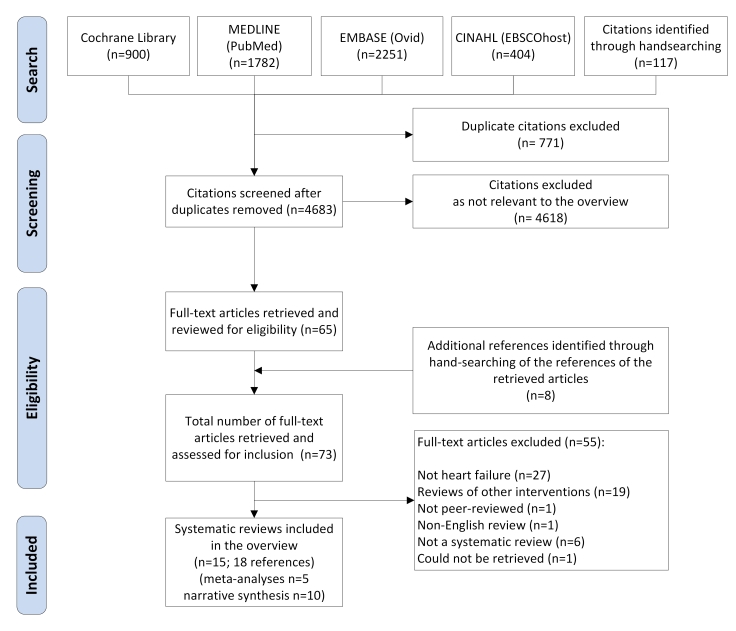
“A total of 15 reviews published between 2003 and 2013 were selected for meta-level synthesis.”
- Also stated in: § Description of the Included Systematic Reviews · plain
“After completion of the screening process, we identified 15 systematic reviews for inclusion (18 references; 3 systematic reviews had duplicate publications) [33-50].”
§ Effects of Home Telemonitoring Interventions on Patients With Chronic Heart Failure: An Overview of Systematic Reviews > Abstract > Results
plain- Asserted: passes — The authors put it forward as true.
- Checkable: passes — It can be checked against evidence.
- Load-bearing: passes — The paper’s conclusions depend on it.
- Based: passes — The paper gives a reason why it holds.
- Also stated in: § Description of the Included Systematic Reviews · plain
A result the paper reports from its own data — it cites no other source for it, so there is none to check. The quote shows it is in the paper.
In the paper
“Of these, only automated device-based telemonitoring and mobile telemonitoring were effective in reducing the risk of all-cause mortality and HF-related hospitalizations.”
§ Effects of Home Telemonitoring Interventions on Patients With Chronic Heart Failure: An Overview of Systematic Reviews > Abstract > Results
plaindirect- Asserted: passes — The authors put it forward as true.
- Checkable: passes — It can be checked against evidence.
- Load-bearing: passes — The paper’s conclusions depend on it.
- Based: passes — The paper gives a reason why it holds.
- Probably not a substantial claim. 42
- It may state two separate claims as one. 40
- The quote only partly states this claim. 2
The cited sources support only part of this claim — read each source’s verdict below.
In the paper
“A recent critical review indicated that among all chronic conditions, HF has attracted the highest number of primary studies and systematic reviews [7].”
§ Effects of Home Telemonitoring Interventions on Patients With Chronic Heart Failure: An Overview of Systematic Reviews > Introduction
What the sources say
- Partly supportedcites [7] sourceExperimental — accuracy not yet measured
The Results (Profile of the Reviews; page unavailable) report that heart failure had the largest body of home-telemonitoring reviews: 10, versus four each for hypertension, respiratory conditions, and diabetes. Table 1 lists the numbers of studies included in individual reviews, but does not establish that heart failure had the most distinct primary studies. The claim also omits the review’s home-telemonitoring scope. (LLM, conf=0.86)
hedged- Asserted: passes — The authors put it forward as true.
- Checkable: passes — It can be checked against evidence.
- Load-bearing: fails — The paper’s conclusions may not depend on it.
- Based: passes — The paper gives a reason why it holds.
Probably not a substantial claim. The paper’s conclusions may not depend on it.
- Partly supported
The paper states this without a source or data behind it here, so there is nothing to check it against. The quote shows it is in the paper.
In the paper
“However, findings from these distinctively different interventions were analyzed and reported separately. Therefore, data extracted and presented in Table 2 from these reviews pertain only to the HT studies and not the STS ones.”
§ Effects of Home Telemonitoring Interventions on Patients With Chronic Heart Failure: An Overview of Systematic Reviews > Results > Description of the Included Systematic Reviews
plain- Asserted: passes — The authors put it forward as true.
- Checkable: passes — It can be checked against evidence.
- Load-bearing: passes — The paper’s conclusions depend on it.
- Based: passes — The paper gives a reason why it holds.
Probably not a substantial claim. It may state two separate claims as one.
A result the paper reports from its own data — it cites no other source for it, so there is none to check. The quote shows it is in the paper.
In the paper
“After screening titles and abstracts, we retrieved 65 reviews in full text for further assessment.”
§ Effects of Home Telemonitoring Interventions on Patients With Chronic Heart Failure: An Overview of Systematic Reviews > Results > Description of the Included Systematic Reviews
plain- Asserted: passes — The authors put it forward as true.
- Checkable: passes — It can be checked against evidence.
- Load-bearing: fails — The paper’s conclusions may not depend on it.
- Based: passes — The paper gives a reason why it holds.
Probably not a substantial claim. The paper’s conclusions may not depend on it.
A result the paper reports from its own data — it cites no other source for it, so there is none to check. The quote shows it is in the paper.
In the paper
“Seven reviews (based on the corresponding author) originated in North America (Canada=5 and United States=2), 6 in Europe (United Kingdom=3, Greece=1, Netherlands=1, Spain=1), and 2 in Australia.”
§ Effects of Home Telemonitoring Interventions on Patients With Chronic Heart Failure: An Overview of Systematic Reviews > Results > Description of the Included Systematic Reviews
plain- Asserted: passes — The authors put it forward as true.
- Checkable: passes — It can be checked against evidence.
- Load-bearing: fails — The paper’s conclusions may not depend on it.
- Based: passes — The paper gives a reason why it holds.
Probably not a substantial claim. The paper’s conclusions may not depend on it. It may state two separate claims as one.
A result the paper reports from its own data — it cites no other source for it, so there is none to check. The quote shows it is in the paper.
In the paper
“our search (up to December 13, 2013) yielded 4683 citations after removal of 771 duplicate references.”
§ Effects of Home Telemonitoring Interventions on Patients With Chronic Heart Failure: An Overview of Systematic Reviews > Results > Description of the Included Systematic Reviews
plain- Asserted: passes — The authors put it forward as true.
- Checkable: passes — It can be checked against evidence.
- Load-bearing: fails — The paper’s conclusions may not depend on it.
- Based: passes — The paper gives a reason why it holds.
Probably not a substantial claim. The paper’s conclusions may not depend on it.
A result the paper reports from its own data — it cites no other source for it, so there is none to check. The quote shows it is in the paper.
In the paper
“This process yielded 8 more reviews.”
§ Effects of Home Telemonitoring Interventions on Patients With Chronic Heart Failure: An Overview of Systematic Reviews > Results > Description of the Included Systematic Reviews
plaindirect- Asserted: passes — The authors put it forward as true.
- Checkable: passes — It can be checked against evidence.
- Load-bearing: fails — The paper’s conclusions may not depend on it.
- Based: passes — The paper gives a reason why it holds.
Probably not a substantial claim. The paper’s conclusions may not depend on it.
A result the paper reports from its own data — it cites no other source for it, so there is none to check. The quote shows it is in the paper.
In the paper
“The total number of identified studies was 105; 38 (36%) referring to RCTs and 67 (64%) to observational studies.”
§ Effects of Home Telemonitoring Interventions on Patients With Chronic Heart Failure: An Overview of Systematic Reviews > Results > Description of the Included Systematic Reviews
plain- Asserted: passes — The authors put it forward as true.
- Checkable: passes — It can be checked against evidence.
- Load-bearing: unclear — It is unclear whether the paper’s conclusions depend on it.
- Based: passes — The paper gives a reason why it holds.
It may state two separate claims as one.
A result the paper reports from its own data — it cites no other source for it, so there is none to check. The quote shows it is in the paper.
In the paper
“After further assessment, we excluded 55 articles that did not meet our eligibility criteria.”
§ Effects of Home Telemonitoring Interventions on Patients With Chronic Heart Failure: An Overview of Systematic Reviews > Results > Description of the Included Systematic Reviews
plain- Asserted: passes — The authors put it forward as true.
- Checkable: passes — It can be checked against evidence.
- Load-bearing: fails — The paper’s conclusions may not depend on it.
- Based: passes — The paper gives a reason why it holds.
Probably not a substantial claim. The paper’s conclusions may not depend on it.
The paper states this without a source or data behind it here, so there is nothing to check it against. The quote shows it is in the paper.
In the paper
“All reviews were published in peer-reviewed journals.”
§ Effects of Home Telemonitoring Interventions on Patients With Chronic Heart Failure: An Overview of Systematic Reviews > Results > Description of the Included Systematic Reviews
plain- Asserted: passes — The authors put it forward as true.
- Checkable: passes — It can be checked against evidence.
- Load-bearing: fails — The paper’s conclusions may not depend on it.
- Based: passes — The paper gives a reason why it holds.
Probably not a substantial claim. The paper’s conclusions may not depend on it.
A result the paper reports from its own data — it cites no other source for it, so there is none to check. The quote shows it is in the paper.
In the paper
“Reviews were published between 2003 and 2013, with more than half (n=9) published in 2009 or later.”
§ Effects of Home Telemonitoring Interventions on Patients With Chronic Heart Failure: An Overview of Systematic Reviews > Results > Description of the Included Systematic Reviews
plainn = 9- Asserted: passes — The authors put it forward as true.
- Checkable: passes — It can be checked against evidence.
- Load-bearing: fails — The paper’s conclusions may not depend on it.
- Based: passes — The paper gives a reason why it holds.
Probably not a substantial claim. The paper’s conclusions may not depend on it. It may state two separate claims as one.
A result the paper reports from its own data — it cites no other source for it, so there is none to check. The quote shows it is in the paper.
In the paper
“The number of HT studies identified and included in the reviews ranged from 4 to 42: mean 17.53 (SD 11.4).”
§ Effects of Home Telemonitoring Interventions on Patients With Chronic Heart Failure: An Overview of Systematic Reviews > Results > Description of the Included Systematic Reviews
plain- Asserted: passes — The authors put it forward as true.
- Checkable: passes — It can be checked against evidence.
- Load-bearing: unclear — It is unclear whether the paper’s conclusions depend on it.
- Based: passes — The paper gives a reason why it holds.
It may state two separate claims as one.
The paper states this without a source or data behind it here, so there is nothing to check it against. The quote shows it is in the paper.
In the paper
“However, two systematic reviews were initially published as Health Technology Assessment reports and one as a Cochrane review.”
§ Effects of Home Telemonitoring Interventions on Patients With Chronic Heart Failure: An Overview of Systematic Reviews > Results > Description of the Included Systematic Reviews
plain- Asserted: passes — The authors put it forward as true.
- Checkable: passes — It can be checked against evidence.
- Load-bearing: fails — The paper’s conclusions may not depend on it.
- Based: passes — The paper gives a reason why it holds.
Probably not a substantial claim. The paper’s conclusions may not depend on it. It may state two separate claims as one.
A result the paper reports from its own data — it cites no other source for it, so there is none to check. The quote shows it is in the paper.
In the paper
“The post-hoc analysis identified five main types of non-invasive telemonitoring technologies included in the systematic reviews: (1) video-consultation, with or without transmission of vital signs, (2) mobile telemonitoring, (3) automated device-based telemonitoring, (4) interactive voice response, and (5) Web-based telemonitoring.”
§ Effects of Home Telemonitoring Interventions on Patients With Chronic Heart Failure: An Overview of Systematic Reviews > Abstract > Results
plain- Asserted: passes — The authors put it forward as true.
- Checkable: passes — It can be checked against evidence.
- Load-bearing: fails — The paper’s conclusions may not depend on it.
- Based: passes — The paper gives a reason why it holds.
Probably not a substantial claim. The paper’s conclusions may not depend on it.
A result the paper reports from its own data — it cites no other source for it, so there is none to check. The quote shows it is in the paper.
In the paper
“Five reviews (33%) contained meta-analysis for at least one primary outcome of interest, while the remaining 10 used narrative synthesis.”
§ Effects of Home Telemonitoring Interventions on Patients With Chronic Heart Failure: An Overview of Systematic Reviews > Results > Description of the Included Systematic Reviews
plain- Asserted: passes — The authors put it forward as true.
- Checkable: passes — It can be checked against evidence.
- Load-bearing: fails — The paper’s conclusions may not depend on it.
- Based: passes — The paper gives a reason why it holds.
Probably not a substantial claim. The paper’s conclusions may not depend on it. It may state two separate claims as one.
A result the paper reports from its own data — it cites no other source for it, so there is none to check. The quote shows it is in the paper.
In the paper
“The NYHA class of participants in all but one review ranged from I to IV.”
§ Effects of Home Telemonitoring Interventions on Patients With Chronic Heart Failure: An Overview of Systematic Reviews > Results > Population
plain- Asserted: passes — The authors put it forward as true.
- Checkable: passes — It can be checked against evidence.
- Load-bearing: fails — The paper’s conclusions may not depend on it.
- Based: passes — The paper gives a reason why it holds.
Probably not a substantial claim. The paper’s conclusions may not depend on it.
In the paper
“One review [37] focused primarily on HF patients who had been recently discharged (within 28 days) from an acute care setting after a recent HF exacerbation and conducted additional analyses to assess whether or not the results from these studies differed markedly from the results of studies that included patients with stable HF.”
§ Effects of Home Telemonitoring Interventions on Patients With Chronic Heart Failure: An Overview of Systematic Reviews > Results > Population
What the sources say
- Not checked yetcites [37] source
plain- Asserted: passes — The authors put it forward as true.
- Checkable: passes — It can be checked against evidence.
- Load-bearing: unclear — It is unclear whether the paper’s conclusions depend on it.
- Based: passes — The paper gives a reason why it holds.
It may state two separate claims as one.
A result the paper reports from its own data — it cites no other source for it, so there is none to check. The quote shows it is in the paper.
In the paper
“Reviews consisted of a family of complex HT interventions, rather than a single type, involving various telehealth devices”
§ Effects of Home Telemonitoring Interventions on Patients With Chronic Heart Failure: An Overview of Systematic Reviews > Results > Intervention
plain- Asserted: passes — The authors put it forward as true.
- Checkable: passes — It can be checked against evidence.
- Load-bearing: unclear — It is unclear whether the paper’s conclusions depend on it.
- Based: passes — The paper gives a reason why it holds.
It may state two separate claims as one. The quote only partly states this claim.
None of the sources cited for this claim have been checked yet.
In the paper
“However, reporting of the active ingredients of these interventions was often poor in the included reviews and not consistently performed for all primary studies (eg, [36,38-40,46,47]).”
§ Effects of Home Telemonitoring Interventions on Patients With Chronic Heart Failure: An Overview of Systematic Reviews > Results > Intervention
What the sources say
plain- Asserted: passes — The authors put it forward as true.
- Checkable: passes — It can be checked against evidence.
- Load-bearing: passes — The paper’s conclusions depend on it.
- Based: passes — The paper gives a reason why it holds.
It may state two separate claims as one.
The paper states this without a source or data behind it here, so there is nothing to check it against. The quote shows it is in the paper.
In the paper
“The remaining reviews, in addition to usual care, included RCTs that compared HT with other relevant comparators (eg, home visits or telephone support).”
§ Effects of Home Telemonitoring Interventions on Patients With Chronic Heart Failure: An Overview of Systematic Reviews > Results > Comparison
plain- Asserted: passes — The authors put it forward as true.
- Checkable: passes — It can be checked against evidence.
- Load-bearing: fails — The paper’s conclusions may not depend on it.
- Based: passes — The paper gives a reason why it holds.
Probably not a substantial claim. The paper’s conclusions may not depend on it.
None of the sources cited for this claim have been checked yet.
In the paper
“The highest reported mean age in a study was 85 years [36] and the lowest was 48 years [39].”
§ Effects of Home Telemonitoring Interventions on Patients With Chronic Heart Failure: An Overview of Systematic Reviews > Results > Population
plain- Asserted: passes — The authors put it forward as true.
- Checkable: passes — It can be checked against evidence.
- Load-bearing: fails — The paper’s conclusions may not depend on it.
- Based: passes — The paper gives a reason why it holds.
Probably not a substantial claim. The paper’s conclusions may not depend on it. It may state two separate claims as one.
A result the paper reports from its own data — it cites no other source for it, so there is none to check. The quote shows it is in the paper.
In the paper
“Most frequently reported outcomes included all-cause mortality (11/15, 73%), hospital re-admissions (13/15, 87%), costs (12/15, 80%), and length of stay (9/15, 60%).”
§ Effects of Home Telemonitoring Interventions on Patients With Chronic Heart Failure: An Overview of Systematic Reviews > Results > Outcomes
plain- Asserted: passes — The authors put it forward as true.
- Checkable: passes — It can be checked against evidence.
- Load-bearing: unclear — It is unclear whether the paper’s conclusions depend on it.
- Based: passes — The paper gives a reason why it holds.
It may state two separate claims as one.
A result the paper reports from its own data — it cites no other source for it, so there is none to check. The quote shows it is in the paper.
In the paper
“the majority of systematic reviews reported the mean age (12/15, 80%) and New York Heart Association (NYHA) class of the participants (10/15, 67%).”
§ Effects of Home Telemonitoring Interventions on Patients With Chronic Heart Failure: An Overview of Systematic Reviews > Results > Population
plain- Asserted: passes — The authors put it forward as true.
- Checkable: passes — It can be checked against evidence.
- Load-bearing: fails — The paper’s conclusions may not depend on it.
- Based: passes — The paper gives a reason why it holds.
Probably not a substantial claim. The paper’s conclusions may not depend on it. It may state two separate claims as one.
A result the paper reports from its own data — it cites no other source for it, so there is none to check. The quote shows it is in the paper.
In the paper
“Six reviews made a distinction between all-cause and HF-related hospitalizations, while the remaining reviews did not.”
§ Effects of Home Telemonitoring Interventions on Patients With Chronic Heart Failure: An Overview of Systematic Reviews > Results > Outcomes
plain- Asserted: passes — The authors put it forward as true.
- Checkable: passes — It can be checked against evidence.
- Load-bearing: unclear — It is unclear whether the paper’s conclusions depend on it.
- Based: passes — The paper gives a reason why it holds.
It may state two separate claims as one.
In the paper
“Relative risk reductions in the four reviews that incorporated meta-analysis ranged from 14% (HR 0.86 [95% CI 0.61-1.21)] [37] to 36% (HR 0.64 [95% CrI 0.34-1.14]), while the ARR in HF-related hospitalizations extended from 3.7%-8.2%.”
§ Effects of Home Telemonitoring Interventions on Patients With Chronic Heart Failure: An Overview of Systematic Reviews > Results > Home Telemonitoring Effects
What the sources say
- Not checked yetcites [37] source
plaindirect- Asserted: passes — The authors put it forward as true.
- Checkable: passes — It can be checked against evidence.
- Load-bearing: passes — The paper’s conclusions depend on it.
- Based: passes — The paper gives a reason why it holds.
It may state two separate claims as one.
The paper states this without a source or data behind it here, so there is nothing to check it against. The quote shows it is in the paper.
In the paper
“The ratio of cited to total published observational studies remained the same, as virtually all reviews that included studies with observational designs were classified in the same group (Comparison 6).”
§ Effects of Home Telemonitoring Interventions on Patients With Chronic Heart Failure: An Overview of Systematic Reviews > Results > Classification of Reviews
plain- Asserted: passes — The authors put it forward as true.
- Checkable: passes — It can be checked against evidence.
- Load-bearing: unclear — It is unclear whether the paper’s conclusions depend on it.
- Based: passes — The paper gives a reason why it holds.
It may state two separate claims as one.
A result the paper reports from its own data — it cites no other source for it, so there is none to check. The quote shows it is in the paper.
In the paper
“Overall, the analysis yielded a mean ratio of 0.87 (95% CI 0.29-1.44) for RCTs in Comparison group 1, a mean ratio of 0.66 (95% CI 0.43-0.90) for RCTs in Comparison group 5, and a mean ratio of 0.48 (95% CI 0.28-0.67) for RCTs in Comparison group 6.”
§ Effects of Home Telemonitoring Interventions on Patients With Chronic Heart Failure: An Overview of Systematic Reviews > Results > Classification of Reviews
plain- Asserted: passes — The authors put it forward as true.
- Checkable: passes — It can be checked against evidence.
- Load-bearing: passes — The paper’s conclusions depend on it.
- Based: passes — The paper gives a reason why it holds.
It may state two separate claims as one.
None of the sources cited for this claim have been checked yet.
In the paper
“Remote monitoring strategies included STS, HT with clinical support during offices hours, and HT with clinical support provided 24/7.”
§ Effects of Home Telemonitoring Interventions on Patients With Chronic Heart Failure: An Overview of Systematic Reviews > Results > Classification of Reviews
plain- Asserted: passes — The authors put it forward as true.
- Checkable: passes — It can be checked against evidence.
- Load-bearing: fails — The paper’s conclusions may not depend on it.
- Based: passes — The paper gives a reason why it holds.
Probably not a substantial claim. The paper’s conclusions may not depend on it. It may state two separate claims as one.
None of the sources cited for this claim have been checked yet.
In the paper
“The remaining six summarized the available evidence narratively using various qualitative or semi-quantitative techniques [38,39,41,43,45].”
§ Effects of Home Telemonitoring Interventions on Patients With Chronic Heart Failure: An Overview of Systematic Reviews > Results > Home Telemonitoring Effects
What the sources say
plain- Asserted: passes — The authors put it forward as true.
- Checkable: passes — It can be checked against evidence.
- Load-bearing: fails — The paper’s conclusions may not depend on it.
- Based: passes — The paper gives a reason why it holds.
Probably not a substantial claim. The paper’s conclusions may not depend on it.
A result the paper reports from its own data — it cites no other source for it, so there is none to check. The quote shows it is in the paper.
In the paper
“Compliance, acceptability, emergency room visits, and patient satisfaction were reported in less than half of the reviews and thus were excluded from our analysis.”
§ Effects of Home Telemonitoring Interventions on Patients With Chronic Heart Failure: An Overview of Systematic Reviews > Results > Outcomes
plain- Asserted: passes — The authors put it forward as true.
- Checkable: passes — It can be checked against evidence.
- Load-bearing: passes — The paper’s conclusions depend on it.
- Based: passes — The paper gives a reason why it holds.
It may state two separate claims as one.
A result the paper reports from its own data — it cites no other source for it, so there is none to check. The quote shows it is in the paper.
In the paper
“The methodological quality of the reviews varied considerably, and many of them had important limitations (Table 5).”
§ Effects of Home Telemonitoring Interventions on Patients With Chronic Heart Failure: An Overview of Systematic Reviews > Results > Methodological Quality of Included Systematic Reviews
plain- Asserted: passes — The authors put it forward as true.
- Checkable: passes — It can be checked against evidence.
- Load-bearing: unclear — It is unclear whether the paper’s conclusions depend on it.
- Based: passes — The paper gives a reason why it holds.
It may state two separate claims as one.
None of the sources cited for this claim have been checked yet.
In the paper
“Of them, five pooled study results into a meta-analysis [33-37].”
§ Effects of Home Telemonitoring Interventions on Patients With Chronic Heart Failure: An Overview of Systematic Reviews > Results > Home Telemonitoring Effects
What the sources say
plain- Asserted: passes — The authors put it forward as true.
- Checkable: passes — It can be checked against evidence.
- Load-bearing: fails — The paper’s conclusions may not depend on it.
- Based: passes — The paper gives a reason why it holds.
Probably not a substantial claim. The paper’s conclusions may not depend on it.
A result the paper reports from its own data — it cites no other source for it, so there is none to check. The quote shows it is in the paper.
In the paper
“Other reviews had a broader scope of inquiry and examined the effects of HT interventions (with or without home visits) versus a variety of comparison interventions, including usual care, nursing telephone support, and/or home care.”
§ Effects of Home Telemonitoring Interventions on Patients With Chronic Heart Failure: An Overview of Systematic Reviews > Results > Classification of Reviews
plain- Asserted: passes — The authors put it forward as true.
- Checkable: passes — It can be checked against evidence.
- Load-bearing: unclear — It is unclear whether the paper’s conclusions depend on it.
- Based: passes — The paper gives a reason why it holds.
It may state two separate claims as one.
The paper states this without a source or data behind it here, so there is nothing to check it against. The quote shows it is in the paper.
In the paper
“Overall, reviews concluded that HT improved quality of life.”
§ Effects of Home Telemonitoring Interventions on Patients With Chronic Heart Failure: An Overview of Systematic Reviews > Results > Home Telemonitoring Effects
plaindirect- Asserted: passes — The authors put it forward as true.
- Checkable: passes — It can be checked against evidence.
- Load-bearing: passes — The paper’s conclusions depend on it.
- Based: fails — The paper may give no reason why it holds.
Probably not a substantial claim. The paper may give no reason why it holds.
None of the sources cited for this claim have been checked yet.
In the paper
“For example, in one of the high-quality reviews, the authors concluded that HT improves quality of life, but only three of the seven studies that reported data for this outcome found positive and statistically significant improvements.”
§ Effects of Home Telemonitoring Interventions on Patients With Chronic Heart Failure: An Overview of Systematic Reviews > Results > Home Telemonitoring Effects
plaindirect- Asserted: passes — The authors put it forward as true.
- Checkable: passes — It can be checked against evidence.
- Load-bearing: passes — The paper’s conclusions depend on it.
- Based: passes — The paper gives a reason why it holds.
It may state two separate claims as one.
A result the paper reports from its own data — it cites no other source for it, so there is none to check. The quote shows it is in the paper.
In the paper
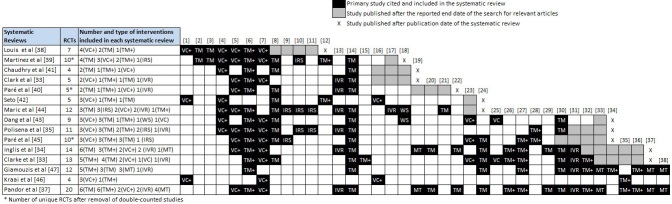
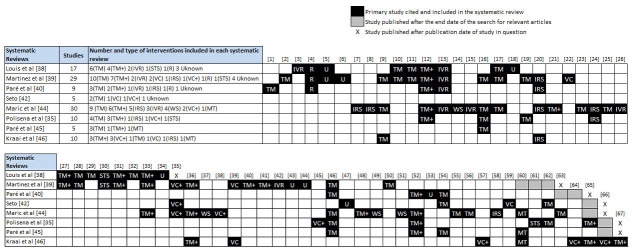
“These included (1) automated device-based telemonitoring (TM and TM+), (2) mobile telemonitoring (MT), (3) automated interactive voice response (IVR), and (4) video-consultation with trans-telephonic vital signs monitoring (VC+).”
§ Effects of Home Telemonitoring Interventions on Patients With Chronic Heart Failure: An Overview of Systematic Reviews > Results > Opening the Black Box of Home Telemonitoring Technologies
plain- Asserted: passes — The authors put it forward as true.
- Checkable: passes — It can be checked against evidence.
- Load-bearing: passes — The paper’s conclusions depend on it.
- Based: passes — The paper gives a reason why it holds.
Probably not a substantial claim. It may state two separate claims as one.
The paper states this without a source or data behind it here, so there is nothing to check it against. The quote shows it is in the paper.
In the paper
“These interventions were further categorized into three mutually exclusive subgroups, based on the technological characteristics of the intervention, as well as methods of data collection and transmission.”
§ Effects of Home Telemonitoring Interventions on Patients With Chronic Heart Failure: An Overview of Systematic Reviews > Results > Opening the Black Box of Home Telemonitoring Technologies
plain- Asserted: passes — The authors put it forward as true.
- Checkable: passes — It can be checked against evidence.
- Load-bearing: fails — The paper’s conclusions may not depend on it.
- Based: passes — The paper gives a reason why it holds.
Probably not a substantial claim. The paper’s conclusions may not depend on it.
A result the paper reports from its own data — it cites no other source for it, so there is none to check. The quote shows it is in the paper.
In the paper
“In the other two studies, the process of measurement and transmission was not automated.”
§ Effects of Home Telemonitoring Interventions on Patients With Chronic Heart Failure: An Overview of Systematic Reviews > Results > Opening the Black Box of Home Telemonitoring Technologies
plain- Asserted: passes — The authors put it forward as true.
- Checkable: passes — It can be checked against evidence.
- Load-bearing: fails — The paper’s conclusions may not depend on it.
- Based: passes — The paper gives a reason why it holds.
Probably not a substantial claim. The paper’s conclusions may not depend on it.
A result the paper reports from its own data — it cites no other source for it, so there is none to check. The quote shows it is in the paper.
In the paper
“Two used structured telephone support only (denoted in Figure 3 as “STS”), while a third study used a pager to transmit computer-generated reminders to the patient to take medications, weigh themselves, and measure their blood pressure and heart rate.”
§ Effects of Home Telemonitoring Interventions on Patients With Chronic Heart Failure: An Overview of Systematic Reviews > Results > Opening the Black Box of Home Telemonitoring Technologies
plain- Asserted: passes — The authors put it forward as true.
- Checkable: passes — It can be checked against evidence.
- Load-bearing: fails — The paper’s conclusions may not depend on it.
- Based: passes — The paper gives a reason why it holds.
Probably not a substantial claim. The paper’s conclusions may not depend on it. It may state two separate claims as one.
A result the paper reports from its own data — it cites no other source for it, so there is none to check. The quote shows it is in the paper.
In the paper
“No significant differences were found for all-cause mortality (RR 0.95 [0.35-2.53], P=.91) owing to the small number of patients and events.”
§ Effects of Home Telemonitoring Interventions on Patients With Chronic Heart Failure: An Overview of Systematic Reviews > Results > Opening the Black Box of Home Telemonitoring Technologies
plain- Asserted: passes — The authors put it forward as true.
- Checkable: passes — It can be checked against evidence.
- Load-bearing: unclear — It is unclear whether the paper’s conclusions depend on it.
- Based: passes — The paper gives a reason why it holds.
It may state two separate claims as one.
The paper states this without a source or data behind it here, so there is nothing to check it against. The quote shows it is in the paper.
In the paper
“Three observational studies cited across 4 systematic reviews involved the use of other communication platforms that could not be classified under any of the above categories.”
§ Effects of Home Telemonitoring Interventions on Patients With Chronic Heart Failure: An Overview of Systematic Reviews > Results > Opening the Black Box of Home Telemonitoring Technologies
plain- Asserted: passes — The authors put it forward as true.
- Checkable: passes — It can be checked against evidence.
- Load-bearing: fails — The paper’s conclusions may not depend on it.
- Based: passes — The paper gives a reason why it holds.
Probably not a substantial claim. The paper’s conclusions may not depend on it.
The paper states this without a source or data behind it here, so there is nothing to check it against. The quote shows it is in the paper.
In the paper
“Eleven reviews examined the effects of HT interventions on cost savings, but none of them pooled results into a meta-analysis due to the inconsistency in cost-analysis methods used in the original studies.”
§ Effects of Home Telemonitoring Interventions on Patients With Chronic Heart Failure: An Overview of Systematic Reviews > Results > Home Telemonitoring Effects
plain- Asserted: passes — The authors put it forward as true.
- Checkable: passes — It can be checked against evidence.
- Load-bearing: unclear — It is unclear whether the paper’s conclusions depend on it.
- Based: passes — The paper gives a reason why it holds.
It may state two separate claims as one.
A result the paper reports from its own data — it cites no other source for it, so there is none to check. The quote shows it is in the paper.
In the paper
“As shown at the bottom of Table 10, when considered collectively, HT interventions without home visits are associated with a statistically significant, relative risk reduction of all-cause mortality (RR 0.73 [0.62-0.85], P<.001) and HF-related hospitalizations (RR 0.79 [0.69-0.91], P=.001) of 27% and 21%, respectively.”
§ Effects of Home Telemonitoring Interventions on Patients With Chronic Heart Failure: An Overview of Systematic Reviews > Results > Opening the Black Box of Home Telemonitoring Technologies
plaincorrelational- Asserted: passes — The authors put it forward as true.
- Checkable: passes — It can be checked against evidence.
- Load-bearing: passes — The paper’s conclusions depend on it.
- Based: passes — The paper gives a reason why it holds.
It may state two separate claims as one.
The paper states this without a source or data behind it here, so there is nothing to check it against. The quote shows it is in the paper.
In the paper
“In the remaining studies (1 RCT and 3 observational), the intervention involved use of stand-alone videoconferencing equipment without transmission of vital signs.”
§ Effects of Home Telemonitoring Interventions on Patients With Chronic Heart Failure: An Overview of Systematic Reviews > Results > Opening the Black Box of Home Telemonitoring Technologies
plain- Asserted: passes — The authors put it forward as true.
- Checkable: passes — It can be checked against evidence.
- Load-bearing: fails — The paper’s conclusions may not depend on it.
- Based: passes — The paper gives a reason why it holds.
Probably not a substantial claim. The paper’s conclusions may not depend on it.
A result the paper reports from its own data — it cites no other source for it, so there is none to check. The quote shows it is in the paper.
In the paper
“This overview appraised and summarized evidence from 15 systematic reviews assessing the effects of HT interventions on patients with HF.”
§ Effects of Home Telemonitoring Interventions on Patients With Chronic Heart Failure: An Overview of Systematic Reviews > Discussion > Summary of the Evidence
plain- Asserted: passes — The authors put it forward as true.
- Checkable: passes — It can be checked against evidence.
- Load-bearing: passes — The paper’s conclusions depend on it.
- Based: passes — The paper gives a reason why it holds.
Probably not a substantial claim.
None of the sources cited for this claim have been checked yet.
In the paper
“Eight reviews concurred that the impact of HT interventions on health care costs appeared to be positive in more cases than not, but in general results were statistically inconclusive and varied depending on the context and specific national health system of the study [34,36,38,39,41,43,44,47].”
§ Effects of Home Telemonitoring Interventions on Patients With Chronic Heart Failure: An Overview of Systematic Reviews > Results > Home Telemonitoring Effects
What the sources say
hedgedconditional- Asserted: passes — The authors put it forward as true.
- Checkable: passes — It can be checked against evidence.
- Load-bearing: passes — The paper’s conclusions depend on it.
- Based: passes — The paper gives a reason why it holds.
It may state two separate claims as one.
A result the paper reports from its own data — it cites no other source for it, so there is none to check. The quote shows it is in the paper.
In the paper
“Studies that involved telemonitoring of vital signs and symptoms through individualized symptom response systems (TM+) yielded slightly smaller effects with respect to all-cause mortality and all-cause hospitalizations than studies involving telemonitoring of vital signs only (TM). However, this difference was not statistically significant.”
§ Effects of Home Telemonitoring Interventions on Patients With Chronic Heart Failure: An Overview of Systematic Reviews > Results > Opening the Black Box of Home Telemonitoring Technologies
plain- Asserted: passes — The authors put it forward as true.
- Checkable: passes — It can be checked against evidence.
- Load-bearing: unclear — It is unclear whether the paper’s conclusions depend on it.
- Based: passes — The paper gives a reason why it holds.
It may state two separate claims as one.
In the paper
“Evidence about cost-effectiveness remains limited, and there are no reliable data on the long-term benefits and economic implications of HT interventions [51].”
§ Effects of Home Telemonitoring Interventions on Patients With Chronic Heart Failure: An Overview of Systematic Reviews > Discussion > Summary of the Evidence
What the sources say
- Not checked yetcites [51] source
plain- Asserted: passes — The authors put it forward as true.
- Checkable: passes — It can be checked against evidence.
- Load-bearing: unclear — It is unclear whether the paper’s conclusions depend on it.
- Based: passes — The paper gives a reason why it holds.
It may state two separate claims as one.
A result the paper reports from its own data — it cites no other source for it, so there is none to check. The quote shows it is in the paper.
In the paper
“As shown in this overview, there exists a considerable body of evidence evaluating the effectiveness of HT interventions for patients with HF.”
§ Effects of Home Telemonitoring Interventions on Patients With Chronic Heart Failure: An Overview of Systematic Reviews > Discussion > Implications for Research
plain- Asserted: passes — The authors put it forward as true.
- Checkable: passes — It can be checked against evidence.
- Load-bearing: passes — The paper’s conclusions depend on it.
- Based: passes — The paper gives a reason why it holds.
Probably not a substantial claim.
A result the paper reports from its own data — it cites no other source for it, so there is none to check. The quote shows it is in the paper.
In the paper
“The results from the principal analysis of this overview suggest that compared with usual care, HT interventions improve survival rates and reduce the risk of HF-related hospitalizations.”
§ Effects of Home Telemonitoring Interventions on Patients With Chronic Heart Failure: An Overview of Systematic Reviews > Discussion > Conclusions
hedgeddirect- Asserted: passes — The authors put it forward as true.
- Checkable: passes — It can be checked against evidence.
- Load-bearing: passes — The paper’s conclusions depend on it.
- Based: passes — The paper gives a reason why it holds.
It may state two separate claims as one.
None of the sources cited for this claim have been checked yet.
In the paper
“Quality of evidence in included systematic reviews was assessed by outcome using the Grades of Recommendation, Assessment, Development, and Evaluation (GRADE) system criteria [17-27].”
§ Effects of Home Telemonitoring Interventions on Patients With Chronic Heart Failure: An Overview of Systematic Reviews > Methods > Quality of Evidence in Included Systematic Reviews
What the sources say
- Not checked yetcites [17] source
- Not checked yetcites [18] source
- Not checked yetcites [19] source
- Not checked yetcites [20] source
- Not checked yetcites [21] source
- Not checked yetcites [22] source
- Not checked yetcites [23] source
- Not checked yetcites [24] source
- Not checked yetcites [25] source
- Not checked yetcites [26] source
plain- Asserted: passes — The authors put it forward as true.
- Checkable: passes — It can be checked against evidence.
- Load-bearing: passes — The paper’s conclusions depend on it.
- Based: passes — The paper gives a reason why it holds.
Probably not a substantial claim.
In the paper
“AMSTAR is a validated instrument that uses 11 items to assess the degree to which review methods are unbiased.”
§ Effects of Home Telemonitoring Interventions on Patients With Chronic Heart Failure: An Overview of Systematic Reviews > Methods > Quality Assessment of Included Reviews
What the sources say
- Not checked yetcites [16] source
plain- Asserted: passes — The authors put it forward as true.
- Checkable: passes — It can be checked against evidence.
- Load-bearing: fails — The paper’s conclusions may not depend on it.
- Based: passes — The paper gives a reason why it holds.
Probably not a substantial claim. The paper’s conclusions may not depend on it. It may state two separate claims as one.
A conclusion the paper draws from its own results — it cites no other source for it, so there is none to check. The quote shows it is in the paper.
In the paper
“However, quality of evidence for these outcomes ranged from moderate to low suggesting that further research is very likely to have an important impact on our confidence in the observed estimates of effect and may change these estimates.”
§ Effects of Home Telemonitoring Interventions on Patients With Chronic Heart Failure: An Overview of Systematic Reviews > Abstract > Results
hedgedconditional- Asserted: passes — The authors put it forward as true.
- Checkable: passes — It can be checked against evidence.
- Load-bearing: passes — The paper’s conclusions depend on it.
- Based: passes — The paper gives a reason why it holds.
It may state two separate claims as one.
In the paper
“In cases where reviews had not performed a risk of bias assessment, we performed this task independently using the six criteria of the Cochrane Collaboration tool [28].”
§ Effects of Home Telemonitoring Interventions on Patients With Chronic Heart Failure: An Overview of Systematic Reviews > Methods > Quality of Evidence in Included Systematic Reviews
What the sources say
- Not checked yetcites [28] Higgins, Julian PT, 2008, Cochrane Handbook for Systematic Reviews of Interventions: Cochrane Book Series source
plain- Asserted: passes — The authors put it forward as true.
- Checkable: passes — It can be checked against evidence.
- Load-bearing: passes — The paper’s conclusions depend on it.
- Based: passes — The paper gives a reason why it holds.
Probably not a substantial claim.
In the paper
“The methodological quality of the included systematic reviews was independently assessed by the first two authors using the Assessment of Multiple Systematic Reviews (AMSTAR) tool [16].”
§ Effects of Home Telemonitoring Interventions on Patients With Chronic Heart Failure: An Overview of Systematic Reviews > Methods > Quality Assessment of Included Reviews
What the sources say
- Not checked yetcites [16] source
plain- Asserted: passes — The authors put it forward as true.
- Checkable: passes — It can be checked against evidence.
- Load-bearing: passes — The paper’s conclusions depend on it.
- Based: passes — The paper gives a reason why it holds.
Probably not a substantial claim.
None of the sources cited for this claim have been checked yet.
In the paper
“As shown below, the Cochrane Collaboration methodology [11] and available methodological guidelines for overviews of reviews [12,13] were rigorously applied throughout this study.”
§ Effects of Home Telemonitoring Interventions on Patients With Chronic Heart Failure: An Overview of Systematic Reviews > Methods > Overview
What the sources say
plain- Asserted: passes — The authors put it forward as true.
- Checkable: passes — It can be checked against evidence.
- Load-bearing: fails — The paper’s conclusions may not depend on it.
- Based: passes — The paper gives a reason why it holds.
Probably not a substantial claim. The paper’s conclusions may not depend on it.
What the paper did — it cites no source for this, so there is none to check. The quote shows it is in the paper.
In the paper
“Full-text articles were then retrieved and independently assessed for inclusion by the first 2 authors.”
§ Effects of Home Telemonitoring Interventions on Patients With Chronic Heart Failure: An Overview of Systematic Reviews > Methods > Selection of Systematic Reviews
plain- Asserted: passes — The authors put it forward as true.
- Checkable: passes — It can be checked against evidence.
- Load-bearing: fails — The paper’s conclusions may not depend on it.
- Based: passes — The paper gives a reason why it holds.
Probably not a substantial claim. The paper’s conclusions may not depend on it.
In the paper
“It can be particularly helpful for those living in remote and rural areas, the elderly and frail who are housebound, as well as those at high risk of deterioration [5].”
§ Effects of Home Telemonitoring Interventions on Patients With Chronic Heart Failure: An Overview of Systematic Reviews > Introduction
What the sources say
- Not checked yetcites [5] source
plainconditional- Asserted: passes — The authors put it forward as true.
- Checkable: passes — It can be checked against evidence.
- Load-bearing: unclear — It is unclear whether the paper’s conclusions depend on it.
- Based: passes — The paper gives a reason why it holds.
It may state two separate claims as one.
What the paper did — it cites no source for this, so there is none to check. The quote shows it is in the paper.
In the paper
“No language restrictions were applied.”
§ Effects of Home Telemonitoring Interventions on Patients With Chronic Heart Failure: An Overview of Systematic Reviews > Methods > Search Methods
plain- Asserted: passes — The authors put it forward as true.
- Checkable: passes — It can be checked against evidence.
- Load-bearing: fails — The paper’s conclusions may not depend on it.
- Based: passes — The paper gives a reason why it holds.
Probably not a substantial claim. The paper’s conclusions may not depend on it.
In the paper
“Overviews of systematic reviews are an efficient way to gather and summarize in a single source the best available evidence on the effectiveness of interventions.”
§ Effects of Home Telemonitoring Interventions on Patients With Chronic Heart Failure: An Overview of Systematic Reviews > Introduction
What the sources say
- Not checked yetcites [10] source
plaindirect- Asserted: passes — The authors put it forward as true.
- Checkable: fails — It may be too vague to check against evidence.
- Load-bearing: passes — The paper’s conclusions depend on it.
- Based: passes — The paper gives a reason why it holds.
Probably not a substantial claim. It may be too vague to check against evidence.
What the paper did — it cites no source for this, so there is none to check. The quote shows it is in the paper.
In the paper
“To ensure consistency of assessment between the 2 assessors, we developed decision support rules for scoring each criterion (Multimedia Appendix 2).”
§ Effects of Home Telemonitoring Interventions on Patients With Chronic Heart Failure: An Overview of Systematic Reviews > Methods > Quality Assessment of Included Reviews
plaindirect- Asserted: passes — The authors put it forward as true.
- Checkable: passes — It can be checked against evidence.
- Load-bearing: fails — The paper’s conclusions may not depend on it.
- Based: passes — The paper gives a reason why it holds.
Probably not a substantial claim. The paper’s conclusions may not depend on it.
What the paper did — it cites no source for this, so there is none to check. The quote shows it is in the paper.
In the paper
“Data were extracted by the first author and were verified for accuracy by the second.”
§ Effects of Home Telemonitoring Interventions on Patients With Chronic Heart Failure: An Overview of Systematic Reviews > Methods > Data Extraction
plain- Asserted: passes — The authors put it forward as true.
- Checkable: passes — It can be checked against evidence.
- Load-bearing: fails — The paper’s conclusions may not depend on it.
- Based: passes — The paper gives a reason why it holds.
Probably not a substantial claim. The paper’s conclusions may not depend on it. It may state two separate claims as one.
What the paper did — it cites no source for this, so there is none to check. The quote shows it is in the paper.
In the paper
“In the preliminary stage, all titles and abstracts were screened by the first author according to the pre-specified inclusion criteria described in Table 1.”
§ Effects of Home Telemonitoring Interventions on Patients With Chronic Heart Failure: An Overview of Systematic Reviews > Methods > Selection of Systematic Reviews
plain- Asserted: passes — The authors put it forward as true.
- Checkable: passes — It can be checked against evidence.
- Load-bearing: fails — The paper’s conclusions may not depend on it.
- Based: passes — The paper gives a reason why it holds.
Probably not a substantial claim. The paper’s conclusions may not depend on it.
What the paper did — it cites no source for this, so there is none to check. The quote shows it is in the paper.
In the paper
“Searches were supplemented by manual searching of two relevant scientific journals (ie, Journal of Telemedicine and Telecare and Telemedicine and e-Health) and screening of relevant reviews’ bibliographies.”
§ Effects of Home Telemonitoring Interventions on Patients With Chronic Heart Failure: An Overview of Systematic Reviews > Methods > Search Methods
plain- Asserted: passes — The authors put it forward as true.
- Checkable: passes — It can be checked against evidence.
- Load-bearing: fails — The paper’s conclusions may not depend on it.
- Based: passes — The paper gives a reason why it holds.
Probably not a substantial claim. The paper’s conclusions may not depend on it. It may state two separate claims as one.
In the paper
“As shown in Table 9, the strongest evidence (moderate quality) comes from a high-quality meta-analysis of 4 large RCTs (N=1570 patients), which found statistically significant risk reductions of 21% in HF-related hospitalizations with HT versus usual care, equating to an ARR of 6% (95% CI-1.7 to -9.7) [34].”
§ Effects of Home Telemonitoring Interventions on Patients With Chronic Heart Failure: An Overview of Systematic Reviews > Results > Home Telemonitoring Effects
What the sources say
- Not checked yetcites [34] source
plaindirectn = 1,570- Asserted: passes — The authors put it forward as true.
- Checkable: passes — It can be checked against evidence.
- Load-bearing: passes — The paper’s conclusions depend on it.
- Based: passes — The paper gives a reason why it holds.
It may state two separate claims as one.
In the paper
“While HT with 24/4 clinical support yielded beneficial but marginally lower relative effects than those observed in recently discharged patients: HR 0.84 (95% CrI 0.54-1.15); ARR 5.7% (-1.8 to 4.8%).”
§ Effects of Home Telemonitoring Interventions on Patients With Chronic Heart Failure: An Overview of Systematic Reviews > Results > Home Telemonitoring Effects
What the sources say
- Not checked yetcites [37] source
plaindirect- Asserted: passes — The authors put it forward as true.
- Checkable: passes — It can be checked against evidence.
- Load-bearing: unclear — It is unclear whether the paper’s conclusions depend on it.
- Based: passes — The paper gives a reason why it holds.
It may state two separate claims as one. The quote only partly states this claim.
In the paper
“In the pooling of all-cause mortality data from 11 RCTs involving 2710 patients with HF, HT resulted in statistically significant risk reduction of 34% (RR 0.66 [95% CI 0.54-0.81]); an ARR of 5.2% (95% CI -2.9 to -7.1), equating to a number needed to treat of 19 to postpone one death.”
§ Effects of Home Telemonitoring Interventions on Patients With Chronic Heart Failure: An Overview of Systematic Reviews > Results > Home Telemonitoring Effects
What the sources say
- Not checked yetcites [34] source
plaindirectn = 2,710- Asserted: passes — The authors put it forward as true.
- Checkable: passes — It can be checked against evidence.
- Load-bearing: passes — The paper’s conclusions depend on it.
- Based: passes — The paper gives a reason why it holds.
It may state two separate claims as one.
In the paper
“However, results were statistically inconclusive and the overall quality of evidence was found to be low, suggesting that these estimates should be interpreted with caution until more evidence accumulates.”
§ Effects of Home Telemonitoring Interventions on Patients With Chronic Heart Failure: An Overview of Systematic Reviews > Results > Home Telemonitoring Effects
What the sources say
- Not checked yetcites [37] source
hedged- Asserted: passes — The authors put it forward as true.
- Checkable: passes — It can be checked against evidence.
- Load-bearing: passes — The paper’s conclusions depend on it.
- Based: passes — The paper gives a reason why it holds.
It may state two separate claims as one.
What the paper did — it cites no source for this, so there is none to check. The quote shows it is in the paper.
In the paper
“We were able to extract data from all 105 primary studies, with the exception of 8 observational studies that could not be retrieved.”
§ Effects of Home Telemonitoring Interventions on Patients With Chronic Heart Failure: An Overview of Systematic Reviews > Results > Opening the Black Box of Home Telemonitoring Technologies
plain- Asserted: passes — The authors put it forward as true.
- Checkable: passes — It can be checked against evidence.
- Load-bearing: fails — The paper’s conclusions may not depend on it.
- Based: passes — The paper gives a reason why it holds.
Probably not a substantial claim. The paper’s conclusions may not depend on it.
What the paper did — it cites no source for this, so there is none to check. The quote shows it is in the paper.
In the paper
“these findings should be interpreted with caution and be considered as hypothesis generating rather than hypothesis testing due to the exploratory nature of our investigation.”
§ Effects of Home Telemonitoring Interventions on Patients With Chronic Heart Failure: An Overview of Systematic Reviews > Discussion > Conclusions
plain- Asserted: passes — The authors put it forward as true.
- Checkable: passes — It can be checked against evidence.
- Load-bearing: passes — The paper’s conclusions depend on it.
- Based: passes — The paper gives a reason why it holds.
Probably not a substantial claim.
The paper relies on this without support.
Systematic reviews of home telemonitoring for heart failure have produced discordant findings in terms of direction and magnitude of home telemonitoring effects.
“Growing interest on the effects of home telemonitoring on patients with HF has led to a rise in the number of reviews addressing the same or very similar research questions with a concurrent increase in discordant findings in terms of direction and magnitude of HT effects.”
The paper relies on this without support.
Differences in scope, methods of analysis, results, and quality of systematic reviews make it difficult for policy makers to access and interpret review-level evidence and for researchers to identify evidence gaps.
“Differences in scope, methods of analysis, results, and quality of systematic reviews can cause great confusion and make it difficult for policy makers to access the review-level evidence, and for researchers to know where gaps in the evidence exist.”
The paper relies on this without support.
Home telemonitoring enables early detection of clinical decompensation in patients with heart failure, allowing timely intervention to prevent mortality events or further deterioration necessitating hospitalization.
“By allowing clinical data to be remotely collected on a regular basis, HT can enable early detection of clinical decompensation in patients with HF, allowing for timely intervention to prevent mortality events or further deterioration of the patient’s condition necessitating hospitalization and use of more resources.”
Claims other papers make about this one
Each is checked against this paper’s own text: does it say what the citing paper says it does?
In the citing paper
“A recent metareview of heart failure telemonitoring interventions showed a reduction in all-cause mortality (relative risk 0.60-0.85) and heart failure hospitalizations (relative risk 0.64-0.86) in an analysis of 15 meta-analyses [74].”
Self-check
Percentages, sums and reported differences re-computed from the paper’s own numbers.
Each contradiction between two passages listed here was confirmed by an independent check.
Rated major: it would touch a result — a value a result rests on, reported and recomputed p-values on opposite sides of the significance level, two passages that conflict with no sign which is right, or a cited work retracted before this paper was published.
In the paper
§ Effects of Home Telemonitoring Interventions on Patients With Chronic Heart Failure: An Overview of Systematic Reviews > Discussion > Conclusions
“The results of the post-hoc analyses suggest that only interventions involving automated device-based telemonitoring and mobile telemonitoring are effective in reducing the risk of all-cause mortality and HF-related hospitalizations.”
§ Effects of Home Telemonitoring Interventions on Patients With Chronic Heart Failure: An Overview of Systematic Reviews > Results > Opening the Black Box of Home Telemonitoring Technologies
“However, results for both of these outcomes were statistically inconclusive owing to the small number and size of RCTs in this group.”
Rated minor: it would not touch a result — a value no result rests on, a p-value that stays on the same side of the significance level, or a conflict that is clerical, resolved elsewhere in the paper, or outside its own findings.
In the paper
§ Effects of Home Telemonitoring Interventions on Patients With Chronic Heart Failure: An Overview of Systematic Reviews > Results > Outcomes
“costs (12/15, 80%)”
§ Effects of Home Telemonitoring Interventions on Patients With Chronic Heart Failure: An Overview of Systematic Reviews > Results > Home Telemonitoring Effects
“Eleven reviews examined the effects of HT interventions on cost savings”
Rated minor: it would not touch a result — a value no result rests on, a p-value that stays on the same side of the significance level, or a conflict that is clerical, resolved elsewhere in the paper, or outside its own findings.
In the paper
§ Effects of Home Telemonitoring Interventions on Patients With Chronic Heart Failure: An Overview of Systematic Reviews > Results > Outcomes
“length of stay (9/15, 60%)”
§ Effects of Home Telemonitoring Interventions on Patients With Chronic Heart Failure: An Overview of Systematic Reviews > Results > Home Telemonitoring Effects
“The impact of HT on hospital length of stay due to exacerbated HF events and/or any cause hospitalization was examined in eight reviews.”
Rated minor: it would not touch a result — a value no result rests on, a p-value that stays on the same side of the significance level, or a conflict that is clerical, resolved elsewhere in the paper, or outside its own findings.
In the paper
“24 studies (6 RCTs, 12 observational)”
§ Effects of Home Telemonitoring Interventions on Patients With Chronic Heart Failure: An Overview of Systematic Reviews > Results > Description of the Included Systematic Reviews
Reported 24 · recomputed 18
Rated minor: it would not touch a result — a value no result rests on, a p-value that stays on the same side of the significance level, or a conflict that is clerical, resolved elsewhere in the paper, or outside its own findings.
In the paper
§ Effects of Home Telemonitoring Interventions on Patients With Chronic Heart Failure: An Overview of Systematic Reviews > Results > Home Telemonitoring Effects
“ARR 5.7% (-1.8 to 4.8%).”
§ Effects of Home Telemonitoring Interventions on Patients With Chronic Heart Failure: An Overview of Systematic Reviews > Results > Home Telemonitoring Effects
“57 fewer per 1000 (from 181 fewer to 48 more)”
Citations
Cites
Preferred Reporting Items for Systematic Reviews and Meta-Analyses: the PRISMA statement
Moher, D., Liberati, A., Tetzlaff, J., Altman, D. G., & for the PRISMA Group (2009) · BMJ · doi:10.1136/bmj.b2535 · Cited by 83,823
Preferred Reporting Items for Systematic Reviews and Meta-Analyses: The PRISMA Statement
Moher, D., Liberati, A., Tetzlaff, J., Altman, D. G., & The PRISMA Group (2009) · PLoS Medicine · doi:10.1371/journal.pmed.1000097 · Cited by 64,042 · cited 1×
“Finally, given our observation that 80% (12/15) of the systematic reviews assessed in this overview had moderate or major methodological limitations, researchers are strongly encouraged to closely adhere to the available methodological and reporting guidelines for systematic reviews [70-72] and consider the AMSTAR eva…”
Preferred reporting items for systematic reviews and meta-analyses: the PRISMA Statement.
(2009) · PubMed Central · Cited by 44,859
Liberati, A., Altman, D. G., Tetzlaff, J., Mulrow, C., Gøtzsche, P. C., Ioannidis, J. P. A., Clarke, M., Devereaux, P. J., Kleijnen, J., & Moher, D. (2009) · PLoS Medicine · doi:10.1371/journal.pmed.1000100 · Cited by 28,164 · cited 1×
“…limitations, researchers are strongly encouraged to closely adhere to the available methodological and reporting guidelines for systematic reviews [70-72] and consider the AMSTAR evaluation criteria [16] in order to improve the methodological rigor and reporting quality of their work.”
Cochrane Handbook for Systematic Reviews of Interventions: Cochrane Book Series
(2008) · doi:10.1002/9780470712184 · Cited by 25,048 · cited 1×
“Finally, given our observation that 80% (12/15) of the systematic reviews assessed in this overview had moderate or major methodological limitations, researchers are strongly encouraged to closely adhere to the available methodological and reporting guidelines for systematic reviews [70-72] and consider the AMSTAR eva…”
Dermyshi, E., Wang, Y., Yan, C., Hong, W., Qiu, G., Gong, X., & Zhang, T. (2017) · Neonatology · doi:10.1159/000454668 · Cited by 24,586
McDonagh, T. A., Metra, M., Adamo, M., Gardner, R. S., Baumbach, A., Böhm, M., Burri, H., Butler, J., Čelutkienė, J., Chioncel, O. D., et al. (2021) · PubMed · doi:10.1093/eurheartj/ehab670 · Cited by 20,604
Preferred Reporting Items for Systematic Reviews and Meta-Analyses: The PRISMA Statement
Moher, D., Liberati, A., Tetzlaff, J., & Altman, D. G. (2009) · Journal of Clinical Epidemiology · doi:10.1016/j.jclinepi.2009.06.005 · Cited by 19,575
Wang, G., Ma, R., Qiao, G., Wada, K., Aizawa, Y., & Satoh, T. (2015) · Integrative Medicine International · doi:10.1159/000368408 · Cited by 18,762
Borenstein, M., Hedges, L. V., Higgins, J. P. T., & Rothstein, H. R. (2009) · doi:10.1002/9780470743386 · Cited by 14,225
GRADE guidelines: 1. Introduction—GRADE evidence profiles and summary of findings tables
Guyatt, G., Oxman, A. D., Akl, E. A., Kunz, R., Vist, G., Brozek, J., Norris, S., Falck-Ytter, Y., Glasziou, P., & deBeer, H. (2011) · Journal of Clinical Epidemiology · doi:10.1016/j.jclinepi.2010.04.026 · Cited by 10,681 · cited 3×
“Quality of evidence in included systematic reviews was assessed by outcome using the Grades of Recommendation, Assessment, Development, and Evaluation (GRADE) system criteria [17-27].”
Borenstein, M., Hedges, L. V., Higgins, J. P. T., & Rothstein, H. R. (2021) · doi:10.1002/9781119558378 · Cited by 9,799
Grading quality of evidence and strength of recommendations
(2004) · BMJ · doi:10.1136/bmj.328.7454.1490 · Cited by 8,477 · cited 2×
“Quality of evidence in included systematic reviews was assessed by outcome using the Grades of Recommendation, Assessment, Development, and Evaluation (GRADE) system criteria [17-27].”
GRADE guidelines: 3. Rating the quality of evidence
Balshem, H., Helfand, M., Schünemann, H. J., Oxman, A. D., Kunz, R., Brozek, J., Vist, G. E., Falck-Ytter, Y., Meerpohl, J., & Norris, S. (2011) · Journal of Clinical Epidemiology · doi:10.1016/j.jclinepi.2010.07.015 · Cited by 8,285 · cited 2×
“Quality of evidence in included systematic reviews was assessed by outcome using the Grades of Recommendation, Assessment, Development, and Evaluation (GRADE) system criteria [17-27].”
ESC Guidelines for the diagnosis and treatment of acute and chronic heart failure 2012
Authors/Task Force Members, McMurray, J. J. V., Adamopoulos, S., Anker, S. D., Auricchio, A., Böhm, M., Dickstein, K., Falk, V., Filippatos, G., Fonseca, C., et al. (2012) · European Heart Journal · doi:10.1093/eurheartj/ehs104 · Cited by 6,879
Heart Disease and Stroke Statistics—2010 Update: A Report From the American Heart Association
WRITING GROUP MEMBERS, Lloyd-Jones, D., Adams, R. J., Brown, T. M., Carnethon, M., Dai, S., De Simone, G., Ferguson, T. B., Ford, E., Furie, K., et al. (2010) · Circulation · doi:10.1161/circulationaha.109.192667 · Cited by 5,700 · cited 1×
“Developed countries devote 1%-2% of health care expenditures towards HF, while in the United States alone the estimated direct and indirect annual cost of HF was approximately US $39.2 billion in 2010 [3,4].”
InfluentialDevelopment of AMSTAR: A measurement tool to assess the methodological quality of systematic reviews
Shea, B. J., Grimshaw, J. M., Wells, G. A., Boers, M., Andersson, N., Hamel, C., Porter, A. C., Tugwell, P., Moher, D., & Bouter, L. M. (2007) · BMC Medical Research Methodology · doi:10.1186/1471-2288-7-10 · Cited by 4,374
Norderyd, O. M., Koch, G., Papias, A., Köhler, A. A., Helkimo, A. N., Brahm, C., Lindmark, U., Lindfors, N., Mattsson, A., Rolander, B., et al. (2015) · PubMed · Cited by 3,584
Assessing Risk of Bias in Included Studies
Higgins, J. P., & Altman, D. G. (2008) · Cochrane Handbook for Systematic Reviews of Interventions · doi:10.1002/9780470712184.ch8 · Cited by 3,396
Realist review - a new method of systematic review designed for complex policy interventions
Pawson, R., Greenhalgh, T., Harvey, G., & Walshe, K. (2005) · Journal of Health Services Research & Policy · doi:10.1258/1355819054308530 · Cited by 3,190 · cited 1×
“Realist reviews for instance [67], which attempt to provide an explanatory analysis of how and why complex interventions work (or not) in particular contexts [68,69], can help further advance our conceptual understanding about the impact of human behavior and interactions on the outcomes of telemonitoring intervention…”
GRADE guidelines: 4. Rating the quality of evidence—study limitations (risk of bias)
Guyatt, G. H., Oxman, A. D., Vist, G., Kunz, R., Brozek, J., Alonso-Coello, P., Montori, V., Akl, E. A., Djulbegovic, B., & Falck-Ytter, Y. (2011) · Journal of Clinical Epidemiology · doi:10.1016/j.jclinepi.2010.07.017 · Cited by 2,798 · cited 3×
“Quality of evidence in included systematic reviews was assessed by outcome using the Grades of Recommendation, Assessment, Development, and Evaluation (GRADE) system criteria [17-27].”
GRADE guidelines 6. Rating the quality of evidence—imprecision
Guyatt, G. H., Oxman, A. D., Kunz, R., Brozek, J., Alonso-Coello, P., Rind, D., Devereaux, P. J., Montori, V. M., Freyschuss, B., Vist, G., et al. (2011) · Journal of Clinical Epidemiology · doi:10.1016/j.jclinepi.2011.01.012 · Cited by 2,693 · cited 5×
“Owing to the large uncertainty in the pooled estimates of effect, quality of evidence was rated down for imprecision [22].”
InfluentialESC Guidelines for the Diagnosis and Treatment of Acute and Chronic Heart Failure 2012
Authors/Task Force Members, McMurray, J. J. V., Adamopoulos, S., Anker, S. D., Auricchio, A., Böhm, M., Dickstein, K., Falk, V., Filippatos, G., Fonseca, C., et al. (2012) · European Journal of Heart Failure · doi:10.1093/eurjhf/hfs105 · Cited by 2,644
GRADE guidelines: 7. Rating the quality of evidence—inconsistency
Guyatt, G. H., Oxman, A. D., Kunz, R., Woodcock, J., Brozek, J., Helfand, M., Alonso-Coello, P., Glasziou, P., Jaeschke, R., Akl, E. A., et al. (2011) · Journal of Clinical Epidemiology · doi:10.1016/j.jclinepi.2011.03.017 · Cited by 2,320
Epidemiology and risk profile of heart failure
Bui, A. L., Horwich, T. B., & Fonarow, G. C. (2011) · Nature Reviews Cardiology · doi:10.1038/nrcardio.2010.165 · Cited by 2,077 · cited 1×
“Heart failure (HF) is a chronic and life-threatening condition that places a substantial burden on health care systems worldwide with high rates of hospitalizations, readmissions, and outpatient visits [1].”
Synthesizing information systems knowledge: A typology of literature reviews
Paré, G., Trudel, M.-C., Jaana, M., & Kitsiou, S. (2015) · Information & Management · doi:10.1016/j.im.2014.08.008 · Cited by 1,987 · cited 1×
“Realist reviews for instance [67], which attempt to provide an explanatory analysis of how and why complex interventions work (or not) in particular contexts [68,69], can help further advance our conceptual understanding about the impact of human behavior and interactions on the outcomes of telemonitoring intervention…”
Self-citationClinical epidemiology of heart failure
Mosterd, A., & Hoes, A. W. (2007) · Heart · doi:10.1136/hrt.2003.025270 · Cited by 1,921 · cited 1×
“Approximately 1-2% of the adult population in the western world has HF, with the prevalence rising to ≥10% among persons 65 years of age or older [2].”
GRADE guidelines: 2. Framing the question and deciding on important outcomes
Guyatt, G. H., Oxman, A. D., Kunz, R., Atkins, D., Brozek, J., Vist, G., Alderson, P., Glasziou, P., Falck-Ytter, Y., & Schünemann, H. J. (2011) · Journal of Clinical Epidemiology · doi:10.1016/j.jclinepi.2010.09.012 · Cited by 1,911 · cited 2×
“Quality of evidence in included systematic reviews was assessed by outcome using the Grades of Recommendation, Assessment, Development, and Evaluation (GRADE) system criteria [17-27].”
GRADE guidelines: 8. Rating the quality of evidence—indirectness
Guyatt, G. H., Oxman, A. D., Kunz, R., Woodcock, J., Brozek, J., Helfand, M., Alonso-Coello, P., Falck-Ytter, Y., Jaeschke, R., Vist, G., et al. (2011) · Journal of Clinical Epidemiology · doi:10.1016/j.jclinepi.2011.04.014 · Cited by 1,843
GRADE guidelines: 5. Rating the quality of evidence—publication bias
Guyatt, G. H., Oxman, A. D., Montori, V., Vist, G., Kunz, R., Brozek, J., Alonso-Coello, P., Djulbegovic, B., Atkins, D., Falck-Ytter, Y., et al. (2011) · Journal of Clinical Epidemiology · doi:10.1016/j.jclinepi.2011.01.011 · Cited by 1,819 · cited 3×
“Quality of evidence in included systematic reviews was assessed by outcome using the Grades of Recommendation, Assessment, Development, and Evaluation (GRADE) system criteria [17-27].”
Analysing Data and Undertaking Meta‐Analyses
Deeks, J. J., Higgins, J. P., & Altman, D. G. (2008) · Cochrane Handbook for Systematic Reviews of Interventions · doi:10.1002/9780470712184.ch9 · Cited by 1,800
Executive Summary: Heart Disease and Stroke Statistics—2010 Update
WRITING GROUP MEMBERS, Lloyd‐Jones, D. M., Adams, R. J., Brown, T. M., Carnethon, M. R., Dai, S., SIMONE, G. D., Ferguson, T. B., Ford, E. S., Furie, K. L., et al. (2010) · Circulation · doi:10.1161/circulationaha.109.192666 · Cited by 1,360
GRADE guidelines: 9. Rating up the quality of evidence
Guyatt, G. H., Oxman, A. D., Sultan, S., Glasziou, P., Akl, E. A., Alonso-Coello, P., Atkins, D., Kunz, R., Brozek, J., Montori, V., et al. (2011) · Journal of Clinical Epidemiology · doi:10.1016/j.jclinepi.2011.06.004 · Cited by 1,336 · cited 2×
“Quality of evidence in included systematic reviews was assessed by outcome using the Grades of Recommendation, Assessment, Development, and Evaluation (GRADE) system criteria [17-27].”
Methodology in conducting a systematic review of systematic reviews of healthcare interventions
Smith, V., Devane, D., Begley, C. M., & Clarke, M. (2011) · BMC Medical Research Methodology · doi:10.1186/1471-2288-11-15 · Cited by 1,227 · cited 1×
“As shown below, the Cochrane Collaboration methodology [11] and available methodological guidelines for overviews of reviews [12,13] were rigorously applied throughout this study.”
A consumer's guide to subgroup analyses
Oxman, A. D., & Guyatt, G. H. (1992) · Annals of Internal Medicine · doi:10.7326/0003-4819-116-1-78 · Cited by 914 · cited 1×
“However, it is important to note that these findings are observational in nature and suffer from important limitations [56,57], including possible bias introduced through confounding by other study-level characteristics; misclassification of certain RCTs providing insufficient or no information at all for some categor…”
GRADE guidelines: 12. Preparing Summary of Findings tables—binary outcomes
Guyatt, G. H., Oxman, A. D., Santesso, N., Helfand, M., Vist, G., Kunz, R., Brozek, J., Norris, S., Meerpohl, J., Djulbegovic, B., et al. (2013) · Journal of Clinical Epidemiology · doi:10.1016/j.jclinepi.2012.01.012 · Cited by 836 · cited 2×
“Quality of evidence in included systematic reviews was assessed by outcome using the Grades of Recommendation, Assessment, Development, and Evaluation (GRADE) system criteria [17-27].”
Systematic Review of Home Telemonitoring for Chronic Diseases: The Evidence Base
Pare, G., Jaana, M., & Sicotte, C. (2007) · Journal of the American Medical Informatics Association · doi:10.1197/jamia.m2270 · Cited by 816 · cited 8×
“In five reviews [37,38,45-47], the description of the intervention extracted from the trials was reduced into just a few words presented in a summary table or within the text, while three reviews did not provide any information at all about the included interventions [36,39-40].”
InfluentialSelf-citationAls-Nielsen, B., Chen, W., Gluud, C., & Kjaergard, L. L. (2003) · JAMA · doi:10.1001/jama.290.7.921 · Cited by 746 · cited 1×
“Receipt of such funding has been shown in other scientific fields to systematically bias the results in favor of the products made by the companies that fund the research [65].”
Feltner, C., Jones, C. D., Cené, C. W., Zheng, Z.-J., Sueta, C. A., Coker-Schwimmer, E. J. L., Arvanitis, M., Lohr, K. N., Middleton, J. C., & Jonas, D. E. (2014) · Annals of Internal Medicine · doi:10.7326/m14-0083 · Cited by 681 · cited 4×
“51) 1 RCT, 182 patients, “moderate quality of evidence” [53,55].”
InfluentialClark, R. A., Inglis, S. C., McAlister, F. A., Cleland, J. G. F., & Stewart, S. (2007) · BMJ · doi:10.1136/bmj.39156.536968.55 · Cited by 672 · cited 8×
“After completion of the screening process, we identified 15 systematic reviews for inclusion (18 references; 3 systematic reviews had duplicate publications) [33-50].”
InfluentialStructured telephone support or telemonitoring programmes for patients with chronic heart failure
Inglis, S. C., Clark, R. A., McAlister, F. A., Ball, J., Lewinter, C., Cullington, D., Stewart, S., & Cleland, J. G. (2010) · Cochrane Database of Systematic Reviews · doi:10.1002/14651858.cd007228.pub2 · Cited by 614
Twenty years of telemedicine in chronic disease management – an evidence synthesis
Wootton, R. (2012) · Journal of Telemedicine and Telecare · doi:10.1258/jtt.2012.120219 · Cited by 545 · cited 1×
“The extant literature contains published results from numerous trials investigating the clinical, structural, behavioral, or economic effects of HT interventions on patients with chronic diseases [6].”
Can We Systematically Review Studies That Evaluate Complex Interventions?
Shepperd, S., Lewin, S., Straus, S., Clarke, M., Eccles, M. P., Fitzpatrick, R., Wong, G., & Sheikh, A. (2009) · PLoS Medicine · doi:10.1371/journal.pmed.1000086 · Cited by 408 · cited 1×
“…for instance [67], which attempt to provide an explanatory analysis of how and why complex interventions work (or not) in particular contexts [68,69], can help further advance our conceptual understanding about the impact of human behavior and interactions on the outcomes of telemonitoring…”
Lainscak, M., Blue, L., Clark, A. L., Dahlström, U., Dickstein, K., Ekman, I., McDonagh, T., McMurray, J. J., Ryder, M., Stewart, S., et al. (2011) · European Journal of Heart Failure · doi:10.1093/eurjhf/hfq219 · Cited by 405 · cited 1×
“It can be particularly helpful for those living in remote and rural areas, the elderly and frail who are housebound, as well as those at high risk of deterioration [5].”
A guide to interpreting discordant systematic reviews.
Jadad, A., Cook, D. J., & Browman, G. P. (1997) · Europe PMC (PubMed Central) · Cited by 393
Inglis, S. C., Clark, R. A., McAlister, F. A., Stewart, S., & Cleland, J. G. F. (2011) · European Journal of Heart Failure · doi:10.1093/eurjhf/hfr039 · Cited by 378 · cited 2×
“After completion of the screening process, we identified 15 systematic reviews for inclusion (18 references; 3 systematic reviews had duplicate publications) [33-50].”
Telemedicine and remote management of patients with heart failure
Anker, S. D., Koehler, F., & Abraham, W. T. (2011) · The Lancet · doi:10.1016/s0140-6736(11)61229-4 · Cited by 343 · cited 4×
“Similarly, the number of published systematic reviews aimed at summarizing the available evidence from primary studies on HT has increased considerably [7-9].”
InfluentialParé, G., Moqadem, K., Pineau, G., & St-Hilaire, C. (2010) · Journal of Medical Internet Research · doi:10.2196/jmir.1357 · Cited by 261
Self-citationThe Impact of Telehealthcare on the Quality and Safety of Care: A Systematic Overview
McLean, S., Sheikh, A., Cresswell, K., Nurmatov, U., Mukherjee, M., Hemmi, A., & Pagliari, C. (2013) · PLoS ONE · doi:10.1371/journal.pone.0071238 · Cited by 255 · cited 3×
“An additional inhibiting factor that has been cited by several researchers [7,9,64] includes the lack of a commonly accepted taxonomy for classifying HT interventions into meaningful groups according to the technology in use and other key characteristics (eg, intensity and complexity, health care…”
InfluentialA Systematic Review of Telemonitoring for the Management of Heart Failure
Louis, A. A., Turner, T., Gretton, M., Baksh, A., & Cleland, J. G. F. (2003) · European Journal of Heart Failure · doi:10.1016/s1388-9842(03)00160-0 · Cited by 255 · cited 10×
“In five reviews [37,38,45-47], the description of the intervention extracted from the trials was reduced into just a few words presented in a summary table or within the text, while three reviews did not provide any information at all about the included interventions [36,39-40].”
InfluentialTelemonitoring for Patients With Chronic Heart Failure: A Systematic Review
Chaudhry, S. I., Phillips, C. O., Stewart, S. S., Riegel, B., Mattera, J. A., Jerant, A. F., & Krumholz, H. M. (2007) · Journal of Cardiac Failure · doi:10.1016/j.cardfail.2006.09.001 · Cited by 231 · cited 9×
“Comparator groups: usual care, home visits, nursing telephone support, and/or pre/post HT 5 Chaudhry et al (2007) [41] 6”
InfluentialHome telemonitoring for congestive heart failure a systematic review and meta-analysis
Polisena, J., Tran, K., Cimon, K., Hutton, B., McGill, S., Palmer, K., & Scott, R. E. (2010) · Journal of Telemedicine and Telecare · doi:10.1258/jtt.2009.090406 · Cited by 218 · cited 11×
“Six reviews reported that most participants in the included studies were NYHA class II-IV [34-35 ,37-39 37-39”
InfluentialBecker, L. A., & Oxman, A. D. (2008) · Cochrane Handbook for Systematic Reviews of Interventions · doi:10.1002/9780470712184.ch22 · Cited by 218 · cited 6×
“In cases where reviews had not performed a risk of bias assessment, we performed this task independently using the six criteria of the Cochrane Collaboration tool [28].”
InfluentialMistry, H. (2012) · Journal of Telemedicine and Telecare · doi:10.1258/jtt.2011.110505 · Cited by 215 · cited 1×
“Evidence about cost-effectiveness remains limited, and there are no reliable data on the long-term benefits and economic implications of HT interventions [51].”
Presenting Results and ‘Summary of Findings’ Tables
Schünemann, H. J., Oxman, A. D., Higgins, J. P. T., Vist, G. E., Glasziou, P., & Guyatt, G. H. (2008) · Wiley eBooks · doi:10.1002/9780470712184.ch11 · Cited by 209 · cited 2×
“This facilitated application of the GRADE system and development of standardized summary of findings tables by outcome [11,29], as explained below, using the GRADEpro software (version 3.6).”
InfluentialEconomic Burden of Heart Failure in??the Elderly
Liao, L., Allen, L. A., & Whellan, D. J. (2008) · PharmacoEconomics · doi:10.2165/00019053-200826060-00001 · Cited by 205 · cited 1×
“Developed countries devote 1%-2% of health care expenditures towards HF, while in the United States alone the estimated direct and indirect annual cost of HF was approximately US $39.2 billion in 2010 [3,4].”
InfluentialPandor, A., Thokala, P., Gomersall, T., Baalbaki, H., Stevens, J., Wang, J., Wong, R., Brennan, A., & Fitzgerald, P. (2013) · Health Technol Assess · doi:10.3310/hta17320 · Cited by 159 · cited 9×
“2012 Pandor et al, 2013 [37,50] reducing all-cause mortality for recently discharged patients with HF.”
InfluentialCost Comparison Between Telemonitoring and Usual Care of Heart Failure: A Systematic Review
Seto, E. (2008) · Telemedicine and e-Health · doi:10.1089/tmj.2007.0114 · Cited by 156 · cited 5×
“2 N N/A Y N N Y N N N CA N Seto (2008) [42]”
InfluentialClarke, M., Shah, A., & Sharma, U. (2011) · Journal of Telemedicine and Telecare · doi:10.1258/jtt.2010.100113 · Cited by 152 · cited 10×
“In five reviews [37,38,45-47], the description of the intervention extracted from the trials was reduced into just a few words presented in a summary table or within the text, while three reviews did not provide any information at all about the included interventions [36,39-40].”
InfluentialAn optimal search filter for retrieving systematic reviews and meta-analyses
Lee, E. H. M., Dobbins, M., DeCorby, K., McRae, L., Tirilis, D., & Husson, H. (2012) · BMC Medical Research Methodology · doi:10.1186/1471-2288-12-51 · Cited by 151 · cited 1×
“A systematic search of MEDLINE, EMBASE, CINAHL, and the Cochrane Library (Cochrane Database of Systematic Reviews, DARE, and the Health Technology Assessment Database) was conducted on December 13, 2013, and updated on December 3, 2014, using key terms and clinical query filters [14,15] to identify all relevant, peer-…”
A Systematic Review of Telemonitoring Technologies in Heart Failure
Maric, B., Kaan, A., Ignaszewski, A., & Lear, S. A. (2009) · European Journal of Heart Failure · doi:10.1093/eurjhf/hfp036 · Cited by 147 · cited 7×
“2 N N/A Y N N Y N N N N N Maric et al (2009) [44]”
InfluentialPandor, A., Gomersall, T., Stevens, J., Wang, J., Al‐Mohammad, A., Bakhai, A., Cleland, J. G. F., Cowie, M., & Wong, R. (2013) · Heart · doi:10.1136/heartjnl-2013-303811 · Cited by 147 · cited 2×
“After completion of the screening process, we identified 15 systematic reviews for inclusion (18 references; 3 systematic reviews had duplicate publications) [33-50].”
Using Existing Systematic Reviews in Complex Systematic Reviews
Whitlock, E. P., Lin, J. S., Chou, R., Shekelle, P., & Robinson, K. A. (2008) · Annals of Internal Medicine · doi:10.7326/0003-4819-148-10-200805200-00010 · Cited by 144 · cited 1×
“As shown below, the Cochrane Collaboration methodology [11] and available methodological guidelines for overviews of reviews [12,13] were rigorously applied throughout this study.”
A systematic review of the literature on home monitoring for patients with heart failure
Martínez, A., Everss, E., Rojo-Álvarez, J. L., Figal, D. P., & García-Alberola, A. (2006) · Journal of Telemedicine and Telecare · doi:10.1258/135763306777889109 · Cited by 133 · cited 11×
“In five reviews [37,38,45-47], the description of the intervention extracted from the trials was reduced into just a few words presented in a summary table or within the text, while three reviews did not provide any information at all about the included interventions [36,39-40].”
InfluentialWorswick, J., Wayne, S. C., Bennett, R., Fiander, M., Mayhew, A., Weir, M. C., Sullivan, K. J., & Grimshaw, J. M. (2013) · Systematic Reviews · doi:10.1186/2046-4053-2-26 · Cited by 130 · cited 2×
“Taking published systematic reviews as the sole evidence source and not searching for original trials that have not been identified by the included reviews increases the potential effect of publication lag and increases the chance that some evidence has not been considered in the review process [10].”
Dang, S., Dimmick, S., & Kelkar, G. (2009) · Telemedicine and e-Health · doi:10.1089/tmj.2009.0028 · Cited by 121 · cited 8×
“4 N N/A Y N N Y Y N Y CA N Dang et al (2009) [43]”
InfluentialKitsiou, S., Paré, G., & Jaana, M. (2013) · Journal of Medical Internet Research · doi:10.2196/jmir.2770 · Cited by 118 · cited 3×
“An additional inhibiting factor that has been cited by several researchers [7,9,64] includes the lack of a commonly accepted taxonomy for classifying HT interventions into meaningful groups according to the technology in use and other key characteristics (eg, intensity and complexity, health care professionals involve…”
Self-citationA meta-analysis of remote patient monitoring for chronic heart failure patients
Nakamura, N., Koga, T., & Iseki, H. (2013) · Journal of Telemedicine and Telecare · doi:10.1177/1357633x13517352 · Cited by 102 · cited 4×
“In the second systematic review that contained meta-analysis, Nakamura et al [52] sought to investigate which HT model is more effective in reducing all-cause mortality in patients with HF.”
InfluentialHeart Failure Patients Monitored With Telemedicine: Patient Satisfaction, a Review of the Literature
Kraai, I. H., Luttik, M. L. A., de Jong, R. M., Jaarsma, T., & Hillege, H. L. (2011) · Journal of Cardiac Failure · doi:10.1016/j.cardfail.2011.03.009 · Cited by 78 · cited 6×
“In five reviews [37,38,45-47], the description of the intervention extracted from the trials was reduced into just a few words presented in a summary table or within the text, while three reviews did not provide any information at all about the included interventions [36,39-40].”
InfluentialHow can telehealth help in the provision of integrated care?
Stroetmann, K. A., Kubitschke, L., Robinson, S., Stroetmann, V., Cullen, K., & McDaid, D. (2010) · doi:10.13140/2.1.5083.1361 · Cited by 68
Telemonitoring in Chronic Heart Failure: A Systematic Review
Giamouzis, G., Mastrogiannis, D., Koutrakis, K., Karayannis, G., Parisis, C., Rountas, C., Adreanides, E., Dafoulas, G. E., Stafylas, P. C., Skoularigis, J., et al. (2012) · Cardiology Research and Practice · doi:10.1155/2012/410820 · Cited by 55 · cited 10×
“In five reviews [37,38,45-47], the description of the intervention extracted from the trials was reduced into just a few words presented in a summary table or within the text, while three reviews did not provide any information at all about the included interventions [36,39-40].”
InfluentialEffective Technologies for Noninvasive Remote Monitoring in Heart Failure
Conway, A., Inglis, S. C., & Clark, R. A. (2014) · Telemedicine Journal and e-Health · doi:10.1089/tmj.2013.0267 · Cited by 45 · cited 6×
“However, in contrast to Conway et al [60], this overview relied on 15 systematic reviews and 105 studies to derive a preliminary taxonomy of HT technologies.”
InfluentialInglis, S. C., Conway, A., Cleland, J. G. F., & Clark, R. A. (2014) · European Journal of Cardiovascular Nursing · doi:10.1177/1474515114530611 · Cited by 34 · cited 4×
“The main objectives of these studies was to determine whether age is a factor in the success or failure of remote monitoring interventions in HF (including HT) [59] and the extent to which technological differences have an impact on the primary outcomes of interest [60].”
InfluentialConway, A., Inglis, S. C., Chang, A. M., Horton-Breshears, M., Cleland, J. G. F., & Clark, R. A. (2013) · Journal of Telemedicine and Telecare · doi:10.1177/1357633x13503427 · Cited by 31 · cited 2×
“An additional inhibiting factor that has been cited by several researchers [7,9,64] includes the lack of a commonly accepted taxonomy for classifying HT interventions into meaningful groups according to the technology in use and other key characteristics (eg, intensity and complexity, health care professionals involve…”
Reducing Heart Failure Hospital Readmissions: A Systematic Review of Disease Management Programs
Gorthi, J., Hunter, C. B., Mooss, A. N., Alla, V. M., & Hilleman, D. E. (2014) · Cardiology Research · doi:10.14740/cr362w · Cited by 29 · cited 4×
“All-cause and HF-related hospitalizations were reported in 2 of the 3 reviews [53,54], while findings pertaining to all-cause mortality were reported in all three.”
InfluentialMultiple systematic reviews: methods for assessing discordances of results
Moja, L., Fernandez del Rio, M. P., Banzi, R., Cusi, C., D’Amico, R., Liberati, A., Lodi, G., Lucenteforte, E., Minozzi, S., Pecoraro, V., et al. (2012) · Internal and Emergency Medicine · doi:10.1007/s11739-012-0846-1 · Cited by 27 · cited 1×
“To summarize the evidence on the effectiveness of HT interventions, we designed a 3-step process [30,31].”
A critical review on telemonitoring in heart failure
Gurné, O., Conraads, V. M., Missault, L. H., Müllens, W., Vachiéry, J., Mieghem, W. V., Droogné, W., Pouleur, A., Troisfontaines, P., Huez, S., et al. (2012) · Acta cardiologica. Supplementum · doi:10.1080/ac.67.4.2170685 · Cited by 25 · cited 1×
“As Gurne et al [61] note, some of the very first studies of HT included in the systematic reviews were conducted in the late 1990s (see Multimedia Appendix 3), when beta-blockers were not used as consistently as they are today in patients with HF.”
Heart failure patients monitored with telemedicine: patient satisfaction, a review of the literature
Kraai, I. H., Luttik, M. L., de Jong, R. M., de Vries, A. E., van Dijk, R. B., Jaarsma, T., & Hillige, H. L. (2011) · International Journal of Integrated Care · doi:10.5334/ijic.706 · Cited by 21
The quality of research synthesis in surgery: the case of laparoscopic surgery for colorectal cancer
Martel, G., Duhaime, S., Barkun, J. S., Boushey, R. P., Ramsay, C. R., & Fergusson, D. A. (2012) · Systematic Reviews · doi:10.1186/2046-4053-1-14 · Cited by 19 · cited 1×
“Following the methodology used in Martel et al [32], we then calculated the ratio of cited to total pre-existing HT studies for each systematic review, taking into account the lag time between the reported end-date of search for identification of interventional studies and the actual publication date of the review.”
Research works printed but not linked: 2
- Jadad, A R, 1997, CMAJ, 156, 1411
- ESC Press OfficeIndividualised treatment for heart failure is rarely available outside hospital - New telemonitoring systems could ‘radically’ change the situation200905302014-09-20http://www.escardio.org/about/press/press-releases/pr-09/Pages/Individualised-treatment-HF-hospital.aspxESC Press release Heart Failure Congress 2009http://www.escardio.org/about/press/press-releases/pr-09/Pages/Individualised-treatment-HF-hospital.aspx6WaYcS3L3
Cited by
Sorted by citations
Kamal, S. A., Shafiq, M., & Kakria, P. (2019) · Technology in Society · doi:10.1016/j.techsoc.2019.101212 · Cited by 1,044
“Patients feel that adopting to telemedicine services will be useful only if it will lead to faster delivery of health care services with the low-cost of medical inspection, improved documentation and reduced service time of health care [49].”
BackgroundHanlon, P., Daines, L., Campbell, C., McKinstry, B., Weller, D., & Pinnock, H. (2017) · Journal of Medical Internet Research · doi:10.2196/jmir.6688 · Cited by 499
“86) in an analysis of 15 meta-analyses [74].”
Bringing health care to the patient
Hashiguchi, T. C. O. (2020) · OECD health working papers · doi:10.1787/8e56ede7-en · Cited by 588
Effectiveness of mHealth interventions for patients with diabetes: An overview of systematic reviews
Kitsiou, S., Paré, G., Jaana, M., & Gerber, B. S. (2017) · PLoS ONE · doi:10.1371/journal.pone.0173160 · Cited by 415
Self-citationRemote Patient Monitoring: A Systematic Review
Farias, F. A. C. D., Dagostini, C. M., Bicca, Y. D. A., Falavigna, V. F., & Falavigna, A. (2020) · Telemedicine and e-Health · doi:10.1089/tmj.2019.0066 · Cited by 338
Metadata
- Authors
- Kitsiou, S., Paré, G., & Jaana, M.
- Affiliations
- University of Illinois Chicago (US)
- HEC Montréal (CA)
- University of Ottawa (CA)
- Corresponding author
- Kitsiou, Spyros
- Venue
- Journal of Medical Internet Research
- Publisher
- JMIR Publications Inc.
- Published
- 2015-03-12
- Volume
- 17
- Issue
- 3
- Pages
- e63
- ISSN
- 1438-8871 (ISSN-L)
- PMC
- PMC4376138
- OpenAlex
- W2074454475
- Semantic Scholar
- 498b1218d10c77894f3f577d87d5854f58e95106
- Cited by
- 327
- References
- 79
- Citations by year
- 2026: 26 · 2025: 28 · 2024: 23 · 2023: 39 · 2022: 23 · 2021: 40 · 2020: 38 · 2019: 19 · 2018: 26 · 2017: 39 · 2016: 15 · 2015: 11
- FWCI
- 4.37
- Type
- journal article
- Language
- en
- Open access
- gold
- doi.org
- Licence
- cc-by
- Locations
- Journal of Medical Internet Research (publishedVersion, cc-by)
- Europe PMC (PubMed Central) (publishedVersion, cc-by)
- PubMed Central (publishedVersion, cc-by)
- PubMed (publishedVersion)
- DOAJ (DOAJ: Directory of Open Access Journals) (submittedVersion, cc-by-sa)
- Funders
- McMaster University
- Canada Research Chairs
- Topics
- Health Sciences › Medicine › Public Health, Environmental and Occupational Health › Telemedicine and Telehealth Implementation
- Health Sciences › Medicine › Cardiology and Cardiovascular Medicine › Heart Failure Treatment and Management
- Health Sciences › Health Professions › General Health Professions › Mobile Health and mHealth Applications
- Keywords
- home health monitoring, chronic heart failure, heart failure hospitalization, all-cause mortality, methodological quality of systematic reviews, AMSTAR, GRADE quality of evidence, heart failure exacerbation, patient-reported outcomes, quality of life, health-related quality of life, patient satisfaction
- MeSH terms
- Chronic Disease, Heart Failure, Hospitalization, Humans, Monitoring, Physiologic, Review Literature as Topic, Telemetry, Meta-Analysis as Topic, Telemedicine
About these checks
Registry, retraction, Cites and statistics results are computed, not judged, with one exception: a printed reference that no index lists is read once by a model before it counts as a citation error. Claims are extracted by a model and kept only when their quote appears verbatim in the text; each cited source is then checked, with a model’s help, for whether it says what the claim relies on. Those verdicts can be wrong — read the claim’s quote and the cited source before relying on one.
A language model drew the claims from the paper on 2026-10-06, under version 3 of the claim definition (model deepseek-v4.1-flash, prompt extract-v3).
A second model labelled each claim on 2026-10-06 (model jev-1.13-20260917, definition revision gold-guideline-v0.2).
Cited sources are checked with a language model’s help (gpt-6-sol).
Statistics and arithmetic are recomputed, not judged.
Confidence bands are shown only for fields calibrated on our annotated test set. None is calibrated yet, so no band is shown.
What counts as a claim ›How we measure confidence ›How we check this ›
Are you an author, or do you see a problem with this page? Request a review
