

Providing Psychological Support to Parents of Childhood Cancer Survivors: ‘Cascade’ Intervention Trial Results and Lessons for the Future
Open accessThe DOI matches its Crossref record; 78 of the 81 references it cites were found in a registry or an index; 40 of the 82 sources its claims cite were checked for support.
Abstract
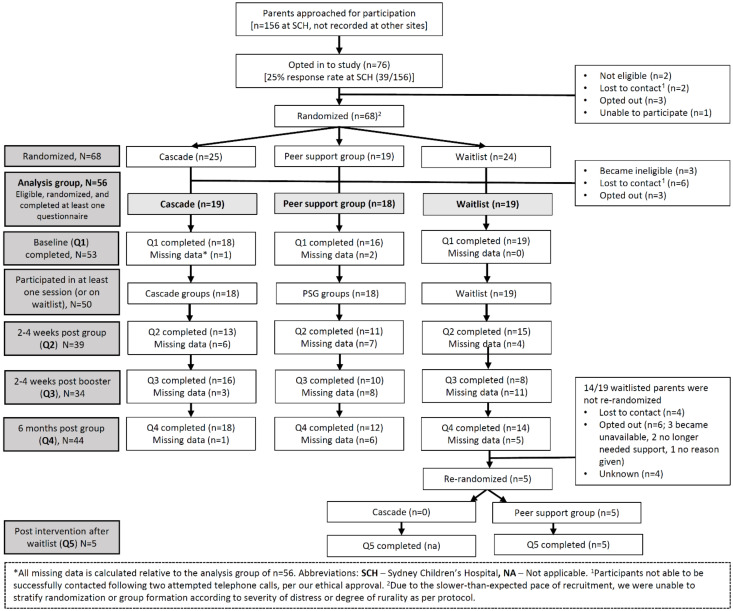
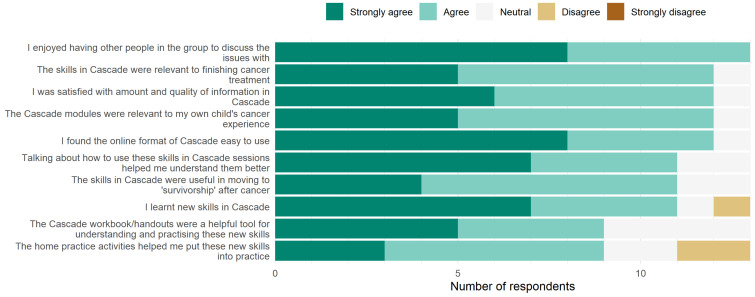
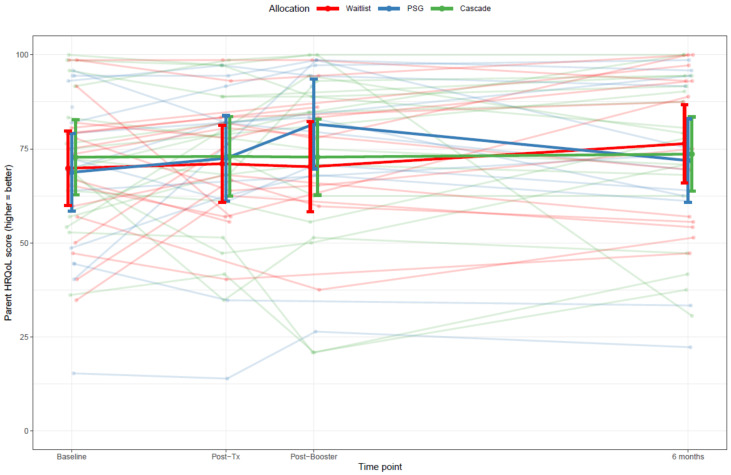
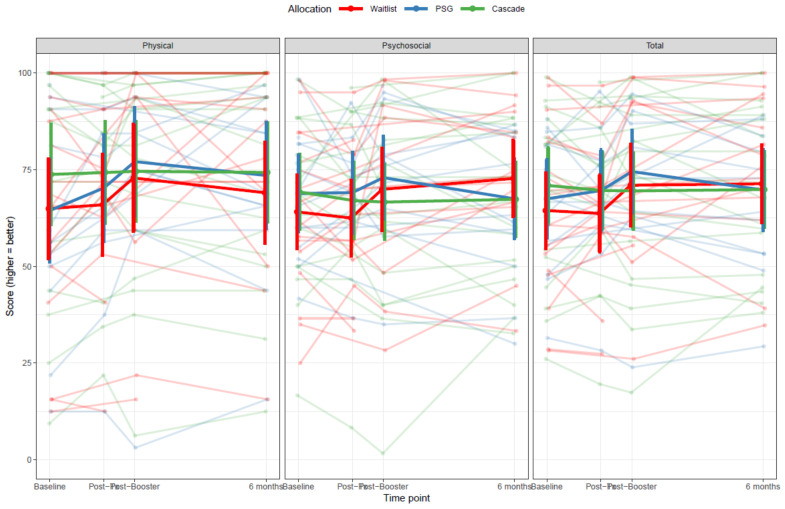
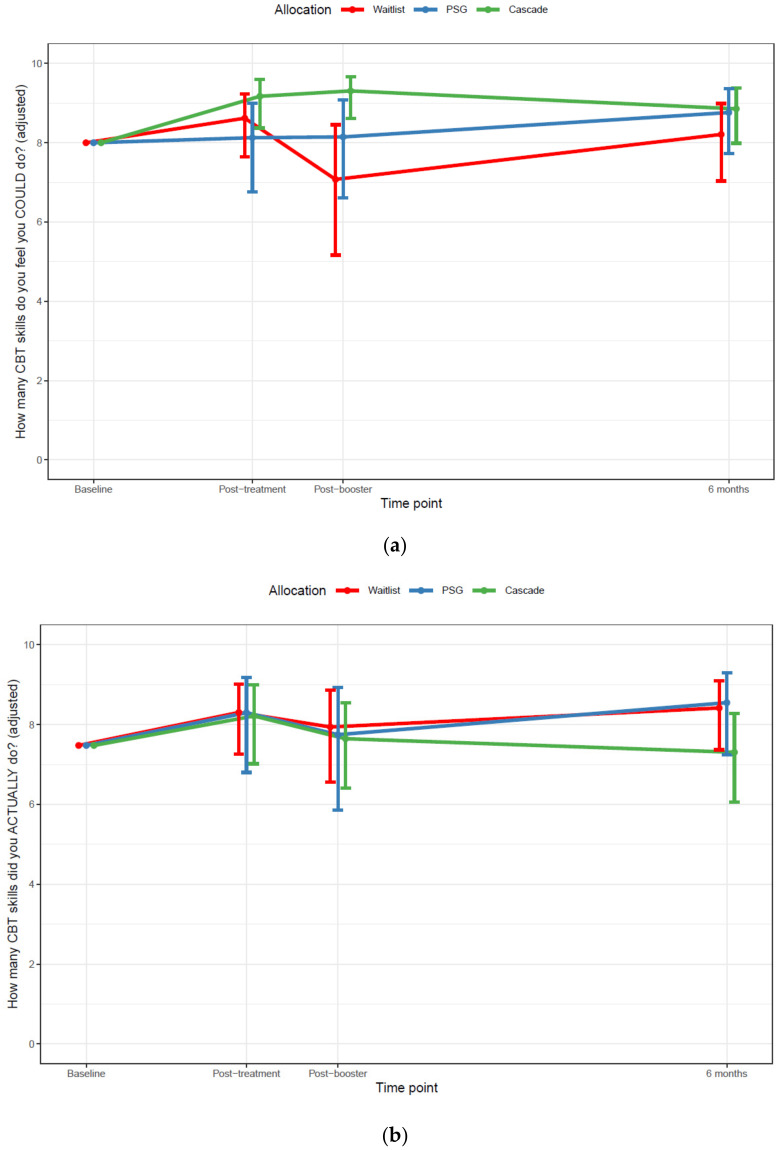
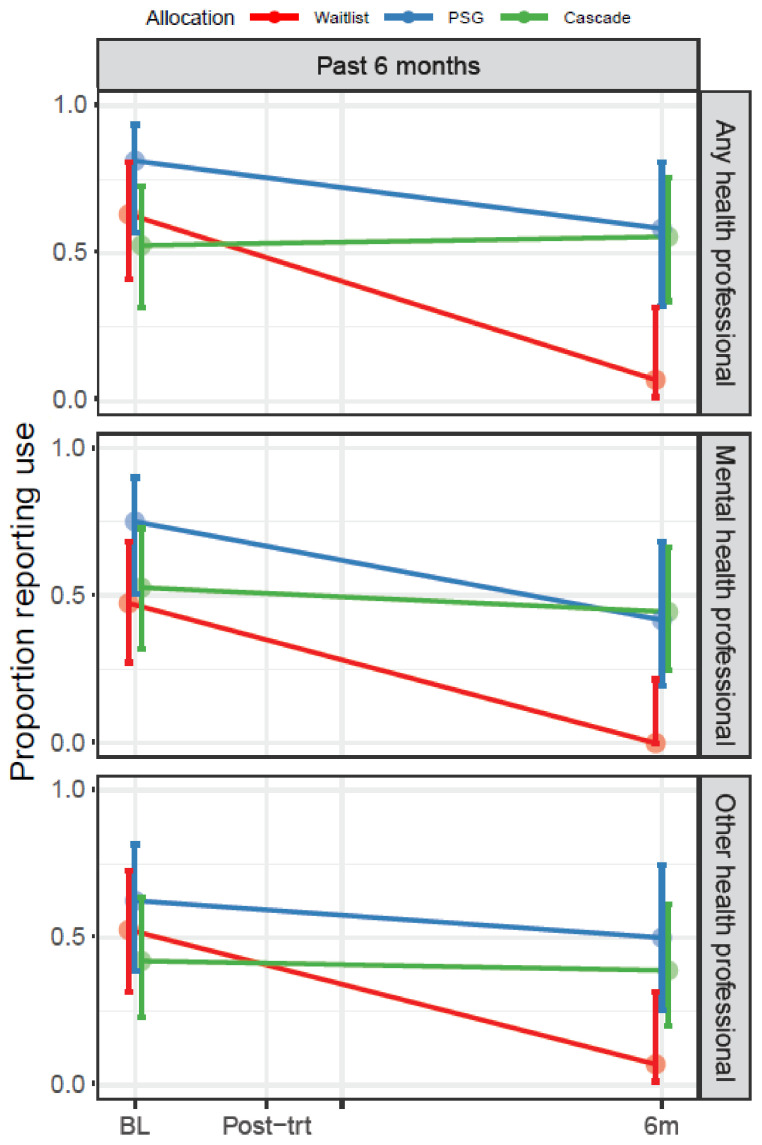
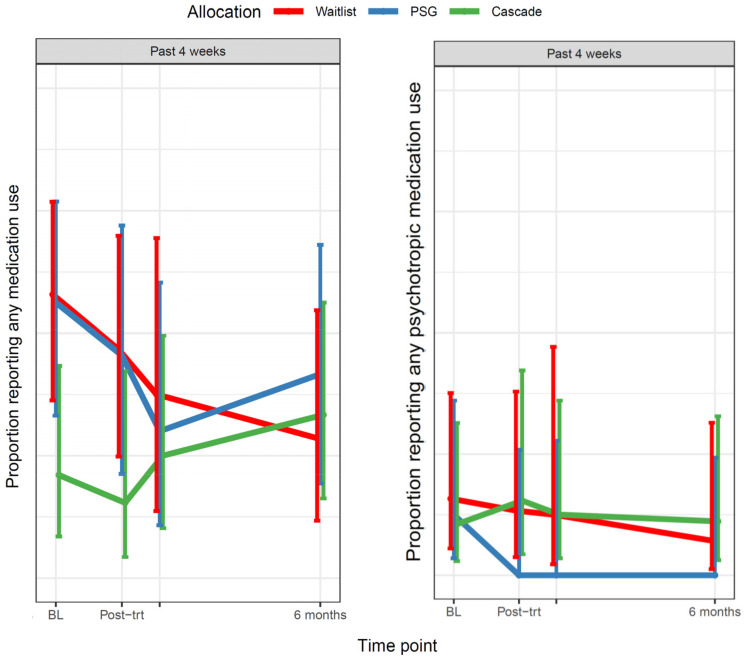
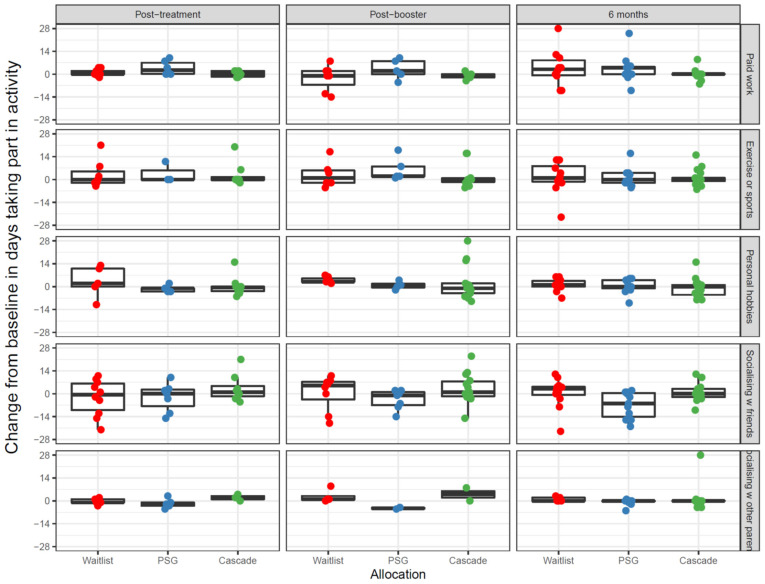
We conducted a three‐armed trial to assess Cascade, a four‐module group videoconferencing cognitive behavior therapy (CBT) intervention for parents of childhood cancer survivors currently aged <18 years. We allocated parents to Cascade, an attention control (peer‐ support group), or a waitlist. The primary outcome was parents’ health‐related quality of life (PedsQL‐Family Impact/EQ‐5D‐5L) six months post‐intervention. Parents also reported their anxiety/depression, parenting self‐agency, fear of recurrence, health service and psychotropic medication use, engagement in productive activities, confidence to use, and actual use of, CBT skills, and their child’s quality of life. Seventy‐six parents opted in; 56 commenced the trial. Cascade achieved good parent engagement and most Cascade parents were satisfied and reported benefits. Some parents expressed concerns about the time burden and the group format. Most outcomes did not differ across trial arms. Cascade parents felt more confident to use more CBT skills than peer-support and waitlisted parents, but this did not lead to more use of CBT. Cascade parents reported lower psychosocial health scores for their child than waitlisted parents. Cascade parents’ health service use, psychotropic medication use, and days engaged in productive activities did not improve, despite some improvements in waitlisted parents. Our trial was difficult to implement, but participants were largely satisfied. Cascade did not improve most outcomes, possibly because many parents were functioning well pre‐enrolment. We used these findings to improve Cascade and will trial the new version in future. © 2021 by the authors. Licensee MDPI, Basel, Switzerland.
Overview
CoChat Summary
## TL;DR
This single-blind phase-II randomized trial tested a four-module videoconferencing CBT program (“Cascade”) for parents of childhood cancer survivors against a peer-support attention control and a six-month waitlist. Cascade was feasible to deliver nationally and was generally well received, but it did not improve the trial’s main psychosocial outcomes.
## Key findings
- Recruitment and follow-up fell short of targets: recruitment took 39 months instead of the planned 15 months, 76 parents opted in, 68 were randomized, and the attrition rate was 21% versus the original target of <20%.
- Delivery was feasible once parents enrolled: 6 Cascade groups and 6 peer-support groups were delivered; 49% of sessions occurred out of business hours, and technological difficulties occurred in 66% of sessions, but most were minor (median disruptiveness 2/10).
- Cascade did not improve primary or most secondary outcomes: there was no evidence of group differences in parent HRQL (PedsQL summary χ2(6)=6.7, p=0.35; EQ-5D-5L χ2(6)=8.0, p=0.24), anxiety (p=0.37), depression (p=0.30), communication, worry, daily activities, parenting self-agency, or fear of recurrence.
- Cascade parents reported a short-term increase in confidence to use CBT skills at post-booster (OR 5.56 vs waitlist; OR 3.06 vs peer-support), but there was no evidence of differences in actual CBT skills use; Cascade parents also reported lower child psychosocial HRQL than waitlist at 6 months (p=0.024).
## Methods
- Design: Single-blind phase-II randomized trial with 3 arms and 1:1:1 allocation: Cascade, videoconferencing peer-support attention control, and six-month waitlist control.
- Sample/data: Parents/caregivers of children <18 years who had completed curative-intent cancer treatment in the last 10 years; recruited from 8 Australian hospitals between September 2014 and January 2018. Final analyses used intention-to-treat methods.
- Analysis: Descriptive statistics for feasibility/acceptability; Wilcoxon signed-rank test for working alliance changes; linear mixed models for HRQL and psychological outcomes; mixed-effects proportional odds, logistic, and Poisson models for other endpoints; Kruskal–Wallis tests for some between-arm changes.
## Limitations
- The paper states the trial was underpowered: the target sample size was 120, but the effective sample for analysis was about one third of that target, and recruitment targets were not met.
- The authors note multiple comparisons with a small sample raised the risk of Type I error, and they could not collect response-rate data at every site.
- Evident from the text: the sample included few fathers, so the study did not account for clustering within families; this limits how broadly the findings can be generalized to all parents/caregivers.
Model-written summary. Check it against the paper before relying on it.
Integrity signals
Registry
Cites
Statistics
Figures
Verification
Claims the paper makes
27 Valid · 3 Not valid · 14 Not checked · 172 Own results and interpretations
The cited sources support only part of this claim — read each source’s verdict below.
In the paper
“Some evidence suggests that parents’ (particularly mothers’) QOL is closely associated with their child’s QOL [5,14,15,16].”
§ Providing Psychological Support to Parents of Childhood Cancer Survivors: ‘Cascade’ Intervention Trial Results and Lessons for the Future > 1. Background
What the sources say
- Partly supportedcites [5] Ljungman L. Cernvall M. Grönqvist H. Ljótsson B. Ljungman G. von Essen L. Long-term positive and negative psychological late effects for parents of childhood cancer survivors: A systematic review PLoS ONE 2014 9 e103340 10.1371/journal.pone.0103340 25058607 PMC4110004 sourceExperimental — accuracy not yet measured
The Results sections on Study Characteristics and Child’s Adjustment report that children’s coping and adjustment were associated with mothers’ coping and adjustment; they also report associations between mothers’ and survivors’ post-traumatic stress symptoms. These findings support a mother–child link in psychological outcomes, but the review does not establish a close association between parents’ and children’s quality of life specifically. Page numbers are unavailable in our copy. (LLM, conf=0.83)
- Not checked — no full text of the sourcecites [14] Kupst M.J. Natta M.B. Richardson C.C. Schulman J.L. Lavigne J.V. Das L. Family coping with pediatric leukemia: Ten years after treatment J. Pediatr. Psychol. 1995 20 601 617 10.1093/jpepsy/20.5.601 7500233 source
- Partly supportedcites [15] Schepers S.A. Okado Y. Russell K. Long A.M. Phipps S. Adjustment in childhood cancer survivors, healthy peers, and their parents: The mediating role of the parent-child relationship J. Pediatr. Psychol. 2019 44 186 196 10.1093/jpepsy/jsy069 30247631 PMC6365093 sourceExperimental — accuracy not yet measured
The introductory passage labeled Abstract (page unavailable) identifies impaired parental quality of life as a determinant of poor adjustment in youth with cancer. It does not establish a close association between parents’ and children’s quality-of-life scores, and the Discussion (page unavailable) says the parent sample was predominantly mothers without showing that the association is particularly strong for mothers. (LLM, conf=0.78)
- Partly supportedcites [16] Robinson K.E. Gerhardt C.A. Vannatta K. Noll R.B. Parent and family factors associated with child adjustment to pediatric cancer J. Pediatr. Psychol. 2007 32 400 410 10.1093/jpepsy/jsl038 17085460 sourceExperimental — accuracy not yet measured
The Main Effects section reports an association between mothers’ distress and parent-reported child internalizing symptoms, supporting a related parent–child well-being link. It does not establish an association between parents’ and children’s quality of life: parent distress was not associated with child-reported outcomes, and the Discussion describes the observed effects as modest. Page numbers were not available in our copy. (LLM, conf=0.87)
hedgedstates an association- Asserted: passes — The authors put it forward as true.
- Checkable: passes — It can be checked against evidence.
- Load-bearing: unclear — It is unclear whether the paper’s conclusions depend on it.
- Based: passes — The paper gives a reason why it holds.
- Partly supported
The cited sources that could be checked couldn’t confirm or dispute this claim.
In the paper
“placing them at greatest risk of poor outcomes [12,13].”
§ Providing Psychological Support to Parents of Childhood Cancer Survivors: ‘Cascade’ Intervention Trial Results and Lessons for the Future > 1. Background
What the sources say
- Not checked — no full text of the sourcecites [12] Aitken T.J. Hathaway G. Long distance related stressors and coping behaviors in parents of children with cancer J. Ped. Oncol. Nurs. 1993 10 3 12 10.1177/104345429301000103 8435157 source
- Could not verifycites [13] Vetsch J. Fardell J.E. Wakefield C.E. Signorelli C. Michel G. McLoone J.K. Walwyn T. Tapp H. Truscott J. Cohn R.J. “Forewarned and forearmed”: Long-term childhood cancer survivors’ and parents’ information needs and implications for survivorship models of care Patient Educ. Couns. 2017 100 355 363 10.1016/j.pec.2016.09.013 27693083 sourceExperimental — accuracy not yet measured
The participant table (p. 27) lists rural residence, but the paper does not link it to poor outcomes or identify rural or remote families as being at greatest risk. The Discussion (p. 18) instead reports predictors of unmet information needs; searches for rural or remote residence and poor outcomes found no passage establishing the claim. (LLM, conf=0.75)
plainstates an association- Asserted: passes — The authors put it forward as true.
- Checkable: passes — It can be checked against evidence.
- Load-bearing: unclear — It is unclear whether the paper’s conclusions depend on it.
- Based: passes — The paper gives a reason why it holds.
Every source the paper cites for this claim was checked and supports it.
In the paper
“Families in rural or remote settings have less access to psychosocial support [9,10] and experience more cancer-related financial impacts [11] than metropolitan families”
§ Providing Psychological Support to Parents of Childhood Cancer Survivors: ‘Cascade’ Intervention Trial Results and Lessons for the Future > 1. Background
What the sources say
- Supportedcites [11] Roser K. Erdmann F. Michel G. Winther J.F. Mader L. The impact of childhood cancer on parents’ socio-economic situation—A systematic review Psycho-Oncology 2019 28 1207 1226 10.1002/pon.5088 30970149 source
The Financial situation section identifies rural residency or greater distance from hospital as characteristics associated with adverse financial consequences for parents of children with cancer. This supports the attributed comparison in financial impact; the separate claim about psychosocial support is not attributed to this source. (LLM, conf=0.88)
plainstates an association- Asserted: passes — The authors put it forward as true.
- Checkable: passes — It can be checked against evidence.
- Load-bearing: passes — The paper’s conclusions depend on it.
- Based: passes — The paper gives a reason why it holds.
- Supported
The cited sources support only part of this claim — read each source’s verdict below.
In the paper
“Without intervention, parents’ distress can last years [5,8].”
§ Providing Psychological Support to Parents of Childhood Cancer Survivors: ‘Cascade’ Intervention Trial Results and Lessons for the Future > 1. Background
What the sources say
- Partly supportedcites [5] Ljungman L. Cernvall M. Grönqvist H. Ljótsson B. Ljungman G. von Essen L. Long-term positive and negative psychological late effects for parents of childhood cancer survivors: A systematic review PLoS ONE 2014 9 e103340 10.1371/journal.pone.0103340 25058607 PMC4110004 sourceExperimental — accuracy not yet measured
The Discussion (Summary and Clinical Implications; page unavailable) reports that a substantial subgroup of parents experiences severe distress at least five years after diagnosis and/or two years after treatment. The review does not establish that those parents received no intervention or that intervention would have prevented the distress. (LLM, conf=0.82)
- Partly supportedcites [8] Baenziger J. Roser K. Mader L. Harju E. Ansari M. Waespe N. Scheinemann K. Michel G. Post-traumatic stress in parents of long-term childhood cancer survivors compared to parents of the Swiss general population J. Psychosoc. Oncol. Res. Pract. 2020 2 e024 10.1097/OR9.0000000000000024 32832904 PMC7411524 sourceExperimental — accuracy not yet measured
The Introduction reports clinically relevant post-traumatic stress symptoms in a substantial proportion of parents up to five years after treatment, supporting that distress can last years. The paper does not establish that this occurs specifically without intervention; its Discussion says symptoms generally appear to decrease over time. The indexed passages provide section labels but no page numbers. (LLM, conf=0.86)
plainstates a cause- Asserted: passes — The authors put it forward as true.
- Checkable: passes — It can be checked against evidence.
- Load-bearing: passes — The paper’s conclusions depend on it.
- Based: passes — The paper gives a reason why it holds.
- Partly supported
The sources with a verdict support this claim; the rest weren’t checked yet, have no full text we could read, or their verdicts aren’t rated yet.
In the paper
“Families in rural or remote settings have less access to psychosocial support [9,10] and experience more cancer-related financial impacts [11] than metropolitan families”
§ Providing Psychological Support to Parents of Childhood Cancer Survivors: ‘Cascade’ Intervention Trial Results and Lessons for the Future > 1. Background
What the sources say
- Supportedcites [9] Pascal J. Johnson N. Dickson-Swift V. Kenny A. Returning home: Psychosocial care during the re-entry phase of cancer survivorship in rural Australia Eur. J. Cancer Care 2015 24 39 49 10.1111/ecc.12232 25163537 source
The ‘Psychosocial care provision—“the void”’ section (page unavailable) describes predominantly negative access to psychosocial care after patients returned from metropolitan treatment to rural locations, including inaccessible services and lack of referrals. The Discussion (page unavailable) also describes rural psychosocial services as inadequately resourced. These passages support the cited claim about reduced access; the separate financial-impact claim is attributed to another citation. (LLM, conf=0.88)
- Not checked — no full text of the sourcecites [10] Warner E.L. Montenegro R.E. Stroup A. Kinney A.Y. Kirchhoff A.C. Health care concerns of rural childhood cancer survivors J. Health Care Poor Underserved 2014 25 901 912 10.1353/hpu.2014.0095 24858893 source
plainstates an association- Asserted: passes — The authors put it forward as true.
- Checkable: passes — It can be checked against evidence.
- Load-bearing: passes — The paper’s conclusions depend on it.
- Based: passes — The paper gives a reason why it holds.
- Supported
103 more claims · 10 with their cited sources checked
Create a free account to see all 216 claims and every source verdict.
- It may state two separate claims as one. 68
- Probably not a substantial claim. 57
- The quote only partly states this claim. 2
Statistics recomputed
Every reported test result, recomputed from its test statistic and degrees of freedom. A result shows as not adding up only once an independent check has confirmed it.
- Consistentχ²(6) = 6.7reported p = .35 · recomputed p = .349
“χ2(6) = 6.7, p = .35”
- Consistentχ²(6) = 8reported p = .24 · recomputed p = .238
“χ2(6) = 8.0, p = .24”
- Consistentχ²(6) = 3.7reported p = .72 · recomputed p = .717
“χ2(6) = 3.7, p = .72”
- Consistentχ²(6) = 6.5reported p = .37 · recomputed p = .370
“χ2(6) = 6.5, p = .37”
- Consistentχ²(6) = 7.2reported p = .3 · recomputed p = .303
“χ2(6) = 7.2, p = .30”
9 more recomputed tests
Create a free account to see every test the Stats check recomputed.
Self-check
Percentages, sums and reported differences re-computed from the paper’s own numbers.
Self-check results appear here once an independent check has confirmed them.
Citations
Cites
Three Approaches to Qualitative Content Analysis
Hsieh, H.-F., & Shannon, S. E. (2005) · Qualitative Health Research · doi:10.1177/1049732305276687 · Cited by 44,601 · cited 1×
“Given the small sample and the brief responses provided by parents, we conducted a directed qualitative content analysis [65] of open-ended question responses.”
MethodDevelopment and preliminary testing of the new five-level version of EQ-5D (EQ-5D-5L)
Herdman, M., Gudex, C., Lloyd, A., Janssen, M., Kind, P., Parkin, D., Bonsel, G., & Badia, X. (2011) · Quality of Life Research · doi:10.1007/s11136-011-9903-x · Cited by 9,795 · cited 9×
“The primary efficacy endpoint was HRQL 6 months post-intervention (Q4), assessed by PedsQL and EQ-5D-5L.”
MethodInfluentialVarni, J. W., Seid, M., & Kurtin, P. S. (2001) · Medical Care · doi:10.1097/00005650-200108000-00006 · Cited by 5,131 · cited 2×
“We also assessed parent-reported HRQL of their child who had cancer using the PedsQL parent-proxy[55] which produces two HRQL summary scores: physical functioning and psychosocial functioning (comprising three dimensions: emotional, social and school functioning).”
BackgroundMethodCella, D., Riley, W., Stone, A., Rothrock, N., Reeve, B., Yount, S., Amtmann, D., Bode, R., Buysse, D., Choi, S., et al. (2010) · Journal of Clinical Epidemiology · doi:10.1016/j.jclinepi.2010.04.011 · Cited by 5,128 · cited 3×
“Secondary outcomes included parents’ psychological outcomes (communication, worry about child’s health, daily activities and family relationships [49], anxiety and depression [52], parenting self-agency [53], and fear of cancer recurrence [54]).”
BackgroundMethodDevelopment and validation of the working alliance inventory
Horvath, A. O., & Greenberg, L. S. (1989) · Journal of Counseling Psychology · doi:10.1037//0022-0167.36.2.223 · Cited by 3,520 · cited 3×
“We also assessed parents’ perceived group cohesion between group members [46] and their perceived working alliance with the psychologist [47].”
BackgroundMethodA review of measures of quality of life for children with chronic illness
Eiser, C. (2001) · Archives of Disease in Childhood · doi:10.1136/adc.84.3.205 · Cited by 752 · cited 1×
“PedsQL is designed to provide greater measurement sensitivity to patient populations and is widely used in cancer [56].”
BackgroundThe PedsQL™ family impact module: Preliminary reliability and validity
Varni, J. W., Sherman, S. A., Burwinkle, T. M., Dickinson, P. E., & Dixon, P. (2004) · Health and Quality of Life Outcomes · doi:10.1186/1477-7525-2-55 · Cited by 699
The psychosocial adjustment to illness scale (PAIS)
Derogatis, L. R. (1986) · Journal of Psychosomatic Research · doi:10.1016/0022-3999(86)90069-3 · Cited by 621 · cited 2×
“Measures Not Reported in This Paper Before randomization, a research officer administered the Psychosocial Adjustment to Illness Scale (PAIS) Interview [59] over the telephone.”
MethodKazak, A. E. (2004) · Journal of Pediatric Psychology · doi:10.1093/jpepsy/jsh022 · Cited by 506
Health-related quality of life measured using the EQ-5D–5L: South Australian population norms
McCaffrey, N., Kaambwa, B., Currow, D. C., & Ratcliffe, J. (2016) · Health and Quality of Life Outcomes · doi:10.1186/s12955-016-0537-0 · Cited by 472 · cited 1×
“EQ-5D5L scores were calculated using an Australian value set [58].”
Methodvan Ballegooijen, W., Cuijpers, P., van Straten, A., Karyotaki, E., Andersson, G., Smit, J. H., & Riper, H. (2014) · PLoS ONE · doi:10.1371/journal.pone.0100674 · Cited by 409 · cited 1×
“We did increase the ‘dose’ of the program from three to four modules after the pilot; however, it is possible that Cascade still did not provide a sufficient ‘dose’ of therapy to achieve translation into action, with typical CBT program length being 12+ sessions [77].”
BackgroundStandards of psychosocial care for parents of children with cancer
Kearney, J. A., Salley, C. G., & Muriel, A. C. (2015) · Pediatric Blood & Cancer · doi:10.1002/pbc.25761 · Cited by 356
Dumka, L. E., Stoerzinger, H. D., Jackson, K. M., & Roosa, M. W. (1996) · Family Relations · doi:10.2307/585293 · Cited by 279 · cited 3×
“Secondary outcomes included parents’ psychological outcomes (communication, worry about child’s health, daily activities and family relationships [49], anxiety and depression [52], parenting self-agency [53], and fear of cancer recurrence [54]).”
BackgroundMethodGlobal childhood cancer survival estimates and priority-setting: A simulation-based analysis
Ward, Z. J., Yeh, J. M., Bhakta, N., Frazier, A. L., Girardi, F., & Atun, R. (2019) · The Lancet Oncology · doi:10.1016/s1470-2045(19)30273-6 · Cited by 277 · cited 1×
“Significant improvements in childhood cancer treatments have resulted in growing numbers of young survivors worldwide [1,2].”
BackgroundPsychosocial assessment as a standard of care in pediatric cancer
Kazak, A. E., Abrams, A. N., Banks, J., Christofferson, J., DiDonato, S., Grootenhuis, M. A., Kabour, M., Madan‐Swain, A., Patel, S. K., Zadeh, S., et al. (2015) · Pediatric Blood & Cancer · doi:10.1002/pbc.25730 · Cited by 262 · cited 1×
“However, few interventions have implemented evidence-based treatments [31,32] and many have not been evaluated with rigorous research designs in pediatric oncology [7,24,25,27].”
BackgroundSelf-citationHousehold use of information technology
Queensland (2006) · Cited by 256
Shilling, V., Morris, C., Thompson‐Coon, J., Ukoumunne, O., Rogers, M., & Logan, S. (2013) · Developmental Medicine & Child Neurology · doi:10.1111/dmcn.12091 · Cited by 247 · cited 1×
“Mirroring findings in face-face group programs for parents [70], parents valued feeling connected to others with similar life experiences.”
BackgroundLjungman, L., Cernvall, M., Grönqvist, H., Ljótsson, B., Ljungman, G., & von Essen, L. (2014) · PLoS ONE · doi:10.1371/journal.pone.0103340 · Cited by 234 · cited 2×
“Without intervention, parents’ distress can last years [5,8].”
BackgroundKAZAK, A. E., SIMMS, S., BARAKAT, L., HOBBIE, W., FOLEY, B., GOLOMB, V., & BEST, M. (1999) · Family Process · doi:10.1111/j.1545-5300.1999.00176.x · Cited by 213 · cited 1×
“It is also possible that focusing on only one family member was less efficacious than taking a couples, or family, approach to intervention [31,79].”
BackgroundParent and family factors associated with child adjustment to pediatric cancer
Robinson, K. E., Gerhardt, C. A., Vannatta, K., & Noll, R. B. (2006) · Journal of Pediatric Psychology · doi:10.1093/jpepsy/jsl038 · Cited by 207
Family coping with pediatric leukemia: Ten years after treatment
Kupst, M. J., Natta, M. B., Richardson, C. C., Schulman, J. L., Lavigne, J. V., & Das, L. (1995) · Journal of Pediatric Psychology · doi:10.1093/jpepsy/20.5.601 · Cited by 200
A Pilot Discrete Choice Experiment to Explore Preferences for EQ-5D-5L Health States
Norman, R., Cronin, P., & Viney, R. (2013) · Applied Health Economics and Health Policy · doi:10.1007/s40258-013-0035-z · Cited by 199
Parental adjustment to the completion of their child's cancer treatment
Wakefield, C. E., McLoone, J. K., Butow, P., Lenthen, K., & Cohn, R. J. (2011) · Pediatric Blood & Cancer · doi:10.1002/pbc.22725 · Cited by 177 · cited 4×
“Despite parents desiring post-treatment support [4] and our extensive pilot-testing [34], Cascade did not significantly improve parents’ HRQL or other measured psychosocial outcomes.”
BackgroundInfluentialSelf-citationMitchell, A. J., Baker‐Glenn, E. A., Granger, L., & Symonds, P. (2010) · Psycho-Oncology · doi:10.1002/pon.1523 · Cited by 176
Sansom-Daly, U. M., Peate, M., Wakefield, C. E., Bryant, R. A., & Cohn, R. J. (2012) · Health Psychology · doi:10.1037/a0025977 · Cited by 157 · cited 1×
“Our inclusion of an attention control (the peer-support group) was novel and aligned with recent calls in the field [81].”
ResultSelf-citationEvaluating the benefits of a patient information video during the informed consent process
Weston, J. A., Hannah, M., & Downes, J. (1997) · Patient Education and Counseling · doi:10.1016/s0738-3991(96)00968-8 · Cited by 143 · cited 1×
“, video invitations that provide clear information about what to expect and the time commitment involved) [83,84].”
BackgroundHomework compliance: An uncontrolled variable in cognitive therapy outcome research
Primakoff, L., Epstein, N., & Covi, L. (1986) · Behavior Therapy · doi:10.1016/s0005-7894(86)80073-9 · Cited by 136 · cited 2×
“Adapted from the Homework Compliance Scale [43].”
Michel, G., Brinkman, T. M., Wakefield, C. E., & Grootenhuis, M. (2020) · Pediatric Clinics of North America · doi:10.1016/j.pcl.2020.07.005 · Cited by 133 · cited 2×
“With the exception of the eSCCIP [23], most interventions are also implemented face-to-face, limiting benefits to rural-remote families [7,25,27,33].”
BackgroundSelf-citationRosenberg, A. R., Bradford, M. C., Junkins, C. C., Taylor, M., Zhou, C., Sherr, N., Kross, E., Curtis, J. R., & Yi-Frazier, J. P. (2019) · JAMA Network Open · doi:10.1001/jamanetworkopen.2019.11578 · Cited by 125 · cited 1×
“Nonetheless, it may have been more feasible to improve other outcomes that map more closely to the content of Cascade, such as perceived peer-support, emotion regulation, or resilience [27,28].”
BackgroundGreening, L., & Stoppelbein, L. (2007) · Journal of Pediatric Psychology · doi:10.1093/jpepsy/jsm057 · Cited by 112 · cited 2×
“Despite strong evidence that CBT can be helpful for parents [15,19,30], it is also possible that CBT was not the ideal therapeutic approach with which to tackle parents’ concerns, with other therapeutic approaches also potentially adding value to parents at this timepoint (e.”
BackgroundThe impact of childhood cancer on parents’ socio-economic situation—A systematic review
Roser, K., Erdmann, F., Michel, G., Winther, J. F., & Mader, L. (2019) · Psycho-Oncology · doi:10.1002/pon.5088 · Cited by 110 · cited 1×
“Families in rural or remote settings have less access to psychosocial support [9,10] and experience more cancer-related financial impacts [11] than metropolitan families, placing them at greatest risk of poor outcomes [12,13].”
BackgroundFamily information needs at childhood cancer treatment completion
Wakefield, C. E., Butow, P., Fleming, C. A. K., Daniel, G., & Cohn, R. J. (2012) · Pediatric Blood & Cancer · doi:10.1002/pbc.23316 · Cited by 104
Self-citationMaurice‐Stam, H., Oort, F. J., Last, B. F., & Grootenhuis, M. A. (2008) · Psycho-Oncology · doi:10.1002/pon.1260 · Cited by 97
Self-citationVetsch, J., Fardell, J. E., Wakefield, C. E., Signorelli, C., Michel, G., McLoone, J. K., Walwyn, T., Tapp, H., Truscott, J., & Cohn, R. J. (2017) · Patient Education and Counseling · doi:10.1016/j.pec.2016.09.013 · Cited by 95 · cited 1×
“Families in rural or remote settings have less access to psychosocial support [9,10] and experience more cancer-related financial impacts [11] than metropolitan families, placing them at greatest risk of poor outcomes [12,13].”
BackgroundSelf-citationDecision-making in childhood cancer: parents’ and adolescents’ views and perceptions
Robertson, E. G., Wakefield, C. E., Shaw, J., Darlington, A., McGill, B. C., Cohn, R. J., & Fardell, J. E. (2019) · Supportive Care in Cancer · doi:10.1007/s00520-019-04728-x · Cited by 93
Self-citationFinancial toxicity of childhood cancer and changes to parents’ employment after treatment completion
Kelada, L., Wakefield, C. E., Vetsch, J., SCHOFIELD, D. J., Sansom‐Daly, U. M., Hetherington, K., O'Brien, T. A., Cohn, R. J., Anazodo, A. C., Viney, R. C., et al. (2020) · Pediatric Blood & Cancer · doi:10.1002/pbc.28345 · Cited by 90
Self-citationParticipation in psychosocial oncology and quality-of-life research: A systematic review
Wakefield, C. E., Fardell, J. E., Doolan, E. L., Aaronson, N. K., Jacobsen, P. B., Cohn, R. J., & King, M. (2017) · The Lancet Oncology · doi:10.1016/s1470-2045(17)30100-6 · Cited by 89
Self-citationMcLoone, J. K., Wakefield, C. E., Butow, P., Fleming, C., & Cohn, R. J. (2011) · Journal of Adolescent and Young Adult Oncology · doi:10.1089/jayao.2011.0006 · Cited by 84
Self-citationWakefield, C. E., McLoone, J. K., Evans, N. T., Ellis, S. J., & Cohn, R. J. (2014) · Journal of Psychosocial Oncology · doi:10.1080/07347332.2014.936653 · Cited by 71
Self-citationReview of Family-Based Psychosocial Interventions for Childhood Cancer
Meyler, E., Guerin, S., Kiernan, G., Postgrad Dip Counselling and Psychotherapy, P., & Breatnach, F. (2010) · Journal of Pediatric Psychology · doi:10.1093/jpepsy/jsq032 · Cited by 68 · cited 1×
“However, few interventions have implemented evidence-based treatments [31,32] and many have not been evaluated with rigorous research designs in pediatric oncology [7,24,25,27].”
BackgroundSansom-Daly, U., Wakefield, C., Ellis, S., McGill, B., Donoghoe, M., Butow, P., Bryant, R., Sawyer, S., Patterson, P., Anazodo, A., et al. (2021) · Cancers · doi:10.3390/cancers13102460 · Cited by 66 · cited 2×
“Items based on those used in a previous study [57] Parents indicated the number of days they spent engaging in productive activities and days absent from work in the last four weeks.”
MethodSelf-citationThe Impact of Childhood Cancer on the Family
Overholser, J. C., & Fritz, G. K. (1990) · Journal of Psychosocial Oncology · doi:10.1300/j077v08n04_05 · Cited by 64
Patterns of posttraumatic stress symptoms in parents of childhood cancer survivors
Alderfer, M. A., Cnaan, A., Annunziato, R. A., & Kazak, A. E. (2005) · Journal of Family Psychology · doi:10.1037/0893-3200.19.3.430 · Cited by 64
Wakefield, C. E., Sansom-Daly, U. M., McGill, B. C., Ellis, S. J., Doolan, E. L., Robertson, E. G., Mathur, S., & Cohn, R. J. (2016) · Supportive Care in Cancer · doi:10.1007/s00520-016-3077-6 · Cited by 61 · cited 3×
“Despite parents desiring post-treatment support [4] and our extensive pilot-testing [34], Cascade did not significantly improve parents’ HRQL or other measured psychosocial outcomes.”
BackgroundSansom‐Daly, U. M., Wakefield, C. E., Bryant, R. A., Patterson, P., Anazodo, A., Butow, P., Sawyer, S. M., McGill, B. C., Evans, H. E., Cohn, R. J., et al. (2019) · Psycho-Oncology · doi:10.1002/pon.4938 · Cited by 61 · cited 3×
“Based on the clinical consensus of the multidisciplinary investigator team (oncologists/psychologists/nurses/social workers) [45], we defined a ‘clinically concerning occasion’ as reporting a score of ≥7 on any thermometer or an increase of >3 points from the previous score.”
BackgroundMethodInfluentialSelf-citationLong-term health-related quality of life in young childhood cancer survivors and their parents
Fardell, J. E., Wakefield, C. E., De Abreu Lourenco, R., Signorelli, C., McCarthy, M., McLoone, J., Osborn, M., Gabriel, M., Anazodo, A., Alvaro, F., et al. (2021) · Pediatric Blood & Cancer · doi:10.1002/pbc.29398 · Cited by 61 · cited 1×
“Long-term survivorship can indeed be a time when the full impact of the childhood cancer diagnosis is fully appreciated and additional supports at this time might be valuable [75].”
BackgroundSelf-citationPeikert, M. L., Inhestern, L., & Bergelt, C. (2018) · PLOS ONE · doi:10.1371/journal.pone.0196151 · Cited by 59
Wakefield, C. E., McLoone, J., Butow, P., Lenthen, K., & Cohn, R. J. (2013) · European Journal of Cancer Care · doi:10.1111/ecc.12059 · Cited by 58 · cited 1×
“, after their child’s cancer treatment (‘selective’), but was open to parents who were not currently clinically distressed (‘preventative’) [4,41].”
BackgroundSelf-citationSansom‐Daly, U. M., & Bradford, N. (2020) · Psycho-Oncology · doi:10.1002/pon.5462 · Cited by 57
Self-citationMuscara, F., McCarthy, M. C., Rayner, M., Nicholson, J. M., Dimovski, A., McMillan, L., Hearps, S. J. C., Yamada, J., Burke, K., Walser, R., et al. (2020) · JAMA Network Open · doi:10.1001/jamanetworkopen.2020.8507 · Cited by 57 · cited 2×
“Psychological interventions can be effective for parents of children with cancer and other serious illnesses [22,23], yielding small–moderate improvements in QOL, anxiety, and other outcomes [23–29].”
BackgroundSelf-citationBaenziger, J., Hetherington, K., Wakefield, C. E., Carlson, L., McGill, B. C., Cohn, R. J., Michel, G., & Sansom‐Daly, U. M. (2020) · Supportive Care in Cancer · doi:10.1007/s00520-019-05270-6 · Cited by 46
Self-citationOnline psychosocial group intervention for parents: Positive effects on anxiety and depression.
Douma, M., Maurice-Stam, H., Gorter, B., Krol, Y., Verkleij, M., Wiltink, L., Scholten, L., & Grootenhuis, M. A. (2021) · Journal of Pediatric Psychology · doi:10.1093/jpepsy/jsaa102 · Cited by 45
Self-citationLuo, Y.-H., Xia, W., He, X.-L., Zhang, J.-P., & Li, H. C. W. (2021) · Supportive Care in Cancer · doi:10.1007/s00520-021-06344-0 · Cited by 44 · cited 4×
“A recent meta-analysis of psychological interventions for parents of children with cancer reported that group programs were less effective than individual programs, possibly because participants in individual programs have more opportunities for communication and they can receive more personalized feedback [27].”
BackgroundInfluentialSchepers, S. A., Okado, Y., Russell, K., Long, A. M., & Phipps, S. (2019) · Journal of Pediatric Psychology · doi:10.1093/jpepsy/jsy069 · Cited by 42 · cited 2×
“Despite strong evidence that CBT can be helpful for parents [15,19,30], it is also possible that CBT was not the ideal therapeutic approach with which to tackle parents’ concerns, with other therapeutic approaches also potentially adding value to parents at this timepoint (e.”
BackgroundLong distance related stressors and coping behaviors in parents of children with cancer
Aitken, T. J., & Hathaway, G. (1993) · Journal of Pediatric Oncology Nursing · doi:10.1177/104345429301000103 · Cited by 41 · cited 1×
“Families in rural or remote settings have less access to psychosocial support [9,10] and experience more cancer-related financial impacts [11] than metropolitan families, placing them at greatest risk of poor outcomes [12,13].”
BackgroundPeng, L., Huang, W., Zhang, W., Xu, Y., Lu, F., Zhong, L., Chen, X., Xu, S., Chen, W., & Li, M. (2019) · Frontiers in Psychiatry · doi:10.3389/fpsyt.2019.00537 · Cited by 41 · cited 3×
“Secondary outcomes included parents’ psychological outcomes (communication, worry about child’s health, daily activities and family relationships [49], anxiety and depression [52], parenting self-agency [53], and fear of cancer recurrence [54]).”
BackgroundMethodRacine, N. M., Khu, M., Reynolds, K., Guilcher, G. M. T., & Schulte, F. S. M. (2018) · Current Oncology · doi:10.3747/co.25.3768 · Cited by 39
Reynolds, B. C., Windebank, K., Leonard, R. C., & Wallace, W. H. (2004) · Pediatric Blood & Cancer · doi:10.1002/pbc.20208 · Cited by 37 · cited 2×
“We assessed parents’ satisfaction with key elements of Cascade using 10 adapted intervention satisfaction items [44].”
BackgroundMethodWakefield, C. E., Sansom-Daly, U. M., McGill, B. C., McCarthy, M., Girgis, A., Grootenhuis, M., Barton, B., Patterson, P., Osborn, M., Lowe, C., et al. (2015) · Trials · doi:10.1186/s13063-015-0681-6 · Cited by 35 · cited 4×
“65) [35]; however, recruitment was closed when the funding period ended.”
BackgroundMethodInfluentialSelf-citationHealth care concerns of rural childhood cancer survivors
Warner, E. L., Montenegro, R. E., Stroup, A., Kinney, A. Y., & Kirchhoff, A. C. (2014) · Journal of Health Care for the Poor and Underserved · doi:10.1353/hpu.2014.0095 · Cited by 35 · cited 1×
“Families in rural or remote settings have less access to psychosocial support [9,10] and experience more cancer-related financial impacts [11] than metropolitan families, placing them at greatest risk of poor outcomes [12,13].”
BackgroundOgez, D., Péloquin, K., Bertout, L., Bourque, C.-J., Curnier, D., Drouin, S., Laverdière, C., Marcil, V., Ribeiro, R., Callaci, M., et al. (2019) · Journal of Clinical Psychology in Medical Settings · doi:10.1007/s10880-019-09612-8 · Cited by 35 · cited 2×
“With the exception of the eSCCIP [23], most interventions are also implemented face-to-face, limiting benefits to rural-remote families [7,25,27,33].”
BackgroundA community‐based trial of a psychosocial eHealth intervention for parents of children with cancer
Canter, K. S., McIntyre, R., Babb, R., Ramirez, A. P., Vega, G., Lewis, A., Bottrell, C., Lawlor, C., & Kazak, A. E. (2022) · Pediatric Blood & Cancer · doi:10.1002/pbc.29352 · Cited by 35 · cited 3×
“Aligning with other studies in the field [23], we experienced significant challenges with recruitment.”
BackgroundAllison, K. R., Patterson, P., Guilbert, D., Noke, M., & Husson, O. (2021) · Proceedings of the ACM on Human-Computer Interaction · doi:10.1145/3449169 · Cited by 34 · cited 4×
“Any benefits might also be difficult to capture if they are short-lived or only experienced by some participants, rather than the whole group [33].”
BackgroundInfluentialConway Keller, M., King, C., Hart, L., Engelke, K., Needham, A., Holden, E., Foy, K., & Lucas, R. (2020) · Journal of Psychosocial Oncology · doi:10.1080/07347332.2020.1769795 · Cited by 31
Woodford, J., Farrand, P. A., Hagström, J., Hedenmalm, L., & von Essén, L. (2021) · JMIR Formative Research · doi:10.2196/22709 · Cited by 31 · cited 1×
“Achieving the right balance between ‘dose’ and ‘burden’ will be key for future studies [78].”
BackgroundPascal, J., Johnson, N., Dickson-Swift, V., & Kenny, A. (2015) · European Journal of Cancer Care · doi:10.1111/ecc.12232 · Cited by 30 · cited 1×
“Families in rural or remote settings have less access to psychosocial support [9,10] and experience more cancer-related financial impacts [11] than metropolitan families, placing them at greatest risk of poor outcomes [12,13].”
BackgroundSansom-Daly, U. M., Wakefield, C. E., McGill, B. C., Wilson, H. L., & Patterson, P. (2016) · JMIR Mental Health · doi:10.2196/mental.5481 · Cited by 30 · cited 1×
“We demonstrated that with careful planning [66], it is possible to safely deliver support to parents across the country using an online group program delivered from a central site.”
BackgroundSelf-citationHow Parents of Childhood Cancer Survivors Perceive Support From Their Extended Families
Kelada, L., Wakefield, C. E., Carlson, L., Hetherington, K., McGill, B. C., McCarthy, M., Miles, G. C. P., Cohn, R. J., & Sansom‐Daly, U. M. (2019) · Journal of Child and Family Studies · doi:10.1007/s10826-019-01394-9 · Cited by 29
Self-citationTapp, B., Gandy, M., Fogliati, V. J., Karin, E., Fogliati, R. J., Newall, C., Mclellan, L., Titov, N., & Dear, B. F. (2018) · Australian Journal of Psychology · doi:10.1111/ajpy.12170 · Cited by 26 · cited 1×
“Few parents reported that the program was burdensome; however, their qualitative comments were valuable, particularly highlighting the time burden, which is a common help-seeking barrier [71].”
BackgroundPage, M. C., Fedele, D. A., Pai, A. L. H., Anderson, J., Wolfe-Christensen, C., Ryan, J. L., & Mullins, L. L. (2012) · Journal of Pediatric Psychology · doi:10.1093/jpepsy/jsr055 · Cited by 23
Parental adjustment following their child’s completion of acute lymphoblastic leukemia treatment
McCarthy, M. C., Marks, I. R., Mulraney, M., Downie, P., Matson, A., & De Luca, C. R. (2021) · Pediatric Blood & Cancer · doi:10.1002/pbc.29302 · Cited by 20 · cited 2×
“Psychosocial and peer-supports accessed by parents outside of the program might have influenced the impact of Cascade, with some parents possibly receiving pre-existing supports from community-based psychologists or through their general practitioner [72].”
BackgroundRecent developments in supporting adolescent and young adult siblings of cancer patients
Patterson, P., Medlow, S., & McDonald, F. E. J. (2015) · Current Opinion in Oncology · doi:10.1097/cco.0000000000000194 · Cited by 18
Self-citationBaenziger, J., Roser, K., Mader, L., Harju, E., Ansari, M., Waespe, N., Scheinemann, K., & Michel, G. (2020) · Journal of Psychosocial Oncology Research & Practice · doi:10.1097/or9.0000000000000024 · Cited by 18 · cited 1×
“Without intervention, parents’ distress can last years [5,8].”
BackgroundThe COVID‐19 pandemic: Distance‐delivered care for childhood cancer survivors
McLoone, J. K., Wakefield, C. E., Taylor, N. J., Johnston, K. A., Sansom‐Daly, U. M., Cohen, J. E., O'Brien, T. A., Cohn, R. J., & Signorelli, C. (2020) · Pediatric Blood & Cancer · doi:10.1002/pbc.28715 · Cited by 17 · cited 1×
“It is likely that since the COVID-19 pandemic, technology access and confidence has further improved which will hopefully further lower barriers to delivery in the future [68,69].”
BackgroundSelf-citationSignorelli, C., Wakefield, C. E., McLoone, J. K., Mateos, M. K., Aaronson, N. K., Lavoipierre, A., Cohn, R. J., & The ANZCHOG Survivorship Study Group (2020) · International Journal of Cancer · doi:10.1002/ijc.33244 · Cited by 13 · cited 1×
“, video invitations that provide clear information about what to expect and the time commitment involved) [83,84].”
BackgroundSelf-citationSansom‐Daly, U. M., Evans, H. E., Ellis, S. J., McGill, B. C., Hetherington, K., & Wakefield, C. E. (2017) · Internal Medicine Journal · doi:10.1111/imj.13535 · Cited by 10 · cited 1×
“Mirroring our experiences with other similar studies [82],”
ResultSelf-citationParent Perspectives after the PRISM-P Randomized Trial: A Mixed-Methods Analysis
Rosenberg, A. R., Zhou, C., Bradford, M. C., Barton, K., Junkins, C. C., Taylor, M., Kross, E. K., Curtis, J. R., Dionne-Odom, J. N., & Yi-Frazier, J. P. (2021) · Journal of Palliative Medicine · doi:10.1089/jpm.2020.0720 · Cited by 9 · cited 3×
“Increasing ‘dose’ by adding extra modules/boosters or by increasing the amount of experiential practice of key skills, has been recommended by other intervention developers [76] and might have increased Cascade’s potency; however, time was already the most cited burden of participation.”
BackgroundInfluentialOgez, D., Péloquin, K., Bertout, L., Bourque, C.-J., Curnier, D., Drouin, S., Laverdière, C., Marcil, V., Aramideh, J., Ribeiro, R., et al. (2021) · Cogent Medicine · doi:10.1080/2331205x.2021.1944476 · Cited by 8 · cited 2×
“It is also possible that focusing on only one family member was less efficacious than taking a couples, or family, approach to intervention [31,79].”
Background
Research works printed but not linked: 2
- Noone A. Howlader N. Krapcho M. Miller D. Brest A. Yu M. Ruhl J. Tatalovich Z. Mariotto A. Lewis D. SEER Cancer Statistics Review,1975–2015 National Cancer Institute Bethesda, MD, USA 2018
- Gaston L. Marmar C.R. The California Psychotherapy Alliance Scales John Wiley & Sons, Inc. New York, NY, USA 1994 85 108
Cited by
Joosten, M. M. H., Maurice‐Stam, H., van Gorp, M., Beek, L. R., Holten, D. S., Scholten, L., & Grootenhuis, M. A. (2024) · Psycho-Oncology · doi:10.1002/pon.6284 · Cited by 24
“24 The effects of the intervention seem to be smaller after 6 months than shortly after the intervention, but did not disappear completely over time.”
BackgroundResultInfluentialSelf-citationThiblin, E., Woodford, J., Reuther, C., Lundgren, J., Lutvica, N., & von Essén, L. (2022) · Cancer Medicine · doi:10.1002/cam4.5377 · Cited by 18
Ozturk, C. S., & Katikol, E. (2024) · Patient Education and Counseling · doi:10.1016/j.pec.2024.108247 · Cited by 19
van Amstel, P., Mahieu, A., Bakx, R., de Vries, R., Raphaël, M. F., Derikx, J. P. M., van Heurn, E. L. W., & Gorter, R. R. (2022) · European Journal of Surgical Oncology · doi:10.1016/j.ejso.2022.10.021 · Cited by 14
Group-based patient education via videoconference: A scoping review
Vaagan, A., Haaland‐Øverby, M., Eriksen, A. A., Fredriksen, K., Stenov, V., Varsi, C., Ingadóttir, B., Cleal, B. R., Alvheim, A. R., Westermann, K. F., et al. (2023) · Patient Education and Counseling · doi:10.1016/j.pec.2023.108026 · Cited by 13
Metadata
- Authors
- Wakefield, C. E., Sansom-Daly, U. M., McGill, B. C., Hetherington, K., Ellis, S. J., Robertson, E. G., Donoghoe, M. W., McCarthy, M., Kelada, L., Girgis, A., King, M., Grootenhuis, M., Anazodo, A., Patterson, P., Lowe, C., Dalla-Pozza, L., Miles, G., & Cohn, R. J.
- Affiliations
- UNSW Sydney (AU)
- School of Women’s and Children’s Health, UNSW Medicine and Health, UNSW Sydney, Kensington, NSW 2052, Australia
- The University of Sydney (AU)
- The University of Melbourne (AU)
- Princess Máxima Center (NL)
- Children's Health Queensland Hospital and Health Service (AU)
- Cancer Centre for Children, The Children’s Hospital at Westmead, Westmead, NSW 2145, Australia
- Princess Margaret Hospital for Children (AU)
- Corresponding author
- Wakefield, Claire E.
- ORCID
- Venue
- Cancers
- Publisher
- MDPI AG
- Published
- 2021-11-09
- Volume
- 13
- Issue
- 22
- Pages
- 5597
- ISSN
- 2072-6694 (ISSN-L)
- PMC
- PMC8615912
- OpenAlex
- W3212096453
- Cited by
- 28
- References
- 81
- Citations by year
- 2026: 4 · 2025: 10 · 2024: 9 · 2023: 1 · 2022: 4
- FWCI
- 3.46
- Type
- journal article
- Language
- en
- Open access
- gold
- doi.org
- Licence
- Locations
- Cancers (publishedVersion, cc-by)
- PubMed Central (publishedVersion, cc-by)
- PubMed (publishedVersion)
- Pure Amsterdam UMC (publishedVersion, cc-by)
- UNSWorks (University of New South Wales, Sydney, Australia) (submittedVersion, cc-by-nc-nd)
- DOAJ (DOAJ: Directory of Open Access Journals) (submittedVersion, cc-by-sa)
- Minerva Access (University of Melbourne) (submittedVersion, cc-by)
- Funders
- Cancer Australia (APP1065428)
- Cancer Council New South Wales (PG16-02)
- Kids with Cancer Foundation (NA)
- National Health and Medical Research Council (APP1143767, APP2008300, APP1111800)
- Cancer Institute of New South Wales (2020/ECF1163)
- Topics
- Health Sciences › Medicine › Pediatrics, Perinatology and Child Health › Childhood Cancer Survivors' Quality of Life
- Health Sciences › Medicine › Oncology › Cancer survivorship and care
- Social Sciences › Psychology › Clinical Psychology › Family Support in Illness
- Keywords
- childhood cancer survivors, parents of cancer survivors, psychological support, cognitive behavioral therapy, group intervention, health-related quality of life, anxiety and depression, fear of recurrence, peer support, psychotropic drug use, health care utilization, parental satisfaction, intervention implementation
About these checks
Registry, retraction, Cites and statistics results are computed, not judged, with one exception: a printed reference that no index lists is read once by a model before it counts as a citation error. Claims are extracted by a model and kept only when their quote appears verbatim in the text; each cited source is then checked, with a model’s help, for whether it says what the claim relies on. Those verdicts can be wrong — read the claim’s quote and the cited source before relying on one.
The claim verdicts this report counts are experimental: their accuracy is not yet measured.
A language model drew the claims from the paper on 2026-10-11, under version 3 of the claim definition (model deepseek-v4.1-flash, prompt extract-v3).
A second model labelled each claim on 2026-10-11 (model jev-1.13-20260917, definition revision gold-guideline-v0.2).
Cited sources are checked with a language model’s help (gpt-6-sol).
Statistics and arithmetic are recomputed, not judged.
Confidence bands are shown only for fields calibrated on our annotated test set. None is calibrated yet, so no band is shown.
What counts as a claim ›How we measure confidence ›How we check this ›
Are you an author, or do you see a problem with this page? Request a review
Data sources
Bibliographic data: Semantic Scholar, OpenAlex, Crossref.
Contains information from the Semantic Scholar Academic Graph Datasets, made available under the ODC Attribution License (ODC-BY 1.0).
Semantic Scholar’s data is described in: Kinney, R., et al. (2023). The Semantic Scholar Open Data Platform. arXiv:2301.10140.
