

The DOI matches its Crossref record; 227 of the 229 references it cites were found in a registry or an index.
Algae as Food in Europe: An Overview of Species Diversity and Their Application
Open accessAbstract
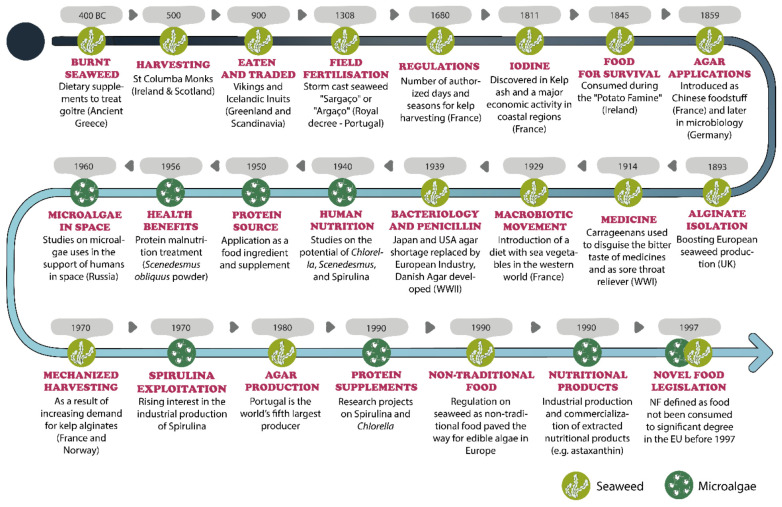
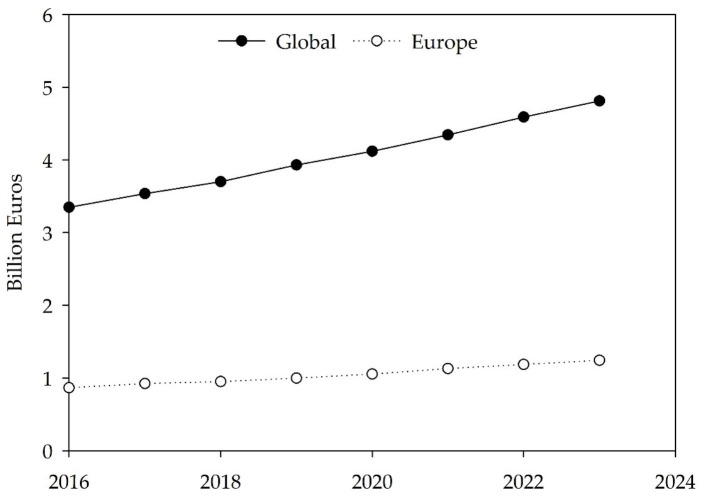
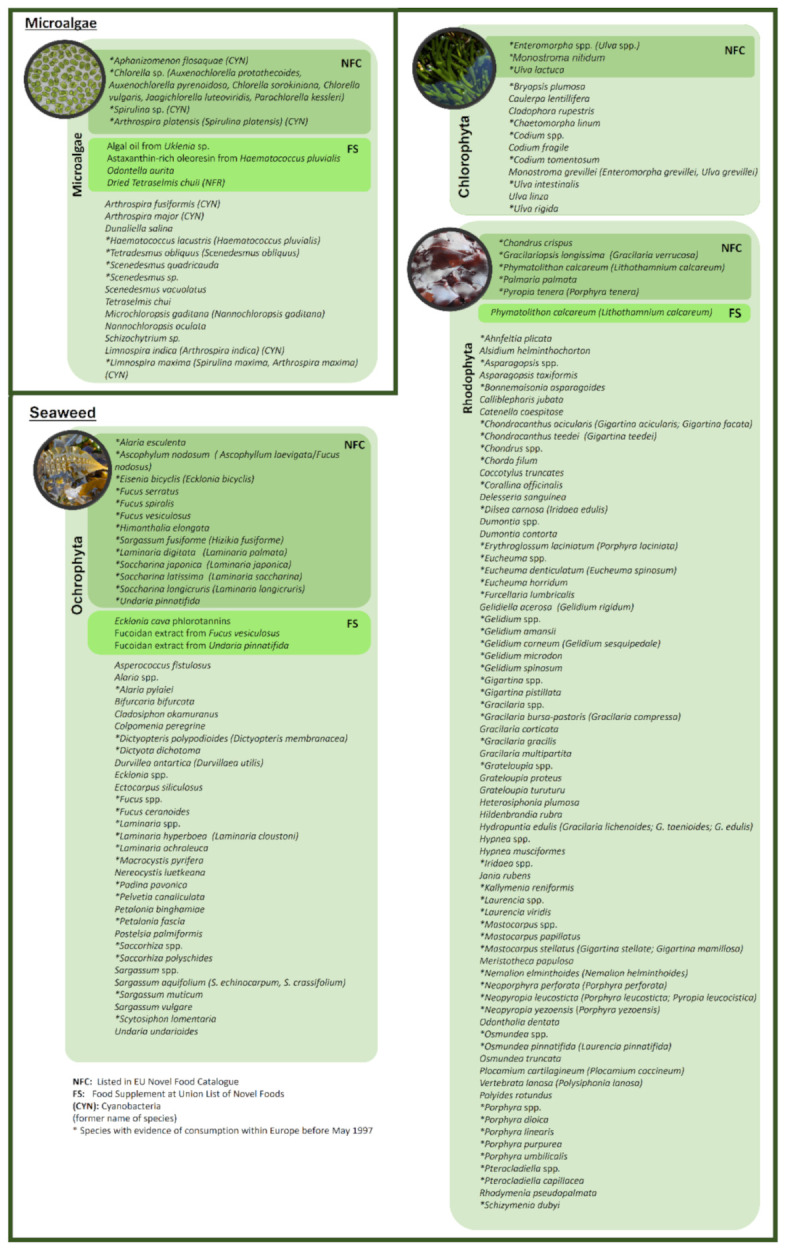
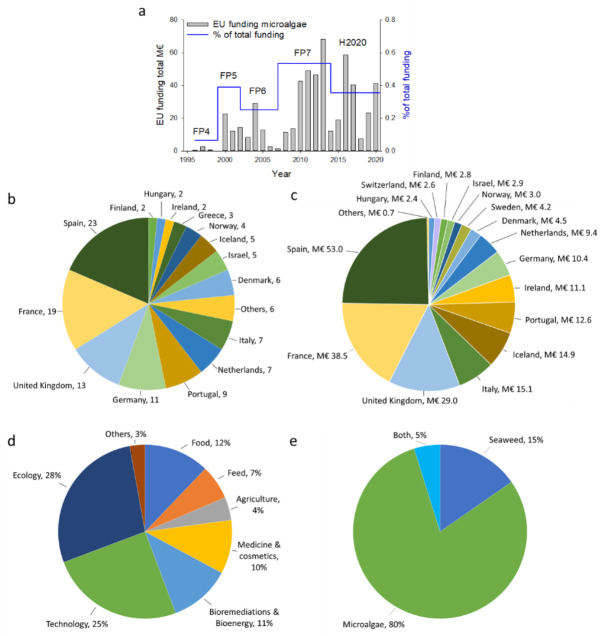
Algae have been consumed for millennia in several parts of the world as food, food supplements, and additives, due to their unique organoleptic properties and nutritional and health benefits. Algae are sustainable sources of proteins, minerals, and fiber, with well-balanced essential amino acids, pigments, and fatty acids, among other relevant metabolites for human nutrition. This review covers the historical consumption of algae in Europe, developments in the current European market, challenges when introducing new species to the market, bottlenecks in production technology, consumer acceptance, and legislation. The current algae species that are consumed and commercialized in Europe were investigated, according to their status under the European Union (EU) Novel Food legislation, along with the market perspectives in terms of the current research and development initiatives, while evaluating the interest and potential in the European market. The regular consumption of more than 150 algae species was identified, of which only 20% are approved under the EU Novel Food legislation, which demonstrates that the current legislation is not broad enough and requires an urgent update. Finally, the potential of the European algae market growth was indicated by the analysis of the trends in research, technological advances, and market initiatives to promote algae commercialization and consumption.
Overview
The claims and statistics of this paper haven’t been checked yet.
Run the check — free, no account needed. It reads the open-access text and checks the sources it cites.
Integrity signals
Registry
Cites
Statistics
Figures
Verification
Claims the paper makes
The claims and statistics of this paper haven’t been checked yet.
Run the check — free, no account needed. It reads the open-access text and checks the sources it cites.
Claims other papers make about this one
Each is checked against this paper’s own text: does it say what the citing paper says it does?
The cited source says what the claim attributes to it.
In the citing paper
“Ongoing regulatory gaps related to algae as raw materials led to the formation of CEN/TC 454 in 2017, tasked with developing standards for algal biomass, extracts, and purified compounds, including terminology, processing methods, and quality criteria [238].”
From Navigating the potential of algal peptides: health effects, market applications, and scientific challenges (2026) · cites this paper as [238]
Self-check
Percentages, sums and reported differences re-computed from the paper’s own numbers.
The self-check needs the paper’s full text.
Citations
Cites
1 retracted
Koyande, A. K., Show, P.-L., Guo, R., Tang, B., Ogino, C., & Chang, J.-S. (2019) · Bioengineered · doi:10.1080/21655979.2019.1679697 · Cited by 182
RetractedCommercial Applications of Microalgae
Spolaore, P., Joannis-Cassan, C., Duran, E., & Isambert, A. (2006) · Journal of Bioscience and Bioengineering · doi:10.1263/jbb.101.87 · Cited by 4,285
Micro-algae as a source of protein
Becker, E. W. (2007) · Biotechnology Advances · doi:10.1016/j.biotechadv.2006.11.002 · Cited by 2,311
Going green to be seen: status, reputation, and conspicuous conservation
Griskevicius, V., Tybur, J. M., & Van den Bergh, B. (2010) · Journal of Personality and Social Psychology · doi:10.1037/a0017346 · Cited by 2,174
Bioactive compounds in seaweed: functional food applications and legislation
Holdt, S. L., & Kraan, S. (2011) · Journal of Applied Phycology · doi:10.1007/s10811-010-9632-5 · Cited by 2,135
Valuable Products from Biotechnology of Microalgae
Pulz, O., & Gross, W. (2004) · Applied Microbiology and Biotechnology · doi:10.1007/s00253-004-1647-x · Cited by 2,132
Duncan, T. V. (2011) · Journal of Colloid and Interface Science · doi:10.1016/j.jcis.2011.07.017 · Cited by 2,042
Seaweed Ecology and Physiology
Hurd, C. L., Harrison, P. J. H., Bischof, K., & Lobban, C. S. (2014) · Cambridge University Press eBooks · doi:10.1017/cbo9781139192637 · Cited by 1,593
Algae as nutritional and functional food sources: revisiting our understanding.
Wells, M. L., Potin, P., Craigie, J. S., Raven, J. A., Merchant, S. S., Helliwell, K. E., Smith, A. G., Camire, M. E., & Brawley, S. H. (2017) · Journal of Applied Phycology · doi:10.1007/s10811-016-0974-5 · Cited by 1,562
Algal Proteins: Extraction, Application, and Challenges Concerning Production
Bleakley, S., & Hayes, M. (2017) · Foods · doi:10.3390/foods6050033 · Cited by 1,092
Nutritional Value of Edible Seaweeds
MacArtain, P., Gill, C. I. R., Brooks, M., Campbell, R., & Rowland, I. R. (2008) · Nutrition Reviews · doi:10.1111/j.1753-4887.2007.tb00278.x · Cited by 976
Microalgal Reactors: A Review of Enclosed System Designs and Performances
CARVALHO, A. P. F. D., Meireles, L. A., & Malcata, F. X. (2006) · Biotechnology Progress · doi:10.1021/bp060065r · Cited by 948
Fleurence, J. (1999) · Trends in Food Science & Technology · doi:10.1016/s0924-2244(99)00015-1 · Cited by 933
Microalgae: A potential alternative to health supplementation for humans
Koyande, A. K., Chew, K. W., Rambabu, K., Tao, Y., Chu, D.-T., & Show, P.-L. (2019) · Food Science and Human Wellness · doi:10.1016/j.fshw.2019.03.001 · Cited by 908
Microalgae Metabolites: A Rich Source for Food and Medicine
Sathasivam, R., Radhakrishnan, R., Hashem, A., & Abd_Allah, E. F. (2019) · Saudi Journal of Biological Sciences · doi:10.1016/j.sjbs.2017.11.003 · Cited by 872
Microalgal production — A close look at the economics
Norsker, N.-H., Barbosa, M. J., Vermuë, M. H., & Wijffels, R. H. (2011) · Biotechnology Advances · doi:10.1016/j.biotechadv.2010.08.005 · Cited by 819
Buschmann, A. H., Camus, C., Infante, J., Neori, A., Israel, Á., Hernández-González, M. C., Pereda, S. V., Gomez-Pinchetti, J. L., Golberg, A., Tadmor-Shalev, N., et al. (2017) · European Journal of Phycology · doi:10.1080/09670262.2017.1365175 · Cited by 767
Integrating seaweeds into marine aquaculture systems: a key toward sustainability.
Chopin, T., Buschmann, A. H., Halling, C., Troell, M., Kautsky, N., Neori, A., Kraemer, G. P., Zertuche‐González, J. A., Yarish, C., & Neefus, C. (2001) · Journal of Phycology · doi:10.1046/j.1529-8817.2001.01137.x · Cited by 765
High-Density Lipoprotein Subfractions - What the Clinicians Need to Know
Pirillo, A., Norata, G. D., & Catapano, A. L. (2013) · Cardiology · doi:10.1159/000346463 · Cited by 754
Spirulina, the edible microorganism.
Ciferri, O. (1983) · Microbiological Reviews · doi:10.1128/mmbr.47.4.551-578.1983 · Cited by 745
Monte Verde: Seaweed, Food, Medicine, and the Peopling of South America
Dillehay, T. D., Ramírez, C., Pino, M., Collins, M. B., Rossen, J., & Pino-Navarro, J. D. (2008) · Science · doi:10.1126/science.1156533 · Cited by 695
Towards industrial products from microalgae
Ruiz, J., Olivieri, G., de Vree, J. H., Bosma, R., Willems, P., Reith, J. H., Eppink, M. H. M., Kleinegris, D. M. M., Wijffels, R. H., & Barbosa, M. J. (2016) · Energy & Environmental Science · doi:10.1039/c6ee01493c · Cited by 661
Current Status of the Algae Production Industry in Europe: An Emerging Sector of the Blue Bioeconomy
Araújo, R., Vázquez Calderón, F., Sánchez López, J., Azevedo, I. C., Bruhn, A., Fluch, S., Garcia Tasende, M., Ghaderiardakani, F., Ilmjärv, T., Laurans, M., et al. (2021) · Frontiers in Marine Science · doi:10.3389/fmars.2020.626389 · Cited by 653 · cited 5×
“The European seaweed industry is still in its early development and has been almost exclusively based on wild stock harvesting, unlike the extensive farming that takes place in Asia [11].”
BackgroundInfluentialTrends in Microalgae Incorporation Into Innovative Food Products With Potential Health Benefits
Caporgno, M. P., & Mathys, A. (2018) · Frontiers in Nutrition · doi:10.3389/fnut.2018.00058 · Cited by 639
Biological activities and health benefit effects of natural pigments derived from marine algae
Pangestuti, R., & Kim, S. (2011) · Journal of Functional Foods · doi:10.1016/j.jff.2011.07.001 · Cited by 577
Microalgae as a future food source
Torres-Tiji, Y., Fields, F. J., & Mayfield, S. P. (2020) · Biotechnology Advances · doi:10.1016/j.biotechadv.2020.107536 · Cited by 559
Seaweeds as a Functional Ingredient for a Healthy Diet
Peñalver, R., Lorenzo, J. M., Ros, G., Amarowicz, R., Pateiro, M., & Nieto, G. (2020) · Marine Drugs · doi:10.3390/md18060301 · Cited by 541
Chapman, V. J., & Chapman, D. J. (1980) · Springer eBooks · doi:10.1007/978-94-009-5806-7 · Cited by 535
Seaweed aquaculture: cultivation technologies, challenges and its ecosystem services
Kim, J. K., Yarish, C., Hwang, E. K., Park, M., & Kim, Y. (2017) · ALGAE · doi:10.4490/algae.2017.32.3.3 · Cited by 520
Microalgae for aquaculture: Opportunities and constraints
Borowitzka, M. A. (1997) · Journal of Applied Phycology · doi:10.1023/a:1007921728300 · Cited by 478
Interplay Between Different Polyunsaturated Fatty Acids and Risk of Coronary Heart Disease in Men
Mozaffarian, D., Ascherio, A., Hu, F. B., Stampfer, M. J., Willett, W. C., Siscovick, D. S., & Rimm, E. B. (2005) · Circulation · doi:10.1161/01.cir.0000152099.87287.83 · Cited by 464
Algal Culture from Laboratory to Pilot Plant
(1953) · AIBS Bulletin · doi:10.1093/aibsbulletin/3.5.11 · Cited by 457
Risks and benefits of consuming edible seaweeds
Cherry, P., O’Hara, C., Magee, P. J., McSorley, E. M., & Allsopp, P. J. (2019) · Nutrition Reviews · doi:10.1093/nutrit/nuy066 · Cited by 440
Characterization of a flat plate photobioreactor for the production of microalgae
Sierra, E., Acién, F. G., Fernández, J. M., García, J. L., González, C., & Molina, E. (2008) · Chemical Engineering Journal · doi:10.1016/j.cej.2007.06.004 · Cited by 439
Microalgae for “Healthy” Foods-Possibilities and Challenges
Chacón‐Lee, T. L., & González‐Mariño, G. E. (2010) · Comprehensive Reviews in Food Science and Food Safety · doi:10.1111/j.1541-4337.2010.00132.x · Cited by 428
Recent Advances in Marine Algae Polysaccharides: Isolation, Structure, and Activities
Xu, S., Huang, X., & Cheong, K. (2017) · Marine Drugs · doi:10.3390/md15120388 · Cited by 424
Microalgae, old sustainable food and fashion nutraceuticals
García, J. L., de Vicente, M., & Galán, B. (2017) · Microbial Biotechnology · doi:10.1111/1751-7915.12800 · Cited by 422
Microalgae of interest as food source: biochemical composition and digestibility.
Niccolai, A., Chini Zittelli, G., Rodolfi, L., Biondi, N., & Tredici, M. R. (2019) · Algal Research · doi:10.1016/j.algal.2019.101617 · Cited by 403
Brown, E. M., Allsopp, P. J., Magee, P. J., Gill, C. I., Nitecki, S., Strain, C., & McSorley, E. M. (2014) · Nutrition Reviews · doi:10.1111/nure.12091 · Cited by 397
Ursu, A.-V., Marcati, A., Sayd, T., Sante-Lhoutellier, V., Djelveh, G., & Michaud, P. (2014) · Bioresource Technology · doi:10.1016/j.biortech.2014.01.071 · Cited by 367
The Contamination and Control of Biological Pollutants in Mass Cultivation of Microalgae
Wang, H., Zhang, W., Chen, L., Wang, J., & Liu, T. (2013) · Bioresource Technology · doi:10.1016/j.biortech.2012.10.158 · Cited by 364
Garcia-Vaquero, M., Rajauria, G., O'Doherty, J. V., & Sweeney, T. (2017) · Food Research International · doi:10.1016/j.foodres.2016.11.016 · Cited by 364
World seaweed utilisation: An end-of-century summary
Lindsey Zemke-White, W., & Ohno, M. (1999) · Journal of Applied Phycology · doi:10.1023/a:1008197610793 · Cited by 348
Rodrigues, D., Freitas, A. C., Pereira, L., Rocha‐Santos, T., Vasconcelos, M. W., Roriz, M., Rodríguez-Alcalá, L. M., Gomes, A., & Duarte, A. C. (2015) · Food Chemistry · doi:10.1016/j.foodchem.2015.03.057 · Cited by 344
Omega‐3 Dietary Supplements and the Risk of Cardiovascular Events: A Systematic Review
Marik, P. E., & Varon, J. (2009) · Clinical Cardiology · doi:10.1002/clc.20604 · Cited by 328
Marine Carotenoids: Biological Functions and Commercial Applications
Vílchez, C., Forján, E., Cuaresma, M., Bédmar, F., Garbayo, I., & Vega, J. M. (2011) · Marine Drugs · doi:10.3390/md9030319 · Cited by 328
The role of microalgae in the bioeconomy
Acién, F. G., dos Reis, A. J. D., Wijffels, R. H., Barbosa, M. J., Verdelho, V., & Llamas, B. (2020) · New Biotechnology · doi:10.1016/j.nbt.2020.11.011 · Cited by 294
Admassu, H., Gasmalla, M. A. A., Yang, R., & Zhao, W. (2018) · Journal of Food Science · doi:10.1111/1750-3841.14011 · Cited by 293
Bio-functionalities of proteins derived from marine algae — A review
Samarakoon, K. W., & Jeon, Y. (2012) · Food Research International · doi:10.1016/j.foodres.2012.03.013 · Cited by 289
Algae in food: a general review
Ścieszka, S., & Klewicka, E. (2018) · Critical Reviews in Food Science and Nutrition · doi:10.1080/10408398.2018.1496319 · Cited by 289
Variability of Iodine Content in Common Commercially Available Edible Seaweeds
Teas, J., Pino, S., Critchley, A. T., & Braverman, L. E. (2004) · Thyroid · doi:10.1089/thy.2004.14.836 · Cited by 279
Zava, T., & Zava, D. T. (2011) · Thyroid Research · doi:10.1186/1756-6614-4-14 · Cited by 272
A Review on the Use of Microalgae for Sustainable Aquaculture
Han, P., Lu, Q., Fan, L., & Zhou, W. (2019) · Applied Sciences · doi:10.3390/app9112377 · Cited by 270
Molino, A., Iovine, A., Casella, P., Mehariya, S., Chianese, S., Cerbone, A., Rimauro, J., & Musmarra, D. (2018) · International Journal of Environmental Research and Public Health · doi:10.3390/ijerph15112436 · Cited by 263
Microalgae Mass Production Methods
Shen, Y. M., Yuan, W. W., Pei, Z., Wu, Q., & Mao, E. (2009) · Transactions of the ASABE · doi:10.13031/2013.27771 · Cited by 261
SanGiovanni, J. P., Parra‐Cabrera, S., Colditz, G. A., Berkey, C. S., & Dwyer, J. T. (2000) · PEDIATRICS · doi:10.1542/peds.105.6.1292 · Cited by 256
Protective Effects of Omega-3 Fatty Acids in Cancer-Related Complications
Freitas, R. D. S., & Campos, M. M. (2019) · Nutrients · doi:10.3390/nu11050945 · Cited by 254
Ikeda, K. (2002) · Chemical Senses · doi:10.1093/chemse/27.9.847 · Cited by 252
Trust to Go Green: An Exploration of Consumer Intentions for Eco-friendly Convenience Food
Ricci, E. C., Banterle, A., & Stranieri, S. (2018) · Ecological Economics · doi:10.1016/j.ecolecon.2018.02.010 · Cited by 240
Generally recognized as safe (GRAS): history and description
Burdock, G. A., & Carabin, I. G. (2004) · Toxicology Letters · doi:10.1016/j.toxlet.2003.07.004 · Cited by 235
Cotas, J., Leandro, A., Pacheco, D., Gonçalves, A. M. M., & Pereira, L. (2020) · Life · doi:10.3390/life10030019 · Cited by 229
Self-citationOn the human consumption of the red seaweed dulse (Palmaria palmata (L.) Weber & Mohr)
Mouritsen, O. G., Dawczynski, C., Duelund, L., Jahreis, G., Vetter, W., & Schröder, M. (2013) · Journal of Applied Phycology · doi:10.1007/s10811-013-0014-7 · Cited by 228
Mass cultivation of seaweeds: current aspects and approaches
Lüning, K., & Pang, S. (2003) · Journal of Applied Phycology · doi:10.1023/a:1023807503255 · Cited by 228
MICROALGAE AND CYANOBACTERIA: FOOD FOR THOUGHT1
Gantar, M., & Svirčev, Z. B. (2008) · Journal of Phycology · doi:10.1111/j.1529-8817.2008.00469.x · Cited by 223
Arsenic in seaweed—Forms, concentration and dietary exposure
Rose, M., Lewis, J., Langford, N., Baxter, M., Origgi, S., Barber, M., MacBain, H., & Thomas, K. (2007) · Food and Chemical Toxicology · doi:10.1016/j.fct.2007.01.007 · Cited by 210
Food Safety Hazards in the European Seaweed Chain
Banach, J. L., Hoek‐van den Hil, E. F., & van der Fels‐Klerx, H. J. (2020) · Comprehensive Reviews in Food Science and Food Safety · doi:10.1111/1541-4337.12523 · Cited by 210
The Microbe as a Source of Food
Kihlberg, R. (1972) · Annual Review of Microbiology · doi:10.1146/annurev.mi.26.100172.002235 · Cited by 203
Harmful microalgae blooms (HAB); problematic and conditions that induce them
Masó, M., & Garcés, E. (2006) · Marine Pollution Bulletin · doi:10.1016/j.marpolbul.2006.08.006 · Cited by 202
Wild food plants of popular use in Sicily
Lentini, F., & Venza, F. (2007) · Journal of Ethnobiology and Ethnomedicine · doi:10.1186/1746-4269-3-15 · Cited by 201
Roleda, M. Y., Marfaing, H., Desnica, N., Jónsdóttir, R., Skjermo, J., Rebours, C., & Nitschke, U. (2018) · Food Control · doi:10.1016/j.foodcont.2018.07.031 · Cited by 198
Denis, C., Morançais, M., Li, M., Deniaud, E., Gaudin, P., Wielgosz‐Collin, G., Barnathan, G., Jaouen, P., & Fleurence, J. (2009) · Food Chemistry · doi:10.1016/j.foodchem.2009.07.047 · Cited by 195
Heavy metal bioaccumulation and toxicity with special reference to microalgae
Arunakumara, K. K. I. U., & Zhang, X. (2008) · Journal of Ocean University of China · doi:10.1007/s11802-008-0060-y · Cited by 195
Pereira, L. (2016) · doi:10.1201/b19970 · Cited by 189
Seaweeds for Food and Industrial Applications
Klnc, B., Cırık, S., Turan, G., Tekoğul, H., & Koru, E. (2013) · InTech eBooks · doi:10.5772/53172 · Cited by 184
Study on the effects of laminarin, a polysaccharide from seaweed, on gut characteristics
Devillé, C., Gharbi, M., Dandrifosse, G., & Peulen, O. (2007) · Journal of the Science of Food and Agriculture · doi:10.1002/jsfa.2901 · Cited by 184
Algal polysaccharides: potential bioactive substances for cosmeceutical applications
Priyan Shanura Fernando, I., Kim, K.-N., Kim, D., & Jeon, Y.-J. (2019) · Critical Reviews in Biotechnology · doi:10.1080/07388551.2018.1503995 · Cited by 182
Aquaculture Industry in China: Current State, Challenges, and Outlook
Li, X., Li, J., Wang, Y., Fu, L., Fu, Y., Li, B., & Jiao, B. (2011) · Reviews in Fisheries Science · doi:10.1080/10641262.2011.573597 · Cited by 179
Seaweeds for umami flavour in the New Nordic Cuisine
Mouritsen, O. G., Williams, L., Bjerregaard, R., & Duelund, L. (2012) · Flavour · doi:10.1186/2044-7248-1-4 · Cited by 177
Nutritional management of rheumatoid arthritis: a review of the evidence
Rennie, K. L., Hughes, J., Lang, R., & Jebb, S. A. (2003) · Journal of Human Nutrition and Dietetics · doi:10.1046/j.1365-277x.2003.00423.x · Cited by 177
Green consumerism: moral motivations to a sustainable future
Sachdeva, S. S., Jordan, J., & Mažar, N. (2015) · Current Opinion in Psychology · doi:10.1016/j.copsyc.2015.03.029 · Cited by 175
Functional properties and health benefits of bioactive peptides derived from Spirulina : A review
Ovando, C. A., de Carvalho, J. C., Pereira, G. V. D. M., Jacques, P., Thomaz‐Soccol, V., & Soccol, C. R. (2016) · Food Reviews International · doi:10.1080/87559129.2016.1210632 · Cited by 164
Antioxidant Capacity and Lipophilic Content of Seaweeds Collected from the Qingdao Coastline
Huang, H., & Wang, B. (2004) · Journal of Agricultural and Food Chemistry · doi:10.1021/jf049575w · Cited by 163
Algal lipids, fatty acids and sterols
Kumari, P., Kumar, M., Reddy, C. R. K., & Jha, B. (2013) · Functional Ingredients from Algae for Foods and Nutraceuticals · doi:10.1533/9780857098689.1.87 · Cited by 163
Re‐evaluation of carrageenan (E 407) and processed Eucheuma seaweed (E 407a) as food additives
(ANS), E. P. O. F. A. A. N. S. A. T. F., Younes, M., Aggett, P. J., Aguilar, F., Crebelli, R., Filipič, M., Fernández, M. J. F., Galtier, P., Gott, D. M., Gundert‐Remy, U., et al. (2018) · EFSA Journal · doi:10.2903/j.efsa.2018.5238 · Cited by 163
European Union legislation on macroalgae products
Lähteenmäki-Uutela, A., Rahikainen, M., Camarena-Gómez, M. T., Piiparinen, J., Spilling, K., & Yang, B. (2021) · Aquaculture International · doi:10.1007/s10499-020-00633-x · Cited by 161
Harvest of Arthrospira platensis from Lake Kossorom (Chad) and its household usage among the Kanembu
Abdulqader, G., Barsanti, L. A., & Tredici, M. R. (2000) · Journal of Applied Phycology · doi:10.1023/a:1008177925799 · Cited by 154
da Costa, E. V., Silva, J., Mendonça, S. H., Abreu, H., & Domingues, M. R. (2016) · Marine Drugs · doi:10.3390/md14050101 · Cited by 151
Self-citationDay, J., Gong, Y., & Hu, Q. (2017) · Algal Research · doi:10.1016/j.algal.2017.08.024 · Cited by 151
Nutritional value of selected macroalgae
Patarra, R. F., Paiva, L., Neto, A. I., Lima, E., & Baptista, J. (2011) · Journal of Applied Phycology · doi:10.1007/s10811-010-9556-0 · Cited by 147
Self-citationApplication of algae for heavy metal adsorption: A 20-year meta-analysis
Lin, Z., Li, J., Luan, Y., & Dai, W. (2020) · Ecotoxicology and Environmental Safety · doi:10.1016/j.ecoenv.2019.110089 · Cited by 145
Edible Azorean macroalgae as source of rich nutrients with impact on human health
Paiva, L. S., Lima, E., Patarra, R. F., Neto, A. I., & Baptista, J. (2014) · Food Chemistry · doi:10.1016/j.foodchem.2014.04.119 · Cited by 139
Self-citationThe rise of seaweed gastronomy: phycogastronomy
Mouritsen, O. G., Rhatigan, P., & Pérez‐Lloréns, J. L. (2018) · Botanica Marina · doi:10.1515/bot-2018-0041 · Cited by 137
The potential of edible seaweed within the western diet. A segmentation of Italian consumers
Palmieri, N., & Forleo, M. B. (2020) · International Journal of Gastronomy and Food Science · doi:10.1016/j.ijgfs.2020.100202 · Cited by 133
Consumer Knowledge and Attitudes towards Microalgae as Food: The Case of Spain
Lafarga, T., Rodríguez-Bermúdez, R., Morillas-España, A., Villaró, S., García-Vaquero, M., Morán, L., Sánchez-Zurano, A., González-López, C. V., & Acién-Fernández, F. G. (2021) · Algal Research · doi:10.1016/j.algal.2020.102174 · Cited by 133
Determination of chemical species of iodine in some seaweeds (I)
Hou, X. L., Chai, Z., Qian, Q., Yan, X., & Fan, X. (1997) · The Science of The Total Environment · doi:10.1016/s0048-9697(97)00182-4 · Cited by 132
Algal Polysaccharides as Therapeutic Agents for Atherosclerosis
Patil, N. P., Le, V., Sligar, A. D., Mei, L., Chavarria, D., Yang, E. Y., & Baker, A. B. (2018) · Frontiers in Cardiovascular Medicine · doi:10.3389/fcvm.2018.00153 · Cited by 131
Essential and toxic elements in seaweeds for human consumption
Desideri, D., Cantaluppi, C., Ceccotto, F., Meli, M. A., Roselli, C., & Feduzi, L. (2016) · Journal of Toxicology and Environmental Health · doi:10.1080/15287394.2015.1113598 · Cited by 127
Canelli, G., Tarnutzer, C., Carpine, R., Neutsch, L., Bolten, C. J., Dionisi, F., & Mathys, A. (2020) · Frontiers in Nutrition · doi:10.3389/fnut.2020.565996 · Cited by 124
Bicarbonate uptake and utilization in marine macroalgae
Larsson, C. S., & Axelsson, L. (1999) · European Journal of Phycology · doi:10.1080/09670269910001736112 · Cited by 123
Walsh, A. M., Sweeney, T., O'Shea, C. J., Doyle, D. N., & O'Doherty, J. V. (2013) · British Journal Of Nutrition · doi:10.1017/s0007114513000834 · Cited by 121
Schüler, L., de Morais, E. G., Trovão, M., Machado, A., Carvalho, B., Carneiro, M., Maia, I. B., Soares, M., Duarte, P., Barros, A. I. R. N. A., et al. (2020) · Frontiers in Bioengineering and Biotechnology · doi:10.3389/fbioe.2020.00469 · Cited by 121
Self-citationAnalysis of Scientific Research Driving Microalgae Market Opportunities in Europe
Rumin, J., Nicolau, É., Júnior, R. G. D. O., Fuentes-Grünewald, C., & Picot, L. (2020) · Marine Drugs · doi:10.3390/md18050264 · Cited by 117
Algal Polysaccharides, Novel Application, and Outlook
Usman, A., Khalid, S., Usman, A., Hussain, Z., & Wang, Y. (2017) · Elsevier eBooks · doi:10.1016/b978-0-12-812360-7.00005-7 · Cited by 116
Food or fad? Challenges and opportunities for including seaweeds in a Nordic diet
Chapman, A., Stévant, P., & Larssen, W. E. (2015) · Botanica Marina · doi:10.1515/bot-2015-0044 · Cited by 115
Preference and willingness to pay for meat substitutes based on micro-algae
Weinrich, R., & Elshiewy, O. (2019) · Appetite · doi:10.1016/j.appet.2019.104353 · Cited by 106
Massive cultivation of microalgae: Results and prospects
Soeder, C. J. (1980) · Hydrobiologia · doi:10.1007/bf00016247 · Cited by 104
Hayes, M., & Tiwari, B. K. (2015) · International Journal of Molecular Sciences · doi:10.3390/ijms160922485 · Cited by 101
Seaweed reproductive biology: environmental and genetic controls
Liu, X., Bogaert, K. A., Engelen, A. H., Leliaert, F., Roleda, M. Y., & Clerck, O. D. (2017) · Botanica Marina · doi:10.1515/bot-2016-0091 · Cited by 98
Phaneuf, D., Côté, I., Dumas, P., Ferron, L. A., & LeBlanc, A. (1999) · Environmental Research · doi:10.1006/enrs.1998.3915 · Cited by 97
Towards sustainable European seaweed value chains: a triple P perspective
van den Burg, S. W. K., Dagevos, H., & Helmes, R. (2019) · ICES Journal of Marine Science · doi:10.1093/icesjms/fsz183 · Cited by 97
Nova, P., Pimenta‐Martins, A., Teixeira, C., Abreu, H., Silva, J. G., Silva, A. M., Freitas, A. C., & Gomes, A. (2020) · Journal of Applied Phycology · doi:10.1007/s10811-020-02129-w · Cited by 97
Self-citationBoukid, F., & Castellari, M. (2021) · Foods · doi:10.3390/foods10010173 · Cited by 97
Guedes, A. C., Barbosa, C. R., Amaro, H. M., Pereira, C. I., & Malcata, F. X. (2011) · International Journal of Food Science & Technology · doi:10.1111/j.1365-2621.2011.02567.x · Cited by 96
Pereira, H., Silva, J., Santos, T., Gangadhar, K. N., Raposo, A., Nunes, C., Coimbra, M. A., Gouveia, L., Barreira, L. A., & Varela, J. C. S. (2019) · Molecules · doi:10.3390/molecules24173192 · Cited by 96
Self-citationBarros, R., Moreira, A. M., Fonseca, J., Delgado, L., Castel-Branco, M. G., Haahtela, T., Lopes, C. M. M., & Moreira, P. A. M. (2011) · British Journal Of Nutrition · doi:10.1017/s0007114511000328 · Cited by 93
da Costa, E. V., Melo, T., Moreira, A. S. P., Bernardo, C., Helguero, L. A., Ferreira, I., Cruz, M. T., Rego, A. M., Domingues, P. M., Calado, R., et al. (2017) · Marine Drugs · doi:10.3390/md15030062 · Cited by 90
Analysis and Risk Assessment of Seaweed
Monteiro, M., Sloth, J. J., Holdt, S. L., & Hansen, M. (2019) · EFSA Journal · doi:10.2903/j.efsa.2019.e170915 · Cited by 90
Tecuitlatl; A glimpse of Aztec food technology
FARRAR, W. V. (1966) · Nature · doi:10.1038/211341a0 · Cited by 86
Microalgae mass culture: the constraints of scaling-up
Grobbelaar, J. U. (2011) · Journal of Applied Phycology · doi:10.1007/s10811-011-9728-6 · Cited by 77
Urban wastewater treatment by Tetraselmis sp. CTP4 (Chlorophyta)
Schulze, P. S. C., de Carvalho, C. F. M., Pereira, H., Gangadhar, K. N., Schüler, L., Santos, T., Varela, J. C. S., & Barreira, L. A. (2016) · Bioresource Technology · doi:10.1016/j.biortech.2016.10.027 · Cited by 75
Self-citationMoons, I., Barbarossa, C., & De Pelsmacker, P. (2018) · Ecological Economics · doi:10.1016/j.ecolecon.2018.05.012 · Cited by 75
Sakamoto, A., Saotome, M., Iguchi, K., & Maekawa, Y. (2019) · International Journal of Molecular Sciences · doi:10.3390/ijms20164025 · Cited by 73
CONSUMER ACCEPTANCE FOR GREEN TEA BY CONSUMERS IN THE UNITED STATES, KOREA AND THAILAND
Lee, J., Chambers, E., Chambers, D. H., Chun, S.-S., Oupadissakoon, C., & Johnson, D. E. (2010) · Journal of Sensory Studies · doi:10.1111/j.1745-459x.2010.00287.x · Cited by 70
Paiva, L. S., Lima, E., Neto, A. I., Marcone, M. F., & Baptista, J. (2017) · Journal of Food Science · doi:10.1111/1750-3841.13778 · Cited by 70
Arulkumar, A., Nigariga, P., Paramasivam, S., & Rajaram, R. (2019) · Chemosphere · doi:10.1016/j.chemosphere.2019.01.007 · Cited by 69
Global unbalance in seaweed production, research effort and biotechnology markets
Mazarrasa, I., Olsen, Y. S., Mayol, E., Marbà, N., & Duarte, C. M. (2014) · Biotechnology Advances · doi:10.1016/j.biotechadv.2014.05.002 · Cited by 65
The Macrobiotic Diet in Cancer
Kushi, L. H., Cunningham, J. E., Hébert, J. R., Lerman, R. H., Bandera, E. V., & Teas, J. (2001) · Journal of Nutrition · doi:10.1093/jn/131.11.3056s · Cited by 65
Seaweed resources of the Baltic Sea, Kattegat and German and Danish North Sea coasts
Weinberger, F., Paalme, T., & Wikström, S. A. (2019) · Botanica Marina · doi:10.1515/bot-2019-0019 · Cited by 65
RICHMOND, A. E., & Soeder, C. J. (1986) · Critical Reviews in Biotechnology · doi:10.3109/07388558609150800 · Cited by 64
Health-promoting ingredients from four selected Azorean macroalgae
Paiva, L. S., Lima, E., Neto, A. I., Marcone, M. F., & Baptista, J. (2016) · Food Research International · doi:10.1016/j.foodres.2016.08.007 · Cited by 63
Pelletreau, K. N., & Muller‐Parker, G. (2002) · Marine Biology · doi:10.1007/s00227-002-0809-6 · Cited by 62
Munier, M., Dumay, J., Morançais, M., Jaouen, P., & Fleurence, J. (2013) · Journal of Chemistry · doi:10.1155/2013/568548 · Cited by 61
Microalgae: from staple foodstuff to avant-garde cuisine
Pérez-Lloréns, J. L. (2020) · International Journal of Gastronomy and Food Science · doi:10.1016/j.ijgfs.2020.100221 · Cited by 61
Cuaresma, M., Janssen, M. G. J., van den End, E. J., Vı́lchez, C., & Wijffels, R. H. (2011) · Bioresource Technology · doi:10.1016/j.biortech.2011.05.076 · Cited by 60
Emerging algal nanotechnology for high-value compounds: A direction to future food production
Koyande, A. K., Chew, K. W., Manickam, S., Chang, J., & Show, P.-L. (2021) · Trends in Food Science & Technology · doi:10.1016/j.tifs.2021.07.026 · Cited by 60
Powell, R. C., Nevels, E. M., & McDowell, M. E. (1961) · Journal of Nutrition · doi:10.1093/jn/75.1.7 · Cited by 57
Iodine in Medicine and Pharmacy since its Discovery—1811–1961
Kelly, F. C. (1961) · Proceedings of the Royal Society of Medicine · doi:10.1177/003591576105401001 · Cited by 55
Rzymski, P., & Jaśkiewicz, M. (2017) · Journal of Applied Phycology · doi:10.1007/s10811-017-1079-5 · Cited by 55
Marine plant harvest in Portugal
Santos, R., & Duarte, P. (1991) · Journal of Applied Phycology · doi:10.1007/bf00003915 · Cited by 54
Seaweeds in mythology, folklore, poetry, and life
Pérez‐Lloréns, J. L., Mouritsen, O. G., Rhatigan, P., Cornish, M. L., & Critchley, A. T. (2020) · Journal of Applied Phycology · doi:10.1007/s10811-020-02133-0 · Cited by 54
Saved by seaweeds: phyconomic contributions in times of crises
Mouritsen, O. G., Rhatigan, P., Cornish, M. L., Critchley, A. T., & Pérez‐Lloréns, J. L. (2020) · Journal of Applied Phycology · doi:10.1007/s10811-020-02256-4 · Cited by 54
Seaweed Flora of the European North Atlantic and Mediterranean
Pereira, L. (2015) · Springer eBooks · doi:10.1007/978-3-642-53971-8_6 · Cited by 53
Identification of Sulfoglycolipid Bioactivities and Characteristic Fatty Acids of Marine Macroalgae
Tsai, C.-J., & Pan, B. S. (2012) · Journal of Agricultural and Food Chemistry · doi:10.1021/jf302241d · Cited by 53
Seaweed Consumption and Label Preferences in France
Lucas, S., Gouin, S., & Lesueur, M. (2019) · Marine Resource Economics · doi:10.1086/704078 · Cited by 52
New England Seaweed Culture Handbook
Redmond, S., Green, L. A., Yarish, C., Kim, J. H., & Neefus, C. D. (2014) · OpenCommons - UConn (University of Connecticut) · Cited by 51
Trace element seasonality in marine macroalgae of different functional-form groups
Malea, P., Chatziapostolou, A., & Kevrekidis, T. (2014) · Marine Environmental Research · doi:10.1016/j.marenvres.2014.11.004 · Cited by 50
Coolia monotis (Dinophyceae): A toxic epiphytic microalgal species found in New Zealand (Note)
Rhodes, L. L., & Thomas, A. E. (1997) · New Zealand Journal of Marine and Freshwater Research · doi:10.1080/00288330.1997.9516751 · Cited by 50
Public perception of algal consumption as an alternative food in the Kingdom of Bahrain
Al-Thawadi, S. (2018) · Arab Journal of Basic and Applied Sciences · doi:10.1080/25765299.2018.1449344 · Cited by 50
Miyaki, T., Krogmann, A. R., Byrnes, E., & Takehana, S. (2015) · Journal of Food Science · doi:10.1111/1750-3841.13195 · Cited by 49
Santillan, C. (1982) · Cellular and Molecular Life Sciences · doi:10.1007/bf01944524 · Cited by 49
Safety evaluation of Nostoc flagelliforme (nostocales, cyanophyceae) as a potential food
Takenaka, H., Yamaguchi, Y., Sakaki, S., Watarai, K., Тanaka, N., Hori, M., Seki, H., Tsuchida, M., Yamada, A., Nishimori, T., et al. (1998) · Food and Chemical Toxicology · doi:10.1016/s0278-6915(98)00089-1 · Cited by 48
Lahaye, M., Gómez‐Pinchetti, J. L., del Río, M. J., & Garcia-Reina, G. (1995) · Journal of the Science of Food and Agriculture · doi:10.1002/jsfa.2740680116 · Cited by 48
Fatty acid composition of selected macrophytes
Patarra, R. F., Leite, J., Pereira, R. B., Baptista, J., & Neto, A. I. (2012) · Natural Product Research · doi:10.1080/14786419.2012.688048 · Cited by 47
Self-citationMASS CULTURE OF ALGAE FOR FOOD AND OTHER ORGANIC COMPOUNDS
Krauss, R. W. (1962) · American Journal of Botany · doi:10.1002/j.1537-2197.1962.tb14961.x · Cited by 47
The Effect of Different Treatments to the Amino Acid Contents of Micro Algae Spirulina sp.
Dewi, E. N., Amalia, U., & Mel, M. (2016) · Aquatic Procedia · doi:10.1016/j.aqpro.2016.07.008 · Cited by 46
Zur Verwendung von Mikroalgen f�r Ern�hrungszwecke
Soeder, C. J. (1976) · Die Naturwissenschaften · doi:10.1007/bf00600487 · Cited by 45
Commercialization aspects of carotenoids
Bogacz-Radomska, L., Harasym, J., & Piwowar, A. (2020) · Elsevier eBooks · doi:10.1016/b978-0-12-817067-0.00010-5 · Cited by 44
Rey, F., Cartaxana, P., Melo, T., Calado, R., Pereira, R., Abreu, H., Domingues, P. M., Cruz, S., & Domingues, M. R. (2020) · Marine Drugs · doi:10.3390/md18040188 · Cited by 44
Fu, Y., Yin, N., Cai, X., Du, H., Wang, P., Sultana, M. S., Sun, G., & Cui, Y. (2021) · Environmental Pollution · doi:10.1016/j.envpol.2021.116958 · Cited by 42
Umami free amino acids in edible green, red, and brown seaweeds from the Portuguese seashore
Milinović, J., Campos, B. M., Mata, P., Diniz, M., & Noronha, J. P. (2020) · Journal of Applied Phycology · doi:10.1007/s10811-020-02169-2 · Cited by 38
Vellinga, R. E., Sam, M., Verhagen, H., Jakobsen, L. S., Ravn‐Haren, G., Sugimoto, M., Torres, D. P. M., Katagiri, R., Thu, B. J., Granby, K., et al. (2022) · Frontiers in Nutrition · doi:10.3389/fnut.2021.792923 · Cited by 37
Gelidium commercial exploitation: natural resources and cultivation
Melo, R. A. (1998) · Journal of Applied Phycology · doi:10.1023/a:1008070419158 · Cited by 36
Food and Feed Applications of Algae
Packer, M. A., Harris, G. C., & Adams, S. L. (2016) · Green energy and technology · doi:10.1007/978-3-319-12334-9_12 · Cited by 35
Thomas, I., Siew, L. Q. C., Watts, T. J., & Haque, R. (2019) · The Journal of Allergy and Clinical Immunology: In Practice · doi:10.1016/j.jaip.2018.11.009 · Cited by 35
Rapid growth of seaweed biotechnology provides opportunities for developing nations
Mazarrasa, I., Olsen, Y. S., Mayol, E., Marbà, N., & Duarte, C. M. (2013) · Nature Biotechnology · doi:10.1038/nbt.2636 · Cited by 34
Kofrányi, E., & Jekat, F. (1967) · Hoppe-Seyler´s Zeitschrift für physiologische Chemie · doi:10.1515/bchm2.1967.348.1.84 · Cited by 34
Useful European seaweeds: past hopes and present cultivation
Kain, J. M., & Dawes, C. P. (1987) · Springer eBooks · doi:10.1007/978-94-009-4057-4_24 · Cited by 33
A role for algae as human food in antiquity
Aaronson, S. (1986) · Food and Foodways · doi:10.1080/07409710.1986.9961891 · Cited by 33
The seaweed resources of Portugal
Gaspar, R., Pereira, L., & Sousa‐Pinto, I. (2019) · Botanica Marina · doi:10.1515/bot-2019-0012 · Cited by 32
Sánchez-Parra, E., Boutarfa, S., & Aboal, M. (2020) · Toxins · doi:10.3390/toxins12090552 · Cited by 30
Abraham, A., Flewelling, L. J., Said, K. R. E., Odom, W., Geiger, S. P., Granholm, A. A., Jackson, J. T., & Bodager, D. W. (2020) · Toxicon · doi:10.1016/j.toxicon.2020.12.010 · Cited by 30
Gesichtspunkte für die Verwendung von Mikroalgen in der Ernährung von Mensch und Tier1
Soeder, C. J., & Pabst, W. (1970) · Berichte der Deutschen Botanischen Gesellschaft · doi:10.1111/j.1438-8677.1971.tb02312.x · Cited by 28
Wang, H., Lin, A., Gu, W., Li, H., Gao, S., & Wang, G. (2016) · Scientific Reports · doi:10.1038/srep24923 · Cited by 27
Characterization and differentiation of seaweeds on the basis of their volatile composition
Mirzayeva, A., Castro, R., Barroso, C. G., & Durán, E. (2020) · Food Chemistry · doi:10.1016/j.foodchem.2020.127725 · Cited by 26
Ceramialean epiphytism in an intertidal Gracilaria chilensis (Rhodophyta) bed in southern Chile
Buschmann, A. H., Retamales, C. A., & Figueroa, C. (1997) · Journal of Applied Phycology · doi:10.1023/a:1007971615801 · Cited by 25
Concise review of the species Pterocladiella capillacea (S.G. Gmelin) Santelices & Hommersand
Patarra, R. F., Iha, C., Pereira, L., & Neto, A. I. (2019) · Journal of Applied Phycology · doi:10.1007/s10811-019-02009-y · Cited by 25
Self-citationHuman Exposure to Iodine from the Consumption of Edible Seaweeds
González, A., Paz, S., Rubio, C., Gutiérrez, Á. J., & Hardisson, A. (2020) · Biological Trace Element Research · doi:10.1007/s12011-019-01996-w · Cited by 23
Sun, Q., Wu, S., Yin, R., Bai, X., Bhunia, A. K., Liu, C., Zheng, Y., Wang, F., & Blatchley, E. R. (2021) · Water Research · doi:10.1016/j.watres.2021.116893 · Cited by 23
Useful European seaweeds: past hopes and present cultivation
Kain, J. M., & Dawes, C. P. (1987) · Hydrobiologia · doi:10.1007/bf00046124 · Cited by 23
Unicellular Algæ as a Source of Food
Geoghegan, M. J. (1951) · Nature · doi:10.1038/168426a0 · Cited by 22
Allergenicity and allergens of amphipods found in nori (dried laver)
Motoyama, K., Hamada, Y., Nagashima, Y., & Shiomi, K. (2007) · Food Additives and Contaminants · doi:10.1080/02652030701305454 · Cited by 22
Lipids, Fatty Acids, Glycolipids, and Phospholipids
Wielgosz‐Collin, G., Kendel, M., & Couzinet‐Mossion, A. (2016) · Elsevier eBooks · doi:10.1016/b978-0-12-802772-1.00007-5 · Cited by 20
Araújo, G. S., Cotas, J., Morais, T., Leandro, A., García‐Poza, S., Gonçalves, A. M. M., & Pereira, L. (2020) · Applied Sciences · doi:10.3390/app10217553 · Cited by 19
Self-citation(2015) · DIGITAL.CSIC (Spanish National Research Council (CSIC)) · Cited by 16
Effects of light, temperature and stocking density on Halopteris scoparia growth
Patarra, R. F., Carreiro, A. S. D. P., Lloveras, A. A., Abreu, H., Buschmann, A. H., & Neto, A. I. (2016) · Journal of Applied Phycology · doi:10.1007/s10811-016-0933-1 · Cited by 16
Self-citationAntiallergic and Allergic Properties
Fleurence, J., & Levine, I. A. (2018) · Microalgae in Health and Disease Prevention · doi:10.1016/b978-0-12-811405-6.00014-1 · Cited by 14
Haroun, R. J., Gil‐Rodríguez, M. C., Neto, A. I., Machín‐Sánchez, M., & Viera-Rodríguez, M. A. (2019) · Journal of Applied Phycology · doi:10.1007/s10811-019-01889-4 · Cited by 14
Fralick, R. A., Baldwin, H. P., Neto, A. I., & Hehre, E. J. (1990) · Hydrobiologia · doi:10.1007/bf00040274 · Cited by 14
Fralick, R. A., & Andrade, F. (1981) · De Gruyter eBooks · doi:10.1515/9783110865271-032 · Cited by 13
Key-Narratives of Microalgae Nutrition: Exploring futures through a public Delphi survey in Germany
Roßmann, M., & Rösch, C. (2019) · Science and Public Policy · doi:10.1093/scipol/scz053 · Cited by 13
Seaweeds and their value in foodstuffs
Black, W. A. P. (1953) · Proceedings of The Nutrition Society · doi:10.1079/pns19530010 · Cited by 12
A GLIMPSE ON THE USES OF SEAWEEDS IN ISLAMIC SCIENCE AND DAILY LIFE DURING THE CLASSICAL PERIOD
Khalilieh, H. S., & Boulos, A. (2006) · Arabic Sciences and Philosophy · doi:10.1017/s0957423906000257 · Cited by 12
Müller-Wecker, H., & Kofrányi, E. (1973) · Hoppe-Seyler´s Zeitschrift für physiologische Chemie · doi:10.1515/bchm2.1973.354.2.1034 · Cited by 12
[Food value of the spiruline algae to man].
SAUTIER, C., & Trémolières, J. (1975) · PubMed · Cited by 11
Natural medical attributes and benefits of Spirulina : Segmentation based on consumers' knowledge
Kamenidou, I. E., Aggelopoulos, S., & Batzios, A. C. (2011) · Journal of Medicinal Plants Research · doi:10.5897/jmpr.9000922 · Cited by 11
Twelfth International Seaweed Symposium
Ragan, M. A., & Bird, C. J. (1987) · Springer eBooks · doi:10.1007/978-94-009-4057-4 · Cited by 11
The Regulation of "Novel Food" in China: the Tendency of Deregulation
Sun, J. (2015) · Cited by 9
Bacteriological investigation on “Mauro” sold in Catania
Ziino, G., Nibali, V. C., & Panebianco, A. (2010) · Veterinary Research Communications · doi:10.1007/s11259-010-9409-y · Cited by 8
Matos, S. (2012) · Iridescent · doi:10.1080/19235003.2012.11428512 · Cited by 8
Research works printed but not linked: 28
- Mintel (2016, March 09). Seaweed-flavoured food and drink launches increased by 147% in Europe between 2011 and 2015. Available online: http://www.mintel.com/press-centre/food-and-drink/seaweed-flavoured-food-and-drink-launches-increased-by-147-in-europe-between-2011-and-2015.
- Hallsson, S. (1961, January 18–24). The uses of seaweeds in iceland. Proceedings of the Fourth International Seaweed Symposium, Biarritz, France.
- Johnston, 1966, The Biological and Economic Importance of Algae, Part 2, Tuatara, 14, 4
- McDowell, L.R. (1992). Iodine. Minerals in Animal and Human Nutrition, Academic Press.
- Dickens, 1856, The Purple Shore, Househ. Words, XIV, 391
- Ferdouse, 2018, The global status of seaweed production, trade and utilization, Globefish Res. Programme, 124, 120
- Palminha, 1971, Exploração e utilização de Algas Marinhas na Plataforma Portuguesa e nas Ilhas do Arquipélago dos Açores, Junta Nac. Fom. Das Pescas, 7, 25
- Palminha, 1982, A existência de Gelidium sesquipedale (Clem.) Born et Thur. na costa sul do Algarve. I. Distribuição local, Bol. INIP., 8, 93
- Palminha, 1985, A existência de Gelidium sesquipedale (Clem.) Born et Thur. na costa sul do Algarve. II. Biomassa total, Bol. INIP., 13, 77
- Tamiya, H. Growing Chlorella for Food and Feed. Proceedings of the World Symposium on Applied Solar Energy, Phoenix, AZ, USA.
- Helvey, T.C. (1964, January 27–30). Nutrition in Space and Related Waste Problems. Proceedings of the Conference on Nutrition in Space and Related Waste problems, Universtiy of South Florida, Tampa, FL, USA.
- Bychkov, 1966, The aus der Alge Dunaliella of dried biomass of unicellular algae in human food rations, Vopr. Pitan., 25, 9
- Ahsan, M., Habib, B., Parvin, M., Huntington, T.C., and Hasan, M. (2008). A Review on Culture, Production and Use of Spirulina as Food for Humans and Feeds for Domestic Animals and Fish, FAO.
- Guiry, M.D., and Blunden, G. (1991). Animal and human nutrition. Seaweed Resources in Europe: Uses and Potential, John Wiley & Sons, Ltd.
- McIrvine, D. (2021, April 10). An Erne in Erin: William Blake Depicts a “Sea Eagle” and Dillisk from County Antrim’s ‘Giants Caus[e]way’ in Plate 78 of *Jerusalem*, and Japanese Women Abalone-Diving in Plate 89; 2019; Volume 1. Available online: https://www.academia.edu/41485060/An_Erne_in_Erin_William_Blake_Depicts_a_Sea_Eagle_and_Dillisk_from_County_Antrims_Giants_caus_e_way_in_Plate_78_of_Jerusalem_and_Japanese_Women_Abalone_Diving_in_Plate_89.
- Sautier, 1975, Valeur alimentaire des algues spirulines chez l’homme, Ann. Nutr. Aliment., 29, 517
- Pokrovskaia, 1968, Effect of a Vegetable Diet Including a Biomass of Unicellular Algae on the Excretion and Balance of Mineral Elements (Vegetable Diet, Including 210 g of Dry Chlorella Biomass, Decreases Effect on Calcium and Magnesium Assimilation to Produce Insignificant, Kosm. Biol. I Meditsina, 2, 78
- Badar, 2016, Effect of Boiling on Removing of Botulinum Toxins from Drinking Water Samples, Int. J. Sci. Res., 5, 1969
- Joseph, M. (2016). The Seaweed Cookbook, Penguin UK.
- Moons, I., De Pelsmacker, P., and Barbarossa, C. (2017, January 26–28). The Drivers of the Usage Intention of Spirulina Algae in Food in Different Market Segments. Proceedings of the 16th International Marketing Trends Conference, Madrid, Spain.
- (2021, April 20). (Instrumentalities of the State Council) China Administrative Measures for the Safety Review of New Food Raw Materials. Available online: http://www.lawinfochina.com/display.aspx?lib=law&id=15358&CGid&EncodingName=big5.
- 1947, Sobre a utilização de algumas algas marinhas da nossa costa, Brotéria Ciências Nat., 16, 77
- McKenna, J. (2013). Extreme Greens: Understanding Seaweeds: Cooking, Foraging, Cosmetic, Estragon Press. [1st ed.].
- Hairon, D. (2021, February 17). Edible seaweeds in Jersey. Available online: https://jerseywalkadventures.co.uk/press-office/edible-seaweeds-in-jersey/.
- Pereira, L. (2010). University of C. Algas à mesa. Workshop Sobre Algas Comestíveis. IMAR-CMA/Universidade de Coimbra, Museu do Traje.
- Palminha, F. As algas marinhas nos costumes faialenses. 1958; pp. 113–116.
- C-, C., Gmbh, N., Nordrhein-westfalen, L., German, T., Drink, S., Land, T., Rhine-westphalia, N., Bundesverwaltungsgericht, T., and Court, F.A. (2021). Court of Justice of the European Union PRESS RELEASE No 69/21 EU Law Prohibits the Addition of the alga Lithothamnium Calcareum in the Processing of Organic Foodstuffs Such as rice- and Soya-Based Organic Drinks for the Purpose of Their Enrichment with Calcium, Court of Justice of the European Union.
- (2021, February 01). (Expolab Centro Ciência Viva) Workshop “Alimentação do Oceano: Algas Como Fonte Alternativa de Proteína”. Available online: https://www.youtube.com/watch?v=wvMHcSjKHPc&ab_channel=ExpolabCentroCiênciaViva.
Cited by
Sorted by citations
Astaxanthin: Past, Present, and Future
Nishida, Y., Berg, P., Shakersain, B., Hecht, K. A., Takikawa, A., Tao, R., Kakuta, Y., Uragami, C., Hashimoto, H., Misawa, N., et al. (2023) · Marine Drugs · doi:10.3390/md21100514 · Cited by 180
Wu, J. Y., Tso, R., Teo, H. S., & Haldar, S. (2023) · Frontiers in Nutrition · doi:10.3389/fnut.2023.1277343 · Cited by 126
Cardoso, B. D., Nóbrega, G., Afonso, I. S., Ribeiro, J., & Lima, R. A. (2025) · Journal of environmental chemical engineering · doi:10.1016/j.jece.2025.116921 · Cited by 129
Cadâr, E., Popescu, A., Dragan, A.-M.-L., Pesterau, A.-M., Pascale, C., Anuța, V., Prasacu, I., Velescu, B. Ș., Tomescu, C. L., Bogdan-Andreescu, C. F., et al. (2025) · Marine Drugs · doi:10.3390/md23040152 · Cited by 129
Eilam, Y., Khattib, H., Pintel, N., & Avni, D. (2023) · Global Challenges · doi:10.1002/gch2.202200177 · Cited by 101
Metadata
- Authors
- Mendes, M., Navalho, S., Ferreira, A., Paulino, C., Figueiredo, D., Silva, D., Gao, F., Gama, F., Bombo, G., Jacinto, R., Aveiro, S., Schulze, P., Gonçalves, A. T., Pereira, H., Gouveia, L., Patarra, R., Abreu, M. H., Silva, J., Navalho, J., Varela, J., & Speranza, L.
- Affiliations
- GreenCoLab (PT)
- National Laboratory of Energy and Geology (PT)
- Wageningen University & Research (NL)
- Nord University (NO)
- GreenCoLab—Associação Oceano Verde, Universidade do Algarve, Campus de Gambelas, 8005-139 Faro, Portugal
- Universidade dos Açores (PT)
- ALGAplus, Produção e Comercialização de Algas e Seus Derivados, Lda., 3830-196 Ílhavo, Portugal
- Allmicroalgae—Natural Products, 2445-413 Pataias, Portugal
- Necton (Portugal) (PT)
- Centro de Ciências do Mar do Algarve (PT)
- Corresponding author
- Speranza, Lais
- ORCID
- Venue
- Foods
- Publisher
- MDPI AG
- Published
- 2022-06-24
- Volume
- 11
- Issue
- 13
- Pages
- 1871
- ISSN
- 2304-8158 (ISSN-L)
- PMC
- PMC9265617
- OpenAlex
- W4283461407
- Cited by
- 234
- References
- 229
- Citations by year
- 2026: 47 · 2025: 63 · 2024: 66 · 2023: 48 · 2022: 10
- FWCI
- 3.95
- Type
- journal article
- Language
- en
- Open access
- gold
- doi.org
- Licence
- Locations
- Foods (publishedVersion, cc-by)
- PubMed Central (publishedVersion, cc-by)
- PubMed (publishedVersion)
- Socio-Environmental Systems Modeling (submittedVersion, cc-by)
- DOAJ (DOAJ: Directory of Open Access Journals) (submittedVersion, cc-by-sa)
- Portuguese National Funding Agency for Science, Research and Technology (RCAAP Project by FCT) (submittedVersion, cc-by)
- Portuguese National Funding Agency for Science, Research and Technology (RCAAP Project by FCT) (submittedVersion, other-oa)
- Data Archiving and Networked Services (DANS) (submittedVersion, other-oa)
- Funders
- ProFuture project (2019–2023 “Microagae protein-rich ingredients for the food and feed of the future”) (862980, UID/BIA/00329/2020–2023, UID/Multi/04326/2020, SFRH/BGCT/135478/2018, SFRH/BD/144122/2019)
- National Funds through FCT—Fundação para a Ciência e Tecnologia (862980, UID/BIA/00329/2020–2023, UID/Multi/04326/2020, SFRH/BGCT/135478/2018, SFRH/BD/144122/2019)
- FCT Science and Technology Management Fellowship (862980, UID/BIA/00329/2020–2023, UID/Multi/04326/2020, SFRH/BGCT/135478/2018, SFRH/BD/144122/2019)
- FCT Ph.D. (862980, UID/BIA/00329/2020–2023, UID/Multi/04326/2020, SFRH/BGCT/135478/2018, SFRH/BD/144122/2019)
- Topics
- Life Sciences › Agricultural and Biological Sciences › Aquatic Science › Seaweed-derived Bioactive Compounds
- Life Sciences › Agricultural and Biological Sciences › Food Science › Food Industry and Aquatic Biology
- Health Sciences › Medicine › Public Health, Environmental and Occupational Health › Consumer Attitudes and Food Labeling
- Keywords
- edible algae, species diversity, consumer acceptance, dietary supplements, food additives
About these checks
Registry, retraction, Cites and statistics results are computed, not judged, with one exception: a printed reference that no index lists is read once by a model before it counts as a citation error. Claims are extracted by a model and kept only when their quote appears verbatim in the text; each cited source is then checked, with a model’s help, for whether it says what the claim relies on. Those verdicts can be wrong — read the claim’s quote and the cited source before relying on one.
Statistics and arithmetic are recomputed, not judged.
Confidence bands are shown only for fields calibrated on our annotated test set. None is calibrated yet, so no band is shown.
What counts as a claim ›How we measure confidence ›How we check this ›
Are you an author, or do you see a problem with this page? Request a review
