

The DOI matches its Crossref record; 4 of the 4 references it cites were found in a registry or an index.
The Role of miR-128 in Neurodegenerative Diseases
Abstract
Several neurodegenerative disorders are characterized by the accumulation of misfolded proteins and are collectively known as proteinopathies. Alzheimer’s disease (AD), Parkinson’s disease (PD), and Huntington’s disease (HD) represent some of the most common neurodegenerative disorders whose steady increase in prevalence is having a major socio-economic impact on our society. Multiple laboratories have reported hundreds of changes in gene expression in selective brain regions of AD, PD, and HD brains. While the mechanisms underlying these changes remain an active area of investigation, alterations in the expression of noncoding RNAs, which are common in AD, PD, and HD, may account for some of the changes in gene expression in proteinopathies. In this review, we discuss the role of miR-128, which is highly expressed in mammalian brains, in AD, PD, and HD. We highlight how alterations in miR-128 may account, at least in part, for the gene expression changes associated with proteinopathies. Indeed, miR-128 is involved, among other things, in the regulation of neuronal plasticity, cytoskeletal organization, and neuronal death, events linked to various proteinopathies. For example, reducing the expression of miR-128 in a mouse model of AD ameliorates cognitive deficits and reduces neuropathology. Overall, the data in the literature suggest that targeting miR-128 might be beneficial to mitigate the behavioral phenotype associated with these diseases.
Overview
The claims and statistics of this paper haven’t been checked yet.
Run the check — free, no account needed. It reads the open-access text and checks the sources it cites.
Integrity signals
Registry
Cites
Statistics
Figures
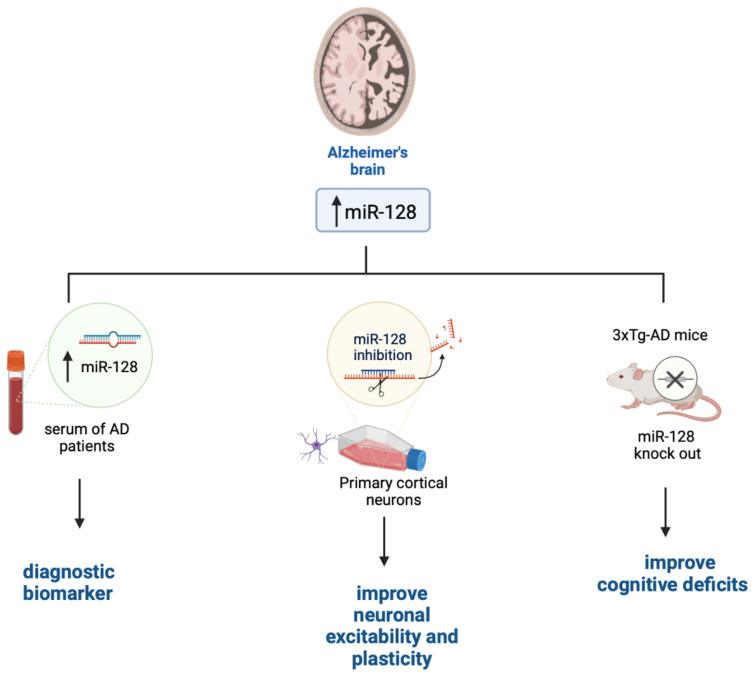
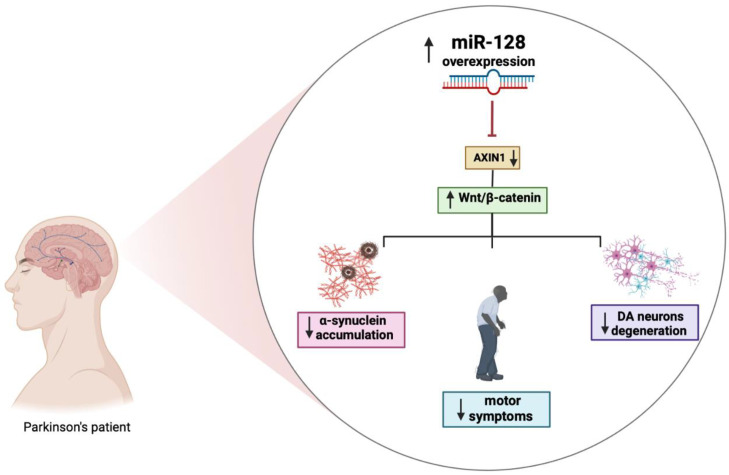
Verification
Claims the paper makes
The claims and statistics of this paper haven’t been checked yet.
Run the check — free, no account needed. It reads the open-access text and checks the sources it cites.
Claims other papers make about this one
Each is checked against this paper’s own text: does it say what the citing paper says it does?
In the citing paper
“Additionally, siRNA against miR-128-3p could be applied in neurodegenerative disorders like PD, offering a targeted approach to modulate disease-related pathways.192,193”
From MiR-128-3p – a gray eminence of the human central nervous system (2024) · cites this paper as [192]
Self-check
Percentages, sums and reported differences re-computed from the paper’s own numbers.
The self-check needs the paper’s full text.
Citations
Cites
A microRNA array reveals extensive regulation of microRNAs during brain development
KRICHEVSKY, A. M., KING, K. S., DONAHUE, C. P., KHRAPKO, K., & KOSIK, K. S. (2003) · RNA · doi:10.1261/rna.5980303 · Cited by 1,040
Cell-Type-Based Analysis of MicroRNA Profiles in the Mouse Brain
He, M., Liu, Y., Wang, X., Zhang, M. Q., Hannon, G. J., & Huang, Z. J. (2012) · Neuron · doi:10.1016/j.neuron.2011.11.010 · Cited by 277
Pathological Tau Disrupts Ongoing Network Activity
Menkes-Caspi, N., Yamin, H. G., Kellner, V., Spires-Jones, T. L., Cohen, D., & Stern, E. A. (2015) · Neuron · doi:10.1016/j.neuron.2015.01.025 · Cited by 184
Synaptic remodeling during aging and in Alzheimer's disease
Masliah, E., Crews, L., & Hansen, L. (2006) · Journal of Alzheimer's Disease · doi:10.3233/jad-2006-9s311 · Cited by 132
Research works printed but not linked: 82
- Palazzo, 2015, Non-coding RNA: What is functional and what is junk?, Front. Genet., 6, 2, 10.3389/fgene.2015.00002 · DOI
- Fire, 1998, Potent and specific genetic interference by double-stranded RNA in Caenorhabditis elegans, Nature, 391, 806, 10.1038/35888 · DOI · Paper page
- Eidem, 2016, Noncoding RNAs: Regulators of the Mammalian Transcription Machinery, J. Mol. Biol., 428, 2652, 10.1016/j.jmb.2016.02.019 · DOI
- Quan, 2020, Identification and characterization of long noncoding RNAs provide insight into the regulation of gene expression in response to heat stress in rainbow trout (Oncorhynchus mykiss), Comp. Biochem. Physiol. Part D Genom. Proteom., 36, 100707
- Xue, 2017, MicroRNAs, Long Noncoding RNAs, and Their Functions in Human Disease, Methods Mol. Biol., 1617, 1, 10.1007/978-1-4939-7046-9_1 · DOI
- Ying, 2008, The MicroRNA (miRNA): Overview of the RNA Genes that Modulate Gene Function, Mol. Biotechnol., 38, 257, 10.1007/s12033-007-9013-8 · DOI
- Shivdasani, 2006, MicroRNAs: Regulators of gene expression and cell differentiation, Blood, 108, 3646, 10.1182/blood-2006-01-030015 · DOI
- Hayder, 2018, Overview of MicroRNA Biogenesis, Mechanisms of Actions, and Circulation, Front. Endocrinol., 9, 402, 10.3389/fendo.2018.00402 · DOI · Paper page
- Carmel, 2012, Does base-pairing strength play a role in microRNA repression?, RNA, 18, 1947, 10.1261/rna.032185.111 · DOI
- Salta, 2017, Noncoding RNAs in neurodegeneration, Nat. Rev. Neurosci., 18, 627, 10.1038/nrn.2017.90 · DOI · Paper page
- Zhang, H., Yao, L., Zheng, Z., Koc, S., and Lu, G. (2022). The Role of Non-Coding RNAs in the Pathogenesis of Parkinson’s Disease: Recent Advancement. Pharmaceuticals, 15. · DOI
- Denham, A.N., Drake, J., Gavrilov, M., Taylor, Z.N., Bacanu, S.-A., and Vladimirov, V.I. (2022). Long Non-Coding RNAs: The New Frontier into Understanding the Etiology of Alcohol Use Disorder. Non-Coding RNA, 8. · DOI
- Wang, 2022, Non-coding RNAs and Alzheimer’s disease: Perspectives from omics studies, Hum. Mol. Genet., 31, R54, 10.1093/hmg/ddac202 · DOI
- Salta, 2012, Non-coding RNAs with essential roles in neurodegenerative disorders, Lancet Neurol., 11, 189, 10.1016/S1474-4422(11)70286-1 · DOI
- Holoch, 2015, RNA-mediated epigenetic regulation of gene expression, Nat. Rev. Genet., 16, 71, 10.1038/nrg3863 · DOI
- Burenina, 2017, Non-Coding RNAs as Transcriptional Regulators In Eukaryotes, Acta Nat., 9, 13, 10.32607/20758251-2017-9-4-13-25 · DOI
- Denis, 2011, Regulation of mammalian DNA methyltransferases: A route to new mechanisms, EMBO Rep., 12, 647, 10.1038/embor.2011.110 · DOI
- Williams, 2009, MicroRNA-206 Delays ALS Progression and Promotes Regeneration of Neuromuscular Synapses in Mice, Science, 326, 1549, 10.1126/science.1181046 · DOI · Paper page
- Kim, 2008, MicroRNA-directed transcriptional gene silencing in mammalian cells, Proc. Natl. Acad. Sci. USA, 105, 16230, 10.1073/pnas.0808830105 · DOI
- Johnson, 2012, Long non-coding RNAs in Huntington’s disease neurodegeneration, Neurobiol. Dis., 46, 245, 10.1016/j.nbd.2011.12.006 · DOI
- Ha, 2014, Regulation of microRNA biogenesis, Nat. Rev. Mol. Cell Biol., 15, 509, 10.1038/nrm3838 · DOI · Paper page
- Bartel, 2004, MicroRNAs: Genomics, Biogenesis, Mechanism, and Function, Cell, 116, 281, 10.1016/S0092-8674(04)00045-5 · DOI
- 2007, Therapeutic RNA interference for neurodegenerative diseases: From promise to progress, Pharmacol. Ther., 114, 34, 10.1016/j.pharmthera.2007.01.003 · DOI
- Mathis, S., and Le Masson, G. (2018). RNA-Targeted Therapies and Amyotrophic Lateral Sclerosis. Biomedicines, 6. · DOI
- Garofalo, M., Pandini, C., Sproviero, D., Pansarasa, O., Cereda, C., and Gagliardi, S. (2021). Advances with Long Non-Coding RNAs in Alzheimer’s Disease as Peripheral Biomarker. Genes, 12. · DOI
- Muddashetty, 2002, Poly(A)-binding Protein is Associated with Neuronal BC1 and BC200 Ribonucleoprotein Particles, J. Mol. Biol., 321, 433, 10.1016/S0022-2836(02)00655-1 · DOI
- Mus, 2007, Dendritic BC200 RNA in aging and in Alzheimer’s disease, Proc. Natl. Acad. Sci. USA, 104, 10679, 10.1073/pnas.0701532104 · DOI
- Takemata, 2016, Role of non-coding RNA transcription around gene regulatory elements in transcription factor recruitment, RNA Biol., 14, 1, 10.1080/15476286.2016.1248020 · DOI
- Thomson, 2016, Endogenous microRNA sponges: Evidence and controversy, Nat. Rev. Genet., 17, 272, 10.1038/nrg.2016.20 · DOI · Paper page
- Han, 2017, The Multifaceted Role of SNARE Proteins in Membrane Fusion, Front. Physiol., 8, 5, 10.3389/fphys.2017.00005 · DOI
- Tan, 2012, Non-coding RNAs in Alzheimer’s Disease, Mol. Neurobiol., 47, 382, 10.1007/s12035-012-8359-5 · DOI
- Faghihi, 2008, Expression of a noncoding RNA is elevated in Alzheimer’s disease and drives rapid feed-forward regulation of β-secretase, Nat. Med., 14, 723, 10.1038/nm1784 · DOI · Paper page
- Koelsch, G. (2017). BACE1 Function and Inhibition: Implications of Intervention in the Amyloid Pathway of Alzheimer’s Disease Pathology. Molecules, 22. · DOI
- Liu, 2014, Attenuated ability of BACE1 to cleave the amyloid precursor protein via silencing long noncoding RNA BACE1-AS expression, Mol. Med. Rep., 10, 1275, 10.3892/mmr.2014.2351 · DOI
- Tan, 2013, MicroRNA-128 Governs Neuronal Excitability and Motor Behavior in Mice, Science, 342, 1254, 10.1126/science.1244193 · DOI · Paper page
- Li, 2013, miR-128 and its target genes in tumorigenesis and metastasis, Exp. Cell Res., 319, 3059, 10.1016/j.yexcr.2013.07.031 · DOI
- Sucharov, 2017, Myocardial microRNAs associated with reverse remodeling in human heart failure, J. Clin. Investig., 2, e89169
- Zhang, 2016, MiRNA-128 regulates the proliferation and neurogenesis of neural precursors by targeting PCM1 in the developing cortex, eLife, 5, e11324, 10.7554/eLife.11324 · DOI · Paper page
- Guidi, M., Muiños-Gimeno, M., Kagerbauer, B., Martí, E., Estivill, X., and Espinosa-Parrilla, Y. (2010). Overexpression of miR-128 specifically inhibits the truncated isoform of NTRK3 and upregulates BCL2 in SH-SY5Y neuroblastoma cells. BMC Mol. Biol., 11. · DOI
- Godlewski, 2008, Targeting of the Bmi-1 Oncogene/Stem Cell Renewal Factor by MicroRNA-128 Inhibits Glioma Proliferation and Self-Renewal, Cancer Res., 68, 9125, 10.1158/0008-5472.CAN-08-2629 · DOI · Paper page
- Shang, 2015, miR-128 regulates the apoptosis and proliferation of glioma cells by targeting RhoE, Oncol. Lett., 11, 904, 10.3892/ol.2015.3927 · DOI
- Evangelisti, 2009, MiR-128 up-regulation inhibits Reelin and DCX expression and reduces neuroblastoma cell motility and invasiveness, FASEB J., 23, 4276, 10.1096/fj.09-134965 · DOI · Paper page
- Khan, 2010, Quantitative Proteomic Profiling of Prostate Cancer Reveals a Role for miR-128 in Prostate Cancer, Mol. Cell. Proteom., 9, 298, 10.1074/mcp.M900159-MCP200 · DOI
- Hu, 2014, microRNA-128 plays a critical role in human non-small cell lung cancer tumourigenesis, angiogenesis and lymphangiogenesis by directly targeting vascular endothelial growth factor-C, Eur. J. Cancer, 50, 2336, 10.1016/j.ejca.2014.06.005 · DOI
- Mets, 2014, MicroRNA-128-3p is a novel oncomiR targeting PHF6 in T-cell acute lymphoblastic leukemia, Haematologica, 99, 1326, 10.3324/haematol.2013.099515 · DOI
- Zhuang, L., Xu, L., Wang, P., and Meng, Z. (2015). Serum miR-128-2 Serves as a Prognostic Marker for Patients with Hepatocellular Carcinoma. PLoS ONE, 10. · DOI
- Li, 2019, miR-128 Functions as an OncomiR for the Downregulation of HIC1 in Breast Cancer, Front. Pharmacol., 10, 1202, 10.3389/fphar.2019.01202 · DOI
- Mayeux, 2012, Epidemiology of Alzheimer Disease, Cold Spring Harb. Perspect. Med., 2, a006239, 10.1101/cshperspect.a006239 · DOI
- Pennanen, 2004, Hippocampus and entorhinal cortex in mild cognitive impairment and early AD, Neurobiol. Aging, 25, 303, 10.1016/S0197-4580(03)00084-8 · DOI
- Shankar, 2009, Alzheimer’s disease: Synaptic dysfunction and Aβ, Mol. Neurodegener., 4, 48, 10.1186/1750-1326-4-48 · DOI · Paper page
- Trinchese, 2004, Progressive age-related development of Alzheimer-like pathology in APP/PS1 mice, Ann. Neurol., 55, 801, 10.1002/ana.20101 · DOI
- Improta-Caria, A.C., Nonaka, C.K.V., Cavalcante, B.R.R., De Sousa, R.A.L., Júnior, R.A., and Souza, B.S.D.F. (2020). Modulation of MicroRNAs as a Potential Molecular Mechanism Involved in the Beneficial Actions of Physical Exercise in Alzheimer Disease. Int. J. Mol. Sci., 21. · DOI
- Vergallo, 2021, MiRNA-15b and miRNA-125b are associated with regional Aβ-PET and FDG-PET uptake in cognitively normal individuals with subjective memory complaints, Transl. Psychiatry, 11, 78, 10.1038/s41398-020-01184-8 · DOI
- Liu, 2018, MicroRNA-128 knockout inhibits the development of Alzheimer’s disease by targeting PPARγ in mouse models, Eur. J. Pharmacol., 843, 134, 10.1016/j.ejphar.2018.11.004 · DOI · Paper page
- Siedlecki-Wullich, D., Miñano-Molina, A., and Rodríguez-Álvarez, J. (2021). microRNAs as Early Biomarkers of Alzheimer’s Disease: A Synaptic Perspective. Cells, 10. · DOI · Paper page
- Shao, N.-Y., Hu, H.Y., Yan, Z., Xu, Y., Hu, H., Menzel, C., Li, N., Chen, W., and Khaitovich, P. (2010). Comprehensive survey of human brain microRNA by deep sequencing. BMC Genom., 11. · DOI · Paper page
- Miners, 2009, Angiotensin-converting enzyme levels and activity in Alzheimer’s disease: Differences in brain and CSF ACE and association with ACE1 genotypes, Am. J. Transl. Res., 1, 163
- Zhang, 2021, Serum miR-128 Serves as a Potential Diagnostic Biomarker for Alzheimer’s Disease, Neuropsychiatr. Dis. Treat., 17, 269, 10.2147/NDT.S290925 · DOI
- Kou, 2020, The Regulation of microRNAs in Alzheimer’s Disease, Front. Neurol., 11, 288, 10.3389/fneur.2020.00288 · DOI · Paper page
- Sheinin, 2021, miR-128 as a Regulator of Synaptic Properties in 5xFAD Mice Hippocampal Neurons, J. Mol. Neurosci., 71, 2593, 10.1007/s12031-021-01862-2 · DOI
- McSweeney, 2016, Inhibition of microRNA 128 promotes excitability of cultured cortical neuronal networks, Genome Res., 26, 1411, 10.1101/gr.199828.115 · DOI
- Lin, 2011, The brain-specific microRNA miR-128b regulates the formation of fear-extinction memory, Nat. Neurosci., 14, 1115, 10.1038/nn.2891 · DOI · Paper page
- Angelopoulou, E., Paudel, Y.N., Papageorgiou, S.G., and Piperi, C. (2022). Environmental Impact on the Epigenetic Mechanisms Underlying Parkinson’s Disease Pathogenesis: A Narrative Review. Brain Sci., 12. · DOI
- Stoker, T.B., and Greenland, J.C. (2018). Parkinson’s Disease: Pathogenesis and Clinical Aspects, Codon Publications. · DOI
- Kalia, 2015, Parkinson’s disease, Lancet, 386, 896, 10.1016/S0140-6736(14)61393-3 · DOI · Paper page
- Armstrong, 2020, Diagnosis and Treatment of Parkinson Disease: A Review, JAMA, 323, 548, 10.1001/jama.2019.22360 · DOI · Paper page
- Decressac, 2013, TFEB-mediated autophagy rescues midbrain dopamine neurons from α-synuclein toxicity, Proc. Natl. Acad. Sci. USA, 110, E1817, 10.1073/pnas.1305623110 · DOI · Paper page
- Zhou, 2018, MicroRNA-128 Protects Dopamine Neurons from Apoptosis and Upregulates the Expression of Excitatory Amino Acid Transporter 4 in Parkinson’s Disease by Binding to AXIN1, Cell. Physiol. Biochem., 51, 2275, 10.1159/000495872 · DOI · Paper page
- Zhang, 2020, HIF-1α/microRNA-128-3p axis protects hippocampal neurons from apoptosis via the Axin1-mediated Wnt/β-catenin signaling pathway in Parkinson’s disease models, Aging, 12, 4067, 10.18632/aging.102636 · DOI · Paper page
- 2021, Molecular Strategies to Target Protein Aggregation in Huntington’s Disease, Front. Mol. Biosci., 8, 769184, 10.3389/fmolb.2021.769184 · DOI
- Keum, 2016, The HTT CAG-Expansion Mutation Determines Age at Death but Not Disease Duration in Huntington Disease, Am. J. Hum. Genet., 98, 287, 10.1016/j.ajhg.2015.12.018 · DOI
- Konovalova, J., Gerasymchuk, D., Parkkinen, I., Chmielarz, P., and Domanskyi, A. (2019). Interplay between MicroRNAs and Oxidative Stress in Neurodegenerative Diseases. Int. J. Mol. Sci., 20. · DOI
- Aronin, 2014, Huntingtin-lowering strategies in Huntington’s disease: Antisense oligonucleotides, small RNAs, and gene editing, Mov. Disord., 29, 1455, 10.1002/mds.26020 · DOI
- Kocerha, 2014, microRNA-128a dysregulation in transgenic Huntington’s disease monkeys, Mol. Brain, 7, 46, 10.1186/1756-6606-7-46 · DOI · Paper page
- Pantano, 2010, A myriad of miRNA variants in control and Huntington’s disease brain regions detected by massively parallel sequencing, Nucleic Acids Res., 38, 7219, 10.1093/nar/gkq575 · DOI · Paper page
- Lee, 2011, Altered microRNA regulation in Huntington’s disease models, Exp. Neurol., 227, 172, 10.1016/j.expneurol.2010.10.012 · DOI · Paper page
- Langfelder, P., Gao, F., Wang, N., Howland, D., Kwak, S., Vogt, T.F., Aaronson, J.S., Rosinski, J., Coppola, G., and Horvath, S. (2018). MicroRNA signatures of endogenous Huntingtin CAG repeat expansion in mice. PLoS ONE, 13. · DOI
- Cloud, 2012, Seizures in juvenile Huntington’s disease: Frequency and characterization in a multicenter cohort, Mov. Disord., 27, 1797, 10.1002/mds.25237 · DOI
- Gantois, 2007, Ablation of D1 dopamine receptor-expressing cells generates mice with seizures, dystonia, hyperactivity, and impaired oral behavior, Proc. Natl. Acad. Sci. USA, 104, 4182, 10.1073/pnas.0611625104 · DOI
- Pewinska, 2021, Artificial miRNAs as therapeutic tools: Challenges and opportunities, Wiley Interdiscip. Rev. RNA, 12, e1640, 10.1002/wrna.1640 · DOI
- Xu, 2012, MicroRNAs in autophagy and their emerging roles in crosstalk with apoptosis, Autophagy, 8, 873, 10.4161/auto.19629 · DOI
- Zhang, 2019, Protocols for the Analysis of microRNA Expression, Biogenesis, and Function in Immune Cells, Curr. Protoc. Immunol., 126, e78, 10.1002/cpim.78 · DOI
Cited by
Sorted by citations
MiR-128-3p – a gray eminence of the human central nervous system
Kiel, K., Król, S. K., Bronisz, A., & Godlewski, J. (2024) · Molecular Therapy Nucleic Acids · doi:10.1016/j.omtn.2024.102141 · Cited by 15
Metadata
- Authors
- Lanza, M., Cuzzocrea, S., Oddo, S., Esposito, E., & Casili, G.
- Affiliations
- Department of Chemical, Biological, Pharmaceutical and Environmental Sciences, University of Messina, Viale Ferdinando Stagno D’Alcontres, 31-98166 Messina, Italy
- Venue
- International Journal of Molecular Sciences
- Publisher
- MDPI AG
- Published
- 2023-03-23
- Volume
- 24
- Issue
- 7
- Pages
- 6024
- ISSN
- 1422-0067
- PMC
- PMC10093830
- Cited by
- 27
- References
- 4
- Language
- en
About these checks
Registry, retraction, Cites and statistics results are computed, not judged, with one exception: a printed reference that no index lists is read once by a model before it counts as a citation error. Claims are extracted by a model and kept only when their quote appears verbatim in the text; each cited source is then checked, with a model’s help, for whether it says what the claim relies on. Those verdicts can be wrong — read the claim’s quote and the cited source before relying on one.
Statistics and arithmetic are recomputed, not judged.
Confidence bands are shown only for fields calibrated on our annotated test set. None is calibrated yet, so no band is shown.
What counts as a claim ›How we measure confidence ›How we check this ›
Are you an author, or do you see a problem with this page? Request a review
