

The DOI matches its Crossref record; 147 of the 148 references it cites were found in a registry or an index.
The Gut Microbiota as a Therapeutic Target in IBD and Metabolic Disease: A Role for the Bile Acid Receptors FXR and TGR5
Open accessAbstract
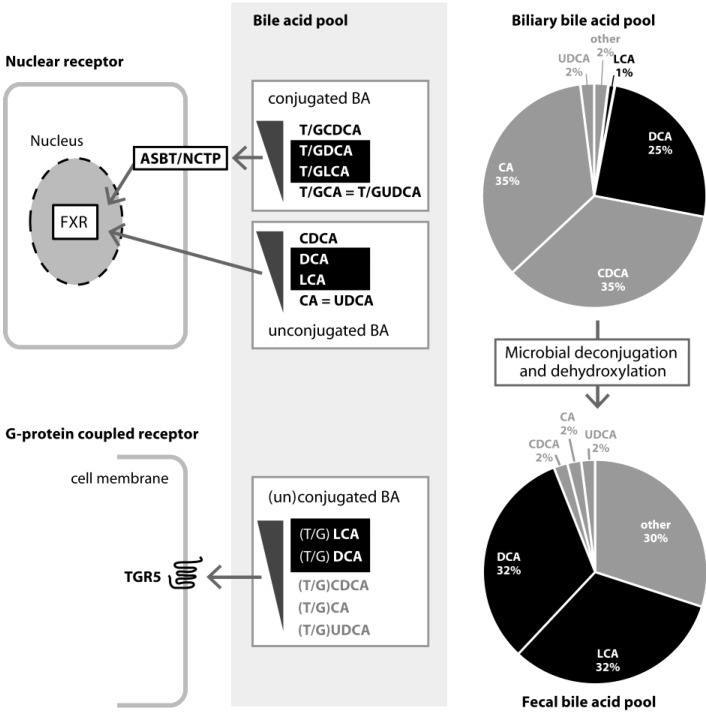
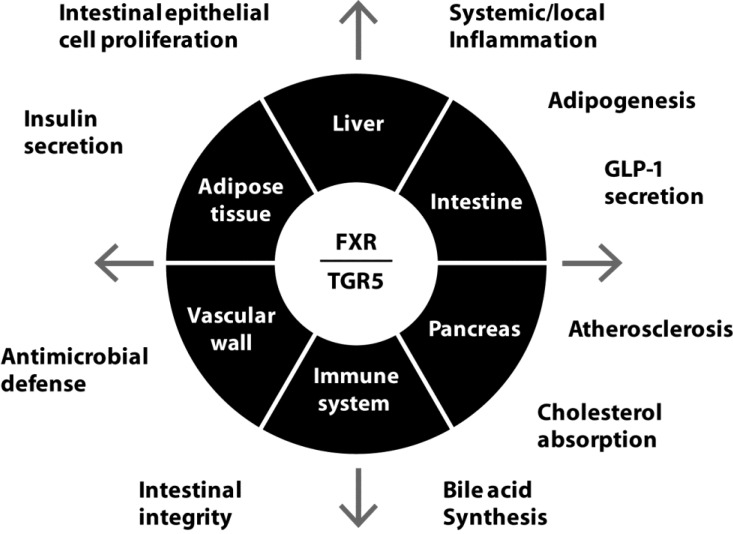
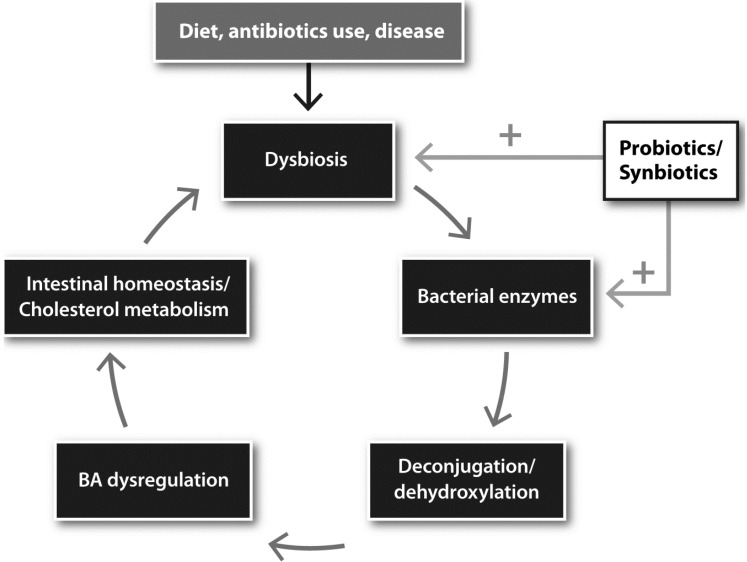
The gut microbiota plays a crucial role in regulating many physiological systems of the host, including the metabolic and immune system. Disturbances in microbiota composition are increasingly correlated with disease; however, the underlying mechanisms are not well understood. Recent evidence suggests that changes in microbiota composition directly affect the metabolism of bile salts. Next to their role in digestion of dietary fats, bile salts function as signaling molecules for bile salt receptors such as Farnesoid X receptor (FXR) and G protein-coupled bile acid receptor (TGR5). Complementary to their role in metabolism, FXR and TGR5 are shown to play a role in intestinal homeostasis and immune regulation. This review presents an overview of evidence showing that changes in bile salt pool and composition due to changes in gut microbial composition contribute to the pathogenesis of inflammatory bowel disease and metabolic disease, possibly through altered activation of TGR5 and FXR. We further discuss how dietary interventions, such as pro- and synbiotics, may be used to treat metabolic disease and inflammatory bowel disease (IBD) through normalization of bile acid dysregulation directly or indirectly through normalization of the intestinal microbiota.
Overview
The claims and statistics of this paper haven’t been checked yet.
Run the check — free, no account needed. It reads the open-access text and checks the sources it cites.
Integrity signals
Registry
Cites
Statistics
Figures
Verification
Claims the paper makes
The claims and statistics of this paper haven’t been checked yet.
Run the check — free, no account needed. It reads the open-access text and checks the sources it cites.
Claims other papers make about this one
Each is checked against this paper’s own text: does it say what the citing paper says it does?
The cited source says what the claim attributes to it.
In the citing paper
“In the case of probiotics with typical BSH activity, the process is likely related to the deconjugation of conjugated BAs.32,33”
From Lactiplantibacillus plantarum strains KABP011, KABP012, and KABP013 modulate bile acids and cholesterol metabolism in humans (2024) · cites this paper as [32]
Self-check
Percentages, sums and reported differences re-computed from the paper’s own numbers.
The self-check needs the paper’s full text.
Citations
Cites
An obesity-associated gut microbiome with increased capacity for energy harvest
Turnbaugh, P. J., Ley, R. E., Mahowald, M. A., Magrini, V., Mardis, E. R., & Gordon, J. I. (2006) · Nature · doi:10.1038/nature05414 · Cited by 12,444
A human gut microbial gene catalogue established by metagenomic sequencing
MetaHIT Consortium, Qin, J., Li, R., Raes, J., Arumugam, M., Burgdorf, K. S., Manichanh, C., Nielsen, T., Pons, N., Levenez, F., et al. (2010) · Nature · doi:10.1038/nature08821 · Cited by 11,624
Human gut microbes associated with obesity
Ley, R. E., Turnbaugh, P. J., Klein, S., & Gordon, J. I. (2006) · Nature · doi:10.1038/4441022a · Cited by 8,785
A core gut microbiome in obese and lean twins
Turnbaugh, P. J., Hamady, M., Yatsunenko, T., Cantarel, B. L., Duncan, A., Ley, R. E., Sogin, M. L., Jones, W. J., Roe, B. A., Affourtit, J. P., et al. (2009) · Nature · doi:10.1038/nature07540 · Cited by 7,823
Changes of Intestinal Functions in Liver Cirrhosis
Fukui, H., & Wiest, R. (2016) · Inflammatory Intestinal Diseases · doi:10.1159/000444436 · Cited by 6,820
The gut microbiota shapes intestinal immune responses during health and disease
Round, J. L., & Mazmanian, S. K. (2009) · Nature Reviews Immunology · doi:10.1038/nri2515 · Cited by 5,029
Richness of human gut microbiome correlates with metabolic markers
Le Chatelier, E., Nielsen, T., Qin, J., Prifti, E., Hildebrand, F., Falony, G., Almeida, M., Arumugam, M., Batto, J.-M., Kennedy, S., et al. (2013) · Nature · doi:10.1038/nature12506 · Cited by 4,662
Self-citationFunctional interactions between the gut microbiota and host metabolism
Tremaroli, V., & Bäckhed, F. (2012) · Nature · doi:10.1038/nature11552 · Cited by 4,387
Interactions Between the Microbiota and the Immune System
Hooper, L. V., Littman, D. R., & Macpherson, A. J. (2012) · Science · doi:10.1126/science.1223490 · Cited by 4,173
Gut Microbiota from Twins Discordant for Obesity Modulate Metabolism in Mice
Ridaura, V. K., Faith, J. J., Rey, F. E., Cheng, J., Duncan, A. E., Kau, A. L., Griffin, N. W., Lombard, V., Henrissat, B., Bain, J. R., et al. (2013) · Science · doi:10.1126/science.1241214 · Cited by 3,788
Intestinal microbial metabolism of phosphatidylcholine and cardiovascular risk
Tang, W. H. W., Wang, Z., Levison, B. S., Koeth, R. A., Britt, E. B., Fu, X., Wu, Y., & Hazen, S. L. (2013) · New England Journal of Medicine · doi:10.1056/nejmoa1109400 · Cited by 3,400
Gut metagenome in European women with normal, impaired and diabetic glucose control
Karlsson, F. H., Tremaroli, V., Nookaew, I., Bergström, G., Behre, C. J., Fagerberg, B., Nielsen, J., & Bäckhed, F. (2013) · Nature · doi:10.1038/nature12198 · Cited by 3,115
Bile salt biotransformations by human intestinal bacteria
Ridlon, J. M., Kang, D.-J., & Hylemon, P. B. (2006) · Journal of Lipid Research · doi:10.1194/jlr.r500013-jlr200 · Cited by 2,829
Fetal nutrition and cardiovascular disease in adult life
Barker, D. J. P., Godfrey, K. M., Gluckman, P. D., Harding, J. E., Owens, J. A., & Robinson, J. S. (1993) · The Lancet · doi:10.1016/0140-6736(93)91224-a · Cited by 2,753
Dysfunction of the intestinal microbiome in inflammatory bowel disease and treatment
Morgan, X. C., Tickle, T. L., Sokol, H., Gevers, D., Devaney, K. L., Ward, D. V., Reyes, J. A., Shah, S. A., LeLeiko, N., Snapper, S. B., et al. (2012) · Genome Biology · doi:10.1186/gb-2012-13-9-r79 · Cited by 2,713
Succession of microbial consortia in the developing infant gut microbiome
Koenig, J. E., Spor, A., Scalfone, N., Fricker, A. D., Stombaugh, J., Knight, R., Angenent, L. T., & Ley, R. E. (2011) · Proceedings of the National Academy of Sciences · doi:10.1073/pnas.1000081107 · Cited by 2,540
Microbiota and SCFA in lean and overweight healthy subjects
Schwiertz, A., Taras, D., Schäfer, K., Beijer, S., Bos, N. A., Donus, C., & Hardt, P. D. (2010) · Obesity · doi:10.1038/oby.2009.167 · Cited by 2,457
Sayin, S. I., Wahlström, A., Felin, J., Jäntti, S., Marschall, H.-U., Bamberg, K., Angelin, B., Hyötyläinen, T., Orešič, M., & Bäckhed, F. (2013) · Cell Metabolism · doi:10.1016/j.cmet.2013.01.003 · Cited by 2,331
Bile acids induce energy expenditure by promoting intracellular thyroid hormone activation
Watanabe, M., Houten, S. M., Mataki, C., Christoffolete, M. A., Kim, B. W., Sato, H., Messaddeq, N., Harney, J. W., Ezaki, O., Kodama, T., et al. (2006) · Nature · doi:10.1038/nature04330 · Cited by 2,220
Molecular Analysis of Commensal Host-Microbial Relationships in the Intestine
Hooper, L. V., Wong, M. H., Thelin, A., Hansson, L., Falk, P. G., & Gordon, J. I. (2001) · Science · doi:10.1126/science.291.5505.881 · Cited by 2,202
TGR5-Mediated Bile Acid Sensing Controls Glucose Homeostasis
Thomas, C., Gioiello, A., Noriega, L., Strehle, A., Oury, J., Rizzo, G., Macchiarulo, A., Yamamoto, H., Mataki, C., Pruzanski, M., et al. (2009) · Cell Metabolism · doi:10.1016/j.cmet.2009.08.001 · Cited by 1,885
Dietary intervention impact on gut microbial gene richness
Cotillard, A., Kennedy, S. P., Kong, L. C., Prifti, E., Pons, N., Le Chatelier, E., Almeida, M., Quinquis, B., Levenez, F., Galleron, N., et al. (2013) · Nature · doi:10.1038/nature12480 · Cited by 1,832
The interaction between bacteria and bile
Begley, M., Gahan, C. G. M., & Hill, C. (2004) · FEMS Microbiology Reviews · doi:10.1016/j.femsre.2004.09.003 · Cited by 1,776
Role of Bile Acids and Bile Acid Receptors in Metabolic Regulation
Lefebvre, P., Cariou, B., Lien, F., Kuipers, F., & Staels, B. (2009) · Physiological Reviews · doi:10.1152/physrev.00010.2008 · Cited by 1,678
Endogenous Bile Acids Are Ligands for the Nuclear Receptor FXR/BAR
Wang, H., Chen, J., Hollister, K., Sowers, L. C., & Forman, B. M. (1999) · Molecular Cell · doi:10.1016/s1097-2765(00)80348-2 · Cited by 1,636
A G Protein-coupled Receptor Responsive to Bile Acids
Kawamata, Y., Fujii, R., Hosoya, M., Harada, M., Yoshida, H., Miwa, M., Fukusumi, S., Habata, Y., Itoh, T., Shintani, Y., et al. (2003) · Journal of Biological Chemistry · doi:10.1074/jbc.m209706200 · Cited by 1,628
Bile acids: regulation of synthesis
Chiang, J. Y. L. (2009) · Journal of Lipid Research · doi:10.1194/jlr.r900010-jlr200 · Cited by 1,515
Symptomatic atherosclerosis is associated with an altered gut metagenome
Karlsson, F. H., Fåk, F., Nookaew, I., Tremaroli, V., Fagerberg, B., Petranovic, D., Bäckhed, F., & Nielsen, J. (2012) · Nature Communications · doi:10.1038/ncomms2266 · Cited by 1,371 · cited 3×
“Poorly regulated levels of cholesterol and triglycerides as well as inflammation of the arterial walls increase the risk for cardiovascular disease (CVD).”
A SUMOylation-dependent pathway mediates transrepression of inflammatory response genes by PPAR-γ
Pascual, G., Fong, A. L., Ogawa, S., Gamliel, A., Li, A. C., Perissi, V., Rose, D. W., Willson, T. M., Rosenfeld, M. G., & Glass, C. K. (2005) · Nature · doi:10.1038/nature03988 · Cited by 1,287
Low counts of Faecalibacterium prausnitzii in colitis microbiota
Sokol, H., Seksik, P., Furet, J. P., Firmesse, O., Nion-Larmurier, I., Beaugerie, L., Cosnes, J., Corthier, G., Marteau, P., & Doré, J. (2009) · Inflammatory Bowel Diseases · doi:10.1002/ibd.20903 · Cited by 1,275
Human colonic microbiota associated with diet, obesity and weight loss
Duncan, S. H., Lobley, G. E., Holtrop, G., Ince, J., Johnstone, A. M., Louis, P., & Flint, H. J. (2008) · International Journal of Obesity · doi:10.1038/ijo.2008.155 · Cited by 1,222
Identification of a nuclear receptor that is activated by farnesol metabolites
Forman, B. M., Goode, E., Chen, J., Oro, A. E., Bradley, D. J., Perlmann, T., Noonan, D. J., Burka, L. T., McMorris, T., Lamph, W. W., et al. (1995) · Cell · doi:10.1016/0092-8674(95)90530-8 · Cited by 1,210
Pleiotropic Roles of Bile Acids in Metabolism
de Aguiar Vallim, T. Q., Tarling, E. J., & Edwards, P. A. (2013) · Cell Metabolism · doi:10.1016/j.cmet.2013.03.013 · Cited by 1,209
Gut Microbiota and Metabolic Endotoxemia in Young Obese Mexican Subjects
Radilla-Vázquez, R. B., Parra‐Rojas, I., Martínez-Hernández, N. E., Márquez‐Sandoval, F., Illades‐Aguiar, B., & Castro-Alarcón, N. (2016) · Obesity Facts · doi:10.1159/000442479 · Cited by 1,200
Bile Salt Hydrolase Activity in Probiotics
Begley, M., Hill, C., & Gahan, C. G. M. (2006) · Applied and Environmental Microbiology · doi:10.1128/aem.72.3.1729-1738.2006 · Cited by 1,187
Regulation of antibacterial defense in the small intestine by the nuclear bile acid receptor
Inagaki, T., Moschetta, A., Lee, Y.-K., Peng, L., Zhao, G., Downes, M., Yu, R. T., Shelton, J. M., Richardson, J. A., Repa, J. J., et al. (2006) · Proceedings of the National Academy of Sciences · doi:10.1073/pnas.0509592103 · Cited by 1,164 · cited 2×
“It is not clear how the enteroprotective effects of FXR are regulated, however, treatment of WT mice with GW4064 upregulates several genes in the intestine known to have antimicrobial properties such as iNOS, IL18 and Ang1 [63].”
BackgroundDisordered lipid metabolism and the pathogenesis of insulin resistance.
Savage, D. B., Petersen, K. F., & Shulman, G. I. (2007) · Physiological Reviews · doi:10.1152/physrev.00024.2006 · Cited by 1,107
Jones, B. V., Begley, M., Hill, C., Gahan, C. G. M., & Marchesi, J. R. (2008) · Proceedings of the National Academy of Sciences · doi:10.1073/pnas.0804437105 · Cited by 1,098
Vickers, M. H., Breier, B. H., Cutfield, W. S., Hofman, P. L., & Gluckman, P. D. (2000) · American Journal of Physiology-Endocrinology and Metabolism · doi:10.1152/ajpendo.2000.279.1.e83 · Cited by 999
Identification of membrane-type receptor for bile acids (M-BAR)
Maruyama, T., Miyamoto, Y., Nakamura, T., Tamai, Y., Okada, H., Sugiyama, E., Nakamura, T., Itadani, H., & Tanaka, K. (2002) · Biochemical and Biophysical Research Communications · doi:10.1016/s0006-291x(02)02550-0 · Cited by 993
Activation of the nuclear receptor FXR improves hyperglycemia and hyperlipidemia in diabetic mice
Zhang, Y., Lee, F. Y., Barrera, G., Lee, H., Vales, C., Gonzalez, F. J., Willson, T. M., & Edwards, P. A. (2006) · Proceedings of the National Academy of Sciences · doi:10.1073/pnas.0506982103 · Cited by 974
Commensal bacteria at the interface of host metabolism and the immune system
Brestoff, J. R., & Artis, D. (2013) · Nature Immunology · doi:10.1038/ni.2640 · Cited by 945
FXR is a molecular target for the effects of vertical sleeve gastrectomy
Ryan, K. K., Tremaroli, V., Clemmensen, C., Kovatcheva-Datchary, P., Myronovych, A., Karns, R., Wilson-Pérez, H. E., Sandoval, D. A., Kohli, R., Bäckhed, F., et al. (2014) · Nature · doi:10.1038/nature13135 · Cited by 931
Connecting dysbiosis, bile-acid dysmetabolism and gut inflammation in inflammatory bowel diseases
Duboc, H., Rajca, S., Rainteau, D., Benarous, D., Maubert, M.-A., Quervain, E., Thomas, G., Barbu, V., Humbert, L., Despras, G., et al. (2013) · Gut · doi:10.1136/gutjnl-2012-302578 · Cited by 930
Gadaleta, R. M., van Erpecum, K. J., Oldenburg, B., Willemsen, E. C. L., Renooij, W., Murzilli, S., Klomp, L. W. J., Siersema, P. D., Schipper, M. E. I., Danese, S., et al. (2011) · Gut · doi:10.1136/gut.2010.212159 · Cited by 870 · cited 6×
“to a reduced release of IFNγ, IL-17 and TNFα compared to the absence of the FXR agonist [71].”
BackgroundMethodInfluentialMeta‐analyses of human gut microbes associated with obesity and IBD
Walters, W. A., Xu, Z., & Knight, R. (2014) · FEBS Letters · doi:10.1016/j.febslet.2014.09.039 · Cited by 836
Bäckhed, F., Fraser, C. M., Ringel, Y., Sanders, M. E., Sartor, R. B., Sherman, P. M., Versalovic, J., Young, V., & Finlay, B. B. (2012) · Cell Host & Microbe · doi:10.1016/j.chom.2012.10.012 · Cited by 836
Toward defining the autoimmune microbiome for type 1 diabetes
Giongo, A., Gano, K. A., Crabb, D. B., Mukherjee, N., Novelo, L. L., Casella, G., Drew, J. C., Ilonen, J., Knip, M., Hyöty, H., et al. (2011) · The ISME Journal · doi:10.1038/ismej.2010.92 · Cited by 806
Bile acid receptors as targets for drug development
Schaap, F. G., Trauner, M., & Jansen, P. L. M. (2014) · Nature Reviews Gastroenterology & Hepatology · doi:10.1038/nrgastro.2013.151 · Cited by 696
High-throughput diversity and functionality analysis of the gastrointestinal tract microbiota
Zoetendal, E. G., Rajilić-Stojanović, M. D., & de Vos, W. M. (2008) · Gut · doi:10.1136/gut.2007.133603 · Cited by 692
The bile acid receptor FXR is a modulator of intestinal innate immunity
Vavassori, P., Mencarelli, A., Renga, B., Distrutti, E., & Fiorucci, S. (2009) · The Journal of Immunology · doi:10.4049/jimmunol.0803978 · Cited by 655
TGR5 Activation Inhibits Atherosclerosis by Reducing Macrophage Inflammation and Lipid Loading
Pols, T. W. H., Nomura, M., Harach, T., Sasso, G. L., Oosterveer, M. H., Thomas, C., Rizzo, G., Gioiello, A., Adorini, L., Pellicciari, R., et al. (2011) · Cell Metabolism · doi:10.1016/j.cmet.2011.11.006 · Cited by 643
Farnesoid X receptor antagonizes nuclear factor κB in hepatic inflammatory response
Wang, Y.-D., Chen, W.-D., Wang, M., Yu, D., Forman, B. M., & Huang, W. (2008) · Hepatology · doi:10.1002/hep.22519 · Cited by 639
Gut Microbiota and Its Possible Relationship With Obesity
DiBaise, J. K., Zhang, H., Crowell, M. D., Krajmalnik‐Brown, R., Decker, G. A., & Rittmann, B. E. (2008) · Mayo Clinic Proceedings · doi:10.4065/83.4.460 · Cited by 616
Regulation of host weight gain and lipid metabolism by bacterial bile acid modification in the gut
Joyce, S. A., MacSharry, J., Casey, P. G., Kinsella, M., Murphy, E. F., Shanahan, F., Hill, C., & Gahan, C. G. M. (2014) · Proceedings of the National Academy of Sciences · doi:10.1073/pnas.1323599111 · Cited by 604
Intestinal Bacteria and the Regulation of Immune Cell Homeostasis
Hill, D. A., & Artis, D. (2010) · Annual Review of Immunology · doi:10.1146/annurev-immunol-030409-101330 · Cited by 600
Impact of oral vancomycin on gut microbiota, bile acid metabolism, and insulin sensitivity
Vrieze, A., Out, C., Fuentes, S., Jonker, L., Reuling, I. J., Kootte, R. S., van Nood, E., Holleman, F., Knaapen, M., Romijn, J. A., et al. (2013) · Journal of Hepatology · doi:10.1016/j.jhep.2013.11.034 · Cited by 594
Differential regulation of bile acid homeostasis by the farnesoid X receptor in liver and intestine
Kim, I., Ahn, S.-H., Inagaki, T., Choi, M., Ito, S., Guo, G. L., Kliewer, S. A., & Gonzalez, F. J. (2007) · Journal of Lipid Research · doi:10.1194/jlr.m700330-jlr200 · Cited by 589
The Farnesoid X Receptor Modulates Adiposity and Peripheral Insulin Sensitivity in Mice
Cariou, B., van Harmelen, K., Durán-Sandoval, D., van Dijk, T. H., Grefhorst, A., Abdelkarim, M., Caron, S., Torpier, G., Fruchart, J., Gonzalez, F. J., et al. (2006) · Journal of Biological Chemistry · doi:10.1074/jbc.m510258200 · Cited by 546
The function of our microbiota: who is out there and what do they do?
Ottman, N., Smidt, H., de Vos, W. M., & Belzer, C. (2012) · Frontiers in Cellular and Infection Microbiology · doi:10.3389/fcimb.2012.00104 · Cited by 523
Koren, O., Knights, D., Gonzalez, A., Waldron, L., Segata, N., Knight, R., Huttenhower, C., & Ley, R. E. (2013) · PLoS Computational Biology · doi:10.1371/journal.pcbi.1002863 · Cited by 508
Wang, Y., Chen, W., Yu, D. D., FORMAN, B. M., & Huang, W. (2011) · Hepatology · doi:10.1002/hep.24525 · Cited by 496
The bile acid TGR5 membrane receptor: from basic research to clinical application
Duboc, H., Taché, Y., & Hofmann, A. F. (2014) · Digestive and Liver Disease · doi:10.1016/j.dld.2013.10.021 · Cited by 473
Combinatorial roles of nuclear receptors in inflammation and immunity
Glass, C. K., & Ogawa, S. (2005) · Nature reviews. Immunology · doi:10.1038/nri1748 · Cited by 472
Differences in gut microbiota composition between obese and lean children: a cross-sectional study
Bervoets, L., Hoorenbeeck, K. V., Kortleven, I., Noten, C. V., Hens, N., Vael, C., Goossens, H., Desager, K., & Vankerckhoven, V. (2013) · Gut Pathogens · doi:10.1186/1757-4749-5-10 · Cited by 467
Beyond intestinal soap—bile acids in metabolic control
Kuipers, F., Bloks, V. W., & Groen, A. K. (2014) · Nature Reviews Endocrinology · doi:10.1038/nrendo.2014.60 · Cited by 462
Specificities of the fecal microbiota in inflammatory bowel disease
Sokol, H., Seksik, P., Rigottier‐Gois, L., Lay, C., Lepage, P., Podglajen, I., Marteau, P. R., & Dore, J. M. (2006) · Inflammatory Bowel Diseases · doi:10.1097/01.mib.0000200323.38139.c6 · Cited by 447
Bacterial translocation from the gastrointestinal tract
Berg, R. D. (1995) · Trends in Microbiology · doi:10.1016/s0966-842x(00)88906-4 · Cited by 443
Sáez‐Lara, M. J., Gómez‐Llorente, C., Plaza‐Díaz, J., & Gil, Á. (2015) · BioMed Research International · doi:10.1155/2015/505878 · Cited by 419
FXR: a metabolic regulator and cell protector
Wang, Y.-D., Chen, W.-D., Moore, D. D., & Huang, W. (2008) · Cell Research · doi:10.1038/cr.2008.289 · Cited by 389
FXR signaling in the enterohepatic system
Matsubara, T., Li, F., & Gonzalez, F. J. (2012) · Molecular and Cellular Endocrinology · doi:10.1016/j.mce.2012.05.004 · Cited by 383
Cipriani, S., Mencarelli, A., Chini, M. G., Distrutti, E., Renga, B., Bifulco, G., Baldelli, F., Donini, A., & Fiorucci, S. (2011) · PLoS ONE · doi:10.1371/journal.pone.0025637 · Cited by 382
A metagenomic insight into our gut's microbiome
Lepage, P., Leclerc, M., Joossens, M., Mondot, S., Blottière, H. M., Raes, J., Ehrlich, S. D., & Dore, J. M. (2012) · Gut · doi:10.1136/gutjnl-2011-301805 · Cited by 371
Microbiota conservation and BMI signatures in adult monozygotic twins
Tims, S., Derom, C., Jonkers, D. M., Vlietinck, R., Saris, W. H., Kleerebezem, M., de Vos, W. M., & Zoetendal, E. G. (2013) · The ISME Journal · doi:10.1038/ismej.2012.146 · Cited by 367
Degirolamo, C., Rainaldi, S., Bovenga, F., Murzilli, S., & Moschetta, A. (2014) · Cell Reports · doi:10.1016/j.celrep.2014.02.032 · Cited by 356
Hofmann, A. (1963) · Biochemical Journal · doi:10.1042/bj0890057 · Cited by 353
Farnesoid X Receptor Deficiency Improves Glucose Homeostasis in Mouse Models of Obesity
Prawitt, J., Abdelkarim, M., Stroeve, J. H. M., Popescu, I. R., Duez, H., Velagapudi, V., Dumont, J., Bouchaert, E., van Dijk, T. H., Lucas, A., et al. (2011) · Diabetes · doi:10.2337/db11-0030 · Cited by 339
The enterohepatic circulation of bile acids in mammals: form and functions
Alan, F. (2009) · Frontiers in bioscience · doi:10.2741/3399 · Cited by 335
Lorenzo-Zúñiga, V., Bartolí, R., Planas, R., Hofmann, A. F., Viñado, B., Hagey, L. R., Hernández, J. M., Mañé, J., Alvarez, M. A., Ausina, V., et al. (2003) · Hepatology · doi:10.1053/jhep.2003.50116 · Cited by 321
Nuclear receptors: Decoding metabolic disease
Sonoda, J., Pei, L., & Evans, R. M. (2007) · FEBS Letters · doi:10.1016/j.febslet.2007.11.016 · Cited by 313
Establishment of the intestinal microbiota and its role for atopic dermatitis in early childhood
Penders, J., Gerhold, K., Stobberingh, E. E., Thijs, C. T., Zimmermann, K., Lau, S., & Hamelmann, E. H. (2013) · Journal of Allergy and Clinical Immunology · doi:10.1016/j.jaci.2013.05.043 · Cited by 304
Dupont, A. W., Richards, Jelinek, K. A., Krill, J. T., Rahimi, E. F., & Ghouri, Y. A. (2014) · Clinical and Experimental Gastroenterology · doi:10.2147/ceg.s27530 · Cited by 303
Targeted disruption of G protein-coupled bile acid receptor 1 (Gpbar1/M-Bar) in mice
Maruyama, T., Tanaka, K., Suzuki, J., Miyoshi, H., Harada, N., Nakamura, T., Miyamoto, Y., Kanatani, A., & Tamai, Y. (2006) · Journal of Endocrinology · doi:10.1677/joe.1.06546 · Cited by 297
Damms-Machado, A., Mitra, S., Schollenberger, A. E., Kramer, K. M., Meile, T., Königsrainer, A., Huson, D. H., & Bischoff, S. C. (2015) · BioMed Research International · doi:10.1155/2015/806248 · Cited by 291
Screening of Lactic Acid Bacteria for Bile Salt Hydrolase Activity
Tanaka, H., Doesburg, K. K., Iwasaki, T., & Mierau, I. (1999) · Journal of Dairy Science · doi:10.3168/jds.s0022-0302(99)75506-2 · Cited by 283
Jones, M. L., Martoni, C. J., & Prakash, S. (2012) · European Journal of Clinical Nutrition · doi:10.1038/ejcn.2012.126 · Cited by 277 · cited 1×
“inflammation [140,141].”
The G Protein-Coupled Bile Acid Receptor, TGR5, Stimulates Gallbladder Filling
Li, T., Holmstrom, S. R., Kır, S., Umetani, M., Schmidt, D. R., Kliewer, S. A., & Mangelsdorf, D. J. (2011) · Molecular Endocrinology · doi:10.1210/me.2010-0460 · Cited by 271
渡辺, 光., Horai, Y., Houten, S. M., Morimoto, K., Sugizaki, T., Arita, E., Mataki, C., Sato, H., Tanigawara, Y., Schoonjans, K., et al. (2011) · Journal of Biological Chemistry · doi:10.1074/jbc.m111.248203 · Cited by 266
The Developmental Origins, Mechanisms, and Implications of Metabolic Syndrome1–3
Bruce, K. D., & Hanson, M. A. (2010) · Journal of Nutrition · doi:10.3945/jn.109.111179 · Cited by 266
Duboc, H., Rainteau, D., Rajca, S., Humbert, L., Farabos, D., Maubert, M., Grondin, V., Jouet, P., Bouhassira, D., Seksik, P., et al. (2012) · Neurogastroenterology & Motility · doi:10.1111/j.1365-2982.2012.01893.x · Cited by 256
Zeißig, S., & Blumberg, R. S. (2014) · Nature Immunology · doi:10.1038/ni.2847 · Cited by 243
How bile acids confer gut mucosal protection against bacteria
Hofmann, A. F., & Eckmann, L. (2006) · Proceedings of the National Academy of Sciences · doi:10.1073/pnas.0600780103 · Cited by 239
Yoneno∥, K., Hisamatsu, T., Shimamura, K., Kamada, N., Ichikawa, R., Kitazume, M. T., Mori, M., Uo, M., Namikawa, Y., Matsuoka, K., et al. (2013) · Immunology · doi:10.1111/imm.12045 · Cited by 236
McFarland, L. V. (2014) · BMJ Open · doi:10.1136/bmjopen-2014-005047 · Cited by 235
Rao, A., Haywood, J., Craddock, A. L., Belinsky, M. G., Kruh, G. D., & Dawson, P. A. (2008) · Proceedings of the National Academy of Sciences · doi:10.1073/pnas.0712328105 · Cited by 233
TGR5 reduces macrophage migration through mTOR-induced C/EBPβ differential translation
Perino, A., Pols, T. W. H., Nomura, M., Stein, S., Pellicciari, R., & Schoonjans, K. (2014) · Journal of Clinical Investigation · doi:10.1172/jci76289 · Cited by 233
The Early Settlers: Intestinal Microbiology in Early Life
Scholtens, P. A. M. J., Oozeer, R., Martı́n, R., Amor, K. B., & Knol, J. (2012) · Annual Review of Food Science and Technology · doi:10.1146/annurev-food-022811-101120 · Cited by 231
Self-citationMaran, R. R. M., Thomas, A., Roth, M. E., Sheng, Z., Esterly, N., Pinson, D. M., Gao, X., Zhang, Y., Ganapathy, V., Gonzalez, F. J., et al. (2008) · Journal of Pharmacology and Experimental Therapeutics · doi:10.1124/jpet.108.145409 · Cited by 221
Kumar, D. P., Rajagopal, S., Mahavadi, S., Mirshahi, F., Grider, J. R., Murthy, K. S., & Sanyal, A. J. (2012) · Biochemical and Biophysical Research Communications · doi:10.1016/j.bbrc.2012.09.104 · Cited by 206
Gadaleta, R. M., Oldenburg, B., Willemsen, E. C. L., Spit, M., Murzilli, S., Salvatore, L., Klomp, L. W. J., Siersema, P. D., van Erpecum, K. J., & van Mil, S. W. C. (2011) · Biochimica et Biophysica Acta (BBA) - Molecular Basis of Disease · doi:10.1016/j.bbadis.2011.04.005 · Cited by 195
The receptor TGR5 protects the liver from bile acid overload during liver regeneration in mice
Péan, N., Doignon, I., Garcin, I., Besnard, A., Julien, B., Liu, B., Branchereau, S., Spraul, A., Guettier, C., Humbert, L., et al. (2013) · Hepatology · doi:10.1002/hep.26463 · Cited by 193
Suppression of LPS-Induced TNF-α Production in Macrophages by cAMP Is Mediated by PKA-AKAP95-p105
Wall, E. A., Zavzavadjian, J. R., Chang, M. S., Randhawa, B., Zhu, X., Hsueh, R. C., Liu, J., Driver, A., Bao, X. R., Sternweis, P. C., et al. (2009) · Science Signaling · doi:10.1126/scisignal.2000202 · Cited by 192
Jones, M. L., Tomaro-Duchesneau, C., Martoni, C. J., & Prakash, S. (2013) · Expert Opinion on Biological Therapy · doi:10.1517/14712598.2013.758706 · Cited by 190
Related actions of probiotics and antibiotics on gut microbiota and weight modification
Angelakis, E., Merhej, V., & Raoult, D. (2013) · The Lancet Infectious Diseases · doi:10.1016/s1473-3099(13)70179-8 · Cited by 190
Bile diversion to the distal small intestine has comparable metabolic benefits to bariatric surgery
Flynn, C. R., Albaugh, V. L., Cai, S. B., Cheung‐Flynn, J., Williams, P. E., Brucker, R. M., Bordenstein, S. R., Guo, Y. P., Wasserman, D. H., & Abumrad, N. N. (2015) · Nature Communications · doi:10.1038/ncomms8715 · Cited by 185
Kazumori, H. (2005) · Gut · doi:10.1136/gut.2005.066209 · Cited by 182
Bile Acids, Obesity, and the Metabolic Syndrome
Ma, H., & Patti, M. E. (2014) · Best Practice & Research Clinical Gastroenterology · doi:10.1016/j.bpg.2014.07.004 · Cited by 176
Kida, T., Tsubosaka, Y., Hori, M., Ozaki, H., & Murata, T. (2013) · Arteriosclerosis Thrombosis and Vascular Biology · doi:10.1161/atvbaha.113.301565 · Cited by 174
Synthetic FXR Agonist GW4064 Prevents Diet-Induced Hepatic Steatosis and Insulin Resistance
Ma, Y., Huang, Y., Yan, L., Gao, M., & Liu, D. (2013) · Pharmaceutical Research · doi:10.1007/s11095-013-0986-7 · Cited by 169
Role of the intestinal microbiome in liver disease
Henao‐Mejia, J., Elinav, E., Thaiss, C. A., Licona-Limón, P., & Flavell, R. A. (2013) · Journal of Autoimmunity · doi:10.1016/j.jaut.2013.07.001 · Cited by 169
Sartor, R. B. (2010) · Gastroenterology · doi:10.1053/j.gastro.2010.10.036 · Cited by 164
Maternal regulation of fetal development and health in adult life
Godfrey, K. M. (1998) · European Journal of Obstetrics & Gynecology and Reproductive Biology · doi:10.1016/s0301-2115(98)00060-8 · Cited by 160
Bile Acid Signaling in Liver Metabolism and Diseases
Li, T., & Chiang, J. Y. L. (2011) · Journal of Lipids · doi:10.1155/2012/754067 · Cited by 159
Bile salts act as effective protein-unfolding agents and instigators of disulfide stress in vivo
Cremers, C. M., Knoefler, D., Vitvitsky, V., Banerjee, R. V., & Jakob, U. (2014) · Proceedings of the National Academy of Sciences · doi:10.1073/pnas.1401941111 · Cited by 155
Labbé, A., Ganopolsky, J. G., Martoni, C., Prakash, S., & Jones, M. L. (2014) · PLoS ONE · doi:10.1371/journal.pone.0115175 · Cited by 149
Wilson, J. D. (1964) · Journal of Lipid Research · doi:10.1016/s0022-2275(20)40214-7 · Cited by 143
Cleal, J. K., Poore, K. R., Boullin, J. P., Khan, O. A., Chau, R., Hambidge, O., Torrens, C., Newman, J. P., Poston, L., Noakes, D. E., et al. (2007) · Proceedings of the National Academy of Sciences · doi:10.1073/pnas.0610373104 · Cited by 137
The Role of Bile and Bile Acids in Bacterial Translocation in Obstructive Jaundice in Rats
Ding, J. W., Andersson, R., Soltesz, V., Willén, R., & Bengmark, S. (2008) · European Surgical Research · doi:10.1159/000129252 · Cited by 133
Absence of intestinal bile promotes bacterial translocation.
Slocum, M. M., Sittig, K. M., Specian, R. D., & Deitch, E. A. (1992) · PubMed · Cited by 132
Miyazaki‐Anzai, S., Masuda, M., Levi, M., Keenan, A. L., & Miyazaki, M. (2014) · PLoS ONE · doi:10.1371/journal.pone.0108270 · Cited by 132
Loss of FXR Protects against Diet-Induced Obesity and Accelerates Liver Carcinogenesis in ob/ob Mice
Zhang, Y., Ge, X., Heemstra, L. A., Chen, W., Xu, J., Smith, J. L., Ma, H., Kasim, N., Edwards, P. A., & Novak, C. M. (2012) · Molecular Endocrinology · doi:10.1210/me.2011-1157 · Cited by 128
Development of the Digestive System—Experimental Challenges and Approaches of Infant Lipid Digestion
Abrahamse, E., Minekus, M., van Aken, G. A., van de Heijning, B., Knol, J., Bartke, N., Oozeer, R., van der Beek, E. M., & Ludwig, T. (2012) · Food Digestion · doi:10.1007/s13228-012-0025-x · Cited by 124
Self-citationFarnesoid X receptor (FXR) activation and FXR genetic variation in inflammatory bowel disease
Nijmeijer, R. M., Gadaleta, R. M., van Mil, S. W. C., van Bodegraven, A. A., Crusius, J. B. A., Dijkstra, G., Hommes, D. W., de Jong, D. J., Stokkers, P. C. F., Verspaget, H. W., et al. (2011) · PLoS ONE · doi:10.1371/journal.pone.0023745 · Cited by 119
Probiotics—Interactions with Bile Acids and Impact on Cholesterol Metabolism
Pavlović, N., Stankov, K., & Mikov, M. (2012) · Applied Biochemistry and Biotechnology · doi:10.1007/s12010-012-9904-4 · Cited by 118
Walujkar, S. A., Dhotre, D. P., Marathe, N. P., Lawate, P. S., Bharadwaj, R. S., & Shouche, Y. S. (2014) · Gut Pathogens · doi:10.1186/1757-4749-6-22 · Cited by 107
Stroeve, J. H. M., Brufau, G., Stellaard, F., Gonzalez, F. J., Staels, B., & Kuipers, F. (2010) · Laboratory Investigation · doi:10.1038/labinvest.2010.107 · Cited by 107
Biotransformations on steroid nucleus of bile acids
Bortolini, O., Medici, A., & Poli, S. (1997) · Steroids · doi:10.1016/s0039-128x(97)00043-3 · Cited by 106
Renga, B., Mencarelli, A., Cipriani, S., D’Amore, C., Carino, A., Bruno, A. M., Francisci, D., Zampella, A., Distrutti, E., & Fiorucci, S. (2013) · PLoS ONE · doi:10.1371/journal.pone.0054472 · Cited by 106
Tissue-specific function of farnesoid X receptor in liver and intestine
Zhu, Y., Li, F., & Guo, G. L. (2011) · Pharmacological Research · doi:10.1016/j.phrs.2010.12.018 · Cited by 103
The effects of commensal microbiota on immune cell subsets and inflammatory responses
Chinen, T., & Rudensky, A. Y. (2011) · Immunological Reviews · doi:10.1111/j.1600-065x.2011.01083.x · Cited by 99
FXR silencing in human colon cancer by DNA methylation and KRAS signaling
Bailey, A. M., Zhan, L., Maru, D. M., Shureiqi, I., Pickering, C. R., Kiriakova, G. M., Izzo, J. G., He, N., Wei, C., Baladandayuthapani, V., et al. (2013) · American Journal of Physiology-Gastrointestinal and Liver Physiology · doi:10.1152/ajpgi.00234.2013 · Cited by 85
GPBAR1/TGR5 Mediates Bile Acid-Induced Cytokine Expression in Murine Kupffer Cells
Lou, G., Ma, X., Fu, X., Meng, Z., Zhang, W., Wang, Y., Ness, C. V., Yu, D. D., Xu, R., & Huang, W. (2014) · PLoS ONE · doi:10.1371/journal.pone.0093567 · Cited by 84
The Immunomodulatory Role of Bile Acids
Sipka, S., & Bruckner, G. G. (2014) · International Archives of Allergy and Immunology · doi:10.1159/000366100 · Cited by 83
Stojančević, M., Stankov, K., & Mikov, M. (2012) · Canadian Journal of Gastroenterology · doi:10.1155/2012/538452 · Cited by 77
The infant intestinal microbiome: Friend or foe?
Mshvildadze, M., & Neu, J. (2010) · Early Human Development · doi:10.1016/j.earlhumdev.2010.01.018 · Cited by 77
Yoshimura, T., Kurita, C., Nagao, T., Usami, E., Nakao, T., Watanabe, S., Kobayashi, J., Yamazaki, F., Tanaka, H., Inagaki, N., et al. (2008) · Pharmacology · doi:10.1159/000139481 · Cited by 72
SUMOylation of the Farnesoid X Receptor (FXR) Regulates the Expression of FXR Target Genes*
Balasubramaniyan, N., Luo, Y., Sun, A.-Q., & Suchy, F. (2013) · Journal of Biological Chemistry · doi:10.1074/jbc.m112.443937 · Cited by 72
The association of bile acid excretion and atherosclerotic coronary artery disease
Charach, G., Grosskopf, I., Rabinovich, A., Shochat, M. K., Weintraub, M. S., & Rabinovich, P. (2010) · Therapeutic Advances in Gastroenterology · doi:10.1177/1756283x10388682 · Cited by 69
Li, Q., Wang, C., Tang, C. X., Li, N., & Li, J. (2012) · PLoS ONE · doi:10.1371/journal.pone.0034939 · Cited by 63
Chen, X., Yang, D., Shen, W., Dong, H., Wang, J. M., Oppenheim, J. J., & Howard, O. M. Z. (2000) · Inflammation Research · doi:10.1007/s000110050656 · Cited by 60
Microbiota prevents cholesterol loss from the body by regulating host gene expression in mice
Zhong, C., Sun, W., Ma, Y., Zhu, H., Yang, P., Wei, H., Zeng, B., Zhang, Q., Liu, Y., Li, W., et al. (2015) · Scientific Reports · doi:10.1038/srep10512 · Cited by 57
Attinkara, R., Mwinyi, J., Truninger, K., Reguła, J., Gaj, P., Rogler, G., Kullak-Ublick, G. A., Eloranta, J. J., & The Swiss IBD Cohort Study Group (2012) · BMC Research Notes · doi:10.1186/1756-0500-5-461 · Cited by 56
Catabolism and elimination of cholesterol in germfree rats
Wöstmann, B. S. J., Wiech, N. L., & Kung, E. (1966) · Journal of Lipid Research · doi:10.1016/s0022-2275(20)39588-2 · Cited by 49
Deoxycholic Acid Conjugates Are Muscarinic Cholinergic Receptor Antagonists
Raufman, J.-P., Chen, Y., Zimniak, P., & Cheng, K. (2002) · Pharmacology · doi:10.1159/000064347 · Cited by 47
van Schaik, F. D. M., Gadaleta, R. M., Schaap, F. G., van Mil, S. W. C., Siersema, P. D., Oldenburg, B., & van Erpecum, K. J. (2012) · PLoS ONE · doi:10.1371/journal.pone.0049706 · Cited by 25
Jones, M. L., Martoni, C., & Prakash, S. (2012) · Gut · doi:10.1136/gutjnl-2012-303867 · Cited by 22
Modica, S., Cariello, M., Morgano, A., Groß, I., Vegliante, M. C., Murzilli, S., Salvatore, L., Freund, J., Sabbà, C., & Moschetta, A. (2014) · Journal of Biological Chemistry · doi:10.1074/jbc.m114.571513 · Cited by 18
Cited by
Sorted by citations
Wiertsema, S. P., van Bergenhenegouwen, J., Garssen, J., & Knippels, L. M. J. (2021) · Nutrients · doi:10.3390/nu13030886 · Cited by 590
Self-citationProfiling the human intestinal environment under physiological conditions
Shalon, D., Culver, R. N., Grembi, J. A., Folz, J., Treit, P. V., Shi, H., Rosenberger, F. A., Dethlefsen, L., Meng, X., Yaffe, E., et al. (2023) · Nature · doi:10.1038/s41586-023-05989-7 · Cited by 484
Gut Microbiota in Hypertension and Atherosclerosis: A Review
Verhaar, B. J. H., Prodan, A., Nieuwdorp, M., & Muller, M. (2020) · Nutrients · doi:10.3390/nu12102982 · Cited by 425
Fukui, H. (2016) · Inflammatory Intestinal Diseases · doi:10.1159/000447252 · Cited by 358
Liu, X., Zhang, Y., Li, W., Zhang, B., Yin, J., Liuqi, S., Wang, J., Peng, B., & Wang, S. (2022) · Journal of Agricultural and Food Chemistry · doi:10.1021/acs.jafc.2c06417 · Cited by 289
Metadata
- Authors
- Baars, A., Oosting, A., Knol, J., Garssen, J., & Van Bergenhenegouwen, J.
- Affiliations
- Nutricia Research (Netherlands) (NL)
- Utrecht University (NL)
- Nutricia Research, 3584 CT, Utrecht, The Netherlands
- Venue
- Microorganisms
- Publisher
- MDPI AG
- Published
- 2015-10-10
- Volume
- 3
- Issue
- 4
- Pages
- 641-666
- ISSN
- 2076-2607 (ISSN-L)
- PMC
- PMC5023267
- OpenAlex
- W1894632157
- Cited by
- 135
- References
- 148
- Citations by year
- 2026: 43 · 2025: 22 · 2024: 12 · 2023: 15 · 2022: 12 · 2021: 11 · 2020: 6 · 2019: 5 · 2018: 7 · 2017: 1 · 2016: 1
- FWCI
- 0.29
- Type
- journal article
- Language
- en
- Open access
- gold
- dx.doi.org
- Licence
- Locations
- Microorganisms (publishedVersion, cc-by)
- PubMed Central (publishedVersion, cc-by)
- PubMed (publishedVersion)
- Socio-Environmental Systems Modeling (acceptedVersion, cc-by)
- DOAJ (DOAJ: Directory of Open Access Journals) (submittedVersion, cc-by-sa)
- Utrecht University Repository (Utrecht University) (submittedVersion, other-oa)
- Data Archiving and Networked Services (DANS) (submittedVersion, cc-by)
- Topics
- Life Sciences › Biochemistry, Genetics and Molecular Biology › Molecular Biology › Gut microbiota and health
- Health Sciences › Medicine › Oncology › Drug Transport and Resistance Mechanisms
- Health Sciences › Medicine › Gastroenterology › Gastrointestinal motility and disorders
- Keywords
- gut microbiota, inflammatory bowel disease, metabolic disorders, bile acid receptors, farnesoid X receptor, TGR5, bile salt metabolism, intestinal homeostasis, immune regulation, dietary intervention, microbiota-targeted therapy
About these checks
Registry, retraction, Cites and statistics results are computed, not judged, with one exception: a printed reference that no index lists is read once by a model before it counts as a citation error. Claims are extracted by a model and kept only when their quote appears verbatim in the text; each cited source is then checked, with a model’s help, for whether it says what the claim relies on. Those verdicts can be wrong — read the claim’s quote and the cited source before relying on one.
Statistics and arithmetic are recomputed, not judged.
Confidence bands are shown only for fields calibrated on our annotated test set. None is calibrated yet, so no band is shown.
What counts as a claim ›How we measure confidence ›How we check this ›
Are you an author, or do you see a problem with this page? Request a review
