

The DOI matches its Crossref record; 21 of the 21 references it cites were found in a registry or an index.
Analysis of composition of microbiomes: a novel method for studying microbial composition
Open accessAbstract
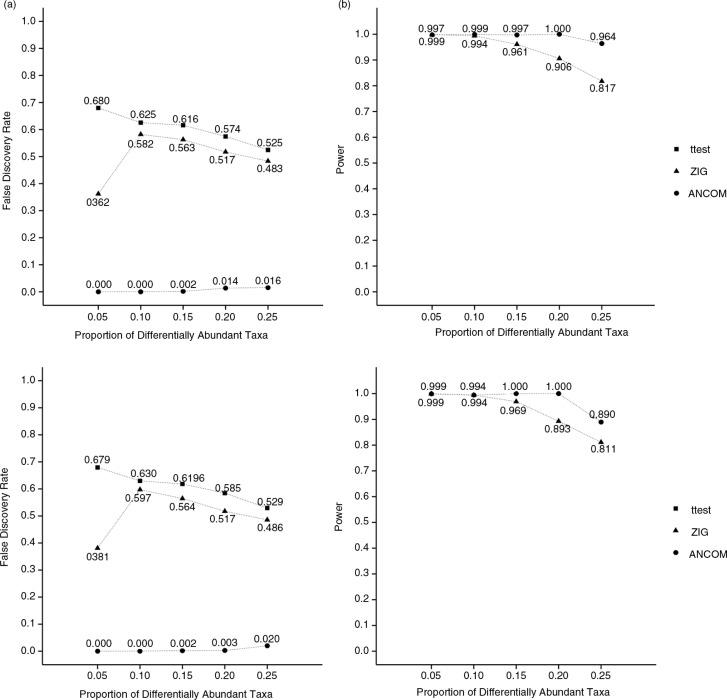
BACKGROUND: Understanding the factors regulating our microbiota is important but requires appropriate statistical methodology. When comparing two or more populations most existing approaches either discount the underlying compositional structure in the microbiome data or use probability models such as the multinomial and Dirichlet-multinomial distributions, which may impose a correlation structure not suitable for microbiome data. OBJECTIVE: To develop a methodology that accounts for compositional constraints to reduce false discoveries in detecting differentially abundant taxa at an ecosystem level, while maintaining high statistical power. METHODS: We introduced a novel statistical framework called analysis of composition of microbiomes (ANCOM). ANCOM accounts for the underlying structure in the data and can be used for comparing the composition of microbiomes in two or more populations. ANCOM makes no distributional assumptions and can be implemented in a linear model framework to adjust for covariates as well as model longitudinal data. ANCOM also scales well to compare samples involving thousands of taxa. RESULTS: We compared the performance of ANCOM to the standard t-test and a recently published methodology called Zero Inflated Gaussian (ZIG) methodology (1) for drawing inferences on the mean taxa abundance in two or more populations. ANCOM controlled the false discovery rate (FDR) at the desired nominal level while also improving power, whereas the t-test and ZIG had inflated FDRs, in some instances as high as 68% for the t-test and 60% for ZIG. We illustrate the performance of ANCOM using two publicly available microbial datasets in the human gut, demonstrating its general applicability to testing hypotheses about compositional differences in microbial communities. CONCLUSION: Accounting for compositionality using log-ratio analysis results in significantly improved inference in microbiota survey data.
Overview
The claims and statistics of this paper haven’t been checked yet.
Run the check — free, no account needed. It reads the open-access text and checks the sources it cites.
Integrity signals
Registry
Cites
Statistics
Figures
Verification
Claims the paper makes
The claims and statistics of this paper haven’t been checked yet.
Run the check — free, no account needed. It reads the open-access text and checks the sources it cites.
Claims other papers make about this one
Each is checked against this paper’s own text: does it say what the citing paper says it does?
In the citing paper
“As such, this is a sensitive test for taxa that vary significantly and in an unusual way compared to the other taxa.”
From Population structure of human gut bacteria in a diverse cohort from rural Tanzania and Botswana (2019) · cites this paper as [40]
In the citing paper
“The ANCOM method accounts for the simplex nature of compositional data, and so does not suffer from spurious negative correlations imposed by the fact that (relative) abundances across all bacteria must sum to one within a given bacterial community.”
From Population structure of human gut bacteria in a diverse cohort from rural Tanzania and Botswana (2019) · cites this paper as [40]
Self-check
Percentages, sums and reported differences re-computed from the paper’s own numbers.
The self-check needs the paper’s full text.
Citations
Cites
Greengenes, a Chimera-Checked 16S rRNA Gene Database and Workbench Compatible with ARB
DeSantis, T. Z., Hugenholtz, P., Larsen, N., Rojas, M., Brodie, E. L., Keller, K., Huber, T., Dalevi, D., Hu, P., & Andersen, G. L. (2006) · Applied and Environmental Microbiology · doi:10.1128/aem.03006-05 · Cited by 10,891
Human gut microbiome viewed across age and geography
Yatsunenko, T., Rey, F. E., Manary, M. J., Trehan, I., Dominguez-Bello, M. G., Contreras, M., Magris, M., Hidalgo, G., Baldassano, R. N., Anokhin, A. P., et al. (2012) · Nature · doi:10.1038/nature11053 · Cited by 7,815
Self-citationThe impact of the gut microbiota on human health: an integrative view
Clemente, J. C., Ursell, L. K., Parfrey, L. W., & Knight, R. (2012) · Cell · doi:10.1016/j.cell.2012.01.035 · Cited by 3,710
Self-citationThe Statistical Analysis of Compositional Data
Aitchison, J. (1982) · Journal of the Royal Statistical Society Series B (Statistical Methodology) · doi:10.1111/j.2517-6161.1982.tb01195.x · Cited by 3,457
Inferring Correlation Networks from Genomic Survey Data
Friedman, J., & Alm, E. J. (2012) · PLoS Computational Biology · doi:10.1371/journal.pcbi.1002687 · Cited by 2,765
Differential abundance analysis for microbial marker-gene surveys
Paulson, J. N., Stine, O. C., Bravo, H. C., & Pop, M. (2013) · Nature Methods · doi:10.1038/nmeth.2658 · Cited by 2,471
Factors influencing the composition of the intestinal microbiota in early infancy
Penders, J., Thijs, C., Vink, C., Stelma, F. F., Snijders, B., Kummeling, I., van den Brandt, P. A., & Stobberingh, E. E. (2006) · PEDIATRICS · doi:10.1542/peds.2005-2824 · Cited by 2,232
Antibiotics in early life alter the murine colonic microbiome and adiposity
Cho, I., Yamanishi, S., Cox, L., Methé, B. A., Zavadil, J., Li, K., Gao, Z., Mahana, D., Raju, K., Teitler, I., et al. (2012) · Nature · doi:10.1038/nature11400 · Cited by 1,613
Exposure to Environmental Microorganisms and Childhood Asthma
Ege, M. J., Mayer, M., Normand, A.-C., Genuneit, J., Cookson, W. O. C. M., Braun-Fahrländer, C., Heederik, D., Piarroux, R., & von Mutius, E. (2011) · New England Journal of Medicine · doi:10.1056/nejmoa1007302 · Cited by 1,529
Human Intestinal Lumen and Mucosa-Associated Microbiota in Patients with Colorectal Cancer
Chen, W., Liu, F., Ling, Z., Tong, X., & Xiang, C. (2012) · PLoS ONE · doi:10.1371/journal.pone.0039743 · Cited by 1,054
Cited by
Sorted by citations
Gut microbiota regulate motor deficits and neuroinflammation in a model of Parkinson's disease
Sampson, T. R., Debelius, J. W., Thron, T., Janssen, S., Shastri, G. G., Ilhan, Z. E., Challis, C., Schretter, C. E., Rocha, S., Gradinaru, V., et al. (2016) · Cell · doi:10.1016/j.cell.2016.11.018 · Cited by 3,622
Self-citationMicrobiome Datasets Are Compositional: And This Is Not Optional
Gloor, G. B., Macklaim, J. M., Pawlowsky-Glahn, V., & Egozcue, J. J. (2017) · Frontiers in Microbiology · doi:10.3389/fmicb.2017.02224 · Cited by 3,044
“…to the supplementary and to other published examples (Macklaim et al., 2013; Fernandes et al., 2014; McMurrough et al., 2014; Lovell et al., 2015; Mandal et al., 2015; McMillan et al., 2015; Gloor and Reid, 2016; Gloor et al., 2016b; Bian et al., 2017; Silverman et al., 2017; Quinn et al.,…”
BackgroundMethodInfluentialMultivariable association discovery in population-scale meta-omics studies
Mallick, H., Rahnavard, A., McIver, L. J., Ma, S., Zhang, Y., Nguyen, L. H., Tickle, T. L., Weingart, G., Ren, B., Schwager, E. H., et al. (2021) · PLOS Computational Biology · doi:10.1371/journal.pcbi.1009442 · Cited by 2,596
Analysis of compositions of microbiomes with bias correction
Huang, L., & Peddada, S. (2020) · Nature Communications · doi:10.1038/s41467-020-17041-7 · Cited by 2,189
Self-citationNormalization and microbial differential abundance strategies depend upon data characteristics
Weiss, S. J., Xu, Z. Z., Peddada, S. D., Amir, A., Bittinger, K. L., González, A., Lozupone, C., Zaneveld, J., Vázquez‐Baeza, Y., Birmingham, A., et al. (2017) · Microbiome · doi:10.1186/s40168-017-0237-y · Cited by 2,231
Self-citationBest practices for analysing microbiomes
Knight, R., Vrbanac, A., Taylor, B. C., Aksenov, A., Callewaert, C., Debelius, J., Gonzalez, A., Kosciolek, T., McCall, L.-I., McDonald, D., et al. (2018) · Nature Reviews Microbiology · doi:10.1038/s41579-018-0029-9 · Cited by 2,030
Self-citationYou are what you eat: Diet, health and the gut microbiota
Zmora, N., Suez, J., & Elinav, E. (2019) · Nature Reviews Gastroenterology & Hepatology · doi:10.1038/s41575-018-0061-2 · Cited by 1,792
Fecal microbiota transplant promotes response in immunotherapy-refractory melanoma patients
Baruch, E. N., Youngster, I., Ben-Betzalel, G., Ortenberg, R., Lahat, A., Katz, L., Adler, K., Dick-Necula, D., Raskin, S., Bloch, N., et al. (2021) · Science · doi:10.1126/science.abb5920 · Cited by 1,757
Wirbel, J., Pyl, P. T., Kartal, E., Zych, K., Kashani, A., Milanese, A., Fleck, J. S., Voigt, A. Y., Palleja, A., Ponnudurai, R., et al. (2019) · Nature Medicine · doi:10.1038/s41591-019-0406-6 · Cited by 1,373
Thomas, A. M., Manghi, P., Asnicar, F., Pasolli, E., Armanini, F., Zolfo, M., Beghini, F., Manara, S., Karcher, N., Pozzi, C., et al. (2019) · Nature Medicine · doi:10.1038/s41591-019-0405-7 · Cited by 1,030
Microbiome differential abundance methods produce different results across 38 datasets
Nearing, J. T., Douglas, G. M., Hayes, M. G., MacDonald, J., Desai, D., McCormick, N. E., Jones, C. M. A., Wright, R., Dhanani, A. S., Comeau, A., et al. (2022) · Nature Communications · doi:10.1038/s41467-022-28034-z · Cited by 1,050
Hill‐Burns, E. M., Debelius, J. W., Morton, J. T., Wissemann, W. T., Lewis, M. R., Wallen, Z. D., Peddada, S. D., Factor, S. A., Molho, E., Zabetian, C. P., et al. (2017) · Movement Disorders · doi:10.1002/mds.26942 · Cited by 874
Self-citationEstablishing microbial composition measurement standards with reference frames
Morton, J. T., Marotz, C., Washburne, A., Silverman, J., Zaramela, L. S., Edlund, A., Zengler, K., & Knight, R. (2019) · Nature Communications · doi:10.1038/s41467-019-10656-5 · Cited by 613
Self-citationMicrobiome-wide association studies link dynamic microbial consortia to disease
Gilbert, J. A., Quinn, R. A., Debelius, J. W., Xu, Z. Z., Morton, J. T., Garg, N., Jansson, J. K., Dorrestein, P. C., & Knight, R. D. (2016) · Nature · doi:10.1038/nature18850 · Cited by 731
Self-citationBedarf, J. R., Hildebrand, F., Coelho, L. P., Sunagawa, S., Bahram, M., Goeser, F., Bork, P., & Wüllner, U. (2017) · Genome Medicine · doi:10.1186/s13073-017-0428-y · Cited by 642
Host variables confound gut microbiota studies of human disease
Vujkovic-Cvijin, I., Sklar, J., Jiang, L., Natarajan, L., Knight, R., & Belkaid, Y. (2020) · Nature · doi:10.1038/s41586-020-2881-9 · Cited by 614
Self-citationEscapa, I. F., Chen, T., Huang, Y., Gajare, P., Dewhirst, F. E., & Lemon, K. P. (2018) · mSystems · doi:10.1128/msystems.00187-18 · Cited by 615
Inflammation-induced IgA+ cells dismantle anti-liver cancer immunity
Shalapour, S., Lin, X.-J., Bastian, I. N., Brain, J., Burt, A. D., Aksenov, A. A., Vrbanac, A. F., Li, W., Perkins, A., Matsutani, T., et al. (2017) · Nature · doi:10.1038/nature24302 · Cited by 589
Self-citationHeintz‐Buschart, A., Pandey, U., Wicke, T., Sixel‐Döring, F., Janzen, A., Sittig‐Wiegand, E., Trenkwalder, C., Oertel, W. H., Mollenhauer, B., & Wilmes, P. (2018) · Movement Disorders · doi:10.1002/mds.27105 · Cited by 554
Zarrinpar, A., Chaix, A., Xu, Z. Z., Chang, M. W., Marotz, C. A., Saghatelian, A., Knight, R., & Panda, S. (2018) · Nature Communications · doi:10.1038/s41467-018-05336-9 · Cited by 546
Self-citationEstaki, M., Jiang, L., Bokulich, N. A., McDonald, D. T., González, A., Kościółek, T., Martino, C., Zhu, Q., Birmingham, A., Vázquez‐Baeza, Y., et al. (2020) · Current Protocols in Bioinformatics · doi:10.1002/cpbi.100 · Cited by 588
Self-citationMultigroup analysis of compositions of microbiomes with covariate adjustments and repeated measures
Huang, L., & Peddada, S. (2023) · Nature Methods · doi:10.1038/s41592-023-02092-7 · Cited by 597
Self-citationFrance, M., Ma, B., Gajer, P., Brown, S. E., Humphrys, M. S., Holm, J. B., Waetjen, L. E., Brotman, R. M., & Ravel, J. (2020) · Microbiome · doi:10.1186/s40168-020-00934-6 · Cited by 451
Extreme Dysbiosis of the Microbiome in Critical Illness
McDonald, D., Ackermann, G., Khailova, L., Baird, C., Heyland, D., Kozar, R., Lemieux, M., Derenski, K., King, J., Vis-Kampen, C., et al. (2016) · mSphere · doi:10.1128/msphere.00199-16 · Cited by 426
Self-citationLinDA: linear models for differential abundance analysis of microbiome compositional data
Zhou, H., He, K., Chen, J., & Zhang, X. (2022) · Genome biology · doi:10.1186/s13059-022-02655-5 · Cited by 437
Analysis of microbial compositions: a review of normalization and differential abundance analysis
Lin, H., & Peddada, S. D. (2020) · npj Biofilms and Microbiomes · doi:10.1038/s41522-020-00160-w · Cited by 341
“ANCOM Analysis of composition of microbiomes (ANCOM) 14 is an alr based methodology, which accounts for the compositional structure of microbiome data.”
BackgroundMethodInfluentialSelf-citationThe gut microbiome switches mutant p53 from tumour-suppressive to oncogenic
Kadosh, E., Snir-Alkalay, I., Venkatachalam, A., May, S., Lasry, A., Elyada, E., Zinger, A., Shaham, M., Vaalani, G., Mernberger, M., et al. (2020) · Nature · doi:10.1038/s41586-020-2541-0 · Cited by 378
Modeling microbial abundances and dysbiosis with beta-binomial regression
Martin, B. D., Witten, D., & Willis, A. D. (2020) · The Annals of Applied Statistics · doi:10.1214/19-aoas1283 · Cited by 379
scCODA is a Bayesian model for compositional single-cell data analysis
Büttner, M., Ostner, J., Müller, C. L., Theis, F. J., & Schubert, B. (2021) · Nature Communications · doi:10.1038/s41467-021-27150-6 · Cited by 388
Meta‐Analysis of Gut Dysbiosis in Parkinson's Disease
Nishiwaki, H., Ito, M., Ishida, T., Hamaguchi, T., Maeda, T., Kashihara, K., Tsuboi, Y., Ueyama, J., Shimamura, T., Mori, H., et al. (2020) · Movement Disorders · doi:10.1002/mds.28119 · Cited by 370
Compositional analysis: a valid approach to analyze microbiome high-throughput sequencing data
Gloor, G. B., & Reid, G. (2016) · Canadian Journal of Microbiology · doi:10.1139/cjm-2015-0821 · Cited by 380
It's all relative: analyzing microbiome data as compositions
Gloor, G. B., Wu, J. R., Pawlowsky-Glahn, V., & Egozcue, J. J. (2016) · Annals of Epidemiology · doi:10.1016/j.annepidem.2016.03.003 · Cited by 323
Gut microbiota in Parkinson's disease: Temporal stability and relations to disease progression
Aho, V. T. E., Pereira, P. A. B., Voutilainen, S., Paulin, L., Pekkonen, E., Auvinen, P., & Scheperjans, F. (2019) · eBioMedicine · doi:10.1016/j.ebiom.2019.05.064 · Cited by 361
Autism-related dietary preferences mediate autism-gut microbiome associations
Yap, C. X., Henders, A. K., Alvares, G. A., Wood, D., Krause, L., Tyson, G. W., Restuadi, R., Wallace, L. M., McLaren, T., Hansell, N. K., et al. (2021) · Cell · doi:10.1016/j.cell.2021.10.015 · Cited by 371
Understanding sequencing data as compositions: an outlook and review
Quinn, T. P., Erb, I., Richardson, M. F., & Crowley, T. M. (2018) · Bioinformatics · doi:10.1093/bioinformatics/bty175 · Cited by 372
Fructose stimulated de novo lipogenesis is promoted by inflammation
Todoric, J., Di Caro, G., Reibe, S., Henstridge, D. C., Green, C. R., Vrbanac, A., Ceteci, F., Conche, C., McNulty, R., Shalapour, S., et al. (2020) · Nature Metabolism · doi:10.1038/s42255-020-0261-2 · Cited by 328
Self-citationAnalysis of Microbiome Data in the Presence of Excess Zeros
Kaul, A., Mandal, S., Davidov, O., & Peddada, S. D. (2017) · Frontiers in Microbiology · doi:10.3389/fmicb.2017.02114 · Cited by 334
Self-citationBread Affects Clinical Parameters and Induces Gut Microbiome-Associated Personal Glycemic Responses
Korem, T., Zeevi, D., Zmora, N., Weissbrod, O., Bar, N., Lotan-Pompan, M., Avnit-Sagi, T., Kosower, N., Malka, G., Rein, M., et al. (2017) · Cell Metabolism · doi:10.1016/j.cmet.2017.05.002 · Cited by 318
Farm-like indoor microbiota in non-farm homes protects children from asthma development
Kirjavainen, P. V., Karvonen, A. M., Adams, R. I., Täubel, M., Roponen, M., Tuoresmäki, P., Loss, G. J., Jayaprakash, B., Depner, M., Ege, M. J., et al. (2019) · Nature Medicine · doi:10.1038/s41591-019-0469-4 · Cited by 332
Self-citationA phylogenetic transform enhances analysis of compositional microbiota data
Silverman, J. D., Washburne, A., Mukherjee, S., & David, L. A. (2017) · eLife · doi:10.7554/elife.21887 · Cited by 321
Pérez-Cobas, A. E., Gomez-Valero, L., & Buchrieser, C. (2020) · Microbial Genomics · doi:10.1099/mgen.0.000409 · Cited by 314
Scaling up: A guide to high‐throughput genomic approaches for biodiversity analysis
Porter, T. M., & Hajibabaei, M. (2018) · Molecular Ecology · doi:10.1111/mec.14478 · Cited by 332
Wampach, L., Heintz-Buschart, A., Fritz, J. V., Ramiro-Garcia, J., Habier, J., Herold, M., Narayanasamy, S., Kaysen, A., Hogan, A. H., Bindl, L., et al. (2018) · Nature Communications · doi:10.1038/s41467-018-07631-x · Cited by 292
Balance Trees Reveal Microbial Niche Differentiation
Morton, J. T., Sanders, J., Quinn, R. A., McDonald, D., Gonzalez, A., Vázquez-Baeza, Y., Navas-Molina, J. A., Song, S. J., Metcalf, J. L., Hyde, E. R., et al. (2017) · mSystems · doi:10.1128/msystems.00162-16 · Cited by 254
Self-citationSex-specific effects of microbiome perturbations on cerebral Aβ amyloidosis and microglia phenotypes
Dodiya, H. B., Kuntz, T., Shaik, S. M., Baufeld, C., Leibowitz, J., Zhang, X., Gottel, N., Zhang, X., Butovsky, O., Gilbert, J. A., et al. (2019) · Journal of Experimental Medicine · doi:10.1084/jem.20182386 · Cited by 288
Balances: a New Perspective for Microbiome Analysis
Rivera-Pinto, J., Egozcue, J. J., Pawlowsky‐Glahn, V., Paredes, R., Noguera-Julián, M., & Calle, M. L. (2018) · mSystems · doi:10.1128/msystems.00053-18 · Cited by 290
ggpicrust2: an R package for PICRUSt2 predicted functional profile analysis and visualization
Chen, Y., Mai, J., Cao, X., Burberry, A., Cominelli, F., & Zhang, L. (2023) · Bioinformatics · doi:10.1093/bioinformatics/btad470 · Cited by 305
Clark, J. S., Nemergut, D. R., Seyednasrollah, B., Turner, P. J., & Zhang, Y. S. (2016) · Ecological Monographs · doi:10.1002/ecm.1241 · Cited by 283
Statistical Analysis of Metagenomics Data
Calle, M. L. (2019) · Genomics & Informatics · doi:10.5808/gi.2019.17.1.e6 · Cited by 274
Wirbel, J., Zych, K., Essex, M., Karcher, N., Kartal, E., Salazar, G., Bork, P., Sunagawa, S., & Zeller, G. (2021) · Genome Biology · doi:10.1186/s13059-021-02306-1 · Cited by 269
Lee, S. H., Yun, Y., Kim, S. J., Lee, E., Chang, Y., Ryu, S., Shin, H., Kim, H., Kim, H., & Lee, J. H. (2018) · Journal of Clinical Medicine · doi:10.3390/jcm7090282 · Cited by 262
Wallen, Z. D., Appah, M., Dean, M. N., Sesler, C. L., Factor, S. A., Molho, E., Zabetian, C. P., Standaert, D. G., & Payami, H. (2020) · npj Parkinson s Disease · doi:10.1038/s41531-020-0112-6 · Cited by 252
Reber, S. O., Siebler, P. H., Donner, N. C., Morton, J. T., Smith, D. G., Kopelman, J. M., Lowe, K. R., Wheeler, K. J., Fox, J. H., Hassell, J. E., et al. (2016) · Proceedings of the National Academy of Sciences · doi:10.1073/pnas.1600324113 · Cited by 233
Self-citationA broken promise: microbiome differential abundance methods do not control the false discovery rate
Hawinkel, S., Mattiello, F., Bijnens, L., & Thas, O. (2019) · Briefings in Bioinformatics · doi:10.1093/bib/bbx104 · Cited by 199
Gut microbiota dysbiosis in a cohort of patients with psoriasis
Hidalgo‐Cantabrana, C., Gómez, J., Delgado, S., Requena‐López, S., Queiro‐Silva, R., Margolles, A., Coto, E., Sánchez, B., & Coto‐Segura, P. (2019) · British Journal of Dermatology · doi:10.1111/bjd.17931 · Cited by 236
Cronin, O., Barton, W., Skuse, P., Penney, N. C., Garcia-Perez, I., Murphy, E. F., Woods, T., Nugent, H., Fanning, A., Melgar, S., et al. (2018) · mSystems · doi:10.1128/msystems.00044-18 · Cited by 232
Chen, L., Reeve, J., Zhang, L., Huang, S., Wang, X., & Chen, J. (2018) · PeerJ · doi:10.7717/peerj.4600 · Cited by 225
Jing, Y., Yu, Y., Bai, F., Wang, L., Yang, D., Zhang, C., Qin, C., Yang, M., Zhang, D., Zhu, Y., et al. (2021) · Microbiome · doi:10.1186/s40168-021-01007-y · Cited by 234
Man-made microbial resistances in built environments
Mahnert, A., Moissl‐Eichinger, C., Zojer, M., Bogumil, D. D., Mizrahi, I., Rattei, T., Martínez, J. L., & Berg, G. (2019) · Nature Communications · doi:10.1038/s41467-019-08864-0 · Cited by 227
Rocca, J. D., Simonin, M., Blaszczak, J. R., Ernakovich, J. G., Gibbons, S. M., Midani, F. S., & Washburne, A. D. (2019) · Frontiers in Microbiology · doi:10.3389/fmicb.2018.03272 · Cited by 213
Xia, Y. (2020) · Progress in molecular biology and translational science · doi:10.1016/bs.pmbts.2020.04.003 · Cited by 239
Bálint, M., Bahram, M., Eren, A. M., Faust, K., Fuhrman, J. A., Lindahl, B. D., O’Hara, R. B., Öpik, M., Sogin, M. L., Unterseher, M., et al. (2016) · FEMS Microbiology Reviews · doi:10.1093/femsre/fuw017 · Cited by 216
Cross-biome comparison of microbial association networks
Faust, K., Lima‐Mendez, G., Lerat, J., Sathirapongsasuti, J. F., Knight, R. D., Huttenhower, C., Lenaerts, T., & Raes, J. (2015) · Frontiers in Microbiology · doi:10.3389/fmicb.2015.01200 · Cited by 210
Self-citationRamírez, P. B., Fuentes-Alburquenque, S., Díez, B., Vargas, I. T., & Bonilla, C. A. (2019) · Soil Biology and Biochemistry · doi:10.1016/j.soilbio.2019.107692 · Cited by 210
Kim, Y., Kim, G., Kim, S., Cho, B., Kim, S., Do, E., Bae, D., Kim, S., Kweon, M., Song, J. S., et al. (2024) · Cell Host & Microbe · doi:10.1016/j.chom.2024.06.010 · Cited by 221
Wasser, C. I., Mercieca, E.-C., Kong, G., Hannan, A. J., McKeown, S. J., Glikmann-Johnston, Y., & Stout, J. C. (2020) · Brain Communications · doi:10.1093/braincomms/fcaa110 · Cited by 198
Tools for Analysis of the Microbiome
Galloway-Peña, J., & Hanson, B. (2020) · Digestive Diseases and Sciences · doi:10.1007/s10620-020-06091-y · Cited by 234
Golob, J. L., Pergam, S. A., Srinivasan, S., Fiedler, T. L., Liu, C., Garcia, K., Mielcarek, M., Ko, D., Aker, S., Marquis, S., et al. (2017) · Clinical Infectious Diseases · doi:10.1093/cid/cix699 · Cited by 201
Meyer, J. L., Castellanos-Gell, J., Aeby, G. S., Häse, C. C., Ushijima, B., & Paul, V. J. (2019) · Frontiers in Microbiology · doi:10.3389/fmicb.2019.02244 · Cited by 191
Hao, J., Chai, Y. N., Lopes, L. D., Ordóñez, R. A., Wright, E. E., Archontoulis, S. V., & Schachtman, D. P. (2020) · Applied and Environmental Microbiology · doi:10.1128/aem.02673-20 · Cited by 215
Lee, S., La, T.-M., Lee, H.-J., Choi, I., Song, C., Park, S., Lee, S., & Lee, S. (2019) · Scientific Reports · doi:10.1038/s41598-019-43280-w · Cited by 197
Exploration of microbiota targets for major depressive disorder and mood related traits
Chung, Y.-C. E., Chen, H., Chou, H. L., Chen, I., Lee, M., Chuang, L.-C., Liu, Y.-W., Lu, M., Chen, C.-H., Wu, C., et al. (2019) · Journal of Psychiatric Research · doi:10.1016/j.jpsychires.2019.01.016 · Cited by 194
Hypothesis testing and statistical analysis of microbiome
Xia, Y., & Sun, J. (2017) · Genes & Diseases · doi:10.1016/j.gendis.2017.06.001 · Cited by 206
Yang, L., & Chen, J. (2022) · Microbiome · doi:10.1186/s40168-022-01320-0 · Cited by 200
Barlow, J. T., Bogatyrev, S. R., & Ismagilov, R. F. (2020) · Nature Communications · doi:10.1038/s41467-020-16224-6 · Cited by 204
Patterns of Oral Microbiota Diversity in Adults and Children: A Crowdsourced Population Study
Burcham, Z. M., Garneau, N. L., Comstock, S. S., Tucker, R. M., Knight, R., Metcalf, J. L., Scientists, G. O. T. L. C., Miranda, A., Reinhart, B., Meyers, D., et al. (2020) · Scientific Reports · doi:10.1038/s41598-020-59016-0 · Cited by 183
Self-citationMixMC: A Multivariate Statistical Framework to Gain Insight into Microbial Communities
Cao, K. L., Costello, M., Lakis, V., Bartolo, F., Chua, X., Brazeilles, R., & Rondeau, P. (2016) · PLoS ONE · doi:10.1371/journal.pone.0160169 · Cited by 188
Hegde, S. M., Khanipov, K., Albayrak, L., Golovko, G., Pimenova, M., Saldaña, M. A., Rojas, M., Hornett, E. A., Motl, G. C., Fredregill, C., et al. (2018) · Frontiers in Microbiology · doi:10.3389/fmicb.2018.02160 · Cited by 190
Dysbiosis, gut barrier dysfunction and inflammation in dementia: a pilot study
Stadlbauer, V., Engertsberger, L., Komarova, I., Feldbacher, N., Leber, B., Pichler, G., Fink, N., Scarpatetti, M., Schippinger, W., Schmidt, R., et al. (2020) · BMC Geriatrics · doi:10.1186/s12877-020-01644-2 · Cited by 182
Brunt, V. E., Gioscia‐Ryan, R. A., Richey, J. J., Zigler, M. C., Cuevas, L. M., Gonzalez, A., Vázquez‐Baeza, Y., Battson, M. L., Smithson, A. T., Gilley, A. D., et al. (2019) · The Journal of Physiology · doi:10.1113/jp277336 · Cited by 182
Self-citationBrown, R. M., Wiens, G. D., & Salinas, I. (2018) · Fish & Shellfish Immunology · doi:10.1016/j.fsi.2018.11.079 · Cited by 181
Iszatt, N., Janssen, S., Lenters, V. C., Dahl, C., Stigum, H., Knight, R. D., Mandal, S., Peddada, S., González, A., Midtvedt, T., et al. (2019) · Microbiome · doi:10.1186/s40168-019-0645-2 · Cited by 173
Self-citationExperimental design and quantitative analysis of microbial community multiomics
Mallick, H., Ma, S., Franzosa, E. A., Vatanen, T., Morgan, X. C., & Huttenhower, C. (2017) · Genome Biology · doi:10.1186/s13059-017-1359-z · Cited by 192
Pechal, J. L., Schmidt, C. J., Jordan, H. R., & Benbow, M. E. (2018) · Scientific Reports · doi:10.1038/s41598-018-23989-w · Cited by 181
Microbiome Multi-Omics Network Analysis: Statistical Considerations, Limitations, and Opportunities
Jiang, D., Armour, C. R., Hu, C., Meng, M., Tian, C., Sharpton, T. J., & Jiang, Y. (2019) · Frontiers in Genetics · doi:10.3389/fgene.2019.00995 · Cited by 170
Links between environment, diet, and the hunter-gatherer microbiome
Fragiadakis, G. K., Smits, S. A., Sonnenburg, E. D., Treuren, W. V., Reid, G., Knight, R. D., Manjurano, A. M., Changalucha, J. M., Domínguez-Bello, M. G., Leach, J. D., et al. (2018) · Gut Microbes · doi:10.1080/19490976.2018.1494103 · Cited by 168
Self-citationRosales, S., Clark, A. S., Huebner, L. K., Ruzicka, R. R., & Muller, E. M. (2020) · Frontiers in Microbiology · doi:10.3389/fmicb.2020.00681 · Cited by 159
Khanna, S., Vázquez‐Baeza, Y., González, A., Weiss, S. J., Schmidt, B. A., Pedrogo, D. A. M., Rainey, J. F., Kammer, P. P., Nelson, H., Sadowsky, M. J., et al. (2017) · Microbiome · doi:10.1186/s40168-017-0269-3 · Cited by 163
Self-citationBermudez-Martin, P., Becker, J. A. J., Caramello, N., Fernández, S. P., Campos, R. C., Canaguier, J., Barbosa, S., Martínez-Gili, L., Myridakis, A., Dumas, M., et al. (2021) · Microbiome · doi:10.1186/s40168-021-01103-z · Cited by 166
Gut microbiota composition is associated with environmental landscape in honey bees
Jones, J. C., Fruciano, C., Hildebrand, F., Toufalilia, H. A., Balfour, N. J., Peer Bork, B., Engel, P., Ratnieks, F. L. W., & Hughes, W. O. H. (2017) · Ecology and Evolution · doi:10.1002/ece3.3597 · Cited by 163
Current levels of microplastic pollution impact wild seabird gut microbiomes
Fackelmann, G., Pham, C. K., Rodríguez, Y., Mallory, M. L., Provencher, J. F., Baak, J. E., & Sommer, S. (2023) · Nature Ecology & Evolution · doi:10.1038/s41559-023-02013-z · Cited by 184
Impact of CFTR modulation with Ivacaftor on Gut Microbiota and Intestinal Inflammation
Ooi, C. Y., Syed, S. A., Rossi, L., Garg, M., Needham, B., Avolio, J., Young, K., Surette, M. G., & Gonska, T. Y. (2018) · Scientific Reports · doi:10.1038/s41598-018-36364-6 · Cited by 194
Estimating diversity in networked ecological communities
Willis, A. D., & Martin, B. D. (2020) · Biostatistics · doi:10.1093/biostatistics/kxaa015 · Cited by 168
Linear and nonlinear correlation estimators unveil undescribed taxa interactions in microbiome data
Huang, L., Eggesbø, M. Å., & Peddada, S. (2022) · Nature Communications · doi:10.1038/s41467-022-32243-x · Cited by 167
Self-citationCommunity ecology as a framework for human microbiome research
Gilbert, J. A., & Lynch, S. V. (2019) · Nature Medicine · doi:10.1038/s41591-019-0464-9 · Cited by 163
Evaluating the impact of domestication and captivity on the horse gut microbiome
Metcalf, J. L., Song, S. J., Morton, J. T., Weiss, S. J., Seguin‐Orlando, A., Joly, F., Feh, C., Taberlet, P., Coissac, É., Amir, A., et al. (2017) · Scientific Reports · doi:10.1038/s41598-017-15375-9 · Cited by 155
Self-citationLi, Q., Lauber, C. L., Czarnecki-Maulden, G., Pan, Y., & Hannah, S. S. (2017) · mBio · doi:10.1128/mbio.01703-16 · Cited by 148
Geography and Location Are the Primary Drivers of Office Microbiome Composition
Chase, J., Fouquier, J., Zare, M., Sonderegger, D. L., Knight, R. D., Kelley, S. T., Siegel, J. A., & Caporaso, J. G. (2016) · mSystems · doi:10.1128/msystems.00022-16 · Cited by 153
Self-citationChen, Y.-J., Leung, P. M., Cook, P. L. M., Wong, W. W., Hutchinson, T. F., Eate, V. M., Kessler, A. J., & Greening, C. (2021) · The ISME Journal · doi:10.1038/s41396-021-01111-9 · Cited by 156
Kowalska‐Duplaga, K., Gosiewski, T., Kapusta, P., Sroka-Oleksiak, A., Wędrychowicz, A., Pieczarkowski, S., Ludwig‐Słomczyńska, A. H., Wołkow, P. P., & Fyderek, K. (2019) · Scientific Reports · doi:10.1038/s41598-019-55290-9 · Cited by 160
Metadata
- Authors
- Mandal, S., Van Treuren, W., White, R. A., Eggesbø, M., Knight, R., & Peddada, S. D.
- Affiliations
- Norwegian Institute of Public Health (NO)
- University of California San Diego (US)
- National Institute of Environmental Health Sciences (US)
- Corresponding author
- Peddada, Shyamal D.
- Venue
- Microbial Ecology in Health & Disease
- Publisher
- Co-Action Publishing
- Published
- 2015-05-29
- Volume
- 26
- Issue
- 0
- Pages
- 27663-27663
- ISSN
- 0891-060X (ISSN-L)
- 1651-2235
- PMC
- PMC4450248
- OpenAlex
- W1523266228
- Cited by
- 1,942
- References
- 21
- Citations by year
- 2026: 61 · 2025: 169 · 2024: 230 · 2023: 264 · 2022: 325 · 2021: 326 · 2020: 248 · 2019: 153 · 2018: 96 · 2017: 42 · 2016: 23 · 2015: 2
- FWCI
- 23.60
- Type
- journal article
- Language
- en
- Open access
- green
- www.ncbi.nlm.nih.gov
- Licence
- cc-by-nc
- Locations
- Microbial Ecology in Health and Disease (publishedVersion)
- Europe PMC (PubMed Central) (publishedVersion, cc-by-nc)
- PubMed Central (publishedVersion, cc-by-nc)
- PubMed (publishedVersion)
- BIBSYS Brage (BIBSYS (Norway)) (submittedVersion)
- DOAJ (DOAJ: Directory of Open Access Journals) (submittedVersion, cc-by-sa)
- eScholarship (California Digital Library) (submittedVersion)
- NORA - Norwegian Open Research Archives (submittedVersion, other-oa)
- Topics
- Life Sciences › Biochemistry, Genetics and Molecular Biology › Molecular Biology › Gut microbiota and health
- Physical Sciences › Environmental Science › Ecology › Microbial Community Ecology and Physiology
- Life Sciences › Biochemistry, Genetics and Molecular Biology › Molecular Biology › Genomics and Phylogenetic Studies
- Keywords
- ANCOM, microbiota composition, compositional data, false discovery rate, differentially abundant taxa, log-ratio analysis, human gut microbiome, statistical power, covariate adjustment, longitudinal microbiome data
About these checks
Registry, retraction, Cites and statistics results are computed, not judged, with one exception: a printed reference that no index lists is read once by a model before it counts as a citation error. Claims are extracted by a model and kept only when their quote appears verbatim in the text; each cited source is then checked, with a model’s help, for whether it says what the claim relies on. Those verdicts can be wrong — read the claim’s quote and the cited source before relying on one.
Statistics and arithmetic are recomputed, not judged.
Confidence bands are shown only for fields calibrated on our annotated test set. None is calibrated yet, so no band is shown.
What counts as a claim ›How we measure confidence ›How we check this ›
Are you an author, or do you see a problem with this page? Request a review
