

Brain structural and functional abnormalities in mood disorders: implications for neurocircuitry models of depression
Open accessThe DOI matches its Crossref record; 247 of the 255 references it cites were found in a registry or an index; 35 of the 260 sources its claims cite were checked for support.
Abstract
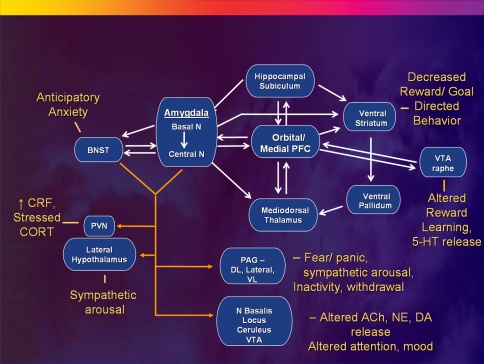
The neural networks that putatively modulate aspects of normal emotional behavior have been implicated in the pathophysiology of mood disorders by converging evidence from neuroimaging, neuropathological and lesion analysis studies. These networks involve the medial prefrontal cortex (MPFC) and closely related areas in the medial and caudolateral orbital cortex (medial prefrontal network), amygdala, hippocampus, and ventromedial parts of the basal ganglia, where alterations in grey matter volume and neurophysiological activity are found in cases with recurrent depressive episodes. Such findings hold major implications for models of the neurocircuits that underlie depression. In particular evidence from lesion analysis studies suggests that the MPFC and related limbic and striato-pallido-thalamic structures organize emotional expression. The MPFC is part of a larger "default system" of cortical areas that include the dorsal PFC, mid- and posterior cingulate cortex, anterior temporal cortex, and entorhinal and parahippocampal cortex, which has been implicated in self-referential functions. Dysfunction within and between structures in this circuit may induce disturbances in emotional behavior and other cognitive aspects of depressive syndromes in humans. Further, because the MPFC and related limbic structures provide forebrain modulation over visceral control structures in the hypothalamus and brainstem, their dysfunction can account for the disturbances in autonomic regulation and neuroendocrine responses that are associated with mood disorders. This paper discusses these systems together with the neurochemical systems that impinge on them and form the basis for most pharmacological therapies.
Overview
CoChat Summary
## TL;DR
This review argues that major depressive disorder and bipolar disorder are best understood as disorders of an extended visceromotor network linking medial prefrontal and limbic structures, rather than as isolated abnormalities in a single brain region. It synthesizes neuroimaging, post mortem, lesion, and animal findings to show converging structural, functional, neurochemical, and autonomic abnormalities that help explain depressive symptoms and treatment effects.
## Key findings
- The paper’s central model is that dysfunction within the MPFC and connected limbic/striato-pallido-thalamic circuits can account for disturbances in emotional behavior, cognition, neurotransmission, autonomic regulation, and neuroendocrine responses in mood disorders.
- Structural abnormalities are repeatedly reported in mood disorders, especially in the subgenual ACC, orbital/VLPFC, amygdala, hippocampus, ventral striatum, and corpus callosum; the text notes gray matter reductions of about 20% to 50% across studies in some regions after accounting for partial-volume effects.
- Functional studies show that, in many visceromotor-network regions, basal activity is higher in the depressed than remitted phase; specific examples include elevated metabolism/activity in the amygdala, sgACC, ventromedial frontal polar cortex, accumbens area, medial thalamus, and posterior cingulate cortex.
- The review highlights reported physiological abnormalities including two- to fourfold higher sudden death risk and sevenfold higher ventricular arrhythmia risk in depressed patients with cardiac disease, plus evidence of hyperactive HPA-axis function and altered serotonergic, glutamatergic, cholinergic, and catecholaminergic signaling.
## Methods
- This is a narrative review that integrates findings from in vivo neuroimaging, post mortem neuropathology, lesion analysis, and preclinical animal studies.
- The paper draws on studies of MDD and BD patients, including longitudinal imaging before/after treatment or relapse, plus rodent stress models and experimental pharmacology.
- The main analysis is conceptual synthesis: it organizes the evidence into circuit-based models, especially the extended visceromotor network, to explain mood-disorder symptoms and antidepressant mechanisms.
## Limitations
- The paper states that the etiologies of primary MDD and BD remain unknown and that no discovered abnormality has shown sufficient sensitivity or specificity to serve as a diagnostic test.
- The text explicitly notes heterogeneity in MDD and BD, which it says likely explains inconsistent findings across studies. It also states that the evidence base is limited by syndrome-based psychiatric nosology rather than biologically defined subtypes.
- Evident from the text: much of the argument is based on correlational human imaging/post mortem data and animal-model homologies, so causal claims about circuitry are inferred rather than directly demonstrated.
Model-written summary. Check it against the paper before relying on it.
Integrity signals
Registry
Cites
Statistics
Figures
Verification
Claims the paper makes
33 Valid · 6 Not valid · 126 Not checked · 46 Own results and interpretations
At least one cited source doesn’t support this claim or points to a different paper, and none confirmed it — see the verdicts below.
In the paper
“Conversely, lesions of the right or bilateral mPFC enhance behavioral, sympathetic, and endocrine responses to stressors or fear-conditioned stimuli in rats (Morgan and LeDoux 1995; Sullivan and Gratton 1999).”
§ Brain structural and functional abnormalities in mood disorders: implications for neurocircuitry models of depression > Implications for neurocircuitry models of depression
What the sources say
- Not checked — no full text of the sourcecites Morgan and LeDoux 1995 matched to “Differential contribution of dorsal and ventral medial prefrontal cortex to the acquisition and extinction of conditioned fear in rats.” (1995) source
- Disputedcites Sullivan and Gratton 1999 matched to “Lateralized Effects of Medial Prefrontal Cortex Lesions on Neuroendocrine and Autonomic Stress Responses in Rats” (1999) sourceExperimental — accuracy not yet measured
The Discussion reports that right or bilateral mPFC lesions suppressed corticosterone responses and reduced stress-ulcer pathology, rather than enhancing endocrine and autonomic stress responses (article pp. 2834–2840). It reports increased restraint-induced defecation only after left lesions, not right or bilateral lesions. (LLM, conf=0.90)
Checked by a reasoning model — may be wrong.
plainstates a cause- Asserted: passes — The authors put it forward as true.
- Checkable: passes — It can be checked against evidence.
- Load-bearing: passes — The paper’s conclusions depend on it.
- Based: passes — The paper gives a reason why it holds.
The sources with a verdict support this claim; the rest weren’t checked yet, have no full text we could read, or their verdicts aren’t rated yet.
In the paper
“It closely resembles the “default system” that has been defined in human functional imaging studies as a system of areas that become deactivated from a resting “default” condition in most tasks that involve external attention to objects or events outside the individual (e.g., Gusnard et al. 2001; Fox et al. 2005).”
§ Brain structural and functional abnormalities in mood disorders: implications for neurocircuitry models of depression > Neurobiological correlates of mood disorders > Neural circuits affected by mood disorders
What the sources say
- Not checked — no full text of the sourcecites Gusnard et al. 2001 matched to “Medial prefrontal cortex and self-referential mental activity: Relation to a default mode of brain function” (2001) source
- Supportedcites Fox et al. 2005 matched to “The human brain is intrinsically organized into dynamic, anticorrelated functional networks” (2005) source
The Discussion identifies a task-negative network that includes regions called the “default system” because they are more active at rest than during goal-directed tasks. It also describes these regions as commonly decreasing activity during task performance. The resemblance to the visceromotor system is the citing authors’ comparison, not a finding attributed to Fox et al. (LLM, conf=0.90)
plainstates an association- Asserted: passes — The authors put it forward as true.
- Checkable: passes — It can be checked against evidence.
- Load-bearing: passes — The paper’s conclusions depend on it.
- Based: passes — The paper gives a reason why it holds.
The cited sources support only part of this claim — read each source’s verdict below.
In the paper
“Regions where metabolism correlates positively with depression severity include the amygdala, sgACC and ventromedial frontal polar cortex (Drevets and Price 2005; Hasler et al. 2008).”
§ Brain structural and functional abnormalities in mood disorders: implications for neurocircuitry models of depression > Neurobiological correlates of mood disorders > Neural circuits affected by mood disorders
What the sources say
- Not checked — no full text of the sourcecites Drevets and Price 2005 matched to “Neuroimaging and Neuropathological Studies of Mood Disorders” (2005) source
- Partly supportedcites Hasler et al. 2008 matched to “Neural Response to Catecholamine Depletion in Unmedicated Subjects With Major Depressive Disorder in Remission and Healthy Subjects” (2008) sourceExperimental — accuracy not yet measured
The Results (Table 6; page not supplied) report a positive correlation between changes in depression ratings and metabolism in the left ventromedial frontal polar cortex. They do not report that correlation for the amygdala or sgACC; the Results instead describe the sgACC as showing a different metabolic response to depletion between groups and mention the amygdala as part of an interconnected network. (LLM, conf=0.90)
plainstates an association- Asserted: passes — The authors put it forward as true.
- Checkable: passes — It can be checked against evidence.
- Load-bearing: passes — The paper’s conclusions depend on it.
- Based: passes — The paper gives a reason why it holds.
The sources with a verdict support this claim; the rest weren’t checked yet, have no full text we could read, or their verdicts aren’t rated yet.
In the paper
“Conversely, in recovered MDD cases who experience depressive relapse under experimental conditions involving serotonin or catecholamine depletion, the metabolic activity increases in these regions as the depressive symptoms return (Neumeister et al. 2004; Hasler et al. 2008) although the elevation of left amygdala activity during serotonin depletion-induced relapse was limited to homozygotes for”
§ Brain structural and functional abnormalities in mood disorders: implications for neurocircuitry models of depression > Neurobiological correlates of mood disorders > Neural circuits affected by mood disorders
What the sources say
- Not checked — no full text of the sourcecites Neumeister et al. 2004 matched to “Neural and Behavioral Responses to Tryptophan Depletion in UnmedicatedPatients With Remitted Major Depressive Disorder and Controls” (2004) source
- Supportedcites Hasler et al. 2008 matched to “Neural Response to Catecholamine Depletion in Unmedicated Subjects With Major Depressive Disorder in Remission and Healthy Subjects” (2008) source
The Results (page not specified) report increased metabolism in several regions during catecholamine depletion in remitted MDD subjects, with changes correlated with depressive symptoms. The same passage reports increased metabolism in overlapping regions during tryptophan depletion–associated depressive relapse. (LLM, conf=0.92)
- Not checked — no full text of the sourcecites Neumeister et al. 2006b matched to “Differential effects of 5-HTTLPR genotypes on the behavioral and neural responses to tryptophan depletion in patients with major depression and controls” (2006) source
plainstates a cause- Asserted: passes — The authors put it forward as true.
- Checkable: passes — It can be checked against evidence.
- Load-bearing: passes — The paper’s conclusions depend on it.
- Based: passes — The paper gives a reason why it holds.
The sources with a verdict support this claim; the rest weren’t checked yet, have no full text we could read, or their verdicts aren’t rated yet.
In the paper
“reductions of gray matter volume, thickness or wet weight have been reported in the subgenual ACC, posterolateral orbital cortex, and ventral striatum in MDD and/or BD subjects relative to controls (Baumann et al. 1999; Bowen et al. 1989; Ongür et al. 1998; Rajkowska et al. 1999)”
§ Brain structural and functional abnormalities in mood disorders: implications for neurocircuitry models of depression > Neurobiological correlates of mood disorders > Neural circuits affected by mood disorders
What the sources say
- Not checked — no full text of the sourcecites Baumann et al. 1999 matched to “Reduced Volume of Limbic System–Affiliated Basal Ganglia in Mood Disorders: Preliminary Data From a Postmortem Study” (1999) source
- Not checked — no full text of the sourcecites Bowen et al. 1989 matched to “Circumscribed changes of the cerebral cortex in neuropsychiatric disorders of later life.” (1989) source
- Supportedcites Ongür et al. 1998 matched to “Glial reduction in the subgenual prefrontal cortex in mood disorders” (1998) source
Ongür et al. support the subgenual ACC portion of this multi-citation sentence. The Results report smaller area sg24 volume in MDD and BD brains than in controls, while the Abstract specifies that the reduction was seen in familial mood disorders. The paper is not needed to support the other regions named alongside separate citations. (LLM, conf=0.88)
plainstates an association- Asserted: passes — The authors put it forward as true.
- Checkable: passes — It can be checked against evidence.
- Load-bearing: passes — The paper’s conclusions depend on it.
- Based: passes — The paper gives a reason why it holds.
141 more claims · 15 with their cited sources checked
Create a free account to see all 211 claims and to verify the 2 references still open.
- It may state two separate claims as one. 57
- Probably not a substantial claim. 12
Claims other papers make about this one
Each is checked against this paper’s own text: does it say what the citing paper says it does?
The source backs part of the claim, not all of it — or backs it for a different population, condition or comparison.
In the citing paper
“Synaptic, dendritic as well as glial reductions are well substantiated in the prefrontal cortex (Cotter et al., 2002), but histologic evidence for basal ganglia and thalamus is scarce or mixed (Drevets et al., 2008;Young et al., 2004).”
From Serotonin and neuroplasticity – Links between molecular, functional and structural pathophysiology in depression (2017) · cites this paper as Drevets et al., 2008
Experimental — accuracy not yet measuredThe source backs part of the claim, not all of it — or backs it for a different population, condition or comparison.
In the citing paper
“All of the above altered connections fall into the limbic-cortical dysregulation model (Mayberg, 2003;Seminowicz et al., 2004;Drevets et al., 2008;Price and Drevets, 2010) and may negatively affect the regulation of mood and affect (Savitz and Drevets, 2009).”
From Identifying major depression using whole-brain functional connectivity: a multivariate pattern analysis (2012) · cites this paper as Drevets et al., 2008
Experimental — accuracy not yet measuredThe source backs part of the claim, not all of it — or backs it for a different population, condition or comparison.
In the citing paper
“Among these findings, abnormal activity in the ventromedial prefrontal cortex (vmPFC) is probably the most widely reported (1–4).”
From Functional anatomy of ventromedial prefrontal cortex: implications for mood and anxiety disorders (2012) · cites this paper as [1]
Experimental — accuracy not yet measuredIn the citing paper
“At the functional level, depression is conceived of as a network level disorder, meaning that multiple brain regions including frontal, striatal, and limbic areas in interaction account for the symptoms of the disorder.11,12,39-41”
From The effects of drugs on human models of emotional processing: an account of antidepressant drug treatment (2015) · cites this paper as [39]
In the citing paper
“Altered connectivity of the thalamus with the prefrontal lobe and the limbic areas may account for the disturbances in autonomic regulations that are associated with depression (Drevets et al., 2008).”
From Identifying major depression using whole-brain functional connectivity: a multivariate pattern analysis (2012) · cites this paper as Drevets et al., 2008
3 more claims about this paper
Create a free account to see every claim other papers make about this one.
Citations
Cites
Kessler, R. C., Chiu, W. T., Demler, O., & Walters, E. E. (2005) · Archives of General Psychiatry · doi:10.1001/archpsyc.62.6.617 · Cited by 12,052 · cited 1×
“Anxiety symptoms also are prominent during MDE, and mood disorders commonly occur comorbidly with anxiety disorders such as panic disorder, social phobia, posttraumatic stress syndrome and obsessive–compulsive disorder (Kessler et al. 2005).”
BackgroundA neural substrate of prediction and reward
Schultz, W., Dayan, P., & Montague, P. R. (1997) · Science · doi:10.1126/science.275.5306.1593 · Cited by 9,388
Diagnostic and Statistical Manual of Mental Disorders (DSM-IV)
Hu, R. J. (2003) · Encyclopedia of the Neurological Sciences · doi:10.1016/b0-12-226870-9/01070-4 · Cited by 9,117
The human brain is intrinsically organized into dynamic, anticorrelated functional networks
Fox, M. D., Snyder, A. Z., Vincent, J. L., Corbetta, M., Van Essen, D. C., & Raichle, M. E. (2005) · Proceedings of the National Academy of Sciences · doi:10.1073/pnas.0504136102 · Cited by 8,553 · cited 1×
“…the ‘‘default system’’ that has been defined in human functional imaging studies as a system of areas that become deactivated from a resting ‘‘default’’ condition in most tasks that involve external attention to objects or events outside the individual (e.g., Gusnard et al. 2001; Fox et al. 2005).”
Molecular Mechanisms of Depression: Perspectives on New Treatment Strategies
Lang, U. E., & Borgwardt, S. (2013) · Cellular Physiology and Biochemistry · doi:10.1159/000350094 · Cited by 8,475
Influence of life stress on depression: moderation by a polymorphism in the 5-HTT gene
Caspi, A., Sugden, K., Moffitt, T. E., Taylor, A., Craig, I. W., Harrington, H., McClay, J., Mill, J., Martin, J., Braithwaite, A., et al. (2003) · Science · doi:10.1126/science.1083968 · Cited by 8,120
(2005) · Choice Reviews Online · doi:10.5860/choice.43-0626 · Cited by 4,674
Requirement of hippocampal neurogenesis for the behavioral effects of antidepressants
Santarelli, L., Saxe, M., Gross, C., Surget, A., Battaglia, F., Dulawa, S., Weisstaub, N., Lee, J., Duman, R., Arancio, O., et al. (2003) · Science · doi:10.1126/science.1083328 · Cited by 4,321 · cited 1×
“…expression of brain derived neurotrophic factor (BDNF) and other neurotrophic/neuroprotective factors in the hippocampus and PFC (Manji et al. 2001; Santarelli et al. 2003); (2) enhancement of postsynaptic serotonin type 1A (5-HT1A) receptor function (Haddjeri et al. 1998; Chaput et al. 1991); (3)…”
BackgroundDeep Brain Stimulation for Treatment-Resistant Depression
Mayberg, H. S., Lozano, A. M., Voon, V., McNeely, H. E., Seminowicz, D., Hamani, C., Schwalb, J. M., & Kennedy, S. H. (2005) · Neuron · doi:10.1016/j.neuron.2005.02.014 · Cited by 4,059 · cited 4×
“…regions as a common functional anatomical effect of both antidepressant drug treatment and deep brain stimulation of the sgACC or anterior capsule (Mayberg et al. 2005; Drevets et al. 2002a; Van Laere et al. 2006; Mayberg et al. 1999), despite the diverse mechanisms underlying these treatments.”
BackgroundInfluentialDomingos da Silveira da Luz, A. C., Pereira Dias, G., do Nascimento Bevilaqua, M. C., Cocks, G., Gardino, P. F., Thuret, S., & Nardi, A. E. (2013) · Neuropsychobiology · doi:10.1159/000353269 · Cited by 3,995
Genetic Epidemiology of Major Depression: Review and Meta-Analysis
Sullivan, P. F., Neale, M. C., & Kendler, K. S. (2000) · American Journal of Psychiatry · doi:10.1176/appi.ajp.157.10.1552 · Cited by 3,431 · cited 2×
“The genetic data also support a role for acquired factors in disease expression (Sullivan et al. 2000).”
BackgroundGusnard, D. A., Akbudak, E., Shulman, G. L., & Raichle, M. E. (2001) · Proceedings of the National Academy of Sciences · doi:10.1073/pnas.071043098 · Cited by 2,997 · cited 1×
“…the ‘‘default system’’ that has been defined in human functional imaging studies as a system of areas that become deactivated from a resting ‘‘default’’ condition in most tasks that involve external attention to objects or events outside the individual (e.g., Gusnard et al. 2001; Fox et al. 2005).”
BackgroundPsychopharmacology: The Fourth Generation of Progress
Bloom, F. E., & Kupfer, D. J. (1995) · Medical Entomology and Zoology · Cited by 2,985
Subgenual prefrontal cortex abnormalities in mood disorders
Drevets, W. C., Price, J. L., Simpson, J. R., Todd, R. D., Reich, T., Vannier, M., & Raichle, M. E. (1997) · Nature · doi:10.1038/386824a0 · Cited by 2,693 · cited 6×
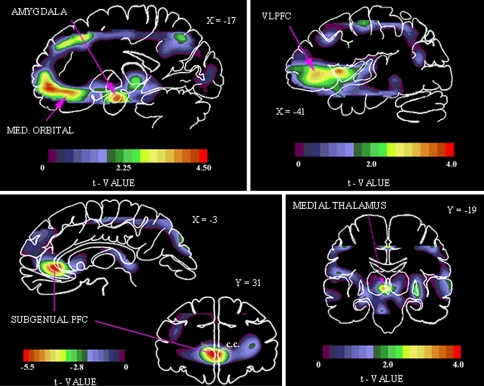
“3 Areas of abnormally increased physiological activity in familial MDD shown in images of unpaired t values, which were computed using a statistical parametric mapping approach to compare activity between depressives and controls (Drevets et al. 1992, 1997).”
BackgroundMethodInfluentialSelf-citationOngur, D. (2000) · Cerebral Cortex · doi:10.1093/cercor/10.3.206 · Cited by 2,627 · cited 4×
“The anatomical projections between the MPFC, striatum and amygdala implicated in mood disorders are formed by predominantly excitatory projections in rats and monkeys (Ongür et al. 2003; Ongür and Price 2000).”
BackgroundInfluentialMayberg, H. S., Liotti, M., Brannan, S. K., McGinnis, S., Mahurin, R. K., Jerabek, P. A., Silva, J. A., Tekell, J. L., Martin, C. C., Lancaster, J. L., et al. (1999) · American Journal of Psychiatry · doi:10.1176/ajp.156.5.675 · Cited by 2,416
(1995) · Choice Reviews Online · doi:10.5860/choice.32-5931 · Cited by 2,311
THE AMYGDALA MODULATES THE CONSOLIDATION OF MEMORIES OF EMOTIONALLY AROUSING EXPERIENCES
McGaugh, J. L. (2004) · Annual Review of Neuroscience · doi:10.1146/annurev.neuro.27.070203.144157 · Cited by 2,296 · cited 2×
“Moreover, acetylcholine modulates emotional processing, both in animals (McGaugh 2004; Power and McGaugh 2002) and in humans (Bentley et al. 2003), and similarly may utilize S/N modulation for differential representations of emotional information.”
BackgroundNeurocircuitry of stress: central control of the hypothalamo–pituitary–adrenocortical axis
Herman, J. P., & Cullinan, W. E. (1997) · Trends in Neurosciences · doi:10.1016/s0166-2236(96)10069-2 · Cited by 2,270 · cited 2×
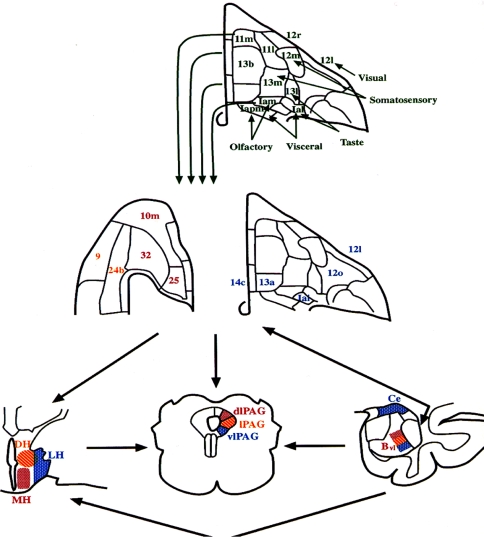
“Solid yellow lines show efferent pathways of the ACe and BNST, which generally are monosynaptic, but in some cases are bisynaptic connections (e.g., Herman and Cullinan 1997).”
Carroll, B. J. (1981) · Archives of General Psychiatry · doi:10.1001/archpsyc.1981.01780260017001 · Cited by 2,243 · cited 2×
“…(VBM) task, where a stimulus is shown briefly and then ‘‘masked’’ or covered in space using a noninformative stimulus, medicated BD subjects had deficits in the identification of masked stimuli, consistent with an impairment early in the information processing pathway (Fleming and Green 1995).”
BackgroundResultThe mesolimbic dopamine reward circuit in depression
Nestler, E. J., & Carlezon, W. A. (2006) · Biological Psychiatry · doi:10.1016/j.biopsych.2005.09.018 · Cited by 2,059 · cited 9×
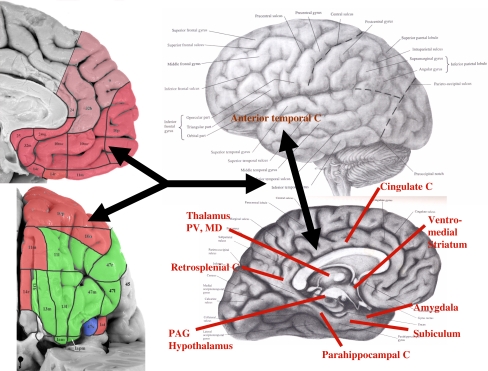
“The specific cytoarchitectonic areas of the visceromotor component of the orbitomedial PFC are color coded according to the specific nuclei of the amygdala and hypothalamus or the column of the PAG to which they predominantly project (Carmichael and Price 1995; Ongür and Price 1998; Floyd et al. 2000, 2001).”
BackgroundInfluentialThe Emotional Brain, Fear, and the Amygdala
LeDoux, J. (2003) · Cellular and Molecular Neurobiology · doi:10.1023/a:1025048802629 · Cited by 1,818
Neurobiology of emotion perception II: implications for major psychiatric disorders
Phillips, M. L., Drevets, W. C., Rauch, S. L., & Lane, R. (2003) · Biological Psychiatry · doi:10.1016/s0006-3223(03)00171-9 · Cited by 1,736 · cited 1×
“…circuits affected by mood disorders Evidence from neuroimaging, neuropathological, and lesion analysis studies implicates brain networks that normally regulate the evaluative, expressive and experiential aspects of emotional behavior in the pathophysiology of mood disorders (Phillips et al. 2003).”
BackgroundSelf-citationVyas, A., Mitra, R., Shankaranarayana Rao, B. S., & Chattarji, S. (2002) · The Journal of Neuroscience · doi:10.1523/jneurosci.22-15-06810.2002 · Cited by 1,662 · cited 1×
“…stress also produced dendritic atrophy, but chronic immobilization stress instead increased dendritic branching (Banasr and Duman 2007; Vyas et al. 2002, 2003), suggesting that the effect of chronic immobilization stress on dendritic remodeling is regionally specific (Conrad et al.…”
BackgroundNeurotransmitters and neuromodulators in the basal ganglia
Graybiel, A. M. (1990) · Trends in Neurosciences · doi:10.1016/0166-2236(90)90104-i · Cited by 1,576 · cited 1×
“This part of the striatum sends an inhibitory projection to the ventral pallidum (Graybiel 1990) which in turn sends GABA-ergic, inhibitory fibers to the MD (Kuroda and Price 1991).”
BackgroundGlial reduction in the subgenual prefrontal cortex in mood disorders
Öngür, D., Drevets, W. C., & Price, J. L. (1998) · Proceedings of the National Academy of Sciences · doi:10.1073/pnas.95.22.13290 · Cited by 1,525 · cited 5×
“Since the Glx measure reflects the intracellular glutamate and glutamine pools, the abnormal reductions in Glx concentrations would be compatible with the reductions in glial cells found post mortem in the same regions in MDD, as glia play prominent roles in glutamate–glutamine cycling.”
BackgroundResultInfluentialSelf-citation(1990) · Springer eBooks · doi:10.1007/978-3-642-74034-3 · Cited by 1,523
Rajkowska, G., Miguel-Hidalgo, J. J., Wei, J., Dilley, G., Pittman, S. D., Meltzer, H. Y., Overholser, J. C., Roth, B. L., & Stockmeier, C. A. (1999) · Biological Psychiatry · doi:10.1016/s0006-3223(99)00041-4 · Cited by 1,477 · cited 7×
“Finally, the mean size of neurons was reduced in the dorsal anterolateral PFC (BA 9) in MDD subjects relative to controls (Rajkowska et al. 1999), and the density of nonpyramidal neurons was decreased in the ACC and hippocampus in BD (Benes et al. 2001; Todtenkopf et al. 2005), and in the dorsal…”
BackgroundResultInfluentialGold, P. W., & Chrousos, G. P. (2002) · Molecular Psychiatry · doi:10.1038/sj.mp.4001032 · Cited by 1,274
A functional anatomical study of unipolar depression
Drevets, W., Videen, T., Price, J., Preskorn, S., Carmichael, S., & Raichle, M. (1992) · The Journal of Neuroscience · doi:10.1523/jneurosci.12-09-03628.1992 · Cited by 1,266
Self-citationLimbic connections of the orbital and medial prefrontal cortex in macaque monkeys
Carmichael, S. T., & Price, J. L. (1995) · Journal of Comparative Neurology · doi:10.1002/cne.903630408 · Cited by 1,197 · cited 1×
“…cytoarchitectonic areas of the visceromotor component of the orbitomedial PFC are color coded according to the specific nuclei of the amygdala and hypothalamus or the column of the PAG to which they predominantly project (Carmichael and Price 1995; Ongür and Price 1998; Floyd et al. 2000, 2001).”
MethodSelf-citationSheline, Y. I., Barch, D. M., Donnelly, J. M., Ollinger, J. M., Snyder, A. Z., & Mintun, M. A. (2001) · Biological Psychiatry · doi:10.1016/s0006-3223(01)01263-x · Cited by 1,191
The cellular neurobiology of depression
Manji, H. K., Drevets, W. C., & Charney, D. S. (2001) · Nature Medicine · doi:10.1038/87865 · Cited by 1,182
Self-citationUntreated Depression and Hippocampal Volume Loss
Sheline, Y. I., Gado, M. H., & Kraemer, H. C. (2003) · American Journal of Psychiatry · doi:10.1176/appi.ajp.160.8.1516 · Cited by 1,180 · cited 1×
“Conventional antidepressant drug treatment and symptom remission do not appear to alter the reductions in gray matter volume in the sgACC (Drevets et al. 1997), but may arrest further gray matter decrements in the hippocampus (Sheline et al. 2003).”
BackgroundAmygdalo‐cortical projections in the monkey ( Macaca fascicularis )
Amaral, D. G., & Price, J. L. (1984) · Journal of Comparative Neurology · doi:10.1002/cne.902300402 · Cited by 1,162 · cited 1×
“5) whereby the BLA and the MPFC are interconnected by excitatory (especially glutamatergic) projections with each other and with the MD (Amaral and Price 1984; Amaral and Insausti 1992; Bacon et al. 1996; Kuroda and Price 1991; Jackson and Moghaddam 2001), so increased glucose metabolism in these…”
BackgroundSelf-citationDiorio, D., Viau, V, & Meaney, M. (1993) · The Journal of Neuroscience · doi:10.1523/jneurosci.13-09-03839.1993 · Cited by 1,151
Drevets, W. C. (2001) · Current Opinion in Neurobiology · doi:10.1016/s0959-4388(00)00203-8 · Cited by 1,146 · cited 2×
“…orbital cortex increase the risk for developing depression (MacFall et al. 2001), whereas electrical stimulation of the amygdala can produce fear, anxiety, dysphoria, sympathetic autonomic arousal, social withdrawal and cortisol release in humans and/or nonhuman primates (reviewed in Drevets 2001).”
BackgroundSelf-citationPsychopharmacology: The Fourth Generation of Progress
Green, A. I. (1996) · Psychiatric Services · doi:10.1176/ps.47.3.312 · Cited by 1,145
The subgenual anterior cingulate cortex in mood disorders
Drevets, W. C., Savitz, J., & Trimble, M. (2008) · CNS Spectrums · doi:10.1017/s1092852900013754 · Cited by 1,109 · cited 2×
“The differential effects of these drugs on dendritic atrophy in stressed rats thus resemble their effects on sgACC volume in humans with BD (Moore et al. 2008; Drevets et al. 1997; Drevets and Savitz 2008).”
BackgroundSelf-citationCingulate function in depression: a potential predictor of treatment response
Mayberg, H. S., Brannan, S. K., Mahurin, R. K., Jerabek, P. A., Brickman, J. S., Tekell, J. L., Silva, J. A., McGinnis, S., Glass, T. G., Martin, C. C., et al. (1997) · NeuroReport · doi:10.1097/00001756-199703030-00048 · Cited by 1,029
Deep Brain Stimulation to Reward Circuitry Alleviates Anhedonia in Refractory Major Depression
Schlaepfer, T. E., Cohen, M. X., Frick, C., Kosel, M., Brodesser, D., Axmacher, N., Joe, A. Y., Kreft, M., Lenartz, D., & Sturm, V. (2008) · Neuropsychopharmacology · doi:10.1038/sj.npp.1301408 · Cited by 1,027 · cited 1×
“…or in depression associated with obsessive–complusive disorder (Van Laere et al. 2006), and that deep brain stimulation applied via electrodes situated in the accumbens area/ventral internal capsule reportedly improves depressive symptoms in treatment-refractory depression (Schlaepfer et al. 2008).”
BackgroundThe stress system in the human brain in depression and neurodegeneration
Swaab, D. F., Bao, A.-M., & Lucassen, P. J. (2005) · Ageing Research Reviews · doi:10.1016/j.arr.2005.03.003 · Cited by 984 · cited 3×
“…(VBM) task, where a stimulus is shown briefly and then ‘‘masked’’ or covered in space using a noninformative stimulus, medicated BD subjects had deficits in the identification of masked stimuli, consistent with an impairment early in the information processing pathway (Fleming and Green 1995).”
BackgroundResultArchitectonic subdivision of the human orbital and medial prefrontal cortex
Öngür, D., Ferry, A. T., & Price, J. L. (2003) · Journal of Comparative Neurology · doi:10.1002/cne.10609 · Cited by 944
Self-citationAttentional biases for negative interpersonal stimuli in clinical depression
Gotlib, I. H., Krasnoperova, E., Yue, D. N., & Joormann, J. (2004) · Journal of Abnormal Psychology · doi:10.1037/0021-843x.113.1.121 · Cited by 911 · cited 1×
“In a face dot-probe task designed to assess the allocation of attention between a face with a neutral expression and a face with an emotional expression, individuals with MDD consistently attend preferentially to faces with sad expressions (Gotlib et al. 2004a, b).”
BackgroundSerotonin1A receptor acts during development to establish normal anxiety-like behaviour in the adult
Gross, C., Zhuang, X., Stark, K., Ramboz, S., Oosting, R., Kirby, L., Santarelli, L., Beck, S., & Hen, R. (2002) · Nature · doi:10.1038/416396a · Cited by 903
Rauch, S. L. (1994) · Archives of General Psychiatry · doi:10.1001/archpsyc.1994.03950010062008 · Cited by 880
Siegle, G. J., Steinhauer, S. R., Thase, M. E., Stenger, V. A., & Carter, C. S. (2002) · Biological Psychiatry · doi:10.1016/s0006-3223(02)01314-8 · Cited by 859 · cited 2×
“…in some depressive subtypes is thought to contribute to mitochondrial dysfunction, neuropathological changes, elevated body temperature, premature osteoporosis and aging, and other medical morbidity in individuals suffering from mood disorders (McEwen and Magarinos 2001; Gold et al. 2002).”
BackgroundHasler, G., van der Veen, J. W., Tumonis, T., Meyers, N., Shen, J., & Drevets, W. C. (2007) · Archives of General Psychiatry · doi:10.1001/archpsyc.64.2.193 · Cited by 846 · cited 2×
“Early studies reported that GABA concentrations were abnormally decreased in the plasma and cerebrospinal fluid (CSF) in MDD subjects (reviewed in Hasler et al. 2007).”
BackgroundSelf-citationChildhood trauma associated with smaller hippocampal volume in women with major depression
Vythilingam, M., Heim, C., Newport, J., Miller, A. H., Anderson, E., Bronen, R., Brummer, M., Staib, L., Vermetten, E., Charney, D. S., et al. (2002) · American Journal of Psychiatry · doi:10.1176/appi.ajp.159.12.2072 · Cited by 812 · cited 1×
“…reflect clinical heterogeneity as one study reported that reduced hippocampal volume was limited to depressed women who suffered early-life trauma, Vythilingam et al. (2002) and others reported that hippocampal volume correlated inversely with time spent depressed (e.g., Sheline Anterior temporal…”
BackgroundFu, C. H. Y., Williams, S. C. R., Cleare, A. J., Brammer, M. J., Walsh, N. D., Kim, J., Andrew, C. M., Pich, E. M., Williams, P. M., Reed, L. J., et al. (2004) · Archives of General Psychiatry · doi:10.1001/archpsyc.61.9.877 · Cited by 775 · cited 4×
“Similarly, increased activity in amygdala was observed during presentation of masked fearful (Sheline et al. 2001) and masked sad faces (Fu et al. 2004) in MDD patients versus healthy controls, and higher activity was seen in lateral orbital cortex following negative emotional stimuli in the…”
BackgroundMethodInfluentialCotter, D., Mackay, D., Landau, S., Kerwin, R., & Everall, I. (2001) · Archives of General Psychiatry · doi:10.1001/archpsyc.58.6.545 · Cited by 766 · cited 6×
“For example, the common ‘‘short’’ allele of the functional 5-HTT LPR polymorphism increases the vulnerability for developing MDD within the context of stressful life events (Caspi et al. 2003).”
BackgroundResultInfluentialCellular changes in the postmortem hippocampus in major depression
Stockmeier, C. A., Mahajan, G. J., Konick, L. C., Overholser, J. C., Jurjus, G. J., Meltzer, H. Y., Uylings, H. B. M., Friedman, L., & Rajkowska, G. (2004) · Biological Psychiatry · doi:10.1016/j.biopsych.2004.08.022 · Cited by 732 · cited 2×
“Enhancement of 5-HT transmission in MDD also may compensate for the abnormalities in density and sensitivity of some 5-HT receptor subtypes evidenced by post mortem, neuroimaging and pharmacological challenge studies of depression (Stockmeier 2003).”
BackgroundMorgan, M. A., & LeDoux, J. E. (1995) · Behavioral Neuroscience · doi:10.1037/0735-7044.109.4.681 · Cited by 717
Vidal-Gonzalez, I., Vidal-Gonzalez, B., Rauch, S. L., & Quirk, G. J. (2006) · Learning & Memory · doi:10.1101/lm.306106 · Cited by 705 · cited 1×
“…the remitted phases, the relationship between physiological activity and symptom severity differs in valence across some structures, compatible with preclinical evidence that distinct MPFC structures are involved in opponent processes with respect to emotional behavior (Vidal-Gonzalez et al. 2006).”
ResultLópez, J. F., Chalmers, D. T., Little, K. Y., & Watson, S. J. (1998) · Biological Psychiatry · doi:10.1016/s0006-3223(97)00484-8 · Cited by 699 · cited 6×
“Moreover, the mood and anxiety disordered subgroups with reduced 5-HT1A receptor binding appear limited to those who manifest evidence of a diathesis to hypersecrete cortisol (e.g., under stressed conditions) (Lopez et al. 1998; Drevets et al. 1999, 2007).”
BackgroundInfluentialSwerdlow, N. R., & Koob, G. F. (1987) · Behavioral and Brain Sciences · doi:10.1017/s0140525x00047488 · Cited by 674 · cited 4×
“…influences multiple cognitive processes, such that cholinergic enhancement generally improves performance on memory and attention tasks (Bartus et al. 1981; Peterson and Gibson 1983) while blocking cholinergic activity impairs performance (Rusted and Warburton 1988; Sitaram et al. 1978).”
BackgroundInfluentialPet imaging of serotonin 1A receptor binding in depression
Drevets, W. C., Frank, E., Price, J. C., Kupfer, D. J., Holt, D., Greer, P. J., Huang, Y., Gautier, C., & Mathis, C. (1999) · Biological Psychiatry · doi:10.1016/s0006-3223(99)00189-4 · Cited by 666 · cited 2×
“…is decreased in the insula, cingulate, parieto-occipital and orbital/ventrolateral prefrontal cortices in most studies of MDD and BD (e.g., Drevets et al. 1999, 2007; Sargent et al. 2000; Lopez et al. 1998), and the thermic and adrenocorticotropin/cortisol responses to 5-HT1A receptor…”
BackgroundSelf-citationConrad, C. D., Magariños, A. M., LeDoux, J. E., & McEwen, B. S. (1999) · Behavioral Neuroscience · doi:10.1037/0735-7044.113.5.902 · Cited by 664 · cited 3×
“…are evident in depressed humans (i.e., medial PFC, hippocampus), repeated stress results in dendritic atrophy and reductions in glial cell counts or proliferation in rodents (Banasr and Duman 2007; Czeh et al. 2005; McEwen and Magarinos 2001; Wellman 2001; Radley et al. 2008; Conrad et al. 1999).”
BackgroundUranova, N. A., Vostrikov, V. M., Orlovskaya, D. D., & Rachmanova, V. I. (2004) · Schizophrenia Research · doi:10.1016/s0920-9964(03)00181-6 · Cited by 659 · cited 6×
“For example, the common ‘‘short’’ allele of the functional 5-HTT LPR polymorphism increases the vulnerability for developing MDD within the context of stressful life events (Caspi et al. 2003).”
BackgroundResultInfluentialEmotional bias and inhibitory control processes in mania and depression
MURPHY, F. C., SAHAKIAN, B. J., RUBINSZTEIN, J. S., MICHAEL, A., ROGERS, R. D., ROBBINS, T. W., & PAYKEL, E. S. (1999) · Psychological Medicine · doi:10.1017/s0033291799001233 · Cited by 659 · cited 2×
“In an affective attention shifting task (i.e., affective go/no-go), medicated (Murphy et al. 1999) and unmedicated (Erickson et al. 2005) depressed subjects are faster when responding to the presentation of sad word as compared to happy word targets, a finding that is consistent with the idea that…”
BackgroundResultArchitectonic subdivision of the orbital and medial prefrontal cortex in the macaque monkey
Carmichael, S. T., & Price, J. L. (1994) · Journal of Comparative Neurology · doi:10.1002/cne.903460305 · Cited by 656 · cited 1×
“2 Architectonic maps of the orbital (upper and right-center panels) and medial prefrontal cortical surfaces (left-center panel) of the macaque brain, modified from Carmichael and Price (1994).”
Self-citationSargent, P. A., Kjaer, K. H., Bench, C. J., Rabiner, E. A., Messa, C., Meyer, J., Gunn, R. N., Grasby, P. M., & Cowen, P. J. (2000) · Archives of General Psychiatry · doi:10.1001/archpsyc.57.2.174 · Cited by 642 · cited 1×
“…insula, cingulate, parieto-occipital and orbital/ventrolateral prefrontal cortices in most studies of MDD and BD (e.g., Drevets et al. 1999, 2007; Sargent et al. 2000; Lopez et al. 1998), and the thermic and adrenocorticotropin/cortisol responses to 5-HT1A receptor agonist challenge are blunted…”
BackgroundCotter, D. (2002) · Cerebral Cortex · doi:10.1093/cercor/12.4.386 · Cited by 634 · cited 7×
“…or left is to left and/or glia-to-neuron ratios additionally were found in MDD subjects versus controls in the pregenual ACC (pgACC [BA24]) (Cotter et al. 2001a), the dorsal anterolateral PFC (BA9) (Cotter et al. 2002; Uranova et al. 2004) and the amygdala (Bowley et al. 2002; Hamidi et al. 2004).”
BackgroundResultInfluentialSurguladze, S., Brammer, M. J., Keedwell, P., Giampietro, V., Young, A. W., Travis, M. J., Williams, S. C. R., & Phillips, M. L. (2005) · Biological Psychiatry · doi:10.1016/j.biopsych.2004.10.028 · Cited by 633
Pizzagalli, D., Pascual-Marqui, R. D., Nitschke, J. B., Oakes, T. R., Larson, C. L., Abercrombie, H. C., Schaefer, S. M., Koger, J. V., Benca, R. M., & Davidson, R. J. (2001) · American Journal of Psychiatry · doi:10.1176/appi.ajp.158.3.405 · Cited by 630
Sanacora, G., Mason, G. F., Rothman, D. L., Behar, K. L., Hyder, F., Petroff, O. A. C., Berman, R. M., Charney, D. S., & Krystal, J. H. (1999) · Archives of General Psychiatry · doi:10.1001/archpsyc.56.11.1043 · Cited by 627 · cited 1×
“Depressed MDD subjects show abnormally reduced GABA levels in both, the dorsomedial/dorsal anterolateral PFC and the occipital cortex (Sanacora et al. 1999; Hasler et al. 2007).”
BackgroundWellman, C. L. (2001) · Journal of Neurobiology · doi:10.1002/neu.1079 · Cited by 594 · cited 2×
“…are evident in depressed humans (i.e., medial PFC, hippocampus), repeated stress results in dendritic atrophy and reductions in glial cell counts or proliferation in rodents (Banasr and Duman 2007; Czeh et al. 2005; McEwen and Magarinos 2001; Wellman 2001; Radley et al. 2008; Conrad et al. 1999).”
BackgroundEnergetic basis of brain activity: implications for neuroimaging
Shulman, R. G., Rothman, D. L., Behar, K. L., & Hyder, F. (2004) · Trends in Neurosciences · doi:10.1016/j.tins.2004.06.005 · Cited by 590 · cited 2×
“Since cerebral glucose metabolism largely reflects the energetic requirements associated with glutamatergic transmission (Shulman et al. 2004), the elevated metabolism evident in limbic-thalamo-cortical circuits in depression implies that glutamatergic transmission is increased in these circuits…”
BackgroundDepression, the autonomic nervous system, and coronary heart disease
Carney, R. M., Freedland, K. E., & Veith, R. C. (2005) · Psychosomatic Medicine · doi:10.1097/01.psy.0000162254.61556.d5 · Cited by 582 · cited 3×
“Autonomic nervous system function in mood disorders Relative to nondepressed controls matched for cardiac disease, depressed patients show a two to fourfold increase in sudden death and a sevenfold increase in ventricular arrhythmia (Carney et al. 2005).”
BackgroundAmygdala Response to Fearful Faces in Anxious and Depressed Children
Thomas, K. M. (2001) · Archives of General Psychiatry · doi:10.1001/archpsyc.58.11.1057 · Cited by 582
Drevets, W. (2002) · European Neuropsychopharmacology · doi:10.1016/s0924-977x(02)00102-5 · Cited by 581
Self-citationDopaminergic modulation of limbic and cortical drive of nucleus accumbens in goal-directed behavior
Goto, Y., & Grace, A. A. (2005) · Nature Neuroscience · doi:10.1038/nn1471 · Cited by 576
Rajkowska, G., Halaris, A., & Selemon, L. D. (2001) · Biological Psychiatry · doi:10.1016/s0006-3223(01)01080-0 · Cited by 570 · cited 1×
“…observation that supports this hypothesis is that several reports of deficits in glia in the cerebral cortex depended upon laminar analysis, with the greatest effects in layers III, V, and VI (Cotter et al. 2001a, 2002; Rajkowska et al. 1999, 2001; Uranova et al. 2004; Vostrikov et al. 2007).”
ResultGlutamate and GABA systems as targets for novel antidepressant and mood-stabilizing treatments
Krystal, J. H., Sanacora, G., Blumberg, H., Anand, A., Charney, D. S., Marek, G., Epperson, C. N., Goddard, A., & Mason, G. F. (2002) · Molecular Psychiatry · doi:10.1038/sj.mp.4001021 · Cited by 553 · cited 3×
“Moreover, antidepressant and mood-stabilizing drugs which have diverse primary pharmacological actions generally reduce NMDA receptor sensitivity and/or transmission, and many of these agents increase GABA levels or transmission (Krystal et al. 2002; Paul and Skolnick 2003).”
BackgroundNeuroimaging Abnormalities in the Amygdala in Mood Disorders
DREVETS, W. C. (2003) · Annals of the New York Academy of Sciences · doi:10.1111/j.1749-6632.2003.tb07098.x · Cited by 544 · cited 2×
“…in some depressive subtypes is thought to contribute to mitochondrial dysfunction, neuropathological changes, elevated body temperature, premature osteoporosis and aging, and other medical morbidity in individuals suffering from mood disorders (McEwen and Magarinos 2001; Gold et al. 2002).”
BackgroundSelf-citationPrefrontal cortical projections to the hypothalamus in Macaque monkeys
Öngür, D., An, X., & Price, J. L. (1998) · The Journal of Comparative Neurology · doi:10.1002/(sici)1096-9861(19981130)401:4<480::aid-cne4>3.3.co;2-6 · Cited by 541
Self-citationSustained attention deficit in bipolar disorder
Clark, L., Iversen, S. D., & Goodwin, G. M. (2002) · British Journal of Psychiatry · doi:10.1192/bjp.180.4.313 · Cited by 539 · cited 1×
“Moreover, the existence of residual cognitive deficits in remitted patient groups demonstrates that some cognitive features occur independently of mood state (Clark et al. 2002; Tham et al. 1997).”
BackgroundJohnston-Wilson, N. L., Sims, C. D., Hofmann, J.-P., Anderson, L., Shore, A. D., Torrey, E. F., Yolken, R. H., & the Stanley Neuropathology Consortium (2000) · Molecular Psychiatry · doi:10.1038/sj.mp.4000696 · Cited by 531 · cited 1×
“…four forms of the astrocytic product, glial fibrillary acidic protein (GFAP), were decreased in mood-disordered subjects relative to controls, although it was not determined whether this decrement reflected a reduction in the astrocyte density or the GFAP expression (Johnston-Wilson et al. 2000).”
BackgroundHuman Serial Learning: Enhancement with Arecholine and Choline Impairment with Scopolamine
Sitaram, N., Weingartner, H., & Gillin, J. C. (1978) · Science · doi:10.1126/science.351808 · Cited by 524 · cited 1×
“…influences multiple cognitive processes, such that cholinergic enhancement generally improves performance on memory and attention tasks (Bartus et al. 1981; Peterson and Gibson 1983) while blocking cholinergic activity impairs performance (Rusted and Warburton 1988; Sitaram et al. 1978).”
BackgroundLow glial numbers in the amygdala in major depressive disorder
Bowley, M. P., Drevets, W. C., Öngür, D., & Price, J. L. (2002) · Biological Psychiatry · doi:10.1016/s0006-3223(02)01404-x · Cited by 503
Self-citationNeural Responses to Monetary Incentives in Major Depression
Knutson, B., Bhanji, J. P., Cooney, R. E., Atlas, L. Y., & Gotlib, I. H. (2008) · Biological Psychiatry · doi:10.1016/j.biopsych.2007.07.023 · Cited by 496 · cited 1×
“In fMRI studies the regional hemodynamic responses are attenuated in the ventral striatum in reward-processing tasks, and in both the ventral striatum and the posterior cingulate in tasks involving negative feedback (e.g., Knutson et al. 2007).”
BackgroundElectron microscopy of oligodendroglia in severe mental illness
Uranova, N., Orlovskaya, D., Vikhreva, O., Zimina, I., Kolomeets, N., Vostrikov, V., & Rachmanova, V. (2001) · Brain Research Bulletin · doi:10.1016/s0361-9230(01)00528-7 · Cited by 495 · cited 2×
“…of mood disorders by electron microscopic study of the PFC in BD which revealed decreased nuclear size, clumping of chromatin and other types of damage to satellite oligodendrocytes, including indications of both apoptotic and necrotic degeneration (Uranova et al. 2001; Vostrikov et al. 2007).”
BackgroundUse of fMRI to Predict Recovery From Unipolar Depression With Cognitive Behavior Therapy
Siegle, G. J., Carter, C. S., & Thase, M. E. (2006) · American Journal of Psychiatry · doi:10.1176/ajp.2006.163.4.735 · Cited by 495 · cited 1×
“Cognitive-behavioral strategies for managing depressive symptoms may instead rely upon enhancing the function of PFC systems that modulate limbic activity, thereby enhancing the normal role of cortico-limbic circuits in modulating emotional expression and experience (Siegle et al. 2006).”
BackgroundElliott, R., Sahakian, B. J., McKay, A. P., Herrod, J. J., Robbins, T. W., & Paykel, E. S. (1996) · Psychological Medicine · doi:10.1017/s0033291700035303 · Cited by 469
Glial cell abnormalities in major psychiatric disorders: the evidence and implications
Cotter, D. R., Pariante, C. M., & Everall, I. P. (2001) · Brain Research Bulletin · doi:10.1016/s0361-9230(01)00527-5 · Cited by 465 · cited 5×
“For example, the common ‘‘short’’ allele of the functional 5-HTT LPR polymorphism increases the vulnerability for developing MDD within the context of stressful life events (Caspi et al. 2003).”
BackgroundResultInfluentialVeith, R. C. (1994) · Archives of General Psychiatry · doi:10.1001/archpsyc.1994.03950050071008 · Cited by 460 · cited 2×
“In contrast, the levels of NE metabolite concentrations were decreased in some (e.g., Lambert et al. 2000), but increased in other studies (e.g., Veith et al. 1994).”
BackgroundIzquierdo, A., Wellman, C. L., & Holmes, A. (2006) · The Journal of Neuroscience · doi:10.1523/jneurosci.0474-06.2006 · Cited by 459 · cited 2×
“…area (VTA) to the nucleus accumbens shell and the medial PFC play major roles in learning associations between operant behaviors or sensory stimuli and reward, and in mediating the reinforcing properties of drugs of abuse and natural rewards such as food and sex (Nestler and Carlezon 2006).”
BackgroundDrevets, W. C., Price, J. L., Bardgett, M. E., Reich, T., Todd, R. D., & Raichle, M. E. (2002) · Pharmacology Biochemistry and Behavior · doi:10.1016/s0091-3057(01)00687-6 · Cited by 457 · cited 13×
“…antidepressant therapies may compensate for this dysfunction by modulating the pathological limbic activity which putatively mediates depressive symptoms (Drevets et al. 2002a) and the expression of neurotrophic/ neuroprotective factors that preserve the function of the MPFC (Manji et al. 2001).”
BackgroundInfluentialSelf-citationThe Neural Basis of Mood-Congruent Processing Biases in Depression
Elliott, R., Rubinsztein, J. S., Sahakian, B. J., & Dolan, R. J. (2002) · Archives of General Psychiatry · doi:10.1001/archpsyc.59.7.597 · Cited by 440 · cited 1×
“…was observed during presentation of masked fearful (Sheline et al. 2001) and masked sad faces (Fu et al. 2004) in MDD patients versus healthy controls, and higher activity was seen in lateral orbital cortex following negative emotional stimuli in the affective go/no-go task (Elliott et al. 2002).”
BackgroundCzéh, B., Simon, M., Schmelting, B., Hiemke, C., & Fuchs, E. (2006) · Neuropsychopharmacology · doi:10.1038/sj.npp.1300982 · Cited by 434 · cited 2×
“…are evident in depressed humans (i.e., medial PFC, hippocampus), repeated stress results in dendritic atrophy and reductions in glial cell counts or proliferation in rodents (Banasr and Duman 2007; Czeh et al. 2005; McEwen and Magarinos 2001; Wellman 2001; Radley et al. 2008; Conrad et al. 1999).”
BackgroundRajkowska, G., O'Dwyer, G., Teleki, Z., Stockmeier, C. A., & Miguel-Hidalgo, J. J. (2007) · Neuropsychopharmacology · doi:10.1038/sj.npp.1301234 · Cited by 430 · cited 4×
“For example, the common ‘‘short’’ allele of the functional 5-HTT LPR polymorphism increases the vulnerability for developing MDD within the context of stressful life events (Caspi et al. 2003).”
BackgroundResultInfluentialAston, C., Jiang, L., & Sokolov, B. P. (2005) · Molecular Psychiatry · doi:10.1038/sj.mp.4001565 · Cited by 427
Orbitofrontal cortex function and structure in depression
DREVETS, W. C. (2007) · Annals of the New York Academy of Sciences · doi:10.1196/annals.1401.029 · Cited by 417 · cited 1×
“Reproduced from Drevets (2007) intra-amygdaloid GABA-ergic cells that inhibit neuronal activity in the ACe (Likhtik et al. 2005; Perez-Jaranay and Vives 1991).”
BackgroundSelf-citationFurey, M. L., & Drevets, W. C. (2006) · Archives of General Psychiatry · doi:10.1001/archpsyc.63.10.1121 · Cited by 417 · cited 1×
“Consistently, the muscarinic cholinergic receptor antagonist, scopolamine, exerts rapid and robust antidepressant effects in depressed MDD and BD patients (Furey and Drevets 2006).”
BackgroundSelf-citationGlutamate and Depression: Clinical and Preclinical Studies
PAUL, I. A., & SKOLNICK, P. (2003) · Annals of the New York Academy of Sciences · doi:10.1196/annals.1300.016 · Cited by 408 · cited 4×
“Moreover, antidepressant and mood-stabilizing drugs which have diverse primary pharmacological actions generally reduce NMDA receptor sensitivity and/or transmission, and many of these agents increase GABA levels or transmission (Krystal et al. 2002; Paul and Skolnick 2003).”
BackgroundInfluentialSerotonin-1A receptor imaging in recurrent depression: replication and literature review
Drevets, W. C., Thase, M. E., Moses-Kolko, E. L., Price, J., Frank, E., Kupfer, D. J., & Mathis, C. (2007) · Nuclear Medicine and Biology · doi:10.1016/j.nucmedbio.2007.06.008 · Cited by 399
Self-citationCoherence and Specificity of Information-Processing Biases in Depression and Social Phobia.
Gotlib, I. H., Kasch, K. L., Traill, S., Joormann, J., Arnow, B. A., & Johnson, S. L. (2004) · Journal of Abnormal Psychology · doi:10.1037/0021-843x.113.3.386 · Cited by 396
The amygdalostriatal projections in the monkey. An anterograde tracing study
Russchen, F. T., Bakst, I., Amaral, D. G., & Price, J. L. (1985) · Brain Research · doi:10.1016/0006-8993(85)90530-x · Cited by 395 · cited 1×
“The amygdala and the PFC send excitatory projections to overlapping parts of the ventromedial striatum (Russchen et al. 1985).”
BackgroundSelf-citationPRICE, J. L. (2007) · Annals of the New York Academy of Sciences · doi:10.1196/annals.1401.008 · Cited by 395 · cited 1×
“These include the posterior cingulate cortex, the anterior temporal cortex, and the entorhinal and parahippocampal cortex, all of which are implicated in the ‘‘default system’’ (Hsu and Price 2007; Kondo et al. 2003, 2005; Price 2007; Saleem et al. 2007, 2008).”
BackgroundSelf-citationMurase, S., Grenhoff, J., Chouvet, G., Gonon, F. G., & Svensson, T. H. (1993) · Neuroscience Letters · doi:10.1016/0304-3940(93)90641-w · Cited by 387 · cited 1×
“In rats, stimulation of these ventral ACC areas elicits burst firing patterns in the VTA-DA neurons, while inactivation of the ventral ACC converts burst firing patterns to pacemaker-like firing activity (Drevets et al. 1998; Murase et al. 1993; Taber and Fibiger 1993; Gariano and Groves 1988).”
BackgroundCholinergic modulation of the functional organization of the cat visual cortex
Sillito, A. M., & Kemp, J. A. (1983) · Brain Research · doi:10.1016/0006-8993(83)90015-x · Cited by 387
Repeated stress alters dendritic spine morphology in the rat medial prefrontal cortex
Radley, J. J., Rocher, A. B., Rodriguez, A., Ehlenberger, D. B., Dammann, M., McEwen, B. S., Morrison, J. H., Wearne, S. L., & Hof, P. R. (2008) · Journal of Comparative Neurology · doi:10.1002/cne.21588 · Cited by 378 · cited 1×
“…are evident in depressed humans (i.e., medial PFC, hippocampus), repeated stress results in dendritic atrophy and reductions in glial cell counts or proliferation in rodents (Banasr and Duman 2007; Czeh et al. 2005; McEwen and Magarinos 2001; Wellman 2001; Radley et al. 2008; Conrad et al. 1999).”
BackgroundSullivan, R. M., & Gratton, A. (1999) · The Journal of Neuroscience · doi:10.1523/jneurosci.19-07-02834.1999 · Cited by 377
Volumetric reduction in left subgenual prefrontal cortex in early onset depression
Botteron, K. N., Raichle, M. E., Drevets, W. C., Heath, A. C., & Todd, R. D. (2002) · Biological Psychiatry · doi:10.1016/s0006-3223(01)01280-x · Cited by 371 · cited 2×
“…in gray matter in the left anterior cingulate cortex (ACC) ventral to the corpus callosum genu (i.e., ‘‘subgenual’’) which is evident in MDD and BD with evidence of familial clustering or with psychotic features (Botteron et al. 2002; Coryell et al. 2005; Drevets et al. 1997; Hirayasu et al. 1999).”
BackgroundSelf-citationThe Flinders sensitive line rats: a genetic animal model of depression
Overstreet, D. H. (1993) · Neuroscience & Biobehavioral Reviews · doi:10.1016/s0149-7634(05)80230-1 · Cited by 369 · cited 2×
“In a line of rats genetically bred for increased sensitivity of muscarinic receptors, the use of cholinergic agonists results in the enhancement of the behavioral analogs of depression, while the use of antimuscarinic drugs results in the improvement in these behaviors (Overstreet 1993).”
BackgroundGlial reduction in amygdala in major depressive disorder is due to oligodendrocytes
Hamidi, M., Drevets, W. C., & Price, J. L. (2004) · Biological Psychiatry · doi:10.1016/j.biopsych.2003.11.006 · Cited by 369 · cited 5×
“For example, the common ‘‘short’’ allele of the functional 5-HTT LPR polymorphism increases the vulnerability for developing MDD within the context of stressful life events (Caspi et al. 2003).”
BackgroundInfluentialSelf-citationHenry, T. R., Bakay, R. A. E., Votaw, J. R., Pennell, P. B., Epstein, C. M., Faber, T. L., Grafton, S. T., & Hoffman, J. M. (1998) · Epilepsia · doi:10.1111/j.1528-1157.1998.tb01448.x · Cited by 366 · cited 1×
“…and/or humans during administration of treatments that show antidepressant efficacy, including drugs, vagal nerve stimulation or deep brain stimulation of the anterior capsule (Drevets et al. 2002a; Sheline et al. 2001; Fu et al. 2004; Van Laere et al. 2006; Gerber et al. 1983; Henry et al. 1998).”
BackgroundMagnetic Resonance Imaging of the Caudate Nuclei in Depression: Preliminary Observations
Krishnan, K. R. R. (1992) · Archives of General Psychiatry · doi:10.1001/archpsyc.1992.01820070047007 · Cited by 365 · cited 1×
“In the striatum Husain et al. (1991) reported that the putamen was smaller in depressives than controls, and Krishnan et al. (1992) found a smaller caudate nucleus volume in depressives than controls.”
BackgroundPrefrontal Control of the Amygdala
Likhtik, E., Pelletier, J. G., Paz, R., & Paré, D. (2005) · The Journal of Neuroscience · doi:10.1523/jneurosci.2314-05.2005 · Cited by 361 · cited 6×
“The basolateral amygdala sends efferent projections to the central nucleus of the amygdala (ACe) and the bed nucleus of the stria terminalis (BNST).”
BackgroundInfluentialStockmeier, C. A. (2003) · Journal of Psychiatric Research · doi:10.1016/s0022-3956(03)00050-5 · Cited by 358 · cited 4×
“In an affective attention shifting task (i.e., affective go/no-go), medicated (Murphy et al. 1999) and unmedicated (Erickson et al. 2005) depressed subjects are faster when responding to the presentation of sad word as compared to happy word targets, a finding that is consistent with the idea that…”
BackgroundResultInfluentialAffective Disorders and Cerebral Vascular Disease
Starkstein, S. E., & Robinson, R. G. (1989) · British Journal of Psychiatry · doi:10.1192/bjp.154.2.170 · Cited by 354
Drevets, W. C., Öngür, D., & Price, J. L. (1998) · Molecular Psychiatry · doi:10.1038/sj.mp.4000370 · Cited by 352 · cited 1×
“In rats, stimulation of these ventral ACC areas elicits burst firing patterns in the VTA-DA neurons, while inactivation of the ventral ACC converts burst firing patterns to pacemaker-like firing activity (Drevets et al. 1998; Murase et al. 1993; Taber and Fibiger 1993; Gariano and Groves 1988).”
BackgroundSelf-citationGlutamate receptor-mediated toxicity in optic nerve oligodendrocytes
Matute, C., Sánchez-Gómez, M. V., Martínez-Millán, L., & Miledi, R. (1997) · Proceedings of the National Academy of Sciences · doi:10.1073/pnas.94.16.8830 · Cited by 352 · cited 2×
“Moreover, oligodendrocytes express AMPA and kainate type glutamate receptors, and are sensitive to excitotoxic damage from excess glutamate (Dewar et al. 2003; Matute et al. 1997; McDonald et al. 1998).”
BackgroundStress and hippocampal plasticity: implications for the pathophysiology of affective disorders
McEwen, B. S., & Magarinos, A. M. (2001) · Human Psychopharmacology: Clinical and Experimental · doi:10.1002/hup.266 · Cited by 349
The amygdala modulates prefrontal cortex activity relative to conditioned fear
Garcia, R., Vouimba, R.-M., Baudry, M., & Thompson, R. F. (1999) · Nature · doi:10.1038/46286 · Cited by 347
Pramipexole for bipolar II depression: a placebo-controlled proof of concept study
Zarate, C. A., Payne, J. L., Singh, J., Quiroz, J. A., Luckenbaugh, D. A., Denicoff, K. D., Charney, D. S., & Manji, H. K. (2004) · Biological Psychiatry · doi:10.1016/j.biopsych.2004.03.013 · Cited by 347 · cited 2×
“Selective attention (without shifting set) and working memory (Landro et al. 2001; Rose and Ebmeier 2006; Stordal et al. 2004) have been found to be impaired in depression, but these findings have not been found consistently (Purcell et al. 1997), and the results are complicated further by the fact…”
BackgroundResultOligodendrocytes and Ischemic Brain Injury
Dewar, D., Underhill, S. M., & Goldberg, M. P. (2003) · Journal of Cerebral Blood Flow & Metabolism · doi:10.1097/01.wcb.0000053472.41007.f9 · Cited by 335 · cited 2×
“Moreover, oligodendrocytes express AMPA and kainate type glutamate receptors, and are sensitive to excitotoxic damage from excess glutamate (Dewar et al. 2003; Matute et al. 1997; McDonald et al. 1998).”
BackgroundLong-Term Antidepressant Treatments Result in a Tonic Activation of Forebrain 5-HT1AReceptors
Haddjeri, N., Blier, P., & de Montigny, C. (1998) · The Journal of Neuroscience · doi:10.1523/jneurosci.18-23-10150.1998 · Cited by 332 · cited 4×
“The preclinical literature also implicates the muscarinic receptor system in mediating the cholinergic effects on emotional behavior.”
BackgroundInfluentialWang, J. C. (2004) · Human Molecular Genetics · doi:10.1093/hmg/ddh194 · Cited by 331 · cited 1×
“Multiple M2R gene polymorphisms were associated with increased risk for developing MDE (Comings et al. 2002; Wang et al. 2004).”
BackgroundDAVIS, M., & SHI, C. (1999) · Annals of the New York Academy of Sciences · doi:10.1111/j.1749-6632.1999.tb09273.x · Cited by 328
Benes, F. M., Vincent, S. L., & Todtenkopf, M. (2001) · Biological Psychiatry · doi:10.1016/s0006-3223(01)01084-8 · Cited by 327 · cited 2×
“For example, the common ‘‘short’’ allele of the functional 5-HTT LPR polymorphism increases the vulnerability for developing MDD within the context of stressful life events (Caspi et al. 2003).”
BackgroundFloyd, N. S., Price, J. L., Ferry, A. T., Keay, K. A., & Bandler, R. (2000) · The Journal of Comparative Neurology · doi:10.1002/1096-9861(20000710)422:4<556::aid-cne6>3.0.co;2-u · Cited by 325
Self-citationCognitive disturbance in outpatient depressed younger adults: evidence of modest impairment
Grant, M. M., Thase, M. E., & Sweeney, J. A. (2001) · Biological Psychiatry · doi:10.1016/s0006-3223(00)01072-6 · Cited by 319
Pathophysiology of hypercortisolism in depression
Carroll, B. J., Cassidy, F., Naftolowitz, D., Tatham, N. E., Wilson, W. H., Iranmanesh, A., Liu, P. Y., & Veldhuis, J. D. (2007) · Acta Psychiatrica Scandinavica · doi:10.1111/j.1600-0447.2007.00967.x · Cited by 317 · cited 2×
“…some depressives show reduced sensitivity to glucocorticoid ‘‘fast feedback’’ (Young et al. 1993) and/ or to dexamethasone negative feedback (Carroll et al. 1981), although these findings depend upon depressive subtype, being most common in melancholic and psychotic cases (Carroll et al. 2007).”
BackgroundSaleem, K. S., Kondo, H., & Price, J. L. (2008) · Journal of Comparative Neurology · doi:10.1002/cne.21577 · Cited by 315 · cited 4×
“…prefrontal network’’) includes the dorsomedial/ dorsal anterolateral prefrontal cortex (e.g., BA 9), the mid- and posterior cingulate cortex, a region in the anterior superior temporal gyrus and sulcus, and the entorhinal and posterior parahippocampal cortex (Kondo et al. 2005; Saleem et al. 2008).”
BackgroundInfluentialSelf-citationPattern of impaired working memory during major depression
Rose, E. J., & Ebmeier, K. P. (2006) · Journal of Affective Disorders · doi:10.1016/j.jad.2005.11.003 · Cited by 315 · cited 1×
“Selective attention (without shifting set) and working memory (Landro et al. 2001; Rose and Ebmeier 2006; Stordal et al. 2004) have been found to be impaired in depression, but these findings have not been found consistently (Purcell et al. 1997), and the results are complicated further by the fact…”
ResultCholinergic Enhancement and Increased Selectivity of Perceptual Processing During Working Memory
Furey, M. L., Pietrini, P., & Haxby, J. V. (2000) · Science · doi:10.1126/science.290.5500.2315 · Cited by 308 · cited 1×
“…signal-to-noise (S/N) mechanisms (Murphy and Sillito 1991; Sato et al. 1987), and consistently researchers have demonstrated that boosting cholinergic activity increases the selectivity of neural response to target sensory stimuli (Furey et al. 2000; Sillito and Kemp 1983; Furey et al. 2007).”
BackgroundSelf-citationLambert, G., Johansson, M., Ågren, H., & Friberg, P. (2000) · Archives of General Psychiatry · doi:10.1001/archpsyc.57.8.787 · Cited by 303
Subgenual Cingulate Cortex Volume in First-Episode Psychosis
Hirayasu, Y., Shenton, M. E., Salisbury, D. F., Kwon, J. S., Wible, C. G., Fischer, I. A., Yurgelun-Todd, D., Zarate, C., Kikinis, R., Jolesz, F. A., et al. (1999) · American Journal of Psychiatry · doi:10.1176/ajp.156.7.1091 · Cited by 301 · cited 2×
“…in gray matter in the left anterior cingulate cortex (ACC) ventral to the corpus callosum genu (i.e., ‘‘subgenual’’) which is evident in MDD and BD with evidence of familial clustering or with psychotic features (Botteron et al. 2002; Coryell et al. 2005; Drevets et al. 1997; Hirayasu et al. 1999).”
BackgroundProlonged behavioral stress enhances synaptic connectivity in the basolateral amygdala
Vyas, A., Jadhav, S., & Chattarji, S. (2006) · Neuroscience · doi:10.1016/j.neuroscience.2006.08.003 · Cited by 299 · cited 1×
“Notably, repeated stress results in hyperexcitability states in the BLA in rodents, although whether the mechanisms underlying these changes involve changes in afferent modulation of the amygdala or alterations in synaptic plasticity have not been established (Shekhar et al. 2005; Vyas et al. 2006).”
BackgroundChaput, Y., de Montigny, C., & Blier, P. (1991) · PubMed · Cited by 295
Implicit and explicit memory for emotion-congruent information in clinical depression and anxiety
Bradley, B. P., Mogg, K., & Williams, R. (1995) · Behaviour Research and Therapy · doi:10.1016/0005-7967(95)00029-w · Cited by 291 · cited 1×
“In memory studies, currently depressed patients have enhanced recall for negatively toned material as compared to positively toned information (Bradley et al. 1995; Murray et al. 1999).”
BackgroundEffects of mood and subtype on cerebral glucose metabolism in treatment-resistant bipolar disorder
Ketter, T. A., Kimbrell, T. A., George, M. S., Dunn, R. T., Speer, A. M., Benson, B. E., Willis, M. W., Danielson, A., Frye, M. A., Herscovitch, P., et al. (2001) · Biological Psychiatry · doi:10.1016/s0006-3223(00)00975-6 · Cited by 291 · cited 2×
“…and VLPFC may also contribute to the complexity of relationships observed between metabolism and illness severity, as metabolism appears elevated in depressed samples of mild-to-moderate severity, but reduced in more severe, treatment refractory cases (Drevets et al. 1992; Ketter et al. 2001).”
BackgroundEffects of chronic stress on dendritic arborization in the central and extended amygdala
Vyas, A., Bernal, S., & Chattarji, S. (2003) · Brain Research · doi:10.1016/s0006-8993(02)04162-8 · Cited by 291 · cited 1×
“…stress also produced dendritic atrophy, but chronic immobilization stress instead increased dendritic branching (Banasr and Duman 2007; Vyas et al. 2002, 2003), suggesting that the effect of chronic immobilization stress on dendritic remodeling is regionally specific (Conrad et al.…”
BackgroundGariano, R. F., & Groves, P. M. (1988) · Brain Research · doi:10.1016/0006-8993(88)90606-3 · Cited by 286
Neuropsychological function in young patients with unipolar major depression
PURCELL, R., MARUFF, P., KYRIOS, M., & PANTELIS, C. (1997) · Psychological Medicine · doi:10.1017/s0033291797005448 · Cited by 281
Neumeister, A., Nugent, A. C., Waldeck, T., Geraci, M., Schwarz, M., Bonne, O., Bain, E. E., Luckenbaugh, D. A., Herscovitch, P., Charney, D. S., et al. (2004) · Archives of General Psychiatry · doi:10.1001/archpsyc.61.8.765 · Cited by 273 · cited 5×
“Functional neuroimaging studies have been used to assess the relation between processing biases and functional brain response in patients with mood disorders.”
BackgroundMethodInfluentialSelf-citationAfferent and Efferent Relationships of the Basal Ganglia
Nauta, W. J. H., & Domesick, V. B. (1984) · Novartis Foundation Symposia · doi:10.1002/9780470720882.ch2 · Cited by 272 · cited 9×
“The specific cytoarchitectonic areas of the visceromotor component of the orbitomedial PFC are color coded according to the specific nuclei of the amygdala and hypothalamus or the column of the PAG to which they predominantly project (Carmichael and Price 1995; Ongür and Price 1998; Floyd et al. 2000, 2001).”
BackgroundInfluentialEastwood, S. L., & Harrison, P. J. (2001) · Brain Research Bulletin · doi:10.1016/s0361-9230(01)00530-5 · Cited by 263 · cited 1×
“…with no equivalent loss of neurons, reductions in synapses or synaptic proteins, elevations in neuronal density, and reductions in neuronal size in MDD and/or BD samples (Rajkowska et al. 1999; Ongür et al. 1998; Cotter et al. 2001a, 2002; Eastwood and Harrison 2000, 2001; Uranova et al. 2004).”
BackgroundFrontal lobe gray matter density decreases in bipolar I disorder
Lyoo, I. K., Kim, M. J., Stoll, A. L., Demopulos, C. M., Parow, A. M., Dager, S. R., Friedman, S. D., Dunner, D. L., & Renshaw, P. F. (2004) · Biological Psychiatry · doi:10.1016/j.biopsych.2003.10.017 · Cited by 263 · cited 2×
“Gray matter volume also is reduced in the orbital (BA 11, 47) and ventrolateral PFC (VLPFC; BA 45, 47) in MDD (Drevets and Price 2005) and BD (Lyoo et al. 2004) the frontal polar/dorsal anterolateral PFC (BA 9, 10) in MDD (Drevets et al. 2004), and the posterior cingulate cortex and superior…”
BackgroundTaylor Tavares, J. V., Clark, L., Cannon, D. M., Erickson, K., Drevets, W. C., & Sahakian, B. J. (2007) · Biological Psychiatry · doi:10.1016/j.biopsych.2007.05.034 · Cited by 262 · cited 2×
“…have reported wide-ranging deficits that include impairments in early information processing, attention, memory, and executive functions (Ottowitz et al. 2002; Tavares et al. 2003), while other studies failed to identify such deficits (Channon et al. 1993; Grant et al. 2001; Purcell et al. 1997).”
BackgroundResultSelf-citationInoue, T., Tsuchiya, K., & Koyama, T. (1994) · Pharmacology Biochemistry and Behavior · doi:10.1016/0091-3057(94)90243-7 · Cited by 262 · cited 1×
“…effect of antidepressant drugs may augment an endogenous elevation of serotonin release during the stress associated with depression, analogous to the enhanced 5-HT transmission that occurs in some brain regions during stress in rodents (Cannon et al. 2007; Barton et al. 2008; Inoue et al. 1994).”
BackgroundA magnetic resonance imaging study of putamen nuclei in major depression
Husain, M. M., McDonald, W. M., Doraiswamy, P. M., Figiel, G. S., Na, C., Escalona, P. R., Boyko, O. B., Nemeroff, C. B., & Krishnan, K. R. R. (1991) · Psychiatry Research: Neuroimaging · doi:10.1016/0925-4927(91)90001-7 · Cited by 256 · cited 2×
“In the striatum Husain et al. (1991) reported that the putamen was smaller in depressives than controls, and Krishnan et al. (1992) found a smaller caudate nucleus volume in depressives than controls.”
BackgroundRegional Cerebral Blood Flow in Mood Disorders, III: Treatment and Clinical Response
Nobler, M. S. (1994) · Archives of General Psychiatry · doi:10.1001/archpsyc.1994.03950110044007 · Cited by 255
Cognitive deficits in major depression
Ravnkilde, B., Videbech, P., Clemmensen, K., Egander, A., Rasmussen, N. A., & Rosenberg, R. (2002) · Scandinavian Journal of Psychology · doi:10.1111/1467-9450.00292 · Cited by 249
Amygdala Regulation of Nucleus Accumbens Dopamine Output is Governed by the Prefrontal Cortex
Jackson, M. E., & Moghaddam, B. (2001) · The Journal of Neuroscience · doi:10.1523/jneurosci.21-02-00676.2001 · Cited by 246
Frysztak, R. J., & Neafsey, E. J. (1994) · Brain Research · doi:10.1016/0006-8993(94)90024-8 · Cited by 245
Synaptic and plasticity-associated proteins in anterior frontal cortex in severe mental illness
Honer, W. G., Falkai, P., Chen, C., Arango, V., Mann, J. J., & Dwork, A. J. (1999) · Neuroscience · doi:10.1016/s0306-4522(98)00679-4 · Cited by 244 · cited 2×
“Notably, the myelin basic protein concentration was found to be decreased in the frontal polar cortex (BA 10) (Honer et al. 1999), and the expression of genes related to oligodendrocyte function (i.e., genes which encoded structural components of myelin, enzymes involved in the synthesis of myelin…”
BackgroundNeuropsychological function in nonpsychotic unipolar major depression.
Landrø, N. I., Stiles, T. C., & Sletvold, H. (2001) · PubMed · Cited by 243
Role of stress, corticotrophin releasing factor (CRF) and amygdala plasticity in chronic anxiety
Shekhar, A., Truitt, W., Rainnie, D., & Sajdyk, T. (2005) · Stress · doi:10.1080/10253890500504557 · Cited by 237
Kondo, H., Saleem, K. S., & Price, J. L. (2005) · Journal of Comparative Neurology · doi:10.1002/cne.20796 · Cited by 236 · cited 3×
“entorhinal and posterior parahippocampal cortex (Kondo et al. 2005; Saleem et al. 2008).”
BackgroundSelf-citationMoore, G. J., Cortese, B. M., Glitz, D. A., Zajac-Benitez, C., Quiroz, J. A., Uhde, T. W., Drevets, W. C., & Manji, H. K. (2009) · The Journal of Clinical Psychiatry · doi:10.4088/jcp.07m03745 · Cited by 234
Self-citationParkinson's disease with depression: A possible subgroup of idiopathic parkinsonism
Santamaria, J., Tolosa, E., & Valles, A. (1986) · Neurology · doi:10.1212/wnl.36.8.1130 · Cited by 233 · cited 2×
“In about one-half of cases, the MDE onset precedes the onset of motor manifestations in PD (Santamaria et al. 1986).”
BackgroundVostrikov, V. M., Uranova, N. A., & Orlovskaya, D. D. (2007) · Schizophrenia Research · doi:10.1016/j.schres.2007.04.014 · Cited by 233 · cited 3×
“…of mood disorders by electron microscopic study of the PFC in BD which revealed decreased nuclear size, clumping of chromatin and other types of damage to satellite oligodendrocytes, including indications of both apoptotic and necrotic degeneration (Uranova et al. 2001; Vostrikov et al. 2007).”
BackgroundResultKRISHNAN, K. R. R., DORAISWAMY, P. M., LURIE, S. N., FIGIEL, G. S., HUSAIN, M. M., BOYKO, O. B., ELLINWOOD, E. H., & NEMEROFF, C. B. (1991) · The Journal of Clinical Endocrinology & Metabolism · doi:10.1210/jcem-72-2-256 · Cited by 232 · cited 2×
“For example Krishnan et al. (1991) showed that MRI-based measures of cross-sectional area and volume of the pituitary were increased (by 34 and 41%, respectively) in depressives versus controls.”
BackgroundResultImpaired Neuropsychological Performance in Euthymic Patients With Recurring Mood Disorders
Tham, A., Engelbrektson, K., Mathe, A. A., Johnson, L., Olsson, E., & Aberg-Wistedt, A. (1997) · The Journal of Clinical Psychiatry · doi:10.4088/jcp.v58n0105 · Cited by 229 · cited 2×
“Open Access This article is distributed under the terms of the Creative Commons Attribution Noncommercial License which permits any noncommercial use, distribution, and reproduction in any medium, provided the original author(s) and source are credited.”
BackgroundA functional role of cholinergic innervation to neurons in the cat visual cortex
Sato, H., Hata, Y., Masui, H., & Tsumoto, T. (1987) · Journal of Neurophysiology · doi:10.1152/jn.1987.58.4.765 · Cited by 228 · cited 1×
“Acetylcholine is thought to act on neural processing through signal-to-noise (S/N) mechanisms (Murphy and Sillito 1991; Sato et al. 1987), and consistently researchers have demonstrated that boosting cholinergic activity increases the selectivity of neural response to target sensory stimuli (Furey…”
Background(1992) · PubMed · Cited by 226
Self-citationPrice, J. L., Carmichael, S. T., & Drevets, W. C. (1996) · Progress in Brain Research · doi:10.1016/s0079-6123(08)61885-3 · Cited by 222 · cited 2×
“Upper left the positive t values in this sagittal section located 17 mm left of midline (X = -17) show areas were CBF is increased in depressives versus controls in the amygdala and medial (MED) orbital cortex (reproduced from Price et al. 1996).”
BackgroundSelf-citationElevated Brain Serotonin Turnover in Patients With Depression: Effect of Genotype and Therapy
Barton, D. A., Esler, M. D., Dawood, T., Lambert, E. A., Haikerwal, D., Brenchley, C., Socratous, F., Hastings, J., Guo, L., Wiesner, G., et al. (2008) · Archives of General Psychiatry · doi:10.1001/archgenpsychiatry.2007.11 · Cited by 220 · cited 2×
“…effect of antidepressant drugs may augment an endogenous elevation of serotonin release during the stress associated with depression, analogous to the enhanced 5-HT transmission that occurs in some brain regions during stress in rodents (Cannon et al. 2007; Barton et al. 2008; Inoue et al. 1994).”
BackgroundNew insights into the role of cortisol and the glucocorticoid receptor in severe depression
Gold, P. W., Drevets, W. C., Charney, D. S., & Drevets, W. C. (2002) · Biological Psychiatry · doi:10.1016/s0006-3223(02)01480-4 · Cited by 219 · cited 2×
“Excessive amygdala activity combined with reduced ventral ACC gray matter thus conceivably may contribute to the excessive cortisol response to stress seen in depressed humans (Drevets et al. 2002b; McEwen and Magarinos 2001; Gold et al. 2002).”
BackgroundSelf-citationCannon, D. M., Ichise, M., Rollis, D., Klaver, J. M., Gandhi, S. K., Charney, D. S., Manji, H. K., & Drevets, W. C. (2007) · Biological Psychiatry · doi:10.1016/j.biopsych.2007.03.016 · Cited by 219 · cited 2×
“…effect of antidepressant drugs may augment an endogenous elevation of serotonin release during the stress associated with depression, analogous to the enhanced 5-HT transmission that occurs in some brain regions during stress in rodents (Cannon et al. 2007; Barton et al. 2008; Inoue et al. 1994).”
BackgroundSelf-citationKondo, H., Saleem, K. S., & Price, J. L. (2003) · Journal of Comparative Neurology · doi:10.1002/cne.10842 · Cited by 217
Self-citationDifferent trait markers for schizophrenia and bipolar disorder: a neurocognitive approach
KÉRI, S., KELEMEN, O., BENEDEK, G., & JANKA, Z. (2001) · Psychological Medicine · doi:10.1017/s0033291701004068 · Cited by 214 · cited 2×
“Deficits in verbal memory have been identified in currently depressed subjects and in unaffected twins and non-twin siblings of BD subjects (Gourovitch et al. 1999; Keri et al. 2001; MacQueen et al. 2002), raising the possibility that impaired verbal memory may constitute an endophenotype for BD.”
BackgroundHasler, G., Fromm, S., Carlson, P. J., Luckenbaugh, D. A., Waldeck, T., Geraci, M., Roiser, J. P., Neumeister, A., Meyers, N., Charney, D. S., et al. (2008) · Archives of General Psychiatry · doi:10.1001/archpsyc.65.5.521 · Cited by 209 · cited 3×
“…serotonin or catecholamine depletion, the metabolic activity increases in these regions as the depressive symptoms return (Neumeister et al. 2004; Hasler et al. 2008) although the elevation of left amygdala activity during serotonin depletion-induced relapse was limited to homozygotes for the…”
BackgroundSelf-citation(2006) · PubMed · Cited by 207
Cortical abnormalities in bipolar disorder investigated with MRI and voxel-based morphometry
Nugent, A. C., Milham, M. P., Bain, E. E., Mah, L., Cannon, D. M., Marrett, S., Zarate, C. A., Pine, D. S., Price, J. L., & Drevets, W. C. (2006) · NeuroImage · doi:10.1016/j.neuroimage.2005.09.029 · Cited by 206 · cited 3×
“In BD the peak difference in gray matter loss in the lateral orbital cortex was found in the sulcal BA47 cortex (Nugent et al. 2006), a region that appears to correspond to an area which Ongür et al. proposed is related to the MPFC as part of the medial prefrontal network (Figs.”
BackgroundSelf-citationErickson, K., Drevets, W. C., Clark, L., Cannon, D. M., Bain, E. E., Zarate, C. A., Charney, D. S., & Sahakian, B. J. (2005) · American Journal of Psychiatry · doi:10.1176/appi.ajp.162.11.2171 · Cited by 203
Self-citationAnterior Paralimbic Mediation of Procaine-Induced Emotional and Psychosensory Experiences
Ketter, T. A. (1996) · Archives of General Psychiatry · doi:10.1001/archpsyc.1996.01830010061009 · Cited by 200
Selective attention to emotional stimuli in a verbal go/no-go task: an fMRI study
Elliott, R., Rubinsztein, J. S., Sahakian, B. J., & Dolan, R. J. (2000) · NeuroReport · doi:10.1097/00001756-200006050-00028 · Cited by 199
Baumann, B., Danos, P., Krell, D., Diekmann, S., Leschinger, A., Stauch, R., Wurthmann, C., Bernstein, H.-G., & Bogerts, B. (1999) · The Journal of Neuropsychiatry and Clinical Neurosciences · doi:10.1176/jnp.11.1.71 · Cited by 198 · cited 2×
“These findings were consistent with the post mortem study of Baumann et al. (1999), which found that caudate and accumbens area volumes were markedly decreased in both MDD and BD samples relative to control samples.”
BackgroundResultNeuroanatomical substrates of depression in the elderly
Krishnan, K. R. R., McDonald, W. M., Doraiswamy, P. M., Tupler, L. A., Husain, M., Boyko, O. B., Figiel, G. S., & Ellinwood, E. H. (1993) · European Archives of Psychiatry and Clinical Neuroscience · doi:10.1007/bf02191522 · Cited by 198 · cited 11×
“This part of the striatum sends an inhibitory projection to the ventral pallidum (Graybiel 1990) which in turn sends GABA-ergic, inhibitory fibers to the MD (Kuroda and Price 1991).”
BackgroundResultInfluentialCannon, D. M., Ichise, M., Fromm, S. J., Nugent, A. C., Rollis, D., Gandhi, S. K., Klaver, J. M., Charney, D. S., Manji, H. K., & Drevets, W. C. (2006) · Biological Psychiatry · doi:10.1016/j.biopsych.2006.05.005 · Cited by 197 · cited 2×
“Finally, decreased M2R binding has been reported in the cingulate cortex in bipolar depressives (Cannon et al. 2006a), using PET-neuroreceptor imaging (Fig.”
BackgroundMethodSelf-citationAmygdala input to medial prefrontal cortex (mPFC) in the rat: A light and electron microscope study
Bacon, S. J., Headlam, A. J. N., Gabbott, P. L. A., & Smith, A. D. (1996) · Brain Research · doi:10.1016/0006-8993(96)00155-2 · Cited by 191 · cited 1×
“…by excitatory (especially glutamatergic) projections with each other and with the MD (Amaral and Price 1984; Amaral and Insausti 1992; Bacon et al. 1996; Kuroda and Price 1991; Jackson and Moghaddam 2001), so increased glucose metabolism in these structures would presumably reflect…”
BackgroundActivity of basal ganglia neurons during movement
DeLong, M. R. (1972) · Brain Research · doi:10.1016/0006-8993(72)90118-7 · Cited by 189 · cited 1×
“Because the pallidal neurons have relatively high spontaneous firing rates (DeLong 1972), activity in the PFC or amygdala that activates the striatum and in turn inhibits the ventral pallidum may release the MD from the inhibitory pallidal influence, potentially disinhibiting transmission through…”
BackgroundSchneider, F., Gur, R. E., Mozley, L. H., Smith, R. J., Mozley, P. D., Censits, D. M., Alavi, A., & Gur, R. C. (1995) · Psychiatry Research: Neuroimaging · doi:10.1016/0925-4927(95)02678-q · Cited by 188 · cited 1×
“An inverse relationship between posterior orbital cortex activity and the intensity of emotional experience also is evident during anxiety provocation in subjects with obsessive–complusive disorder and induced sadness in healthy humans (Rauch et al. 1994; Schneider et al. 1995).”
BackgroundRetrograde transport of D-[3H]-aspartate injected into the monkey amygdaloid complex
Amaral, D. G., & Insausti, R. (1992) · Experimental Brain Research · doi:10.1007/bf02259113 · Cited by 187
Ottowitz, W. E., Tondo, L., Dougherty, D. D., & Savage, C. R. (2002) · Harvard Review of Psychiatry · doi:10.1080/10673220216210 · Cited by 185 · cited 1×
“…studies have reported wide-ranging deficits that include impairments in early information processing, attention, memory, and executive functions (Ottowitz et al. 2002; Tavares et al. 2003), while other studies failed to identify such deficits (Channon et al. 1993; Grant et al. 2001; Purcell et…”
ResultSerial Vagus Nerve Stimulation Functional MRI in Treatment-Resistant Depression
Nahas, Z. H., Tenebäck, C. C., Chae, J., Mu, Q., Molnar, C., Kozel, F. A., Walker, J., Anderson, B. S., Koola, J., Köse, S., et al. (2007) · Neuropsychopharmacology · doi:10.1038/sj.npp.1301288 · Cited by 184 · cited 1×
“…the sgACC/ventromedial PFC in response to chronic treatment with antidepressant drugs, vagus nerve stimulation or deep brain stimulation of the sgACC or anterior capsule (Mayberg et al. 2005; Drevets et al. 2002a; Van Laere et al. 2006; Mayberg et al. 1999; Nahas et al. 2007; Conway et al. 2006).”
BackgroundImpairment across executive functions in recurrent major depression
Stordal, K. I., Lundervold, A. J., Egeland, J., Mykletun, A., Asbjørnsen, A., Landrø, N. I., Roness, A., Rund, B. R., Sundet, K., Oedegaard, K. J., et al. (2004) · Nordic Journal of Psychiatry · doi:10.1080/08039480310000789 · Cited by 180
Neuropsychological performance of monozygotic twins discordant for bipolar disorder
Gourovitch, M. L., Torrey, E. F., Gold, J. M., Randolph, C., Weinberger, D. R., & Goldberg, T. E. (1999) · Biological Psychiatry · doi:10.1016/s0006-3223(98)00148-6 · Cited by 179 · cited 1×
“Deficits in verbal memory have been identified in currently depressed subjects and in unaffected twins and non-twin siblings of BD subjects (Gourovitch et al. 1999; Keri et al. 2001; MacQueen et al. 2002), raising the possibility that impaired verbal memory may constitute an endophenotype for BD.…”
BackgroundWebster, M. J., Knable, M. B., Johnston-Wilson, N., Nagata, K., Inagaki, M., & Yolken, R. H. (2001) · Brain, Behavior, and Immunity · doi:10.1006/brbi.2001.0646 · Cited by 179 · cited 1×
“However, another study which used immunohistochemical staining for GFAP did not find significant differences in cortical astrocytes between controls, and MDD or BD cases (Webster et al. 2001).”
ResultRegenold, W. T., Phatak, P., Marano, C. M., Gearhart, L., Viens, C. H., & Hisley, K. C. (2007) · Psychiatry Research · doi:10.1016/j.psychres.2006.12.019 · Cited by 178 · cited 2×
“Compatible with these data, the myelin staining was decreased in the deep white matter of the dorsolateral PFC in MDD and BD subjects (Regenold et al. 2007), and the white matter volume of the genual and splenial portions of the corpus callosum were abnormally reduced in MDD and BD (e.g., Brambilla…”
BackgroundResultOrbitomedial prefrontal cortical projections to hypothalamus in the rat
Floyd, N. S., Price, J. L., Ferry, A. T., Keay, K. A., & Bandler, R. (2001) · Journal of Comparative Neurology · doi:10.1002/cne.1105 · Cited by 175 · cited 1×
“…cytoarchitectonic areas of the visceromotor component of the orbitomedial PFC are color coded according to the specific nuclei of the amygdala and hypothalamus or the column of the PAG to which they predominantly project (Carmichael and Price 1995; Ongür and Price 1998; Floyd et al. 2000, 2001).”
MethodSelf-citationInterpretation of ambiguous information in clinical depression
Mogg, K., Bradbury, K. E., & Bradley, B. P. (2006) · Behaviour Research and Therapy · doi:10.1016/j.brat.2005.10.008 · Cited by 174
Eastwood, S. L., & Harrison, P. J. (2000) · Molecular Psychiatry · doi:10.1038/sj.mp.4000741 · Cited by 170 · cited 4×
“Reductions in synapses and synaptic proteins were evident in BD subjects in the hippocampal subiculum/ventral CA1 region (Eastwood and Harrison 2000; Rosoklija et al. 2000), and the expression of multiple genes involved in axonal growth/synaptic function was reduced in the middle temporal cortex in…”
BackgroundInfluentialRegulation of Neurogenesis and Gliogenesis by Stress and Antidepressant Treatment
Banasr, M., & Duman, R. (2007) · CNS & Neurological Disorders - Drug Targets · doi:10.2174/187152707783220929 · Cited by 169 · cited 5×
“In the basolateral amygdala (BLA), chronic, unpredictable stress also produced dendritic atrophy, but chronic immobilization stress instead increased dendritic branching (Banasr and Duman 2007; Vyas et al. 2002, 2003), suggesting that the effect of chronic immobilization stress on dendritic remodeling is regionally sp…”
BackgroundInfluentialMedial orbital frontal lesions in late-onset depression
MacFall, J. R., Payne, M. E., Provenzale, J. E., & Krishnan, K. R. R. (2001) · Biological Psychiatry · doi:10.1016/s0006-3223(00)01113-6 · Cited by 163
Neumeister, A., Hu, X.-Z., Luckenbaugh, D. A., Schwarz, M., Nugent, A. C., Bonne, O., Herscovitch, P., Goldman, D., Drevets, W. C., & Charney, D. S. (2006) · Archives of General Psychiatry · doi:10.1001/archpsyc.63.9.978 · Cited by 161 · cited 3×
“…return (Neumeister et al. 2004; Hasler et al. 2008) although the elevation of left amygdala activity during serotonin depletion-induced relapse was limited to homozygotes for the long allele of the serotonin transporter promoter region length polymorphism (5HTT LPR) (Neumeister et al. 2006b).”
BackgroundSelf-citationCoryell, W., Nopoulos, P., Drevets, W., Wilson, T., & Andreasen, N. C. (2005) · American Journal of Psychiatry · doi:10.1176/appi.ajp.162.9.1706 · Cited by 159 · cited 2×
“…in gray matter in the left anterior cingulate cortex (ACC) ventral to the corpus callosum genu (i.e., ‘‘subgenual’’) which is evident in MDD and BD with evidence of familial clustering or with psychotic features (Botteron et al. 2002; Coryell et al. 2005; Drevets et al. 1997; Hirayasu et al. 1999).”
BackgroundSelf-citation(2006) · PubMed · Cited by 159
Circumscribed changes of the cerebral cortex in neuropsychiatric disorders of later life.
Bowen, D. M., Najlerahim, A., Procter, A. W., Francis, P. T., & Murphy, E. (1989) · Proceedings of the National Academy of Sciences · doi:10.1073/pnas.86.23.9504 · Cited by 157
(1995) · Cited by 157
Dynamics of central nervous 5-HT1A-receptors under psychosocial stress
Flugge, G. (1995) · The Journal of Neuroscience · doi:10.1523/jneurosci.15-11-07132.1995 · Cited by 155 · cited 2×
“In experimental animals the increased CORT secretion during chronic or repeated stress results in decreased 5-HT1A receptor mRNA expression and density (Lopez et al. 1998; Flugge 1995).”
BackgroundCortical Cholinergic Transmission and Cortical Information Processing in Schizophrenia
Sarter, M. (2005) · Schizophrenia Bulletin · doi:10.1093/schbul/sbi006 · Cited by 153 · cited 1×
“Excessive cortical cholinergic activity in experimental animals results in ‘‘hyperattentive impairments’’ (Sarter et al. 2005), where over activity of the cholinergic system reduces the signal detection threshold and leads to over processing of stimuli.”
BackgroundCerebral blood flow changes during vagus nerve stimulation for depression
Conway, C. R., Sheline, Y. I., Chibnall, J. T., George, M. S., Fletcher, J. W., & Mintun, M. A. (2006) · Psychiatry Research Neuroimaging · doi:10.1016/j.pscychresns.2005.12.007 · Cited by 151 · cited 1×
“…the sgACC/ventromedial PFC in response to chronic treatment with antidepressant drugs, vagus nerve stimulation or deep brain stimulation of the sgACC or anterior capsule (Mayberg et al. 2005; Drevets et al. 2002a; Van Laere et al. 2006; Mayberg et al. 1999; Nahas et al. 2007; Conway et al. 2006).”
BackgroundEvidence of an early information processing speed deficit in unipolar major depression
TSOURTOS, G., THOMPSON, J. C., & STOUGH, C. (2002) · Psychological Medicine · doi:10.1017/s0033291701005001 · Cited by 150 · cited 2×
“Open Access This article is distributed under the terms of the Creative Commons Attribution Noncommercial License which permits any noncommercial use, distribution, and reproduction in any medium, provided the original author(s) and source are credited.”
BackgroundRegional cerebral blood flow in mood disorders
Murata, T., Higuchi, T., Oshima, A., Suzuki, R., & Ida, L. (1997) · Journal of Stroke and Cerebrovascular Diseases · doi:10.1016/s1052-3057(97)80085-7 · Cited by 141
Bartus, R. T., Dean, R. L., Sherman, K. A., Friedman, E., & Beer, B. (1981) · Neurobiology of Aging · doi:10.1016/0197-4580(81)90007-5 · Cited by 140
Is cholinergic sensitivity a genetic marker for the affective disorders?
Janowsky, D. S., Overstreet, D. H., & Nurnberger, J. I. (1994) · American Journal of Medical Genetics · doi:10.1002/ajmg.1320540412 · Cited by 137 · cited 3×
“Janowsky et al. (1994) reported that increasing cholinergic activity using the acetylcholine–esterase inhibitor physostigmine resulted in the rapid induction of depressive symptoms in currently manic bipolar subjects, and in a worsening of symptoms in unipolar depressed patients.”
Background
Research works printed but not linked: 7
- Brody AL Saxena S Stoessel P Gillies LA Fairbanks LA Alborzian S Regional brain metabolic changes in patients with major depression treated with either paroxetine or interpersonal therapy: preliminary findings Arch Gen Psychiatry 2001 58 631 640 11448368 · DOI · Paper page
- Drevets WC Gautier C Lowry T Bogers W Greer P Kupfer DJ Abnormal hemodynamic responses to facially expressed emotion in major depression Soc Neurosci Abstr 2001 27 785.1
- Drevets WC, Gadde K, Krishnan KRR (2004) Neuroimaging studies of depression. In: Charney DS, Nestler EJ, Bunney BS (eds) The neurobiological foundation of mental illness, 2nd edn. Oxford University Press, New York
- Horovitz Z Garattini S Dukes M The amygdala and depression Antidepressant drugs 1966 Amsterdam Excerpta Medica
- Janowsky DS Overstreet DH The role of acetylcholine mechanisms in mood disorders 1995 New York Raven Press
- Krishnan KRR Doraiswamy PM Lurie SN A magnetic resonance imaging study of putamen nuclei in major depression Psychiatry 1991 40 95 99 1763144
- Lesch K Stahl S Hesselink JK Gastpar M Traber J The ipsapirone/5-HT1A receptor challenge in anxiety disorders and depression Serotonin 1A receptors in depression and anxiety 1992 Raven Press New York
Cited by
Kaiser, R. H., Andrews-Hanna, J. R., Wager, T. D., & Pizzagalli, D. A. (2015) · JAMA Psychiatry · doi:10.1001/jamapsychiatry.2015.0071 · Cited by 2,281
Ross, S., Bossis, A., Guss, J., Agin-Liebes, G., Malone, T., Cohen, B., Mennenga, S. E., Belser, A., Kalliontzi, K., Babb, J., et al. (2016) · Journal of Psychopharmacology · doi:10.1177/0269881116675512 · Cited by 1,698
“The former is significant because depressive symptoms have been associated with increased activity in the medial PFC (Drevets et al., 2008; Farb et al., 2011) and normalization of medial PFC activity has been demonstrated with anti-depressant treatment (Deakin et al., 2008; Holtzheimer and Mayberg, 2011; Kennedy et al…”
BackgroundInfluentialBrain correlates of music-evoked emotions
Koelsch, S. (2014) · Nature Reviews Neuroscience · doi:10.1038/nrn3666 · Cited by 1,544
for the ENIGMA-Major Depressive Disorder Working Group, Schmaal, L., Hibar, D. P., Sämann, P. G., Hall, G. B., Baune, B. T., Jahanshad, N., Cheung, J. W., van Erp, T. G. M., Bos, D., et al. (2017) · Molecular Psychiatry · doi:10.1038/mp.2016.60 · Cited by 1,330
Psychobiology and molecular genetics of resilience
Feder, A., Nestler, E. J., & Charney, D. S. (2009) · Nature Reviews Neuroscience · doi:10.1038/nrn2649 · Cited by 1,272
Metadata
- Authors
- Drevets, W. C., Price, J. L., & Furey, M. L.
- Affiliations
- National Institutes of Health (US)
- Washington University in St. Louis (US)
- Corresponding author
- Drevets, Wayne C.
- ORCID
- Drevets, Wayne C.
- Venue
- Brain Structure and Function
- Published
- 2008-08-13
- Volume
- 213
- Issue
- 1-2
- Pages
- 93-118
- ISSN
- 1863-2653 (ISSN-L)
- 1863-2661
- PMC
- PMC2522333
- OpenAlex
- W2133371501
- Semantic Scholar
- 3481d060342e009b46b39b8ed9d35cd48d948ad9
- Cited by
- 2,241
- References
- 255
- Citations by year
- 2026: 103 · 2025: 99 · 2024: 97 · 2023: 82 · 2022: 89 · 2021: 148 · 2020: 136 · 2019: 147 · 2018: 143 · 2017: 147 · 2016: 170 · 2015: 153 · 2014: 137 · 2013: 142 · 2012: 136
- FWCI
- 11.03
- Type
- journal article
- Language
- en
- Open access
- hybrid
- doi.org
- Licence
- cc-by-nc
- Locations
- Brain Structure and Function (publishedVersion, cc-by-nc)
- PubMed Central (publishedVersion, cc-by-nc)
- PubMed (publishedVersion)
- Topics
- Health Sciences › Medicine › Pharmacology (medical) › Treatment of Major Depression
- Life Sciences › Neuroscience › Cognitive Neuroscience › Neural and Behavioral Psychology Studies
- Life Sciences › Neuroscience › Cellular and Molecular Neuroscience › Neurotransmitter Receptor Influence on Behavior
- Keywords
- mood disorders, depression, medial prefrontal cortex, amygdala, hippocampus, basal ganglia, default mode network, emotional behavior, autonomic regulation, neuroendocrine response, neurochemical systems, pharmacotherapy, recurrent depression
- MeSH terms
- Animals, Brain, Depression, Emotions, Humans, Limbic System, Nerve Net, Prefrontal Cortex, Mood Disorders
About these checks
Registry, retraction, Cites and statistics results are computed, not judged, with one exception: a printed reference that no index lists is read once by a model before it counts as a citation error. Claims are extracted by a model and kept only when their quote appears verbatim in the text; each cited source is then checked, with a model’s help, for whether it says what the claim relies on. Those verdicts can be wrong — read the claim’s quote and the cited source before relying on one.
The claim verdicts this report counts are experimental: their accuracy is not yet measured.
A language model drew the claims from the paper on 2026-10-02, under version 3 of the claim definition (model deepseek-v4.1-flash, prompt extract-v3).
A second model labelled each claim on 2026-10-02 (model jev-1.13-20260917, definition revision gold-guideline-v0.2).
Cited sources are checked with a language model’s help (gpt-6-sol).
Statistics and arithmetic are recomputed, not judged.
Confidence bands are shown only for fields calibrated on our annotated test set. None is calibrated yet, so no band is shown.
What counts as a claim ›How we measure confidence ›How we check this ›
Are you an author, or do you see a problem with this page? Request a review
Data sources
Bibliographic data: Semantic Scholar, OpenAlex, Crossref.
Contains information from the Semantic Scholar Academic Graph Datasets, made available under the ODC Attribution License (ODC-BY 1.0).
Semantic Scholar’s data is described in: Kinney, R., et al. (2023). The Semantic Scholar Open Data Platform. arXiv:2301.10140.
