

The DOI matches its Crossref record; 101 of the 101 references it cites were found in a registry or an index.
Amfetamine and methylphenidate medications for attention-deficit/hyperactivity disorder: complementary treatment options
Open accessAbstract
Attention-deficit/hyperactivity disorder (ADHD) is one of the most common neurodevelopmental disorders among school-aged children. It is highly symptomatic and associated with significant impairment. This review examines the role of stimulant medications in the treatment of children and adolescents with ADHD. Published clinical studies that compared methylphenidate- and amfetamine-based stimulants in children and adolescents with ADHD support the therapeutic utility of stimulant treatments, and suggest robust efficacy and acceptable safety outcomes in groups treated with either stimulant. Evidence-based guidelines agree that each patient with ADHD is unique and individual treatment strategies that incorporate both drug and non-drug treatment options should be sought. In seeking to optimize individual response and outcomes to stimulant therapy, important considerations include the selection of stimulant class, the choice of long- or short-acting stimulant formulations, addressing effectively any emergent adverse effects and strategies aimed at enhancing adherence to dosing regimen and persistence on therapy.
Overview
The claims and statistics of this paper haven’t been checked yet.
Run the check — free, no account needed. It reads the open-access text and checks the sources it cites.
Integrity signals
Registry
Cites
Statistics
Figures
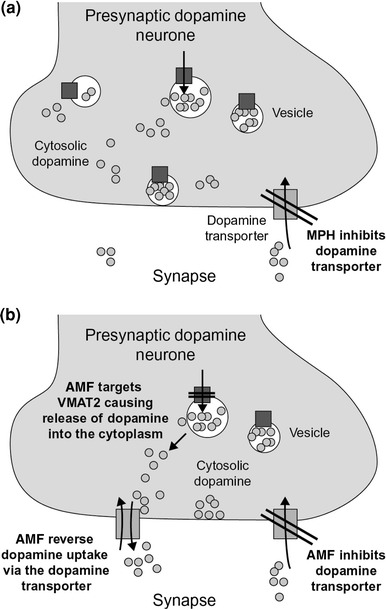
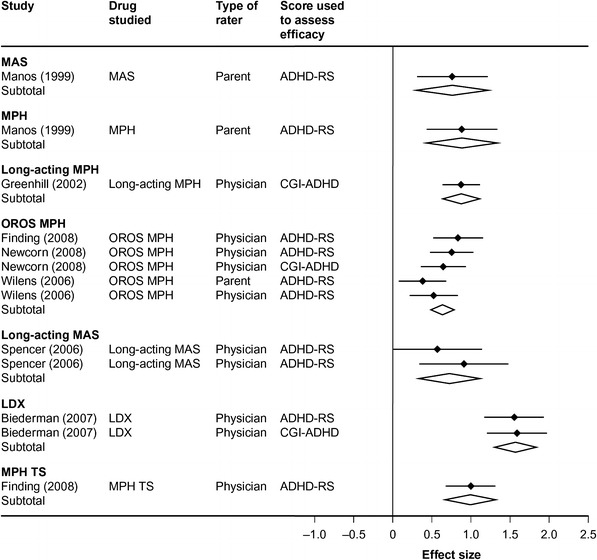
Verification
Claims the paper makes
The claims and statistics of this paper haven’t been checked yet.
Run the check — free, no account needed. It reads the open-access text and checks the sources it cites.
Claims other papers make about this one
Each is checked against this paper’s own text: does it say what the citing paper says it does?
In the citing paper
“In addition, several studies have demonstrated that, although the overall response to MPH and amfetamine is similar, the response to each varies among individual patients, and non-response to one class of psychostimulant does not predict non-response to a second [32].”
Self-check
Percentages, sums and reported differences re-computed from the paper’s own numbers.
The self-check needs the paper’s full text.
Citations
Cites
Diagnostic and Statistical Manual of Mental Disorders, Fourth Edition, Text Revision (DSM-IV-TR)
American Psychiatric Association (2000) · doi:10.1176/appi.books.9780890423349 · Cited by 11,069
Cohen, J. (1992) · Psychological Bulletin · doi:10.1037//0033-2909.112.1.155 · Cited by 8,771
The worldwide prevalence of ADHD: a systematic review and metaregression analysis
Polanczyk, G., de Lima, M. S., Horta, B. L., Biederman, J., & Rohde, L. A. (2007) · American Journal of Psychiatry · doi:10.1176/ajp.2007.164.6.942 · Cited by 5,346
Tamoxifen for early breast cancer: an overview of the randomised trials
Abe, O., Bartholomeus, S., & Piccart, M. J. (1998) · The Lancet · doi:10.1016/s0140-6736(97)11423-4 · Cited by 4,180
Scottish Intercollegiate Guidelines Network
Twaddle, S., & Qureshi, S. (2005) · Evidence-based Healthcare and Public Health · doi:10.1016/j.ehbc.2005.09.008 · Cited by 4,080
K-ras Mutations and Benefit from Cetuximab in Advanced Colorectal Cancer
Karapetis, C. S., Khambata-Ford, S., Jonker, D. J., O'Callaghan, C. J., Tu, D., Tebbutt, N. C., Simes, R. J., Chalchal, H., Shapiro, J. D., Robitaille, S., et al. (2008) · New England Journal of Medicine · doi:10.1056/nejmoa0804385 · Cited by 3,622
(1999) · Archives of General Psychiatry · doi:10.1001/archpsyc.56.12.1073 · Cited by 3,372
Subcommittee on Attention-Deficit/Hyperactivity Disorder, S. C. O. Q. I. A. M. (2011) · Pediatrics · doi:10.1542/peds.2011-2654 · Cited by 2,185
Focan, C., Steinberg, S. M., Blichert-Toft, M., Forbes, J., Collins, R. D., Anderson, S., Margreiter, R., Harwood, C. S., Andersen, K., Beighton, G., et al. (1998) · PubMed · Cited by 2,146
Pliszka, S. (2007) · Journal of the American Academy of Child & Adolescent Psychiatry · doi:10.1097/chi.0b013e318054e724 · Cited by 1,765
Mechanisms of neurotransmitter release by amphetamines: A review
Sulzer, D., Sonders, M. S., Poulsen, N. W., & Galli, A. (2005) · Progress in Neurobiology · doi:10.1016/j.pneurobio.2005.04.003 · Cited by 1,243
Subgroup analysis and other (mis)uses of baseline data in clinical trials
Assmann, S. F., Pocock, S. J., Enos, L. E., & Kasten, L. E. (2000) · The Lancet · doi:10.1016/s0140-6736(00)02039-0 · Cited by 1,167
Pocock, S. J., Assmann, S. E., Enos, L. E., & Kasten, L. E. (2002) · Statistics in Medicine · doi:10.1002/sim.1296 · Cited by 1,077
Howell, A. (1998) · PubMed · Cited by 901
Volkow, N. D., Wang, G.-J., Fowler, J. S., Gatley, S. J., Logan, J., Ding, Y.-S., Hitzemann, R., & Pappas, N. (1998) · American Journal of Psychiatry · doi:10.1176/ajp.155.10.1325 · Cited by 885
Empirically supported psychosocial treatments for attention deficit hyperactivity disorder
Pelham Jr, W. E., Wheeler, T., & Chronis, A. (1998) · Journal of Clinical Child Psychology · doi:10.1207/s15374424jccp2702_6 · Cited by 755
European clinical guidelines for hyperkinetic disorder ? first upgrade
Taylor, E., D�pfner, M., Sergeant, J., Asherson, P., Banaschewski, T., Buitelaar, J., Coghill, D., Danckaerts, M., Rothenberger, A., Sonuga-Barke, E., et al. (2004) · European Child & Adolescent Psychiatry · doi:10.1007/s00787-004-1002-x · Cited by 682
Self-citationMechanisms of Amphetamine Action Revealed in Mice Lacking the Dopamine Transporter
Jones, S. R., Gainetdinov, R. R., Wightman, R. M., & Caron, M. G. (1998) · Journal of Neuroscience · doi:10.1523/jneurosci.18-06-01979.1998 · Cited by 626
Kuczenski, R., & Segal, D. S. (1997) · Journal of Neurochemistry · doi:10.1046/j.1471-4159.1997.68052032.x · Cited by 623
The Challenge of Subgroup Analyses — Reporting without Distorting
Lagakos, S. W. (2006) · New England Journal of Medicine · doi:10.1056/nejmp068070 · Cited by 504
Comparing the efficacy of stimulants for ADHD in children and adolescents using meta-analysis
Faraone, S. V., & Buitelaar, J. (2010) · European Child & Adolescent Psychiatry · doi:10.1007/s00787-009-0054-3 · Cited by 485
PLISZKA, S. R., CRISMON, M. L., HUGHES, C. W., CORNERS, C. K., EMSLIE, G. J., JENSEN, P. S., McCRACKEN, J. T., SWANSON, J. M., & LOPEZ, M. (2006) · Journal of the American Academy of Child & Adolescent Psychiatry · doi:10.1097/01.chi.0000215326.51175.eb · Cited by 442
The Royal Australasian College of Physicians
Rosenheim, M. L. (1958) · The Medical Journal of Australia · doi:10.5694/j.1326-5377.1958.tb86419.x · Cited by 440
DIAMOND, A. (2005) · Development and Psychopathology · doi:10.1017/s0954579405050388 · Cited by 428
Molecular Genetics of Attention Deficit Hyperactivity Disorder
Faraone, S. V., & Mick, E. (2010) · Psychiatric Clinics of North America · doi:10.1016/j.psc.2009.12.004 · Cited by 411 · cited 1×
“The aetiology of ADHD is complex, with multiple genetic and non-genetic factors implicated [22, 41].”
BackgroundSmith, T. J., & Khatcheressian, J. L. (2005) · Cited by 401
Faraone, S. V., & Glatt, S. J. (2010) · The Journal of Clinical Psychiatry · doi:10.4088/jcp.08m04902pur · Cited by 387
Fundamentals of Attention-Deficit/Hyperactivity Disorder: Circuits and Pathways
Arnsten, A. F. T. (2006) · The Primary Care Companion to The Journal of Clinical Psychiatry · Cited by 378
Banaschewski, T., Coghill, D., Santosh, P., Zuddas, A., Asherson, P., Buitelaar, J., Danckaerts, M., Döpfner, M., Faraone, S. V., Rothenberger, A., et al. (2006) · European Child & Adolescent Psychiatry · doi:10.1007/s00787-006-0549-0 · Cited by 375
Self-citationEuropean guidelines on managing adverse effects of medication for ADHD
(for the European Guidelines Group), Graham, J., Banaschewski, T., Buitelaar, J., Coghill, D., Danckaerts, M., Dittmann, R. W., Döpfner, M., Hamilton, R., Hollis, C., et al. (2011) · European Child & Adolescent Psychiatry · doi:10.1007/s00787-010-0140-6 · Cited by 374
Self-citationMechanism of action of methylphenidate: Insights from PET imaging studies
Volkow, N. D., Fowler, J. S., Wang, G., Ding, Y., & Gatley, S. J. (2002) · Journal of Attention Disorders · doi:10.1177/070674370200601s05 · Cited by 353
Efron, D., Jarman, F. C., & Barker, M. J. (1997) · PEDIATRICS · doi:10.1542/peds.100.4.662 · Cited by 301
Methylphenidate and dextroamphetamine treatments of hyperactivity: Are there true nonresponders?
Elia, J., Borcherding, B. G., Rapoport, J. L., & Keysor, C. S. (1991) · Psychiatry Research · doi:10.1016/0165-1781(91)90126-a · Cited by 294
Amphetamine induces dopamine efflux through a dopamine transporter channel
Kahlig, K. M., Binda, F., Khoshbouei, H., Blakely, R., McMahon, D. G., Javitch, J. A., & Galli, A. (2005) · Proceedings of the National Academy of Sciences · doi:10.1073/pnas.0407737102 · Cited by 284
Brennan, A. R., & Arnsten, A. F. T. (2008) · Annals of the New York Academy of Sciences · doi:10.1196/annals.1417.007 · Cited by 267
Pelham, W. E., Carlson, C. L., Sams, S. E., Vallano, G., Dixon, M. J., & Hoza, B. (1993) · Journal of Consulting and Clinical Psychology · doi:10.1037/0022-006x.61.3.506 · Cited by 266
Pelham, W. E., Greenslade, K. E., Vodde‐Hamilton, M., Murphy, D. A., Greenstein, J. J., Gnagy, E. M., Guthrie, K. J., Hoover, M. D., & Dahl, R. E. (1990) · PEDIATRICS · doi:10.1542/peds.86.2.226 · Cited by 249
Analysis of randomized comparative clinical trial data for personalized treatment selections
Cai, T., Tian, L., Wong, P. H., & Wei, L. J. (2010) · Biostatistics · doi:10.1093/biostatistics/kxq060 · Cited by 238
Pelham, W. E., Gnagy, E. M., Greiner, A. R., Hoza, B., Hinshaw, S. P., Swanson, J. M., Simpson, S., Shapiro, C. J., Bukstein, O. G., Baron-Myak, C., et al. (2000) · Research on Child and Adolescent Psychopathology · doi:10.1023/a:1005127030251 · Cited by 237
ADHD and the Prefrontal Cortex
Arnsten, A. F. T. (2009) · The Journal of Pediatrics · doi:10.1016/j.jpeds.2009.01.018 · Cited by 220
Robertson, S. D., Matthies, H. J. G., & Galli, A. (2009) · Molecular Neurobiology · doi:10.1007/s12035-009-8053-4 · Cited by 206
Fundamentals of attention-deficit/hyperactivity disorder: circuits and pathways.
Arnsten, A. F. T. (2006) · PubMed · Cited by 203
Pelham, W. E., Aronoff, H. R., Midlam, J. K., Shapiro, C. J., Gnagy, E. M., Chronis, A. M., Onyango, A. N., Forehand, G. L., Nguyen, A. H., & Waxmonsky, J. G. (1999) · PEDIATRICS · doi:10.1542/peds.103.4.e43 · Cited by 198
Seixas, M., Weiss, M., & Müller, U. (2012) · Journal of Psychopharmacology · doi:10.1177/0269881111412095 · Cited by 197
The neurobiological basis of ADHD
Curatolo, P., D'Agati, E., & Moavero, R. (2010) · Italian Journal of Pediatrics · doi:10.1186/1824-7288-36-79 · Cited by 189
Solomon, S. D., Rice, M. M., Jablonski, K. A., Jose, P. O., DOMANSKI, M. J., Sabatine, M. S., Gersh, B. J., Rouleau, J. L., Pfeffer, M. A., & Braunwald, E. (2006) · Circulation · doi:10.1161/circulationaha.105.592733 · Cited by 188
Carlson, C. L., Pelham, W. E., Milich, R., & Dixon, J. (1992) · Journal of Abnormal Child Psychology · doi:10.1007/bf00916549 · Cited by 188
Graham, J., & Coghill, D. (2008) · CNS Drugs · doi:10.2165/00023210-200822030-00003 · Cited by 185
Self-citationPatterns of treatment effects in subsets of patients in clinical trials
Bonetti, M. (2004) · Biostatistics · doi:10.1093/biostatistics/kxh002 · Cited by 181
Remission versus response as the goal of therapy in ADHD: A new standard for the field?
Steele, M., Jensen, P. S., & Quinn, D. M. P. (2006) · Clinical Therapeutics · doi:10.1016/j.clinthera.2006.11.006 · Cited by 174
Dahabreh, I. J., Terasawa, T., Castaldi, P. J., & Trikalinos, T. A. (2011) · Annals of Internal Medicine · doi:10.7326/0003-4819-154-1-201101040-00006 · Cited by 174
Methyiphenidate vs. amphetamine: Comparative review
Arnold, L. E. (2000) · Journal of Attention Disorders · doi:10.1177/108705470000300403 · Cited by 164
Continuity of Methylphenidate Treatment for Attention-Deficit/Hyperactivity Disorder
Marcus, S. C., Wan, G. J., Kemner, J. E., & Olfson, M. (2005) · Archives of Pediatrics & Adolescent Medicine · doi:10.1001/archpedi.159.6.572 · Cited by 163
Patterns of treatment effects in subsets of patients in clinical trials
Bonetti, M. (2004) · Biostatistics · doi:10.1093/biostatistics/5.3.465 · Cited by 152
Advances in understanding and treating ADHD
Antshel, K. M., Hargrave, T. M., Simonescu, M., Kaul, P., Hendricks, K., & Faraone, S. V. (2011) · BMC Medicine · doi:10.1186/1741-7015-9-72 · Cited by 140
Pelham, W. E., Gnagy, E. M., Chronis, A. M., Burrows-MacLean, L., Fabiano, G. A., Onyango, A. N., Meichenbaum, D. L., Williams, A., Aronoff, H. R., & Steiner, R. L. (1999) · PEDIATRICS · doi:10.1542/peds.104.6.1300 · Cited by 138
PLISZKA, S. R., BROWNE, R. G., OLVERA, R. L., & WYNNE, S. K. (2000) · Journal of the American Academy of Child & Adolescent Psychiatry · doi:10.1097/00004583-200005000-00016 · Cited by 130
Castellanos, F. X., Elia, J., Kruesi, M. J. P., Marsh, W., Gulotta, C. S., Potter, W. Z., Ritchie, G. F., Hamburger, S. D., & Rapoport, J. L. (1996) · Neuropsychopharmacology · doi:10.1016/0893-133x(95)00077-q · Cited by 129
Evolution of the treatment of attention-deficit/hyperactivity disorder in children: A review
Findling, R. L. (2008) · Clinical Therapeutics · doi:10.1016/j.clinthera.2008.05.006 · Cited by 129
Section on Allergy and Immunology
(2011) · PEDIATRICS · doi:10.1542/peds.2011-2107b · Cited by 119
Pappadopulos, E., Jensen, P. S., Chait, A. R., Arnold, L. E., Swanson, J. M., Greenhill, L. L., Hechtman, L., Chuang, S., Wells, K. C., Pelham, W., et al. (2009) · Journal of the American Academy of Child & Adolescent Psychiatry · doi:10.1097/chi.0b013e31819c23ed · Cited by 112 · cited 3×
“Despite the carefully managed nature of the Multimodal Treatment Study of Children with ADHD (MTA), saliva assays for MPH revealed that approximately 25 % of 254 patients in the medication arms of the study were nonadherent on 50 % or more of repeated assays, and that barely half (54 %) were adherent at every assay po…”
BackgroundInfluentialSelf-citationthe 311 Study Group, Wigal, S. B., Kollins, S. H., Childress, A. C., & Squires, L. (2009) · Child and Adolescent Psychiatry and Mental Health · doi:10.1186/1753-2000-3-17 · Cited by 110
A Comprehensive In Vitro Screening of d-, l- , and dl-threo -Methylphenidate: An Exploratory Study
Markowitz, J. S., DeVane, C. L., Pestreich, L. K., Patrick, K. S., & Muniz, R. (2006) · Journal of Child and Adolescent Psychopharmacology · doi:10.1089/cap.2006.16.687 · Cited by 109
Faraone, S. V. (2009) · PubMed · Cited by 107
Heal, D. J., Smith, S. L., Kulkarni, R. S., & Rowley, H. L. (2008) · Pharmacology Biochemistry and Behavior · doi:10.1016/j.pbb.2008.03.016 · Cited by 105
Arnold, L. E. (1978) · Archives of General Psychiatry · doi:10.1001/archpsyc.1978.01770280073008 · Cited by 104
ADHD in Girls: Clinical Comparability of a Research Sample
Sharp, W. S., WALTER, J. M., Marsh, W., Ritchie, G. F., HAMBURGER, S. D., & Castellanos, F. X. (1999) · Journal of the American Academy of Child & Adolescent Psychiatry · doi:10.1097/00004583-199901000-00018 · Cited by 102
Easton, N., Steward, C., Marshall, F., Fone, K., & Marsden, C. (2007) · Neuropharmacology · doi:10.1016/j.neuropharm.2006.07.035 · Cited by 101
Assessment of Adherence Measures with Different Stimulants Among Children and Adolescents
Sanchez, R. J., Crismon, M. L., Barner, J. C., Bettinger, T., & Wilson, J. P. (2005) · Pharmacotherapy: The Journal of Human Pharmacology and Drug Therapy · doi:10.1592/phco.2005.25.7.909 · Cited by 101
Plasma levels of d-amphetamine in hyperactive children: Serial behavior and motor responses
Brown, G. L., Hunt, R. D., Ebert, M. H., Bunney, W. E., & Kopin, I. J. (1979) · Psychopharmacology · doi:10.1007/bf00427126 · Cited by 97
Efron, D., Jarman, F., & Barker, M. (1997) · PEDIATRICS · doi:10.1542/peds.100.6.e6 · Cited by 94
Progress and Promise of Attention-Deficit Hyperactivity Disorder Pharmacogenetics
Froehlich, T. E., McGough, J., & Stein, M. (2010) · CNS Drugs · doi:10.2165/11530290-000000000-00000 · Cited by 91
ADHD in Girls: Clinical Comparability of a Research Sample
Sharp, W. S., Walter, J. M., Marsh, W., Ritchie, G. F., Hamburger, S. D., & Castellanos, F. X. (2002) · Routledge eBooks · doi:10.4324/9780203449523-12 · Cited by 91
Wolraich, M. L., & Doffing, M. (2004) · CNS Drugs · doi:10.2165/00023210-200418040-00004 · Cited by 86
Christensen, L., Sasané, R., Hodgkins, P., Harley, C., & Tetali, S. (2010) · Current Medical Research and Opinion · doi:10.1185/03007991003673617 · Cited by 86
Self-citationStimulant drug treatment of hyperactivity: Biochemical correlates
Elia, J., Borcherding, B. G., Potter, W. Z., Mefford, I. N., Rapoport, J. L., & Keysor, C. S. (1990) · Clinical Pharmacology & Therapeutics · doi:10.1038/clpt.1990.118 · Cited by 83
Pharmacokinetics of methylphenidate in hyperkinetic children.
Hungund, B. L., Perel, J. M., Hurwic, M. J., Sverd, J., & Winsberg, B. G. (1979) · British Journal of Clinical Pharmacology · doi:10.1111/j.1365-2125.1979.tb01046.x · Cited by 77
Elia, J., Welsh, P. A., Gulotta, C. S., & RAPOPORT, J. L. (1993) · Journal of Child Psychology and Psychiatry · doi:10.1111/j.1469-7610.1993.tb01071.x · Cited by 71
Dextroamphetamine and Methylphenidate in the Treatment of Hyperactive/Aggressive Children
Winsberg, B. G., Press, M., Bialer, I., & Kupietz, S. S. (1974) · PEDIATRICS · doi:10.1542/peds.53.2.236 · Cited by 65
Attention-Deficit Hyperactivity Disorder
MAY, D. E., & Kratochvil, C. J. (2009) · Drugs · doi:10.2165/11530540-000000000-00000 · Cited by 62
The Pharmacogenomic Era: Promise for Personalizing Attention Deficit Hyperactivity Disorder Therapy
Stein, M. A., & McGough, J. J. (2008) · Child and Adolescent Psychiatric Clinics of North America · doi:10.1016/j.chc.2007.11.009 · Cited by 56
ADHD: Current and Future Therapeutics
Heal, D. J., Smith, S. L., & Findling, R. L. (2011) · Current topics in behavioral neurosciences · doi:10.1007/7854_2011_125 · Cited by 55
WILSON, H., Cox, D. J., Merkel, R. L., Moore, M. E., & Coghill, D. (2006) · Archives of Clinical Neuropsychology · doi:10.1016/j.acn.2006.06.016 · Cited by 55
Self-citationRamos-Quiroga, J. A., Bosch, R., Castells, X., Valero, S., Nogueira, M., Gómez, N., Yelmo, S., Ferrer, M., Martínez, Y., & Casas, M. (2008) · CNS Drugs · doi:10.2165/00023210-200822070-00005 · Cited by 54
Mühlbacher, A. C., Rudolph, I., Lincke, H.-J., & Nübling, M. (2009) · BMC Health Services Research · doi:10.1186/1472-6963-9-149 · Cited by 52
Borcherding, B. G. (1989) · Neuropsychopharmacology · doi:10.1016/0893-133x(89)90029-8 · Cited by 48
Bellgrove, M. A., Barry, E., Johnson, K. A., Cox, M., Dáibhis, A., Daly, M., Hawi, Z., Lambert, D., Fitzgerald, M., McNicholas, F., et al. (2007) · Neuropsychopharmacology · doi:10.1038/sj.npp.1301637 · Cited by 48
Hermens, D. F., Cooper, N. J., Kohn, M. R., Clarke, S. P., Gordon, E., & Williams, L. M. (2005) · Journal of Integrative Neuroscience · doi:10.1142/s0219635205000653 · Cited by 48
Goodman, D. W. (2010) · PubMed Central · Cited by 36
Multimodal Treatments versus Pharmacotherapy Alone in Children with Psychiatric Disorders
Reeves, G. M., & Anthony, B. J. (2009) · Pediatric Drugs · doi:10.2165/00148581-200911030-00002 · Cited by 35
Faraone, S. V. (2010) · Journal of Attention Disorders · doi:10.1177/1087054710379738 · Cited by 32
Fegert, J. M., Slawik, L., Wermelskirchen, D., Nübling, M., & Mühlbacher, A. C. (2011) · Expert Review of Pharmacoeconomics & Outcomes Research · doi:10.1586/erp.11.22 · Cited by 29
Misleading subgroup analyses in GISSI
Peto, R. (1990) · The American Journal of Cardiology · doi:10.1016/0002-9149(90)91149-z · Cited by 23
The role of pharmacotherapy and managed care pharmacy interventions in the treatment of ADHD.
Dopheide, J. A. (2009) · PubMed · Cited by 21
Lloyd, A. J., Hodgkins, P., Dewilde, S., Sasané, R., Falconer, S., & Barke, E. S. (2011) · International Journal of Technology Assessment in Health Care · doi:10.1017/s0266462311000249 · Cited by 19
Self-citationLisdexamfetamine dimesylate: a new option in stimulant treatment for ADHD
Dew, R. E., & Kollins, S. H. (2010) · Expert Opinion on Pharmacotherapy · doi:10.1517/14656566.2010.531009 · Cited by 14
Attention deficit/hyperactivity disorder: pharmacotherapy.
Elia, J. (2005) · PubMed Central · Cited by 9
Tian, L., Cai, T., & Wei, L. (2008) · Biometrics · doi:10.1111/j.1541-0420.2008.01125.x · Cited by 9
Stratifying Subjects for Treatment Selection with Censored Event Time Data from a Comparative Study
Zhao, L., Cai, T., Tian, L., Uno, H., Solomon, S. D., & Wei, L. J. (2010) · Collection of Biostatistics Research Archive · Cited by 7
Clinical Practice Guideline for Patients with Attention Deficit/Hyperactivity Disorder
Carlton, T. G., Donachie, N., Frampton, K. K., Henschen, G., Kumar, P. E., Parrot, L. A., Smith, C. A., Tamil, F. A., Valenti, A. M., & Waxenberg, F. (2014) · Cited by 2
Research works printed but not linked: 1
- McDonagh M, Peterson K, Dana T, Thakurta S (2007) Drug Class Review on Pharamcologic Treatments for ADHD. http://www.ncbi.nlm.nih.gov/books/bookres.fcgi/adhd/pdfadhd.pdf . Accessed 27 September 2011. Oregon Health and Science University, Portland, Oregon
Cited by
Sorted by citations
A Review of Heterogeneity in Attention Deficit/Hyperactivity Disorder (ADHD)
Luo, Y., Weibman, D., Halperin, J. M., & Li, X. (2019) · Frontiers in Human Neuroscience · doi:10.3389/fnhum.2019.00042 · Cited by 394
Associations of sleep disturbance with ADHD: implications for treatment
Hvolby, A. (2015) · ADHD Attention Deficit and Hyperactivity Disorders · doi:10.1007/s12402-014-0151-0 · Cited by 339
Evidence-based pharmacological treatment options for ADHD in children and adolescents
Mechler, K., Banaschewski, T., Hohmann, S., & Häge, A. (2022) · Pharmacology & Therapeutics · doi:10.1016/j.pharmthera.2021.107940 · Cited by 293
Sikirica, V., Lü, M., Greven, P., Zhong, Y., Qin, P., Xie, J., & Gajria, K. (2014) · Neuropsychiatric Disease and Treatment · doi:10.2147/ndt.s65721 · Cited by 229
Setnik, B., McDonnell, M., Mills, C., Scart‐Grès, C., Robert, P., Dayno, J. M., & Schwartz, J.-C. (2019) · SLEEP · doi:10.1093/sleep/zsz252 · Cited by 189
Metadata
- Authors
- Hodgkins, P., Shaw, M., Coghill, D., & Hechtman, L.
- Affiliations
- Norgine (United Kingdom) (GB)
- University of Dundee (GB)
- Montreal Children's Hospital (CA)
- Corresponding author
- Hodgkins, Paul
- Venue
- European Child & Adolescent Psychiatry
- Published
- 2012-07-05
- Volume
- 21
- Issue
- 9
- Pages
- 477-492
- ISSN
- 1018-8827 (ISSN-L)
- 1435-165X
- PMC
- PMC3432777
- OpenAlex
- W2117621614
- Cited by
- 147
- References
- 101
- Citations by year
- 2026: 9 · 2025: 6 · 2024: 15 · 2023: 14 · 2022: 16 · 2021: 9 · 2020: 14 · 2019: 11 · 2018: 5 · 2017: 10 · 2016: 9 · 2015: 5 · 2014: 18 · 2013: 6
- FWCI
- 1.25
- Type
- journal article
- Language
- en
- Open access
- hybrid
- doi.org
- Licence
- cc-by
- Locations
- European Child & Adolescent Psychiatry (publishedVersion, cc-by)
- Europe PMC (PubMed Central) (publishedVersion, cc-by)
- PubMed Central (publishedVersion, cc-by)
- PubMed (publishedVersion)
- Discovery Research Portal (University of Dundee) (publishedVersion)
- Minerva Access (University of Melbourne) (submittedVersion, cc-by)
- Topics
- Health Sciences › Medicine › Psychiatry and Mental health › Attention Deficit Hyperactivity Disorder
- Social Sciences › Psychology › Developmental and Educational Psychology › Behavioral and Psychological Studies
- Health Sciences › Medicine › Pediatrics, Perinatology and Child Health › Pharmaceutical studies and practices
- Keywords
- attention deficit hyperactivity disorder, amphetamine, methylphenidate, stimulant medication, children and adolescents, treatment efficacy, drug safety, medication adherence, non-pharmacological treatment, personalized treatment
- MeSH terms
- Amphetamine, Central Nervous System Stimulants, Attention Deficit Disorder with Hyperactivity, Child, Humans, Methylphenidate, Treatment Outcome
About these checks
Registry, retraction, Cites and statistics results are computed, not judged, with one exception: a printed reference that no index lists is read once by a model before it counts as a citation error. Claims are extracted by a model and kept only when their quote appears verbatim in the text; each cited source is then checked, with a model’s help, for whether it says what the claim relies on. Those verdicts can be wrong — read the claim’s quote and the cited source before relying on one.
Statistics and arithmetic are recomputed, not judged.
Confidence bands are shown only for fields calibrated on our annotated test set. None is calibrated yet, so no band is shown.
What counts as a claim ›How we measure confidence ›How we check this ›
Are you an author, or do you see a problem with this page? Request a review
