

Understanding heterogeneity of responses to, and optimizing clinical efficacy of, exercise training in older adults: NIH NIA Workshop summary
Open accessThe DOI matches its Crossref record; 133 of the 133 references it cites were found in a registry or an index.
Abstract
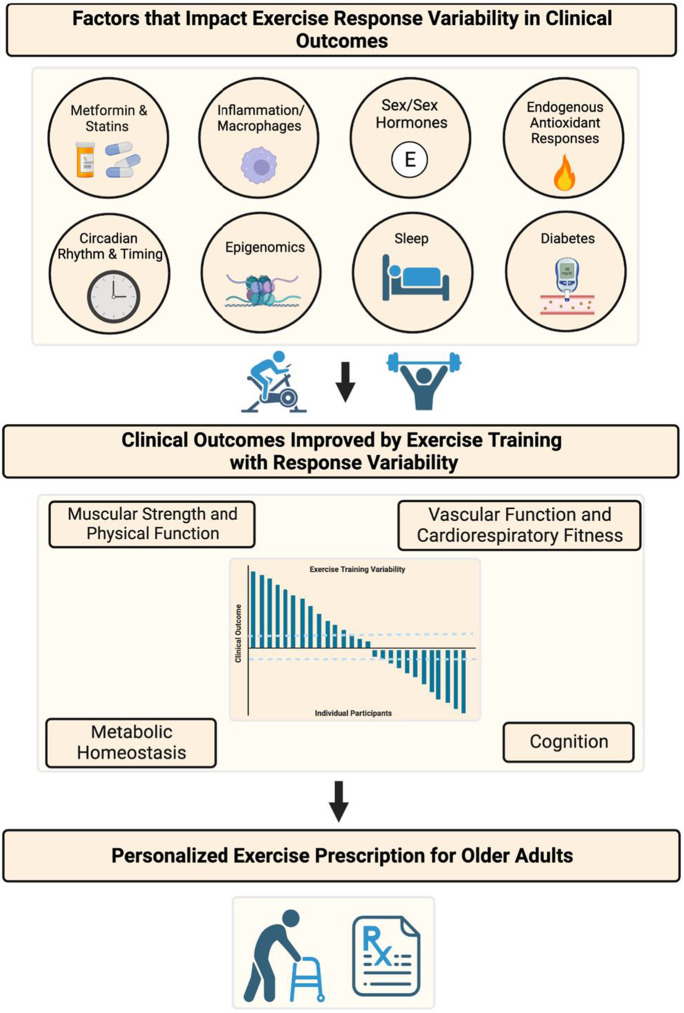
Exercise is a cornerstone of preventive medicine and a promising strategy to intervene on the biology of aging. Variation in the response to exercise is a widely accepted concept that dates back to the 1980s with classic genetic studies identifying sequence variations as modifiers of the VO 2 max response to training. Since that time, the literature of exercise response variance has been populated with retrospective analyses of existing datasets that are limited by a lack of statistical power from technical error of the measurements and small sample sizes, as well as diffuse outcomes, very few of which have included older adults. Prospective studies that are appropriately designed to interrogate exercise response variation in key outcomes identified a priori and inclusive of individuals over the age of 70 are long overdue. Understanding the underlying intrinsic (e.g., genetics and epigenetics) and extrinsic (e.g., medication use, diet, chronic disease) factors that determine robust versus poor responses to various exercise factors will be used to improve exercise prescription to target the pillars of aging and optimize the clinical efficacy of exercise training in older adults. This review summarizes the proceedings of the NIA-sponsored workshop entitled, “Understanding Heterogeneity of Responses to, and Optimizing Clinical Efficacy of, Exercise Training in Older Adults” and highlights the importance and current state of exercise response variation research, particularly in older adults, prevailing challenges, and future directions.
Overview
The claims and statistics of this paper haven’t been checked yet.
Free: it reads the open-access text and checks the first 5 claims that cite a source we can check. Create a free account to check every claim.
Integrity signals
Registry
Cites
Statistics
Figures
Verification
Claims the paper makes
The claims and statistics of this paper haven’t been checked yet.
Free: it reads the open-access text and checks the first 5 claims that cite a source we can check. Create a free account to check every claim.
Claims other papers make about this one
Each is checked against this paper’s own text: does it say what the citing paper says it does?
The source backs part of the claim, not all of it — or backs it for a different population, condition or comparison.
In the citing paper
“Physiological adaptations to chronic exercise have been shown to enhance several age-related health outcomes, demonstrating a positive impact of exercise on the fundamental biology of aging [598,599].”
From Global consensus on optimal exercise recommendations for enhancing healthy longevity in older adults (ICFSR) (2025) · cites this paper as [598]
Experimental — accuracy not yet measuredIn the citing paper
“Physiological adaptations to chronic exercise have been shown to enhance several age-related health outcomes, demonstrating a positive impact of exercise on the fundamental biology of aging [598,599].”
From Global consensus on optimal exercise recommendations for enhancing healthy longevity in older adults (ICFSR) (2025) · cites this paper as [598]
Self-check
Percentages, sums and reported differences re-computed from the paper’s own numbers.
The self-check needs the paper’s full text.
Citations
Cites
Heart disease and stroke statistics-2018 update: a report from the american heart association
Benjamin, E. J., Virani, S. S., Callaway, C. W., Chamberlain, A. M., Chang, A. R., Cheng, S., Chiuve, S. E., Cushman, M., Delling, F. N., Deo, R., et al. (2018) · Circulation · doi:10.1161/cir.0000000000000558 · Cited by 7,146 · cited 7×
“Advancing age is the greatest risk factor for CVD [49].”
BackgroundInfluentialGeroscience: Linking Aging to Chronic Disease
Kennedy, B. K., Berger, S. L., Brunet, A., Campisi, J., Cuervo, A. M., Epel, E. S., Franceschi, C., Lithgow, G. J., Morimoto, R. I., Pessin, J. E., et al. (2014) · Cell · doi:10.1016/j.cell.2014.10.039 · Cited by 2,764
2020 Alzheimer's disease facts and figures
(2020) · Alzheimer's & Dementia · doi:10.1002/alz.12068 · Cited by 2,353
OWEN, M. R., DORAN, E., & HALESTRAP, A. P. (2000) · Biochemical Journal · doi:10.1042/bj3480607 · Cited by 2,157
Sutton, E. F., Beyl, R., Early, K. S., Cefalu, W. T., Ravussin, E., & Peterson, C. M. (2018) · Cell Metabolism · doi:10.1016/j.cmet.2018.04.010 · Cited by 1,531 · cited 1×
“Front-loading calories to earlier in the day has been shown to improve weight loss and indices of cardiometabolic health, including insulin sensitivity [81, 82].”
BackgroundSelf-citationPahor, M., Guralnik, J. M., Ambrosius, W. T., Blair, S., Bonds, D. E., Church, T. S., Espeland, M. A., Fielding, R. A., Gill, T. M., Groessl, E. J., et al. (2014) · JAMA · doi:10.1001/jama.2014.5616 · Cited by 1,427
El-Mir, M.-Y., Nogueira, V., Fontaine, E., Avéret, N., Rigoulet, M., & Leverve, X. (2000) · Journal of Biological Chemistry · doi:10.1074/jbc.275.1.223 · Cited by 1,399
Ageing, fitness and neurocognitive function
Kramer, A. F., Hahn, S., Cohen, N. J., Banich, M. T., McAuley, E., Harrison, C. R., Chason, J., Vakil, E., Bardell, L., Boileau, R. A., et al. (1999) · Nature · doi:10.1038/22682 · Cited by 1,394
KANALEY, J. A., COLBERG, S. R., CORCORAN, M. H., MALIN, S. K., RODRIGUEZ, N. R., CRESPO, C. J., KIRWAN, J. P., & ZIERATH, J. R. (2022) · Medicine & Science in Sports & Exercise · doi:10.1249/mss.0000000000002800 · Cited by 931 · cited 1×
“Exercise is a well-accepted strategy to improve glycemic control in people with T2D [64].”
BackgroundSelf-citationExercise alters gut microbiota composition and function in lean and obese humans
ALLEN, J. M., MAILING, L. J., NIEMIRO, G. M., MOORE, R., COOK, M. D., WHITE, B. A., HOLSCHER, H. D., & WOODS, J. A. (2018) · Medicine & Science in Sports & Exercise · doi:10.1249/mss.0000000000001495 · Cited by 820 · cited 1×
“Meanwhile, other studies have shown that obese individuals exhibit blunted shifts in fecal SCFA compared to their lean counterparts in response to a 6-week aerobic exercise training intervention [96].”
Self-citationEffects of Resistance Training on Older Adults
Hunter, G. R., McCarthy, J. P., & Bamman, M. M. (2004) · Sports Medicine · doi:10.2165/00007256-200434050-00005 · Cited by 764 · cited 1×
“For example, progressive resistance training (PRT) increases muscle mass, fiber size, and strength [21, 22].”
BackgroundAn experimental design for the development of adaptive treatment strategies
Murphy, S. A. (2005) · Statistics in Medicine · doi:10.1002/sim.2022 · Cited by 746
Anti-inflammatory effects of metformin irrespective of diabetes status
Cameron, A. R., Morrison, V. L., Levin, D., Mohan, M., Forteath, C., Beall, C., McNeilly, A. D., Balfour, D. J. K., Savinko, T., Wong, A. K. F., et al. (2016) · Circulation Research · doi:10.1161/circresaha.116.308445 · Cited by 704 · cited 1×
“Metformin alters the cellular environment by promoting the anti-inflammatory actions of macrophages [29, 30], as well as inhibits the activity of parts of the electron transport system [31–33].”
BackgroundCircadian regulation of glucose, lipid, and energy metabolism in humans
Poggiogalle, E., Jamshed, H., & Peterson, C. M. (2018) · Metabolism · doi:10.1016/j.metabol.2017.11.017 · Cited by 682
Self-citationGut microbiome pattern reflects healthy ageing and predicts survival in humans
Wilmanski, T., Diener, C., Rappaport, N., Patwardhan, S., Wiedrick, J., Lapidus, J., Earls, J. C., Zimmer, A., Glusman, G., Robinson, M., et al. (2021) · Nature Metabolism · doi:10.1038/s42255-021-00348-0 · Cited by 675
Barton, W., Penney, N. C., Cronin, O., Garcia-Perez, I., Molloy, M. G., Holmes, E., Shanahan, F., Cotter, P. D., & O'Sullivan, O. (2018) · Gut · doi:10.1136/gutjnl-2016-313627 · Cited by 647
Jakubowicz, D., Barnea, M., Wainstein, J., & Froy, O. (2013) · Obesity · doi:10.1002/oby.20460 · Cited by 593
Zarrinpar, A., Chaix, A., Xu, Z. Z., Chang, M. W., Marotz, C. A., Saghatelian, A., Knight, R., & Panda, S. (2018) · Nature Communications · doi:10.1038/s41467-018-05336-9 · Cited by 546
Youngstedt, S. D. (2005) · Clinics in Sports Medicine · doi:10.1016/j.csm.2004.12.003 · Cited by 540 · cited 1×
“This may include, but is not limited to, how structured exercise impacts physical activity and sedentary behavior outside of interventions, the timing of meals and exercise, as well as duration and quality of sleep [15].”
BackgroundSelf-citationEstaki, M., Pither, J., Baumeister, P., Little, J. P., Gill, S. K., Ghosh, S., Ahmadi-Vand, Z., Marsden, K. R., & Gibson, D. L. (2016) · Microbiome · doi:10.1186/s40168-016-0189-7 · Cited by 476
Redman, L. M., Smith, S. R., Burton, J. H., Martin, C. K., Il'yasova, D., & Ravussin, E. (2018) · Cell Metabolism · doi:10.1016/j.cmet.2018.02.019 · Cited by 472 · cited 1×
“The Comprehensive Assessment of Long-Term Effects of Reducing Intake of Energy (CALERIE) Study showed that ~ 15% caloric restriction, without malnutrition, slows metabolic rate in non-obese adults and improves several aging-related outcomes [74].”
BackgroundFlory, J., & Lipska, K. (2019) · JAMA · doi:10.1001/jama.2019.3805 · Cited by 453
SCFAs strongly stimulate PYY production in human enteroendocrine cells
Larraufie, P., Martin-Gallausiaux, C., Lapaque, N., Dore, J., Gribble, F. M., Reimann, F., & Blottiere, H. M. (2018) · Scientific Reports · doi:10.1038/s41598-017-18259-0 · Cited by 450
Gut Microbiome Fermentation Determines the Efficacy of Exercise for Diabetes Prevention
Liu, Y., Wang, Y., Ni, Y., Cheung, C. K. Y., Lam, K. S. L., Wang, Y., Xia, Z., Ye, D., Guo, J., Tse, M. A., et al. (2020) · Cell Metabolism · doi:10.1016/j.cmet.2019.11.001 · Cited by 405 · cited 3×
“This degree of shift in microbiota-derived metabolites may have a significant impact on metabolic health outcomes, highlighted by recent work indicating that exercise-induced increases in SCFAs have been mechanistically linked to improvements in insulin sensitivity in pre-diabetic subjects [100].”
BackgroundCircadian alignment of early onset caloric restriction promotes longevity in male C57BL/6J mice
Acosta-Rodríguez, V., Rijo-Ferreira, F., Izumo, M., Xu, P., Wight-Carter, M., Green, C. B., & Takahashi, J. S. (2022) · Science · doi:10.1126/science.abk0297 · Cited by 390
Diet and Inflammation in Cognitive Ageing and Alzheimer’s Disease
McGrattan, A. M., McGuinness, B., McKinley, M. C., Kee, F., Passmore, P., Woodside, J. V., & McEvoy, C. T. (2019) · Current Nutrition Reports · doi:10.1007/s13668-019-0271-4 · Cited by 385
Short-chain fatty acids act as antiinflammatory mediatorsby regulating prostaglandin E2 and cytokines
Cox, M. A., Jackson, J., Stanton, M., Rojas-Triana, A., Bober, L., Laverty, M., Yang, X., Zhu, F., Liu, J., Wang, S., et al. (2009) · World Journal of Gastroenterology · doi:10.3748/wjg.15.5549 · Cited by 377
Salami, J. A., Warraich, H., Valero-Elizondo, J., Spatz, E. S., Desai, N. R., Rana, J. S., Virani, S. S., Blankstein, R., Khera, A., Blaha, M. J., et al. (2017) · JAMA Cardiology · doi:10.1001/jamacardio.2016.4700 · Cited by 370
The Gut Microbiota and Unhealthy Aging: Disentangling Cause from Consequence
DeJong, E. N., Surette, M. G., & Bowdish, D. M. E. (2020) · Cell Host & Microbe · doi:10.1016/j.chom.2020.07.013 · Cited by 370
Xu, W., Tan, C.-C., Zou, J.-J., Cao, X.-P., & Tan, L. (2020) · Journal of Neurology, Neurosurgery & Psychiatry · doi:10.1136/jnnp-2019-321896 · Cited by 330
Using network science to evaluate exercise-associated brain changes in older adults.
Burdette (2010) · Frontiers in Aging Neuroscience · doi:10.3389/fnagi.2010.00023 · Cited by 320 · cited 1×
“Exercise-induced improvements in cognition may be related to improved connectivity within the default mode network (DMN) [108], a process that has been evidenced to weaken with age [109].”
BackgroundImpact of sleep on the risk of cognitive decline and dementia
Spira, A. P., Chen-Edinboro, L. P., Wu, M. N., & Yaffe, K. (2014) · Current Opinion in Psychiatry · doi:10.1097/yco.0000000000000106 · Cited by 308
Sanford, J. A., Nogiec, C. D., Lindholm, M. E., Adkins, J. N., Amar, D., Dasari, S., Drugan, J. K., Fernández, F. M., Radom-Aizik, S., Schenk, S., et al. (2020) · Cell · doi:10.1016/j.cell.2020.06.004 · Cited by 308
Self-citationDaily Fasting Improves Health and Survival in Male Mice Independent of Diet Composition and Calories
Mitchell, S. J., Bernier, M., Mattison, J. A., Aon, M. A., Kaiser, T. A., Anson, R. M., Ikeno, Y., Anderson, R. M., Ingram, D. K., & de Cabo, R. (2019) · Cell Metabolism · doi:10.1016/j.cmet.2018.08.011 · Cited by 306
True and false interindividual differences in the physiological response to an intervention
Atkinson, G., & Batterham, A. M. (2015) · Experimental Physiology · doi:10.1113/ep085070 · Cited by 300
Time of exercise specifies the impact on muscle metabolic pathways and systemic energy homeostasis
Sato, S., Basse, A. L., Schönke, M., Chen, S., Samad, M., Altıntaş, A., Laker, R. C., Dalbram, E., Barrès, R., Baldi, P., et al. (2019) · Cell Metabolism · doi:10.1016/j.cmet.2019.03.013 · Cited by 298
Self-citationIndividual response to exercise training - a statistical perspective
Hecksteden, A., Kraushaar, J., Scharhag-Rosenberger, F., Theisen, D., Senn, S., & Meyer, T. (2015) · Journal of Applied Physiology · doi:10.1152/japplphysiol.00714.2014 · Cited by 289 · cited 1×
“In the past, researchers have used different approaches for interpreting meaningful biological signals against experimental error, and this has led to inconsistences in the interpretation of biological trainability [16, 18, 19].”
BackgroundSavikj, M., Gabriel, B. M., Alm, P. S., Smith, J., Caidahl, K., Björnholm, M., Fritz, T., Krook, A., Zierath, J. R., & Wallberg-Henriksson, H. (2019) · Diabetologia · doi:10.1007/s00125-018-4767-z · Cited by 277 · cited 1×
“A controlled exercise study in men found that the same regimen of high intensity interval training was more efficacious for controlling free-living postprandial glucose when performed in the afternoon, compared to the morning [72].”
BackgroundSelf-citationPrecision exercise medicine: understanding exercise response variability
Ross, R., Goodpaster, B. H., Koch, L. G., Sarzynski, M. A., Kohrt, W. M., Johannsen, N. M., Skinner, J. S., Castro, A., Irving, B. A., Noland, R. C., et al. (2019) · British Journal of Sports Medicine · doi:10.1136/bjsports-2018-100328 · Cited by 276
Self-citationSimvastatin Impairs Exercise Training Adaptations
Mikus, C. R., Boyle, L. J., Borengasser, S. J., Oberlin, D. J., Naples, S. P., Fletcher, J., Meers, G. M., Ruebel, M., Laughlin, M. H., Dellsperger, K. C., et al. (2013) · Journal of the American College of Cardiology · doi:10.1016/j.jacc.2013.02.074 · Cited by 243
Self-citationMossad, O., Batut, B., Yilmaz, B., Dokalis, N., Mezö, C., Nent, E., Nabavi, L. S., Mayer, M., Maron, F. J. M., Buescher, J. M., et al. (2022) · Nature Neuroscience · doi:10.1038/s41593-022-01027-3 · Cited by 241
Aerobic exercise training and vascular function with ageing in healthy men and women
Seals, D. R., Nagy, E. E., & Moreau, K. L. (2019) · The Journal of Physiology · doi:10.1113/jp277764 · Cited by 230
Self-citationA Design for Testing Clinical Strategies: Biased Adaptive Within-Subject Randomization
Lavori, P. W., & Dawson, R. (2000) · Journal of the Royal Statistical Society Series A: Statistics in Society · doi:10.1111/1467-985x.00154 · Cited by 228
Dynamic treatment regimes: practical design considerations
Lavori, P. W., & Dawson, R. (2004) · Clinical Trials · doi:10.1191/1740774504cn002oa · Cited by 228
The Central Role of the Gut Microbiota in Chronic Inflammatory Diseases
Ferreira, C. M., Vieira, A. T., Vinolo, M. A. R., Oliveira, F. A., Curi, R., & Martins, F. D. S. (2014) · Journal of Immunology Research · doi:10.1155/2014/689492 · Cited by 223
Kokkinos, P. F., Faselis, C., Myers, J., Panagiotakos, D., & Doumas, M. (2013) · The Lancet · doi:10.1016/s0140-6736(12)61426-3 · Cited by 217
Taaffe, D. R., Pruitt, L., Pyka, G., Guido, D., & Marcus, R. (1996) · Clinical Physiology · doi:10.1111/j.1475-097x.1996.tb00727.x · Cited by 215
Gadie, A., Shafto, M., Leng, Y., & Kievit, R. A. (2017) · BMJ Open · doi:10.1136/bmjopen-2016-014920 · Cited by 214
Moreau, K. L., Stauffer, B. L., Kohrt, W. M., & Seals, D. R. (2013) · The Journal of Clinical Endocrinology & Metabolism · doi:10.1210/jc.2013-2183 · Cited by 213
Self-citationWalton, R. G., Dungan, C. M., Long, D. E., Tuggle, S. C., Kosmac, K., Peck, B. D., Bush, H. M., Villasante Tezanos, A. G., McGwin, G., Windham, S. T., et al. (2019) · Aging Cell · doi:10.1111/acel.13039 · Cited by 210
Self-citationShould people at low risk of cardiovascular disease take a statin?
Abramson, J. D., Rosenberg, H. G., Jewell, N., & Wright, J. M. (2013) · BMJ · doi:10.1136/bmj.f6123 · Cited by 208
Cognitive impairment in the U.S.: Lifetime risk, age at onset, and years impaired
Hale, J. M., Schneider, D. C., Mehta, N. K., & Myrskylä, M. (2020) · SSM - Population Health · doi:10.1016/j.ssmph.2020.100577 · Cited by 206
Bana, B., & Cabreiro, F. (2019) · Annual Review of Genetics · doi:10.1146/annurev-genet-112618-043650 · Cited by 203
Insulin Resistance in Adolescents with Type 2 Diabetes Is Associated with Impaired Exercise Capacity
Nadeau, K. J., Zeitler, P. S., Bauer, T. A., Brown, M. S., Dorosz, J. L., Draznin, B., Reusch, J. E. B., & Regensteiner, J. G. (2009) · The Journal of Clinical Endocrinology & Metabolism · doi:10.1210/jc.2008-2844 · Cited by 196
Self-citationGut Microbiota, Leaky Gut, and Autoimmune Diseases
Christovich, A., & Luo, X. M. (2022) · Frontiers in Immunology · doi:10.3389/fimmu.2022.946248 · Cited by 189
Rakesh, D., & Whittle, S. (2021) · Neuroscience & Biobehavioral Reviews · doi:10.1016/j.neubiorev.2021.08.027 · Cited by 184
Early-life adversity and neurological disease: age-old questions and novel answers
Short, A. K., & Baram, T. Z. (2019) · Nature Reviews Neurology · doi:10.1038/s41582-019-0246-5 · Cited by 183
Sensitivity of maximal aerobic power to training is genotype-dependent
PRUD?? HOMME, D., BOUCHARD, C., LEBLANC, C., LANDRY, F., & FONTAINE, E. (1984) · Medicine & Science in Sports & Exercise · doi:10.1249/00005768-198410000-00012 · Cited by 180
Cognitive Aging and the Promise of Physical Activity
Erickson, K. I., Donofry, S. D., Sewell, K. R., Brown, B. M., & Stillman, C. M. (2022) · Annual Review of Clinical Psychology · doi:10.1146/annurev-clinpsy-072720-014213 · Cited by 178
Self-citationIndividual responses made easy
Hopkins, W. G. (2015) · Journal of Applied Physiology · doi:10.1152/japplphysiol.00098.2015 · Cited by 169
Patterns of functional connectivity in an aging population: The Rotterdam Study
Zonneveld, H. I., Pruim, R. H., Bos, D., Vrooman, H. A., Muetzel, R. L., Hofman, A., Rombouts, S. A., van der Lugt, A., Niessen, W. J., Ikram, M. A., et al. (2019) · NeuroImage · doi:10.1016/j.neuroimage.2019.01.041 · Cited by 162
Exercise training response heterogeneity: physiological and molecular insights.
Sparks, L. M. (2017) · Diabetologia · doi:10.1007/s00125-017-4461-6 · Cited by 160
Self-citationToward exercise as personalized medicine.
Buford, T. W., Roberts, M. D., & Church, T. S. (2013) · Sports Medicine · doi:10.1007/s40279-013-0018-0 · Cited by 158
Self-citationEffects of exercise training on oxygen uptake kinetic responses in women with type 2 diabetes.
Brandenburg, S. L., Reusch, J. E., Bauer, T. A., Jeffers, B. W., Hiatt, W. R., & Regensteiner, J. G. (1999) · Diabetes Care · doi:10.2337/diacare.22.10.1640 · Cited by 147
Self-citationResponses of Maximal Aerobic Power and Capacity to Aerobic Training
Lortie, G., Simoneau, J., Hamel, P., Boulay, M., Landry, F., & Bouchard, C. (1984) · International Journal of Sports Medicine · doi:10.1055/s-2008-1025911 · Cited by 141
The CATIE Schizophrenia Trial: Results, Impact, Controversy
Manschreck, T. C., & Boshes, R. A. (2007) · Harvard Review of Psychiatry · doi:10.1080/10673220701679838 · Cited by 138
Erickson, K. I., Banducci, S. E., Weinstein, A. M., MacDonald, A. W., Ferrell, R. E., Halder, I., Flory, J. D., & Manuck, S. B. (2013) · Psychological Science · doi:10.1177/0956797613480367 · Cited by 134
Self-citationHodes, R. J., Sierra, F., Austad, S. N., Epel, E., Neigh, G. N., Erlandson, K. M., Schafer, M. J., LeBrasseur, N. K., Wiley, C., Campisi, J., et al. (2016) · Annals of the New York Academy of Sciences · doi:10.1111/nyas.13299 · Cited by 132
Self-citationFactors affecting weight loss variability in obesity
Dent, R., McPherson, R., & Harper, M.-E. (2020) · Metabolism · doi:10.1016/j.metabol.2020.154388 · Cited by 131
Mancilla, R., Brouwers, B., Schrauwen‐Hinderling, V. B., Hesselink, M. K. C., Hoeks, J., & Schrauwen, P. (2020) · Physiological Reports · doi:10.14814/phy2.14669 · Cited by 128
Self-citationHeightened muscle inflammation susceptibility may impair regenerative capacity in aging humans
Merritt, E. K., Stec, M. J., Thalacker-Mercer, A., Windham, S. T., Cross, J. M., Shelley, D. P., Craig Tuggle, S., Kosek, D. J., Kim, J.-S., & Bamman, M. M. (2013) · Journal of Applied Physiology · doi:10.1152/japplphysiol.00019.2013 · Cited by 127 · cited 1×
“Exercise response variation to resistance training has been observed, including some poor responders, and this may be related to age-associated increases in muscle-specific inflammation [27].”
BackgroundPhysical Activity and Cognition: A Mediating Role of Efficient Sleep
Wilckens, K. A., Erickson, K. I., & Wheeler, M. E. (2016) · Behavioral Sleep Medicine · doi:10.1080/15402002.2016.1253013 · Cited by 122
Self-citation6Ketosis of starvation: A revisit and new perspectives
Owen, O. E., Caprio, S., Reichard, G. A., Mozzoli, M. A., Boden, G., & Owen, R. S. (1983) · Clinics in Endocrinology and Metabolism · doi:10.1016/s0300-595x(83)80046-2 · Cited by 116
Simoneau, J., Lortie, G., Boulay, M., Marcotte, M., Thibault, M., & Bouchard, C. (1986) · International Journal of Sports Medicine · doi:10.1055/s-2008-1025756 · Cited by 115
Effect of Physical Activity on Frailty: Secondary Analysis of a Randomized Controlled Trial
Trombetti, A., Hars, M., Hsu, F.-C., Reid, K. F., Church, T. S., Gill, T. M., King, A. C., Liu, C. K., Manini, T. M., McDermott, M. M., et al. (2018) · Annals of Internal Medicine · doi:10.7326/m16-2011 · Cited by 115
Wessels, B., Ciapaite, J., van den Broek, N. M. A., Nicolay, K., & Prompers, J. J. (2014) · PLoS ONE · doi:10.1371/journal.pone.0100525 · Cited by 110
Repeated testing for the assessment of individual response to exercise training
Hecksteden, A., Pitsch, W., Rosenberger, F., & Meyer, T. (2018) · Journal of Applied Physiology · doi:10.1152/japplphysiol.00896.2017 · Cited by 109
Eskurza, I., Monahan, K. D., Robinson, J. A., & Seals, D. R. (2004) · American Journal of Physiology-Heart and Circulatory Physiology · doi:10.1152/ajpheart.00879.2003 · Cited by 106
Van Proeyen, K., Szlufcik, K., Nielens, H., Pelgrim, K., Deldicque, L., Hesselink, M., Van Veldhoven, P. P., & Hespel, P. (2010) · The Journal of Physiology · doi:10.1113/jphysiol.2010.196493 · Cited by 105
Self-citationWillis, E. A., Creasy, S. A., Honas, J. J., Melanson, E. L., & Donnelly, J. E. (2020) · International Journal of Obesity · doi:10.1038/s41366-019-0409-x · Cited by 97
Stec, M. J., Thalacker-Mercer, A., Mayhew, D. L., Kelly, N. A., Tuggle, S. C., Merritt, E. K., Brown, C. J., Windham, S. T., Dell'Italia, L. J., Bickel, C. S., et al. (2017) · Experimental Gerontology · doi:10.1016/j.exger.2017.09.018 · Cited by 95
Cardiac Dysfunction during Exercise in Uncomplicated Type 2 Diabetes
REGENSTEINER, J. G., BAUER, T. A., REUSCH, J. E. B., QUAIFE, R. A., CHEN, M. Y., SMITH, S. C., MILLER, T. M., GROVES, B. M., & WOLFEL, E. E. (2009) · Medicine & Science in Sports & Exercise · doi:10.1249/mss.0b013e3181942051 · Cited by 93
Self-citationBouitbir, J., Charles, A.-L., Rasseneur, L., Dufour, S., Piquard, F., Geny, B., & Zoll, J. (2011) · Journal of Applied Physiology · doi:10.1152/japplphysiol.00107.2011 · Cited by 86
Heredity and changes in plasma lipids and lipoproteins after short-term exercise training in men.
Després, J. P., Moorjani, S., Tremblay, A., Poehlman, E. T., Lupien, P. J., Nadeau, A., & Bouchard, C. (1988) · Arteriosclerosis: An Official Journal of the American Heart Association, Inc. · doi:10.1161/01.atv.8.4.402 · Cited by 81
The Association between Gut Microbiota and Osteoarthritis: Does the Disease Begin in the Gut?
Ramires, L. C., Santos, G. S., Ramires, R. P., da Fonseca, L. F., Jeyaraman, M., Muthu, S., Lana, A. V. S. D., Azzini, G. O. M., Smith, C. S., & Lana, J. F. (2022) · International Journal of Molecular Sciences · doi:10.3390/ijms23031494 · Cited by 80
Muraki, A., Miyashita, K., Mitsuishi, M., Tamaki, M., Tanaka, K., & Itoh, H. (2012) · Journal of Applied Physiology · doi:10.1152/japplphysiol.01362.2011 · Cited by 78
Nitric oxide regulates vascular adaptive mitochondrial dynamics
Miller, M. W., Knaub, L. A., Olivera-Fragoso, L. F., Keller, A. C., Balasubramaniam, V., Watson, P. A., & Reusch, J. E. B. (2013) · American Journal of Physiology-Heart and Circulatory Physiology · doi:10.1152/ajpheart.00987.2012 · Cited by 74
Self-citationSMART designs in cancer research: Past, present, and future
Kidwell, K. (2014) · Clinical Trials · doi:10.1177/1740774514525691 · Cited by 72
Targeting the molecular & cellular pillars of human aging with exercise
Goh, J., Wong, E., Soh, J., Maier, A. B., & Kennedy, B. K. (2023) · The FEBS Journal · doi:10.1111/febs.16337 · Cited by 71
SARZYNSKI, M. A., RICE, T. K., DESPRÉS, J.-P., PÉRUSSE, L., TREMBLAY, A., STANFORTH, P. R., TCHERNOF, A., BARBER, J. L., FALCIANI, F., CLISH, C., et al. (2022) · Medicine & Science in Sports & Exercise · doi:10.1249/mss.0000000000002859 · Cited by 62 · cited 3×
“Furthermore, the selected research outcome of interest also contributes to response variation both within [11] and between studies.”
BackgroundInfluentialCircadian rhythmicity as a predictor of weight-loss effectiveness
Bandín, C., Martinez-Nicolas, A., Ordovás, J. M., Madrid, J. A., & Garaulet, M. (2014) · International Journal of Obesity · doi:10.1038/ijo.2013.211 · Cited by 61
Zielinski, M. R., Davis, J. M., Fadel, J. R., & Youngstedt, S. D. (2013) · Behavioural Brain Research · doi:10.1016/j.bbr.2013.04.038 · Cited by 61
Self-citationBuford, T. W., Manini, T. M., Hsu, F., Cesari, M., Anton, S. D., Nayfield, S., Stafford, R. S., Church, T. S., Pahor, M., & Carter, C. S. (2012) · Journal of the American Geriatrics Society · doi:10.1111/j.1532-5415.2012.04045.x · Cited by 59
Self-citationDynamic Treatment Regimes: Statistical Methods for Precision Medicine
Tsiatis, A. A., Davidian, M., Holloway, S. T., & Laber, E. B. (2019) · Cited by 58
Self-citationSex Differences in the Effects of Type 2 Diabetes on Exercise Performance
REGENSTEINER, J. G., BAUER, T. A., HUEBSCHMANN, A. G., HERLACHE, L., WEINBERGER, H. D., WOLFEL, E. E., & REUSCH, J. E. B. (2015) · Medicine & Science in Sports & Exercise · doi:10.1249/mss.0000000000000371 · Cited by 57
Self-citationClock proteins and training modify exercise capacity in a daytime-dependent manner
Adamovich, Y., Dandavate, V., Ezagouri, S., Manella, G., Zwighaft, Z., Sobel, J., Kuperman, Y., Golik, M., Auerbach, A., Itkin, M., et al. (2021) · Proceedings of the National Academy of Sciences · doi:10.1073/pnas.2101115118 · Cited by 57
Cree-Green, M., Gupta, A., Coe, G. V., Baumgartner, A. D., Pyle, L., Reusch, J. E. B., Brown, M. S., Newcomer, B. R., & Nadeau, K. J. (2017) · Journal of Diabetes and its Complications · doi:10.1016/j.jdiacomp.2016.10.014 · Cited by 56
Self-citationXi, L., Nahum-Shani, I. B., Kasari, C. L., Lynch, K. G., Oslin, D. W., Pelham, W. E., Fabiano, G. A., & Almirall, D. (2015) · Statistics in Medicine · doi:10.1002/sim.6819 · Cited by 55
Energetic interventions for healthspan and resiliency with aging
Huffman, D. M., Schafer, M. J., & LeBrasseur, N. K. (2016) · Experimental Gerontology · doi:10.1016/j.exger.2016.05.012 · Cited by 54
Self-citationAngiographic embolization of intractable puerperal hematomas
Chin, H. G., Scott, D. R., Resnik, R. R., Davis, G. B., & Lurie, A. L. (1989) · American Journal of Obstetrics and Gynecology · doi:10.1016/0002-9378(89)90467-5 · Cited by 51
Saxagliptin Restores Vascular Mitochondrial Exercise Response in the Goto-Kakizaki Rat
Keller, A. C., Knaub, L. A., Miller, M. W., Birdsey, N., Klemm, D. J., & Reusch, J. E. B. (2015) · Journal of Cardiovascular Pharmacology · doi:10.1097/fjc.0000000000000170 · Cited by 49
Self-citationMustanski, B. S., Moskowitz, D., Moran, K., Newcomb, M. E., Macapagal, K. R., Rodríguez-Díaz, C. E., Rendina, H. J., Laber, E. B., Li, D. H., Matson, M., et al. (2020) · JMIR Research Protocols · doi:10.2196/19701 · Cited by 48
Self-citationGut bacterial metabolites modulate endoplasmic reticulum stress
Ke, X., You, K., Pichaud, M., Haiser, H. J., Graham, D. B., Vlamakis, H. C., Porter, J. A., & Xavier, R. J. (2021) · Genome biology · doi:10.1186/s13059-021-02496-8 · Cited by 48
Stephens, N. A., Brouwers, B., Eroshkin, A. M., Yi, F., Cornnell, H. H., Meyer, C., Goodpaster, B. H., Pratley, R. E., Smith, S. R., & Sparks, L. M. (2018) · Diabetes Care · doi:10.2337/dc18-0296 · Cited by 46
Self-citationCircadian Rhythm of Substrate Oxidation and Hormonal Regulators of Energy Balance
Rynders, C. A., Morton, S. J., Bessesen, D. H., Wright, K. P., & Broussard, J. L. (2020) · Obesity · doi:10.1002/oby.22816 · Cited by 45
Mechanisms of aerobic exercise impairment in diabetes: a narrative review
Wahl, M. P., Scalzo, R. L., Regensteiner, J. G., & Reusch, J. E. B. (2018) · Frontiers in Endocrinology · doi:10.3389/fendo.2018.00181 · Cited by 44 · cited 2×
“Translational work in humans suggest that reduced oxygenated perfusion in cardiac and skeletal muscle tissue [53] underlies exercise intolerance that is associated with T2D.”
BackgroundSelf-citationLayne, A. S., Hsu, F.-C., Blair, S. N., Chen, S.-H., Dungan, J., Fielding, R. A., Glynn, N. W., Hajduk, A. M., King, A. C., Manini, T. M., et al. (2017) · Archives of Physical Medicine and Rehabilitation · doi:10.1016/j.apmr.2016.07.019 · Cited by 42
Self-citationKelleher, S. A., Dorfman, C. S., Vilardaga, J. P., Majestic, C. M., Winger, J. G., Gandhi, V., Nuñez, C., Denburg, A. N. V., Shelby, R. A., Reed, S. D., et al. (2017) · Contemporary Clinical Trials · doi:10.1016/j.cct.2017.04.001 · Cited by 42
Self-citationColorectal cancer: The epigenetic role of microbiome
Sabit, H., Çevik, E., & Tombuloğlu, H. (2019) · World Journal of Clinical Cases · doi:10.12998/wjcc.v7.i22.3683 · Cited by 42
Stephens, N. A., Xie, H., Johannsen, N. M., Church, T. S., Smith, S. R., & Sparks, L. M. (2015) · Metabolism · doi:10.1016/j.metabol.2015.06.008 · Cited by 40
Self-citationZielinski, M. R., Mark Davis, J., Fadel, J. R., & Youngstedt, S. D. (2012) · Brain, Behavior, and Immunity · doi:10.1016/j.bbi.2012.03.002 · Cited by 39
Self-citationSex-dependent association between selenium status and cognitive performance in older adults
R. Cardoso, B., Hare, D. J., & Macpherson, H. (2021) · European Journal of Nutrition · doi:10.1007/s00394-020-02384-0 · Cited by 38
Adaptive changes to training in adipose tissue lipolysis are genotype dependent.
Jp, D., Bouchard, C., Savard, R., Prud’homme, D., Bukowiecki, L. J., & Thériault, G. (1984) · PubMed · Cited by 37
Amin, S. N., Hussein, U. K., Yassa, H. D., Hassan, S. S., & Rashed, L. A. (2018) · Journal of Cellular Physiology · doi:10.1002/jcp.26300 · Cited by 37
Vaughan, L., Erickson, K. I., Espeland, M. A., Smith, J. C., Tindle, H. A., & Rapp, S. R. (2014) · The Journals of Gerontology Series B · doi:10.1093/geronb/gbu109 · Cited by 37
Self-citationThe renin–angiotensin system and prevention of age-related functional decline: where are we now?
Simon, C. B., Lee‐McMullen, B., Phelan, D. M., Gilkes, J. A., Carter, C. S., & Buford, T. W. (2015) · AGE · doi:10.1007/s11357-015-9753-5 · Cited by 36
Self-citationExercise before breakfast increases 24-h fat oxidation in female subjects
Iwayama, K., Kawabuchi, R., Nabekura, Y., Kurihara, R., Park, I., Kobayashi, M., Ogata, H., Kayaba, M., Omi, N., Satoh, M., et al. (2017) · PLoS ONE · doi:10.1371/journal.pone.0180472 · Cited by 36
Fleischer, J., Das, S. K., Bhapkar, M. V., Manoogian, E. N. C., & Panda, S. (2022) · Experimental Gerontology · doi:10.1016/j.exger.2022.111837 · Cited by 34
Exercise-Pharmacology Interactions: Metformin, Statins, and Healthspan
Miller, B. F., & Thyfault, J. P. (2020) · Physiology · doi:10.1152/physiol.00013.2020 · Cited by 33
Self-citationExercise: necessary but not sufficient for improving function and preventing disability?
Keysor, J. J., & Brembs, A. (2011) · Current Opinion in Rheumatology · doi:10.1097/bor.0b013e3283432c41 · Cited by 33
Cree‐Green, M., Scalzo, R. L., Harrall, K. K., Newcomer, B. R., Schauer, I. E., Huebschmann, A. G., McMillin, S. L., Brown, M. S., Orlicky, D. J., Knaub, L. A., et al. (2018) · Diabetes · doi:10.2337/db17-1124 · Cited by 31
Self-citationExercising before a nap benefits memory better than napping or exercising alone
Mograss, M., Crosetta, M., Abi‐Jaoude, J., Frolova, E., Robertson, E. M., Pepin, V., & Dang‐Vu, T. T. (2020) · SLEEP · doi:10.1093/sleep/zsaa062 · Cited by 26
Mechanistic Causes of Reduced Cardiorespiratory Fitness in Type 2 Diabetes
Abushamat, L. A., McClatchey, P. M., Scalzo, R. L., Schauer, I. E., Huebschmann, A. G., Nadeau, K. J., Liu, Z., Regensteiner, J. G., & Reusch, J. E. B. (2020) · Journal of the Endocrine Society · doi:10.1210/jendso/bvaa063 · Cited by 25
Self-citationScalzo, R. L., Schauer, I. E., Rafferty, D., Knaub, L. A., Kvaratskhelia, N., Johnson, T. K., Pott, G. B., Abushamat, L. A., Whipple, M. O., Huebschmann, A. G., et al. (2021) · The Journal of Physiology · doi:10.1113/jp280603 · Cited by 24
Self-citationWu, F., Laber, E. B., Lipkovich, I. A., & Severus, E. (2015) · International Journal of Bipolar Disorders · doi:10.1186/s40345-014-0018-5 · Cited by 23
Self-citationEndurance training and glucose conversion into triglycerides in human fat cells
Savard, R., Despres, J. P., Marcotte, M., & Bouchard, C. (1985) · Journal of Applied Physiology · doi:10.1152/jappl.1985.58.1.230 · Cited by 18
Increased liver fat associates with severe metabolic perturbations in low birth weight men
Brøns, C., Thuesen, A. C. B., Elingaard-Larsen, L. O., Justesen, L., Jensen, R. T., Henriksen, N. S., Juel, H. B., Størling, J., Ried‐Larsen, M., Sparks, L. M., et al. (2022) · European Journal of Endocrinology · doi:10.1530/eje-21-1221 · Cited by 18
Self-citationLong, D. E., Kosmac, K., Dungan, C. M., Bamman, M. M., Peterson, C. A., & Kern, P. A. (2022) · Frontiers in Physiology · doi:10.3389/fphys.2022.872745 · Cited by 17
Self-citationLIBERTI: A SMART study in plastic surgery
Hibbard, J. C., Friedstat, J. S., Thomas, S., Edkins, R. E., Hultman, C. S., & Kosorok, M. R. (2018) · Clinical Trials · doi:10.1177/1740774518762435 · Cited by 13
Harper, S. A., Baptista, L. C. P., Roberts, L. M., Wherry, S. J., Boxer, R. S., Hildreth, K. L., Seay, R. S., Allman, P., Carter, C. S., Aban, I., et al. (2020) · Frontiers in Medicine · doi:10.3389/fmed.2019.00327 · Cited by 12
Self-citationBaptista, L. C. P., Jaeger, B. C., Anton, S. D., Bavry, A. A., Handberg, E. M., Gardner, A. K., Harper, S. A., Roberts, L. M., Sandesara, B. D., Carter, C. S., et al. (2019) · Journal of Clinical Medicine · doi:10.3390/jcm8020196 · Cited by 11
Self-citationYan, X., Matchar, D. B., Sivapragasam, N. R., Ansah, J. P., Goel, A., & Chakraborty, B. (2021) · BMC Medical Research Methodology · doi:10.1186/s12874-021-01395-7 · Cited by 10
Interindividual variability in weight loss in the treatment of obesity
Harper, M., McPherson, R., & Dent, R. (2021) · American Journal of Clinical Nutrition · doi:10.1093/ajcn/nqab213 · Cited by 6
Cited by
Izquierdo, M., de Souto Barreto, P., Arai, H., Bischoff-Ferrari, H. A., Cadore, E. L., Cesari, M., Chen, L.-K., Coen, P. M., Courneya, K. S., Duque, G., et al. (2025) · The Journal of nutrition, health and aging · doi:10.1016/j.jnha.2024.100401 · Cited by 273
Noone, J., Mucinski, J. M., DeLany, J. P., Sparks, L. M., & Goodpaster, B. H. (2024) · Cell Metabolism · doi:10.1016/j.cmet.2023.12.025 · Cited by 128
Self-citationEffects of regular exercise on vascular function with aging: Does sex matter?
Moreau, K. L., Clayton, Z. S., DuBose, L. E., Rosenberry, R., & Seals, D. R. (2023) · American Journal of Physiology-Heart and Circulatory Physiology · doi:10.1152/ajpheart.00392.2023 · Cited by 61
Self-citationCao, X., & Thyfault, J. P. (2023) · Experimental Gerontology · doi:10.1016/j.exger.2023.112178 · Cited by 25
Self-citationHydrogen sulfide ameliorates endothelial dysfunction in aging arteries by regulating ferroptosis
Miao, Y., Zhang, S., Liang, Z., Wang, Y., Tian, D., Jin, S., Guo, Q., Xue, H., Teng, X., Xiao, L., et al. (2023) · Nitric Oxide · doi:10.1016/j.niox.2023.10.002 · Cited by 17
Metadata
- Authors
- Erickson, M. L., Allen, J. M., Beavers, D. P., Collins, L. M., Davidson, K. W., Erickson, K. I., Esser, K. A., Hesselink, M. K. C., Moreau, K. L., Laber, E. B., Peterson, C. A., Peterson, C. M., Reusch, J. E., Thyfault, J. P., Youngstedt, S. D., Zierath, J. R., Goodpaster, B. H., LeBrasseur, N. K., Buford, T. W., & Sparks, L. M.
- Affiliations
- AdventHealth (US)
- University of Illinois Urbana-Champaign (US)
- Wake Forest University (US)
- New York University (US)
- Northwell Health (US)
- University of Florida (US)
- Maastricht University (NL)
- University of Colorado Anschutz (US)
- Duke University (US)
- University of Kentucky (US)
- University of Kansas Medical Center (US)
- Arizona State University (US)
- Karolinska Institutet (SE)
- Mayo Clinic (US)
- University of Alabama at Birmingham (US)
- Corresponding author
- Buford, Thomas W.
- Sparks, Lauren M.
- ORCID
- Erickson, Melissa L.
- Allen, Jacob M.
- Beavers, Daniel P.
- Collins, Linda M.
- Davidson, Karina W.
- Erickson, Kirk I.
- Esser, Karyn A.
- Hesselink, Matthijs K. C.
- Moreau, Kerrie L.
- Laber, Eric B.
- Peterson, Charlotte A.
- Peterson, Courtney M.
- Reusch, Jane E.
- Thyfault, John P.
- Zierath, Juleen R.
- Goodpaster, Bret H.
- LeBrasseur, Nathan K.
- Buford, Thomas W.
- Sparks, Lauren M.
- Venue
- GeroScience
- Published
- 2022-10-15
- Volume
- 45
- Issue
- 1
- Pages
- 569-589
- ISSN
- 2152-4041 (ISSN-L)
- 2509-2715
- 2509-2723
- PMC
- PMC9886780
- OpenAlex
- W4306292525
- Cited by
- 47
- References
- 133
- Citations by year
- 2026: 16 · 2025: 12 · 2024: 14 · 2023: 4 · 2022: 1
- FWCI
- 8.10
- Type
- journal article
- Language
- en
- Open access
- hybrid
- doi.org
- Licence
- cc-by
- creativecommons.org/licenses/by/4.0 (tdm)
- creativecommons.org/licenses/by/4.0 (vor)
- Locations
- GeroScience (publishedVersion, cc-by)
- PubMed Central (publishedVersion, cc-by)
- PubMed (publishedVersion)
- Research Publications (Maastricht University) (publishedVersion, cc-by)
- Research Publications (Maastricht University) (submittedVersion, cc-by)
- Funders
- Foundation for the National Institutes of Health (NIH NIA Division of Geriatrics, Clinical Gerontology Program supported by Lyndon Joseph, Ph.D.)
- Topics
- Health Sciences › Medicine › Physiology (medical) › Cardiovascular and exercise physiology
- Health Sciences › Medicine › Public Health, Environmental and Occupational Health › Physical Activity and Health
- Life Sciences › Biochemistry, Genetics and Molecular Biology › Genetics › Genetics and Physical Performance
- Keywords
- older adults, exercise training, aging, VO2max, epigenetics, exercise prescription, chronic disease, medication use, diet, prospective study
- MeSH terms
- Aged, Exercise Therapy, Humans, Prospective Studies, Retrospective Studies, Exercise, Treatment Outcome
About these checks
Registry, retraction, Cites and statistics results are computed, not judged, with one exception: a printed reference that no index lists is read once by a model before it counts as a citation error. Claims are extracted by a model and kept only when their quote appears verbatim in the text; each cited source is then checked, with a model’s help, for whether it says what the claim relies on. Those verdicts can be wrong — read the claim’s quote and the cited source before relying on one.
Statistics and arithmetic are recomputed, not judged.
Confidence bands are shown only for fields calibrated on our annotated test set. None is calibrated yet, so no band is shown.
What counts as a claim ›How we measure confidence ›How we check this ›
Are you an author, or do you see a problem with this page? Request a review
Data sources
Bibliographic data: Semantic Scholar, OpenAlex, Crossref.
Contains information from the Semantic Scholar Academic Graph Datasets, made available under the ODC Attribution License (ODC-BY 1.0).
Semantic Scholar’s data is described in: Kinney, R., et al. (2023). The Semantic Scholar Open Data Platform. arXiv:2301.10140.
