

Mechanisms of UV-induced mutations and skin cancer
Open accessThe DOI matches its Crossref record; 168 of the 168 references it cites were found in a registry or an index.
Abstract
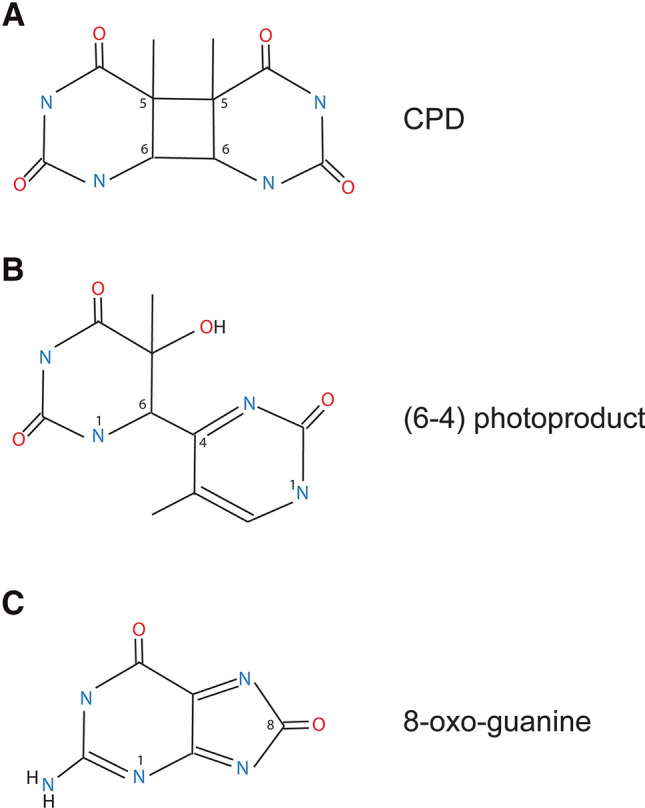
Ultraviolet (UV) irradiation causes various types of DNA damage, which leads to specific mutations and the emergence of skin cancer in humans, often decades after initial exposure. Different UV wavelengths cause the formation of prominent UV-induced DNA lesions. Most of these lesions are removed by the nucleotide excision repair pathway, which is defective in rare genetic skin disorders referred to as xeroderma pigmentosum. A major role in inducing sunlight-dependent skin cancer mutations is assigned to the cyclobutane pyrimidine dimers (CPDs). In this review, we discuss the mechanisms of UV damage induction, the genomic distribution of this damage, relevant DNA repair mechanisms, the proposed mechanisms of how UV-induced CPDs bring about DNA replication-dependent mutagenicity in mammalian cells, and the strong signature of UV damage and mutagenesis found in skin cancer genomes.
Overview
The claims and statistics of this paper haven’t been checked yet.
Free: it reads the open-access text and checks the first 5 claims that cite a source we can check. Create a free account to check every claim.
Integrity signals
Registry
Cites
Statistics
Figures
Verification
Claims the paper makes
The claims and statistics of this paper haven’t been checked yet.
Free: it reads the open-access text and checks the first 5 claims that cite a source we can check. Create a free account to check every claim.
Claims other papers make about this one
Each is checked against this paper’s own text: does it say what the citing paper says it does?
The source backs part of the claim, not all of it — or backs it for a different population, condition or comparison.
In the citing paper
“Individuals with lighter skin tones face a heightened risk of developing non-melanoma skin cancers, including basal cell carcinoma and squamous cell carcinoma, as well as melanoma, due to prolonged exposure to UV radiation [40].”
From A Comprehensive Review of the Role of UV Radiation in Photoaging Processes Between Different Types of Skin (2025) · cites this paper as [40]
Experimental — accuracy not yet measuredThe source backs part of the claim, not all of it — or backs it for a different population, condition or comparison.
In the citing paper
“Basal cell carcinoma, the most common form of skin cancer, is primarily linked to extended sun exposure, which leads to DNA mutations in the basal cells of the epidermis.”
From A Comprehensive Review of the Role of UV Radiation in Photoaging Processes Between Different Types of Skin (2025) · cites this paper as [40]
Experimental — accuracy not yet measuredThe cited source says what the claim attributes to it.
In the citing paper
“Similarly, squamous cell carcinoma can arise from chronic UV-induced damage to squamous cells, with both types being more frequently observed in individuals with fair skin [40].”
From A Comprehensive Review of the Role of UV Radiation in Photoaging Processes Between Different Types of Skin (2025) · cites this paper as [40]
Self-check
Percentages, sums and reported differences re-computed from the paper’s own numbers.
The self-check needs the paper’s full text.
Citations
Cites
Patterns of somatic mutation in human cancer genomes
Greenman, C., Stephens, P., Smith, R., Dalgliesh, G. L., Hunter, C., Bignell, G., Davies, H., Teague, J., Butler, A., Stevens, C., et al. (2007) · Nature · doi:10.1038/nature05610 · Cited by 3,080
A landscape of driver mutations in melanoma
Hodis, E., Watson, I. R., Kryukov, G. V., Arold, S. T., Imielinski, M., Theurillat, J.-P., Nickerson, E., Auclair, D., Li, L., Place, C., et al. (2012) · Cell · doi:10.1016/j.cell.2012.06.024 · Cited by 2,610
A role for sunlight in skin-cancer – UV-induced p53 mutations in squamous-cell carcinoma
Brash, D. E., Rudolph, J. A., Simon, J. A., Lin, A., McKenna, G. J., Baden, H. P., Halperin, A. J., & Pontén, J. (1991) · Proceedings of the National Academy of Sciences · doi:10.1073/pnas.88.22.10124 · Cited by 1,959
Highly Recurrent TERT Promoter Mutations in Human Melanoma
Huang, F. W., Hodis, E., Xu, M. J., Kryukov, G. V., Chin, L., & Garraway, L. A. (2013) · Science · doi:10.1126/science.1229259 · Cited by 1,816
TERT Promoter Mutations in Familial and Sporadic Melanoma
Horn, S., Figl, A., Rachakonda, P. S., Fischer, C., Sucker, A., Gast, A., Kadel, S., Moll, I., Nagore, E., Hemminki, K., et al. (2013) · Science · doi:10.1126/science.1230062 · Cited by 1,799
High burden and pervasive positive selection of somatic mutations in normal human skin
Martincorena, I., Roshan, A., Gerstung, M., Ellis, P., Van Loo, P., McLaren, S., Wedge, D. C., Fullam, A., Alexandrov, L. B., Tubio, J. M., et al. (2015) · Science · doi:10.1126/science.aaa6806 · Cited by 1,770
A comprehensive catalogue of somatic mutations from a human cancer genome
Pleasance, E. D., Cheetham, R. K., Stephens, P. J., McBride, D. J., Humphray, S. J., Greenman, C. D., Varela, I., Lin, M.-L., Ordóñez, G. R., Bignell, G. R., et al. (2010) · Nature · doi:10.1038/nature08658 · Cited by 1,696
Mutations in GNA11 in Uveal Melanoma
Van Raamsdonk, C. D., Griewank, K. G., Crosby, M. B., Garrido, M. C., Vemula, S., Wiesner, T., Obenauf, A. C., Wackernagel, W., Green, G., Bouvier, N., et al. (2010) · New England Journal of Medicine · doi:10.1056/nejmoa1000584 · Cited by 1,476
The XPV (xeroderma pigmentosum variant) gene encodes human DNA polymerase η
Masutani, C., Kusumoto, R., Yamada, A., Dohmae, N., Yokoi, M., Yuasa, M., Araki, M., Iwai, S., Takio, K., & Hanaoka, F. (1999) · Nature · doi:10.1038/21447 · Cited by 1,292
Targeted agents and immunotherapies: optimizing outcomes in melanoma
Luke, J. J., Flaherty, K. T., Ribas, A., & Long, G. V. (2017) · Nature Reviews Clinical Oncology · doi:10.1038/nrclinonc.2017.43 · Cited by 1,254
MELLON, I. (1987) · Cell · doi:10.1016/0092-8674(87)90151-6 · Cited by 1,228
Understanding nucleotide excision repair and its roles in cancer and ageing
Marteijn, J. A., Lans, H., Vermeulen, W., & Hoeijmakers, J. H. J. (2014) · Nature Reviews Molecular Cell Biology · doi:10.1038/nrm3822 · Cited by 1,192
Exome sequencing identifies recurrent somatic RAC1 mutations in melanoma
Krauthammer, M., Kong, Y., Ha, B. H., Evans, P., Bacchiocchi, A., McCusker, J. P., Cheng, E., Davis, M. J., Goh, G., Choi, M., et al. (2012) · Nature Genetics · doi:10.1038/ng.2359 · Cited by 1,191
The wavelengths in sunlight effective in producing skin cancer: a theoretical analysis
Setlow, R. B. (1974) · Proceedings of the National Academy of Sciences · doi:10.1073/pnas.71.9.3363 · Cited by 1,125 · cited 1×
“Other studies have suggested that the UVA component of sunlight is particularly relevant for melanoma risk (Setlow 1974; Langford et al.”
BackgroundThe Genetic Evolution of Melanoma from Precursor Lesions
Shain, A. H., Yeh, I., Kovalyshyn, I., Sriharan, A., Talevich, E., Gagnon, A., Dummer, R., North, J., Pincus, L., Ruben, B., et al. (2015) · New England Journal of Medicine · doi:10.1056/nejmoa1502583 · Cited by 1,065
The pathogenesis of melanoma induced by ultraviolet radiation
Gilchrest, B. A., Eller, M. S., Geller, A. C., & Yaar, M. (1999) · New England Journal of Medicine · doi:10.1056/nejm199904293401707 · Cited by 876
Analysis of the p16 gene (CDKN2) as a candidate for the chromosome 9p melanoma susceptibility locus
Kamb, A., Shattuck-Eidens, D., Eeles, R., Liu, Q., Gruis, N. A., Ding, W., Hussey, C., Tran, T., Miki, Y., Weaver-Feldhaus, J., et al. (1994) · Nature Genetics · doi:10.1038/ng0994-22 · Cited by 855
Mutations induced by ultraviolet light
Pfeifer, G. P., You, Y.-H., & Besaratinia, A. (2005) · Mutation Research - Fundamental and Molecular Mechanisms of Mutagenesis · doi:10.1016/j.mrfmmm.2004.06.057 · Cited by 775
Self-citationMutation hotspots due to sunlight in the p53 gene of nonmelanoma skin cancers.
Ziegler, A., Leffell, D. J., Kunala, S., Sharma, H. W., Gailani, M., Simon, J. A., Halperin, A. J., Baden, H. P., Shapiro, P. E., & Bale, A. E. (1993) · Proceedings of the National Academy of Sciences · doi:10.1073/pnas.90.9.4216 · Cited by 740
Efficient Bypass of a Thymine-Thymine Dimer by Yeast DNA Polymerase, Polη
Johnson, R. E., Prakash, S., & Prakash, L. (1999) · Science · doi:10.1126/science.283.5404.1001 · Cited by 736
Wavelengths effective in induction of malignant melanoma.
Setlow, R. B., Grist, E., Thompson, K., & Woodhead, A. D. (1993) · Proceedings of the National Academy of Sciences · doi:10.1073/pnas.90.14.6666 · Cited by 719
Epidemiology of Melanoma and Nonmelanoma Skin Cancer—The Role of Sunlight
Leiter, U., & Garbe, C. (2009) · Advances in Experimental Medicine and Biology · doi:10.1007/978-0-387-77574-6_8 · Cited by 717
Frequent clones of p53-mutated keratinocytes in normal human skin
Jonason, A. S., Kunala, S., Price, G. J., Restifo, R. J., Spinelli, H. M., Persing, J. A., Leffell, D. J., Tarone, R. E., & Brash, D. E. (1996) · Proceedings of the National Academy of Sciences · doi:10.1073/pnas.93.24.14025 · Cited by 685
Chromatin organization is a major influence on regional mutation rates in human cancer cells
Schuster-Böckler, B., & Lehner, B. (2012) · Nature · doi:10.1038/nature11273 · Cited by 657 · cited 1×
“Other studies have suggested that the UVA component of sunlight is particularly relevant for melanoma risk (Setlow 1974; Langford et al.”
BackgroundEukaryotic polymerases ι and ζ act sequentially to bypass DNA lesions
Johnson, R. E., Washington, M. T., Haracska, L., Prakash, S., & Prakash, L. (2000) · Nature · doi:10.1038/35023030 · Cited by 632
Wavelength dependence of oxidative DNA damage induced by UV and visible light
Kielbassa, C. (1997) · Carcinogenesis · doi:10.1093/carcin/18.4.811 · Cited by 616
Mutational landscape of aggressive cutaneous squamous cell carcinoma
Pickering, C. R., Zhou, J. H., Lee, J. J., Drummond, J. A., Peng, S. A., Saade, R. E., Tsai, K. Y., Curry, J. L., Tetzlaff, M. T., Lai, S. Y., et al. (2014) · Clinical Cancer Research · doi:10.1158/1078-0432.ccr-14-1768 · Cited by 612
THE BIOLOGY OF THE (6–4) PHOTOPRODUCT
MITCHELL, D. L., & NAIRN, R. S. (1989) · Photochemistry and Photobiology · doi:10.1111/j.1751-1097.1989.tb05578.x · Cited by 592
Leiter, U., Eigentler, T., & Garbe, C. (2014) · Sunlight, Vitamin D and Skin Cancer · doi:10.1007/978-1-4939-0437-2_7 · Cited by 574
Chemiexcitation of melanin derivatives induces DNA photoproducts long after UV exposure
Premi, S., Wallisch, S., Mano, C. M., Weiner, A. B., Bacchiocchi, A., Wakamatsu, K., Bechara, E. J. H., Halaban, R., Douki, T., & Brash, D. E. (2015) · Science · doi:10.1126/science.1256022 · Cited by 550
RNA sequence analysis reveals macroscopic somatic clonal expansion across normal tissues
Yizhak, K., Aguet, F., Kim, J., Hess, J. M., Kübler, K., Grimsby, J., Frazer, R., Zhang, H., Haradhvala, N. J., Rosebrock, D., et al. (2019) · Science · doi:10.1126/science.aaw0726 · Cited by 500
Genomic analysis identifies new drivers and progression pathways in skin basal cell carcinoma
Bonilla, X., Parmentier, L., King, B., Bezrukov, F., Kaya, G., Zoete, V., Seplyarskiy, V. B., Sharpe, H. J., McKee, T., Letourneau, A., et al. (2016) · Nature Genetics · doi:10.1038/ng.3525 · Cited by 490
UV wavelength-dependent DNA damage and human non-melanoma and melanoma skin cancer
Pfeifer, G. P., & Besaratinia, A. (2012) · Photochemical & Photobiological Sciences · doi:10.1039/c1pp05144j · Cited by 473
Self-citationWavelength dependence of skin cancer induction by ultraviolet irradiation of albino hairless mice.
de Gruijl, F. R., Sterenborg, H. J. C. M., Forbes, P. D., Davies, R. E., Cole, C. A., Kelfkens, G., van Weelden, H., Slaper, H., & van der Leun, J. C. (1993) · PubMed · Cited by 471
Loss-of-function mutations in Notch receptors in cutaneous and lung squamous cell carcinoma
Wang, N. J., Sanborn, Z., Arnett, K. L., Bayston, L. J., Liao, W., Proby, C. M., Leigh, I. M., Collisson, E. A., Gordon, P. B., Jakkula, L., et al. (2011) · Proceedings of the National Academy of Sciences · doi:10.1073/pnas.1114669108 · Cited by 462
Ultraviolet A and melanoma: A review
Wang, S. Q., Setlow, R., Berwick, M., Polsky, D., Marghoob, A. A., Kopf, A. W., & Bart, R. S. (2001) · Journal of the American Academy of Dermatology · doi:10.1067/mjd.2001.114594 · Cited by 454
Douki, T., Reynaud-Angelin, A., Cadet, J., & Sage, E. (2003) · Biochemistry · doi:10.1021/bi034593c · Cited by 452 · cited 1×
“A fraction of the (6–4)PPs can be converted to their Dewar valence isomers by the absorption of a photon in the 320 nm range leading to the formation of a lesion that is potentially more mutagenic than its parent product (Douki and Sage 2016).”
BackgroundSunlight damage to cellular DNA: focus on oxidatively generated lesions
Schuch, A. P., Moreno, N. C., Schuch, N. J., Menck, C. F. M., & Garcia, C. C. M. (2017) · Free Radical Biology and Medicine · doi:10.1016/j.freeradbiomed.2017.01.029 · Cited by 436
XERODERMA PIGMENTOSUM: A HUMAN DISEASE IN WHICH AN INITIAL STAGE OF DNA REPAIR IS DEFECTIVE
Cleaver, J. E. (1969) · Proceedings of the National Academy of Sciences · doi:10.1073/pnas.63.2.428 · Cited by 415
Houghton, A. N., & Polsky, D. (2002) · Cancer Cell · doi:10.1016/s1535-6108(02)00161-7 · Cited by 414
Fidelity of Human DNA Polymerase η
Johnson, R. E., Washington, M. T., Prakash, S., & Prakash, L. (2000) · Journal of Biological Chemistry · doi:10.1074/jbc.275.11.7447 · Cited by 400
Mechanisms and prevention of UV‐induced melanoma
Sample, A., & He, Y. (2018) · Photodermatology, Photoimmunology & Photomedicine · doi:10.1111/phpp.12329 · Cited by 372 · cited 1×
“For example, the frequent use of indoor tanning beds by populations residing in Northern latitudes can lead to high cumulative doses of UVA radiation (Sample and He 2018).”
BackgroundEpidemiology and Risk Factors of Melanoma
Carr, S., Smith, C., & Wernberg, J. (2020) · Surgical Clinics of North America · doi:10.1016/j.suc.2019.09.005 · Cited by 360
Oxidatively Generated Damage to Cellular DNA by UVB and UVA Radiation ,
Cadet, J., Douki, T., & Ravanat, J. (2015) · Photochemistry and Photobiology · doi:10.1111/php.12368 · Cited by 355
Nucleotide excision repair in humans
Spivak, G. (2015) · DNA Repair · doi:10.1016/j.dnarep.2015.09.003 · Cited by 354 · cited 1×
“2014; Spivak 2015; Araujo and Kuraoka 2019).”
Indoor Tanning and Risk of Melanoma: A Case-Control Study in a Highly Exposed Population
Lazovich, D., Vogel, R. I., Berwick, M., Weinstock, M. A., Anderson, K. E., & Warshaw, E. M. (2010) · Cancer Epidemiology, Biomarkers & Prevention · doi:10.1158/1055-9965.epi-09-1249 · Cited by 353
Induction of oxidative DNA base damage in human skin cells by UV and near visible radiation
Kvam, E. (1997) · Carcinogenesis · doi:10.1093/carcin/18.12.2379 · Cited by 344
UV-Associated Mutations Underlie the Etiology of MCV-Negative Merkel Cell Carcinomas
Wong, S. Q., Waldeck, K., Vergara, I. A., Schröder, J., Madore, J., Wilmott, J. S., Colebatch, A. J., De Paoli-Iseppi, R., Li, J., Lupat, R., et al. (2015) · Cancer Research · doi:10.1158/0008-5472.can-15-1877 · Cited by 335
Melanoma induction by ultraviolet A but not ultraviolet B radiation requires melanin pigment
Noonan, F. P., Zaidi, M. R., Wolnicka-Glubisz, A., Anver, M. R., Bahn, J., Wielgus, A., Cadet, J., Douki, T., Mouret, S., Tucker, M. A., et al. (2012) · Nature Communications · doi:10.1038/ncomms1893 · Cited by 331
Formation and processing of UV photoproducts: effects of DNA sequence and chromatin environment
Pfeifer, G. P. (1997) · Photochemistry and Photobiology · doi:10.1111/j.1751-1097.1997.tb08560.x · Cited by 317 · cited 4×
“For details, the reader is referred to earlier articles and reviews of this subject (Pfeifer 1997; Wellinger and Thoma 1997; Mao et al.”
BackgroundMethodInfluentialSelf-citationPhotocarcinogenesis: UVA vs. UVB Radiation
de Gruijl, F. R. (2002) · Skin Pharmacology and Physiology · doi:10.1159/000064535 · Cited by 315 · cited 1×
“1993) (de Gruijl 2002).”
You, Y.-H., Lee, D.-H., Yoon, J.-H., Nakajima, S., Yasui, A., & Pfeifer, G. P. (2001) · Journal of Biological Chemistry · doi:10.1074/jbc.m107696200 · Cited by 314
Self-citationPhotoinduced Damage to Cellular DNA: Direct and Photosensitized Reactions†
Cadet, J., Mouret, S., Ravanat, J., & Douki, T. (2012) · Photochemistry and Photobiology · doi:10.1111/j.1751-1097.2012.01200.x · Cited by 300
Nucleotide excision repair is impaired by binding of transcription factors to DNA
Sabarinathan, R., Mularoni, L., Deu-Pons, J., Gonzalez-Perez, A., & López-Bigas, N. (2016) · Nature · doi:10.1038/nature17661 · Cited by 300
Inman, G. J., Wang, J., Nagano, A., Alexandrov, L. B., Purdie, K. J., Taylor, R. G., Sherwood, V., Thomson, J., Hogan, S., Spender, L. C., et al. (2018) · Nature Communications · doi:10.1038/s41467-018-06027-1 · Cited by 297
Slow Repair of Pyrimidine Dimers at p53 Mutation Hotspots in Skin Cancer
Tornaletti, S., & Pfeifer, G. P. (1994) · Science · doi:10.1126/science.8128225 · Cited by 296
Self-citationUltraviolet B but not Ultraviolet A Radiation Initiates Melanoma
De Fabo, E. C., Noonan, F. P., Fears, T., & Merlino, G. (2004) · Cancer Research · doi:10.1158/0008-5472.can-04-1454 · Cited by 279
Mitchell, D. L., Haipek, C. A., & Clarkson, J. M. (1985) · Mutation Research Letters · doi:10.1016/s0165-7992(85)80018-x · Cited by 277
Sunlight induces pyrimidine dimers preferentially at 5-methylcytosine bases.
Tommasi, S., Denissenko, M. F., & Pfeifer, G. P. (1997) · PubMed · Cited by 271
Self-citationXiang, F., Lucas, R., Hales, S., & Neale, R. (2014) · JAMA Dermatology · doi:10.1001/jamadermatol.2014.762 · Cited by 266
Temporal Dissection of Tumorigenesis in Primary Cancers
Durinck, S., Ho, C., Wang, N. J., Liao, W., Jakkula, L. R., Collisson, E. A., Pons, J., Chan, S.-W., Lam, E. T., Chu, C., et al. (2011) · Cancer Discovery · doi:10.1158/2159-8290.cd-11-0028 · Cited by 266
Ultraviolet radiation and melanoma: a systematic review and analysis of reported sequence variants
Hocker, T., & Tsao, H. (2007) · Human Mutation · doi:10.1002/humu.20481 · Cited by 257
Hu, J., Adar, S., Selby, C. P., Lieb, J. D., & Sancar, A. (2015) · Genes & Development · doi:10.1101/gad.261271.115 · Cited by 255
Kuluncsics, Z., Perdiz, D., Brulay, E., Muel, B., & Sage, E. (1999) · Journal of Photochemistry and Photobiology B: Biology · doi:10.1016/s1011-1344(99)00034-2 · Cited by 239
Sage, E. (1993) · Photochemistry and Photobiology · doi:10.1111/j.1751-1097.1993.tb02273.x · Cited by 238
Rochette, P. J. (2003) · Nucleic Acids Research · doi:10.1093/nar/gkg402 · Cited by 231
Somatic TP53 Mutations in the Era of Genome Sequencing
Hainaut, P., & Pfeifer, G. P. (2016) · Cold Spring Harbor Perspectives in Medicine · doi:10.1101/cshperspect.a026179 · Cited by 231
Self-citationMutational Landscape of Basal Cell Carcinomas by Whole-Exome Sequencing
Jayaraman, S. S., Rayhan, D. J., Hazany, S., & Kolodney, M. S. (2014) · Journal of Investigative Dermatology · doi:10.1038/jid.2013.276 · Cited by 221
Epidemiological Support for an Hypothesis for Melanoma Induction Indicating a Role for UVA Radiation
Moan, J., Dahlback, A., & Setlow, R. B. (1999) · Photochemistry and Photobiology · doi:10.1111/j.1751-1097.1999.tb07995.x · Cited by 215
Gale, J. M., Nissen, K. A., & Smerdon, M. J. (1987) · Proceedings of the National Academy of Sciences · doi:10.1073/pnas.84.19.6644 · Cited by 210
Differential DNA repair underlies mutation hotspots at active promoters in cancer genomes
Perera, D., Poulos, R. C., Shah, A., Beck, D., Pimanda, J. E., & Wong, J. W. H. (2016) · Nature · doi:10.1038/nature17437 · Cited by 202
Effects of UV and visible radiation on DNA-final base damage.
Cadet, J., Berger, M., Douki, T., Morin, B., Raoul, S., Ravanat, J., & Spinelli, S. (1997) · PubMed · Cited by 197
Genome-wide kinetics of DNA excision repair in relation to chromatin state and mutagenesis
Adar, S., Hu, J., Lieb, J. D., & Sancar, A. (2016) · Proceedings of the National Academy of Sciences · doi:10.1073/pnas.1603388113 · Cited by 194
UVA Generates Pyrimidine Dimers in DNA Directly
Jiang, Y. D., Rabbi, M., Kim, M., Ke, C., Lee, W., Clark, R. L., Mieczkowski, P. A., & Marszałek, P. E. (2009) · Biophysical Journal · doi:10.1016/j.bpj.2008.10.030 · Cited by 187
Dynamic maps of UV damage formation and repair for the human genome
Hu, J., Adebali, O., Adar, S., & Sancar, A. (2017) · Proceedings of the National Academy of Sciences · doi:10.1073/pnas.1706522114 · Cited by 185
Banerjee, S. K., Christensen, R. B., Lawrence, C. W., & LeClerc, J. E. (1988) · Proceedings of the National Academy of Sciences · doi:10.1073/pnas.85.21.8141 · Cited by 184
The World of Melanoma: Epidemiologic, Genetic, and Anatomic Differences of Melanoma Across the Globe
Dimitriou, F., Krattinger, R., Ramelyte, E., Barysch, M. J., Micaletto, S., Dummer, R., & Goldinger, S. M. (2018) · Current Oncology Reports · doi:10.1007/s11912-018-0732-8 · Cited by 179
Pfeifer, G. P., Drouin, R., Riggs, A. D., & Holmquist, G. P. (1991) · Proceedings of the National Academy of Sciences · doi:10.1073/pnas.88.4.1374 · Cited by 176
Self-citationChromosomal landscape of UV damage formation and repair at single-nucleotide resolution
Mao, P., Smerdon, M. J., Roberts, S. A., & Wyrick, J. J. (2016) · Proceedings of the National Academy of Sciences · doi:10.1073/pnas.1606667113 · Cited by 165
The DNA damage spectrum produced by simulated sunlight
Yoon, J.-H., Lee, C.-S., O’Connor, T. R., Yasui, A., & Pfeifer, G. P. (2000) · Journal of Molecular Biology · doi:10.1006/jmbi.2000.3771 · Cited by 161
Self-citationBinding of transcription factors creates hot spots for UV photoproducts in vivo.
Pfeifer, G. P., Drouin, R., Riggs, A. D., & Holmquist, G. P. (1992) · Molecular and Cellular Biology · doi:10.1128/mcb.12.4.1798 · Cited by 160
Self-citationAutier, P., Doré, J., Lejeune, F., Koelmel, K. F., Geffeler, O., Hille, P., Cesarini, J., Lienard, D., Liabeuf, A., Joarlette, M., et al. (1994) · International Journal of Cancer · doi:10.1002/ijc.2910580610 · Cited by 158
THE JOURNAL OF BIOLOGICAL CHEMISTRY.
Long, J. H. (1905) · Journal of the American Chemical Society · doi:10.1021/ja01990a019 · Cited by 158
Besaratinia, A., Synold, T. W., Chen, H.-H., Chang, C., Xi, B., Riggs, A. D., & Pfeifer, G. P. (2005) · Proceedings of the National Academy of Sciences · doi:10.1073/pnas.0502311102 · Cited by 156
Self-citationBesaratinia, A., Yoon, J., Schroeder, C., Bradforth, S. E., Cockburn, M., & Pfeifer, G. P. (2011) · The FASEB Journal · doi:10.1096/fj.11-187336 · Cited by 155
Self-citationWellinger, R. E., & Thoma, F. (1997) · The EMBO Journal · doi:10.1093/emboj/16.16.5046 · Cited by 152
Jiang, N., & Taylor, J. S. (1993) · Biochemistry · doi:10.1021/bi00053a011 · Cited by 150
UVA-induced cyclobutane pyrimidine dimers in DNA: a direct photochemical mechanism?
Mouret, S., Philippe, C., Gracia-Chantegrel, J., Banyasz, A., Karpati, S., Markovitsi, D., & Douki, T. (2010) · Organic & Biomolecular Chemistry · doi:10.1039/b924712b · Cited by 149
No End in Sight: The Skin Cancer Epidemic Continues
Donaldson, M. R., & Coldiron, B. M. (2011) · Seminars in Cutaneous Medicine and Surgery · doi:10.1016/j.sder.2011.01.002 · Cited by 148
DNA replication timing and selection shape the landscape of nucleotide variation in cancer genomes
Woo, Y., & Li, W. (2012) · Nature Communications · doi:10.1038/ncomms1982 · Cited by 147
Yoon, J.-H., Prakash, L., & Prakash, S. (2009) · Proceedings of the National Academy of Sciences · doi:10.1073/pnas.0910121106 · Cited by 146
Mitchell, D. L., Nguyen, T. D., & Cleaver, J. E. (1990) · Journal of Biological Chemistry · doi:10.1016/s0021-9258(19)39363-9 · Cited by 141
DNA Repair Rates Mapped Along the Human PGK1 Gene at Nucleotide Resolution
Gao, S., Drouin, R., & Holmquist, G. P. (1994) · Science · doi:10.1126/science.8128226 · Cited by 135
Kunisada, M., Sakumi, K., Tominaga, Y., Budiyanto, A., Ueda, M., Ichihashi, M., Nakabeppu, Y., & Nishigori, C. (2005) · Cancer Research · doi:10.1158/0008-5472.can-05-0724 · Cited by 135
Cancer-prone hereditary diseases with DNA processing abnormalities
Hanawalt, P. C., & Sarasin, A. R. (1986) · Trends in Genetics · doi:10.1016/0168-9525(86)90201-5 · Cited by 135
Pyrimidine dimers in UV-irradiated poly dI:dC.
Setlow, R. B., Carrier, W. L., & Bollum, F. J. (1965) · Proceedings of the National Academy of Sciences · doi:10.1073/pnas.53.5.1111 · Cited by 135
Requirement of DNA Polymerase η for Error-Free Bypass of UV-Induced CC and TC Photoproducts
Yu, S.-L., Johnson, R. E., Prakash, S., & Prakash, L. (2001) · Molecular and Cellular Biology · doi:10.1128/mcb.21.1.185-188.2001 · Cited by 133
de Laat, A. (1997) · Carcinogenesis · doi:10.1093/carcin/18.5.1013 · Cited by 132
Mao, P., Brown, A. J., Esaki, S., Lockwood, S., Poon, G. M. K., Smerdon, M. J., Roberts, S. A., & Wyrick, J. J. (2018) · Nature Communications · doi:10.1038/s41467-018-05064-0 · Cited by 131
Zhang, X., Rosenstein, B. S., Wang, Y., Lebwohl, M., Mitchell, D. M., & Wei, H. (1997) · Photochemistry and Photobiology · doi:10.1111/j.1751-1097.1997.tb01886.x · Cited by 129
Role of DNA Polymerase η in the UV Mutation Spectrum in Human Cells
Stary, A., Kannouche, P., Lehmann, A. R., & Sarasin, A. (2003) · Journal of Biological Chemistry · doi:10.1074/jbc.m211838200 · Cited by 128
Tornaletti, S., & Pfeifer, G. P. (1995) · Journal of Molecular Biology · doi:10.1006/jmbi.1995.0331 · Cited by 128
Self-citationPich, O., Muiños, F., Sabarinathan, R., Reyes-Salazar, I., Gonzalez-Perez, A., & Lopez-Bigas, N. (2018) · Cell · doi:10.1016/j.cell.2018.10.004 · Cited by 123 · cited 1×
“At the level of positioned nucleosomes, this is strikingly apparent by a mutational pattern in melanomas where the peaks of UV-signature mutations at dipyrimidines occur with a periodicity of 10 bp at positions where the minor groove of the DNA is facing away from the nucleosome core particle (Brown et al. 2018; Pich…”
BackgroundUltraviolet radiation–induced DNA damage is prognostic for outcome in melanoma
Trucco, L. D., Mundra, P. A., Hogan, K., García-Martínez, P. L., Virós, A., Mandal, A. K., Macagno, N., Gaudy‐Marqueste, C., Allan, D., Baenke, F., et al. (2018) · Nature Medicine · doi:10.1038/s41591-018-0265-6 · Cited by 123
Tu, Y., Tornaletti, S., & Pfeifer, G. P. (1996) · The EMBO Journal · doi:10.1002/j.1460-2075.1996.tb00400.x · Cited by 122
Self-citationLiu, L., De, S., & Michor, F. (2013) · Nature Communications · doi:10.1038/ncomms2502 · Cited by 119
Ultraviolet radiation A-induced precursors of cutaneous melanoma in Monodelphis domestica.
Ley, R. D. (1997) · PubMed · Cited by 116
You, Y.-H., & Pfeifer, G. P. (2001) · Journal of Molecular Biology · doi:10.1006/jmbi.2000.4322 · Cited by 111
Self-citationBeukers, R., Eker, A. P. M., & Lohman, P. H. M. (2008) · DNA repair · doi:10.1016/j.dnarep.2007.11.010 · Cited by 110
Error-Prone Replication through UV Lesions by DNA Polymerase θ Protects against Skin Cancers
Yoon, J.-H., McArthur, M. J., Park, J., Basu, D., Wakamiya, M., Prakash, L., & Prakash, S. (2019) · Cell · doi:10.1016/j.cell.2019.01.023 · Cited by 110
Tu, Y., Dammann, R., & Pfeifer, G. P. (1998) · Journal of Molecular Biology · doi:10.1006/jmbi.1998.2176 · Cited by 105
Self-citationCould BRAF Mutations in Melanocytic Lesions Arise from DNA Damage Induced by Ultraviolet Radiation?
Thomas, N. E., Berwick, M., & Cordeiro‐Stone, M. (2006) · Journal of Investigative Dermatology · doi:10.1038/sj.jid.5700458 · Cited by 104
Involvement of 5-methylcytosine in sunlight-induced mutagenesis 1 1Edited by J. Karn
You, Y., Li, C., & Pfeifer, G. P. (1999) · Journal of Molecular Biology · doi:10.1006/jmbi.1999.3174 · Cited by 103
Self-citation国定, 充. (2006) · Medical Entomology and Zoology · Cited by 103
UV‐induced DNA Damage: The Role of Electronic Excited States
Markovitsi, D. (2016) · Photochemistry and Photobiology · doi:10.1111/php.12533 · Cited by 100
Lee, D.-H., & Pfeifer, G. P. (2003) · Journal of Biological Chemistry · doi:10.1074/jbc.m212696200 · Cited by 99 · cited 2×
“1999; Lee and Pfeifer 2003).”
Self-citationMelanoma genetics: a review of genetic factors and clinical phenotypes in familial melanoma
Pho, L., Grossman, D., & Leachman, S. A. (2006) · Current Opinion in Oncology · doi:10.1097/01.cco.0000208791.22442.09 · Cited by 98
Molecular and Cellular Biology
(2001) · Using The Biological Literature · doi:10.1201/9780824741716-7 · Cited by 97
Genomic sites hypersensitive to ultraviolet radiation
Premi, S., Han, L., Mehta, S., Knight, J., Zhao, D., Palmatier, M. A., Kornacker, K., & Brash, D. E. (2019) · Proceedings of the National Academy of Sciences · doi:10.1073/pnas.1907860116 · Cited by 95
Langford, I. H., Bentham, G., & McDonald, A.-L. (1998) · Statistics in Medicine · doi:10.1002/(sici)1097-0258(19980115)17:1<41::aid-sim712>3.0.co;2-0 · Cited by 95
Environmental Factors in Nonmelanoma and Melanoma Skin Cancer
Woodhead, A. D., Setlow, R. B., & Tanaka, M. (1999) · Journal of Epidemiology · doi:10.2188/jea.9.6sup_102 · Cited by 92
Skin Cancer: New Markers for Better Prevention
Greinert, R. (2009) · Pathobiology · doi:10.1159/000201675 · Cited by 86
Carcinogen susceptibility is regulated by genome architecture and predicts cancer mutagenesis
García‐Nieto, P. E., Schwartz, E. K., King, D. A., Paulsen, J., Collas, P., Herrera, R. E., & Morrison, A. J. (2017) · The EMBO Journal · doi:10.15252/embj.201796717 · Cited by 85
The role of DNA polymerase η in UV mutational spectra
Choi, J., & Pfeifer, G. P. (2004) · DNA repair · doi:10.1016/j.dnarep.2004.09.006 · Cited by 82
Self-citationLemaire, D. G. E., & Ruzsicska, B. P. (1993) · Biochemistry · doi:10.1021/bi00061a009 · Cited by 81
Ikehata, H., Kawai, K., Komura, J.-I., Sakatsume, K., Wang, L., Imai, M., Higashi, S., Nikaido, O., Yamamoto, K., Hieda, K., et al. (2008) · Journal of Investigative Dermatology · doi:10.1038/jid.2008.61 · Cited by 79
Gentil, A. (1996) · Nucleic Acids Research · doi:10.1093/nar/24.10.1837 · Cited by 79
Kozmin, S. G. (2003) · Nucleic Acids Research · doi:10.1093/nar/gkg489 · Cited by 78 · cited 1×
“There is considerable evidence to support the idea that POLH is chiefly responsible for correct CPD bypass in yeast and mammals (Kozmin et al. 2003; Choi and Pfeifer 2005; Yoon et al. 2009).”
BackgroundUV‐Induced DNA Damage and Mutagenesis in Chromatin
Mao, P., Wyrick, J. J., Roberts, S. A., & Smerdon, M. J. (2017) · Photochemistry and Photobiology · doi:10.1111/php.12646 · Cited by 77
Poulos, R. C., Thoms, J. A. I., Guan, Y. F., Unnikrishnan, A., Pimanda, J. E., & Wong, J. W. H. (2016) · Cell Reports · doi:10.1016/j.celrep.2016.11.055 · Cited by 77
Ultraviolet A does not induce melanomas in a Xiphophorus hybrid fish model
Mitchell, D. L., Fernandez, A. A., Nairn, R. S., Garcia, R., Paniker, L., Trono, D., Thames, H. D., & Gimenez-Conti, I. (2010) · Proceedings of the National Academy of Sciences · doi:10.1073/pnas.1000324107 · Cited by 75
Fredriksson, N. J., Elliott, K., Filges, S., Van den Eynden, J., Ståhlberg, A., & Larsson, E. (2017) · PLOS Genetics · doi:10.1371/journal.pgen.1006773 · Cited by 73
Elliott, K., Boström, M., Filges, S., Lindberg, M., Van den Eynden, J., Ståhlberg, A., Clausen, A. R., & Larsson, E. (2018) · PLOS Genetics · doi:10.1371/journal.pgen.1007849 · Cited by 72
Mechanistic insights into transcription coupled DNA repair
Pani, B., & Nudler, E. (2017) · DNA repair · doi:10.1016/j.dnarep.2017.06.006 · Cited by 71
Mutagenic properties of the T-C cyclobutane dimer
Horsfall, M. J., Borden, A., & Lawrence, C. W. (1997) · Journal of Bacteriology · doi:10.1128/jb.179.9.2835-2839.1997 · Cited by 61
DNA damage mediated transcription arrest: Step back to go forward
Mullenders, L. (2015) · DNA Repair · doi:10.1016/j.dnarep.2015.09.005 · Cited by 57
Sunlight ultraviolet irradiation and BRAF V600 mutagenesis in human melanoma
Besaratinia, A., & Pfeifer, G. P. (2008) · Human Mutation · doi:10.1002/humu.20802 · Cited by 57
Self-citationDouki, T., & Sage, E. (2016) · Photochemical & Photobiological Sciences · doi:10.1039/c5pp00382b · Cited by 56
Nucleosome positions establish an extended mutation signature in melanoma
Brown, A. J., Mao, P., Smerdon, M. J., Wyrick, J. J., & Roberts, S. A. (2018) · PLoS Genetics · doi:10.1371/journal.pgen.1007823 · Cited by 56
Mutational Patterns in Metastatic Cutaneous Squamous Cell Carcinoma
Mueller, S. A., Gauthier, M.-E. A., Ashford, B., Gupta, R., Gayevskiy, V., Ch’ng, S., Palme, C. E., Shannon, K. F., Clark, J. R., Ranson, M., et al. (2019) · Journal of Investigative Dermatology · doi:10.1016/j.jid.2019.01.008 · Cited by 54
Yoon, J.-H., Park, J., Conde, J., Wakamiya, M., Prakash, L., & Prakash, S. (2015) · Genes & Development · doi:10.1101/gad.272229.115 · Cited by 52
Photophysical properties of 5-methylcytidine
Sharonov, A., Gustavsson, T., Marguet, S., & Markovitsi, D. (2003) · Photochemical & Photobiological Sciences · doi:10.1039/b212664h · Cited by 49
Slow repair of pyrimidine dimers at p53 mutation hotspots in skin cancer
Tornaletti, S., & Pfeifer, G. P. (1994) · Trends in Genetics · doi:10.1016/0168-9525(94)90251-8 · Cited by 48
Self-citationFormation of cyclobutane pyrimidine dimers at dipyrimidines containing 5-hydroxymethylcytosine
Kim, S.-I., Jin, S., & Pfeifer, G. P. (2013) · Photochemical & Photobiological Sciences · doi:10.1039/c3pp50037c · Cited by 48
Self-citationMao, P., Smerdon, M. J., Roberts, S. A., & Wyrick, J. J. (2019) · Genome Research · doi:10.1101/gr.253146.119 · Cited by 45
U-U and T-T cyclobutane dimers have different mutational properties
Gibbs, P. E. M., & Lawrence, C. W. (1993) · Nucleic Acids Research · doi:10.1093/nar/21.17.4059 · Cited by 43
Non-Melanoma Skin Cancers in the Older Patient
Albert, A. A., Knoll, M. A., Conti, J. A., & Zbar, R. I. S. (2019) · Current Oncology Reports · doi:10.1007/s11912-019-0828-9 · Cited by 43
Bányász, Á., Esposito, L., Douki, T., Perron, M., Lepori, C., Improta, R., & Markovitsi, D. (2016) · The Journal of Physical Chemistry B · doi:10.1021/acs.jpcb.6b03340 · Cited by 41
Cannistraro, V. J., Pondugula, S., Song, Q., & Taylor, J.-S. (2015) · Journal of Biological Chemistry · doi:10.1074/jbc.m115.673301 · Cited by 37
How the environment shapes cancer genomes
Pfeifer, G. P. (2015) · Current Opinion in Oncology · doi:10.1097/cco.0000000000000152 · Cited by 37
Self-citationChemical synthesis and translesion replication of a cis-syn cyclobutane thymine-uracil dimer
Takasawa, K. (2004) · Nucleic Acids Research · doi:10.1093/nar/gkh342 · Cited by 35
Vu, B., Cannistraro, V. J., Sun, L., & Taylor, J. (2006) · Biochemistry · doi:10.1021/bi0602009 · Cited by 34
Song, Q., Sherrer, S. M., Suo, Z., & Taylor, J. (2012) · Journal of Biological Chemistry · doi:10.1074/jbc.m111.333591 · Cited by 31
Gsell, C., Richly, H., Coin, F., & Naegeli, H. (2020) · Nucleic Acids Research · doi:10.1093/nar/gkz1229 · Cited by 29
Different types of DNA damage play different roles in the etiology of sunlight‐induced melanoma
Mitchell, D. L., & Fernandez, A. A. (2011) · Pigment Cell & Melanoma Research · doi:10.1111/j.1755-148x.2010.00789.x · Cited by 28
Tommasi, S. (2000) · Nucleic Acids Research · doi:10.1093/nar/28.20.3991 · Cited by 26
Self-citationUV-induced mutations in epidermal cells of mice defective in DNA polymerase η and/or ι
Kanao, R., Yokoi, M., Ohkumo, T., Sakurai, Y., Dotsu, K., Kura, S., Nakatsu, Y., Tsuzuki, T., Masutani, C., & Hanaoka, F. (2015) · DNA repair · doi:10.1016/j.dnarep.2015.02.006 · Cited by 26
Ikehata, H., Mori, T., Kamei, Y., Douki, T., Cadet, J., & Yamamoto, M. (2019) · Photochemistry and Photobiology · doi:10.1111/php.13159 · Cited by 25
Song, Q., Cannistraro, V. J., & Taylor, J.-S. (2011) · Journal of Biological Chemistry · doi:10.1074/jbc.m110.183178 · Cited by 24
Is Sunlight Important to Melanoma Causation?
Tucker, M. A. (2008) · Cancer Epidemiology Biomarkers & Prevention · doi:10.1158/1055-9965.epi-07-2743 · Cited by 23
Sunbeds and melanoma risk: time to close the debate
Suppa, M., & Gandini, S. (2019) · Current Opinion in Oncology · doi:10.1097/cco.0000000000000507 · Cited by 23
Mutation Frequencies and Spectra in DNA Polymerase η–Deficient Mice
Busuttil, R. A., Lin, Q., Stambrook, P. J., Kucherlapati, R., & Vijg, J. (2008) · Cancer Research · doi:10.1158/0008-5472.can-07-6274 · Cited by 20
Noncanonical Stacking Geometries of Nucleobases as a Preferred Target for Solar Radiation
Ramazanov, R. R., Maksimov, D., & Kononov, A. I. (2015) · Journal of the American Chemical Society · doi:10.1021/jacs.5b05140 · Cited by 20
Epidemiology of Keratinocyte Carcinoma
Perry, D. M., Barton, V. R., & Alberg, A. J. (2017) · Current Dermatology Reports · doi:10.1007/s13671-017-0185-6 · Cited by 15
Nucleotide excision repair genes shaping embryonic development
Araújo, S. J., & Kuraoka, I. (2019) · Open Biology · doi:10.1098/rsob.190166 · Cited by 15
Uveal Melanoma and GNA11 Mutations: a new piece added to the puzzle
Nia, A. B., & Pfeifer, G. P. (2010) · Pigment Cell & Melanoma Research · doi:10.1111/j.1755-148x.2010.00821.x · Cited by 14
Self-citationEffect of sequence context on Polζ-dependent error-prone extension past (6-4) photoproducts
Akagi, J., Hashimoto, K., Suzuki, K., Yokoi, M., de Wind, N., Iwai, S., Ohmori, H., Moriya, M., & Hanaoka, F. (2019) · DNA repair · doi:10.1016/j.dnarep.2019.102771 · Cited by 9
Sunbeds and Melanoma Risk: Many Open Questions, Not Yet Time to Close the Debate
Reichrath, J., Lindqvist, P. G., Pilz, S., März, W., Grant, W. B., Holick, M. F., & de Gruijl, F. R. (2019) · Anticancer Research · doi:10.21873/anticanres.13978 · Cited by 7
Research works printed but not linked: 2
- Tu Y Tornaletti S Pfeifer GP DNA repair domains within a human gene: Selective repair of sequences near the transcription initiation site EMBO Journal 1996 15 675 683 10.1002/j.1460-2075.1996.tb00400.x PMC449986 8599951 · DOI
- Yoon JH Lee CS O'Connor TR Yasui A Pfeifer GP The DNA damage spectrum produced by simulated sunlight Journal of Molecular Biology 2000 299 3 681 693 10.1006/jmbi.2000.3771 10835277 · DOI · Paper page
Cited by
Soft Fiber Electronics Based on Semiconducting Polymer
Sun, F., Jiang, H., Wang, H., Zhong, Y., Xu, Y., Xing, Y., Yu, M., Feng, L.-W., Tang, Z., Liu, J., et al. (2023) · Chemical Reviews · doi:10.1021/acs.chemrev.2c00720 · Cited by 164
Mechanisms of resistance to immune checkpoint inhibitors in melanoma: What we have to overcome?
Ziogas, D. C., Theocharopoulos, C., Koutouratsas, T., Haanen, J. B. A. G., & Gogas, H. J. (2022) · Cancer Treatment Reviews · doi:10.1016/j.ctrv.2022.102499 · Cited by 130
UVA Radiation, DNA Damage, and Melanoma
Jin, S., Padron, F., & Pfeifer, G. P. (2022) · ACS Omega · doi:10.1021/acsomega.2c04424 · Cited by 99
Self-citationEndogenous Photosensitizers in Human Skin
Bastos, E. L., Quina, F. H., & Baptista, M. S. (2023) · Chemical Reviews · doi:10.1021/acs.chemrev.2c00787 · Cited by 91
Dobre, E.-G., Surcel, M., Constantin, C., Ilie, M. A., Căruntu, A., Căruntu, C., & Neagu, M. T. (2023) · International Journal of Molecular Sciences · doi:10.3390/ijms24021079 · Cited by 69
Metadata
- Authors
- Pfeifer, G. P.
- Affiliations
- Van Andel Institute (US)
- Corresponding author
- Pfeifer, Gerd P.
- ORCID
- Pfeifer, Gerd P.
- Venue
- Genome Instability & Disease
- Published
- 2020-03-19
- Volume
- 1
- Issue
- 3
- Pages
- 99-113
- ISSN
- 2524-7662 (ISSN-L)
- PMC
- PMC8477449
- OpenAlex
- W3012364376
- Semantic Scholar
- 7d87002b00658eb8f097c675e92ccfc4c060cfee
- Cited by
- 237
- References
- 168
- Citations by year
- 2026: 62 · 2025: 74 · 2024: 45 · 2023: 31 · 2022: 13 · 2021: 11 · 2020: 1
- FWCI
- 4.54
- Type
- journal article
- Language
- en
- Update notices
- correction (2021-04-26)
- Open access
- hybrid
- doi.org
- Licence
- cc-by
- creativecommons.org/licenses/by/4.0 (tdm)
- creativecommons.org/licenses/by/4.0 (vor)
- Locations
- Genome Instability & Disease (publishedVersion, cc-by)
- Europe PMC (PubMed Central) (publishedVersion, other-oa)
- PubMed Central (publishedVersion, cc-by)
- PubMed (publishedVersion)
- Funders
- National Institutes of Health (CA228089)
- Topics
- Life Sciences › Biochemistry, Genetics and Molecular Biology › Molecular Biology › DNA Repair Mechanisms
- Health Sciences › Medicine › Dermatology › Skin Protection and Aging
- Life Sciences › Biochemistry, Genetics and Molecular Biology › Cancer Research › Carcinogens and Genotoxicity Assessment
- Keywords
- ultraviolet radiation, UV-induced DNA damage, skin cancer, cyclobutane pyrimidine dimers, nucleotide excision repair, xeroderma pigmentosum, UV mutagenesis, DNA repair deficiency
About these checks
Registry, retraction, Cites and statistics results are computed, not judged, with one exception: a printed reference that no index lists is read once by a model before it counts as a citation error. Claims are extracted by a model and kept only when their quote appears verbatim in the text; each cited source is then checked, with a model’s help, for whether it says what the claim relies on. Those verdicts can be wrong — read the claim’s quote and the cited source before relying on one.
Statistics and arithmetic are recomputed, not judged.
Confidence bands are shown only for fields calibrated on our annotated test set. None is calibrated yet, so no band is shown.
What counts as a claim ›How we measure confidence ›How we check this ›
Are you an author, or do you see a problem with this page? Request a review
Data sources
Bibliographic data: Semantic Scholar, OpenAlex, Crossref.
Contains information from the Semantic Scholar Academic Graph Datasets, made available under the ODC Attribution License (ODC-BY 1.0).
Semantic Scholar’s data is described in: Kinney, R., et al. (2023). The Semantic Scholar Open Data Platform. arXiv:2301.10140.
