

The DOI matches its Crossref record; 40 of the 40 references it cites were found in a registry or an index.
Integrated genomic characterization of endometrial carcinoma
Open accessAbstract
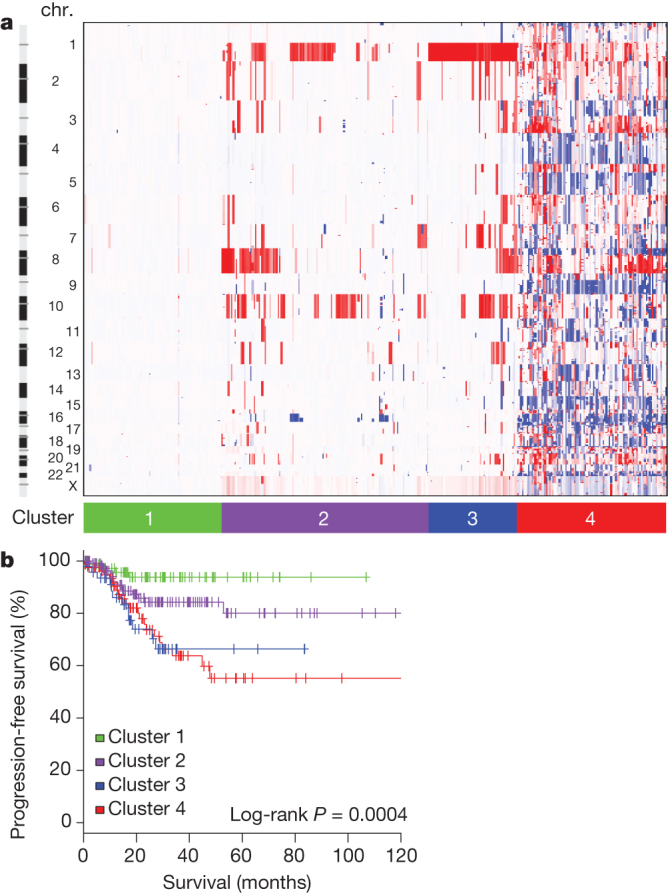
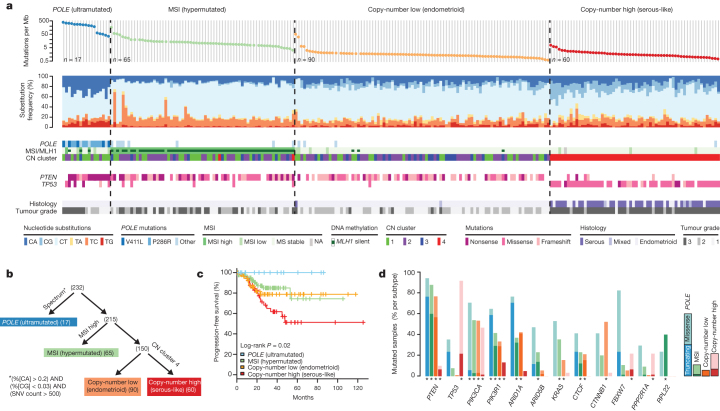
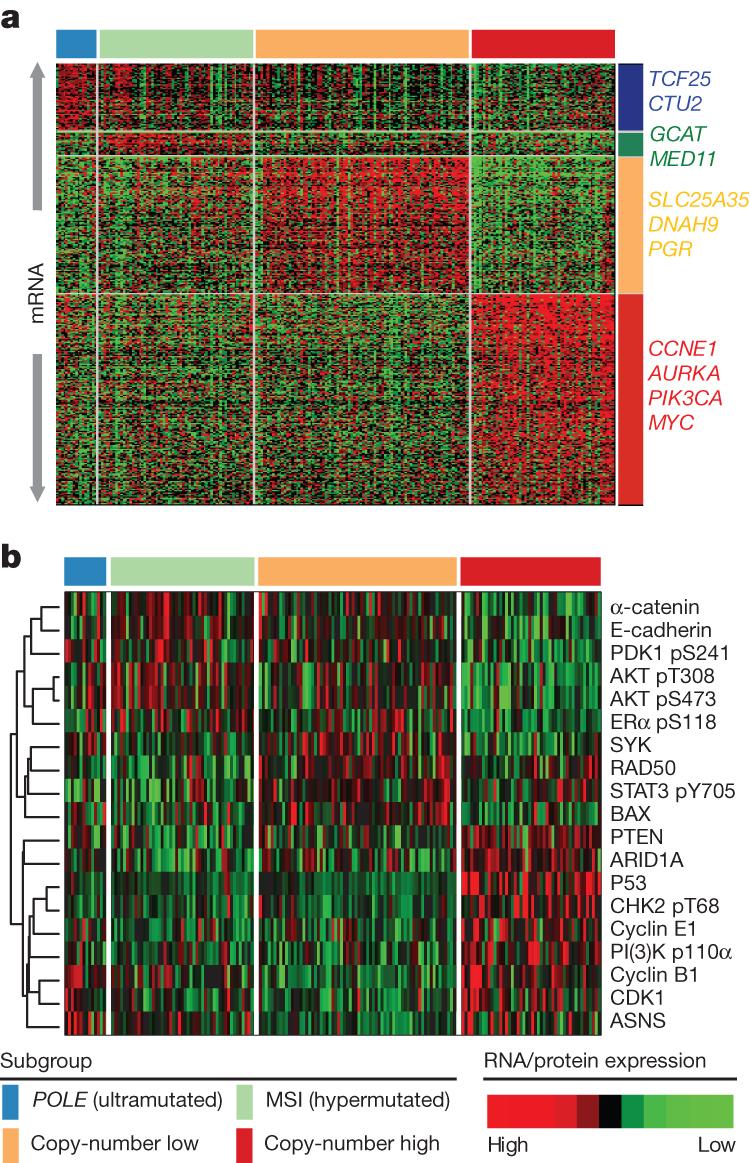
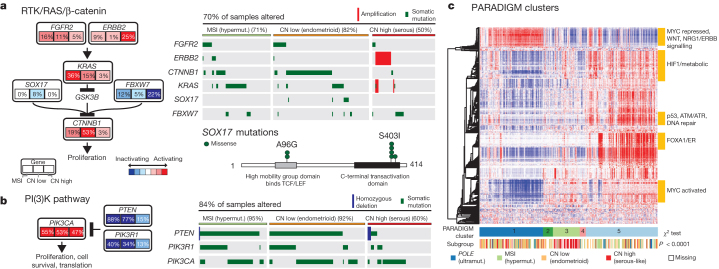
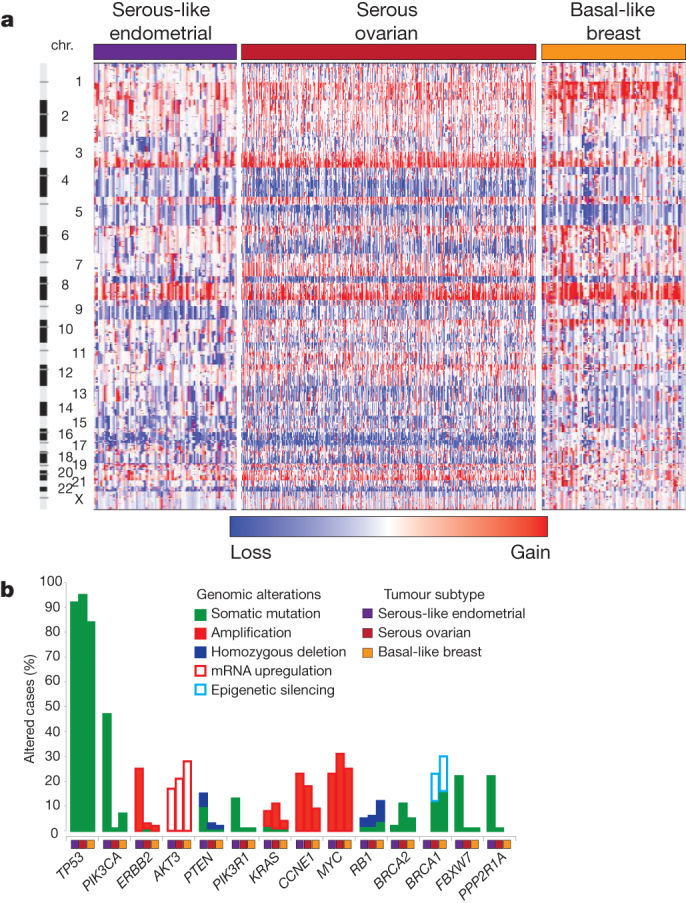
SummaryWe performed an integrated genomic, transcriptomic, and proteomic characterization of 373 endometrial carcinomas using array- and sequencing-based technologies. Uterine serous tumors and ~25% of high-grade endometrioid tumors have extensive copy number alterations, few DNA methylation changes, low ER/PR levels, and frequent TP53 mutations. Most endometrioid tumors have few copy number alterations or TP53 mutations but frequent mutations in PTEN, CTNNB1, PIK3CA, ARID1A, KRAS and novel mutations in the SWI/SNF gene ARID5B. A subset of endometrioid tumors we identified had a dramatically increased transversion mutation frequency, and newly identified hotspot mutations in POLE. Our results classified endometrial cancers into four categories: POLE ultramutated, microsatellite instability hypermutated, copy number low, and copy number high. Uterine serous carcinomas share genomic features with ovarian serous and basal-like breast carcinomas. We demonstrated that the genomic features of endometrial carcinomas permit a reclassification that may impact post-surgical adjuvant treatment for women with aggressive tumors.
Overview
The claims and statistics of this paper haven’t been checked yet.
Run the check — free, no account needed. It reads the open-access text and checks the sources it cites.
Integrity signals
Registry
Cites
Statistics
Figures
Verification
Claims the paper makes
The claims and statistics of this paper haven’t been checked yet.
Run the check — free, no account needed. It reads the open-access text and checks the sources it cites.
Claims other papers make about this one
Each is checked against this paper’s own text: does it say what the citing paper says it does?
In the citing paper
“AR is up-regulated in 9.8% of endometrial adenocarcinoma grade 3 samples [63, 90].”
From Role of aldo-keto reductase family 1 (AKR1) enzymes in human steroid metabolism (2014) · cites this paper as [90]
Self-check
Percentages, sums and reported differences re-computed from the paper’s own numbers.
The self-check needs the paper’s full text.
Citations
Cites
Dubrawsky, N. (1989) · Ca · doi:10.3322/canjclin.39.6.399 · Cited by 84,410
Comprehensive molecular portraits of human breast tumours
The Cancer Genome Atlas Network (2012) · Nature · doi:10.1038/nature11412 · Cited by 12,129
Siegel, R., Naishadham, D., & Jemal, A. (2013) · CA A Cancer Journal for Clinicians · doi:10.3322/caac.21166 · Cited by 11,825
Comprehensive molecular characterization of human colon and rectal cancer
The Cancer Genome Atlas Network (2012) · Nature · doi:10.1038/nature11252 · Cited by 8,499
Bcl-2 is an inner mitochondrial membrane protein that blocks programmed cell death
Hockenbery, D., Nuñez, G., Milliman, C., Schreiber, R. D., & Korsmeyer, S. J. (1990) · Nature · doi:10.1038/348334a0 · Cited by 3,720
Mermel, C. H., Schumacher, S. E., Hill, B., Meyerson, M. M., Beroukhim, R., & Getz, G. A. (2011) · Genome biology · doi:10.1186/gb-2011-12-4-r41 · Cited by 3,520
Self-citationCpG island methylator phenotype in colorectal cancer
Toyota, M., Ahuja, N., Ohe-Toyota, M., Herman, J. G., Baylin, S. B., & Issa, J. J. (1999) · Proceedings of the National Academy of Sciences · doi:10.1073/pnas.96.15.8681 · Cited by 2,562
Identification of a CpG Island Methylator Phenotype that Defines a Distinct Subgroup of Glioma
Noushmehr, H., Weisenberger, D. J., Diefes, K., Phillips, H. S., Pujara, K., Berman, B. P., Pan, F., Pelloski, C. E., Sulman, E. P., Bhat, K. P., et al. (2010) · Cancer Cell · doi:10.1016/j.ccr.2010.03.017 · Cited by 2,337
Self-citationMetagenes and molecular pattern discovery using matrix factorization
Brunet, J.-P., Tamayo, P., Golub, T. R., & Mesirov, J. P. (2004) · Proceedings of the National Academy of Sciences · doi:10.1073/pnas.0308531101 · Cited by 2,183
A comprehensive catalogue of somatic mutations from a human cancer genome
Pleasance, E. D., Cheetham, R. K., Stephens, P. J., McBride, D. J., Humphray, S. J., Greenman, C. D., Varela, I., Lin, M.-L., Ordóñez, G. R., Bignell, G. R., et al. (2010) · Nature · doi:10.1038/nature08658 · Cited by 1,696
Research works printed but not linked: 2
- Lax, S. F. & Kurman, R. J. A dualistic model for endometrial carcinogenesis based on immunohistochemical and molecular genetic analyses. Verh. Dtsch. Ges. Pathol. 81, 228–232 (1997)
- Levine, R. L. et al. PTEN mutations and microsatellite instability in complex atypical hyperplasia, a precursor lesion to uterine endometrioid carcinoma. Cancer Res. 58, 3254–3258 (1998)
Cited by
Sorted by citations
Inferring tumour purity and stromal and immune cell admixture from expression data
Yoshihara, K., Shahmoradgoli, M., Martínez, E., Vegesna, R., Kim, H., Torres-Garcia, W., Treviño, V., Shen, H., Laird, P. W., Levine, D. A., et al. (2013) · Nature Communications · doi:10.1038/ncomms3612 · Cited by 9,778
Self-citationThe cancer genome atlas pan-cancer analysis project
The Cancer Genome Atlas Research Network, Weinstein, J. N., Collisson, E. A., Mills, G. B., Shaw, K. R. M., Ozenberger, B. A., Ellrott, K., Shmulevich, I., Sander, C., & Stuart, J. M. (2013) · Nature Genetics · doi:10.1038/ng.2764 · Cited by 9,092
Self-citationSignatures of mutational processes in human cancer
Initiative, A. P. C. G., Alexandrov, L. B., ICGC Breast Cancer Consortium, ICGC MMML-Seq Consortium, PedBrain, I., Nik-Zainal, S., Wedge, D. C., Aparicio, S. A. J. R., Behjati, S., Biankin, A. V., et al. (2013) · Nature · doi:10.1038/nature12477 · Cited by 9,660
PD-1 Blockade in Tumors with Mismatch-Repair Deficiency
Le, D. T., Uram, J. N., Wang, H., Bartlett, B. R., Kemberling, H., Eyring, A. D., Skora, A. D., Luber, B. S., Azad, N. S., Laheru, D., et al. (2015) · New England Journal of Medicine · doi:10.1056/nejmoa1500596 · Cited by 9,377
Comprehensive molecular characterization of gastric adenocarcinoma
The Cancer Genome Atlas Research Network (2014) · Nature · doi:10.1038/nature13480 · Cited by 6,498
Mutational landscape and significance across 12 major cancer types
Kandoth, C., McLellan, M. D., Vandin, F., Ye, K., Niu, B., Lu, C., Xie, M., Zhang, Q., McMichael, J. F., Wyczalkowski, M. A., et al. (2013) · Nature · doi:10.1038/nature12634 · Cited by 4,419
Liu, J., Lichtenberg, T., Hoadley, K. A., Poisson, L. M., Lazar, A. J., Cherniack, A. D., Kovatich, A. J., Benz, C. C., Levine, D. A., Lee, A. V., et al. (2018) · Cell · doi:10.1016/j.cell.2018.02.052 · Cited by 3,725
“Thus, the event time for OS and PFI derived from this TCGA dataset is consistent with the literature, an observation previously noted for OS in the initial GBM marker paper when only 185 cases were analyzed (Cancer Genome Atlas Research Network, 2008).”
ResultSelf-citationOncogenic Signaling Pathways in The Cancer Genome Atlas
Sanchez-Vega, F., Mina, M., Armenia, J., Chatila, W. K., Luna, A., La, K. C., Dimitriadoy, S., Liu, D. L., Kantheti, H. S., Saghafinia, S., et al. (2018) · Cell · doi:10.1016/j.cell.2018.03.035 · Cited by 3,201
Self-citationDiscovery and saturation analysis of cancer genes across 21 tumour types
Lawrence, M. S., Stojanov, P., Mermel, C. H., Robinson, J. T., Garraway, L. A., Golub, T. R., Meyerson, M., Gabriel, S. B., Lander, E. S., & Getz, G. (2014) · Nature · doi:10.1038/nature12912 · Cited by 3,096
Hoadley, K. A., Yau, C., Hinoue, T., Wolf, D. M., Lazar, A. J., Drill, E., Shen, R., Taylor, A. M., Cherniack, A. D., Thorsson, V., et al. (2018) · Cell · doi:10.1016/j.cell.2018.03.022 · Cited by 2,546
Self-citationIntegrated genomic characterization of pancreatic ductal adenocarcinoma
Raphael, B. J., Hruban, R. H., Aguirre, A. J., Moffitt, R. A., Yeh, J. J., Stewart, C., Robertson, A. G., Cherniack, A. D., Gupta, M., Getz, G., et al. (2017) · Cancer Cell · doi:10.1016/j.ccell.2017.07.007 · Cited by 2,019
The landscape of genomic alterations across childhood cancers
ICGC PedBrain-Seq Project, Gröbner, S. N., ICGC MMML-Seq Project, Worst, B. C., Weischenfeldt, J., Buchhalter, I., Kleinheinz, K., Rudneva, V. A., Johann, P. D., Balasubramanian, G. P., et al. (2018) · Nature · doi:10.1038/nature25480 · Cited by 1,572
Kather, J. N., Pearson, A. T., Halama, N., Jäger, D., Krause, J., Loosen, S. H., Marx, A., Boor, P., Tacke, F., Neumann, U. P., et al. (2019) · Nature Medicine · doi:10.1038/s41591-019-0462-y · Cited by 1,458
Proteogenomic characterization of human colon and rectal cancer
CPTAC, T. N., Zhang, B., Wang, J., Wang, X., Zhu, J., Liu, Q., Shi, Z., Chambers, M. C., Zimmerman, L. J., Shaddox, K. F., et al. (2014) · Nature · doi:10.1038/nature13438 · Cited by 1,462
Lord, C. J., & Ashworth, A. (2016) · Nature Reviews Cancer · doi:10.1038/nrc.2015.21 · Cited by 1,257
Activating ESR1 mutations in hormone-resistant metastatic breast cancer
Robinson, D. R., Wu, Y.-M., Vats, P., Su, F., Lonigro, R. J., Cao, X., Kalyana-Sundaram, S., Wang, R., Ning, Y., Hodges, L., et al. (2013) · Nature Genetics · doi:10.1038/ng.2823 · Cited by 1,145
Whole-exome sequencing of pancreatic cancer defines genetic diversity and therapeutic targets
Witkiewicz, A. K., McMillan, E. A., Balaji, U., Baek, G., Lin, W.-C., Mansour, J., Mollaee, M., Wagner, K.-U., Koduru, P., Yopp, A., et al. (2015) · Nature Communications · doi:10.1038/ncomms7744 · Cited by 1,115
The whole-genome landscape of medulloblastoma subtypes
Northcott, P. A., Buchhalter, I., Morrissy, A. S., Hovestadt, V., Weischenfeldt, J., Ehrenberger, T., Gröbner, S., Segura-Wang, M., Zichner, T., Rudneva, V. A., et al. (2017) · Nature · doi:10.1038/nature22973 · Cited by 1,112
Davoli, T., Xu, A. W., Mengwasser, K. E., Sack, L. M., Yoon, J. C., Park, P. J., & Elledge, S. J. (2013) · Cell · doi:10.1016/j.cell.2013.10.011 · Cited by 815
Liu, J., Eckert, M. A., Harada, B. T., Liu, S., Lu, Z., Yu, K., Tienda, S. M., Chryplewicz, A., Zhu, A. C., Yang, Y., et al. (2018) · Nature Cell Biology · doi:10.1038/s41556-018-0174-4 · Cited by 781
“Sequencing studies have found that the METTL14 subunit of the core m 6 A methyltransferase complex is frequently mutated in endometrial tumors 36 , but the relevance of these mutations and of m 6 A mRNA methylation to the disease has not yet been established.”
InfluentialChang, M. T., Asthana, S., Gao, S. P., Lee, B. H., Chapman, J. S., Kandoth, C., Gao, J., Socci, N. D., Solit, D. B., Olshen, A. B., et al. (2016) · Nature Biotechnology · doi:10.1038/nbt.3391 · Cited by 808
Howitt, B. E., Shukla, S. A., Sholl, L. M., Ritterhouse, L. L., Watkins, J. C., Rodig, S. J., Stover, E. H., Strickland, K. C., D’Andrea, A. D., Wu, C. J., et al. (2015) · JAMA Oncology · doi:10.1001/jamaoncol.2015.2151 · Cited by 695
Systems genetics approaches to understand complex traits
Civelek, M., & Lusis, A. J. (2014) · Nature Reviews Genetics · doi:10.1038/nrg3575 · Cited by 621
“For example, a recent study from The Cancer Genome Atlas project revealed similarities between some endometrial cancers and subtypes of ovarian and breast cancers 91 .”
ResultProteogenomic Characterization of Endometrial Carcinoma
Dou, Y., Kawaler, E. A., Cui Zhou, D., Gritsenko, M. A., Huang, C., Blumenberg, L., Karpova, A., Petyuk, V. A., Savage, S. R., Satpathy, S., et al. (2020) · Cell · doi:10.1016/j.cell.2020.01.026 · Cited by 485
Self-citationLenvatinib plus pembrolizumab in patients with advanced endometrial cancer
Makker, V., Taylor, M. H., Aghajanian, C., Oaknin, A., Mier, J., Cohn, A. L., Romeo, M., Bratos, R., Brose, M. S., DiSimone, C., et al. (2020) · Journal of Clinical Oncology · doi:10.1200/jco.19.02627 · Cited by 522
“MSI-H tumors with high mutational burdens are more susceptible to checkpoint inhibitors,(11) and the mutational burden in MSI-H endometrial cancers is particularly high.(12) Pembrolizumab has demonstrated efficacy in patients with MSI-H endometrial cancer.”
BackgroundGenome-wide analysis of noncoding regulatory mutations in cancer
Weinhold, N., Jacobsen, A., Schultz, N., Sander, C., & Lee, W. (2014) · Nature Genetics · doi:10.1038/ng.3101 · Cited by 484
The mutational landscape of normal human endometrial epithelium
Moore, L., Leongamornlert, D., Coorens, T. H. H., Sanders, M. A., Ellis, P., Dentro, S. C., Dawson, K. J., Butler, T., Rahbari, R., Mitchell, T. J., et al. (2020) · Nature · doi:10.1038/s41586-020-2214-z · Cited by 499
Mutational signatures: the patterns of somatic mutations hidden in cancer genomes
Alexandrov, L. B., & Stratton, M. R. (2014) · Current Opinion in Genetics & Development · doi:10.1016/j.gde.2013.11.014 · Cited by 488
Stelloo, E., Bosse, T., Nout, R. A., MacKay, H. J., Church, D. N., Nijman, H. W., Leary, A., Edmondson, R. J., Powell, M. E., Crosbie, E. J., et al. (2015) · Modern Pathology · doi:10.1038/modpathol.2015.43 · Cited by 486
Artificial intelligence in histopathology: enhancing cancer research and clinical oncology
Shmatko, A., Ghaffari Laleh, N., Gerstung, M., & Kather, J. N. (2022) · Nature Cancer · doi:10.1038/s43018-022-00436-4 · Cited by 446
Goode, E. L., Block, M. S., Kalli, K. R., Vierkant, R. A., Chen, W., Fogarty, Z. C., Gentry‐Maharaj, A., Toloczko, A. D., Hein, A., Bouligny, A., et al. (2017) · JAMA Oncology · doi:10.1001/jamaoncol.2017.3290 · Cited by 397
Clinical actionability of molecular targets in endometrial cancer
Urick, M. E., & Bell, D. W. (2019) · Nature Reviews Cancer · doi:10.1038/s41568-019-0177-x · Cited by 405
Tumor suppression by the Fbw7 ubiquitin ligase: mechanisms and opportunities
Davis, R. J., Welcker, M., & Clurman, B. E. (2014) · Cancer Cell · doi:10.1016/j.ccell.2014.09.013 · Cited by 343
Singh, N., Piskorz, A., Bosse, T., Jimenez‐Liñan, M., Rous, B., Brenton, J. D., Gilks, C. B., & Köbel, M. (2019) · The Journal of Pathology · doi:10.1002/path.5375 · Cited by 319
“In the molecular classification of EC, the presence of TP53 mutation or p53abn IHC is only a surrogate for CN-high molecular subtype if the POLEmut and MMRd tumours are excluded [7,14,17].”
BackgroundInfluentialPromoter-proximal CTCF binding promotes distal enhancer-dependent gene activation
Kubo, N., Ishii, H., Xiong, X., Bianco, S., Meitinger, F., Hu, R., Hocker, J. D., Conte, M., Gorkin, D., Yu, M., et al. (2021) · Nature Structural & Molecular Biology · doi:10.1038/s41594-020-00539-5 · Cited by 289
Domingo, E., Freeman-Mills, L., Rayner, E., Glaire, M., Briggs, S., Vermeulen, L., Fessler, E., Medema, J. P., Boot, A., Morreau, H., et al. (2016) · The Lancet Gastroenterology & Hepatology · doi:10.1016/s2468-1253(16)30014-0 · Cited by 308
A fully Bayesian latent variable model for integrative clustering analysis of multi-type omics data
Mo, Q., Shen, R., Guo, C., Vannucci, M., Chan, K. S., & Hilsenbeck, S. G. (2017) · Biostatistics · doi:10.1093/biostatistics/kxx017 · Cited by 294
Connor, A. A., Denroche, R. E., Jang, G. H., Timms, L. E., Kalimuthu, S. N., Selander, I., McPherson, T. A., Wilson, G. W., Chan‐Seng‐Yue, M., Borozan, I., et al. (2016) · JAMA Oncology · doi:10.1001/jamaoncol.2016.3916 · Cited by 289
Integrative multi-omics approaches in cancer research: from biological networks to clinical subtypes
Heo, Y. J., Hwa, C., Lee, G.-H., Park, J.-M., & An, J.-Y. (2021) · Molecules and Cells · doi:10.14348/molcells.2021.0042 · Cited by 294
AKT in cancer: new molecular insights and advances in drug development
Mundi, P. S., Sachdev, J., McCourt, C., & Kalinsky, K. (2016) · British Journal of Clinical Pharmacology · doi:10.1111/bcp.13021 · Cited by 272
Structural Basis for the Versatile and Methylation-Dependent Binding of CTCF to DNA
Hashimoto, H., Wang, D., Horton, J. R., Zhang, X., Corces, V. G., & Cheng, X. (2017) · Molecular Cell · doi:10.1016/j.molcel.2017.05.004 · Cited by 268
Shu, C. A., Pike, M. C., Jotwani, A. R., Friebel, T. M., Soslow, R. A., Levine, D. A., Nathanson, K. L., Konner, J. A., Arnold, A. G., Bogomolniy, F., et al. (2016) · JAMA Oncology · doi:10.1001/jamaoncol.2016.1820 · Cited by 232
Role of aldo-keto reductase family 1 (AKR1) enzymes in human steroid metabolism
Rižner, T. L., & Penning, T. M. (2014) · Steroids · doi:10.1016/j.steroids.2013.10.012 · Cited by 217
Macroscopic somatic clonal expansion in morphologically normal human urothelium
Li, R., Du, Y., Chen, Z., Xu, D., Lin, T., Jin, S., Wang, G., Liu, Z., Lu, M., Chen, X., et al. (2020) · Science · doi:10.1126/science.aba7300 · Cited by 206
Characterizing DNA methylation alterations from The Cancer Genome Atlas
Weisenberger, D. J. (2014) · Journal of Clinical Investigation · doi:10.1172/jci69740 · Cited by 200
Vermij, L., Jobsen, J. J., León‐Castillo, A., Brinkhuis, M., Roothaan, S. M., Powell, M. E. B., de Boer, S. M., Khaw, P., Mileshkin, L., Fyles, A., et al. (2023) · British Journal of Cancer · doi:10.1038/s41416-023-02141-0 · Cited by 193
“In the TCGA analyses, pathogenic TP53mutations were present in 90% of copy number-high tumours [40].”
BackgroundMcCluggage, W. G., Singh, N., & Gilks, C. B. (2022) · Histopathology · doi:10.1111/his.14609 · Cited by 199
“In contrast to tubo-ovarian HGSC, however, some p53abn endometrial carcinomas have recurrent mutations in PIK3CA, FBXW7, and PPP2R1A46; they are less likely to have mutations in BRCA1 or BRCA2 than is tubo-ovarian HGSC.46,67 HER2 amplification occurs in ~20% of this molecular subtype, and a proportion have homologous…”
BackgroundInfluentialIncreased somatic mutation burdens in normal human cells due to defective DNA polymerases
Robinson, P. S., Coorens, T. H. H., Palles, C., Mitchell, E., Abascal, F., Olafsson, S., Lee, B. C. H., Lawson, A. R. J., Lee-Six, H., Moore, L., et al. (2021) · Nature Genetics · doi:10.1038/s41588-021-00930-y · Cited by 173
Choucair, K., Morand, S. M., Stanbery, L., Edelman, G. M., Dworkin, L. D., & Nemunaitis, J. J. (2020) · Cancer Gene Therapy · doi:10.1038/s41417-020-0174-y · Cited by 170
Protein neddylation and its role in health and diseases
Zhang, S., Yu, Q., Li, Z., Zhao, Y., & Sun, Y. (2024) · Signal Transduction and Targeted Therapy · doi:10.1038/s41392-024-01800-9 · Cited by 171
McAlpine, J. N., Chiu, D. S., Nout, R. A., Church, D. N., Schmidt, P., Lam, S., Leung, S. C. Y., Bellone, S., Wong, A., Brucker, S. Y., et al. (2021) · Cancer · doi:10.1002/cncr.33516 · Cited by 170
“8 The Cancer Genome Atlas (TCGA)(9) identified a novel subgroup of ECs with mutations in DNA polymerase epsilon (POLE) that are responsible for DNA replication and lead to exceedingly high somatic mutation frequencies (“ultramutated”: >100 mutations per megabase).(9) It is now recognized that approximately 5% to 10% o…”
BackgroundEfficient Use of Patient-Derived Organoids as a Preclinical Model for Gynecologic Tumors
Maru, Y., Tanaka, N., Itami, M., & Hippo, Y. (2019) · Gynecologic Oncology · doi:10.1016/j.ygyno.2019.05.005 · Cited by 162
Al-Adra, D. P., Hammel, L., Roberts, J., Woodle, E. S., Levine, D., Mandelbrot, D., Verna, E., Locke, J., D’Cunha, J., Farr, M., et al. (2021) · American Journal of Transplantation · doi:10.1111/ajt.16318 · Cited by 163
“73 For women with cervical cancer, surgery is reserved for those without evidence of bulky cervical disease (primary cervical lesion 4 cm or larger) or other advanced features (eg, local invasion beyond the uterus).”
BackgroundSelf-citationSantin, A. D., Bellone, S., Buza, N., Choi, J., Schwartz, P. E., Schlessinger, J., & Lifton, R. P. (2016) · Clinical Cancer Research · doi:10.1158/1078-0432.ccr-16-1031 · Cited by 161
“POLE ultra-mutated tumors account for 7% to 12% of all endometrial carcinomas (1, 2, 5, 6) and occur secondary to mutations in the exonuclease domain of POLE, a nuclear DNA polymerase endowed with intrinsic proofreading activity (5).”
BackgroundInfluentialJiao, Y., Widschwendter, M., & Teschendorff, A. E. (2014) · Bioinformatics · doi:10.1093/bioinformatics/btu316 · Cited by 148
“Thus, in order to validate our method of summarizing Illumina 450k DNAm data at the gene-level, we decided to apply the EpiMod and FEM algorithms to an independent endometrial normal/cancer Infinium 450k set generated as part of the TCGA (Methods) (Kandoth et al., 2013).”
BackgroundMethodInfluentialMurali, R., DeLair, D. F., Bean, S. M., Abu‐Rustum, N. R., & Soslow, R. A. (2018) · Journal of the National Comprehensive Cancer Network · doi:10.6004/jnccn.2017.7066 · Cited by 139
Jhaveri, K. L., Wang, X. V., Makker, V., Luoh, S.-W., Mitchell, E. P., Zwiebel, J. A., Sharon, E., Gray, R. J., Li, S., McShane, L. M., et al. (2019) · Annals of Oncology · doi:10.1093/annonc/mdz291 · Cited by 151
Endometrial carcinoma: molecular subtypes, precursors and the role of pathology in early diagnosis
Huvila, J. K., Pors, J., Thompson, E. F., & Gilks, C. B. (2020) · The Journal of Pathology · doi:10.1002/path.5608 · Cited by 149
“In 2013, The Cancer Genome Atlas (TCGA) identified four molecular subtypes of EC based on genomic features [10].”
BackgroundOncogenic mutations in histologically normal endometrium: the new normal?
Lac, V., Nazeran, T. M., Tessier‐Cloutier, B., Aguirre-Hernández, R., Albert, A., Lum, A. M., Khattra, J. S., Praetorius, T., Mason, M., Chiu, D. S., et al. (2019) · The Journal of Pathology · doi:10.1002/path.5314 · Cited by 139
“Comparing our data to the TCGA endometrial cancer dataset reveals that the prevalence of driver mutations is higher across age in endometrial cancer (or comparably as uncommon) in all genes except for KRAS.”
BackgroundResultInfluentialRole of POLE and POLD1 in familial cancer
Mur, P., García‐Mulero, S., Valle, J. D., Magraner-Pardo, L., Vidal, A., Pineda, M., Cinnirella, G., Martin, E. J., Pons, T., López‐Doriga, A., et al. (2020) · Genetics in Medicine · doi:10.1038/s41436-020-0922-2 · Cited by 144
Molecular stratification of endometrioid ovarian carcinoma predicts clinical outcome
Hollis, R. L., Thomson, J. P., Stanley, B., Churchman, M., Meynert, A. M., Rye, T., Bartos, C., Iida, Y., Croy, I., Mackean, M., et al. (2020) · Nature Communications · doi:10.1038/s41467-020-18819-5 · Cited by 141
Ring, K. L., Mills, A. M., & Modesitt, S. C. (2022) · Obstetrics and Gynecology · doi:10.1097/aog.0000000000004989 · Cited by 138
Collateral lethality: a new therapeutic strategy in oncology
Muller, F. L., Aquilanti, E. A., & DePinho, R. A. (2015) · Trends in Cancer · doi:10.1016/j.trecan.2015.10.002 · Cited by 132
Overcoming Wnt–β-catenin dependent anticancer therapy resistance in leukaemia stem cells
Perry, J. M., Fang, T., Roy, A., Lin, T. L., He, X., Chen, S., Lü, X., Nemechek, J. M., Ruan, L., Yu, X., et al. (2020) · Nature Cell Biology · doi:10.1038/s41556-020-0507-y · Cited by 140
Selective Progesterone Receptor Modulators—Mechanisms and Therapeutic Utility
Islam, M. S., Afrin, S., Jones, S. I., & Segars, J. (2020) · Endocrine Reviews · doi:10.1210/endrev/bnaa012 · Cited by 143
Haesen, D., Abbasi Asbagh, L., Derua, R., Hubert, A., Schrauwen, S., Hoorne, Y., Amant, F., Waelkens, E., Sablina, A., & Janssens, V. (2016) · Cancer Research · doi:10.1158/0008-5472.can-15-3342 · Cited by 124
Conditional Selection of Genomic Alterations Dictates Cancer Evolution and Oncogenic Dependencies
Mina, M., Raynaud, F., Tavernari, D., Battistello, E., Sungalee, S., Saghafinia, S., Laessle, T., Sanchez-Vega, F., Schultz, N., Oricchio, E., et al. (2017) · Cancer Cell · doi:10.1016/j.ccell.2017.06.010 · Cited by 129
Pasanen, A. M., Loukovaara, M. J., & Bützow, R. C. (2020) · Modern Pathology · doi:10.1038/s41379-020-0501-8 · Cited by 129
“MMRd carcinomas rarely displayed aberrant p53 or L1CAM positivity, both considered molecular markers of aggressive EC [1, 27, 46, 47].”
BackgroundMethodInfluentialUnderstanding mutagenesis through delineation of mutational signatures in human cancer
Petljak, M., & Alexandrov, L. B. (2016) · Carcinogenesis · doi:10.1093/carcin/bgw055 · Cited by 110
Solid Tumors Challenges and New Insights of CAR T Cell Engineering
Tahmasebi, S., Elahi, R., & Esmaeilzadeh, A. (2019) · Stem Cell Reviews and Reports · doi:10.1007/s12015-019-09901-7 · Cited by 115
Kolin, D. L., Quick, C. M., Dong, F., Fletcher, C. D. �., Stewart, C. J. R., Soma, A., Hornick, J. L., Nucci, M. R., & Howitt, B. E. (2019) · The American Journal of Surgical Pathology · doi:10.1097/pas.0000000000001375 · Cited by 111
Moving pan-cancer studies from basic research toward the clinic
Chen, F., Wendl, M. C., Wyczalkowski, M. A., Bailey, M. H., Li, Y., & Ding, L. (2021) · Nature Cancer · doi:10.1038/s43018-021-00250-4 · Cited by 108
Self-citationZaffaroni, G., Mannucci, A., Koskenvuo, L. E., de Lacy, F. B., Maffioli, A., Bisseling, T. M., Half, E., Cavestro, G. M., Valle, L., Ryan, N. A. J., et al. (2024) · British journal of surgery · doi:10.1093/bjs/znae070 · Cited by 111
Detection of endometrial cancer via molecular analysis of DNA collected with vaginal tampons.
Bakkum-Gamez, J. N., Wentzensen, N., Maurer, M. J., Hawthorne, K. M., Voss, J. S., Kroneman, T. N., Famuyide, A. O., Clayton, A. C., Halling, K. C., Kerr, S. E., et al. (2015) · Gynecologic Oncology · doi:10.1016/j.ygyno.2015.01.552 · Cited by 107
Raynaud, F., Mina, M., Tavernari, D., & Ciriello, G. (2018) · PLoS Genetics · doi:10.1371/journal.pgen.1007669 · Cited by 106
New perspectives on screening and early detection of endometrial cancer
Costas, L., Frias‐Gomez, J., Guardiola, M., Benavente, Y., Pineda, M., Pavón, M. Á., Martínez, J. M., Climent, M., Barahona, M., Canet, J., et al. (2019) · International Journal of Cancer · doi:10.1002/ijc.32514 · Cited by 100
“Although the dualistic classification system remains the gold standard, a new classification system by The Cancer Genome Atlas (TCGA) Consortium based on molecular features is starting to be integrated into clinical practice.(9,10) In contrast to many common diseases that could be detected preclinically, but screening…”
BackgroundCochrane, D. R., Campbell, K. R., Greening, K., Ho, G. C., Hopkins, J., Bui, M., Douglas, J. M., Sharlandjieva, V., Munzur, A. D., Lai, D., et al. (2020) · The Journal of Pathology · doi:10.1002/path.5511 · Cited by 84
“The Cancer Genome Atlas (TCGA) demonstrated that endometrial carcinoma patients could be differentiated into four prognostically distinct subgroups [22].”
BackgroundNetwork Medicine in Pathobiology
Lee, L. Y.-H., & Loscalzo, J. (2019) · The American Journal of Pathology · doi:10.1016/j.ajpath.2019.03.009 · Cited by 95
“Oncologic research is one of the leading areas in which PARADIGM or similar algorithms have been widely adopted to integrate multiplatform patient data.(90) One of these multi-omic cancer studies recently added a novel dimension of antitumor immunity profiles to guide personalized immunotherapy.”
BackgroundAlterations of DNA damage repair in cancer: from mechanisms to applications
Jiang, M., Jia, K., Wang, L., Li, W., Chen, B., Liu, Y., Wang, H., Zhao, S., He, Y., & Zhou, C. (2020) · Annals of Translational Medicine · doi:10.21037/atm-20-2920 · Cited by 87
“Kandoth et al. identified the frequencies of MSI in DNA polymerase epsilon ( POLE ) mutations in endometrial and colorectal cancers to be 40% and 11%, respectively, and the mutation rates to be 7% and 3%, respectively (26).”
Rahmanto, Y. S., Shen, W., Shi, X., Chen, X. X., Yu, Y., Yu, Z.-C., Miyamoto, T., Lee, M.-H., Singh, V., Asaka, R., et al. (2020) · Nature Communications · doi:10.1038/s41467-020-16416-0 · Cited by 91
Prognostic Integrated Image-Based Immune and Molecular Profiling in Early-Stage Endometrial Cancer
Horeweg, N., de Bruyn, M., Nout, R. A., Stelloo, E., Kedzierska, K., León‐Castillo, A., Plat, A., Mertz, K. D., Osse, M., Jurgenliemk-Schulz, I. M., et al. (2020) · Cancer Immunology Research · doi:10.1158/2326-6066.cir-20-0149 · Cited by 82
Cancer-associated mutations in endometriosis: shedding light on the pathogenesis and pathophysiology
Guo, S.-W. (2020) · Human Reproduction Update · doi:10.1093/humupd/dmz047 · Cited by 96
Nesic, K., Kondrashova, O., Hurley, R. M., McGehee, C. D., Vandenberg, C. J., Ho, G., Lieschke, E., Dall, G., Bound, N. T., Shield‐Artin, K., et al. (2021) · Cancer Research · doi:10.1158/0008-5472.can-21-0774 · Cited by 90
Costigan, D. C., Dong, F., Nucci, M. R., & Howitt, B. E. (2019) · International Journal of Gynecological Pathology · doi:10.1097/pgp.0000000000000583 · Cited by 90
“Given that previous studies have shown that the association of CTNNB1 mutated tumors with poor prognosis was dependent on molecular subgroup (9), we examined our stage IA exon 3 mutated tumors in the context of other significant molecular classifiers in TCGA classification system (6); almost 80% of tumors were TP53 an…”
MethodResultPhenotype of POLE-mutated endometrial cancer
Imboden, S., Nastic, D., Ghaderi, M., Rydberg, F., Rau, T. T., Mueller, M. D., Epstein, E., & Carlson, J. W. (2019) · PLoS ONE · doi:10.1371/journal.pone.0214318 · Cited by 88
Past, present, and future of hormonal therapy in recurrent endometrial cancer
Leslie, K. K., Thiel, K. W., & Carlson, M. J. (2014) · International Journal of Women s Health · doi:10.2147/ijwh.s40942 · Cited by 84
Molecular subtypes of endometrial cancer: Implications for adjuvant treatment strategies
Yang, Y., Wu, S. F., & Bao, W. (2023) · International Journal of Gynecology & Obstetrics · doi:10.1002/ijgo.14969 · Cited by 96
“15 The first group, hypermutated, had somatic inactivating mutations in the exonuclease domain of polymerase epsilon (POLE), resulting in a very high mutation rate and excellent prognosis (7%).”
BackgroundGenetic characteristics of gastric-type mucinous carcinoma of the uterine cervix
Park, E., Kim, S. W., Kim, S., Kim, H.-S., Lee, J., Kim, Y. T., & Cho, N. H. (2020) · Modern Pathology · doi:10.1038/s41379-020-0614-0 · Cited by 83
Epidemiology, pathogenesis, biology and evolving management of MSI-H/dMMR cancers
Ambrosini, M., Manca, P., Nasca, V., Sciortino, C., Ghelardi, F., Seligmann, J. F., Taı̈eb, J., & Pietrantonio, F. (2025) · Nature Reviews Clinical Oncology · doi:10.1038/s41571-025-01015-z · Cited by 94
Evidence of androgen action in endometrial and ovarian cancers
Gibson, D. A., Simitsidellis, I., Collins, F., & Saunders, P. T. K. (2014) · Endocrine-Related Cancer · doi:10.1530/erc-13-0551 · Cited by 73
Dysregulated FGF signalling in neoplastic disorders
Tanner, Y., & Grose, R. P. (2015) · Seminars in Cell and Developmental Biology · doi:10.1016/j.semcdb.2015.10.012 · Cited by 78
Reverse phase protein arrays in signaling pathways: a data integration perspective
Huang, S., & Creighton, C. J. (2015) · Drug Design Development and Therapy · doi:10.2147/dddt.s38375 · Cited by 68
PD-L1 Expression in Endometrial Carcinoma Cells and Intratumoral Immune Cells
Pasanen, A. M., Ahvenainen, T., Pellinen, T. S., Vahteristo, P., Loukovaara, M. J., & Bützow, R. C. (2019) · The American Journal of Surgical Pathology · doi:10.1097/pas.0000000000001395 · Cited by 70
Krämer, P., Talhouk, A., Brett, M. A., Chiu, D. S., Cairns, E. S., Scheunhage, D. A., Hammond, R. F. L., Farnell, D., Nazeran, T. M., Grube, M. P., et al. (2020) · Clinical Cancer Research · doi:10.1158/1078-0432.ccr-20-1268 · Cited by 67
Casey, L., & Singh, N. (2020) · International Journal of Gynecological Pathology · doi:10.1097/pgp.0000000000000710 · Cited by 68
“About 7% to 12% of ECs demonstrate mutations in the exonuclease domain of POLE (11,14).”
BackgroundMethodBrett, M. A., Atenafu, E. G., Singh, N., Ghatage, P., Clarke, B. A., Nelson, G. S., Bernardini, M. Q., & Köbel, M. (2020) · International Journal of Gynecological Pathology · doi:10.1097/pgp.0000000000000674 · Cited by 65
“A molecular subtype classification has been proposed for endometrial carcinoma following The Cancer Genome Atlas (TCGA) project (1).”
BackgroundResultInfluentialBrain high-throughput multi-omics data reveal molecular heterogeneity in Alzheimer’s disease
Eteleeb, A. M., Novotny, B. C., Tarraga, C. S., Sohn, C., Dhungel, E., Brase, L., Nallapu, A., Buss, J., Farias, F., Bergmann, K., et al. (2024) · PLOS Biology · doi:10.1371/journal.pbio.3002607 · Cited by 64
Molecular characterization of endometrial cancer and therapeutic implications
Winterhoff, B. J. N., Thomaier, L., Mullany, S. A., & Powell, M. A. (2019) · Current Opinion in Obstetrics & Gynecology · doi:10.1097/gco.0000000000000602 · Cited by 60
Clear cell endometrial carcinoma and the TCGA classification
Travaglino, A., Raffone, A., Mascolo, M., Guida, M., Insabato, L., Zannoni, G. F., & Zullo, F. (2019) · Histopathology · doi:10.1111/his.13976 · Cited by 65
“Conversely, the CNH subgroup (also referred to as the ‘serous’ subgroup) is mainly composed of serous carcinomas and bears the worst prognosis among all TCGA subgroups.(1) Therefore, it might be hypothesized that some CCCs are biologically similar to endometrioid carcinoma and have a better prognosis, while some are s…”
BackgroundInfluentialYasin, H. K., Taylor, A. H., & Ayakannu, T. (2021) · Cancers · doi:10.3390/cancers13092149 · Cited by 65
“Copy number groups are defined by a differential profile of copy alterations (CNA), with the CNH group particularly presenting an elevated incidence of tumour suppressor p53 (TP53) mutations and worse prognosis when compared to the low copy number group [70].”
BackgroundMethod
Metadata
- Authors
- The Cancer Genome Atlas Research Network, & Levine, D. A.
- Affiliations
- Memorial Sloan Kettering Cancer Center (US)
- Corresponding author
- Levine, Douglas A.
- ORCID
- Levine, Douglas A.
- Venue
- Nature
- Published
- 2013-05-01
- Volume
- 497
- Issue
- 7447
- Pages
- 67-73
- ISSN
- 0028-0836 (ISSN-L)
- 1476-4687
- PMC
- PMC3704730
- OpenAlex
- W2041440766
- Cited by
- 5,784
- References
- 40
- Citations by year
- 2026: 467 · 2025: 580 · 2024: 559 · 2023: 595 · 2022: 591 · 2021: 572 · 2020: 455 · 2019: 384 · 2018: 320 · 2017: 328 · 2016: 313 · 2015: 285 · 2014: 231 · 2013: 96
- FWCI
- 345.78
- Type
- journal article
- Language
- en
- Update notices
- erratum (2013-06-12)
- Open access
- hybrid
- doi.org
- Licence
- Locations
- Nature (publishedVersion, cc-by-nc-sa)
- PubMed Central (publishedVersion, cc-by-nc-sa)
- PubMed (publishedVersion)
- Europe PMC (PubMed Central) (acceptedVersion)
- RePEc: Research Papers in Economics (submittedVersion)
- Funders
- National Institutes of Health
- National Human Genome Research Institute (U54HG003067, U54HG003079, U54HG003273)
- National Cancer Institute (P50CA098258, U24CA143882, R01CA180006, U24CA143843, U24CA143840, U24CA143858, U24CA144025, U24CA143866, U24CA143883, U24CA143845, U24CA143867, U24CA143848, U24CA143799, U24CA143835, P30CA008748, P30CA016672, P30CA016056, P30CA016086)
- Topics
- Health Sciences › Medicine › Obstetrics and Gynecology › Endometrial and Cervical Cancer Treatments
- Life Sciences › Biochemistry, Genetics and Molecular Biology › Cancer Research › Cancer Genomics and Diagnostics
- Life Sciences › Biochemistry, Genetics and Molecular Biology › Molecular Biology › Chromatin Remodeling and Cancer
- Keywords
- endometrial cancer, uterine serous carcinoma, endometrioid carcinoma, copy number alterations, TP53 mutation, POLE mutation, microsatellite instability, ARID5B, SWI/SNF chromatin remodeling, CTNNB1, PIK3CA, KRAS, PTEN, DNA methylation, oestrogen receptor, progesterone receptor, adjuvant therapy, genomic profiling
- MeSH terms
- Poly-ADP-Ribose Binding Proteins, Breast Neoplasms, Chromosome Aberrations, DNA Mutational Analysis, DNA Polymerase II, DNA-Binding Proteins, Female, Humans, Ovarian Neoplasms, Transcription Factors, Signal Transduction, Genome, Human, Gene Expression Regulation, Neoplastic, Endometrial Neoplasms, Genomics, DNA Copy Number Variations, Exome
About these checks
Registry, retraction, Cites and statistics results are computed, not judged, with one exception: a printed reference that no index lists is read once by a model before it counts as a citation error. Claims are extracted by a model and kept only when their quote appears verbatim in the text; each cited source is then checked, with a model’s help, for whether it says what the claim relies on. Those verdicts can be wrong — read the claim’s quote and the cited source before relying on one.
Statistics and arithmetic are recomputed, not judged.
Confidence bands are shown only for fields calibrated on our annotated test set. None is calibrated yet, so no band is shown.
What counts as a claim ›How we measure confidence ›How we check this ›
Are you an author, or do you see a problem with this page? Request a review
