

Subjective signal strength distinguishes reality from imagination
Open accessThe DOI matches its Crossref record; 81 of the 81 references it cites were found in a registry or an index.
Abstract
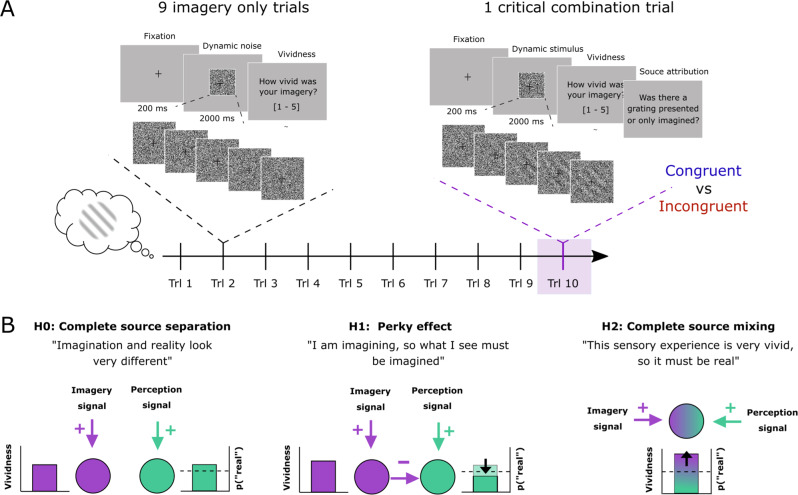
Humans are voracious imaginers, with internal simulations supporting memory, planning and decision-making. Because the neural mechanisms supporting imagery overlap with those supporting perception, a foundational question is how reality and imagination are kept apart. One possibility is that the intention to imagine is used to identify and discount self-generated signals during imagery. Alternatively, because internally generated signals are generally weaker, sensory strength is used to index reality. Traditional psychology experiments struggle to investigate this issue as subjects can rapidly learn that real stimuli are in play. Here, we combined one-trial-per-participant psychophysics with computational modelling and neuroimaging to show that imagined and perceived signals are in fact intermixed, with judgments of reality being determined by whether this intermixed signal is strong enough to cross a reality threshold. A consequence of this account is that when virtual or imagined signals are strong enough, they become subjectively indistinguishable from reality.
Overview
The claims and statistics of this paper haven’t been checked yet.
Free: it reads the open-access text and checks the first 5 claims that cite a source we can check. Create a free account to check every claim.
Integrity signals
Registry
Cites
Statistics
Figures
Verification
Claims the paper makes
The claims and statistics of this paper haven’t been checked yet.
Free: it reads the open-access text and checks the first 5 claims that cite a source we can check. Create a free account to check every claim.
Claims other papers make about this one
Each is checked against this paper’s own text: does it say what the citing paper says it does?
The check wasn’t confident either way, so it gives no verdict — never disputed.
In the citing paper
“For example, head direction signals from the brainstem can reach anterior thalamic nuclei239 (presumably through the ventral tegmental-lateral mammillary pathway), and from there reach the retrosplenial cortex and the hippocampus240.”
From Consciousness and sleep (2024) · cites this paper as [240]
Experimental — accuracy not yet measured
Self-check
Percentages, sums and reported differences re-computed from the paper’s own numbers.
The self-check needs the paper’s full text.
Citations
Cites
Signal detection theory and psychophysics
Ingleby, J. D. (1967) · Journal of Sound and Vibration · doi:10.1016/0022-460x(67)90197-6 · Cited by 8,509
U1 snRNP regulates cancer cell migration and invasion in vitro
Oh, J.-M., Venters, C. C., Di, C., Pinto, A. M., Wan, L., Younis, I., Cai, Z., Arai, C., So, B. R., Duan, J., et al. (2020) · Nature Communications · doi:10.1038/s41467-019-13993-7 · Cited by 7,157
Canonical Microcircuits for Predictive Coding
Bastos, A. M., Usrey, W. M., Adams, R. A., Mangun, G. R., Fries, P., & Friston, K. J. (2012) · Neuron · doi:10.1016/j.neuron.2012.10.038 · Cited by 2,421
Forward Models for Physiological Motor Control
Miall, R. C., & Wolpert, D. M. (1996) · Neural Networks · doi:10.1016/s0893-6080(96)00035-4 · Cited by 2,260
VISUAL IMAGERY DIFFERENCES IN THE RECALL OF PICTURES
MARKS, D. F. (1973) · British Journal of Psychology · doi:10.1111/j.2044-8295.1973.tb01322.x · Cited by 1,778
Central cancellation of self-produced tickle sensation
Blakemore, S.-J., Wolpert, D. M., & Frith, C. D. (1998) · Nature Neuroscience · doi:10.1038/2870 · Cited by 1,467
A free energy principle for the brain
Friston, K., Kilner, J., & Harrison, L. (2006) · Journal of Physiology-Paris · doi:10.1016/j.jphysparis.2006.10.001 · Cited by 1,369
Decoding reveals the contents of visual working memory in early visual areas
Harrison, S. A., & Tong, F. (2009) · Nature · doi:10.1038/nature07832 · Cited by 1,347
Sense of agency in the human brain
Haggard, P. (2017) · Nature Reviews Neuroscience · doi:10.1038/nrn.2017.14 · Cited by 1,107
Mental Imagery: Functional Mechanisms and Clinical Applications
Pearson, J., Naselaris, T., Holmes, E. A., & Kosslyn, S. M. (2015) · Trends in Cognitive Sciences · doi:10.1016/j.tics.2015.08.003 · Cited by 1,087
The Predictive Coding Account of Psychosis
Sterzer, P., Adams, R. A., Fletcher, P., Frith, C., Lawrie, S. M., Muckli, L., Petrovic, P., Uhlhaas, P., Voss, M., & Corlett, P. R. (2018) · Biological Psychiatry · doi:10.1016/j.biopsych.2018.05.015 · Cited by 941
The human imagination: the cognitive neuroscience of visual mental imagery
Pearson, J. (2019) · Nature Reviews Neuroscience · doi:10.1038/s41583-019-0202-9 · Cited by 820
The neural correlates of dreaming
Siclari, F., Baird, B., Perogamvros, L., Bernardi, G., LaRocque, J. J., Riedner, B., Boly, M., Postle, B. R., & Tononi, G. (2017) · Nature Neuroscience · doi:10.1038/nn.4545 · Cited by 758
Probabilistic Maps of Visual Topography in Human Cortex
Wang, L., Mruczek, R. E. B., Arcaro, M. J., & Kastner, S. (2015) · Cerebral Cortex · doi:10.1093/cercor/bhu277 · Cited by 712
An Experimental Study of Imagination
Perky, C. W. (1910) · The American Journal of Psychology · doi:10.2307/1413350 · Cited by 662 · cited 2×
“All participants failed to notice the presence of these real stimuli, reflecting that “if I hadn’t known I was imagining, I would have thought it real” (Perky, 1910, p. 433).””
BackgroundResultThe illusion of reality – a review and integration of psychological research on hallucinations
Bentall, R. P. (1990) · Psychological Bulletin · doi:10.1037/0033-2909.107.1.82 · Cited by 630
Neurophysiology of the BOLD fMRI Signal in Awake Monkeys
Goense, J. B. M., & Logothetis, N. K. (2008) · Current Biology · doi:10.1016/j.cub.2008.03.054 · Cited by 583
Allen, P., Larøi, F., McGuire, P. K., & Aleman, A. (2008) · Neuroscience & Biobehavioral Reviews · doi:10.1016/j.neubiorev.2007.07.012 · Cited by 579
Understanding the Higher-Order Approach to Consciousness
Brown, R., Lau, H., & LeDoux, J. E. (2019) · Trends in Cognitive Sciences · doi:10.1016/j.tics.2019.06.009 · Cited by 573
Shared representations for working memory and mental imagery in early visual cortex
Albers, A. M., Kok, P., Toni, I., Dijkerman, H. C., & de Lange, F. P. (2013) · Current Biology · doi:10.1016/j.cub.2013.05.065 · Cited by 528
D’Angiulli, A., Runge, M., Faulkner, A., Zakizadeh, J., Chan, A., & Morcos, S. (2013) · Frontiers in Psychology · doi:10.3389/fpsyg.2013.00001 · Cited by 509
Lange, K., Kühn, S., & Filevich, E. (2015) · PLOS ONE · doi:10.1371/journal.pone.0130834 · Cited by 474
Shared Neural Mechanisms of Visual Perception and Imagery
Dijkstra, N., Bosch, S. E., & van Gerven, M. A. J. (2019) · Trends in Cognitive Sciences · doi:10.1016/j.tics.2019.02.004 · Cited by 439
Self-citationEvidence for sensory prediction deficits in schizophrenia
Shergill, S. S., Samson, G., Bays, P. M., Frith, C. D., & Wolpert, D. M. (2005) · American Journal of Psychiatry · doi:10.1176/appi.ajp.162.12.2384 · Cited by 432
Two Eyes for an Eye: The Neuroscience of Force Escalation
Shergill, S. S., Bays, P. M., Frith, C. D., & Wolpert, D. M. (2003) · Science · doi:10.1126/science.1085327 · Cited by 409
The functional impact of mental imagery on conscious perception
Pearson, J., Clifford, C. W. G., & Tong, F. (2008) · Current Biology · doi:10.1016/j.cub.2008.05.048 · Cited by 409 · cited 4×
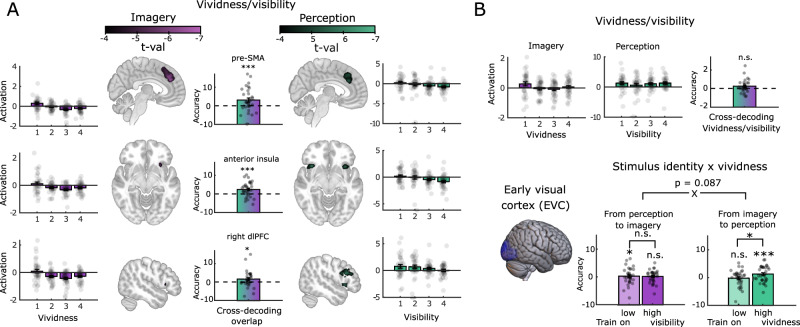
“The top panel indicate the univariate effect of vividness F(26, 3) = 1.”
BackgroundResultInfluentialToward a neurobiology of delusions
Corlett, P. R., Taylor, J. R., Wang, X.-J., Fletcher, P. C., & Krystal, J. H. (2010) · Progress in Neurobiology · doi:10.1016/j.pneurobio.2010.06.007 · Cited by 394
Stelzer, J., Chen, Y., & Turner, R. (2013) · NeuroImage · doi:10.1016/j.neuroimage.2012.09.063 · Cited by 372
Synofzik, M., Thier, P., Leube, D. T., Schlotterbeck, P., & Lindner, A. (2010) · Brain · doi:10.1093/brain/awp291 · Cited by 321
Vividness of Visual Imagery Depends on the Neural Overlap with Perception in Visual Areas
Dijkstra, N., Bosch, S. E., & van Gerven, M. A. J. (2017) · The Journal of Neuroscience · doi:10.1523/jneurosci.3022-16.2016 · Cited by 315
Self-citationNeurophysiological evidence of corollary discharge dysfunction in schizophrenia
Ford, J. M., Mathalon, D. H., Heinks, T., Kalba, S., Faustman, W. O., & Roth, W. T. (2001) · American Journal of Psychiatry · doi:10.1176/appi.ajp.158.12.2069 · Cited by 304
AICHA: An atlas of intrinsic connectivity of homotopic areas
Joliot, M., Jobard, G., Naveau, M., Delcroix, N., Petit, L., Zago, L., Crivello, F., Mellet, E., Mazoyer, B., & Tzourio-Mazoyer, N. (2015) · Journal of Neuroscience Methods · doi:10.1016/j.jneumeth.2015.07.013 · Cited by 285
Disentangling visual imagery and perception of real-world objects
Lee, S.-H., Kravitz, D. J., & Baker, C. I. (2012) · NeuroImage · doi:10.1016/j.neuroimage.2011.10.055 · Cited by 263
Distinct Top-down and Bottom-up Brain Connectivity During Visual Perception and Imagery
Dijkstra, N., Zeidman, P., Ondobaka, S., van Gerven, M. A. J., & Friston, K. (2017) · Scientific Reports · doi:10.1038/s41598-017-05888-8 · Cited by 258
Self-citationCommon Mechanisms of Visual Imagery and Perception
Ishai, A., & Sagi, D. (1995) · Science · doi:10.1126/science.7792605 · Cited by 254
The neural basis of hallucinations and delusions
Frith, C. (2004) · Comptes Rendus. Biologies · doi:10.1016/j.crvi.2004.10.012 · Cited by 248
Perception of the Consequences of Self-Action Is Temporally Tuned and Event Driven
Bays, P. M., Wolpert, D. M., & Flanagan, J. R. (2005) · Current Biology · doi:10.1016/j.cub.2005.05.023 · Cited by 236
Psychophysical evidence for a shared representational medium for mental images and percepts.
Farah, M. J. (1985) · Journal of Experimental Psychology: General · doi:10.1037//0096-3445.114.1.91 · Cited by 231 · cited 2×
“nificance of decoding accuracy was determined based on a one-sided permutation test within individual ROIs(84); pre-SMA: t(34)=2.”
BackgroundMethodAttenuation of Self-Generated Tactile Sensations Is Predictive, not Postdictive
Bays, P. M., Flanagan, J. R., & Wolpert, D. M. (2006) · PLoS Biology · doi:10.1371/journal.pbio.0040028 · Cited by 230
The neural mechanisms of hallucinations: A quantitative meta-analysis of neuroimaging studies
Zmigrod, L., Garrison, J. R., Carr, J., & Simons, J. S. (2016) · Neuroscience & Biobehavioral Reviews · doi:10.1016/j.neubiorev.2016.05.037 · Cited by 226
The attention schema theory: a mechanistic account of subjective awareness
Graziano, M. S. A., & Webb, T. W. (2015) · Frontiers in Psychology · doi:10.3389/fpsyg.2015.00500 · Cited by 224
Crowdsourcing Samples in Cognitive Science
Stewart, N., Chandler, J., & Paolacci, G. (2017) · Trends in Cognitive Sciences · doi:10.1016/j.tics.2017.06.007 · Cited by 224
The Anatomy of Inference: Generative Models and Brain Structure
Parr, T., & Friston, K. J. (2018) · Frontiers in Computational Neuroscience · doi:10.3389/fncom.2018.00090 · Cited by 204
How visual imagery interferes with vision.
Craver-Lemley, C., & Reeves, A. (1992) · Psychological Review · doi:10.1037//0033-295x.99.4.633 · Cited by 173
Phantom perception: voluntary and involuntary nonretinal vision
Pearson, J., & Westbrook, F. (2015) · Trends in Cognitive Sciences · doi:10.1016/j.tics.2015.03.004 · Cited by 161
Laminar Organization of Working Memory Signals in Human Visual Cortex
Lawrence, S. J. D., van Mourik, T., Kok, P., Koopmans, P. J., Norris, D. G., & de Lange, F. P. (2018) · Current Biology · doi:10.1016/j.cub.2018.08.043 · Cited by 145
The encoding–retrieval relationship: retrieval as mental simulation
Kent, C. D., & Lamberts, K. (2008) · Trends in Cognitive Sciences · doi:10.1016/j.tics.2007.12.004 · Cited by 132
Awareness as inference in a higher-order state space
Fleming, S. M. (2020) · Neuroscience of Consciousness · doi:10.1093/nc/niz020 · Cited by 111
Self-citationThe perceptual and phenomenal capacity of mental imagery
Keogh, R., & Pearson, J. (2017) · Cognition · doi:10.1016/j.cognition.2017.02.004 · Cited by 109
Generative Feedback Explains Distinct Brain Activity Codes for Seen and Mental Images
Breedlove, J. L., St-Yves, G., Olman, C. A., & Naselaris, T. (2020) · Current Biology · doi:10.1016/j.cub.2020.04.014 · Cited by 108
Perceptual reality monitoring: Neural mechanisms dissociating imagination from reality
Dijkstra, N., Kok, P., & Fleming, S. M. (2022) · Neuroscience & Biobehavioral Reviews · doi:10.1016/j.neubiorev.2022.104557 · Cited by 107
Self-citationDijkstra, N., Mazor, M., Kok, P., & Fleming, S. M. (2021) · Cognition · doi:10.1016/j.cognition.2021.104719 · Cited by 105
Self-citationWhy do imagery and perception look and feel so different?
Koenig-Robert, R., & Pearson, J. (2021) · Philosophical Transactions of the Royal Society B: Biological Sciences · doi:10.1098/rstb.2019.0703 · Cited by 104
Shine, J. M., Keogh, R., O'Callaghan, C., Muller, A. J., Lewis, S. J. G., & Pearson, J. (2015) · Proceedings of the Royal Society B: Biological Sciences · doi:10.1098/rspb.2014.2047 · Cited by 97
Dissociating sensory from decision processes in human perceptual decision making
Mostert, P., Kok, P., & de Lange, F. P. (2015) · Scientific Reports · doi:10.1038/srep18253 · Cited by 92
Closing the Mind's Eye: Incoming Luminance Signals Disrupt Visual Imagery
Sherwood, R., & Pearson, J. (2010) · PLoS ONE · doi:10.1371/journal.pone.0015217 · Cited by 89
Two distinct feedback codes in V1 for ‘real’ and ‘imaginary’ internal experiences
Bergmann, J., Morgan, A. T., & Muckli, L. (2019) · bioRxiv (Cold Spring Harbor Laboratory) · doi:10.1101/664870 · Cited by 78
Consciousness, Metacognition, & Perceptual Reality Monitoring
Lau, H. (2019) · doi:10.31234/osf.io/ckbyf · Cited by 74
Deficits in sensory prediction are related to delusional ideation in healthy individuals
Teufel, C., Kingdon, A., Ingram, J. N., Wolpert, D. M., & Fletcher, P. C. (2010) · Neuropsychologia · doi:10.1016/j.neuropsychologia.2010.10.024 · Cited by 71
Carrasco, M., Fuller, S., & Ling, S. (2008) · Perception & Psychophysics · doi:10.3758/pp.70.7.1151 · Cited by 67
Visual Imagery Facilitates Visual Perception: Psychophysical Evidence
Ishai, A., & Sagi, D. (1997) · Journal of Cognitive Neuroscience · doi:10.1162/jocn.1997.9.4.476 · Cited by 63
Runge, M., Cheung, M. W. ‐., & D’Angiulli, A. (2017) · Neuroscience of Consciousness · doi:10.1093/nc/nix006 · Cited by 54
van de Ven, V. G., & Merckelbach, H. L. G. J. (2003) · Personality and Individual Differences · doi:10.1016/s0191-8869(02)00304-5 · Cited by 53
Anomalous visual experience is linked to perceptual uncertainty and visual imagery vividness
Salge, J., Pollmann, S., & Reeder, R. (2020) · Psychological Research · doi:10.1007/s00426-020-01364-7 · Cited by 51
Between-subject variability in the influence of mental imagery on conscious perception
Dijkstra, N., Hinne, M., Bosch, S. E., & van Gerven, M. A. J. (2019) · Scientific Reports · doi:10.1038/s41598-019-52072-1 · Cited by 48
Self-citationKeogh, R., & Pearson, J. (2021) · Philosophical Transactions of the Royal Society B: Biological Sciences · doi:10.1098/rstb.2019.0688 · Cited by 45
Mugan, U., & MacIver, M. A. (2020) · Nature Communications · doi:10.1038/s41467-020-16102-1 · Cited by 42 · cited 9×
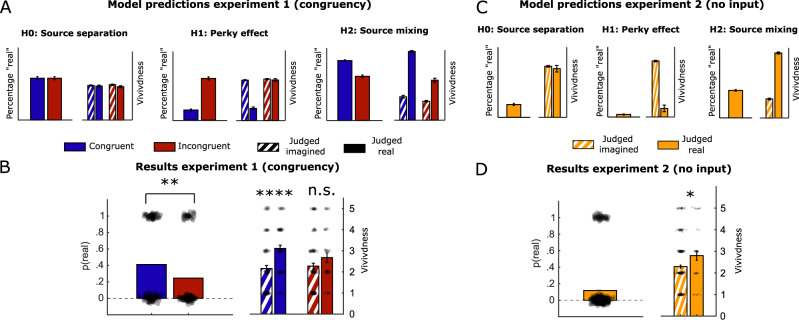
“000013 (uncorrected)) but not for the incongruent condition (β(1)=0.”
BackgroundInfluentialHow do the blind ‘see’? The role of spontaneous brain activity in self-generated perception
Hahamy, A., Wilf, M., Rosin, B., Behrmann, M., & Malach, R. (2021) · Brain · doi:10.1093/brain/awaa384 · Cited by 41
The effect of auditory verbal imagery on signal detection in hallucination-prone individuals
Moseley, P., Smailes, D., Ellison, A., & Fernyhough, C. (2016) · Cognition · doi:10.1016/j.cognition.2015.09.015 · Cited by 40
Fazekas, P., Németh, G., & Overgaard, M. S. (2020) · Perspectives on Psychological Science · doi:10.1177/1745691620924039 · Cited by 32
Introspection Is Signal Detection
Morales, J. (2021) · The British Journal for the Philosophy of Science · doi:10.1086/715184 · Cited by 31
Runge, M., Bakhilau, V., Omer, F., & D’Angiulli, A. (2015) · Imagination Cognition and Personality · doi:10.1177/0276236615587490 · Cited by 30
van den Hurk, J., & de Beeck, H. O. (2019) · bioRxiv (Cold Spring Harbor Laboratory) · doi:10.1101/592410 · Cited by 28
No Evidence for Neural Overlap between Unconsciously Processed and Imagined Stimuli
Dijkstra, N., van Gaal, S., Geerligs, L., Bosch, S., & van Gerven, M. A. J. (2021) · eNeuro · doi:10.1523/eneuro.0228-21.2021 · Cited by 27
Self-citationImagery adds stimulus-specific sensory evidence to perceptual detection
Dijkstra, N., Kok, P., & Fleming, S. M. (2022) · Journal of Vision · doi:10.1167/jov.22.2.11 · Cited by 26
Self-citationHaj, M. E., Badcock, J. C., Jardri, R., Larøi, F., Roche, J., Sommer, I. E., & Gallouj, K. (2019) · Cognitive Neuropsychiatry · doi:10.1080/13546805.2019.1632180 · Cited by 19
The Perky effect revisited: Imagery hinders perception at high levels, but aids it at low
Reeves, A., Grayhem, R. J., & Craver-Lemley, C. (2019) · Vision Research · doi:10.1016/j.visres.2019.12.004 · Cited by 18 · cited 5×
“175), suggesting that imagery is akin to low visibility perception (although this difference was itself not significant t(32) = −0.”
BackgroundInfluentialPerception and memory have distinct spatial tuning properties in human visual cortex
Favila, S. E., Kuhl, B. A., & Winawer, J. A. (2022) · RePEc: Research Papers in Economics · Cited by 13
Perception and memory have distinct spatial tuning properties in human visual cortexPreprint
Favila, S. E., Kuhl, B. A., & Winawer, J. A. (2019) · bioRxiv (Cold Spring Harbor Laboratory) · doi:10.1101/811331 · Cited by 12
Barbero (2014) · doi:10.1016/j · Cited by 1
Curio (2000) · doi:10.1002/(sici)1097-0193(200004)9:4<183::aid-hbm1>3.0.co;2-z
Research works printed but not linked: 3
- 39. Green, D. M. & Swets, J. A. Signal detection theory and psychophysics . John Wiley vol. 5 (1966).
- 56. Perky, C. W. An Experimental Study of Imagination. Am. J. Psychol. 21 , 422 -452 (1910). · DOI · Paper page
- 70. Marks, D. F. New directions for mental imagery research. J. Ment. Imag. 19 , 153 -167 (1995).
Cited by
The Border Between Seeing and Thinking
Block, N. (2023) · doi:10.1093/oso/9780197622223.001.0001 · Cited by 367
Consciousness in Artificial Intelligence: Insights from the Science of Consciousness
Butlin, P., Long, R., Elmoznino, E., Bengio, Y., Birch, J., Constant, A., Deane, G., Fleming, S. M., Frith, C., Ji, X., et al. (2023) · arXiv · doi:10.48550/arxiv.2308.08708 · Cited by 196
Self-citationImageless imagery in aphantasia revealed by early visual cortex decoding
Chang, S., Zhang, X., Cao, Y., Pearson, J., & Meng, M. (2025) · Current Biology · doi:10.1016/j.cub.2024.12.012 · Cited by 87
Tononi, G., Boly, M., & Cirelli, C. (2024) · Neuron · doi:10.1016/j.neuron.2024.04.011 · Cited by 70
Centering cognitive neuroscience on task demands and generalization
Nau, M., Schmid, A. C., Kaplan, S. M., Baker, C. I., & Kravitz, D. J. (2024) · Nature Neuroscience · doi:10.1038/s41593-024-01711-6 · Cited by 61
“Converging evidence for shared neural substrates for imagery and perception has even prompted the question of how we are able to differentiate between the two 72 .”
Metadata
- Authors
- Dijkstra, N., & Fleming, S. M.
- Affiliations
- Wellcome Centre for Human Neuroimaging (GB)
- Corresponding author
- Dijkstra, Nadine
- Venue
- Nature Communications
- Published
- 2023-03-23
- Volume
- 14
- Issue
- 1
- Pages
- 1627-1627
- ISSN
- 2041-1723 (ISSN-L)
- PMC
- PMC10036541
- OpenAlex
- W4360607983
- Semantic Scholar
- 68e70ec5b6b14b13a5a0c0575e50daf30de0afb8
- Cited by
- 115
- References
- 80
- Citations by year
- 2026: 24 · 2025: 44 · 2024: 33 · 2023: 13
- FWCI
- 17.07
- Type
- journal article
- Language
- en
- Open access
- gold
- doi.org
- Licence
- cc-by
- creativecommons.org/licenses/by/4.0 (tdm)
- creativecommons.org/licenses/by/4.0 (vor)
- Locations
- Nature Communications (publishedVersion, cc-by)
- PubMed Central (publishedVersion, cc-by)
- PubMed (publishedVersion)
- UCL Discovery (University College London) (submittedVersion, cc-by)
- RePEc: Research Papers in Economics (submittedVersion)
- DOAJ (DOAJ: Directory of Open Access Journals) (submittedVersion, cc-by-sa)
- MPG.PuRe (Max Planck Society) (submittedVersion)
- Funders
- Canadian Institute for Advanced Research
- Wellcome Trust (Z/17/Z, 206648/Z/17/Z)
- Leverhulme Trust
- European Commission (HORIZON2020, 882832)
- Nederlandse Organisatie voor Wetenschappelijk Onderzoek (019.192SG.003)
- Max-Planck-Gesellschaft (206648/Z/17/Z)
- Topics
- Life Sciences › Neuroscience › Cognitive Neuroscience › Visual perception and processing mechanisms
- Social Sciences › Arts and Humanities › Philosophy › Philosophy and Theoretical Science
- Life Sciences › Neuroscience › Cognitive Neuroscience › Memory Processes and Influences
- Keywords
- mental imagery, perception, internal simulation, virtual reality, perceptual realism
- MeSH terms
- Computer Simulation, Humans, Imagination, Learning, Psychophysics, Imagery, Psychotherapy
About these checks
Registry, retraction, Cites and statistics results are computed, not judged, with one exception: a printed reference that no index lists is read once by a model before it counts as a citation error. Claims are extracted by a model and kept only when their quote appears verbatim in the text; each cited source is then checked, with a model’s help, for whether it says what the claim relies on. Those verdicts can be wrong — read the claim’s quote and the cited source before relying on one.
Statistics and arithmetic are recomputed, not judged.
Confidence bands are shown only for fields calibrated on our annotated test set. None is calibrated yet, so no band is shown.
What counts as a claim ›How we measure confidence ›How we check this ›
Are you an author, or do you see a problem with this page? Request a review
Data sources
Bibliographic data: Semantic Scholar, OpenAlex, Crossref.
Contains information from the Semantic Scholar Academic Graph Datasets, made available under the ODC Attribution License (ODC-BY 1.0).
Semantic Scholar’s data is described in: Kinney, R., et al. (2023). The Semantic Scholar Open Data Platform. arXiv:2301.10140.
