

Cholangiocarcinoma 2020: the next horizon in mechanisms and management
Open accessThe DOI matches its Crossref record; 410 of the 410 references it cites were found in a registry or an index.
Abstract
Cholangiocarcinoma (CCA) includes a cluster of highly heterogeneous biliary malignant tumours that can arise at any point of the biliary tree. Their incidence is increasing globally, currently accounting for ~15% of all primary liver cancers and ~3% of gastrointestinal malignancies. The silent presentation of these tumours combined with their highly aggressive nature and refractoriness to chemotherapy contribute to their alarming mortality, representing ~2% of all cancer-related deaths worldwide yearly. The current diagnosis of CCA by non-invasive approaches is not accurate enough, and histological confirmation is necessary. Furthermore, the high heterogeneity of CCAs at the genomic, epigenetic and molecular levels severely compromises the efficacy of the available therapies. In the past decade, increasing efforts have been made to understand the complexity of these tumours and to develop new diagnostic tools and therapies that might help to improve patient outcomes. In this expert Consensus Statement, which is endorsed by the European Network for the Study of Cholangiocarcinoma, we aim to summarize and critically discuss the latest advances in CCA, mostly focusing on classification, cells of origin, genetic and epigenetic abnormalities, molecular alterations, biomarker discovery and treatments. Furthermore, the horizon of CCA for the next decade from 2020 onwards is highlighted.
Overview
The claims and statistics of this paper haven’t been checked yet.
Free: it reads the open-access text and checks the first 5 claims that cite a source we can check. Create a free account to check every claim.
Integrity signals
Registry
Cites
Statistics
Figures
Verification
Claims the paper makes
The claims and statistics of this paper haven’t been checked yet.
Free: it reads the open-access text and checks the first 5 claims that cite a source we can check. Create a free account to check every claim.
Claims other papers make about this one
Each is checked against this paper’s own text: does it say what the citing paper says it does?
The source backs part of the claim, not all of it — or backs it for a different population, condition or comparison.
In the citing paper
“It is thought that the majority of ICCs are derived from BECs [210], but mouse and human hepatocytes also represent potential sources for ICCs [212, 213].”
From Inflammation and immunity in liver homeostasis and disease: a nexus of hepatocytes, nonparenchymal cells and immune cells (2025) · doi:10.1038/s41423-025-01313-7 · cites this paper as [210]
Experimental — accuracy not yet measuredThe source backs part of the claim, not all of it — or backs it for a different population, condition or comparison.
In the citing paper
“Several studies suggest that cholangiocarcinoma and other biliary tract malignancies are frequently associated with overactivation of the Notch and Hedgehog signaling pathways[61].”
From Liver regeneration after partial hepatectomy: Triggers and mechanisms (2025) · cites this paper as [61]
Experimental — accuracy not yet measuredIn the citing paper
“Intrahepatic cholangiocarcinoma (ICC) is a biliary tree neoplasia that arises in noncirrhotic and cirrhotic livers and has a rising incidence [210, 211].”
From Inflammation and immunity in liver homeostasis and disease: a nexus of hepatocytes, nonparenchymal cells and immune cells (2025) · doi:10.1038/s41423-025-01313-7 · cites this paper as [210]
Self-check
Percentages, sums and reported differences re-computed from the paper’s own numbers.
The self-check needs the paper’s full text.
Citations
Cites
The National Comprehensive Cancer Network: Present and future directions
McGivney, W. T. (1998) · Cancer · doi:10.1002/(sici)1097-0142(19980515)82:10+<2057::aid-cncr14>3.0.co;2-a · Cited by 16,766 · cited 1×
“Patients diagnosed with iCCA in liver-predominant disease might be considered for liver-directed therapies 345,346 .”
BackgroundEpithelial-Mesenchymal Transitions in Development and Disease
Thiery, J. P., Acloque, H., Huang, R. Y. J., & Nieto, M. A. (2009) · Cell · doi:10.1016/j.cell.2009.11.007 · Cited by 9,931 · cited 1×
“EMT is a cell plasticity-promoting phenomenon initially reported to occur during embryogenesis, but that also takes place in cancer, enabling epithelial cancer cells to acquire mesenchymal features with invasive properties that lead to metastatic colonization 174 .”
BackgroundPD-1 Blockade in Tumors with Mismatch-Repair Deficiency
Le, D. T., Uram, J. N., Wang, H., Bartlett, B. R., Kemberling, H., Eyring, A. D., Skora, A. D., Luber, B. S., Azad, N. S., Laheru, D., et al. (2015) · New England Journal of Medicine · doi:10.1056/nejmoa1500596 · Cited by 9,377
Mismatch repair deficiency predicts response of solid tumors to PD-1 blockade
Le, D. T., Durham, J. N., Smith, K. N., Wang, H., Bartlett, B. R., Aulakh, L. K., Lu, S., Kemberling, H., Wilt, C., Luber, B. S., et al. (2017) · Science · doi:10.1126/science.aan6733 · Cited by 6,645 · cited 2×
“In a cohort of 86 patients with MMR-deficient tumours, including four patients with CCA, immune checkpoint blockade with the anti-PDL1 monoclonal antibody pembrolizumab resulted in a complete response in one of the patients with CCA and stabilization of disease in the other three 232 .”
Understanding the tumor immune microenvironment (TIME) for effective therapy
Binnewies, M., Roberts, E. W., Kersten, K., Chan, V., Fearon, D. F., Merad, M., Coussens, L. M., Gabrilovich, D. I., Ostrand-Rosenberg, S., Hedrick, C. C., et al. (2018) · Nature Medicine · doi:10.1038/s41591-018-0014-x · Cited by 6,145 · cited 2×
“…of T cell-infiltrated TMEs, characterized by infiltration of CD8 + T cells, chemo-kines and molecules responsible for T cell priming and immune infiltration, is associated with higher response to immune checkpoint blockade, whereas non-T cell-infiltrated TMEs have poorer responses 214,215 .”
Role of YAP/TAZ in mechanotransduction
Dupont, S., Morsut, L., Aragona, M., Enzo, E., Giulitti, S., Cordenonsi, M., Zanconato, F., Le Digabel, J., Forcato, M., Bicciato, S., et al. (2011) · Nature · doi:10.1038/nature10137 · Cited by 5,979
Mutational heterogeneity in cancer and the search for new cancer-associated genes
Lawrence, M. S., Stojanov, P., Polak, P., Kryukov, G. V., Cibulskis, K., Sivachenko, A., Carter, S. L., Stewart, C., Mermel, C. H., Roberts, S. A., et al. (2013) · Nature · doi:10.1038/nature12213 · Cited by 5,461 · cited 1×
“Regarding genomic alterations, CCA falls midway in the mutational spectrum of cancers 111 , with an approximately equal content of genomic alterations in iCCA (median 39 non-synonymous mutations per tumour) and eCCA (median 35 non-synonymous mutations per tumour) 56 .”
Cisplatin plus Gemcitabine versus Gemcitabine for Biliary Tract Cancer
Valle, J., Wasan, H., Palmer, D. H., Cunningham, D., Anthoney, A., Maraveyas, A., Madhusudan, S., Iveson, T., Hughes, S., Pereira, S. P., et al. (2010) · New England Journal of Medicine · doi:10.1056/nejmoa0908721 · Cited by 4,406 · cited 2×
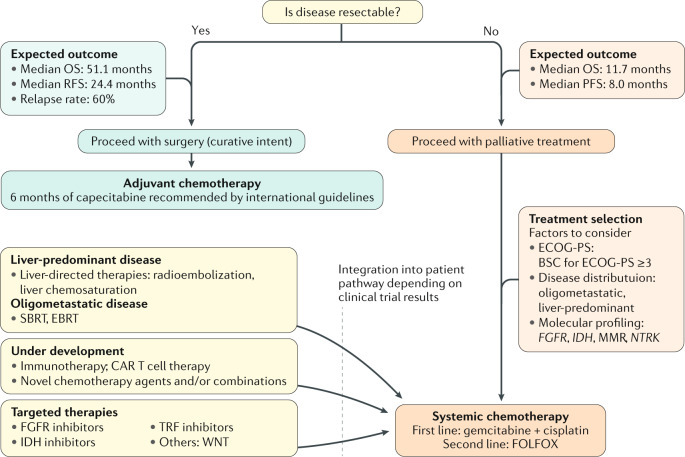
“The ABC-02 trial randomly assigned 410 patients with ECOG-PS ≤2 to systemic chemotherapy with gemcitabine alone or cisplatin–gemcitabine 336 ; the study showed an OS benefit in favour of cisplatin– gemcitabine (HR 0.64), a benefit confirmed in the Japanese randomized phase II BT22 study 337 .”
InfluentialSelf-citationThe biology and function of fibroblasts in cancer
Kalluri, R. (2016) · Nature Reviews Cancer · doi:10.1038/nrc.2016.73 · Cited by 4,366 · cited 1×
“CAFs are a heterogeneous population of spindle-shaped cells with mesenchymal origin that contribute to tumour progression in many human cancers 199 .”
New insights into the mechanisms of epithelial–mesenchymal transition and implications for cancer
Dongre, A., & Weinberg, R. A. (2019) · Nature Reviews Molecular Cell Biology · doi:10.1038/s41580-018-0080-4 · Cited by 3,876
Research works printed but not linked: 3
- Bosman, F. T., Carneiro, F., Hruban, R. & Theise N. WHO Classification of Tumours: Digestive System Tumours 5th edn Vol. 1 (IARC, 2019).
- Hamilton, S. R. A. et al. WHO Classification of Tumours: Pathology and Genetics of Tumours of the Digestive System 3rd edn Vol. 2 (IARC, 2000).
- Amin, M. B. et al. AJCC Cancer Staging Manual (Springer, 2017).
Cited by
Brindley, P. J., Bachini, M., Ilyas, S. I., Khan, S. A., Loukas, A., Sirica, A. E., Teh, B. T., Wongkham, S., & Gores, G. J. (2021) · Nature Reviews Disease Primers · doi:10.1038/s41572-021-00300-2 · Cited by 841
Self-citationBiliary tract cancer: ESMO Clinical Practice Guideline for diagnosis, treatment and follow-up
Vogel, A., Bridgewater, J., Edeline, J., Kelley, R. K., Klümpen, H. J., Malka, D., Primrose, J. N., Rimassa, L., Stenzinger, A., Valle, J. W., et al. (2023) · Annals of Oncology · doi:10.1016/j.annonc.2022.10.506 · Cited by 718
Self-citationFutibatinib for FGFR2 -Rearranged Intrahepatic Cholangiocarcinoma
Goyal, L., Meric-Bernstam, F., Hollebecque, A., Valle, J. W., Morizane, C., Karasic, T. B., Abrams, T. A., Furuse, J., Kelley, R. K., Cassier, P. A., et al. (2023) · New England Journal of Medicine · doi:10.1056/nejmoa2206834 · Cited by 613
Self-citationCancer-associated fibroblasts in the single-cell era
Lavie, D., Ben-Shmuel, A., Erez, N., & Scherz-Shouval, R. (2022) · Nature Cancer · doi:10.1038/s43018-022-00411-z · Cited by 616
Lactate and lactylation in cancer
Chen, J., Huang, Z., Chen, Y., Tian, H., Chai, P., Shen, Y., Yao, Y., Xu, S., Ge, S., & Jia, R. (2025) · Signal Transduction and Targeted Therapy · doi:10.1038/s41392-024-02082-x · Cited by 477
“158,443 Apart from primary liver cancer, PD-1 resistant NSCLC cells were characterized by a markedly lower glycolytic reserve and exhibited a signi fi cantly higher reliance on OXPHOS compared to PD-1 sensitive NSCLC cells, which implies that tumor progression leads to complex changes in lactate…”
Zhu, A. X., Macarulla, T., Javle, M. M., Kelley, R. K., Lubner, S. J., Adeva, J., Cleary, J. M., Catenacci, D. V. T., Borad, M. J., Bridgewater, J. A., et al. (2021) · JAMA Oncology · doi:10.1001/jamaoncol.2021.3836 · Cited by 509
Self-citationAASLD practice guidance on primary sclerosing cholangitis and cholangiocarcinoma
Bowlus, C. L., Arrivé, L., Bergquist, A., Deneau, M., Forman, L., Ilyas, S. I., Lunsford, K. E., Martinez, M., Sapisochin, G., Shroff, R., et al. (2023) · Hepatology · doi:10.1002/hep.32771 · Cited by 428
Self-citationJavle, M., Roychowdhury, S., Kelley, R. K., Sadeghi, S., Macarulla, T., Weiss, K. H., Waldschmidt, D.-T., Goyal, L., Borbath, I., El-Khoueiry, A., et al. (2021) · The Lancet Gastroenterology & Hepatology · doi:10.1016/s2468-1253(21)00196-5 · Cited by 428
The implications of IDH mutations for cancer development and therapy
Pirozzi, C. J., & Yan, H. (2021) · Nature Reviews Clinical Oncology · doi:10.1038/s41571-021-00521-0 · Cited by 382
Promotion of cholangiocarcinoma growth by diverse cancer-associated fibroblast subpopulations
Affo, S., Nair, A., Brundu, F., Ravichandra, A., Bhattacharjee, S., Matsuda, M., Chin, L., Filliol, A., Wen, W., Song, X., et al. (2021) · Cancer Cell · doi:10.1016/j.ccell.2021.03.012 · Cited by 416
Dong, L., Lu, D., Chen, R., Lin, Y., Zhu, H., Zhang, Z., Cai, S., Cui, P., Song, G., Rao, D., et al. (2022) · Cancer Cell · doi:10.1016/j.ccell.2021.12.006 · Cited by 390
EASL-ILCA Clinical Practice Guidelines on the management of intrahepatic cholangiocarcinoma
Alvaro, D., Gores, G. J., Walicki, J., Hassan, C., Sapisochin, G., Komuta, M., Forner, A., Valle, J. W., Laghi, A., Ilyas, S. I., et al. (2023) · Journal of Hepatology · doi:10.1016/j.jhep.2023.03.010 · Cited by 344
Self-citationIzquierdo-Sanchez, L., Lamarca, A., La Casta, A., Buettner, S., Utpatel, K., Klümpen, H.-J., Adeva, J., Vogel, A., Lleo, A., Fabris, L., et al. (2022) · Journal of Hepatology · doi:10.1016/j.jhep.2021.12.010 · Cited by 349
“1,2,9 Herein, we show that more than 50% of patients with CCA were overweight/obese and 20% were diabetic at diagnosis.”
Self-citationLipid alterations in chronic liver disease and liver cancer
Paul, B., Lewinska, M., & Andersen, J. B. (2022) · JHEP Reports · doi:10.1016/j.jhepr.2022.100479 · Cited by 308
Self-citationBuilding consensus on definition and nomenclature of hepatic, pancreatic, and biliary organoids
Marsee, A., Roos, F. J. M., Verstegen, M. M. A., Marsee, A., Roos, F., Verstegen, M., Clevers, H., Vallier, L., Takebe, T., Huch, M., et al. (2021) · Cell Stem Cell · doi:10.1016/j.stem.2021.04.005 · Cited by 310
Self-citationFluorescence image-guided tumour surgery
Wang, K., Du, Y., Zhang, Z., He, K., Cheng, Z., Yin, L., Dong, D., Li, C., Li, W., Hu, Z., et al. (2023) · Nature Reviews Bioengineering · doi:10.1038/s44222-022-00017-1 · Cited by 239
Ding, G.-Y., Ma, J.-Q., Yun, J.-P., Chen, X., Ling, Y., Zhang, S., Shi, J.-Y., Chang, Y.-Q., Ji, Y., Wang, X.-Y., et al. (2022) · Journal of Hepatology · doi:10.1016/j.jhep.2021.10.030 · Cited by 251
Harnessing Nanomaterials for Cancer Sonodynamic Immunotherapy
Liang, S., Yao, J., Liu, D., Rao, L., Chen, X., & Wang, Z. (2023) · Advanced Materials · doi:10.1002/adma.202211130 · Cited by 243
Cholangiocarcinoma — novel biological insights and therapeutic strategies
Ilyas, S. I., Affo, S., Goyal, L., Lamarca, A., Sapisochin, G., Yang, J. D., & Gores, G. J. (2023) · Nature Reviews Clinical Oncology · doi:10.1038/s41571-023-00770-1 · Cited by 217
Self-citationLong-Term Outcomes and Exploratory Analyses of the Randomized Phase III BILCAP Study
Bridgewater, J., Fletcher, P., Palmer, D. H., Malik, H. Z., Prasad, R., Mirza, D., Anthony, A., Corrie, P., Falk, S., Finch-Jones, M., et al. (2022) · Journal of Clinical Oncology · doi:10.1200/jco.21.02568 · Cited by 216
Self-citationGe, T., Gu, X., Jia, R., Ge, S., Chai, P., Zhuang, A., & Fan, X. (2022) · Cancer Communications · doi:10.1002/cac2.12374 · Cited by 200
“These works remind us of other cancer types with similar mutational and epigenetic patterns, such as glioma, sarcoma, and cholangiocarcinoma [316, 317].”
BackgroundNovel therapeutic targets for cholestatic and fatty liver disease
Trauner, M., & Fuchs, C. D. (2022) · Gut · doi:10.1136/gutjnl-2021-324305 · Cited by 204
Immunology and immunotherapy of cholangiocarcinoma
Greten, T. F., Schwabe, R., Bardeesy, N., Ma, L., Goyal, L., Kelley, R. K., & Wang, X. W. (2023) · Nature Reviews Gastroenterology & Hepatology · doi:10.1038/s41575-022-00741-4 · Cited by 193
Current epidemiology of cholangiocarcinoma in Western countries
Vithayathil, M., & Khan, S. A. (2022) · Journal of Hepatology · doi:10.1016/j.jhep.2022.07.022 · Cited by 200
Self-citationLapitz, A., Azkargorta, M., Milkiewicz, P., Olaizola, P., Zhuravleva, E., Grimsrud, M. M., Schramm, C., Arbelaiz, A., O'Rourke, C. J., La Casta, A., et al. (2023) · Journal of Hepatology · doi:10.1016/j.jhep.2023.02.027 · Cited by 184
Self-citationSarcognato, S., Sacchi, D., Fassan, M., Fabris, L., Cadamuro, M., Zanus, G., Cataldo, I., Capelli, P., Baciorri, F., Cacciatore, M., et al. (2021) · Pathologica · doi:10.32074/1591-951x-252 · Cited by 185
Self-citationTargeting FGFR inhibition in cholangiocarcinoma
Goyal, L., Kongpetch, S., Crolley, V. E., & Bridgewater, J. (2021) · Cancer Treatment Reviews · doi:10.1016/j.ctrv.2021.102170 · Cited by 182
“the UK and USA, the former primarily associated with liver fluke infection [4,36].”
BackgroundSelf-citationEpidemiology of cholangiocarcinoma
Qurashi, M., Vithayathil, M., & Khan, S. A. (2025) · European Journal of Surgical Oncology · doi:10.1016/j.ejso.2023.107064 · Cited by 163
Self-citationMetabolic reprogramming in cholangiocarcinoma
Raggi, C., Taddei, M. L., Rae, C., Braconi, C., & Marra, F. (2022) · Journal of Hepatology · doi:10.1016/j.jhep.2022.04.038 · Cited by 176
Self-citationLin, Y., Cai, Q., Chen, Y., Shi, T., Liu, W., Mao, L., Deng, B., Ying, Z., Gao, Y., Luo, H., et al. (2022) · Hepatology · doi:10.1002/hep.32099 · Cited by 177
“Intrahepatic cholangiocarcinoma (ICC) is a subtype of cholangiocarcinoma, the second- most common liver cancer, and its incidence has been increasing in the past few decades worldwide with higher prevalence in Asia.[1] ICC is commonly asymptomatic with a highly aggressive nature and chemotherapy refractoriness, leadin…”
BackgroundMitochondrial oxidative metabolism contributes to a cancer stem cell phenotype in cholangiocarcinoma
Raggi, C., Taddei, M. L., Sacco, E., Navari, N., Correnti, M., Piombanti, B., Pastore, M., Campani, C., Pranzini, E., Iorio, J., et al. (2021) · Journal of Hepatology · doi:10.1016/j.jhep.2020.12.031 · Cited by 168
Self-citationClinical treatment of cholangiocarcinoma: an updated comprehensive review
Elvevi, A., Laffusa, A., Scaravaglio, M., Rossi, R. E., Longarini, R., Stagno, A. M., Cristoferi, L., Ciaccio, A., Cortinovis, D. L., Invernizzi, P., et al. (2022) · Annals of Hepatology · doi:10.1016/j.aohep.2022.100737 · Cited by 160
Self-citationSong, G., Shi, Y., Meng, L., Ma, J., Huang, S., Zhang, J., Wu, Y., Li, J., Lin, Y., Yang, S., et al. (2022) · Nature Communications · doi:10.1038/s41467-022-29164-0 · Cited by 154
Martin-Serrano, M. A., Kepecs, B., Torres-Martin, M., Bramel, E. R., Haber, P. K., Merritt, E., Rialdi, A., Param, N. J., Maeda, M., Lindblad, K. E., et al. (2023) · Gut · doi:10.1136/gutjnl-2021-326514 · Cited by 152
Friend or foe? The elusive role of hepatic stellate cells in liver cancer
Cogliati, B., Yashaswini, C. N., Wang, S., Sia, D., & Friedman, S. L. (2023) · Nature Reviews Gastroenterology & Hepatology · doi:10.1038/s41575-023-00821-z · Cited by 148
Pathogenesis of Cholangiocarcinoma
Rodrigues, P. M., Olaizola, P., Paiva, N. A., Olaizola, I., Lizaso, A. A., Landa-Magdalena, A., Bujanda, L., Perugorria, M. J., & Bañales, J. M. (2020) · Annual Review of Pathology Mechanisms of Disease · doi:10.1146/annurev-pathol-030220-020455 · Cited by 171
Self-citationBerchuck, J. E., Facchinetti, F., Ditoro, D. F., Baiev, I., Majeed, U., Reyes, S., Chen, C. T., Zhang, K., Sharman, R., Usón, P. L. S., et al. (2022) · Annals of Oncology · doi:10.1016/j.annonc.2022.09.150 · Cited by 164
Pharmaco-proteogenomic characterization of liver cancer organoids for precision oncology
Ji, S., Li, F., Fu, Z., Wu, G., Wu, Y. C., Lin, Y., Lu, D., Song, Y., Cui, P., Yang, Z., et al. (2023) · Science Translational Medicine · doi:10.1126/scitranslmed.adg3358 · Cited by 157
How I treat biliary tract cancer
Lamarca, Á., Edeline, J., & Goyal, L. (2022) · ESMO Open · doi:10.1016/j.esmoop.2021.100378 · Cited by 152
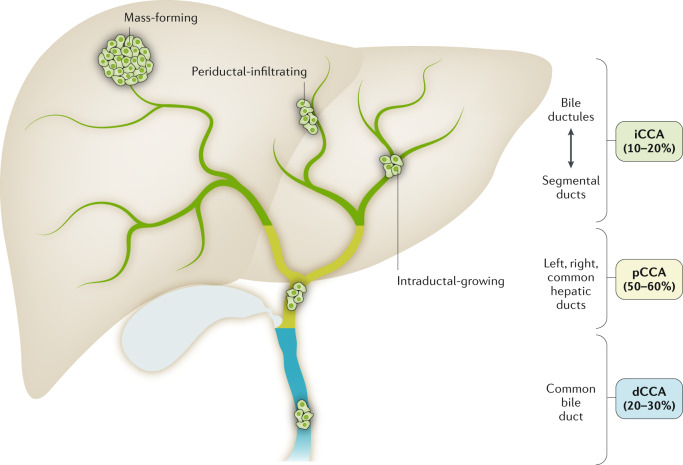
“eCCA can be also subdivided between hilar and distal CCA depending on their location.(2) It is important to highlight that patients’ demographics, mode of presentation, and tumour mutational profiles have both overlap and distinctions within these subgroups (Figure 1).”
BackgroundInfluentialMetabolic reprogramming and its clinical implication for liver cancer
Yang, F., Hilakivi-Clarke, L. A., Shaha, A., Wang, Y., Wang, X., Deng, Y., Lai, J., & Kang, N. (2023) · Hepatology · doi:10.1097/hep.0000000000000005 · Cited by 197
Recent advances of immunotherapy for biliary tract cancer
Rizzo, A., Ricci, A. D., & Brandi, G. (2020) · Expert Review of Gastroenterology & Hepatology · doi:10.1080/17474124.2021.1853527 · Cited by 138
“BTCs have high case–fatality ratio and the only potentially curative treatment option is radical resection [9,10].”
BackgroundNeoadjuvant therapy for cholangiocarcinoma: A comprehensive literature review
Rizzo, A., & Brandi, G. (2021) · Cancer Treatment and Research Communications · doi:10.1016/j.ctarc.2021.100354 · Cited by 137
Cholangiocarcinoma 2026: status quo, unmet needs and priorities
Bañales, J. M., Rodrigues, P. M., Affò, S., Andersen, J. B., Aspichueta, P., Boulter, L., Bridgewater, J. A., Calvisi, D. F., Cárdenas, A., Cardinale, V., et al. (2025) · Nature Reviews Gastroenterology & Hepatology · doi:10.1038/s41575-025-01153-w · Cited by 133
Self-citationZhou, G., Lieshout, R., van Tienderen, G. S., de Ruiter, V., van Royen, M. E., Boor, P. P. C., Magré, L., Desai, J., Köten, K., Kan, Y. Y., et al. (2022) · British Journal of Cancer · doi:10.1038/s41416-022-01839-x · Cited by 109
“Marked heterogeneity makes CCA difficult to treat successfully and the prognosis for CCA patients is poor, with 5-year survival rates of 7–20% [4, 5].”
BackgroundAn open-label study of pemigatinib in cholangiocarcinoma: final results from FIGHT-202
Vogel, A., Sahai, V., Hollebecque, A., Vaccaro, G. M., Melisi, D., Rajabi, R. M., Paulson, A. S., Borad, M. J., Gallinson, D. H., Murphy, A. G., et al. (2024) · ESMO Open · doi:10.1016/j.esmoop.2024.103488 · Cited by 126
Arechederra, M., Rullán, M., Amat, I., Oyón, D., Zabalza, L., Elizalde, M., Latasa, M. U., Mercado, M., Ruiz-Clavijo, D., Saldaña, C., et al. (2021) · Gut · doi:10.1136/gutjnl-2021-325178 · Cited by 122
Rushbrook, S., Kendall, T. J., Zen, Y., Albazaz, R., Manoharan, P., Pereira, S. P., Sturgess, R. P., Davidson, B. R., Malik, H., Manas, D., et al. (2023) · Gut · doi:10.1136/gutjnl-2023-330029 · Cited by 126
Self-citationAlvisi, G., Termanini, A., Soldani, C., Portale, F., Carriero, R., Pilipow, K., Costa, G., Polidoro, M. A., Franceschini, B., Malenica, I., et al. (2022) · Journal of Hepatology · doi:10.1016/j.jhep.2022.05.043 · Cited by 121
Durvalumab: an investigational anti-PD-L1 antibody for the treatment of biliary tract cancer
Rizzo, A., Ricci, A. D., & Brandi, G. (2021) · Expert Opinion on Investigational Drugs · doi:10.1080/13543784.2021.1897102 · Cited by 114
“Biliary tract cancers (BTCs), including cholangiocarcinomas (CCAs), gallbladder cancers (GBCs), and ampulla of Vater cancer (AVC), represent a relatively rare and heterogeneous group of malignancies [1,2].”
BackgroundMa, J., Li, J., Chen, J., Yang, J., Zheng, C., Chen, K., Xie, Y., Yang, Y., Bo, Z., Wang, J., et al. (2022) · Liver International · doi:10.1111/liv.15466 · Cited by 120
Cisplatin in Liver Cancer Therapy
Hamaya, S., Oura, K., Morishita, A., & Masaki, T. (2023) · International Journal of Molecular Sciences · doi:10.3390/ijms241310858 · Cited by 109
Rizzo, A., Ricci, A. D., & Brandi, G. (2020) · Expert Opinion on Investigational Drugs · doi:10.1080/13543784.2021.1837774 · Cited by 101
Cancer-Associated Fibroblasts in Hepatocellular Carcinoma and Cholangiocarcinoma
Fan, Y., Chan, M. S. M., & Lee, T. K. (2023) · Cellular and Molecular Gastroenterology and Hepatology · doi:10.1016/j.jcmgh.2023.01.006 · Cited by 107
“angiocarcinoma (CCA) are by far the second-most common, accounting for approximately 70% and 15% of cases, respectively, and represents both ends of the spectrum of primary malignant tumors.(2) HCC is derived from the malignant transformation of hepatocytes.”
BackgroundBakrania, A. K., Joshi, N., Zhao, X., Zheng, G., & Bhat, M. (2023) · Pharmacological Research · doi:10.1016/j.phrs.2023.106706 · Cited by 106
Du, J., Lan, T., Liao, H., Feng, X., Chen, X., Liao, W., Hou, G., Xu, L., Feng, Q., Xie, K., et al. (2022) · Molecular Cancer · doi:10.1186/s12943-021-01482-9 · Cited by 107
“Recently, genetic mutations in FGFR2, IDH1 and BRAF genes have been identified in ICC, making it possible for targeted treatment [48].”
BackgroundMaithel, S. K., Keilson, J. M., Cao, H. S. T., Rupji, M., Mahipal, A., Lin, B. S.-L., Javle, M. M., Cleary, S. P., Akce, M., Switchenko, J. M., et al. (2023) · Annals of Surgical Oncology · doi:10.1245/s10434-023-13809-5 · Cited by 104
(2025) · doi:10.1038/s41423-025-01313-7 · Cited by 97
“Intrahepatic cholangiocarcinoma (ICC) is a biliary tree neoplasia that arises in noncirrhotic and cirrhotic livers and has a rising incidence [210, 211].”
Rizzo, A., & Brandi, G. (2021) · Cancer Treatment and Research Communications · doi:10.1016/j.ctarc.2021.100335 · Cited by 109
Targeting EGFR/PI3K/AKT/mTOR Signaling in Hepatocellular Carcinoma
Bang, J., Jun, M., Lee, S., Moon, H., & Ro, S. W. (2023) · Pharmaceutics · doi:10.3390/pharmaceutics15082130 · Cited by 102
“Among these, hepatocellular carcinoma (HCC) represents the most prevalent primary liver cancer, accounting for approximately 80% of cases, followed by cholangiocarcinoma (CC), which contributes to 10–20% of primary liver cancers [2,3].”
BackgroundCleary, J. M., Rouaisnel, B., Daina, A., Raghavan, S., Roller, L. A., Huffman, B. M., Singh, H., Wen, P. Y., Bardeesy, N. M., Zoete, V., et al. (2022) · npj Precision Oncology · doi:10.1038/s41698-022-00304-5 · Cited by 101
Yoon, J. G., Kim, M. H., Jang, M., Kim, H., Hwang, H. K., Kang, C. M., Lee, W. J., Kang, B., Lee, C., Lee, M. G., et al. (2021) · Hepatology · doi:10.1002/hep.31862 · Cited by 97
“1916 type.(16- 18) Consequently, the molecular classification might likely provide clinical benefit in terms of responsive patient selection and therapeutic target identification.”
BackgroundCarpino, G., Cardinale, V., Giamberardino, A. D., Overi, D., Donsante, S., Colasanti, T., Amato, G., Mennini, G., Franchitto, M., Conti, F., et al. (2021) · Journal of Hepatology · doi:10.1016/j.jhep.2021.07.016 · Cited by 94
Self-citationTertiary lymphoid structures predict the prognosis and immunotherapy response of cholangiocarcinoma
Shang, T., Jiang, T., Lu, T., Wang, H., Cui, X., Pan, Y., Xu, M., Pei, M., Ding, Z., Feng, X., et al. (2023) · Frontiers in Immunology · doi:10.3389/fimmu.2023.1166497 · Cited by 93
Almatroudi, A., Allemailem, K. S., Alwanian, W. M., Alharbi, B. F., Alrumaihi, F., Khan, A. A., Almatroodi, S. A., & Rahmani, A. H. (2023) · International Journal of Molecular Sciences · doi:10.3390/ijms24108630 · Cited by 92
Signaling pathways in liver cancer: pathogenesis and targeted therapy
Xue, Y., Ruan, Y., Wang, Y., Xiao, P., & Xu, J. (2024) · Molecular Biomedicine · doi:10.1186/s43556-024-00184-0 · Cited by 97
New insights on the role of vascular endothelial growth factor in biliary pathophysiology
Mariotti, V., Fiorotto, R., Cadamuro, M., Fabris, L., & Strazzabosco, M. (2021) · JHEP Reports · doi:10.1016/j.jhepr.2021.100251 · Cited by 87
“cholangiocarcinoma Cholangiocarcinomas are the second most common primary liver malignancies.(99,100) CCA can also be a complication of chronic biliary damage secondary to PSC, Caroli disease, intrahepatic lithiasis or fluke infestations.”
BackgroundSelf-citationPitfalls, challenges, and updates in adjuvant systemic treatment for resected biliary tract cancer
Rizzo, A., & Brandi, G. (2021) · Expert Review of Gastroenterology & Hepatology · doi:10.1080/17474124.2021.1890031 · Cited by 88
“incidence compared to Western countries [8,9].”
The progress of immune checkpoint therapy in primary liver cancer
Zheng, Y.-M., Wang, S., Cai, J., Ke, A., & Fan, J. (2021) · Biochimica et Biophysica Acta (BBA) - Reviews on Cancer · doi:10.1016/j.bbcan.2021.188638 · Cited by 96
Cell of origin in biliary tract cancers and clinical implications
Moeini, A., Haber, P. K., & Sia, D. (2021) · JHEP Reports · doi:10.1016/j.jhepr.2021.100226 · Cited by 97
Bauer, M., Jasinski‐Bergner, S., Mandelboim, O., Wickenhauser, C., & Seliger, B. (2021) · Cancers · doi:10.3390/cancers13205189 · Cited by 92
Chung, T., & Park, Y. N. (2022) · Frontiers in Medicine · doi:10.3389/fmed.2022.857140 · Cited by 89
TWEAK/Fn14 signalling promotes cholangiocarcinoma niche formation and progression
Dwyer, B. J., Jarman, E. J., Gogoi-Tiwari, J., Ferreira-González, S., Boulter, L., Guest, R. V., Kendall, T. J., Kurian, D., Kilpatrick, A. M., Robson, A. J., et al. (2020) · Journal of Hepatology · doi:10.1016/j.jhep.2020.11.018 · Cited by 92
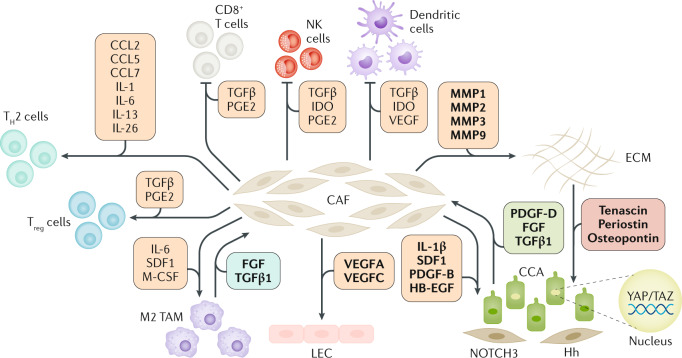
“CCA develops a characteristic thick, fibrous stroma composed of a-smooth muscle actin (aSMA)-expressing cancer-associated fibroblasts (CAFs), tumour-associated macrophages (TAMs), neutrophils and vascular endothelial cells.(3) Stromal cells interact with neoplastic ducts via several signals including Wnt,(6,7) Notch,(…”
BackgroundSelf-citationRizzo, A., & Brandi, G. (2020) · Expert Review of Gastroenterology & Hepatology · doi:10.1080/17474124.2021.1864325 · Cited by 86
Clinical relevance of biomarkers in cholangiocarcinoma: critical revision and future directions
Macías, R. I. R., Cardinale, V., Kendall, T. J., Avila, M. A., Guido, M., Coulouarn, C., Braconi, C., Frampton, A. E., Bridgewater, J. A., Overi, D., et al. (2022) · Gut · doi:10.1136/gutjnl-2022-327099 · Cited by 91
Self-citationPemigatinib: Hot topics behind the first approval of a targeted therapy in cholangiocarcinoma
Rizzo, A., Ricci, A. D., & Brandi, G. (2021) · Cancer Treatment and Research Communications · doi:10.1016/j.ctarc.2021.100337 · Cited by 84
Ruffolo, L. I., Jackson, K. M., Kuhlers, P. C., Dale, B. S., Figueroa-Guilliani, N., Ullman, N. A., Burchard, P. R., Qin, S., Juviler, P. G., Keilson, J. M., et al. (2021) · Gut · doi:10.1136/gutjnl-2021-324109 · Cited by 85
Nationwide treatment and outcomes of perihilar cholangiocarcinoma
van Keulen, A., Franssen, S., van der Geest, L. G., de Boer, M. T., Coenraad, M. J., van Driel, L. M. J. W., Erdmann, J. I., Mohammad, N. H., Heij, L. R., Klümpen, H., et al. (2021) · Liver International · doi:10.1111/liv.14856 · Cited by 81
“cT4 297 (15) 209 (15) 66 (24) 14 (5) 8 (38)”
InfluentialSelf-citationAdvances of cancer-associated fibroblasts in liver cancer
Peng, H., Zhu, E., & Zhang, Y. (2022) · Biomarker Research · doi:10.1186/s40364-022-00406-z · Cited by 86
“Interestingly, however, unlike other solid tumors, such as breast and pancreatic cancer, where abundant stroma is associated with poor patient outcomes [129, 130], in ICC, patients with high proportion of stroma area exhibit a better disease-free survival, which indicates that desmoplastic stroma seems to exert a prot…”
BackgroundInfluentialRational development of combination therapies for biliary tract cancers
Harding, J. J., Khalil, D. N., Fabris, L., & Abou‐Alfa, G. K. (2022) · Journal of Hepatology · doi:10.1016/j.jhep.2022.09.004 · Cited by 85
Self-citationLiver Metastases of Intrahepatic Cholangiocarcinoma: Implications for an Updated Staging System
Lamarca, Á., Santos‐Laso, Á., Utpatel, K., Casta, A. L., Stock, S., Forner, A., Adeva, J., Folseraas, T., Fabris, L., Macías, R. I. R., et al. (2020) · Hepatology · doi:10.1002/hep.31598 · Cited by 79
Self-citationTreatment of Intrahepatic Cholangiocarcinoma—A Multidisciplinary Approach
Krenzien, F., Nevermann, N., Krombholz, A., Benzing, C., Haber, P., Fehrenbach, U., Lurje, G., Pelzer, U., Pratschke, J., Schmelzle, M., et al. (2022) · Cancers · doi:10.3390/cancers14020362 · Cited by 79
“Other risk factors include hepatolithiasis and biliary cysts, including Caroli’s disease and syndrome, although causality between the above risk factors for iCC has not been definitively proven [10,11].”
BackgroundHuman branching cholangiocyte organoids recapitulate functional bile duct formation
Roos, F. J. M., van Tienderen, G. S., Wu, H., Bordeu, I., Vinke, D., Albarinos, L. M., Monfils, K., Niesten, S., Smits, R., Willemse, J., et al. (2022) · Cell Stem Cell · doi:10.1016/j.stem.2022.04.011 · Cited by 70
Zhou, M., Wang, C., Lu, S., Xu, Y., Li, Z., Jiang, H., & Ma, Y. (2021) · EBioMedicine · doi:10.1016/j.ebiom.2021.103375 · Cited by 88
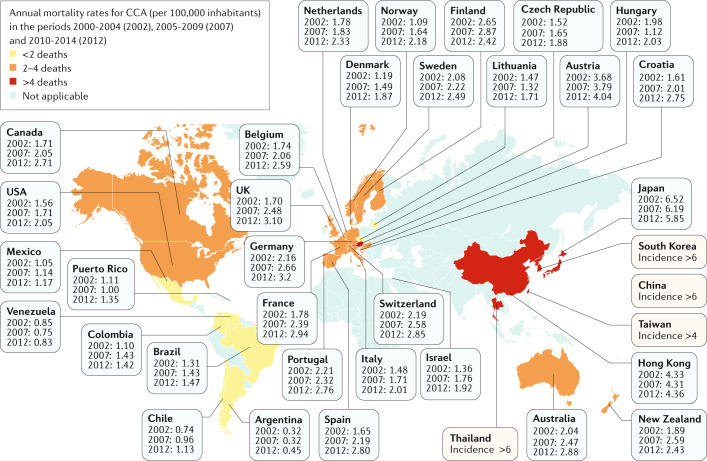
“Currently, Thailand, China and South Korea have the highest incidence of CCA (>6 cases per 100,000) worldwide, with continued increasing incidence and mortality rates [3].”
BackgroundInfluentialOrganoids and Spheroids as Models for Studying Cholestatic Liver Injury and Cholangiocarcinoma
Sato, K., Zhang, W., Safarikia, S., Isidan, A., Chen, A. M., Li, P., Francis, H., Kennedy, L., Baiocchi, L., Alvaro, D., et al. (2021) · Hepatology · doi:10.1002/hep.31653 · Cited by 70
“CCA heterogeneity on both the clinical and molecular levels and scarce knowledge of etiology have limited the discovery of biomarkers and impeded the development of tools for early diagnosis and effective treatments.(7) Because early diagnosis of CCA is challenging and treatment options are limited, therapeutic approa…”
BackgroundInfluentialSelf-citationRizzo, A., Dadduzio, V., Lombardi, L., Ricci, A. D., & Gadaleta‐Caldarola, G. (2021) · Current Oncology · doi:10.3390/curroncol28050293 · Cited by 79
The Landmark Series: Hilar Cholangiocarcinoma
Soares, K. C., & Jarnagin, W. R. (2021) · Annals of Surgical Oncology · doi:10.1245/s10434-021-09871-6 · Cited by 75
“It comprises 50–70% of all biliary tract neoplasms but remains a rare disease, with approximately 7000 cases diagnosed annually in North America.1,2 The management of HC is particularly challenging given its aggressive nature and complex anatomic relationships, which have important management implications.”
BackgroundBiology of IDH mutant cholangiocarcinoma
Wu, M., Shi, L., Merritt, J., Zhu, A. X., & Bardeesy, N. M. (2022) · Hepatology · doi:10.1002/hep.32424 · Cited by 74
“IDH mutations are rarely detected in iCCAs arising in regions of Thailand, which have high incidence of cholangiocarcinoma due to endemic infection with the liver fluke Opisthorchis viverrini,[103,108] further suggesting that specific inflammatory conditions influence the development of mIDH iCCA.”
BackgroundXiang, X., Liu, Z., Zhang, C., Li, Z., Gao, J., Zhang, C., Cao, Q., Cheng, J., Liu, H., Chen, D., et al. (2021) · Advanced Science · doi:10.1002/advs.202101230 · Cited by 71
Zhou, S., Xin, H., Sun, R., Zhou, Z., Hu, Z., Luo, C., Wang, P., Li, J., Fan, J., & Zhou, J. (2021) · JAMA Surgery · doi:10.1001/jamasurg.2021.5679 · Cited by 72
Shu, L., Li, X., Liu, Z., Li, K., Shi, A., Tang, Y., Zhao, L., Huang, L., Zhang, Z., Zhang, D., et al. (2023) · Hepatology · doi:10.1097/hep.0000000000000437 · Cited by 78
“[3] The effect of traditional adjuvant therapies, such as chemotherapy and radiotherapy ,on CCA is limited, and the developments of new CCA therapies remain stagnant.”
BackgroundMolecular profiling in cholangiocarcinoma: A practical guide to next-generation sequencing
Stenzinger, A., Vogel, A., Lehmann, U., Lamarca, Á., Hofman, P. M., Terracciano, L., & Normanno, N. (2023) · Cancer Treatment Reviews · doi:10.1016/j.ctrv.2023.102649 · Cited by 80
Xu, L., Zhang, Y., Lin, Z., Deng, X., Ren, X., Huang, M., Li, S., Zhou, Q., Fang, F., Yang, Q., et al. (2024) · Journal of Hepatology · doi:10.1016/j.jhep.2024.03.016 · Cited by 77
Precision Medicine in Biliary Tract Cancer
Scott, A. J., Sharman, R., & Shroff, R. T. (2022) · Journal of Clinical Oncology · doi:10.1200/jco.21.02576 · Cited by 75
Yoon, S. B., Moon, S., Ko, S. W., Lim, H. K., Kang, H. S., & Kim, J. H. (2021) · Digestive Diseases and Sciences · doi:10.1007/s10620-021-07138-4 · Cited by 70
Lee, Y., Wang, J. J., Luu, M., Noureddin, M., Nissen, N. N., Patel, T. C., Roberts, L. R., Singal, A. G., Gores, G. J., & Yang, J. D. (2021) · Hepatology · doi:10.1002/hep.32007 · Cited by 66
“On the other hand, superior OS of earlierstage patients with HCC than iCCA could be attributed to the increased efficacy of curative treatment for earlystage HCC, including liver transplantation.(3) There are some limitations in our retrospective study.”
BackgroundInfluentialSelf-citationProteogenomic characterization of cholangiocarcinoma
Deng, M., Ran, P., Chen, L., Wang, Y., Yu, Z., Cai, K., Feng, J., Qin, Z., Yin, Y., Tan, S., et al. (2023) · Hepatology · doi:10.1002/hep.32624 · Cited by 60
“HBV infections have been identified as CCA risk factors, yet its impacts on CCA and the mechanism underneath remain unclarified.[1,2] Next‐generation sequencing‐based studies have uncovered the CCA genetic landscape,[3] revealing the shared recurrent mutations in TP53, ARID1A, KRAS, SMAD4, etc.”
BackgroundEASL Clinical Practice Guidelines on the management of extrahepatic cholangiocarcinoma
Marzioni, M., Maroni, L., Aabakken, L., Carpino, G., Koerkamp, B. G., Heimbach, J. K., Khan, S. A., Lamarca, Á., Saborowski, A. L., Vilgrain, V., et al. (2025) · Journal of Hepatology · doi:10.1016/j.jhep.2025.03.007 · Cited by 78
Self-citationWnt signaling in liver regeneration, disease, and cancer
Zou, G., & Park, J.-I. (2023) · Clinical and Molecular Hepatology · doi:10.3350/cmh.2022.0058 · Cited by 64
Immunobiology of cholangiocarcinoma
Tomlinson, J. L., Valle, J. W., & Ilyas, S. I. (2023) · Journal of Hepatology · doi:10.1016/j.jhep.2023.05.010 · Cited by 67
Self-citationGou, Q., Zhang, C. Z., Sun, Z., Wu, L., Chen, Y., Mo, Z., Mai, Q., He, J., Zhou, Z., Shi, F., et al. (2021) · ESMO Open · doi:10.1016/j.esmoop.2021.100275 · Cited by 62
“Chemotherapy remains the current standard of care in both adjuvant and advanced disease setting.(5,6) In recent years, identification of mutations driving oncogenesis and development of targeted therapy and immunotherapy provide new opportunities for treating metastatic BTC.”
BackgroundResult
Metadata
- Authors
- Banales, J. M., Marin, J. J. G., Lamarca, A., Rodrigues, P. M., Khan, S. A., Roberts, L. R., Cardinale, V., Carpino, G., Andersen, J. B., Braconi, C., Calvisi, D. F., Perugorria, M. J., Fabris, L., Boulter, L., Macias, R. I. R., Gaudio, E., Alvaro, D., Gradilone, S. A., Strazzabosco, M., Marzioni, M., Coulouarn, C., Fouassier, L., Raggi, C., Invernizzi, P., Mertens, J. C., Moncsek, A., Ilyas, S. I., Heimbach, J., Koerkamp, B. G., Bruix, J., Forner, A., Bridgewater, J., Valle, J. W., & Gores, G. J.
- Affiliations
- University of the Basque Country (ES)
- Hammersmith Hospital (GB)
- Mayo Clinic (US)
- Sapienza University of Rome (IT)
- Foro Italico University of Rome (IT)
- University of Copenhagen (DK)
- University of Glasgow (GB)
- University of Regensburg (DE)
- University of Padua (IT)
- Institute of Genetics and Cancer (GB)
- University of Minnesota (US)
- Marche Polytechnic University (IT)
- Inserm (FR)
- University of Florence (IT)
- University of Milano-Bicocca (IT)
- University of Zurich (CH)
- Erasmus MC (NL)
- Instituto de Salud Carlos III (ES)
- University College London (GB)
- National Health Service (GB)
- ORCID
- Banales, Jesus M.
- Marin, Jose J. G.
- Lamarca, Angela
- Rodrigues, Pedro M.
- Khan, Shahid A.
- Roberts, Lewis R.
- Cardinale, Vincenzo
- Carpino, Guido
- Andersen, Jesper B.
- Braconi, Chiara
- Calvisi, Diego F.
- Perugorria, Maria J.
- Fabris, Luca
- Boulter, Luke
- Macias, Rocio I. R.
- Gaudio, Eugenio
- Alvaro, Domenico
- Gradilone, Sergio A.
- Strazzabosco, Mario
- Marzioni, Marco
- Coulouarn, Cédric
- Fouassier, Laura
- Raggi, Chiara
- Invernizzi, Pietro
- Mertens, Joachim C.
- Moncsek, Anja
- Ilyas, Sumera I.
- Heimbach, Julie
- Koerkamp, Bas Groot
- Bruix, Jordi
- Forner, Alejandro
- Bridgewater, John
- Valle, Juan W.
- Gores, Gregory J.
- Venue
- Nature Reviews Gastroenterology & Hepatology
- Published
- 2020-06-30
- Volume
- 17
- Issue
- 9
- Pages
- 557-588
- ISSN
- 1759-5045 (ISSN-L)
- 1759-5053
- PMC
- PMC7447603
- OpenAlex
- W3039360174
- Cited by
- 2,411
- References
- 410
- Citations by year
- 2026: 259 · 2025: 482 · 2024: 461 · 2023: 434 · 2022: 455 · 2021: 271 · 2020: 39
- FWCI
- 68.28
- Type
- journal article
- Language
- en
- Open access
- hybrid
- doi.org
- Licence
- cc-by
- creativecommons.org/licenses/by/4.0 (tdm)
- creativecommons.org/licenses/by/4.0 (vor)
- Locations
- Nature Reviews Gastroenterology & Hepatology (publishedVersion, cc-by)
- PubMed Central (publishedVersion, cc-by)
- PubMed (publishedVersion)
- Hispana (publishedVersion, other-oa)
- EUR Research Repository (Erasmus University Rotterdam) (publishedVersion, other-oa)
- Florence Research (University of Florence) (submittedVersion, other-oa)
- Università Politecnica delle Marche (Università Politecnica delle Marche) (submittedVersion, cc-by)
- Padua Research Archive (University of Padova) (submittedVersion, cc-by)
- EUR Research Repository (Erasmus University Rotterdam) (submittedVersion, other-oa)
- RePub (Erasmus University Rotterdam) (submittedVersion, other-oa)
- HAL (submittedVersion, other-oa)
- Communities in ADDI (University of the Basque Country) (submittedVersion, cc-by)
- BOA (University of Milano-Bicocca) (submittedVersion, cc-by)
- LA Referencia (Red Federada de Repositorios Institucionales de Publicaciones Científicas) (submittedVersion, cc-by)
- UCL Discovery (University College London) (submittedVersion)
- University of Regensburg Publication Server (University of Regensburg) (submittedVersion)
- Gredos (University of Salamanca) (submittedVersion, other-oa)
- IRIS Research product catalog (Sapienza University of Rome) (submittedVersion, cc-by)
- Funders
- Cholangiocarcinoma Foundation
- Novo Nordisk Fonden (NNF19OC0058419, NNF15OC0014040)
- National Institutes of Health (UL1TR001863)
- National Cancer Institute (K08CA236874, P50CA210964)
- National Institute of Diabetes and Digestive and Kidney Diseases (P30DK034989)
- National Center for Advancing Translational Sciences
- Topics
- Health Sciences › Medicine › Surgery › Cholangiocarcinoma and Gallbladder Cancer Studies
- Health Sciences › Medicine › Surgery › Pediatric Hepatobiliary Diseases and Treatments
- Health Sciences › Medicine › Hepatology › Liver Diseases and Immunity
- Keywords
- cholangiocarcinoma, biliary tract cancer, tumor heterogeneity, cell of origin, genetic alterations, epigenetic modifications, molecular alterations, biomarker discovery, diagnosis, treatment, prognosis, tumor classification
- MeSH terms
- Bile Duct Neoplasms, Humans, Cholangiocarcinoma
About these checks
Registry, retraction, Cites and statistics results are computed, not judged, with one exception: a printed reference that no index lists is read once by a model before it counts as a citation error. Claims are extracted by a model and kept only when their quote appears verbatim in the text; each cited source is then checked, with a model’s help, for whether it says what the claim relies on. Those verdicts can be wrong — read the claim’s quote and the cited source before relying on one.
Statistics and arithmetic are recomputed, not judged.
Confidence bands are shown only for fields calibrated on our annotated test set. None is calibrated yet, so no band is shown.
What counts as a claim ›How we measure confidence ›How we check this ›
Are you an author, or do you see a problem with this page? Request a review
Data sources
Bibliographic data: Semantic Scholar, OpenAlex, Crossref.
Contains information from the Semantic Scholar Academic Graph Datasets, made available under the ODC Attribution License (ODC-BY 1.0).
Semantic Scholar’s data is described in: Kinney, R., et al. (2023). The Semantic Scholar Open Data Platform. arXiv:2301.10140.
