

The mutational constraint spectrum quantified from variation in 141,456 humans
Open accessPublished version of a preprint
The DOI matches its Crossref record; 53 of the 53 references it cites were found in a registry or an index.
Abstract
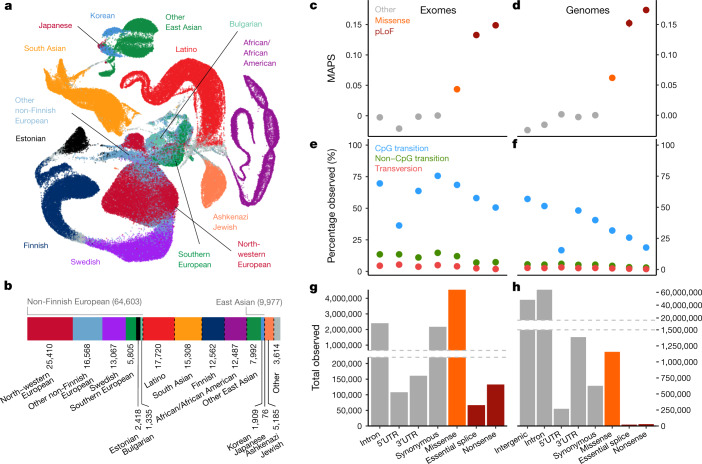
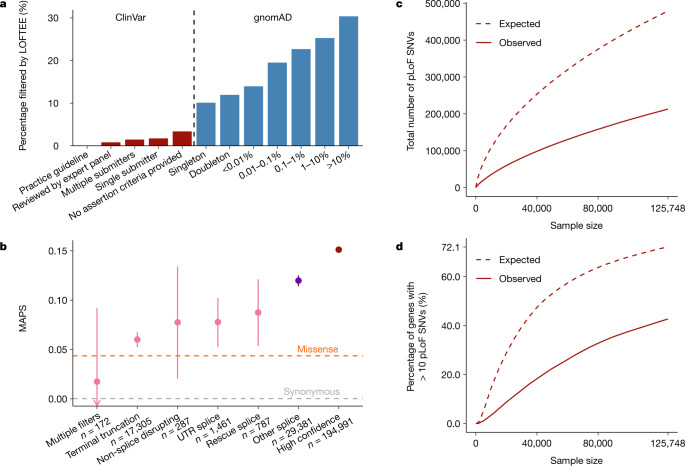
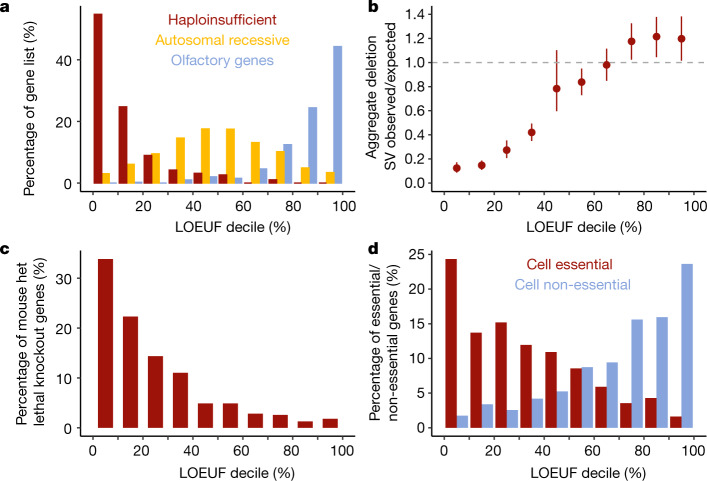
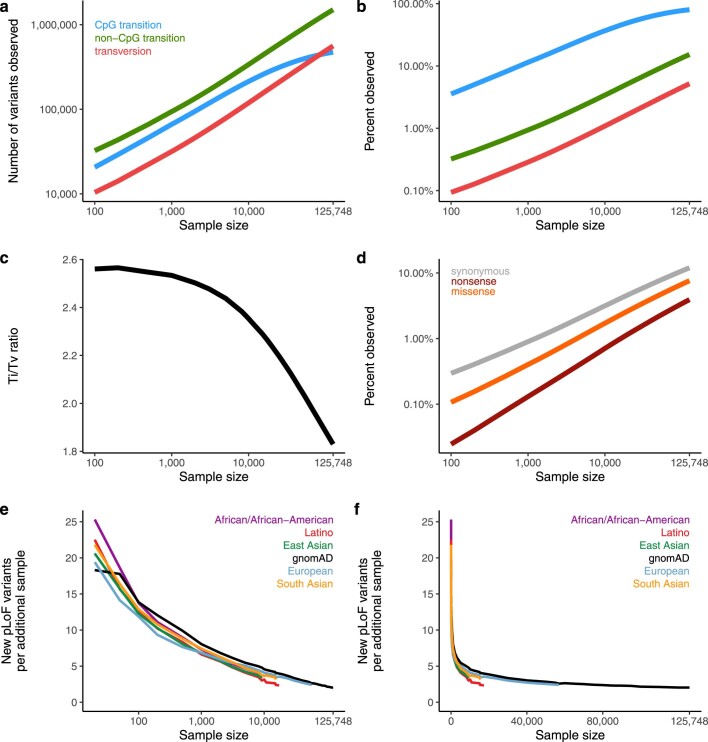
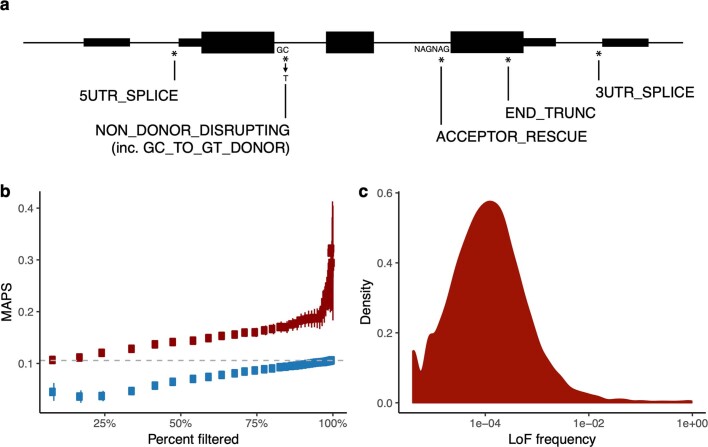
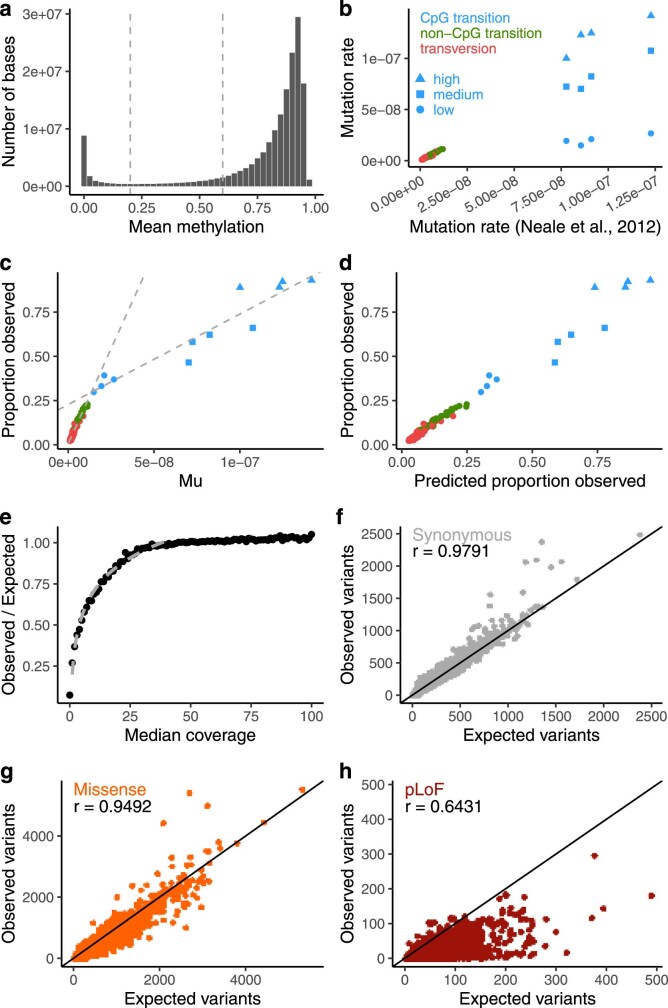
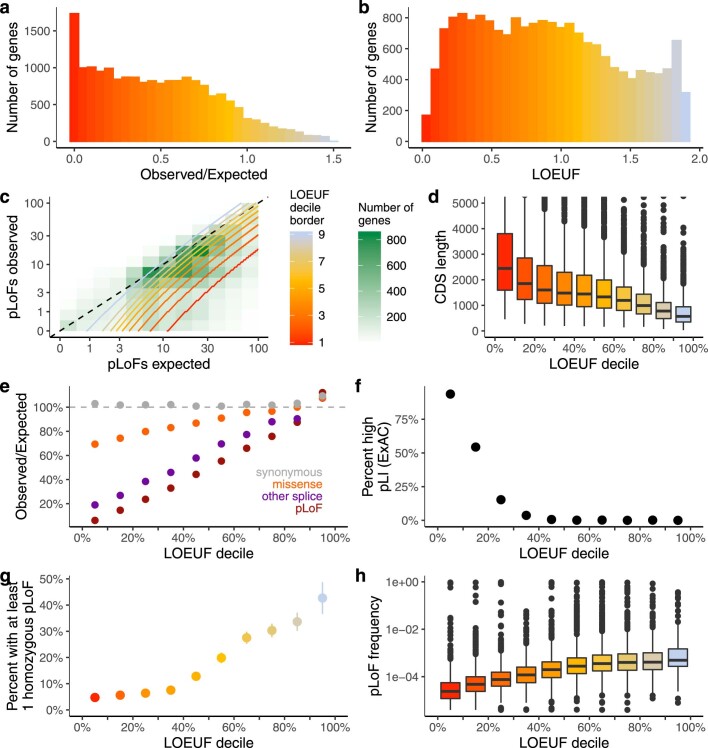
Genetic variants that inactivate protein-coding genes are a powerful source of information about the phenotypic consequences of gene disruption: genes that are crucial for the function of an organism will be depleted of such variants in natural populations, whereas non-essential genes will tolerate their accumulation. However, predicted loss-of-function variants are enriched for annotation errors, and tend to be found at extremely low frequencies, so their analysis requires careful variant annotation and very large sample sizes 1 . Here we describe the aggregation of 125,748 exomes and 15,708 genomes from human sequencing studies into the Genome Aggregation Database (gnomAD). We identify 443,769 high-confidence predicted loss-of-function variants in this cohort after filtering for artefacts caused by sequencing and annotation errors. Using an improved model of human mutation rates, we classify human protein-coding genes along a spectrum that represents tolerance to inactivation, validate this classification using data from model organisms and engineered human cells, and show that it can be used to improve the power of gene discovery for both common and rare diseases.
Overview
The claims and statistics of this paper haven’t been checked yet.
Free: it reads the open-access text and checks the first 5 claims that cite a source we can check. Create a free account to check every claim.
Integrity signals
Registry
Cites
Statistics
Figures
Verification
Claims the paper makes
The claims and statistics of this paper haven’t been checked yet.
Free: it reads the open-access text and checks the first 5 claims that cite a source we can check. Create a free account to check every claim.
Claims other papers make about this one
Each is checked against this paper’s own text: does it say what the citing paper says it does?
The source backs part of the claim, not all of it — or backs it for a different population, condition or comparison.
In the citing paper
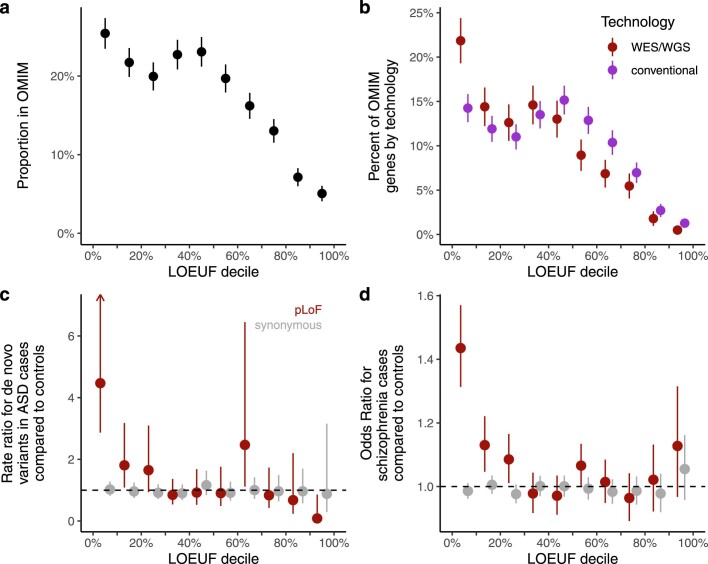
“Earlier schizophrenia sequencing studies have established that ultra-rare and de novo mutations contribute to risk as a category, and have prioritized disease-relevant tissues and processes, specifically observing an enrichment in neuronal genes and synaptic processes9,11,19–23.”
From Rare coding variants in ten genes confer substantial risk for schizophrenia (2022) · cites this paper as [23]
Experimental — accuracy not yet measuredThe source backs part of the claim, not all of it — or backs it for a different population, condition or comparison.
In the citing paper
“According to the gnomAD database (Karczewski et al, 2020), the loss-of-function observed/expected upper bound fraction (LOEUF) indicates that SALL4 is depleted of inactivating variants and under purifying selection (LOEUF = 0.101).”
From Structure of SALL4 zinc finger domain reveals link between AT-rich DNA binding and Okihiro syndrome (2023) · cites this paper as Karczewski et al, 2020
Experimental — accuracy not yet measuredThe source backs part of the claim, not all of it — or backs it for a different population, condition or comparison.
In the citing paper
“Based on gnomAD (Karczewski et al. 2020), DOCK4 has a reduced amount of missense and null variants compared to its size of 1,966 amino acids (pLI = 1, Z score = 1.67) in a population without severe, early-onset phenotypes, indicating a mild constraint.”
From Heterozygous loss-of-function variants in DOCK4 cause neurodevelopmental delay and microcephaly (2024) · cites this paper as Karczewski et al. 2020
Experimental — accuracy not yet measuredThe source backs part of the claim, not all of it — or backs it for a different population, condition or comparison.
In the citing paper
“All variants were prioritized considering allele frequency in gnomAD v4.0.0 (Karczewski et al. 2020) below 1%, impact on protein function via different in silico programs (CADD (Rentzsch et al. 2021), REVEL (Ioannidis et al. 2016), MutPred2 (Pejaver et al. 2020) and Metadome (Wiel et al. 2019)) and involvement of candidate genes in neuronal processes.”
From Heterozygous loss-of-function variants in DOCK4 cause neurodevelopmental delay and microcephaly (2024) · cites this paper as Karczewski et al. 2020
Experimental — accuracy not yet measuredThe source backs part of the claim, not all of it — or backs it for a different population, condition or comparison.
In the citing paper
“Owing to the scarcity of reported loss-of-function (LoF) variants, with only 17 cases (allele frequency: ~7E-7) in the Genome Aggregation Database (gnomAD) from healthy subjects100, the WASF1 gene exhibits exceptionally high intolerance to such mutations.”
From The WAVE complex in developmental and adulthood brain disorders (2025) · cites this paper as [100]
Experimental — accuracy not yet measured
20 more claims about this paper
Create a free account to see every claim other papers make about this one.
Self-check
Percentages, sums and reported differences re-computed from the paper’s own numbers.
The self-check needs the paper’s full text.
Citations
Cites
UMAP: Uniform Manifold Approximation and Projection
McInnes, L., Healy, J., Saul, N., & Großberger, L. (2018) · Journal of Open Source Software · doi:10.21105/joss.00861 · Cited by 9,826
Analysis of protein-coding genetic variation in 60,706 humans
Exome Aggregation Consortium, Lek, M., Karczewski, K. J., Minikel, E. V., Samocha, K. E., Banks, E., Fennell, T., O’Donnell-Luria, A. H., Ware, J. S., Hill, A. J., et al. (2016) · Nature · doi:10.1038/nature19057 · Cited by 9,587
Self-citationVan der Auwera, G. A., Carneiro, M. O., Hartl, C., Poplin, R., del Angel, G., Levy‐Moonshine, A., Jordan, T., Shakir, K., Roazen, D., Thibault, J., et al. (2013) · Current Protocols in Bioinformatics · doi:10.1002/0471250953.bi1110s43 · Cited by 6,687
Self-citationGenetic effects on gene expression across human tissues
GTEx Consortium (2017) · Nature · doi:10.1038/nature24277 · Cited by 4,036
Self-citationSequence Variations in PCSK9, Low LDL, and Protection against Coronary Heart Disease
Cohen, J. C., Boerwinkle, E., Mosley, T. H., & Hobbs, H. H. (2006) · New England Journal of Medicine · doi:10.1056/nejmoa054013 · Cited by 3,181
Clinical use of current polygenic risk scores may exacerbate health disparities
Martin, A. R., Kanai, M., Kamatani, Y., Okada, Y., Neale, B. M., & Daly, M. J. (2019) · Nature Genetics · doi:10.1038/s41588-019-0379-x · Cited by 2,821
Self-citationCurrent clinical use of polygenic scores will risk exacerbating health disparities
Martin, A. R., Kanai, M., Kamatani, Y., Okada, Y., Neale, B. M., & Daly, M. J. (2018) · doi:10.1101/441261 · Cited by 2,813
Self-citationPartitioning heritability by functional annotation using genome-wide association summary statistics
ReproGen Consortium, Finucane, H. K., Schizophrenia Working Group of the Psychiatric Genomics Consortium, The RACI Consortium, Bulik-Sullivan, B., Gusev, A., Trynka, G., Reshef, Y., Loh, P.-R., Anttila, V., et al. (2015) · Nature Genetics · doi:10.1038/ng.3404 · Cited by 2,604
Self-citationPatterns and rates of exonic de novo mutations in autism spectrum disorders
Neale, B. M., Kou, Y., Liu, L., Ma’ayan, A., Samocha, K. E., Sabo, A., Lin, C.-F., Stevens, C., Wang, L.-S., Makarov, V., et al. (2012) · Nature · doi:10.1038/nature11011 · Cited by 1,734
Self-citationDe novo mutations in schizophrenia implicate synaptic networks
Fromer, M., Pocklington, A. J., Kavanagh, D. H., Williams, H. J., Dwyer, S., Gormley, P., Georgieva, L., Rees, E., Palta, P., Ruderfer, D. M., et al. (2014) · Nature · doi:10.1038/nature12929 · Cited by 1,617
Self-citation
Cited by
Items 1,101–1,200 of 1,234
Itch receptor MRGPRX4 interacts with the receptor activity–modifying proteins
Kotliar, I. B., Ceraudo, E., Kemelmakher-Liben, K., Oren, D. A., Lorenzen, E., Dodig-Crnković, T., Horioka-Duplix, M., Huber, T., Schwenk, J. M., & Sakmar, T. P. (2023) · Journal of Biological Chemistry · doi:10.1016/j.jbc.2023.104664 · Cited by 21
A missense variant in SHARPIN mediates Alzheimer’s disease-specific brain damages
Park, J. Y., Lee, D., Lee, J. J., Gim, J., Gunasekaran, T. I., Choi, K. Y., Kang, S., Do, A. R., Jo, J., Park, J., et al. (2021) · Translational Psychiatry · doi:10.1038/s41398-021-01680-5 · Cited by 21
RNF130 Regulates LDLR Availability and Plasma LDL Cholesterol Levels
Clifford, B. L., Jarrett, K. E., Cheng, J., Cheng, A., Seldin, M., Morand, P., Lee, R., Chen, M., Baldan, A., de Aguiar Vallim, T. Q., et al. (2023) · Circulation Research · doi:10.1161/circresaha.122.321938 · Cited by 20
Missense Variants Reveal Functional Insights Into the Human ARID Family of Gene Regulators
Deák, G., & Cook, A. G. (2022) · Journal of Molecular Biology · doi:10.1016/j.jmb.2022.167529 · Cited by 20
“These included “loss-of-function observed/expected upper bound fraction” (LOEUF)(1) and missense Z scores (Figure 2(A)) as well as pLi and RVIS scores (Supplementary Table 1).(1,42) The lower the LOEUF, the fewer the variants observed than expected, indicating negative selection against loss-of-function variation.”
BackgroundMethodInfluentialAu, K. S., Hebert, L., Hillman, P., Baker, C., Brown, M. R., Kim, D.-K., Soldano, K., Garrett, M., Ashley-Koch, A., Lee, S., et al. (2021) · Scientific Reports · doi:10.1038/s41598-021-83058-7 · Cited by 20
Bowles, B., Ferrer, A., Nishimura, C. J., Pinto e Vairo, F., Rey, T., Leheup, B., Sullivan, J., Schoch, K., Stong, N., Agolini, E., et al. (2021) · American Journal of Medical Genetics Part A · doi:10.1002/ajmg.a.62347 · Cited by 20
Emerging insights into ethnic-specific TP53 germline variants
Fischer, N. W., Ma, Y.-H. V., & Gariépy, J. (2023) · JNCI: Journal of the National Cancer Institute · doi:10.1093/jnci/djad106 · Cited by 20
Missense variants reveal functional insights into the human ARID family of gene regulators
(2021) · doi:10.1101/2021.11.17.468850 · Cited by 20
Mitchell, J., Camacho, N., Shea, P., Stopsack, K. H., Joseph, V., Burren, O. S., Dhindsa, R. S., Nag, A., Berchuck, J. E., O’Neill, A., et al. (2025) · Nature Communications · doi:10.1038/s41467-025-56944-1 · Cited by 19
Self-citationOppermann, H., Marcos-Grañeda, E., Weiss, L. A., Gurnett, C. A., Jelsig, A. M., Vineke, S. H., Isidor, B., Mercier, S., Magnussen, K., Zacher, P., et al. (2023) · European Journal of Human Genetics · doi:10.1038/s41431-023-01445-2 · Cited by 18
Assessing variant effect predictors and disease mechanisms in intrinsically disordered proteins
Fawzy, M., & Marsh, J. A. (2025) · PLOS Computational Biology · doi:10.1371/journal.pcbi.1013400 · Cited by 18
“Variants were grouped into three categories: pathogenic and likely pathogenic variants from ClinVar [23], benign and likely benign variants from ClinVar, and putatively benign population variants from gnomAD [24].”
Kong, S. W., Lee, I.-H., Collen, L. V., Field, M., Manrai, A. K., Snapper, S. B., & Mandl, K. D. (2025) · npj Genomic Medicine · doi:10.1038/s41525-025-00480-w · Cited by 18
PRESCOTT: a population aware, epistatic, and structural model accurately predicts missense effects
Tekpinar, M., David, L., Henry, T., & Carbone, A. (2025) · Genome Biology · doi:10.1186/s13059-025-03581-y · Cited by 18
“The majority of rare variants are not pathogenic, and current reference population databases have not yet reached saturation for most types of variation [45].”
Schmitz, M. J., Aarabi, M., Bashar, A., Rajkovic, A., Gregg, A. R., & Yatsenko, S. A. (2022) · Clinical Genetics · doi:10.1111/cge.14148 · Cited by 18
“Participants in gnomAD provided consent for the release of aggregated data.(18) For more information, please refer to: https://gnomad.”
BackgroundMethodInfluentialBreaching the Bacterial Envelope: The Pivotal Role of Perforin-2 (MPEG1) Within Phagocytes
Merselis, L. C., Rivas, Z. P., & Munson, G. P. (2021) · Frontiers in Immunology · doi:10.3389/fimmu.2021.597951 · Cited by 18
“org/) catalogs 432 missense (codon changes) and 23 nonsense (premature stop codon) mutations in humanMpeg1 (89).”
BackgroundPRESCOTT: a population aware, epistatic and structural model accurately predicts missense effect
Tekpinar, M., David, L., Henry, T., & Carbone, A. (2024) · doi:10.1101/2024.02.03.24302219 · Cited by 18
Kong, S. W., Lee, I.-H., Collen, L. V., Manrai, A. K., Snapper, S. B., & Mandl, K. D. (2024) · doi:10.1101/2024.05.22.24307756 · Cited by 18
Assessing variant effect predictors and disease mechanisms in intrinsically disordered proteins
Fawzy, M., & Marsh, J. A. (2025) · doi:10.1101/2025.04.01.646619 · Cited by 18
Rossi, J. J., Rosenfeld, J. A., Chan, K. M., Streff, H., Nankivell, V., Peet, D. J., Whitelaw, M. L., & Bersten, D. C. (2021) · Scientific Reports · doi:10.1038/s41598-021-86041-4 · Cited by 17
Rare genetic variants confer a high risk of ADHD and implicate neuronal biology
Demontis, D., Duan, J., Hsu, Y.-H. H., Pintacuda, G., Grove, J., Nielsen, T. T., Thirstrup, J., Martorana, M., Botts, T., Satterstrom, F. K., et al. (2026) · Nature · doi:10.1038/s41586-025-09702-8 · Cited by 17
“To increase power for gene discovery, we combined iPSYCH data with a subset of 44,779 individuals from gnomAD 17 (as defined above).”
InfluentialSelf-citationSu, C.-Y., van der Graaf, A., Zhang, W., Jang, D.-K., Selber-Hnatiw, S., Yang, T.-Y., Butler-Laporte, G., Liang, K. Y. H., Matsuda, F., Costanzo, M. C., et al. (2024) · doi:10.1101/2024.10.17.24315553 · Cited by 17
Escherich, C. S., Chen, W., Li, Y., Yang, W., Nishii, R., Li, Z., Raetz, E. A., Devidas, M., Wu, G., Nichols, K. E., et al. (2024) · Blood · doi:10.1182/blood.2023023336 · Cited by 17
Systematic elucidation of genetic mechanisms underlying cholesterol uptake
Hamilton, M. C., Fife, J. D., Akinci, E., Yu, T., Khowpinitchai, B., Cha, M., Barkal, S., Thi, T. T., Yeo, G. H. T., Ramos Barroso, J. P., et al. (2023) · Cell Genomics · doi:10.1016/j.xgen.2023.100304 · Cited by 16
Huang, A. Y., Zhou, Z., Talukdar, M., Miller, M. B., Chhouk, B., Enyenihi, L., Rosen, I., Stronge, E., Zhao, B., Kim, D., et al. (2024) · doi:10.1101/2024.01.03.574078 · Cited by 16
The structure of the human LACTB filament reveals the mechanisms of assembly and membrane binding
Bennett, J. A., Steward, L. R., Rudolph, J., Voss, A. P., & Aydin, H. (2022) · PLOS Biology · doi:10.1371/journal.pbio.3001899 · Cited by 16
“About 30% of the pathogenic variants cause frameshifts and 467 premature truncation of the open reading frame, whereas the remaining ~70% are missense 468 mutations that are linked to various cancers [52,53].”
BackgroundExpanding the pre- and postnatal phenotype of WASHC5 and CCDC22 -related Ritscher-Schinzel syndromes
Neri, S., Maia, N., Fortuna, A. M., Damasio, J., Coale, E., Willis, M., Jorge, P., Højte, A. F., Fenger, C. D., Møller, R. S., et al. (2022) · European Journal of Medical Genetics · doi:10.1016/j.ejmg.2022.104624 · Cited by 16
Applicability of Diagnostic Criteria and Prevalence of Familial Dysbetalipoproteinemia in Russia
Blokhina, A. V., Ershova, A. I., Kiseleva, A. V., Sotnikova, E. A., Zharikova, A. A., Zaicenoka, M., Vyatkin, Y. V., Ramensky, V. E., Kutsenko, V. A., Shalnova, S. A., et al. (2023) · doi:10.20944/preprints202306.0140.v1 · Cited by 16
The structure of the human LACTB filament reveals the mechanisms of assembly and membrane binding
Bennett, J. A., Steward, L. R., Rudolph, J., Voss, A. P., & Aydin, H. (2022) · doi:10.1101/2022.04.21.489104 · Cited by 16
Huang, A. Y., Zhou, Z., Talukdar, M., Enyenihi, L., Miller, M. B., Chhouk, B., Rosen, I., Zheng, M., Zhou, M., Yang, A., et al. (2026) · Cell · doi:10.1016/j.cell.2026.03.040 · Cited by 24
Proteome-scale prediction of molecular mechanisms underlying dominant genetic diseases
(2024) · doi:10.1371/journal.pone.0307312 · Cited by 15
“1.1 [28] using the exomes all chromosomes VCF file.”
MethodInfluentialXicota, L., Lagarde, J., Eysert, F., Grenier-Boley, B., Rivals, I., Botté, A., Forlani, S., Landron, S., Gautier, C., Gabriel, C., et al. (2023) · Translational Psychiatry · doi:10.1038/s41398-023-02355-z · Cited by 15
“1 (HRC) [27] excluding 1000 Genomes samples and the Genome Aggregation Database v3 (gnomAD) non-Finnish European samples [28].”
BackgroundDecoding Missense Variants by Incorporating Phase Separation via Machine Learning
Feng, M., Wei, X., Zheng, X., Liu, L., Lin, L., Xia, M., He, G., Shi, Y., & Lu, Q. (2024) · Nature Communications · doi:10.1038/s41467-024-52580-3 · Cited by 15
Reynisdottir, T., Anderson, K. J., Boukas, L., & Bjornsson, H. T. (2022) · PLOS Genetics · doi:10.1371/journal.pgen.1010278 · Cited by 15
“1) [10] and the Trans-Omics for 213 Precision Medicine database (TOPmed) [11].”
Multiplex and multimodal mapping of variant effects in secreted proteins via MultiSTEP
Popp, N. A., Powell, R. L., Wheelock, M. K., Holmes, K. J., Zapp, B. D., Sheldon, K. M., Fletcher, S. N., Wu, X., Fayer, S., Rubin, A. F., et al. (2025) · Nature Structural & Molecular Biology · doi:10.1038/s41594-025-01582-w · Cited by 15
“Genome sequencing has revealed a rapidly expanding universe of human genetic variants, most with unknown disease consequences 1 .”
Reynisdottir, T., Anderson, K., Boukas, L., & Bjornsson, H. T. (2022) · doi:10.1101/2022.01.03.474770 · Cited by 15
Structure of SALL4 zinc finger domain reveals link between AT-rich DNA binding and Okihiro syndrome
Watson, J. A., Pantier, R., Jayachandran, U., Chhatbar, K., Alexander-Howden, B., Kruusvee, V., Prendecki, M., Bird, A., & Cook, A. G. (2023) · Life Science Alliance · doi:10.26508/lsa.202201588 · Cited by 14
“According to the gnomAD database (Karczewski et al, 2020), the loss-of-function observed/expected upper bound fraction (LOEUF) indicates that SALL4 is depleted of inactivating variants and under purifying selection (LOEUF = 0.101).”
InfluentialCancer-driving mutations are enriched in genic regions intolerant to germline variation
Vitsios, D., Dhindsa, R. S., Matelska, D., Mitchell, J., Zou, X., Armenia, J., Hu, F., Wang, Q., Sidders, B., Harper, A. R., et al. (2022) · Science Advances · doi:10.1126/sciadv.abo6371 · Cited by 14
Self-citationMariano, V., Kanellopoulos, A. K., Ricci, C., Di Marino, D., Borrie, S. C., Dupraz, S., Bradke, F., Achsel, T., Legius, E., Odent, S., et al. (2024) · Biological Psychiatry · doi:10.1016/j.biopsych.2023.08.027 · Cited by 14
Pilat, D. J., Le, H., Prokopenko, D., Lin, C.-C. J., Eimer, W. A., Quinti, L., Gavrilles, E. P., Garcia, S. N., Heitman, S. N., McGinty, D., et al. (2026) · Neuron · doi:10.1016/j.neuron.2025.09.032 · Cited by 14
Panyard, D. J., Reus, L. M., Ali, M., Liu, J., Deming, Y. K., Lu, Q., Kollmorgen, G., Carboni, M., Wild, N., Visser, P. J., et al. (2024) · Alzheimer's & Dementia · doi:10.1002/alz.13848 · Cited by 14
Cancer-driving mutations are enriched in genic regions intolerant to germline variation
(2022) · doi:10.1101/2022.01.07.475416 · Cited by 14
High performance of a GPU-accelerated variant calling tool in genome data analysis
Zhang, Q., Liu, H., & Bu, F. (2021) · doi:10.1101/2021.12.12.472266 · Cited by 13
Unveiling recent and ongoing adaptive selection in human populations
Gao, Z. (2024) · PLOS Biology · doi:10.1371/journal.pbio.3002469 · Cited by 12
Luppino, F., Adzhubei, I. A., Cassa, C. A., & Toth-Petroczy, A. (2023) · Nature Communications · doi:10.1038/s41467-023-37661-z · Cited by 12
Luppino, F., Adzhubei, I. A., Cassa, C. A., & Toth-Petroczy, A. (2022) · doi:10.1101/2022.06.15.496230 · Cited by 12
Yang, N., Chen, L., Zhang, Y., Wu, X., Hao, Y., Yang, F., Yang, Z., & Liang, J. (2024) · BMC Pediatrics · doi:10.1186/s12887-024-04553-0 · Cited by 11
“These two variants have not been included in public data such as the gnom AD (https:// gnomad. broad insti tute. org/ gene/ ENSG0 00001 34440? datas et = gnomad_ r2_1) [18, 19], and variant c.1352G > A (p.Arg451His) has a very low MAF with 0.00003184 in gnom AD_genome_ALL (Table 1).”
BackgroundInfluential(2023) · doi:10.21203/rs.3.rs-3290762/v1 · Cited by 11
Sleyp, Y., Valenzuela, I., Accogli, A., Ballon, K., Ben-Zeev, B., Berkovic, S. F., Broly, M., Callaerts, P., Caylor, R. C., Charles, P., et al. (2022) · Genetics in Medicine · doi:10.1016/j.gim.2022.08.020 · Cited by 10
Jung, B., Ahn, K., Justice, C., Norman, L., Price, J., Sudre, G., & Shaw, P. (2023) · Molecular Psychiatry · doi:10.1038/s41380-022-01906-y · Cited by 10
“Fourth, we calculated the loss of function intolerance of all CNVs using the cumulative inverse of the loss-of-function observed/expected upper bound fraction (LOEUF) score for all genes affected by CNVs [38].”
MethodUtgés, J. S., MacGowan, S. A., Ives, C. M., & Barton, G. J. (2024) · Communications Biology · doi:10.1038/s42003-024-05970-8 · Cited by 10
A distributed whole genome sequencing benchmark study
Corbett, R. D., Eveleigh, R., Whitney, J., Barai, N., Bourgey, M., Chuah, E., Johnson, J., Moore, R. A., Moradin, N., Mungall, K. L., et al. (2020) · Frontiers in Genetics · doi:10.3389/fgene.2020.612515 · Cited by 10
Ferrero, E., Di Gregorio, E., Ferrero, M., Ortolan, E., Moon, Y.-A., Di Campli, A., Pavinato, L., Mancini, C., Tripathy, D., Manes, M., et al. (2023) · Human Genetics · doi:10.1007/s00439-023-02572-y · Cited by 9
mvPPT: A Highly Efficient and Sensitive Pathogenicity Prediction Tool for Missense Variants
Tong, S.-Y., Fan, K., Zhou, Z.-W., Liu, L.-Y., Zhang, S.-Q., Fu, Y., Wang, G.-Z., Zhu, Y., & Yu, Y.-C. (2023) · Genomics, Proteomics & Bioinformatics · doi:10.1016/j.gpb.2022.07.005 · Cited by 9
“1) (28), and category C: region/gene-based information obtained from”
BackgroundFerrero, E., Gregorio, E. D., Ferrero, M., Ortolan, E., Moon, Y.-A., Campli, A. D., Pavinato, L., Mancini, C., Tripathy, D., Manes, M., et al. (2023) · doi:10.21203/rs.3.rs-2616059/v1 · Cited by 9
MvPPT: a highly efficient and sensitive pathogenicity prediction tool for missense variants
(2022) · doi:10.1101/2022.01.05.475156 · Cited by 9
Das, A. S., Sherry, E. C., Vaughan, R. M., Henderson, M. L., Zieba, J., Uhl, K. L., Koehn, O., Bupp, C. P., Rajasekaran, S., Li, X., et al. (2022) · Frontiers in Cell and Developmental Biology · doi:10.3389/fcell.2022.1033695 · Cited by 9
Mangum, R., Reuther, J., Sen Baksi, K., Gandhi, I., Zabriskie, R. C., Recinos, A., Raesz-Martinez, R., Lin, F. Y., Potter, S. L., Sher, A. C., et al. (2023) · Pediatric Hematology and Oncology · doi:10.1080/08880018.2023.2228837 · Cited by 8
Blokhina, A. V., Ershova, A. I., Kiseleva, A. V., Sotnikova, E. A., Zharikova, A. A., Zaicenoka, M., Vyatkin, Y. V., Ramensky, V. E., Kutsenko, V. A., Garbuzova, E. V., et al. (2024) · International Journal of Molecular Sciences · doi:10.3390/ijms252312651 · Cited by 8
“PRS for TG was calculated for all study participants, except two patients with FH.”
The WAVE complex in developmental and adulthood brain disorders
Kim, H.-G., Berdasco, C., Nairn, A. C., & Kim, Y. (2025) · Experimental & Molecular Medicine · doi:10.1038/s12276-024-01386-w · Cited by 8
MacGowan, S. A., Madeira, F., Britto-Borges, T., & Barton, G. J. (2024) · Communications Biology · doi:10.1038/s42003-024-06117-5 · Cited by 8
“Incon-trast,populationdatasetslikegnomAD 46 capture genetic diversity in fl u-enced by more recent events, migrations and drift, all within the genomic context of a single species.”
InfluentialIntegrative analysis of pathogenic variants in glucose-6-phosphatase based on an AlphaFold2 model
Sinclair, M., Stein, R. A., Sheehan, J. H., Hawes, E. M., O’Brien, R. M., Tajkhorshid, E., & Claxton, D. P. (2024) · PNAS Nexus · doi:10.1093/pnasnexus/pgae036 · Cited by 8
“The significance of these findings was emphasized by ΔΔ G analysis of two uncharacterized missense variants, Q14R and E319K, listed in the Genome Aggregation Database (48) that are found outside the active site on the protein surface and expected to be well tolerated (Table 1).”
BackgroundAnalysis-ready VCF at Biobank scale using Zarr
(2025) · doi:10.1093/gigascience/giaf049 · Cited by 8
“Hail [ 43 , 44 ] has become the dominant platform for quality control of large-scale variation datasets, and has been instrumental in projects such as gnomadAD [ 30 , 45 ].”
(2023) · doi:10.3390/biology12040589 · Cited by 8
Dilliott, A. A., Kwon, S., Rouleau, G. A., Iqbal, S., & Farhan, S. M. K. (2023) · Brain · doi:10.1093/brain/awad224 · Cited by 8
“1.1 Non-Finnish European (NFE), non-neurological ( n = 51 592) allele frequency 34 ; and ClinVar pathogenicity classifications.”
InfluentialAre Next-Generation Pathogenicity Predictors Applicable to Cancer?
Ostroverkhova, D., Sheng, Y., & Panchenko, A. (2024) · Journal of Molecular Biology · doi:10.1016/j.jmb.2024.168644 · Cited by 8
Are the Next-Generation Pathogenicity Predictors Applicable to Cancer?
(2024) · doi:10.1101/2024.05.06.592789 · Cited by 8
Dilliott, A. A., Rouleau, G. A., Iqbal, S., & Farhan, S. M. K. (2022) · doi:10.1101/2022.12.21.22283728 · Cited by 8
Sinclair, M., Stein, R. A., Sheehan, J. H., Hawes, E. M., O’Brien, R. M., Tajkhorshid, E., & Claxton, D. P. (2023) · doi:10.1101/2023.03.13.532485 · Cited by 8
Analysis-ready VCF at Biobank scale using Zarr
Czech, E., Millar, T. R., Tyler, W., White, T., Elsworth, B., Guez, J., Hancox, J., Jeffery, B., Karczewski, K. J., Miles, A., et al. (2024) · doi:10.1101/2024.06.11.598241 · Cited by 8
Self-citationIntegrative analysis of taste genetics and the dental plaque microbiome in early childhood caries
Khan, M. W., Cruz de Jesus, V., Mittermuller, B.-A., Schroth, R. J., Hu, P., & Chelikani, P. (2025) · Cell Reports · doi:10.1016/j.celrep.2025.116245 · Cited by 7
Heterozygous loss-of-function variants in DOCK4 cause neurodevelopmental delay and microcephaly
Herbst, C., Bothe, V., Wegler, M., Axer-Schaefer, S., Audebert-Bellanger, S., Gecz, J., Cogne, B., Feldman, H. B., Horn, A. H. C., Hurst, A. C. E., et al. (2024) · Human Genetics · doi:10.1007/s00439-024-02655-4 · Cited by 7
“0.0 (Karczewski et al. 2020) below 1%, impact on protein function via different in silico programs (CADD (Rentzsch et al. 2021), REVEL (Ioannidis et al. 2016), MutPred2 (Pejaver et al. 2020) and Metadome (Wiel et al. 2019)) and involvement of candidate genes in neuronal processes.”
BackgroundInfluentialRudaks, L. I., Triplett, J., Morris, K., Reddel, S., & Worgan, L. (2024) · American Journal of Medical Genetics Part A · doi:10.1002/ajmg.a.63433 · Cited by 7
“It is classified as pathogenic by ACMG criteria (PVS1, PM2, PM3) (Karczewski et al., 2020; Landrum et al., 2018; Richards et al., 2015).”
BackgroundA rare splice-site variant in TNNT2: the need for ancestral diversity in genomic reference data sets
Butters, A., Thomson, K., Harrington, F., Henden, N., McGuire, K., Byrne, A. B., Bryen, S., McGurk, K. A., Leask, M., Ackerman, M. J., et al. (2025) · European Heart Journal · doi:10.1093/eurheartj/ehaf001 · Cited by 7
Self-citationDirvanskyte, P., Gurram, B., Bolton, C., Warner, N., Jones, K. D. J., Griffin, H. R., Genomics England Research Consortium, Park, J. Y., Keller, K.-M., Gilmour, K. C., et al. (2023) · Journal of Crohn s and Colitis · doi:10.1093/ecco-jcc/jjac103 · Cited by 6
Rowlands, C. F., Allen, S., Garrett, A., Durkie, M., Burghel, G. J., Robinson, R., Callaway, A., Field, J., Frugtniet, B., Palmer-Smith, S., et al. (2025) · The American Journal of Human Genetics · doi:10.1016/j.ajhg.2025.08.014 · Cited by 6
(2023) · doi:10.1371/journal.pgen.1010972 · Cited by 6
Alternative mRNA Splicing Controls the Functions of the Histone H3K27 Demethylase UTX/KDM6A
(2023) · doi:10.3390/cancers15123117 · Cited by 6
“The mutation information was collected from the cBioPortal and gnomAD web browsers [40,45,46]”
MethodBeyer, T., Diwan, G. D., Leonhard, T., Dahlke, K., Klose, F., Stehle, I. F., Seda, M., Bolz, S., Woerz, F., Russell, R. B., et al. (2025) · Molecular & Cellular Proteomics · doi:10.1016/j.mcpro.2025.100916 · Cited by 6
Proteome-scale prediction of molecular mechanisms underlying dominant genetic diseases
Badonyi, M., & Marsh, J. A. (2023) · doi:10.1101/2023.09.08.556798 · Cited by 6
Alternative mRNA splicing controls the functions of the histone H3K27 demethylase UTX/KDM6A
Fotouhi, O., Nizamuddin, S., Falk, S., Schilling, O., Knüchel-Clarke, R., Biniossek, M. L., & Timmers, H. T. M. (2023) · doi:10.1101/2023.04.20.536794 · Cited by 6
Xie, M. J., Cromie, G. A., Owens, K., Timour, M. S., Tang, M., Kutz, J. N., El-Hattab, A. W., McLaughlin, R. N., & Dudley, A. M. (2023) · doi:10.1101/2023.01.11.523651 · Cited by 6
Ancient roots: A Cambrian explosion of autism susceptibility genes
Casanova, E. L. (2023) · Autism Research · doi:10.1002/aur.2984 · Cited by 5
The utility of ultra-deep RNA sequencing in Mendelian disorder diagnostics
Zhao, S., Sinson, J. C., Li, S., Rosenfeld, J. A., Zapata, G., Macakova, K., Pena, M., Maywald, B., Worley, K. C., Burrage, L. C., et al. (2025) · The American Journal of Human Genetics · doi:10.1016/j.ajhg.2025.09.013 · Cited by 5
Horowitz, K., Fotopoulos, N. H., Mistry, A. J., Simo, J., Medeiros, M., Bucco, I. D., Ginsberg, M., Dwosh, E., La Piana, R., Rouleau, G. A., et al. (2025) · Journal of Medical Genetics · doi:10.1136/jmg-2024-110122 · Cited by 5
“…from general population, ancestry specific and disease specific databases such as the Genome Aggregation Database (gnomAD) V.2.1.1 and V.3.1.2, including the non-neurological disease cohorts and specific ancestral subsets, 17 the Healthy Exomes dataset 18 and the Database of Genomic Variants.”
InfluentialChuah, A., Li, S., Do, A., Field, M., & Andrews, D. (2022) · Bioinformatics · doi:10.1093/bioinformatics/btac465 · Cited by 5
Prediction of Kv11.1 potassium channel PAS-domain variants trafficking via machine learning
Immadisetty, K., Fang, X., Ramon, G. S., Hartle, C. M., McCoy, T. P., Center, R. G., Mirshahi, T., Delisle, B. P., & Kekenes-Huskey, P. M. (2023) · Journal of Molecular and Cellular Cardiology · doi:10.1016/j.yjmcc.2023.05.002 · Cited by 5
Gerasimavicius, L., Livesey, B. J., & Marsh, J. A. (2023) · doi:10.1101/2023.02.03.527007 · Cited by 5
Dullea, A., Efimenko, I., Firdaus, F., Griswold, A., Arora, H., Masterson, T., & Ramasamy, R. (2022) · Urology · doi:10.1016/j.urology.2022.02.023 · Cited by 5
(2023) · doi:10.1101/2023.02.28.530483 · Cited by 5
Chuah, A., Li, S., Do, A., Field, M. A., & Andrews, T. D. (2021) · doi:10.1101/2021.11.28.470298 · Cited by 5
Uzuner Odongo, D., İlgün, A., Bozkurt, F. B., & Çakır, T. (2025) · Communications Biology · doi:10.1038/s42003-025-07941-z · Cited by 4
Exonic enhancers are a widespread class of dual-function regulatory elements
Mouren, J.-C., Torres, M., van Ouwerkerk, A., Manosalva, I., Gallardo, F., Spicuglia, S., & Ballester, B. (2026) · Nature Communications · doi:10.1038/s41467-026-71220-6 · Cited by 4
Exploring Pathogenic Mutation in Allosteric Proteins: The Prediction and Beyond
Zhang, H., Ju, Z., Zhang, J., Li, X., Xiao, H., Chen, X., Li, Y., Wang, X., & Wei, Y. (2025) · Tsinghua Science and Technology · doi:10.26599/tst.2024.9010226 · Cited by 4
Illuminating the function of the orphan transporter, SLC22A10, in humans and other primates
Yee, S. W., Ferrández-Peral, L., Alentorn-Moron, P., Fontsere, C., Ceylan, M., Koleske, M. L., Handin, N., Artegoitia, V. M., Lara, G., Chien, H.-C., et al. (2024) · Nature Communications · doi:10.1038/s41467-024-48569-7 · Cited by 4
(2025) · doi:10.1038/s41467-024-54176-3 · Cited by 4
Exploring Pathogenic Mutation in Allosteric Proteins: the Prediction and Beyond
Zhang, H., Ju, Z., Zhang, J., Li, X., Xiao, H., Chen, X., li, Y., Wang, X., & Wei, Y. (2024) · doi:10.1101/2024.03.23.586438 · Cited by 4
Exonic enhancers are a widespread class of dual-function regulatory elements
Mouren, J.-C., Torres, M., van Ouwerkerk, A., Manosalva, I., Gallardo, F., Spicuglia, S., & Ballester, B. (2025) · doi:10.1101/2025.03.27.645641 · Cited by 4
Klaproth-Andrade, D., Scheller, I. F., Tsitsiridis, G., Loipfinger, S., Mertes, C., Smirnov, D., Prokisch, H., Yépez, V. A., & Gagneur, J. (2025) · doi:10.1101/2025.02.01.636024 · Cited by 4
AXIN1 mutations in nonsyndromic craniosynostosis
Timberlake, A. T., Hemal, K., Gustafson, J. A., Hao, L. T., Valenzuela, I., Slavotinek, A., Cunningham, M. L., Kahle, K. T., Lifton, R. P., & Persing, J. A. (2024) · Journal of Neurosurgery: Pediatrics · doi:10.3171/2024.5.peds24115 · Cited by 3
Yuan, H., Liu, Z., Chen, M., Xu, Q., Jiang, Y., Zhang, T., Suo, C., & Chen, X. (2024) · BMC Medicine · doi:10.1186/s12916-024-03466-0 · Cited by 3
“Variants were then annotated using VEP v.102 [13] and LOFTEE v.1.0.4 plugin [14].”
MethodInfluential
Metadata
- Authors
- Karczewski, K. J., Francioli, L. C., Tiao, G., Cummings, B. B., Alföldi, J., Wang, Q., Collins, R. L., Laricchia, K. M., Ganna, A., Birnbaum, D. P., Gauthier, L. D., Brand, H., Solomonson, M., Watts, N. A., Rhodes, D., Singer-Berk, M., England, E. M., Seaby, E. G., Kosmicki, J. A., Walters, R. K., Tashman, K., Farjoun, Y., Banks, E., Poterba, T., Wang, A., Seed, C., Whiffin, N., Chong, J. X., Samocha, K. E., Pierce-Hoffman, E., Zappala, Z., O’Donnell-Luria, A. H., Minikel, E. V., Weisburd, B., Lek, M., Ware, J. S., Vittal, C., Armean, I. M., Bergelson, L., Cibulskis, K., Connolly, K. M., Covarrubias, M., Donnelly, S., Ferriera, S., Gabriel, S., Gentry, J., Gupta, N., Jeandet, T., Kaplan, D., Llanwarne, C., Munshi, R., Novod, S., Petrillo, N., Roazen, D., Ruano-Rubio, V., Saltzman, A., Schleicher, M., Soto, J., Tibbetts, K., Tolonen, C., Wade, G., Talkowski, M. E., Genome Aggregation Database Consortium, Aguilar Salinas, C. A., Ahmad, T., Albert, C. M., Ardissino, D., Atzmon, G., Barnard, J., Beaugerie, L., Benjamin, E. J., Boehnke, M., Bonnycastle, L. L., Bottinger, E. P., Bowden, D. W., Bown, M. J., Chambers, J. C., Chan, J. C., Chasman, D., Cho, J., Chung, M. K., Cohen, B., Correa, A., Dabelea, D., Daly, M. J., Darbar, D., Duggirala, R., Dupuis, J., Ellinor, P. T., Elosua, R., Erdmann, J., Esko, T., Färkkilä, M., Florez, J., Franke, A., Getz, G., Glaser, B., Glatt, S. J., Goldstein, D., Gonzalez, C., Groop, L., Haiman, C., Hanis, C., Harms, M., Hiltunen, M., Holi, M. M., Hultman, C. M., Kallela, M., Kaprio, J., Kathiresan, S., Kim, B.-J., Kim, Y. J., Kirov, G., Kooner, J., Koskinen, S., Krumholz, H. M., Kugathasan, S., Kwak, S. H., Laakso, M., Lehtimäki, T., Loos, R. J. F., Lubitz, S. A., Ma, R. C. W., MacArthur, D. G., Marrugat, J., Mattila, K. M., McCarroll, S., McCarthy, M. I., McGovern, D., McPherson, R., Meigs, J. B., Melander, O., Metspalu, A., Neale, B. M., Nilsson, P. M., O’Donovan, M. C., Ongur, D., Orozco, L., Owen, M. J., Palmer, C. N. A., Palotie, A., Park, K. S., Pato, C., Pulver, A. E., Rahman, N., Remes, A. M., Rioux, J. D., Ripatti, S., Roden, D. M., Saleheen, D., Salomaa, V., Samani, N. J., Scharf, J., Schunkert, H., Shoemaker, M. B., Sklar, P., Soininen, H., Sokol, H., Spector, T., Sullivan, P. F., Suvisaari, J., Tai, E. S., Teo, Y. Y., Tiinamaija, T., Tsuang, M., Turner, D., Tusie-Luna, T., Vartiainen, E., Vawter, M. P., Ware, J. S., Watkins, H., Weersma, R. K., Wessman, M., Wilson, J. G., Xavier, R. J., Neale, B. M., Daly, M. J., & MacArthur, D. G.
- Affiliations
- Broad Institute (US)
- Queen Mary University of London (GB)
- University of Washington (US)
- Wellcome Sanger Institute (GB)
- Yale University (US)
- Peninsula College of Medicine and Dentistry (GB)
- Brigham and Women's Hospital (US)
- University of Parma (IT)
- Albert Einstein College of Medicine (US)
- Cleveland Clinic (US)
- Sorbonne Université (FR)
- Boston University (US)
- University of Michigan (US)
- National Institutes of Health (US)
- Wake Forest University Health Sciences (US)
- University of Leicester (GB)
- Imperial College Healthcare NHS Trust (GB)
- Chinese University of Hong Kong (HK)
- Icahn School of Medicine at Mount Sinai (US)
- Harvard University (US)
- University of Mississippi Medical Center (US)
- Colorado School of Public Health (US)
- University of Illinois Chicago (US)
- Texas Biomedical Research Institute (US)
- German Centre for Cardiovascular Research (DE)
- University of Helsinki (FI)
- SUNY Upstate Medical University (US)
- Columbia University Irving Medical Center (US)
- Lund University (SE)
- The University of Texas Health Science Center at Houston (US)
- Columbia University (US)
- University of Eastern Finland (FI)
- Helsinki University Hospital (FI)
- Karolinska Institutet (SE)
- Korea National Institute of Health (KR)
- Cardiff University (GB)
- Finnish Institute for Health and Welfare (FI)
- Emory University (US)
- Seoul National University (KR)
- Tampere University (FI)
- Centro de Investigación en Red en Enfermedades Cardiovasculares (ES)
- Centre for Human Genetics (GB)
- Cedars-Sinai Medical Center (US)
- Ottawa Heart Institute (CA)
- University of Tartu (EE)
- National Institute of Genomic Medicine (MX)
- University of Dundee (GB)
- University of Southern California (US)
- Johns Hopkins University (US)
- Institute of Cancer Research (GB)
- Oulu University Hospital (FI)
- Montreal Heart Institute (CA)
- Vanderbilt University Medical Center (US)
- Center for Non-Communicable Diseases (PK)
- Deutsches Herzzentrum München (DE)
- Vanderbilt University (US)
- Massachusetts General Hospital (US)
- King's College London (GB)
- University of North Carolina at Chapel Hill (US)
- National University of Singapore (SG)
- University of California San Diego (US)
- Hebrew University of Jerusalem (IL)
- University of California, Irvine (US)
- University of Oxford (GB)
- University Medical Center Groningen (NL)
- Institute for Molecular Medicine Finland (FI)
- Corresponding author
- Karczewski, Konrad J.
- ORCID
- Karczewski, Konrad J.
- Francioli, Laurent C.
- Tiao, Grace
- Cummings, Beryl B.
- Alföldi, Jessica
- Wang, Qingbo
- Collins, Ryan L.
- Laricchia, Kristen M.
- Ganna, Andrea
- Brand, Harrison
- Solomonson, Matthew
- Rhodes, Daniel
- Seaby, Eleanor G.
- Kosmicki, Jack A.
- Walters, Raymond K.
- Tashman, Katherine
- Farjoun, Yossi
- Banks, Eric
- Poterba, Timothy
- Whiffin, Nicola
- Chong, Jessica X.
- Samocha, Kaitlin E.
- Zappala, Zachary
- O’Donnell-Luria, Anne H.
- Minikel, Eric Vallabh
- Weisburd, Ben
- Lek, Monkol
- Armean, Irina M.
- Cibulskis, Kristian
- Donnelly, Stacey
- Gabriel, Stacey
- Gupta, Namrata
- Saltzman, Andrea
- Talkowski, Michael E.
- Ahmad, Tariq
- Albert, Christine M.
- Ardissino, Diego
- Atzmon, Gil
- Barnard, John
- Beaugerie, Laurent
- Benjamin, Emelia J.
- Boehnke, Michael
- Bonnycastle, Lori L.
- Bowden, Donald W.
- Bown, Matthew J.
- Chambers, John C.
- Chan, Juliana C.
- Chasman, Daniel
- Cho, Judy
- Chung, Mina K.
- Cohen, Bruce
- Correa, Adolfo
- Dabelea, Dana
- Darbar, Dawood
- Duggirala, Ravindranath
- Dupuis, Josée
- Ellinor, Patrick T.
- Erdmann, Jeanette
- Esko, Tõnu
- Färkkilä, Martti
- Getz, Gad
- Glatt, Stephen J.
- Goldstein, David
- Groop, Leif
- Hanis, Craig
- Harms, Matthew
- Hiltunen, Mikko
- Holi, Matti M.
- Hultman, Christina M.
- Kallela, Mikko
- Kaprio, Jaakko
- Kathiresan, Sekar
- Kim, Bong-Jo
- Kim, Young Jin
- Kirov, George
- Kooner, Jaspal
- Krumholz, Harlan M.
- Kugathasan, Subra
- Kwak, Soo Heon
- Laakso, Markku
- Lehtimäki, Terho
- Loos, Ruth J. F.
- Lubitz, Steven A.
- Marrugat, Jaume
- McCarroll, Steven
- McCarthy, Mark I.
- McGovern, Dermot
- McPherson, Ruth
- Meigs, James B.
- Melander, Olle
- Metspalu, Andres
- Nilsson, Peter M.
- O’Donovan, Michael C.
- Orozco, Lorena
- Owen, Michael J.
- Palmer, Colin N. A.
- Palotie, Aarno
- Park, Kyong Soo
- Pato, Carlos
- Rahman, Nazneen
- Rioux, John D.
- Ripatti, Samuli
- Roden, Dan M.
- Saleheen, Danish
- Salomaa, Veikko
- Samani, Nilesh J.
- Scharf, Jeremiah
- Schunkert, Heribert
- Shoemaker, Moore B.
- Sklar, Pamela
- Soininen, Hilkka
- Sokol, Harry
- Spector, Tim
- Sullivan, Patrick F.
- Suvisaari, Jaana
- Tai, E. Shyong
- Tsuang, Ming
- Turner, Dan
- Vartiainen, Erkki
- Vawter, Marquis P.
- Watkins, Hugh
- Weersma, Rinse K.
- Wilson, James G.
- Xavier, Ramnik J.
- Venue
- Nature
- Published
- 2020-05-27
- Volume
- 581
- Issue
- 7809
- Pages
- 434-443
- ISSN
- 0028-0836 (ISSN-L)
- 1476-4687
- PMC
- PMC7334197
- OpenAlex
- W3029661147
- Cited by
- 9,434
- References
- 51
- Citations by year
- 2026: 1027 · 2025: 1275 · 2024: 1531 · 2023: 1631 · 2022: 1774 · 2021: 1613 · 2020: 573
- FWCI
- 833.03
- Type
- journal article
- Language
- en
- Update notices
- Open access
- hybrid
- doi.org
- Licence
- cc-by
- creativecommons.org/licenses/by/4.0 (tdm)
- creativecommons.org/licenses/by/4.0 (vor)
- Locations
- Nature (publishedVersion, cc-by)
- PubMed Central (publishedVersion, cc-by)
- PubMed (publishedVersion)
- University of Groningen research database (University of Groningen / Centre for Information Technology) (publishedVersion, cc-by)
- National University of Singapore (submittedVersion, cc-by)
- HAL (submittedVersion)
- Discovery Research Portal (University of Dundee) (submittedVersion, other-oa)
- ePrints Soton (University of Southampton) (submittedVersion)
- Työväentutkimus Vuosikirja (submittedVersion)
- Lund University Publications (Lund University) (submittedVersion)
- Spiral (Imperial College London) (submittedVersion, cc-by)
- Tampere University Institutional Repository (Tampere University) (submittedVersion, cc-by)
- Funders
- National Science Foundation
- Sanofi
- Massachusetts General Hospital
- BioMarin Pharmaceutical
- Wellcome Trust (107469/Z/15/Z)
- Broad Institute
- British Heart Foundation (RG/18/10/33842, CS/14/2/30841)
- University of Oxford
- Rosetrees Trust
- Schweizerischer Nationalfonds zur Förderung der Wissenschaftlichen Forschung (177853)
- Rijksuniversiteit Groningen
- Hebrew University of Jerusalem
- Samfundet Folkhälsan
- Universitair Medisch Centrum Groningen
- National Institutes of Health (MH115957, HG006493, UL1TR001863)
- University of California, San Diego
- University of California, Irvine
- Sanofi Genzyme
- Instituto de Investigaciones Biomédicas, Universidad Nacional Autónoma de México
- National Institute on Aging
- National Heart, Lung, and Blood Institute (HG006493)
- National Institute of Mental Health (R01MH085548, R56MH115957, MH115957, R01MH115957)
- National Human Genome Research Institute (HG006493, HG008956, HG008900, UM1HG008900, phs000178, UM1HG006493, U24HG008956, T32HG002295)
- National Cancer Institute
- National Institute of General Medical Sciences (F32GM115208, R01GM104371, GM115208)
- National Institute of Diabetes and Digestive and Kidney Diseases (U54DK105566)
- National Center for Advancing Translational Sciences
- Eunice Kennedy Shriver National Institute of Child Health and Human Development (HD081256, R01HD081256)
- Common Fund
- Topics
- Life Sciences › Biochemistry, Genetics and Molecular Biology › Genetics › Genomics and Rare Diseases
- Life Sciences › Biochemistry, Genetics and Molecular Biology › Genetics › Genetic Associations and Epidemiology
- Life Sciences › Biochemistry, Genetics and Molecular Biology › Genetics › Evolution and Genetic Dynamics
- Keywords
- loss-of-function mutations, protein-coding genes, gene essentiality, disease gene discovery, rare diseases, common diseases
- MeSH terms
- Proprotein Convertase 9, Whole Genome Sequencing, Exome Sequencing, Loss of Function Mutation, Adult, Brain, Cardiovascular Diseases, Female, Humans, Male, RNA, Messenger, Genetic Variation, Reproducibility of Results, Cohort Studies, Genome, Human, Genetic Predisposition to Disease, Genes, Essential, Databases, Genetic, Genome-Wide Association Study, Exome, Mutation Rate
About these checks
Registry, retraction, Cites and statistics results are computed, not judged, with one exception: a printed reference that no index lists is read once by a model before it counts as a citation error. Claims are extracted by a model and kept only when their quote appears verbatim in the text; each cited source is then checked, with a model’s help, for whether it says what the claim relies on. Those verdicts can be wrong — read the claim’s quote and the cited source before relying on one.
Statistics and arithmetic are recomputed, not judged.
Confidence bands are shown only for fields calibrated on our annotated test set. None is calibrated yet, so no band is shown.
What counts as a claim ›How we measure confidence ›How we check this ›
Are you an author, or do you see a problem with this page? Request a review
Data sources
Bibliographic data: Semantic Scholar, OpenAlex, Crossref.
Contains information from the Semantic Scholar Academic Graph Datasets, made available under the ODC Attribution License (ODC-BY 1.0).
Semantic Scholar’s data is described in: Kinney, R., et al. (2023). The Semantic Scholar Open Data Platform. arXiv:2301.10140.
