

Interpretable abstractions of artificial neural networks predict behavior and neural activity during human information gathering
Open accessPublished version of a preprint
The DOI matches its Crossref record; 73 of the 75 references it cites were found in a registry or an index; 37 of the 59 sources its claims cite were checked for support.
Abstract
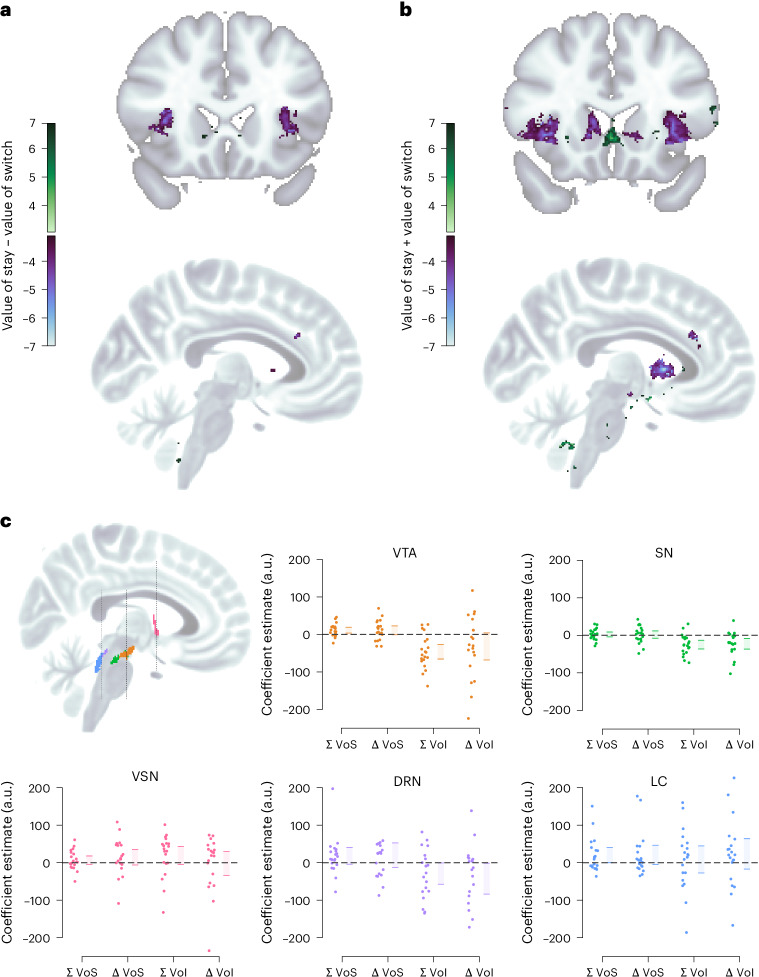
Humans and other animals are driven to acquire information about opportunities in their environments, yet how they evaluate what is worth learning remains unclear. Here we combine artificial neural networks with symbolic regression to extract an expressive yet interpretable model that specifies how human participants evaluate decision-relevant information during choice. The recovered function depends primarily on the relative evidence accumulated across options rather than absolute uncertainty about each, revealing that participants seek information symmetry across alternatives rather than minimizing uncertainty option by option. This account outperforms standard models of uncertainty-based exploration and generalizes to an independent dataset. Using ultrahigh-field (7T) functional magnetic resonance imaging optimized for midbrain and brainstem, we simultaneously measured activity across five neuromodulatory nuclei and two cortical regions. Ventral tegmental area activity showed opposed coding of information and selection values, a pattern suited to arbitrating between sampling and choosing, and anterior cingulate cortex and anterior insula tracked value-of-information computations.
Overview
CoChat Summary
TL;DR
The paper combines a hybrid artificial neural network with symbolic regression to model how humans value information during sampling, recovering a four-parameter function based on relative evidence across options rather than absolute uncertainty. The symbolic model predicts behavior and 7T fMRI activity, with VTA showing opposed coding of information and selection values and ACC/AI tracking value-of-information computations.
Key findings
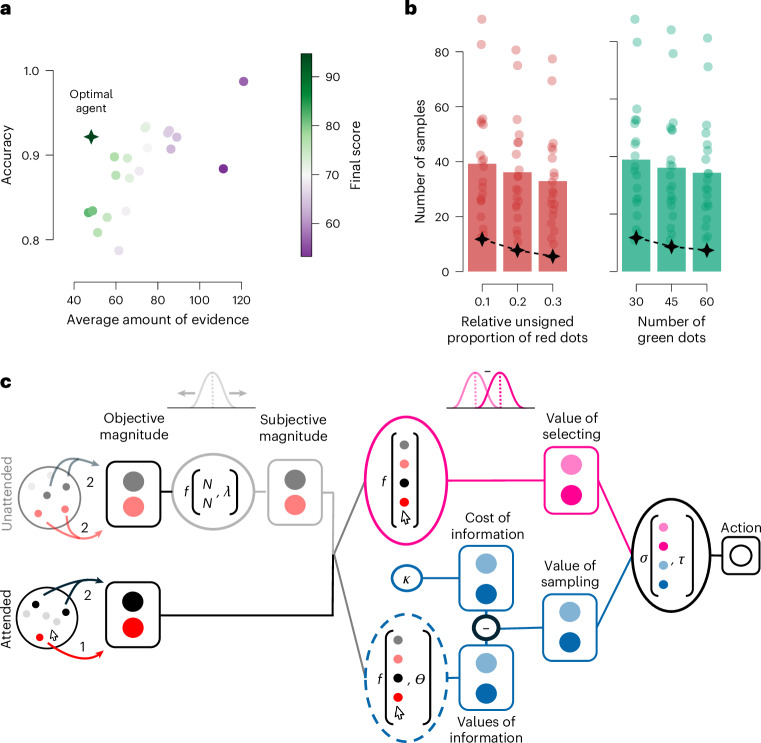
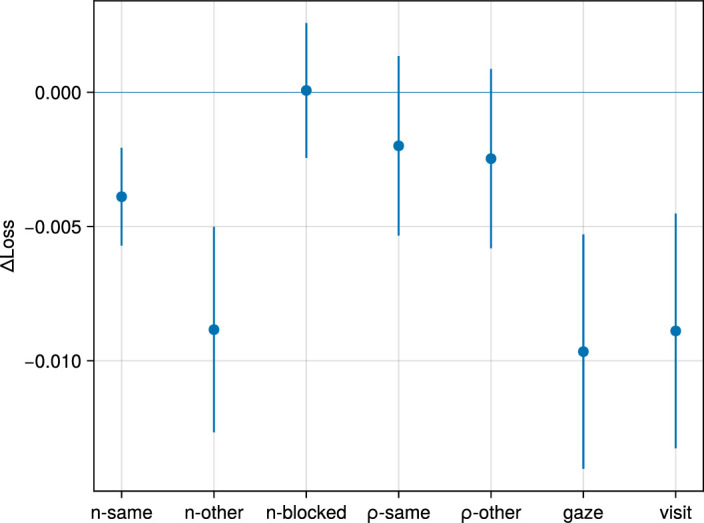
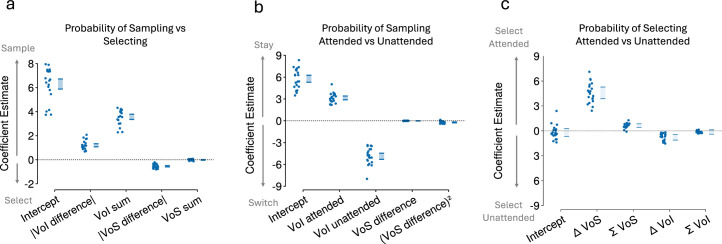
- In 20 participants, sampling increased with higher initial uncertainty (β = −0.069, s.e. = 0.013, z = −5.18, P = 2.27 × 10⁻⁷) and with smaller final red-dot discrepancy (β = −0.131, s.e. = 0.019, z = −6.87, P = 6.48 × 10⁻¹²); uncertainty in the blocked option did not significantly influence sampling (β = −0.006, s.e. = 0.006, z = −1.01, P = 0.310).
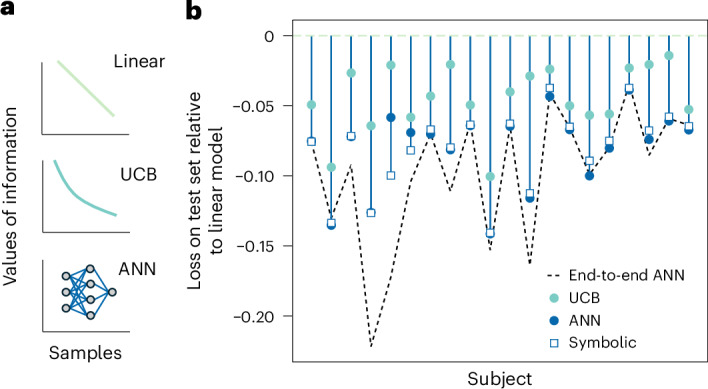
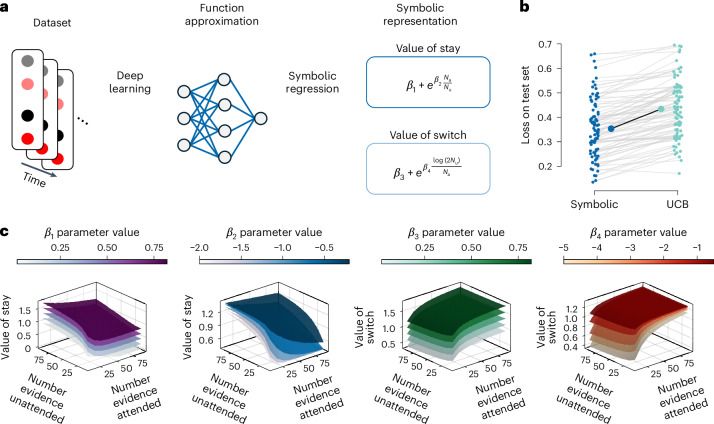
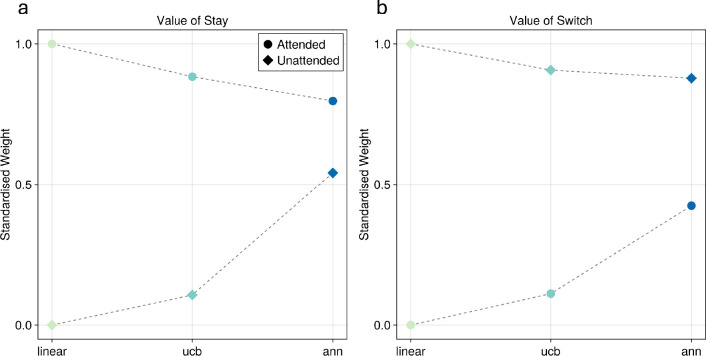
- The hybrid-ANN model fit behavior better than linear and UCB models for all participants, and the symbolic model performed comparably to the ANN. The symbolic functions generalized to an independent two-armed bandit dataset, outperforming UCB (Wilcoxon W = 15.0, n = 89, median difference = −0.07, P = 4.31 × 10⁻¹⁶) and an offset UCB variant (W = 286.0, n = 89, median difference = −0.03, P = 2.21 × 10⁻¹²).
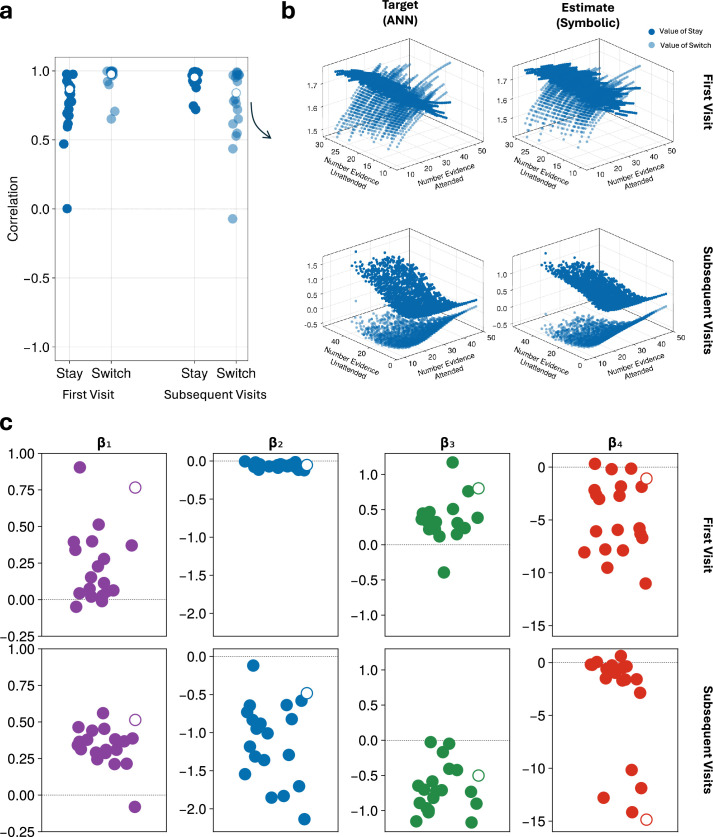
- Symbolic regression recovered a four-parameter function depending on the ratio Na/Nu, interpreted as attentional inertia (β1), information satiation (β2), undirected exploration (β3) and directed exploration (β4); separate first-visit and subsequent-visit parameters yielded eight total parameters. This supports an information-symmetry principle: participants balance knowledge across options rather than minimizing uncertainty option by option.
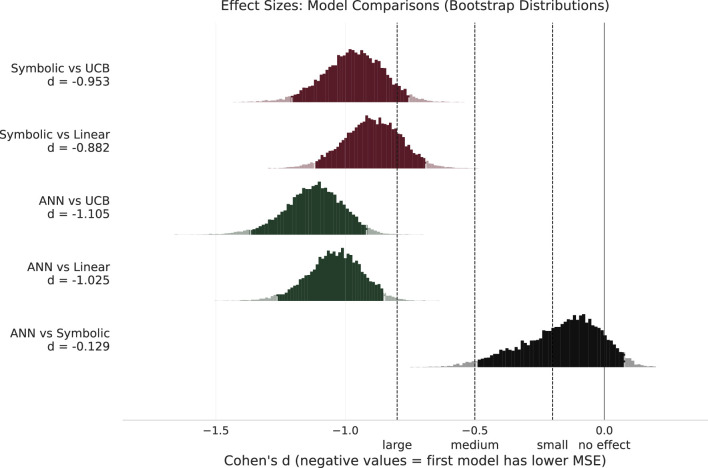
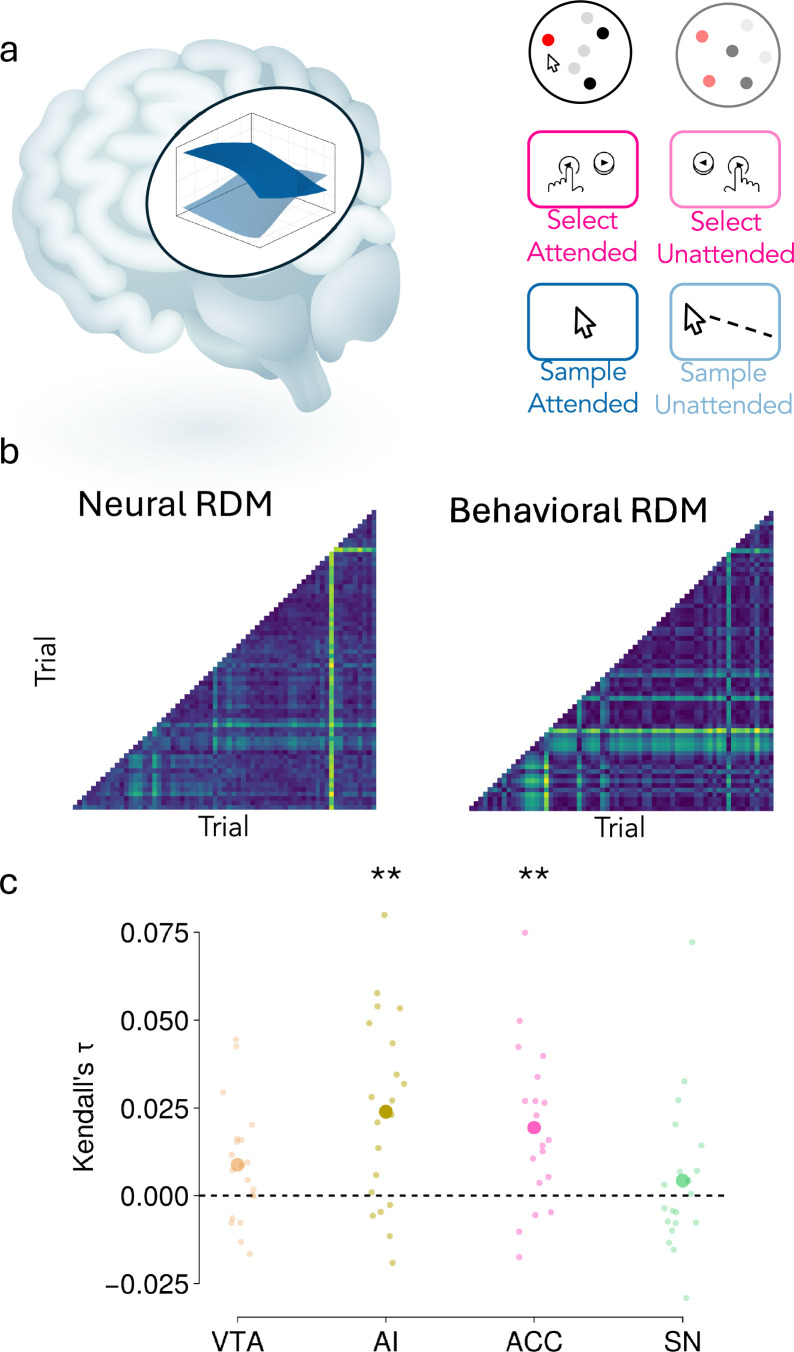
- ANN-derived VoI better fit neural data than linear (Cohen’s d = −1.025, Wilcoxon P = 2.12 × 10⁻¹²) and UCB (d = −1.105, P = 5.64 × 10⁻¹³); the symbolic function performed almost as well as the ANN (d = −0.129, P = 0.006). VTA showed positive coding of summed VoS (β = 11.3, P = 0.020) and negative coding of summed VoI (β = −46.1, P = 1.93 × 10⁻⁵); SN was negatively associated with VoI sum (β = −24.9, P = 6.38 × 10⁻⁵) and difference (β = −22.7, P = 0.008); AI and ACC tracked VoI-related signals; VSN, DRN and LC showed no significant associations after Bonferroni correction.
Methods
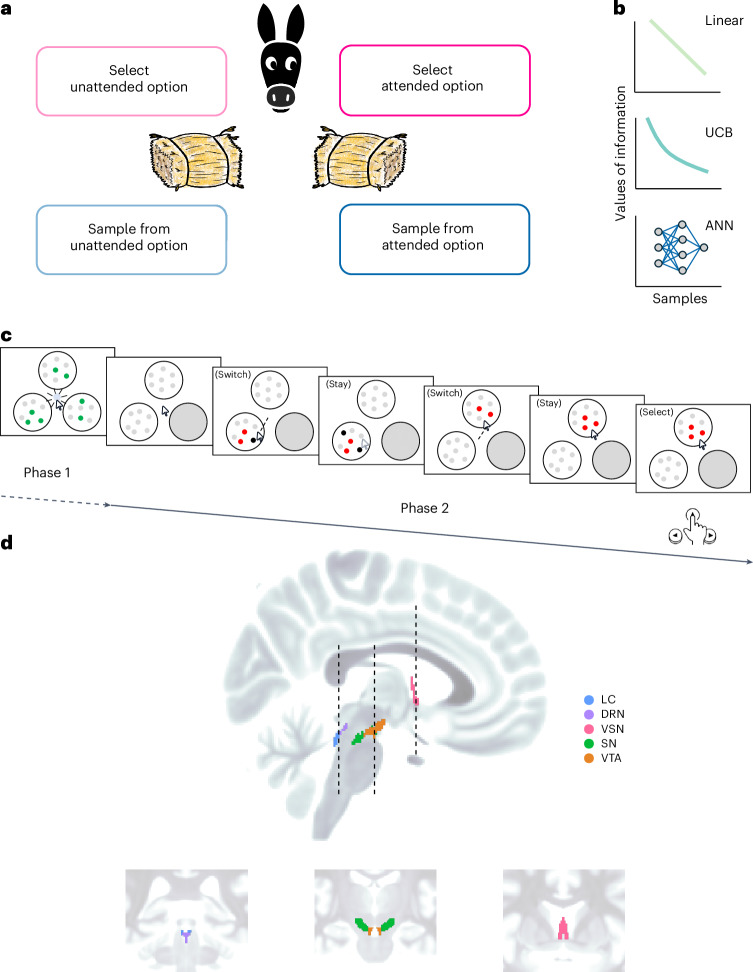
- Twenty participants (14 females), aged 19–32, completed four 25-min sessions of an information-sampling task inside a 7T MRI scanner. Trials presented three patches of 100 moving dots; green covers revealed initial information simultaneously, gray covers revealed dots sequentially every 150 ms, and on 80% of trials one patch was blocked, leaving two options for subsequent analyses. Sampling was capped at 24 s for two-option trials and 33 s for three-option trials.
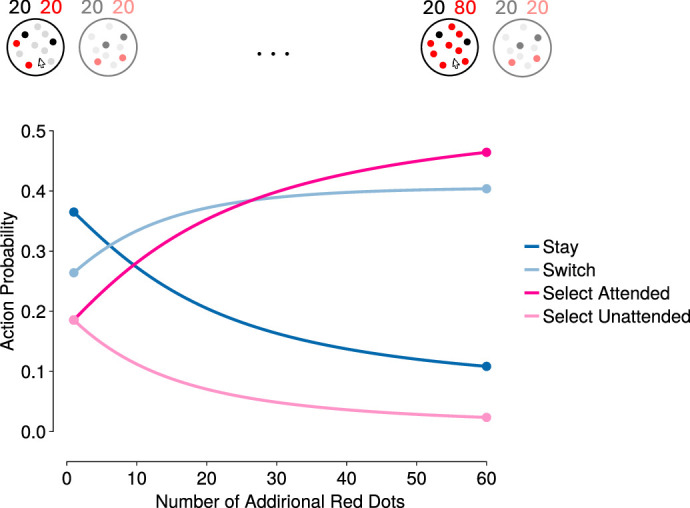
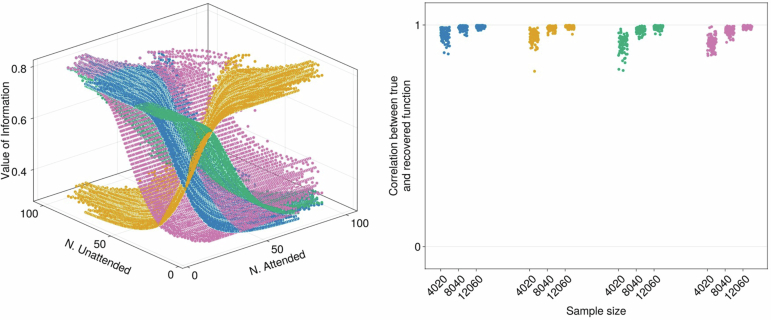
- The hybrid model computed values for four actions (stay, switch, select attended, select unattended). It compared linear, UCB and ANN-based VoI functions; the ANN was a Lipschitz-bounded deep network with four hidden layers of 32 neurons each and tanh activations, trained with Adam and L-BFGS. Symbolic regression (SymbolicRegression.jl) was applied to the trained ANN’s predictions to recover closed-form equations.
- fMRI data were acquired at 7T with 1-mm isotropic voxels and TR = 1.378 s. A GLM used VoI as a parametric modulator while controlling for outcome and VoS; model comparisons used per-voxel MSE, Cohen’s d with bootstrap confidence intervals and Wilcoxon signed-rank tests. ROI analyses used mixed-effects models weighted by inverse variance, with Bonferroni correction across five subcortical ROIs.
Limitations
- The paper states that the specific symbolic equations are tailored to the two-option structure and encode relative comparisons between attended and unattended options; unlike UCB, they do not naturally extend to n-armed bandits. Possible extensions include replacing Nunattended with the mean across unattended options or weighting unattended options by salience or recency.
- The paper states that the task does not permit dissociation of decision uncertainty, evidence uncertainty and reward uncertainty, which are highly correlated in the design; orthogonal manipulation of these uncertainty types is an important direction for future research.
- The paper reports that VSN, DRN and LC showed no significant association with the sum or difference of VoI or VoS after Bonferroni correction, and notes that within the sensitivity limits of the measurement and analysis, these nuclei do not strongly encode these decision variables in this task. Evident from the text: the neural analyses are restricted to two-option trials, and the sample size is 20 participants.
Model-written summary. Check it against the paper before relying on it.
Integrity signals
Registry
Cites
Statistics
Figures
Verification
Claims the paper makes
10 Valid · 2 Not valid · 5 Not checked · 134 Own results and interpretations
The cited sources support only part of this claim — read each source’s verdict below.
In the paper
“Here we exploit high-resolution (1-mm isotropic), rapid-repetition-time (1.378 s), accelerated ultrahigh-field (7T) functional magnetic resonance imaging (fMRI)27,28 to measure activity simultaneously across all five neuromodulatory nuclei and two interconnected cortical regions that project to them: the anterior insula (AI) and anterior cingulate cortex (ACC)3,22,29–33.”
§ Interpretable abstractions of artificial neural networks predict behavior and neural activity during human information gathering > Main
What the sources say
- Could not verifycites [27] Bromberg-Martin, E. S. & Hikosaka, O. Midbrain dopamine neurons signal preference for advance information about upcoming rewards. Neuron 63, 119–126 (2009). 19607797 PMC2723053 sourceExperimental — accuracy not yet measured
The citation appears attached to the description of the anterior insula and anterior cingulate cortex as regions that project to the neuromodulatory nuclei, not to the citing authors’ fMRI specifications. Our copy’s Experimental Procedures (Neural Recording; page unavailable) describes recordings around the substantia nigra and ventral tegmental area, but the passages found for anterior insula, anterior cingulate cortex, and their projections do not address that connection. (LLM, conf=0.74)
- Partly supportedcites [28] Khalighinejad, N., Garrett, N., Priestley, L., Lockwood, P. & Rushworth, M. F. S. A habenula-insular circuit encodes the willingness to act. Nat. Commun. 12, 6329 (2021). 34732720 PMC8566457 sourceExperimental — accuracy not yet measured
The Discussion (page unavailable) says the anterior insula sends direct projections to the habenula, and the Results identify activity in the anterior insula and a cluster extending into the anterior cingulate. The paper does not establish that both cortical regions project to all five neuromodulatory nuclei. The imaging specifications are attached to different citations in the citing sentence; this paper’s Methods report 1.5-mm functional resolution and a 1.962-s repetition time, not the quoted values. (LLM, conf=0.86)
plain- Asserted: passes — The authors put it forward as true.
- Checkable: passes — It can be checked against evidence.
- Load-bearing: passes — The paper’s conclusions depend on it.
- Based: passes — The paper gives a reason why it holds.
- Could not verify
Every source the paper cites for this claim was checked and supports it.
In the paper
“The model has some generalizability: it predicted behavior in a different explore–exploit task20 (Fig. 5b).”
§ Interpretable abstractions of artificial neural networks predict behavior and neural activity during human information gathering > Discussion
What the sources say
- Supportedcites [20] Gershman, S. J. Deconstructing the human algorithms for exploration. Cognition 173, 34–42 (2018). 29289795 PMC5801139 source
Section 4.4 'Re-analysis of Wilson et al. (2014)' states that, to obtain further validation of the hybrid model, Gershman fit it to data collected in a different explore-exploit task (Gaussian rewards truncated 1-100, fixed block parameters, 10 forced-choice trials, 320 blocks), and that these data 'were decisively better explained by the hybrid model, with a protected exceedance probability of 0.999'. The Discussion (5) repeats that quantitative model comparison including a re-analysis of Wilson et al. (2014) supported the hybrid model. This matches the citing sentence's claim of generalizability to a different explore-exploit task; the only difference of specificity is that the model's reward variance was re-fit (grid search) on the new dataset rather than applied with frozen parameters. (LLM, conf=0.85)
plainstates an association- Asserted: passes — The authors put it forward as true.
- Checkable: passes — It can be checked against evidence.
- Load-bearing: passes — The paper’s conclusions depend on it.
- Based: passes — The paper gives a reason why it holds.
- Supported
The cited sources support only part of this claim — read each source’s verdict below.
In the paper
“Remarkably, our symbolic functions also outperformed the UCB model in predicting participants’ choices in this different context (Wilcoxon signed-rank test: W = 15.0, n = 89, median difference = −0.07, P = 4.31 × 10⁻¹⁶).”
§ Interpretable abstractions of artificial neural networks predict behavior and neural activity during human information gathering > Results > The ANN can be transformed into an interpretable symbolic function
What the sources say
- Partly supportedcites [20] Gershman, S. J. Deconstructing the human algorithms for exploration. Cognition 173, 34–42 (2018). 29289795 PMC5801139 sourceExperimental — accuracy not yet measured
Our copy of Gershman (2018) does supply the two-armed bandit dataset the citing sentence points at: Methods 3.1 reports 44 participants in Experiment 1 and 45 in Experiment 2 (89 in total), both running two-arm Gaussian-reward bandit tasks, and Results 4.1/4.4 report that a model with an extra uncertainty term beyond UCB (the 'hybrid') better explained choices, decisively so in the re-analysis of Wilson et al. (2014) (protected exceedance probability 0.999). However, the paper nowhere uses 'symbolic functions' and never reports a Wilcoxon signed-rank comparison of predictive accuracy: model comparison is Bayesian random-effects on BIC-approximated model evidence (Methods 3.3), so the specific statistics attributed here (W = 15.0, median difference = −0.07, P = 4.31 × 10⁻¹⁶) are not in this source and appear to be the citing authors' own analysis. The part of the claim our copy does not support is the symbolic-function-versus-UCB Wilcoxon test and its numbers. (LLM, conf=0.68)
boostedstates an associationn = 89- Asserted: passes — The authors put it forward as true.
- Checkable: passes — It can be checked against evidence.
- Load-bearing: passes — The paper’s conclusions depend on it.
- Based: passes — The paper gives a reason why it holds.
- Partly supported
A result the paper reports from its own data — it cites no other source for it, so there is none to check. The quote shows it is in the paper.
In the paper
“Crucially, however, the number of green dots in the blocked option did not significantly influence sampling behavior (β = −0.006, s.e. = 0.006, z = −1.01, P = 0.310)”
§ Interpretable abstractions of artificial neural networks predict behavior and neural activity during human information gathering > Results > Sampling behavior adaptively scales with task difficulty and uncertainty
plain- Asserted: passes — The authors put it forward as true.
- Checkable: passes — It can be checked against evidence.
- Load-bearing: passes — The paper’s conclusions depend on it.
- Based: passes — The paper gives a reason why it holds.
A result the paper reports from its own data — it cites no other source for it, so there is none to check. The quote shows it is in the paper.
In the paper
“and when the final discrepancy in red dots was smaller (β = −0.131, s.e. = 0.019, z = −6.87, P = 6.48 × 10⁻¹²; Fig. 2b).”
§ Interpretable abstractions of artificial neural networks predict behavior and neural activity during human information gathering > Results > Sampling behavior adaptively scales with task difficulty and uncertainty
plainstates an association- Asserted: passes — The authors put it forward as true.
- Checkable: passes — It can be checked against evidence.
- Load-bearing: passes — The paper’s conclusions depend on it.
- Based: passes — The paper gives a reason why it holds.
73 more claims
Create a free account to see all 151 claims and to verify the 22 references still open.
- Probably not a substantial claim. 37
- It may state two separate claims as one. 46
- The quote only partly states this claim. 1
Statistics recomputed
Every reported test result, recomputed from its test statistic and degrees of freedom. A result shows as not adding up only once an independent check has confirmed it.
- Consistentz = -1.01reported p = .31 · recomputed p = .312
“z = −1.01, p = .310”
- Consistentz = 1.41reported p = .158 · recomputed p = .159
“z = 1.41, p = .158”
Self-check
Percentages, sums and reported differences re-computed from the paper’s own numbers.
Each contradiction between two passages listed here was confirmed by an independent check.
Rated major: it would touch a result — a value a result rests on, reported and recomputed p-values on opposite sides of the significance level, two passages that conflict with no sign which is right, or a cited work retracted before this paper was published.
In the paper
§ Interpretable abstractions of artificial neural networks predict behavior and neural activity during human information gathering > Results > The ANN integrates evidence from both patches to compute VoI
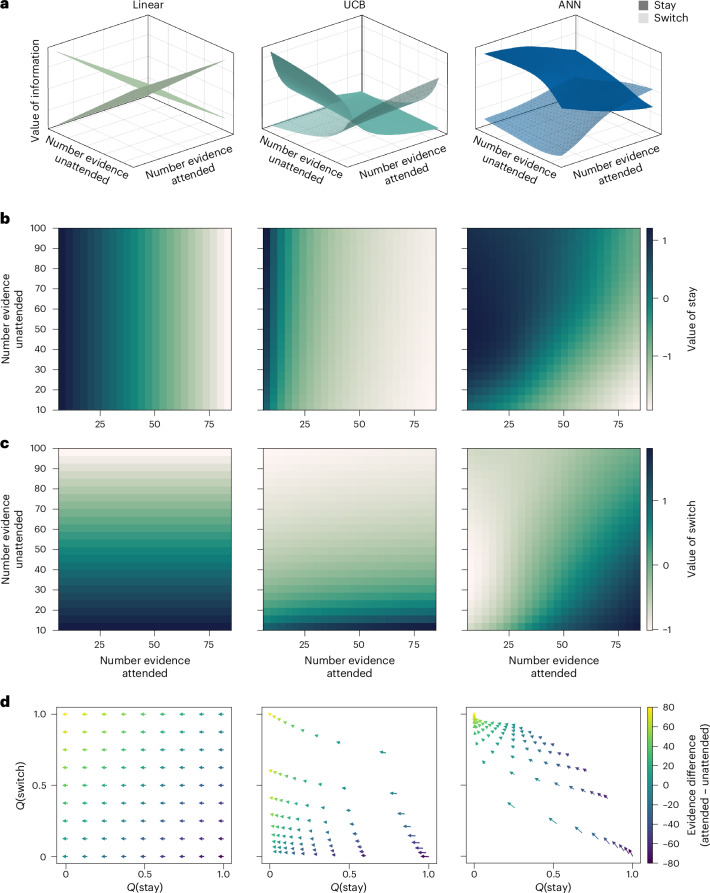
“the value of staying increases with attended evidence while simultaneously decreasing with unattended evidence, producing a diagonal gradient (Fig. 4b, right).”
§ Interpretable abstractions of artificial neural networks predict behavior and neural activity during human information gathering > Results > The ANN integrates evidence from both patches to compute VoI
“The ANN produces diagonal arrows instead, indicating that additional attended evidence simultaneously decreases the value of staying and increases the value of switching.”
Citations
Cites
Advances in functional and structural MR image analysis and implementation as FSL
Smith, S. M., Jenkinson, M., Woolrich, M. W., Beckmann, C. F., Behrens, T. E. J., Johansen-Berg, H., Bannister, P. R., De Luca, M., Drobnjak, I., Flitney, D. E., et al. (2004) · NeuroImage · doi:10.1016/j.neuroimage.2004.07.051 · Cited by 13,630 · cited 2×
“Preprocessing of fMRI data was performed with the FMRIB Software Library 65,66 .”
Jenkinson, M., Bannister, P., Brady, M., & Smith, S. (2002) · NeuroImage · doi:10.1006/nimg.2002.1132 · Cited by 11,888 · cited 3×
“Further non-task confound regressors were added to reduce noise in BOLD signal, including: (1) head motion parameters estimated using MCFLIRT during pre-processing 68 ; (2) regressors for voxel-wise estimates of physiological noise arising from cardiac and respiratory activity, estimated using FSL’s Physiological Nois…”
InfluentialJenkinson, M., Beckmann, C. F., Behrens, T. E. J., Woolrich, M. W., & Smith, S. M. (2012) · NeuroImage · doi:10.1016/j.neuroimage.2011.09.015 · Cited by 11,314
Fast robust automated brain extraction
Smith, S. M. (2002) · Human Brain Mapping · doi:10.1002/hbm.10062 · Cited by 10,496 · cited 1×
“The Brain Extraction Tool 67 was used to separate brain from non-brain matter in structural and functional images.”
Accurate and robust brain image alignment using boundary-based registration
Greve, D. N., & Fischl, B. (2009) · NeuroImage · doi:10.1016/j.neuroimage.2009.06.060 · Cited by 3,596 · cited 1×
“The whole-brain EPI was registered to the subject-specific structural images using Boundary-Based Registration (BBR) incorporating fieldmap correction 69 .”
Temporal Autocorrelation in Univariate Linear Modeling of FMRI Data
Woolrich, M. W., Ripley, B. D., Brady, M., & Smith, S. M. (2001) · NeuroImage · doi:10.1006/nimg.2001.0931 · Cited by 2,852 · cited 1×
“In the first level, a univariate general linear model was used to compute parameter estimates for each regressor in each session 70 .”
Discrete coding of reward probability and uncertainty by dopamine neurons
Fiorillo, C. D., Tobler, P. N., & Schultz, W. (2003) · Science · doi:10.1126/science.1077349 · Cited by 2,085
Uncertainty, Neuromodulation, and Attention
Yu, A. J., & Dayan, P. (2005) · Neuron · doi:10.1016/j.neuron.2005.04.026 · Cited by 1,774
Multilevel linear modelling for FMRI group analysis using Bayesian inference
Woolrich, M. W., Behrens, T. E. J., Beckmann, C. F., Jenkinson, M., & Smith, S. M. (2004) · NeuroImage · doi:10.1016/j.neuroimage.2003.12.023 · Cited by 1,728 · cited 1×
“Finally, a random-effects analysis was conducted at the third level, where subject-identity was a random effect 71 .”
Behavioral Theories and the Neurophysiology of Reward
Schultz, W. (2006) · Annual Review of Psychology · doi:10.1146/annurev.psych.56.091103.070229 · Cited by 1,637 · cited 1×
“Activity in individual neurons in both habenula and VTA reflects both the value of a stimulus in terms of the reward that it predicts 56–58 but also value of information 20,21,26,59 in line with the suggestion that VTA may compare the relative advantage to be gained from making a selection and…”
Joshi, S., Li, Y., Kalwani, R. M., & Gold, J. I. (2016) · Neuron · doi:10.1016/j.neuron.2015.11.028 · Cited by 1,387
Lateral habenula as a source of negative reward signals in dopamine neurons
Matsumoto, M., & Hikosaka, O. (2007) · Nature · doi:10.1038/nature05860 · Cited by 1,292 · cited 1×
“Activity in individual neurons in both habenula and VTA reflects both the value of a stimulus in terms of the reward that it predicts 56–58 but also value of information 20,21,26,59 in line with the suggestion that VTA may compare the relative advantage to be gained from making a selection and…”
Adaptive Coding of Reward Value by Dopamine Neurons
Tobler, P. N., Fiorillo, C. D., & Schultz, W. (2005) · Science · doi:10.1126/science.1105370 · Cited by 1,276
The Psychology and Neuroscience of Curiosity
Kidd, C., & Hayden, B. Y. (2015) · Neuron · doi:10.1016/j.neuron.2015.09.010 · Cited by 1,026 · cited 1×
“Information seeking has been proposed to be a fundamental behavior in humans and other animals 3,20,42,43 .”
The habenula: from stress evasion to value-based decision-making
Hikosaka, O. (2010) · Nature Reviews Neuroscience · doi:10.1038/nrn2866 · Cited by 955
Choice, uncertainty and value in prefrontal and cingulate cortex
Rushworth, M. F. S., & Behrens, T. E. J. (2008) · Nature Neuroscience · doi:10.1038/nn2066 · Cited by 866
Self-citationDecision Making as a Window on Cognition
Shadlen, M. N., & Kiani, R. (2013) · Neuron · doi:10.1016/j.neuron.2013.10.047 · Cited by 658 · cited 2×
“The knowledge-driven component incorporates established cognitive principles, such as the mechanisms underlying option selection 8,16 .”
The Cost of Accumulating Evidence in Perceptual Decision Making
Drugowitsch, J., Moreno-Bote, R., Churchland, A. K., Shadlen, M. N., & Pouget, A. (2012) · The Journal of Neuroscience · doi:10.1523/jneurosci.4010-11.2012 · Cited by 577 · cited 3×
“1a, bottom) 1–4 .”
Misinformation: susceptibility, spread, and interventions to immunize the public
van der Linden, S. (2022) · Nature Medicine · doi:10.1038/s41591-022-01713-6 · Cited by 570 · cited 1×
“Each participant provided written informed consent at the beginning of each testing session.”
Midbrain Dopamine Neurons Signal Preference for Advance Information about Upcoming Rewards
Bromberg-Martin, E. S., & Hikosaka, O. (2009) · Neuron · doi:10.1016/j.neuron.2009.06.009 · Cited by 548 · cited 3×
“…in both habenula and VTA reflects both the value of a stimulus in terms of the reward that it predicts 56–58 but also value of information 20,21,26,59 in line with the suggestion that VTA may compare the relative advantage to be gained from making a selection and seeking more information about…”
InfluentialDecision Making and Sequential Sampling from Memory
Shadlen, M. N., & Shohamy, D. (2016) · Neuron · doi:10.1016/j.neuron.2016.04.036 · Cited by 418 · cited 1×
“While several studies have shed light on the computational and neural mechanisms underlying value learning and option selection 7,8 , the factors that determine when to stop gathering information and commit to a final decision, as well as which options to sample from, remain an active area of…”
How people decide what they want to know
Sharot, T., & Sunstein, C. R. (2020) · Nature Human Behaviour · doi:10.1038/s41562-019-0793-1 · Cited by 383 · cited 1×
“Information seeking has been proposed to be a fundamental behavior in humans and other animals 3,20,42,43 .”
Elapsed Decision Time Affects the Weighting of Prior Probability in a Perceptual Decision Task
Hanks, T. D., Mazurek, M. E., Kiani, R., Hopp, E., & Shadlen, M. N. (2011) · The Journal of Neuroscience · doi:10.1523/jneurosci.5613-10.2011 · Cited by 378 · cited 4×
“1a, bottom) 1–4 .”
InfluentialRostrolateral Prefrontal Cortex and Individual Differences in Uncertainty-Driven Exploration
Badre, D., Doll, B. B., Long, N. M., & Frank, M. J. (2012) · Neuron · doi:10.1016/j.neuron.2011.12.025 · Cited by 309
Chiba, T., Kayahara, T., & Nakano, K. (2001) · Brain Research · doi:10.1016/s0006-8993(00)03013-4 · Cited by 290 · cited 1×
“To make any one of these four actions, the model maintains and updates its beliefs about the likely number of red dots in both the currently attended patch and the unattended patch.”
How human–AI feedback loops alter human perceptual, emotional and social judgements
Glickman, M., & Sharot, T. (2024) · Nature Human Behaviour · doi:10.1038/s41562-024-02077-2 · Cited by 289 · cited 1×
“…how and why information is valued and sought can not only help us understand how people interact with information sources as variable as other individuals or the internet 44,45 but how information seeking can become pathological, maladaptive, or how it can affect mental wellbeing 46,47 .”
Deconstructing the human algorithms for exploration
Gershman, S. J. (2018) · Cognition · doi:10.1016/j.cognition.2017.12.014 · Cited by 267 · cited 3×
“We show that this newly recovered model generalises to an entirely separate experimental dataset on human information sampling 19 .”
InfluentialDiscovering Symbolic Models from Deep Learning with Inductive Biases
Cranmer, M., Sánchez‐González, Á., Battaglia, P., Xu, R., Cranmer, K. S., Spergel, D. N., & Ho, S. (2020) · arXiv (Cornell University) · doi:10.48550/arxiv.2006.11287 · Cited by 250
Medial and orbital frontal cortex in decision-making and flexible behavior
Klein-Flügge, M. C., Bongioanni, A., & Rushworth, M. F. S. (2022) · Neuron · doi:10.1016/j.neuron.2022.05.022 · Cited by 244 · cited 1×
“This analysis modelled the probability of staying versus switching as a function of the value of information for both the attended and unattended patches, while also accounting for the difference in means between patches and its quadratic term.”
Self-citationPhysiological noise modelling for spinal functional magnetic resonance imaging studies
Brooks, J. C. W., Beckmann, C. F., Miller, K. L., Wise, R. G., Porro, C. A., Tracey, I., & Jenkinson, M. (2008) · NeuroImage · doi:10.1016/j.neuroimage.2007.09.018 · Cited by 242 · cited 1×
“…for voxel-wise estimates of physiological noise arising from cardiac and respiratory activity, estimated using FSL’s Physiological Noise Monitoring (PNM) tool 72 , and; (3) regressors for motion outliers, indicating volumes with head motion that could not be corrected with linear methods.”
A neural mechanism of speed-accuracy tradeoff in macaque area LIP
Hanks, T., Kiani, R., & Shadlen, M. N. (2014) · eLife · doi:10.7554/elife.02260 · Cited by 222 · cited 3×
“1b, middle), motivating a second hypothesis: that the value of information is computed using a non-linear function of uncertainty 1,9 .”
Triple dissociation of attention and decision computations across prefrontal cortex
Hunt, L. T., Malalasekera, W. M. N., de Berker, A. O., Miranda, B., Farmer, S. F., Behrens, T. E. J., & Kennerley, S. W. (2018) · Nature Neuroscience · doi:10.1038/s41593-018-0239-5 · Cited by 222
Self-citationIntegration of Neural Network-Based Symbolic Regression in Deep Learning for Scientific Discovery
Kim, S., Lu, P. Y., Mukherjee, S., Gilbert, M., Jing, L., Ceperic, V., & Soljacic, M. (2021) · IEEE Transactions on Neural Networks and Learning Systems · doi:10.1109/tnnls.2020.3017010 · Cited by 215 · cited 4×
“We started by simply visualizing the input-output relationship of the three functions (linear, UCB, and ANN) as a surface in 3D space relating the number of pieces of evidence (N) available in the attended option and in the unattended option to the value of information associated with staying and…”
InfluentialInterpretable Machine Learning for Science with PySR and SymbolicRegression.jl
Cranmer, M. (2023) · arXiv · doi:10.48550/arxiv.2305.01582 · Cited by 190
Accounting for attention in sequential sampling models of decision making
Krajbich, I. (2019) · Current Opinion in Psychology · doi:10.1016/j.copsyc.2018.10.008 · Cited by 165 · cited 1×
“To make any one of these four actions, the model maintains and updates its beliefs about the likely number of red dots in both the currently attended patch and the unattended patch.”
Serotonin neurons modulate learning rate through uncertainty
Grossman, C. D., Bari, B. A., & Cohen, J. Y. (2022) · Current Biology · doi:10.1016/j.cub.2021.12.006 · Cited by 164
Anterior cingulate is a source of valence-specific information about value and uncertainty
Monosov, I. E. (2017) · Nature Communications · doi:10.1038/s41467-017-00072-y · Cited by 163 · cited 1×
“Activity in ACC has also been linked to information seeking and initiation of behavioral change 13,16,21,60–64 consistent with the proposal that ACC might arbitrate when it is advantageous to seek more information about a current opportunity and when it is better to pursue an alternative.”
Pharmacological Fingerprints of Contextual Uncertainty
Marshall, L., Mathys, C., Ruge, D., de Berker, A. O., Dayan, P., Stephan, K. E., & Bestmann, S. (2016) · PLOS Biology · doi:10.1371/journal.pbio.1002575 · Cited by 158
Representation and computation in visual working memory
Bays, P. M., Schneegans, S., Ma, W. J., & Brady, T. F. (2024) · Nature Human Behaviour · doi:10.1038/s41562-024-01871-2 · Cited by 142 · cited 1×
“However, this remembered information is assumed to degrade the longer the patch remains unattended, leading to an increase in uncertainty about its contents over time 35,36 .”
A neural network for information seeking
White, J. K., Bromberg-Martin, E. S., Heilbronner, S. R., Zhang, K., Pai, J., Haber, S. N., & Monosov, I. E. (2019) · Nature Communications · doi:10.1038/s41467-019-13135-z · Cited by 129 · cited 3×
“Activity in ACC has also been linked to information seeking and initiation of behavioral change 13,16,21,60–64 consistent with the proposal that ACC might arbitrate when it is advantageous to seek more information about a current opportunity and when it is better to pursue an alternative.”
Anterior Cingulate Cortex and the Control of Dynamic Behavior in Primates
Monosov, I. E., Haber, S. N., Leuthardt, E. C., & Jezzini, A. (2020) · Current Biology · doi:10.1016/j.cub.2020.10.009 · Cited by 118
Yetnikoff, L., Cheng, A. Y., Lavezzi, H. N., Parsley, K. P., & Zahm, D. S. (2015) · Journal of Comparative Neurology · doi:10.1002/cne.23797 · Cited by 101
The anterior cingulate cortex directs exploration of alternative strategies
Tervo, D. G. R., Kuleshova, E., Manakov, M., Proskurin, M., Karlsson, M., Lustig, A., Behnam, R., & Karpova, A. Y. (2021) · Neuron · doi:10.1016/j.neuron.2021.03.028 · Cited by 97 · cited 1×
“Activity in ACC has also been linked to information seeking and initiation of behavioral change 13,16,21,60–64 consistent with the proposal that ACC might arbitrate when it is advantageous to seek more information about a current opportunity and when it is better to pursue an alternative.”
A Basal Forebrain-Cingulate Circuit in Macaques Decides It Is Time to Act
Khalighinejad, N., Bongioanni, A., Verhagen, L., Folloni, D., Attali, D., Aubry, J.-F., Sallet, J., & Rushworth, M. F. S. (2020) · Neuron · doi:10.1016/j.neuron.2019.10.030 · Cited by 90 · cited 1×
“…to record simultaneously from all five ascending neuromodulatory nuclei and two interconnected cortical areas – the anterior insula (AI), and anterior cingulate cortex (ACC) - which are distinguished by projecting to these nuclei and exhibiting related activity in other contexts 3,21,28–32 .”
Self-citationNeural circuitry of information seeking
Bromberg-Martin, E. S., & Monosov, I. E. (2020) · Current Opinion in Behavioral Sciences · doi:10.1016/j.cobeha.2020.07.006 · Cited by 89
A neural mechanism for terminating decisions
Stine, G. M., Trautmann, E. M., Jeurissen, D., & Shadlen, M. N. (2023) · Neuron · doi:10.1016/j.neuron.2023.05.028 · Cited by 83 · cited 2×
“…have shed light on the computational and neural mechanisms underlying value learning and option selection 7,8 , the factors that determine when to stop gathering information and commit to a final decision, as well as which options to sample from, remain an active area of investigation 1,4,9,10 .”
Trudel, N., Scholl, J., Klein-Flügge, M. C., Fouragnan, E., Tankelevitch, L., Wittmann, M. K., & Rushworth, M. F. S. (2020) · Nature Human Behaviour · doi:10.1038/s41562-020-0929-3 · Cited by 74 · cited 2×
“Therefore, knowing when to stop learning from the environment and use the acquired knowledge to make a choice is crucial for effective decision-making.”
Self-citationJoshi, S., & Gold, J. I. (2022) · eLife · doi:10.7554/elife.63490 · Cited by 71
Web-browsing patterns reflect and shape mood and mental health
Kelly, C., & Sharot, T. (2024) · Nature Human Behaviour · doi:10.1038/s41562-024-02065-6 · Cited by 65 · cited 1×
“…how and why information is valued and sought can not only help us understand how people interact with information sources as variable as other individuals or the internet 44,45 but how information seeking can become pathological, maladaptive, or how it can affect mental wellbeing 46,47 .”
Discovering cognitive strategies with tiny recurrent neural networks
Ji-An, L., Benna, M. K., & Mattar, M. G. (2025) · Nature · doi:10.1038/s41586-025-09142-4 · Cited by 64 · cited 1×
“This analysis modelled the probability of staying versus switching as a function of the value of information for both the attended and unattended patches, while also accounting for the difference in means between patches and its quadratic term.”
Self-citationApproach-Induced Biases in Human Information Sampling
Hunt, L. T., Rutledge, R. B., Malalasekera, W. M. N., Kennerley, S. W., & Dolan, R. J. (2016) · PLOS Biology · doi:10.1371/journal.pbio.2000638 · Cited by 60
Self-citationCognitive Model Discovery via Disentangled RNNs
Miller, K. J., Eckstein, M. K., Botvinick, M., & Kurth-Nelson, Z. L. (2023) · neural information processing systems · doi:10.52202/075280-2682 · Cited by 54
Discovering Symbolic Cognitive Models from Human and Animal BehaviorPreprint
Castro, P., Tomašev, N., Anand, A., Sharma, N., Mohanta, R., Dev, A., Perlin, K., Jain, S., Levin, K., Éltető, N., et al. (2025) · bioRxiv (Cold Spring Harbor Laboratory) · doi:10.1101/2025.02.05.636732 · Cited by 53
Learning to select computationsPreprint
Callaway, F., Gul, S., Krueger, P. M., Griffiths, T., & Lieder, F. (2017) · Conference on Uncertainty in Artificial Intelligence · doi:10.48550/arxiv.1711.06892 · Cited by 52 · cited 1×
“The value of switching to sample the unattended patch is its ANN-estimated value of information, reduced by a fitted cost of switching.”
Curiosity: primate neural circuits for novelty and information seeking
Monosov, I. E. (2024) · Nature Reviews Neuroscience · doi:10.1038/s41583-023-00784-9 · Cited by 44 · cited 3×
“Information seeking has been proposed to be a fundamental behavior in humans and other animals 3,20,42,43 .”
A neural mechanism for conserved value computations integrating information and rewards
Bromberg-Martin, E. S., Feng, Y.-Y., Ogasawara, T., White, J. K., Zhang, K., & Monosov, I. E. (2024) · Nature Neuroscience · doi:10.1038/s41593-023-01511-4 · Cited by 43 · cited 1×
“…in both habenula and VTA reflects both the value of a stimulus in terms of the reward that it predicts 56–58 but also value of information 20,21,26,59 in line with the suggestion that VTA may compare the relative advantage to be gained from making a selection and seeking more information about a…”
An uncertainty-based model of the effects of fixation on choice
Li, Z., & Ma, W. J. (2021) · PLoS Computational Biology · doi:10.1371/journal.pcbi.1009190 · Cited by 40 · cited 1×
“However, this remembered information is assumed to degrade the longer the patch remains unattended, leading to an increase in uncertainty about its contents over time 35,36 .”
A habenula-insular circuit encodes the willingness to act
Khalighinejad, N., Garrett, N., Priestley, L., Lockwood, P., & Rushworth, M. F. S. (2021) · Nature Communications · doi:10.1038/s41467-021-26569-1 · Cited by 32 · cited 3×
“In general, unlike the cortical regions, they are too small to survive cluster correction analysis strategies that incorporate a thresholding criterion based on the spatial extent of the activity 27,40,41 .”
InfluentialSelf-citationHuman decisions about when to act originate within a basal forebrain–nigral circuit
Khalighinejad, N., Priestley, L., Jbabdi, S., & Rushworth, M. F. S. (2020) · Proceedings of the National Academy of Sciences · doi:10.1073/pnas.1921211117 · Cited by 29 · cited 2×
“In general, unlike the cortical regions, they are too small to survive cluster correction analysis strategies that incorporate a thresholding criterion based on the spatial extent of the activity 27,40,41 .”
Self-citationComplementary roles of serotonergic and cholinergic systems in decisions about when to act
Khalighinejad, N., Manohar, S., Husain, M., & Rushworth, M. F. S. (2022) · Current Biology · doi:10.1016/j.cub.2022.01.042 · Cited by 29 · cited 1×
“…to record simultaneously from all five ascending neuromodulatory nuclei and two interconnected cortical areas – the anterior insula (AI), and anterior cingulate cortex (ACC) - which are distinguished by projecting to these nuclei and exhibiting related activity in other contexts 3,21,28–32 .”
Self-citationHybrid neural–cognitive models reveal how memory shapes human reward learning
Eckstein, M. K., Summerfield, C., Daw, N. D., & Miller, K. J. (2026) · Nature Human Behaviour · doi:10.1038/s41562-025-02324-0 · Cited by 29 · cited 1×
“This analysis modelled the probability of staying versus switching as a function of the value of information for both the attended and unattended patches, while also accounting for the difference in means between patches and its quadratic term.”
Medial Frontal Cortex Activity Predicts Information Sampling in Economic Choice
Kaanders, P., Nili, H., O'Reilly, J. X., & Hunt, L. (2021) · The Journal of Neuroscience · doi:10.1523/jneurosci.0392-21.2021 · Cited by 27
Self-citationCognitive Model Discovery via Disentangled RNNsPreprint
Miller, K. J., Eckstein, M. K., Botvinick, M., et al. (2023) · bioRxiv (Cold Spring Harbor Laboratory) · doi:10.1101/2023.06.23.546250 · Cited by 27 · cited 1×
“…networks while enhancing interpretability: this includes explicitly integrating ANNs within classic cognitive frameworks 48 or utilizing deep learning architectures specifically designed for interpretability or cognitive plausibility, such as tiny 15 or disentangled 49 recurrent neural networks.”
Discovering Cognitive Strategies with Tiny Recurrent Neural NetworksPreprint
Li, J., Benna, M. K., & Mattar, M. G. (2023) · bioRxiv (Cold Spring Harbor Laboratory) · doi:10.1101/2023.04.12.536629 · Cited by 25
Self-citationEckstein, M. K., Summerfield, C., Daw, N. D., & Miller, K. J. (2023) · doi:10.1101/2023.05.17.541226 · Cited by 18
Hybrid Neural-Cognitive Models Reveal How Memory Shapes Human Reward LearningPreprint
Eckstein, M. K., Summerfield, C., Daw, N. D., & Miller, K. J. (2024) · doi:10.31234/osf.io/u9ks4 · Cited by 14
Three diverse motives for information sharing
Vellani, V., Glickman, M., & Sharot, T. (2024) · Communications Psychology · doi:10.1038/s44271-024-00144-y · Cited by 14 · cited 1×
“…how and why information is valued and sought can not only help us understand how people interact with information sources as variable as other individuals or the internet 44,45 but how information seeking can become pathological, maladaptive, or how it can affect mental wellbeing 46,47 .”
A distributed subcortical circuit linked to instrumental information-seeking about threat
Trier, H. A., Khalighinejad, N., Hamilton, S., Harbison, C., Priestley, L., Laubach, M., Klein-Flügge, M., Scholl, J., & Rushworth, M. F. S. (2025) · Proceedings of the National Academy of Sciences · doi:10.1073/pnas.2410955121 · Cited by 12 · cited 1×
“In general, unlike the cortical regions, they are too small to survive cluster correction analysis strategies that incorporate a thresholding criterion based on the spatial extent of the activity 27,40,41 .”
Self-citationThe Anterior Insula Processes a Time-Resolved Subjective Risk Prediction Error
Kim, J.-C., Hellrung, L., Nebe, S., & Tobler, P. N. (2025) · The Journal of Neuroscience · doi:10.1523/jneurosci.2302-24.2025 · Cited by 12 · cited 1×
“This analysis modelled the probability of staying versus switching as a function of the value of information for both the attended and unattended patches, while also accounting for the difference in means between patches and its quadratic term.”
Data-driven equation discovery reveals nonlinear reinforcement learning in humans
LaFollette, K. J., Yuval, J., Schurr, R., Melnikoff, D. E., & Goldenberg, A. (2025) · Proceedings of the National Academy of Sciences · doi:10.1073/pnas.2413441122 · Cited by 6 · cited 1×
“This analysis modelled the probability of staying versus switching as a function of the value of information for both the attended and unattended patches, while also accounting for the difference in means between patches and its quadratic term.”
Neural Representation of Valenced and Generic Probability and Uncertainty
Kim, J.-C., Hellrung, L., Grueschow, M., Nebe, S., Nagy, Z., & Tobler, P. N. (2024) · The Journal of Neuroscience · doi:10.1523/jneurosci.0195-24.2024 · Cited by 5 · cited 1×
“This analysis modelled the probability of staying versus switching as a function of the value of information for both the attended and unattended patches, while also accounting for the difference in means between patches and its quadratic term.”
Automated Discovery of Sparse and Interpretable Cognitive EquationsPreprint
Weinhardt, D., Płomecka, M. B., Tezcan, I. M., et al. (2025) · doi:10.31234/osf.io/v86q5_v3 · Cited by 2
Data Driven Equation Discovery Reveals Non-linear Reinforcement Learning in HumansPreprint
Goldenberg, A., LaFollette, K. J., Yuval, J., Schurr, R., & Melnikoff, D. E. (2025) · PsyArXiv (OSF Preprints) · doi:10.31234/osf.io/65jqh_v2 · Cited by 1
Data Driven Equation Discovery Reveals Non-linear Reinforcement Learning in HumansPreprint
Goldenberg, A., LaFollette, K. J., Yuval, J., Schurr, R., & Melnikoff, D. E. (2025) · PsyArXiv (OSF Preprints) · doi:10.31234/osf.io/65jqh_v3 · Cited by 1
D'Ambrogio, S. (2026) · Zenodo · doi:10.5281/zenodo.19685085
Self-citation
Research works printed but not linked: 5
- Green, D. M. & Swets, J. A. Signal Detection Theory and Psychophysics (Wiley, 1966).
- Zupko, J. John Buridan: Portrait of a Fourteenth-Century Arts Master (Univ. Notre Dame Press, 2003).
- Sutton, R. S. & Barto, A. G. Reinforcement Learning: An Introduction, Vol. 1 (MIT Press, 1998).
- Weinhardt, D., Eckstein, M. K. & Musslick, S. Computational discovery of human reinforcement learning dynamics from choice behavior. OpenReview.net https://openreview.net/forum?id=x2WDZrpgmB (2024).
- Wang, R. & Manchester, I. Direct parameterization of Lipschitz-bounded deep networks. In Proc. 40th International Conference on Machine Learning (eds Krause, A. et al.) 36093–36110 (ACM, 2023).
Cited by
AI-Discovered Cognitive Models Reveal Novel Insights into Human and Animal LearningPreprint
Kasenberg, D., Castro, P. S., Eckstein, M. K., Éltető, N., Dabney, W., Wang, C., Engelcke, M., Mohanta, R., Dev, A., Botvinick, M., et al. (2026) · bioRxiv (Cold Spring Harbor Laboratory) · doi:10.64898/2026.05.18.725921 · Cited by 5
Metadata
- Authors
- D’Ambrogio, S., Grohn, J., Khalighinejad, N., Mattar, M. G., Hunt, L., & Rushworth, M. F. S.
- Affiliations
- University of Oxford (GB)
- New York University (US)
- Corresponding author
- D’Ambrogio, Simone
- ORCID
- Venue
- Nature Neuroscience
- Published
- 2026-06-26
- Volume
- 29
- Issue
- 8
- Pages
- 2036-2047
- ISSN
- 1097-6256 (ISSN-L)
- 1546-1726
- PMC
- PMC13433322
- OpenAlex
- W4411641310
- Cited by
- 1
- References
- 69
- Citations by year
- 2026: 1
- FWCI
- 4.12
- Type
- journal article
- Language
- en
- Open access
- hybrid
- doi.org
- Licence
- cc-by
- creativecommons.org/licenses/by/4.0 (tdm)
- creativecommons.org/licenses/by/4.0 (vor)
- Locations
- Nature Neuroscience (publishedVersion, cc-by)
- bioRxiv (Cold Spring Harbor Laboratory) (acceptedVersion, cc-by)
- Research Square (acceptedVersion, cc-by)
- PubMed (publishedVersion)
- PubMed Central (publishedVersion, cc-by)
- Funders
- RCUK | Biotechnology and Biological Sciences Research Council (BB/W003392/1)
- Wellcome Trust (221794/Z/20/Z)
- Topics
- Life Sciences › Neuroscience › Cognitive Neuroscience › Neural and Behavioral Psychology Studies
- Social Sciences › Decision Sciences › General Decision Sciences › Decision-Making and Behavioral Economics
- Life Sciences › Neuroscience › Cellular and Molecular Neuroscience › Neurotransmitter Receptor Influence on Behavior
- Keywords
- value of information, information seeking, decision-making, symbolic regression, ventral tegmental area, anterior cingulate cortex, anterior insula, evidence accumulation
- MeSH terms
- Soft Computing, Adult, Brain, Brain Mapping, Choice Behavior, Decision Making, Female, Humans, Magnetic Resonance Imaging, Male, Neural Networks, Computer, Ventral Tegmental Area, Young Adult
About these checks
Registry, retraction, Cites and statistics results are computed, not judged, with one exception: a printed reference that no index lists is read once by a model before it counts as a citation error. Claims are extracted by a model and kept only when their quote appears verbatim in the text; each cited source is then checked, with a model’s help, for whether it says what the claim relies on. Those verdicts can be wrong — read the claim’s quote and the cited source before relying on one.
The claim verdicts this report counts are experimental: their accuracy is not yet measured.
A language model drew the claims from the paper on 2026-09-28, under version 3 of the claim definition (model deepseek-v4.1-flash, prompt extract-v3).
A second model labelled each claim on 2026-09-28 (model jev-1.13-20260917, definition revision gold-guideline-v0.2).
Cited sources are checked with a language model’s help (gpt-6-sol and qwen3.8-omni-flash).
Statistics and arithmetic are recomputed, not judged.
Confidence bands are shown only for fields calibrated on our annotated test set. None is calibrated yet, so no band is shown.
What counts as a claim ›How we measure confidence ›How we check this ›
Are you an author, or do you see a problem with this page? Request a review
Data sources
Bibliographic data: Semantic Scholar, OpenAlex, Crossref.
Contains information from the Semantic Scholar Academic Graph Datasets, made available under the ODC Attribution License (ODC-BY 1.0).
Semantic Scholar’s data is described in: Kinney, R., et al. (2023). The Semantic Scholar Open Data Platform. arXiv:2301.10140.
