

Spending at least 120 minutes a week in nature is associated with good health and wellbeing
Open accessThe DOI matches its Crossref record; 51 of the 51 references it cites were found in a registry or an index; 12 of the 35 sources its claims cite were checked for support.
Abstract
Study of weekly nature exposure and self-reported health and wellbeing in a nationally representative sample.
Overview
CoChat Summary
## TL;DR
Using a nationally representative sample of adults in England (n = 19,806 weighted; n = 20,264 total sample), the paper finds that spending at least 120 minutes per week in natural environments is associated with higher odds of self-reported good health and high well-being. The association appears to level off around 200–300 minutes per week, and the authors caution that the study is cross-sectional and cannot establish causality.
## Key findings
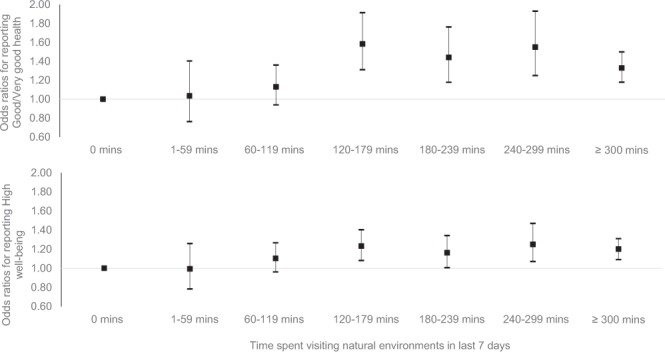
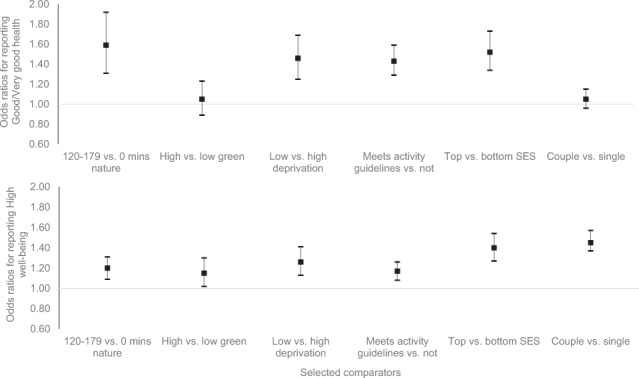
- In adjusted binomial logistic regression models, the association with good health and high well-being became significant only at ≥120 minutes per week in nature; for example, at 120–179 minutes, ORs were 1.59 [1.31–1.92] for health and 1.23 [1.08–1.40] for well-being, compared with 0 minutes.
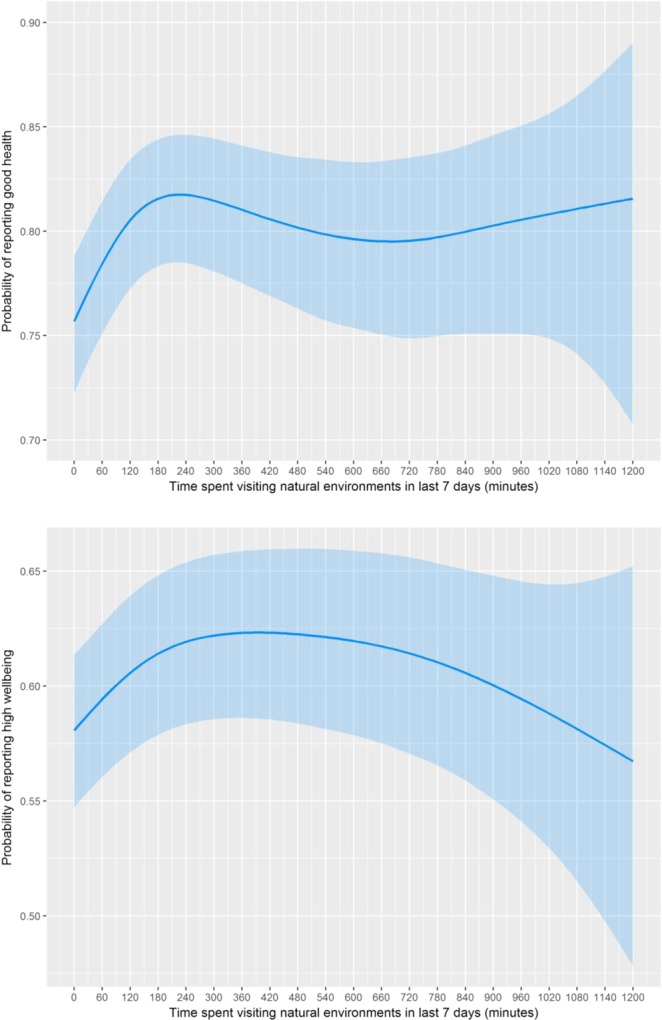
- The positive association was strongest up to about 200 minutes per week for health and 300 minutes per week for well-being, after which the relationship flattened or declined in spline analyses.
- The pattern was reported as consistent across key groups, including older adults and people with long-term health issues/disability; the paper also reports that the ≥120-minute “threshold” was seen across many stratified analyses.
- It did not matter how the 120 minutes were accumulated: additional analyses found no difference in health or well-being between one 120+ minute visit, two 60+ minute visits, or three or more ≤40 minute visits.
## Methods
- Design: Secondary analysis of a repeat cross-sectional survey; the study used survey weights to represent the adult population of England.
- Sample/data: Adults from Waves 6 and 7 of the Monitor of Engagement with the Natural Environment (MENE) survey (n = 20,264 total; n = 19,806 estimation sample for adjusted models; n = 19,808 for adjusted models with missing area-level data excluded).
- Main analysis: Survey-weighted binomial logistic regressions predicting binary health and well-being outcomes from weekly nature-contact duration categories; models adjusted for area- and individual-level covariates, with sensitivity analyses using splines and ordinal/continuous outcome specifications, plus a priori stratified analyses.
## Limitations
- The authors explicitly state the study is observational and cross-sectional, so they cannot rule out reverse causality or make causal claims.
- They note the weekly exposure estimate was based on one randomly selected visit in the last week, and that the data rely on self-reports, which may reduce accuracy.
- They caution that the apparent ≥120-minute threshold may partly reflect clustering of responses around hour marks and the way the data were categorized; this is an evident limitation from the text, alongside the very small variance explained by nature contact (about 1% in unadjusted models).
Model-written summary. Check it against the paper before relying on it.
Integrity signals
Registry
Cites
Statistics
Figures
Verification
Claims the paper makes
8 Valid · 1 Not valid · 15 Not checked · 60 Own results and interpretations
The cited sources support only part of this claim — read each source’s verdict below.
In the paper
“In other words, direct exposure, or more specifically in the current context, recreational time spent in natural environments per week, cannot accurately be inferred from neighbourhood greenspace near the home.”
§ Spending at least 120 minutes a week in nature is associated with good health and wellbeing > Introduction
What the sources say
- Partly supportedcites [23] Hillsdon, M., Coombes, E., Griew, P. & Jones, A. An assessment of the relevance of the home neighbourhood for understanding environmental influences on physical activity: how far from home do people roam? Int J Behav Nutr Phy 12, 100 (2015). sourceExperimental — accuracy not yet measured
The Conclusions and Discussion report that much outdoor physical activity occurs beyond the proximal home neighbourhood, so nearby neighbourhood characteristics may poorly represent the environments people use. The paper does not establish this specifically for weekly recreational time in natural environments or for neighbourhood greenspace; the Discussion says the researchers did not know which activities participants undertook. (LLM, conf=0.88)
- Could not verifycites [24] Sijtsma, F. J., de Vries, S., van Hinsberg, A. & Diederiks, J. Does ‘grey’ urban living lead to more ‘green’ holiday nights? A Netherlands Case Study. Landscape Urban Plan 105, 250–257 (2012). sourceExperimental — accuracy not yet measured
Our copy of Sijtsma et al. (2012) contains only repository/metadata records plus the Abstract; no body sections (Introduction, Methods, Discussion) are indexed. The Abstract (p. n/a) describes a GIS model of 'recreational shortages' — the shortage of locally available green space for recreational walking — linked to holiday nights away from home, but nowhere states that recreational time spent in natural environments per week cannot be inferred from neighbourhood greenspace near the home. Four searches (inference from neighbourhood greenspace, shortage of locally available green space for recreational walking, exposure vs. actual use, compensating behaviour/limitations) returned only the same abstract and citation blocks, so the claim's point is not addressed in the text we hold. (LLM, conf=0.65)
plain- Asserted: passes — The authors put it forward as true.
- Checkable: passes — It can be checked against evidence.
- Load-bearing: passes — The paper’s conclusions depend on it.
- Based: passes — The paper gives a reason why it holds.
- Partly supported
The cited sources support only part of this claim — read each source’s verdict below.
In the paper
“People travel beyond their local neighbourhoods to access recreational nature experiences, and indeed in our own data those who lived in the least green areas had higher odds of spending ≥120 mins in nature than those living in greener neighbourhoods (Appendix C).”
§ Spending at least 120 minutes a week in nature is associated with good health and wellbeing > Discussion
What the sources say
- Partly supportedcites [23] Hillsdon, M., Coombes, E., Griew, P. & Jones, A. An assessment of the relevance of the home neighbourhood for understanding environmental influences on physical activity: how far from home do people roam? Int J Behav Nutr Phy 12, 100 (2015). sourceExperimental — accuracy not yet measured
The Results report that 60.5% of recorded outdoor physical activity occurred beyond an 800 m home-neighbourhood boundary, and the Conclusions say adults undertook most outdoor physical activity outside their proximal home neighbourhood (page not provided). The paper does not establish that people travelled beyond their neighbourhoods specifically to access recreational nature experiences; it measured where activity occurred, not its purpose or whether it took place in nature. (LLM, conf=0.86)
plain- Asserted: passes — The authors put it forward as true.
- Checkable: passes — It can be checked against evidence.
- Load-bearing: passes — The paper’s conclusions depend on it.
- Based: passes — The paper gives a reason why it holds.
- Partly supported
Every source the paper cites for this claim was checked and supports it.
In the paper
“Research into shinrin-yoku (Japanese “forest bathing”)35, for instance, suggested that various psycho-physiological benefits can be gained from merely sitting passively in natural vs. urban settings.”
§ Spending at least 120 minutes a week in nature is associated with good health and wellbeing > Discussion
What the sources say
- Supportedcites [35] Park, B. J., Tsunetsugu, Y., Kasetani, T., Kagawa, T. & Miyazaki, Y. The physiological effects of Shinrin-yoku (taking in the forest atmosphere or forest bathing): evidence from field experiments in 24 forests across Japan. Environ Health Prev 15, 18–26 (2010). source
The Experimental design (p. 2) says subjects sat on chairs to view forest or city landscapes. The physiological results (p. 4) report more favorable stress-related measures after forest viewing, while the psychological results (p. 7) report better mood scores than after city viewing. (LLM, conf=0.93)
hedgedstates a possible cause- Asserted: passes — The authors put it forward as true.
- Checkable: passes — It can be checked against evidence.
- Load-bearing: passes — The paper’s conclusions depend on it.
- Based: passes — The paper gives a reason why it holds.
- Supported
Every source the paper cites for this claim was checked and supports it.
In the paper
“Experimental research, however, indicates that some benefits cannot be due solely to physical activity.”
§ Spending at least 120 minutes a week in nature is associated with good health and wellbeing > Discussion
What the sources say
- Supportedcites [35] Park, B. J., Tsunetsugu, Y., Kasetani, T., Kagawa, T. & Miyazaki, Y. The physiological effects of Shinrin-yoku (taking in the forest atmosphere or forest bathing): evidence from field experiments in 24 forests across Japan. Environ Health Prev 15, 18–26 (2010). source
The Experimental design (p. 2) reports no difference in exercise load between forest and city walks. The Results (p. 4) also report physiological benefits from viewing forest landscapes while seated, supporting the conclusion that physical activity alone cannot explain some benefits. (LLM, conf=0.93)
hedgedstates a cause- Asserted: passes — The authors put it forward as true.
- Checkable: passes — It can be checked against evidence.
- Load-bearing: passes — The paper’s conclusions depend on it.
- Based: passes — The paper gives a reason why it holds.
- Supported
The cited sources support only part of this claim — read each source’s verdict below.
In the paper
“Impoverished local opportunities need not be a barrier to nature exposure23,24.”
§ Spending at least 120 minutes a week in nature is associated with good health and wellbeing > Discussion
What the sources say
- Partly supportedcites [23] Hillsdon, M., Coombes, E., Griew, P. & Jones, A. An assessment of the relevance of the home neighbourhood for understanding environmental influences on physical activity: how far from home do people roam? Int J Behav Nutr Phy 12, 100 (2015). sourceExperimental — accuracy not yet measured
The Results and Conclusions (page numbers unavailable) show that adults undertook much of their outdoor physical activity beyond their proximal home neighbourhood, supporting the idea that nearby opportunities do not define where people go. The paper does not establish that those destinations provided nature exposure or that impoverished local nature opportunities were not a barrier to it. (LLM, conf=0.78)
- Partly supportedcites [24] Sijtsma, F. J., de Vries, S., van Hinsberg, A. & Diederiks, J. Does ‘grey’ urban living lead to more ‘green’ holiday nights? A Netherlands Case Study. Landscape Urban Plan 105, 250–257 (2012). sourceExperimental — accuracy not yet measured
Our copy of Sijtsma et al. (2012) holds only the repository record — the Abstract plus bibliographic metadata, with no body sections (searches on 'recreational shortage', 'nature exposure', 'compensating behaviour', 'discussion/conclusion' all returned the same abstract and citation blocks). The Abstract does support the compensatory mechanism behind the claim: 'the higher the greyness of the living environment – i.e. the higher the shortage of locally available green space for recreational walking – the more people spend nights away from home', with ~20% of holiday nights of the greyest residents related to that shortage. But the source measures holiday nights away from home and frames the shortage as a cost of agglomeration for well-being; it nowhere asserts 'nature exposure' or that a local shortage is not a barrier to nature contact, so the claim's generalisation to 'nature exposure' goes beyond what this source states. (LLM, conf=0.72)
plain- Asserted: passes — The authors put it forward as true.
- Checkable: passes — It can be checked against evidence.
- Load-bearing: unclear — It is unclear whether the paper’s conclusions depend on it.
- Based: passes — The paper gives a reason why it holds.
- Partly supported
21 more claims · 1 with their cited sources checked
Create a free account to see all 84 claims and to verify the 9 references still open.
- It may state two separate claims as one. 18
- Probably not a substantial claim. 46
Claims other papers make about this one
Each is checked against this paper’s own text: does it say what the citing paper says it does?
The cited source says what the claim attributes to it.
In the citing paper
“spending at least 120 min a week in nature was associated with good health [82].”
From EAACI Guidelines on the Importance of Green Space in Urban Environments for Allergy and Asthma Prevention (2026) · cites this paper as [82]
Citations
Cites
Hartig, T., Mitchell, R., de Vries, S., & Frumkin, H. (2014) · Annual Review of Public Health · doi:10.1146/annurev-publhealth-032013-182443 · Cited by 3,638
Self-citationEffect of exposure to natural environment on health inequalities: an observational population study
Mitchell, R., & Popham, F. (2008) · The Lancet · doi:10.1016/s0140-6736(08)61689-x · Cited by 2,099
Green space, urbanity, and health: how strong is the relation?
Maas, J., Verheij, R. A., Groenewegen, P. P., de Vries, S., & Spreeuwenberg, P. (2006) · Journal of Epidemiology and Community Health · doi:10.1136/jech.2005.043125 · Cited by 1,976
The Science of Mind Wandering: Empirically Navigating the Stream of Consciousness
Smallwood, J., & Schooler, J. W. (2015) · Annual Review of Psychology · doi:10.1146/annurev-psych-010814-015331 · Cited by 1,685
Barton, J., & Pretty, J. (2010) · Environmental Science & Technology · doi:10.1021/es903183r · Cited by 1,592
Miilunpalo, S., Vuori, I., Oja, P., Pasanen, M., & Urponen, H. (1997) · Journal of Clinical Epidemiology · doi:10.1016/s0895-4356(97)00045-0 · Cited by 1,473
Thompson Coon, J., Boddy, K., Stein, K., Whear, R., Barton, J., & Depledge, M. H. (2011) · Environmental Science & Technology · doi:10.1021/es102947t · Cited by 1,391
Self-citationNature Contact and Human Health: A Research Agenda
Frumkin, H., Bratman, G. N., Breslow, S. J., Cochran, B., Kahn Jr, P. H., Lawler, J. J., Levin, P. S., Tandon, P. S., Varanasi, U., Wolf, K. L., et al. (2017) · Environmental Health Perspectives · doi:10.1289/ehp1663 · Cited by 1,237
What are the benefits of interacting with nature?
Keniger, L., Gaston, K., Irvine, K., & Fuller, R. (2013) · International Journal of Environmental Research and Public Health · doi:10.3390/ijerph10030913 · Cited by 1,204
Research works printed but not linked: 1
- Stigsdotter, U. & Grahn, P. What makes a garden a healing garden. J Thera Hort 13, 60–69 (2002).
Cited by
Items 201–300 of 1,105
The effect of brief exposure to virtual nature on mental wellbeing in adolescents
Owens, M., & Bunce, H. L. I. (2023) · Scientific Reports · doi:10.1038/s41598-023-44717-z · Cited by 43
“It is known that access to green space in childhood is prospectively related to a lower risk of mental health disorder later in life 34 and it has been shown that spending more time outdoors is associated with good health and wellbeing 35 .”
BackgroundFian, L., White, M. P., Arnberger, A., Thaler, T., Heske, A., & Pahl, S. (2024) · Health & Place · doi:10.1016/j.healthplace.2024.103175 · Cited by 35
Self-citationBratman, G. N., Mehta, A., Alvarez, H. A. O., Spink, K. M., Levy, C., White, M. P., Kubzansky, L. D., & Gross, J. J. (2024) · Cognition & Emotion · doi:10.1080/02699931.2024.2316199 · Cited by 43
“Frequency and duration measures were developed for the purposes of this study, derived from operationali-sations used in other nature exposure studies (Shana-han et al., 2016; White et al., 2019).”
Self-citationBettmann, J. E., Speelman, E. A., Jolley, A. M., & Casucci, T. (2025) · Behavioral Sciences · doi:10.3390/bs15020153 · Cited by 46
The Effects of Electromagnetic Fields on Human Health: Recent Advances and Future
Liu, X., Yan, X., Zhang, S., Liu, Z., Win, T., & Ren, L. (2021) · Journal of Bionic Engineering · doi:10.1007/s42235-021-0015-1 · Cited by 30
The outdoors as a contested leisure terrain
Dashper, K. L., & King, J. C. (2021) · Annals of Leisure Research · doi:10.1080/11745398.2021.1899832 · Cited by 36
A Qualitative Analysis of UK Wetland Visitor Centres as a Health Resource
Reeves, J. P., John, C. H. D., Wood, K. A., & Maund, P. (2021) · International Journal of Environmental Research and Public Health · doi:10.3390/ijerph18168629 · Cited by 32
“The increase in feelings of revitalisation post-visit is also suggestive of a lag associated with revitalisation benefits and raises questions about how long health benefits of nature exposure might last [21,154,155].”
BackgroundBasu, M., Dasgupta, R., Kumar, P., & Dhyani, S. (2021) · Environmental Research Communications · doi:10.1088/2515-7620/ac2ab2 · Cited by 31
Health promoting green infrastructure associated with green space visitation
Zhang, J., Feng, X., Shi, W., Cui, J. J., Ji, P., Lei, L., Zhang, J., Astell‐Burt, T., Jiang, Y., & Ma, J. (2021) · Urban forestry & urban greening · doi:10.1016/j.ufug.2021.127237 · Cited by 33
Development and validation of self-efficacy and intention measures for spending time in nature
Maddock, J. E., Suess, C., Bratman, G. N., Smock, C., Kellstedt, D. K., Gustat, J., Perry, C. K., & Kaczynski, A. T. (2022) · BMC Psychology · doi:10.1186/s40359-022-00764-1 · Cited by 35
Zhang, J., Cui, J. J., Astell‐Burt, T., Shi, W., Ji, P., Lei, L., Xin, X., Zhang, J., Feng, X., Jiang, Y., et al. (2022) · Environmental Research · doi:10.1016/j.envres.2022.113228 · Cited by 32
Visiting nature is associated with lower socioeconomic inequalities in well-being in Wales
Garrett, J. K., Rowney, F. M., White, M. P., Lovell, R., Fry, R. J., Akbari, A., Geary, R. S., Lyons, R. A., Mizen, A., Nieuwenhuijsen, M. J., et al. (2023) · Scientific Reports · doi:10.1038/s41598-023-35427-7 · Cited by 40
“Given some evidence of non-linear relationships between GBS use and well-being 24 we took the relatively novel approach of first applying generalised additive models (GAMs; Supplemental materials Sect.”
BackgroundMethodInfluentialSelf-citationTrait emotional intelligence and ecological outcomes: the role of connectedness to nature
Marchetti, V., Panno, A., Scopelliti, M., Romano, L., Angelini, G., Rinallo, E., Barni, D., & Fiorilli, C. (2024) · BMC Psychology · doi:10.1186/s40359-024-01679-9 · Cited by 34
“…dedicated to emotional experiences in natural contexts, which have focused on children (0–10 years), young adults (10–24 years) [32], and the adult population[35], and those focused on individual emotional factors capable of predicting PEBs (as proved in systematic literature reviews [33, 34]).”
BackgroundTowards a framework of healthy aging practices
Yen, D. A.-W., Cohen, G., Wei, L., & Asaad, Y. (2022) · Journal of Business Research · doi:10.1016/j.jbusres.2021.12.026 · Cited by 35
A mixed-methods exploration of virtual reality as a tool to promote green exercise
Calogiuri, G., Keegan, B. J., Birkheim, S. L., Rydgren, T. L., Flaten, O. E., Fröhlich, F., & Litleskare, S. (2022) · Scientific Reports · doi:10.1038/s41598-022-09622-x · Cited by 32
Ricciardi, E., Spano, G., Tinella, L., Lopez, A., Clemente, C., Bosco, A., & Caffò, A. O. (2023) · International Journal of Environmental Research and Public Health · doi:10.3390/ijerph20085540 · Cited by 29
Kleespies, M. W., & Dierkes, P. W. (2023) · Biological Conservation · doi:10.1016/j.biocon.2023.110093 · Cited by 35
Astell‐Burt, T., Navakatikyan, M., & Feng, X. (2024) · Environmental Research · doi:10.1016/j.envres.2024.120016 · Cited by 28
Rufo, J. C., Ribeiro, A. I., Paciência, I., Delgado, L., & Moreira, A. M. (2020) · Pediatric Allergy and Immunology · doi:10.1111/pai.13213 · Cited by 26
Women report that nature tourism provides recovery from psychological trauma
Buckley, R., & Westaway, D. (2021) · Tourism Recreation Research · doi:10.1080/02508281.2021.1917892 · Cited by 27
“Research on nature and mental health (Bratman et al., 2019; White et al., 2019), includes therapeutic effects of outdoor recreation for individuals suffering mental ill health (Fenton et al., 2017; Frühauf et al., 2016).”
BackgroundCOVID-19 compliance among urban trail users: Behavioral insights and environmental implications
Schneider, I. E., Budruk, M., Shinew, K., Wynveen, C. J., Stein, T. V., VanderWoude, D., Hendricks, W. W., & Gibson, H. (2021) · Journal of Outdoor Recreation and Tourism · doi:10.1016/j.jort.2021.100396 · Cited by 28
“Retaining or improving access to safe outdoor recreation and public recreational and park spaces is essential to achieve improved health, lower health care costs, and the community well-being benefits they afford (Blahna et al., 2020; Thomsen et al., 2018; White et al., 2019).”
BackgroundRichter, I., Avillanosa, A. L., Cheung, V. V., Goh, H. C., Johari, S., Kay, S., Maharja, C., Nguyễn, T. H., Pahl, S., Sugardjito, J., et al. (2021) · Frontiers in Psychology · doi:10.3389/fpsyg.2021.635686 · Cited by 26
Direct Exposure to Green and Blue Spaces is Associated with Greater Mental Wellbeing in Older Adults
Jarosz, E. (2022) · Journal of Aging and Environment · doi:10.1080/26892618.2022.2109792 · Cited by 34
“Some research finds that the health benefits of exposure to natural environments are dose-dependent (Shanahan et al., 2016; White et al., 2019), which suggests that it is repeated exposure that brings the desired benefits.”
BackgroundMaharja, C., Praptiwi, R. A., Roberts, B. R., Morrissey, K., White, M. P., Sari, N. M., Cholifatullah, F., Sugardjito, J., & Fleming, L. E. (2022) · Journal of Outdoor Recreation and Tourism · doi:10.1016/j.jort.2022.100584 · Cited by 37
Self-citationNature As Medicine: The 7th (Unofficial) Pillar of Lifestyle Medicine
Sundermann, M., Chielli, D., & Spell, S. (2023) · American Journal of Lifestyle Medicine · doi:10.1177/15598276231174863 · Cited by 35
Senses, emotions and wellbeing in forest recreation and tourism
Zhong, L., Campbell, C. E., Buckley, R., Zhu, D., Yu, H., Chauvenet, A. L. M., & Cooper, M. (2024) · Tourism Recreation Research · doi:10.1080/02508281.2024.2312347 · Cited by 38
“…first theme addresses health outcomes directly, both physical and mental (Astell-Burt et al., 2022; Coventry et al., 2021; Derose et al., 2021; Kondo et al., 2020; Nguyen et al., 2023; Remme et al., 2021; Tester-Jones et al., 2020; White et al., 2019, 2021; Yeon et al., 2021; Zhang et al., 2023).”
Valuing the health benefits of nature-based recreational physical activity in England
Grellier, J., White, M. P., de Bell, S., Brousse, O., Elliott, L. R., Fleming, L. E., Heaviside, C., Simpson, C. H., Taylor, T., Wheeler, B. W., et al. (2024) · Environment International · doi:10.1016/j.envint.2024.108667 · Cited by 30
Self-citationSocioeconomic deprivation modifies green space and mental health associations: A within person study
Belcher, R. N., Murray, K. A., Reeves, J. P., & Fecht, D. (2024) · Environment International · doi:10.1016/j.envint.2024.109036 · Cited by 34
Outdoor tourism to escape social surveillance: health gains but sustainability costs
Akhoundoghli, M., & Buckley, R. (2021) · Journal of Ecotourism · doi:10.1080/14724049.2021.1934688 · Cited by 33
“Different types of nature experiences (Pasanen et al., 2019), for different lengths of time (White et al., 2019), can improve wellbeing for people of different personalities (Wang et al., 2017;White et al., 2016), across a range of environments (Biedenweg et al., 2017; White et al., 2021; Wyles et…”
BackgroundKnowing Nature in Childhood: Learning and Well-Being Through Engagement with the Natural World
Chawla, L. (2021) · Nebraska Symposium on Motivation/The Nebraska symposium on motivation · doi:10.1007/978-3-030-69020-5_6 · Cited by 41
Smyth, N., Thorn, L., Wood, C., Hall, D., & Lister, C. (2022) · Healthcare · doi:10.3390/healthcare10060978 · Cited by 46
Personalised ecology and the future of biodiversity
Gaston, K. J., Phillips, B. B., & Soga, M. (2023) · Cambridge Prisms Extinction · doi:10.1017/ext.2023.15 · Cited by 29
Playful Inspiration for a New Wave of Joyful Forest Technology
Bertran, F. A., Buruk, O., Spors, V., & Hamari, J. (2023) · Designing Interactive Systems Conference · doi:10.1145/3563657.3596015 · Cited by 32
Forest Bathing Increases Adolescents’ Mental Well-Being: A Mixed-Methods Study
Keller, J., Kayira, J., Chawla, L., & Rhoades, J. L. (2023) · International Journal of Environmental Research and Public Health · doi:10.3390/ijerph21010008 · Cited by 43
“However, few, if any, SEL programs incorporate increasing students’ time in nature to increase their mental well-being despite the well-documented benefits of time in nature in increasing human well-being [3], including the well-being of children and adolescents [6,29,66,68,69].”
BackgroundClimate adaptation actions for urban forests and human health
Janowiak, M. K., Brandt, L. A., Wolf, K. K., Brady, M., Darling, L., Lewis, A. D., Fahey, R. T., Giesting, K., Hall, E., Henry, M., et al. (2021) · doi:10.2737/nrs-gtr-203 · Cited by 33
Pouso, S., Borja, Á., Fleming, L. E., Gómez‐Baggethun, E., White, M. P., & Uyarra, M. C. (2020) · SocArXiv (OSF Preprints) · doi:10.31235/osf.io/gpt3r · Cited by 28
Self-citationWang, H., Abbey, C., Kennedy, T., Feng, E., Li, R. G., Liu, F., Zhu, A., Shen, S. T., Wadhavkar, P., Rozelle, S., et al. (2023) · Risk Management and Healthcare Policy · doi:10.2147/rmhp.s384997 · Cited by 32
“Our results also align with those of one past study of adults that showed that moderate amounts of outdoor time (ie, several hours per week) may be just as beneficial as longer amounts of outdoor time.(43) Considering the relatively low outdoor time of the sample adolescents and the high prevalence of mental health pr…”
ResultNature as a Community Health Tool: The Case for Healthcare Providers and Systems
South, E. C., Kondo, M. C., & Razani, N. (2020) · American Journal of Preventive Medicine · doi:10.1016/j.amepre.2020.03.025 · Cited by 26
Orr, N., Yeo, N. L., Dean, S. G., White, M. P., & Garside, R. (2021) · Geriatrics · doi:10.3390/geriatrics6010027 · Cited by 27
Self-citationCo-Housing Response to Social Isolation of COVID-19 Outbreak, with a Focus on Gender Implications
Giorgi, E., López, L. M., Garnica-Monroy, R., Krstikj, A., Cobreros, C., & Montoya, M. Á. (2021) · Sustainability · doi:10.3390/su13137203 · Cited by 27
“There is strong scientific evidence that outdoor experiences (OE), contact and visualization of natural beauty, provide personal physiological [61,62,64], physical and mental [65], spiritual [66], and social (empathy, generosity, trust, and collaboration) benefits [67], especially for children and adolescents [68].”
BackgroundMandić, A., & McCool, S. F. (2022) · Journal of Ecotourism · doi:10.1080/14724049.2022.2099877 · Cited by 33
“more significant curiosity about what is an NBT experience and growing interest of increasingly urbanized society to spend time in nature (Cox et al., 2018; White et al., 2019).”
BackgroundGreen Spaces as Healthy Places: Correlates of Urban Green Space Use in Singapore
Dillon, D., & Lee, S. T. H. (2023) · International Journal of Environmental Research and Public Health · doi:10.3390/ijerph20176711 · Cited by 24
“Given the reports of heightened stress levels amongst the population during 2020 [12,13] and research evidence indicating stress-reduction capabilities of nature immersion [14,15], it appears that people could be seeking green space visits for therapeutic purposes and for general wellbeing [16].”
BackgroundInteractions with Nature, Good for the Mind and Body: A Narrative Review
Stott, D., Forde, D., Sharma, C., Deutsch, J. M., Bruneau, M. L., Nasser, J. A., Vitolins, M. Z., & Milliron, B. (2024) · International Journal of Environmental Research and Public Health · doi:10.3390/ijerph21030329 · Cited by 42
“Using dose response modeling, Shanahan et al. reported that 9% of high blood pressure cases could be averted if individuals spent at least 30 min outdoors each week [133].”
BackgroundMethodBiophilic street design for urban heat resilience
Li, Y., & He, B. (2025) · Progress in Planning · doi:10.1016/j.progress.2025.100988 · Cited by 25
The Beneficial Effects of Short-Term Exposure to Scuba Diving on Human Mental Health
Carreño, A., Gascón, M., Vert, C., & Lloret, J. (2020) · International Journal of Environmental Research and Public Health · doi:10.3390/ijerph17197238 · Cited by 33
“In addition, we observed that participants showed reduced psychological distress after just one hour of activity, regardless of whether the activity was scuba diving or spending time on the beach, thus providing further evidence to support the concept that exposure to blue spaces contributes to improving human wellbei…”
BackgroundVictorson, D. E., Doninger, G. L., Victorson, S., Victorson, G., Hall, L., Maletich, C., Corr, B. R., Scortino, K., Burns, Z., Allen, L., et al. (2021) · International Journal of Environmental Research and Public Health · doi:10.3390/ijerph182312622 · Cited by 24
Evaluation of urban ecological sustainability in arid lands (case study: Yazd-Iran)
Parivar, P., Quanrud, D. M., Sotoudeh, A., & Abolhasani, M. (2020) · Environment Development and Sustainability · doi:10.1007/s10668-020-00637-w · Cited by 25
Weber, E. S., & Schneider, I. E. (2020) · Urban forestry & urban greening · doi:10.1016/j.ufug.2020.126950 · Cited by 24
Geary, R. S., Thompson, D. A., Garrett, J. K., Mizen, A., Rowney, F. M., Song, J., White, M. P., Lovell, R., Watkins, A. J., Lyons, R. A., et al. (2023) · Public Health Research · doi:10.3310/lqpt9410 · Cited by 48
Self-citationWu, Y., Zhou, W., Zhang, H., Liu, Q., Yan, Z., & Lan, S. (2024) · Buildings · doi:10.3390/buildings14061544 · Cited by 28
Bettmann, J. E., Speelman, E. A., Blumenthal, E., Couch, S., & Schmalz, D. L. (2024) · Ecopsychology · doi:10.1089/eco.2023.0063 · Cited by 51
“The appropriate nature dosage in order to see effect has been a question among researchers for some time (Bratman et al., 2021; Frumkin et al, 2017; White et al., 2019); future research should explore this question more precisely for a range of different populations and mental health needs.”
InfluentialLesser, I., Prystupa, J., Bélanger, L. J., Thomson, C. J., & Nienhuis, C. P. (2020) · Applied cancer research/Applied Cancer Research · doi:10.1186/s41241-020-00094-x · Cited by 25
“To maximize physical and psychological benefits, weekly trail walking times totaled ≥150 minutes per week in accordance with recommended physical activity guidelines (150min/week) (reference) as well as recommend nature exposure guidelines of (120min/week) [34].”
BackgroundMethodTaking real steps in virtual nature: a randomized blinded trial
Litleskare, S., Fröhlich, F., Flaten, O. E., Haile, A., Johnsen, S. Å. K., & Calogiuri, G. (2022) · Virtual Reality · doi:10.1007/s10055-022-00670-2 · Cited by 30
“A recent study estimated that individuals who spend at least 120 min in contact with nature during a regular week achieve significant improvements of health and well-being (White et al. 2019).”
BackgroundSpano, G., Ricciardi, E., Theodorou, A., Giannico, V., Caffò, A. O., Bosco, A., Sanesi, G., & Panno, A. (2023) · Scientific Reports · doi:10.1038/s41598-023-45604-3 · Cited by 29
“…to understand how users use their time within the park (e.g., physical activity, social interactions), frequency of visits, and the amount of time spent per visit, in light of recent findings reporting that exposure to at least 120 min of nature is associated with health and well-being 69 .”
Can Beekeeping Improve Mental Wellbeing during Times of Crisis?
Alton, K., & Ratnieks, F. L. W. (2021) · Bee World · doi:10.1080/0005772x.2021.1988233 · Cited by 20
On how natural and urban soundscapes alter brain activity during cognitive performance
Stobbe, E., Lorenz, R. C., & Kühn, S. (2023) · Journal of Environmental Psychology · doi:10.1016/j.jenvp.2023.102141 · Cited by 27
Patwary, M. M., Bardhan, M., İnan, H. E., Browning, M. H. E. M., Disha, A. S., Haque, M. Z., Helmy, M. S., Ashraf, S., Dzhambov, A. M., Shuvo, F. K., et al. (2024) · Frontiers in Public Health · doi:10.3389/fpubh.2024.1334425 · Cited by 27
“Spending time in green space can lead to numerous mental health benefits for mental health, including reduced symptoms of anxiety and depression before the pandemic (56, 57) and during it (38, 67).”
BackgroundCooley, S. J., Jones, C. R., Moss, D., & Robertson, N. (2021) · British Journal of Clinical Psychology · doi:10.1111/bjc.12315 · Cited by 20
Is adventure tourism therapeutic?
Buckley, R. (2021) · Tourism Recreation Research · doi:10.1080/02508281.2021.1931775 · Cited by 26
“…(Tester-Jones et al., 2020); activities (Pasanen et al., 2019; Svensson et al., 2019); durations (Bélanger et al., 2019; Legrand & Mille, 2009; White et al., 2019); and settings and ecosystems (Bielinis et al., 2019; Wyles et al., 2017), including biodiversity (Lindemann-Matthies & Matthies,…”
BackgroundDown, M. J. A., Chivers, P., Kirsch, P., & Picknoll, D. (2021) · Health Promotion Journal of Australia · doi:10.1002/hpja.555 · Cited by 24
Gauging the happiness benefit of US urban parks through Twitter
Schwartz, A. J., Dodds, P. S., O’Neil-Dunne, J. P. M., Ricketts, T. H., & Danforth, C. M. (2022) · PLoS ONE · doi:10.1371/journal.pone.0261056 · Cited by 31
“Another possibility is that people spend more time in larger parks; one study suggested that 120 minutes of nature contact a week resulted in improved health and well-being [35].”
BackgroundInvestigating Drivers of Native Plant Production in the United States Green Industry
Rihn, A., Knuth, M. J., Peterson, B. J., Torres, A. P., Campbell, J. H., Boyer, C. R., Palma, M. A., & Khachatryan, H. (2022) · Sustainability · doi:10.3390/su14116774 · Cited by 26
Xie, M., Mao, Y., & Yang, R. (2022) · Frontiers in Public Health · doi:10.3389/fpubh.2022.1011890 · Cited by 30
“(120) report that spending at least 120min a week in nature is associated with good health andwellbeing, so stakeholders should pay attention to such a “threshold” and actively develop possible weekly nature exposure guidelines for their employees.”
BackgroundBrowning, M. H. E. M., Hanley, J. R., Bailey, C. R., Beatley, T., Gailey, S., Hipp, J. A., Larson, L. R., James, P., Jennings, V. L., Jimenez, M. P., et al. (2023) · American Journal of Health Promotion · doi:10.1177/08901171231210806b · Cited by 25
Nature and Mental Health in Urban Texas: A NatureScore-Based Study
Makram, O. M., Pan, A. P., Maddock, J. E., & Kash, B. A. (2024) · International Journal of Environmental Research and Public Health · doi:10.3390/ijerph21020168 · Cited by 28
Ju, W., Wang, Q., Xu, C., Lun, X., Wang, L., Gao, Y., Huang, L., Zhang, Q., Li, L., Liu, B., et al. (2024) · The Science of The Total Environment · doi:10.1016/j.scitotenv.2024.172944 · Cited by 23
Lymeus, F., Ahrling, M., Apelman, J., Florin, C. D. M., Nilsson, C., Vincenti, J., Zetterberg, A., Lindberg, P., & Hartig, T. (2020) · Frontiers in Psychology · doi:10.3389/fpsyg.2020.01560 · Cited by 27
“…functioning and health among people who have relatively much green space near their home (e.g., Kuo and Sullivan, 2001; Maas et al., 2006; Mitchell and Popham, 2008; Sugiyama et al., 2008; Ward Thompson et al., 2012), or who regularly engage in extended nature visits (White et al., 2019).”
Self-citationChapter 24 : Midwest. Fifth National Climate Assessment
Wilson, A. B., Baker, J. M., Ainsworth, E. A., Andresen, J. A., Austin, J. A., Dukes, J. S., Gibbons, E., Hoppe, B. O., LeDee, O. E., Noel, J., et al. (2023) · doi:10.7930/nca5.2023.ch24 · Cited by 31
Emotion, Wellbeing and the Neurological Disorders
Fisher, Z., Galloghly, E., Boglo, E., Gracey, F., & Kemp, A. H. (2022) · Encyclopedia of Behavioral Neuroscience, 2nd edition · doi:10.1016/b978-0-12-819641-0.00013-x · Cited by 20
Nature-Based Interventions Targeting Elderly People’s Health and Well-Being: An Evidence Map
Catissi, G., Gouveia, G. K. T., Savieto, R. M., Silva, C. P. R., de Almeida, R. S., Borba, G. B., Rosario, K. A., & Leão, E. R. (2024) · International Journal of Environmental Research and Public Health · doi:10.3390/ijerph21010112 · Cited by 19
Zhao, R., Song, Y. H., Guo, S., Guo, Z., & Shen, X. (2025) · Urban forestry & urban greening · doi:10.1016/j.ufug.2025.128706 · Cited by 22
Effects of urban green exercise on mental health: a systematic review and meta-analysis
Hu, G., Luo, Q., Zhang, P., Zeng, H., & Ma, X. (2025) · Frontiers in Public Health · doi:10.3389/fpubh.2025.1677223 · Cited by 19
Chou, W.-Y., & Hung, S.-H. (2021) · Sustainability · doi:10.3390/su132011370 · Cited by 28
Feio, M. J., Mantas, A. I., Serra, S. R. Q., Calapez, A. R., Almeida, S. F. P., Sales, M., Montenegro, M., & Moreira, F. (2022) · PLoS ONE · doi:10.1371/journal.pone.0266776 · Cited by 39
Léger, M. T., & Mekari, S. (2022) · Brain Sciences · doi:10.3390/brainsci12060725 · Cited by 23
Gunko, R., Rapeli, L., Vuorisalo, T., Scheinin, M., & Karell, P. (2022) · Environmental Management · doi:10.1007/s00267-022-01673-0 · Cited by 29
“There is a number of scholars highlighting positive associations between nature and human physical and mental health (Kamitsis and Francis 2013; Ideno et al. 2017; White et al. 2019; Martin et al. 2020), which indicates that the environment impacts health and well-being and thereby LQ.”
BackgroundResidents’ Preference for Urban Green Space Types and Their Ecological-Social Services in China
Zhao, W., Zhang, L., Li, X., Peng, L., Wang, P., Wang, Z., Jiao, L., & Wang, H. (2022) · Land · doi:10.3390/land11122239 · Cited by 22
Botanic Garden Tourism, Social Value, Health, and Well-Being
Catahan, N., Hopwood, M., & Suraweera, P. (2024) · Journal of Zoological and Botanical Gardens · doi:10.3390/jzbg5020013 · Cited by 22
“Collaborating with health practitioners also helps communicate potential therapeutic benefits of specific plants and green space exposure [135,136].”
BackgroundSudimac, S., & Kühn, S. (2024) · Environmental Research · doi:10.1016/j.envres.2024.119813 · Cited by 28
Lloret, J., Abós‐Herràndiz, R., Alemany, S., Allué, R., Bartra, J., Basagaña, M., Berdalet, E., Campàs, M., Carreño, A., Demestre, M., et al. (2020) · International Journal of Environmental Research and Public Health · doi:10.3390/ijerph17145078 · Cited by 24
Self-citationBristow, S., & Atkinson, C. (2020) · Educational and Child Psychology · doi:10.53841/bpsecp.2020.37.4.115 · Cited by 22
Chalmin‐Pui, L. S., Griffiths, A., Roe, J. J., & Cameron, R. W. F. (2019) · Challenges · doi:10.3390/challe10020037 · Cited by 22
Vilhelmson, B., & Thulin, E. (2021) · Canadian Geographies / Géographies canadiennes · doi:10.1111/cag.12732 · Cited by 25
Appel, L., Appel, E., Kisonas, E., Lewis-Fung, S. E., & Sheng, L. Q. (2022) · Frontiers in Virtual Reality · doi:10.3389/frvir.2021.724020 · Cited by 21
Nature-Based Feasibility Intervention to Influence Mitigation Strategies for Perceived Stress
Vermeesch, A. L., Coro, A., Mattes, K., Ostendorff, D., Olson, E. T., & Garrigues, L. (2022) · International Journal of Environmental Research and Public Health · doi:10.3390/ijerph191912277 · Cited by 19
Chiang, Y.-C., Ke, R.-A., Li, D., & Weng, P.-Y. (2022) · Environment and Behavior · doi:10.1177/00139165221147627 · Cited by 18
“…or features for a short period of time can effectively reduce depression and promote positive emotions (D. T. Cox, Shanahan, et al., 2017; Korpela & Ylén, 2007; Ulrich, 1981; White et al., 2019); this activity can also improve psychological health and performance (Lee et al., 2015, 2018).”
BackgroundAlejandre, J. C., CHASTIN, S. F. M., Irvine, K. N., Georgiou, M., Khanna, P., Tieges, Z., Smith, N., Chong, Y.-Y., Onagan, F. C., Price, L., et al. (2023) · Health & Social Care in the Community · doi:10.1155/2023/6551521 · Cited by 27
“Investigated blue space activities had a higher duration than the 120 minutes per week recommended dose of nature [89].”
BackgroundBeneficios de los espacios verdes y actividad física en el bienestar y salud de las personas
Guarda-Saavedra, P., Muñoz-Quezada, M. T., Cortínez-O’Ryan, A., Aguilar-Farías, N., & Vargas‐Gaete, R. (2022) · Revista médica de Chile · doi:10.4067/s0034-98872022000801095 · Cited by 47
Towards Key Principles for the Design and Implementation of Nature Prescription Programs
Foley, H., Leach, M., Feng, X., Astell‐Burt, T., & Brymer, E. (2023) · Sustainability · doi:10.3390/su15129530 · Cited by 23
Effect of Nature Space on Enhancing Humans’ Health and Well-Being: An Integrative Narrative Review
Zhang, Z., Ye, B., Yang, W., & Gao, Y. (2024) · Forests · doi:10.3390/f15010100 · Cited by 29
Fostering Resilience and Wellness: The Synergy of Mindful Eating and the Mediterranean Lifestyle
Christodoulou, E., Deligiannidou, G.-E., Kontogiorgis, C. A., Giaginis, C., & Koutelidakis, A. Ε. (2024) · Applied Biosciences · doi:10.3390/applbiosci3010004 · Cited by 22
Li, Y., & Du, H. (2024) · Building and Environment · doi:10.1016/j.buildenv.2024.111691 · Cited by 30
The Relationship Between City “Greenness” and Homicide in the US: Evidence Over a 30-Year Period
Sanciangco, J. C., Breetzke, G. D., Lin, Z., Wang, Y., Clevenger, K. A., & Pearson, A. L. (2021) · Environment and Behavior · doi:10.1177/00139165211045095 · Cited by 20
“It is being increasingly acknowledged that the type and frequency of greenspace interactions can impact health and wellbeing rather than greenness simply being available (see Fuller et al., 2007; Holt et al., 2019; Liu et al., 2018; White et al., 2019).”
BackgroundFilho, W. L., Dinis, M. A. P., Nagy, G. J., et al. (2024) · Journal of Environmental Management · doi:10.1016/j.jenvman.2024.120554 · Cited by 17
“…in varied fashions, i) the environmental footprint of ‘low-intensity ’ outdoor activities in winter contexts can range from minimal (i.e., hiking) to negligible (i.e., walking), and ii) active time spent in green, natural environments delivers overall benefits to human health (White et al., 2019).”
BackgroundEffective Recreational Activities in Urban Green Spaces for Mental Health of Scientific Researchers
Yan, J., Wu, Y., Shao, G., Qiu, Q., & Tang, L. (2024) · Ecosystem Health and Sustainability · doi:10.34133/ehs.0199 · Cited by 21
Green healing: Ecotherapy as a transformative model of health and social care
Isham, A., Jefferies, L., Blackburn, J., Fisher, Z., & Kemp, A. H. (2025) · Current Opinion in Psychology · doi:10.1016/j.copsyc.2025.102005 · Cited by 33
Dai, X., Yang, B., Zhou, Y., Hu, J., Chen, J., Ren, Y., Zhan, B., & Zhang, J. (2026) · Building and Environment · doi:10.1016/j.buildenv.2026.114428 · Cited by 21
Development and Validation of an Attitude Toward Spending Time in Nature Scale
Maddock, J. E., Suess, C., Bratman, G. N., Smock, C., Kellstedt, D. K., Layton, R., Christiana, R. W., Horton, T. H., Gustat, J., Perry, C. K., et al. (2022) · Ecopsychology · doi:10.1089/eco.2022.0017 · Cited by 19
“Frequency and duration of contact are also important considerations; one study reported a minimum of 2h per week was related to improved self-reported health and well-being, with benefits increasing up to 200– 300min per week (White et al., 2019).”
Wang, X., Gong, X.-F., Xiong, K.-X., Guo, D.-S., Liu, L., Lin, C.-M., & Chang, W. (2022) · Frontiers in Psychology · doi:10.3389/fpsyg.2022.930713 · Cited by 23
Phillips, T., Wells, N. M., Brown, A. H., Tralins, J., & Bonter, D. N. (2023) · People and Nature · doi:10.1002/pan3.10433 · Cited by 25
Metadata
- Authors
- White, M. P., Alcock, I., Grellier, J., Wheeler, B. W., Hartig, T., Warber, S. L., Bone, A., Depledge, M. H., & Fleming, L. E.
- Affiliations
- University of Exeter (GB)
- Uppsala University (SE)
- Corresponding author
- White, Mathew P.
- ORCID
- Venue
- Scientific Reports
- Published
- 2019-06-13
- Volume
- 9
- Issue
- 1
- Pages
- 7730-7730
- ISSN
- 2045-2322 (ISSN-L)
- PMC
- PMC6565732
- OpenAlex
- W2952548366
- Cited by
- 1,125
- References
- 51
- Citations by year
- 2026: 186 · 2025: 168 · 2024: 170 · 2023: 181 · 2022: 138 · 2021: 164 · 2020: 94 · 2019: 23
- FWCI
- 45.19
- Type
- journal article
- Language
- en
- Open access
- gold
- doi.org
- Licence
- cc-by
- creativecommons.org/licenses/by/4.0 (tdm)
- creativecommons.org/licenses/by/4.0 (vor)
- Locations
- Scientific Reports (publishedVersion, cc-by)
- PubMed Central (publishedVersion, cc-by)
- PubMed (publishedVersion)
- KTH Publication Database DiVA (KTH Royal Institute of Technology) (submittedVersion, other-oa)
- DOAJ (DOAJ: Directory of Open Access Journals) (submittedVersion)
- Figshare (submittedVersion, cc-by)
- Open Research Exeter (University of Exeter) (submittedVersion, cc-by)
- Funders
- DH | National Institute for Health Research (HPRU: Environmental Change & Health)
- Topics
- Social Sciences › Urban Studies › Urban Green Space and Health
- Social Sciences › Business, Management and Accounting › Tourism, Leisure and Hospitality Management › Recreation, Leisure, Wilderness Management
- Health Sciences › Medicine › Public Health, Environmental and Occupational Health › Physical Activity and Health
- Keywords
- nature contact, exposure-response relationship, self-reported health, well-being, green spaces, older adults, chronic disease
- MeSH terms
- Adolescent, Adult, Environment, Female, Health, Humans, Male, Middle Aged, Residence Characteristics, Exercise, Walking, Young Adult, Self Report
About these checks
Registry, retraction, Cites and statistics results are computed, not judged, with one exception: a printed reference that no index lists is read once by a model before it counts as a citation error. Claims are extracted by a model and kept only when their quote appears verbatim in the text; each cited source is then checked, with a model’s help, for whether it says what the claim relies on. Those verdicts can be wrong — read the claim’s quote and the cited source before relying on one.
The claim verdicts this report counts are experimental: their accuracy is not yet measured.
A language model drew the claims from the paper on 2026-10-10, under version 3 of the claim definition (model deepseek-v4.1-flash, prompt extract-v3).
A second model labelled each claim on 2026-10-10 (model jev-1.13-20260917, definition revision gold-guideline-v0.2).
Cited sources are checked with a language model’s help (gpt-6-sol and qwen3.8-omni-flash).
Statistics and arithmetic are recomputed, not judged.
Confidence bands are shown only for fields calibrated on our annotated test set. None is calibrated yet, so no band is shown.
What counts as a claim ›How we measure confidence ›How we check this ›
Are you an author, or do you see a problem with this page? Request a review
Data sources
Bibliographic data: Semantic Scholar, OpenAlex, Crossref.
Contains information from the Semantic Scholar Academic Graph Datasets, made available under the ODC Attribution License (ODC-BY 1.0).
Semantic Scholar’s data is described in: Kinney, R., et al. (2023). The Semantic Scholar Open Data Platform. arXiv:2301.10140.
