

Wearable microfluidic biosensors with haptic feedback for continuous monitoring of hydration biomarkers in workers
Open accessThe DOI matches its Crossref record; 48 of the 48 references it cites were found in a registry or an index.
Abstract
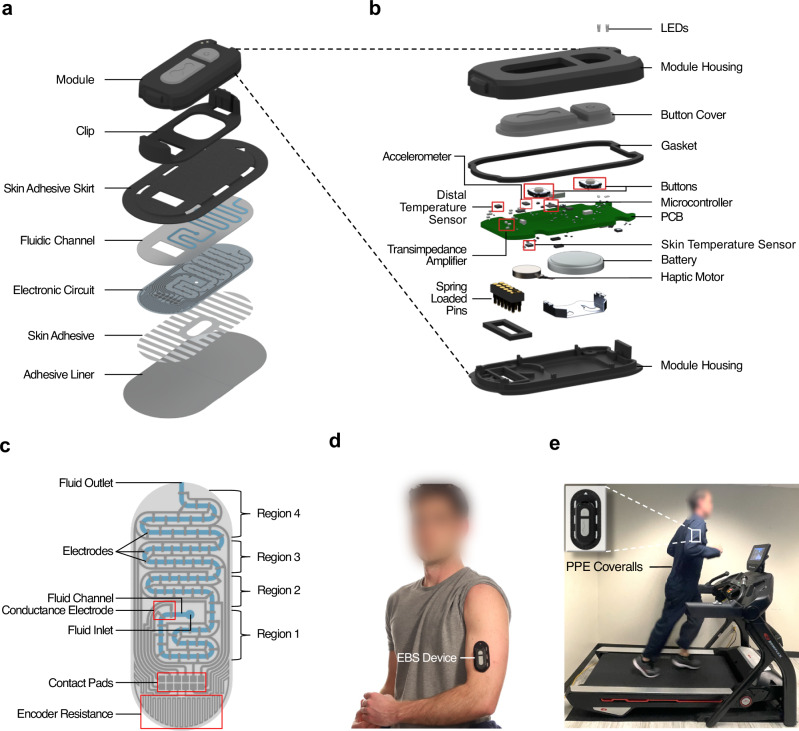
Real-time monitoring of hydration biomarkers in tandem with biophysical markers can offer valuable physiological insights about heat stress and related thermoregulatory response. These metrics have been challenging to achieve with wearable sensors. Here we present a closed-loop electrochemical/biophysical wearable sensing device and algorithms that directly measure whole-body sweat loss, sweating rate, sodium concentration, and sodium loss with electrode arrays embedded in a microfluidic channel. The device contains two temperature sensors for skin temperature and thermal flux recordings, and an accelerometer for real-time monitoring of activity level. An onboard haptic module enables vibratory feedback cues to the wearer once critical sweat loss thresholds are reached. Data is stored onboard in memory and autonomously transmitted via Bluetooth to a smartphone and cloud portal. Field studies conducted in physically demanding activities demonstrate the key capabilities of this platform to inform hydration interventions in highly challenging real-world settings.
Overview
The claims and statistics of this paper haven’t been checked yet.
Free: it reads the open-access text and checks the first 5 claims that cite a source we can check. Create a free account to check every claim.
Integrity signals
Registry
Cites
Statistics
Figures
Verification
Claims the paper makes
The claims and statistics of this paper haven’t been checked yet.
Free: it reads the open-access text and checks the first 5 claims that cite a source we can check. Create a free account to check every claim.
Self-check
Percentages, sums and reported differences re-computed from the paper’s own numbers.
The self-check needs the paper’s full text.
Citations
Cites
Sontrop, J. M., Dixon, S. N., Garg, A. X., Buendia-Jimenez, I., Dohein, O., Huang, S.-H. S., & Clark, W. F. (2013) · American Journal of Nephrology · doi:10.1159/000350377 · Cited by 5,871
A formula to estimate the approximate surface area if height and weight be known. 1916.
Bois, D. D., & Bois, E. F. D. (1989) · PubMed · Cited by 5,706
Fully integrated wearable sensor arrays for multiplexed in situ perspiration analysis
Gao, W., Emaminejad, S., Nyein, H. Y. Y., Challa, S., Chen, K., Peck, A., Fahad, H. M., Ota, H., Shiraki, H., Kiriya, D., et al. (2016) · Nature · doi:10.1038/nature16521 · Cited by 5,087
Hot weather and heat extremes: health risks
Ebi, K. L., Capon, A., Berry, P., Broderick, C., de Dear, R., Havenith, G., Honda, Y., Kovats, R. S., Ma, W., Malik, A., et al. (2021) · The Lancet · doi:10.1016/s0140-6736(21)01208-3 · Cited by 2,172
Chronic kidney disease and the global public health agenda: an international consensus
Francis, A., Harhay, M. N., Ong, A. C. M., Tummalapalli, S. L., Ortiz, A., Fogo, A. B., Fliser, D., Roy-Chaudhury, P., Fontana, M., Nangaku, M., et al. (2024) · Nature Reviews Nephrology · doi:10.1038/s41581-024-00820-6 · Cited by 1,374
Bio-Integrated Wearable Systems: A Comprehensive Review
Ray, T. R., Choi, J., Bandodkar, A. J., Krishnan, S., Gutruf, P., Tian, L., Ghaffari, R., & Rogers, J. A. (2019) · Chemical Reviews · doi:10.1021/acs.chemrev.8b00573 · Cited by 1,350
Self-citationA soft, wearable microfluidic device for the capture, storage, and colorimetric sensing of sweat
Koh, A., Kang, D., Xue, Y., Lee, S., Pielak, R. M., Kim, J., Hwang, T., Min, S., Banks, A., Bastien, P., et al. (2016) · Science Translational Medicine · doi:10.1126/scitranslmed.aaf2593 · Cited by 1,308
Self-citationExtreme Weather and Climate Change: Population Health and Health System Implications
Ebi, K. L., Vanos, J., Baldwin, J. W., Bell, J. E., Hondula, D. M., Errett, N. A., Hayes, K., Reid, C. E., Saha, S., Spector, J., et al. (2021) · Annual Review of Public Health · doi:10.1146/annurev-publhealth-012420-105026 · Cited by 1,213
A wearable electrochemical biosensor for the monitoring of metabolites and nutrients
Wang, M., Yang, Y., Min, J., Song, Y., Tu, J., Mukasa, D., Ye, C., Xu, C., Heflin, N., McCune, J. S., et al. (2022) · Nature Biomedical Engineering · doi:10.1038/s41551-022-00916-z · Cited by 896
Bandodkar, A. J., Gutruf, P., Choi, J., Lee, K., Sekine, Y., Reeder, J. T., Jeang, W. J., Aranyosi, A. J., Lee, S. P., Model, J. B., et al. (2019) · Science Advances · doi:10.1126/sciadv.aav3294 · Cited by 761
Self-citationAccessing analytes in biofluids for peripheral biochemical monitoring
Heikenfeld, J., Jajack, A., Feldman, B., Granger, S. W., Gaitonde, S., Begtrup, G., & Katchman, B. A. (2019) · Nature Biotechnology · doi:10.1038/s41587-019-0040-3 · Cited by 758
Physiology of sweat gland function: The roles of sweating and sweat composition in human health
Baker, L. B. (2019) · Temperature · doi:10.1080/23328940.2019.1632145 · Cited by 732 · cited 1×
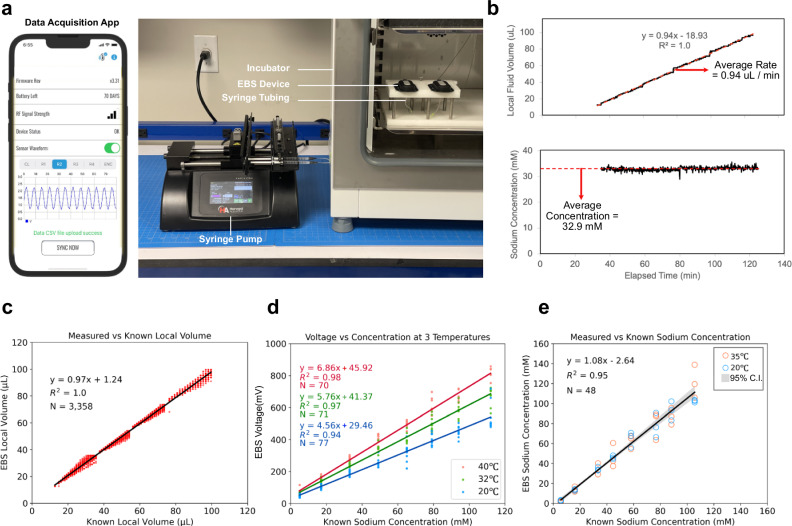
“Although this impedance-based method can overestimate sodium concentrations in real sweat due to the presence of other ions, because sodium chloride is the predominantsaltinsweat 43 thiseffectissigni fi cantatonlythelowestsodium concentrations.”
Sonner, Z., Wilder, E., Heikenfeld, J., Kasting, G., Beyette, F., Swaile, D., Sherman, F., Joyce, J., Hagen, J., Kelley-Loughnane, N., et al. (2015) · Biomicrofluidics · doi:10.1063/1.4921039 · Cited by 724
Reductions in labour capacity from heat stress under climate warming
Dunne, J. P., Stouffer, R. J., & John, J. G. (2013) · Nature Climate Change · doi:10.1038/nclimate1827 · Cited by 660
Parlak, O., Keene, S. T., Marais, A., Curto, V. F., & Salleo, A. (2018) · Science Advances · doi:10.1126/sciadv.aar2904 · Cited by 603 · cited 1×
“Recent advances in electrochemical sensors and miniaturized bioe-lectronics have enabled real-time and non-invasive measurement of sweat dynamics and biomarkers associated with hydration status 26 – 33 , disease progression 34 , metabolic and hormonal status 35 – 37 , and stress 38,39 .”
Methods to Calculate the Heat Index as an Exposure Metric in Environmental Health Research
Anderson, G. B., Bell, M. L., & Peng, R. D. (2013) · Environmental Health Perspectives · doi:10.1289/ehp.1206273 · Cited by 573
Investigation of Cortisol Dynamics in Human Sweat Using a Graphene-Based Wireless mHealth System
Torrente-Rodríguez, R. M., Tu, J., Yang, Y., Min, J., Wang, M., Song, Y., Yu, Y., Xu, C., Ye, C., IsHak, W. W., et al. (2020) · Matter · doi:10.1016/j.matt.2020.01.021 · Cited by 479 · cited 1×
“Recent advances in electrochemical sensors and miniaturized bioe-lectronics have enabled real-time and non-invasive measurement of sweat dynamics and biomarkers associated with hydration status 26 – 33 , disease progression 34 , metabolic and hormonal status 35 – 37 , and stress 38,39 .”
A wearable aptamer nanobiosensor for non-invasive female hormone monitoring
Ye, C., Wang, M., Min, J., Tay, R. Y., Lukas, H., Sempionatto, J. R., Li, J., Xu, C., & Gao, W. (2024) · Nature Nanotechnology · doi:10.1038/s41565-023-01513-0 · Cited by 466 · cited 1×
“Recent advances in electrochemical sensors and miniaturized bioe-lectronics have enabled real-time and non-invasive measurement of sweat dynamics and biomarkers associated with hydration status 26 – 33 , disease progression 34 , metabolic and hormonal status 35 – 37 , and stress 38,39 .”
A Meta-Analysis of Performance Response Under Thermal Stressors
Hancock, P. A., Ross, J. M., & Szalma, J. L. (2007) · Human Factors: The Journal of the Human Factors and Ergonomics Society · doi:10.1518/001872007x230226 · Cited by 410
Baker, L. B. (2017) · Sports Medicine · doi:10.1007/s40279-017-0691-5 · Cited by 403
Physiological mechanisms determining eccrine sweat composition
Baker, L. B., & Wolfe, A. S. (2020) · European Journal of Applied Physiology · doi:10.1007/s00421-020-04323-7 · Cited by 367
Baker, L. B., Model, J. B., Barnes, K. A., Anderson, M. L., Lee, S. P., Lee, K. A., Brown, S. D., Reimel, A. J., Roberts, T. J., Nuccio, R. P., et al. (2020) · Science Advances · doi:10.1126/sciadv.abe3929 · Cited by 243
Self-citationJohnson, R. J., Sánchez-Lozada, L. G., Newman, L. S., Lanaspa, M. A., Diaz, H. F., Lemery, J., Rodriguez-Iturbe, B., Tolan, D. R., Butler-Dawson, J., Sato, Y., et al. (2019) · Annals of Nutrition and Metabolism · doi:10.1159/000500344 · Cited by 223
The challenges and promise of sweat sensing
Davis, N., Heikenfeld, J., Milla, C., & Javey, A. (2024) · Nature Biotechnology · doi:10.1038/s41587-023-02059-1 · Cited by 211 · cited 2×
“Recent advances in electrochemical sensors and miniaturized bioe-lectronics have enabled real-time and non-invasive measurement of sweat dynamics and biomarkers associated with hydration status 26 – 33 , disease progression 34 , metabolic and hormonal status 35 – 37 , and stress 38,39 .”
Occupational Heat Stress and Kidney Health: From Farms to Factories
Nerbass, F. B., Pecoits-Filho, R., Clark, W. F., Sontrop, J. M., McIntyre, C. W., & Moist, L. (2017) · Kidney International Reports · doi:10.1016/j.ekir.2017.08.012 · Cited by 209
Occupational heat strain in outdoor workers: A comprehensive review and meta-analysis
Ioannou, L. G., Foster, J., Morris, N. B., Piil, J. F., Havenith, G., Mekjavic, I. B., Kenny, G. P., Nybo, L., & Flouris, A. D. (2022) · Temperature · doi:10.1080/23328940.2022.2030634 · Cited by 208
Sweat as a diagnostic biofluid
Yang, D. S., Ghaffari, R., & Rogers, J. A. (2023) · Science · doi:10.1126/science.abq5916 · Cited by 200
Self-citationRoncal-Jimenez, C., García-Trabanino, R., Barregard, L., Lanaspa, M. A., Wesseling, C., Harra, T., Aragón, A., Grases, F., Jarquin, E. R., González, M. A., et al. (2016) · American Journal of Kidney Diseases · doi:10.1053/j.ajkd.2015.08.021 · Cited by 198 · cited 1×
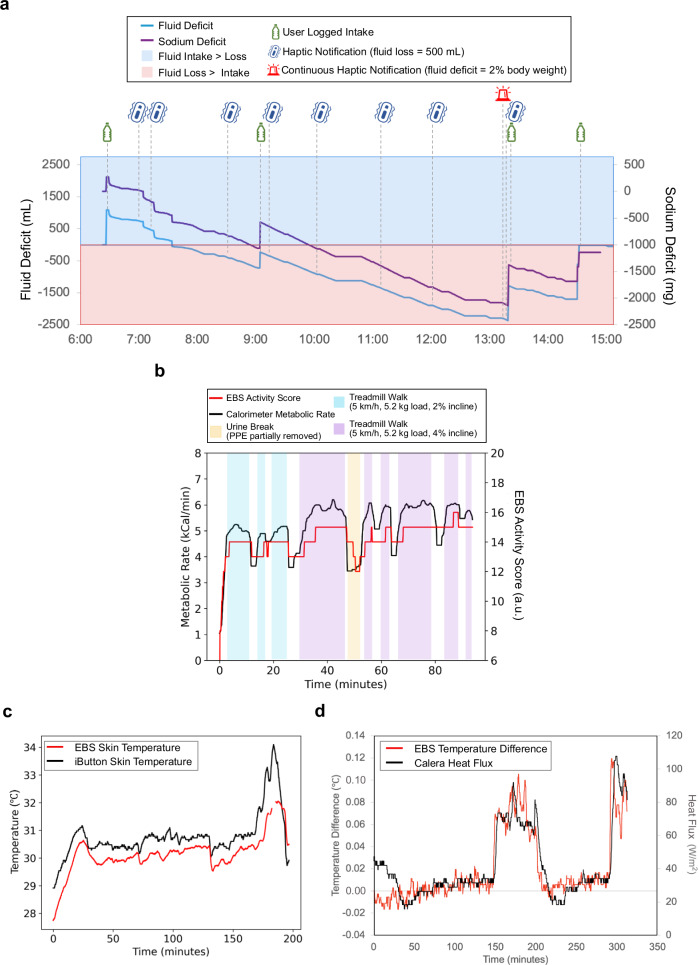
“Simulation results show that the skin-side temperature measured by the EBS device stays within 1 °C of true skin fi cients (Supplementary Figure 6).”
Chapman, C. L., Johnson, B. D., Parker, M. D., Hostler, D., Pryor, R. R., & Schlader, Z. (2021) · Temperature · doi:10.1080/23328940.2020.1826841 · Cited by 175
Soft Wearable Systems for Colorimetric and Electrochemical Analysis of Biofluids
Ghaffari, R., Choi, J., Raj, M. S., Chen, S., Lee, S. P., Reeder, J. T., Aranyosi, A. J., Leech, A., Li, W., Schon, S., et al. (2020) · Advanced Functional Materials · doi:10.1002/adfm.201907269 · Cited by 173
Self-citationGubernot, D. M., Anderson, G. B., & Hunting, K. L. (2014) · International Journal of Biometeorology · doi:10.1007/s00484-013-0752-x · Cited by 168
Leib, D. E., Zimmerman, C. A., & Knight, Z. A. (2016) · Current Biology · doi:10.1016/j.cub.2016.11.019 · Cited by 155
Fatima, S. H., Rothmore, P., Giles, L. C., Varghese, B. M., & Bi, P. (2021) · Environment International · doi:10.1016/j.envint.2021.106384 · Cited by 154 · cited 1×
“…that heat illness symptoms including tiredness, nausea, headache, and muscle cramps may be mistaken to be another form of injury or illness and/or occur when the worker is not at work and that workplace accidents may actually be the downstream result of undetected heatstressanddehydration 14 .”
Baker, L. B., Ungaro, C. T., Sopeña, B. C., Nuccio, R. P., Reimel, A. J., Carter, J. M., Stofan, J. R., & Barnes, K. A. (2018) · Journal of Applied Physiology · doi:10.1152/japplphysiol.00867.2017 · Cited by 116 · cited 2×
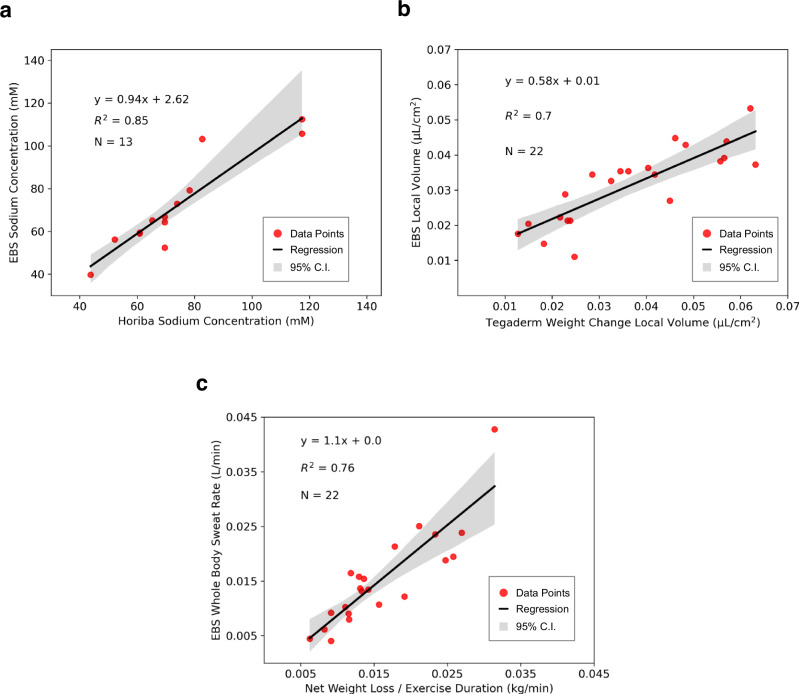
“Because sweating rate varies with body location,localsweatlossmeasurementsaremappedtowholebodyestimates usingtheratioofbodysurfaceareatolocalcollectionareaandmultiplying byalocation-speci fi c scaling factor 45 .”
Sequeira-Antunes, B., & Ferreira, H. A. (2023) · Biomedicines · doi:10.3390/biomedicines11041051 · Cited by 109
Occupational Heat Stress: Multi-Country Observations and Interventions
Ioannou, L. G., Mantzios, K., Tsoutsoubi, L., Nintou, E., Vliora, M., Gkiata, P., Dallas, C. N., Gkikas, G., Agaliotis, G., Sfakianakis, K., et al. (2021) · International Journal of Environmental Research and Public Health · doi:10.3390/ijerph18126303 · Cited by 107 · cited 1×
“Properhydrationisthesinglemostimportant and economically feasible mitigation strategy against occupational heat strain 16 .”
Clark, K. M., & Ray, T. R. (2023) · ACS Sensors · doi:10.1021/acssensors.3c01512 · Cited by 93
Baker, L. B., Ungaro, C. T., Barnes, K. A., Nuccio, R. P., Reimel, A. J., & Stofan, J. R. (2014) · Physiological Reports · doi:10.14814/phy2.12007 · Cited by 67
Choi, J., Chen, S., Deng, Y., Xue, Y., Reeder, J. T., Franklin, D., Oh, Y. S., Model, J. B., Aranyosi, A. J., Lee, S. P., et al. (2021) · Advanced Healthcare Materials · doi:10.1002/adhm.202000722 · Cited by 67
Self-citationBaker, L. B., Seib, M. S., Barnes, K. A., Brown, S. D., King, M. A., Chavez, P. J. D. D., Qu, S., Archer, J., Wolfe, A. S., Stofan, J. R., et al. (2022) · Advanced Materials Technologies · doi:10.1002/admt.202200249 · Cited by 61
Self-citationIOC consensus statement on sports nutrition 2010
(2011) · Journal of Sports Sciences · doi:10.1080/02640414.2011.619349 · Cited by 50 · cited 2×
“However,peopleroutinelyunderestimatetheirown fl uidlossdueto sweat production 17 , and the perception of thirst is negligible below 1 – 2% body mass loss 18 , at which point signi fi cant physical and cognitive de fi cits may already be present 19 – 21 .”
Fluid needs for training, competition, and recovery in track-and-field athletes
Casa, D. J., Cheuvront, S. N., Galloway, S. D., & Shirreffs, S. M. (2019) · International Journal of Sport Nutrition and Exercise Metabolism · doi:10.1123/ijsnem.2018-0374 · Cited by 41
Self-citationRunners Greatly Underestimate Sweat Losses Before and After a 1-hr Summer Run
O'Neal, E. K., Davis, B. A., Thigpen, L. K., Caufield, C. R., Horton, A. D., & McIntosh, J. R. (2012) · International Journal of Sport Nutrition and Exercise Metabolism · doi:10.1123/ijsnem.22.5.353 · Cited by 32
Extreme Heat Exposure Induced Acute Kidney Injury through NLRP3 Inflammasome Activation in Mice
Wang, J., Wang, K., Shi, X., Hu, Z., Zhao, L., Chen, K., Zhang, L., Li, R., Zhang, G., & Liu, C. (2024) · Environment & Health · doi:10.1021/envhealth.4c00007 · Cited by 23
Adelakun, A. (1999) · Applied Occupational and Environmental Hygiene · doi:10.1080/104732299303070 · Cited by 21
Allerton, T. D., Carnero, E. Á., Bock, C., Corbin, K. D., Luyet, P., Smith, S. R., & Ravussin, É. (2021) · Obesity · doi:10.1002/oby.23226 · Cited by 19
Xu, Z., Wang, B., Kong, J., Chen, T., & Liang, Y. (2021) · Case Studies in Thermal Engineering · doi:10.1016/j.csite.2021.100888 · Cited by 12
Stewart, M., Tineo, A., Woodrow, B., Wasik, M., & Chan, S. (2023) · AHFE international · doi:10.54941/ahfe1004205 · Cited by 4 · cited 2×
“Moreover, blanket interventions do not account for individualized differences in physiological response nor the metabolic demands of each occupation on thermoregulation and sweat loss 12,23 .”
Research works printed but not linked: 1
- Stone, J. et al. Report of the Small Business Advocacy Review Panel on OSHA's Potential Standard for Heat Injury and Illness Prevention in Outdoor and Indoor Work Settings (U.S. Department of Labor, Occupational Safety and Health Administration Website, 2023).
Cited by
Metabolic reprogramming in ischemic stroke: when glycolytic overdrive meets lipid storm
Wang, Y., Ge, M., Wang, J., Xu, Y., Wang, N., & Xu, S. (2025) · Cell Death and Disease · doi:10.1038/s41419-025-08114-w · Cited by 98
“An international MRIS consortium integrating metabolomics, chronobiology, and digital health is urgently needed to develop biomarker-validated, chrono-optimized interventions grounded in systems-level pathophysiology [289].”
Microfluidic technologies for wearable and implantable biomedical devices
Wang, Z., Shah, A., Lee, H., & Lee, C. H. (2025) · Lab on a Chip · doi:10.1039/d5lc00499c · Cited by 68
AI-Powered Wearable Sensors for Health Monitoring and Clinical Decision Making
Soumma, S. B., Mamun, A., & Ghasemzadeh, H. G. (2025) · Current Opinion in Biomedical Engineering · doi:10.1016/j.cobme.2025.100628 · Cited by 31
Lenar, N., & Paczosa‐Bator, B. (2025) · International Journal of Molecular Sciences · doi:10.3390/ijms26115001 · Cited by 23
“The choice between wearable and implantable nanosensors depends on the specific health-care application, the required monitoring precision, and considerations of user comfort and safety [89].”
Peng, M., Ning, Y., Zhang, J. W., He, Y., Xu, Z., Li, D., Yang, Y., & Ren, T.-L. (2026) · Biosensors · doi:10.3390/bios16010046 · Cited by 23
“…such hybrid modeling frameworks—which integrate mechanistic priors with data-driven learning—are expected to perform most preprocessing and risk assessment locally on wearable devices [110], thereby achieving an optimal trade-off among energy consumption, bandwidth, privacy, and intelligence.”
Influential
Metadata
- Authors
- Spinelli, J. C., Suleski, B. J., Wright, D. E., Grow, J. L., Fagans, G. R., Buckley, M. J., Yang, D. S., Yang, K., Beil, S. M., Wallace, J. C., DiZoglio, T. S., Model, J. B., Love, S., Macintosh, D. E., Scarth, A. P., Marrapode, M. T., Serviente, C., Avila, R., Alahmad, B. K., Busa, M. A., Wright, J. A., Li, W., Casa, D. J., Rogers, J. A., Lee, S. P., Ghaffari, R., & Aranyosi, A. J.
- Affiliations
- Northwestern University (US)
- University of Massachusetts Amherst (US)
- Rice University (US)
- Harvard University (US)
- University of Connecticut (US)
- Corresponding author
- Rogers, John A.
- Lee, Stephen P.
- Ghaffari, Roozbeh
- Aranyosi, Alexander J.
- ORCID
- Venue
- npj Digital Medicine
- Published
- 2025-02-01
- Volume
- 8
- Issue
- 1
- Pages
- 76-76
- ISSN
- 2398-6352 (ISSN-L)
- PMC
- PMC11787291
- OpenAlex
- W4407058372
- Cited by
- 44
- References
- 48
- Citations by year
- 2026: 31 · 2025: 13
- FWCI
- 10.70
- Type
- journal article
- Language
- en
- Open access
- gold
- doi.org
- Licence
- cc-by-nc-nd
- creativecommons.org/licenses/by-nc-nd/4.0 (tdm)
- creativecommons.org/licenses/by-nc-nd/4.0 (vor)
- Locations
- npj Digital Medicine (publishedVersion, cc-by-nc-nd)
- PubMed Central (publishedVersion, cc-by-nc-nd)
- PubMed (publishedVersion)
- DOAJ (DOAJ: Directory of Open Access Journals) (submittedVersion)
- Funders
- Northwestern University
- University of Massachusetts Amherst
- Topics
- Physical Sciences › Engineering › Biomedical Engineering › Advanced Sensor and Energy Harvesting Materials
- Health Sciences › Medicine › Physiology (medical) › Thermoregulation and physiological responses
- Physical Sciences › Engineering › Biomedical Engineering › Non-Invasive Vital Sign Monitoring
- Keywords
- wearable sensors, microfluidic biosensor, haptic feedback, hydration biomarkers, sweat loss, sweat rate, sweat sodium concentration, sodium loss, heat stress, thermoregulation, skin temperature, heat flux, accelerometer, closed-loop monitoring, occupational workers, Bluetooth data transmission
About these checks
Registry, retraction, Cites and statistics results are computed, not judged, with one exception: a printed reference that no index lists is read once by a model before it counts as a citation error. Claims are extracted by a model and kept only when their quote appears verbatim in the text; each cited source is then checked, with a model’s help, for whether it says what the claim relies on. Those verdicts can be wrong — read the claim’s quote and the cited source before relying on one.
Statistics and arithmetic are recomputed, not judged.
Confidence bands are shown only for fields calibrated on our annotated test set. None is calibrated yet, so no band is shown.
What counts as a claim ›How we measure confidence ›How we check this ›
Are you an author, or do you see a problem with this page? Request a review
Data sources
Bibliographic data: Semantic Scholar, OpenAlex, Crossref.
Contains information from the Semantic Scholar Academic Graph Datasets, made available under the ODC Attribution License (ODC-BY 1.0).
Semantic Scholar’s data is described in: Kinney, R., et al. (2023). The Semantic Scholar Open Data Platform. arXiv:2301.10140.
