

The biomass distribution on Earth
Open accessThe DOI matches its Crossref record; 263 of the 263 references it cites were found in a registry or an index; 11 of the 41 sources its claims cite were checked for support.
Abstract
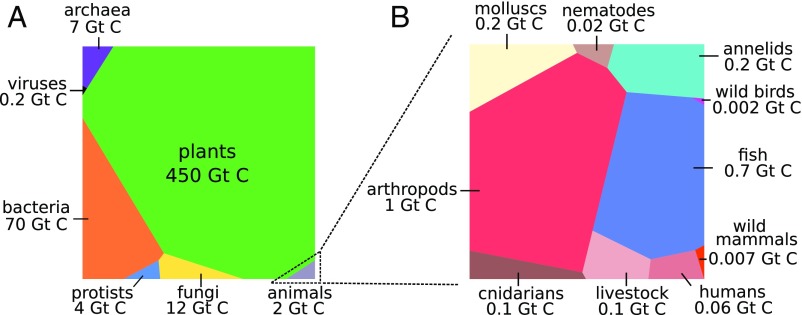
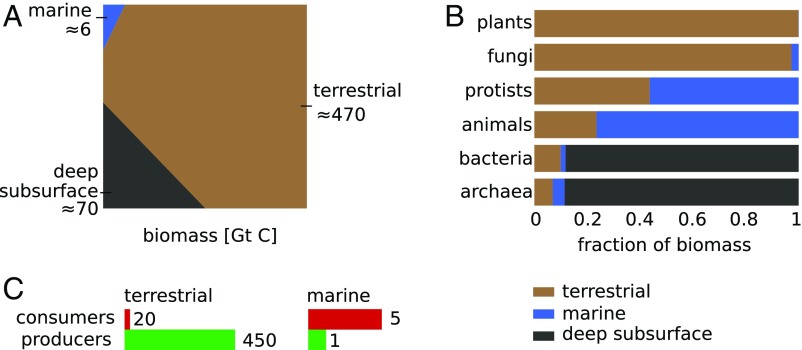
A census of the biomass on Earth is key for understanding the structure and dynamics of the biosphere. However, a global, quantitative view of how the biomass of different taxa compare with one another is still lacking. Here, we assemble the overall biomass composition of the biosphere, establishing a census of the ≈550 gigatons of carbon (Gt C) of biomass distributed among all of the kingdoms of life. We find that the kingdoms of life concentrate at different locations on the planet; plants (≈450 Gt C, the dominant kingdom) are primarily terrestrial, whereas animals (≈2 Gt C) are mainly marine, and bacteria (≈70 Gt C) and archaea (≈7 Gt C) are predominantly located in deep subsurface environments. We show that terrestrial biomass is about two orders of magnitude higher than marine biomass and estimate a total of ≈6 Gt C of marine biota, doubling the previous estimated quantity. Our analysis reveals that the global marine biomass pyramid contains more consumers than producers, thus increasing the scope of previous observations on inverse food pyramids. Finally, we highlight that the mass of humans is an order of magnitude higher than that of all wild mammals combined and report the historical impact of humanity on the global biomass of prominent taxa, including mammals, fish, and plants.
Overview
CoChat Summary
TL;DR
The paper assembles a global census of biomass across all kingdoms of life, estimating Earth’s total biomass at ≈550 Gt C, dominated by plants. It also compares biomass across environments and trophic modes, highlighting large uncertainties and human impacts on the biosphere.
Key findings
- Total global biomass is ≈550 Gt C, with plants ≈450 Gt C (≈80%), bacteria ≈70 Gt C (≈15%), fungi ≈12 Gt C, archaea ≈7 Gt C, protists ≈4 Gt C, animals ≈2 Gt C, and viruses ≈0.2 Gt C.
- Land biomass (≈470 Gt C) is about two orders of magnitude higher than marine biomass (≈6 Gt C); the deep subsurface holds ≈15% of total biomass, chiefly bacteria and archaea.
- In the ocean, ≈1 Gt C of primary producers supports ≈5 Gt C of consumer biomass, an inverted standing biomass distribution; marine biomass is ≈70% microbes, mainly bacteria and protists.
- Human-associated biomass is large relative to wild vertebrates: humans ≈0.06 Gt C, livestock ≈0.1 Gt C, wild mammals ≈0.007 Gt C, domesticated poultry ≈0.005 Gt C versus wild birds ≈0.002 Gt C; total plant biomass has declined approximately twofold relative to pre-human civilization.
Methods
- The authors synthesize hundreds of studies and generate estimates for major taxonomic groups, reporting biomass as gigatons of carbon (Gt C) and using a kingdom-level framework plus viruses.
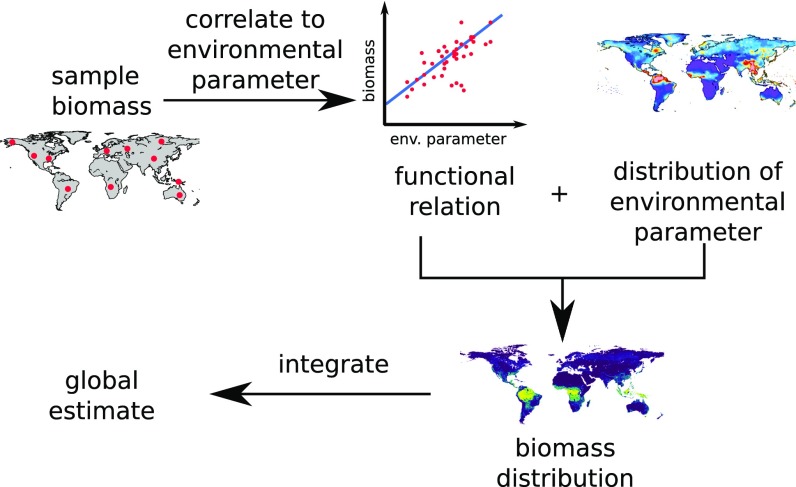
- For many taxa, local biomass samples are extrapolated globally by correlating biomass density with environmental parameters known at global scale; best estimates often use a geometric mean of independent estimates.
- Uncertainty is reported as multiplicative fold-change projections akin to 95% confidence intervals, incorporating intrastudy, interstudy, and intermethod variation; data and code are open-sourced.
Limitations
- The paper states that most datasets rely on fragmentary sampling, causing large uncertainties; sampling is scarce in the deep ocean (usually deeper than 200 m) and deep soil (usually deeper than 1 m), and some estimates may be biased by sampling toward high-abundance areas.
- The paper states that deep subsurface environments have particularly high uncertainty and unknown systematic biases, including unresolved distribution of biomass between aquifer fluids and rocks and among microbial taxa.
- The paper states that current and prehuman vertebrate biomass estimates are only a crude first step, amphibians remain poorly characterized, and parasite biomass is not resolved from hosts; evident from the text, kingdom-level grouping was chosen because much data lack finer taxonomic detail, and some uncertainty projections rely on analogous taxa or expert consultation.
Model-written summary. Check it against the paper before relying on it.
Integrity signals
Registry
Cites
Statistics
Figures
Verification
Claims the paper makes
9 Valid · 7 Not valid · 16 Not checked · 53 Own results and interpretations
Every source the paper cites for this claim was checked and supports it.
In the paper
“The biomass of amphibians, which are experiencing a dramatic population decline (42), remains poorly characterized.”
§ The biomass distribution on Earth > Discussion
What the sources say
- Supportedcites [42] Wake DB Vredenburg VT 2008 Colloquium paper: Are we in the midst of the sixth mass extinction? A view from the world of amphibians Proc Natl Acad Sci USA 105 11466 11473 18695221 PMC2556420 source
The citation is attached to the clause about amphibian population decline, not the separate statement that their biomass is poorly characterized. The passage reporting the Global Amphibian Assessment (labeled Abstract in our copy) says that 43% of amphibian species have declining populations. (LLM, conf=0.92)
plain- Asserted: passes — The authors put it forward as true.
- Checkable: passes — It can be checked against evidence.
- Load-bearing: unclear — It is unclear whether the paper’s conclusions depend on it.
- Based: passes — The paper gives a reason why it holds.
- Supported
Every source the paper cites for this claim was checked and supports it.
In the paper
“In the case of prokaryotes, some major improvements were recently realized, with global estimates of marine deep subsurface prokaryote biomass reduced by about two orders of magnitude due to an increased diversity of sampling locations (7).”
§ The biomass distribution on Earth > Discussion
What the sources say
- Supportedcites [7] Kallmeyer J Pockalny R Adhikari RR Smith DC D’Hondt S 2012 Global distribution of microbial abundance and biomass in subseafloor sediment Proc Natl Acad Sci USA 109 16213 16216 22927371 PMC3479597 source
The Discussion reports a revised subseafloor microbial biomass estimate of 4.1 Pg C versus a previous estimate of 303 Pg C—about a 74-fold reduction. It also identifies a more geographically diverse sampling database, including low-abundance ocean gyres, as a reason the new estimate is lower. The paper identifies other contributing factors as well. (LLM, conf=0.88)
plainstates a cause- Asserted: passes — The authors put it forward as true.
- Checkable: passes — It can be checked against evidence.
- Load-bearing: unclear — It is unclear whether the paper’s conclusions depend on it.
- Based: passes — The paper gives a reason why it holds.
- Supported
The sources with a verdict support this claim; the rest weren’t checked yet, have no full text we could read, or their verdicts aren’t rated yet.
In the paper
“Such inverted biomass distributions can occur when primary producers have a rapid turnover of biomass [on the order of days (34)], while consumer biomass turns over much more slowly [a few years in the case of mesopelagic fish (35)].”
§ The biomass distribution on Earth > Results > The Distribution of Biomass Across Environments and Trophic Modes.
What the sources say
- Supportedcites [34] Zubkov MV 2014 Faster growth of the major prokaryotic versus eukaryotic CO2 fixers in the oligotrophic ocean Nat Commun 5 3776 24777140 PMC4015317 source
The Results (Comparison of the growth rates of the CO2 fixers; page unavailable) report growth rates of 0.1–0.6 per day for the studied oceanic primary producers, consistent with biomass turnover on the order of days. The few-years estimate for mesopelagic fish is assigned to a different citation, not this source. (LLM, conf=0.91)
- Not checked — no full text of the sourcecites [35] Catul V Gauns M Karuppasamy PK 2011 A review on mesopelagic fishes belonging to family Myctophidae Rev Fish Biol Fish 21 339 354 source
plainstates a possible cause- Asserted: passes — The authors put it forward as true.
- Checkable: passes — It can be checked against evidence.
- Load-bearing: passes — The paper’s conclusions depend on it.
- Based: passes — The paper gives a reason why it holds.
- Supported
The cited sources support only part of this claim — read each source’s verdict below.
In the paper
“Combining data from independent sources such as these enables a robust assessment of the total plant biomass (17).”
§ The biomass distribution on Earth > Results > The Uncertainty Associated with Global Biomass Estimates.
What the sources say
- Partly supportedcites [17] Erb K-H 2017 Unexpectedly large impact of forest management and grazing on global vegetation biomass Nature 553 73 76 29258288 PMC5756473 sourceExperimental — accuracy not yet measured
The Methods describe combining multiple datasets and types of evidence to estimate global vegetation biomass stocks. But the paper also says global stocks remain uncertain, reports uncertainty ranges around 35% of the median estimate, and describes more robust estimates as a future prospect. It therefore supports the use of independent sources for an assessment, but not the unqualified characterization of that assessment as robust. (LLM, conf=0.84)
plainstates a cause- Asserted: passes — The authors put it forward as true.
- Checkable: passes — It can be checked against evidence.
- Load-bearing: passes — The paper’s conclusions depend on it.
- Based: passes — The paper gives a reason why it holds.
- Partly supported
A result the paper states — it cites no source for it, so there is none to check. The quote shows it is in the paper.
In the paper
“Plant biomass includes ≈70% stems and tree trunks, which are mostly woody, and thus relatively metabolically inert.”
§ The biomass distribution on Earth > Results > The Biomass Distribution of the Biosphere by Kingdom.
plain- Asserted: passes — The authors put it forward as true.
- Checkable: passes — It can be checked against evidence.
- Load-bearing: unclear — It is unclear whether the paper’s conclusions depend on it.
- Based: passes — The paper gives a reason why it holds.
27 more claims
Create a free account to see all 85 claims and to verify the 2 references still open.
- It may state two separate claims as one. 32
- Probably not a substantial claim. 28
Claims other papers make about this one
Each is checked against this paper’s own text: does it say what the citing paper says it does?
The cited source doesn’t support the claim as written.
In the citing paper
“and less than 10% that of the world ' s current human population ( 52 ).”
From Pervasive human-driven decline of life on Earth points to the need for transformative change (2019) · cites this paper as [52]
Checked by a reasoning model — may be wrong.
Experimental — accuracy not yet measuredThe cited source says what the claim attributes to it.
In the citing paper
“Approximately 450 Gt of C is bound up in terrestrial biota, primarily in plants (86), while only ~6 Gt of C is found in ocean biota (87).”
From Earth beyond six of nine planetary boundaries (2023) · cites this paper as [87]
The cited source says what the claim attributes to it.
In the citing paper
“The amount of metabolic energy available to a biosphere powered by O 2 is vast, such that the O 2 -rich ocean-atmosphere system of the modern Earth supports staggering levels of standing biomass (Bar-On et al. 2018), energy flow (Falkowski et al. 2008), and ecological complexity (Steele 1974).”
From The History of Ocean Oxygenation (2022) · cites this paper as Bar-On et al. 2018
In the citing paper
“Global populations of domestic ruminants (cattle, sheep, and goats) (Ripple et al. 2013) poultry, and pigs (Bennett et al. 2018) used to feed the growing human population now exceed 100 million tons of carbon (Bar-On et al. 2018), and livestock populations are growing rapidly.”
From Scientists’ warning to humanity on the freshwater biodiversity crisis (2021) · cites this paper as Bar-On et al. 2018
Citations
Cites
The worldwide leaf economics spectrum
Wright, I. J., Reich, P. B., Westoby, M., Ackerly, D. D., Baruch, Z., Bongers, F., Cavender-Bares, J., Chapin, T., Cornelissen, J. H. C., Diemer, M., et al. (2004) · Nature · doi:10.1038/nature02403 · Cited by 9,021 · cited 1×
“We then convert the total area of leaves to an estimate of the total dry mass of leaves by using the Glopnet database (24), which measured leaf mass per area (LMA) for ≈2500 plant species.”
MethodA large and persistent carbon sink in the world’s forests
Pan, Y., Birdsey, R. A., Fang, J., Houghton, R., Kauppi, P. E., Kurz, W. A., Phillips, O. L., Shvidenko, A., Lewis, S. L., Canadell, J. G., et al. (2011) · Science · doi:10.1126/science.1201609 · Cited by 8,458
Soil Sampling and Methods of Analysis
(2007) · CRC Press eBooks · doi:10.1201/9781420005271 · Cited by 6,469
Primary production of the biosphere: Integrating terrestrial and oceanic components
Field, C. B., Behrenfeld, M. J., Randerson, J. T., & Falkowski, P. (1998) · Science · doi:10.1126/science.281.5374.237 · Cited by 6,371
Prokaryotes: The unseen majority
Whitman, W. B., Coleman, D. C., & Wiebe, W. J. (1998) · Proceedings of the National Academy of Sciences · doi:10.1073/pnas.95.12.6578 · Cited by 4,871
Global effects of land use on local terrestrial biodiversity
Newbold, T., Hudson, L. N., Hill, S. L. L., Contu, S., Lysenko, I., Senior, R. A., Börger, L., Bennett, D. J., Choimes, A., Collen, B., et al. (2015) · Nature · doi:10.1038/nature14324 · Cited by 4,352
Belowground biodiversity and ecosystem functioning
Bardgett, R. D., & van der Putten, W. H. (2014) · Nature · doi:10.1038/nature13855 · Cited by 3,990 · cited 4×
“This was recommended by experts in the field for estimation of arbuscular mycorrhizal fungi abundance (117).”
BackgroundInfluentialMangroves among the most carbon-rich forests in the tropics
Donato, D. C., Kauffman, J. B., Murdiyarso, D., Kurnianto, S., Stidham, M., & Kanninen, M. (2011) · Nature Geoscience · doi:10.1038/ngeo1123 · Cited by 3,374
Poorter, H., Niklas, K. J., Reich, P. B., Oleksyn, J., Poot, P., & Mommer, L. (2012) · New Phytologist · doi:10.1111/j.1469-8137.2011.03952.x · Cited by 3,163 · cited 1×
“The first relies on a meta-analysis of the biomass allocation to different plant compartments across biomes (19).”
BackgroundA global analysis of root distributions for terrestrial biomes
Jackson, R. B., Canadell, J., Ehleringer, J. R., Mooney, H. A., Sala, O. E., & Schulze, E. D. (1996) · Oecologia · doi:10.1007/bf00333714 · Cited by 3,071 · cited 4×
“assumed the distribution of microbial biomass with depth follows the biomass density versus depth profile of root biomass (21).”
BackgroundMethodInfluential
Research works printed but not linked: 1
- Chapman AD 2009 Numbers of Living Species in Australia and the World Australian Biological Resources Study Canberra, Australia
Cited by
Earth beyond six of nine planetary boundaries
Richardson, K., Steffen, W., Lucht, W., Bendtsen, J., Cornell, S. E., Donges, J. F., Drüke, M., Fetzer, I., Bala, G., von Bloh, W., et al. (2023) · Science Advances · doi:10.1126/sciadv.adh2458 · Cited by 3,311
Pervasive human-driven decline of life on Earth points to the need for transformative change
Díaz, S., Settele, J., Brondízio, E. S., Ngo, H. T., Agard, J., Arneth, A., Balvanera, P., Brauman, K. A., Butchart, S. H. M., Chan, K. M. A., et al. (2019) · Science · doi:10.1126/science.aax3100 · Cited by 2,926
“The global biomass of wild mammals is now less than 25% of that before the late Pleistocene megafaunal extinction—and less than 10% that of the world’s current human population (52).”
Scientists’ warning to humanity: microorganisms and climate change
Cavicchioli, R., Ripple, W. J., Timmis, K. N., Azam, F., Bakken, L. R., Baylis, M., Behrenfeld, M. J., Boetius, A., Boyd, P. W., Classen, A. T., et al. (2019) · Nature Reviews Microbiology · doi:10.1038/s41579-019-0222-5 · Cited by 2,028
Bacteria and archaea on Earth and their abundance in biofilms
Flemming, H.-C., & Wuertz, S. (2019) · Nature Reviews Microbiology · doi:10.1038/s41579-019-0158-9 · Cited by 1,729
Soil nematode abundance and functional group composition at a global scale
van den Hoogen, J., Geisen, S., Routh, D., Ferris, H., Traunspurger, W., Wardle, D. A., de Goede, R. G. M., Adams, B. J., Ahmad, W., Andriuzzi, W. S., et al. (2019) · Nature · doi:10.1038/s41586-019-1418-6 · Cited by 1,292
The global soil community and its influence on biogeochemistry
Crowther, T. W., van den Hoogen, J., Wan, J., Mayes, M. A., Keiser, A. D., Mo, L., Averill, C., & Maynard, D. S. (2019) · Science · doi:10.1126/science.aav0550 · Cited by 1,269
“In terms of biomass, fungi dominate global soil communities, with an approximate global biomass of 12 Gt carbon (C) (39).”
BackgroundVertebrates on the brink as indicators of biological annihilation and the sixth mass extinction
Ceballos, G., Ehrlich, P. R., & Raven, P. H. (2020) · Proceedings of the National Academy of Sciences · doi:10.1073/pnas.1922686117 · Cited by 926
“The reason so many species are being pushed to extinction by anthropogenic causes is indicated by humans and their domesticated animals being some 30 times the living mass of all of the wild mammals that must compete with them for space and resources (43).”
Scientists’ warning to humanity on the freshwater biodiversity crisis
Albert, J. S., Destouni, G., Duke-Sylvester, S. M., Magurran, A. E., Oberdorff, T., Reis, R. E., Winemiller, K. O., & Ripple, W. J. (2021) · Ambio · doi:10.1007/s13280-020-01318-8 · Cited by 943
Soil microbiomes and one health
Banerjee, S., & van der Heijden, M. G. A. (2023) · Nature Reviews Microbiology · doi:10.1038/s41579-022-00779-w · Cited by 905
Global human-made mass exceeds all living biomass
Elhacham, E., Ben-Uri, L., Grozovski, J., Bar-On, Y. M., & Milo, R. (2020) · Nature · doi:10.1038/s41586-020-3010-5 · Cited by 856
Self-citationStubbins, A., Law, K. L., Muñoz, S. E., Bianchi, T. S., & Zhu, L. (2021) · Science · doi:10.1126/science.abb0354 · Cited by 829
Marine DNA Viral Macro- and Microdiversity from Pole to Pole
Gregory, A. C., Zayed, A. A., Conceição-Neto, N., Temperton, B., Bolduc, B., Alberti, A., Ardyna, M., Arkhipova, K., Carmichael, M., Cruaud, C., et al. (2019) · Cell · doi:10.1016/j.cell.2019.03.040 · Cited by 826
“In the oceans, the vast majority of biodiversity is contained within the microbial fraction containing prokaryotes and eukaryotic microbes, which represents 60%of its biomass (Bar-On et al., 2018).”
BackgroundAgricultural intensification and climate change are rapidly decreasing insect biodiversity
Raven, P. H., & Wagner, D. L. (2021) · Proceedings of the National Academy of Sciences · doi:10.1073/pnas.2002548117 · Cited by 798
A few Ascomycota taxa dominate soil fungal communities worldwide
Egidi, E., Delgado-Baquerizo, M., Plett, J. M., Wang, J., Eldridge, D. J., Bardgett, R. D., Maestre, F. T., & Singh, B. K. (2019) · Nature Communications · doi:10.1038/s41467-019-10373-z · Cited by 739
Interactions between bacterial and phage communities in natural environments
Chevallereau, A., Pons, B. J., van Houte, S., & Westra, E. R. (2022) · Nature Reviews Microbiology · doi:10.1038/s41579-021-00602-y · Cited by 728
Our future in the Anthropocene biosphere
Folke, C., Polasky, S., Rockström, J., Galaz, V., Westley, F., Lamont, M., Scheffer, M., Österblom, H., Carpenter, S. R., Chapin, F. S., et al. (2021) · Ambio · doi:10.1007/s13280-021-01544-8 · Cited by 696
Aschemann-Witzel, J., Gantriis, R. F., Fraga, P., & Perez-Cueto, F. J. A. (2021) · Critical Reviews in Food Science and Nutrition · doi:10.1080/10408398.2020.1793730 · Cited by 682
“Plants make up 450 of the 550 gigatons of carbon (Gt C) of world’s living biomass in units of weight; Within mammals, livestock and humans taken together make up circa 96%, leaving only about 4% to wild mammals (Bar-On, Phillips, and Milo 2018).”
BackgroundMicrobial diversity in extreme environments
Shu, W.-S., & Huang, L.-N. (2022) · Nature Reviews Microbiology · doi:10.1038/s41579-021-00648-y · Cited by 630
Worldwide occurrence records suggest a global decline in bee species richness
Zattara, E. E., & Aizen, M. A. (2021) · One Earth · doi:10.1016/j.oneear.2020.12.005 · Cited by 617
Trade-offs between multifunctionality and profit in tropical smallholder landscapes
Grass, I., Kubitza, C., Krishna, V. V., Corre, M. D., Mußhoff, O., Pütz, P., Drescher, J., Rembold, K., Ariyanti, E. S., Barnes, A. D., et al. (2020) · Nature Communications · doi:10.1038/s41467-020-15013-5 · Cited by 592
Kumar, R., Strezov, V., Weldekidan, H., He, J., Singh, S., Kan, T., & Dastjerdi, B. (2020) · Renewable and Sustainable Energy Reviews · doi:10.1016/j.rser.2020.109763 · Cited by 542
Conversion of Escherichia coli to Generate All Biomass Carbon from CO2
Gleizer, S., Ben-Nissan, R., Bar-On, Y. M., Antonovsky, N., Noor, E., Zohar, Y., Jona, G., Krieger, E., Shamshoum, M., Bar-Even, A., et al. (2019) · Cell · doi:10.1016/j.cell.2019.11.009 · Cited by 531
Self-citationUnderestimating the Challenges of Avoiding a Ghastly Future
Bradshaw, C. J. A., Ehrlich, P. R., Beattie, A., Ceballos, G., Crist, E., Diamond, J., Dirzo, R., Ehrlich, A. H., Harte, J., Harte, M. E., et al. (2021) · Frontiers in Conservation Science · doi:10.3389/fcosc.2020.615419 · Cited by 526
“Today, the global biomass of wild mammals is < 25% of that estimated for the Late Pleistocene (Bar-On et al., 2018), while insects are also disappearing rapidly in many regions (Wagner, 2020; reviews in van Klink et al., 2020).”
Unveiling the crucial role of soil microorganisms in carbon cycling: A review
Wu, H., Cui, H., Fu, C., Li, R., Qi, F., Liu, Z., Yang, G., Xiao, K., & Qiao, M. (2024) · Science of The Total Environment · doi:10.1016/j.scitotenv.2023.168627 · Cited by 525
Overcoming the coupled climate and biodiversity crises and their societal impacts
Pörtner, H.-O., Scholes, R. J., Arneth, A., Barnes, D. K. A., Burrows, M. T., Diamond, S. E., Duarte, C. M., Kiessling, W., Leadley, P., Managi, S., et al. (2023) · Science · doi:10.1126/science.abl4881 · Cited by 519
Growing a circular economy with fungal biotechnology: a white paper
Meyer, V., Basenko, E. Y., Benz, J. P., Braus, G. H., Caddick, M. X., Csukai, M., de Vries, R. P., Endy, D., Frisvad, J. C., Gunde-Cimerman, N., et al. (2020) · Fungal Biology and Biotechnology · doi:10.1186/s40694-020-00095-z · Cited by 515
“Polysaccharides from plant biomass make up most of the biomass on Earth (450 out of a total of 550 gigatons of carbon; [10]) and represent the major carbon sources that drives fungal growth.”
BackgroundTara Oceans: towards global ocean ecosystems biology
Sunagawa, S., Acinas, S. G., Bork, P., Bowler, C., Coordinators, T. O., Acinas, S. G., Babin, M., Bork, P., Boss, E., Bowler, C., et al. (2020) · Nature Reviews Microbiology · doi:10.1038/s41579-020-0364-5 · Cited by 490
Bacteroidetes use thousands of enzyme combinations to break down glycans
Lapébie, P., Lombard, V., Drula, E., Terrapon, N., & Henrissat, B. (2019) · Nature Communications · doi:10.1038/s41467-019-10068-5 · Cited by 477
Trophic Regulations of the Soil Microbiome
Thakur, M. P., & Geisen, S. (2019) · Trends in Microbiology · doi:10.1016/j.tim.2019.04.008 · Cited by 469
“The Main Regulators of the Soil Microbiome Most of the living biomass on Earth is comprised of microorganisms [1].”
BackgroundThe biomass and biodiversity of the continental subsurface
Magnabosco, C., Lin, L.-H., Dong, H., Bomberg, M., Ghiorse, W., Stan-Lotter, H., Pedersen, K., Kieft, T. L., van Heerden, E., & Onstott, T. C. (2018) · Nature Geoscience · doi:10.1038/s41561-018-0221-6 · Cited by 473
The EAT–Lancet Commission on healthy, sustainable, and just food systems
Rockström, J., Thilsted, S. H., Willett, W. C., Gordon, L. J., Herrero, M., Hicks, C. C., Mason-D'Croz, D., Rao, N., Springmann, M., Wright, E. C., et al. (2025) · The Lancet · doi:10.1016/s0140-6736(25)01201-2 · Cited by 475
The Minderoo-Monaco Commission on Plastics and Human Health
Landrigan, P. J., Raps, H., Cropper, M., Bald, C., Brunner, M., Canonizado, E. M., Charles, D., Chiles, T. C., Donohue, M. J., Enck, J., et al. (2023) · Annals of Global Health · doi:10.5334/aogh.4056 · Cited by 471
Structure and growth of plant cell walls
Cosgrove, D. J. (2024) · Nature Reviews Molecular Cell Biology · doi:10.1038/s41580-023-00691-y · Cited by 443
“This is most prominent in woody tissues, which are major sinks for the solar energy and atmospheric carbon harvested by photosynthesis 6 and that play a considerable role in global fluxes of atmospheric CO 2 (ref.”
Microbial extracellular polymeric substances in the environment, technology and medicine
Flemming, H.-C., van Hullebusch, E. D., Little, B. J., Neu, T. R., Nielsen, P. H., Seviour, T., Stoodley, P., Wingender, J., & Wuertz, S. (2025) · Nature Reviews Microbiology · doi:10.1038/s41579-024-01098-y · Cited by 420
The insect apocalypse, and why it matters
Goulson, D. (2019) · Current Biology · doi:10.1016/j.cub.2019.06.069 · Cited by 403
Santoro, M., Cartus, O., Carvalhais, N., Rozendaal, D. M. A., Avitabile, V., Araza, A., de Bruin, S., Herold, M., Quegan, S., Rodríguez-Veiga, P., et al. (2021) · Earth System Science Data · doi:10.5194/essd-13-3927-2021 · Cited by 338
Soil microbiome: a key player for conservation of soil health under changing climate
Dubey, A., Malla, M. A., Khan, F., Chowdhary, K., Yadav, S., Kumar, A., Sharma, S., Khare, P. K., & Khan, M. L. (2019) · Biodiversity and Conservation · doi:10.1007/s10531-019-01760-5 · Cited by 396
Plant Natural Flavonoids Against Multidrug Resistant Pathogens
Song, M., Liu, Y., Li, T., Liu, X., Hao, Z., Ding, S., Panichayupakaranant, P., Zhu, K., & Shen, J. (2021) · Advanced Science · doi:10.1002/advs.202100749 · Cited by 393
Daunoras, J., Kačergius, A., & Gudiukaitė, R. (2024) · Biology · doi:10.3390/biology13020085 · Cited by 382
Recovering wetland biogeomorphic feedbacks to restore the world’s biotic carbon hotspots
Temmink, R. J. M., Lamers, L. P. M., Angelini, C., Bouma, T. J., Fritz, C., van de Koppel, J., Lexmond, R., Rietkerk, M., Silliman, B. R., Joosten, H., et al. (2022) · Science · doi:10.1126/science.abn1479 · Cited by 378
“Although wetlands cover just 2% of Earth’s surface (5), they store more than 20% of global organic ecosystem carbon (all live and dead organic matter from terrestrial, freshwater, and oceanic systems combined) (4, 6).”
BackgroundSenthil, C., & Lee, C. W. (2021) · Renewable and Sustainable Energy Reviews · doi:10.1016/j.rser.2020.110464 · Cited by 377
Secondary cell wall biosynthesis
Zhong, R., Cui, D., & Ye, Z. (2019) · New Phytologist · doi:10.1111/nph.15537 · Cited by 373
Jiang, G., Senthil, R. A., Sun, Y., Kumar, T. R., & Pan, J. (2022) · Journal of Power Sources · doi:10.1016/j.jpowsour.2021.230886 · Cited by 371
Animals and the zoogeochemistry of the carbon cycle
Schmitz, O. J., Wilmers, C. C., Leroux, S. J., Doughty, C. E., Atwood, T. B., Galetti, M., Davies, A. B., & Goetz, S. J. (2018) · Science · doi:10.1126/science.aar3213 · Cited by 372
“These spatial effects are not embodied in conventional carbon cycle models (3, 7, 8) or carbon inventories (5).”
BackgroundPlant evolution driven by interactions with symbiotic and pathogenic microbes
Delaux, P.-M., & Schornack, S. (2021) · Science · doi:10.1126/science.aba6605 · Cited by 350
“O f our planet’s total organic matter, 80% is from plants (1), and plants are essential to most extant aquatic and terrestrial ecosystems, providing fixed carbon, shade, and shelter for a myriad of organisms.”
BackgroundGao, C., Montoya, L., Xu, L., Madera, M., Hollingsworth, J., Purdom, E., Singan, V., Vogel, J., Hutmacher, R. B., Dahlberg, J. A., et al. (2020) · Nature Communications · doi:10.1038/s41467-019-13913-9 · Cited by 341
Biomass-based materials for green lithium secondary batteries
Jin, C., Nai, J., Sheng, O., Yuan, H., Zhang, W., Tao, X., & Lou, X. W. (. (2021) · Energy & Environmental Science · doi:10.1039/d0ee02848g · Cited by 324
Chakraborty, R., K, V., Pradhan, M., & Nayak, A. K. (2022) · Journal of Materials Chemistry A · doi:10.1039/d1ta10269a · Cited by 314
Chang, J., Ciais, P., Gasser, T., Smith, P., Herrero, M., Havlík, P., Obersteiner, M., Guenet, B., Goll, D. S., Li, W., et al. (2021) · Nature Communications · doi:10.1038/s41467-020-20406-7 · Cited by 313
Emerging strategies for precision microbiome management in diverse agroecosystems
French, E., Kaplan, I., Iyer-Pascuzzi, A., Nakatsu, C. H., & Enders, L. (2021) · Nature Plants · doi:10.1038/s41477-020-00830-9 · Cited by 305
Syvitski, J., Waters, C. N., Day, J., Milliman, J. D., Summerhayes, C., Steffen, W., Zalasiewicz, J., Cearreta, A., Gałuszka, A., Hajdas, I., et al. (2020) · Communications Earth & Environment · doi:10.1038/s43247-020-00029-y · Cited by 306
Mechanomicrobiology: how bacteria sense and respond to forces
Dufrêne, Y. F., & Persat, A. (2020) · Nature Reviews Microbiology · doi:10.1038/s41579-019-0314-2 · Cited by 299
Are There 10 31 Virus Particles on Earth, or More, or Fewer?
Mushegian, A. R. (2020) · Journal of Bacteriology · doi:10.1128/jb.00052-20 · Cited by 291
“(18), the following are particularly notable.”
BackgroundInfluentialCarbohydrate-aromatic interface and molecular architecture of lignocellulose
Kirui, A., Zhao, W., Deligey, F., Yang, H., Kang, X., Mentink-Vigier, F., & Wang, T. (2022) · Nature Communications · doi:10.1038/s41467-022-28165-3 · Cited by 290
“Numbered spheres highlight the structural features of (1) lignin–xylan interaction in all plants, (2) cellulose bundles in woody plants, (3–6) two-fold and three-fold xylan with different sidechains, and (7) galactoglucomannan.”
BackgroundThe abundance, biomass, and distribution of ants on Earth
Schultheiss, P., Nooten, S. S., Wang, R., Wong, M. K. L., Brassard, F., & Guénard, B. (2022) · Proceedings of the National Academy of Sciences · doi:10.1073/pnas.2201550119 · Cited by 290
Enzymatic Conversion of CO2: From Natural to Artificial Utilization
Bierbaumer, S., Nattermann, M., Schulz, L., Zschoche, R., Erb, T. J., Winkler, C. K., Tinzl, M., & Glueck, S. M. (2023) · Chemical Reviews · doi:10.1021/acs.chemrev.2c00581 · Cited by 279
Cultured Meat: Promises and Challenges
Treich, N. (2021) · Environmental and Resource Economics · doi:10.1007/s10640-021-00551-3 · Cited by 273
Molecular architecture of softwood revealed by solid-state NMR
Terrett, O. M., Lyczakowski, J. J., Yu, L., Iuga, D., Franks, W. T., Brown, S. P., Dupree, R., & Dupree, P. (2019) · Nature Communications · doi:10.1038/s41467-019-12979-9 · Cited by 275
The total number and mass of SARS-CoV-2 virions
Sender, R., Bar-On, Y. M., Gleizer, S., Bernshtein, B., Flamholz, A., Phillips, R., & Milo, R. (2021) · Proceedings of the National Academy of Sciences · doi:10.1073/pnas.2024815118 · Cited by 275
“We combine our estimates with the available literature on host immune response and viral mutation rates to demonstrate how antibodies markedly out-number the spike proteins, and the genetic diversity of virions in an infected host covers all possible single nucleotide substitutions.”
Self-citationChallenges and Opportunities for Soil Biodiversity in the Anthropocene
Geisen, S., Wall, D. H., & van der Putten, W. H. (2019) · Current Biology · doi:10.1016/j.cub.2019.08.007 · Cited by 271
Sohrabi, R., Paasch, B. C., Liber, J. A., & He, S. Y. (2023) · Annual Review of Plant Biology · doi:10.1146/annurev-arplant-102820-032704 · Cited by 266
Advances in lignocellulosic feedstocks for bioenergy and bioproducts
Sulis, D. B., Lavoine, N., Sederoff, H., Jiang, X., Marques, B. M., Lan, K., Cofre-Vega, C., Barrangou, R., & Wang, J. P. (2025) · Nature Communications · doi:10.1038/s41467-025-56472-y · Cited by 263
Lees, A. C., Haskell, L., Allinson, T., Bezeng, S. B., Burfield, I. J., Renjifo, L. M., Rosenberg, K. V., Viswanathan, A., & Butchart, S. H. M. (2022) · Annual Review of Environment and Resources · doi:10.1146/annurev-environ-112420-014642 · Cited by 262
Microbiome as a Key Player in Sustainable Agriculture and Human Health
Suman, J., Rakshit, A., Ogireddy, S. D., Singh, S., Gupta, C., & Chandrakala, J. (2022) · Frontiers in Soil Science · doi:10.3389/fsoil.2022.821589 · Cited by 256
“insoluble phosphate to soluble phosphate in soil (72)”
BackgroundWidespread vulnerability of flowering plant seed production to pollinator declines
Rodger, J. G., Bennett, J. M., Razanajatovo, M., Knight, T. M., van Kleunen, M., Ashman, T.-L., Steets, J. A., Hui, C., Arceo-Gómez, G., Burd, M., et al. (2021) · Science Advances · doi:10.1126/sciadv.abd3524 · Cited by 250
Lignins as Promising Renewable Biopolymers and Bioactive Compounds for High-Performance Materials
Vasile, C., & Baican, M. (2023) · Polymers · doi:10.3390/polym15153177 · Cited by 251
“Plant biomass as a renewable resource constitutes ~80% of the 550 GtC of total biomass, as an abundant available resource in the biosphere [6].”
BackgroundThe global mass and average rate of rubisco
Bar-On, Y. M., & Milo, R. (2019) · Proceedings of the National Academy of Sciences · doi:10.1073/pnas.1816654116 · Cited by 246
“The first method arises from an estimate of the total biomass of terrestrial plants (6).”
BackgroundMethodInfluentialSelf-citationStarr, E. P., Nuccio, E. E., Pett-Ridge, J., Banfield, J. F., & Firestone, M. K. (2019) · Proceedings of the National Academy of Sciences · doi:10.1073/pnas.1908291116 · Cited by 245
“Little research has been done on phageinduced bacterial lysis in soil and even less on viral-induced death of fungi and other eukaryotes, which can contain an equal or greater biomass compared to bacteria in some soils (76).”
BackgroundAcinas, S. G., Sánchez, P., Salazar, G., Cornejo-Castillo, F. M., Sebastián, M., Logares, R., Royo-Llonch, M., Paoli, L., Sunagawa, S., Hingamp, P., et al. (2021) · Communications Biology · doi:10.1038/s42003-021-02112-2 · Cited by 243
Diversity and ecology of protists revealed by metabarcoding
Burki, F., Sandin, M. M., & Jamy, M. (2021) · Current Biology · doi:10.1016/j.cub.2021.07.066 · Cited by 245
He, C., Keren, R., Whittaker, M. L., Farag, I. F., Doudna, J. A., Cate, J. H. D., & Banfield, J. F. (2021) · Nature Microbiology · doi:10.1038/s41564-020-00840-5 · Cited by 235
Davison, C. W., Rahbek, C., & Morueta‐Holme, N. (2021) · Global Change Biology · doi:10.1111/gcb.15846 · Cited by 236
Economic use of plants is key to their naturalization success
van Kleunen, M., Xu, X., Yang, Q., Maurel, N., Zhang, Z., Dawson, W., Essl, F., Kreft, H., Pergl, J., Pyšek, P., et al. (2020) · Nature Communications · doi:10.1038/s41467-020-16982-3 · Cited by 235
Wilderness areas halve the extinction risk of terrestrial biodiversity
Di Marco, M., Ferrier, S., Harwood, T. D., Hoskins, A. J., & Watson, J. E. M. (2019) · Nature · doi:10.1038/s41586-019-1567-7 · Cited by 234
Kumar, R., & Strezov, V. (2021) · Renewable and Sustainable Energy Reviews · doi:10.1016/j.rser.2020.110152 · Cited by 233
Role of environmental factors in shaping the soil microbiome
Islam, W., Noman, A., Naveed, H., Huang, Z., & Chen, H. Y. H. (2020) · Environmental Science and Pollution Research · doi:10.1007/s11356-020-10471-2 · Cited by 231
The broiler chicken as a signal of a human reconfigured biosphere
Bennett, C. E., Thomas, R., Williams, M., Zalasiewicz, J., Edgeworth, M., Miller, H., Coles, B., Foster, A., Burton, E. J., & Marume, U. (2018) · Royal Society Open Science · doi:10.1098/rsos.180325 · Cited by 225
“The standing biomass of domesticated poultry, mostly chickens, has been calculated as 5 Mt C, about three times higher than the total biomass of all wild bird species combined [7].”
BackgroundEcosystem services provided by marine and freshwater phytoplankton
Naselli-Flores, L., & Padisák, J. (2023) · Hydrobiologia · doi:10.1007/s10750-022-04795-y · Cited by 221
“, 2009; Lewis Jr, 2011), although, due to a turnover occurring over fast timescales of days, its standing stock represents only\ 1% of the global photosynthetic biomass (Sigman & Hain, 2012; Bar-On et al., 2018).”
BackgroundRevisiting Trade-offs between Rubisco Kinetic Parameters
Flamholz, A. I., Prywes, N., Moran, U., Davidi, D., Bar-On, Y. M., Oltrogge, L. M., Alves, R., Savage, D., & Milo, R. (2019) · Biochemistry · doi:10.1021/acs.biochem.9b00237 · Cited by 218
Self-citationTackling Antibiotic Resistance with Compounds of Natural Origin: A Comprehensive Review
Álvarez-Martínez, F. J., Barrajón-Catalán, E., & Micol, V. (2020) · Biomedicines · doi:10.3390/biomedicines8100405 · Cited by 217
“Plant organisms make up most of the biosphere on planet Earth, whose biomass accounts for a percentage greater than 80% of the total biomass [17].”
BackgroundThe State of the World's Insects
Eggleton, P. (2020) · Annual Review of Environment and Resources · doi:10.1146/annurev-environ-012420-050035 · Cited by 211
Climate change effects on animal ecology: butterflies and moths as a case study
Hill, G. M., Kawahara, A. Y., Daniels, J. C., Bateman, C. C., & Scheffers, B. R. (2021) · Biological Reviews · doi:10.1111/brv.12746 · Cited by 210
The role of ecosystems in mitigation and management of Covid-19 and other zoonoses
Everard, M., Johnston, P., Santillo, D., & Staddon, C. (2020) · Environmental Science & Policy · doi:10.1016/j.envsci.2020.05.017 · Cited by 210
“Today, well into the Anthropocene (Crutzen and Stoermer, 2000), an estimated 96% of all mammalian biomass on Earth comprises humans and their livestock (Bar-On and Phillips, 2018).”
BackgroundMicrobes and Climate Change: a Research Prospectus for the Future
Tiedje, J. M., Bruns, M. A., Casadevall, A., Criddle, C. S., Eloe-Fadrosh, E., Karl, D. M., Nguyen, N. K., & Zhou, J. (2022) · mBio · doi:10.1128/mbio.00800-22 · Cited by 211
DeVries, T. (2022) · Annual Review of Environment and Resources · doi:10.1146/annurev-environ-120920-111307 · Cited by 212
Global biogeography of fungal and bacterial biomass carbon in topsoil
He, L., Mazza Rodrigues, J. L., Soudzilovskaia, N. A., Barceló, M., Olsson, P. A., Song, C., Tedersoo, L., Yuan, F., Yuan, F., Lipson, D. A., et al. (2020) · Soil Biology and Biochemistry · doi:10.1016/j.soilbio.2020.108024 · Cited by 209
Cell Wall Signaling in Plant Development and Defense
Wolf, S. (2022) · Annual Review of Plant Biology · doi:10.1146/annurev-arplant-102820-095312 · Cited by 211
Biodiversity: Concepts, Patterns, Trends, and Perspectives
Díaz, S., & Malhi, Y. (2022) · Annual Review of Environment and Resources · doi:10.1146/annurev-environ-120120-054300 · Cited by 207
Environment of Peace: Security in a New Era of Risk
Black, R., Busby, J., Dabelko, G. D., de Coning, C., Maalim, H., McAllister, C., Ndiloseh, M., Smith, D., Alvarado Cóbar, J. F., Barnhoorn, A., et al. (2022) · doi:10.55163/lcls7037 · Cited by 209
Soil Biodiversity Integrates Solutions for a Sustainable Future
Bach, E. M., Ramirez, K. S., Fraser, T. D., & Wall, D. H. (2020) · Sustainability · doi:10.3390/su12072662 · Cited by 205
“Opportunities exist to protect and support soil biodiversity, which in turn sustains the diversity of life on Earth, including humanity.”
BackgroundInfluentialA subfamily roadmap of the evolutionarily diverse glycoside hydrolase family 16 (GH16)
Viborg, A. H., Terrapon, N., Lombard, V., Michel, G., Czjzek, M., Henrissat, B., & Brumer, H. (2019) · Journal of Biological Chemistry · doi:10.1074/jbc.ra119.010619 · Cited by 203
“These biomass sources represent major sinks in the global carbon cycle (4, 5) and a vast renewable resource for the production of energy, chemicals, and materials (6).”
BackgroundCellular agriculture — industrial biotechnology for food and materials
Rischer, H., Szilvay, G. R., & Oksman-Caldentey, K.-M. (2020) · Current Opinion in Biotechnology · doi:10.1016/j.copbio.2019.12.003 · Cited by 201
An overview of Fischer-Tropsch Synthesis: XtL processes, catalysts and reactors
Martinelli, M., Gnanamani, M. K., LeViness, S., Jacobs, G., & Shafer, W. D. (2020) · Applied Catalysis A: General · doi:10.1016/j.apcata.2020.117740 · Cited by 196
Falciatore, A., Jaubert, M., Bouly, J.-P., Bailleul, B., & Mock, T. (2020) · The Plant Cell · doi:10.1105/tpc.19.00158 · Cited by 196
“Diatoms and other aquatic protists contribute less than 1% to the Earth’s total biomass (550 gigatons of carbon [Gt C], 80 to 90% of which is derived from plants; (Bar-On et al., 2018; Pierella Karlusich et al., 2020), but diatoms alone contribute an estimated 20% to annual C fixation.”
BackgroundThe global biomass of wild mammals
Greenspoon, L., Krieger, E., Sender, R., Rosenberg, Y., Bar-On, Y. M., Moran, U., Antman, T., Meiri, S., Roll, U., Noor, E., et al. (2023) · Proceedings of the National Academy of Sciences · doi:10.1073/pnas.2204892120 · Cited by 198
Self-citationFinn, C., Grattarola, F., & Pincheira‐Donoso, D. (2023) · Biological Reviews · doi:10.1111/brv.12974 · Cited by 192
COVID-19—Zoonosis or Emerging Infectious Disease?
Haider, N., Rothman-Ostrow, P., Osman, A. Y., Arruda, L. B., Macfarlane-Berry, L., Elton, L., Thomason, M. J., Yeboah-Manu, D., Ansumana, R., Kapata, N., et al. (2020) · Frontiers in Public Health · doi:10.3389/fpubh.2020.596944 · Cited by 189
Phytoplankton in the Tara Ocean
Pierella Karlusich, J. J., Ibarbalz, F. M., & Bowler, C. (2020) · Annual Review of Marine Science · doi:10.1146/annurev-marine-010419-010706 · Cited by 186
“Microscopic organisms dominate life in the world’s ocean in terms of biomass, organism abundance, and diversity (Bar-On et al. 2018, de Vargas et al. 2015).”
BackgroundMethodInfluentialThe Role of Meteorite Impacts in the Origin of Life
Osinski, G. R., Cockell, C. S., Pontefract, A., & Sapers, H. M. (2020) · Astrobiology · doi:10.1089/ast.2019.2203 · Cited by 183
“…biomass or simply dying transplanted surficial communities, the subsurface biosphere is now estimated to account for 5–15% of all biomass on Earth comprising 27– 64 Gt of carbon and hosting over 90% of all bacteria and archaeal biomass on Earth (Bar-On et al., 2018; Magnabosco et al., 2018).”
BackgroundBaleen whale prey consumption based on high-resolution foraging measurements
Savoca, M. S., Czapanskiy, M. F., Kahane-Rapport, S. R., Gough, W. T., Fahlbusch, J. A., Bierlich, K. C., Segre, P. S., Di Clemente, J., Penry, G. S., Wiley, D. N., et al. (2021) · Nature · doi:10.1038/s41586-021-03991-5 · Cited by 186
Metadata
- Authors
- Bar-On, Y. M., Phillips, R., & Milo, R.
- Affiliations
- Department of Plant and Environmental Sciences, Weizmann Institute of Science, 76100 Rehovot, Israel;
- California Institute of Technology (US)
- Weizmann Institute of Science (IL)
- Corresponding author
- Milo, Ron
- Venue
- Proceedings of the National Academy of Sciences
- Publisher
- National Academy of Sciences
- Published
- 2018-05-21
- Volume
- 115
- Issue
- 25
- Pages
- 6506-6511
- ISSN
- 0027-8424 (ISSN-L)
- 1091-6490
- PMC
- PMC6016768
- OpenAlex
- W2804910112
- Cited by
- 3,723
- References
- 263
- Citations by year
- 2026: 349 · 2025: 450 · 2024: 589 · 2023: 617 · 2022: 498 · 2021: 498 · 2020: 419 · 2019: 246 · 2018: 49
- FWCI
- 239.98
- Type
- journal article
- Language
- en
- Open access
- hybrid
- doi.org
- Licence
- Locations
- Proceedings of the National Academy of Sciences (publishedVersion, cc-by-nc-nd)
- Europe PMC (PubMed Central) (publishedVersion, cc-by-nc-nd)
- PubMed Central (publishedVersion, cc-by-nc-nd)
- PubMed (publishedVersion)
- CaltechAUTHORS (California Institute of Technology) (submittedVersion, cc-by-nc-nd)
- Funders
- National Institutes of Health (5r35gm118043-07)
- National Institute of General Medical Sciences (R35 GM118043)
- Topics
- Physical Sciences › Environmental Science › Nature and Landscape Conservation › Ecology and Vegetation Dynamics Studies
- Physical Sciences › Environmental Science › Global and Planetary Change › Earth Systems and Cosmic Evolution
- Life Sciences › Agricultural and Biological Sciences › Soil Science › Soil Carbon and Nitrogen Dynamics
- Keywords
- biomass allocation, biomass carbon, terrestrial biomass, marine biomass, bacteria, archaea, food pyramid, wild mammals, fish biomass, plant biomass
- MeSH terms
- Animals, Archaea, Bacteria, Carbon, Humans, Plants, Ecosystem, Biomass, Earth, Planet, Biota
About these checks
Registry, retraction, Cites and statistics results are computed, not judged, with one exception: a printed reference that no index lists is read once by a model before it counts as a citation error. Claims are extracted by a model and kept only when their quote appears verbatim in the text; each cited source is then checked, with a model’s help, for whether it says what the claim relies on. Those verdicts can be wrong — read the claim’s quote and the cited source before relying on one.
The claim verdicts this report counts are experimental: their accuracy is not yet measured.
A language model drew the claims from the paper on 2026-10-10, under version 3 of the claim definition (model deepseek-v4.1-flash, prompt extract-v3).
A second model labelled each claim on 2026-10-10 (model jev-1.13-20260917, definition revision gold-guideline-v0.2).
Cited sources are checked with a language model’s help (gpt-6-sol).
Statistics and arithmetic are recomputed, not judged.
Confidence bands are shown only for fields calibrated on our annotated test set. None is calibrated yet, so no band is shown.
What counts as a claim ›How we measure confidence ›How we check this ›
Are you an author, or do you see a problem with this page? Request a review
Data sources
Bibliographic data: Semantic Scholar, OpenAlex, Crossref.
Contains information from the Semantic Scholar Academic Graph Datasets, made available under the ODC Attribution License (ODC-BY 1.0).
Semantic Scholar’s data is described in: Kinney, R., et al. (2023). The Semantic Scholar Open Data Platform. arXiv:2301.10140.
