

The echo chamber effect on social media
Open accessThe DOI matches its Crossref record; 68 of the 69 references it cites were found in a registry or an index; 16 of the 38 sources its claims cite were checked for support.
Abstract
Significance: We explore the key differences between the main social media platforms and how they are likely to influence information spreading and the formation of echo chambers. To assess the different dynamics, we perform a comparative analysis on more than 100 million pieces of content concerning controversial topics (e.g., gun control, vaccination, abortion) from Gab, Facebook, Reddit, and Twitter. The analysis focuses on two main dimensions: 1) homophily in the interaction networks and 2) bias in the information diffusion toward like-minded peers. Our results show that the aggregation in homophilic clusters of users dominates online dynamics. However, a direct comparison of news consumption on Facebook and Reddit shows higher segregation on Facebook.
Overview
CoChat Summary
TL;DR
This paper compares echo-chamber dynamics across Gab, Facebook, Reddit, and Twitter using more than 100 million pieces of content and more than 1 million active users. It finds homophilic clustering dominates online dynamics, with Facebook and Twitter showing stronger segregation and like-minded information diffusion than Reddit and Gab, and Facebook showing higher news-consumption segregation than Reddit.
Key findings
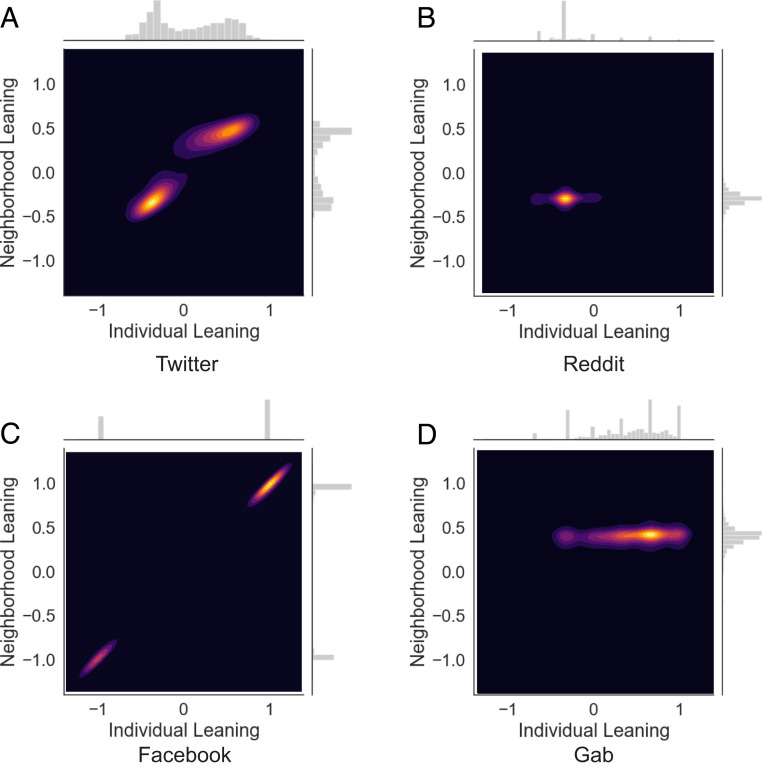
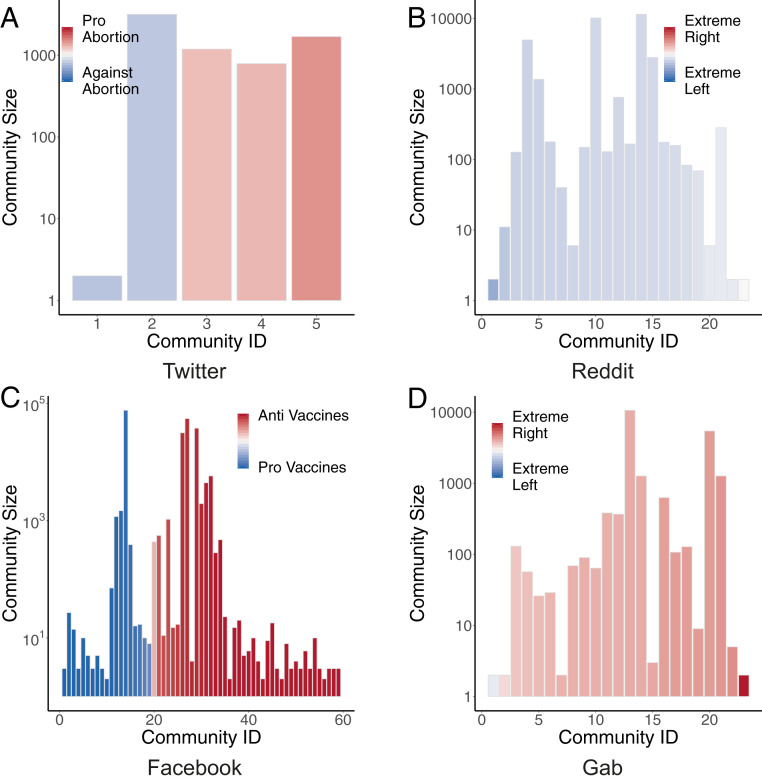
- Across the four platforms, “aggregation in homophilic clusters of users dominates online dynamics,” but platforms differ: Facebook and Twitter show homophilic clustering, while Reddit and Gab form a single community biased left or right rather than two opposing clusters.
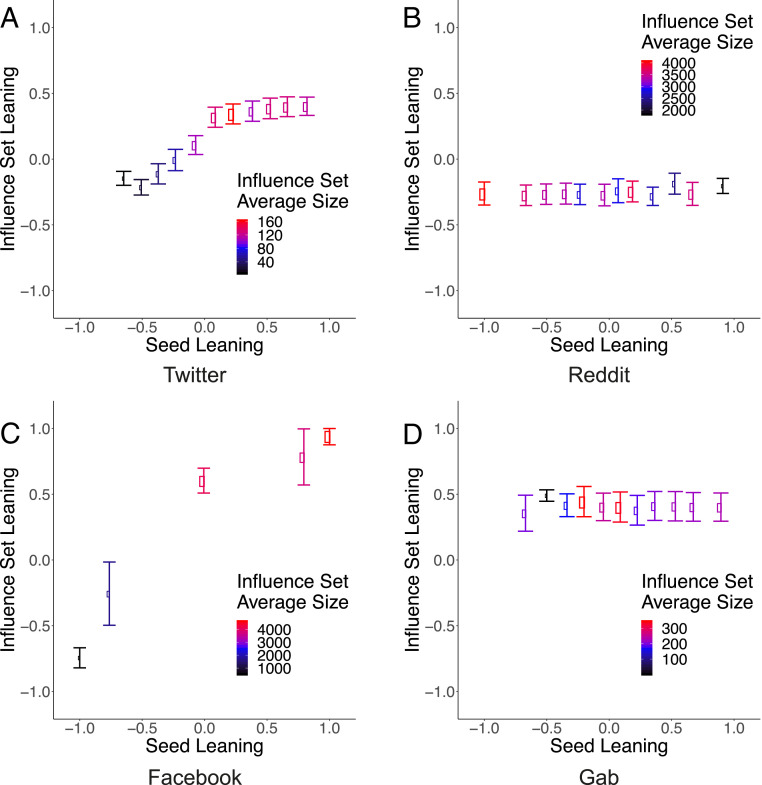
- Information diffusion is biased toward like-minded users on Facebook and Twitter, where the average leaning of a user’s influence set approximates the seed user’s leaning; on Reddit and Gab, the average leaning of the influence set does not depend on the seed user’s leaning.
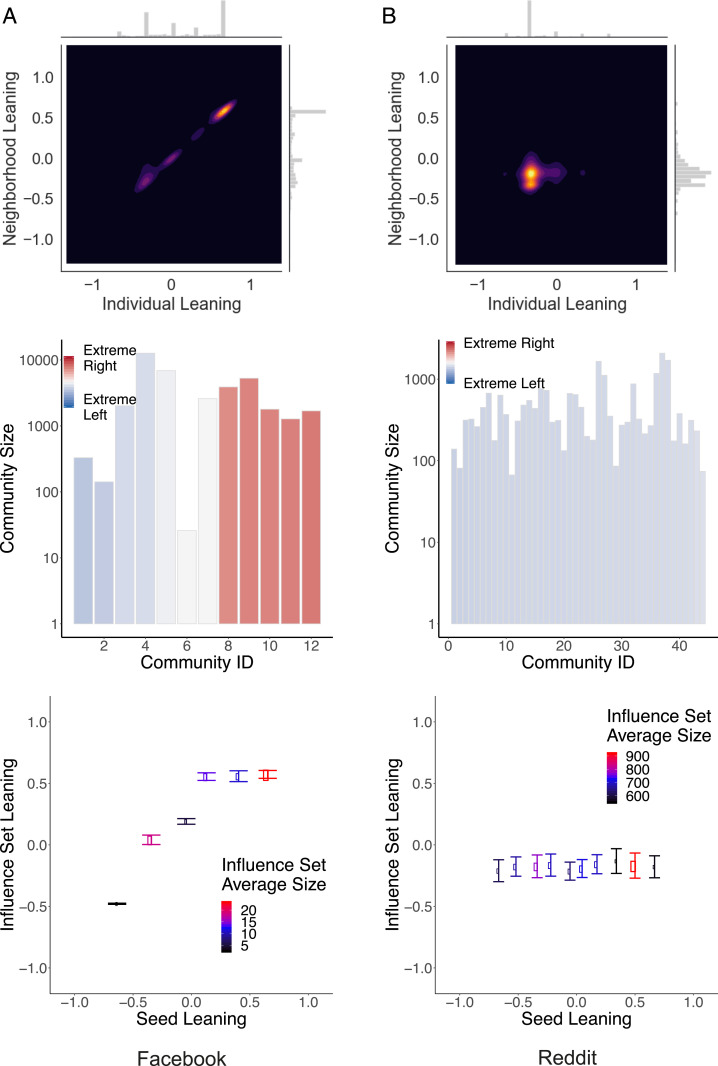
- In a direct comparison on news consumption, Facebook shows higher segregation than Reddit across all three measures: user-neighbor leaning correlation, community leaning, and SIR influence-set leaning.
- The study analyzes more than 100 million unique pieces of content and more than 1 million active users, with news outlets labeled using 2,190 media sources from Media Bias/Fact Check.
Methods
- Comparative analysis of Gab, Facebook, Reddit, and Twitter datasets on controversial topics including gun control, Obamacare, abortion, vaccines, science versus conspiracy, and news; main selected datasets were Abortion (Twitter), Vaccines (Facebook), Politics (Reddit), and Gab as a whole.
- Echo chambers were operationalized through two dimensions: homophily in interaction networks and bias in information diffusion toward like-minded peers. User leaning was inferred from linked news outlets, likes, or content, and interaction networks were built from follows, comments, cocomments, submissions, or replies depending on platform.
- Analyses included correlation between user leaning and average neighbor leaning, Louvain community detection, and SIR simulations to measure influence sets; SIR recovery rate was fixed at ν = 0.2, with dataset-specific infection ratios.
Limitations
- The paper states that the next envisioned step is to address the temporal dimension of echo chambers and how platform-specific social feedback mechanisms impact their formation.
- Evident from the text: leaning coverage varies strongly by platform, from 0.90–1.00 for Twitter/Facebook datasets to 0.15–0.20 for Reddit and 0.13 for Gab, so leaning-based conclusions for Reddit and Gab rest on a small classified fraction of users.
- Evident from the text: datasets differ by platform and topic, and the direct cross-platform comparison on a common topic is limited to news consumption on Facebook and Reddit; the authors also note that Reddit/Gab results could mean either no echo-chamber effect or observation inside a single echo chamber.
Model-written summary. Check it against the paper before relying on it.
Integrity signals
Registry
Cites
Statistics
Figures
Verification
Claims the paper makes
8 Valid · 1 Not valid · 7 Not checked · 38 Own results and interpretations
The cited sources support only part of this claim — read each source’s verdict below.
In the paper
“Selective exposure (19) and confirmation bias (20) (i.e., the tendency to seek information adhering to preexisting opinions) may explain the emergence of echo chambers on social media (1, 17, 21, 22).”
§ The echo chamber effect on social media > Abstract
What the sources say
- Supportedcites [1] M. Del Vicario, The spreading of misinformation online. Proc. Natl. Acad. Sci. U.S.A. 113, 554– 559 (2016). 26729863 PMC4725489 source
The Abstract says selective exposure generates homogeneous clusters, which it calls echo chambers. The Results and Discussion section says users select content matching a narrative and suggests confirmation bias determines echo-chamber formation. Page numbers are not provided in our copy. (LLM, conf=0.94)
- Partly supportedcites [17] K. Garimella, G. De Francisci Morales, A. Gionis, M. Mathioudakis, “ The effect of collective attention on controversial debates on social media” in WebSci ’17: 9th International ACM Web Science Conference (Association for Computing Machinery, New York, NY, 2017), pp. 43– 52. sourceExperimental — accuracy not yet measured
The Introduction reports that users mostly interact within their own side and endorse opinions from that side’s core. Related Work reports that users spread information faster when it agrees with their position. These passages are consistent with selective exposure, but the paper does not identify confirmation bias or establish that either tendency causes echo chambers to emerge. (LLM, conf=0.82)
- Supportedcites [21] M. Del Vicario, Echo chambers: Emotional contagion and group polarization on Facebook. Sci. Rep. 6, 37825 (2016). 27905402 PMC5131349 source
The Abstract says social-media disintermediation encourages users to select information that fits their beliefs (confirmation bias) and form like-minded groups (echo chambers). The Conclusions likewise describe Facebook as suited to the emergence of echo chambers. This supports the proposed explanation, without claiming it is the only cause. (LLM, conf=0.93)
- Supportedcites [22] A. Bessi, Science vs conspiracy: Collective narratives in the age of misinformation. PloS One 10, e0118093 (2015). 25706981 PMC4338055 source
The Introduction (page unavailable) says users consuming opposing information tend to form isolated clusters and describes polarized users whose likes are almost exclusively on one category of pages. The Conclusions (page unavailable) link information evaluation to existing beliefs. Together, these passages support the hedged explanation that selective exposure and confirmation bias may contribute to echo chambers. (LLM, conf=0.86)
hedgedstates a possible cause- Asserted: passes — The authors put it forward as true.
- Checkable: passes — It can be checked against evidence.
- Load-bearing: passes — The paper’s conclusions depend on it.
- Based: passes — The paper gives a reason why it holds.
- Supported
The cited sources support only part of this claim — read each source’s verdict below.
In the paper
“Our attention span remains limited (9, 10), and feed algorithms might limit our selection process by suggesting contents similar to the ones we are usually exposed to (11–13).”
§ The echo chamber effect on social media > Abstract
What the sources say
- Not checked — no full text of the sourcecites [11] A. L. Schmidt, Anatomy of news consumption on Facebook. Proc. Natl. Acad. Sci. U.S.A. 114, 3035– 3039 (2017). 28265082 PMC5373354 source
- Partly supportedcites [12] M. Cinelli, The COVID-19 social media infodemic. Sci. Rep. 10, 16598 (2020). 33024152 PMC7538912 sourceExperimental — accuracy not yet measured
The Introduction (page not provided) says algorithms take users’ preferences and attitudes into account when promoting content, and that users tend to seek information aligned with their worldviews. It does not say that feed algorithms suggest content similar to what users have previously seen or thereby limit their selection. (LLM, conf=0.82)
- Not checked — no full text of the sourcecites [13] E. Bakshy, S. Messing, L. A. Adamic, Exposure to ideologically diverse news and opinion on Facebook. Science 348, 1130– 1132 (2015). 25953820 source
hedgedstates a possible cause- Asserted: passes — The authors put it forward as true.
- Checkable: passes — It can be checked against evidence.
- Load-bearing: passes — The paper’s conclusions depend on it.
- Based: passes — The paper gives a reason why it holds.
Every source the paper cites for this claim was checked and supports it.
In the paper
“Online polarization, for instance, may foster misinformation spreading (1, 8).”
§ The echo chamber effect on social media > Abstract
What the sources say
- Supportedcites [1] M. Del Vicario, The spreading of misinformation online. Proc. Natl. Acad. Sci. U.S.A. 113, 554– 559 (2016). 26729863 PMC4725489 source
The Significance section says that homogeneity and polarization are main determinants of rumor-cascade size. The Conclusions also link polarized communities with the proliferation of narratives fueled by unsubstantiated rumors, supporting the hedged claim that online polarization may foster misinformation spreading. (LLM, conf=0.91)
- Supportedcites [8] M. D. Vicario, W. Quattrociocchi, A. Scala, F. Zollo, Polarization and fake news: Early warning of potential misinformation targets. ACM Trans. Web 13, 1– 22 (2019). source
The Introduction states that misinformation spreading on social media is directly related to increasing user polarization and segregation. This supports the citing sentence’s hedged claim that online polarization may foster misinformation spreading. (LLM, conf=0.94)
hedgedstates a possible cause- Asserted: passes — The authors put it forward as true.
- Checkable: passes — It can be checked against evidence.
- Load-bearing: unclear — It is unclear whether the paper’s conclusions depend on it.
- Based: passes — The paper gives a reason why it holds.
- Supported
Every source the paper cites for this claim was checked and supports it.
In the paper
“In network terms, this translates into a node i with a given leaning xi more likely to be connected with nodes with a leaning close to xi (18).”
§ The echo chamber effect on social media > Comparative Analysis > Polarization and Homophily in the Interaction Networks.
What the sources say
- Supportedcites [18] W. Cota, S. C. Ferreira, R. Pastor-Satorras, M. Starnini, Quantifying echo chamber effects in information spreading over political communication networks. EPJ Data Sci. 8, 35 (2019). source
The paper’s “Topological evidence of echo chambers” section says that a node with political position Pᵢ is connected with nodes whose positions are close to Pᵢ. It also reports a strong correlation between users’ positions and their neighbors’ average positions, supporting the citing sentence’s probabilistic paraphrase. (LLM, conf=0.94)
hedgedstates an association- Asserted: passes — The authors put it forward as true.
- Checkable: passes — It can be checked against evidence.
- Load-bearing: passes — The paper’s conclusions depend on it.
- Based: passes — The paper gives a reason why it holds.
- Supported
A result the paper reports from its own data — it cites no other source for it, so there is none to check. The quote shows it is in the paper.
In the paper
“Furthermore, the almost total absence of communities with leaning very close to 0 confirms the polarized state of the systems.”
§ The echo chamber effect on social media > Comparative Analysis > Polarization and Homophily in the Interaction Networks.
boostedstates a cause- Asserted: passes — The authors put it forward as true.
- Checkable: passes — It can be checked against evidence.
- Load-bearing: passes — The paper’s conclusions depend on it.
- Based: passes — The paper gives a reason why it holds.
- Rests on 4 assumptions not shown here.
32 more claims
Create a free account to see all 54 claims and to verify the 2 references still open.
- It may state two separate claims as one. 9
- Probably not a substantial claim. 9
Claims other papers make about this one
Each is checked against this paper’s own text: does it say what the citing paper says it does?
The source backs part of the claim, not all of it — or backs it for a different population, condition or comparison.
In the citing paper
“engagement with political content online is generally associated with high levels of ingroup bias; that is, it is far more likely to be shared within the political ingroup than in the outgroup (18, 19, 16).”
From Troll and divide: the language of online polarization (2022) · cites this paper as [16]
Experimental — accuracy not yet measuredThe source backs part of the claim, not all of it — or backs it for a different population, condition or comparison.
In the citing paper
“This challenge is reflected in research on”
From Machine culture (2023) · cites this paper as [142]
Experimental — accuracy not yet measuredThe source backs part of the claim, not all of it — or backs it for a different population, condition or comparison.
In the citing paper
“Thus, combating social media's echo chamber effect through an active exposure to diverse perspectives and networks also represents a viable individual-level strategy for addressing the deepfake problem (Cinelli et al., 2021; Gillani et al., 2018).”
From Deepfakes: Deceptions, mitigations, and opportunities (2023) · cites this paper as Cinelli et al., 2021
Experimental — accuracy not yet measuredThe source backs part of the claim, not all of it — or backs it for a different population, condition or comparison.
In the citing paper
“Even without being designed to shift opinions, it has been found that algorithms may contribute to political polarization by reinforcing divisive opinions [9, 24, 32].”
From Co-Writing with Opinionated Language Models Affects Users’ Views (2023) · cites this paper as [32]
Experimental — accuracy not yet measuredThe source backs part of the claim, not all of it — or backs it for a different population, condition or comparison.
In the citing paper
“On Reddit, studies find minimal evidence of echo chambers due to platform features encouraging cross-cutting exposure [17,61,63].”
From A systematic review of echo chamber research: comparative analysis of conceptualizations, operationalizations, and varying outcomes (2025) · cites this paper as [17]
Experimental — accuracy not yet measured
5 more claims about this paper
Create a free account to see every claim other papers make about this one.
Citations
Cites
Fast unfolding of communities in large networks
Blondel, V. D., Guillaume, J.-L., Lambiotte, R., & Lefebvre, E. (2008) · Journal of Statistical Mechanics: Theory and Experiment · doi:10.1088/1742-5468/2008/10/p10008 · Cited by 21,424 · cited 1×
“We detected communities by applying the Louvain algorithm (41), removing singleton communities with only one user.”
MethodThe spread of true and false news online
Vosoughi, S., Roy, D., & Aral, S. (2018) · Science · doi:10.1126/science.aap9559 · Cited by 8,847 · cited 1×
“A recent study (7) limited to Twitter claimed that fake news travels faster than real news.”
BackgroundConfirmation Bias: A Ubiquitous Phenomenon in Many Guises
Nickerson, R. S. (1998) · Review of General Psychology · doi:10.1037/1089-2680.2.2.175 · Cited by 7,267 · cited 1×
“Selective exposure (19) and confirmation bias (20) (i.e., the tendency to seek information adhering to preexisting opinions) may explain the emergence of echo chambers on social media (1, 17, 21, 22).”
BackgroundInfectious Diseases of Humans: Dynamics and Control
Anderson, R. M., & May, R. M. (1991) · doi:10.1093/oso/9780198545996.001.0001 · Cited by 6,179
Lazer, D. M. J., Baum, M. A., Benkler, Y., Berinsky, A. J., Greenhill, K. M., Menczer, F., Metzger, M. J., Nyhan, B., Pennycook, G., Rothschild, D., et al. (2018) · Science · doi:10.1126/science.aao2998 · Cited by 4,160
Degroot, M. H. (1974) · Journal of the American Statistical Association · doi:10.1080/01621459.1974.10480137 · Cited by 4,004 · cited 1×
“For instance, if opinions are assumed to be embedded in a onedimensional space (38), x ∈ [−1,+1] without loss of generality, as usual for controversial topics, then polarization is characterized by two well-separated peaks in P(x ), for positive and negative opinions.”
BackgroundExposure to ideologically diverse news and opinion on Facebook
Bakshy, E., Messing, S., & Adamic, L. A. (2015) · Science · doi:10.1126/science.aaa1160 · Cited by 3,245 · cited 2×
“Our attention span remains limited (9, 10), and feed algorithms might limit our selection process by suggesting contents similar to the ones we are usually exposed to (11–13).”
BackgroundThe spreading of misinformation online
Del Vicario, M., Bessi, A., Zollo, F., Petroni, F., Scala, A., Caldarelli, G., Stanley, H. E., & Quattrociocchi, W. (2016) · Proceedings of the National Academy of Sciences · doi:10.1073/pnas.1517441113 · Cited by 2,407 · cited 2×
“, the tendency to seek information adhering to preexisting opinions) may explain the emergence of echo chambers on social media (1, 17, 21, 22).”
BackgroundSelf-citationThe COVID-19 social media infodemic
Cinelli, M., Quattrociocchi, W., Galeazzi, A., Valensise, C. M., Brugnoli, E., Schmidt, A. L., Zola, P., Zollo, F., & Scala, A. (2020) · Scientific Reports · doi:10.1038/s41598-020-73510-5 · Cited by 2,313
Self-citationFilter Bubbles, Echo Chambers, and Online News Consumption
Flaxman, S., Goel, S., & Rao, J. M. (2016) · Public Opinion Quarterly · doi:10.1093/poq/nfw006 · Cited by 1,992
Research works printed but not linked: 2
- R. M. Anderson, R. M. May, Infectious Diseases in Humans (Oxford University Press, Oxford, United Kingdom, 1992).
- M. Cinelli, G. De Francisci Morales, A. Galeazzi, W. Quattrociocchi, M. Starnini, The echo chamber effect on social media. Open Science Framework. https://osf.io/x92br/?view_only=cdcc87d30e404e01b6ae316db15e3375. Deposited 22 January 2021. PMC7936330 33622786
Cited by
Items 201–300 of 2,063
Arazzi, M., Nicolazzo, S., Nocera, A., & Zippo, M. (2023) · Expert Systems with Applications · doi:10.1016/j.eswa.2023.119847 · Cited by 36
Effect of collaborative-filtering-based recommendation algorithms on opinion polarization
Bellina, A., Castellano, C., Pineau, P., Iannelli, G., & Marzo, G. D. (2023) · Physical review. E · doi:10.1103/physreve.108.054304 · Cited by 36
“Filter bubbles, occurring when users are mainly exposed to news and content aligned to their beliefs, are similar to the much investigated “echo chambers” [16–18].”
ResultThorell, L. B., Autenrieth, M., Riccardi, A., Burén, J., & Nutley, S. B. (2024) · Frontiers in Psychology · doi:10.3389/fpsyg.2024.1437109 · Cited by 40
“In addition, so-called “echo chambers” on social media can create a sense of belonging, but also reinforce preexisting beliefs in a negative way (Cinelli et al., 2021).”
BackgroundThe consequences of AI training on human decision-making
Treiman, L. S., Ho, C.-J., & Kool, W. (2024) · Proceedings of the National Academy of Sciences · doi:10.1073/pnas.2408731121 · Cited by 33
Patterns of linguistic simplification on social media platforms over time
Marco, N. D., Loru, E., Bonetti, A., Serra, A. O. G., Cinelli, M., & Quattrociocchi, W. (2024) · Proceedings of the National Academy of Sciences · doi:10.1073/pnas.2412105121 · Cited by 66
Self-citationGenerating Simple Directed Social Network Graphs for Information Spreading
Schweimer, C., Gfrerer, C., Lugstein, F., Pape, D., Velimsky, J. A., Elsässer⋆, R., & Geiger, B. C. (2022) · International World Wide Web Conference (WWW) · doi:10.1145/3485447.3512194 · Cited by 45
“Ourwork is based on Twitter follower networks, which is motivated by the results of [14] regarding the interaction networks, on which information about specific topics is exchanged or disseminated.”
BackgroundStrategies for reducing polarization in social networks
Wu, Y., Li, L., Yu, Q., Gan, J., & Zhang, Y. (2023) · Chaos Solitons & Fractals · doi:10.1016/j.chaos.2022.113095 · Cited by 33
Sustainable development goals as unifying narratives in large UK firms’ Twitter discussions
Patuelli, A., & Saracco, F. (2023) · Scientific Reports · doi:10.1038/s41598-023-34024-y · Cited by 30
Lenti, J., Mejova, Y., Kalimeri, K., Panisson, A., Paolotti, D., Tizzani, M., & Starnini, M. (2023) · JMIR Infodemiology · doi:10.2196/44714 · Cited by 26
“The impact of antivaccination content on online social media (OSM) may be compounded by the so-called echo chamber effect [8], in which users’ beliefs are reinforced through interactions with like-minded peers [9-11].”
BackgroundMethodSelf-citation#RoeOverturned: Twitter Dataset on the Abortion Rights Controversy
Chang, R.-C., Rao, A., Zhong, Q., Wojcieszak, M., & Lerman, K. (2023) · Proceedings of the International AAAI Conference on Web and Social Media · doi:10.1609/icwsm.v17i1.22207 · Cited by 45
Emerging trends: When can users trust GPT, and when should they intervene?
Church, K. (2024) · Natural Language Engineering · doi:10.1017/s1351324923000578 · Cited by 28
“2017; Cinelli et al. 2021).”
Zhou, X., Zhou, Y., Gong, Y., Cai, Z., Qiu, A., Xiao, Q., Antle, A. N., & Bai, Z. (2024) · ACM International Conference on Interaction Design and Children (IDC) · doi:10.1145/3628516.3655802 · Cited by 36
“This self-reinforcing loop may lead to critical societal effects such as echo chambers [22] and opinion polarization [48].”
BackgroundMass media impact on opinion evolution in biased digital environments: a bounded confidence model
(2023) · doi:10.1038/s41598-023-39725-y · Cited by 26
“By showing people only narratives aligned with their own existing beliefs, a positive feedback loop is obtained, reducing the amount of diversity in the user experience, contributing to the creation and maintenance of echo chambers 31 and filter bubbles 32–34 .”
YouTube’s recommendation algorithm is left-leaning in the United States
Ibrahim, H., AlDahoul, N., Lee, S., Rahwan, T., & Zaki, Y. (2023) · PNAS Nexus · doi:10.1093/pnasnexus/pgad264 · Cited by 39
TikTok’s political landscape: Examining echo chambers and political expression dynamics
Li, Y., Cheng, Z., & de Zúñiga, H. G. (2025) · New Media & Society · doi:10.1177/14614448251339755 · Cited by 53
“Echo chambers are environments where users’ political beliefs are reinforced through repeated interactions with like-minded peers and sources (Cinelli et al., 2021).”
Community notes reduce engagement with and diffusion of false information online
Slaughter, I., Peytavin, A., Ugander, J. H., & Saveski, M. (2025) · Proceedings of the National Academy of Sciences · doi:10.1073/pnas.2503413122 · Cited by 77
“In contrast, high depth or high structural virality indicates the post spread more through multistep, person-to-person reposting chains, a pattern often seen with rumors and viral content (48).”
Negative Perception of the COVID-19 Pandemic Is Dropping: Evidence From Twitter Posts
Vargas, A. N., Maier, A., Vallim, M. B. R., Banda, J. M., & Preciado, V. M. (2021) · Frontiers in Psychology · doi:10.3389/fpsyg.2021.737882 · Cited by 23
DePaula, N., Hagen, L., Roytman, S., & Alnahass, D. (2022) · JMIR Infodemiology · doi:10.2196/40198 · Cited by 25
“followed, the organization of which is determined by the platform algorithms [35].”
Characterizing engagement dynamics across topics on Facebook
Etta, G., Sangiorgio, E., Marco, N. D., Avalle, M., Scala, A., Cinelli, M., & Quattrociocchi, W. (2023) · PLoS ONE · doi:10.1371/journal.pone.0286150 · Cited by 39
“Within echo chambers, characterized by homophily in the interaction network and bias in information diffusion towards like-minded peers, selective exposure [19] is a significant driver for news consumption [17].”
BackgroundSelf-citationAffective polarization and dynamics of information spread in online networks
Lerman, K., Feldman, D., He, Z., & Rao, A. (2024) · npj Complexity · doi:10.1038/s44260-024-00008-w · Cited by 55
“To estimate the ideology of social media users, studies have relied on fol-lower relationships 36 , mention and retweet interactions 37,38 , and URL sharing 16,39 – 41 .”
What Lessons can Be Learned From the Management of the COVID-19 Pandemic?
Quinn, G. A., Connolly, R., ÓhAiseadha, C. O., Hynds, P. D., Bagus, P., Brown, R. B., Cáceres, C. F., Craig, C. E. H., Connolly, M., Domingo, J. L., et al. (2025) · International Journal of Public Health · doi:10.3389/ijph.2025.1607727 · Cited by 27
“Concerns had already been expressed before the pandemic about the tendency for people to self-select into “ echo chambers ” where people seek information that agrees with their views and avoid dissenting perspectives [355].”
New sources of inaccuracy? A conceptual framework for studying AI hallucinations
Shao, A. (2025) · Harvard Kennedy School Misinformation Review · doi:10.37016/mr-2020-182 · Cited by 41
“Hallucinations can spread through group-level mechanisms like filter bubbles, echo chambers, or motivated reasoning (Cinelli et al., 2021; Hart & Nisbet, 2012; Jamieson & Cappella, 2008), even without a coordinated intention (Garrett, 2017).”
Artificial Intelligence in Cyber Security: Impact and Implications
Yu, S., & Carroll, F. (2021) · Advanced sciences and technologies for security applications · doi:10.1007/978-3-030-88040-8 · Cited by 20
Situated Affectivity and Mind Shaping: Lessons from Social Psychology
Walter, S., & Stephan, A. (2022) · Emotion Review · doi:10.1177/17540739221112419 · Cited by 28
“(2021) for more optimistic assessments and Fodor et al.”
BackgroundFranceschi, J., Pareschi, L., Bellodi, E., Gavanelli, M., & Bresadola, M. (2023) · PLoS ONE · doi:10.1371/journal.pone.0291993 · Cited by 24
“Moreover, unstable contexts like this one are more likely to develop irreparable fractures when misinformation is disseminated among people, and a positive reinforcement loop clusters the audience into isolated groups (the socalled echo chambers) where the only information shared is the one aligned with the majority p…”
BackgroundThe evolution dynamics of collective and individual opinions in social networks
Dong, J., Zhang, Y., & Kong, Y.-X. (2024) · Expert Systems with Applications · doi:10.1016/j.eswa.2024.124813 · Cited by 29
“I’m in the Bluesky Tonight”: Insights from a year worth of social data
Failla, A., & Rossetti, G. (2024) · PLoS ONE · doi:10.1371/journal.pone.0310330 · Cited by 67
“From discourse analysis [1, 2], to studying d/misinformation [3, 4], coordinated behaviors [5, 6], radicalization [7, 8], echo-chamber effects [9, 10], and critical event detection [11, 12], computational social science has long laid its development on – and answered its question through – social…”
BackgroundAubert‐Teillaud, B., Bran, A., & Vaidis, D. C. (2023) · European Journal of Social Psychology · doi:10.1002/ejsp.2981 · Cited by 19
Sun, M., Ma, X., & Huo, Y. (2022) · International Journal of Environmental Research and Public Health · doi:10.3390/ijerph192315869 · Cited by 27
“, which aimed to analyze the existence of echo chambers [22,23], the effect of the recommendation algorithm, and the influence of user cognition on echo chamber, etc.”
BackgroundInfluentialEfstratiou, A., Blackburn, J., Caulfield, T., Stringhini, G., Zannettou, S., & Cristofaro, E. D. (2023) · Proceedings of the International AAAI Conference on Web and Social Media · doi:10.1609/icwsm.v17i1.22138 · Cited by 41
Kennedy, B., Golazizian, P., Trager, J. P., Atari, M., Hoover, J., Davani, A. M., & Dehghani, M. (2023) · PNAS Nexus · doi:10.1093/pnasnexus/pgad210 · Cited by 52
“Each of these models was then used to predict the presence of hate speech and each moral concern in a large Gab corpus as used by Cinelli et al. (89) and compiled by Gaffney (90), N posts = 13, 020, 612, N users = 65, 375, after removing small posts (i.e. those with too few English tokens) and Gab users with too few o…”
Online conspiracy communities are more resilient to deplatforming
Monti, C., Cinelli, M., Valensise, C. M., Quattrociocchi, W., & Starnini, M. (2023) · PNAS Nexus · doi:10.1093/pnasnexus/pgad324 · Cited by 45
“[13] Matteo Cinelli, Gianmarco De Francisci Morales, Alessandro Galeazzi, Walter Quattrociocchi, and Michele Starnini.”
BackgroundSelf-citationDiving into the divide: a systematic review of cognitive bias-based polarization on social media
Xing, Y., Zhang, Z., Storey, V. C., & Koohang, A. A. (2024) · Journal of Enterprise Information Management · doi:10.1108/jeim-09-2023-0459 · Cited by 43
Toward a psychology of attitude conflict
Minson, J. A., & Dorison, C. A. (2021) · Current Opinion in Psychology · doi:10.1016/j.copsyc.2021.07.002 · Cited by 28
Algorithm-Mediated Social Learning in Online Social NetworksPreprint
Brady, W. J., Jackson, J. C., Lindström, B., & Crockett, M. J. (2023) · doi:10.31219/osf.io/yw5ah · Cited by 18
Abbasi, A., Dillon, R. L., Rao, H., & Sheng, O. R. L. (2024) · Information Systems Research · doi:10.1287/isre.2024.intro.v35.n2 · Cited by 19
“In the changing policy landscape rife with erosion of public trust, echo chambers worsen the spread of online harmful misinformation (Avnur 2020, Cinelli et al. 2021, Tran et al. 2022).”
Zhong, F., & Gu, C. (2024) · Frontiers in Psychology · doi:10.3389/fpsyg.2024.1412515 · Cited by 27
Green, J., McCabe, S., Shugars, S., Chwe, H., Horgan, L., CAO, S., & Lazer, D. M. J. (2025) · American Political Science Review · doi:10.1017/s0003055424000984 · Cited by 42
“In the rare instances, in which users share political information from opposing partisans, it is often accompanied by negative comments that indicate disagreement (Cinelli et al. 2021; Wojcieszak et al. 2022).”
FaceSavr™: Designing Technologies with Allistic Adults to Battle Emotion Echolalia
Kender, K., & Spiel, K. (2022) · CHI Conference Extended Abstracts on Human Factors in Computing Systems (CHI EA) · doi:10.1145/3491101.3516383 · Cited by 19
Comparing the Impact of Social Media Regulations on News Consumption
Etta, G., Cinelli, M., Galeazzi, A., Valensise, C. M., Quattrociocchi, W., & Conti, M. (2022) · IEEE Transactions on Computational Social Systems · doi:10.1109/tcss.2022.3171391 · Cited by 31
“Two common factors to such behaviors carried on by users are opinion polarization [16], one of the dominating traits of online social dynamics, and echo chambers [17].”
BackgroundMethodInfluentialSelf-citationUtilization Strategy of User Engagements in Korean Fake News Detection
Kang, M., Seo, J., Park, C., & Lim, H. (2022) · IEEE Access · doi:10.1109/access.2022.3194269 · Cited by 21
Cascade-based Echo Chamber Detection
Minici, M., Cinus, F., Monti, C., Bonchi, F., & Manco, G. (2022) · ACM International Conference on Information and Knowledge Management (CIKM) · doi:10.1145/3511808.3557253 · Cited by 34
“Thus, several studies have been devoted to providing empirical evidence of the existence of echo chambers [11, 16, 21], with variable results, depending on the specific platforms and contexts.”
BackgroundHistorical Argumentation: Watching Historians and Teaching Youth
Nokes, J. D., & Paz, S. D. L. (2023) · Written Communication · doi:10.1177/07410883221148679 · Cited by 33
“For example, historians’ willingness to consider multiple perspectives seems also to be a disposition that could enrich an individual’s understanding of political issues, much preferred to remaining in the echo chamber created by social media and targeted news feeds (Cinelli et al., 2021).”
BackgroundCheng, Z., Marcos-Marné, H., & de Zúñiga, H. G. (2023) · Political Behavior · doi:10.1007/s11109-023-09864-z · Cited by 29
“Cinelli et al. (2021) suggested that aggregation of homophilic users dominates the interaction dynamics on social media like Facebook and users tend to seek information that is consistent with his/her preexisting opinion and favor the interaction with like-minded peers, and this situation leads to…”
Intelligence, Creativity, and Wisdom Are Situated in the Interaction Among Person × Task × Situation
Sternberg, R. J., Tromp, C., & Karami, S. (2023) · Springer eBooks · doi:10.1007/978-3-031-26772-7_15 · Cited by 22
Bridging Echo Chambers? Understanding Political Partisanship through Semantic Network Analysis
Erickson, J., Yan, B., & Huang, J. (2023) · Social Media + Society · doi:10.1177/20563051231186368 · Cited by 28
“Cinelli et al. (2021) quantified the echo chamber effect across four online social media sites by examining the degree of ideological homophily in user interaction networks for several topics.”
BackgroundQuantifying the vulnerabilities of the online public square to adversarial manipulation tactics
Truong, B., Lou, X., Flammini, A., & Menczer, F. (2019) · PNAS Nexus · doi:10.1093/pnasnexus/pgae258 · Cited by 25
“In particular, it captures features of real social networks —hubs, clustering, and political homophily structure— that have been observed consistently over the years and across platforms (83–85) and that are known to play key roles in information diffusion (86–88).”
BackgroundGovind, R., Garg, N., & Carter, L. D. (2023) · European Journal of Marketing · doi:10.1108/ejm-12-2022-0911 · Cited by 19
Zhang, Z. W., Reavley, N. J., Armstrong, G., & Morgan, A. J. (2025) · Health Promotion International · doi:10.1093/heapro/daae204 · Cited by 43
Natural language processing for social science research: A comprehensive review
Hou, Y., & Huang, J. (2025) · Chinese Journal of Sociology · doi:10.1177/2057150x241306780 · Cited by 45
“Various hypotheses exist to explain social media polarization, and among them the most famous one is the “ echo chamber effect “ (Cinelli et al., 2021).”
The State of Evidence in Digital Hate Research: An Umbrella Review
Matthes, J., Koban, K., Bührer, S., Kirchmair, T., Weiß, P., Khaleghipour, M., Saumer, M., & Meerson, R. (2025) · Communication Research · doi:10.1177/00936502251365724 · Cited by 22
“…shared meanings, as well as platform-determined and socially negotiated rules and policies, out of which each may be subject to dynamic transformation and may individually or in interaction favor the occurrence of digital hate in general or particular manifestations of it (Cinelli et al., 2021).”
Cianciulli, A., Santoro, E., Manente, R., Pacifico, A., Quagliarella, S., Bruno, N., Schettino, V., & Boccia, G. (2025) · Healthcare · doi:10.3390/healthcare13202623 · Cited by 30
“Despite promising results, the literature remains heterogeneous regarding study design, platforms analyzed, outcomes assessed, and methodological quality [10,11].”
Subjective Freedom of Speech: Why Do Citizens Think They Cannot Speak Freely?
Menzner, J., & Traunmüller, R. (2022) · Politische Vierteljahresschrift · doi:10.1007/s11615-022-00414-6 · Cited by 32
“One possible explanation for diverging platform effects lies in varying levels of homophily in users’ communication networks and different degrees of “echo chamber effects” (Sunstein 2017; Cinelli et al. 2021).”
BackgroundThompson, E. L., Preston, S. M., Francis, J., Rodriguez, S. A., Pruitt, S. L., Blackwell, J.-M., & Tiro, J. A. (2022) · JMIR Pediatrics and Parenting · doi:10.2196/38297 · Cited by 21
“Social media users on Facebook and Twitter are likely to be exposed to like-minded posts via the echo chamber effect [36].”
BackgroundCloudy, J., Banks, J., & Bowman, N. D. (2022) · Technology Mind and Behavior · doi:10.1037/tmb0000083 · Cited by 20
AI as Social Actor: A Lacanian Investigation into Social Technology
Heimann, M., & Hübener, A.-F. (2023) · Journal of Digital Social Research · doi:10.33621/jdsr.v5i1.159 · Cited by 23
“These echo chambers are already proving to have a tangible social impact (Levy and Razin, 2019), and different feed algorithms can be shown to produce different types of echo chambers (Cinelli et al., 2021).”
BackgroundGerard, P., Botzer, N., & Weninger, T. (2023) · Proceedings of the International AAAI Conference on Web and Social Media · doi:10.1609/icwsm.v17i1.22211 · Cited by 39
Haugsgjerd, A., Karlsen, R., & Steen‐Johnsen, K. (2023) · Political Communication · doi:10.1080/10584609.2023.2222070 · Cited by 29
“Moreover, the public sphere constituted through social media is structured in ways that could reinforce cognitive biases (e.g. Cinelli et al., 2021; Karlsen et al., 2017).”
BackgroundSharing News Left and Right: Frictions and Misinformation on Twitter
Ershov, D., & Morales, J. S. (2024) · The Economic Journal · doi:10.1093/ej/ueae027 · Cited by 36
Artificial intelligence chatbots mimic human collective behaviour
He, J. K., Wallis, F. P. S., Gvirtz, A., & Rathje, S. (2024) · British Journal of Psychology · doi:10.1111/bjop.12764 · Cited by 35
“…collective behaviour impacts political movements (Wahlström & Törnberg, 2021), the acceptance of climate-friendly technologies (Zhang et al., 2020), the spread of misinformation (Cinelli et al., 2020; Rathje et al., 2022) and how societies become divided by echo chambers (Cinelli et al., 2021).”
The hidden hierarchy of far-right digital guerrilla warfare
Cesarino, L., & Nardelli, P. H. J. (2021) · Digital War · doi:10.1057/s42984-021-00032-3 · Cited by 17
“The polarizing tendencies of politically leaned social media such as Twitter and Facebook are often claimed to be selforganized, following simple behavioral rules which lead to the emergence of echo chambers or filter bubbles (Cinelli 2021).”
BackgroundInfluentialDigital Fashion Communication: An (Inter)cultural Perspective
Noris, A., & Cantoni, L. (2022) · BRILL eBooks · doi:10.1163/9789004523555 · Cited by 25
Misinformation about Covid-19 Vaccines on Social Media: Rapid ReviewPreprint
Skafle, I., Nordahl‐Hansen, A., Quintana, D. S., et al. (2022) · doi:10.31219/osf.io/tyevj · Cited by 17
Climate risk expressions of public views and government responses in China
Sun, X., Li, L., Shen, Y., Sheng, Y., Zhang, D., & Ji, Q. (2025) · Scientific Data · doi:10.1038/s41597-025-05207-1 · Cited by 26
“Since individual posts their own expressions without the process of reposting others’ expressions, the echo chamber effect is significantly lower than on social media platforms like Weibo and Facebook 21 .”
Echo Chambers in the Age of Algorithms: An Audit of Twitter’s Friend Recommender System
Duskin, K., Schafer, J. S., West, J. D., & Spiro, E. S. (2024) · ACM Web Science Conference · doi:10.1145/3614419.3643996 · Cited by 17
“Growing alongside the dependence on these platforms for news is the recognition that they may facilitate information echo chambers, contribute to political polarization, and exacerbate the spread of misinformation [10, 28, 37].”
BackgroundZhang, Z., Zhao, J., Wang, G., Johnston, S.-K., Chalhoub, G., Ross, T., Liu, D., Tinsman, C., Zhao, R., Van Kleek, M., et al. (2024) · Proceedings of the ACM on Human-Computer Interaction · doi:10.1145/3687059 · Cited by 16
“While centralisation allowed for the use of sophisticated algorithms for content curation and recommendation, enhancing user engagement, they also give rise to concerns about algorithmic manipulation and the formation of echo chambers [25, 100].”
Jin, H., Zhang, P., Yang, L., & Santiago-Iglesias, E. (2025) · Cities · doi:10.1016/j.cities.2025.106294 · Cited by 25
Ogie, R., Moore, A. R., Wickramasuriya, R., Amirghasemi, M., James, S., & Dilworth, T.-L. (2022) · Scientific Reports · doi:10.1038/s41598-022-21265-6 · Cited by 20
Prebunking Against Misinformation in the Modern Digital Age
Traberg, C. S., Harjani, T., Basol, M., Biddlestone, M., Maertens, R., Roozenbeek, J., & van der Linden, S. (2023) · Springer eBooks · doi:10.1007/978-3-031-27789-4_8 · Cited by 33
Hernández, A. D., Owen, R., Nielsen, D. S., & McConville, R. (2023) · Journal of Responsible Innovation · doi:10.1080/23299460.2023.2222514 · Cited by 17
“circulated and segregated based on shared politics and interests [11,60].”
BackgroundOcca, A., Merritt, A. S., Leip, A., & Stapleton, J. L. (2023) · Clinical Trials · doi:10.1177/17407745231204813 · Cited by 20
“48 While these echo-chambers may be considered as target groups to address with dedicated communication efforts, it is also clear that creating interventions for highly polarized groups presents significant challenges, and without adequate understanding of the target audience, these interventions…”
BackgroundEcker-Ehrhardt, M. (2023) · The Review of International Organizations · doi:10.1007/s11558-023-09517-0 · Cited by 25
“…communities of like-minded users to exist to some extent, such as in the case of electoral politics (Conover et al., 2011), climate change discourse (Williams et al., 2015), and gun control (Cinelli et al., 2021), while not as widespread as often assumed (Bruns, 2019; Ross Arguedas et al., 2022).”
Internet-based micro-identities as a driver of societal disintegration
Kossowska, M., Kłodkowski, P., Siewierska-Chmaj, A., Guinote, A., Kessels, U., Moyano, M., & Strömbäck, J. (2023) · Humanities and Social Sciences Communications · doi:10.1057/s41599-023-02441-z · Cited by 30
Abboud, E., Ajwang, F., & Lugano, G. K. (2024) · Journal of Eastern African Studies · doi:10.1080/17531055.2024.2377403 · Cited by 28
As’ad, M. (2024) · Cureus · doi:10.7759/cureus.69710 · Cited by 29
“One concern is the potential creation of "echo chambers," a phenomenon where personalized content reinforces existing beliefs or knowledge, potentially limiting exposure to diverse perspectives [46].”
BackgroundAhmed, S., Bee, A. W. T., Ng, S. W. T., & Masood, M. (2024) · Journal of Broadcasting & Electronic Media · doi:10.1080/08838151.2024.2410783 · Cited by 32
“Social media users are surrounded by peers with similar interests and thus regularly get exposed to similar content (Cinelli et al., 2021).”
The social dilemma in artificial intelligence development and why we have to solve it
Strümke, I., Slavkovik, M., & Madai, V. I. (2021) · AI and Ethics · doi:10.1007/s43681-021-00120-w · Cited by 33
News sharing on Twitter reveals emergent fragmentation of media agenda and persistent polarization
Cicchini, T., del Pozo, S. M., Tagliazucchi, E., & Balenzuela, P. (2022) · EPJ Data Science · doi:10.1140/epjds/s13688-022-00360-8 · Cited by 23
“This characteristic has been observed in networks defined by preferential message propagation (retweet networks, in the case of Twitter) [4, 5] , as well as in networks of followers [6].”
BackgroundImplications of Revenue Models and Technology for Content Moderation StrategiesPreprint
Liu, Y., Yıldırım, P., & Zhang, Z. J. (2021) · SSRN Electronic Journal · doi:10.2139/ssrn.3969938 · Cited by 16
Bojić, L., Ilić, V., Prodanović, V., & Vuković, V. (2025) · Chinese Political Science Review · doi:10.1007/s41111-025-00326-x · Cited by 26
Bakir, V., & McStay, A. (2022) · Springer eBooks · doi:10.1007/978-3-031-13551-4 · Cited by 38
Harrington, L. A., Elwin, A., Paterson, S., & D’Cruze, N. C. (2023) · People and Nature · doi:10.1002/pan3.10416 · Cited by 19
Contextures of hate: Towards a systems theory of hate communication on social media platforms
Barth, N., Wagner, E., Raab, P., & Wiegärtner, B. (2023) · The Communication Review · doi:10.1080/10714421.2023.2208513 · Cited by 37
“…& Burnap, 2015), anthropology (Pohjonen & Udupa, 2017), psychology (Hellsten, Crespi, Hendry, & Fermani, 2021), computational social sciences (Cinelli et al., 2021; Cinelli, De Francisci Morales, Galeazzi, Quattrociocchi, & Starnini, 2021; Jigsaw, 2021), as well as theater studies (Bachmann,…”
BackgroundTirkkonen, S. K., & Vespermann, D. (2023) · Frontiers in Psychology · doi:10.3389/fpsyg.2023.1235929 · Cited by 21
“However, the formation of echo chambers (encountering only similar-minded individuals) implies that this “freedom” of association is not universally beneficial (del Vicario et al., 2016; Nguyen, 2020; Cinelli et al., 2021).”
BackgroundThe Echo chamber-driven Polarization on Social Media
Kim, L. (2023) · Journal of Student Research · doi:10.47611/jsr.v12i4.2274 · Cited by 43
“By presenting users with information that aligns with their past interests and beliefs, algorithmic personalization aims to enhance user engagement and satisfaction (Cinelli, Morales, Galeazzi, Quattrociocchi, & Starnini, 2021).”
BackgroundInfluentialElhariry, M., Malhotra, K., Goyal, K., Bardus, M., SIMBA and CoMICs Team, & Kempegowda, P. (2024) · JMIR Medical Education · doi:10.2196/52924 · Cited by 21
“There is a need to address this by producing evidence-based content to ensure the dissemination of accurate information without bias [7,8].”
BackgroundBánkuty-Balogh, L. S. (2021) · Politics in Central Europe · doi:10.2478/pce-2021-0008 · Cited by 19
Borrelli, D., Iandoli, L., Ramírez-Márquez, J. E., & Lipizzi, C. (2021) · IEEE Transactions on Computational Social Systems · doi:10.1109/tcss.2021.3094775 · Cited by 24
Awan, I., Carter, P., Sutch, H., & Lally, H. (2022) · Ethnic and Racial Studies · doi:10.1080/01419870.2022.2146449 · Cited by 20
“Previous research has found that subjecting information to these criteria in the context of social media might not necessarily be an effective method at preventing the belief and sharing of misinformation (Cinelli et al. 2021).”
BackgroundMethodLi, H., Chen, B., Chen, Z., Chen, L., Zhang, D. “., Wen, M., Li, J., Li, Y., Han, X., & Su, D. (2023) · Journal of Health Communication · doi:10.1080/10810730.2023.2245373 · Cited by 21
“Personalization of news and algorithm can create “the echo chamber” and segregation (Cinelli, De Francisci Morales, Galeazzi, Quattrociocchi, & Starnini, 2021).”
Mechanisms and Attributes of Echo Chambers in Social MediaPreprint
Jiang, B., Karami, M., Cheng, L., Black, T., & Liu, H. (2021) · arXiv (Cornell University) · doi:10.48550/arxiv.2106.05401 · Cited by 39
“Social media also limits the exposure to diverse opinions and forms groups of like-minded users [8].”
BackgroundTella, R. D., Gálvez, R. H., & Schargrodsky, E. (2021) · National Bureau of Economic Research · doi:10.3386/w29458 · Cited by 26
Policy responses to false and misleading digital content: A snapshot of Children’s Media Literacy
Hill, J. (2022) · OECD education working papers · doi:10.1787/1104143e-en · Cited by 34
Social Media and FinancePreprint
Cookson, J. A., Mullins, W., & Niessner, M. (2024) · SSRN Electronic Journal · doi:10.2139/ssrn.4806692 · Cited by 16
Enhancing Critical Thinking in Generative AI Search with Metacognitive Prompts
Singh, A., Guan, Z., & Rieh, S. Y. (2025) · Proceedings of the Association for Information Science and Technology · doi:10.1002/pra2.1287 · Cited by 15
Echo Chambers and Algorithmic Bias: The Homogenization of Online Culture in a Smart Society
Putri, S. D. G., Purnomo, E. P., & Khairunnisa, T. (2024) · SHS Web of Conferences · doi:10.1051/shsconf/202420205001 · Cited by 36
“For instance, a study by (Cinelli et al., 2021) compared content on Facebook, Twitter, Reddit, and Gab, it was found that Facebook and Twitter tend to foster homophilic interaction networks, reinforcing shared beliefs.”
Mapping the terrain of social media misinformation: A scientometric exploration of global research
Wang, J., Zhai, Y., & Shahzad, F. (2025) · Acta Psychologica · doi:10.1016/j.actpsy.2025.104691 · Cited by 28
Why more social interactions lead to more polarization in societies
Thurner, S., Hofer, M., & Korbel, J. (2025) · Proceedings of the National Academy of Sciences · doi:10.1073/pnas.2517530122 · Cited by 31
Dynamics of algorithmic content amplification on TikTok
Baumann, F., Arora, N., Rahwan, I., & Czaplicka, A. (2026) · EPJ Data Science · doi:10.1140/epjds/s13688-026-00629-2 · Cited by 73
KHAN: Knowledge-Aware Hierarchical Attention Networks for Accurate Political Stance Prediction
Ko, Y., Ryu, S., Han, S., Jeon, Y., Kim, J., Park, S., Han, K., Tong, H., & Kim, S. (2023) · International World Wide Web Conference (WWW) · doi:10.1145/3543507.3583300 · Cited by 33
“This is called the echo chamber effect [60], a fundamental reason that leads to serious social polarization by hindering positive and active communications among people [7, 9, 14, 15, 22, 68].”
Background
Metadata
- Authors
- Cinelli, M., De Francisci Morales, G., Galeazzi, A., Quattrociocchi, W., & Starnini, M.
- Affiliations
- Ca' Foscari University of Venice (IT)
- Institute for Scientific Interchange (ISI) Foundation, 10126 Torino, Italy;
- University of Brescia (IT)
- University of Oslo (NO)
- Institute for Scientific Interchange (IT)
- Corresponding author
- Quattrociocchi, Walter
- ORCID
- Venue
- Proceedings of the National Academy of Sciences
- Publisher
- National Academy of Sciences
- Published
- 2021-02-23
- Volume
- 118
- Issue
- 9
- ISSN
- 0027-8424 (ISSN-L)
- 1091-6490
- PMC
- PMC7936330
- OpenAlex
- W3133423348
- Cited by
- 2,092
- References
- 62
- Citations by year
- 2026: 488 · 2025: 516 · 2024: 387 · 2023: 351 · 2022: 256 · 2021: 90
- FWCI
- 375.62
- Type
- journal article
- Language
- en
- Open access
- hybrid
- doi.org
- Licence
- Locations
- Proceedings of the National Academy of Sciences (publishedVersion, cc-by)
- PubMed Central (publishedVersion, cc-by)
- PubMed (publishedVersion)
- UPCommons institutional repository (Universitat Politècnica de Catalunya) (submittedVersion, cc-by)
- IRIS Research product catalog (Sapienza University of Rome) (submittedVersion)
- Padua Research Archive (University of Padova) (submittedVersion, cc-by)
- Topics
- Social Sciences › Sociology and Political Science › Misinformation and Its Impacts
- Social Sciences › Communication › Social Media and Politics
- Physical Sciences › Physics and Astronomy › Statistical and Nonlinear Physics › Complex Network Analysis Techniques
- Keywords
- echo chambers, social media, homophily, information dissemination, algorithmic curation, controversial issues, Facebook, Twitter, Reddit, Gab, news consumption
- MeSH terms
- Abortion, Legal, Gun Violence, Communication, Humans, Politics, Social Change, Vaccination, Bias, Information Dissemination, Narration, Patient Protection and Affordable Care Act, Social Networking, Social Media
About these checks
Registry, retraction, Cites and statistics results are computed, not judged, with one exception: a printed reference that no index lists is read once by a model before it counts as a citation error. Claims are extracted by a model and kept only when their quote appears verbatim in the text; each cited source is then checked, with a model’s help, for whether it says what the claim relies on. Those verdicts can be wrong — read the claim’s quote and the cited source before relying on one.
The claim verdicts this report counts are experimental: their accuracy is not yet measured.
A language model drew the claims from the paper on 2026-10-10, under version 3 of the claim definition (model deepseek-v4.1-flash, prompt extract-v3).
A second model labelled each claim on 2026-10-10 (model jev-1.13-20260917, definition revision gold-guideline-v0.2).
Cited sources are checked with a language model’s help (gpt-6-sol).
Statistics and arithmetic are recomputed, not judged.
Confidence bands are shown only for fields calibrated on our annotated test set. None is calibrated yet, so no band is shown.
What counts as a claim ›How we measure confidence ›How we check this ›
Are you an author, or do you see a problem with this page? Request a review
Data sources
Bibliographic data: Semantic Scholar, OpenAlex, Crossref.
Contains information from the Semantic Scholar Academic Graph Datasets, made available under the ODC Attribution License (ODC-BY 1.0).
Semantic Scholar’s data is described in: Kinney, R., et al. (2023). The Semantic Scholar Open Data Platform. arXiv:2301.10140.
