

The echo chamber effect on social media
Open accessThe DOI matches its Crossref record; 68 of the 69 references it cites were found in a registry or an index; 16 of the 38 sources its claims cite were checked for support.
Abstract
Significance: We explore the key differences between the main social media platforms and how they are likely to influence information spreading and the formation of echo chambers. To assess the different dynamics, we perform a comparative analysis on more than 100 million pieces of content concerning controversial topics (e.g., gun control, vaccination, abortion) from Gab, Facebook, Reddit, and Twitter. The analysis focuses on two main dimensions: 1) homophily in the interaction networks and 2) bias in the information diffusion toward like-minded peers. Our results show that the aggregation in homophilic clusters of users dominates online dynamics. However, a direct comparison of news consumption on Facebook and Reddit shows higher segregation on Facebook.
Overview
CoChat Summary
TL;DR
This paper compares echo-chamber dynamics across Gab, Facebook, Reddit, and Twitter using more than 100 million pieces of content and more than 1 million active users. It finds homophilic clustering dominates online dynamics, with Facebook and Twitter showing stronger segregation and like-minded information diffusion than Reddit and Gab, and Facebook showing higher news-consumption segregation than Reddit.
Key findings
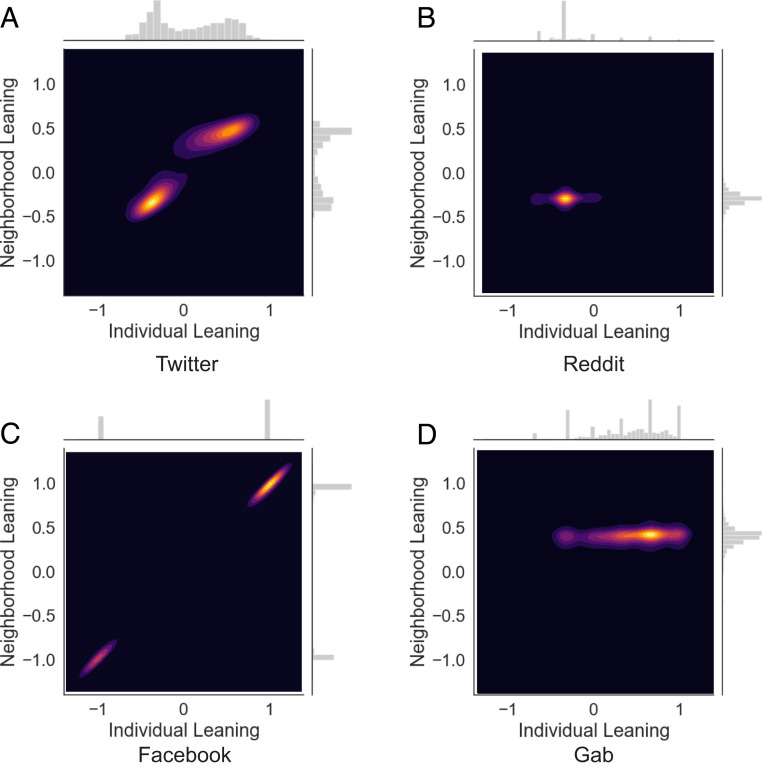
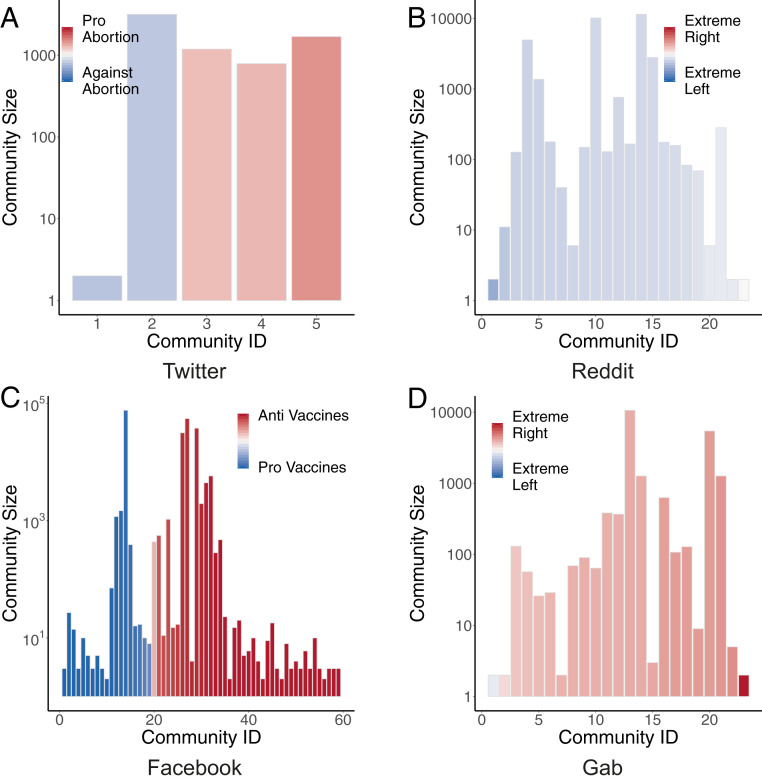
- Across the four platforms, “aggregation in homophilic clusters of users dominates online dynamics,” but platforms differ: Facebook and Twitter show homophilic clustering, while Reddit and Gab form a single community biased left or right rather than two opposing clusters.
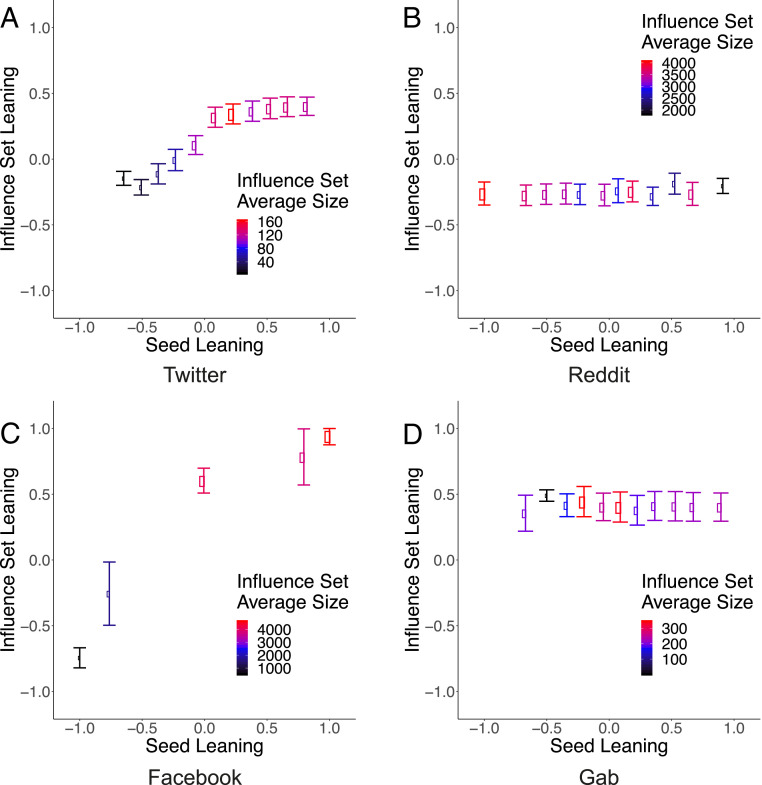
- Information diffusion is biased toward like-minded users on Facebook and Twitter, where the average leaning of a user’s influence set approximates the seed user’s leaning; on Reddit and Gab, the average leaning of the influence set does not depend on the seed user’s leaning.
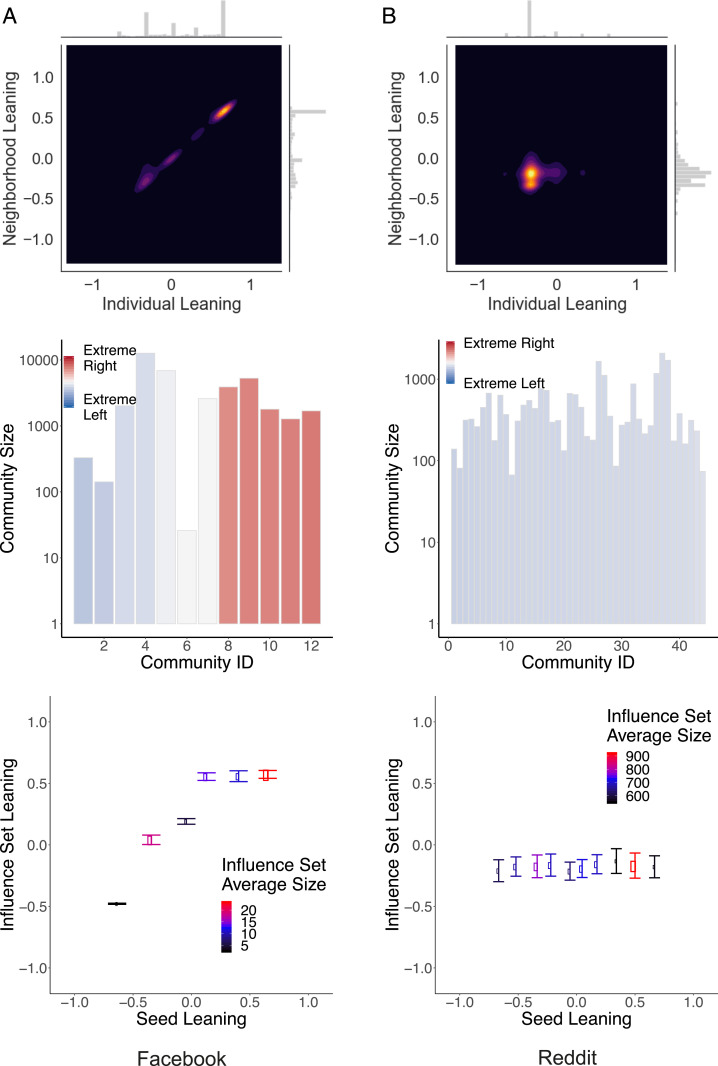
- In a direct comparison on news consumption, Facebook shows higher segregation than Reddit across all three measures: user-neighbor leaning correlation, community leaning, and SIR influence-set leaning.
- The study analyzes more than 100 million unique pieces of content and more than 1 million active users, with news outlets labeled using 2,190 media sources from Media Bias/Fact Check.
Methods
- Comparative analysis of Gab, Facebook, Reddit, and Twitter datasets on controversial topics including gun control, Obamacare, abortion, vaccines, science versus conspiracy, and news; main selected datasets were Abortion (Twitter), Vaccines (Facebook), Politics (Reddit), and Gab as a whole.
- Echo chambers were operationalized through two dimensions: homophily in interaction networks and bias in information diffusion toward like-minded peers. User leaning was inferred from linked news outlets, likes, or content, and interaction networks were built from follows, comments, cocomments, submissions, or replies depending on platform.
- Analyses included correlation between user leaning and average neighbor leaning, Louvain community detection, and SIR simulations to measure influence sets; SIR recovery rate was fixed at ν = 0.2, with dataset-specific infection ratios.
Limitations
- The paper states that the next envisioned step is to address the temporal dimension of echo chambers and how platform-specific social feedback mechanisms impact their formation.
- Evident from the text: leaning coverage varies strongly by platform, from 0.90–1.00 for Twitter/Facebook datasets to 0.15–0.20 for Reddit and 0.13 for Gab, so leaning-based conclusions for Reddit and Gab rest on a small classified fraction of users.
- Evident from the text: datasets differ by platform and topic, and the direct cross-platform comparison on a common topic is limited to news consumption on Facebook and Reddit; the authors also note that Reddit/Gab results could mean either no echo-chamber effect or observation inside a single echo chamber.
Model-written summary. Check it against the paper before relying on it.
Integrity signals
Registry
Cites
Statistics
Figures
Verification
Claims the paper makes
8 Valid · 1 Not valid · 7 Not checked · 38 Own results and interpretations
The cited sources support only part of this claim — read each source’s verdict below.
In the paper
“Selective exposure (19) and confirmation bias (20) (i.e., the tendency to seek information adhering to preexisting opinions) may explain the emergence of echo chambers on social media (1, 17, 21, 22).”
§ The echo chamber effect on social media > Abstract
What the sources say
- Supportedcites [1] M. Del Vicario, The spreading of misinformation online. Proc. Natl. Acad. Sci. U.S.A. 113, 554– 559 (2016). 26729863 PMC4725489 source
The Abstract says selective exposure generates homogeneous clusters, which it calls echo chambers. The Results and Discussion section says users select content matching a narrative and suggests confirmation bias determines echo-chamber formation. Page numbers are not provided in our copy. (LLM, conf=0.94)
- Partly supportedcites [17] K. Garimella, G. De Francisci Morales, A. Gionis, M. Mathioudakis, “ The effect of collective attention on controversial debates on social media” in WebSci ’17: 9th International ACM Web Science Conference (Association for Computing Machinery, New York, NY, 2017), pp. 43– 52. sourceExperimental — accuracy not yet measured
The Introduction reports that users mostly interact within their own side and endorse opinions from that side’s core. Related Work reports that users spread information faster when it agrees with their position. These passages are consistent with selective exposure, but the paper does not identify confirmation bias or establish that either tendency causes echo chambers to emerge. (LLM, conf=0.82)
- Supportedcites [21] M. Del Vicario, Echo chambers: Emotional contagion and group polarization on Facebook. Sci. Rep. 6, 37825 (2016). 27905402 PMC5131349 source
The Abstract says social-media disintermediation encourages users to select information that fits their beliefs (confirmation bias) and form like-minded groups (echo chambers). The Conclusions likewise describe Facebook as suited to the emergence of echo chambers. This supports the proposed explanation, without claiming it is the only cause. (LLM, conf=0.93)
- Supportedcites [22] A. Bessi, Science vs conspiracy: Collective narratives in the age of misinformation. PloS One 10, e0118093 (2015). 25706981 PMC4338055 source
The Introduction (page unavailable) says users consuming opposing information tend to form isolated clusters and describes polarized users whose likes are almost exclusively on one category of pages. The Conclusions (page unavailable) link information evaluation to existing beliefs. Together, these passages support the hedged explanation that selective exposure and confirmation bias may contribute to echo chambers. (LLM, conf=0.86)
hedgedstates a possible cause- Asserted: passes — The authors put it forward as true.
- Checkable: passes — It can be checked against evidence.
- Load-bearing: passes — The paper’s conclusions depend on it.
- Based: passes — The paper gives a reason why it holds.
- Supported
The cited sources support only part of this claim — read each source’s verdict below.
In the paper
“Our attention span remains limited (9, 10), and feed algorithms might limit our selection process by suggesting contents similar to the ones we are usually exposed to (11–13).”
§ The echo chamber effect on social media > Abstract
What the sources say
- Not checked — no full text of the sourcecites [11] A. L. Schmidt, Anatomy of news consumption on Facebook. Proc. Natl. Acad. Sci. U.S.A. 114, 3035– 3039 (2017). 28265082 PMC5373354 source
- Partly supportedcites [12] M. Cinelli, The COVID-19 social media infodemic. Sci. Rep. 10, 16598 (2020). 33024152 PMC7538912 sourceExperimental — accuracy not yet measured
The Introduction (page not provided) says algorithms take users’ preferences and attitudes into account when promoting content, and that users tend to seek information aligned with their worldviews. It does not say that feed algorithms suggest content similar to what users have previously seen or thereby limit their selection. (LLM, conf=0.82)
- Not checked — no full text of the sourcecites [13] E. Bakshy, S. Messing, L. A. Adamic, Exposure to ideologically diverse news and opinion on Facebook. Science 348, 1130– 1132 (2015). 25953820 source
hedgedstates a possible cause- Asserted: passes — The authors put it forward as true.
- Checkable: passes — It can be checked against evidence.
- Load-bearing: passes — The paper’s conclusions depend on it.
- Based: passes — The paper gives a reason why it holds.
Every source the paper cites for this claim was checked and supports it.
In the paper
“Online polarization, for instance, may foster misinformation spreading (1, 8).”
§ The echo chamber effect on social media > Abstract
What the sources say
- Supportedcites [1] M. Del Vicario, The spreading of misinformation online. Proc. Natl. Acad. Sci. U.S.A. 113, 554– 559 (2016). 26729863 PMC4725489 source
The Significance section says that homogeneity and polarization are main determinants of rumor-cascade size. The Conclusions also link polarized communities with the proliferation of narratives fueled by unsubstantiated rumors, supporting the hedged claim that online polarization may foster misinformation spreading. (LLM, conf=0.91)
- Supportedcites [8] M. D. Vicario, W. Quattrociocchi, A. Scala, F. Zollo, Polarization and fake news: Early warning of potential misinformation targets. ACM Trans. Web 13, 1– 22 (2019). source
The Introduction states that misinformation spreading on social media is directly related to increasing user polarization and segregation. This supports the citing sentence’s hedged claim that online polarization may foster misinformation spreading. (LLM, conf=0.94)
hedgedstates a possible cause- Asserted: passes — The authors put it forward as true.
- Checkable: passes — It can be checked against evidence.
- Load-bearing: unclear — It is unclear whether the paper’s conclusions depend on it.
- Based: passes — The paper gives a reason why it holds.
- Supported
Every source the paper cites for this claim was checked and supports it.
In the paper
“In network terms, this translates into a node i with a given leaning xi more likely to be connected with nodes with a leaning close to xi (18).”
§ The echo chamber effect on social media > Comparative Analysis > Polarization and Homophily in the Interaction Networks.
What the sources say
- Supportedcites [18] W. Cota, S. C. Ferreira, R. Pastor-Satorras, M. Starnini, Quantifying echo chamber effects in information spreading over political communication networks. EPJ Data Sci. 8, 35 (2019). source
The paper’s “Topological evidence of echo chambers” section says that a node with political position Pᵢ is connected with nodes whose positions are close to Pᵢ. It also reports a strong correlation between users’ positions and their neighbors’ average positions, supporting the citing sentence’s probabilistic paraphrase. (LLM, conf=0.94)
hedgedstates an association- Asserted: passes — The authors put it forward as true.
- Checkable: passes — It can be checked against evidence.
- Load-bearing: passes — The paper’s conclusions depend on it.
- Based: passes — The paper gives a reason why it holds.
- Supported
A result the paper reports from its own data — it cites no other source for it, so there is none to check. The quote shows it is in the paper.
In the paper
“Furthermore, the almost total absence of communities with leaning very close to 0 confirms the polarized state of the systems.”
§ The echo chamber effect on social media > Comparative Analysis > Polarization and Homophily in the Interaction Networks.
boostedstates a cause- Asserted: passes — The authors put it forward as true.
- Checkable: passes — It can be checked against evidence.
- Load-bearing: passes — The paper’s conclusions depend on it.
- Based: passes — The paper gives a reason why it holds.
- Rests on 4 assumptions not shown here.
32 more claims
Create a free account to see all 54 claims and to verify the 2 references still open.
- It may state two separate claims as one. 9
- Probably not a substantial claim. 9
Claims other papers make about this one
Each is checked against this paper’s own text: does it say what the citing paper says it does?
The source backs part of the claim, not all of it — or backs it for a different population, condition or comparison.
In the citing paper
“engagement with political content online is generally associated with high levels of ingroup bias; that is, it is far more likely to be shared within the political ingroup than in the outgroup (18, 19, 16).”
From Troll and divide: the language of online polarization (2022) · cites this paper as [16]
Experimental — accuracy not yet measuredThe source backs part of the claim, not all of it — or backs it for a different population, condition or comparison.
In the citing paper
“This challenge is reflected in research on”
From Machine culture (2023) · cites this paper as [142]
Experimental — accuracy not yet measuredThe source backs part of the claim, not all of it — or backs it for a different population, condition or comparison.
In the citing paper
“Thus, combating social media's echo chamber effect through an active exposure to diverse perspectives and networks also represents a viable individual-level strategy for addressing the deepfake problem (Cinelli et al., 2021; Gillani et al., 2018).”
From Deepfakes: Deceptions, mitigations, and opportunities (2023) · cites this paper as Cinelli et al., 2021
Experimental — accuracy not yet measuredThe source backs part of the claim, not all of it — or backs it for a different population, condition or comparison.
In the citing paper
“Even without being designed to shift opinions, it has been found that algorithms may contribute to political polarization by reinforcing divisive opinions [9, 24, 32].”
From Co-Writing with Opinionated Language Models Affects Users’ Views (2023) · cites this paper as [32]
Experimental — accuracy not yet measuredThe source backs part of the claim, not all of it — or backs it for a different population, condition or comparison.
In the citing paper
“On Reddit, studies find minimal evidence of echo chambers due to platform features encouraging cross-cutting exposure [17,61,63].”
From A systematic review of echo chamber research: comparative analysis of conceptualizations, operationalizations, and varying outcomes (2025) · cites this paper as [17]
Experimental — accuracy not yet measured
5 more claims about this paper
Create a free account to see every claim other papers make about this one.
Citations
Cites
Fast unfolding of communities in large networks
Blondel, V. D., Guillaume, J.-L., Lambiotte, R., & Lefebvre, E. (2008) · Journal of Statistical Mechanics: Theory and Experiment · doi:10.1088/1742-5468/2008/10/p10008 · Cited by 21,424 · cited 1×
“We detected communities by applying the Louvain algorithm (41), removing singleton communities with only one user.”
MethodThe spread of true and false news online
Vosoughi, S., Roy, D., & Aral, S. (2018) · Science · doi:10.1126/science.aap9559 · Cited by 8,847 · cited 1×
“A recent study (7) limited to Twitter claimed that fake news travels faster than real news.”
BackgroundConfirmation Bias: A Ubiquitous Phenomenon in Many Guises
Nickerson, R. S. (1998) · Review of General Psychology · doi:10.1037/1089-2680.2.2.175 · Cited by 7,267 · cited 1×
“Selective exposure (19) and confirmation bias (20) (i.e., the tendency to seek information adhering to preexisting opinions) may explain the emergence of echo chambers on social media (1, 17, 21, 22).”
BackgroundInfectious Diseases of Humans: Dynamics and Control
Anderson, R. M., & May, R. M. (1991) · doi:10.1093/oso/9780198545996.001.0001 · Cited by 6,179
Lazer, D. M. J., Baum, M. A., Benkler, Y., Berinsky, A. J., Greenhill, K. M., Menczer, F., Metzger, M. J., Nyhan, B., Pennycook, G., Rothschild, D., et al. (2018) · Science · doi:10.1126/science.aao2998 · Cited by 4,160
Degroot, M. H. (1974) · Journal of the American Statistical Association · doi:10.1080/01621459.1974.10480137 · Cited by 4,004 · cited 1×
“For instance, if opinions are assumed to be embedded in a onedimensional space (38), x ∈ [−1,+1] without loss of generality, as usual for controversial topics, then polarization is characterized by two well-separated peaks in P(x ), for positive and negative opinions.”
BackgroundExposure to ideologically diverse news and opinion on Facebook
Bakshy, E., Messing, S., & Adamic, L. A. (2015) · Science · doi:10.1126/science.aaa1160 · Cited by 3,245 · cited 2×
“Our attention span remains limited (9, 10), and feed algorithms might limit our selection process by suggesting contents similar to the ones we are usually exposed to (11–13).”
BackgroundThe spreading of misinformation online
Del Vicario, M., Bessi, A., Zollo, F., Petroni, F., Scala, A., Caldarelli, G., Stanley, H. E., & Quattrociocchi, W. (2016) · Proceedings of the National Academy of Sciences · doi:10.1073/pnas.1517441113 · Cited by 2,407 · cited 2×
“, the tendency to seek information adhering to preexisting opinions) may explain the emergence of echo chambers on social media (1, 17, 21, 22).”
BackgroundSelf-citationThe COVID-19 social media infodemic
Cinelli, M., Quattrociocchi, W., Galeazzi, A., Valensise, C. M., Brugnoli, E., Schmidt, A. L., Zola, P., Zollo, F., & Scala, A. (2020) · Scientific Reports · doi:10.1038/s41598-020-73510-5 · Cited by 2,313
Self-citationFilter Bubbles, Echo Chambers, and Online News Consumption
Flaxman, S., Goel, S., & Rao, J. M. (2016) · Public Opinion Quarterly · doi:10.1093/poq/nfw006 · Cited by 1,992
Research works printed but not linked: 2
- R. M. Anderson, R. M. May, Infectious Diseases in Humans (Oxford University Press, Oxford, United Kingdom, 1992).
- M. Cinelli, G. De Francisci Morales, A. Galeazzi, W. Quattrociocchi, M. Starnini, The echo chamber effect on social media. Open Science Framework. https://osf.io/x92br/?view_only=cdcc87d30e404e01b6ae316db15e3375. Deposited 22 January 2021. PMC7936330 33622786
Cited by
Items 101–200 of 2,063
Yu, X., Wojcieszak, M., & Casas, A. (2023) · Political Behavior · doi:10.1007/s11109-022-09850-x · Cited by 85
“Citizens mostly follow congenial accounts on social media and discuss politics with their partisan in-group (e.g., Cinelli et al., 2021; Himelboim et al., 2013; Wojcieszak et al., 2022), thus avoiding threats to partisan identity.”
Ionescu, C. G., & Licu, M. (2023) · Social Sciences · doi:10.3390/socsci12080465 · Cited by 98
“…outcomes, to the “echo-chamber” effect to isolation, rigid policy attitudes or radicalization in various aspects of personal values and beliefs with a major potential societal impact not yet fully addressed (Binder and Kenyon 2022; Cinelli et al. 2021; Boucher et al. 2021; Sasahara et al. 2021).”
BackgroundPeralta, A. F., Neri, M., Kertész, J., & Íñiguez, G. (2021) · Physical review. E · doi:10.1103/physreve.104.044312 · Cited by 76
“Algorithmic bias, an unexpected consequence of the content filtering tools behind most popular social media platforms used today, affects the dynamics of opinion formation and information spreading arising from digital interactions in nontrivial ways, ultimately leading to undesired collective phenomena such as group…”
BackgroundLearning from Shared News: When Abundant Information Leads to Belief Polarization
Bowen, T. R., Dmitriev, D., & Galperti, S. (2023) · The Quarterly Journal of Economics · doi:10.1093/qje/qjac045 · Cited by 68
Artificial Intelligence and Autonomy: On the Ethical Dimension of Recommender Systems
Bonicalzi, S., De, M., & Giovanola, B. (2023) · Topoi · doi:10.1007/s11245-023-09922-5 · Cited by 76
“To handle and personalize recommendations or feed “homophilic clusters” of users (Cinelli et al. 2021), RSs rely on a variety of methods the most widespread of which are collaborative filtering and content-based methods, which are more and more coupled into hybrid recommendation approaches…”
BackgroundMethodCurrent and Near-Term AI as a Potential Existential Risk Factor
Bucknall, B. S., & Dori-Hacohen, S. (2022) · Proceedings of the AAAI/ACM Conference on AI Ethics and Society · doi:10.1145/3514094.3534146 · Cited by 83
“‘Filter bubbles’ refer to the feedback loops formed whereby a user is shown search or social media results that align with their existing preferences, leading to ever-increasing levels of confirmation bias [66, 81], which significantly exacerbate the pre-internet phenomenon of echo chambers [23].”
BackgroundThe complex link between filter bubbles and opinion polarization
Keijzer, M. A., & Mäs, M. (2022) · Data Science · doi:10.3233/ds-220054 · Cited by 61
Bruno, M., Lambiotte, R., & Saracco, F. (2022) · EPJ Data Science · doi:10.1140/epjds/s13688-022-00330-0 · Cited by 40
Network segregation and the propagation of misinformation
Stein, J., Keuschnigg, M., & van de Rijt, A. (2023) · Scientific Reports · doi:10.1038/s41598-022-26913-5 · Cited by 51
“Eight networks were maximally integrated and eight maximally segregated, representing two ideal-types that maximize our treatment as extreme cases of a continuum along which more and less segregated real-world online communities are positioned 7–9, 19, 20 , 32– 34 .”
BackgroundResultSocietal perceptions of aquaculture: Combining scoping review and media analysis
Budhathoki, M., Tunca, S., Martinez, R. L., Zhang, W., Li, S., Gallic, B. L., Brunsø, K., Sharma, P., Eljasik, P., Gyalog, G., et al. (2024) · Reviews in Aquaculture · doi:10.1111/raq.12927 · Cited by 52
AI and the problem of knowledge collapse
Peterson, A. J. (2025) · AI & Society · doi:10.1007/s00146-024-02173-x · Cited by 130
“Like other media transitions before it (Wu 2011), the rise of internet search algorithms and of social media raised concerns about the nature and distribution of information people are exposed to, and the downstream effects on attitudes and political polarization (Cinelli et al. 2021; Barberá 2020).”
Echo chambers and information transmission biases in homophilic and heterophilic networks
Diaz-Diaz, F., Miguel, M. S., & Meloni, S. (2022) · Scientific Reports · doi:10.1038/s41598-022-13343-6 · Cited by 50
The drivers of online polarization: Fitting models to data
Valensise, C. M., Cinelli, M., & Quattrociocchi, W. (2023) · Information Sciences · doi:10.1016/j.ins.2023.119152 · Cited by 61
“Further details on the employed datasets and on the data collection are reported in Supplementary Information and in reference [15].”
BackgroundMethodResultInfluentialSelf-citationPurnat, T. D., Nguyen, T., & Briand, S. C. (2023) · Springer eBooks · doi:10.1007/978-3-031-27789-4 · Cited by 70
Coevolutionary Dynamics of Actions and Opinions in Social Networks
Aghbolagh, H. D., Ye, M., Zino, L., Chen, Z., & Cao, M. (2023) · IEEE Transactions on Automatic Control · doi:10.1109/tac.2023.3290771 · Cited by 51
“Specifically, in Section V-A, wederiveanalyticalresults,supportedbynumericalsimulations, toshowthattheproposedcoevolutionarydynamicscanleadto theemergenceandpersistenceofpolarizationinapopulation, whichisatypicalphenomenonofmanysocialsystems[44], [45].”
BackgroundThe systemic impact of deplatforming on social media
Mekacher, A., Falkenberg, M., & Baronchelli, A. (2023) · PNAS Nexus · doi:10.1093/pnasnexus/pgad346 · Cited by 68
“However, in this politically homogeneous environment, users are essentially confined to an ideological “echo-platform” (44, 45) where they cannot engage and confront their political opponents.”
Lin, C., Parker, T., Pejavara, K., Smith, D. A., Tu, R., & Tu, P. (2022) · Vaccines · doi:10.3390/vaccines10091402 · Cited by 46
“In the case of the measles outbreak of 2019, social media provided connections that allowed for the spread of “anti-vaccine” sentiments [24], and this homophily in personal or virtual networks can create echo chambers when online platforms provide users with information similar to their existing stance [25].”
BackgroundBlandi, L., Sabbatucci, M., Dallagiacoma, G., Alberti, F., Bertuccio, P., & Odone, A. (2022) · Vaccines · doi:10.3390/vaccines10111822 · Cited by 65
“Indeed, aggregation in homophilic clusters of users dominates online dynamics, which show clear differences between several social media platforms [14].”
BackgroundFighting the infodemic: the 4 i Framework for Advancing Communication and Trust
Sundelson, A. E., Jamison, A., Huhn, N., Pasquino, S.-L., & Sell, T. K. (2023) · BMC Public Health · doi:10.1186/s12889-023-16612-9 · Cited by 51
“…complex and contested, but scholars have highlighted the role of platform algorithms and echo chambers (online environments in which individuals only see content that aligns with their pre-existing beliefs), both of which may facilitate selective exposure to (potentially false) information [8–10].”
BackgroundTikTok-inspired self-diagnosis and its implications for educational psychology practice
Foster, A., & Ellis, N. (2024) · Educational Psychology in Practice · doi:10.1080/02667363.2024.2409451 · Cited by 62
“According to research by Cinelli et al. (2021), this concern is not without cause; feed-based algorithms are far more likely to foster an echo chamber effect which reinforces users’ existing beliefs.”
The Political Landscape of the U.S. Twitterverse
Mukerjee, S., Jaidka, K., & Lelkes, Y. (2022) · Political Communication · doi:10.1080/10584609.2022.2075061 · Cited by 49
“Similarly, Cinelli et al. (2021) did a comparative analysis of 100 million posts on political topics, collected from Facebook, Twitter, and Reddit to understand how partisans interacted with those posts and shared those posts.”
BackgroundInformation cocoons in online navigation
Hou, L., Pan, X., Liu, K., Yang, Z., Liu, J.-G., & Zhou, T. (2022) · iScience · doi:10.1016/j.isci.2022.105893 · Cited by 44
Auditing Entertainment Traps on YouTube: How Do Recommendation Algorithms Pull Users Away from News
Huang, S., & Tian, Y. (2024) · Political Communication · doi:10.1080/10584609.2024.2343769 · Cited by 52
“Previous studies have examined whether algorithms facilitate ideological homophily in news consumption at the outlet level (e.g., Cardenal et al., 2019; Cinelli et al., 2021; Flaxman et al., 2016) but have found mixed evidence.”
Interpretable fake news detection with topic and deep variational models
Hosseini, M., Sabet, A. J., He, S., & Aguiar, D. (2023) · Online Social Networks and Media · doi:10.1016/j.osnem.2023.100249 · Cited by 47
Blösser, M., & Weihrauch, A. (2023) · European Journal of Marketing · doi:10.1108/ejm-01-2023-0009 · Cited by 49
A Systematic Review of Worldwide Causal and Correlational Evidence on Digital Media and DemocracyPreprint
Lorenz-Spreen, P., Oswald, L., Lewandowsky, S., & Hertwig, R. (2021) · doi:10.31235/osf.io/p3z9v · Cited by 35
On the impossibility of breaking the echo chamber effect in social media using regulation
Avin, C., Daltrophe, H., & Lotker, Z. (2024) · Scientific Reports · doi:10.1038/s41598-023-50850-6 · Cited by 58
“Echo chambers, informally, limit the exposure of a message to diverse perspectives and favor or reinforce similar narratives 9,32 .”
BackgroundCan Media Literacy Intervention Improve Fake News Credibility Assessment? A Meta-Analysis
Lu, C. F., Hu, B., Bao, M.-M., Wang, C., Bi, C., & Ju, X. (2024) · Cyberpsychology Behavior and Social Networking · doi:10.1089/cyber.2023.0324 · Cited by 90
“23–25 Current approaches to combat fake news include de-bunking, increasing government regulation, improving social media structures, and enhancing individual capacity.”
Falkenberg, M., Zollo, F., Quattrociocchi, W., Pfeffer, J., & Baronchelli, A. (2024) · Nature Communications · doi:10.1038/s41467-024-53868-0 · Cited by 75
“In the social media literature, such structures are often referred to as echo chambers 30,73 given that partisan homo-phily means that individuals are predominantly exposed to content from like-minded individuals and do not appear willing to engage in active conversation with political opponents.”
Self-citationSystem 0: Transforming Artificial Intelligence into a Cognitive Extension
Chiriatti, M., Ganapini, M. B., Panai, E., Wiederhold, B. K., & Riva, G. (2025) · Cyberpsychology Behavior and Social Networking · doi:10.1089/cyber.2025.0201 · Cited by 67
“For example, a cross-platform study by Cinelli, Quattrociocchi and colleagues 22 found that social media ’ s AI-curated feeds cluster like-minded users together, signi fi cantly intensifying ideo-logical segregation.”
Entropy and complexity unveil the landscape of memes evolution
Valensise, C. M., Serra, A. O. G., Galeazzi, A., Etta, G., Cinelli, M., & Quattrociocchi, W. (2021) · Scientific Reports · doi:10.1038/s41598-021-99468-6 · Cited by 49
Self-citationLOCO: The 88-million-word language of conspiracy corpus
Miani, A., Hills, T. T., & Bangerter, A. (2021) · Behavior Research Methods · doi:10.3758/s13428-021-01698-z · Cited by 59
Scheibenzuber, C., Neagu, L.-M., Ruşeţi, Ş., Artmann, B., Bartsch, C., Kubik, M., Dascălu, M., Trăușan-Matu, Ș., & Nistor, N. (2022) · Computers in Human Behavior · doi:10.1016/j.chb.2022.107587 · Cited by 52
AgentReview: Exploring Peer Review Dynamics with LLM Agents
Jin, Y., Zhao, Q., Wang, Y., Chen, H., Zhu, K., Xiao, Y., & Wang, J. (2024) · arXiv · doi:10.48550/arxiv.2406.12708 · Cited by 34
“3.1.2); • Groupthink and Echo Chamber Effects [22, 23].”
BackgroundInfluentialIt matters what you see: Graphic media images of war and terror may amplify distress
Holman, E. A., Garfin, D. R., & Silver, R. C. (2024) · Proceedings of the National Academy of Sciences · doi:10.1073/pnas.2318465121 · Cited by 61
“As we saw soon after the start of the war in Ukraine in February 2022, gruesome pictures have prolifer - ated on Instagram, TikTok, Facebook, X/Twitter, and YouTube, with sophisticated algorithms presenting more disturbing images to individuals as they continue to click (1).”
BackgroundAgentReview: Exploring Peer Review Dynamics with LLM Agents
Jin, Y., Zhao, Q., Wang, Y., Chen, H., Zhu, K., Xiao, Y., & Wang, J. (2024) · Proceedings of the 2024 Conference on Empirical Methods in Natural Language Processing · doi:10.18653/v1/2024.emnlp-main.70 · Cited by 218
Depolarization of echo chambers by random dynamical nudge
Currin, C. B., Vera, S. V., & Khaledi‐Nasab, A. (2022) · Scientific Reports · doi:10.1038/s41598-022-12494-w · Cited by 46
Maertens, R., Götz, F. M., Golino, H., Roozenbeek, J., Schneider, C. R., Kyrychenko, Y., Kerr, J. R., Stieger, S., McClanahan, W. P., Drabot, K., et al. (2021) · doi:10.31234/osf.io/gk68h · Cited by 31
Poon, H., & Tse, T. (2022) · New Media & Society · doi:10.1177/14614448221097305 · Cited by 36
“…networking sites such as Facebook, Twitter and Instagram are said to easily produce online echo chambers, as their news feed algorithms and personalised interfaces tend to reinforce similar narratives, political leanings and attitudes while limiting diversity of perspectives (Cinelli et al., 2021).”
BackgroundKantian Ethics and the Attention Economy: Duty and Distraction
Aylsworth, T., & Castro, C. (2024) · Springer eBooks · doi:10.1007/978-3-031-45638-1 · Cited by 37
Temporal dynamics of coordinated online behavior: Stability, archetypes, and influence
Tardelli, S., Nizzoli, L., Tesconi, M., Conti, M., Nakov, P., Martino, G. D. S., & Cresci, S. (2024) · Proceedings of the National Academy of Sciences · doi:10.1073/pnas.2307038121 · Cited by 68
“Overall, our results confirm the similarity between the interests and viewpoints of stationary users and those of the CC to which they belong, consistently with the established literature on echo chambers [43].”
BackgroundResultLandicho‐Guevarra, J., Reñosa, M. D. C., Wachinger, J., Endoma, V., Aligato, M. F., Bravo, T. A., Landicho, J., Bärnighausen, K., & McMahon, S. A. (2021) · BMJ Global Health · doi:10.1136/bmjgh-2021-006529 · Cited by 43
Ismail, N., Ismail, D. K. B., Farrell, T., & Kane, A. (2022) · JMIR Formative Research · doi:10.2196/38794 · Cited by 37
“Cinelli et al [15] argued that echo chambers limit exposure to diverse perspectives and favor and reinforce presupposed narratives and ideologies.”
BackgroundGwebu, K. L., Wang, J., & Zifla, E. (2021) · Behaviour and Information Technology · doi:10.1080/0144929x.2021.2002932 · Cited by 47
“…(fear of missing out, leading to compulsive social media use), negative social comparison, and an increase in consumption and sharing of fake news (Bakshy, Messing, and Adamic 2015; Blackwell et al. 2017; Cinelli et al. 2021; Dhir et al. 2018, 2019; Talwar et al. 2019, 2020; Tandon et al. 2020).”
BackgroundOpinion amplification causes extreme polarization in social networks
Lim, S. L., & Bentley, P. J. (2022) · Scientific Reports · doi:10.1038/s41598-022-22856-z · Cited by 48
“An individual i ’s expressed opinion is calculated as follows: (3) Oi,t = ”
BackgroundMethodSuk, J., Zhang, Y., Yue, Z., Wang, R., Dong, X., Yang, D., & Lian, R. (2023) · Communication Research · doi:10.1177/00936502231154146 · Cited by 35
“…sexual violence, their passionate expression of opinions about feminism within their congenial social networks on social media (Barberá, 2020; Cinelli et al., 2021) can strengthen their attitudes and values, thus intensifying their tendency to participate in subsequent calls to action…”
BackgroundEngagement with fact-checked posts on Reddit
Bond, R. M., & Garrett, R. K. (2023) · PNAS Nexus · doi:10.1093/pnasnexus/pgad018 · Cited by 30
“There is, however, evidence that the relationship between human nature and the capabilities afforded by technology is often more complex (9, 10).”
How strong is the association between social media use and false consensus?
Bunker, C. J., & Varnum, M. E. W. (2021) · Computers in Human Behavior · doi:10.1016/j.chb.2021.106947 · Cited by 30
Baronchelli, A. (2024) · Philosophical Transactions of the Royal Society B: Biological Sciences · doi:10.1098/rstb.2023.0028 · Cited by 29
Beuckels, E., & Wolf, R. P. D. (2024) · Information Communication & Society · doi:10.1080/1369118x.2024.2334913 · Cited by 54
“For instance, due to social media algorithms and individuals’ natural inclination towards selective avoidance (i.e., actively ignoring differing opinions), some scholars suggests that social media users frequently operate in ‘echo chambers’ or ‘filter bubbles’ (Cinelli et al., 2021).”
From Facebook to YouTube: The Potential Exposure to COVID-19 Anti-Vaccine Videos on Social Media
Gruzd, A. A., Abul‐Fottouh, D., Song, M. Y., & Saiphoo, A. (2023) · Social Media + Society · doi:10.1177/20563051221150403 · Cited by 43
“This creates a so-called “echo chamber,” a phenomenon where individuals are constantly exposed only to messages that support their personal views (Cinelli et al., 2021).”
BackgroundWhat’s so bad about echo chambers?
Ranalli, C., & Malcom, F. (2023) · Inquiry · doi:10.1080/0020174x.2023.2174590 · Cited by 47
Evaluating the effect of viral posts on social media engagement
Sangiorgio, E., Marco, N. D., Etta, G., Cinelli, M., Cerqueti, R., & Quattrociocchi, W. (2025) · Scientific Reports · doi:10.1038/s41598-024-84960-6 · Cited by 67
Self-citationItalian Twitter semantic network during the Covid-19 epidemic
Mattei, M., Caldarelli, G., Squartini, T., & Saracco, F. (2021) · EPJ Data Science · doi:10.1140/epjds/s13688-021-00301-x · Cited by 32
“In the present paper, as well as in previous ones by the same authors, we will avoid the term echo chamber, due to its different usage in the literature: while in [42], Twitter echo chambers are defined via the patterns of news consumption (news outlets are given a political orientation and the user is given a members…”
MethodPerspective-Taking to Reduce Affective Polarization on Social Media
Saveski, M., Gillani, N., Yuan, A., Vijayaraghavan, P., & Roy, D. (2022) · Proceedings of the International AAAI Conference on Web and Social Media · doi:10.1609/icwsm.v16i1.19343 · Cited by 28
“…media platforms like Facebook and Twitter, where politically-active users generally tend to connect with and consume content from sources that align with their political views (Bakshy, Messing, and Adamic 2015; Conover et al. 2011; Cossard et al. 2020; Garimella et al. 2021; Cinelli et al. 2021).”
BackgroundImplications of AI in National Security: Understanding the Security Issues and Ethical Challenges
Yu, S., & Carroll, F. (2021) · Advanced sciences and technologies for security applications · doi:10.1007/978-3-030-88040-8_6 · Cited by 53
Using social media in pre-service teacher education: The case of a program-wide Twitter hashtag
Carpenter, J. P., Morrison, S. A., Rosenberg, J. M., & Hawthorne, K. A. (2023) · Teaching and Teacher Education · doi:10.1016/j.tate.2023.104036 · Cited by 41
Nothing Stands Alone: Relational Fake News Detection with Hypergraph Neural Networks
Jeong, U., Ding, K., Cheng, L., Guo, R., Shu, K., & Liu, H. (2022) · IEEE International Conference on Big Data (BigData) · doi:10.1109/bigdata55660.2022.10020234 · Cited by 50
“Further, the echo chamber effect [3] reinforces this prism of reality among people who share the same opinion.”
Backgroundvan der Linden, S., Albarracín, D., Fazio, L. K., Freelon, D., Roozenbeek, J., Swire‐Thompson, B., & Bavel, J. J. V. (2023) · PsycEXTRA Dataset · doi:10.1037/e506432023-001 · Cited by 34
Success-driven opinion formation determines social tensions
Chica, M., Perc, M., & Santos, F. C. (2024) · iScience · doi:10.1016/j.isci.2024.109254 · Cited by 26
He, Q., Wei, F., Zhang, K., Zhong, R., Kong, F., & Qi, Y. (2024) · Journal of Environmental Management · doi:10.1016/j.jenvman.2024.121175 · Cited by 34
Krause, N. M., Freiling, I., & Scheufele, D. A. (2025) · Proceedings of the National Academy of Sciences · doi:10.1073/pnas.2400928121 · Cited by 39
“For now, part of the answer may have to do with evidence that echo chambers are more likely to form on some plat - forms than others ( 66 ).”
Mean-field theory of social laser
Alodjants, A. P., Bazhenov, A. Y., Khrennikov, A. Y., & Bukhanovsky, A. V. (2022) · Scientific Reports · doi:10.1038/s41598-022-12327-w · Cited by 36
“55 .”
Actively open-minded thinking is key to combating fake news: A multimethod study
Mirhoseini, M., Early, S., Shamy, N. E., & Hassanein, K. (2023) · Information & Management · doi:10.1016/j.im.2023.103761 · Cited by 56
Mikhaeil, C. A., & Baskerville, R. (2023) · Information Systems Journal · doi:10.1111/isj.12427 · Cited by 43
“Social media platforms power up online communities demonstrating strong polarisation and forming echo chambers (e.g., Bessi et al., 2015; Cinelli et al., 2021; Del Vicario et al., 2016).”
BackgroundA Multi-Agent System for Fine-Grained Opinion Dynamics Analysis in Online Social Networks
Min, H., Cao, J., Ge, J., & Liu, B. (2022) · IEEE Transactions on Computational Social Systems · doi:10.1109/tcss.2022.3219036 · Cited by 31
Envy, Social Comparison, and Depression on Social Networking Sites: A Systematic Review
Carraturo, F., Perna, T. D., Giannicola, V., Nacchia, M. A., Pepe, M., Muzii, B., Bottone, M., Sperandeo, R., Bochicchio, V., Maldonato, M. N., et al. (2023) · European Journal of Investigation in Health Psychology and Education · doi:10.3390/ejihpe13020027 · Cited by 55
“Future research should therefore expand the variety of SM platforms studied, as the specific affordances and design features of each website or app may foster different forms of user interaction [87].”
BackgroundCross-platform social dynamics: an analysis of ChatGPT and COVID-19 vaccine conversations
Alipour, S., Galeazzi, A., Sangiorgio, E., Avalle, M., Bojić, L., Cinelli, M., & Quattrociocchi, W. (2023) · Scientific Reports · doi:10.1038/s41598-024-53124-x · Cited by 36
“This aligns with previous research, which found that online users are prone to engage with highly controversial topics such as climate change or health-related subjects 7,13 .”
BackgroundSelf-citationTang, X., Zhang, L., & Yuan, K. (2024) · Journal of Destination Marketing & Management · doi:10.1016/j.jdmm.2024.100859 · Cited by 41
Science denial and medical misinformation in pandemic times: A psycho-criminological analysis
Lavorgna, A., & Myles, H. (2021) · European Journal of Criminology · doi:10.1177/1477370820988832 · Cited by 37
Critical thinking as cooperation and its relation to mental health and social welfare
Ollinheimo, A., & Hakkarainen, K. (2022) · New Ideas in Psychology · doi:10.1016/j.newideapsych.2022.100988 · Cited by 29
Evidence of Demographic rather than Ideological Segregation in News Discussion on Reddit
Monti, C., D'Ignazi, J., Starnini, M., & De Francisci Morales, G. (2023) · Proceedings of the ACM Web Conference 2023 · doi:10.1145/3543507.3583468 · Cited by 26
“bers might not be an intrinsic characteristic of social media [15], but that the separation of demographic groups is observable during opinion formation online: fundamental societal divisions might be reflected also in social media.”
BackgroundInfluentialSelf-citationA principle‐based approach to AI: The case for European Union and Italy
Corea, F., Fossa, F., Loreggia, A., Quintarelli, S., & Sapienza, S. (2023) · AI & SOCIETY · doi:10.1007/s00146-022-01453-8 · Cited by 25
“The targeted re-pro-posal of similar content (so-called echo chamber), justified by the need to improve the user experience, risks compromising information pluralism (Cinelli et al. 2021).”
BackgroundAnalysis of Fluoride-Free Content on Twitter: Topic Modeling Study
Lotto, M., Hussain, I. Z., Kaur, J., Butt, Z. A., Cruvinel, T., & Morita, P. P. (2023) · Journal of Medical Internet Research · doi:10.2196/44586 · Cited by 30
“Notably, users tend to uncritically interact with posts associated with their health beliefs, reinforcing the genesis of echo chambers on social media [51,52].”
Algorithmic Institutionalism: The Changing Rules of Social and Political Life
Mendonça, R. F., Almeida, V. A. F., & Filgueiras, F. D. B. (2023) · doi:10.1093/oso/9780192870070.001.0001 · Cited by 70
Emotions unveiled: detecting COVID-19 fake news on social media
Farhoudinia, B., Öztürkcan, S., & Kasap, N. (2024) · Humanities and Social Sciences Communications · doi:10.1057/s41599-024-03083-5 · Cited by 37
“Social media platforms are structured to show that posts and news are aligned with users ’ ideas and beliefs, which is known as the root cause of the echo chamber effect (Cinelli et al., 2021).”
Saracini, C., Cornejo-Plaza, I., & Cippitani, R. (2025) · Frontiers in Psychology · doi:10.3389/fpsyg.2025.1662206 · Cited by 56
Coscia, M., & Rossi, L. (2022) · PLoS ONE · doi:10.1371/journal.pone.0263184 · Cited by 27
“Third, compared to existing research [20, 21] we have more realistic starting conditions of user opinions and of the underlying networks.”
MethodResultModrzejewska, A., Czepczor‐Bernat, K., Modrzejewska, J., Roszkowska, A., Zembura, M., & Matusik, P. (2022) · Frontiers in Pediatrics · doi:10.3389/fped.2022.993460 · Cited by 39
“Taking these actions is also important due to such phenomena as “echo chamber” (this can be defined as personalizing the content used on the Internet and matching it to the profile of a specific user, which means that we only receive information on social media that has been determined by appropriate algorithms as con…”
BackgroundEcho chambers and opinion dynamics explain the occurrence of vaccination hesitancy
Müller, J., Tellier, A., & Kurschilgen, M. J. (2022) · Royal Society Open Science · doi:10.1098/rsos.220367 · Cited by 36
“9 : 220367 themselves [60].”
Lin, H. Y., & Kim, Y. (2022) · Computers in Human Behavior · doi:10.1016/j.chb.2022.107558 · Cited by 33
A Minimum-Cost Consensus Model in Social Networks Derived From Uncertain Preferences
Gong, Z., Ma, X., Guo, W., et al. (2022) · IEEE Transactions on Systems Man and Cybernetics Systems · doi:10.1109/tsmc.2022.3225166 · Cited by 25
“Psychological researchers proposed that people often stick to the information circle that suits their preferences, leading to the “echo chamber effect” [53].”
BackgroundHatemongers ride on echo chambers to escalate hate speech diffusion
Goel, V., Sahnan, D., Dutta, S., Bandhakavi, A., & Chakraborty, T. (2023) · PNAS Nexus · doi:10.1093/pnasnexus/pgad041 · Cited by 25
“Most existing methods employ indirect signals, such as referring to some URLs that have been already identified for ideological leaning to define the opinion affinity of users and use that to discover echo chambers [19, 11, 41, 12].”
BackgroundMethodInfluentialNah, S., Williamson, L. D., Kahlor, L. A., Atkinson, L., Upshaw, S. J., & Ntang-Beb, J.-L. (2023) · Health Communication · doi:10.1080/10410236.2023.2244169 · Cited by 29
“In other words, social media’s algorithms tend to show content that is similar to what users were previously exposed to and prevent them from coming across content that calls their perspectives into question (Cinelli et al., 2021).”
Attention and counter-framing in the Black Lives Matter movement on Twitter
Klein, C., Reimann, R., Quintana, I. O., Cheong, M., Ferreira, M., & Alfano, M. (2022) · Humanities and Social Sciences Communications · doi:10.1057/s41599-022-01384-1 · Cited by 45
“Inasmuch as clusters of socially connected users are thus likely to be presented with broadly similar content (Barberá et al., 2015; Cinelli et al., 2021), and that content exhibits particular frames, algorithmic recommendation potentially sets up what, to repurpose a familiar phrase, can be aptly referred to as “fram…”
BackgroundQuantum-Mechanical Modelling of Asymmetric Opinion Polarisation in Social Networks
Maksymov, I. S., & Pogrebna, G. (2024) · Information · doi:10.3390/info15030170 · Cited by 31
Understanding anti-immigration sentiment spreading on Twitter
Nasuto, A., & Rowe, F. (2024) · PLoS ONE · doi:10.1371/journal.pone.0307917 · Cited by 42
Negative news headlines are more attractive: negativity bias in online news reading and sharing
Zhang, M., Wu, H., Huang, Y. Q., Han, R., Fu, X., Yuan, Z., & Liang, S. (2024) · Current Psychology · doi:10.1007/s12144-024-06646-6 · Cited by 46
Munusamy, S., Syasyila, K., Shaari, A. A. H., Pitchan, M. A., Kamaluddin, M. R., & Jatnika, R. (2024) · BMC Psychology · doi:10.1186/s40359-024-02129-2 · Cited by 63
“Furthermore, “echo chambers” on social media are a phenomenon that aids in the dissemination of fake news since people are more likely to come across and accept content that confirms their preconceived notions [53].”
The supply and demand of news during COVID-19 and assessment of questionable sources production
Gravino, P., Prevedello, G., Martina, G., & Loreto, V. (2022) · Nature Human Behaviour · doi:10.1038/s41562-022-01353-3 · Cited by 34
Political ideology and information technology in government online communication
DePaula, N. (2022) · Government Information Quarterly · doi:10.1016/j.giq.2022.101747 · Cited by 38
Biases in scholarly recommender systems: impact, prevalence, and mitigation
Färber, M., Coutinho, M., & Yuan, S. (2023) · Scientometrics · doi:10.1007/s11192-023-04636-2 · Cited by 39
“On social media, echo chambers describes the lack of diverse perspectives and the favor of the formation of groups of like-minded users, which leads to framing and reinforcing a shared narrative (Cinelli et al., 2021).”
BackgroundNelson, J. P., Lindsay, S., & Bozeman, B. L. (2023) · Administration & Society · doi:10.1177/00953997231172923 · Cited by 37
“…new communication technologies have made significant contributions to the epistemic destabilization of the public sphere (Allcott & Gentzkow, 2017; Cinelli et al., 2021) cannot presume that the infrastructures of communication between scholars and policymakers are marginal to research utilization.”
BackgroundConcerns about the role of artificial intelligence in journalism, and media manipulation
Mahony, S., & Chen, Q.-H. (2024) · Journalism · doi:10.1177/14648849241263293 · Cited by 51
“Hence, this becomes a place where opinion, political leaning, or belief about a topic get reinforced due to repeated interactions with peers or sources with the same attitudes (Cinelli et al., 2021).”
Disinformation on the COVID-19 pandemic and the Russia-Ukraine War: Two sides of the same coin?
del Vas, R. S., & Navarro, J. T. (2024) · Humanities and Social Sciences Communications · doi:10.1057/s41599-024-03355-0 · Cited by 42
“All of this directly affects the functioning of communities, societies, and democracies (Matakos et al. 2017; Cinelli et al. 2021), making the war in Ukraine the fi rst con fl ict where lies have been experienced live from minute one (Montes, 2022).”
Li, M., Suk, J., Zhang, Y., Pevehouse, J. C. W., Sun, Y., Kwon, H., Lian, R., Wang, R., Dong, X., & Shah, D. V. (2024) · New Media & Society · doi:10.1177/14614448241285562 · Cited by 46
“Although Twitter and Facebook exhibit homophilic interactions (Cinelli et al., 2021; Yarch et al., 2021; Zhang et al., 2022a), Reddit’s structured community features such as upvotes and downvotes of posts might be more likely to generate within-forum opinion congruency concerning activism, with the…”
Bluesky: Network topology, polarization, and algorithmic curation
Quelle, D., & Bovet, A. (2025) · PLoS ONE · doi:10.1371/journal.pone.0318034 · Cited by 72
“Cinelli et al. [42] study polarization and echo chambers by examining the distribution of user opinions and comparing them to the opinions of their neighborhood.”
Clustering and stubbornness regulate the formation of echo chambers in personalised opinion dynamics
Botte, N., Ryckebusch, J., & Rocha, L. E. C. (2022) · Physica A Statistical Mechanics and its Applications · doi:10.1016/j.physa.2022.127423 · Cited by 30
Adherence to Misinformation on Social Media Through Socio-Cognitive and Group-Based Processes
Efstratiou, A., & Cristofaro, E. D. (2022) · Proceedings of the ACM on Human-Computer Interaction · doi:10.1145/3555589 · Cited by 38
“[20] report that echo chambers may be more prominent on network-based platforms such as Facebook or Twitter than other platforms such as Reddit or Gab (although note that, while Gab is also a microblogging platform like Twitter, it can be considered an altright echo chamber in itself [172]).”
BackgroundFuentes-Lara, C., & Calderón, C. A. (2023) · Revista Mediterránea de Comunicación · doi:10.14198/medcom.23044 · Cited by 35
Metadata
- Authors
- Cinelli, M., De Francisci Morales, G., Galeazzi, A., Quattrociocchi, W., & Starnini, M.
- Affiliations
- Ca' Foscari University of Venice (IT)
- Institute for Scientific Interchange (ISI) Foundation, 10126 Torino, Italy;
- University of Brescia (IT)
- University of Oslo (NO)
- Institute for Scientific Interchange (IT)
- Corresponding author
- Quattrociocchi, Walter
- ORCID
- Venue
- Proceedings of the National Academy of Sciences
- Publisher
- National Academy of Sciences
- Published
- 2021-02-23
- Volume
- 118
- Issue
- 9
- ISSN
- 0027-8424 (ISSN-L)
- 1091-6490
- PMC
- PMC7936330
- OpenAlex
- W3133423348
- Cited by
- 2,092
- References
- 62
- Citations by year
- 2026: 488 · 2025: 516 · 2024: 387 · 2023: 351 · 2022: 256 · 2021: 90
- FWCI
- 375.62
- Type
- journal article
- Language
- en
- Open access
- hybrid
- doi.org
- Licence
- Locations
- Proceedings of the National Academy of Sciences (publishedVersion, cc-by)
- PubMed Central (publishedVersion, cc-by)
- PubMed (publishedVersion)
- UPCommons institutional repository (Universitat Politècnica de Catalunya) (submittedVersion, cc-by)
- IRIS Research product catalog (Sapienza University of Rome) (submittedVersion)
- Padua Research Archive (University of Padova) (submittedVersion, cc-by)
- Topics
- Social Sciences › Sociology and Political Science › Misinformation and Its Impacts
- Social Sciences › Communication › Social Media and Politics
- Physical Sciences › Physics and Astronomy › Statistical and Nonlinear Physics › Complex Network Analysis Techniques
- Keywords
- echo chambers, social media, homophily, information dissemination, algorithmic curation, controversial issues, Facebook, Twitter, Reddit, Gab, news consumption
- MeSH terms
- Abortion, Legal, Gun Violence, Communication, Humans, Politics, Social Change, Vaccination, Bias, Information Dissemination, Narration, Patient Protection and Affordable Care Act, Social Networking, Social Media
About these checks
Registry, retraction, Cites and statistics results are computed, not judged, with one exception: a printed reference that no index lists is read once by a model before it counts as a citation error. Claims are extracted by a model and kept only when their quote appears verbatim in the text; each cited source is then checked, with a model’s help, for whether it says what the claim relies on. Those verdicts can be wrong — read the claim’s quote and the cited source before relying on one.
The claim verdicts this report counts are experimental: their accuracy is not yet measured.
A language model drew the claims from the paper on 2026-10-10, under version 3 of the claim definition (model deepseek-v4.1-flash, prompt extract-v3).
A second model labelled each claim on 2026-10-10 (model jev-1.13-20260917, definition revision gold-guideline-v0.2).
Cited sources are checked with a language model’s help (gpt-6-sol).
Statistics and arithmetic are recomputed, not judged.
Confidence bands are shown only for fields calibrated on our annotated test set. None is calibrated yet, so no band is shown.
What counts as a claim ›How we measure confidence ›How we check this ›
Are you an author, or do you see a problem with this page? Request a review
Data sources
Bibliographic data: Semantic Scholar, OpenAlex, Crossref.
Contains information from the Semantic Scholar Academic Graph Datasets, made available under the ODC Attribution License (ODC-BY 1.0).
Semantic Scholar’s data is described in: Kinney, R., et al. (2023). The Semantic Scholar Open Data Platform. arXiv:2301.10140.
