

The echo chamber effect on social media
Open accessThe DOI matches its Crossref record; 68 of the 69 references it cites were found in a registry or an index; 16 of the 38 sources its claims cite were checked for support.
Abstract
Significance: We explore the key differences between the main social media platforms and how they are likely to influence information spreading and the formation of echo chambers. To assess the different dynamics, we perform a comparative analysis on more than 100 million pieces of content concerning controversial topics (e.g., gun control, vaccination, abortion) from Gab, Facebook, Reddit, and Twitter. The analysis focuses on two main dimensions: 1) homophily in the interaction networks and 2) bias in the information diffusion toward like-minded peers. Our results show that the aggregation in homophilic clusters of users dominates online dynamics. However, a direct comparison of news consumption on Facebook and Reddit shows higher segregation on Facebook.
Overview
CoChat Summary
TL;DR
This paper compares echo-chamber dynamics across Gab, Facebook, Reddit, and Twitter using more than 100 million pieces of content and more than 1 million active users. It finds homophilic clustering dominates online dynamics, with Facebook and Twitter showing stronger segregation and like-minded information diffusion than Reddit and Gab, and Facebook showing higher news-consumption segregation than Reddit.
Key findings
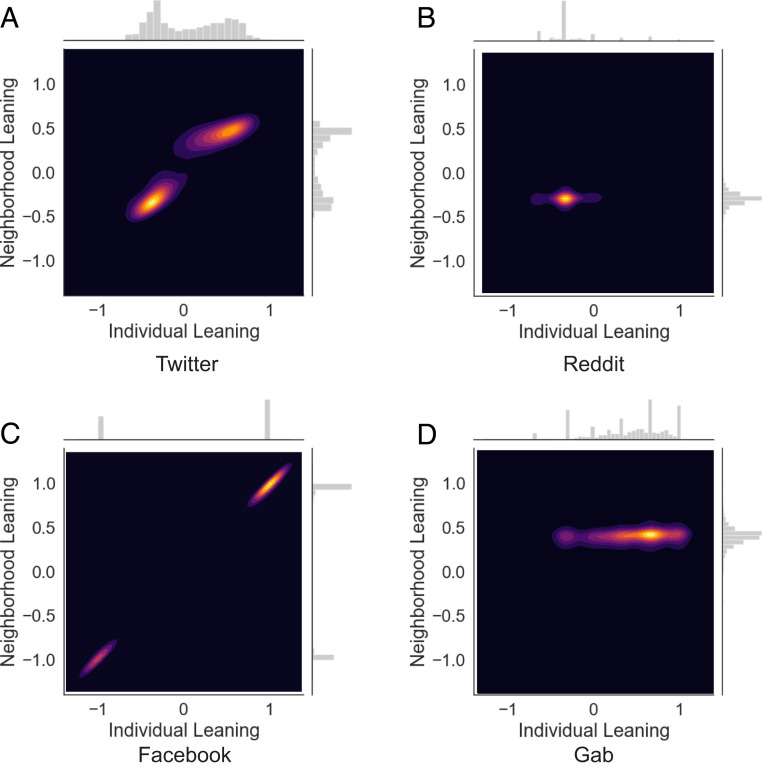
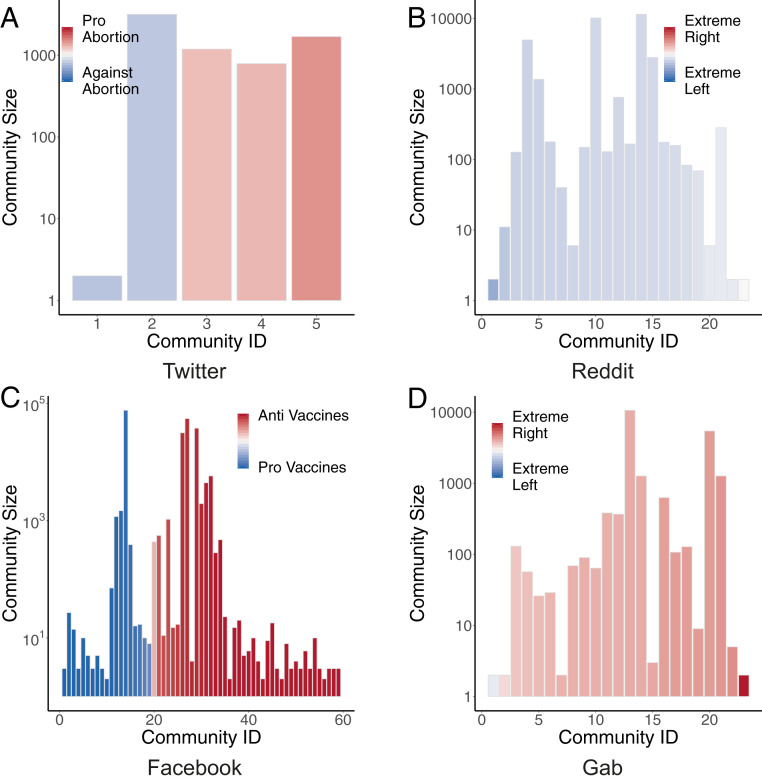
- Across the four platforms, “aggregation in homophilic clusters of users dominates online dynamics,” but platforms differ: Facebook and Twitter show homophilic clustering, while Reddit and Gab form a single community biased left or right rather than two opposing clusters.
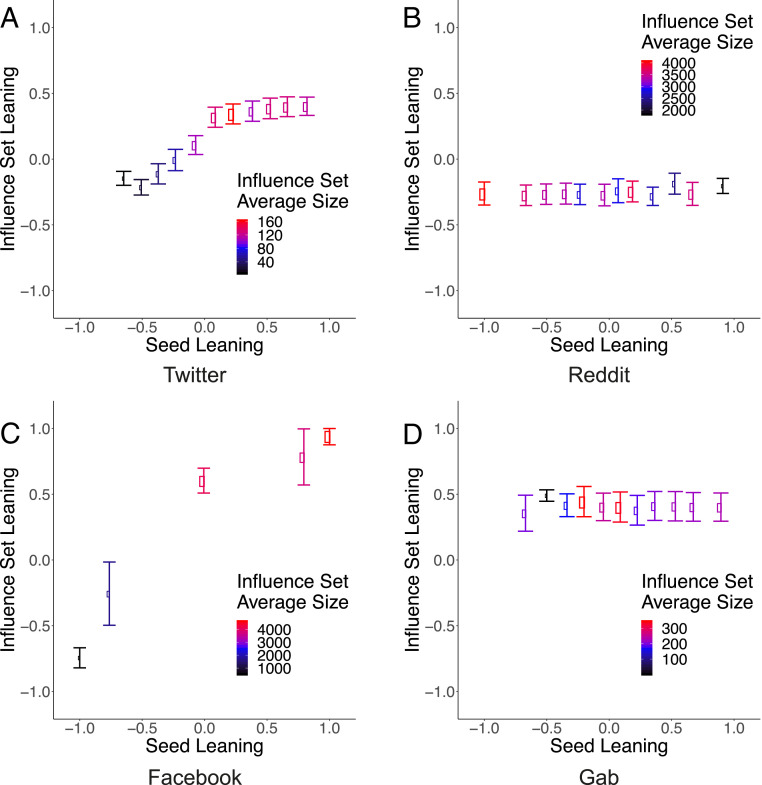
- Information diffusion is biased toward like-minded users on Facebook and Twitter, where the average leaning of a user’s influence set approximates the seed user’s leaning; on Reddit and Gab, the average leaning of the influence set does not depend on the seed user’s leaning.
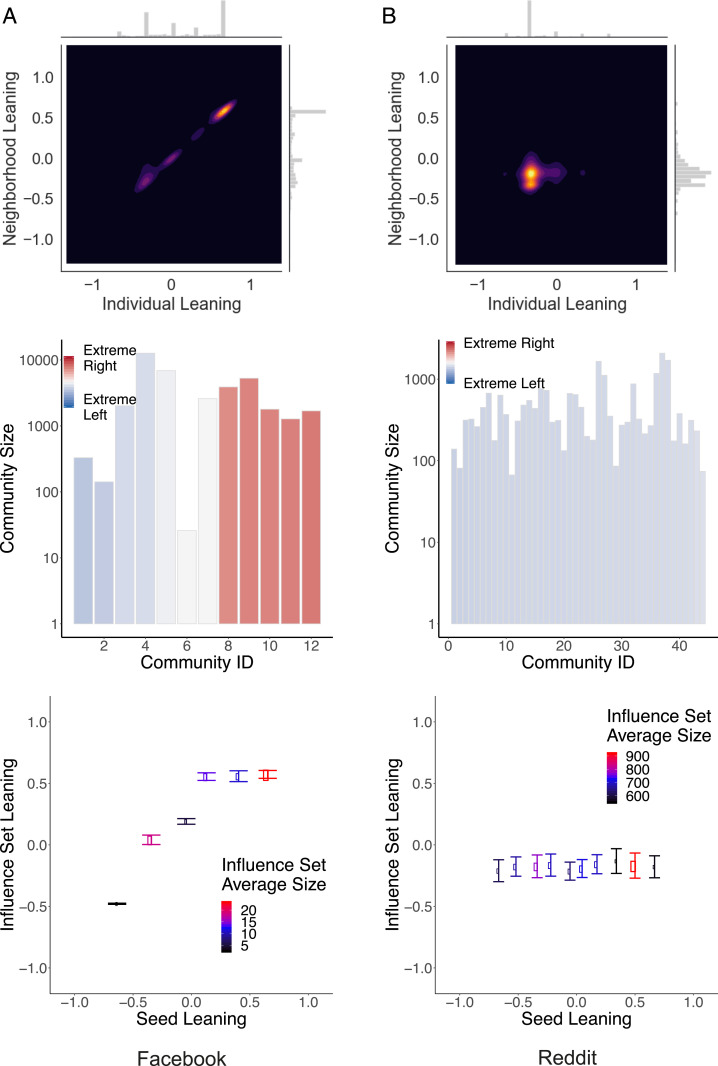
- In a direct comparison on news consumption, Facebook shows higher segregation than Reddit across all three measures: user-neighbor leaning correlation, community leaning, and SIR influence-set leaning.
- The study analyzes more than 100 million unique pieces of content and more than 1 million active users, with news outlets labeled using 2,190 media sources from Media Bias/Fact Check.
Methods
- Comparative analysis of Gab, Facebook, Reddit, and Twitter datasets on controversial topics including gun control, Obamacare, abortion, vaccines, science versus conspiracy, and news; main selected datasets were Abortion (Twitter), Vaccines (Facebook), Politics (Reddit), and Gab as a whole.
- Echo chambers were operationalized through two dimensions: homophily in interaction networks and bias in information diffusion toward like-minded peers. User leaning was inferred from linked news outlets, likes, or content, and interaction networks were built from follows, comments, cocomments, submissions, or replies depending on platform.
- Analyses included correlation between user leaning and average neighbor leaning, Louvain community detection, and SIR simulations to measure influence sets; SIR recovery rate was fixed at ν = 0.2, with dataset-specific infection ratios.
Limitations
- The paper states that the next envisioned step is to address the temporal dimension of echo chambers and how platform-specific social feedback mechanisms impact their formation.
- Evident from the text: leaning coverage varies strongly by platform, from 0.90–1.00 for Twitter/Facebook datasets to 0.15–0.20 for Reddit and 0.13 for Gab, so leaning-based conclusions for Reddit and Gab rest on a small classified fraction of users.
- Evident from the text: datasets differ by platform and topic, and the direct cross-platform comparison on a common topic is limited to news consumption on Facebook and Reddit; the authors also note that Reddit/Gab results could mean either no echo-chamber effect or observation inside a single echo chamber.
Model-written summary. Check it against the paper before relying on it.
Integrity signals
Registry
Cites
Statistics
Figures
Verification
Claims the paper makes
8 Valid · 1 Not valid · 7 Not checked · 38 Own results and interpretations
The cited sources support only part of this claim — read each source’s verdict below.
In the paper
“Selective exposure (19) and confirmation bias (20) (i.e., the tendency to seek information adhering to preexisting opinions) may explain the emergence of echo chambers on social media (1, 17, 21, 22).”
§ The echo chamber effect on social media > Abstract
What the sources say
- Supportedcites [1] M. Del Vicario, The spreading of misinformation online. Proc. Natl. Acad. Sci. U.S.A. 113, 554– 559 (2016). 26729863 PMC4725489 source
The Abstract says selective exposure generates homogeneous clusters, which it calls echo chambers. The Results and Discussion section says users select content matching a narrative and suggests confirmation bias determines echo-chamber formation. Page numbers are not provided in our copy. (LLM, conf=0.94)
- Partly supportedcites [17] K. Garimella, G. De Francisci Morales, A. Gionis, M. Mathioudakis, “ The effect of collective attention on controversial debates on social media” in WebSci ’17: 9th International ACM Web Science Conference (Association for Computing Machinery, New York, NY, 2017), pp. 43– 52. sourceExperimental — accuracy not yet measured
The Introduction reports that users mostly interact within their own side and endorse opinions from that side’s core. Related Work reports that users spread information faster when it agrees with their position. These passages are consistent with selective exposure, but the paper does not identify confirmation bias or establish that either tendency causes echo chambers to emerge. (LLM, conf=0.82)
- Supportedcites [21] M. Del Vicario, Echo chambers: Emotional contagion and group polarization on Facebook. Sci. Rep. 6, 37825 (2016). 27905402 PMC5131349 source
The Abstract says social-media disintermediation encourages users to select information that fits their beliefs (confirmation bias) and form like-minded groups (echo chambers). The Conclusions likewise describe Facebook as suited to the emergence of echo chambers. This supports the proposed explanation, without claiming it is the only cause. (LLM, conf=0.93)
- Supportedcites [22] A. Bessi, Science vs conspiracy: Collective narratives in the age of misinformation. PloS One 10, e0118093 (2015). 25706981 PMC4338055 source
The Introduction (page unavailable) says users consuming opposing information tend to form isolated clusters and describes polarized users whose likes are almost exclusively on one category of pages. The Conclusions (page unavailable) link information evaluation to existing beliefs. Together, these passages support the hedged explanation that selective exposure and confirmation bias may contribute to echo chambers. (LLM, conf=0.86)
hedgedstates a possible cause- Asserted: passes — The authors put it forward as true.
- Checkable: passes — It can be checked against evidence.
- Load-bearing: passes — The paper’s conclusions depend on it.
- Based: passes — The paper gives a reason why it holds.
- Supported
The cited sources support only part of this claim — read each source’s verdict below.
In the paper
“Our attention span remains limited (9, 10), and feed algorithms might limit our selection process by suggesting contents similar to the ones we are usually exposed to (11–13).”
§ The echo chamber effect on social media > Abstract
What the sources say
- Not checked — no full text of the sourcecites [11] A. L. Schmidt, Anatomy of news consumption on Facebook. Proc. Natl. Acad. Sci. U.S.A. 114, 3035– 3039 (2017). 28265082 PMC5373354 source
- Partly supportedcites [12] M. Cinelli, The COVID-19 social media infodemic. Sci. Rep. 10, 16598 (2020). 33024152 PMC7538912 sourceExperimental — accuracy not yet measured
The Introduction (page not provided) says algorithms take users’ preferences and attitudes into account when promoting content, and that users tend to seek information aligned with their worldviews. It does not say that feed algorithms suggest content similar to what users have previously seen or thereby limit their selection. (LLM, conf=0.82)
- Not checked — no full text of the sourcecites [13] E. Bakshy, S. Messing, L. A. Adamic, Exposure to ideologically diverse news and opinion on Facebook. Science 348, 1130– 1132 (2015). 25953820 source
hedgedstates a possible cause- Asserted: passes — The authors put it forward as true.
- Checkable: passes — It can be checked against evidence.
- Load-bearing: passes — The paper’s conclusions depend on it.
- Based: passes — The paper gives a reason why it holds.
Every source the paper cites for this claim was checked and supports it.
In the paper
“Online polarization, for instance, may foster misinformation spreading (1, 8).”
§ The echo chamber effect on social media > Abstract
What the sources say
- Supportedcites [1] M. Del Vicario, The spreading of misinformation online. Proc. Natl. Acad. Sci. U.S.A. 113, 554– 559 (2016). 26729863 PMC4725489 source
The Significance section says that homogeneity and polarization are main determinants of rumor-cascade size. The Conclusions also link polarized communities with the proliferation of narratives fueled by unsubstantiated rumors, supporting the hedged claim that online polarization may foster misinformation spreading. (LLM, conf=0.91)
- Supportedcites [8] M. D. Vicario, W. Quattrociocchi, A. Scala, F. Zollo, Polarization and fake news: Early warning of potential misinformation targets. ACM Trans. Web 13, 1– 22 (2019). source
The Introduction states that misinformation spreading on social media is directly related to increasing user polarization and segregation. This supports the citing sentence’s hedged claim that online polarization may foster misinformation spreading. (LLM, conf=0.94)
hedgedstates a possible cause- Asserted: passes — The authors put it forward as true.
- Checkable: passes — It can be checked against evidence.
- Load-bearing: unclear — It is unclear whether the paper’s conclusions depend on it.
- Based: passes — The paper gives a reason why it holds.
- Supported
Every source the paper cites for this claim was checked and supports it.
In the paper
“In network terms, this translates into a node i with a given leaning xi more likely to be connected with nodes with a leaning close to xi (18).”
§ The echo chamber effect on social media > Comparative Analysis > Polarization and Homophily in the Interaction Networks.
What the sources say
- Supportedcites [18] W. Cota, S. C. Ferreira, R. Pastor-Satorras, M. Starnini, Quantifying echo chamber effects in information spreading over political communication networks. EPJ Data Sci. 8, 35 (2019). source
The paper’s “Topological evidence of echo chambers” section says that a node with political position Pᵢ is connected with nodes whose positions are close to Pᵢ. It also reports a strong correlation between users’ positions and their neighbors’ average positions, supporting the citing sentence’s probabilistic paraphrase. (LLM, conf=0.94)
hedgedstates an association- Asserted: passes — The authors put it forward as true.
- Checkable: passes — It can be checked against evidence.
- Load-bearing: passes — The paper’s conclusions depend on it.
- Based: passes — The paper gives a reason why it holds.
- Supported
A result the paper reports from its own data — it cites no other source for it, so there is none to check. The quote shows it is in the paper.
In the paper
“Furthermore, the almost total absence of communities with leaning very close to 0 confirms the polarized state of the systems.”
§ The echo chamber effect on social media > Comparative Analysis > Polarization and Homophily in the Interaction Networks.
boostedstates a cause- Asserted: passes — The authors put it forward as true.
- Checkable: passes — It can be checked against evidence.
- Load-bearing: passes — The paper’s conclusions depend on it.
- Based: passes — The paper gives a reason why it holds.
- Rests on 4 assumptions not shown here.
32 more claims
Create a free account to see all 54 claims and to verify the 2 references still open.
- It may state two separate claims as one. 9
- Probably not a substantial claim. 9
Claims other papers make about this one
Each is checked against this paper’s own text: does it say what the citing paper says it does?
The source backs part of the claim, not all of it — or backs it for a different population, condition or comparison.
In the citing paper
“engagement with political content online is generally associated with high levels of ingroup bias; that is, it is far more likely to be shared within the political ingroup than in the outgroup (18, 19, 16).”
From Troll and divide: the language of online polarization (2022) · cites this paper as [16]
Experimental — accuracy not yet measuredThe source backs part of the claim, not all of it — or backs it for a different population, condition or comparison.
In the citing paper
“This challenge is reflected in research on”
From Machine culture (2023) · cites this paper as [142]
Experimental — accuracy not yet measuredThe source backs part of the claim, not all of it — or backs it for a different population, condition or comparison.
In the citing paper
“Thus, combating social media's echo chamber effect through an active exposure to diverse perspectives and networks also represents a viable individual-level strategy for addressing the deepfake problem (Cinelli et al., 2021; Gillani et al., 2018).”
From Deepfakes: Deceptions, mitigations, and opportunities (2023) · cites this paper as Cinelli et al., 2021
Experimental — accuracy not yet measuredThe source backs part of the claim, not all of it — or backs it for a different population, condition or comparison.
In the citing paper
“Even without being designed to shift opinions, it has been found that algorithms may contribute to political polarization by reinforcing divisive opinions [9, 24, 32].”
From Co-Writing with Opinionated Language Models Affects Users’ Views (2023) · cites this paper as [32]
Experimental — accuracy not yet measuredThe source backs part of the claim, not all of it — or backs it for a different population, condition or comparison.
In the citing paper
“On Reddit, studies find minimal evidence of echo chambers due to platform features encouraging cross-cutting exposure [17,61,63].”
From A systematic review of echo chamber research: comparative analysis of conceptualizations, operationalizations, and varying outcomes (2025) · cites this paper as [17]
Experimental — accuracy not yet measured
5 more claims about this paper
Create a free account to see every claim other papers make about this one.
Citations
Cites
Fast unfolding of communities in large networks
Blondel, V. D., Guillaume, J.-L., Lambiotte, R., & Lefebvre, E. (2008) · Journal of Statistical Mechanics: Theory and Experiment · doi:10.1088/1742-5468/2008/10/p10008 · Cited by 21,424 · cited 1×
“We detected communities by applying the Louvain algorithm (41), removing singleton communities with only one user.”
MethodThe spread of true and false news online
Vosoughi, S., Roy, D., & Aral, S. (2018) · Science · doi:10.1126/science.aap9559 · Cited by 8,847 · cited 1×
“A recent study (7) limited to Twitter claimed that fake news travels faster than real news.”
BackgroundConfirmation Bias: A Ubiquitous Phenomenon in Many Guises
Nickerson, R. S. (1998) · Review of General Psychology · doi:10.1037/1089-2680.2.2.175 · Cited by 7,267 · cited 1×
“Selective exposure (19) and confirmation bias (20) (i.e., the tendency to seek information adhering to preexisting opinions) may explain the emergence of echo chambers on social media (1, 17, 21, 22).”
BackgroundInfectious Diseases of Humans: Dynamics and Control
Anderson, R. M., & May, R. M. (1991) · doi:10.1093/oso/9780198545996.001.0001 · Cited by 6,179
Lazer, D. M. J., Baum, M. A., Benkler, Y., Berinsky, A. J., Greenhill, K. M., Menczer, F., Metzger, M. J., Nyhan, B., Pennycook, G., Rothschild, D., et al. (2018) · Science · doi:10.1126/science.aao2998 · Cited by 4,160
Degroot, M. H. (1974) · Journal of the American Statistical Association · doi:10.1080/01621459.1974.10480137 · Cited by 4,004 · cited 1×
“For instance, if opinions are assumed to be embedded in a onedimensional space (38), x ∈ [−1,+1] without loss of generality, as usual for controversial topics, then polarization is characterized by two well-separated peaks in P(x ), for positive and negative opinions.”
BackgroundExposure to ideologically diverse news and opinion on Facebook
Bakshy, E., Messing, S., & Adamic, L. A. (2015) · Science · doi:10.1126/science.aaa1160 · Cited by 3,245 · cited 2×
“Our attention span remains limited (9, 10), and feed algorithms might limit our selection process by suggesting contents similar to the ones we are usually exposed to (11–13).”
BackgroundThe spreading of misinformation online
Del Vicario, M., Bessi, A., Zollo, F., Petroni, F., Scala, A., Caldarelli, G., Stanley, H. E., & Quattrociocchi, W. (2016) · Proceedings of the National Academy of Sciences · doi:10.1073/pnas.1517441113 · Cited by 2,407 · cited 2×
“, the tendency to seek information adhering to preexisting opinions) may explain the emergence of echo chambers on social media (1, 17, 21, 22).”
BackgroundSelf-citationThe COVID-19 social media infodemic
Cinelli, M., Quattrociocchi, W., Galeazzi, A., Valensise, C. M., Brugnoli, E., Schmidt, A. L., Zola, P., Zollo, F., & Scala, A. (2020) · Scientific Reports · doi:10.1038/s41598-020-73510-5 · Cited by 2,313
Self-citationFilter Bubbles, Echo Chambers, and Online News Consumption
Flaxman, S., Goel, S., & Rao, J. M. (2016) · Public Opinion Quarterly · doi:10.1093/poq/nfw006 · Cited by 1,992
Research works printed but not linked: 2
- R. M. Anderson, R. M. May, Infectious Diseases in Humans (Oxford University Press, Oxford, United Kingdom, 1992).
- M. Cinelli, G. De Francisci Morales, A. Galeazzi, W. Quattrociocchi, M. Starnini, The echo chamber effect on social media. Open Science Framework. https://osf.io/x92br/?view_only=cdcc87d30e404e01b6ae316db15e3375. Deposited 22 January 2021. PMC7936330 33622786
Cited by
Items 401–500 of 2,063
Potnis, D. D., Tahamtan, I., & McDonald, L. (2024) · Journal of the Association for Information Science and Technology · doi:10.1002/asi.24955 · Cited by 22
“…more than 100 million pieces of content related to controversial topics like gun control and abortion broadcast over social media platforms like Facebook, Reddit, and X shows that homo-phily in social networks dominates and leads to forming echo chambers on these platforms (Cinelli et al., 2021).”
Public Health Messaging on Twitter During the COVID-19 Pandemic: Observational Study
Rao, A., Sabri, N., Guo, S., Raschid, L., & Lerman, K. (2025) · Journal of Medical Internet Research · doi:10.2196/63910 · Cited by 14
“Individuals often repost others who share similar beliefs and perspectives [14,82-84].”
Coppolillo, E., Mungari, S., Ritacco, E., Fabbri, F., Minici, M., Bonchi, F., & Manco, G. (2025) · Information Processing & Management · doi:10.1016/j.ipm.2025.104125 · Cited by 19
Lițan, D.-E. (2025) · Behavioral Sciences · doi:10.3390/bs15040481 · Cited by 23
Relative engagement with sources of climate misinformation is growing across social media platforms
Storani, S., Falkenberg, M., Quattrociocchi, W., & Cinelli, M. (2025) · Scientific Reports · doi:10.1038/s41598-025-03082-9 · Cited by 38
Self-citationGeopolitical risk, herd behavior, and cryptocurrency market
Wanidwaranan, P., Wongkantarakorn, J., & Padungsaksawasdi, C. (2025) · The North American Journal of Economics and Finance · doi:10.1016/j.najef.2025.102487 · Cited by 13
The #stigma of #conviction: a Twitter thematic analysis
Tadros, E., Mullin, T., & Presley, S. (2025) · Current Psychology · doi:10.1007/s12144-025-08042-0 · Cited by 13
“…with research highlighting its ability to act as an ‘echo-chamber’, where users may only encounter views that reinforce their pre-existing biases (Cinelli et al., 2021), and in amplifying prominent voices, as exemplified by @realdonaldtrump during the COVID-19 pan - demic (Fuentes & Peterson,…”
Cascading falsehoods: mapping the diffusion of misinformation in algorithmic environments
Shin, D., & Shin, E. Y. (2025) · AI & Society · doi:10.1007/s00146-025-02575-5 · Cited by 27
“Content that triggers fear, anger, or moral outrage spreads faster and more widely than neutral information (Vosoughi et al. 2018; Cinelli et al. 2021).”
Gesualdo, F., Parisi, L., Croci, I., Comunello, F., Parente, A., Russo, L., Campagna, I., Lanfranchi, B., Rota, M. C., Filia, A., et al. (2022) · Frontiers in Public Health · doi:10.3389/fpubh.2022.824465 · Cited by 12
“around controversial topics, including the vaccination debate (34, 35).”
BackgroundVaccinEU: COVID-19 Vaccine Conversations on Twitter in French, German and Italian
Giovanni, M. D., Pierri, F., Torres-Lugo, C., & Brambilla, M. (2022) · Proceedings of the International AAAI Conference on Web and Social Media · doi:10.1609/icwsm.v16i1.19374 · Cited by 25
“Specifically to the Italian context, Righetti (2020) and Cossard et al. (2020) analyzed the debate on Twitter around the 2017 mandatory child vaccination law, observing the spread of problematic information and highlighting the presence of echo chamber effects (Cinelli et al. 2021).”
BackgroundThe Effect of Influencers on Societal Polarization
Betts, J. M., & Bliuc, A. (2022) · Winter Simulation Conference · doi:10.1109/wsc57314.2022.10015491 · Cited by 16
Gong, X., Huskey, R., Xue, H., Shen, C., & Frey, S. (2023) · Journal of Communication · doi:10.1093/joc/jqad014 · Cited by 16
“These processes indicate that the viral spreading of information diffusion contributes to the fragmentation of audiences in social media (Cinelli et al., 2021) and a segregated state of the public discourse network.”
BackgroundPredicting Hateful Discussions on Reddit using Graph Transformer Networks and Communal Context
Hebert, L., Golab, L., & Cohen, R. A. (2022) · IEEE/WIC/ACM International Conference on Web Intelligence and Intelligent Agent Technology (WI-IAT) · doi:10.1109/wi-iat55865.2022.00012 · Cited by 15
“, which found that online communities are prone to the “echo chamber” effect, where extreme ideals can be encouraged and amplified [5].”
BackgroundEaton, M., Probst, Y., & Smith, M. A. (2023) · JMIR Infodemiology · doi:10.2196/38245 · Cited by 14
“This may contribute to the development of an “echo chamber” [25], which can result in unbalanced views on a topic [24].”
BackgroundHow Polarization Extends to New Topics: An Agent-Based Model Derived from Experimental Data
Carpentras, D., Lueders, A., Maher, P. J., O’Reilly, C., & Quayle, M. (2023) · Journal of Artificial Societies and Social Simulation · doi:10.18564/jasss.5105 · Cited by 12
“As in the era of social media people are allowed or even pushed to interact with like-minded people and news (with phenomena such as filter bubbles and echo chambers) (Cinelli et al. 2021; Pariser 2011) this model can shine new light on how political polarization can so easily spread to other topics such as climate ch…”
BackgroundHow does Value Similarity affect Human Reliance in AI-Assisted Ethical Decision Making?
Narayanan, S., Yu, G., Ho, C.-J., & Yin, M. (2023) · Proceedings of the AAAI/ACM Conference on AI Ethics and Society · doi:10.1145/3600211.3604709 · Cited by 22
“making, it could create an effect similar to the echo chamber effect [5] that make the ethical decisions made by AI-assisted decision making more polarized, focusing on more extreme factors.”
BackgroundThe strength of weak ties and fake news believability
Osatuyi, B., & Dennis, A. R. (2024) · Decision Support Systems · doi:10.1016/j.dss.2024.114275 · Cited by 16
Wallington, S. F., & Noel, A. (2022) · Medical Clinics of North America · doi:10.1016/j.mcna.2022.03.007 · Cited by 13
Rupar, M., Graf, S., & Voca, S. (2022) · European Journal of Social Psychology · doi:10.1002/ejsp.2878 · Cited by 11
Interactive crowdsourcing to fact-check politicians.
Espina-Mairal, S., Bustos, F., Solovey, G., & Navajas, J. (2024) · Journal of Experimental Psychology Applied · doi:10.1037/xap0000492 · Cited by 14
Abdaljaleel, M., Barakat, M. M., Mahafzah, A. M., Hallit, R. R., Hallit, S. R., & Sallam, M. (2024) · Narra J · doi:10.52225/narra.v4i2.877 · Cited by 21
“Social media platforms, including TikTok, often create so-called “echo chambers” where users are exposed to content that aligns with their pre-existing beliefs and interests [43,44].”
BackgroundThe Effect of Downvotes on Content Creation: Evidence from Social MediaPreprint
Deolankar, V., Fong, J., & Sriram, S. (2023) · SSRN Electronic Journal · doi:10.2139/ssrn.4522092 · Cited by 10
Pluralism Breeds TolerancePreprint
Panizza, F., Dimant, E., Kimbrough, E. O., et al. (2023) · SSRN Electronic Journal · doi:10.2139/ssrn.4649792 · Cited by 10
ID-SMSA: Indonesian stock market dataset for sentiment analysis
Hartanto, J., Liundi, T., Sutoyo, R., et al. (2025) · Data in Brief · doi:10.1016/j.dib.2025.111571 · Cited by 10
Does AI-Assisted Fact-Checking Disproportionately Benefit Majority Groups Online?
Neumann, T., & Wolczynski, N. (2023) · ACM Conference on Fairness, Accountability, and Transparency (FAccT) · doi:10.1145/3593013.3594013 · Cited by 9
“Further, we assume that nodes organize in communities due to their shared world view, which means that nodes in the same online community will have highly correlated belief and impactedness values towards topics [14].”
BackgroundChina's Internet sector reforms and the rise of ESG in the state techno‐nationalist agenda
Au, A. (2023) · Policy & Internet · doi:10.1002/poi3.352 · Cited by 10
Diez-Gracia, A., Sánchez-García, P., & Román, J. M. (2023) · El Profesional de la Informacion · doi:10.3145/epi.2023.sep.23 · Cited by 18
Ünlü, A., & Kotonen, T. (2024) · Scandinavian Political Studies · doi:10.1111/1467-9477.12270 · Cited by 19
Modeling the evolution of collective overreaction in dynamic online product diffusion networks
Wei, X., Zhang, Y., & Luo, X. (2024) · Decision Support Systems · doi:10.1016/j.dss.2024.114232 · Cited by 11
The hatred of all against all? Evidence from online community platforms in South Korea
Koo, J., Suh, C. S., Chung, J. W., Sohn, K.-A., & Han, K. (2024) · PLoS ONE · doi:10.1371/journal.pone.0300530 · Cited by 13
How consumers’ digital engagement affects regional innovation capacity in China?
Yang, X., Li, M., & Liang, S. (2024) · Economic Modelling · doi:10.1016/j.econmod.2024.106832 · Cited by 9
I like, I share, I vote: Mapping the dynamic system of political marketing
Kübler, R. V., Manke, K., & Pauwels, K. H. (2024) · Journal of Business Research · doi:10.1016/j.jbusres.2024.115014 · Cited by 19
Kim, J., Wang, Z., Shi, H., Ling, H.-K., & Evans, J. A. (2025) · Nature Communications · doi:10.1038/s41467-025-55868-0 · Cited by 20
“This measure strongly correlates with other echo chamber indicators, such as intensive interactions with like-minded users (i.e., homophily) 37,38 .”
Modeling echo chamber effects in signed networks
Vendeville, A., & Diaz-Diaz, F. (2025) · Physical review. E · doi:10.1103/physreve.111.024302 · Cited by 14
Zhang, W., & Yong, W. (2025) · International Review of Economics & Finance · doi:10.1016/j.iref.2025.103943 · Cited by 9
Event triggers and opinion leaders shape climate change discourse on Weibo
Yang, J., Hu, Y., Liu, M., Li, Y., Ma, Z., Fang, W., & Bi, J. (2025) · Communications Earth & Environment · doi:10.1038/s43247-025-02124-4 · Cited by 18
“The “ China-US relations ” revolves around phrases concerning US presidents, advocating for collaboration, and debating controversies related to COVID-19.”
InfluentialTGDataset: Collecting and Exploring the Largest Telegram Channels Dataset
Morgia, M. L., Mei, A., & Mongardini, A. M. (2025) · ACM SIGKDD Conference on Knowledge Discovery and Data Mining (KDD) · doi:10.1145/3690624.3709397 · Cited by 24
“Twitter) produces a significant reduction of questionable content, with respect to not moderated OSNs ( e.g., Gab) [21], and that the information diffusion is biased by the political leaning of the community [19].”
Chen, Q., Mousavi, S. M., Riccardi, G., & Jacucci, G. (2025) · Proceedings of the ACM on Human-Computer Interaction · doi:10.1145/3711018 · Cited by 14
“Previous research [13] shows that algorithmic feeds on social media may create echo chambers by limiting exposure to diverse perspectives and favoring the formation of groups with shared narratives.”
Charting multidimensional ideological polarization across demographic groups in the USA
Ojer, J., Carcamo, D. P., Pastor‐Satorras, R., & Starnini, M. (2025) · Nature Human Behaviour · doi:10.1038/s41562-025-02251-0 · Cited by 29
Self-citationPolitical ideology shapes risk and benefit judgments of COVID‐19 vaccines
Rubaltelli, E., Dickert, S., Markowitz, D. M., & Slovic, P. (2023) · Risk Analysis · doi:10.1111/risa.14150 · Cited by 11
Echo Tunnels: Polarized News Sharing Online Runs Narrow but Deep
Mok, L., Inzlicht, M., & Anderson, A. (2023) · Proceedings of the International AAAI Conference on Web and Social Media · doi:10.1609/icwsm.v17i1.22177 · Cited by 19
“…Goel, and Rao 2016) or overridden by other social determinants (Messing and Westwood 2014), and that people generally consume cross-cutting news content online (Dubois and Blank 2018; Nelson and Webster 2017; Barberá et al. 2015; Guess et al. 2018; Cinelli et al. 2021; Gentzkow and Shapiro 2011).”
BackgroundMethodResultInfluentialA Multi-Dimensional Framework to Analyze Group Behavior Based on Political Polarization
Ebeling, R., Nobre, J. C., & Becker, K. E. (2022) · Expert Systems with Applications · doi:10.1016/j.eswa.2023.120768 · Cited by 12
Acampa, S., Crescentini, N., & Padricelli, G. M. (2023) · Frontiers in Sociology · doi:10.3389/fsoc.2023.1143263 · Cited by 16
“In the end, the permanence of conspiracy theories and the subsequent radicalization process is facilitated by the way platforms work based on algorithms that facilitate the circulation of information in line with users’ opinions (Cinelli et al., 2021).”
BackgroundRembischevski, P., & Caldas, E. D. (2023) · Foods · doi:10.3390/foods12173285 · Cited by 10
“Indeed, social media has been increasingly recognized as a source of unreliable information, exemplified by the phenomenon of echo chambers, which are groups of like-minded users framing and reinforcing a common narrative [34], and of fake news, in what has already been called the post-truth era [35].”
BackgroundKarell, D., & Sachs, J. D. (2023) · Socius Sociological Research for a Dynamic World · doi:10.1177/23780231231212108 · Cited by 14
“For example, Cinelli et al. (2021) examined echo chambers by analyzing users’ interactions conditional on certain content.”
BackgroundHumanising Online Pedagogy through Asynchronous Discussion Forums
Essa, F. V., Andrews, G., Mendelowitz, B., Reed, Y., & Fouché, I. (2023) · Online Learning · doi:10.24059/olj.v27i4.3652 · Cited by 16
“Effectively, it becomes an echo chamber, defined as an environment “in which the opinion, political leaning, or belief of users about a topic gets reinforced due to repeated interactions with peers or sources having similar tendencies and attitudes” (Cinelli et al., 2021, p. 1).”
BackgroundSu, Y., Luo, C., & Borah, P. (2024) · Journal of Computer-Mediated Communication · doi:10.1093/jcmc/zmae010 · Cited by 15
Opinion Dynamic Modeling of News Perception
Milli, L. (2021) · Applied Network Science · doi:10.1007/s41109-021-00412-4 · Cited by 14
Regalado, F., Costa, L. V., Martins, F., & Veloso, A. I. (2021) · Social Sciences · doi:10.3390/socsci10120463 · Cited by 16
“In fact, the growing use of personalized algorithms can promote echo chambers of thoughts, while limiting and reinforcing a shared narrative among users (Cinelli et al. 2021).”
BackgroundInfluentialOpening up Echo Chambers via Optimal Content Recommendation
Vendeville, A., Giovanidis, A., Papanastasiou, E., & Guedj, B. (2023) · Studies in computational intelligence · doi:10.1007/978-3-031-21127-0_7 · Cited by 17
“political and controversial topics [1,12,21], although the amount of users they impact and the extent to which they do so is still up to debate [3,4].”
Online advice for the symptomatic management of post-stroke fatigue: A scoping review
Miller, T., Stockley, R., Drummond, A. E., Watkins, C. L., Georgiou, R. F., Ahuja, K., & Bird, M. (2022) · Journal of Psychosomatic Research · doi:10.1016/j.jpsychores.2022.111039 · Cited by 11
State vs. anti-vaxxers: Analysis of Covid-19 echo chambers in Serbia
Bojić, L., Nikolić, N., & Tucaković, L. (2023) · Communications · doi:10.1515/commun-2021-0104 · Cited by 10
Epistemic Responsibility, Rights and Duties During the COVID-19 Pandemic
Karimov, A. R., Lavazza, A., & Farina, M. (2022) · Social Epistemology · doi:10.1080/02691728.2022.2077856 · Cited by 10
“Echo chambers thus preemptively enforce trust with respect to certain sources and distrust to other ones (Cinelli et al. 2021).”
BackgroundSurveying the Research on Fake News in Social Media: a Tale of Networks and Language.Preprint
Ruffo, G., Semeraro, A., Giachanou, A., & Rosso, P. (2021) · arXiv (Cornell University) · Cited by 9
Content Moderation at the Infrastructure LayerPreprint
Agarwal, S., Ananthakrishnan, U. M., & Tucker, C. E. (2022) · SSRN Electronic Journal · doi:10.2139/ssrn.4232871 · Cited by 15
Destructive Digital EntrepreneurshipPreprint
Naudé, W. A. (2023) · SSRN Electronic Journal · doi:10.2139/ssrn.4587419 · Cited by 9
Impact of a Long Lockdown on Mental Health and the Role of Media Use: Web-Based Survey Study
Grygarová, D., Adámek, P., Juríčková, V., Horáček, J., Bakštein, E., Fajnerová, I., & Kesner, L. (2022) · JMIR Mental Health · doi:10.2196/36050 · Cited by 8
Remembering and forgetting information about the COVID-19 vaccine on Twitter
Bilgin, E., & Wang, Q. (2022) · Memory · doi:10.1080/09658211.2022.2144892 · Cited by 10
“…online, social media users are often exposed to some, but not all, information on a particular topic; and they can be exposed to diverse opinions and contrasting views thatmay ormay not be congruent with their attitudes and prior knowledge (Cinelli et al., 2020, 2021; Del Vicario et al., 2016).”
BackgroundThe Impact of Social Media on Climate Change Perceptions: A Case Study of Indonesian Gen-Z
Calista, Y., & Yenni, S. (2023) · E3S Web of Conferences · doi:10.1051/e3sconf/202342601052 · Cited by 18
“Referring to Iacomini’s study, they stated that this social phenomenon created polarization in social media [26], which could lead to widespread misinformation or hoaxes [27].”
BackgroundZhang, L., Qiu, S. S., Ao, S. H., & Zhao, X. (2024) · BMC Public Health · doi:10.1186/s12889-024-18756-8 · Cited by 13
“Online platforms use algorithms to remember user preferences [39].”
BackgroundFollowers do not dictate the virality of news outlets on social media
Sangiorgio, E., Cinelli, M., Cerqueti, R., & Quattrociocchi, W. (2024) · PNAS Nexus · doi:10.1093/pnasnexus/pgae257 · Cited by 21
“The magnitude of the echo chamber phenomenon and its consequent effects on polarization may vary among social media platforms (24).”
BackgroundSelf-citationLiu, S., & Wen, H. (2024) · Journal of Complex Networks · doi:10.1093/comnet/cnae028 · Cited by 11
Minimum levels of interpretability for artificial moral agents
Vijayaraghavan, A., & Badea, C. (2023) · AI and Ethics · doi:10.1007/s43681-024-00536-0 · Cited by 10
“For example, we have the development of echo chambers within social media websites, the reinforcement effect this has on sub-populations (perpetuating their existing opinions), and then the combined polarising effect on the entire population (the radicalisation of opposite sides) [100].”
Dong, C., Wang, H., Zhou, S., & Zhong, H. (2024) · The European Physical Journal Plus · doi:10.1140/epjp/s13360-024-05691-1 · Cited by 8
“However, due to the inherent freedom and unrestricted nature of OSNs, users can propagate any information at will, so information in social networks are complicated and full of all kinds of rumor [5, 6].”
Inference of social media opinion trends in 2022 Italian elections
Zollo, S., Cinelli, M., Etta, G., Cerqueti, R., & Quattrociocchi, W. (2025) · Expert Systems with Applications · doi:10.1016/j.eswa.2024.126377 · Cited by 11
Self-citationTailoring Narratives on War in Ukraine: Cross-national Study of Sputnik News
Burda, R., & Bundzíková, V. (2025) · Nationalities Papers · doi:10.1017/nps.2024.89 · Cited by 12
“In some way or other, even this crude type of propaganda might work, creating or reinforcing an existing echo-chamber effect (Cinelli et al. 2021; Sunstein 1999).”
Polarization of public opinions on feminism in China
Piao, J., Zhang, F., Ren, T., Xu, F., Zhou, J., Su, J., Ru, P., & Li, Y. (2025) · Humanities and Social Sciences Communications · doi:10.1057/s41599-025-04635-z · Cited by 15
“…focus in recent decades, drawing substantial attention from various fi elds, including sociology, political science, social psychology, and information science (Bail et al. 2018; Bakshy et al. 2015; Cinelli et al. 2021; Falkenberg et al. 2022; Flamino et al. 2023; Lorenz-Spreen et al. 2023, ?”
InfluentialHow AI sources can increase openness to opposing views
Lu, L., Tormala, Z. L., & Duhachek, A. (2025) · Scientific Reports · doi:10.1038/s41598-025-00791-z · Cited by 25
Social media and pre-service teachers’ apprenticeships of observation
Carpenter, J. P., Morrison, S. A., & Doherty, G. T. (2025) · Journal of Research on Technology in Education · doi:10.1080/15391523.2025.2504359 · Cited by 11
Gao, D., Li, S., & Tian, Z. (2025) · Energy Economics · doi:10.1016/j.eneco.2025.108545 · Cited by 12
Modeling polarized information diffusion with SEI(A)I(D)Z: a stance-based epidemiological approach
Gurung, M. I., Agarwal, N., & Addai, E. (2025) · Social Network Analysis and Mining · doi:10.1007/s13278-025-01479-y · Cited by 9
“Challenges such as echo chambers, confirmation bias, and algorithmic amplification pose significant obstacles to the effective application of these models (Cinelli et al. 2021).”
Mitigating the harms of manipulated media: Confronting deepfakes and digital deception
Farid, H. (2025) · PNAS Nexus · doi:10.1093/pnasnexus/pgaf194 · Cited by 22
“Protecting against disinformation is, of course, more challenging as more and more people get the majority of their news from increasingly louder echo chambers (29).”
A Survey on Opinion Dynamics in Social Media Networks: Analysis, Simulation, and Control
Zareer, M. N., & Šelmić, R. R. (2025) · IEEE Transactions on Computational Social Systems · doi:10.1109/tcss.2025.3622498 · Cited by 13
Huang, Y., Leng, X., & Tian, Z. (2026) · Frontiers in Public Health · doi:10.3389/fpubh.2026.1709812 · Cited by 10
“…the present study, based on real-world platform dynamics, demonstrates that attention-driven recommendation systems amplify emotionally arousing and sensational content (15, 23), creating a structural amplification mechanism that weakens the protective influence of individual-level strategies.”
Principles and Practice of Gossiping About Colleagues in Medicine
Redelmeier, D. A., Etchells, E. E., & Najeeb, U. (2021) · Journal of Hospital Medicine · doi:10.12788/jhm.3702 · Cited by 7
A potential mechanism for low tolerance feedback loops in social media flagging systems
Westermann, C. J., & Coscia, M. (2022) · PLoS ONE · doi:10.1371/journal.pone.0268270 · Cited by 10
“Phenomena like confirmation bias [8, 9], echo chambers [10, 11]—although the magnitude of their effect has been called into question [12, 13] –, trust in the source or lack thereof [14], information overload [15] might pollute such objectiv-ity—for a variety of different reasons that are not…”
Undue Hate: A Behavioral Economic Analysis of Hostile Polarization in US Politics and Beyond
Stone, D. F. (2023) · The MIT Press eBooks · doi:10.7551/mitpress/14496.001.0001 · Cited by 11
Brown, S. J., Reid, J. C., & Myers, W. (2023) · Crime & Delinquency · doi:10.1177/00111287231161532 · Cited by 12
“The echo-chamber effects of the internet (see generally, Barbera et al., 2015; Cinelli et al., 2021) could therefore amplify positive reinforcement and downplay negative reinforcement differently compared to real-world interactions.”
Talking to strangers: Intention, competence, and opportunity
Atir, S., Zhao, X., & Echelbarger, M. (2023) · Current Opinion in Psychology · doi:10.1016/j.copsyc.2023.101588 · Cited by 8
Gagrčin, E., Ohme, J., Buttgereit, L., & Grünewald, F. (2023) · Media and Communication · doi:10.17645/mac.v11i3.6641 · Cited by 10
“Moreover, social media platforms polarizing effects have garnered significant public attention in recent years, as they may affect people’s attitudes toward political issues and the perception of other voters (Allcott et al., 2020; Cinelli et al., 2021).”
BackgroundOn the Relation between Opinion Change and Information Consumption on Reddit
Petruzzellis, F., Bonchi, F., Morales, G. D. F., & Monti, C. (2023) · Proceedings of the International AAAI Conference on Web and Social Media · doi:10.1609/icwsm.v17i1.22181 · Cited by 12
Self-citationRobustness of privacy-preserving collaborative recommenders against popularity bias problem
Gulsoy, M., Yalçın, E., & Bilge, A. (2023) · PeerJ Computer Science · doi:10.7717/peerj-cs.1438 · Cited by 8
“Also, for specific application domains, such as social media, such weakness could be viciously abused to manipulate users by dragging them into ideological echo chambers (Cinelli et al., 2021).”
BackgroundTriangle-oriented Community Detection Considering Node Features and Network Topology
Gao, G., Liang, W., Yuan, M., Qian, H., Wang, Q., & Cao, J. (2023) · ACM Transactions on the Web · doi:10.1145/3626190 · Cited by 9
“Networks provide a natural way to express the complex relationships in our daily life, such as scientific collaborations [1], friend interactions [2], information dissemination [3], and module associations [4].”
BackgroundResampling reduces bias amplification in experimental social networks
Hardy, M. D., Thompson, B., Krafft, P. M., & Griffiths, T. L. (2023) · Nature Human Behaviour · doi:10.1038/s41562-023-01715-5 · Cited by 13
Emergence mechanisms of group consensus in social networks
Wang, M., & Zhang, Z. (2023) · Frontiers of Engineering Management · doi:10.1007/s42524-023-0277-x · Cited by 8
“The existence of phenomena such as group polarization, groupthink, and the false consensus effect provides empirical support for this assertion (Janis, 2008; Song and Boomgaarden, 2017; Cinelli et al., 2021).”
Users Volatility on Reddit and Voat
Marco, N. D., Cinelli, M., Alipour, S., & Quattrociocchi, W. (2024) · IEEE Transactions on Computational Social Systems · doi:10.1109/tcss.2024.3379318 · Cited by 13
“For example, confirmation bias and selective exposure [9], [10] in the case of controversial topics such as politics and vaccines are the causes of polarization and echo chambers [4], [11], [12], [13], [14].”
BackgroundMethodSelf-citationThe place of content ranking algorithms on the AI risk spectrum
Bayer, J. (2024) · Telecommunications Policy · doi:10.1016/j.telpol.2024.102741 · Cited by 10
Recommender System: A Comprehensive Overview of Technical Challenges and Social Implications
An, Y., Tan, Y., Sun, X. J., & Ferrari, G. (2024) · ICCK Transactions on Sensing Communication and Control · doi:10.62762/tscc.2024.898503 · Cited by 12
Xu, Y., Liu, X., Yuan, J., Luo, J., Zhou, W., Yu, M., & He, Y. (2025) · Knowledge-Based Systems · doi:10.1016/j.knosys.2025.112964 · Cited by 14
Epidemiology models explain rumour spreading during France’s Great Fear of 1789
Zapperi, S., Varlet-Bertrand, C., Bastidon, C., Porta, C. A. M. L., & Parent, A. (2025) · Nature · doi:10.1038/s41586-025-09392-2 · Cited by 8
Socioeconomic Correlates of Anti-Science Attitudes in the US
Hu, M., Rao, A., Kejriwal, M., & Lerman, K. (2021) · Future Internet · doi:10.3390/fi13060160 · Cited by 12
“Previous studies [24,25] inferred user attitudes from the ideological polarities of information sources to which they attend.”
BackgroundVoxPop: An Experimental Social Media Platform for Calibrated (Mis)information Discourse
Sharevski, F., Jachim, P., Pieroni, E., & Jachim, N. (2021) · New Security Paradigms Workshop · doi:10.1145/3498891.3498893 · Cited by 13
“The mainstream platforms, through the design of their feeds and in the effort to maximize engagement, enable closed echo chambers of users that are hardly exposed to other perspectives [18].”
BackgroundO’Neil, M., Khan, M. I., Holland, K., & Cai, X. (2022) · Information Communication & Society · doi:10.1080/1369118x.2022.2032260 · Cited by 9
“Our small-scale findings that specialists predominantly retweet and mention each other accords with big data research which focuses on homophily in interaction networks and bias in information diffusion toward like-minded peers (Cinelli et al., 2021).”
BackgroundBortolan, A. (2022) · Inquiry · doi:10.1080/0020174x.2022.2044378 · Cited by 8
“Some of the features of these phenomena can be connected to the presence on social media of what are sometimes referred to as ‘echo chambers’ or ‘bubbles’ (Cinelli et al. 2021; Nikolov et al. 2015), namely spaces in which the ideas that are expressed tend to display a high degree of uniformity.”
Communities, Gateways, and Bridges: Measuring Attention Flow in the Reddit Political Sphere
Rollo, C., Morales, G. D. F., Monti, C., & Panisson, A. (2022) · Lecture notes in computer science · doi:10.1007/978-3-031-19097-1_1 · Cited by 17
Self-citationDigital Fashion Communication: An (Inter)cultural Perspective
Noris, A., & Cantoni, L. (2022) · BRILL eBooks · doi:10.1163/9789004523555_002 · Cited by 14
Entity graphs for exploring online discourse
Botzer, N., & Weninger, T. (2023) · Knowledge and Information Systems · doi:10.1007/s10115-023-01877-8 · Cited by 9
“Another motivation for our proposed methodology is humans attraction towards homophily and the large number of echo chambers that have been created online [10, 17].”
BackgroundAnalyzing Polarization And Toxicity On Political Debate In Brazilian TikTok Videos Transcriptions
Vasconcellos, P. H. S., Lara, P. D. D. A., & Marques-Neto, H. T. (2023) · ACM Web Science Conference (WebSci) · doi:10.1145/3578503.3583613 · Cited by 14
“[9] observed this effect on many different online social networks, such as Twitter, Facebook, and Reddit.”
BackgroundEffects of media exposure on PTSD symptoms in college students during the COVID-19 outbreak
Zhu, X., Wen, Z., & Yu, W.-B. (2023) · Frontiers in Public Health · doi:10.3389/fpubh.2023.1050759 · Cited by 9
“This age group also has various emotional disorders and mental health problems, such as bipolar disorder, anxiety, depression, insomnia, and Post-traumatic stress disorder (11, 12).”
BackgroundCole, K. A., Zhou, A. Y., Jones, T. M., Moore, W. J., Chandler, E. L., Zafonte, V. B., Morrisette, T., Gauthier, T. P., Kisgen, J. J., Barner, A. E., et al. (2022) · Clinical Infectious Diseases · doi:10.1093/cid/ciac081 · Cited by 11
“It is also important to note that social media can become an “echo chamber” if a user only follows like-minded individuals [8].”
Background
Metadata
- Authors
- Cinelli, M., De Francisci Morales, G., Galeazzi, A., Quattrociocchi, W., & Starnini, M.
- Affiliations
- Ca' Foscari University of Venice (IT)
- Institute for Scientific Interchange (ISI) Foundation, 10126 Torino, Italy;
- University of Brescia (IT)
- University of Oslo (NO)
- Institute for Scientific Interchange (IT)
- Corresponding author
- Quattrociocchi, Walter
- ORCID
- Venue
- Proceedings of the National Academy of Sciences
- Publisher
- National Academy of Sciences
- Published
- 2021-02-23
- Volume
- 118
- Issue
- 9
- ISSN
- 0027-8424 (ISSN-L)
- 1091-6490
- PMC
- PMC7936330
- OpenAlex
- W3133423348
- Cited by
- 2,092
- References
- 62
- Citations by year
- 2026: 488 · 2025: 516 · 2024: 387 · 2023: 351 · 2022: 256 · 2021: 90
- FWCI
- 375.62
- Type
- journal article
- Language
- en
- Open access
- hybrid
- doi.org
- Licence
- Locations
- Proceedings of the National Academy of Sciences (publishedVersion, cc-by)
- PubMed Central (publishedVersion, cc-by)
- PubMed (publishedVersion)
- UPCommons institutional repository (Universitat Politècnica de Catalunya) (submittedVersion, cc-by)
- IRIS Research product catalog (Sapienza University of Rome) (submittedVersion)
- Padua Research Archive (University of Padova) (submittedVersion, cc-by)
- Topics
- Social Sciences › Sociology and Political Science › Misinformation and Its Impacts
- Social Sciences › Communication › Social Media and Politics
- Physical Sciences › Physics and Astronomy › Statistical and Nonlinear Physics › Complex Network Analysis Techniques
- Keywords
- echo chambers, social media, homophily, information dissemination, algorithmic curation, controversial issues, Facebook, Twitter, Reddit, Gab, news consumption
- MeSH terms
- Abortion, Legal, Gun Violence, Communication, Humans, Politics, Social Change, Vaccination, Bias, Information Dissemination, Narration, Patient Protection and Affordable Care Act, Social Networking, Social Media
About these checks
Registry, retraction, Cites and statistics results are computed, not judged, with one exception: a printed reference that no index lists is read once by a model before it counts as a citation error. Claims are extracted by a model and kept only when their quote appears verbatim in the text; each cited source is then checked, with a model’s help, for whether it says what the claim relies on. Those verdicts can be wrong — read the claim’s quote and the cited source before relying on one.
The claim verdicts this report counts are experimental: their accuracy is not yet measured.
A language model drew the claims from the paper on 2026-10-10, under version 3 of the claim definition (model deepseek-v4.1-flash, prompt extract-v3).
A second model labelled each claim on 2026-10-10 (model jev-1.13-20260917, definition revision gold-guideline-v0.2).
Cited sources are checked with a language model’s help (gpt-6-sol).
Statistics and arithmetic are recomputed, not judged.
Confidence bands are shown only for fields calibrated on our annotated test set. None is calibrated yet, so no band is shown.
What counts as a claim ›How we measure confidence ›How we check this ›
Are you an author, or do you see a problem with this page? Request a review
Data sources
Bibliographic data: Semantic Scholar, OpenAlex, Crossref.
Contains information from the Semantic Scholar Academic Graph Datasets, made available under the ODC Attribution License (ODC-BY 1.0).
Semantic Scholar’s data is described in: Kinney, R., et al. (2023). The Semantic Scholar Open Data Platform. arXiv:2301.10140.
