

The echo chamber effect on social media
Open accessThe DOI matches its Crossref record; 68 of the 69 references it cites were found in a registry or an index; 16 of the 38 sources its claims cite were checked for support.
Abstract
Significance: We explore the key differences between the main social media platforms and how they are likely to influence information spreading and the formation of echo chambers. To assess the different dynamics, we perform a comparative analysis on more than 100 million pieces of content concerning controversial topics (e.g., gun control, vaccination, abortion) from Gab, Facebook, Reddit, and Twitter. The analysis focuses on two main dimensions: 1) homophily in the interaction networks and 2) bias in the information diffusion toward like-minded peers. Our results show that the aggregation in homophilic clusters of users dominates online dynamics. However, a direct comparison of news consumption on Facebook and Reddit shows higher segregation on Facebook.
Overview
CoChat Summary
TL;DR
This paper compares echo-chamber dynamics across Gab, Facebook, Reddit, and Twitter using more than 100 million pieces of content and more than 1 million active users. It finds homophilic clustering dominates online dynamics, with Facebook and Twitter showing stronger segregation and like-minded information diffusion than Reddit and Gab, and Facebook showing higher news-consumption segregation than Reddit.
Key findings
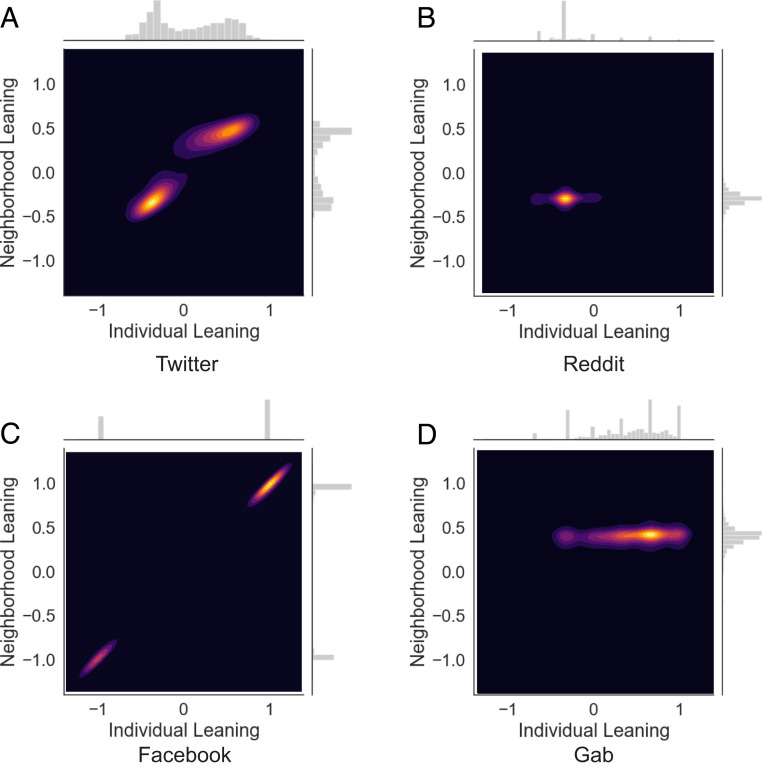
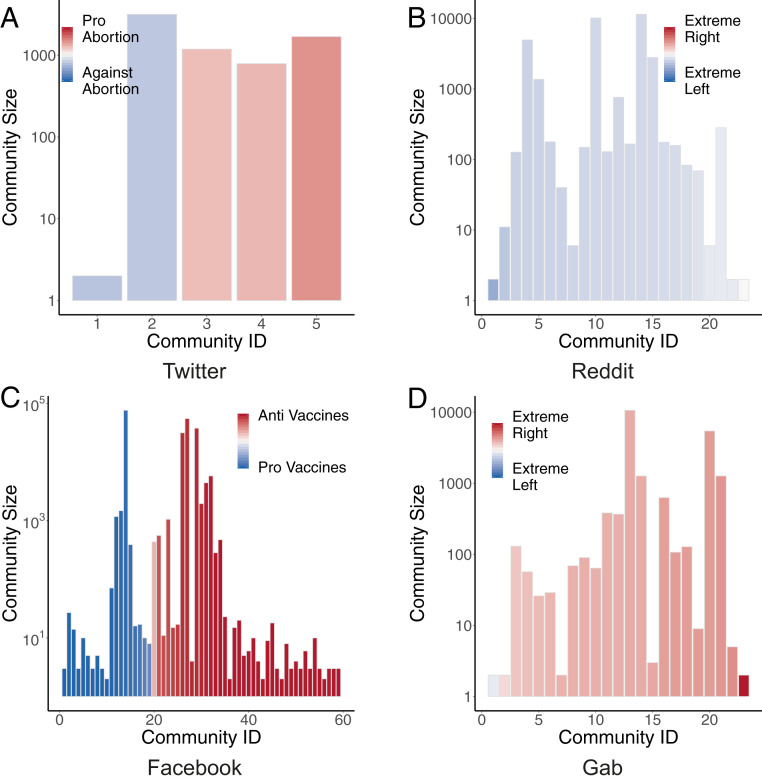
- Across the four platforms, “aggregation in homophilic clusters of users dominates online dynamics,” but platforms differ: Facebook and Twitter show homophilic clustering, while Reddit and Gab form a single community biased left or right rather than two opposing clusters.
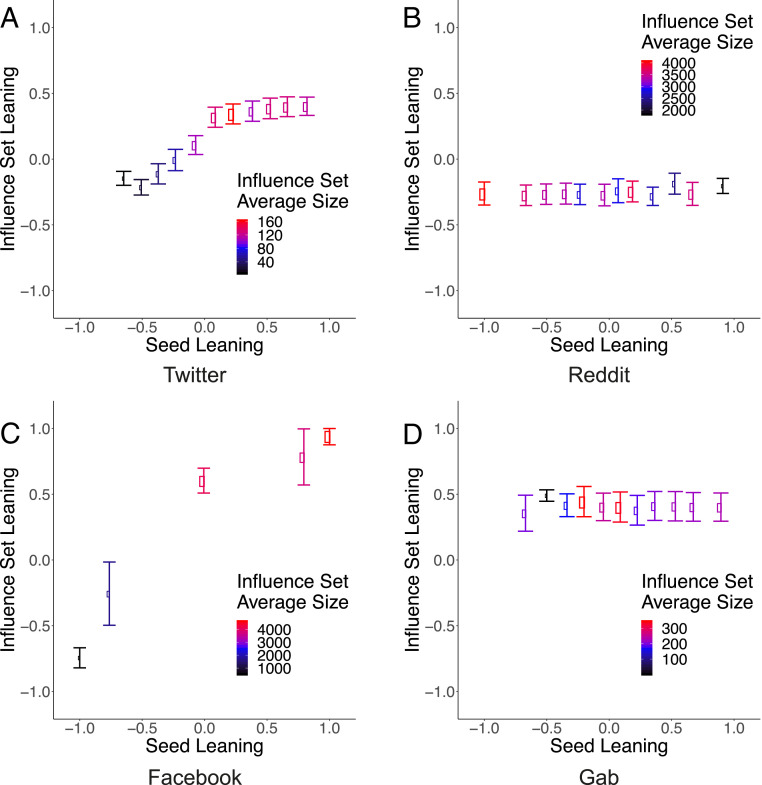
- Information diffusion is biased toward like-minded users on Facebook and Twitter, where the average leaning of a user’s influence set approximates the seed user’s leaning; on Reddit and Gab, the average leaning of the influence set does not depend on the seed user’s leaning.
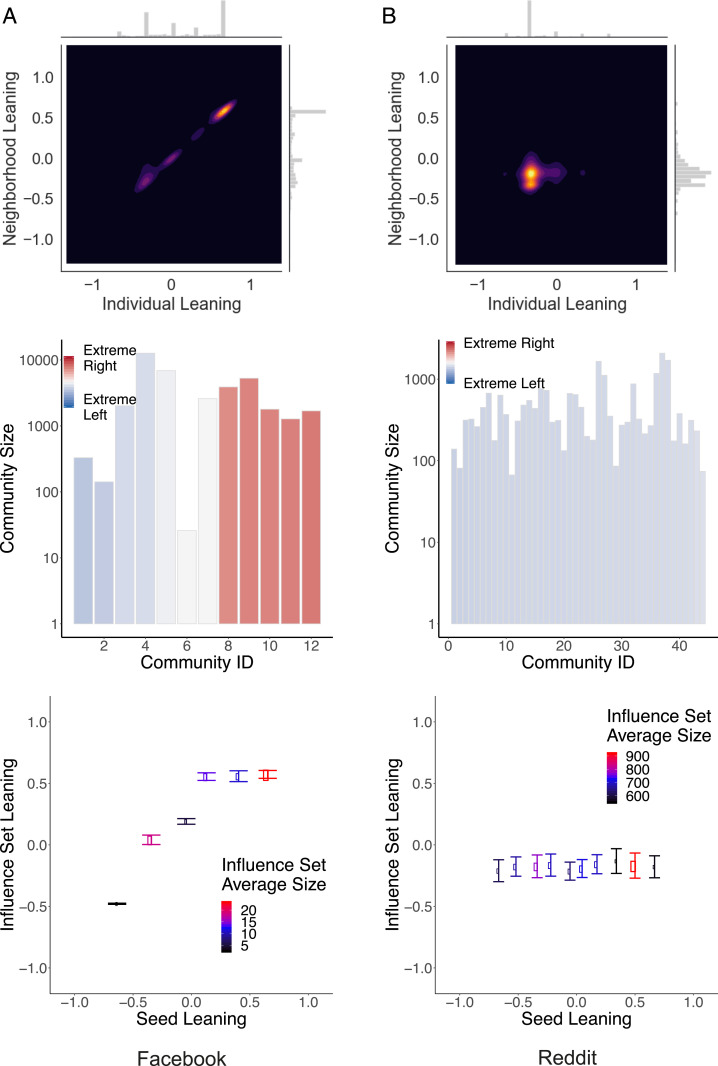
- In a direct comparison on news consumption, Facebook shows higher segregation than Reddit across all three measures: user-neighbor leaning correlation, community leaning, and SIR influence-set leaning.
- The study analyzes more than 100 million unique pieces of content and more than 1 million active users, with news outlets labeled using 2,190 media sources from Media Bias/Fact Check.
Methods
- Comparative analysis of Gab, Facebook, Reddit, and Twitter datasets on controversial topics including gun control, Obamacare, abortion, vaccines, science versus conspiracy, and news; main selected datasets were Abortion (Twitter), Vaccines (Facebook), Politics (Reddit), and Gab as a whole.
- Echo chambers were operationalized through two dimensions: homophily in interaction networks and bias in information diffusion toward like-minded peers. User leaning was inferred from linked news outlets, likes, or content, and interaction networks were built from follows, comments, cocomments, submissions, or replies depending on platform.
- Analyses included correlation between user leaning and average neighbor leaning, Louvain community detection, and SIR simulations to measure influence sets; SIR recovery rate was fixed at ν = 0.2, with dataset-specific infection ratios.
Limitations
- The paper states that the next envisioned step is to address the temporal dimension of echo chambers and how platform-specific social feedback mechanisms impact their formation.
- Evident from the text: leaning coverage varies strongly by platform, from 0.90–1.00 for Twitter/Facebook datasets to 0.15–0.20 for Reddit and 0.13 for Gab, so leaning-based conclusions for Reddit and Gab rest on a small classified fraction of users.
- Evident from the text: datasets differ by platform and topic, and the direct cross-platform comparison on a common topic is limited to news consumption on Facebook and Reddit; the authors also note that Reddit/Gab results could mean either no echo-chamber effect or observation inside a single echo chamber.
Model-written summary. Check it against the paper before relying on it.
Integrity signals
Registry
Cites
Statistics
Figures
Verification
Claims the paper makes
8 Valid · 1 Not valid · 7 Not checked · 38 Own results and interpretations
The cited sources support only part of this claim — read each source’s verdict below.
In the paper
“Selective exposure (19) and confirmation bias (20) (i.e., the tendency to seek information adhering to preexisting opinions) may explain the emergence of echo chambers on social media (1, 17, 21, 22).”
§ The echo chamber effect on social media > Abstract
What the sources say
- Supportedcites [1] M. Del Vicario, The spreading of misinformation online. Proc. Natl. Acad. Sci. U.S.A. 113, 554– 559 (2016). 26729863 PMC4725489 source
The Abstract says selective exposure generates homogeneous clusters, which it calls echo chambers. The Results and Discussion section says users select content matching a narrative and suggests confirmation bias determines echo-chamber formation. Page numbers are not provided in our copy. (LLM, conf=0.94)
- Partly supportedcites [17] K. Garimella, G. De Francisci Morales, A. Gionis, M. Mathioudakis, “ The effect of collective attention on controversial debates on social media” in WebSci ’17: 9th International ACM Web Science Conference (Association for Computing Machinery, New York, NY, 2017), pp. 43– 52. sourceExperimental — accuracy not yet measured
The Introduction reports that users mostly interact within their own side and endorse opinions from that side’s core. Related Work reports that users spread information faster when it agrees with their position. These passages are consistent with selective exposure, but the paper does not identify confirmation bias or establish that either tendency causes echo chambers to emerge. (LLM, conf=0.82)
- Supportedcites [21] M. Del Vicario, Echo chambers: Emotional contagion and group polarization on Facebook. Sci. Rep. 6, 37825 (2016). 27905402 PMC5131349 source
The Abstract says social-media disintermediation encourages users to select information that fits their beliefs (confirmation bias) and form like-minded groups (echo chambers). The Conclusions likewise describe Facebook as suited to the emergence of echo chambers. This supports the proposed explanation, without claiming it is the only cause. (LLM, conf=0.93)
- Supportedcites [22] A. Bessi, Science vs conspiracy: Collective narratives in the age of misinformation. PloS One 10, e0118093 (2015). 25706981 PMC4338055 source
The Introduction (page unavailable) says users consuming opposing information tend to form isolated clusters and describes polarized users whose likes are almost exclusively on one category of pages. The Conclusions (page unavailable) link information evaluation to existing beliefs. Together, these passages support the hedged explanation that selective exposure and confirmation bias may contribute to echo chambers. (LLM, conf=0.86)
hedgedstates a possible cause- Asserted: passes — The authors put it forward as true.
- Checkable: passes — It can be checked against evidence.
- Load-bearing: passes — The paper’s conclusions depend on it.
- Based: passes — The paper gives a reason why it holds.
- Supported
The cited sources support only part of this claim — read each source’s verdict below.
In the paper
“Our attention span remains limited (9, 10), and feed algorithms might limit our selection process by suggesting contents similar to the ones we are usually exposed to (11–13).”
§ The echo chamber effect on social media > Abstract
What the sources say
- Not checked — no full text of the sourcecites [11] A. L. Schmidt, Anatomy of news consumption on Facebook. Proc. Natl. Acad. Sci. U.S.A. 114, 3035– 3039 (2017). 28265082 PMC5373354 source
- Partly supportedcites [12] M. Cinelli, The COVID-19 social media infodemic. Sci. Rep. 10, 16598 (2020). 33024152 PMC7538912 sourceExperimental — accuracy not yet measured
The Introduction (page not provided) says algorithms take users’ preferences and attitudes into account when promoting content, and that users tend to seek information aligned with their worldviews. It does not say that feed algorithms suggest content similar to what users have previously seen or thereby limit their selection. (LLM, conf=0.82)
- Not checked — no full text of the sourcecites [13] E. Bakshy, S. Messing, L. A. Adamic, Exposure to ideologically diverse news and opinion on Facebook. Science 348, 1130– 1132 (2015). 25953820 source
hedgedstates a possible cause- Asserted: passes — The authors put it forward as true.
- Checkable: passes — It can be checked against evidence.
- Load-bearing: passes — The paper’s conclusions depend on it.
- Based: passes — The paper gives a reason why it holds.
Every source the paper cites for this claim was checked and supports it.
In the paper
“Online polarization, for instance, may foster misinformation spreading (1, 8).”
§ The echo chamber effect on social media > Abstract
What the sources say
- Supportedcites [1] M. Del Vicario, The spreading of misinformation online. Proc. Natl. Acad. Sci. U.S.A. 113, 554– 559 (2016). 26729863 PMC4725489 source
The Significance section says that homogeneity and polarization are main determinants of rumor-cascade size. The Conclusions also link polarized communities with the proliferation of narratives fueled by unsubstantiated rumors, supporting the hedged claim that online polarization may foster misinformation spreading. (LLM, conf=0.91)
- Supportedcites [8] M. D. Vicario, W. Quattrociocchi, A. Scala, F. Zollo, Polarization and fake news: Early warning of potential misinformation targets. ACM Trans. Web 13, 1– 22 (2019). source
The Introduction states that misinformation spreading on social media is directly related to increasing user polarization and segregation. This supports the citing sentence’s hedged claim that online polarization may foster misinformation spreading. (LLM, conf=0.94)
hedgedstates a possible cause- Asserted: passes — The authors put it forward as true.
- Checkable: passes — It can be checked against evidence.
- Load-bearing: unclear — It is unclear whether the paper’s conclusions depend on it.
- Based: passes — The paper gives a reason why it holds.
- Supported
Every source the paper cites for this claim was checked and supports it.
In the paper
“In network terms, this translates into a node i with a given leaning xi more likely to be connected with nodes with a leaning close to xi (18).”
§ The echo chamber effect on social media > Comparative Analysis > Polarization and Homophily in the Interaction Networks.
What the sources say
- Supportedcites [18] W. Cota, S. C. Ferreira, R. Pastor-Satorras, M. Starnini, Quantifying echo chamber effects in information spreading over political communication networks. EPJ Data Sci. 8, 35 (2019). source
The paper’s “Topological evidence of echo chambers” section says that a node with political position Pᵢ is connected with nodes whose positions are close to Pᵢ. It also reports a strong correlation between users’ positions and their neighbors’ average positions, supporting the citing sentence’s probabilistic paraphrase. (LLM, conf=0.94)
hedgedstates an association- Asserted: passes — The authors put it forward as true.
- Checkable: passes — It can be checked against evidence.
- Load-bearing: passes — The paper’s conclusions depend on it.
- Based: passes — The paper gives a reason why it holds.
- Supported
A result the paper reports from its own data — it cites no other source for it, so there is none to check. The quote shows it is in the paper.
In the paper
“Furthermore, the almost total absence of communities with leaning very close to 0 confirms the polarized state of the systems.”
§ The echo chamber effect on social media > Comparative Analysis > Polarization and Homophily in the Interaction Networks.
boostedstates a cause- Asserted: passes — The authors put it forward as true.
- Checkable: passes — It can be checked against evidence.
- Load-bearing: passes — The paper’s conclusions depend on it.
- Based: passes — The paper gives a reason why it holds.
- Rests on 4 assumptions not shown here.
32 more claims
Create a free account to see all 54 claims and to verify the 2 references still open.
- It may state two separate claims as one. 9
- Probably not a substantial claim. 9
Claims other papers make about this one
Each is checked against this paper’s own text: does it say what the citing paper says it does?
The source backs part of the claim, not all of it — or backs it for a different population, condition or comparison.
In the citing paper
“engagement with political content online is generally associated with high levels of ingroup bias; that is, it is far more likely to be shared within the political ingroup than in the outgroup (18, 19, 16).”
From Troll and divide: the language of online polarization (2022) · cites this paper as [16]
Experimental — accuracy not yet measuredThe source backs part of the claim, not all of it — or backs it for a different population, condition or comparison.
In the citing paper
“This challenge is reflected in research on”
From Machine culture (2023) · cites this paper as [142]
Experimental — accuracy not yet measuredThe source backs part of the claim, not all of it — or backs it for a different population, condition or comparison.
In the citing paper
“Thus, combating social media's echo chamber effect through an active exposure to diverse perspectives and networks also represents a viable individual-level strategy for addressing the deepfake problem (Cinelli et al., 2021; Gillani et al., 2018).”
From Deepfakes: Deceptions, mitigations, and opportunities (2023) · cites this paper as Cinelli et al., 2021
Experimental — accuracy not yet measuredThe source backs part of the claim, not all of it — or backs it for a different population, condition or comparison.
In the citing paper
“Even without being designed to shift opinions, it has been found that algorithms may contribute to political polarization by reinforcing divisive opinions [9, 24, 32].”
From Co-Writing with Opinionated Language Models Affects Users’ Views (2023) · cites this paper as [32]
Experimental — accuracy not yet measuredThe source backs part of the claim, not all of it — or backs it for a different population, condition or comparison.
In the citing paper
“On Reddit, studies find minimal evidence of echo chambers due to platform features encouraging cross-cutting exposure [17,61,63].”
From A systematic review of echo chamber research: comparative analysis of conceptualizations, operationalizations, and varying outcomes (2025) · cites this paper as [17]
Experimental — accuracy not yet measured
5 more claims about this paper
Create a free account to see every claim other papers make about this one.
Citations
Cites
Fast unfolding of communities in large networks
Blondel, V. D., Guillaume, J.-L., Lambiotte, R., & Lefebvre, E. (2008) · Journal of Statistical Mechanics: Theory and Experiment · doi:10.1088/1742-5468/2008/10/p10008 · Cited by 21,424 · cited 1×
“We detected communities by applying the Louvain algorithm (41), removing singleton communities with only one user.”
MethodThe spread of true and false news online
Vosoughi, S., Roy, D., & Aral, S. (2018) · Science · doi:10.1126/science.aap9559 · Cited by 8,847 · cited 1×
“A recent study (7) limited to Twitter claimed that fake news travels faster than real news.”
BackgroundConfirmation Bias: A Ubiquitous Phenomenon in Many Guises
Nickerson, R. S. (1998) · Review of General Psychology · doi:10.1037/1089-2680.2.2.175 · Cited by 7,267 · cited 1×
“Selective exposure (19) and confirmation bias (20) (i.e., the tendency to seek information adhering to preexisting opinions) may explain the emergence of echo chambers on social media (1, 17, 21, 22).”
BackgroundInfectious Diseases of Humans: Dynamics and Control
Anderson, R. M., & May, R. M. (1991) · doi:10.1093/oso/9780198545996.001.0001 · Cited by 6,179
Lazer, D. M. J., Baum, M. A., Benkler, Y., Berinsky, A. J., Greenhill, K. M., Menczer, F., Metzger, M. J., Nyhan, B., Pennycook, G., Rothschild, D., et al. (2018) · Science · doi:10.1126/science.aao2998 · Cited by 4,160
Degroot, M. H. (1974) · Journal of the American Statistical Association · doi:10.1080/01621459.1974.10480137 · Cited by 4,004 · cited 1×
“For instance, if opinions are assumed to be embedded in a onedimensional space (38), x ∈ [−1,+1] without loss of generality, as usual for controversial topics, then polarization is characterized by two well-separated peaks in P(x ), for positive and negative opinions.”
BackgroundExposure to ideologically diverse news and opinion on Facebook
Bakshy, E., Messing, S., & Adamic, L. A. (2015) · Science · doi:10.1126/science.aaa1160 · Cited by 3,245 · cited 2×
“Our attention span remains limited (9, 10), and feed algorithms might limit our selection process by suggesting contents similar to the ones we are usually exposed to (11–13).”
BackgroundThe spreading of misinformation online
Del Vicario, M., Bessi, A., Zollo, F., Petroni, F., Scala, A., Caldarelli, G., Stanley, H. E., & Quattrociocchi, W. (2016) · Proceedings of the National Academy of Sciences · doi:10.1073/pnas.1517441113 · Cited by 2,407 · cited 2×
“, the tendency to seek information adhering to preexisting opinions) may explain the emergence of echo chambers on social media (1, 17, 21, 22).”
BackgroundSelf-citationThe COVID-19 social media infodemic
Cinelli, M., Quattrociocchi, W., Galeazzi, A., Valensise, C. M., Brugnoli, E., Schmidt, A. L., Zola, P., Zollo, F., & Scala, A. (2020) · Scientific Reports · doi:10.1038/s41598-020-73510-5 · Cited by 2,313
Self-citationFilter Bubbles, Echo Chambers, and Online News Consumption
Flaxman, S., Goel, S., & Rao, J. M. (2016) · Public Opinion Quarterly · doi:10.1093/poq/nfw006 · Cited by 1,992
Research works printed but not linked: 2
- R. M. Anderson, R. M. May, Infectious Diseases in Humans (Oxford University Press, Oxford, United Kingdom, 1992).
- M. Cinelli, G. De Francisci Morales, A. Galeazzi, W. Quattrociocchi, M. Starnini, The echo chamber effect on social media. Open Science Framework. https://osf.io/x92br/?view_only=cdcc87d30e404e01b6ae316db15e3375. Deposited 22 January 2021. PMC7936330 33622786
Cited by
Items 801–900 of 2,063
DuBosar, E., Shaughnessy, B., Gonzalez, L. P., & Hutchens, M. J. (2025) · Journal of Information Technology & Politics · doi:10.1080/19331681.2025.2490608 · Cited by 3
Liao, J., Wei, Z., Yang, Z., Xu, X., Hui, P., He, C., & Zhou, M. (2025) · CHI Conference on Human Factors in Computing Systems · doi:10.1145/3706598.3713763 · Cited by 6
“One potential cause of this is the echo chamber effect on social media, combined with personalized content filtering [22, 70].”
Reluctance to speak in college classrooms: academic causes and consequences
Erickson, B., Dunbar, R. L., Winchip, J., Ayebo, A., & Englund, M. (2025) · Social Psychology of Education · doi:10.1007/s11218-025-10063-3 · Cited by 9
“However, social media can also foster environments where people become stuck in echo chambers, promote negativity, and exert power over others (Cinelli et al., 2021 ; Smith et al., 2013).”
Toxic Talk: Structural Toxicity on a Japanese Anonymous Textboard
Lombardi, L. (2025) · Emerging Media · doi:10.1177/27523543251376848 · Cited by 3
“Homogeneous online groups often undergo group polarization, drifting toward more extreme positions as members continually echo and amplify each other's sentiments (Cinelli et al., 2021; Darius & Stephany, 2019; Vaccari et al., 2016).”
Online Media Bias and Political Participation in EU Member States; Cross-National Perspectives
Grecu, S.-P., Mihăilescu, B. C., & Vrânceanu, E. S. (2025) · Journalism and Media · doi:10.3390/journalmedia6030155 · Cited by 6
“Recent research (Cinelli et al., 2021), based on more than 100 million topics about abortion, gun control, and vaccination, from Facebook, Twitter, Gab, and Reddit, confirms this idea.”
Fraxanet, E., Kaltenbrunner, A., Germano, F., & Gómez, V. (2025) · EPJ Data Science · doi:10.1140/epjds/s13688-025-00585-3 · Cited by 11
Sentinel node approach to monitoring online COVID-19 misinformation
Osborne, M., Malloy, S. S., Nisbet, E. C., Bond, R. M., & Tien, J. H. (2022) · Scientific Reports · doi:10.1038/s41598-022-12450-8 · Cited by 8
“Content sharing within communities is a key mechanism for exposure to and amplification of viewpoints [17, 18], and provides important context for breadth of misinformation penetration.”
BackgroundNetwork Dynamics of COVID-19 Fake and True News Diffusion Networks
Zahid, S., Malick, R. A. S., & Sagri, M. R. (2022) · Journal of Information & Knowledge Management · doi:10.1142/s0219649222400093 · Cited by 3
Suicide Framing on Online Media in Indonesia
Safitri, R., & Ayunita, R. (2022) · Jurnal Komunikasi Malaysian Journal of Communication · doi:10.17576/jkmjc-2022-3801-14 · Cited by 7
The Global Technology Sector as a Commercial Determinant of Health
Kenworthy, N., Storeng, K. T., & Zenone, M. A. (2022) · Oxford University Press eBooks · doi:10.1093/oso/9780197578742.003.0020 · Cited by 6
Polarizing Opinion Dynamics with Confirmation Bias
Chen, T., Wang, X., & Tsourakakis, C. E. (2022) · Lecture notes in computer science · doi:10.1007/978-3-031-19097-1_9 · Cited by 8
“The groups of users with homogeneous opinions are also known as echo chambers [10].”
BackgroundCheng, X. (2023) · Journal of Language and Politics · doi:10.1075/jlp.22119.che · Cited by 4
Turkish middle school students’ evaluation of fallacious claims about vaccination
Çetinkaya, E., & Sarıbaş, D. (2023) · Cultural Studies of Science Education · doi:10.1007/s11422-022-10144-1 · Cited by 3
“In such a way, social media may restrict diverse perspectives and lead to the formation of echo chambers (Cinelli et al 2021) where like-minded people come together and possibly affect other individuals’ decision-making processes as in the Cambridge Ana-lytica scandal.”
BackgroundArtificial Intelligence Techniques Used to Extract Relevant Information from Complex Social Networks
Paramés-Estévez, S., Carballosa, A., García-Selfa, D., & Muñuzuri, A. P. (2023) · Entropy · doi:10.3390/e25030507 · Cited by 6
Elmore, S., Meyers, C. A., Fischer, L. M., Burris, S. C., & McCord, A. (2023) · Journal of Applied Communications · doi:10.4148/1051-0834.2458 · Cited by 19
“The concept of a filter bubble is similar to the metaphor of an echo chamber, which describes social media users’ tendency to selectively engage with content that agrees with existing views, beliefs, and opinions (Cinelli et al., 2021).”
BackgroundPersuasion or polarization? LGBTQ+ attitudes among young social media users in Kazakhstan
Olijar, M., & Li, J. (2023) · Central Asian Survey · doi:10.1080/02634937.2023.2187759 · Cited by 7
Skidmore, S., Prior, Y., Nester, C., Bird, S., & Vasilica, C. M. (2023) · Journal of Foot and Ankle Research · doi:10.1186/s13047-023-00621-3 · Cited by 4
“Data scraping is a digital research method that lends itself to understanding cultural phenomenon [28], lived experience [28], behaviour [29], attitudes and beliefs [30], selfexpression, self-documentation, information sharing, and social interaction [31].”
BackgroundEvkoski, B., Novak, P. K., & Ljubešić, N. (2023) · Applied Network Science · doi:10.1007/s41109-023-00561-8 · Cited by 4
“…(Ding 2011) (considering interactions between nodes), their interpretation is typically qualitative in nature, relying on additional contextual data that is not or cannot be represented in the network’s topology (Morini et al. 2021; Surian et al. 2016; Cinelli et al. 2021; Grčar et al. 2017).”
BackgroundThe Evolution of Conformity, Malleability, and Influence in Simulated Online Agents
Downing, K. L. (2023) · Artificial Life · doi:10.1162/artl_a_00413 · Cited by 4
“In Cinelli et al. (2021), an empirical analysis of over 100 million posts and interactions on several of the most popular social-media platforms reveals a clear connection between (a) global information handling and targeted dissemination, and (b) echo-chamber formation and polarization.”
BackgroundAmnouychokanant, V. (2023) · International Journal of Learning Teaching and Educational Research · doi:10.26803/ijlter.22.10.2 · Cited by 7
“This phenomenon entails the selective reception of news and media, primarily from like-minded sources and may lead individuals to perceive their ideas as the absolute and irrefutable truth, leaving no room for dissenting voices (Terren & Borge-Bravo, 2021; Cinelli et al., 2021).”
BackgroundDigital Teaching and Learning in Higher Education: Culture, Language, Social Issues
Böhmer, A., Schwab, G., & Isso, I. (2023) · Pädagogik · doi:10.1515/9783839462768 · Cited by 11
Influence of Opinion Formation on Polarization in Social Networks
Das, S., Dutta, S. M., Chakraborty, S., & Biswas, S. (2023) · International Conference on Computing, Communication and Networking Technologies (ICCCNT) · doi:10.1109/icccnt56998.2023.10307862 · Cited by 5
“It is observed that people, with a certain belief regarding a topic, mostly interact with people having the same belief which leads to the formation of filter-bubbles and echo-chambers [4].”
BackgroundSocial media kindness intervention increases innovation in college students
Brandao, B. M., & Fratantoni, J. M. (2023) · Computers in Human Behavior Reports · doi:10.1016/j.chbr.2023.100362 · Cited by 6
Palmer, A. (2024) · Politics Philosophy & Economics · doi:10.1177/1470594x231222539 · Cited by 8
“Most people ’ s social media newsfeeds disproportionately represent sources with a particular political or ideological bias which leads to frequent factual omissions or exaggerations (Cinelli et al., 2021; Terren and Borge-Bravo, 2021).”
Corso, F., Russo, G., & Pierri, F. (2024) · ACM Web Science Conference (WebSci) · doi:10.1145/3614419.3644012 · Cited by 6
“To build a network of interactions between Reddit users, we follow previous literature [5]: there is an interaction between User A and User B only if A has commented under a comment of User B.”
MethodModeling the interplay of oscillatory synchronization and aggregation via cell–cell adhesion
Glimm, T., & Gruszka, D. (2024) · Nonlinearity · doi:10.1088/1361-6544/ad237a · Cited by 3
“Finally, there are some interesting sociological interpretations of our model in the context of polarization of political opinions and the formation of echo chambers aided by social media [11].”
Chen, Y., & Xie, X. (2024) · Journal of Physical Education Recreation & Dance · doi:10.1080/07303084.2023.2291646 · Cited by 3
“This echo chamber effect can limit users’ exposure to diverse perspectives (Cinelli et al., 2021).”
BackgroundMurthy, S. V. N., Ramesh, P. S., Padmaja, P., Lal, B., Reddy, G. J., & Chinthamu, N. (2024) · Entertainment Computing · doi:10.1016/j.entcom.2024.100659 · Cited by 4
Implications of Shifts in Dominant Mediums on Media-Induced Feelings of Connectedness
Oliver, M. B., Liu, Y., de Leeuw, R. N. H., Raney, A. A., Das, E., & Mares, M. (2024) · Asian Communication Research · doi:10.20879/acr.2024.21.004 · Cited by 3
Fuentes-Lara, C., Poch-Butler, S. L., Humanes, M. L., et al. (2024) · Journalism and Media · doi:10.3390/journalmedia5010028 · Cited by 3
“This cross-refers to the notion of infodemic, a concept that received special academic interest during the COVID-19 pandemic (Cf. Garc í a-Mar í n and Martinrey 2021; Cinelli et al. 2021).”
BackgroundA normative approach to radicalization in social networks
Bouttier, V., Leclercq, S., Jardri, R., & Denève, S. (2024) · Journal of Computational Social Science · doi:10.1007/s42001-024-00267-6 · Cited by 4
Beyond trial-and-error: Predicting user abandonment after a moderation intervention
Tessa, B., Cima, L., Trujillo, A., Avvenuti, M., & Cresci, S. (2025) · Engineering Applications of Artificial Intelligence · doi:10.1016/j.engappai.2025.112375 · Cited by 15
“The results from this analysis show that the sets of users who participated in the banned subreddits are largely disjoint, in line with the literature on echo chambers [55], which supports the application of the LOOCV.”
The Influence of Lobbies: Analyzing Group Consensus from a Physics Approach
Merlone, U., & Forno, A. D. (2024) · Physics · doi:10.3390/physics6020043 · Cited by 3
“That is, one has a type of echo chamber , defined as “environments in which the opinion, political leaning, or belief of users about a topic gets reinforced due to repeated interactions with peers or sources having similar tendencies and attitudes” [55].”
BackgroundConventional and frugal methods of estimating COVID-19-related excess deaths and undercount factors
Dedhe, A. M., Chowkase, A. A., Gogate, N., Kshirsagar, M. M., Naphade, R., Naphade, A., Kulkarni, P., Naik, M., Dharm, A., Raste, S., et al. (2024) · Scientific Reports · doi:10.1038/s41598-024-57634-6 · Cited by 3
The Dynamics of (Not) Unfollowing Misinformation Spreaders
Ashkinaze, J., Gilbert, É., & Budak, C. (2024) · International World Wide Web Conference (WWW) · doi:10.1145/3589334.3645445 · Cited by 14
“Combined with homophily, this can create ideologically segregated filter bubbles or echo chambers [3, 5, 29].”
BackgroundTeaching Software Ethics to Future Software Engineers
Pant, A., Spiegler, S. V., Hoda, R., Yoon, J., Yusuf, N., Er, T., & Hu, S. (2024) · IEEE/ACM International Conference on Software Engineering: Software Engineering Education and Training (ICSE-SEET) · doi:10.1145/3639474.3640082 · Cited by 8
“[12, 21].”
Rodríguez, J. L. E., & de la Rosa, G. M. (2023) · Anagramas - Rumbos y sentidos de la comunicación · doi:10.22395/10.22395/angr.v22n43a25 · Cited by 5
“…donde la información está en constante flujo: “a paradigm shift affected the construction of social perceptions and the framing of narratives; it may influence policy making, political communication, and the evolution of public debate, especially on polarizing topics” (Cinelli et al ., 2021, p. 1).”
BackgroundThe speed of neutral evolution on graphs
Gao, S. D., Liu, Y., & Wu, B. (2024) · Journal of The Royal Society Interface · doi:10.1098/rsif.2023.0594 · Cited by 5
“Empirical studies have indicated that the echo chamber effect underlies opinion polarization in social networks [46,49].”
BackgroundBen-Gigi, N., Zhitomirsky‐Geffet, M., Katzoff, B., & Schler, J. (2024) · PLoS ONE · doi:10.1371/journal.pone.0307115 · Cited by 3
Walker, A. C., Fugelsang, J. A., & Koehler, D. J. (2024) · Cognition · doi:10.1016/j.cognition.2024.106012 · Cited by 7
What is the Point of Social Media? Corporate Purpose and Digital Democratization
Aytaç, U. (2025) · Philosophy & Technology · doi:10.1007/s13347-025-00855-y · Cited by 17
“There is mixed evidence and considerable disagreement about to what extent such curation amplifies online polarization and filter bubbles (Allcott et al., 2020; Cinelli et al., 2021; Dubois & Blank, 2018; Guess et al., 2018).”
Harnessing Ethical AI: Measures of Redressing Hate Speech in the Social Media Context
Mansoor, S. I. U., & Wani, S. A. (2025) · Advances in social networking and online communities book series · doi:10.4018/979-8-3693-9904-0.ch003 · Cited by 3
Perspective-Based Microblog Summarization
Li, C.-Y., Chun, S. A., & Geller, J. (2025) · Information · doi:10.3390/info16040285 · Cited by 4
Koo, G. H., Kim, S., Zhi, L., Johnson, T. J., Jung, S., & Hürdoğan, S. (2025) · Health Communication · doi:10.1080/10410236.2025.2479636 · Cited by 5
“Social media also creates environments where users are predominantly exposed to like-minded information that reinforce their existing beliefs (Cinelli et al., 2021).”
Li, X., Yang, X., Zhang, X., Han, W., & Xu, Y. (2025) · Applied Mathematics and Computation · doi:10.1016/j.amc.2025.129606 · Cited by 4
Young Adult Unemployment Through the Lens of Social Media: Italy as a Case Study
Urbinati, A., Kalimeri, K., Bonanomi, A., Rosina, A., Cattuto, C., & Paolotti, D. (2020) · Social Informatics · doi:10.1007/978-3-030-60975-7_28 · Cited by 6
Political Polarisation on Gender Equality: The Case of the Swiss Women’s Strike on Twitter
Reveilhac, M., & Eisner, L. (2022) · Statistics Politics and Policy · doi:10.1515/spp-2022-0003 · Cited by 5
Kunjar, S., Strandburg‐Peshkin, A., Giese, H., Minasandra, P., Sarkar, S., Jolly, M. K., & Gradwohl, N. (2023) · Royal Society Open Science · doi:10.1098/rsos.230215 · Cited by 2
“Homophily has been observed in the formation of filter bubbles and echo chambers [24] in social media.”
BackgroundInfluentialPalomo, M. (2021) · Arbor · doi:10.3989/arbor.2021.802008 · Cited by 4
Emergence, survival, and segregation of competing gangs
Pérez-Martínez, H., Mingueza, F. B., Soriano‐Paños, D., Gómez‐Gardeñes, J., & Floría, L. M. (2022) · Chaos An Interdisciplinary Journal of Nonlinear Science · doi:10.1063/5.0084972 · Cited by 4
News Consumption and Sharing Behaviors of Undergraduate Students in Turkey in the Post-Truth Era
Ünal, Y., Şencan, İ., & Kurbanoğlu, S. (2022) · Türk Kütüphaneciliği · doi:10.24146/tk.1081859 · Cited by 4
Balbontín-Gallo, C., Contreras, S. A., & Sartori, R. B. (2023) · Social Sciences · doi:10.3390/socsci12030140 · Cited by 3
Elder, J., Derreumaux, Y., & Hughes, B. (2021) · PsyArXiv (OSF Preprints) · doi:10.31234/osf.io/b2xkp · Cited by 3
News consumption and social media regulations policyPreprint
Etta, G., Cinelli, M., Galeazzi, A., Valensise, C. M., Conti, M., & Quattrociocchi, W. (2021) · arXiv (Cornell University) · doi:10.48550/arxiv.2106.03924 · Cited by 3
“Two common factors to such behaviors carried on by users are opinion polarization [16], one of the dominating traits of online social dynamics, and echo chambers [17].”
BackgroundMethodInfluentialSelf-citationSincere or Motivated? Partisan Bias in Advice-takingPreprint
Zhang, Y., & Rand, D. G. (2021) · SSRN Electronic Journal · doi:10.2139/ssrn.3974777 · Cited by 3
Kauk, J., Kreysa, H., & Schweinberger, S. R. (2021) · doi:10.31235/osf.io/4jxu2 · Cited by 3
Oswald, L. (2022) · doi:10.31235/osf.io/68udg · Cited by 3
The (Moral) Language of HatePreprint
Kennedy, B., Golazizian, P., Trager, J. P., et al. (2022) · doi:10.31234/osf.io/eqp34 · Cited by 3
Gong, X., Huskey, R., Xue, H., et al. (2022) · doi:10.33767/osf.io/wautz · Cited by 3
Can Media Literacy Interventions Improve Fake News Discernment? A Meta-AnalysisPreprint
Lu, C. F., Hu, B., Bao, M.-M., Bi, C., & Ju, X. (2023) · SSRN Electronic Journal · doi:10.2139/ssrn.4377372 · Cited by 3
Guest, N. M., Twedt, B. J., & Vosse, M. M. (2023) · SSRN Electronic Journal · doi:10.2139/ssrn.4487717 · Cited by 6
“…we analyze the amount and information content of tweets issued on the day the firm announces earnings, as Twitter is a key channel through which homogenous beliefs have been shown to be reinforced and propagated (Cota et al. 2019; Cinelli et al. 2021; Di Tella et al. 2021; Campbell et al. 2022).”
BackgroundMethodGurgun, S., Cemiloglu, D., Arden-Close, E. J., Phalp, K. T., Ali, R., & Nakov, P. (2023) · SSRN Electronic Journal · doi:10.2139/ssrn.4600006 · Cited by 3
Meyer, H., Pröschel, L., & Brüggemann, M. (2023) · doi:10.31219/osf.io/nd68z · Cited by 3
Sun, Y., Gao, Y., Zheng, W., & Liu, F. (2025) · Online Information Review · doi:10.1108/oir-11-2024-0735 · Cited by 4
Career Cocoons: Analyzing Occupational Mobility with Graph Embedding Model
Liu, J., Wang, T., Yao, F., Huang, J., He, R., & Li, J. (2023) · International Conference on Data Science and Information Technology (DSIT) · doi:10.1109/dsit60026.2023.00027 · Cited by 2
“For example, [9, 17] analyzed the homogeneity of social networks and the bias of information diffusion, identifying homogeneity and polarization as the factors characterizing information cocoons.”
BackgroundMiao, B., & Ding, H. (2024) · Frontiers in Psychology · doi:10.3389/fpsyg.2024.1370870 · Cited by 3
“Researchers worried that echo chambers might foster the adoption of more extreme opinions or ideological positions, and distort individual cognition of shared values of society (Hart et al., 2009; Cinelli et al., 2021; Pinto-Bustamante et al., 2023).”
BackgroundChen, Y., & Zhang, Y. (2024) · Educational Technology Research and Development · doi:10.1007/s11423-024-10389-3 · Cited by 2
“In this way, the exposure to diverse ideas would be enhanced, which may favor the formation of groups of open-minded people as well as reduce “the echo chamber effect” (Cinelli et al., 2021).”
Analyzing Characteristics of Nontrivial Information Diffusion via Implicit Links on Social Media
Tamura, Y., Tsugawa, S., & Watabe, K. (2025) · Lecture notes in computer science · doi:10.1007/978-3-031-78548-1_22 · Cited by 2
From Burnout to Breakout: The Social Media-Supported Exodus from Teaching
Kerr, S. L., Schmeichel, M., & Wurzburg, B. (2025) · Teachers College Record The Voice of Scholarship in Education · doi:10.1177/01614681251335088 · Cited by 6
“Over time, these repeated messages shift from being perceived as individual opinions to what users interpret as shared, self-evident truths that require no further justification (boyd & Ellison, 2007; Cinelli et al., 2021).”
He, S., Ma, C., Zhang, C., Abu-Salma, R., & Such, J. M. (2025) · CHI Conference Extended Abstracts on Human Factors in Computing Systems (CHI EA) · doi:10.1145/3706599.3719961 · Cited by 7
“Fueled by some violent crimes against women living alone, such an echo chamber effect amplifies their anxiety and reinforces their perception of being vulnerable [9].”
Social Media and Radical Left Populism
Kaur, M., Selvakumar, P., Chithambar, G. V., Nalini, M., Guru, B. A. S., & Manjunath, T. C. (2025) · Advances in wireless technologies and telecommunication book series · doi:10.4018/979-8-3693-9999-6.ch005 · Cited by 2
Carrasco, J. P., Estrella-Porter, P., & Cerame, Á. (2025) · International Journal of Social Psychiatry · doi:10.1177/00207640251341078 · Cited by 5
“…in advertising (W. J. Brown et al., 2003); the fraudulent use of users’ private data (Roose, 2021) and the use of malicious misinformation practices (Cinelli et al., 2021) are some of the most notable practices used to get minors to end up buying and using harmful products and services that did…”
Hedberg, F., Lindh, J. D., Mannheimer, B., Planck, T., Skov, J., Lehtihet, M., Falhammar, H., & Calissendorff, J. (2025) · The Journal of Clinical Endocrinology & Metabolism · doi:10.1210/clinem/dgaf337 · Cited by 2
Political Communication and the Hype Cycle: Tracing Its Evolution Across the Digital Era
Ariel, Y., & Elishar-Malka, V. (2025) · Journalism and Media · doi:10.3390/journalmedia6020087 · Cited by 17
Alisoy, H. (2025) · Global spectrum of research and humanities. · doi:10.69760/gsrh.0250203002 · Cited by 2
“Social media platforms, with their unparalleled reach and speed, have become primary vectors for disseminating content that can distort or outright contradict established scientific consensus on critical issues such as public health and climate change (Cinelli et al., 2021).”
Al-Zaman, M. S., Arman, Z. R., Faisal, H. M., & Zannat, R. (2025) · Journal of Information Technology & Politics · doi:10.1080/19331681.2025.2533923 · Cited by 3
Breaking the Loop: Causal Learning to Mitigate Echo Chambers in Social Networks
Yu, D., Li, Q., Huo, H., & Xu, G. (2025) · ACM Transactions on Information Systems · doi:10.1145/3757738 · Cited by 3
“Echo chambers in social networks refer to the self-reinforcing environments where users primarily encounter information that reinforces with their existing views [10, 22, 62].”
Li, L., & You, L. (2025) · SAGE Open · doi:10.1177/21582440251367138 · Cited by 3
“Relevant research indicates that the public filters and selects social activities based on their own interests and preferences, associating with groups that share similar stances, thereby strengthening their confidence in their existing views (Cinelli et al., 2021).”
Si, H., Hausmann, A., & Li, Z. (2025) · Biological Conservation · doi:10.1016/j.biocon.2025.111420 · Cited by 5
Man, C.-Y., Palmer, D. A., & Qian, J. (2025) · Humanities and Social Sciences Communications · doi:10.1057/s41599-025-05806-8 · Cited by 2
“The academic literature on echo chambers has predominantly focused on political context, focusing on the polarization of opinions and the increasing segregation between political camps and the dissemination of misleading information (Cinelli et al., 2021; Hobolt et al., 2024).”
Emergence of polarization on dynamical directed social networks
Lin, W., Wang, Y., Liu, Y., & Wu, B. (2025) · Chaos Solitons & Fractals · doi:10.1016/j.chaos.2025.117034 · Cited by 3
Digital Folklore and Digital Fieldwork: Researching Online Humour with Its Offline Context in Mind
Fiadotava, A. (2025) · Traditiones · doi:10.3986/traditio2025540205 · Cited by 2
“In other words, social media contribute to the creation of echo chambers of like-minded individuals (Cinelli et al., 2021) which has an inevitable impact on the representativeness of a data sample that a researcher is able to collect on them.”
Gombar, M. (2025) · International Convention on Information and Communication Technology, Electronics and Microelectronics · doi:10.1109/mipro65660.2025.11132046 · Cited by 7
“Particular attention is given to platform-specific dynamics, as TikTok and Instagram, for example, rely heavily on emotionally resonant, short-form content, predominantly targeting younger audiences [7], [8].”
InfluentialThe Polarization Paradox: Social Media, Young Voters, and the Challenges to the Open Society
Ferreira, G. B., & Ferreira, L. S. (2025) · Social Sciences · doi:10.3390/socsci14090542 · Cited by 16
Huang, M. Z., Lu, Z., Huang, C., Li, Z., Zhao, H., Zhou, X., Cheng, D., & Wang, K. Y. (2025) · ACM Transactions on Computer-Human Interaction · doi:10.1145/3748307 · Cited by 2
“Such measures are vital to safeguard against the misappropriation of funds, which could detrimentally affect the community’s cohesion and trust.”
Hakami, Z., Feng, Y., & Cărbunar, B. (2025) · Proceedings of the ACM on Human-Computer Interaction · doi:10.1145/3757572 · Cited by 4
“These frameworks have shaped CSCW discussions of echo chambers and ideological clustering online [57, 153].”
Leveraging Consensus Effect to Optimize Ranking in Online Discussion Boards
Allon, G., Carlstein, J., & Gur, Y. (2025) · Manufacturing & Service Operations Management · doi:10.1287/msom.2022.0451 · Cited by 4
Reddit in scholarly reception: a bibliometric assessment of the front page of the internet
Lendvai, G. F. (2025) · Quality & Quantity · doi:10.1007/s11135-025-02416-z · Cited by 6
Taught to Hate, Longing to Belong: Misogyny and the Making of Masculinity in Adolescence
Rajaei, A., Hanna, C., & Jonaghani, S. F. (2025) · The Family Journal · doi:10.1177/10664807251384179 · Cited by 2
“Echo chambers created within digital platforms reinforce negative self-perceptions, amplify emotional distress, and escalate psychological vulnerabilities, further entrenching adolescents within harmful ideological spaces (Cinelli et al., 2021).”
Xiao, J., Lin, Y., & Xu, J. (2025) · Asia Pacific Journal of Tourism Research · doi:10.1080/10941665.2025.2574043 · Cited by 2
“One critical contextual factor is the ECS, understood as digitally mediated spaces where individuals are primarily exposed to like-minded opinions and emotions (Cinelli et al., 2021; Cookson et al., 2023).”
Zheng, H. (2025) · Risk Analysis · doi:10.1111/risa.70145 · Cited by 3
“Furthermore, once individuals begin actively searching for health information, AI-driven recommendation systems often serve them increasingly specific and sometimes more extreme risk-related content, reinforcing existing concerns (Cinelli et al. 2021).”
The effect of charismatic influencers on polarization online: An agent-based modeling approach
Betts, J. M., Bliuc, A., & Courtney, D. S. (2025) · Technology in Society · doi:10.1016/j.techsoc.2025.103179 · Cited by 4
Intellectual humility and trust
Porter, T., Bowes, S. M., Koetke, J., & Lehmann, M. (2025) · Current Opinion in Psychology · doi:10.1016/j.copsyc.2025.102231 · Cited by 7
Opinion polarization and its connected disagreement: Modeling and modulation
Qian, X., Qin, B.-W., Zhu, H., & Lin, W. (2026) · Physical review. E · doi:10.1103/rldl-6t9s · Cited by 2
Media consumption patterns and public hostility toward China in the United States
Li, X., & Ang, Y. Y. (2025) · Communication and the Public · doi:10.1177/20570473251401708 · Cited by 7
How commenter-following shapes news exposure: homophily and selective exposure in naver news
Nam, J., Ro, Y., Jang, M., & Baek, H. (2025) · Online Information Review · doi:10.1108/oir-02-2025-0079 · Cited by 2
Xin, Y., Deng, S., & Liuheng, L. (2026) · Journal of Youth and Adolescence · doi:10.1007/s10964-026-02319-8 · Cited by 4
“Analyses of large-scale social-media data show that users tend to be embedded in ideologically or attitudinally homogeneous clusters, even when platforms provide technically open access to diverse views (Cinelli et al., 2021).”
InfluentialZarra, A. (2026) · Cambridge Forum on AI Law and Governance · doi:10.1017/cfl.2025.10039 · Cited by 6
“AI-powered AI-powered content recommendation systems or personalised AI-generated news may also “echo chambers” and “filter bubbles,” limiting exposure to diverse perspectives and contributing to societal polarisation (Cinelli et al., 2021; Levy & Razin, 2019).”
Suherman, A., Hidayatullah, M., Sa’ban, L. O. M. A., & Mulia, F. (2026) · IntechOpen eBooks · doi:10.5772/intechopen.1012574 · Cited by 6
Algı Yönetimi ve Yapay Zekâ: Medya Manipülasyonunda Yeni Dönem
Çelik, N. (2026) · Iğdır üniversitesi sosyal bilimler dergisi · doi:10.54600/igdirsosbilder.1637527 · Cited by 3
Metadata
- Authors
- Cinelli, M., De Francisci Morales, G., Galeazzi, A., Quattrociocchi, W., & Starnini, M.
- Affiliations
- Ca' Foscari University of Venice (IT)
- Institute for Scientific Interchange (ISI) Foundation, 10126 Torino, Italy;
- University of Brescia (IT)
- University of Oslo (NO)
- Institute for Scientific Interchange (IT)
- Corresponding author
- Quattrociocchi, Walter
- ORCID
- Venue
- Proceedings of the National Academy of Sciences
- Publisher
- National Academy of Sciences
- Published
- 2021-02-23
- Volume
- 118
- Issue
- 9
- ISSN
- 0027-8424 (ISSN-L)
- 1091-6490
- PMC
- PMC7936330
- OpenAlex
- W3133423348
- Cited by
- 2,092
- References
- 62
- Citations by year
- 2026: 488 · 2025: 516 · 2024: 387 · 2023: 351 · 2022: 256 · 2021: 90
- FWCI
- 375.62
- Type
- journal article
- Language
- en
- Open access
- hybrid
- doi.org
- Licence
- Locations
- Proceedings of the National Academy of Sciences (publishedVersion, cc-by)
- PubMed Central (publishedVersion, cc-by)
- PubMed (publishedVersion)
- UPCommons institutional repository (Universitat Politècnica de Catalunya) (submittedVersion, cc-by)
- IRIS Research product catalog (Sapienza University of Rome) (submittedVersion)
- Padua Research Archive (University of Padova) (submittedVersion, cc-by)
- Topics
- Social Sciences › Sociology and Political Science › Misinformation and Its Impacts
- Social Sciences › Communication › Social Media and Politics
- Physical Sciences › Physics and Astronomy › Statistical and Nonlinear Physics › Complex Network Analysis Techniques
- Keywords
- echo chambers, social media, homophily, information dissemination, algorithmic curation, controversial issues, Facebook, Twitter, Reddit, Gab, news consumption
- MeSH terms
- Abortion, Legal, Gun Violence, Communication, Humans, Politics, Social Change, Vaccination, Bias, Information Dissemination, Narration, Patient Protection and Affordable Care Act, Social Networking, Social Media
About these checks
Registry, retraction, Cites and statistics results are computed, not judged, with one exception: a printed reference that no index lists is read once by a model before it counts as a citation error. Claims are extracted by a model and kept only when their quote appears verbatim in the text; each cited source is then checked, with a model’s help, for whether it says what the claim relies on. Those verdicts can be wrong — read the claim’s quote and the cited source before relying on one.
The claim verdicts this report counts are experimental: their accuracy is not yet measured.
A language model drew the claims from the paper on 2026-10-10, under version 3 of the claim definition (model deepseek-v4.1-flash, prompt extract-v3).
A second model labelled each claim on 2026-10-10 (model jev-1.13-20260917, definition revision gold-guideline-v0.2).
Cited sources are checked with a language model’s help (gpt-6-sol).
Statistics and arithmetic are recomputed, not judged.
Confidence bands are shown only for fields calibrated on our annotated test set. None is calibrated yet, so no band is shown.
What counts as a claim ›How we measure confidence ›How we check this ›
Are you an author, or do you see a problem with this page? Request a review
Data sources
Bibliographic data: Semantic Scholar, OpenAlex, Crossref.
Contains information from the Semantic Scholar Academic Graph Datasets, made available under the ODC Attribution License (ODC-BY 1.0).
Semantic Scholar’s data is described in: Kinney, R., et al. (2023). The Semantic Scholar Open Data Platform. arXiv:2301.10140.
