

The echo chamber effect on social media
Open accessThe DOI matches its Crossref record; 68 of the 69 references it cites were found in a registry or an index; 16 of the 38 sources its claims cite were checked for support.
Abstract
Significance: We explore the key differences between the main social media platforms and how they are likely to influence information spreading and the formation of echo chambers. To assess the different dynamics, we perform a comparative analysis on more than 100 million pieces of content concerning controversial topics (e.g., gun control, vaccination, abortion) from Gab, Facebook, Reddit, and Twitter. The analysis focuses on two main dimensions: 1) homophily in the interaction networks and 2) bias in the information diffusion toward like-minded peers. Our results show that the aggregation in homophilic clusters of users dominates online dynamics. However, a direct comparison of news consumption on Facebook and Reddit shows higher segregation on Facebook.
Overview
CoChat Summary
TL;DR
This paper compares echo-chamber dynamics across Gab, Facebook, Reddit, and Twitter using more than 100 million pieces of content and more than 1 million active users. It finds homophilic clustering dominates online dynamics, with Facebook and Twitter showing stronger segregation and like-minded information diffusion than Reddit and Gab, and Facebook showing higher news-consumption segregation than Reddit.
Key findings
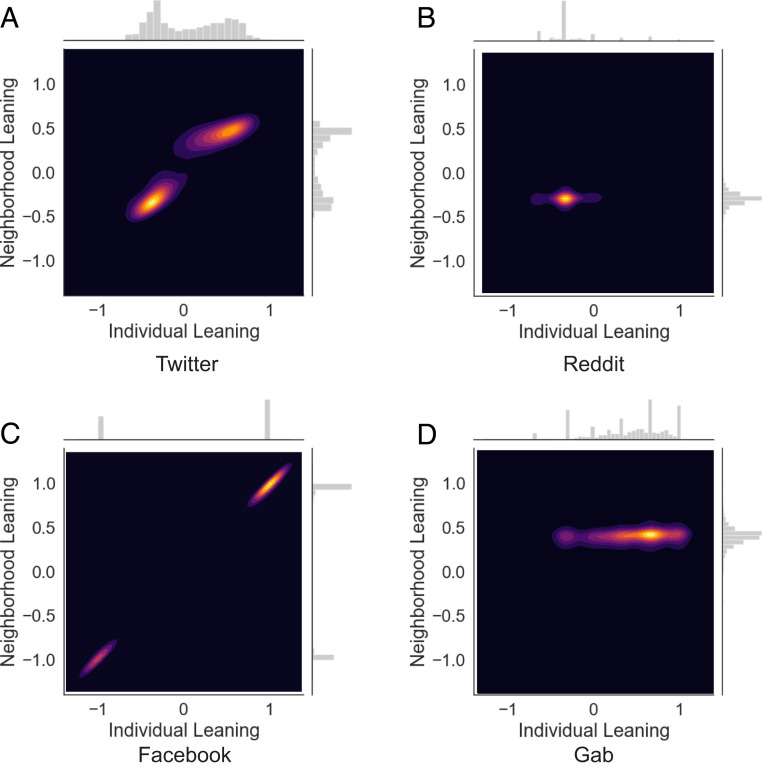
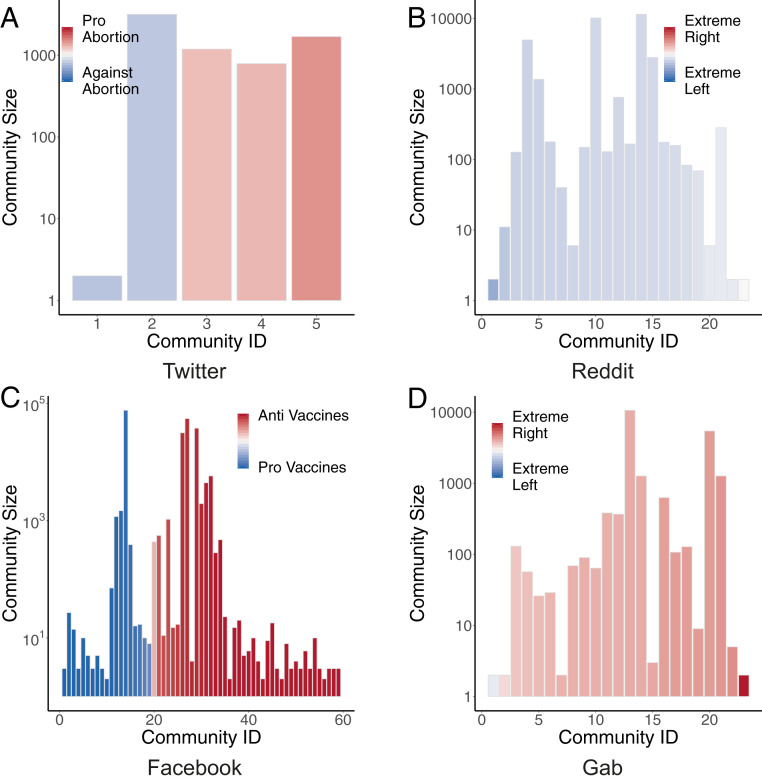
- Across the four platforms, “aggregation in homophilic clusters of users dominates online dynamics,” but platforms differ: Facebook and Twitter show homophilic clustering, while Reddit and Gab form a single community biased left or right rather than two opposing clusters.
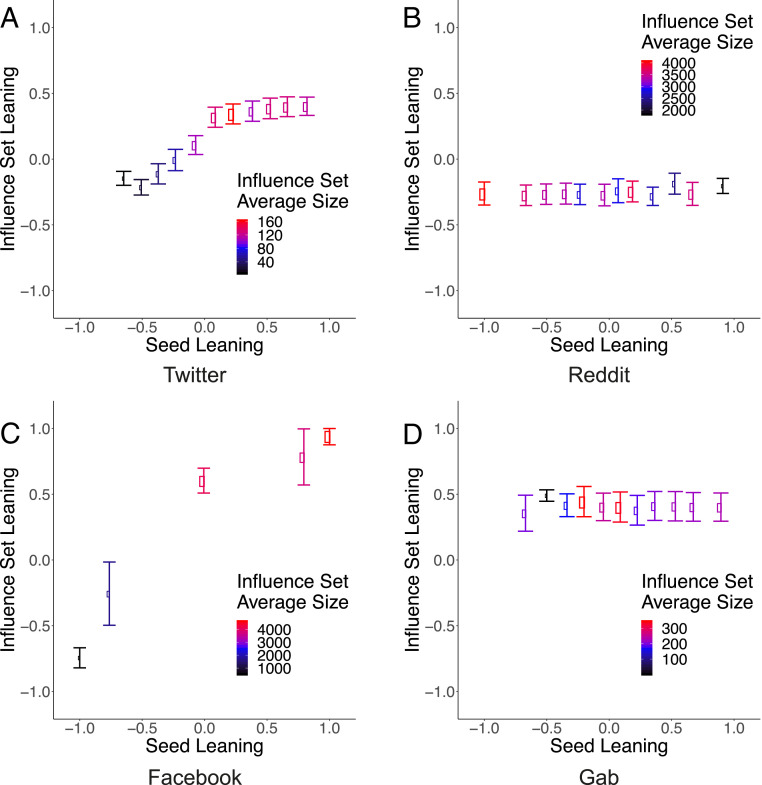
- Information diffusion is biased toward like-minded users on Facebook and Twitter, where the average leaning of a user’s influence set approximates the seed user’s leaning; on Reddit and Gab, the average leaning of the influence set does not depend on the seed user’s leaning.
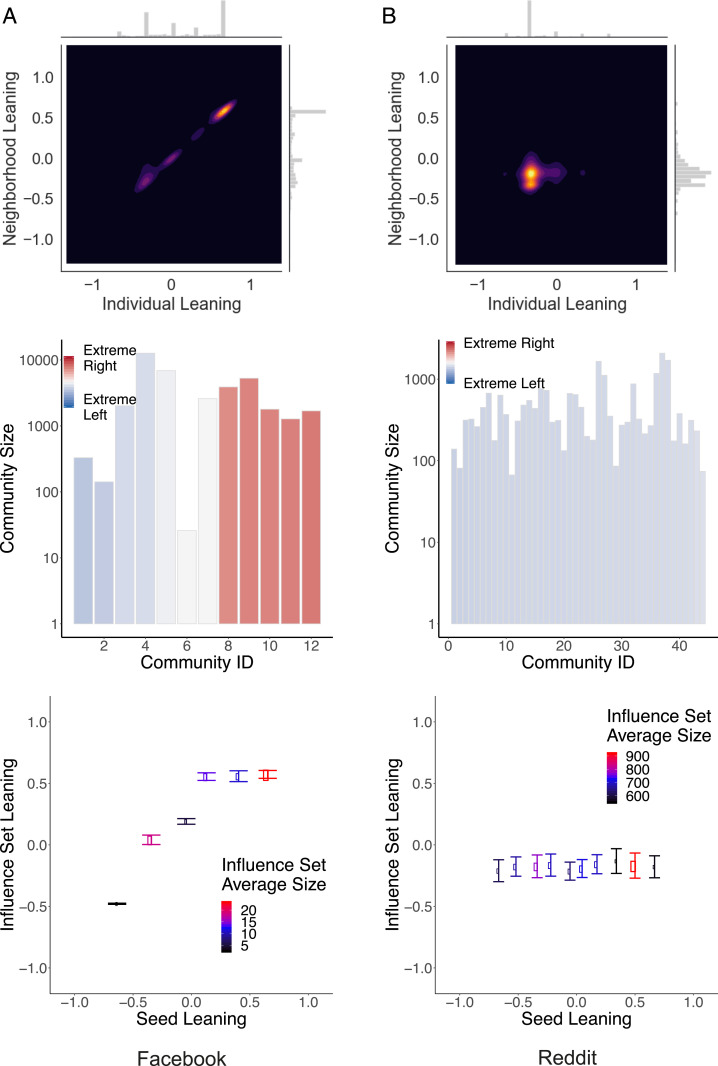
- In a direct comparison on news consumption, Facebook shows higher segregation than Reddit across all three measures: user-neighbor leaning correlation, community leaning, and SIR influence-set leaning.
- The study analyzes more than 100 million unique pieces of content and more than 1 million active users, with news outlets labeled using 2,190 media sources from Media Bias/Fact Check.
Methods
- Comparative analysis of Gab, Facebook, Reddit, and Twitter datasets on controversial topics including gun control, Obamacare, abortion, vaccines, science versus conspiracy, and news; main selected datasets were Abortion (Twitter), Vaccines (Facebook), Politics (Reddit), and Gab as a whole.
- Echo chambers were operationalized through two dimensions: homophily in interaction networks and bias in information diffusion toward like-minded peers. User leaning was inferred from linked news outlets, likes, or content, and interaction networks were built from follows, comments, cocomments, submissions, or replies depending on platform.
- Analyses included correlation between user leaning and average neighbor leaning, Louvain community detection, and SIR simulations to measure influence sets; SIR recovery rate was fixed at ν = 0.2, with dataset-specific infection ratios.
Limitations
- The paper states that the next envisioned step is to address the temporal dimension of echo chambers and how platform-specific social feedback mechanisms impact their formation.
- Evident from the text: leaning coverage varies strongly by platform, from 0.90–1.00 for Twitter/Facebook datasets to 0.15–0.20 for Reddit and 0.13 for Gab, so leaning-based conclusions for Reddit and Gab rest on a small classified fraction of users.
- Evident from the text: datasets differ by platform and topic, and the direct cross-platform comparison on a common topic is limited to news consumption on Facebook and Reddit; the authors also note that Reddit/Gab results could mean either no echo-chamber effect or observation inside a single echo chamber.
Model-written summary. Check it against the paper before relying on it.
Integrity signals
Registry
Cites
Statistics
Figures
Verification
Claims the paper makes
8 Valid · 1 Not valid · 7 Not checked · 38 Own results and interpretations
The cited sources support only part of this claim — read each source’s verdict below.
In the paper
“Selective exposure (19) and confirmation bias (20) (i.e., the tendency to seek information adhering to preexisting opinions) may explain the emergence of echo chambers on social media (1, 17, 21, 22).”
§ The echo chamber effect on social media > Abstract
What the sources say
- Supportedcites [1] M. Del Vicario, The spreading of misinformation online. Proc. Natl. Acad. Sci. U.S.A. 113, 554– 559 (2016). 26729863 PMC4725489 source
The Abstract says selective exposure generates homogeneous clusters, which it calls echo chambers. The Results and Discussion section says users select content matching a narrative and suggests confirmation bias determines echo-chamber formation. Page numbers are not provided in our copy. (LLM, conf=0.94)
- Partly supportedcites [17] K. Garimella, G. De Francisci Morales, A. Gionis, M. Mathioudakis, “ The effect of collective attention on controversial debates on social media” in WebSci ’17: 9th International ACM Web Science Conference (Association for Computing Machinery, New York, NY, 2017), pp. 43– 52. sourceExperimental — accuracy not yet measured
The Introduction reports that users mostly interact within their own side and endorse opinions from that side’s core. Related Work reports that users spread information faster when it agrees with their position. These passages are consistent with selective exposure, but the paper does not identify confirmation bias or establish that either tendency causes echo chambers to emerge. (LLM, conf=0.82)
- Supportedcites [21] M. Del Vicario, Echo chambers: Emotional contagion and group polarization on Facebook. Sci. Rep. 6, 37825 (2016). 27905402 PMC5131349 source
The Abstract says social-media disintermediation encourages users to select information that fits their beliefs (confirmation bias) and form like-minded groups (echo chambers). The Conclusions likewise describe Facebook as suited to the emergence of echo chambers. This supports the proposed explanation, without claiming it is the only cause. (LLM, conf=0.93)
- Supportedcites [22] A. Bessi, Science vs conspiracy: Collective narratives in the age of misinformation. PloS One 10, e0118093 (2015). 25706981 PMC4338055 source
The Introduction (page unavailable) says users consuming opposing information tend to form isolated clusters and describes polarized users whose likes are almost exclusively on one category of pages. The Conclusions (page unavailable) link information evaluation to existing beliefs. Together, these passages support the hedged explanation that selective exposure and confirmation bias may contribute to echo chambers. (LLM, conf=0.86)
hedgedstates a possible cause- Asserted: passes — The authors put it forward as true.
- Checkable: passes — It can be checked against evidence.
- Load-bearing: passes — The paper’s conclusions depend on it.
- Based: passes — The paper gives a reason why it holds.
- Supported
The cited sources support only part of this claim — read each source’s verdict below.
In the paper
“Our attention span remains limited (9, 10), and feed algorithms might limit our selection process by suggesting contents similar to the ones we are usually exposed to (11–13).”
§ The echo chamber effect on social media > Abstract
What the sources say
- Not checked — no full text of the sourcecites [11] A. L. Schmidt, Anatomy of news consumption on Facebook. Proc. Natl. Acad. Sci. U.S.A. 114, 3035– 3039 (2017). 28265082 PMC5373354 source
- Partly supportedcites [12] M. Cinelli, The COVID-19 social media infodemic. Sci. Rep. 10, 16598 (2020). 33024152 PMC7538912 sourceExperimental — accuracy not yet measured
The Introduction (page not provided) says algorithms take users’ preferences and attitudes into account when promoting content, and that users tend to seek information aligned with their worldviews. It does not say that feed algorithms suggest content similar to what users have previously seen or thereby limit their selection. (LLM, conf=0.82)
- Not checked — no full text of the sourcecites [13] E. Bakshy, S. Messing, L. A. Adamic, Exposure to ideologically diverse news and opinion on Facebook. Science 348, 1130– 1132 (2015). 25953820 source
hedgedstates a possible cause- Asserted: passes — The authors put it forward as true.
- Checkable: passes — It can be checked against evidence.
- Load-bearing: passes — The paper’s conclusions depend on it.
- Based: passes — The paper gives a reason why it holds.
Every source the paper cites for this claim was checked and supports it.
In the paper
“Online polarization, for instance, may foster misinformation spreading (1, 8).”
§ The echo chamber effect on social media > Abstract
What the sources say
- Supportedcites [1] M. Del Vicario, The spreading of misinformation online. Proc. Natl. Acad. Sci. U.S.A. 113, 554– 559 (2016). 26729863 PMC4725489 source
The Significance section says that homogeneity and polarization are main determinants of rumor-cascade size. The Conclusions also link polarized communities with the proliferation of narratives fueled by unsubstantiated rumors, supporting the hedged claim that online polarization may foster misinformation spreading. (LLM, conf=0.91)
- Supportedcites [8] M. D. Vicario, W. Quattrociocchi, A. Scala, F. Zollo, Polarization and fake news: Early warning of potential misinformation targets. ACM Trans. Web 13, 1– 22 (2019). source
The Introduction states that misinformation spreading on social media is directly related to increasing user polarization and segregation. This supports the citing sentence’s hedged claim that online polarization may foster misinformation spreading. (LLM, conf=0.94)
hedgedstates a possible cause- Asserted: passes — The authors put it forward as true.
- Checkable: passes — It can be checked against evidence.
- Load-bearing: unclear — It is unclear whether the paper’s conclusions depend on it.
- Based: passes — The paper gives a reason why it holds.
- Supported
Every source the paper cites for this claim was checked and supports it.
In the paper
“In network terms, this translates into a node i with a given leaning xi more likely to be connected with nodes with a leaning close to xi (18).”
§ The echo chamber effect on social media > Comparative Analysis > Polarization and Homophily in the Interaction Networks.
What the sources say
- Supportedcites [18] W. Cota, S. C. Ferreira, R. Pastor-Satorras, M. Starnini, Quantifying echo chamber effects in information spreading over political communication networks. EPJ Data Sci. 8, 35 (2019). source
The paper’s “Topological evidence of echo chambers” section says that a node with political position Pᵢ is connected with nodes whose positions are close to Pᵢ. It also reports a strong correlation between users’ positions and their neighbors’ average positions, supporting the citing sentence’s probabilistic paraphrase. (LLM, conf=0.94)
hedgedstates an association- Asserted: passes — The authors put it forward as true.
- Checkable: passes — It can be checked against evidence.
- Load-bearing: passes — The paper’s conclusions depend on it.
- Based: passes — The paper gives a reason why it holds.
- Supported
A result the paper reports from its own data — it cites no other source for it, so there is none to check. The quote shows it is in the paper.
In the paper
“Furthermore, the almost total absence of communities with leaning very close to 0 confirms the polarized state of the systems.”
§ The echo chamber effect on social media > Comparative Analysis > Polarization and Homophily in the Interaction Networks.
boostedstates a cause- Asserted: passes — The authors put it forward as true.
- Checkable: passes — It can be checked against evidence.
- Load-bearing: passes — The paper’s conclusions depend on it.
- Based: passes — The paper gives a reason why it holds.
- Rests on 4 assumptions not shown here.
32 more claims
Create a free account to see all 54 claims and to verify the 2 references still open.
- It may state two separate claims as one. 9
- Probably not a substantial claim. 9
Claims other papers make about this one
Each is checked against this paper’s own text: does it say what the citing paper says it does?
The source backs part of the claim, not all of it — or backs it for a different population, condition or comparison.
In the citing paper
“engagement with political content online is generally associated with high levels of ingroup bias; that is, it is far more likely to be shared within the political ingroup than in the outgroup (18, 19, 16).”
From Troll and divide: the language of online polarization (2022) · cites this paper as [16]
Experimental — accuracy not yet measuredThe source backs part of the claim, not all of it — or backs it for a different population, condition or comparison.
In the citing paper
“This challenge is reflected in research on”
From Machine culture (2023) · cites this paper as [142]
Experimental — accuracy not yet measuredThe source backs part of the claim, not all of it — or backs it for a different population, condition or comparison.
In the citing paper
“Thus, combating social media's echo chamber effect through an active exposure to diverse perspectives and networks also represents a viable individual-level strategy for addressing the deepfake problem (Cinelli et al., 2021; Gillani et al., 2018).”
From Deepfakes: Deceptions, mitigations, and opportunities (2023) · cites this paper as Cinelli et al., 2021
Experimental — accuracy not yet measuredThe source backs part of the claim, not all of it — or backs it for a different population, condition or comparison.
In the citing paper
“Even without being designed to shift opinions, it has been found that algorithms may contribute to political polarization by reinforcing divisive opinions [9, 24, 32].”
From Co-Writing with Opinionated Language Models Affects Users’ Views (2023) · cites this paper as [32]
Experimental — accuracy not yet measuredThe source backs part of the claim, not all of it — or backs it for a different population, condition or comparison.
In the citing paper
“On Reddit, studies find minimal evidence of echo chambers due to platform features encouraging cross-cutting exposure [17,61,63].”
From A systematic review of echo chamber research: comparative analysis of conceptualizations, operationalizations, and varying outcomes (2025) · cites this paper as [17]
Experimental — accuracy not yet measured
5 more claims about this paper
Create a free account to see every claim other papers make about this one.
Citations
Cites
Fast unfolding of communities in large networks
Blondel, V. D., Guillaume, J.-L., Lambiotte, R., & Lefebvre, E. (2008) · Journal of Statistical Mechanics: Theory and Experiment · doi:10.1088/1742-5468/2008/10/p10008 · Cited by 21,424 · cited 1×
“We detected communities by applying the Louvain algorithm (41), removing singleton communities with only one user.”
MethodThe spread of true and false news online
Vosoughi, S., Roy, D., & Aral, S. (2018) · Science · doi:10.1126/science.aap9559 · Cited by 8,847 · cited 1×
“A recent study (7) limited to Twitter claimed that fake news travels faster than real news.”
BackgroundConfirmation Bias: A Ubiquitous Phenomenon in Many Guises
Nickerson, R. S. (1998) · Review of General Psychology · doi:10.1037/1089-2680.2.2.175 · Cited by 7,267 · cited 1×
“Selective exposure (19) and confirmation bias (20) (i.e., the tendency to seek information adhering to preexisting opinions) may explain the emergence of echo chambers on social media (1, 17, 21, 22).”
BackgroundInfectious Diseases of Humans: Dynamics and Control
Anderson, R. M., & May, R. M. (1991) · doi:10.1093/oso/9780198545996.001.0001 · Cited by 6,179
Lazer, D. M. J., Baum, M. A., Benkler, Y., Berinsky, A. J., Greenhill, K. M., Menczer, F., Metzger, M. J., Nyhan, B., Pennycook, G., Rothschild, D., et al. (2018) · Science · doi:10.1126/science.aao2998 · Cited by 4,160
Degroot, M. H. (1974) · Journal of the American Statistical Association · doi:10.1080/01621459.1974.10480137 · Cited by 4,004 · cited 1×
“For instance, if opinions are assumed to be embedded in a onedimensional space (38), x ∈ [−1,+1] without loss of generality, as usual for controversial topics, then polarization is characterized by two well-separated peaks in P(x ), for positive and negative opinions.”
BackgroundExposure to ideologically diverse news and opinion on Facebook
Bakshy, E., Messing, S., & Adamic, L. A. (2015) · Science · doi:10.1126/science.aaa1160 · Cited by 3,245 · cited 2×
“Our attention span remains limited (9, 10), and feed algorithms might limit our selection process by suggesting contents similar to the ones we are usually exposed to (11–13).”
BackgroundThe spreading of misinformation online
Del Vicario, M., Bessi, A., Zollo, F., Petroni, F., Scala, A., Caldarelli, G., Stanley, H. E., & Quattrociocchi, W. (2016) · Proceedings of the National Academy of Sciences · doi:10.1073/pnas.1517441113 · Cited by 2,407 · cited 2×
“, the tendency to seek information adhering to preexisting opinions) may explain the emergence of echo chambers on social media (1, 17, 21, 22).”
BackgroundSelf-citationThe COVID-19 social media infodemic
Cinelli, M., Quattrociocchi, W., Galeazzi, A., Valensise, C. M., Brugnoli, E., Schmidt, A. L., Zola, P., Zollo, F., & Scala, A. (2020) · Scientific Reports · doi:10.1038/s41598-020-73510-5 · Cited by 2,313
Self-citationFilter Bubbles, Echo Chambers, and Online News Consumption
Flaxman, S., Goel, S., & Rao, J. M. (2016) · Public Opinion Quarterly · doi:10.1093/poq/nfw006 · Cited by 1,992
Research works printed but not linked: 2
- R. M. Anderson, R. M. May, Infectious Diseases in Humans (Oxford University Press, Oxford, United Kingdom, 1992).
- M. Cinelli, G. De Francisci Morales, A. Galeazzi, W. Quattrociocchi, M. Starnini, The echo chamber effect on social media. Open Science Framework. https://osf.io/x92br/?view_only=cdcc87d30e404e01b6ae316db15e3375. Deposited 22 January 2021. PMC7936330 33622786
Cited by
Items 301–400 of 2,063
Breaking Filter Bubble: A Reinforcement Learning Framework of Controllable Recommender System
Li, Z., Dong, Y., Gao, C., Zhao, Y., Li, D., Hao, J., Zhang, K., Li, Y., & Wang, Z. (2023) · International World Wide Web Conference (WWW) · doi:10.1145/3543507.3583856 · Cited by 40
“As a result, the users’ behaviors are more and more likely to be constrained by a small fraction of homogeneous content, which is known as the filter bubble effect [2, 8, 11, 24].”
Steiglechner, P., Smaldino, P. E., Moser, D., & Merico, A. (2023) · Journal of The Royal Society Interface · doi:10.1098/rsif.2023.0372 · Cited by 19
“This outcome is in line with empirical evidence that echo chambers play an important role in political debates [81,82] including the debate on climate change [83,84].”
ResultDo fossil fuel firms reframe online climate and sustainability communication? A data-driven analysis
Debnath, R., Ebanks, D., Mohaddes, K., Roulet, T. J., & Alvarez, R. M. (2023) · npj Climate Action · doi:10.1038/s44168-023-00086-x · Cited by 21
News Waves: Hard News, Soft News, Fake News, Rumors, News Wavetrains
Vitanov, N. K., Dimitrova, Z. I., & Vitanov, K. N. (2023) · Entropy · doi:10.3390/e26010005 · Cited by 17
The drivers of global news spreading patterns
Alipour, S., Marco, N. D., Avalle, M., Etta, G., Cinelli, M., & Quattrociocchi, W. (2024) · Scientific Reports · doi:10.1038/s41598-024-52076-6 · Cited by 21
Self-citationKnowledge mapping of information cocoons: A bibliometric study using visual analysis
Yan, C., Pu, K., & Luo, X. (2024) · Journal of Librarianship and Information Science · doi:10.1177/09610006231222628 · Cited by 17
“The research of Morales GD mainly involved public opinions on social media (De Francisci Morales et al., 2021) and the echo chamber effect on social media (Cinelli et al., 2021).”
Ho, K. K. W., & Ye, S. (2024) · Information · doi:10.3390/info15020116 · Cited by 17
“[31,32] Financial gain Some people generate false health information to obtain financial gain, such as suggesting people purchase their medical products or services or driving online traffic to their sites to earn advertising revenue.”
InfluentialTwo-Stage Information Spreading Evolution on the Control Role of Announcements
Ren, J., Nian, F., & Yang, X. (2024) · IEEE Transactions on Computational Social Systems · doi:10.1109/tcss.2024.3367385 · Cited by 16
“How to ensure the widespread dissemination of true information and control the scale of spreading false information has become a hot topic of current research [27], [28], [29], [30], [31].”
BackgroundUnderstanding the complex links between social media and health behaviour
Zollo, F., Baronchelli, A., Betsch, C., Delmastro, M., & Quattrociocchi, W. (2024) · BMJ · doi:10.1136/bmj-2023-075645 · Cited by 20
“17 After all, platforms such as Facebook are built on the foundational unit of the “like,” which represents the most fundamental action a user can take within the environment.”
BackgroundSelf-citationLi, Y. (2024) · Engineering Applications of Artificial Intelligence · doi:10.1016/j.engappai.2024.109369 · Cited by 16
COVID-19: The Pseudo-Environment and the Need for a Paradigm Change
Stein, R. A., Ometa, O., & Broker, T. R. (2021) · GERMS · doi:10.18683/germs.2021.1283 · Cited by 18
Political coherence and certainty as drivers of interpersonal liking over and above similarity
Zimmerman, F., Garbulsky, G., Ariely, D., Sigman, M., & Navajas, J. (2022) · Science Advances · doi:10.1126/sciadv.abk1909 · Cited by 26
Inferring attitudinal spaces in social networks
Morales, P. R., Cointet, J., Zolotoochin, G. M., Peralta, A. F., Íñiguez, G., & Pournaki, A. (2022) · Social Network Analysis and Mining · doi:10.1007/s13278-022-01013-4 · Cited by 28
“6 seeks to advance the understanding of the link between polarization and topological fragmentation: i.e., the so-called echo chamber phenomena (Van Alstyne et al. 1996; Cinelli et al. 2021).”
BackgroundLearning from Shared News: When Abundant Information Leads to Belief Polarization
Bowen, R., Dmitriev, D., & Galperti, S. (2021) · National Bureau of Economic Research · doi:10.3386/w28465 · Cited by 29
An Exploratory Study on Information Cocoon in Recommender Systems
Zhang, L., Lian, Y., Wu, H., Song, C., & Yuan, X. (2025) · Data Science and Engineering · doi:10.1007/s41019-025-00288-9 · Cited by 24
““Echo chamber” is modeled as a homogenized community with similar interests or opinions [11, 20, 57], which can permeate information with similar ideologies while excluding opposing views [13, 45, 46], leading to the repeated reinforcement of similar beliefs within a closed community, and even…”
Cruickshank, S. M., McKee, M., & Pagel, C. (2025) · Immunology and Cell Biology · doi:10.1111/imcb.70073 · Cited by 20
“Groups such as ACT UP (AIDS Coalition to Unleash Power) 28 and GMHC (Gay Men’s Health Crisis) 29 in the United States, and the Terrence Higgins Trust in the United Kingdom, 30 mobilized to demand action, educate the public, and support those living with HIV/AIDS.”
Filter bubble effect in the multistate voter model
Iannelli, G., Marzo, G. D., & Castellano, C. (2022) · Chaos An Interdisciplinary Journal of Nonlinear Science · doi:10.1063/5.0079135 · Cited by 18
“Together with the “echo chamber” effect 7–9 , filter bubbles are thought to be at the heart of the overall increase of polarization and radicalization that is observed in many social contexts 10–12 .”
BackgroundNeurocomputational mechanism of real-time distributed learning on social networks
Jiang, Y., Mi, Q., & Zhu, L. (2023) · Nature Neuroscience · doi:10.1038/s41593-023-01258-y · Cited by 27
“…between the initial and latter stages of learning echoes previous studies of news circulation on social media, which have emphasized the importance of separating the spread of first-versus secondhand information in understanding phenomena such as rumor dissemination and amplification 16,45 .”
BackgroundUnderstanding underlying moral values and language use of COVID-19 vaccine attitudes on twitter.
Borghouts, J. W., Huang, Y., Gibbs, S., Hopfer, S., Li, C., & Mark, G. J. (2023) · PubMed Central · doi:10.1093/pnasnexus/pgad013 · Cited by 22
Is Online Moral Outrage Outrageous? Rethinking the Indignation Machine
Mihailov, E., Voinea, C., & Vică, C. (2023) · Science and Engineering Ethics · doi:10.1007/s11948-023-00435-3 · Cited by 19
“Associating with similar others has come to dominate online dynamics (Cinelli et al., 2021).”
BackgroundExploring the vaccine conversation on TikTok in Italy: beyond classic vaccine stances
Parisi, L., Mulargia, S., Comunello, F., Bernardini, V., Bussoletti, A., Nisi, C. R., Russo, L., Campagna, I., Lanfranchi, B., Croci, I., et al. (2023) · BMC Public Health · doi:10.1186/s12889-023-15748-y · Cited by 19
“Recently, an analysis of content on controversial topics (including vaccination) confirmed the presence of polarised communities both on Facebook and Twitter [39].”
BackgroundKhosrowi, D. (2023) · Philosophy of the Social Sciences · doi:10.1177/00483931231172455 · Cited by 13
Sincere or Motivated? Partisan Bias in Advice-taking
Zhang, Y., & Rand, D. G. (2021) · Judgment and Decision Making · doi:10.1017/jdm.2023.28 · Cited by 20
Analyzing the changing landscape of the Covid-19 vaccine debate on Twitter
Santoro, A., Galeazzi, A., Scantamburlo, T., Baronchelli, A., Quattrociocchi, W., & Zollo, F. (2023) · Social Network Analysis and Mining · doi:10.1007/s13278-023-01127-3 · Cited by 16
“Nonetheless, this approach has demonstrated its reliability, enabling consistent analysis, and aligns with similar techniques employed in related studies (Cinelli et al. 2021; Flamino et al. 2023).”
Self-citationBianchi, F. P., & Tafuri, S. (2023) · Human Vaccines & Immunotherapeutics · doi:10.1080/21645515.2023.2259398 · Cited by 28
“62 Another characteristic feature of online communication networks is their marked degree of homo-phily.”
BackgroundTorricelli, M., Falkenberg, M., Galeazzi, A., Zollo, F., Quattrociocchi, W., & Baronchelli, A. (2023) · PLOS Climate · doi:10.1371/journal.pclm.0000277 · Cited by 18
“In particular, social media may be contributing to growing polarization, especially in relation to views on climate change [6], with users confined to climate-sceptic or pro-climate action echo-chambers [13].”
BackgroundSelf-citationAway from the herd: loneliness as a dysfunction of social alignment
Shamay‐Tsoory, S., & Kanterman, A. (2024) · Social Cognitive and Affective Neuroscience · doi:10.1093/scan/nsae005 · Cited by 19
“Social media users tend to attract like-minded people and repulse from dissimilar others, reinforcing a shared narrative and bias the information diffusion between users, thus increasing alignment and cohesion between them (echo chambers) (Cinelli et al ., 2021).”
BackgroundSong, X., Guo, S., & Gao, Y. (2024) · Frontiers in Psychology · doi:10.3389/fpsyg.2024.1323117 · Cited by 27
“In a highly selective social network environment, users with similar interests tend to form clusters, where they are more likely to receive reinforcing feedback, rather than challenging or opposing views, eventually resulting in homogeneous clusters, known as echo chambers (Cinelli et al., 2021).”
BackgroundBailard, C., Tromble, R. K., Zhong, W., Bianchi, F., Hosseini, P., & Broniatowski, D. A. (2024) · American Political Science Review · doi:10.1017/s0003055423001478 · Cited by 6
Uncovering the Deep Filter Bubble: Narrow Exposure in Short-Video Recommendation
Sukiennik, N., Gao, C., & Li, N. (2024) · International World Wide Web Conference (WWW) · doi:10.1145/3589334.3648159 · Cited by 34
“The echo chamber could be seen as a potential negative outcome of the filter bubble, but the echo chamber typically refers to the entire set of information seen by a person, and not that coming from one individual platform [6] [7].”
Worse Than Ignorance: The Challenge of Health Misinformation
Schulz, P. J., & Nakamoto, K. (2024) · Cambridge University Press eBooks · doi:10.1017/9781009289542 · Cited by 18
News and misinformation consumption: A temporal comparison across European countries
Baqir, A., Galeazzi, A., & Zollo, F. (2024) · PLoS ONE · doi:10.1371/journal.pone.0302473 · Cited by 21
Self-citationMotivated information acquisition and social norm formation
Dimant, E., Galeotti, F., & Villeval, M. C. (2024) · European Economic Review · doi:10.1016/j.euroecorev.2024.104778 · Cited by 33
Lueders, A., Wollast, R., Nugier, A., & Guimond, S. (2021) · Appetite · doi:10.1016/j.appet.2021.105877 · Cited by 14
Treuillier, C., Castagnos, S., Dufraisse, E., & Brun, A. (2022) · ACM Conference on User Modeling, Adaptation and Personalization (UMAP) · doi:10.1145/3511047.3538030 · Cited by 19
Ideology and COVID-19 Vaccination Intention: Perceptual Mediators and Communication Moderators
Jiang, X., Hwang, J., Su, M.-H., Wagner, M. W., & Shah, D. V. (2022) · Journal of Health Communication · doi:10.1080/10810730.2022.2117438 · Cited by 17
“In another scenario, there may exist an echo-chamber that reinforces existing attitudes (Cinelli, Morales, Galeazzi, Quattrociocchi, & Starnini, 2021; Karlsen, Steen-Johnsen, Wollebæk, & Enjolras, 2017).”
Pickett, A. C., & Valdez, D. (2022) · Sexuality Research and Social Policy · doi:10.1007/s13178-022-00768-x · Cited by 16
“This is particularly concerning, given the documented “echo chamber” effects that contribute to the polarization of users across social media platforms (Cinelli et al., 2021).”
BackgroundInfluentialCOVID-19 vaccine hesitancy and shaming on TikTok: A multimodal appraisal analysis
Poucke, M. V. (2023) · Multimodality & Society · doi:10.1177/26349795231153955 · Cited by 22
“Correspondingly, Cinelli et al. (2021) emphasise that political attitudes and beliefs are reinforced in echo chambers as users continuously interact with other users who share similar opinions or, as Bourdieu (1990: 64) puts it, the interlocutors “shape their aspirations according to concrete…”
BackgroundBiasio, A. D., Monaro, M., Oneto, L., Ballan, L., & Navarin, N. (2023) · Knowledge-Based Systems · doi:10.1016/j.knosys.2023.110699 · Cited by 14
Opinion formation on social networks with algorithmic bias: dynamics and bias imbalance
Peralta, A. F., Kertész, J., & Íñiguez, G. (2021) · Journal of Physics Complexity · doi:10.1088/2632-072x/ac340f · Cited by 26
“Explaining how and when the polarization of opinion groups emerges within a population is of crucial importance [17, 18].”
BackgroundCOVID-19 infodemic on Facebook and containment measures in Italy, United Kingdom and New Zealand
Etta, G., Galeazzi, A., Hutchings, J. R., Smith, C. S. J., Conti, M., Quattrociocchi, W., & Riva, G. V. D. (2022) · PLoS ONE · doi:10.1371/journal.pone.0267022 · Cited by 17
“Further results pointed out that the formation and the segregation of such groups may be attributed to the role of platforms’ feed algorithms that increase the distance among ideologically opposite groups of users [25, 26].”
BackgroundSelf-citationHow to Find Orchestrated Trolls? A Case Study on Identifying Polarized Twitter Echo Chambers
Kratzke, N. (2023) · Computers · doi:10.3390/computers12030057 · Cited by 13
Ideology and polarization set the agenda on social media
Loru, E., Galeazzi, A., Bonetti, A., Sangiorgio, E., Marco, N. D., Cinelli, M., Falkenberg, M., Baronchelli, A., & Quattrociocchi, W. (2025) · Scientific Reports · doi:10.1038/s41598-025-19776-z · Cited by 37
“Consistent with previous research on online polarization [8, 71, 74, 75], our findings reveal the presence of communities supporting conflicting ideologies.”
Self-citationWeAudit: Scaffolding User Auditors and AI Practitioners in Auditing Generative AI
Deng, W. H., Claire, W., Han, H. Z., Hong, J., Holstein, K., & Eslami, M. (2025) · Proceedings of the ACM on Human-Computer Interaction · doi:10.1145/3757702 · Cited by 28
“As noted in Section 6.2, user auditors may over-rely on existing examples provided by researchers and practitioners, potentially leading to an echo chamber effect [26], even with “social augmentation” features.”
InfluentialDepression, reduced education, and bias perceptions as risk factors of beliefs in misinformation
Delmastro, M., & Paciello, M. (2022) · Scientific Reports · doi:10.1038/s41598-022-20640-7 · Cited by 17
Fine, R. D., Gelman, S. A., & Ho, A. K. (2023) · Psychology and Sexuality · doi:10.1080/19419899.2023.2181706 · Cited by 15
“However, social media users often interact with others who share their same values (Cinelli et al., 2021).”
BackgroundChrysostomou, A. C., Vrancken, B., Haralambous, C., Alexandrou, M., Gregoriou, I., Ioannides, M., Iοannou, C., Kalakouta, O., Karagiannis, C., Marcou, M., et al. (2023) · Viruses · doi:10.3390/v15091933 · Cited by 16
“Despite the inherent risk of social media’s propensity to amplify and propagate misinformation, a challenge that could inadvertently fuel hesi-tancy in promptly sharing time-sensitive scientific data, we decided to disseminate our initial findings [92,93].”
BackgroundJenkins, E. L., Lukose, D., Brennan, L. L., Molenaar, A., & McCaffrey, T. A. (2023) · Sustainability · doi:10.3390/su151813788 · Cited by 16
Gao, T., Wang, S., Chen, B., & Yang, L. (2024) · China Economic Review · doi:10.1016/j.chieco.2023.102111 · Cited by 16
Qiu, J., & Golman, R. (2024) · Applied Cognitive Psychology · doi:10.1002/acp.4195 · Cited by 20
Measurement of disruptive innovation and its validity based on improved disruption index
Zhang, Z., Zhang, J., & Wang, P. (2024) · Scientometrics · doi:10.1007/s11192-024-05134-9 · Cited by 18
Metacognition biases information seeking in assessing ambiguous news
Guigon, V., Villeval, M. C., & Dreher, J. (2024) · Communications Psychology · doi:10.1038/s44271-024-00170-w · Cited by 20
Understanding Youth Violence Through a Socio-Ecological Lens
Paat, Y., Yeager, K. H., Cruz, E. M., Cole, R., & Torres, L. R. (2025) · Social Sciences · doi:10.3390/socsci14070424 · Cited by 19
An Operator-Based Approach for Modeling Influence Diffusion in Complex Social Networks
Jiang, C., D'Arienzo, A., Li, W., et al. (2021) · Journal of Social Computing · doi:10.23919/jsc.2021.0007 · Cited by 12
Users’ polarisation in dynamic discussion networks: The case of refugee crisis in Sweden
Kopacheva, E., & Yantseva, V. (2022) · PLoS ONE · doi:10.1371/journal.pone.0262992 · Cited by 20
Raballo, A., Poletti, M., & Preti, A. (2022) · Frontiers in Public Health · doi:10.3389/fpubh.2022.877490 · Cited by 14
“This hypothesis presupposes a weakening of the reality testing and an ongoing para-delusional thinking which is not amenable to change in light of massive conflicting evidence as own’s physical symptoms requiring hospitalizations, treatment indications of the medical staff, presence of other hospitalized patients with…”
BackgroundBrockinton, A., Hirst, S., Wang, R., McAlaney, J., & Thompson, S. (2022) · Frontiers in Psychology · doi:10.3389/fpsyg.2022.999780 · Cited by 15
“It is considered radicalised behaviour to share anti-vax information, often based on fraudulent research, perpetuating harmful information-spread that vaccinating children is unsafe (Van Raemdonck, 2019; Cinelli et al., 2021).”
BackgroundThe Thin Ideology of Populist Advertising on Facebook during the 2019 EU Elections
Capozzi, A. T. E., Morales, G. D. F., Mejova, Y., Monti, C., & Panisson, A. (2023) · International World Wide Web Conference (WWW) · doi:10.1145/3543507.3583267 · Cited by 20
“The role of targeted advertising and differential pricing on reaching a diverse audience has also been criticized for its potential to create political filter bubbles [4, 10].”
BackgroundSelf-citationThe mega solar Twitter discourse in Japan: Engaged opponents and silent proponents
Doedt, C., & Maruyama, Y. (2023) · Energy Policy · doi:10.1016/j.enpol.2023.113495 · Cited by 13
Authority without Care: Moral Values behind the Mask Mandate Response
Mejova, Y., Kalimeri, K., & Morales, G. D. F. (2023) · Proceedings of the International AAAI Conference on Web and Social Media · doi:10.1609/icwsm.v17i1.22173 · Cited by 18
Self-citationDepolarization of opinions on social networks through random nudges
Pal, R., Kumar, A., & Santhanam, M. S. (2023) · Physical review. E · doi:10.1103/physreve.108.034307 · Cited by 18
Health literacy—politically reloaded
Kickbusch, I. (2021) · Health Promotion International · doi:10.1093/heapro/daab121 · Cited by 13
Reaching the bubble may not be enough: news media role in online political polarization
Kobellarz, J. K., Broćić, M., Graeml, A. R., Silver, D. L., & Silva, T. H. (2022) · EPJ Data Science · doi:10.1140/epjds/s13688-022-00357-3 · Cited by 22
“[40], for instance, find that platforms like Twitter which are organized around social networks and news feed algorithms generate greater homophilic clustering than others.”
BackgroundUIN Sunan Ampel Surabaya, I., Zamzami, M., Nisok, S. R., UIN Sunan Ampel Surabaya, I., MUKTAFI, UIN Sunan Ampel Surabaya, I., A’la, A., UIN Sunan Ampel Surabaya, I., Mukaffa, Z., & UIN Sunan Ampel Surabaya, I. (2023) · Jurnal Komunikasi Malaysian Journal of Communication · doi:10.17576/jkmjc-2023-3901-05 · Cited by 36
“Furthermore, the power of technology has activated the echo chamber effect through social media algorithms (Cinelli et al., 2021; Auxier & Vitak, 2019; Kitchens et al., 2020).”
Media Coverage of Immigration and the Polarization of AttitudesPreprint
Schneider-Strawczynski, S., & Valette, J. (2021) · Social Science Research Network · doi:10.2139/ssrn.4673964 · Cited by 21
Relational AI: Facilitating Intergroup Cooperation with Socially Aware Conversational Support
Claggett, E. L., Kraut, R. E., & Shirado, H. (2025) · CHI Conference on Human Factors in Computing Systems · doi:10.1145/3706598.3713757 · Cited by 29
“However, it remains unexplored whether AI can induce collective solidarity between real social groups — an important step to remedying the social clustering and partisan animosity of today’s online communities [27, 72].”
Algorithmic Social Injustices: Antecedents and Mitigations
Tanriverdi, H., & Akinyemi, J.-P. O. (2025) · MIS Quarterly · doi:10.25300/misq/2025/18314 · Cited by 17
Drivers of health polarization during the COVID-19 pandemic: A systematic review
Camacho-García, M., Macías, M. I. S., Ortega‐Martin, E., & Álvarez‐Gálvez, J. (2025) · Science Advances · doi:10.1126/sciadv.ady5064 · Cited by 17
“…political leanings, or beliefs on a topic are reinforced due to recurrent interactions with peers or information sources that present similar tendencies and attitudes ( 17 ), i.e., an online context where individuals are only exposed to information that aligns with their preexisting beliefs ( 18 ).”
Discovering Polarization Niches via Dense Subgraphs with Attractors and Repulsers
Fazzone, A., Lanciano, T., Denni, R., Tsourakakis, C. E., & Bonchi, F. (2022) · Proceedings of the VLDB Endowment · doi:10.14778/3565838.3565843 · Cited by 16
“Users tend to interact with like-minded individuals and consume partisan information which reinforces their own ideological viewpoint [7, 24]: this is the so-called “echo chamber” effect [14].”
BackgroundGalindo‐Domínguez, H., Magariño, S. G., & Iglesias, D. L. (2023) · OBETS Revista de Ciencias Sociales · doi:10.14198/obets.22342 · Cited by 15
Empowering Responsible Digital Citizenship Through an Augmented Reality Educational Game
Iakovidis, M., Papakostas, C., Troussas, C., & Sgouropoulou, C. (2023) · Lecture notes in networks and systems · doi:10.1007/978-3-031-44146-2_4 · Cited by 13
Modeling opinion misperception and the emergence of silence in online social system
Vilone, D., & di Sorrentino, E. P. (2024) · PLoS ONE · doi:10.1371/journal.pone.0296075 · Cited by 14
The Social Dynamics Approach to mediated communication
Roos, C. A., Koudenburg, N., & Postmes, T. (2024) · European Review of Social Psychology · doi:10.1080/10463283.2024.2322905 · Cited by 15
“worldviews and strengthen prior convictions in so-called “echo chambers” (e.g., Cinelli et al., 2021).”
A simple model of global cascades in signed networks
Ke, X., Wen, Y., Yu, H., & Meng, F. (2024) · Chaos Solitons & Fractals · doi:10.1016/j.chaos.2024.115286 · Cited by 13
Unveiling the hidden agenda: Biases in news reporting and consumption
Galeazzi, A., Peruzzi, A., Brugnoli, E., Delmastro, M., & Zollo, F. (2024) · PNAS Nexus · doi:10.1093/pnasnexus/pgae474 · Cited by 20
Self-citationWang, S., Huang, S., Zhou, A., & Metaxa, D. (2024) · Proceedings of the ACM on Human-Computer Interaction · doi:10.1145/3687046 · Cited by 11
“Many studies have investigated YouTube video recommendations in response to such concerns, finding consistent radicalization results for a small proportion of politically extreme users [23, 31, 48].”
Media Coverage of Immigration and the Polarization of Attitudes
Schneider-Strawczynski, S., & Valette, J. (2024) · American Economic Journal Applied Economics · doi:10.1257/app.20230300 · Cited by 70
Haug, M., Maier, C., Gewald, H., & Weitzel, T. (2025) · Internet Research · doi:10.1108/intr-03-2024-0413 · Cited by 16
Kuo, H.-Y., & Chen, S. (2025) · Journal of Medical Internet Research · doi:10.2196/65631 · Cited by 21
Lerman, K., Chu, Bickham, C., Luceri, L., & Ferrara, E. (2025) · EPJ Data Science · doi:10.1140/epjds/s13688-025-00575-5 · Cited by 28
Hate Speech and Polarization Around the “Trans Law” in Spain
Holgado, P. S., Calderón, C. A., & Barbosa, M. (2023) · Politics and Governance · doi:10.17645/pag.v11i2.6374 · Cited by 20
When Information Conflicts with Obligations: the Role of Motivated Cognition
Wang, A., Wang, S., & Ye, X. (2023) · The Economic Journal · doi:10.1093/ej/uead037 · Cited by 15
Quantifying the potentiality for polarization in opinion networks
Carballosa, A., Crego, Á., & Muñuzuri, A. P. (2023) · Chaos Solitons & Fractals · doi:10.1016/j.chaos.2023.113697 · Cited by 11
Ni, P., Guidi, B., Michienzi, A., et al. (2023) · Information Sciences · doi:10.1016/j.ins.2023.119646 · Cited by 11
Díaz, F., & Fuentes, A. D. (2022) · Andes pediatrica · doi:10.32641/andespediatr.v93i1.4250 · Cited by 26
Exploring concept creep: Youth’s portrayal of ADHD on TikTok
de Vries, W., Batstra, L., & van Assen, A. (2025) · SSM - Mental Health · doi:10.1016/j.ssmmh.2025.100489 · Cited by 16
References to unbiased sources increase the helpfulness of community fact-checks
Solovev, K., & Pröllochs, N. (2025) · Scientific Reports · doi:10.1038/s41598-025-09372-6 · Cited by 27
“The total number of users who responded to this question is denoted by Votes .”
The paradox of trust in health care in the age of social media
Ienca, M., Gounder, C. R., & Emanuel, E. (2026) · The Lancet · doi:10.1016/s0140-6736(25)02556-5 · Cited by 16
Towards a living lab for responsible applied AI
Harbers, M., & Overdiek, A. (2022) · Proceedings of DRS · doi:10.21606/drs.2022.422 · Cited by 18
Virtual consumption: A review of digitalization's “green” credentials
Hynes, M. J. (2022) · Frontiers in Sustainability · doi:10.3389/frsus.2022.969329 · Cited by 14
“Taken with social conventions and the belief that individuals often trust information from people in their social network, this leads to “echo chambers” (Cinelli et al., 2021), where facts and dis/misinformation reverberate around a specific group.”
BackgroundWang, Y., Leach, J., Kim, J., & Lee, S. (2023) · Journal of Science Communication · doi:10.22323/2.22020203 · Cited by 12
Lyu, Z. (2023) · New Media & Society · doi:10.1177/14614448231180654 · Cited by 12
“People’s interactions on social media are typically characterized by homophily in many previous studies (Cinelli et al., 2021; Stroud, 2010).”
Opinion disparity in hypergraphs with community structure
Landry, N., & Restrepo, J. G. (2023) · Physical review. E · doi:10.1103/physreve.108.034311 · Cited by 20
“Other models for the formation of polarization include the effects of cooperation and partisanship [20, 21], echo chambers on social media [7], radicalization dynamics [22], cognitive biases [23], moderates seen as outsiders [24], and media influence [25].”
BackgroundDavis, D. J., & Beck, T. E. (2023) · Information and Organization · doi:10.1016/j.infoandorg.2023.100488 · Cited by 14
Rasmussen, S. H. R., & Petersen, M. B. (2023) · PNAS Nexus · doi:10.1093/pnasnexus/pgad382 · Cited by 23
“…argue that the characterization of social media as echo chambers is exaggerated (15 – 17), it is also clear that online echo chambers exist (18, 19) and that they may be responsible for producing more hateful social media users through a number of distinct processes such as enclave…”
Quantifying the Echo Chamber Effect: An Embedding Distance-based Approach
Alatawi, F., Sheth, P., & Liu, H. (2023) · IEEE/ACM International Conference on Advances in Social Networks Analysis and Mining (ASONAM) · doi:10.1145/3625007.3627731 · Cited by 19
Public perception of coastal ecoengineering interventions in Singapore
Ying, L., Ledet, J., Griffin, K. J., Loke, L. H. L., Bhatia, N., & Todd, P. A. (2024) · Bulletin of Marine Science · doi:10.5343/bms.2023.0087 · Cited by 10
Liu, Q., Su, F., Mu, A., & Wu, X. (2024) · Psychology Research and Behavior Management · doi:10.2147/prbm.s450934 · Cited by 18
Nowacki, L. (2024) · International Social Science Journal · doi:10.1111/issj.12513 · Cited by 15
Iranzo-Cabrera, M., Castro-Bleda, M. J., Simón-Astudillo, I., & Hurtado, L.-F. (2024) · Social Science Computer Review · doi:10.1177/08944393241269417 · Cited by 24
“This is especially evident in two-party political systems with pluralistic electoral rules (Cinelli et al., 2021; Hawdon et al., 2022; Urman, 2020) such as the Spanish one, especially after the emergence of far-right political groups that favor the dissemination of hate speech against certain…”
Metadata
- Authors
- Cinelli, M., De Francisci Morales, G., Galeazzi, A., Quattrociocchi, W., & Starnini, M.
- Affiliations
- Ca' Foscari University of Venice (IT)
- Institute for Scientific Interchange (ISI) Foundation, 10126 Torino, Italy;
- University of Brescia (IT)
- University of Oslo (NO)
- Institute for Scientific Interchange (IT)
- Corresponding author
- Quattrociocchi, Walter
- ORCID
- Venue
- Proceedings of the National Academy of Sciences
- Publisher
- National Academy of Sciences
- Published
- 2021-02-23
- Volume
- 118
- Issue
- 9
- ISSN
- 0027-8424 (ISSN-L)
- 1091-6490
- PMC
- PMC7936330
- OpenAlex
- W3133423348
- Cited by
- 2,092
- References
- 62
- Citations by year
- 2026: 488 · 2025: 516 · 2024: 387 · 2023: 351 · 2022: 256 · 2021: 90
- FWCI
- 375.62
- Type
- journal article
- Language
- en
- Open access
- hybrid
- doi.org
- Licence
- Locations
- Proceedings of the National Academy of Sciences (publishedVersion, cc-by)
- PubMed Central (publishedVersion, cc-by)
- PubMed (publishedVersion)
- UPCommons institutional repository (Universitat Politècnica de Catalunya) (submittedVersion, cc-by)
- IRIS Research product catalog (Sapienza University of Rome) (submittedVersion)
- Padua Research Archive (University of Padova) (submittedVersion, cc-by)
- Topics
- Social Sciences › Sociology and Political Science › Misinformation and Its Impacts
- Social Sciences › Communication › Social Media and Politics
- Physical Sciences › Physics and Astronomy › Statistical and Nonlinear Physics › Complex Network Analysis Techniques
- Keywords
- echo chambers, social media, homophily, information dissemination, algorithmic curation, controversial issues, Facebook, Twitter, Reddit, Gab, news consumption
- MeSH terms
- Abortion, Legal, Gun Violence, Communication, Humans, Politics, Social Change, Vaccination, Bias, Information Dissemination, Narration, Patient Protection and Affordable Care Act, Social Networking, Social Media
About these checks
Registry, retraction, Cites and statistics results are computed, not judged, with one exception: a printed reference that no index lists is read once by a model before it counts as a citation error. Claims are extracted by a model and kept only when their quote appears verbatim in the text; each cited source is then checked, with a model’s help, for whether it says what the claim relies on. Those verdicts can be wrong — read the claim’s quote and the cited source before relying on one.
The claim verdicts this report counts are experimental: their accuracy is not yet measured.
A language model drew the claims from the paper on 2026-10-10, under version 3 of the claim definition (model deepseek-v4.1-flash, prompt extract-v3).
A second model labelled each claim on 2026-10-10 (model jev-1.13-20260917, definition revision gold-guideline-v0.2).
Cited sources are checked with a language model’s help (gpt-6-sol).
Statistics and arithmetic are recomputed, not judged.
Confidence bands are shown only for fields calibrated on our annotated test set. None is calibrated yet, so no band is shown.
What counts as a claim ›How we measure confidence ›How we check this ›
Are you an author, or do you see a problem with this page? Request a review
Data sources
Bibliographic data: Semantic Scholar, OpenAlex, Crossref.
Contains information from the Semantic Scholar Academic Graph Datasets, made available under the ODC Attribution License (ODC-BY 1.0).
Semantic Scholar’s data is described in: Kinney, R., et al. (2023). The Semantic Scholar Open Data Platform. arXiv:2301.10140.
