

Psychedelic Microdosing, Mindfulness, and Anxiety: A Cross-Sectional Mediation Study
Open accessThe DOI matches its Crossref record; 82 of the 84 references it cites were found in a registry or an index; 12 of the 23 sources its claims cite were checked for support.
Abstract
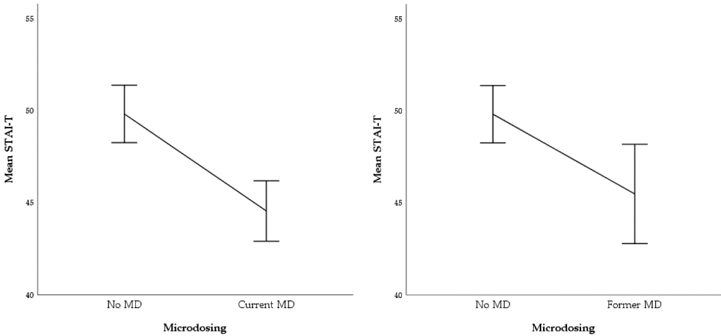
While anecdotal reports claim that psychedelic microdosing reduces anxiety and mood symptoms, evidence supporting these claims is scarce. This cross-sectional study investigated the association between microdosing and trait anxiety. Furthermore, it was investigated if trait mindfulness mediated this association. Participants completed anonymous online questionnaires and were divided into three groups: current microdosers (n = 186), former microdosers (n = 77) and microdosing-naïve controls (n = 234). Trait anxiety and trait mindfulness were measured using the State-Trait Anxiety Inventory–Trait subscale (STAI-T) and the 15-item Five-Facet Mindfulness Questionnaire (FFMQ-15) respectively. Current and former microdosers reported lower STAI-T scores compared to microdosing-naïve controls. Furthermore, associations of current and former microdosing with trait anxiety were mediated by trait mindfulness, with small effects of FFMQ-15 Total, Non-judging and Non-reactivity scores. However, in an exploratory analysis, all associations between microdosing and STAI-T scores became non-significant when participants with previous macrodose experience (n = 386) were excluded. Our findings suggest that RCT<apos;>s are warranted to test causal hypotheses concerning the effects of microdosing and the role of trait mindfulness in the effects of microdosing, while controlling for previous macrodose experience. © 2022 The Author(s). Published with license by Taylor & Francis Group, LLC.
Overview
CoChat Summary
TL;DR
In a cross-sectional online survey of 497 participants, current and former psychedelic microdosers reported lower trait anxiety than microdosing-naïve controls, and trait mindfulness mediated these associations. However, associations became non-significant when participants with previous macrodose experience were excluded, suggesting macrodose history may explain the findings.
Key findings
- Current microdosers vs microdosing-naïve controls reported lower STAI-T scores (B = -5.26, SE = 1.16, p < .001; r = .22, adjusted r² = .05, F[1,418] = 20.74).
- Former microdosers vs controls also reported lower STAI-T scores (B = -4.33, SE = 1.58, p = .007; r = .15, adjusted r² = .02, F[1,309] = 7.49).
- The current-microdosing association was mediated by FFMQ-15 total and all subscale scores; the former-microdosing association was mediated by FFMQ-15 total, observing, non-judging, and non-reactivity scores, with significant indirect effects using 5,000 bootstrapped samples and 95% CIs not containing zero.
- In exploratory analysis excluding participants with previous macrodose experience (n = 386), the microdosing–STAI-T association became non-significant (r = .05, adjusted r² < .01, F[1,202] = .57); previous macrodose experience was associated with lower STAI-T scores (B = -3.76, SE = 1.09, p = .001), mediated by FFMQ-15 total (standardized indirect effect = .14).
Methods
- Cross-sectional anonymous online questionnaires recruited in October–November 2020 via Reddit (n = 641) and a university research advertising website (n = 100); after exclusions, 497 participants were analyzed: current microdosers (n = 186), former microdosers (n = 77), and microdosing-naïve controls (n = 234).
- Trait anxiety was measured with the STAI-T; trait mindfulness with the FFMQ-15; participants also reported demographics, microdosing experience, previous macrodose experience, and current mindfulness practice.
- Analysis used ANOVA and chi-squared tests for group differences, linear regression for microdosing–STAI-T associations, and mediation via joint significance tests plus percentile bootstrapping (PROCESS, 5,000 samples); exploratory analyses excluded participants with previous macrodose experience.
Limitations
- Stated: cross-sectional design cannot infer causality; microdosing was broadly operationalized, with duration, frequency, exact doses, and time since quitting unknown, producing a heterogeneous sample; STAI-T construct validity has been criticized and may measure general negative affect; demographic between-group differences (age, gender, education; controls mostly female first-year bachelor students) may have influenced associations.
- Stated: the exploratory analysis excluding macrodose-experienced participants did not meet power requirements; placebo/expectancy effects are an alternative explanation for the findings.
- Evident from the design: self-report online data with no placebo control limit causal and generalizability claims.
Model-written summary. Check it against the paper before relying on it.
Integrity signals
Registry
Cites
Statistics
Figures


Verification
Claims the paper makes
7 Valid · 6 Not valid · 5 Not checked · 45 Own results and interpretations
The sources with a verdict support this claim; the rest weren’t checked yet, have no full text we could read, or their verdicts aren’t rated yet.
In the paper
“as macrodoses have been associated with increased mindfulness (Madsen et al. 2020;Soler et al. 2016;Uthaug et al. 2019)”
§ Anxiety: A Cross-Sectional Mediation Study > Introduction
What the sources say
- Supportedcites Madsen et al. 2020 matched to “A single psilocybin dose is associated with long-term increased mindfulness, preceded by a proportional change in neocortical 5-HT2A receptor binding” (2020) source
The Experimental procedures (page not specified) report single oral psilocybin doses of 0.2 or 0.3 mg/kg. The Discussion (page not specified) reports increased mindfulness at least three months after dosing, supporting the stated association. (LLM, conf=0.93)
- Not checked — no full text of the sourcecites Soler et al. 2016 matched to “Exploring the therapeutic potential of Ayahuasca: acute intake increases mindfulness-related capacities” (2016) source
- Supportedcites Uthaug et al. 2019 matched to “A single inhalation of vapor from dried toad secretion containing 5-methoxy-N,N-dimethyltryptamine (5-MeO-DMT) in a naturalistic setting is related to sustained enhancement of satisfaction with life, mindfulness-related capacities, and a decrement of psychopathological symptoms.” (2019) source
The Results (FFMQ-15; page unavailable) report significant improvements in two mindfulness facets—non-judgment and awareness—four weeks after a single inhalation of vapor containing 5-MeO-DMT. The Discussion describes the administered doses as 30–120 mg of dried toad secretion. The claim says these doses were associated with increased mindfulness, not that every mindfulness measure improved. (LLM, conf=0.89)
plainstates an association- Asserted: passes — The authors put it forward as true.
- Checkable: passes — It can be checked against evidence.
- Load-bearing: unclear — It is unclear whether the paper’s conclusions depend on it.
- Based: passes — The paper gives a reason why it holds.
- Supported
Every source the paper cites for this claim was checked and supports it.
In the paper
“Griffiths et al. (2016) and Ross et al. (2016) investigated the role of mystical experiences in psilocybin treatment for patients with life-threatening cancer and found that the subjective intensity of a mystical experience mediates the treatment effect on anxiety and depression.”
§ Anxiety: A Cross-Sectional Mediation Study > Discussion
What the sources say
- Supportedcites Griffiths et al. (2016) matched to “Psilocybin produces substantial and sustained decreases in depression and anxiety in patients with life-threatening cancer: a randomized double-blind trial” (2016) source
The Results (Outcome measures) report that mystical-experience scores significantly mediated the effect of psilocybin dose on HADS Anxiety, HADS Depression, and HAM-A scores five weeks after the session. The Discussion describes this as evidence suggesting a mediating role in therapeutic response. (LLM, conf=0.93)
- Supportedcites Ross et al. (2016) matched to “Rapid and sustained symptom reduction following psilocybin treatment for anxiety and depression in patients with life-threatening cancer: a randomized controlled trial.” (2016) source
The Discussion’s psycho-spiritual mechanisms section states that the intensity of the subjective mystical experience significantly mediated reductions in anxiety and depression symptoms in the cancer-patient cohort at six weeks after dosing. The Conclusions likewise state that the psilocybin-induced mystical experience mediated its anxiolytic and antidepressant effects. (LLM, conf=0.94)
plainstates a cause- Asserted: passes — The authors put it forward as true.
- Checkable: passes — It can be checked against evidence.
- Load-bearing: passes — The paper’s conclusions depend on it.
- Based: passes — The paper gives a reason why it holds.
- Supported
The cited sources support only part of this claim — read each source’s verdict below.
In the paper
“Szigeti et al. (2021) and Marschall et al. (2021) found no differences in anxiety between microdosing and placebo groups.”
§ Anxiety: A Cross-Sectional Mediation Study > Discussion
What the sources say
- Partly supportedcites Szigeti et al. (2021) matched to “Self-blinding citizen science to explore psychedelic microdosing” (2021) sourceExperimental — accuracy not yet measured
The Results (Acute and post-acute outcomes; page unavailable) report significantly lower anxiety at the end of microdose weeks than placebo weeks (p=0.03). The Discussion reports that this difference disappeared after accounting for participants’ guesses about what they had taken. The unqualified claim of no anxiety difference omits the significant initial finding. (LLM, conf=0.87)
- Not matchedcites Marschall et al. (2021)
An author–year citation the paper’s reference list doesn’t settle. We don’t search these by name.
plain- Asserted: passes — The authors put it forward as true.
- Checkable: passes — It can be checked against evidence.
- Load-bearing: passes — The paper’s conclusions depend on it.
- Based: passes — The paper gives a reason why it holds.
- Partly supported
The cited sources support only part of this claim — read each source’s verdict below.
In the paper
“Greater acute effects of psychedelics on measures of mystical experiences are associated with positive effects in multiple domains including attitudes, prosocial behavior, depression, anxiety and satisfaction with life in healthy individuals (Davis et al. 2019;Griffiths et al. 2018Griffiths et al. , 2011;;Uthaug et al. 2019).”
§ Anxiety: A Cross-Sectional Mediation Study > Discussion
What the sources say
- Partly supportedcites Davis et al. 2019 matched to “5-methoxy-N,N-dimethyltryptamine (5-MeO-DMT) used in a naturalistic group setting is associated with unintended improvements in depression and anxiety” (2019) sourceExperimental — accuracy not yet measured
The Discussion (page unavailable) reports that more intense acute mystical effects of 5-MeO-DMT were associated with self-reported improvements in depression and anxiety. The Results also report higher ratings of well-being/life satisfaction among those whose depression or anxiety improved, but do not establish the claimed direct association with mystical effects. This study does not establish effects on attitudes or prosocial behavior, and its depression/anxiety findings concern respondents who reported those conditions, not healthy individuals. (LLM, conf=0.88)
- Partly supportedcites Griffiths et al. 2018 matched to “Psilocybin-occasioned mystical-type experience in combination with meditation and other spiritual practices produces enduring positive changes in psychological functioning and in trait measures of prosocial attitudes and behaviors” (2018) sourceExperimental — accuracy not yet measured
The Discussion (page not provided) links psilocybin-occasioned mystical experience to enduring positive attitudinal and behavioral outcomes, supporting that part of the claim. The Results (page not provided) say the Satisfaction with Life Scale was dropped from analysis because it showed no significant change from baseline; the paper does not establish positive effects on depression or link reduced anxiety specifically to greater mystical experience. (LLM, conf=0.87)
- Partly supportedcites Uthaug et al. 2019 matched to “A single inhalation of vapor from dried toad secretion containing 5-methoxy-N,N-dimethyltryptamine (5-MeO-DMT) in a naturalistic setting is related to sustained enhancement of satisfaction with life, mindfulness-related capacities, and a decrement of psychopathological symptoms.” (2019) sourceExperimental — accuracy not yet measured
The Discussion reports that stronger acute experiences after inhalation of 5-MeO-DMT were associated with greater life satisfaction and lower depression and stress ratings. The Methods identify oceanic boundlessness as a measure of mystical-type experience. Our copy does not establish the claimed association with improved attitudes, prosocial behavior, or anxiety in this study; its findings are also specific to 5-MeO-DMT rather than psychedelics generally. (LLM, conf=0.88)
plainstates an association- Asserted: passes — The authors put it forward as true.
- Checkable: passes — It can be checked against evidence.
- Load-bearing: passes — The paper’s conclusions depend on it.
- Based: passes — The paper gives a reason why it holds.
- Partly supported
A result the paper reports from its own data — it cites no other source for it, so there is none to check. The quote shows it is in the paper.
In the paper
“The association between Former MD and STAI-T scores was mediated by FFMQ-15 scores (Table 3).”
- Also stated in: § Former MD vs No MD · plain
“Thus, the indirect effects for FFMQ-15 total, observing, non-judging and non-reactivity scores were significant.”
- Also stated in: § Abstract · plain
“associations of current and former microdosing with trait anxiety were mediated by trait mindfulness, with small effects of FFMQ-15 Total, Non-judging and Non-reactivity scores.”
§ Anxiety: A Cross-Sectional Mediation Study > Former MD vs No MD
plainstates an associationn = 77- Asserted: passes — The authors put it forward as true.
- Checkable: passes — It can be checked against evidence.
- Load-bearing: passes — The paper’s conclusions depend on it.
- Based: passes — The paper gives a reason why it holds.
- Also stated in: § Former MD vs No MD · plain
31 more claims
Create a free account to see all 63 claims and every source verdict.
- Probably not a substantial claim. 24
- It may state two separate claims as one. 5
- The quote only partly states this claim. 2
Claims other papers make about this one
Each is checked against this paper’s own text: does it say what the citing paper says it does?
The cited source says what the claim attributes to it.
In the citing paper
“mindfulness scores were higher in current and former microdosers compared to MD-naïve controls (11).”
From Trait mindfulness and personality characteristics in a microdosing ADHD sample: a naturalistic prospective survey study (2023) · cites this paper as [11]
The check wasn’t confident either way, so it gives no verdict — never disputed.
In the citing paper
“The finding that mindfulness was enhanced in MD individuals is in line with previous studies reporting this association (6, 11), but in contrast to one previous prospective MD study that did not find any changes in mindfulness after 6 weeks of MD (13).”
From Trait mindfulness and personality characteristics in a microdosing ADHD sample: a naturalistic prospective survey study (2023) · cites this paper as [11]
Experimental — accuracy not yet measured
Self-check
Percentages, sums and reported differences re-computed from the paper’s own numbers.
Each contradiction between two passages listed here was confirmed by an independent check.
Rated major: it would touch a result — a value a result rests on, reported and recomputed p-values on opposite sides of the significance level, two passages that conflict with no sign which is right, or a cited work retracted before this paper was published.
In the paper
“| Non-reactivity | 1.19 (.24) .24*** .05 24.69 | 2.59 (.20) | .54*** .29 168.29 | -2.33 (1.02)* | .13 -2.93 (.66) -4.26, -1.69”
§ Anxiety: A Cross-Sectional Mediation Study > Compliance with Ethical Standards
Reported -2.93 · recomputed 3.0821
Rated major: it would touch a result — a value a result rests on, reported and recomputed p-values on opposite sides of the significance level, two passages that conflict with no sign which is right, or a cited work retracted before this paper was published.
In the paper
“(r = .05,r 2 adjusted < .01,F[1,202] = .57)became nonsignificant (B = 49.99,SE = 1.02, p < .453)”
§ Anxiety: A Cross-Sectional Mediation Study > Exploratory analysis
Reported 0.57 · recomputed 49.009804
Rated major: it would touch a result — a value a result rests on, reported and recomputed p-values on opposite sides of the significance level, two passages that conflict with no sign which is right, or a cited work retracted before this paper was published.
In the paper
“(r = .10,r 2 adjusted < .01,F [1,181] = 1.78) also became non-significant (B = 46.17,SE = .66,p < .184)”
§ Anxiety: A Cross-Sectional Mediation Study > Exploratory analysis
Reported 1.78 · recomputed 69.954545
Rated minor: it would not touch a result — a value no result rests on, a p-value that stays on the same side of the significance level, or a conflict that is clerical, resolved elsewhere in the paper, or outside its own findings.
In the paper
§ Anxiety: A Cross-Sectional Mediation Study > Current MD vs No MD
“Current MD being associated with lower STAI-T scores (B = -5.26,SE = 1.16, p < .001)”
§ Anxiety: A Cross-Sectional Mediation Study > Compliance with Ethical Standards
“| Total FFMQ-15 | 5.16 (.81) .30*** .09 40.72 | -.93 (.05) | .67*** .44 331.83 | -5.26 (1.16) | .20 -4.75 (.80) -6.40, -3.22”
Citations
Cites
(2013) · Cited by 44,563
(1970) · Cited by 24,983
The benefits of being present: Mindfulness and its role in psychological well-being
Brown, K. W., & Ryan, R. M. (2003) · Journal of Personality and Social Psychology · doi:10.1037/0022-3514.84.4.822 · Cited by 13,448 · cited 1×
“Mindfulness is typically defined as a state in which one<apos;>s complete attention is directed toward the experiences occurring in the present moment in a non-judgmental, accepting manner (Baer et al. 2006; Bishop et al. 2004; Brown and Ryan 2003; Kabat-Zinn 1990).”
BackgroundThe human brain is intrinsically organized into dynamic, anticorrelated functional networks
Fox, M. D., Snyder, A. Z., Vincent, J. L., Corbetta, M., Van Essen, D. C., & Raichle, M. E. (2005) · Proceedings of the National Academy of Sciences · doi:10.1073/pnas.0504136102 · Cited by 8,553 · cited 2×
“DMN activity generally correlates with internally directed attention (Fox et al. 2005) and is associated with multiple types of selfreferential processing such as internal dialogue and self-related judgments (Northoff et al. 2006), mindwandering (Fox et al. 2015), rumination (Hamilton et al. 2015),…”
Using Self-Report Assessment Methods to Explore Facets of Mindfulness
Baer, R. A., Smith, G. T., Hopkins, J., Krietemeyer, J., & Toney, L. (2006) · Assessment · doi:10.1177/1073191105283504 · Cited by 7,511 · cited 1×
“Mindfulness is typically defined as a state in which one<apos;>s complete attention is directed toward the experiences occurring in the present moment in a non-judgmental, accepting manner (Baer et al. 2006; Bishop et al. 2004; Brown and Ryan 2003; Kabat-Zinn 1990).”
BackgroundMindfulness: A proposed operational definition.
Bishop, S. R., Lau, M., Shapiro, S., Carlson, L., Anderson, N. D., Carmody, J., Segal, Z. V., Abbey, S., Speca, M., Velting, D., et al. (2004) · Clinical Psychology: Science and Practice · doi:10.1093/clipsy.bph077 · Cited by 7,234 · cited 1×
“Mindfulness is typically defined as a state in which one<apos;>s complete attention is directed toward the experiences occurring in the present moment in a non-judgmental, accepting manner (Baer et al. 2006; Bishop et al. 2004; Brown and Ryan 2003; Kabat-Zinn 1990).”
BackgroundRequired sample size to detect the mediated effect
Fritz, M. S., & MacKinnon, D. P. (2007) · Psychological Science · doi:10.1111/j.1467-9280.2007.01882.x · Cited by 4,810
The effect of mindfulness based therapy on anxiety and depression: A meta analytic review
Hofmann, S. G., Sawyer, A. T., Witt, A. A., & Oh, D. (2010) · Journal of Consulting and Clinical Psychology · doi:10.1037/a0018555 · Cited by 3,846 · cited 2×
“As MM and psychedelic states show similarities in associated outcomes (Bohlmeijer et al. 2010; Eberth and Sedlmeier 2012; Hofmann et al. 2010), phenomenology (Berkovich-Ohana and Glicksohn 2017; Griffiths et al. 2011; Hanley, Nakamura, and Garland 2018; Liechti, Dolder, and Schmid 2017; Nour et al.…”
BackgroundState-Trait Anxiety Inventory for Adults
Spielberger, C. D. (2012) · PsycTESTS Dataset · doi:10.1037/t06496-000 · Cited by 3,479
Baer, R. A., Smith, G. T., Lykins, E., Button, D., Krietemeyer, J., Sauer, S., Walsh, E., Duggan, D., & Williams, J. M. G. (2008) · Assessment · doi:10.1177/1073191107313003 · Cited by 2,930 · cited 1×
“Trait mindfulness was measured using the 15-item Five-Facet Mindfulness Questionnaire (FFMQ-15; Baer et al. 2008), a self-report questionnaire which measures the trait-like tendency to be mindful in daily life.”
MethodSelf-referential processing in our brain—A meta-analysis of imaging studies on the self
Northoff, G., Heinzel, A., de Greck, M., Bermpohl, F., Dobrowolny, H., & Panksepp, J. (2006) · NeuroImage · doi:10.1016/j.neuroimage.2005.12.002 · Cited by 2,792 · cited 1×
“…with internally directed attention (Fox et al. 2005) and is associated with multiple types of selfreferential processing such as internal dialogue and self-related judgments (Northoff et al. 2006), mindwandering (Fox et al. 2015), rumination (Hamilton et al. 2015), and worry (Servaas et al. 2014).”
BackgroundGreicius, M. D., Flores, B. H., Menon, V., Glover, G. H., Solvason, H. B., Kenna, H., Reiss, A. L., & Schatzberg, A. F. (2007) · Biological Psychiatry · doi:10.1016/j.biopsych.2006.09.020 · Cited by 2,214 · cited 1×
“…have been associated with high trait anxiety (Imperatori et al. 2019) and multiple psychological disorders including depression (Berman et al. 2011; Greicius et al. 2007; Sheline et al. 2009), whereas psychological treatment of these disorders has been associated with adaptive changes in the DMN…”
BackgroundGriffiths, R. R., Johnson, M. W., Carducci, M. A., Umbricht, A., Richards, W. A., Richards, B. D., Cosimano, M. P., & Klinedinst, M. A. (2016) · Journal of Psychopharmacology · doi:10.1177/0269881116675513 · Cited by 2,201 · cited 4×
“In addition, as macrodose effects are often long-term (Carhart-Harris et al. 2018; Gasser et al. 2014; Griffiths et al. 2016; Grob et al. 2011; Ross et al. 2016) and may include changes in relatively stable traits such as openness and neuroticism (Dressler, Bright, and Polito 2021; MacLean,…”
BackgroundInfluentialNichols, D. E. (2016) · Pharmacological Reviews · doi:10.1124/pr.115.011478 · Cited by 1,762 · cited 1×
“A regular dose of a classical psychedelic can induce alterations in cognition, perception, and emotion (Halberstadt 2015; Nichols 2016), along with mystical experiences (Griffiths et al. 2011; Liechti, Dolder, and Schmid 2017) and ego dissolution (Nour et al. 2016).”
BackgroundRoss, S., Bossis, A., Guss, J., Agin-Liebes, G., Malone, T., Cohen, B., Mennenga, S. E., Belser, A., Kalliontzi, K., Babb, J., et al. (2016) · Journal of Psychopharmacology · doi:10.1177/0269881116675512 · Cited by 1,698 · cited 6×
“ment of anxiety in patients with life threatening diseases (Gasser et al. 2014; Griffiths et al. 2016; Grob et al. 2011; Ross et al. 2016) and treatment resistant depression (Carhart-Harris et al.”
BackgroundInfluentialGriffiths, R. R., Richards, W. A., McCann, U., & Jesse, R. (2006) · Psychopharmacology · doi:10.1007/s00213-006-0457-5 · Cited by 1,684 · cited 1×
“Mystical experiences are characterized by a sense of unity and sacredness, transcendence of time and space, paradoxicality, noetic quality (intuitive understanding of ultimate reality) and deeply felt positive mood (Griffiths et al. 2006).”
Carhart-Harris, R. L., Bolstridge, M., Rucker, J., Day, C. M. J., Erritzoe, D., Kaelen, M., Bloomfield, M., Rickard, J. A., Forbes, B., Feilding, A., et al. (2016) · The Lancet Psychiatry · doi:10.1016/s2215-0366(16)30065-7 · Cited by 1,540 · cited 2×
“…in the treatment of anxiety (Gasser et al. 2014; Griffiths et al. 2016; Grob et al. 2011; Ross et al. 2016) and treatment resistant depression (Carhart-Harris et al. 2018, 2016; Osório et al. 2015), and some early reports suggest the same for microdosing (Hutten et al. 2019; Johnstad 2018),…”
BackgroundThe default mode network and self-referential processes in depression
Sheline, Y. I., Barch, D. M., Price, J. L., Rundle, M. M., Vaishnavi, S. N., Snyder, A. Z., Mintun, M. A., Wang, S., Coalson, R. S., & Raichle, M. E. (2009) · Proceedings of the National Academy of Sciences · doi:10.1073/pnas.0812686106 · Cited by 1,480 · cited 1×
“…high trait anxiety (Imperatori et al. 2019) and multiple psychological disorders including depression (Berman et al. 2011; Greicius et al. 2007; Sheline et al. 2009), whereas psychological treatment of these disorders has been associated with adaptive changes in the DMN (Scult et al. 2019;…”
BackgroundBrewer, J. A., Worhunsky, P. D., Gray, J. R., Tang, Y.-Y., Weber, J., & Kober, H. (2011) · Proceedings of the National Academy of Sciences · doi:10.1073/pnas.1112029108 · Cited by 1,409 · cited 1×
“In addition, changes in the DMN have been found in long-term MM practitioners (Brewer et al. 2011).”
BackgroundPilot Study of Psilocybin Treatment for Anxiety in Patients With Advanced-Stage Cancer
Grob, C. S., Danforth, A. L., Chopra, G. S., Hagerty, M., McKay, C. R., Halberstadt, A. L., & Greer, G. R. (2011) · Archives of General Psychiatry · doi:10.1001/archgenpsychiatry.2010.116 · Cited by 1,206 · cited 3×
“In addition, as macrodose effects are often long-term (Carhart-Harris et al. 2018; Gasser et al. 2014; Griffiths et al. 2016; Grob et al. 2011; Ross et al. 2016) and may include changes in relatively stable traits such as openness and neuroticism (Dressler, Bright, and Polito 2021; MacLean,…”
BackgroundHuman hallucinogen research: guidelines for safety
Johnson, M., Richards, W., & Griffiths, R. (2008) · Journal of Psychopharmacology · doi:10.1177/0269881108093587 · Cited by 1,203 · cited 1×
“While implementation of appropriate safeguards mitigates these risks (Johnson, Richards, and Griffiths 2008; Studerus et al. 2011), microdosing may circumvent them entirely, as it does not induce the intense experiences that characterize a bad trip (Fadiman 2011).”
BackgroundNeural correlates of the psychedelic state as determined by fMRI studies with psilocybin
Carhart-Harris, R. L., Erritzoe, D., Williams, T., Stone, J. M., Reed, L. J., Colasanti, A., Tyacke, R. J., Leech, R., Malizia, A. L., Murphy, K., et al. (2012) · Proceedings of the National Academy of Sciences · doi:10.1073/pnas.1119598109 · Cited by 1,172 · cited 1×
“…and Garland 2018; Liechti, Dolder, and Schmid 2017; Nour et al. 2016; Reavley and Pallant 2009; Russ and Elliott 2017) and neural correlates (Carhart-Harris et al. 2012; Fox et al. 2016; Palhano-Fontes et al. 2015), and as macrodoses have been associated with increased mindfulness (Madsen…”
BackgroundPsilocybin with psychological support for treatment-resistant depression: six-month follow-up
Carhart-Harris, R. L., Bolstridge, M., Day, C. M. J., Rucker, J., Watts, R., Erritzoe, D. E., Kaelen, M., Giribaldi, B., Bloomfield, M., Pilling, S., et al. (2018) · Psychopharmacology · doi:10.1007/s00213-017-4771-x · Cited by 970
Depressive rumination, the default-mode network, and the dark matter of clinical neuroscience
Hamilton, J. P., Farmer, M., Fogelman, P., & Gotlib, I. H. (2015) · Biological Psychiatry · doi:10.1016/j.biopsych.2015.02.020 · Cited by 952 · cited 1×
“…with internally directed attention (Fox et al. 2005) and is associated with multiple types of selfreferential processing such as internal dialogue and self-related judgments (Northoff et al. 2006), mindwandering (Fox et al. 2015), rumination (Hamilton et al. 2015), and worry (Servaas et al. 2014).”
BackgroundPsilocybin occasioned mystical-type experiences: immediate and persisting dose-related effects
Griffiths, R. R., Johnson, M. W., Richards, W. A., Richards, B. D., McCann, U., & Jesse, R. (2011) · Psychopharmacology · doi:10.1007/s00213-011-2358-5 · Cited by 932 · cited 3×
“…in associated outcomes (Bohlmeijer et al. 2010; Eberth and Sedlmeier 2012; Hofmann et al. 2010), phenomenology (Berkovich-Ohana and Glicksohn 2017; Griffiths et al. 2011; Hanley, Nakamura, and Garland 2018; Liechti, Dolder, and Schmid 2017; Nour et al. 2016; Reavley and Pallant 2009; Russ and…”
BackgroundMacLean, K. A., Johnson, M. W., & Griffiths, R. R. (2011) · Journal of Psychopharmacology · doi:10.1177/0269881111420188 · Cited by 895 · cited 2×
“…al. 2011; Ross et al. 2016) and may include changes in relatively stable traits such as openness and neuroticism (Dressler, Bright, and Polito 2021; MacLean, Johnson, and Griffiths 2011) and mindfulness (Madsen et al. 2020; Soler et al. 2016; Uthaug et al. 2019), the second aim of this study was…”
BackgroundBohlmeijer, E., Prenger, R., Taal, E., & Cuijpers, P. (2010) · Journal of Psychosomatic Research · doi:10.1016/j.jpsychores.2009.10.005 · Cited by 822 · cited 2×
“As MM and psychedelic states show similarities in associated outcomes (Bohlmeijer et al. 2010; Eberth and Sedlmeier 2012; Hofmann et al. 2010), phenomenology (Berkovich-Ohana and Glicksohn 2017; Griffiths et al. 2011; Hanley, Nakamura, and Garland 2018; Liechti, Dolder, and Schmid 2017; Nour et al.…”
BackgroundThe Effects of Mindfulness Meditation: A Meta-Analysis
Eberth, J., & Sedlmeier, P. (2012) · Mindfulness · doi:10.1007/s12671-012-0101-x · Cited by 791 · cited 2×
“As MM and psychedelic states show similarities in associated outcomes (Bohlmeijer et al. 2010; Eberth and Sedlmeier 2012; Hofmann et al. 2010), phenomenology (Berkovich-Ohana and Glicksohn 2017; Griffiths et al. 2011; Hanley, Nakamura, and Garland 2018; Liechti, Dolder, and Schmid 2017; Nour et al.…”
BackgroundSafety, tolerability, and efficacy of psilocybin in 9 patients with obsessive-compulsive disorder
Moreno, F. A., Wiegand, C. B., Taitano, E. K., & Delgado, P. L. (2006) · The Journal of Clinical Psychiatry · doi:10.4088/jcp.v67n1110 · Cited by 789 · cited 1×
“…non-commercial re-use, distribution, and reproduction in any medium, provided the original work is properly cited, and is not altered, transformed, or built upon in any way. potential of macrodoses (Carhart-Harris et al. 2018; Johnson et al. 2018; Moreno et al. 2006), they are not without risks.”
BackgroundGasser, P., Holstein, D., Michel, Y., Doblin, R., Yazar-Klosinski, B., Passie, T., & Brenneisen, R. (2014) · Journal of Nervous & Mental Disease · doi:10.1097/nmd.0000000000000113 · Cited by 750 · cited 5×
“ment of anxiety in patients with life threatening diseases (Gasser et al. 2014; Griffiths et al. 2016; Grob et al. 2011; Ross et al. 2016) and treatment resistant depression (Carhart-Harris et al.”
BackgroundInfluentialThe State--Trait Anxiety Inventory, Trait version: structure and content re-examined
Bieling, P. J., Antony, M. M., & Swinson, R. P. (1998) · Behaviour Research and Therapy · doi:10.1016/s0005-7967(98)00023-0 · Cited by 690 · cited 1×
“Multiple confirmatory factor analyses have found the best fit with a bifactor model (Bados, Gómez-Benito, and Balaguer 2010; Balsamo et al. 2013; Bieling, Antony, and Swinson 1998).”
MethodFox, K. C. R., Spreng, R. N., Ellamil, M., Andrews-Hanna, J. R., & Christoff, K. (2015) · NeuroImage · doi:10.1016/j.neuroimage.2015.02.039 · Cited by 690 · cited 1×
“…with internally directed attention (Fox et al. 2005) and is associated with multiple types of selfreferential processing such as internal dialogue and self-related judgments (Northoff et al. 2006), mindwandering (Fox et al. 2015), rumination (Hamilton et al. 2015), and worry (Servaas et al. 2014).”
BackgroundFox, K. C. R., Dixon, M. L., Nijeboer, S., Girn, M., Floman, J. L., Lifshitz, M., Ellamil, M., Sedlmeier, P., & Christoff, K. (2016) · Neuroscience & Biobehavioral Reviews · doi:10.1016/j.neubiorev.2016.03.021 · Cited by 656
Depression, rumination and the default network
Berman, M. G., Peltier, S., Nee, D. E., Kross, E., Deldin, P. J., & Jonides, J. (2011) · Social Cognitive and Affective Neuroscience · doi:10.1093/scan/nsq080 · Cited by 568
Studerus, E., Kometer, M., Hasler, F., & Vollenweider, F. X. (2011) · Journal of Psychopharmacology · doi:10.1177/0269881110382466 · Cited by 532
Griffiths, R. R., Johnson, M. W., Richards, W. A., Richards, B. D., Jesse, R., MacLean, K. A., Barrett, F. S., Cosimano, M. P., & Klinedinst, M. A. (2018) · Journal of Psychopharmacology · doi:10.1177/0269881117731279 · Cited by 520
Osório, F. D. L., Sanches, R. F., Macedo, L. R., dos Santos, R. G., Maia-de-Oliveira, J. P., Wichert-Ana, L., de Araujo, D. B., Riba, J., Crippa, J. A., & Hallak, J. E. (2015) · Revista Brasileira de Psiquiatria · doi:10.1590/1516-4446-2014-1496 · Cited by 488 · cited 4×
“2016) and treatment resistant depression (Carhart-Harris et al. 2018, 2016; Osório et al. 2015).”
BackgroundInfluentialEgo-dissolution and psychedelics: validation of the ego-dissolution inventory (EDI).
Nour, M. M., Evans, L., Nutt, D., & Carhart-Harris, R. L. (2016) · Frontiers in Human Neuroscience · doi:10.3389/fnhum.2016.00269 · Cited by 470 · cited 2×
“…phenomenology (Berkovich-Ohana and Glicksohn 2017; Griffiths et al. 2011; Hanley, Nakamura, and Garland 2018; Liechti, Dolder, and Schmid 2017; Nour et al. 2016; Reavley and Pallant 2009; Russ and Elliott 2017) and neural correlates (Carhart-Harris et al. 2012; Fox et al. 2016; Palhano-Fontes…”
BackgroundPalhano-Fontes, F., Andrade, K. C., Tofoli, L. F., Santos, A. C., Crippa, J. A. S., Hallak, J. E. C., Ribeiro, S., & de Araujo, D. B. (2015) · PLOS ONE · doi:10.1371/journal.pone.0118143 · Cited by 454 · cited 3×
“Both psychedelic states and MM have been associated with acute changes in DMN activity and functional connectivity (CarhartHarris et al. 2012; Fox et al. 2016; Palhano-Fontes et al. 2015).”
BackgroundGu, J., Strauss, C., Crane, C., Barnhofer, T., Karl, A., Cavanagh, K., & Kuyken, W. (2016) · Psychological Assessment · doi:10.1037/pas0000263 · Cited by 431 · cited 1×
“The FFMQ-15 has good psychometric properties, with Cronbach<apos;>s alpha values for the subscales ranging from .64 to .80 (Gu et al. 2016).”
MethodPsychedelics, meditation, and self-consciousness
Millière, R., Carhart-Harris, R. L., Roseman, L., Trautwein, F.-M., & Berkovich-Ohana, A. (2018) · Frontiers in Psychology · doi:10.3389/fpsyg.2018.01475 · Cited by 390 · cited 1×
“In recent years, the similarities between the phenomenology and neurophysiology of psychedelics and mindfulness meditation (MM) received increasing attention (Barrett and Griffiths 2018; Heuschkel and Kuypers 2020; Millière et al. 2018).”
BackgroundYzerbyt, V., Muller, D., Batailler, C., & Judd, C. M. (2018) · Journal of Personality and Social Psychology · doi:10.1037/pspa0000132 · Cited by 375 · cited 2×
“By following recommendations regarding mediation analysis by Fritz and MacKinnon (2007) and Yzerbyt et al. (2018), we can confidently conclude the presence of a mediation effect.”
MethodJohnson, M. W., Griffiths, R. R., Hendricks, P. S., & Henningfield, J. E. (2018) · Neuropharmacology · doi:10.1016/j.neuropharm.2018.05.012 · Cited by 354 · cited 1×
“…non-commercial re-use, distribution, and reproduction in any medium, provided the original work is properly cited, and is not altered, transformed, or built upon in any way. potential of macrodoses (Carhart-Harris et al. 2018; Johnson et al. 2018; Moreno et al. 2006), they are not without risks.”
BackgroundCarpenter, J. K., Conroy, K., Gomez, A. F., Curren, L. C., & Hofmann, S. G. (2019) · Clinical Psychology Review · doi:10.1016/j.cpr.2019.101785 · Cited by 342 · cited 1×
“In a recent metaanalysis, large correlations (r = −.53) were found between the Five Facet Mindfulness Questionnaire and measures of anxiety (Carpenter et al. 2019).”
BackgroundRecent advances in the neuropsychopharmacology of serotonergic hallucinogens
Halberstadt, A. L. (2015) · Behavioural Brain Research · doi:10.1016/j.bbr.2014.07.016 · Cited by 312 · cited 1×
“A regular dose of a classical psychedelic can induce alterations in cognition, perception, and emotion (Halberstadt 2015; Nichols 2016), along with mystical experiences (Griffiths et al. 2011; Liechti, Dolder, and Schmid 2017) and ego dissolution (Nour et al. 2016).”
BackgroundADVERSE REACTIONS TO PSYCHEDELIC DRUGS. A REVIEW OF THE LITERATURE
Strassman, R. J. (1984) · The Journal of Nervous and Mental Disease · doi:10.1097/00005053-198410000-00001 · Cited by 312 · cited 2×
“trip,” characterized by acute anxiety, fear, panic, dysphoria, and paranoia (Strassman 1984).”
BackgroundClassic Hallucinogens and Mystical Experiences: Phenomenology and Neural Correlates
Barrett, F. S., & Griffiths, R. R. (2017) · Current Topics in Behavioral Neurosciences · doi:10.1007/7854_2017_474 · Cited by 273 · cited 1×
“In recent years, the similarities between the phenomenology and neurophysiology of psychedelics and mindfulness meditation (MM) received increasing attention (Barrett and Griffiths 2018; Heuschkel and Kuypers 2020; Millière et al. 2018).”
BackgroundA systematic study of microdosing psychedelics
Polito, V., & Stevenson, R. J. (2019) · PLoS ONE · doi:10.1371/journal.pone.0211023 · Cited by 235
Soler, J., Elices, M., Franquesa, A., Barker, S., Friedlander, P., Feilding, A., Pascual, J. C., & Riba, J. (2016) · Psychopharmacology · doi:10.1007/s00213-015-4162-0 · Cited by 209
The State-Trait Anxiety Inventory, Trait Version: Does It Really Measure Anxiety?
Bados, A., Gómez-Benito, J., & Balaguer, G. (2010) · Journal of Personality Assessment · doi:10.1080/00223891.2010.513295 · Cited by 198 · cited 1×
“Multiple confirmatory factor analyses have found the best fit with a bifactor model (Bados, Gómez-Benito, and Balaguer 2010; Balsamo et al. 2013; Bieling, Antony, and Swinson 1998).”
MethodAlterations of consciousness and mystical-type experiences after acute LSD in humans
Liechti, M. E., Dolder, P. C., & Schmid, Y. (2017) · Psychopharmacology · doi:10.1007/s00213-016-4453-0 · Cited by 198
Uthaug, M. V., Lancelotta, R., van Oorsouw, K., Kuypers, K. P. C., Mason, N., Rak, J., Šuláková, A., Jurok, R., Maryška, M., Kuchař, M., et al. (2019) · Psychopharmacology · doi:10.1007/s00213-019-05236-w · Cited by 197 · cited 4×
“…et al. 2016; Palhano-Fontes et al. 2015), and as macrodoses have been associated with increased mindfulness (Madsen et al. 2020; Soler et al. 2016; Uthaug et al. 2019), the third aim of this study was to investigate if trait mindfulness mediates the association between microdosing and trait…”
BackgroundInfluentialSelf-blinding citizen science to explore psychedelic microdosing
Szigeti, B., Kartner, L., Blemings, A., Rosas, F., Feilding, A., Nutt, D. J., Carhart-Harris, R. L., & Erritzoe, D. (2021) · eLife · doi:10.7554/elife.62878 · Cited by 192 · cited 1×
“Szigeti et al. (2021) and Marschall et al. (2021) found no differences in anxiety between microdosing and placebo groups.”
BackgroundMadsen, M. K., Fisher, P. M., Stenbæk, D. S., Kristiansen, S., Burmester, D., Lehel, S., Páleníček, T., Kuchař, M., Svarer, C., Ozenne, B., et al. (2020) · European Neuropsychopharmacology · doi:10.1016/j.euroneuro.2020.02.001 · Cited by 183 · cited 3×
“…(Carhart-Harris et al. 2012; Fox et al. 2016; Palhano-Fontes et al. 2015), and as macrodoses have been associated with increased mindfulness (Madsen et al. 2020; Soler et al. 2016; Uthaug et al. 2019), the third aim of this study was to investigate if trait mindfulness mediates the…”
BackgroundBershad, A. K., Schepers, S. T., Bremmer, M. P., Lee, R., & de Wit, H. (2019) · Biological Psychiatry · doi:10.1016/j.biopsych.2019.05.019 · Cited by 175 · cited 1×
“Current research concerning the effects of microdosing has focused on determining dose-effect relationships (Bershad et al. 2019; Holze et al. 2020; Hutten et al. 2020) or patterns of use and associated outcomes (Andersson and Kjellgren 2019; Hutten et al. 2019; Johnstad 2018; Webb, Copes, and…”
BackgroundMicrodosing psychedelics: personality, mental health, and creativity differences in microdosers
Anderson, T., Petranker, R., Rosenbaum, D., Weissman, C. R., Dinh-Williams, L.-A., Hui, K., Hapke, E., & Farb, N. A. S. (2019) · Psychopharmacology · doi:10.1007/s00213-018-5106-2 · Cited by 174 · cited 1×
“Findings have been inconclusive, with some studies observing that microdosing is associated with improved mental health (Anderson et al. 2019) and others observing increased anxiety in microdosers compared to controls (Bright et al. 2021; Hutten et al. 2020).”
Sample size determination for mediation analysis of longitudinal data
Pan, H., Liu, S., Miao, D., & Yuan, Y. (2018) · BMC Medical Research Methodology · doi:10.1186/s12874-018-0473-2 · Cited by 170 · cited 2×
“While there is no straightforward way to determine sample size for mediation analyses (Pan et al. 2018), Fritz”
MethodThe State-Trait Anxiety Inventory: Shadows and Lights on its Construct Validity
Balsamo, M., Romanelli, R., Innamorati, M., Ciccarese, G., Carlucci, L., & Saggino, A. (2013) · Journal of Psychopathology and Behavioral Assessment · doi:10.1007/s10862-013-9354-5 · Cited by 159 · cited 1×
“Multiple confirmatory factor analyses have found the best fit with a bifactor model (Bados, Gómez-Benito, and Balaguer 2010; Balsamo et al. 2013; Bieling, Antony, and Swinson 1998).”
MethodPowerful substances in tiny amounts: An interview study of psychedelic microdosing
Johnstad, P. G. (2018) · Nordic Studies on Alcohol and Drugs · doi:10.1177/1455072517753339 · Cited by 155 · cited 3×
“Lysergic acid diethylamide (LSD) and psilocybin mushrooms are the most commonly microdosed psychedelics, at a frequency of two to four times per week (Hutten et al. 2019; Johnstad 2018; Rosenbaum et al. 2020).”
BackgroundResultPositive expectations predict improved mental-health outcomes linked to psychedelic microdosing
Kaertner, L. S., Steinborn, M. B., Kettner, H., Spriggs, M. J., Roseman, L., Buchborn, T., Balaet, M., Timmermann, C., Erritzoe, D., & Carhart-Harris, R. L. (2021) · Scientific Reports · doi:10.1038/s41598-021-81446-7 · Cited by 145 · cited 1×
“In addition, Kaertner et al. (2021) found that positive expectancy scores regarding the effects of microdosing at baseline predicted subsequent improvements in wellbeing.”
BackgroundDavis, A. K., So, S., Lancelotta, R., Barsuglia, J. P., & Griffiths, R. R. (2019) · The American Journal of Drug and Alcohol Abuse · doi:10.1080/00952990.2018.1545024 · Cited by 142 · cited 1×
“***p < .001. multiple domains including attitudes, prosocial behavior, depression, anxiety and satisfaction with life in healthy individuals (Davis et al. 2019; Griffiths et al. 2018, 2011; Uthaug et al. 2019).”
Backgroundvan den Hurk, P. A. M., Wingens, T., Giommi, F., Barendregt, H. P., Speckens, A. E. M., & van Schie, H. T. (2011) · Mindfulness · doi:10.1007/s12671-011-0060-7 · Cited by 135
Hanley, A. W., Nakamura, Y., & Garland, E. L. (2018) · Psychological Assessment · doi:10.1037/pas0000615 · Cited by 130 · cited 2×
“Phenomenological similarities between the effects of psychedelics and MM include the ability to induce mystical experiences (Berkovich-Ohana and Glicksohn 2017; Reavley and Pallant 2009; Russ and Elliott 2017) and ego dissolution (Hanley, Nakamura, and Garland 2018).”
BackgroundMeasuring Mindfulness: Applying Generalizability Theory to Distinguish between State and Trait
Medvedev, O. N., Krägeloh, C. U., Narayanan, A., & Siegert, R. J. (2017) · Mindfulness · doi:10.1007/s12671-017-0679-0 · Cited by 127 · cited 1×
“Trait or dispositional mindfulness refers to one<apos;>s general tendency to be mindful (Medvedev et al. 2017).”
BackgroundMotives and Side-Effects of Microdosing With Psychedelics Among Users
Hutten, N. R. P. W., Mason, N. L., Dolder, P. C., & Kuypers, K. P. C. (2019) · International Journal of Neuropsychopharmacology · doi:10.1093/ijnp/pyz029 · Cited by 126 · cited 4×
“Lysergic acid diethylamide (LSD) and psilocybin mushrooms are the most commonly microdosed psychedelics, at a frequency of two to four times per week (Hutten et al. 2019; Johnstad 2018; Rosenbaum et al. 2020).”
BackgroundResultInfluentialHutten, N. R. P. W., Mason, N. L., Dolder, P. C., Theunissen, E. L., Holze, F., Liechti, M. E., Feilding, A., Ramaekers, J. G., & Kuypers, K. P. C. (2020) · European Neuropsychopharmacology · doi:10.1016/j.euroneuro.2020.10.002 · Cited by 123 · cited 2×
“Findings have been inconclusive, with some studies observing that microdosing is associated with improved mental health (Anderson et al. 2019) and others observing increased anxiety in microdosers compared to controls (Bright et al. 2021; Hutten et al. 2020).”
BackgroundResultMindfulness-based cognitive therapy for depression: a new approach to preventing relapse
de Silva, P. (2003) · Behaviour Research and Therapy · doi:10.1016/s0005-7967(02)00146-8 · Cited by 121
Imperatori, C., Farina, B., Adenzato, M., Valenti, E. M., Murgia, C., Marca, G. D., Brunetti, R., Fontana, E., & Ardito, R. B. (2019) · Journal of Affective Disorders · doi:10.1016/j.jad.2018.12.071 · Cited by 103 · cited 2×
“Abnormalities of the DMN have been associated with high trait anxiety (Imperatori et al. 2019) and multiple psychological disorders including depression (Berman et al. 2011; Greicius et al. 2007; Sheline et al. 2009), whereas psychological treatment of these disorders has been associated with…”
BackgroundThe neural correlates of worry in association with individual differences in neuroticism
Servaas, M. N., Riese, H., Ormel, J., & Aleman, A. (2014) · Human Brain Mapping · doi:10.1002/hbm.22476 · Cited by 96 · cited 1×
“…with internally directed attention (Fox et al. 2005) and is associated with multiple types of selfreferential processing such as internal dialogue and self-related judgments (Northoff et al. 2006), mindwandering (Fox et al. 2015), rumination (Hamilton et al. 2015), and worry (Servaas et al. 2014).”
BackgroundHeuschkel, K., & Kuypers, K. P. C. (2020) · Frontiers in Psychiatry · doi:10.3389/fpsyt.2020.00224 · Cited by 86 · cited 1×
“In recent years, the similarities between the phenomenology and neurophysiology of psychedelics and mindfulness meditation (MM) received increasing attention (Barrett and Griffiths 2018; Heuschkel and Kuypers 2020; Millière et al. 2018).”
BackgroundMicrodosing psychedelics: Demographics, practices, and psychiatric comorbidities
Rosenbaum, D., Weissman, C., Anderson, T., Petranker, R., Dinh-Williams, L.-A., Hui, K., & Hapke, E. (2020) · Journal of Psychopharmacology · doi:10.1177/0269881120908004 · Cited by 76
Narrative identity, rationality, and microdosing classic psychedelics
Webb, M., Copes, H., & Hendricks, P. S. (2019) · International Journal of Drug Policy · doi:10.1016/j.drugpo.2019.04.013 · Cited by 75 · cited 1×
“…concerning the effects of microdosing has focused on determining dose-effect relationships (Bershad et al. 2019; Holze et al. 2020; Hutten et al. 2020) or patterns of use and associated outcomes (Andersson and Kjellgren 2019; Hutten et al. 2019; Johnstad 2018; Webb, Copes, and Hendricks 2019).”
BackgroundMarschall, J., Fejer, G., Lempe, P., Prochazkova, L., Kuchar, M., Hajkova, K., & van Elk, M. (2022) · Journal of Psychopharmacology · doi:10.1177/02698811211050556 · Cited by 72 · cited 1×
“Szigeti et al. (2021) and Marschall et al. (2021) found no differences in anxiety between microdosing and placebo groups.”
BackgroundHolze, F., Liechti, M. E., Hutten, N. R. P. W., Mason, N. L., Dolder, P. C., Theunissen, E. L., Duthaler, U., Feilding, A., Ramaekers, J. G., & Kuypers, K. P. C. (2021) · Clinical Pharmacology & Therapeutics · doi:10.1002/cpt.2057 · Cited by 65 · cited 1×
“Current research concerning the effects of microdosing has focused on determining dose-effect relationships (Bershad et al. 2019; Holze et al. 2020; Hutten et al. 2020) or patterns of use and associated outcomes (Andersson and Kjellgren 2019; Hutten et al. 2019; Johnstad 2018; Webb, Copes, and…”
BackgroundChanges in functional connectivity following treatment with emotion regulation therapy
Scult, M. A., Fresco, D. M., Gunning, F. M., Liston, C., Seeley, S. H., García, E., & Mennin, D. S. (2019) · Frontiers in Behavioral Neuroscience · doi:10.3389/fnbeh.2019.00010 · Cited by 57 · cited 6×
“Abnormalities of the DMN have been associated with high trait anxiety (Imperatori et al. 2019) and multiple psychological disorders including depression (Berman et al. 2011; Greicius et al. 2007; Sheline et al. 2009), whereas psychological treatment of these disorders has been associated with adaptive changes in the D…”
BackgroundInfluentialBerkovich‐Ohana, A., & Glicksohn, J. (2016) · Mindfulness · doi:10.1007/s12671-015-0481-9 · Cited by 54
Development of a scale to assess the meditation experience
Reavley, N. J., & Pallant, J. (2009) · Personality and Individual Differences · doi:10.1016/j.paid.2009.05.007 · Cited by 53 · cited 2×
“Phenomenological similarities between the effects of psychedelics and MM include the ability to induce mystical experiences (Berkovich-Ohana and Glicksohn 2017; Reavley and Pallant 2009; Russ and Elliott 2017) and ego dissolution (Hanley, Nakamura, and Garland 2018).”
BackgroundYuan, M., Zhu, H., Qiu, C., Meng, Y., Zhang, Y., Ren, Z., Li, Y., Yuan, C., Gao, M., Lui, S., et al. (2017) · Psychiatry Research Neuroimaging · doi:10.1016/j.pscychresns.2017.12.004 · Cited by 40 · cited 1×
“…anxiety (Imperatori et al. 2019) and multiple psychological disorders including depression (Berman et al. 2011; Greicius et al. 2007; Sheline et al. 2009), whereas psychological treatment of these disorders has been associated with adaptive changes in the DMN (Scult et al. 2019; Yuan et al. 2018).”
BackgroundAndersson, M., & Kjellgren, A. (2019) · Harm Reduction Journal · doi:10.1186/s12954-019-0333-3 · Cited by 39 · cited 1×
“…concerning the effects of microdosing has focused on determining dose-effect relationships (Bershad et al. 2019; Holze et al. 2020; Hutten et al. 2020) or patterns of use and associated outcomes (Andersson and Kjellgren 2019; Hutten et al. 2019; Johnstad 2018; Webb, Copes, and Hendricks 2019).”
BackgroundAntecedents of mystical experience and dread in intensive meditation.
Russ, S. L., & Elliott, M. S. (2017) · Psychology of Consciousness Theory Research and Practice · doi:10.1037/cns0000119 · Cited by 29
Bright, S., Gringart, E., Blatchford, E., & Bettinson, S. (2021) · Australian Journal of Psychology · doi:10.1080/00049530.2021.1882266 · Cited by 16 · cited 1×
“Findings have been inconclusive, with some studies observing that microdosing is associated with improved mental health (Anderson et al. 2019) and others observing increased anxiety in microdosers compared to controls (Bright et al. 2021; Hutten et al. 2020).”
Dressler, H. M., Bright, S. J., & Polito, V. (2021) · Journal of Psychedelic Studies · doi:10.1556/2054.2021.00157 · Cited by 14 · cited 2×
“…Griffiths et al. 2016; Grob et al. 2011; Ross et al. 2016) and may include changes in relatively stable traits such as openness and neuroticism (Dressler, Bright, and Polito 2021; MacLean, Johnson, and Griffiths 2011) and mindfulness (Madsen et al. 2020; Soler et al. 2016; Uthaug et al. 2019),…”
BackgroundBarbero (2014) · doi:10.1016/j · Cited by 1
(2018) · Digital Commons@Becker (Washington University School of Medicine) · doi:10.1371/journal
Research works printed but not linked: 3
- 24. Fadiman, J. 2011. The psychedelic explorer's guide. Rochester: Park Street Press.
- 53. Kabat-Zinn, J. 1990. Full catastrophe living: The program of the stress reduction clinic at the University of Massachusetts Medical Center. New York, NY: Delta, Random House Publishing Group.
- 86. Waldman, A. 2017. A really good day: How microdosing made a mega difference in my mood, my marriage, and my life. New York: Alfred A. Knopf.
Cited by
Less is more? A review of psilocybin microdosing
Savides, I. A., & Outhoff, K. (2024) · Journal of Psychopharmacology · doi:10.1177/02698811241278769 · Cited by 15
“This laid the groundwork for exploring the relationship between outcome and intention, the relevance of which is still integral in understanding the clinical therapeutic value of microdosing (Hartong and van Emmerik, 2022; Lea et al., 2020a; Rootman et al., 2021).”
Syed, O. A., Petranker, R., Fewster, E. C., Sobolenko, V., Beidas, Z., Husain, M. I., Lake, S., & Lucas, P. (2024) · Journal of Psychoactive Drugs · doi:10.1080/02791072.2024.2424284 · Cited by 17
“…of the current microdosing literature has remained cross-sectional and survey-CONTACT based, describing the demographics, prevalence, motivations of use, and perceptions of microdosers (e.g., Anderson et al. 2019; Cameron, Nazarian, and Olson 2020; Hartong and van Emmerik 2023; Hutten et al. 2019).”
Haijen, E. C. H. M., Hurks, P. P. M., & Kuypers, K. P. C. (2023) · Frontiers in Psychiatry · doi:10.3389/fpsyt.2023.1233585 · Cited by 7
Between enhancement and risk: A critical review of psychedelic microdosing
Totomanova, I., Haijen, E. C. H. M., Hurks, P. P. M., Ramaekers, J. G., & Kuypers, K. P. C. (2025) · Current Opinion in Psychology · doi:10.1016/j.copsyc.2025.102129 · Cited by 9
Unlocking the self: Can microdosing psychedelics make one feel more authentic?
Pop, I. A., & Dinkelacker, J. (2023) · Nordic Studies on Alcohol and Drugs · doi:10.1177/14550725231175353 · Cited by 7
“Another strand of research brings forth the concept of mindfulness, i.e., the increased capacity to observe, describe or act with awareness in a non-judging and non-reactive way (Hartong & van Emmerik, 2022).”
Background
Metadata
- Authors
- Hartong, V., & van Emmerik, A.
- Affiliations
- University of Amsterdam (NL)
- Department of Psychology, Faculty of Social and Behavioural Sciences, University of Amsterdam, Amsterdam, Netherlands
- Venue
- Journal of Psychoactive Drugs
- Publisher
- Informa UK Limited
- Published
- 2022-06-12
- Volume
- 55
- Issue
- 3
- Pages
- 310-320
- ISSN
- 0279-1072 (ISSN-L)
- 2159-9777
- OpenAlex
- W4281724869
- Semantic Scholar
- dbf9aea1db725ec8daa53fce13fe441e9c444389
- Cited by
- 11
- References
- 79
- Citations by year
- 2026: 1 · 2025: 3 · 2024: 4 · 2023: 3
- FWCI
- 2.28
- Type
- journal article
- Language
- en
- Open access
- hybrid
- doi.org
- Licence
- Locations
- Journal of Psychoactive Drugs (publishedVersion, cc-by-nc-nd)
- PubMed (publishedVersion)
- UvA-DARE (University of Amsterdam) (submittedVersion, cc-by-nc-nd)
- Funders
- The author(s) reported there is no funding associated with the work featured in this article
- Topics
- Social Sciences › Psychology › Clinical Psychology › Psychedelics and Drug Studies
- Social Sciences › Psychology › Clinical Psychology › Mindfulness and Compassion Interventions
- Social Sciences › Psychology › Social Psychology › Psychological Well-being and Life Satisfaction
- Keywords
- psychedelic microdosing, trait anxiety, trait mindfulness, mediation, non-judgment, non-reactivity, mood symptoms
About these checks
Registry, retraction, Cites and statistics results are computed, not judged, with one exception: a printed reference that no index lists is read once by a model before it counts as a citation error. Claims are extracted by a model and kept only when their quote appears verbatim in the text; each cited source is then checked, with a model’s help, for whether it says what the claim relies on. Those verdicts can be wrong — read the claim’s quote and the cited source before relying on one.
The claim verdicts this report counts are experimental: their accuracy is not yet measured.
A language model drew the claims from the paper on 2026-10-11, under version 3 of the claim definition (model deepseek-v4.1-flash, prompt extract-v3).
A second model labelled each claim on 2026-10-11 (model jev-1.13-20260917, definition revision gold-guideline-v0.2).
Cited sources are checked with a language model’s help (gpt-6-sol).
Statistics and arithmetic are recomputed, not judged.
Confidence bands are shown only for fields calibrated on our annotated test set. None is calibrated yet, so no band is shown.
What counts as a claim ›How we measure confidence ›How we check this ›
Are you an author, or do you see a problem with this page? Request a review
Data sources
Bibliographic data: Semantic Scholar, OpenAlex, Crossref.
Contains information from the Semantic Scholar Academic Graph Datasets, made available under the ODC Attribution License (ODC-BY 1.0).
Semantic Scholar’s data is described in: Kinney, R., et al. (2023). The Semantic Scholar Open Data Platform. arXiv:2301.10140.
