

Hard criteria for empirical theories of consciousness
Open accessThe DOI matches its Crossref record; 155 of the 155 references it cites were found in a registry or an index; 19 of the 51 sources its claims cite were checked for support.
Abstract
Consciousness is now a well-established field of empirical research. A large body of experimental results has been accumulated and is steadily growing. In parallel, many Theories of Consciousness (ToCs) have been proposed. These theories are diverse in nature, ranging from computational to neurophysiological and quantum theoretical approaches. This contrasts with other fields of natural science, which host a smaller number of competing theories. We suggest that one reason for this abundance of extremely different theories may be the lack of stringent criteria specifying how empirical data constrains ToCs. First, we argue that consciousness is a well-defined topic from an empirical point of view and motivate a purely empirical stance on the quest for consciousness. Second, we present a checklist of criteria that, we propose, empirical ToCs need to cope with. Third, we review 13 of the most influential ToCs and subject them to the criteria. Our analysis helps to situate these different ToCs in the theoretical landscapeand sheds light on their strengths and weaknesses from a strictly empirical point of view.
Overview
CoChat Summary
TL;DR
The paper argues that consciousness can be studied empirically and proposes four hard criteria that empirical theories of consciousness (ToCs) must address: paradigm cases with an unconscious alternative, the unfolding argument, the small/large network arguments, and the other systems argument. Applying these criteria to 13 influential ToCs, it sorts them into four classes and argues that each class faces characteristic challenges rather than being discarded outright.
Key findings
- The paper proposes four criteria for empirical ToCs: (1) paradigm cases of consciousness with an unconscious alternative, (2) the unfolding argument, (3) the small and large network arguments, and (4) the other systems argument.
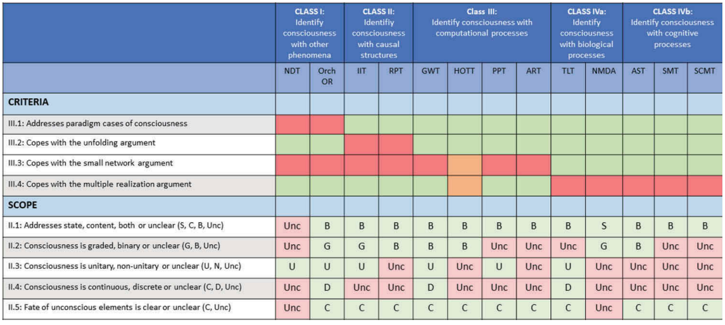
- It reviews 13 influential ToCs and classifies them into four classes: Class I does not address paradigm cases (e.g., NDT, Orch OR); Class II is subject to the unfolding argument (e.g., IIT, RPT); Class III is subject to the small network argument (e.g., GWT, HOTT, PPT, ART); Class IV is subject to the other systems argument (e.g., TLT, NMDA, AST, SMT, SCMT).
- The small network argument states that many ToCs imply small networks with fewer than ten neurons are conscious; the large network argument notes the human brain contains more than ten billion neurons, so such theories may imply billions of conscious subsystems.
- The unfolding argument holds that recurrent and feedforward networks can approximate any input-output function, so causal structure theories such as IIT and RPT imply functionally identical systems can differ in consciousness, making them difficult to address empirically.
Methods
- Conceptual and theoretical analysis; no new experiments, participants, or primary empirical data are reported.
- The authors review 13 influential ToCs, subject them to the proposed criteria, and summarize the results in Table 1, with additional theories described in an appendix.
- The analysis focuses on prototypical argumentation rather than exhaustive coverage or the latest version of each theory.
Limitations
- The authors state the review cannot be exhaustive, that it is impossible to perfectly portray complex, multi-faceted ToCs in a few lines, and that they are not interested in minute details of specific ToCs.
- The authors state the criteria are not exhaustive or unique, are a starting point/steppingstone, and that ToCs challenged by the criteria should not necessarily be discarded because fixes may exist.
- Evident from the text: the classification partly reflects the authors’ own interpretation, and some ToCs have vaguely defined mechanisms, making it difficult to determine exactly how the criteria apply.
Model-written summary. Check it against the paper before relying on it.
Integrity signals
Registry
Cites
Statistics
Figures



Verification
Claims the paper makes
12 Valid · 16 Not valid · 21 Not checked · 145 Own results and interpretations
At least one cited source doesn’t support this claim or points to a different paper, and none confirmed it — see the verdicts below.
In the paper
“GWT is not subject to the unfolding argument because broadcasting is a general concept, which can be implemented in many di ff erent ways (even though GWT is usually framed in recurrent terms, recurrence is not essential, Doerig, Schurger, et al., 2019; but see Kleiner, 2019; Kleiner & Hoel, 2020).”
What the sources say
- Could not verifycites Doerig, Schurger, et al., 2019 matched to “The unfolding argument: Why IIT and other causal structure theories cannot explain consciousness” (2019) sourceExperimental — accuracy not yet measured
The indexed copy returns no body-text passage addressing whether GWT is exempt from the unfolding argument or whether broadcasting can be implemented in different ways. Searches for those points returned only landing-page material and an abstract, so the claim cannot be verified from the available evidence. (LLM, conf=0.70)
- Not checked — no full text of the sourcecites Kleiner, 2019 matched to “Brain states matter. A reply to the unfolding argument.” (2019) source
- Disputedcites Kleiner & Hoel, 2020 matched to “Falsification and consciousness” (2020) sourceExperimental — accuracy not yet measured
The Introduction (page unavailable) calls the unfolding argument against IIT a subset of a broader problem affecting theories that predict experience from internal observables; the paper treats Global Neuronal Workspace as an example. It also says that interpretations of Global Workspace Theory based on report accessibility face a different problem, empirical unfalsifiability. It does not present flexible implementations of broadcasting as an exemption. (LLM, conf=0.86)
Checked by a reasoning model — may be wrong.
plain- Asserted: passes — The authors put it forward as true.
- Checkable: passes — It can be checked against evidence.
- Load-bearing: passes — The paper’s conclusions depend on it.
- Based: passes — The paper gives a reason why it holds.
- Could not verify
Some cited sources support this claim and some don’t — read each source’s verdict below.
In the paper
“The unfolding argument does not apply, because predictive processing can be unfolded (Doerig, Schurger, et al. (2019); but see Kleiner (2019) and Kleiner and Hoel (2020)).”
What the sources say
- Supportedcites Doerig, Schurger, et al. (2019) matched to “The unfolding argument: Why IIT and other causal structure theories cannot explain consciousness” (2019) source
The indexed Abstract (no page number available) distinguishes predictive coding, which it treats as a function realizable by different patterns of brain connectivity, from the causal-structure theories targeted by the unfolding argument. That supports the claim that predictive processing can be unfolded and is not a target of the argument. (LLM, conf=0.84)
- Not checked — no full text of the sourcecites Kleiner (2019) matched to “Brain states matter. A reply to the unfolding argument.” (2019) source
- Disputedcites Kleiner and Hoel (2020) matched to “Falsification and consciousness” (2020) sourceExperimental — accuracy not yet measured
In Formal Description of Testing Theories (page unavailable), the paper explicitly includes predictive processing among the theories it considers. In The Substitution Argument (page unavailable), it says the flaw illustrated by unfolding is not limited to IIT but affects almost all contemporary theories; it does not present predictive processing as exempt. The citing sentence’s “but see” therefore fits this paper as a counterpoint, not as support for the stated claim. (LLM, conf=0.79)
Checked by a reasoning model — may be wrong.
plainstates a cause- Asserted: passes — The authors put it forward as true.
- Checkable: passes — It can be checked against evidence.
- Load-bearing: passes — The paper’s conclusions depend on it.
- Based: passes — The paper gives a reason why it holds.
- Supported
Every source the paper cites for this claim was checked and supports it.
In the paper
“Relatedly, Sergent et al. (2013) showed that a cue presented after a target stimulus that would otherwise remain unconscious can retrospectively render the stimulus conscious.”
What the sources say
- Supportedcites Sergent et al. (2013) matched to “Cueing attention after the stimulus is gone can retrospectively trigger conscious perception” (2013) source
The Summary reports that directing attention to a near-threshold stimulus 100–400 ms after presentation increased subjective visibility. The Discussion explicitly concludes that postcueing can trigger conscious perception of a stimulus that would otherwise have remained unconscious. (LLM, conf=0.95)
plainstates a cause- Asserted: passes — The authors put it forward as true.
- Checkable: passes — It can be checked against evidence.
- Load-bearing: passes — The paper’s conclusions depend on it.
- Based: passes — The paper gives a reason why it holds.
- Supported
Every source the paper cites for this claim was checked and supports it.
In the paper
“For example, words can be semantically processed without being consciously perceived (Gaillard et al., 2006)”
What the sources say
- Supportedcites Gaillard et al., 2006 matched to “Nonconscious semantic processing of emotional words modulates conscious access” (2006) source
The abstract (p.1) states that the threshold for conscious access is lower for emotional than neutral words, 'even for words that have not been previously consciously perceived, thus implying that written words can receive nonconscious semantic processing.' The Discussion reinforces this: 'genuine nonconscious semantic access to the emotional content of words can occur even for words that were never seen before.' The citing sentence is a general paraphrase of exactly this conclusion; the paper's own demonstration is confined to a mask/visual-threshold paradigm contrasting emotional vs. neutral words, which the source itself generalizes to 'written words'. (LLM, conf=0.88)
plain- Asserted: passes — The authors put it forward as true.
- Checkable: passes — It can be checked against evidence.
- Load-bearing: unclear — It is unclear whether the paper’s conclusions depend on it.
- Based: passes — The paper gives a reason why it holds.
- Supported
The cited sources support only part of this claim — read each source’s verdict below.
In the paper
“However, for many de fi nitions of complexity, even very small networks with less than 10 neurons exhibit high complexity (Herzog et al., 2007; Oizumi et al., 2014).”
What the sources say
- Not checked — no full text of the sourcecites Herzog et al., 2007 matched to “Consciousness & the small network argument” (2007) source
- Partly supportedcites Oizumi et al., 2014 matched to “From the phenomenology to the mechanisms of consciousness: integrated information theory 3.0” (2014) sourceExperimental — accuracy not yet measured
In “Consciousness and connectivity: Modular, homogeneous, and specialized networks” (Figure 17C; page unavailable), the paper describes a five-gate network with high values of its complexity-related measures. The elements are logic gates, not neurons, and the passage does not establish that this holds for many definitions of complexity; Figure 17B also shows a five-gate network with low values. (LLM, conf=0.86)
plainstates an association- Asserted: passes — The authors put it forward as true.
- Checkable: passes — It can be checked against evidence.
- Load-bearing: passes — The paper’s conclusions depend on it.
- Based: passes — The paper gives a reason why it holds.
71 more claims · 5 with their cited sources checked
Create a free account to see all 194 claims and to verify the 4 references still open.
- Probably not a substantial claim. 92
- It may state two separate claims as one. 56
Claims other papers make about this one
Each is checked against this paper’s own text: does it say what the citing paper says it does?
The cited source says what the claim attributes to it.
In the citing paper
“The problem with very liberal formulations is that they can be satis fi ed by very simple arti fi cial systems that are not plausibly conscious; many computational functionalist theories allegedly fail by giving such liberal conditions [54 ,55].”
From Identifying indicators of consciousness in AI systems (2026) · cites this paper as [55]
The cited source says what the claim attributes to it.
In the citing paper
“Based on how F is calculated to ''quantify'' PC, artificial systems with purely feedforward architecture have F = 0, and hence lack consciousness (PC), even when their overt behaviors (input-output functions) are indistinguishable from that of conscious (F > 0) systems with feedback 94,95 (but see Doerig et al. 155 ).”
From An integrative, multiscale view on neural theories of consciousness (2024) · cites this paper as [155]
The cited source says what the claim attributes to it.
In the citing paper
“Indeed, there are now so many theories of consciousness that an increasing number of researchers are turning their attention to the meta-theoretical question of how they might be compared and evaluated (Chis-Ciure et al., 2024; Del Pin et al., 2021; Doerig et al., 2021; Kirkeby-Hinrup, 2024; Negro et al., 2024; Signorelli et al., 2021), with a view to advancing the field via the unification, integ”
From Integrated information and predictive processing theories of consciousness: An adversarial collaborative review (2026) · cites this paper as Doerig et al., 2021
The cited source says what the claim attributes to it.
In the citing paper
“The key idea here is to exploit the resources availed by a domain-general modelling framework such as Active Inference to construct computational models of paradigmatic phenomena in consciousness science (e.g., binocular rivalry; Doerig et al., 2021), and to compare the properties of these models such that salient commonalities and particularities may be identified (Vilas et al., 2022; Whyte et al”
From Integrated information and predictive processing theories of consciousness: An adversarial collaborative review (2026) · cites this paper as Doerig et al., 2021
The check wasn’t confident either way, so it gives no verdict — never disputed.
In the citing paper
“(1) L5 pyramidal neurons associate information arriving at separate dendritic compartments through a non-linear apical dendritic process leading to burst firing.120-122”
From An integrative, multiscale view on neural theories of consciousness (2024) · cites this paper as [120]
Experimental — accuracy not yet measured
1 more claim about this paper
Create a free account to see every claim other papers make about this one.
Citations
Cites
James, W. (1913) · Henry Holt and Company eBooks · doi:10.1037/11059-000 · Cited by 25,226
Multilayer feedforward networks are universal approximators
Hornik, K., Stinchcombe, M., & White, H. (1989) · Neural Networks · doi:10.1016/0893-6080(89)90020-8 · Cited by 21,728 · cited 1×
“It is a mathematical fact that both recurrent and feedforward networks (along with many other kinds of universal function approximators) can approximate any input-output function to any degree of accuracy (Hornik et al., 1989; Schäfer & Zimmermann, 2006).”
BackgroundMultilayer feedforward networks are universal approximators
HornikK., StinchcombeM., & WhiteH. (1989) · Neural Networks · doi:10.5555/70405.70408 · Cited by 9,081
The free-energy principle: a unified brain theory?
Friston, K. (2010) · Nature Reviews Neuroscience · doi:10.1038/nrn2787 · Cited by 8,120 · cited 1×
“The brain is often seen as a predictive processing machine (Clark, 2013; Friston, 2010; Rao & Ballard, 1999).”
BackgroundKripke, S. A. (1972) · Semantics of Natural Language · doi:10.1007/978-94-010-2557-7_9 · Cited by 7,028 · cited 3×
“More precisely, although the software and hardware used in that implementation are sufficient to instantiate Microsoft 2Multiple realization has been a fruitful topic in philosophy (Fodor, 1974; Kripke, 1972; Putnam, 1967, 1988).”
BackgroundMethodJournal of Consciousness Studies
(2022) · Journal of Consciousness Studies · doi:10.53765/20512201 · Cited by 6,832
Neuronal Oscillations in Cortical Networks
Buzsáki, G., & Draguhn, A. (2004) · Science · doi:10.1126/science.1099745 · Cited by 6,576 · cited 1×
“Examples include NMDA synapses (Flohr, 1992), processing in layer 5 of V1 (Crick & Koch, 2003), the claustrum (Crick & Koch, 2005), gamma-band oscillations (Buzsáki, 2004), thalamocortical loops (Llinas et al., 1998), or the microgenesis of consciousness in the thalamus (Bachmann, 2000).”
BackgroundWhatever next? Predictive brains, situated agents, and the future of cognitive science
Clark, A. (2013) · Behavioral and Brain Sciences · doi:10.1017/s0140525x12000477 · Cited by 5,924 · cited 1×
“The brain is often seen as a predictive processing machine (Clark, 2013; Friston, 2010; Rao & Ballard, 1999).”
BackgroundRao, R. P. N., & Ballard, D. H. (1999) · Nature Neuroscience · doi:10.1038/4580 · Cited by 5,483 · cited 2×
“The brain is often seen as a predictive processing machine (Clark, 2013; Friston, 2010; Rao & Ballard, 1999).”
BackgroundRubber hands ‘feel’ touch that eyes see
Botvinick, M., & Cohen, J. (1998) · Nature · doi:10.1038/35784 · Cited by 4,410 · cited 1×
“In the rubber hand illusion, participants can be tricked into attributing ownership of their real hand to a fake rubber hand (Botvinick & Cohen, 1998).”
Background
Research works printed but not linked: 3
- Descartes, R. (1996). Discourse on the method: And, meditations on fi rst philosophy . Yale University Press.
- Gazzaniga, M. S. (1970). The bisected brain (Vol. 2). AppletonCentury-Crofts New York.
- Noë, A. (2004). Action in perception . MIT press.
Cited by
Predictive processing as a systematic basis for identifying the neural correlates of consciousness
Hohwy, J., & Seth, A. (2020) · Philosophy and the Mind Sciences · doi:10.33735/phimisci.2020.ii.64 · Cited by 170
The ConTraSt database for analysing and comparing empirical studies of consciousness theories
Yaron, I., Melloni, L., Pitts, M., & Mudrik, L. (2022) · Nature Human Behaviour · doi:10.1038/s41562-021-01284-5 · Cited by 147
“The parameters whose average importance was higher than 95% of the distribution of importance scores of a random parameter were (in order of importance): (1) studying state versus content consciousness, (2) using report versus no-report paradigms, (3) using connectivity measures and (4) using subjective measures of co…”
BackgroundMethodInfluentialFrancken, J. C., Beerendonk, L., Molenaar, D., Fahrenfort, J. J., Kiverstein, J. D., Seth, A. K., & van Gaal, S. (2022) · Neuroscience of Consciousness · doi:10.1093/nc/niac011 · Cited by 136
“how it should be operationalized), what would constitute an explanation, and how valid experiments should be designed (Block 1995; Chalmers 1995, 2000; Dehaene and Naccache 2001; Dennett 2001; Lamme 2006; Tononi 2008; Dehaene and Changeux 2011; Doerig et al. 2020; Hohwy and Seth 2020); see Seth and Bayne (2022) for a…”
BackgroundAn integrative, multiscale view on neural theories of consciousness
Storm, J. F., Klink, P. C., Aru, J., Senn, W., Goebel, R., Pigorini, A., Avanzini, P., Vanduffel, W., Roelfsema, P. R., Massimini, M., et al. (2024) · Neuron · doi:10.1016/j.neuron.2024.02.004 · Cited by 114
Guingrich, R. E., & Graziano, M. S. A. (2024) · Frontiers in Psychology · doi:10.3389/fpsyg.2024.1322781 · Cited by 87
“Many people study consciousness, and there are just as many competing theories about what it is and how it is generated in the human brain (e.g., Chalmers, 1996; Baars, 1997; Tononi, 2007; Graziano, 2013; Doerig et al., 2020).”
Background'Orch OR' is the most complete, and most easily falsifiable theory of consciousness
Hameroff, S. (2021) · Cognitive Neuroscience · doi:10.1080/17588928.2020.1839037 · Cited by 84
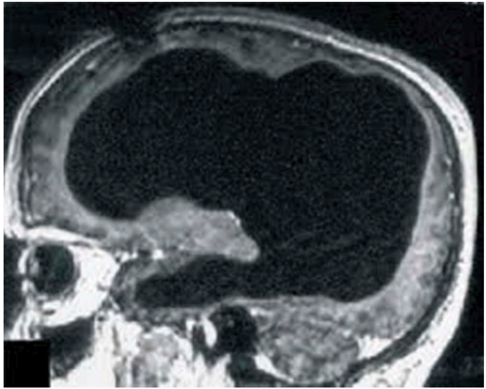
“Reduced brain volume and normal function Figure 3 in Doerig et al. (2020) shows the brain of a person with markedly reduced brain volume, but normal cognition and consciousness.”
BackgroundUnpacking the complexities of consciousness: Theories and reflections
Mudrik, L., Boly, M., Dehaene, S., Fleming, S. M., Lamme, V., Seth, A., & Melloni, L. (2025) · Neuroscience & Biobehavioral Reviews · doi:10.1016/j.neubiorev.2025.106053 · Cited by 81
“These theories only subtend some of the theoretical landscape in the field, which includes other theories (for reviews, see again Doerig et al., 2020; Kuhn, 2024; Sattin et al., 2021; Seth and Bayne, 2022; Storm et al., 2024).”
InfluentialTime consciousness: the missing link in theories of consciousness
Kent, L., & Wittmann, M. (2021) · Neuroscience of Consciousness · doi:10.1093/nc/niab011 · Cited by 71
A conceptual framework for consciousness
Graziano, M. S. A. (2022) · Proceedings of the National Academy of Sciences · doi:10.1073/pnas.2116933119 · Cited by 85
“Other authors have provided a systematic categorization of many of these theories (25).”
BackgroundThe human visual system differentially represents subjectively and objectively invisible stimuli
Stein, T., Kaiser, D., Fahrenfort, J. J., & van Gaal, S. (2021) · PLOS Biology · doi:10.1371/journal.pbio.3001241 · Cited by 62
“The scientific study of consciousness requires pitting conscious processes against comparable unconscious processes [4].”
BackgroundComparing theories of consciousness: why it matters and how to do it
Del Pin, S. H., Skóra, Z., Sandberg, K., Overgaard, M., & Wierzchoń, M. (2021) · Neuroscience of Consciousness · doi:10.1093/nc/niab019 · Cited by 58
Lee, A. Y. (2023) · Noûs · doi:10.1111/nous.12421 · Cited by 57
Consciousness explained or described?
Schurger, A., & Graziano, M. (2022) · Neuroscience of Consciousness · doi:10.1093/nc/niac001 · Cited by 54
Self-citationAre we really unconscious in “unconscious” states? Common assumptions revisited
Sevenius Nilsen, A., Juel, B. E., Thürer, B., Aamodt, A., & Storm, J. F. (2022) · Frontiers in Human Neuroscience · doi:10.3389/fnhum.2022.987051 · Cited by 49
“(Doerig et al., 2021), imply that the entire brain (or some parts of it) is never fully unconscious, or that there might be phenomenological experiences locally which are not accessible for report later (or currently) (Lamme, 2010).”
BackgroundHales, C. G., & Ericson, M. (2022) · Frontiers in Human Neuroscience · doi:10.3389/fnhum.2022.836046 · Cited by 53
Metzinger, T. K. (2024) · The MIT Press eBooks · doi:10.7551/mitpress/15196.001.0001 · Cited by 99
The evolutionary origins of the Global Neuronal Workspace in vertebrates
Zacks, O., & Jablonka, E. (2023) · Neuroscience of Consciousness · doi:10.1093/nc/niad020 · Cited by 57
“…Workspace and Unlimited Associative Learning theories of consciousness There are currently several theories trying to explain different facets of consciousness and synthesize them under a unified framework (for recent reviews, see Doerig et al. 2021; Seth and Bayne 2022; Yaron et al. 2022).”
BackgroundDeane, G. (2021) · Neuroscience of Consciousness · doi:10.1093/nc/niab024 · Cited by 38
“Doerig et al. (2021) emphasize that predictive processing, as it stands, is insufficiently constrained to provide a theory of consciousness due to being vulnerable to what they call the ‘other systems argument’.”
BackgroundThe search for the neural correlate of consciousness: Progress and challenges
Lepauvre, A., & Melloni, L. (2021) · Philosophy and the Mind Sciences · doi:10.33735/phimisci.2021.87 · Cited by 38
“Support for this idea comes from studies investigating binocular rivalry (Cosmelli &Thompson, 2007; Doesburg et al., 2009, among others).”
MethodLibet’s legacy: A primer to the neuroscience of volition
Dominik, T., Mele, A. R., Schurger, A., & Maoz, U. (2023) · Neuroscience & Biobehavioral Reviews · doi:10.1016/j.neubiorev.2023.105503 · Cited by 55
Self-citationIdentifying indicators of consciousness in AI systems
Butlin, P., Long, R., Bayne, T., Bengio, Y., Birch, J., Chalmers, D., Constant, A., Deane, G., Elmoznino, E., Fleming, S. M., et al. (2026) · Trends in Cognitive Sciences · doi:10.1016/j.tics.2025.10.011 · Cited by 56
Functions of consciousness: conceptual clarification
Niikawa, T., Miyahara, K., Hamada, H. T., & Nishida, S. (2022) · Neuroscience of Consciousness · doi:10.1093/nc/niac006 · Cited by 34
Is predictive processing a theory of perceptual consciousness?
Marvan, T., & Havlík, M. (2020) · New Ideas in Psychology · doi:10.1016/j.newideapsych.2020.100837 · Cited by 48
Active inference as a computational framework for consciousness
Vilas, M. G., Auksztulewicz, R., & Melloni, L. (2022) · Review of Philosophy and Psychology · doi:10.1007/s13164-021-00579-w · Cited by 28
Consciousness science: where are we, where are we going, and what if we get there?
Cleeremans, A., Mudrik, L., & Seth, A. K. (2025) · Frontiers in Science · doi:10.3389/fsci.2025.1546279 · Cited by 52
“These vary greatly in their aims and scope, in the degree of traction they have gained in the community, and in their level of empirical support (5, 12, 82 – 84).”
InfluentialEnriched category as a model of qualia structure based on similarity judgements
Tsuchiya, N., Phillips, S. D., & Saigo, H. (2022) · Consciousness and Cognition · doi:10.1016/j.concog.2022.103319 · Cited by 35
Accelerating scientific progress through Bayesian adversarial collaboration
Corcoran, A. W., Hohwy, J., & Friston, K. J. (2023) · Neuron · doi:10.1016/j.neuron.2023.08.027 · Cited by 26
McFadden, J. (2023) · Frontiers in Human Neuroscience · doi:10.3389/fnhum.2022.1024934 · Cited by 27
Wiese, W., & Friston, K. J. (2021) · Behavioural Brain Research · doi:10.1016/j.bbr.2021.113704 · Cited by 27
“Although we are all intimately familiar with consciousness from a subjective, first-person perspective, the scientific study of consciousness is less definitive [29,30], and many empirical theories of consciousness make competing claims [31].”
BackgroundFrancken, J., Beerendonk, L., Molenaar, D., Fahrenfort, J. J., Kiverstein, J., Seth, A., & van Gaal, S. (2021) · doi:10.31234/osf.io/8mbsk · Cited by 20
Proposed EEG measures of consciousness: a systematic, comparative review.Preprint
Nilsen, A. S., Juel, B. E., Thürer, B., & Storm, J. F. (2020) · PsyArXiv (OSF Preprints) · doi:10.31234/osf.io/sjm4a · Cited by 27
A measure centrality index for systematic empirical comparison of consciousness theories
Chis-Ciure, R., Melloni, L., & Northoff, G. (2024) · Neuroscience & Biobehavioral Reviews · doi:10.1016/j.neubiorev.2024.105670 · Cited by 22
“…presuppositions of state-of-the-art approaches to scientifically explaining experience (Bayne et al., 2024; Corcoran et al., 2023; Del Pin et al., 2021; Doerig et al., 2021; Fazekas et al., 2024; Melloni et al., 2021; Michel et al., 2019; Negro, 2024; Storm et al., 2024; Zheng et al., 2024).”
BackgroundEvers, K., Farisco, M., & Pennartz, C. M. A. (2024) · Consciousness and Cognition · doi:10.1016/j.concog.2024.103668 · Cited by 22
Yaron, I., Melloni, L., Pitts, M., & Mudrik, L. (2021) · doi:10.1101/2021.06.10.447863 · Cited by 21
Kirkeby-Hinrup, A., Stephens, A., Sjöstrand, A. B., & Overgaard, M. S. (2025) · Frontiers in Psychology · doi:10.3389/fpsyg.2025.1633907 · Cited by 25
“…in recent years, focus is increasingly shifting toward ways to assess and compare theories (Chis-Ciure et al., 2024; Del Pin et al., 2021; Doerig et al., 2020; Ellia and Chis-Ciure, 2022; Ferrante et al., 2023; Kirkeby-Hinrup, 2024a,b; Kirkeby-Hinrup and Fazekas, 2021; Kozuch, 2024;…”
How to deal with risks of AI suffering
Dung, L. (2025) · Inquiry · doi:10.1080/0020174x.2023.2238287 · Cited by 21
“In particular, according to some obvious interpretations, most prominent theories implausibly imply that small networks comprising fewer than ten units are conscious (Doerig, Schurger, and Herzog 2021; Herzog, Esfeld, and Gerstner 2007).”
A theory of visibility measures in the dissociation paradigm
Schmidt, T., & Biafora, M. (2023) · Psychonomic Bulletin & Review · doi:10.3758/s13423-023-02332-z · Cited by 31
“Convincing theories of visual awareness should aim at explaining such gradients, at least for some direct measures and some experimental conditions at a time (see Doerig et al., 2020, for further criteria that could be applied to such theories).”
BackgroundA construct-first approach to consciousness science
Fazekas, P., Cleeremans, A., & Overgaard, M. S. (2023) · Neuroscience & Biobehavioral Reviews · doi:10.1016/j.neubiorev.2023.105480 · Cited by 31
“The first is adversarial collaboration, through which experiments are designed by competing theorists to falsify specific predictions and hence eliminate some theories (Melloni et al., 2021, 2023; Doerig et al., 2021; Cogitate et al., 2023a).”
BackgroundIllusionism Big and Small: Some Options for Explaining Consciousness
Graziano, M. S. A. (2024) · eNeuro · doi:10.1523/eneuro.0210-24.2024 · Cited by 24
A guideline for linking brain wave findings to the various aspects of discrete perception
Menétrey, M. Q., Vogelsang, L., & Herzog, M. H. (2021) · European Journal of Neuroscience · doi:10.1111/ejn.15349 · Cited by 20
Self-citationConsciousness and complexity: Neurobiological naturalism and integrated information theory
Ellia, F., & Chis-Ciure, R. (2022) · Consciousness and Cognition · doi:10.1016/j.concog.2022.103281 · Cited by 24
Tests of Animal Consciousness are Tests of Machine Consciousness
Dung, L. (2023) · Erkenntnis · doi:10.1007/s10670-023-00753-9 · Cited by 46
“1 Most theories of consciousness are functionalist and thereby entail that a machine with the right causal organization would be conscious (Dehaene et al., 2017 ; Doerig et al., 2021 ; Seth & Bayne, 2022 ).”
On the minimal theory of consciousness implicit in active inference
Whyte, C. J., Corcoran, A. W., Robinson, J., Smith, R., Moran, R. J., Parr, T., Friston, K. J., Seth, A. K., & Hohwy, J. (2026) · Physics of Life Reviews · doi:10.1016/j.plrev.2025.11.002 · Cited by 15
“Finally, in order for active inference to be a theory of consciousness as such, and not just a theory of adaptive behaviour, we need a criterion to distinguish between conscious states and unconscious states (Doerig et al., 2021; Seth & Bayne, 2022).”
A systematic approach to brain dynamics: cognitive evolution theory of consciousness
Yurchenko, S. B. (2022) · Cognitive Neurodynamics · doi:10.1007/s11571-022-09863-6 · Cited by 20
“Of course, it makes its falsification problematic (Kleiner and Hoel 2021), and explains why there are now a bewildering number of very different theories, each suggesting its own account of conscious presence in brains and other systems (Doerig et al. 2020).”
BackgroundNeural Design Principles for Subjective Experience: Implications for Insects
Key, B., Zalucki, O. H., & Brown, D. J. (2021) · Frontiers in Behavioral Neuroscience · doi:10.3389/fnbeh.2021.658037 · Cited by 20
“, 2007) have sometimes been used as evidence that the cortex is not necessary for subjective experience (Doerig et al., 2020).”
BackgroundFrom brain-body function to conscious interactions
Signorelli, C. M., Boïls, J. D., Tagliazucchi, E., Jarraya, B., & Deco, G. (2022) · Neuroscience & Biobehavioral Reviews · doi:10.1016/j.neubiorev.2022.104833 · Cited by 22
The Human AffectomePreprint
Schiller, D., Yu, A. N. C., Alia‐Klein, N., Becker, S., Cromwell, H. C., Dolcos, F., Eslinger, P. J., Frewen, P., Kemp, A. H., Pace-Schott, E. F., et al. (2022) · PsyArXiv (OSF Preprints) · doi:10.31234/osf.io/9nu32 · Cited by 31
Laminar specificity of the auditory perceptual awareness negativity: a biophysical modeling study
Fernandez Pujol, C., Blundon, E. G., & Dykstra, A. R. (2023) · PLOS Computational Biology · doi:10.1371/journal.pcbi.1011003 · Cited by 14
“Relationship to network-level theories of conscious perception It is important to note that neither our findings, nor AA or DIT, are inconsistent with network-level, neurobiological theories of consciousness [50,51] such as global workspace theory, PLOS COMPUTATIONAL BIOLOGY Laminar specificity of the auditory percept…”
ResultConsciousness makes sense in the light of evolution
Grinde, B. (2024) · Neuroscience & Biobehavioral Reviews · doi:10.1016/j.neubiorev.2024.105824 · Cited by 20
“Even the more widely cited approaches create a bewildering picture (Seth and Bayne, 2022; Doerig et al., 2021).”
BackgroundOn the non-uniqueness problem in integrated information theory
Hanson, J. R., & Walker, S. I. (2023) · Neuroscience of Consciousness · doi:10.1093/nc/niad014 · Cited by 24
A Traditional Scientific Perspective on the Integrated Information Theory of Consciousness
Mallatt, J. M. (2021) · Entropy · doi:10.3390/e23060650 · Cited by 20
“This clai has et ith a resistance that has been called “the s all net ork argu ent” [33,61].”
BackgroundFirst-person experience cannot rescue causal structure theories from the unfolding argument
Herzog, M. H., Schurger, A., & Doerig, A. (2022) · Consciousness and Cognition · doi:10.1016/j.concog.2021.103261 · Cited by 14
Self-citationFrom the origins to the stream of consciousness and its neural correlates
Yurchenko, S. B. (2022) · Frontiers in Integrative Neuroscience · doi:10.3389/fnint.2022.928978 · Cited by 16
“Many authors attempt to compare these theories (Doerig et al., 2021; Del Pin et al., 2021; Signorelli et al., 2021), or even to reconcile some of them (Shea and Frith, 2019; Chang et al.”
ResultStein, T., van Gaal, S., & Fahrenfort, J. J. (2024) · Consciousness and Cognition · doi:10.1016/j.concog.2024.103669 · Cited by 13
“In recent years, there has been a surge of research that explores the boundaries and capacities of unconscious processes, shedding light on the functions and neural mechanisms underlying consciousness (Aru et al., 2012; Dehaene et al., 2001; Doerig et al., 2021; van Gaal & Lamme, 2012).”
BackgroundTheories of consciousness and a life worth living
Mudrik, L., Mylopoulos, M., Negro, N., & Schurger, A. (2023) · Current Opinion in Behavioral Sciences · doi:10.1016/j.cobeha.2023.101299 · Cited by 12
“A good ToC should account for multiple-realizability [7], the possibility for consciousness to be realized in different, nonhuman systems.”
Self-citationAIT Foundations of Structured Experience
Ruffini, G., & Lopez-Sola, E. (2022) · Journal of Artificial Intelligence and Consciousness · doi:10.1142/s2705078522500047 · Cited by 20
An adjunction hypothesis between qualia and reports
Tsuchiya, N., Saigo, H., & Phillips, S. D. (2023) · Frontiers in Psychology · doi:10.3389/fpsyg.2022.1053977 · Cited by 22
“The empirical research program in trying to find the neural correlates of consciousness, the NCC, has made substantial progress to the point that we now need a theory to coherently understand these findings (Del Pin et al., 2021; Doerig et al., 2021; Seth and Bayne, 2022).”
BackgroundTowards modern post-coma care based on neuroscientific evidence
Sanz, L. R. D., Laureys, S., & Gosseries, O. (2023) · International Journal of Clinical and Health Psychology · doi:10.1016/j.ijchp.2023.100370 · Cited by 16
“…theory is currently recognized as perfect, some do a better job than others in accounting for the different arguments considered necessary for a theory to be valid, as demonstrated in a recent attempt to provide constraining criteria for theories of consciousness (Doerig, Schurger, & Herzog, 2021).”
BackgroundIntegrative Neuroscience Group AUS, & Poznanski, R. R. (2022) · Journal of Multiscale Neuroscience · doi:10.56280/1531676942 · Cited by 16
Fahrenfort, J. J., & van Gaal, S. (2020) · Cognitive Neuroscience · doi:10.1080/17588928.2020.1838470 · Cited by 10
A clarification of the conditions under which Large language Models could be conscious
Overgaard, M., & Kirkeby-Hinrup, A. (2024) · Humanities and Social Sciences Communications · doi:10.1057/s41599-024-03553-w · Cited by 12
“In recent years, much attention has been given to classifying explanatory targets and mechanisms of extant theories in various, but similar terms (Doerig et al. 2020; Fahrenfort and van Gaal, 2021; Sattin et al. 2021; Schurger and Graziano, 2022; Signorelli et al. 2021).”
Toward a universal theory of consciousness
Kanai, R., & Fujisawa, I. (2024) · Neuroscience of Consciousness · doi:10.1093/nc/niae022 · Cited by 31
Theoretical Neurobiology of Consciousness Applied to Human Cerebral Organoids
Owen, M., Huang, Z., Duclos, C., Lavazza, A., Grasso, M., & Hudetz, A. G. (2023) · Cambridge Quarterly of Healthcare Ethics · doi:10.1017/s0963180123000543 · Cited by 13
“115,116,117 Nevertheless, does the IIT ’ s generous ascription of consciousness mean that an HCO consisting of just several million neurons is capable of the same conscious experiences as a person with a fully developed human brain consisting of eighty-six billion neurons?”
Rowe, E., Garrido, M. I., & Tsuchiya, N. (2023) · Cortex · doi:10.1016/j.cortex.2023.11.016 · Cited by 10
“Relevance to current theories of consciousness Our results appear to partially align with aspects of both the prefrontal and posterior theories (for review see Seth & Bayne, 2022; Del Pin et al., 2021; Doerig et al., 2021; for adversarial collaboration see Melloni, et al., 2023).”
Formalizing falsification for theories of consciousness across computational hierarchies
Hanson, J. R., & Walker, S. I. (2021) · Neuroscience of Consciousness · doi:10.1093/nc/niab014 · Cited by 16
On a confusion about there being two types of consciousness
Mudrik, L., Faivre, N., Pitts, M. A., & Schurger, A. (2025) · Trends in Cognitive Sciences · doi:10.1016/j.tics.2025.11.012 · Cited by 15
Self-citationWhen philosophical nuance matters: safeguarding consciousness research from restrictive assumptions
Usher, M., Negro, N., Jacobson, H., & Tsuchiya, N. (2023) · Frontiers in Psychology · doi:10.3389/fpsyg.2023.1306023 · Cited by 11
Granato, G., & Baldassarre, G. (2024) · Neural Networks · doi:10.1016/j.neunet.2024.106292 · Cited by 12
McFadden, J. (2023) · Entropy · doi:10.3390/e25121635 · Cited by 12
Distinguishing Neural Correlates of Prediction Errors on Perceptual Content and Detection of Content
Dijkstra, N., Warrington, O., Kok, P., & Fleming, S. M. (2025) · Journal of Cognitive Neuroscience · doi:10.1162/jocn_a_02290 · Cited by 14
“Several ideas have been advanced to accommodate conscious awareness (in the form of subjective detection) within a predictive processing framework (Clark et al., 2019; Doerig et al., 2020; Fleming, 2020; Hobson & Friston, 2014, 2012; Hohwy et al., 2008; Hohwy & Seth, 2020).”
A critical review of plant sentience: moving beyond traditional approaches
Hansen, M. J. (2024) · Biology & Philosophy · doi:10.1007/s10539-024-09953-1 · Cited by 11
“Each of these cases illustrate what Doerig et al. (2021) call paradigm cases of consciousness.”
We need to explain subjective experience, but its explanation may not be mechanistic
Signorelli, C. M., Cea, I., & Prentner, R. (2026) · Neuroscience of Consciousness · doi:10.1093/nc/niaf034 · Cited by 12
Quantifying empirical support for theories of consciousness: a tentative methodological framework
Kirkeby-Hinrup, A. (2024) · Frontiers in Psychology · doi:10.3389/fpsyg.2024.1341430 · Cited by 11
“They propose two categories of criteria for assessment (e.g., table in Doerig et al., 2020, p. 48).”
BackgroundMethodInfluentialConscious intention: New data on where and how in the brain
Graziano, M. S. A. (2022) · Current Biology · doi:10.1016/j.cub.2022.03.069 · Cited by 6
Assessing criteria for theories
ROSENTHAL, D. M. (2020) · Cognitive Neuroscience · doi:10.1080/17588928.2020.1838471 · Cited by 8
Better bridges: Integrating the neuroscience and philosophy of consciousness
Kozuch, B. (2024) · Consciousness and Cognition · doi:10.1016/j.concog.2024.103774 · Cited by 6
Kirkeby-Hinrup, A., & Fazekas, P. (2021) · Consciousness and Cognition · doi:10.1016/j.concog.2021.103173 · Cited by 14
“There have been sporadic attempts in this vein in the form of review articles (e.g. Block, 2007; Dehaene et al., 2017; Doerig et al., 2021; Lau and Rosenthal, 2011, and more recently Yaron et al. 2021).”
Rudrauf, D., Sergeant-Perthuis, G., Tisserand, Y., Poloudenny, G., Williford, K., & Amorim, M. (2023) · Brain Sciences · doi:10.3390/brainsci13101435 · Cited by 17
“IIT remains quite general; it predicts that some very simple physical systems (e.g., two suitably connected photo-diodes) are conscious [5,9].”
BackgroundPanpsychism and dualism in the science of consciousness
Yurchenko, S. B. (2024) · Neuroscience & Biobehavioral Reviews · doi:10.1016/j.neubiorev.2024.105845 · Cited by 13
The myth of when and where: How false assumptions still haunt theories of consciousness
Rahimian, S. (2021) · Consciousness and Cognition · doi:10.1016/j.concog.2021.103246 · Cited by 11
Perceptual Awareness and Its Relationship with Consciousness: Hints from Perceptual Multistability
Saracini, C. (2022) · NeuroSci · doi:10.3390/neurosci3040039 · Cited by 7
“As Seth (2021) points out, a good ToC should maybe not be considered as the one responding to as much pre-determined criteria [82], but should provide systematic mappings between properties of consciousness and underlying mechanisms, where the relevant properties of consciousness can be both…”
BackgroundDistinguishing neural correlates of prediction errors on perceptual content and detection of contentPreprint
Dijkstra, N., Warrington, O., Kok, P., & Fleming, S. M. (2023) · doi:10.31234/osf.io/6rs8d · Cited by 5
Tsuchiya, N. (2024) · PsyArXiv (OSF Preprints) · doi:10.31234/osf.io/492hu · Cited by 16
Neurobiological emergentism: sentience as an emergent process and the experiential gap
Feinberg, T. E. (2025) · Frontiers in Psychology · doi:10.3389/fpsyg.2025.1528982 · Cited by 9
“Indeed, IIT asserts that such an extremely low degree of emergence or complexity is required for the creation of consciousness that it has been considered by many critics from various fields as endorsing a variety of panpsychism (Doerig et al., 2021; Fallon, 2016; Mallatt, 2021; Michel et al., 2019).”
Clark, T., Edgley, A., & Kerry, R. (2025) · AJOB Neuroscience · doi:10.1080/21507740.2025.2464112 · Cited by 7
“Philosophical debates about consciousness have been going on for centuries, from developing an empirical understanding of consciousness to the more phenomenal (Doerig, Schurger, and Herzog 2021).”
AIT foundations of structured experiencePreprint
Ruffini, G., & Lopez-Sola, E. (2022) · doi:10.31234/osf.io/k3q6r · Cited by 4
An adjunction hypothesis between qualia and reportsPreprint
Tsuchiya, N., Saigo, H., & Phillips, S. D. (2022) · doi:10.31234/osf.io/q8ndj · Cited by 4
Evers, K., Farisco, M., & Pennartz, C. M. A. (2023) · doi:10.31234/osf.io/z9phn · Cited by 4
Is Higher-Order Misrepresentation Empirically Plausible? An Argument From Corruption
Kirkeby-Hinrup, A. (2022) · Frontiers in Psychology · doi:10.3389/fpsyg.2022.804896 · Cited by 4
The fundamental challenge of a future theory of consciousness
Ruan, Z. (2023) · Frontiers in Psychology · doi:10.3389/fpsyg.2022.1029105 · Cited by 4
“In addition, the NMDA theory was proposed because the NMDA synapses were found to work along with conscious experience (Flohr, 1992; Doerig et al., 2021).”
BackgroundConsciousness and Energy Processing in Neural Systems
Pepperell, R. (2024) · Brain Sciences · doi:10.3390/brainsci14111112 · Cited by 7
O’Reilly-Shah, V. N. (2025) · Journal of Consciousness Studies · doi:10.53765/20512201.32.1.132 · Cited by 6
Leung, A., Mahmoud, A., Jeans, R., Fulcher, B., van Swinderen, B., & Tsuchiya, N. (2025) · PLoS Biology · doi:10.1371/journal.pbio.3003217 · Cited by 4
“While there are several popular theories of consciousness [66,67], one stands out in providing an operationalized measure which can be directly applied to neural recordings in general.”
The multiple generator hypothesis of consciousness
Kirkeby-Hinrup, A., Fink, S. B., & Overgaard, M. S. (2025) · Neuroscience of Consciousness · doi:10.1093/nc/niaf035 · Cited by 5
“…Kirkeby-Hinrup 2024), what evidence can and cannot do for us (Fink 2016; Overgaard and Kirkeby-Hinrup 2021), what is required of an explanation (Signorelli et al. 2021; Schurger and Graziano 2022; Kirkeby-Hinrup et al.2024),and whether some questions are mandatory to answer (Doerig et al. 2020).”
Philosophy and Science on the Way to Knowing and Making Consciousness
Mikhailov, I. F. (2022) · RUDN Journal of Philosophy · doi:10.22363/2313-2302-2022-26-4-740-754 · Cited by 5
The necessary and sufficient mechanism of consciousness in a layered mind
Ruan, Z. (2023) · Frontiers in Psychology · doi:10.3389/fpsyg.2023.1280959 · Cited by 4
The Myth of When and Where: How False Assumptions Still Haunt Theories of ConsciousnessPreprint
Rahimian, S. (2021) · doi:10.31234/osf.io/crbt5 · Cited by 3
Conscious and Unconscious Mental States
Dienes, Z. P., & Seth, A. K. (2022) · Oxford University Press eBooks · doi:10.1093/acrefore/9780190236557.013.804 · Cited by 6
Algorithmic structure of experience and the unfolding argumentPreprint
Ruffini, G., Lopez-Sola, E., & Vohryzek, J. (2022) · PsyArXiv (OSF Preprints) · doi:10.31234/osf.io/7nbsw · Cited by 5
Editorial: Insights in consciousness research 2021
Srinivasan, N., Simione, L., Arsiwalla, X. D., Kleiner, J., & Raffone, A. (2023) · Frontiers in Psychology · doi:10.3389/fpsyg.2023.1182690 · Cited by 4
“Critical reviews focusing on these theories have proposed criteria for evaluating such theories (Doerig et al., 2021) and evaluated their potential convergence (Northoff and Lamme, 2021).”
Background
Metadata
- Authors
- Doerig, A., Schurger, A., & Herzog, M. H.
- Affiliations
- École Polytechnique Fédérale de Lausanne (CH)
- Inserm (FR)
- Corresponding author
- Doerig, Adrien
- Venue
- Cognitive Neuroscience
- Publisher
- Informa UK Limited
- Published
- 2020-07-14
- Volume
- 12
- Issue
- 2
- Pages
- 41-62
- ISSN
- 1758-8928 (ISSN-L)
- 1758-8936
- OpenAlex
- W3043429318
- Semantic Scholar
- 6a2fd985d926673863670e7a43cb52d63de95773
- Cited by
- 194
- References
- 153
- Citations by year
- 2026: 41 · 2025: 33 · 2024: 30 · 2023: 33 · 2022: 32 · 2021: 18 · 2020: 7
- FWCI
- 21.77
- Type
- journal article
- Language
- en
- Open access
- hybrid
- doi.org
- Licence
- Locations
- Cognitive Neuroscience (publishedVersion, cc-by-nc-nd)
- PubMed (publishedVersion)
- Radboud Repository (Radboud University) (submittedVersion, other-oa)
- Chapman University Digital Commons (Chapman University) (submittedVersion, cc-by-nc-nd)
- Infoscience (Ecole Polytechnique Fédérale de Lausanne) (submittedVersion, cc-by-nc-nd)
- Radboud Repository (Radboud University) (submittedVersion)
- Funders
- Schweizerischer Nationalfonds zur Förderung der Wissenschaftlichen Forschung (176153)
- Topics
- Social Sciences › Arts and Humanities › Philosophy › Philosophy and Theoretical Science
- Social Sciences › Arts and Humanities › Philosophy › Free Will and Agency
- Social Sciences › Arts and Humanities › History and Philosophy of Science › Philosophy of Biology and Scientific Explanation
- Keywords
- theory of consciousness
- MeSH terms
- Consciousness, Humans, Empirical Research
About these checks
Registry, retraction, Cites and statistics results are computed, not judged, with one exception: a printed reference that no index lists is read once by a model before it counts as a citation error. Claims are extracted by a model and kept only when their quote appears verbatim in the text; each cited source is then checked, with a model’s help, for whether it says what the claim relies on. Those verdicts can be wrong — read the claim’s quote and the cited source before relying on one.
The claim verdicts this report counts are experimental: their accuracy is not yet measured.
A language model drew the claims from the paper on 2026-09-28, under version 3 of the claim definition (model deepseek-v4.1-flash, prompt extract-v3).
A second model labelled each claim on 2026-09-28 (model jev-1.13-20260917, definition revision gold-guideline-v0.2).
Cited sources are checked with a language model’s help (gpt-6-sol and qwen3.8-omni-flash).
Statistics and arithmetic are recomputed, not judged.
Confidence bands are shown only for fields calibrated on our annotated test set. None is calibrated yet, so no band is shown.
What counts as a claim ›How we measure confidence ›How we check this ›
Are you an author, or do you see a problem with this page? Request a review
Data sources
Bibliographic data: Semantic Scholar, OpenAlex, Crossref.
Contains information from the Semantic Scholar Academic Graph Datasets, made available under the ODC Attribution License (ODC-BY 1.0).
Semantic Scholar’s data is described in: Kinney, R., et al. (2023). The Semantic Scholar Open Data Platform. arXiv:2301.10140.
