

Impairment of starvation-induced and constitutive autophagy in Atg7 -deficient mice
Open accessThe DOI matches its Crossref record; 49 of the 49 references it cites were found in a registry or an index.
Abstract
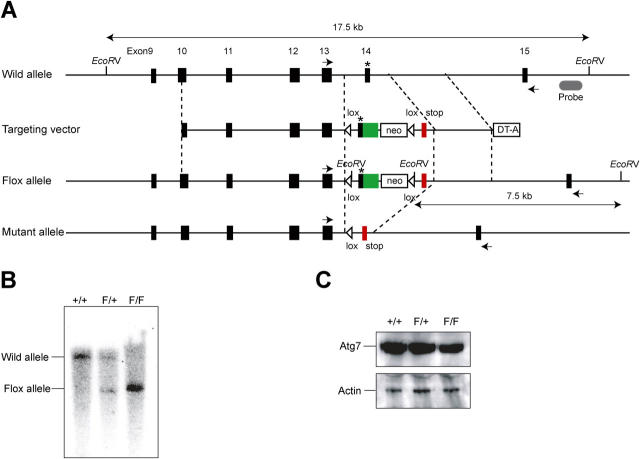
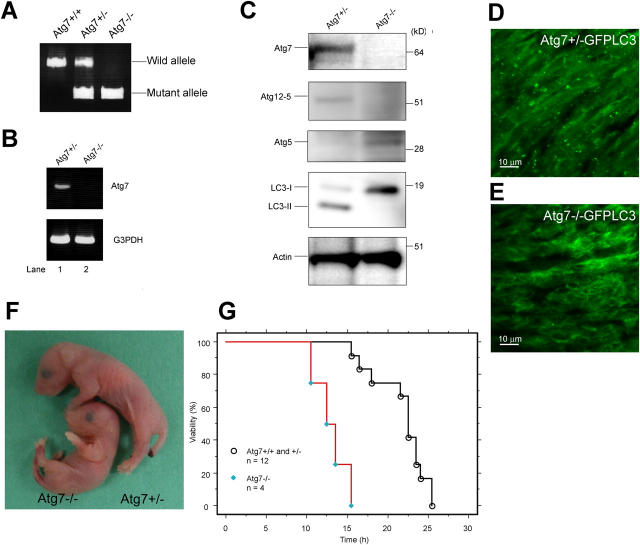
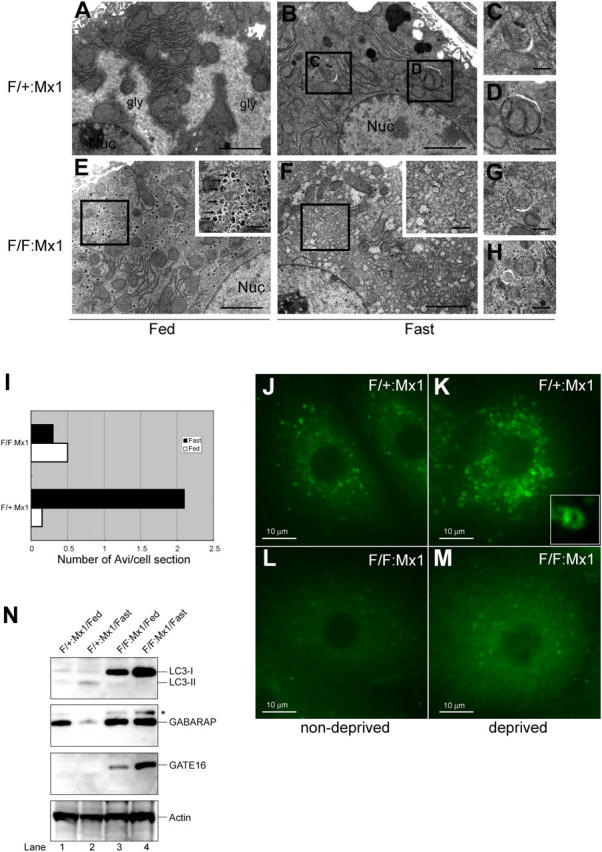
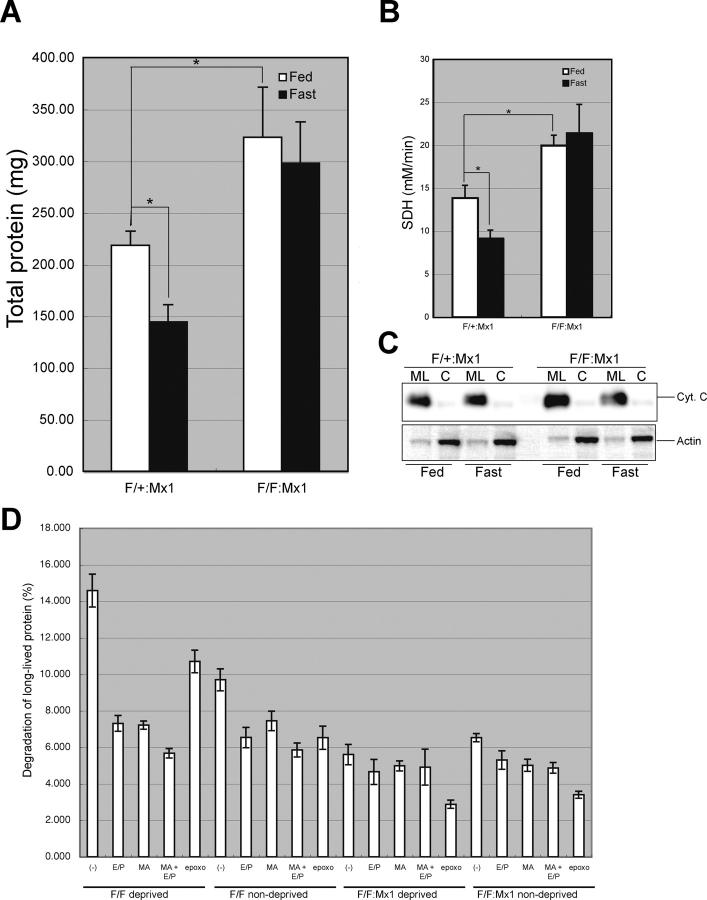
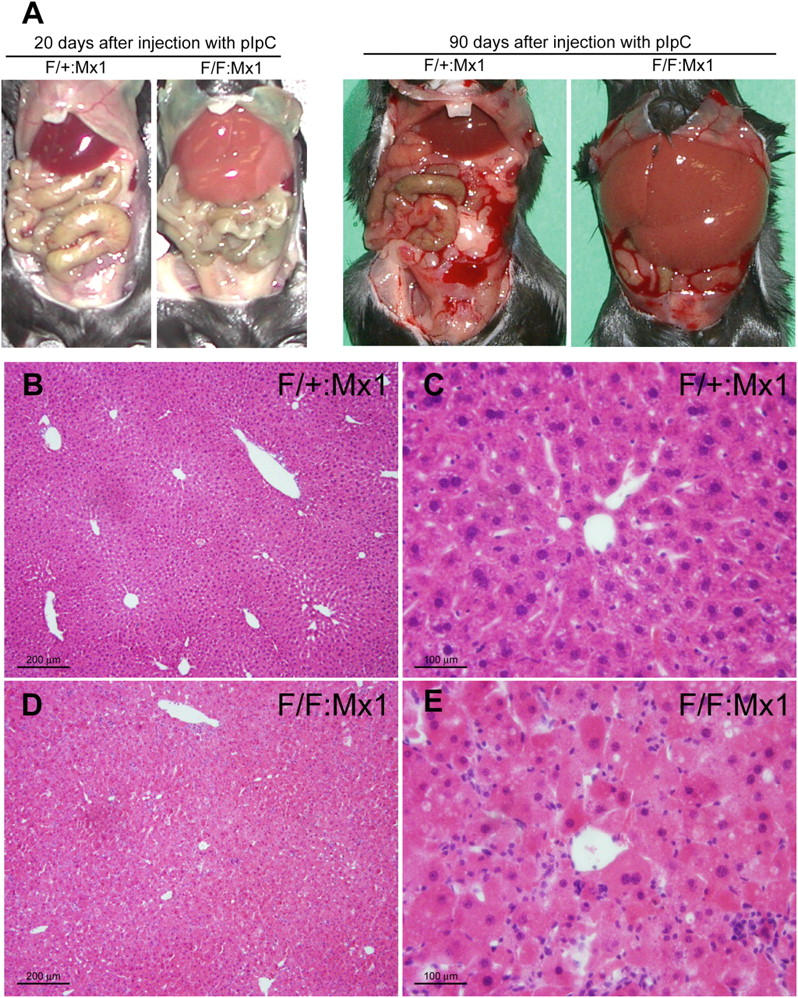
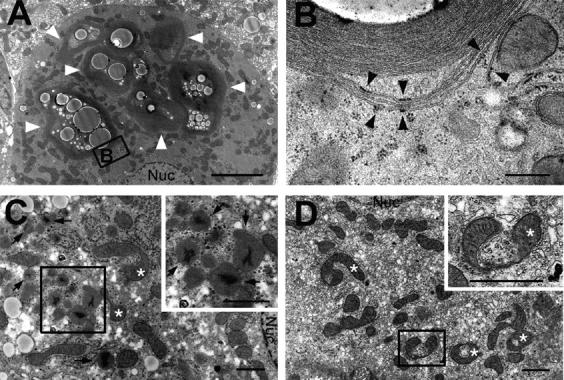
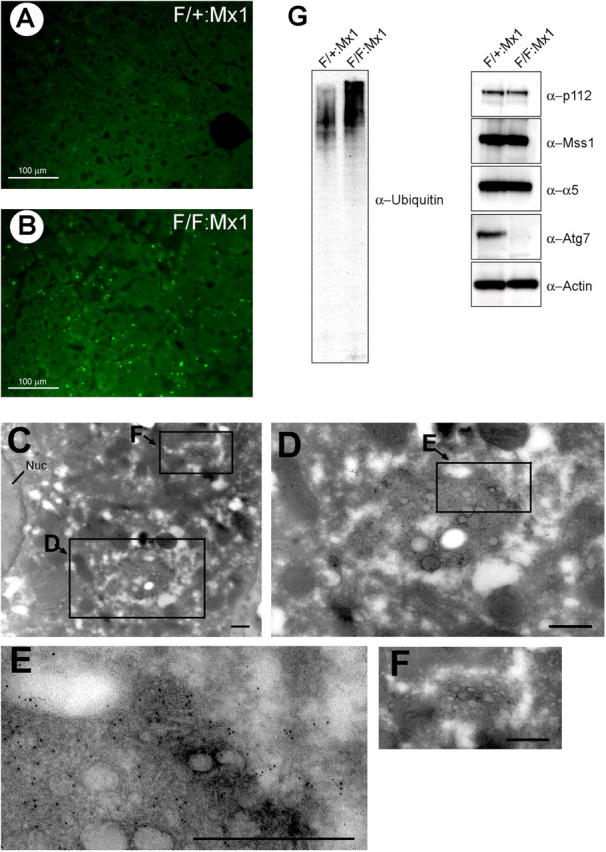
Autophagy is a membrane-trafficking mechanism that delivers cytoplasmic constituents into the lysosome/vacuole for bulk protein degradation. This mechanism is involved in the preservation of nutrients under starvation condition as well as the normal turnover of cytoplasmic component. Aberrant autophagy has been reported in several neurodegenerative disorders, hepatitis, and myopathies. Here, we generated conditional knockout mice of Atg7, an essential gene for autophagy in yeast. Atg7 was essential for ATG conjugation systems and autophagosome formation, amino acid supply in neonates, and starvation-induced bulk degradation of proteins and organelles in mice. Furthermore, Atg7 deficiency led to multiple cellular abnormalities, such as appearance of concentric membranous structure and deformed mitochondria, and accumulation of ubiquitin-positive aggregates. Our results indicate the important role of autophagy in starvation response and the quality control of proteins and organelles in quiescent cells.
Overview
The claims and statistics of this paper haven’t been checked yet.
Free: it reads the open-access text and checks the first 5 claims that cite a source we can check. Create a free account to check every claim.
Integrity signals
Registry
Cites
Statistics
Figures
Verification
Claims the paper makes
The claims and statistics of this paper haven’t been checked yet.
Free: it reads the open-access text and checks the first 5 claims that cite a source we can check. Create a free account to check every claim.
Claims other papers make about this one
Each is checked against this paper’s own text: does it say what the citing paper says it does?
The source backs part of the claim, not all of it — or backs it for a different population, condition or comparison.
In the citing paper
“whole‐body autophagy‐deficient mice undergo perinatal death due to their inability to withstand postnatal starvation (Kuma et al, 2004; Komatsu et al, 2005; Kuma et al, 2017).”
From Autophagy in major human diseases (2021) · cites this paper as Komatsu et al, 2005
Experimental — accuracy not yet measuredThe cited source says what the claim attributes to it.
In the citing paper
“Indeed, mice deficient for autophagy essential genes, such as ATG5, or ATG7, die soon after birth [220, 221].”
From The connection between the dynamic remodeling of the mitochondrial network and the regulation of muscle mass (2021) · cites this paper as [221]
The cited source says what the claim attributes to it.
In the citing paper
“The genetic suppression of basal autophagy in hepatocytes leads to hepatomegaly and exacerbated liver injury (Komatsu et al, 2005; Ni et al, 2012b; Cassidy et al, 2018).”
From Autophagy in major human diseases (2021) · cites this paper as Komatsu et al, 2005
The cited source says what the claim attributes to it.
In the citing paper
“mice with global KOs of the other autophagy related genes like Atg5 and Atg7 that die within a day after birth (Kuma et al., 2004; Komatsu et al., 2005; Cann et al., 2008).”
From Microtubule-associated protein 1 light chain 3B, (LC3B) is necessary to maintain lipid-mediated homeostasis in the retinal pigment epithelium (2018) · cites this paper as Komatsu et al., 2005
The cited source says what the claim attributes to it.
In the citing paper
“Atg7 encodes an E1-like enzyme essential in the ubiquitin-like conjugation systems required for autophagy, and Atg14 encodes a positive regulator of VPS34 (refs. 38,39).”
From Microglia clear neuron-released α-synuclein via selective autophagy and prevent neurodegeneration (2020) · cites this paper as [38]
2 more claims about this paper
Create a free account to see every claim other papers make about this one.
Self-check
Percentages, sums and reported differences re-computed from the paper’s own numbers.
The self-check needs the paper’s full text.
Citations
Cites
Repertoires of Autophagy in the Pathogenesis of Ocular Diseases
Li, Y.-J., Jiang, Q., Cao, G.-F., Yao, J., & Yan, B. (2015) · Cellular Physiology and Biochemistry · doi:10.1159/000373980 · Cited by 16,304
LC3, a mammalian homologue of yeast Apg8p, is localized in autophagosome membranes after processing.
Kabeya, Y., Mizushima, N., Ueno, T., Yamamoto, A., Kirisako, T., Noda, T., Kominami, E., Ohsumi, Y., & Yoshimori, T. (2000) · The EMBO Journal · doi:10.1093/emboj/19.21.5720 · Cited by 6,605 · cited 8×
“In mammals, there exist at least three Atg8 homologues that can all be activated by Atg7 (Tanida et al., 2001), GATE-16, GABARAP, and LC3 (Ohsumi, 2001), and they localize to the autophagosome (Kabeya et al., 2000, 2004).”
BackgroundMethodSelf-citationCui, C., Cui, J., Jin, F., Cui, Y., Li, R., Jiang, X., Tian, Y., Wang, K., Jiang, P., & Gao, J. (2017) · Cellular Physiology and Biochemistry · doi:10.1159/000479571 · Cited by 5,203
Levine, B., & Klionsky, D. J. (2004) · Developmental Cell · doi:10.1016/s1534-5807(04)00099-1 · Cited by 3,678 · cited 2×
“Furthermore, autophagy plays a role in cellular remodeling during differentiation and development of multicellular organisms, such as fly, worm, and slime mold (Levine and Klionsky, 2004), and cellular defense against invading streptococcus (Nakagawa et al.”
BackgroundAutophagy as a Regulated Pathway of Cellular Degradation
Klionsky, D. J., & Emr, S. D. (2000) · Science · doi:10.1126/science.290.5497.1717 · Cited by 3,608 · cited 1×
“In this lysosomal pathway, degradation of plasma membrane proteins and extracellular proteins is mediated by endocytosis, whereas degradation of cytoplasmic components is achieved through several pathways: macroautophagy, microautophagy, and chaperone-mediated autophagy (Seglen and Bohley, 1992; Dunn, 1994; Klionsky a…”
BackgroundAntimicrobial Autophagy: A Conserved Innate Immune Response in Drosophila
Moy, R. H., & Cherry, S. (2013) · Journal of Innate Immunity · doi:10.1159/000350326 · Cited by 3,539
Induction of autophagy and inhibition of tumorigenesis by beclin 1
Liang, X. H., Jackson, S., Seaman, M., Brown, K., Kempkes, B., Hibshoosh, H., & Levine, B. (1999) · Nature · doi:10.1038/45257 · Cited by 3,347 · cited 3×
“, low levels of autophagy were described in some malignant tumors (Liang et al., 1999).”
BackgroundThe role of autophagy during the early neonatal starvation period
Kuma, A., Hatano, M., Matsui, M., Yamamoto, A., Nakaya, H., Yoshimori, T., Ohsumi, Y., Tokuhisa, T., & Mizushima, N. (2004) · Nature · doi:10.1038/nature03029 · Cited by 2,865 · cited 4×
“We considered that Atg7 / mice could survive in utero by virtue of the nutrients supplied through the placenta but could not survive when the supply terminates after birth, as recently reported (Kuma et al., 2004).”
BackgroundSelf-citationAutophagy in Health and Disease: A Double-Edged Sword
Shintani, T., & Klionsky, D. J. (2004) · Science · doi:10.1126/science.1099993 · Cited by 2,534 · cited 2×
“In humans, autophagy has been implicated in several pathological conditions ( Shintani and Klionsky, 2004 ); e.g., low levels of autophagy were described in some malignant tumors (Liang et al., 1999).”
BackgroundPromotion of tumorigenesis by heterozygous disruption of the beclin 1 autophagy gene
Qu, X., Yu, J., Bhagat, G., Furuya, N., Hibshoosh, H., Troxel, A., Rosen, J., Eskelinen, E.-L., Mizushima, N., Ohsumi, Y., et al. (2003) · Journal of Clinical Investigation · doi:10.1172/jci20039 · Cited by 2,311 · cited 2×
“In contrast, elevated levels of autophagosome formation were reported in other human pathologies such as neurodegenerative diseases, myopathies, and liver injury (Mizushima et al., 2002; Perlmutter, 2002 ), and autophagy is implicated in the execution of cell death (Xue et al., 1999; Bursch, 2001).”
BackgroundSelf-citation
Research works printed but not linked: 1
- 1995, Eur. J. Cell Biol., 67, 308
Cited by
Items 601–700 of 1,024
The emerging role of autophagy in alcoholic liver disease
Ding, W.-X., Manley, S., & Ni, H.-M. (2011) · Experimental Biology and Medicine · doi:10.1258/ebm.2011.010360 · Cited by 122
The membrane peroxin PEX3 induces peroxisome-ubiquitination-linked pexophagy
Yamashita, S.-I., Abe, K., Tatemichi, Y., & Fujiki, Y. (2014) · Autophagy · doi:10.4161/auto.29329 · Cited by 122
“This peroxisome degradation is impaired in autophagy-related protein 7 (atg7) knockout mouse livers.(7,8) To analyze the molecular mechanisms of mammalian pexophagy, an experimental system for the induction and analysis of pexophagy needs to be established in cultured cells.”
Autophagy in Drosophila melanogaster
McPhee, C. K., & Baehrecke, E. H. (2009) · Biochimica et Biophysica Acta (BBA) - Molecular Cell Research · doi:10.1016/j.bbamcr.2009.02.009 · Cited by 122
“impaired in autophagosome formation, and accumulate ubiquitinpositive aggregates [70].”
Autophagy, Stress, and Cancer Metabolism: What Doesn't Kill You Makes You Stronger
Mathew, R., & White, E. (2011) · Cold Spring Harbor Symposia on Quantitative Biology · doi:10.1101/sqb.2012.76.011015 · Cited by 123
“Newborn pups with maternally inherited autophagy proteins, but deficient for atg5, atg7, and atg3, fail to survive neonatal starvation and display signs of bioenergetic impairment (Kuma et al. 2004; Komatsu et al. 2005; Sou et al. 2008).”
BackgroundSeldin, M. M., Lei, X., Tan, S. Y., Stanson, K. P., Wei, Z., & Wong, G. W. (2013) · Journal of Biological Chemistry · doi:10.1074/jbc.m113.500736 · Cited by 122
“Atg7 is required for starvation-induced protein degradation in liver (8), whereas Atg12 is critical for the formation of autophagosome precursors (33).”
BackgroundThe β2 Integrin Mac-1 Induces Protective LC3-Associated Phagocytosis of Listeria monocytogenes
Gluschko, A., Herb, M., Wiegmann, K., Krut, O., Neiss, W. F., Utermöhlen, O., Krönke, M., & Schramm, M. (2018) · Cell Host & Microbe · doi:10.1016/j.chom.2018.01.018 · Cited by 121
The coordinated action of the MVB pathway and autophagy ensures cell survival during starvation
Müller, M., Schmidt, O., Angelova, M., Faserl, K., Weys, S., Kremser, L., Pfaffenwimmer, T., Dalik, T., Kraft, C., Trajanoski, Z., et al. (2015) · eLife · doi:10.7554/elife.07736 · Cited by 117
EGFR signaling and autophagy dependence for growth, survival, and therapy resistance
Jutten, B., & rouschop, K. (2014) · Cell Cycle · doi:10.4161/cc.27518 · Cited by 121
7-Ketocholesterol Induces Autophagy in Vascular Smooth Muscle Cells through Nox4 and Atg4B
He, C., Zhu, H., Zhang, W., Okon, I., Wang, Q., Li, H., Le, Y.-Z., & Xie, Z. (2013) · The American Journal of Pathology · doi:10.1016/j.ajpath.2013.04.028 · Cited by 119
Marambio, P., Toro, B., Sanhueza, C., Troncoso, R., Parra, V., Verdejo, H., García, L., Quiroga, C., Munafo, D., Díaz-Elizondo, J., et al. (2010) · Biochimica et Biophysica Acta (BBA) - Molecular Basis of Disease · doi:10.1016/j.bbadis.2010.02.002 · Cited by 121
“Cytoplasmic inclusion bodies associated with neurodegenerative protein aggregates have shown to be susceptible tomacroautophagic degradation [4,11,13,35,36].”
BackgroundKaarniranta, K., Salminen, A., Eskelinen, E., & Kopitz, J. (2009) · Ageing Research Reviews · doi:10.1016/j.arr.2009.01.001 · Cited by 135
Piemontese, M., Onal, M., Xiong, J., Han, L., Thostenson, J. D., Almeida, M., & O’Brien, C. A. (2016) · Scientific Reports · doi:10.1038/srep24262 · Cited by 119
The Effects of Calorie Restriction on Autophagy: Role on Aging Intervention
Chung, K. W., & Chung, H. Y. (2019) · Nutrients · doi:10.3390/nu11122923 · Cited by 119
Livingston, M. J., Zhang, M., Kwon, S., Chen, J., Li, H., Manicassamy, S., & Dong, Z. (2023) · Autophagy · doi:10.1080/15548627.2023.2281156 · Cited by 130
“Atg7 -floxed ( Atg7 flox/flox ) mice were obtained from Dr. Masaaki Komatsu (Tokyo Metropolitan Institute of Medical Science, Japan) [63].”
MethodIntestinal Epithelium and Autophagy: Partners in Gut Homeostasis
Randall‐Demllo, S., Chieppa, M., & Eri, R. D. (2013) · Frontiers in Immunology · doi:10.3389/fimmu.2013.00301 · Cited by 139
Singh, K. K., Lovren, F., Pan, Y., Quan, A., Ramadan, A., Matkar, P. N., Ehsan, M., Sandhu, P., Mantella, L. E., Gupta, N., et al. (2015) · Journal of Biological Chemistry · doi:10.1074/jbc.m114.604603 · Cited by 118
“Endothelial Cell-specific Loss of ATG7 Exacerbates Bleomycin-induced Pulmonary Fibrosis in Vivo—To evaluate the potential translational implications of our in vitro data and to circumvent the early lethality observed in systemic ATG7 knock-out mice (28), we generated EC-ATG7 / mice (48).”
BackgroundMethodEssential role for autophagy during invariant NKT cell development
Salio, M., Puleston, D. J., Mathan, T. S. M., Shepherd, D., Stranks, A. J., Adamopoulou, E., Veerapen, N., Besra, G. S., Hollander, G. A., Simon, A. K., et al. (2014) · Proceedings of the National Academy of Sciences · doi:10.1073/pnas.1413935112 · Cited by 118
“Atg7 mice (15) were crossed to CD4-Cre mice (65) (from Adeline Hajjar, University of Washington, Seattle) to obtain CD4 Cre-Atg7 on a C57BL/6 background.”
BackgroundMethodLive Cell Imaging of Mitochondrial Autophagy with a Novel Fluorescent Small Molecule
Iwashita, H., Torii, S., Nagahora, N., Ishiyama, M., Shioji, K., Sasamoto, K., Shimizu, S., & Okuma, K. (2017) · ACS Chemical Biology · doi:10.1021/acschembio.7b00647 · Cited by 118
Quan, W., Kim, H.-K., Moon, E.-Y., Kim, S. S., Choi, C. S., Komatsu, M., Jeong, Y. T., Lee, M.-K., Kim, K.-W., Kim, M.-S., et al. (2012) · Endocrinology · doi:10.1210/en.2011-1882 · Cited by 117
“The main purposes of autophagy are quality control of organelles or cellular proteins in the basal state and protection of intracellular homeostasis in the case of energy failure or nutrient deficiency (2).”
BackgroundSelf-citationBasu, S., Rajakaruna, S., Reyes, B., Van Bockstaele, E., & Menko, A. S. (2014) · Autophagy · doi:10.4161/auto.28768 · Cited by 117
“Importantly, reports now show that autophagy can progress in the absence of some molecules previously believed to be required for the autophagic mechanism to proceed.(14,20-23,24) This evidence clearly indicates that autophagy can be context- and tissue-specific and emphasizes the importance of defining the subset of…”
BackgroundThe role of autophagy in liver cancer: Molecular mechanisms and potential therapeutic targets
Cui, J., Gong, Z., & Shen, H. (2013) · Biochimica et Biophysica Acta (BBA) - Reviews on Cancer · doi:10.1016/j.bbcan.2013.02.003 · Cited by 133
Diverse Functions of Autophagy in Liver Physiology and Liver Diseases
Ke, P. (2019) · International Journal of Molecular Sciences · doi:10.3390/ijms20020300 · Cited by 119
“first demonstrated that the genetic knockout of ATG7 in mice interfered with autophagosome biogenesis in livers in which deformed mitochondria had accumulated (Table 1) [356], suggesting that hepatic autophagy plays a major role in mitochondria degradation.”
BackgroundAutophagy in Hypertensive Heart Disease
Wang, Z. V., Rothermel, B. A., & Hill, J. A. (2010) · Journal of Biological Chemistry · doi:10.1074/jbc.r109.025023 · Cited by 115
Zhang, C., Грубер, Ф., Ni, C., Mildner, M., Koenig, U., Karner, S., Barresi, C., Rossiter, H., Narzt, M., Nagelreiter, I., et al. (2014) · Journal of Investigative Dermatology · doi:10.1038/jid.2014.439 · Cited by 123
“Here, we investigated whether or not autophagy has a role in melanogenesis and MC homeostasis by crossing mice carrying a floxed Atg7 gene (Komatsu et al., 2005) with Tyrosinase-Cre mice (Delmas et al.”
BackgroundMethodInfluentialZhang, J., Wang, J., Zhou, Z., Park, J.-E., Wang, L., Wu, S., Sun, X., Lu, L., Wang, T., Lin, Q., et al. (2018) · Autophagy · doi:10.1080/15548627.2018.1447290 · Cited by 44
Wu, X., Geng, F., Cheng, X., Guo, Q., Zhong, Y., Cloughesy, T. F., Yong, W. H., Chakravarti, A., & Guo, D. (2020) · iScience · doi:10.1016/j.isci.2020.101569 · Cited by 131
Free fatty acids stimulate autophagy in pancreatic β-cells via JNK pathway
Komiya, K., Uchida, T., Ueno, T., Koike, M., Abe, H., Hirose, T., Kawamori, R., Uchiyama, Y., Kominami, E., Fujitani, Y., et al. (2010) · Biochemical and Biophysical Research Communications · doi:10.1016/j.bbrc.2010.09.101 · Cited by 125
Self-citationMacroautophagy versus mitochondrial autophagy: a question of fate?
Kundu, M., & Thompson, C. B. (2005) · Cell Death and Differentiation · doi:10.1038/sj.cdd.4401780 · Cited by 131
p62/SQSTM1 synergizes with autophagy for tumor growth in vivo
Wei, H., Wang, C., Croce, C. M., & Guan, J. (2014) · Genes & Development · doi:10.1101/gad.237354.113 · Cited by 128
“, Beclin-1, Atg5, Atg7, and FIP200) displayed embryonic or perinatal lethality (Yue et al. 2003; Kuma et al. 2004; Komatsu et al. 2005; Gan et al. 2006), p62-null mice can survive for more than 1 year but with defects in adult mice such as adult-onset obesity and diabetes (Rodriguez et al.”
BackgroundAtg7 cooperates with Pten loss to drive prostate cancer tumor growth
Santanam, U., Banach-Petrosky, W. A., Abate-Shen, C. T., Shen, M. M., White, E. P., & DiPaola, R. S. (2016) · Genes & Development · doi:10.1101/gad.274134.115 · Cited by 120
Bhatt, V., Khayati, K., Hu, Z. S., Lee, A., Kamran, W., Su, X., & Guo, J. Y. (2019) · Genes & Development · doi:10.1101/gad.320481.118 · Cited by 115
“…hypothesis that autophagy is required to compensate for LKB1 loss-induced decrease in metabolic plasticity for tumor growth, KL mice were crossed with Atg7flox/flox mice possessing conditional deficiency in Atg7 (Komatsu et al. 2005) to generate a cohort that was either Atg7+/+ or Atg7flox/flox.”
MethodKanayama, M., Inoue, M., Danzaki, K., Hammer, G., He, Y.-W., & Shinohara, M. L. (2015) · Nature Communications · doi:10.1038/ncomms6779 · Cited by 114
Ruck, A., Attonito, J., Garces, K. T., Nuñez, L., Palmisano, N. J., Rubel, Z., Bai, Z., Nguyen, K. C. Q., Sun, L., Grant, B. D., et al. (2011) · Autophagy · doi:10.4161/auto.7.4.14391 · Cited by 115
Zhao, Y., Wang, Q., Qiu, G.-H., Zhou, S., Jing, Z., Wang, J., Wang, W., Cao, J., Han, K., Cheng, Q., et al. (2015) · Cell Reports · doi:10.1016/j.celrep.2015.10.011 · Cited by 118
“…with this notion, the liver damage in Gnb2l1Dhep mice is relatively mild compared with that in Atg5Dhep, Atg7Dhep, and Vps34 / mice (Jaber et al., 2012; Komatsu et al., 2005; Singh et al., 2009; Takamura et al., 2011) but is much more evident than that in NRBF2-deficient mice (Lu et al., 2014).”
BackgroundInfluentialHidden Behind Autophagy: The Unconventional Roles of ATG Proteins
Bestebroer, J., V'kovski, P., Mauthe, M., & Reggiori, F. (2013) · Traffic · doi:10.1111/tra.12091 · Cited by 113
“Historically the atg5and atg7-knockout mice were the first the first generated atg gene knockout animals (76,77), and as a result they were pivotal in revealing the unconventional functions of these two genes and the two ubiquitin-like systems.”
BackgroundGamerdinger, M., Carra, S., & Behl, C. (2011) · Journal of Molecular Medicine · doi:10.1007/s00109-011-0795-6 · Cited by 112
Autophagy and mitochondria in Pompe disease: Nothing is so new as what has long been forgotten
Raben, N., Wong, A., Ralston, E., & Myerowitz, R. (2012) · American Journal of Medical Genetics Part C: Seminars in Medical Genetics · doi:10.1002/ajmg.c.31317 · Cited by 112
“The suppression of autophagy in the whole organism by knocking out critical autophagic genes (Atgs), such as Atg5 or Atg7 is lethal [Kuma et al., 2004; Komatsu et al., 2005].”
BackgroundRole of autophagy in the pathophysiology of nonalcoholic fatty liver disease: A controversial issue
Kwanten, W. J. (2014) · World Journal of Gastroenterology · doi:10.3748/wjg.v20.i23.7325 · Cited by 113
Novel Insights into the Interplay between Apoptosis and Autophagy
Rikiishi, H. (2012) · International Journal of Cell Biology · doi:10.1155/2012/317645 · Cited by 125
Fighting disease by selective autophagy of aggregate‐prone proteins
Knævelsrud, H., & Simonsen, A. (2010) · FEBS Letters · doi:10.1016/j.febslet.2010.04.041 · Cited by 113
“As previously discussed, inhibition of autophagy in mouse brain or liver by knockout of the Atg5 or Atg7 genes, causes ubiquitinated protein inclusions to accumulate [47,48,61].”
BackgroundA Role for Autophagic Protein Beclin 1 Early in Lymphocyte Development
Arsov, I., Adebayo, A., Kucerova-Levisohn, M., Haye, J., MacNeil, M., Papavasiliou, F. N., Yue, Z., & Ortiz, B. D. (2011) · The Journal of Immunology · doi:10.4049/jimmunol.1002223 · Cited by 114
Targeting Autophagy to Overcome Human Diseases
Condello, M., Pellegrini, E., Caraglia, M., & Meschini, S. (2019) · International Journal of Molecular Sciences · doi:10.3390/ijms20030725 · Cited by 119
“Animal model studies in which hepatocytes underwent the deletion of the ATG7 gene show an accumulation of altered and deformed mitochondria, of lipid droplets, and an increased number of ubiquitinated protein aggregates [75].”
BackgroundDu, Y., Meng, Q., Zhang, Q., & Guo, F. (2011) · Amino Acids · doi:10.1007/s00726-011-1123-8 · Cited by 120
“To investigate whether autophagy is involved in isoleucine or valine-induced fat loss, we examined the mRNA levels of genes encoding autophagy-related proteins including ATG4a, ATG5, ATG7, ATG8/LC3 (Scherz-Shouval et al. 2007; Noda et al. 2010; Komatsu et al. 2005; Yousefi et al. 2006).”
BackgroundSharma, M., Bhattacharyya, S., Nain, M., Kaur, M., Sood, V., Gupta, V., Khasa, R., Abdin, M. Z., Vrati, S., & Kalia, M. (2014) · Autophagy · doi:10.4161/auto.29455 · Cited by 112
“Autophagy restricts JEV replication and influences viral yields ATG7 is crucial for elongation and closure of the autophagosome and for the conversion of LC3-I to its lipidated LC3-II form.(36,37) To elucidate the significance of autophagy in JEV life cycle, we specifically depleted key autophagy protein ATG7 in Neuro…”
BackgroundHwang, J.-Y., Gertner, M. J., Pontarelli, F., Court-Vazquez, B. L., Bennett, M. V. L., Ofengeim, D., & Zukin, R. S. (2016) · Cell Death and Differentiation · doi:10.1038/cdd.2016.140 · Cited by 117
Cheng, X., Ma, X., Zhu, Q., Song, D., Ding, X., Li, L., Jiang, X., Wang, X., Tian, R., Su, H., et al. (2019) · Molecular Cell · doi:10.1016/j.molcel.2018.12.017 · Cited by 112
Tan, H. W. S., Lu, G. X., Dong, H., Cho, Y.-L., Natalia, A., Wang, L., Chan, C., Kappei, D., Taneja, R., Ling, S., et al. (2022) · Nature Communications · doi:10.1038/s41467-022-31213-7 · Cited by 126
Hirota, Y., & Tanaka, Y. (2009) · Cellular and Molecular Life Sciences · doi:10.1007/s00018-009-0080-9 · Cited by 135
“Furthermore, inhibition of autophagy by gene knockout of Atg7 or Atg5 has been shown to cause the accumulation of ubiquitin-positive aggregates in liver hepatocytes or in neural cells, respectively [3, 4 ]. Therefore, it is now considered that loss of basal autophagy leads to the pathogenesis of neurodegenerative diso…”
BackgroundCrouser, E. D., JULIAN, M. W., Huff, J. E., Struck, J., & Cook, C. H. (2006) · Critical Care Medicine · doi:10.1097/01.ccm.0000230240.02216.21 · Cited by 112
“2, B–D) are characteristic of mitochondria that are targeted for removed by autophagy (36).”
BackgroundAutophagy Function and Regulation in Kidney Disease
Kaushal, G. P., Chandrashekar, K., Juncos, L. A., & Shah, S. V. (2020) · Biomolecules · doi:10.3390/biom10010100 · Cited by 119
“The accumulation of protein aggregates and inclusion bodies has been observed in autophagy-deficient renal tubular cells [5,6], hepatocytes [7,8], cardiomyocytes [9], and neural cells [10,11].”
BackgroundIntermediate filament cytoskeleton of the liver in health and disease
Strnad, P., Stumptner, C., Zatloukal, K., & Denk, H. (2008) · Histochemistry and Cell Biology · doi:10.1007/s00418-008-0431-x · Cited by 119
“For example, conditional knock-out of the autophagy-related gene 7 (Atg7) leads to development of ubiquitin-positive inclusions in hepatocytes (Komatsu et al. 2005).”
BackgroundAutophagy takes flight in Drosophila
Chang, Y.-Y., & Neufeld, T. P. (2010) · FEBS Letters · doi:10.1016/j.febslet.2010.01.006 · Cited by 110
2-Hydroxypropyl-β-cyclodextrin Promotes Transcription Factor EB-mediated Activation of Autophagy
Song, W., Wang, F., Lotfi, P., Sardiello, M., & Segatori, L. (2014) · Journal of Biological Chemistry · doi:10.1074/jbc.m113.506246 · Cited by 110
“ATG7 is an essential autophagy gene required for basal as well starvation-induced autophagy (53).”
BackgroundCrohn disease: A current perspective on genetics, autophagy and immunity
Stappenbeck, T. S., Rioux, J. D., Mizoguchi, A., Saitoh, T., Huett, A., Darfeuille-Michaud, A., Wileman, T., Mizushima, N., Carding, S., Parkes, M., et al. (2011) · Autophagy · doi:10.4161/auto.7.4.13074 · Cited by 110
“used mutant mice deficient in Atg7, another essential autophagy protein.(53) Like Atg16L1-deficient macrophages, Atg7 deficient macrophages show increased production of IL-1β, suggesting that the disruption of autophagy is responsible for the phenotype.”
MethodSelf-citationAutophagy Controls p38 Activation to Promote Cell Survival under Genotoxic Stress
Qiang, L., Wu, C., Ming, M., Viollet, B., & He, Y.-Y. (2013) · Journal of Biological Chemistry · doi:10.1074/jbc.m112.415224 · Cited by 110
“Autophagy is induced in response to nutrient deprivation (23), metabolic stress (9), endoplasmic reticulum stress (24), and anticancer treatments (25, 26).”
BackgroundTRIM31 promotes Atg5/Atg7-independent autophagy in intestinal cells
Ra, E. A., Lee, T. A., Kim, S. W., Park, A., Choi, H. J., Jang, I., Kang, S., Cheon, J. H., Cho, J. W., Lee, J. E., et al. (2016) · Nature Communications · doi:10.1038/ncomms11726 · Cited by 118
Pokharel, M. D., Flores, A. G., Marciano, D. P., Franco, M. C., Fineman, J. R., Aggarwal, S., Wang, T., & Black, S. M. (2024) · Redox Biology · doi:10.1016/j.redox.2024.103049 · Cited by 138
“It is well established that autophagy is necessary to maintain mitochondrial network homeostasis by eliminating old or damaged mitochondria [84,85].”
BackgroundThe peroxin Pex14p is involved in LC3-dependent degradation of mammalian peroxisomes
Hara‐Kuge, S., & Fujiki, Y. (2008) · Experimental Cell Research · doi:10.1016/j.yexcr.2008.09.015 · Cited by 131
Organelle degradation during the lens and erythroid differentiation is independent of autophagy
Matsui, M., Yamamoto, A., Kuma, A., Ohsumi, Y., & Mizushima, N. (2005) · Biochemical and Biophysical Research Communications · doi:10.1016/j.bbrc.2005.11.044 · Cited by 117
Self-citationFernández, Á. F., Bárcena, C., Martínez-García, G. G., Tamargo-Gómez, I., Suárez, M. F., Pietrocola, F., Castoldi, F., Esteban, L., Sierra-Filardi, E., Boya, P., et al. (2017) · Cell Death & Disease · doi:10.1038/cddis.2017.373 · Cited by 109
Iershov, A., Nemazanyy, I., Alkhoury, C., Girard, M., Barth, E., Cagnard, N., Montagner, A., Chretien, D., Rugarli, E. I., Guillou, H., et al. (2019) · Nature Communications · doi:10.1038/s41467-019-09598-9 · Cited by 109
Regulation of Tumor Cell Dormancy by Tissue Microenvironments and Autophagy
Sosa, M. S., Bragado, P., Debnath, J., & Aguirre-Ghiso, J. A. (2013) · Advances in Experimental Medicine and Biology · doi:10.1007/978-1-4614-1445-2_5 · Cited by 109
Atg9a deficiency causes axon-specific lesions including neuronal circuit dysgenesis
Yamaguchi, J., Suzuki, C., Nanao, T., Kakuta, S., Ozawa, K., Tanida, I., Saitoh, T., Sunabori, T., Komatsu, M., Tanaka, K., et al. (2018) · Autophagy · doi:10.1080/15548627.2017.1314897 · Cited by 109
“Fibrous inclusions without ER-association were similar to those detected in atg7-CKO mouse neurons, and so-called ubiquitin aggregates.(8) In fact, immunoelectron microscopic observations using cryo-thin sections reveled that gold particles indicating ubiquitin were deposited on the fibrous inclusion (Fig.”
BackgroundMethodSelf-citationPoillet-Perez, L., Sharp, D. W., Yang, Y., Laddha, S. V., Ibrahim, M., Bommareddy, P. K., Hu, Z. S., Vieth, J., Haas, M., Bosenberg, M. W., et al. (2020) · Nature Cancer · doi:10.1038/s43018-020-00110-7 · Cited by 107
TGFβ promotes fibrosis by MYST1-dependent epigenetic regulation of autophagy
Zehender, A., Li, Y., Lin, N., Stefanica, A., Nüchel, J., Chen, C., Hsu, H.-H., Zhu, H., Ding, X., Huang, J., et al. (2021) · Nature Communications · doi:10.1038/s41467-021-24601-y · Cited by 118
Variations on a theme: plant autophagy in comparison to yeast and mammals
Avin‐Wittenberg, T., Honig, A., & Galili, G. (2011) · PROTOPLASMA · doi:10.1007/s00709-011-0296-z · Cited by 114
“The normal development of ATG knockout plants is surprising since, in mammals, knockout of ATG genes may lead to severe developmental phenotypes such as embryo lethality (Kuma et al. 2004; Komatsu et al. 2005).”
BackgroundTemporal inhibition of autophagy reveals segmental reversal of ageing with increased cancer risk
Cassidy, L. D., Young, A. R. J., Young, C. N. J., Soilleux, E. J., Fielder, E., Weigand, B. M., Lagnado, A., Brais, R., Ktistakis, N. T., Wiggins, K. A., et al. (2020) · Nature Communications · doi:10.1038/s41467-019-14187-x · Cited by 108
Atg7 in development and disease: panacea or Pandora’s Box?
Xiong, J. (2015) · Protein & Cell · doi:10.1007/s13238-015-0195-8 · Cited by 114
“…cell lung cancer Karsli-Uzunbas et al., 2014 Liver Mx1-Cre Hepatomegaly with malformations of organelles and ubiquitin-positive protein aggregates Komatsu et al., 2005; Matsumoto et al., 2008 Alb-Cre Oxidative stress with increased total protein mass; excessive storage of triglyceride in lipid…”
BackgroundInfluentialChen, Y., Henson, E. S., Xiao, W., Huang, D., McMillan-Ward, E. M., Israels, S. J., & Gibson, S. B. (2016) · Autophagy · doi:10.1080/15548627.2016.1164357 · Cited by 108
“Many autophagy genes (Atg3, Atg5, Atg7, Atg9, and Atg16l1) are essential for normal mouse development since their deletion caused neonatal lethality.(45-49) Autophagy also induces cell death, in distinct organisms including mammals, 4,16-20 Drosophila,(50) Caenorhabditis elegans,(51) plants,(52) protists,(53) and yeas…”
BackgroundZhang, Y., Guo, X., Yan, W., Chen, Y., Ke, M., Cheng, C., Zhu, X., Xue, W., Zhou, Q., Zheng, L., et al. (2017) · Nature Communications · doi:10.1038/s41467-017-02355-w · Cited by 108
ATP13A2 facilitates HDAC6 recruitment to lysosome to promote autophagosome–lysosome fusion
Wang, R., Tan, J., Chen, T., Han, H., Tian, R., Tan, Y., Wu, Y., Cui, J., Chen, F., Li, J., et al. (2019) · Journal of Cell Biology · doi:10.1083/jcb.201804165 · Cited by 108
“Inactivation of autophagy genes often shows abnormal liver growth and lipid metabolism (Komatsu et al., 2005; Singh et al., 2009; Zhang et al., 2009; Jaber et al., 2012; Ni et al., 2012; Zhao et al., 2012; Settembre et al., 2013).”
BackgroundHe, F., Antonucci, L., Yamachika, S., Zhang, Z., Taniguchi, K., Umemura, A., Hatzivassiliou, G., Roose‐Girma, M., Reina‐Campos, M., Durán, Á., et al. (2020) · Journal of Hepatology · doi:10.1016/j.jhep.2020.01.023 · Cited by 117
Cui, D., Wang, L., Jiang, W., Qi, A., Zhou, Q., & Zhang, X. L. (2013) · Neuroscience · doi:10.1016/j.neuroscience.2013.04.054 · Cited by 114
Implications of autophagy for vascular smooth muscle cell function and plasticity
Salabei, J. K., & Hill, B. G. (2013) · Free Radical Biology and Medicine · doi:10.1016/j.freeradbiomed.2013.08.003 · Cited by 106
“Furthermore, data from immunohistochemical imaging of native LC3 or ubiquitinated aggregates may be difficult to interpret due to limitations in the abundance of the LC3-II protein [64] or to uncertainty of whether ubiquitin inclusions are due to increased autophagic flux [65].”
BackgroundAtg13 Is Essential for Autophagy and Cardiac Development in Mice
Kaizuka, T., & Mizushima, N. (2016) · Molecular and Cellular Biology · doi:10.1128/mcb.01005-15 · Cited by 107
“in FIP200 die during postimplantation embryonic development (20), whereas Atg3 / (21), Atg5 / (22), Atg7 / (23), Atg9a / (24), Atg12 / (25), and Atg16L1 / (26) mice die shortly after birth (a recent report suggests embryonic lethality of Atg9a /”
BackgroundSelf-citationMAP4K3 mediates amino acid-dependent regulation of autophagy via phosphorylation of TFEB
Hsu, C. L., Lee, E. X., Gordon, K. L., Paz, E. A., Shen, W.-C., Ohnishi, K., Meisenhelder, J., Hunter, T., & La Spada, A. R. (2018) · Nature Communications · doi:10.1038/s41467-018-03340-7 · Cited by 105
p53 and ARF: unexpected players in autophagy
Balaburski, G. M., Hontz, R. D., & Murphy, M. E. (2010) · Trends in Cell Biology · doi:10.1016/j.tcb.2010.02.007 · Cited by 107
“Knockout mice for the autophagy genes Atg5 and Atg7 develop normally in utero, but these mice die shortly after birth, as they do not survive the fasting process that occurs prior to nursing [7,8].”
BackgroundMetzger, S., Saukko, M., Che, H. V., Tong, L., Puder, Y., Rieß, O., & Nguyen, H. P. (2010) · Human Genetics · doi:10.1007/s00439-010-0873-9 · Cited by 116
“…patients with genotype VV differ significantly from patients with heterozygous VA genotype (all patients: P = 0.0195) 2005; Kuma et al. 2004), enhances susceptibility to apoptotic cell death (Ravikumar et al. 2006) and leads to the formation of ubiquitinated inclusions (Komatsu et al. 2005, 2006).”
BackgroundInfluentialNeuronal autophagy in cerebral ischemia – a potential target for neuroprotective strategies?
Gabryel, B., Kost, A., & Kasprowska, D. (2012) · Pharmacological Reports · doi:10.1016/s1734-1140(12)70725-9 · Cited by 114
“Autophagy is observed both under normal growth and cell differentiation, as well as under pathological conditions such as: starvation, bacterial infections, presence of misfolded proteins and damage organelles [49, 53, 87].”
BackgroundLundquist, M. R., Goncalves, M. D., Loughran, R. M., Possik, E., Vijayaraghavan, T., Yang, A., Pauli, C., Ravi, A., Verma, A., Yang, Z., et al. (2018) · Molecular Cell · doi:10.1016/j.molcel.2018.03.037 · Cited by 103
“A similar pattern has been reported in mice with defects in critical metabolic pathways controlling nutrient use during starvation, including mTOR signaling, insulin/IGF signaling, and autophagy (Komatsu et al., 2005; Kuma et al., 2004; Ludwig et al., 1996).”
BackgroundNutrient-regulated control of lysosome function by signaling lipid conversion
Ebner, M., Puchkov, D., López-Ortega, O., Muthukottiappan, P., Su, Y., Schmied, C., Zillmann, S., Nikonenko, I., Koddebusch, J., Dornan, G. L., et al. (2023) · Cell · doi:10.1016/j.cell.2023.09.027 · Cited by 106
Gohla, A., Klement, K., Piekorz, R. P., Pexa, K., vom Dahl, S., Spicher, K., Dreval, V., Häussinger, D., Birnbaumer, L., & Nürnberg, B. (2007) · Proceedings of the National Academy of Sciences · doi:10.1073/pnas.0611434104 · Cited by 105
Toward unraveling membrane biogenesis in mammalian autophagy
Yoshimori, T., & Noda, T. (2008) · Current Opinion in Cell Biology · doi:10.1016/j.ceb.2008.03.010 · Cited by 117
Cytokines and Pancreatic β-Cell Apoptosis
Berchtold, L. A., Prause, M. C. B., Størling, J., & Mandrup-Poulsen, T. R. (2016) · Advances in clinical chemistry · doi:10.1016/bs.acc.2016.02.001 · Cited by 118
Emerging Paradigm of Crosstalk between Autophagy and the Ubiquitin-Proteasome System.
Nam, T., Han, J. H., Devkota, S., & Lee, H. (2017) · PubMed · doi:10.14348/molcells.2017.0226 · Cited by 105
“This notion was further verified in mouse models lacking essential autophagy genes (Atg5, Mizushima and Levine, 2010; or Atg7, Komatsu et al., 2005) that accumulate ubiquitinated protein aggregates.”
BackgroundRole of autophagy in diabetes and endoplasmic reticulum stress of pancreatic β-cells
Quan, W., Lim, Y.-M., & Lee, M.-S. (2012) · Experimental & Molecular Medicine · doi:10.3858/emm.2012.44.2.030 · Cited by 105
“By crossing autophagy-related 7 (Atg7)floxed mice (Atg7) (Komatsu et al., 2005) with RIP-Cre mice, we and others generated β-cell-specific Atg7-knockout mice (Atg7∆β-cell).”
BackgroundInfluentialAutophagy and NF-κB: Fight for fate
Xiao, G. (2007) · Cytokine & Growth Factor Reviews · doi:10.1016/j.cytogfr.2007.04.006 · Cited by 122
“that Beclin 1-deficient mice die much earlier than Atg 5- or Atg7-deficient mice [84,85,106,107].”
BackgroundAutophagy is activated to protect against endotoxic acute kidney injury
Mei, S., Livingston, M., Hao, J., li, L., Mei, C., & Dong, Z. (2016) · Scientific Reports · doi:10.1038/srep22171 · Cited by 104
The Role of Autophagy in Hepatocellular Carcinoma
Lee, Y. J., & Jang, B. K. (2015) · International Journal of Molecular Sciences · doi:10.3390/ijms161125984 · Cited by 110
“Atg5 and Atg7 constitute two ubiquitin-like conjugation systems, which are required for the formation of autophagosome [26].”
BackgroundSong, X., Narzt, M. S., Nagelreiter, I. M., Hohensinner, P., Terlecki-Zaniewicz, L., Tschachler, E., Grillari, J., & Gruber, F. (2017) · Redox Biology · doi:10.1016/j.redox.2016.12.015 · Cited by 101
“We isolated primary KC from the tails of mice with cre-recombinase-targeted deletion of Atg7 [16] driven by the keratin K14 promoter (Atg7 f/f K14::cre, hereafter called “WT”) and their autophagy competent, cre negative siblings (Atg7 f/f, hereafter called knockout “KO”) which lack epidermal Atg7, as we described earl…”
BackgroundMethodThe physiological roles of autophagy in the mammalian life cycle
Wang, L., Ye, X., & Zhao, T. (2018) · Biological reviews/Biological reviews of the Cambridge Philosophical Society · doi:10.1111/brv.12464 · Cited by 115
“Autophagy deficiency leads to multiple cellular abnormalities, including abnormal mitochondria, accumulated peroxisomes and ubiquitin-positive aggregates in liver (Komatsu et al., 2005).”
BackgroundPIKFYVE inhibition mitigates disease in models of diverse forms of ALS
Hung, S., Linares, G. R., Chang, W.-H., Eoh, Y., Krishnan, G., Mendonca, S., Hong, S., Shi, Y., Santana, M., Kueth, C., et al. (2023) · Cell · doi:10.1016/j.cell.2023.01.005 · Cited by 115
Oncosuppressive Functions of Autophagy
Morselli, E., Galluzzi, L., Kepp, O., Mariño, G., Michaud, M., Vitale, I., Maiuri, M. C., & Kroemer, G. (2011) · Antioxidants & Redox Signaling · doi:10.1089/ars.2010.3478 · Cited by 104
“Accordingly, damaged mitochondria have been shown to accumulate in vivo upon whole-body or tissue-specific inhibition of autophagy (121, 128, 220).”
Golgi membrane‐associated degradation pathway in yeast and mammals
Yamaguchi, H., Arakawa, S., Kanaseki, T., Miyatsuka, T., Fujitani, Y., Watada, H., Tsujimoto, Y., & Shimizu, S. (2016) · The EMBO Journal · doi:10.15252/embj.201593191 · Cited by 103
“Furthermore, even embryos lacking Atg5 or Atg7 do not have any abnormalities (Kuma et al , 2004; Komatsu et al , 2005).”
Hepatic lipophagy: New insights into autophagic catabolism of lipid droplets in the liver
Schulze, R. J., Drizyte‐Miller, K., Casey, C. A., & McNiven, M. A. (2017) · Hepatology Communications · doi:10.1002/hep4.1056 · Cited by 111
“Chief among these factors are Atg7, an E1-like enzyme, and the E3-like complex of Atg5-Atg12-Atg16, which mediates the conjugation of phosphatidylethanolamine onto the classical autophagosomal marker microtubule-associated protein 1A/1B-light chain 3 (LC3; Atg8), forming a lipidated derivative of LC3 (known as LC3II).…”
BackgroundRai, S., Arasteh, M., Jefferson, M., Pearson, T., Wang, Y., Zhang, W., Bicsak, B., Divekar, D., Powell, P. P., Naumann, R., et al. (2019) · Autophagy · doi:10.1080/15548627.2018.1534507 · Cited by 102
“These results are in line with studies of mice with targeted loss of Atg7 in liver [13], or the hepatomegaly observed in atg5 mice where Atg5 is restored in neuronal tissue [24].”
ResultAutophagy restricts Mycobacterium tuberculosis during acute infection in mice
Golovkine, G. R., Roberts, A. W., Morrison, H. M., Rivera‐Lugo, R., McCall, R. M., Nilsson, H., Garelis, N. E., Repasy, T., Cronce, M. J., Budzik, J. M., et al. (2023) · Nature Microbiology · doi:10.1038/s41564-023-01354-6 · Cited by 112
Mitophagy in the pathogenesis and management of disease
Wang, Q., Sun, Y., Li, T. Y., & Auwerx, J. (2026) · Cell Research · doi:10.1038/s41422-025-01203-7 · Cited by 103
Qin, Q., Luo, J., Lin, X., Pei, J., Li, L., Ficht, T. A., & de Figueiredo, P. (2011) · PLoS Pathogens · doi:10.1371/journal.ppat.1002078 · Cited by 117
“Atg5 is essential for most forms of mammalian autophagy [65,66,67].”
BackgroundThe role of autophagy in pancreatic β-cell and diabetes
Fujitani, Y., Kawamori, R., & Watada, H. (2009) · Autophagy · doi:10.4161/auto.5.2.7656 · Cited by 103
Metadata
- Authors
- Komatsu, M., Waguri, S., Ueno, T., Iwata, J., Murata, S., Tanida, I., Ezaki, J., Mizushima, N., Ohsumi, Y., Uchiyama, Y., Kominami, E., Tanaka, K., & Chiba, T.
- Affiliations
- Juntendo University (JP)
- The University of Osaka (JP)
- Tokyo Metropolitan Institute of Medical Science (JP)
- National Institute for Basic Biology (JP)
- Corresponding author
- Chiba, Tomoki
- ORCID
- Venue
- The Journal of Cell Biology
- Publisher
- Rockefeller University Press
- Published
- 2005-05-02
- Volume
- 169
- Issue
- 3
- Pages
- 425-434
- ISSN
- 0021-9525 (ISSN-L)
- 1540-8140
- PMC
- PMC2171928
- OpenAlex
- W2146887271
- Cited by
- 2,331
- References
- 49
- Citations by year
- 2026: 43 · 2025: 91 · 2024: 82 · 2023: 96 · 2022: 112 · 2021: 123 · 2020: 138 · 2019: 135 · 2018: 128 · 2017: 134 · 2016: 160 · 2015: 156 · 2014: 148 · 2013: 154 · 2012: 127
- FWCI
- 44.94
- Type
- journal article
- Language
- en
- Open access
- bronze
- doi.org
- Locations
- The Journal of Cell Biology (publishedVersion)
- PubMed Central (publishedVersion, cc-by-nc-sa)
- PubMed (publishedVersion)
- Funders
- Ministry of Education, Culture, Sports, Science and Technology
- Topics
- Life Sciences › Biochemistry, Genetics and Molecular Biology › Cell Biology › Autophagy in Disease and Therapy
- Life Sciences › Biochemistry, Genetics and Molecular Biology › Molecular Biology › Ubiquitin and proteasome pathways
- Life Sciences › Biochemistry, Genetics and Molecular Biology › Aging › Genetics, Aging, and Longevity in Model Organisms
- Keywords
- autophagy, ATG7, starvation response, autophagosome formation, protein quality control, organelle degradation, mitochondrial abnormalities, lysosomes, conditional knockout mice, neurodegenerative diseases
- MeSH terms
- Autophagy-Related Protein 7, Animals, Animals, Newborn, Autophagy, Cell Line, Inclusion Bodies, Hepatomegaly, Intracellular Membranes, Liver, Microtubule-Associated Proteins, Mitochondria, Phenotype, Starvation, Organelles, Mice, Knockout, Hepatocytes, Ubiquitin, Saccharomyces cerevisiae Proteins, Mice
About these checks
Registry, retraction, Cites and statistics results are computed, not judged, with one exception: a printed reference that no index lists is read once by a model before it counts as a citation error. Claims are extracted by a model and kept only when their quote appears verbatim in the text; each cited source is then checked, with a model’s help, for whether it says what the claim relies on. Those verdicts can be wrong — read the claim’s quote and the cited source before relying on one.
Statistics and arithmetic are recomputed, not judged.
Confidence bands are shown only for fields calibrated on our annotated test set. None is calibrated yet, so no band is shown.
What counts as a claim ›How we measure confidence ›How we check this ›
Are you an author, or do you see a problem with this page? Request a review
Data sources
Bibliographic data: Semantic Scholar, OpenAlex, Crossref.
Contains information from the Semantic Scholar Academic Graph Datasets, made available under the ODC Attribution License (ODC-BY 1.0).
Semantic Scholar’s data is described in: Kinney, R., et al. (2023). The Semantic Scholar Open Data Platform. arXiv:2301.10140.
