

Impairment of starvation-induced and constitutive autophagy in Atg7 -deficient mice
Open accessThe DOI matches its Crossref record; 49 of the 49 references it cites were found in a registry or an index.
Abstract
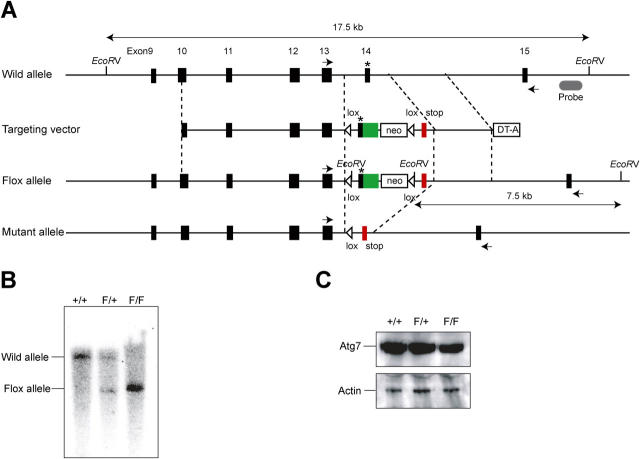
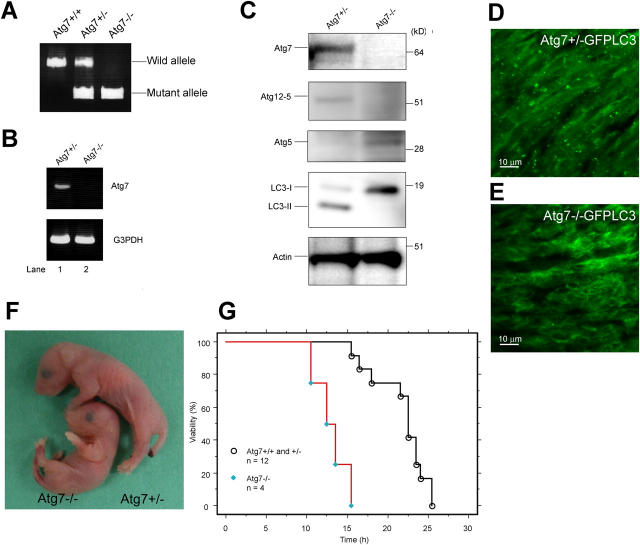
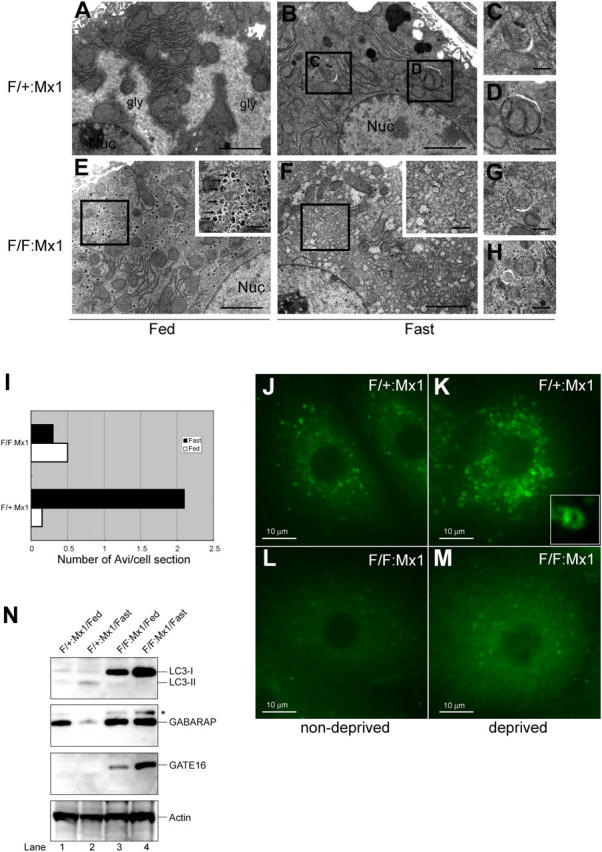
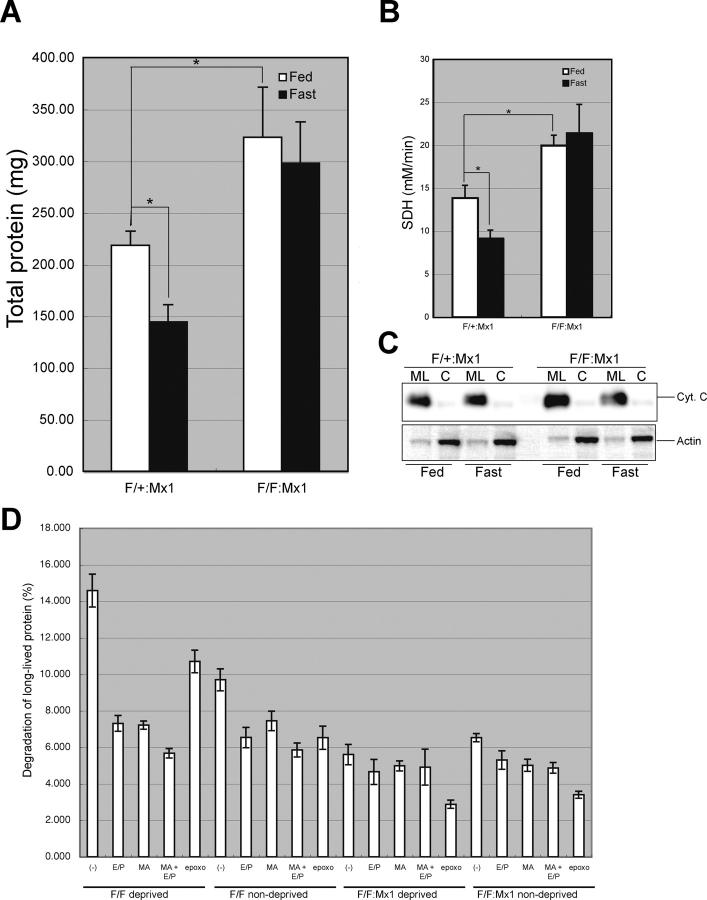
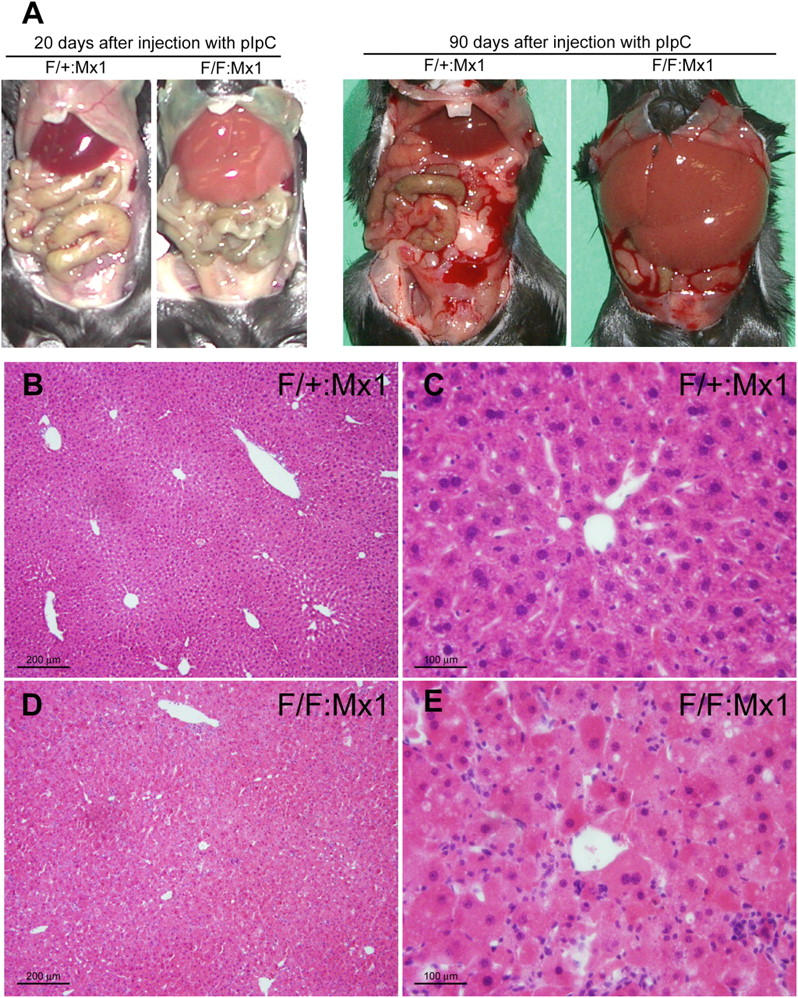
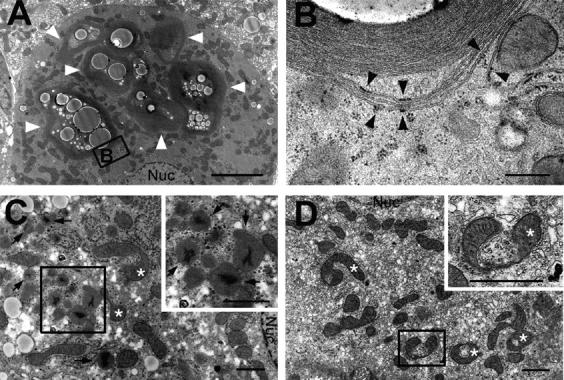
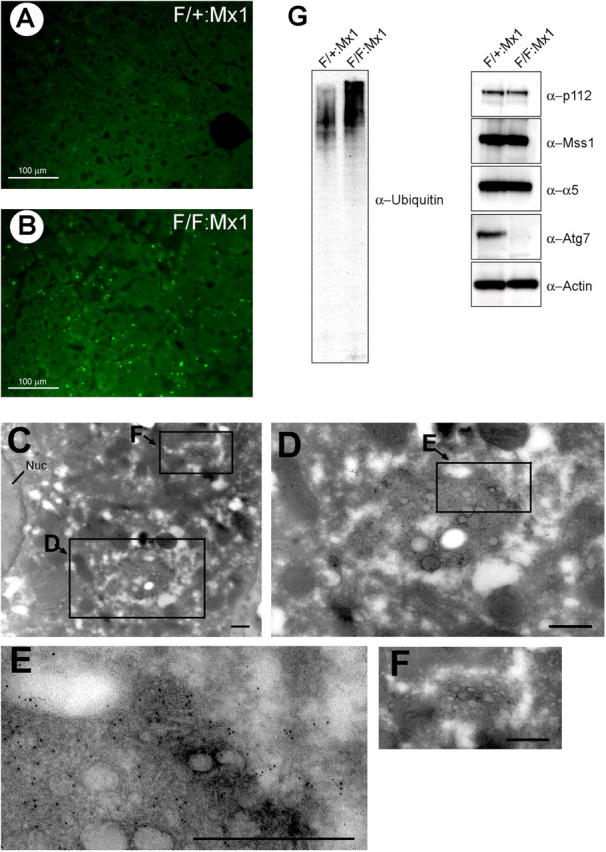
Autophagy is a membrane-trafficking mechanism that delivers cytoplasmic constituents into the lysosome/vacuole for bulk protein degradation. This mechanism is involved in the preservation of nutrients under starvation condition as well as the normal turnover of cytoplasmic component. Aberrant autophagy has been reported in several neurodegenerative disorders, hepatitis, and myopathies. Here, we generated conditional knockout mice of Atg7, an essential gene for autophagy in yeast. Atg7 was essential for ATG conjugation systems and autophagosome formation, amino acid supply in neonates, and starvation-induced bulk degradation of proteins and organelles in mice. Furthermore, Atg7 deficiency led to multiple cellular abnormalities, such as appearance of concentric membranous structure and deformed mitochondria, and accumulation of ubiquitin-positive aggregates. Our results indicate the important role of autophagy in starvation response and the quality control of proteins and organelles in quiescent cells.
Overview
The claims and statistics of this paper haven’t been checked yet.
Free: it reads the open-access text and checks the first 5 claims that cite a source we can check. Create a free account to check every claim.
Integrity signals
Registry
Cites
Statistics
Figures
Verification
Claims the paper makes
The claims and statistics of this paper haven’t been checked yet.
Free: it reads the open-access text and checks the first 5 claims that cite a source we can check. Create a free account to check every claim.
Claims other papers make about this one
Each is checked against this paper’s own text: does it say what the citing paper says it does?
The source backs part of the claim, not all of it — or backs it for a different population, condition or comparison.
In the citing paper
“whole‐body autophagy‐deficient mice undergo perinatal death due to their inability to withstand postnatal starvation (Kuma et al, 2004; Komatsu et al, 2005; Kuma et al, 2017).”
From Autophagy in major human diseases (2021) · cites this paper as Komatsu et al, 2005
Experimental — accuracy not yet measuredThe cited source says what the claim attributes to it.
In the citing paper
“Indeed, mice deficient for autophagy essential genes, such as ATG5, or ATG7, die soon after birth [220, 221].”
From The connection between the dynamic remodeling of the mitochondrial network and the regulation of muscle mass (2021) · cites this paper as [221]
The cited source says what the claim attributes to it.
In the citing paper
“The genetic suppression of basal autophagy in hepatocytes leads to hepatomegaly and exacerbated liver injury (Komatsu et al, 2005; Ni et al, 2012b; Cassidy et al, 2018).”
From Autophagy in major human diseases (2021) · cites this paper as Komatsu et al, 2005
The cited source says what the claim attributes to it.
In the citing paper
“mice with global KOs of the other autophagy related genes like Atg5 and Atg7 that die within a day after birth (Kuma et al., 2004; Komatsu et al., 2005; Cann et al., 2008).”
From Microtubule-associated protein 1 light chain 3B, (LC3B) is necessary to maintain lipid-mediated homeostasis in the retinal pigment epithelium (2018) · cites this paper as Komatsu et al., 2005
The cited source says what the claim attributes to it.
In the citing paper
“Atg7 encodes an E1-like enzyme essential in the ubiquitin-like conjugation systems required for autophagy, and Atg14 encodes a positive regulator of VPS34 (refs. 38,39).”
From Microglia clear neuron-released α-synuclein via selective autophagy and prevent neurodegeneration (2020) · cites this paper as [38]
2 more claims about this paper
Create a free account to see every claim other papers make about this one.
Self-check
Percentages, sums and reported differences re-computed from the paper’s own numbers.
The self-check needs the paper’s full text.
Citations
Cites
Repertoires of Autophagy in the Pathogenesis of Ocular Diseases
Li, Y.-J., Jiang, Q., Cao, G.-F., Yao, J., & Yan, B. (2015) · Cellular Physiology and Biochemistry · doi:10.1159/000373980 · Cited by 16,304
LC3, a mammalian homologue of yeast Apg8p, is localized in autophagosome membranes after processing.
Kabeya, Y., Mizushima, N., Ueno, T., Yamamoto, A., Kirisako, T., Noda, T., Kominami, E., Ohsumi, Y., & Yoshimori, T. (2000) · The EMBO Journal · doi:10.1093/emboj/19.21.5720 · Cited by 6,605 · cited 8×
“In mammals, there exist at least three Atg8 homologues that can all be activated by Atg7 (Tanida et al., 2001), GATE-16, GABARAP, and LC3 (Ohsumi, 2001), and they localize to the autophagosome (Kabeya et al., 2000, 2004).”
BackgroundMethodSelf-citationCui, C., Cui, J., Jin, F., Cui, Y., Li, R., Jiang, X., Tian, Y., Wang, K., Jiang, P., & Gao, J. (2017) · Cellular Physiology and Biochemistry · doi:10.1159/000479571 · Cited by 5,203
Levine, B., & Klionsky, D. J. (2004) · Developmental Cell · doi:10.1016/s1534-5807(04)00099-1 · Cited by 3,678 · cited 2×
“Furthermore, autophagy plays a role in cellular remodeling during differentiation and development of multicellular organisms, such as fly, worm, and slime mold (Levine and Klionsky, 2004), and cellular defense against invading streptococcus (Nakagawa et al.”
BackgroundAutophagy as a Regulated Pathway of Cellular Degradation
Klionsky, D. J., & Emr, S. D. (2000) · Science · doi:10.1126/science.290.5497.1717 · Cited by 3,608 · cited 1×
“In this lysosomal pathway, degradation of plasma membrane proteins and extracellular proteins is mediated by endocytosis, whereas degradation of cytoplasmic components is achieved through several pathways: macroautophagy, microautophagy, and chaperone-mediated autophagy (Seglen and Bohley, 1992; Dunn, 1994; Klionsky a…”
BackgroundAntimicrobial Autophagy: A Conserved Innate Immune Response in Drosophila
Moy, R. H., & Cherry, S. (2013) · Journal of Innate Immunity · doi:10.1159/000350326 · Cited by 3,539
Induction of autophagy and inhibition of tumorigenesis by beclin 1
Liang, X. H., Jackson, S., Seaman, M., Brown, K., Kempkes, B., Hibshoosh, H., & Levine, B. (1999) · Nature · doi:10.1038/45257 · Cited by 3,347 · cited 3×
“, low levels of autophagy were described in some malignant tumors (Liang et al., 1999).”
BackgroundThe role of autophagy during the early neonatal starvation period
Kuma, A., Hatano, M., Matsui, M., Yamamoto, A., Nakaya, H., Yoshimori, T., Ohsumi, Y., Tokuhisa, T., & Mizushima, N. (2004) · Nature · doi:10.1038/nature03029 · Cited by 2,865 · cited 4×
“We considered that Atg7 / mice could survive in utero by virtue of the nutrients supplied through the placenta but could not survive when the supply terminates after birth, as recently reported (Kuma et al., 2004).”
BackgroundSelf-citationAutophagy in Health and Disease: A Double-Edged Sword
Shintani, T., & Klionsky, D. J. (2004) · Science · doi:10.1126/science.1099993 · Cited by 2,534 · cited 2×
“In humans, autophagy has been implicated in several pathological conditions ( Shintani and Klionsky, 2004 ); e.g., low levels of autophagy were described in some malignant tumors (Liang et al., 1999).”
BackgroundPromotion of tumorigenesis by heterozygous disruption of the beclin 1 autophagy gene
Qu, X., Yu, J., Bhagat, G., Furuya, N., Hibshoosh, H., Troxel, A., Rosen, J., Eskelinen, E.-L., Mizushima, N., Ohsumi, Y., et al. (2003) · Journal of Clinical Investigation · doi:10.1172/jci20039 · Cited by 2,311 · cited 2×
“In contrast, elevated levels of autophagosome formation were reported in other human pathologies such as neurodegenerative diseases, myopathies, and liver injury (Mizushima et al., 2002; Perlmutter, 2002 ), and autophagy is implicated in the execution of cell death (Xue et al., 1999; Bursch, 2001).”
BackgroundSelf-citation
Research works printed but not linked: 1
- 1995, Eur. J. Cell Biol., 67, 308
Cited by
Items 1,001–1,024 of 1,024
TFEB-mediated lysosomal exocytosis alleviates high-fat diet–induced lipotoxicity in the kidney
Nakamura, J., Yamamoto, T., Takabatake, Y., Namba‐Hamano, T., Minami, S., Takahashi, A., Matsuda, J., Sakai, S., Yonishi, H., Maeda, S., et al. (2023) · JCI Insight · doi:10.1172/jci.insight.162498 · Cited by 60
“Komatsu (Juntendo University, Tokyo, Japan) (56); Fip200 WT and Fip200-KO MEF cell lines were provided by J.”
MethodFrom cancer metabolism to new biomarkers and drug targets
Chiaradonna, F., Moresco, R. M., Airoldi, C., Gaglio, D., Palorini, R., Nicotra, F., Messa, C., & Alberghina, L. (2011) · Biotechnology Advances · doi:10.1016/j.biotechadv.2011.07.006 · Cited by 72
Genetic analysis of the ATG7 gene promoter in sporadic Parkinson's disease
Chen, D., Pang, S., Feng, X., Huang, W., Hawley, R. G., & Yan, B. (2013) · Neuroscience Letters · doi:10.1016/j.neulet.2012.12.039 · Cited by 65
Development of a novel method for quantification of autophagic protein degradation by AHA labeling
Zhang, J., Wang, J., Ng, S., Lin, Q., & Shen, H.-M. (2014) · Autophagy · doi:10.4161/auto.28267 · Cited by 56
“Cell culture Atg5 wild-type (Atg5 WT), and Atg5 knockout (Atg5 KO) MEFs and MEFs with stably expressing GFP-LC3 were kindly provided by Dr N Mizushima.32,33 Atg7 WT and Atg7 KO MEFs were kindly provided Dr M Komatsu.34 All cell lines were maintained in DMEM (Sigma, D1152) containing 10% fetal bovine serum (HyClone, SV…”
MethodDrosophila Golgi membrane protein Ema promotes autophagosomal growth and function
Kim, S., Naylor, S. A., & DiAntonio, A. (2012) · Proceedings of the National Academy of Sciences · doi:10.1073/pnas.1120320109 · Cited by 53
“Mutation of the mouse Atg7, which exerts an E1-like activity for Atg8, results in small autophagosomes (30).”
BackgroundNonradioactive quantification of autophagic protein degradation with L-azidohomoalanine labeling
Wang, J., Zhang, J., Lee, Y. M., Ng, S., Shi, Y., Hua, Z.-C., Lin, Q., & Shen, H.-M. (2017) · Nature Protocols · doi:10.1038/nprot.2016.160 · Cited by 52
Drosophila Fip200 is an essential regulator of autophagy that attenuates both growth and aging
Kim, M., Park, H. L., Park, H.-W., Ro, S.-H., Nam, S. G., Reed, J. M., Guan, J.-L., & Lee, J. H. (2013) · Autophagy · doi:10.4161/auto.24811 · Cited by 51
“fip200-null mutant mice are lethal at embryonic stage due to heart failure and liver degeneration,(36) a phenomenon that is distinct from other autophagy-defective mouse strains that are usually born at a Mendelian ratio like atg5- or atg7-knockout mice.(42,43) On the other hand, neuron-specific fip200 mutant mice sho…”
BackgroundLeventhal, J. S., Ni, J., Osmond, M., Lee, K., Gusella, G. L., Salem, F., & Ross, M. J. (2016) · PLOS ONE · doi:10.1371/journal.pone.0150001 · Cited by 47
“Mice with floxed ATG7 alleles [23] were crossed with mice expressing Fig 1.”
BackgroundJang, S. Y., Yoon, B.-A., Shin, Y. K., Yun, S. H., Jo, Y. R., Choi, Y. Y., Ahn, M., Shin, T., Park, J. I., Kim, J. K., et al. (2017) · Glia · doi:10.1002/glia.23200 · Cited by 46
“The Atg7flox/flox mice [Atgflox, obtained from Dr. Masaaki Komatsu, Juntendo University School of Medicine (Komatsu et al., 2005)] and myelin protein zero-Cre transgenic mice [obtained from Dr. Laura Feltri, University of Buffalo (Feltri et al., 1999)] were crossed to produce the SCspecific Atg7…”
BackgroundMethodInfluentialWang, Q., Wu, S., Zhu, H., Ding, Y., Dai, X., Ouyang, C., Han, Y.-M., Xie, Z., & Zou, M.-H. (2017) · Autophagy · doi:10.1080/15548627.2016.1263776 · Cited by 45
Chapter 9 Biochemical and Morphological Detection of Inclusion Bodies in Autophagy‐Deficient Mice
(2009) · Methods in Enzymology · doi:10.1016/s0076-6879(08)04009-3 · Cited by 44
A novel Atg5-shRNA mouse model enables temporal control of Autophagy in vivo
Cassidy, L. D., Young, A. R., Pérez-Mancera, P. A., Nimmervoll, B., Jaulim, A., Chen, H.-C., McIntyre, D. J. O., Brais, R., Ricketts, T., Pacey, S., et al. (2018) · Autophagy · doi:10.1080/15548627.2018.1458172 · Cited by 40
“This coincides with a period of metabolic stress wherein neonates must adapt and engage the autophagic machinery to mobilise their own food stores [8,9].”
BackgroundDhingra, A., Bell, B. A., Peachey, N. S., Daniele, L. L., Reyes-Reveles, J., Sharp, R. C., Jun, B., Bazan, N. G., Sparrow, J. R., Kim, H. J., et al. (2018) · Frontiers in Cellular Neuroscience · doi:10.3389/fncel.2018.00351 · Cited by 41
“…studies using LC3B−/− mouse and our work: (1) LC3B−/− mice develop normally, reach adulthood, are fertile, in contrast to mice with global KOs of the other autophagy related genes like Atg5 and Atg7 that die within a day after birth (Kuma et al., 2004; Komatsu et al., 2005; Cann et al., 2008).”
Mechanisms of tolvaptan-induced toxicity in HepG2 cells
Wu, Y., Beland, F. A., Chen, S., Liu, F., Guo, L., & Fang, J.-L. (2015) · Biochemical Pharmacology · doi:10.1016/j.bcp.2015.03.015 · Cited by 41
Perusek, L., Sahu, B., Parmar, T., Maeno, H., Arai, E., Le, Y.-Z., Subauste, C. S., Chen, Y., Palczewski, K., & Maeda, A. (2015) · Journal of Biological Chemistry · doi:10.1074/jbc.m115.682310 · Cited by 35
“This finding was documented in other tissue-specific deficits of Atg7 including liver (7) and myocytes (41).”
BackgroundInfluentialTian, Z., Wang, C., Hu, C., Tian, Y., Liu, J., & Wang, X. (2014) · PLoS ONE · doi:10.1371/journal.pone.0100715 · Cited by 35
“ablation of Atg7 impairs macroautophagy [35,36].”
Muscle-specificity of age-related changes in markers of autophagy and sphingolipid metabolism
Russ, D. W., Boyd, I. M., McCoy, K. M., & McCorkle, K. W. (2015) · Biogerontology · doi:10.1007/s10522-015-9598-4 · Cited by 34
Posttranscriptional regulation of colonic epithelial repair by RNA binding protein IMP1/IGF2BP1
Chatterji, P., Williams, P. A., Whelan, K. A., Samper, F. C., Andres, S. F., Simon, L. A., Parham, L. R., Mizuno, R., Lundsmith, E. T., Lee, D. S., et al. (2019) · The EMBO Reports · doi:10.15252/embr.201847074 · Cited by 32
Wang, W., Chen, Z., Billiar, T. R., Stang, M. T., & Gao, W. (2013) · PLoS ONE · doi:10.1371/journal.pone.0074222 · Cited by 32
“Masaaki Komatsu, and have been described [10].”
Unveiling ferroptosis as a promising therapeutic avenue for colorectal cancer and colitis treatment
Kao, A. T., Cabanlong, C. V., Padilla, K., & Xue, X. (2024) · Acta Pharmaceutica Sinica B · doi:10.1016/j.apsb.2024.05.025 · Cited by 30
“Various studies have found that deletion of autophagic proteins led to intracellular accumulation of ubiquitinated proteins, suggesting the essential role of auto-phagy in protein turnover 124 .”
BackgroundTargeting autophagy as a therapeutic strategy against pancreatic cancer
Yamamoto, K., Iwadate, D., Kato, H., Nakai, Y., Tateishi, K., & Fujishiro, M. (2022) · Journal of Gastroenterology · doi:10.1007/s00535-022-01889-1 · Cited by 29
Demine, S., Tejerina, S., Bihin, B., Thiry, M., Reddy, N., Renard, P., Raes, M., Jadot, M., & Arnould, T. (2018) · Journal of Cellular Physiology · doi:10.1002/jcp.25994 · Cited by 21
“autophagosome formation (Hanada et al., 2007; Komatsu et al., 2005; Tanida, Tanida-Miyake, Ueno, & Kominami, 2001), we next studied the effect of Atg5 and/or Atg7 silencing on the glycerol”
BackgroundLuhr, M., Szalai, P., & Engedal, N. (2018) · Journal of Visualized Experiments · doi:10.3791/57971 · Cited by 7
López Giuliani, A. C., Hernández, E., Tohmé, M. J., Taisne, C., Roldán, J. S., García Samartino, C., Lussignol, M., Codogno, P., Colombo, M. I., Esclatine, A., et al. (2020) · Frontiers in Cellular and Infection Microbiology · doi:10.3389/fcimb.2020.00474 · Cited by 3
“…and tissues such as mouse embryo fibroblasts (Jin et al., 2015), the kidney proximal tubule (Kimura et al., 2011; Orhon et al., 2016b), the liver (Komatsu et al., 2005; Jin et al., 2015) and the Drosophila intestine cell size (Chang et al., 2013) strongly suggesting that the function of…”
Background
Metadata
- Authors
- Komatsu, M., Waguri, S., Ueno, T., Iwata, J., Murata, S., Tanida, I., Ezaki, J., Mizushima, N., Ohsumi, Y., Uchiyama, Y., Kominami, E., Tanaka, K., & Chiba, T.
- Affiliations
- Juntendo University (JP)
- The University of Osaka (JP)
- Tokyo Metropolitan Institute of Medical Science (JP)
- National Institute for Basic Biology (JP)
- Corresponding author
- Chiba, Tomoki
- ORCID
- Venue
- The Journal of Cell Biology
- Publisher
- Rockefeller University Press
- Published
- 2005-05-02
- Volume
- 169
- Issue
- 3
- Pages
- 425-434
- ISSN
- 0021-9525 (ISSN-L)
- 1540-8140
- PMC
- PMC2171928
- OpenAlex
- W2146887271
- Cited by
- 2,331
- References
- 49
- Citations by year
- 2026: 43 · 2025: 91 · 2024: 82 · 2023: 96 · 2022: 112 · 2021: 123 · 2020: 138 · 2019: 135 · 2018: 128 · 2017: 134 · 2016: 160 · 2015: 156 · 2014: 148 · 2013: 154 · 2012: 127
- FWCI
- 44.94
- Type
- journal article
- Language
- en
- Open access
- bronze
- doi.org
- Locations
- The Journal of Cell Biology (publishedVersion)
- PubMed Central (publishedVersion, cc-by-nc-sa)
- PubMed (publishedVersion)
- Funders
- Ministry of Education, Culture, Sports, Science and Technology
- Topics
- Life Sciences › Biochemistry, Genetics and Molecular Biology › Cell Biology › Autophagy in Disease and Therapy
- Life Sciences › Biochemistry, Genetics and Molecular Biology › Molecular Biology › Ubiquitin and proteasome pathways
- Life Sciences › Biochemistry, Genetics and Molecular Biology › Aging › Genetics, Aging, and Longevity in Model Organisms
- Keywords
- autophagy, ATG7, starvation response, autophagosome formation, protein quality control, organelle degradation, mitochondrial abnormalities, lysosomes, conditional knockout mice, neurodegenerative diseases
- MeSH terms
- Autophagy-Related Protein 7, Animals, Animals, Newborn, Autophagy, Cell Line, Inclusion Bodies, Hepatomegaly, Intracellular Membranes, Liver, Microtubule-Associated Proteins, Mitochondria, Phenotype, Starvation, Organelles, Mice, Knockout, Hepatocytes, Ubiquitin, Saccharomyces cerevisiae Proteins, Mice
About these checks
Registry, retraction, Cites and statistics results are computed, not judged, with one exception: a printed reference that no index lists is read once by a model before it counts as a citation error. Claims are extracted by a model and kept only when their quote appears verbatim in the text; each cited source is then checked, with a model’s help, for whether it says what the claim relies on. Those verdicts can be wrong — read the claim’s quote and the cited source before relying on one.
Statistics and arithmetic are recomputed, not judged.
Confidence bands are shown only for fields calibrated on our annotated test set. None is calibrated yet, so no band is shown.
What counts as a claim ›How we measure confidence ›How we check this ›
Are you an author, or do you see a problem with this page? Request a review
Data sources
Bibliographic data: Semantic Scholar, OpenAlex, Crossref.
Contains information from the Semantic Scholar Academic Graph Datasets, made available under the ODC Attribution License (ODC-BY 1.0).
Semantic Scholar’s data is described in: Kinney, R., et al. (2023). The Semantic Scholar Open Data Platform. arXiv:2301.10140.
