

The DOI matches its Crossref record; 55 of the 58 references it cites were found in a registry or an index.
Gender Differences in Alzheimer Disease: Brain Atrophy, Histopathology Burden, and Cognition
Open accessAbstract
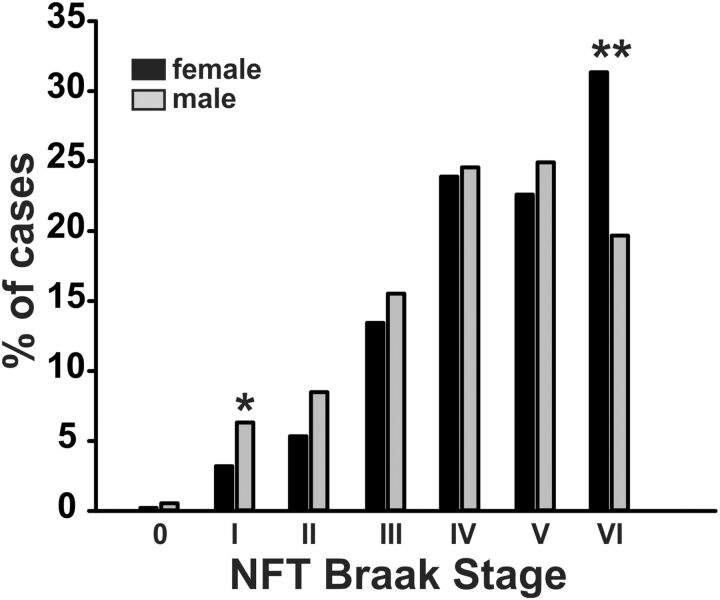
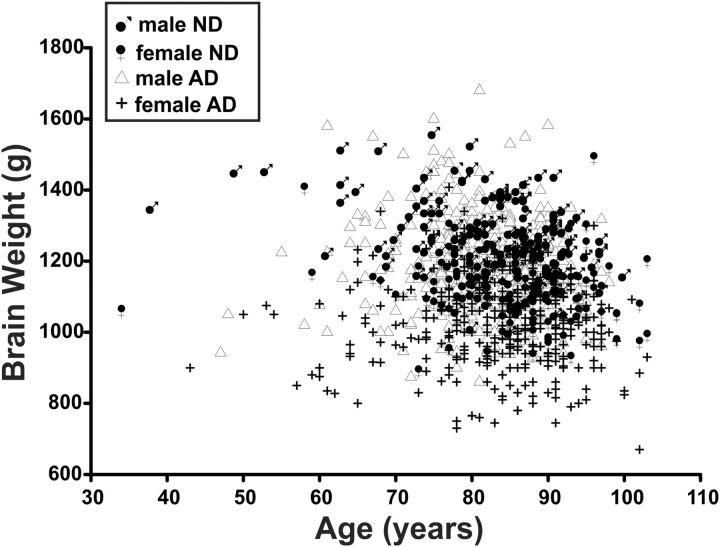
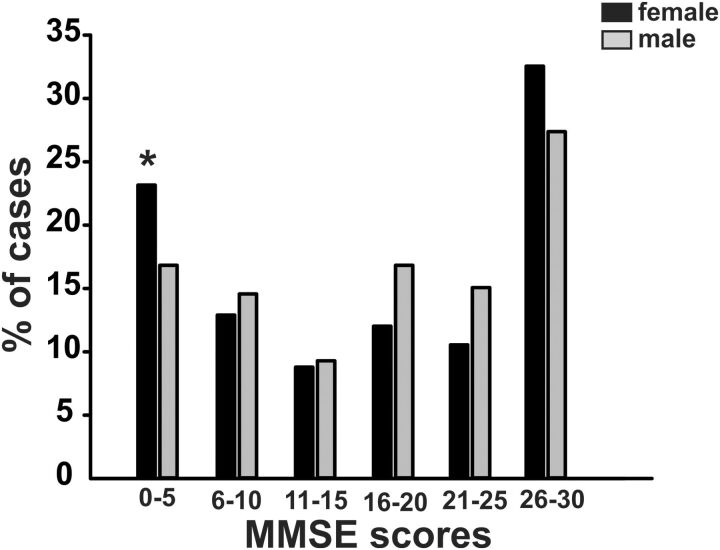
Multiple studies suggest that females are affected by Alzheimer disease (AD) more severely and more frequently than males. Other studies have failed to confirm this and the issue remains controversial. Difficulties include differences in study methods and male versus female life expectancy. Another element of uncertainty is that the majority of studies have lacked neuropathological confirmation of the AD diagnosis. We compared clinical and pathological AD severity in 1028 deceased subjects with full neuropathological examinations. The age of dementia onset did not differ by gender but females were more likely to proceed to very severe clinical and pathological disease, with significantly higher proportions having a Mini-Mental State Examination score of 5 or less and Braak stage VI neurofibrillary degeneration. Median neuritic plaque densities were similar in females and males with AD but females had significantly greater tangle density scores. In addition, we found that AD-control brain weight differences were significantly greater for females, even after adjustment for age, disease duration, and comorbid conditions. These findings suggest that when they are affected by AD, females progress more often to severe cognitive dysfunction, due to more severe neurofibrillary degeneration, and greater loss of brain parenchyma.
Overview
The claims and statistics of this paper haven’t been checked yet.
Run the check — free, no account needed. It reads the open-access text and checks the sources it cites.
Integrity signals
Registry
Cites
Statistics
Figures
Verification
Claims the paper makes
The claims and statistics of this paper haven’t been checked yet.
Run the check — free, no account needed. It reads the open-access text and checks the sources it cites.
Claims other papers make about this one
Each is checked against this paper’s own text: does it say what the citing paper says it does?
The cited source says what the claim attributes to it.
In the citing paper
“Recent studies suggest that women develop greater neurofibrillary degeneration, brain parenchymal loss, and cognitive decline.52,53,54”
From Sex differences in cognitive decline among US adults (2021) · cites this paper as [53]
Self-check
Percentages, sums and reported differences re-computed from the paper’s own numbers.
The self-check needs the paper’s full text.
Citations
Cites
McKhann, G. M., Knopman, D. S., Chertkow, H., Hyman, B. T., Jack, C. R., Kawas, C. H., Klunk, W. E., Koroshetz, W. J., Manly, J. J., Mayeux, R., et al. (2011) · Alzheimer's & Dementia · doi:10.1016/j.jalz.2011.03.005 · Cited by 18,657 · cited 1×
“Clinically defined measures used in this study included age at cognitive symptom onset and cognitive symptom duration, the latter defined as the number of years between cognitive symptom onset and death (14).”
MethodNeuropathological stageing of Alzheimer-related changes.
Braak, H., & Braak, E. (1991) · Acta Neuropathologica · doi:10.1007/bf00308809 · Cited by 16,123 · cited 13×
“Factors Affecting Alzheimer Disease-Control Brain Weight Difference, Multivariable Analysis Variable Complete Equation OR; 95% CI; Gender Values OR; 95% CI; p Value p Value Gender 1.3; 1.1–1.6; 0.01 0.6; 0.5–0.8; 0.001 Gender þ Braak stage 0.2; 0.4–0.4; <0.001 0.”
MethodInfluentialMirra, S. S., Heyman, A., McKeel, D., Sumi, S. M., Crain, B. J., Brownlee, L. M., Vogel, F. S., Hughes, J. P., Belle, G. V., Berg, L., et al. (1991) · Neurology · doi:10.1212/wnl.41.4.479 · Cited by 4,961 · cited 1×
“Neuritic plaque and neurofibrillary tangle densities were graded blindly as recommended by The Consortium to Establish a Registry for Alzheimer’s Disease (CERAD) with separate semiquantitative density estimates of none, sparse, moderate, or frequent (24).”
MethodMontine, T. J., Phelps, C. H., Beach, T. G., Bigio, E. H., Cairns, N. J., Dickson, D. W., Duyckaerts, C., Frosch, M. P., Masliah, E., Mirra, S. S., et al. (2012) · Acta Neuropathologica · doi:10.1007/s00401-011-0910-3 · Cited by 2,894
Self-citationα-Synuclein is phosphorylated in synucleinopathy lesions
Fujiwara, H., Hasegawa, M., Dohmae, N., Kawashima, A., Masliah, E., Goldberg, M. S., Shen, J., Takio, K., & Iwatsubo, T. (2002) · Nature Cell Biology · doi:10.1038/ncb748 · Cited by 2,174
Policy: NIH to balance sex in cell and animal studies
Clayton, J. A., & Collins, F. S. (2014) · Nature · doi:10.1038/509282a · Cited by 1,816 · cited 1×
“In response to this, the United States Congress approved the Revitalization Act in the early 1990s, requiring the inclusion of women in National Institutes of Health-funded clinical research (1).”
BackgroundBeach, T. G., Monsell, S. E., Phillips, L. E., & Kukull, W. (2012) · Journal of Neuropathology & Experimental Neurology · doi:10.1097/nen.0b013e31824b211b · Cited by 1,103 · cited 1×
“The accuracy of the clinical diagnosis of AD is low enough, with sensitivity ranging from 71% to 87% and specificity ranging from 44% to 71% (37), to increase the likelihood of false negative findings in studies lacking neuropathological diagnosis confirmation.”
BackgroundSelf-citationConsensus Recommendations for the Postmortem Diagnosis of Alzheimer’s Disease
(1997) · Neurobiology of Aging · doi:10.1016/s0197-4580(97)00057-2 · Cited by 981
Dementia and Alzheimer Disease Incidence: A Prospective Cohort Study
Kukull, W. A., Higdon, R., Bowen, J. D., McCormick, W. C., Teri, L., Schellenberg, G. D., van Belle, G., Jolley, L., & Larson, E. B. (2002) · Archives of Neurology · doi:10.1001/archneur.59.11.1737 · Cited by 806 · cited 1×
“Furthermore, Kukull et al (8), Rocca et al (9), and Knopman et al (33) did not find any incidence differences between males and females.”
BackgroundPhosphorylated TDP‐43 in frontotemporal lobar degeneration and amyotrophic lateral sclerosis
Hasegawa, M., Arai, T., Nonaka, T., Kametani, F., Yoshida, M., Hashizume, Y., Beach, T. G., Buratti, E., Baralle, F., Morita, M., et al. (2008) · Annals of Neurology · doi:10.1002/ana.21425 · Cited by 777
Self-citationRates and risk factors for dementia and Alzheimer’s disease: Results from EURODEM pooled analyses
Launer, L. J., Andersen, K., Dewey, M. E., Letenneur, L., Ott, A., Amaducci, L. A., Brayne, C., Copeland, J. R. M., Dartigues, J.-F., Kragh-Sorensen, P., et al. (1999) · Neurology · doi:10.1212/wnl.52.1.78 · Cited by 758
Gender differences in the incidence of AD and vascular dementia: The EURODEM Studies
Andersen, K., Launer, L. J., Dewey, M. E., Letenneur, L., Ott, A., Copeland, J. R. M., Dartigues, J.-F., Kragh–Sorensen, P., Baldereschi, M., Brayne, C., et al. (1999) · Neurology · doi:10.1212/wnl.53.9.1992 · Cited by 650
Sex Differences in the Clinical Manifestations of Alzheimer Disease Pathology
Barnes, L. L., Wilson, R. S., Bienias, J. L., Schneider, J. A., Evans, D. A., & Bennett, D. A. (2005) · Archives of General Psychiatry · doi:10.1001/archpsyc.62.6.685 · Cited by 643 · cited 3×
“Barnes et al (6, 7) reported no gender differences in the rate of cognitive decline but suggest that AD pathology is more likely to result in cognitive dysfunction in females than in males.”
BackgroundDemonstration of amyloid deposits and neurofibrillary changes in whole brain sections
Braak, H., & Braak, E. (1991) · Brain Pathology · doi:10.1111/j.1750-3639.1991.tb00661.x · Cited by 598 · cited 14×
“Factors Affecting Alzheimer Disease-Control Brain Weight Difference, Multivariable Analysis Variable Complete Equation OR; 95% CI; Gender Values OR; 95% CI; p Value p Value Gender 1.3; 1.1–1.6; 0.01 0.6; 0.5–0.8; 0.001 Gender þ Braak stage 0.2; 0.4–0.4; <0.001 0.”
MethodInfluentialUtility of the Apolipoprotein E Genotype in the Diagnosis of Alzheimer's Disease
Mayeux, R., Saunders, A. M., Shea, S., Mirra, S., Evans, D., Roses, A. D., Hyman, B. T., Crain, B., Tang, M.-X., & Phelps, C. H. (1998) · New England Journal of Medicine · doi:10.1056/nejm199802193380804 · Cited by 547
Sex differences in cognitive impairment and Alzheimer’s disease
Li, R., & Singh, M. (2014) · Frontiers in Neuroendocrinology · doi:10.1016/j.yfrne.2014.01.002 · Cited by 527 · cited 1×
“Many studies have reported that females have a higher risk of developing AD (2–6), and that they are more severely affected (2, 6, 7).”
BackgroundGender and incidence of dementia in the Framingham Heart Study from mid‐adult life
Chêne, G., Beiser, A., Au, R., Preis, S. R., Wolf, P. A., Dufouil, C., & Seshadri, S. (2015) · Alzheimer's & Dementia · doi:10.1016/j.jalz.2013.10.005 · Cited by 499
Age-specific incidence rates of Alzheimer’s disease: The Baltimore Longitudinal Study of Aging
Kawas, C., Gray, S., Brookmeyer, R., Fozard, J., & Zonderman, A. (2000) · Neurology · doi:10.1212/wnl.54.11.2072 · Cited by 472
Incidence of dementia and probable Alzheimer's disease in a general population: The Framingham Study
Bachman, D. L., Wolf, P. A., Linn, R. T., Knoefel, J. E., Cobb, J. L., Belanger, A. J., White, L. R., & D'Agostino, R. B. (1993) · Neurology · doi:10.1212/wnl.43.3_part_1.515 · Cited by 470
Incidence of dementia: does gender make a difference?
Ruitenberg, A., Ott, A., van Swieten, J. C., Hofman, A., & Breteler, M. M. B. (2001) · Neurobiology of Aging · doi:10.1016/s0197-4580(01)00231-7 · Cited by 467 · cited 1×
“Several studies suggest that females are at higher risk of developing AD (29–31), whereas other analyses, such as that done in the Rotterdam study, propose that only the very oldest (>90 years) females have a higher risk (32).”
ResultArizona Study of Aging and Neurodegenerative Disorders and Brain and Body Donation Program
Beach, T. G., Adler, C. H., Sue, L. I., Serrano, G., Shill, H. A., Walker, D. G., Lue, L., Roher, A. E., Dugger, B. N., Maarouf, C., et al. (2015) · Neuropathology · doi:10.1111/neup.12189 · Cited by 460 · cited 2×
“Both sets were stained with hematoxylin and eosin; the former set was also stained for senile plaques, neurofibrillary changes, and other neuronal and glial tauopathies using thioflavin S, Gallyas and Campbell-Switzer methods (15, 17, 18).”
MethodSelf-citationIncidence of AD may decline in the early 90s for men, later for women
Miech, R. A., Breitner, J. C. S., Zandi, P. P., Khachaturian, A. S., Anthony, J. C., & Mayer, L. S. (2002) · Neurology · doi:10.1212/wnl.58.2.209 · Cited by 339
Is the Risk of Developing Alzheimer's Disease Greater for Women than for Men?
Hebert, L. E., Scherr, P. A., McCann, J. J., Beckett, L. A., & Evans, D. A. (2001) · American Journal of Epidemiology · doi:10.1093/aje/153.2.132 · Cited by 331
A 5-year longitudinal study of the Mini-Mental State Examination in normal aging.
Jacqmin-Gadda, H., Fabrigoule, C., Commenges, D., & Dartigues, J. (1997) · American Journal of Epidemiology · doi:10.1093/oxfordjournals.aje.a009137 · Cited by 293
The Sun Health Research Institute Brain Donation Program: Description and Eexperience, 1987–2007
Beach, T. G., Sue, L. I., Walker, D. G., Roher, A. E., Lue, L., Vedders, L. J., Connor, D. J., Sabbagh, M. N., & Rogers, J. (2008) · Cell and Tissue Banking · doi:10.1007/s10561-008-9067-2 · Cited by 254 · cited 1×
“The complete neuropathological examination was performed using standard AZSAND methods (15, 16).”
MethodSelf-citationA quantitative study of cerebral atrophy in old age and senile dementia
Hubbard, B. M., & Anderson, J. M. (1981) · Journal of the Neurological Sciences · doi:10.1016/0022-510x(81)90048-4 · Cited by 223
Ten-year incidence of dementia in a rural elderly US community population: the MoVIES Project
Ganguli, M., Dodge, H. H., Chen, P., Belle, S., & DeKosky, S. T. (2000) · Neurology · doi:10.1212/wnl.54.5.1109 · Cited by 196
Evaluation of α-synuclein immunohistochemical methods used by invited experts
Beach, T. G., White, C. L., Hamilton, R. L., Duda, J. E., Iwatsubo, T., Dickson, D. W., Leverenz, J. B., Roncaroli, F., Buttini, M., Hladik, C. L., et al. (2008) · Acta Neuropathologica · doi:10.1007/s00401-008-0409-8 · Cited by 182
Self-citationGender, cognitive decline, and risk of AD in older persons
Barnes, L. L., Wilson, R. S., Schneider, J. A., Bienias, J. L., Evans, D. A., & Bennett, D. A. (2003) · Neurology · doi:10.1212/01.wnl.0000065892.67099.2a · Cited by 173 · cited 3×
“Barnes et al (6, 7) reported no gender differences in the rate of cognitive decline but suggest that AD pathology is more likely to result in cognitive dysfunction in females than in males.”
BackgroundResultThe Prevalence and 3-Year Incidence of Dementia in Older Black and White Community Residents
Fillenbaum, G. G., Heyman, A., Huber, M., Woodbury, M. A., Leiss, J. K., Schmader, K. E., Bohannon, A., & Trapp-Moen, B. (1998) · Journal of Clinical Epidemiology · doi:10.1016/s0895-4356(98)00024-9 · Cited by 163
Rocca, W. A., Cha, R. H., Waring, S. C., & Kokmen, E. (1998) · American Journal of Epidemiology · doi:10.1093/oxfordjournals.aje.a009560 · Cited by 160 · cited 1×
“Furthermore, Kukull et al (8), Rocca et al (9), and Knopman et al (33) did not find any incidence differences between males and females.”
BackgroundWalker, D. G., Lue, L., Adler, C. H., Shill, H. A., Caviness, J. N., Sabbagh, M. N., Akiyama, H., Serrano, G. E., Sue, L. I., & Beach, T. G. (2012) · Experimental Neurology · doi:10.1016/j.expneurol.2012.11.020 · Cited by 153
Self-citationCoordinated analysis of age, sex, and education effects on change in MMSE scores.
Piccinin, A., Muniz-Terrera, G., Clouston, S. A. P., Reynolds, C., Thorvaldsson, V., Deary, I., Deeg, D., Johansson, B., Mackinnon, A., Spiro, A., et al. (2013) · The journals of gerontology. Series B, Psychological sciences and social sciences · doi:10.1093/geronb/gbs077 · Cited by 129
Cognitive decline in an elderly population – a two wave study of change
Brayne, C., Gill, C., Paykel, E., Huppert, F., & O'Connor, D. T. (1995) · Psychological Medicine · doi:10.1017/s0033291700034930 · Cited by 127
Is synaptic loss a unique hallmark of Alzheimer’s disease?
Scheff, S. W., Neltner, J. H., & Nelson, P. T. (2014) · Biochemical Pharmacology · doi:10.1016/j.bcp.2013.12.028 · Cited by 118
Gender and age modify the association between APOE and AD-related neuropathology
Ghebremedhin, E., Schultz, C., Thal, D. R., Rüb, U., Ohm, T. G., Braak, E., & Braak, H. (2001) · Neurology · doi:10.1212/wnl.56.12.1696 · Cited by 108
Obi, K., Akiyama, H., Kondo, H., Shimomura, Y., Hasegawa, M., Iwatsubo, T., Mizuno, Y., & Mochizuki, H. (2007) · Experimental Neurology · doi:10.1016/j.expneurol.2007.11.019 · Cited by 93
Zhu, L., Viitanen, M., Guo, Z.-C., Winblad, B., & Fratiglioni, L. (1998) · Journal of Clinical Epidemiology · doi:10.1016/s0895-4356(98)00003-1 · Cited by 83
Protective Effect of Chronic NSAID Use on Cognitive Decline in Older Persons
Rozzini, R., Ferrucci, L., Losonczy, K., Havlik, R. J., & Guralnik, J. M. (1996) · Journal of the American Geriatrics Society · doi:10.1111/j.1532-5415.1996.tb02932.x · Cited by 71
A DESCRIPTIVE STUDY OF NEURITIC PLAQUES AND NEUROFIBRILLARY TANGLES IN AN AUTOPSY POPULATION
DeWOLFE MILLER, F., HICKS, S. P., D'AMATO, C. J., & LANDIS, J. R. (1984) · American Journal of Epidemiology · doi:10.1093/oxfordjournals.aje.a113897 · Cited by 70
Sandberg, G., Stewart, W., Smialek, J., & Troncoso, J. C. (2001) · Neurobiology of Aging · doi:10.1016/s0197-4580(00)00236-0 · Cited by 68
Matthews, F., Marioni, R., & Brayne, C. (2012) · BMC Geriatrics · doi:10.1186/1471-2318-12-45 · Cited by 67
Social Relationships in Later Life: A Review of the Research Literature
Phillipson, C. (1997) · International Journal of Geriatric Psychiatry · doi:10.1002/(sici)1099-1166(199705)12:5 · Cited by 66
Bondareff, W. (1983) · The Lancet · doi:10.1016/s0140-6736(83)92396-6 · Cited by 63
Prince, M. J., Lewis, G., Bird, A. S., Blizard, R., & MANN, A. H. (1996) · Psychological Medicine · doi:10.1017/s0033291700035637 · Cited by 61
Sex Difference in Brain Atrophy During Aging: A Quantitative Study with Computed Tomography
Hatazawa, J., Ito, M., Yamaura, H., & Matsuzawa, T. (1982) · Journal of The American Geriatrics Society · doi:10.1111/j.1532-5415.1982.tb07092.x · Cited by 47
APOE E4 is a determinant for Alzheimer type pathology in progressive supranuclear palsy
Tsuboi, Y., Josephs, K. A., Cookson, N., & Dickson, D. W. (2003) · Neurology · doi:10.1212/01.wnl.0000044340.37138.a9 · Cited by 45
Sex-Based Memory Advantages and Cognitive Aging: A Challenge to the Cognitive Reserve Construct?
Caselli, R. J., Dueck, A. C., Locke, D. E. C., Baxter, L. C., Woodruff, B. K., & Geda, Y. E. (2015) · Journal of the International Neuropsychological Society · doi:10.1017/s1355617715000016 · Cited by 44
Self-citationSalehi, A., Martinez, V., & Swaab, D. F. (1998) · Neurobiology of Aging · doi:10.1016/s0197-4580(98)00106-7 · Cited by 39 · cited 1×
“Similarly, Salehi et al (48) found gender differences in AD-related pathology, but others reported no pathological differences between women and men (49–51).”
BackgroundThe healthy control subject in psychiatric research: impulsiveness and volunteer bias
Gustavsson, J. P., Åsberg, M., & Schilling, O. (1997) · Acta Psychiatrica Scandinavica · doi:10.1111/j.1600-0447.1997.tb09924.x · Cited by 38
Frequency, distribution, and risk factors for Alzheimer's disease.
Rocca, W. (1994) · The Nursing Clinics of North America · doi:10.1016/s0029-6465(22)02715-3 · Cited by 21
β-Amyloidosis and neurodegeneration in Alzheimer disease
Knopman, D. S. (2014) · Neurology · doi:10.1212/wnl.0000000000000438 · Cited by 17
Characteristics of research volunteers for inpatient cocaine studies: focus on selection bias.
Sofuoglu, M., Dudish-Poulsen, S., Nicodemus, K. K., Babb, D. A., & Hatsukami, D. K. (2000) · Addictive Behaviours · doi:10.1016/s0306-4603(00)00064-2 · Cited by 13
An Examination of Bias in Volunteer Subject Selection: Findings from an In-Depth Child Abuse Study
Mandel, F. S., Weiner, M., Kaplan, S., Pelcovitz, D., & Labruna, V. (2000) · Journal of Traumatic Stress · doi:10.1023/a:1007772931154 · Cited by 11
Sex Difference in Brain Atrophy During Aging
Mintz, J., & Jarvik, L. (1983) · Journal of The American Geriatrics Society · doi:10.1111/j.1532-5415.1983.tb04863.x · Cited by 6
Research works printed but not linked: 2
- Gallyas, 1981, An argyrophil III method for the demonstration of fibrous neuroglia, Acta Morphol Acad Sci Hung, 29, 185
- Hyman, 1997, Consensus recommendations for the postmortem diagnosis of Alzheimer disease from the National Institute on Aging and the Reagan Institute Working Group on diagnostic criteria for the neuropathological assessment of Alzheimer disease, J Neuropathol Exp Neurol, 56, 1095, 10.1097/00005072-199710000-00002 · DOI · Paper page
Cited by
Sorted by citations
Understanding the impact of sex and gender in Alzheimer’s disease: A call to action
Nebel, R. A., Aggarwal, N. T., Barnes, L. L., Gallagher, A., Goldstein, J. M., Kantarci, K., Mallampalli, M. P., Mormino, E. C., Scott, L., Yu, W. H., et al. (2018) · Alzheimer's & Dementia · doi:10.1016/j.jalz.2018.04.008 · Cited by 839
“[119] Filon JR, Intorcia AJ, Sue LI, Vazquez Arreola E, Wilson J, Davis KJ, et al.”
Sex differences in cognitive decline among US adults
Levine, D. A., Gross, A. L., Briceño, E. M., Tilton, N., Giordani, B. J., Sussman, J. B., Hayward, R. A., Burke, J. F., Hingtgen, S., Elkind, M. S. V., et al. (2021) · JAMA Network Open · doi:10.1001/jamanetworkopen.2021.0169 · Cited by 440
“9%) (median [IQR] age, 58 [51-67] years at first cognitive assessment; 3636 [25.”
InfluentialSuárez‐Calvet, M., Karikari, T. K., Ashton, N. J., Lantero Rodríguez, J., Milà‐Alomà, M., Gispert, J. D., Salvadó, G., Minguillon, C., Fauria, K., Shekari, M., et al. (2020) · EMBO Molecular Medicine · doi:10.15252/emmm.202012921 · Cited by 401
“An unexpected and interesting finding was that CSF N-p-tau217 was slightly higher in women than men, which is consistent with studies that show that women have higher levels of tau pathology in pathological and PET studies (Filon et al, 2016; Buckley et al, 2019).”
ResultSex differences in Alzheimer’s disease and common neuropathologies of aging
Oveisgharan, S., Arvanitakis, Z., Yu, L., Farfel, J., Schneider, J. A., & Bennett, D. A. (2018) · Acta Neuropathologica · doi:10.1007/s00401-018-1920-1 · Cited by 330
Sex differences in Alzheimer's disease
Laws, K. R., Irvine, K., & Gale, T. M. (2018) · Current Opinion in Psychiatry · doi:10.1097/yco.0000000000000401 · Cited by 216
“Furthermore, neuroimaging [5 && ] and postmortem [6] studies point to potentially different underlying Alzheimer’s disease pathology between the sexes.”
Background
Metadata
- Authors
- Filon, J. R., Intorcia, A. J., Sue, L. I., Vazquez Arreola, E., Wilson, J., Davis, K. J., Sabbagh, M. N., Belden, C. M., Caselli, R. J., Adler, C. H., Woodruff, B. K., Rapscak, S. Z., Ahern, G. L., Burke, A. D., Jacobson, S., Shill, H. A., Driver-Dunckley, E., Chen, K., Reiman, E. M., Beach, T. G., & Serrano, G. E.
- Affiliations
- University of Arizona (US)
- Corresponding author
- Serrano, Geidy E.
- ORCID
- Venue
- Journal of Neuropathology & Experimental Neurology
- Publisher
- Oxford University Press (OUP)
- Published
- 2016-06-11
- Volume
- 75
- Issue
- 8
- Pages
- 748-754
- ISSN
- 0022-3069 (ISSN-L)
- 1554-6578
- PMC
- PMC7299435
- OpenAlex
- W2418237732
- Cited by
- 143
- References
- 58
- Citations by year
- 2026: 20 · 2025: 26 · 2024: 13 · 2023: 20 · 2022: 21 · 2021: 19 · 2020: 6 · 2019: 9 · 2018: 6 · 2017: 2 · 2016: 1
- FWCI
- 5.33
- Type
- journal article
- Language
- en
- Open access
- hybrid
- doi.org
- Licence
- Locations
- Journal of Neuropathology & Experimental Neurology (publishedVersion, cc-by-nc)
- PubMed Central (publishedVersion, cc-by-nc)
- PubMed (publishedVersion)
- HighWire Press Open Archive (submittedVersion)
- Funders
- NIH
- National Institute of Neurological Disorders and Stroke (U24 NS072026)
- National Institute on Aging (P30 AG19610)
- Arizona Department of Health Services (211002)
- Arizona Biomedical Research Commission (4001, 0011, 05-901, 1001)
- Michael J. Fox Foundation for Parkinson's Research
- Topics
- Health Sciences › Medicine › Psychiatry and Mental health › Dementia and Cognitive Impairment Research
- Life Sciences › Neuroscience › Cellular and Molecular Neuroscience › Alzheimer's disease research and treatments
- Life Sciences › Neuroscience › Neurology › Neuroinflammation and Neurodegeneration Mechanisms
- Keywords
- Alzheimer's disease, sex differences, brain atrophy, neurofibrillary tangles, Braak stages, neuritic plaques, cognitive impairment, dementia severity, neuropathology, brain weight, Mini-Mental State Examination
About these checks
Registry, retraction, Cites and statistics results are computed, not judged, with one exception: a printed reference that no index lists is read once by a model before it counts as a citation error. Claims are extracted by a model and kept only when their quote appears verbatim in the text; each cited source is then checked, with a model’s help, for whether it says what the claim relies on. Those verdicts can be wrong — read the claim’s quote and the cited source before relying on one.
Statistics and arithmetic are recomputed, not judged.
Confidence bands are shown only for fields calibrated on our annotated test set. None is calibrated yet, so no band is shown.
What counts as a claim ›How we measure confidence ›How we check this ›
Are you an author, or do you see a problem with this page? Request a review
