

The DOI matches its Crossref record; 4 of the 4 references it cites were found in a registry or an index.
Deep annotation of mouse iso-miR and iso-moR variation
Overview
The claims and statistics of this paper haven’t been checked yet.
Run the check — free, no account needed. It reads the open-access text and checks the sources it cites.
Integrity signals
Registry
Cites
Statistics
Figures
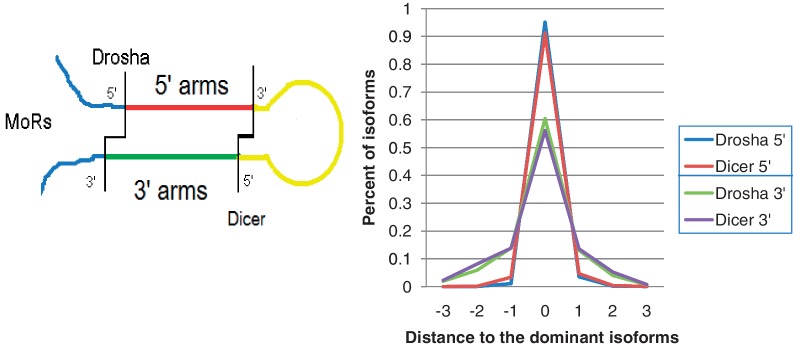
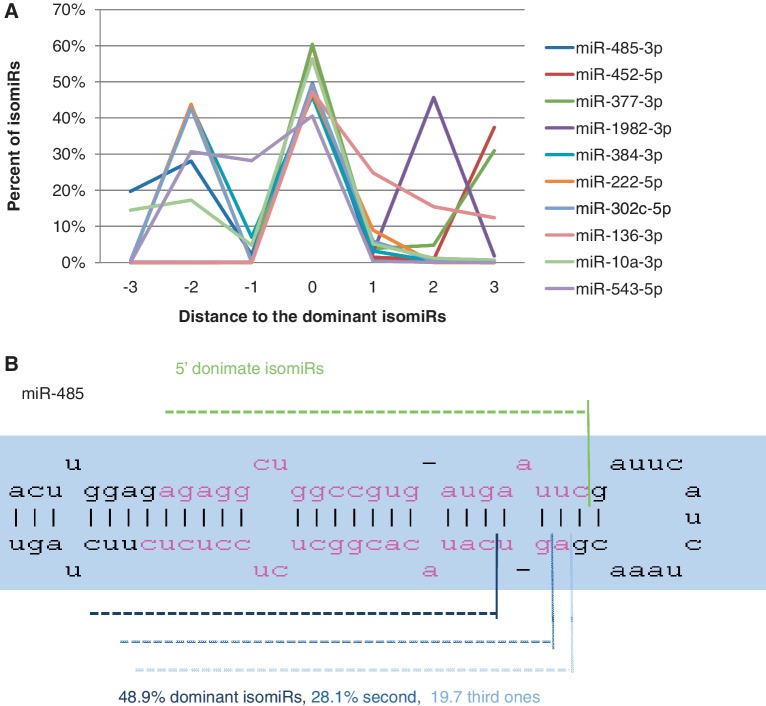
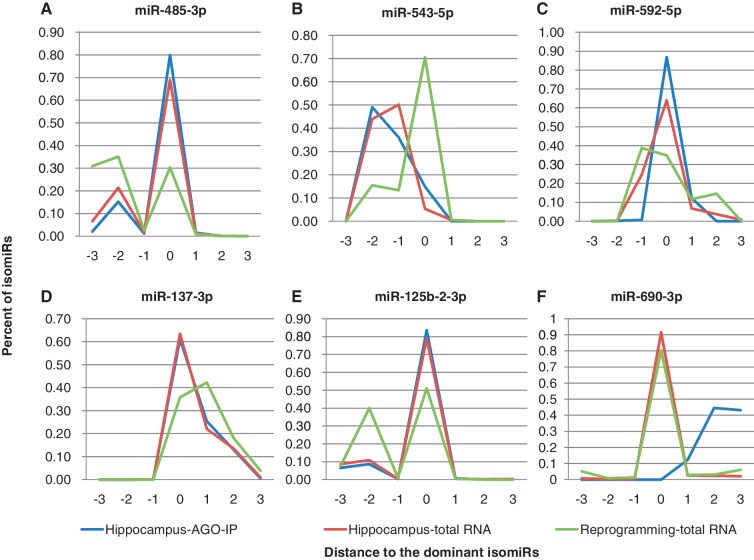
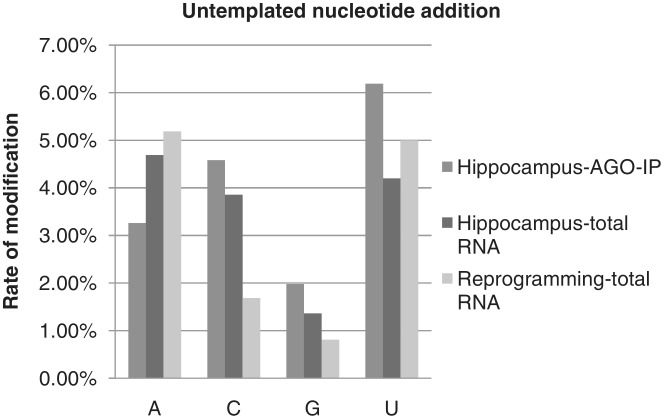
Verification
Claims the paper makes
The claims and statistics of this paper haven’t been checked yet.
Run the check — free, no account needed. It reads the open-access text and checks the sources it cites.
Claims other papers make about this one
Each is checked against this paper’s own text: does it say what the citing paper says it does?
The cited source says what the claim attributes to it.
In the citing paper
“However, with the increasing depth of Next Generation Sequencing (NGS) data, scientists have observed that both arms (strands) of the miRNA duplex could be utilized by the RNA-induced silencing complex (RISC) [25,26].”
From Bioinformatic Interrogation of 5p-arm and 3p-arm Specific miRNA Expression Using TCGA Datasets (2015) · cites this paper as [26]
The cited source says what the claim attributes to it.
In the citing paper
“Using high-throughput miRNA sequencing information, expression of both the 5p-arm and 3p-arm mature miRNAs were demonstrated and generated from the single miRNA hairpin precursor.”
From Bioinformatic Interrogation of 5p-arm and 3p-arm Specific miRNA Expression Using TCGA Datasets (2015) · cites this paper as [26]
In the citing paper
“It has been reported that isomiRs could also associate with RISC and be involved in the target mRNA silencing [26].”
From Bioinformatic Interrogation of 5p-arm and 3p-arm Specific miRNA Expression Using TCGA Datasets (2015) · cites this paper as [26]
Self-check
Percentages, sums and reported differences re-computed from the paper’s own numbers.
The self-check needs the paper’s full text.
Citations
Cites
The widespread regulation of microRNA biogenesis, function and decay
Krol, J., Loedige, I., & Filipowicz, W. (2010) · Nature Reviews Genetics · doi:10.1038/nrg2843 · Cited by 4,672
A Mammalian microRNA Expression Atlas Based on Small RNA Library Sequencing
Landgraf, P., Rusu, M., Sheridan, R., Sewer, A., Iovino, N., Aravin, A., Pfeffer, S., Rice, A., Kamphorst, A. O., Landthaler, M., et al. (2007) · Cell · doi:10.1016/j.cell.2007.04.040 · Cited by 3,626
Gene silencing by microRNAs: contributions of translational repression and mRNA decay
Huntzinger, E., & Izaurralde, E. (2011) · Nature Reviews Genetics · doi:10.1038/nrg2936 · Cited by 2,339
MicroRNAs and their isomiRs function cooperatively to target common biological pathways
Cloonan, N., Wani, S., Xu, Q., Gu, J., Lea, K., Heater, S., Barbacioru, C., Steptoe, A. L., Martin, H. C., Nourbakhsh, E., et al. (2011) · Genome Biology · doi:10.1186/gb-2011-12-12-r126 · Cited by 345
Research works printed but not linked: 70
- Bartel, 2009, MicroRNAs: target recognition and regulatory functions, Cell, 136, 215, 10.1016/j.cell.2009.01.002 · DOI · Paper page
- Bartel, 2004, MicroRNAs: genomics, biogenesis, mechanism, and function, Cell, 116, 281, 10.1016/S0092-8674(04)00045-5 · DOI
- Okamura, 2007, The mirtron pathway generates microRNA-class regulatory RNAs in Drosophila, Cell, 130, 89, 10.1016/j.cell.2007.06.028 · DOI
- Ruby, 2007, Intronic microRNA precursors that bypass Drosha processing, Nature, 448, 83, 10.1038/nature05983 · DOI · Paper page
- Lee, 2003, The nuclear RNase III Drosha initiates microRNA processing, Nature, 425, 415, 10.1038/nature01957 · DOI
- Han, 2004, The Drosha-DGCR8 complex in primary microRNA processing, Genes Dev., 18, 3016, 10.1101/gad.1262504 · DOI
- Han, 2006, Molecular basis for the recognition of primary microRNAs by the Drosha-DGCR8 complex, Cell, 125, 887, 10.1016/j.cell.2006.03.043 · DOI
- Okada, 2009, A high-resolution structure of the pre-microRNA nuclear export machinery, Science, 326, 1275, 10.1126/science.1178705 · DOI
- Yi, 2003, Exportin-5 mediates the nuclear export of pre-microRNAs and short hairpin RNAs, Genes Dev., 17, 3011, 10.1101/gad.1158803 · DOI
- Bohnsack, 2004, Exportin 5 is a RanGTP-dependent dsRNA-binding protein that mediates nuclear export of pre-miRNAs, RNA, 10, 185, 10.1261/rna.5167604 · DOI
- Hutvágner, 2001, A cellular function for the RNA-interference enzyme Dicer in the maturation of the let-7 small temporal RNA, Science, 293, 834, 10.1126/science.1062961 · DOI · Paper page
- Gregory, 2005, Human RISC couples microRNA biogenesis and posttranscriptional gene silencing, Cell, 123, 631, 10.1016/j.cell.2005.10.022 · DOI · Paper page
- Leuschner, 2006, Cleavage of the siRNA passenger strand during RISC assembly in human cells, EMBO Rep., 7, 314, 10.1038/sj.embor.7400637 · DOI
- Hutvagner, 2008, Argonaute proteins: key players in RNA silencing, Nat. Rev. Mol. Cell Biol., 9, 22, 10.1038/nrm2321 · DOI
- Diederichs, 2007, Dual role for argonautes in microRNA processing and posttranscriptional regulation of microRNA expression, Cell, 131, 1097, 10.1016/j.cell.2007.10.032 · DOI
- Cheloufi, 2010, A dicer-independent miRNA biogenesis pathway that requires Ago catalysis, Nature, 465, 584, 10.1038/nature09092 · DOI · Paper page
- Cifuentes, 2010, A novel miRNA processing pathway independent of Dicer requires Argonaute2 catalytic activity, Science, 328, 1694, 10.1126/science.1190809 · DOI
- Khvorova, 2003, Functional siRNAs and miRNAs exhibit strand bias, Cell, 115, 209, 10.1016/S0092-8674(03)00801-8 · DOI · Paper page
- Schwarz, 2003, Asymmetry in the assembly of the RNAi enzyme complex, Cell, 115, 199, 10.1016/S0092-8674(03)00759-1 · DOI · Paper page
- Winter, 2009, Many roads to maturity: microRNA biogenesis pathways and their regulation, Nat. Cell Biol., 11, 228, 10.1038/ncb0309-228 · DOI
- Kuramochi-Miyagawa, 2010, MVH in piRNA processing and gene silencing of retrotransposons, Genes Dev., 24, 887, 10.1101/gad.1902110 · DOI
- Jazdzewski, 2009, Polymorphic mature microRNAs from passenger strand of pre-miR-146a contribute to thyroid cancer, Proc. Natl Acad. Sci. USA, 106, 1502, 10.1073/pnas.0812591106 · DOI · Paper page
- Czech, 2009, Hierarchical rules for Argonaute loading in Drosophila, Mol. Cell, 36, 445, 10.1016/j.molcel.2009.09.028 · DOI
- Okamura, 2009, Distinct mechanisms for microRNA strand selection by Drosophila Argonautes, Mol. Cell, 36, 431, 10.1016/j.molcel.2009.09.027 · DOI · Paper page
- Ghildiyal, 2010, Sorting of Drosophila small silencing RNAs partitions microRNA* strands into the RNA interference pathway, RNA, 16, 43, 10.1261/rna.1972910 · DOI · Paper page
- Morin, 2008, Application of massively parallel sequencing to microRNA profiling and discovery in human embryonic stem cells, Genome Res., 18, 610, 10.1101/gr.7179508 · DOI · Paper page
- Lee, 2010, Complexity of the microRNA repertoire revealed by next-generation sequencing, RNA, 16, 2170, 10.1261/rna.2225110 · DOI
- Berezikov, 2011, Deep annotation of Drosophila melanogaster microRNAs yields insights into their processing, modification, and emergence, Genome Res., 21, 203, 10.1101/gr.116657.110 · DOI
- Kozomara, 2011, miRBase: integrating microRNA annotation and deep-sequencing data, Nucleic Acids Res., 39, D152, 10.1093/nar/gkq1027 · DOI · Paper page
- Nelson, 2007, A novel monoclonal antibody against human Argonaute proteins reveals unexpected characteristics of miRNAs in human blood cells, RNA, 13, 1787, 10.1261/rna.646007 · DOI · Paper page
- Li, 2011, Small RNA-mediated regulation of iPS cell generation, EMBO J., 30, 823, 10.1038/emboj.2011.2 · DOI
- Takahashi, 2006, Induction of pluripotent stem cells from mouse embryonic and adult fibroblast cultures by defined factors, Cell, 126, 663, 10.1016/j.cell.2006.07.024 · DOI · Paper page
- Hu, 2009, Sequence features associated with microRNA strand selection in humans and flies, BMC Genomics, 10, 413, 10.1186/1471-2164-10-413 · DOI
- Chiang, 2010, Mammalian microRNAs: experimental evaluation of novel and previously annotated genes, Genes Dev., 24, 992, 10.1101/gad.1884710 · DOI · Paper page
- Warf, 2011, Improved annotation of C. elegans microRNAs by deep sequencing reveals structures associated with processing by Drosha and Dicer, RNA, 17, 563, 10.1261/rna.2432311 · DOI
- Ruby, 2007, Evolution, biogenesis, expression, and target predictions of a substantially expanded set of Drosophila microRNAs, Genome Res., 17, 1850, 10.1101/gr.6597907 · DOI
- Seitz, 2008, Argonaute loading improves the 5' precision of both MicroRNAs and their miRNA* strands in flies, Curr. Biol., 18, 147, 10.1016/j.cub.2007.12.049 · DOI · Paper page
- Ruby, 2006, Large-scale sequencing reveals 21U-RNAs and additional microRNAs and endogenous siRNAs in C. elegans, Cell, 127, 1193, 10.1016/j.cell.2006.10.040 · DOI
- Wu, 2007, miRNA profiling of naive, effector and memory CD8 T cells, PLoS One, 2, e1020, 10.1371/journal.pone.0001020 · DOI
- Ramachandran, 2008, Degradation of microRNAs by a family of exoribonucleases in Arabidopsis, Science, 321, 1490, 10.1126/science.1163728 · DOI
- Kai, 2010, MicroRNA assassins: factors that regulate the disappearance of miRNAs, Nat. Struct. Mol. Biol., 17, 5, 10.1038/nsmb.1762 · DOI
- Pantano, 2010, SeqBuster, a bioinformatic tool for the processing and analysis of small RNAs datasets, reveals ubiquitous miRNA modifications in human embryonic cells, Nucleic Acids Res., 38, e34, 10.1093/nar/gkp1127 · DOI
- Ebhardt, 2009, Meta-analysis of small RNA-sequencing errors reveals ubiquitous post-transcriptional RNA modifications, Nucleic Acids Res., 37, 2461, 10.1093/nar/gkp093 · DOI
- Newman, 2011, Deep sequencing of microRNA precursors reveals extensive 3' end modification, RNA, 17, 1795, 10.1261/rna.2713611 · DOI
- Sewer, 2005, Identification of clustered microRNAs using an ab initio prediction method, BMC Bioinformatics, 6, 267, 10.1186/1471-2105-6-267 · DOI
- Mineno, 2006, The expression profile of microRNAs in mouse embryos, Nucleic Acids Res., 34, 1765, 10.1093/nar/gkl096 · DOI
- Ameres, 2010, Target RNA-directed trimming and tailing of small silencing RNAs, Science, 328, 1534, 10.1126/science.1187058 · DOI · Paper page
- Kim, 2010, Modifications of small RNAs and their associated proteins, Cell, 143, 703, 10.1016/j.cell.2010.11.018 · DOI
- Grimson, 2008, Early origins and evolution of microRNAs and Piwi-interacting RNAs in animals, Nature, 455, 1193, 10.1038/nature07415 · DOI
- Griffiths-Jones, 2011, MicroRNA evolution by arm switching, EMBO Rep., 12, 172, 10.1038/embor.2010.191 · DOI · Paper page
- Ro, 2007, Tissue-dependent paired expression of miRNAs, Nucleic Acids Res., 35, 5944, 10.1093/nar/gkm641 · DOI · Paper page
- de Wit, 2009, Repertoire and evolution of miRNA genes in four divergent nematode species, Genome Res., 19, 2064, 10.1101/gr.093781.109 · DOI · Paper page
- Seitz, 2008, Argonaute loading improves the 5' precision of both MicroRNAs and their miRNA* strands in flies, Curr. Biol., 18, 147, 10.1016/j.cub.2007.12.049 · DOI · Paper page
- Azuma-Mukai, 2008, Characterization of endogenous human Argonautes and their miRNA partners in RNA silencing, Proc. Natl Acad. Sci. USA, 105, 7964, 10.1073/pnas.0800334105 · DOI
- Czech, 2008, An endogenous small interfering RNA pathway in Drosophila, Nature, 453, 798, 10.1038/nature07007 · DOI
- Okamura, 2008, The regulatory activity of microRNA* species has substantial influence on microRNA and 3' UTR evolution, Nat. Struct. Mol. Biol., 15, 354, 10.1038/nsmb.1409 · DOI · Paper page
- Goff, 2009, Ago2 immunoprecipitation identifies predicted microRNAs in human embryonic stem cells and neural precursors, PLoS One, 4, e7192, 10.1371/journal.pone.0007192 · DOI
- Czech, 2011, Small RNA sorting: matchmaking for Argonautes, Nat. Rev. Genet., 12, 19, 10.1038/nrg2916 · DOI · Paper page
- Burroughs, 2011, Deep-sequencing of human Argonaute-associated small RNAs provides insight into miRNA sorting and reveals Argonaute association with RNA fragments of diverse origin, RNA Biol., 8, 158, 10.4161/rna.8.1.14300 · DOI
- Yang, 2011, Widespread regulatory activity of vertebrate microRNA* species, RNA, 17, 312, 10.1261/rna.2537911 · DOI · Paper page
- Kuchenbauer, 2011, Comprehensive analysis of mammalian miRNA* species and their role in myeloid cells, Blood, 118, 3350, 10.1182/blood-2010-10-312454 · DOI
- Schulte, 2010, Deep sequencing reveals differential expression of microRNAs in favorable versus unfavorable neuroblastoma, Nucleic Acids Res., 38, 5919, 10.1093/nar/gkq342 · DOI
- Kim, 2008, Identification and characterization of new microRNAs from pig, Mamm. Genome, 19, 570, 10.1007/s00335-008-9111-3 · DOI
- Reese, 2010, Identification of novel microRNA-like molecules generated from herpesvirus and host tRNA transcripts, J. Virol., 84, 10344, 10.1128/JVI.00707-10 · DOI
- de Hoon, 2010, Cross-mapping and the identification of editing sites in mature microRNAs in high-throughput sequencing libraries, Genome Res., 20, 257, 10.1101/gr.095273.109 · DOI
- Fernandez-Valverde, 2010, Dynamic isomiR regulation in Drosophila development, RNA, 16, 1881, 10.1261/rna.2379610 · DOI · Paper page
- Guo, 2011, A comprehensive survey of miRNA repertoire and 3' addition events in the placentas of patients with pre-eclampsia from high-throughput sequencing, PLoS One, 6, e21072, 10.1371/journal.pone.0021072 · DOI
- Burroughs, 2012, pre-miRNA profiles obtained through application of locked nucleic acids and deep sequencing reveals complex 5'/3' arm variation including concomitant cleavage and polyuridylation patterns, Nucleic Acids Res., 40, 1424, 10.1093/nar/gkr903 · DOI
- Babiarz, 2008, Mouse ES cells express endogenous shRNAs, siRNAs, and other Microprocessor-independent, Dicer-dependent small RNAs, Genes Dev., 22, 2773, 10.1101/gad.1705308 · DOI
- Shi, 2009, A distinct class of small RNAs arises from pre-miRNA-proximal regions in a simple chordate, Nat. Struct. Mol. Biol., 16, 183, 10.1038/nsmb.1536 · DOI
Cited by
Sorted by citations
Regulation of miRNA strand selection: follow the leader?
Meijer, H. A., Smith, E. M., & Bushell, M. (2014) · Biochemical Society Transactions · doi:10.1042/bst20140142 · Cited by 233
Arcila, M. L., Betizeau, M., Cambronne, X. A., Guzman, E., Doerflinger, N., Bouhallier, F., Zhou, H., Wu, B., Rani, N., Bassett, D. S., et al. (2014) · Neuron · doi:10.1016/j.neuron.2014.01.017 · Cited by 80
Self-citationBioinformatic Interrogation of 5p-arm and 3p-arm Specific miRNA Expression Using TCGA Datasets
Kuo, W.-T., Su, M.-W., Lee, Y., Chen, C.-H., Wu, C.-W., Fang, W.-L., Huang, K.-H., & Lin, W.-C. (2015) · Journal of Clinical Medicine · doi:10.3390/jcm4091798 · Cited by 30
Metadata
- Authors
- Zhou, H., Arcila, M. L., Li, Z., Lee, E. J., Henzler, C., Liu, J., Rana, T. M., & Kosik, K. S.
- Venue
- Nucleic Acids Research
- Publisher
- Oxford University Press (OUP)
- Published
- 2012-03-19
- Volume
- 40
- Issue
- 13
- Pages
- 5864-5875
- ISSN
- 1362-4962
- 0305-1048
- PMC
- PMC3401436
- Cited by
- 78
- References
- 4
- Language
- en
About these checks
Registry, retraction, Cites and statistics results are computed, not judged, with one exception: a printed reference that no index lists is read once by a model before it counts as a citation error. Claims are extracted by a model and kept only when their quote appears verbatim in the text; each cited source is then checked, with a model’s help, for whether it says what the claim relies on. Those verdicts can be wrong — read the claim’s quote and the cited source before relying on one.
Statistics and arithmetic are recomputed, not judged.
Confidence bands are shown only for fields calibrated on our annotated test set. None is calibrated yet, so no band is shown.
What counts as a claim ›How we measure confidence ›How we check this ›
Are you an author, or do you see a problem with this page? Request a review
