

The DOI matches its Crossref record; 53 of the 53 references it cites were found in a registry or an index; none of the 40 sources its claims cite is checked for support yet.
Genetic Analysis of Candida auris Implicates Hsp90 in Morphogenesis and Azole Tolerance and Cdr1 in Azole Resistance
Open accessAbstract
Fungal pathogens pose a serious threat to public health. Candida auris is an emerging fungal pathogen that is often resistant to commonly used antifungal drugs. However, the mechanisms governing drug resistance and virulence in this organism remain largely unexplored. In this study, we adapted a conditional expression system to modulate the transcription of an essential gene, HSP90 , which regulates antifungal resistance and virulence in diverse fungal pathogens. We showed that Hsp90 is essential for growth in C. auris and is important for tolerance of the clinically important azole antifungals, which block ergosterol biosynthesis. Further, we established that the Cdr1 efflux transporter regulates azole resistance. Finally, we discovered that C. auris transitions from yeast to filamentous growth in response to Hsp90 inhibition, accompanied by global transcriptional remodeling. Overall, this work provides a novel insight into mechanisms regulating azole resistance in C. auris and uncovers a distinct developmental program regulated by Hsp90.
Overview
AI snapshot
Written from the paper’s full text.
TL;DR
This study adapted a tetracycline-repressible promoter system to show that Hsp90 is essential in *Candida auris*, mediates fluconazole tolerance in some clinical isolates, and represses filamentous growth. It also identifies the Cdr1 efflux transporter as a major contributor to azole resistance in *C. auris*.
Key findings
- Hsp90 is essential in *C. auris*: doxycycline-mediated repression of tetO-HSP90 reduced HSP90 expression to less than 40% of wild-type and caused loss of viable colonies.
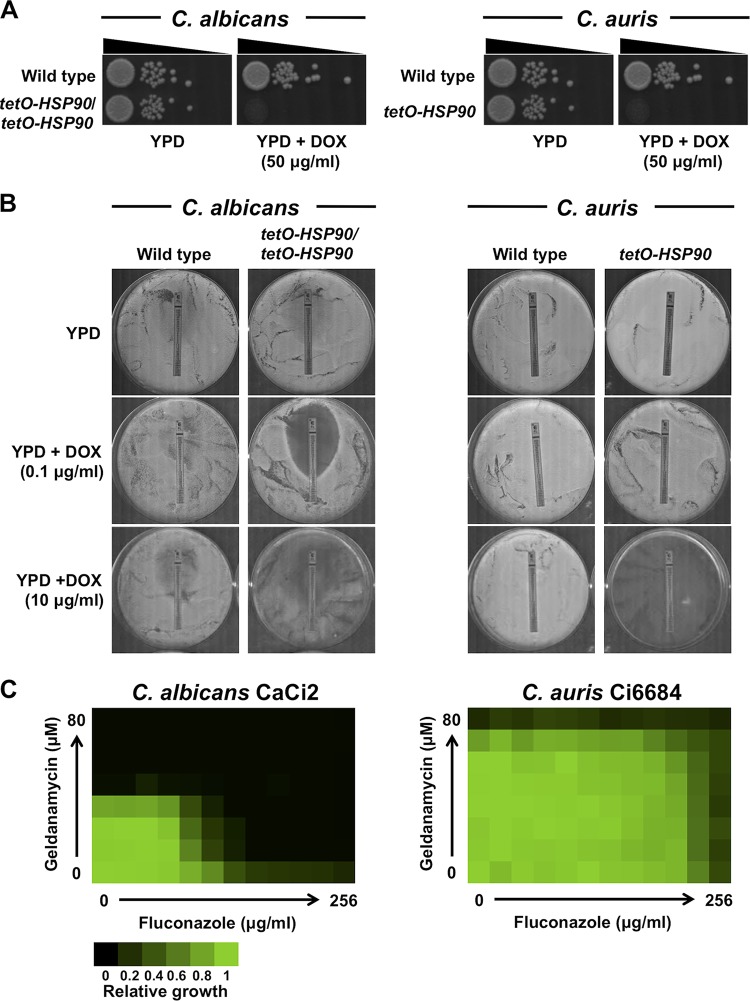
- Hsp90 inhibition reduced fluconazole tolerance in *C. auris* clinical isolates CDC-382 and CDC-387 and transformed fluconazole activity from fungistatic to fungicidal, but did not affect high-level resistance in Ci6684 or CDC-388.
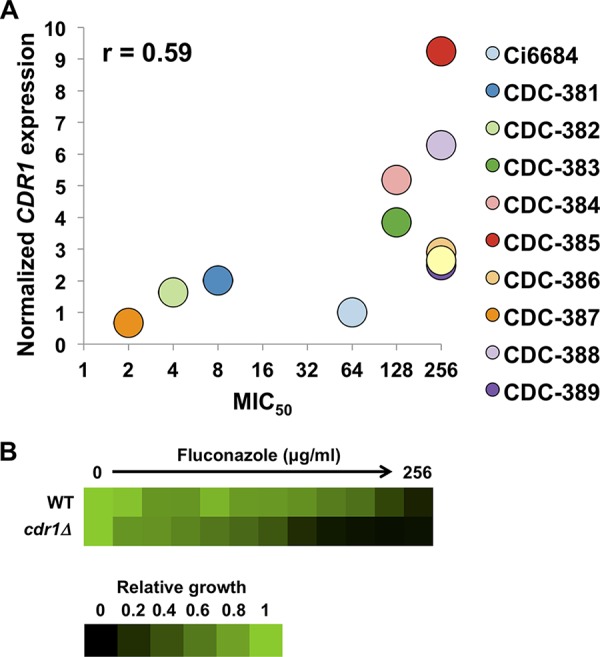
- Deletion of CDR1 in strain Ci6684 caused an 8-fold decrease in fluconazole MIC, and CDR1 expression positively correlated with fluconazole MIC50 across clinical isolates (Pearson r = 0.59).
- Hsp90 inhibition or depletion induced filamentous growth in *C. auris* and other CUG-clade species; RNA-Seq identified 2,111 *C. auris* DEGs upon geldanamycin treatment and 1,014 upon HSP90 depletion, with only 292 concordant DEGs.
Methods
- A tetO-HSP90 conditional expression strain was constructed in fluconazole-resistant *C. auris* strain Ci6684 by CRISPR/Cas9-mediated promoter replacement, adapting a *C. albicans* system.
- Drug susceptibility was assessed by spotting assays, fluconazole Etest strips, and checkerboard assays with fluconazole plus geldanamycin; CDR1 was deleted in Ci6684 and fluconazole MICs were measured.
- Morphology was monitored by DIC microscopy after genetic depletion or pharmacological inhibition of Hsp90 and after canonical filament-inducing cues; RNA-Seq was performed in quadruplicate and analyzed with HISAT2, StringTie, and DESeq2.
Limitations
- The paper states that the role of filamentous growth in *C. auris* is unclear, that only one prior study reported filamentation under high salt, and that further exploration of cues and genetic circuitry is needed.
- Evident from the text: CDR1 deletion was tested only in the Ci6684 background, and Hsp90’s role in fluconazole tolerance was limited to a subset of CDC clinical isolates.
- Evident from the text: RNA-Seq used strain Ci6684 but reads were aligned to the B8441 reference genome, and the study notes that depletion and pharmacological inhibition of Hsp90 produced distinct transcriptional responses.
Model-written summary. Check it against the paper before relying on it.
Integrity signals
Registry
Cites
Statistics
Figures
Verification
Claims the paper makes
47 Own result · 31 Not checked yet · 14 Own interpretation · 4 Own method · 2 No basis given
A result the paper reports from its own data — it cites no other source for it, so there is none to check. The quote shows it is in the paper.
In the paper
“Finally, we discovered that C. auris transitions from yeast to filamentous growth in response to Hsp90 inhibition, accompanied by global transcriptional remodeling.”
- Also stated in: § INTRODUCTION · plain
“we discovered that genetic depletion or pharmacological inhibition of Hsp90 induced filamentous growth in C. auris.”
- Also stated in: § Hsp90 represses filamentous growth in C. auris. · plain
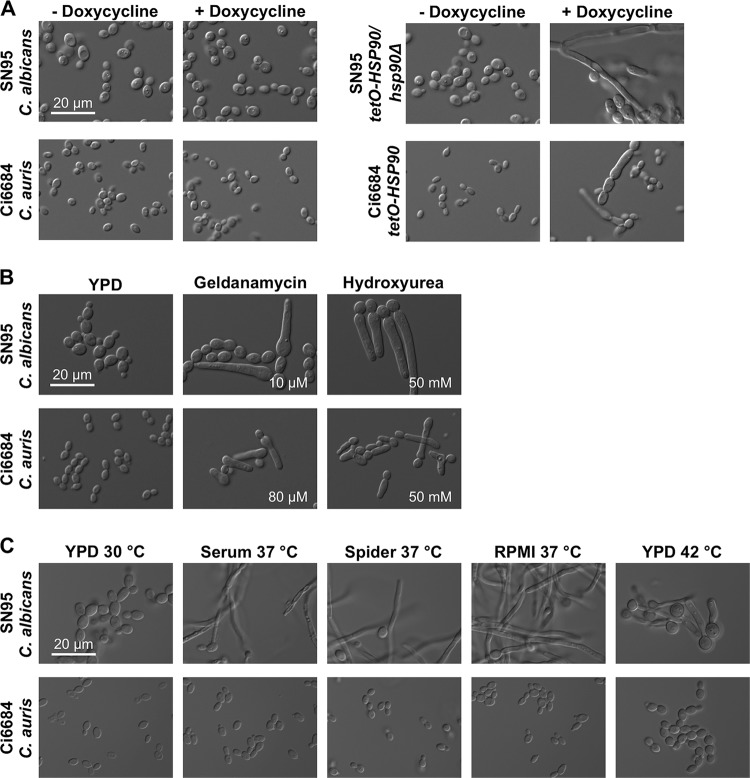
“During characterization of the C. auris tetO-HSP90 strain, we discovered that depletion of HSP90 resulted in polarized growth, similar to what was observed in C. albicans”
§ Genetic Analysis of Candida auris Implicates Hsp90 in Morphogenesis and Azole Tolerance and Cdr1 in Azole Resistance > Abstract
plaindirect- Asserted: passes — The authors put it forward as true.
- Checkable: passes — It can be checked against evidence.
- Load-bearing: passes — The paper’s conclusions depend on it.
- Based: passes — The paper gives a reason why it holds.
- Also stated in: § INTRODUCTION · plain
A result the paper reports from its own data — it cites no other source for it, so there is none to check. The quote shows it is in the paper.
In the paper
“Finally, we discovered that C. auris transitions from yeast to filamentous growth in response to Hsp90 inhibition, accompanied by global transcriptional remodeling.”
- Also stated in: § C. auris filamentation is associated with transcriptional induction of putative cell surface genes. · plain
“We identified global transcriptional changes in response to Hsp90 compromise in both species.”
§ Genetic Analysis of Candida auris Implicates Hsp90 in Morphogenesis and Azole Tolerance and Cdr1 in Azole Resistance > Abstract
plaincorrelational- Asserted: passes — The authors put it forward as true.
- Checkable: passes — It can be checked against evidence.
- Load-bearing: passes — The paper’s conclusions depend on it.
- Based: passes — The paper gives a reason why it holds.
- Also stated in: § C. auris filamentation is associated with transcriptional induction of putative cell surface genes. · plain
A result the paper reports from its own data — it cites no other source for it, so there is none to check. The quote shows it is in the paper.
In the paper
“We showed that Hsp90 is essential for growth in C. auris”
- Also stated in: § HSP90 is essential in C. auris. · plain
“Thus, Hsp90 is essential in C. auris, and the tetO promoter system offers a powerful approach for studying essential gene function in this emerging pathogen.”
§ Genetic Analysis of Candida auris Implicates Hsp90 in Morphogenesis and Azole Tolerance and Cdr1 in Azole Resistance > Abstract
plaindirect- Asserted: passes — The authors put it forward as true.
- Checkable: passes — It can be checked against evidence.
- Load-bearing: passes — The paper’s conclusions depend on it.
- Based: passes — The paper gives a reason why it holds.
- Also stated in: § HSP90 is essential in C. auris. · plain
A result the paper reports from its own data — it cites no other source for it, so there is none to check. The quote shows it is in the paper.
In the paper
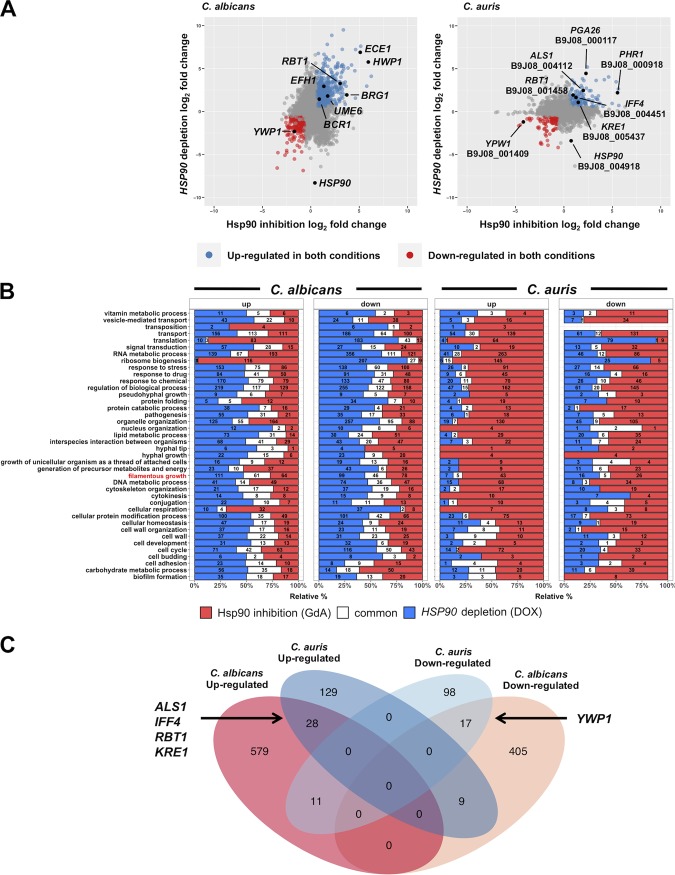
“Compared to Hsp90 depletion, only 744 DEGs in C. albicans showed concordant changes in expression under both conditions (Fig. 6A).”
§ Genetic Analysis of Candida auris Implicates Hsp90 in Morphogenesis and Azole Tolerance and Cdr1 in Azole Resistance > RESULTS > C. auris filamentation is associated with transcriptional induction of putative cell surface genes.
plaincorrelational- Asserted: passes — The authors put it forward as true.
- Checkable: passes — It can be checked against evidence.
- Load-bearing: unclear — It is unclear whether the paper’s conclusions depend on it.
- Based: passes — The paper gives a reason why it holds.
A result the paper reports from its own data — it cites no other source for it, so there is none to check. The quote shows it is in the paper.
In the paper
“Many of these genes (ALS1, IFF4, RBT1, and KRE1) were also upregulated upon Hsp90 inhibition and depletion in C. albicans (Fig. 6C).”
§ Genetic Analysis of Candida auris Implicates Hsp90 in Morphogenesis and Azole Tolerance and Cdr1 in Azole Resistance > RESULTS > C. auris filamentation is associated with transcriptional induction of putative cell surface genes.
plaindirect- Asserted: passes — The authors put it forward as true.
- Checkable: passes — It can be checked against evidence.
- Load-bearing: unclear — It is unclear whether the paper’s conclusions depend on it.
- Based: passes — The paper gives a reason why it holds.
A result the paper reports from its own data — it cites no other source for it, so there is none to check. The quote shows it is in the paper.
In the paper
“However, high doses of the cell cycle arresting agent hydroxyurea induced polarized growth in C. auris, similar to what was observed with C. albicans (Fig. 4B).”
§ Genetic Analysis of Candida auris Implicates Hsp90 in Morphogenesis and Azole Tolerance and Cdr1 in Azole Resistance > RESULTS > Hsp90 represses filamentous growth in C. auris.
plaindirect- Asserted: passes — The authors put it forward as true.
- Checkable: passes — It can be checked against evidence.
- Load-bearing: unclear — It is unclear whether the paper’s conclusions depend on it.
- Based: passes — The paper gives a reason why it holds.
A result the paper reports from its own data — it cites no other source for it, so there is none to check. The quote shows it is in the paper.
In the paper
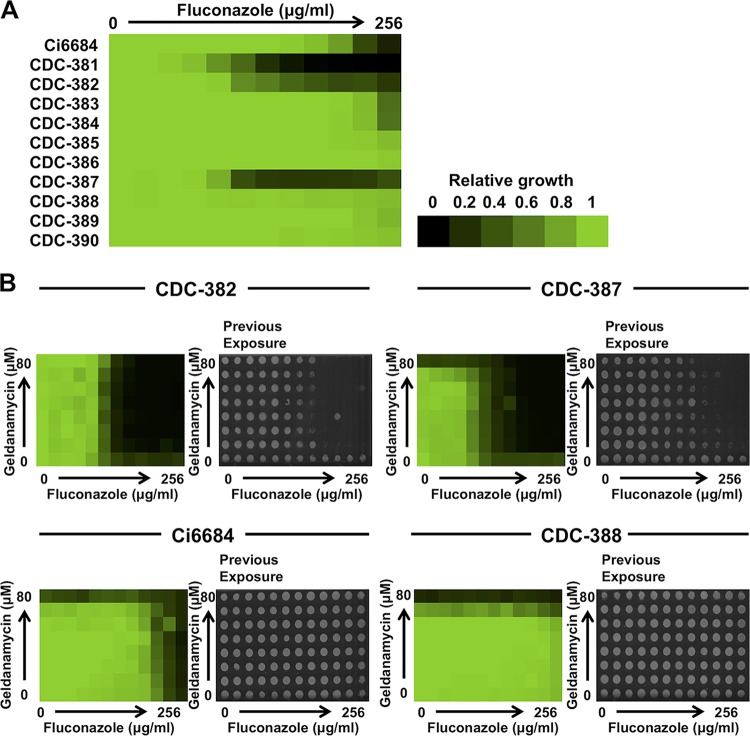
“Hsp90 inhibition reduced the azole tolerance of two C. auris clinical isolates, CDC-382 and CDC-387, and transformed the activity of fluconazole from fungistatic to fungicidal.”
§ Genetic Analysis of Candida auris Implicates Hsp90 in Morphogenesis and Azole Tolerance and Cdr1 in Azole Resistance > DISCUSSION
plaindirect- Asserted: passes — The authors put it forward as true.
- Checkable: passes — It can be checked against evidence.
- Load-bearing: passes — The paper’s conclusions depend on it.
- Based: passes — The paper gives a reason why it holds.
A result the paper reports from its own data — it cites no other source for it, so there is none to check. The quote shows it is in the paper.
In the paper
“C. auris did not filament in response to canonical filament-inducing cues for C. albicans, such as serum, Spider medium, RPMI medium, or elevated temperature (Fig. 4C).”
§ Genetic Analysis of Candida auris Implicates Hsp90 in Morphogenesis and Azole Tolerance and Cdr1 in Azole Resistance > RESULTS > Hsp90 represses filamentous growth in C. auris.
plain- Asserted: passes — The authors put it forward as true.
- Checkable: passes — It can be checked against evidence.
- Load-bearing: passes — The paper’s conclusions depend on it.
- Based: passes — The paper gives a reason why it holds.
A result the paper reports from its own data — it cites no other source for it, so there is none to check. The quote shows it is in the paper.
In the paper
“Of these, CDC-381 and CDC-382 showed a tolerance phenotype with persistent growth beyond the drug MIC (Fig. 2A).”
§ Genetic Analysis of Candida auris Implicates Hsp90 in Morphogenesis and Azole Tolerance and Cdr1 in Azole Resistance > RESULTS > Hsp90 is an important mediator of tolerance in C. auris.
plain- Asserted: passes — The authors put it forward as true.
- Checkable: passes — It can be checked against evidence.
- Load-bearing: passes — The paper’s conclusions depend on it.
- Based: passes — The paper gives a reason why it holds.
A result the paper reports from its own data — it cites no other source for it, so there is none to check. The quote shows it is in the paper.
In the paper
“In the absence of doxycycline, both C. auris and C. albicans were capable of growing at concentrations of fluconazole up to the highest tested (Fig. 1B).”
§ Genetic Analysis of Candida auris Implicates Hsp90 in Morphogenesis and Azole Tolerance and Cdr1 in Azole Resistance > RESULTS > Hsp90 is an important mediator of tolerance in C. auris.
plain- Asserted: passes — The authors put it forward as true.
- Checkable: passes — It can be checked against evidence.
- Load-bearing: passes — The paper’s conclusions depend on it.
- Based: passes — The paper gives a reason why it holds.
- It may state two separate claims as one. 19
- Probably not a substantial claim. 18
A result the paper reports from its own data — it cites no other source for it, so there is none to check. The quote shows it is in the paper.
In the paper
“Depletion of HSP90 led to the upregulation of transcripts predicted to be involved in transmembrane transport and downregulation of genes annotated as involved in translation and peptide metabolic processes (Fig. S6 and Table S2).”
§ Genetic Analysis of Candida auris Implicates Hsp90 in Morphogenesis and Azole Tolerance and Cdr1 in Azole Resistance > RESULTS > C. auris filamentation is associated with transcriptional induction of putative cell surface genes.
plaindirect- Asserted: passes — The authors put it forward as true.
- Checkable: passes — It can be checked against evidence.
- Load-bearing: unclear — It is unclear whether the paper’s conclusions depend on it.
- Based: passes — The paper gives a reason why it holds.
It may state two separate claims as one.
A result the paper reports from its own data — it cites no other source for it, so there is none to check. The quote shows it is in the paper.
In the paper
“In total, 28 transcripts were upregulated and 17 transcripts were downregulated upon Hsp90 perturbation in both organisms (Fig. 6C).”
§ Genetic Analysis of Candida auris Implicates Hsp90 in Morphogenesis and Azole Tolerance and Cdr1 in Azole Resistance > RESULTS > C. auris filamentation is associated with transcriptional induction of putative cell surface genes.
plaindirect- Asserted: passes — The authors put it forward as true.
- Checkable: passes — It can be checked against evidence.
- Load-bearing: unclear — It is unclear whether the paper’s conclusions depend on it.
- Based: passes — The paper gives a reason why it holds.
It may state two separate claims as one.
None of the sources cited for this claim have been checked yet.
In the paper
“In C. albicans, filamentation caused by perturbations in Hsp90 was associated with upregulation of filament-associated genes such as HWP1, ECE1, and RBT1, consistent with previous reports (21, 41).”
§ Genetic Analysis of Candida auris Implicates Hsp90 in Morphogenesis and Azole Tolerance and Cdr1 in Azole Resistance > DISCUSSION
What the sources say
- Not checked yetcites [21] Shapiro RS, Sellam A, Tebbji F, Whiteway M, Nantel A, Cowen LE 2012 Pho85, Pcl1, and Hms1 signaling governs Candida albicans morphogenesis induced by high temperature or Hsp90 compromise. Curr Biol 22: 461– 470. doi: 10.1016/j.cub.2012.01.062. 22365851 source
- Not checked yetcites [41] Braun BR, Head WS, Wang MX, Johnson AD 2000 Identification and characterization of TUP1-regulated genes in Candida albicans. Genetics 156: 31– 44. 10978273 PMC1461230 source
plaincorrelational- Asserted: passes — The authors put it forward as true.
- Checkable: passes — It can be checked against evidence.
- Load-bearing: fails — The paper’s conclusions may not depend on it.
- Based: passes — The paper gives a reason why it holds.
Probably not a substantial claim. The paper’s conclusions may not depend on it.
A result the paper reports from its own data — it cites no other source for it, so there is none to check. The quote shows it is in the paper.
In the paper
“GO term enrichment analysis of the DEGs in response to Hsp90 inhibition identified upregulation of transcripts involved in ribosomal processes and downregulation of transcripts involved in metabolic and biosynthetic processes (Fig. S6 and Table S2).”
§ Genetic Analysis of Candida auris Implicates Hsp90 in Morphogenesis and Azole Tolerance and Cdr1 in Azole Resistance > RESULTS > C. auris filamentation is associated with transcriptional induction of putative cell surface genes.
plaincorrelational- Asserted: passes — The authors put it forward as true.
- Checkable: passes — It can be checked against evidence.
- Load-bearing: unclear — It is unclear whether the paper’s conclusions depend on it.
- Based: passes — The paper gives a reason why it holds.
It may state two separate claims as one.
A result the paper reports from its own data — it cites no other source for it, so there is none to check. The quote shows it is in the paper.
In the paper
“Of these, 107 transcripts showed an overlap under the two conditions, including known regulators of filamentation HWP1, ECE1, RBT1, BRG1, UME6, EFH1, and BCR1, which were upregulated, and YWP1, which was downregulated (Fig. 6A; see also Table S1).”
§ Genetic Analysis of Candida auris Implicates Hsp90 in Morphogenesis and Azole Tolerance and Cdr1 in Azole Resistance > RESULTS > C. auris filamentation is associated with transcriptional induction of putative cell surface genes.
plaincorrelational- Asserted: passes — The authors put it forward as true.
- Checkable: passes — It can be checked against evidence.
- Load-bearing: unclear — It is unclear whether the paper’s conclusions depend on it.
- Based: passes — The paper gives a reason why it holds.
It may state two separate claims as one.
None of the sources cited for this claim have been checked yet.
In the paper
“Although geldanamycin potentiated fluconazole activity against C. albicans, the combination had no effect on azole susceptibility in C. auris (Fig. 1C).”
§ Genetic Analysis of Candida auris Implicates Hsp90 in Morphogenesis and Azole Tolerance and Cdr1 in Azole Resistance > RESULTS > Hsp90 is an important mediator of tolerance in C. auris.
plaindirectSingle case- Asserted: passes — The authors put it forward as true.
- Checkable: passes — It can be checked against evidence.
- Load-bearing: fails — The paper’s conclusions may not depend on it.
- Based: passes — The paper gives a reason why it holds.
Probably not a substantial claim. The paper’s conclusions may not depend on it.
None of the sources cited for this claim have been checked yet.
In the paper
“As CDC-382 and CDC-387 do not contain any known Erg11 substitutions associated with azole resistance and show relatively low levels of CDR1 expression, these two isolates may reflect a C. auris state prior to fluconazole exposure and acquisition of mutations associated with resistance (6).”
§ Genetic Analysis of Candida auris Implicates Hsp90 in Morphogenesis and Azole Tolerance and Cdr1 in Azole Resistance > DISCUSSION
plain- Asserted: passes — The authors put it forward as true.
- Checkable: passes — It can be checked against evidence.
- Load-bearing: passes — The paper’s conclusions depend on it.
- Based: passes — The paper gives a reason why it holds.
It may state two separate claims as one.
A result the paper reports from its own data — it cites no other source for it, so there is none to check. The quote shows it is in the paper.
In the paper
“GO slim mapping of the DEGs identified 79 and 33 transcripts involved in filamentous growth upon Hsp90 inhibition and depletion, respectively, but none of these showed an overlap with the known regulators of C. albicans filamentation identified above (Fig. 6B; see also Table S3).”
§ Genetic Analysis of Candida auris Implicates Hsp90 in Morphogenesis and Azole Tolerance and Cdr1 in Azole Resistance > RESULTS > C. auris filamentation is associated with transcriptional induction of putative cell surface genes.
plain- Asserted: passes — The authors put it forward as true.
- Checkable: passes — It can be checked against evidence.
- Load-bearing: unclear — It is unclear whether the paper’s conclusions depend on it.
- Based: passes — The paper gives a reason why it holds.
It may state two separate claims as one.
A result the paper reports from its own data — it cites no other source for it, so there is none to check. The quote shows it is in the paper.
In the paper
“Here, we showed that the impairment of either Hsp90 function or cell cycle progression also leads to filamentous growth in this pathogen.”
§ Genetic Analysis of Candida auris Implicates Hsp90 in Morphogenesis and Azole Tolerance and Cdr1 in Azole Resistance > DISCUSSION
boosteddirect- Asserted: passes — The authors put it forward as true.
- Checkable: passes — It can be checked against evidence.
- Load-bearing: passes — The paper’s conclusions depend on it.
- Based: passes — The paper gives a reason why it holds.
It may state two separate claims as one.
A result the paper reports from its own data — it cites no other source for it, so there is none to check. The quote shows it is in the paper.
In the paper
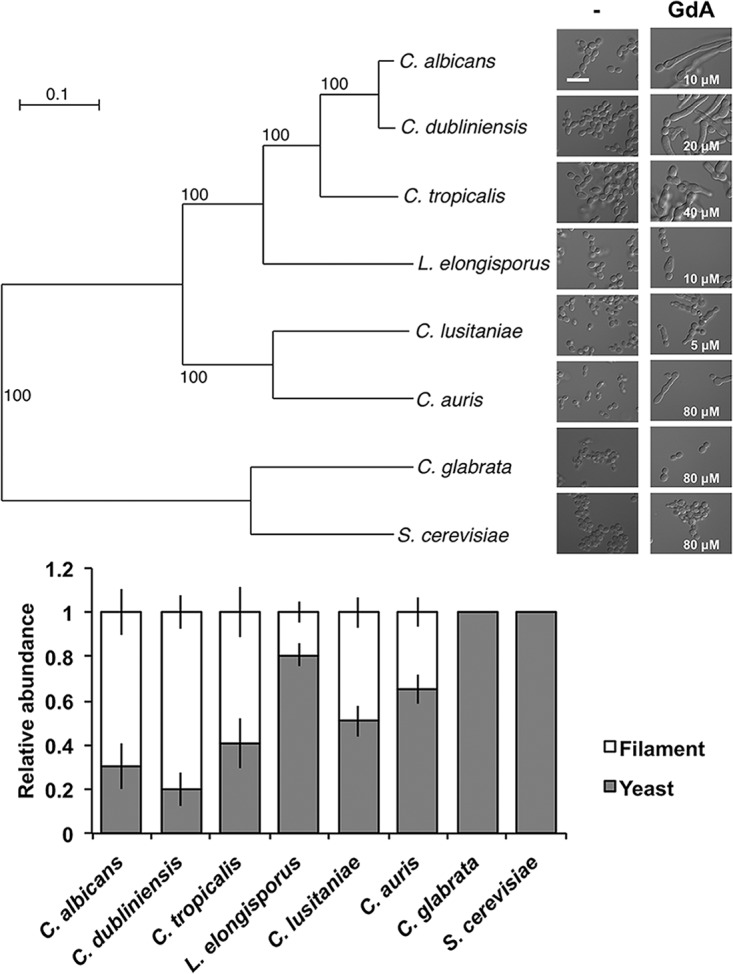
“Interestingly, all species classified within the “CUG” clade showed filamentous growth in response to geldanamycin to various degrees, while the non-CUG clade species remained exclusively in yeast form (Fig. 5).”
§ Genetic Analysis of Candida auris Implicates Hsp90 in Morphogenesis and Azole Tolerance and Cdr1 in Azole Resistance > RESULTS > Hsp90 represses filamentous growth in C. auris.
plaincorrelational- Asserted: passes — The authors put it forward as true.
- Checkable: passes — It can be checked against evidence.
- Load-bearing: passes — The paper’s conclusions depend on it.
- Based: passes — The paper gives a reason why it holds.
It may state two separate claims as one.
A result the paper reports from its own data — it cites no other source for it, so there is none to check. The quote shows it is in the paper.
In the paper
“Surprisingly, depletion of HSP90 showed a enrichment profile distinct from that observed upon pharmacological inhibition with Hsp90 in C. albicans, for which transcripts involved in responses to oxidative stress were upregulated and transcripts involved in ribosomal and mitochondrial processes were downregulated (see Fig. S5 and Table S2).”
§ Genetic Analysis of Candida auris Implicates Hsp90 in Morphogenesis and Azole Tolerance and Cdr1 in Azole Resistance > RESULTS > C. auris filamentation is associated with transcriptional induction of putative cell surface genes.
plaindirect- Asserted: passes — The authors put it forward as true.
- Checkable: passes — It can be checked against evidence.
- Load-bearing: unclear — It is unclear whether the paper’s conclusions depend on it.
- Based: passes — The paper gives a reason why it holds.
It may state two separate claims as one.
A result the paper reports from its own data — it cites no other source for it, so there is none to check. The quote shows it is in the paper.
In the paper
“Notably, geldanamycin did not affect the high-level fluconazole resistance phenotypes of strain Ci6684 or strain CDC-388 or the fungistatic activity of fluconazole against these strains (Fig. 2B).”
§ Genetic Analysis of Candida auris Implicates Hsp90 in Morphogenesis and Azole Tolerance and Cdr1 in Azole Resistance > RESULTS > Hsp90 is an important mediator of tolerance in C. auris.
plain- Asserted: passes — The authors put it forward as true.
- Checkable: passes — It can be checked against evidence.
- Load-bearing: passes — The paper’s conclusions depend on it.
- Based: passes — The paper gives a reason why it holds.
It may state two separate claims as one.
In the paper
“Azole resistance mechanisms have been studied most extensively in C. albicans and include alteration or overexpression of the target, activation or increased expression of azole efflux mediators, and induction of cellular stress responses (7).”
§ Genetic Analysis of Candida auris Implicates Hsp90 in Morphogenesis and Azole Tolerance and Cdr1 in Azole Resistance > INTRODUCTION
What the sources say
- Not checked yetcites [7] Robbins N, Caplan T, Cowen LE 2017 Molecular evolution of antifungal drug resistance. Annu Rev Microbiol 71: 753– 775. doi: 10.1146/annurev-micro-030117-020345. 28886681 source
plaindirect- Asserted: passes — The authors put it forward as true.
- Checkable: passes — It can be checked against evidence.
- Load-bearing: fails — The paper’s conclusions may not depend on it.
- Based: passes — The paper gives a reason why it holds.
Probably not a substantial claim. The paper’s conclusions may not depend on it. It may state two separate claims as one.
In the paper
“The most widely deployed class of antifungal is the azoles, which inhibit fungal growth by targeting lanosterol 14-α-demethylase (Erg11), a key component of the pathway for biosynthesis of the membrane sterol ergosterol (7).”
§ Genetic Analysis of Candida auris Implicates Hsp90 in Morphogenesis and Azole Tolerance and Cdr1 in Azole Resistance > INTRODUCTION
What the sources say
- Not checked yetcites [7] Robbins N, Caplan T, Cowen LE 2017 Molecular evolution of antifungal drug resistance. Annu Rev Microbiol 71: 753– 775. doi: 10.1146/annurev-micro-030117-020345. 28886681 source
plaindirect- Asserted: passes — The authors put it forward as true.
- Checkable: passes — It can be checked against evidence.
- Load-bearing: fails — The paper’s conclusions may not depend on it.
- Based: passes — The paper gives a reason why it holds.
Probably not a substantial claim. The paper’s conclusions may not depend on it.
In the paper
“Specifically, in C. albicans, the molecular chaperone Hsp90 promotes the evolution of drug resistance by stabilizing regulators of cellular responses to drug-induced stress (8).”
§ Genetic Analysis of Candida auris Implicates Hsp90 in Morphogenesis and Azole Tolerance and Cdr1 in Azole Resistance > INTRODUCTION
What the sources say
- Not checked yetcites [8] Cowen LE, Lindquist S 2005 Hsp90 potentiates the rapid evolution of new traits: drug resistance in diverse fungi. Science 309: 2185– 2189. doi: 10.1126/science.1118370. 16195452 source
plaindirect- Asserted: passes — The authors put it forward as true.
- Checkable: passes — It can be checked against evidence.
- Load-bearing: fails — The paper’s conclusions may not depend on it.
- Based: passes — The paper gives a reason why it holds.
Probably not a substantial claim. The paper’s conclusions may not depend on it.
In the paper
“Hsp90 represses filamentous growth in C. albicans such that compromising Hsp90 function induces the yeast-to-filament transition by relieving repression on Ras1-protein kinase A (PKA) signaling (19).”
§ Genetic Analysis of Candida auris Implicates Hsp90 in Morphogenesis and Azole Tolerance and Cdr1 in Azole Resistance > INTRODUCTION
What the sources say
- Not checked yetcites [19] Shapiro RS, Uppuluri P, Zaas AK, Collins C, Senn H, Perfect JR, Heitman J, Cowen LE 2009 Hsp90 orchestrates temperature-dependent Candida albicans morphogenesis via Ras1-PKA signaling. Curr Biol 19: 621– 629. doi: 10.1016/j.cub.2009.03.017. 19327993 PMC2735497 source
plaindirect- Asserted: passes — The authors put it forward as true.
- Checkable: passes — It can be checked against evidence.
- Load-bearing: fails — The paper’s conclusions may not depend on it.
- Based: passes — The paper gives a reason why it holds.
Probably not a substantial claim. The paper’s conclusions may not depend on it.
None of the sources cited for this claim have been checked yet.
In the paper
“Inhibition of Hsp90 blocks calcineurin-dependent stress responses and cell wall integrity signaling, thereby reducing antifungal tolerance of clinical isolates and transforming azole activity from fungistatic to fungicidal (8–11).”
§ Genetic Analysis of Candida auris Implicates Hsp90 in Morphogenesis and Azole Tolerance and Cdr1 in Azole Resistance > INTRODUCTION
What the sources say
- Not checked yetcites [8] Cowen LE, Lindquist S 2005 Hsp90 potentiates the rapid evolution of new traits: drug resistance in diverse fungi. Science 309: 2185– 2189. doi: 10.1126/science.1118370. 16195452 source
- Not checked yetcites [9] LaFayette SL, Collins C, Zaas AK, Schell WA, Betancourt-Quiroz M, Gunatilaka AAL, Perfect JR, Cowen LE 2010 PKC signaling regulates drug resistance of the fungal pathogen Candida albicans via circuitry comprised of Mkc1, calcineurin, and Hsp90. PLoS Pathog 6: e1001069. doi: 10.1371/journal.ppat.1001069. 20865172 PMC2928802 source
- Not checked yetcites [10] Singh SD, Robbins N, Zaas AK, Schell WA, Perfect JR, Cowen LE 2009 Hsp90 governs echinocandin resistance in the pathogenic yeast Candida albicans via calcineurin. PLoS Pathog 5: e1000532. doi: 10.1371/journal.ppat.1000532. 19649312 PMC2712069 source
- Not checked yetcites [11] Caplan T, Polvi EJ, Xie JL, Buckhalter S, Leach MD, Robbins N, Cowen LE 2018 Functional genomic screening reveals core modulators of echinocandin stress responses in Candida albicans. Cell Rep 23: 2292– 2298. doi: 10.1016/j.celrep.2018.04.084. 29791841 source
plaindirect- Asserted: passes — The authors put it forward as true.
- Checkable: passes — It can be checked against evidence.
- Load-bearing: passes — The paper’s conclusions depend on it.
- Based: passes — The paper gives a reason why it holds.
It may state two separate claims as one.
In the paper
“The ability of C. albicans to transition between yeast and filamentous forms is a key virulence trait that is triggered by a wide variety of environmental cues (20).”
§ Genetic Analysis of Candida auris Implicates Hsp90 in Morphogenesis and Azole Tolerance and Cdr1 in Azole Resistance > INTRODUCTION
What the sources say
- Not checked yetcites [20] Shapiro RS, Robbins N, Cowen LE 2011 Regulatory circuitry governing fungal development, drug resistance, and disease. Microbiol Mol Biol Rev 75: 213– 267. doi: 10.1128/MMBR.00045-10. 21646428 PMC3122626 source
plaindirect- Asserted: passes — The authors put it forward as true.
- Checkable: passes — It can be checked against evidence.
- Load-bearing: fails — The paper’s conclusions may not depend on it.
- Based: passes — The paper gives a reason why it holds.
Probably not a substantial claim. The paper’s conclusions may not depend on it.
In the paper
“In C. auris, studies have suggested that point mutations in ERG11 contribute to azole resistance of clinical isolates (15).”
§ Genetic Analysis of Candida auris Implicates Hsp90 in Morphogenesis and Azole Tolerance and Cdr1 in Azole Resistance > INTRODUCTION
What the sources say
- Not checked yetcites [15] Healey KR, Kordalewska M, Jiménez Ortigosa C, Singh A, Berrío I, Chowdhary A, Perlin DS 2018 Limited ERG11 mutations identified in isolates of Candida auris directly contribute to reduced azole susceptibility. Antimicrob Agents Chemother 62: e01427-18. doi: 10.1128/AAC.01427-18. PMC6153782 30082281 source
hedgedconditional- Asserted: passes — The authors put it forward as true.
- Checkable: passes — It can be checked against evidence.
- Load-bearing: fails — The paper’s conclusions may not depend on it.
- Based: passes — The paper gives a reason why it holds.
Probably not a substantial claim. The paper’s conclusions may not depend on it.
None of the sources cited for this claim have been checked yet.
In the paper
“Moreover, the impact of Hsp90 on drug resistance has been conserved in a number of other fungal pathogens, including Candida glabrata and Aspergillus fumigatus (12–14).”
§ Genetic Analysis of Candida auris Implicates Hsp90 in Morphogenesis and Azole Tolerance and Cdr1 in Azole Resistance > INTRODUCTION
What the sources say
- Not checked yetcites [12] Cowen LE, Singh SD, Köhler JR, Collins C, Zaas AK, Schell WA, Aziz H, Mylonakis E, Perfect JR, Whitesell L, Lindquist S 2009 Harnessing Hsp90 function as a powerful, broadly effective therapeutic strategy for fungal infectious disease. Proc Natl Acad Sci U S A 106: 2818– 2823. doi: 10.1073/pnas.0813394106. 19196973 PMC2650349 source
- Not checked yetcites [13] Singh-Babak SD, Babak T, Diezmann S, Hill JA, Xie JL, Chen Y-LL, Poutanen SM, Rennie RP, Heitman J, Cowen LE 2012 Global analysis of the evolution and mechanism of echinocandin resistance in Candida glabrata. PLoS Pathog 8: e1002718. doi: 10.1371/journal.ppat.1002718. 22615574 PMC3355103 source
- Not checked yetcites [14] Lamoth F, Juvvadi PR, Gehrke C, Steinbach WJ 2013 In vitro activity of calcineurin and heat shock protein 90 inhibitors against Aspergillus fumigatus azole- and echinocandin-resistant strains. Antimicrob Agents Chemother 57: 1035– 1039. doi: 10.1128/AAC.01857-12. 23165466 PMC3553695 source
plaindirect- Asserted: passes — The authors put it forward as true.
- Checkable: passes — It can be checked against evidence.
- Load-bearing: fails — The paper’s conclusions may not depend on it.
- Based: passes — The paper gives a reason why it holds.
Probably not a substantial claim. The paper’s conclusions may not depend on it.
In the paper
“In addition to its role in enabling the emergence and maintenance of azole resistance, Hsp90 governs temperature-dependent morphogenesis in C. albicans (19).”
§ Genetic Analysis of Candida auris Implicates Hsp90 in Morphogenesis and Azole Tolerance and Cdr1 in Azole Resistance > INTRODUCTION
What the sources say
- Not checked yetcites [19] Shapiro RS, Uppuluri P, Zaas AK, Collins C, Senn H, Perfect JR, Heitman J, Cowen LE 2009 Hsp90 orchestrates temperature-dependent Candida albicans morphogenesis via Ras1-PKA signaling. Curr Biol 19: 621– 629. doi: 10.1016/j.cub.2009.03.017. 19327993 PMC2735497 source
plaindirect- Asserted: passes — The authors put it forward as true.
- Checkable: passes — It can be checked against evidence.
- Load-bearing: fails — The paper’s conclusions may not depend on it.
- Based: passes — The paper gives a reason why it holds.
Probably not a substantial claim. The paper’s conclusions may not depend on it.
In the paper
“However, exposure to various cues that induce C. albicans filamentation does not induce morphogenesis in C. auris, suggesting divergence in the circuitry governing the yeast-to-filament transition between the two Candida species (23).”
§ Genetic Analysis of Candida auris Implicates Hsp90 in Morphogenesis and Azole Tolerance and Cdr1 in Azole Resistance > INTRODUCTION
What the sources say
- Not checked yetcites [23] Larkin E, Hager C, Chandra J, Mukherjee PK, Retuerto M, Salem I, Long L, Isham N, Kovanda L, Borroto-Esoda K, Wring S, Angulo D, Ghannoum M 2017 The emerging pathogen Candida auris: growth phenotype, virulence factors, activity of antifungals, and effect of SCY-078, a novel glucan synthesis inhibitor, on growth morphology and biofilm formation. Antimicrob Agents Chemother 61: e02396-16. doi: 10.1128/AAC.02396-16. 28223375 PMC5404565 source
hedged- Asserted: passes — The authors put it forward as true.
- Checkable: passes — It can be checked against evidence.
- Load-bearing: unclear — It is unclear whether the paper’s conclusions depend on it.
- Based: passes — The paper gives a reason why it holds.
It may state two separate claims as one.
None of the sources cited for this claim have been checked yet.
In the paper
“The fluconazole-potentiating effect of Hsp90 inhibition is reminiscent of the results of a study of a series of C. albicans clinical isolates from an AIDS patient, with the early clinical isolates showing an Hsp90-dependent fluconazole tolerance phenotype (8, 27, 28).”
§ Genetic Analysis of Candida auris Implicates Hsp90 in Morphogenesis and Azole Tolerance and Cdr1 in Azole Resistance > DISCUSSION
What the sources say
- Not checked yetcites [8] Cowen LE, Lindquist S 2005 Hsp90 potentiates the rapid evolution of new traits: drug resistance in diverse fungi. Science 309: 2185– 2189. doi: 10.1126/science.1118370. 16195452 source
- Not checked yetcites [27] White TC 1997 Increased mRNA levels of ERG16, CDR, and MDR1 correlate with increases in azole resistance in Candida albicans isolates from a patient infected with human immunodeficiency virus. Antimicrob Agents Chemother 41: 1482– 1487. 9210670 PMC163944 source
- Not checked yetcites [28] Hill JA, O’Meara TR, Cowen LE 2015 Fitness trade-offs associated with the evolution of resistance to antifungal drug combinations. Cell Rep 10: 809– 819. doi: 10.1016/j.celrep.2015.01.009. 25660029 source
plaindirectSingle case- Asserted: passes — The authors put it forward as true.
- Checkable: passes — It can be checked against evidence.
- Load-bearing: fails — The paper’s conclusions may not depend on it.
- Based: passes — The paper gives a reason why it holds.
Probably not a substantial claim. The paper’s conclusions may not depend on it.
In the paper
“Only one study has reported filamentous growth in C. auris to date, and that growth occurred under conditions of high salt concentrations (31).”
§ Genetic Analysis of Candida auris Implicates Hsp90 in Morphogenesis and Azole Tolerance and Cdr1 in Azole Resistance > DISCUSSION
What the sources say
- Not checked yetcites [31] Wang X, Bing J, Zheng Q, Zhang F, Liu J, Yue H, Tao L, Du H, Wang Y, Wang H, Huang G 2018 The first isolate of Candida auris in China: clinical and biological aspects. Emerg Microbes Infect 7: 93. doi: 10.1038/s41426-018-0095-0. 29777096 PMC5959928 source
plain- Asserted: passes — The authors put it forward as true.
- Checkable: passes — It can be checked against evidence.
- Load-bearing: unclear — It is unclear whether the paper’s conclusions depend on it.
- Based: passes — The paper gives a reason why it holds.
It may state two separate claims as one.
None of the sources cited for this claim have been checked yet.
In the paper
“Over time, these isolates showed stepwise increases in fluconazole resistance that became independent of Hsp90 as the isolates acquired mutations in ERG11 and in the transcriptional activator of CDR1, TAC1 (8, 27, 28).”
§ Genetic Analysis of Candida auris Implicates Hsp90 in Morphogenesis and Azole Tolerance and Cdr1 in Azole Resistance > DISCUSSION
What the sources say
- Not checked yetcites [8] Cowen LE, Lindquist S 2005 Hsp90 potentiates the rapid evolution of new traits: drug resistance in diverse fungi. Science 309: 2185– 2189. doi: 10.1126/science.1118370. 16195452 source
- Not checked yetcites [27] White TC 1997 Increased mRNA levels of ERG16, CDR, and MDR1 correlate with increases in azole resistance in Candida albicans isolates from a patient infected with human immunodeficiency virus. Antimicrob Agents Chemother 41: 1482– 1487. 9210670 PMC163944 source
- Not checked yetcites [28] Hill JA, O’Meara TR, Cowen LE 2015 Fitness trade-offs associated with the evolution of resistance to antifungal drug combinations. Cell Rep 10: 809– 819. doi: 10.1016/j.celrep.2015.01.009. 25660029 source
plaindirectSingle case- Asserted: passes — The authors put it forward as true.
- Checkable: passes — It can be checked against evidence.
- Load-bearing: unclear — It is unclear whether the paper’s conclusions depend on it.
- Based: passes — The paper gives a reason why it holds.
It may state two separate claims as one.
In the paper
“Although universal changes in cell surface composition upon morphogenesis have not been identified in fungi, cell surface proteins are often important regulators of morphogenesis and many are required for flocculation and adhesion, which are phenotypes associated with specific morphogenetic states (43).”
§ Genetic Analysis of Candida auris Implicates Hsp90 in Morphogenesis and Azole Tolerance and Cdr1 in Azole Resistance > DISCUSSION
What the sources say
- Not checked yetcites [43] Gow NAR, Latge J-P, Munro CA 2017 The fungal cell wall: structure, biosynthesis, and function. Microbiol Spectr 5. doi: 10.1128/microbiolspec.FUNK-0035-2016. PMC11687499 28513415 source
plaindirect- Asserted: passes — The authors put it forward as true.
- Checkable: passes — It can be checked against evidence.
- Load-bearing: fails — The paper’s conclusions may not depend on it.
- Based: passes — The paper gives a reason why it holds.
Probably not a substantial claim. The paper’s conclusions may not depend on it. It may state two separate claims as one.
A conclusion the paper draws from its own results — it cites no other source for it, so there is none to check. The quote shows it is in the paper.
In the paper
“Our use of the tetracycline-repressible promoter system to regulate the expression of HSP90 in C. auris establishes a precedent for genetic analysis of essential genes in this pathogen.”
§ Genetic Analysis of Candida auris Implicates Hsp90 in Morphogenesis and Azole Tolerance and Cdr1 in Azole Resistance > DISCUSSION
plaindirect- Asserted: passes — The authors put it forward as true.
- Checkable: passes — It can be checked against evidence.
- Load-bearing: passes — The paper’s conclusions depend on it.
- Based: passes — The paper gives a reason why it holds.
It may state two separate claims as one.
In the paper
“Although morphogenesis is an important virulence trait in C. albicans and other fungal pathogens (40), the role of filamentous growth in C. auris is unclear.”
§ Genetic Analysis of Candida auris Implicates Hsp90 in Morphogenesis and Azole Tolerance and Cdr1 in Azole Resistance > DISCUSSION
What the sources say
- Not checked yetcites [40] Gow NAR, Brown AJP, Odds FC 2002 Fungal morphogenesis and host invasion. Curr Opin Microbiol 5: 366– 371. 12160854 source
plaindirect- Asserted: passes — The authors put it forward as true.
- Checkable: passes — It can be checked against evidence.
- Load-bearing: fails — The paper’s conclusions may not depend on it.
- Based: passes — The paper gives a reason why it holds.
Probably not a substantial claim. The paper’s conclusions may not depend on it.
A conclusion the paper draws from its own results — it cites no other source for it, so there is none to check. The quote shows it is in the paper.
In the paper
“This analysis validates the idea that a core transcriptional response accompanies C. albicans morphogenesis in response to perturbation of Hsp90 function and provides a powerful platform for comparative analyses with the transcriptional response in C. auris.”
§ Genetic Analysis of Candida auris Implicates Hsp90 in Morphogenesis and Azole Tolerance and Cdr1 in Azole Resistance > RESULTS > C. auris filamentation is associated with transcriptional induction of putative cell surface genes.
boostedcorrelational- Asserted: passes — The authors put it forward as true.
- Checkable: passes — It can be checked against evidence.
- Load-bearing: passes — The paper’s conclusions depend on it.
- Based: passes — The paper gives a reason why it holds.
Probably not a substantial claim.
In the paper
“In addition, antifungal exposure has been shown to elicit distinct transcriptional responses between C. albicans and C. auris, suggesting that distinct genes may contribute to antifungal resistance in C. auris (18).”
§ Genetic Analysis of Candida auris Implicates Hsp90 in Morphogenesis and Azole Tolerance and Cdr1 in Azole Resistance > DISCUSSION
What the sources say
- Not checked yetcites [18] Muñoz JF, Gade L, Chow NA, Loparev VN, Juieng P, Berkow EL, Farrer RA, Litvintseva AP, Cuomo CA 2018 Genomic insights into multidrug-resistance, mating and virulence in Candida auris and related emerging species. Nat Commun 9: 5346. 30559369 PMC6297351 source
hedgedcorrelational- Asserted: passes — The authors put it forward as true.
- Checkable: passes — It can be checked against evidence.
- Load-bearing: fails — The paper’s conclusions may not depend on it.
- Based: passes — The paper gives a reason why it holds.
Probably not a substantial claim. The paper’s conclusions may not depend on it.
In the paper
“In C. albicans, filamentous growth is also associated with extensive cell surface remodeling as indicated by changes in cell surface components at the transcriptomic and proteomic levels (32).”
§ Genetic Analysis of Candida auris Implicates Hsp90 in Morphogenesis and Azole Tolerance and Cdr1 in Azole Resistance > DISCUSSION
What the sources say
- Not checked yetcites [32] Nantel A, Dignard D, Bachewich C, Harcus D, Marcil A, Bouin A-PP, Sensen CW, Hogues H, van Het Hoog M, Gordon P, Rigby T, Benoit F, Tessier DC, Thomas DY, Whiteway M, Van Het HM, Gordon P, Rigby T, Benoit F, Tessier DC, Thomas DY, Whiteway M 2002 Transcription profiling of Candida albicans cells undergoing the yeast-to-hyphal transition. Mol Biol Cell 13: 3452– 3465. doi: 10.1091/mbc.e02-05-0272. 12388749 PMC129958 source
hedgedcorrelational- Asserted: passes — The authors put it forward as true.
- Checkable: passes — It can be checked against evidence.
- Load-bearing: fails — The paper’s conclusions may not depend on it.
- Based: passes — The paper gives a reason why it holds.
Probably not a substantial claim. The paper’s conclusions may not depend on it.
A conclusion the paper draws from its own results — it cites no other source for it, so there is none to check. The quote shows it is in the paper.
In the paper
“Although the specific genes that are regulated during the morphogenetic transition are largely distinct between the two species, the regulation of cell surface-associated genes during filamentous growth appears to be conserved between C. auris and C. albicans.”
§ Genetic Analysis of Candida auris Implicates Hsp90 in Morphogenesis and Azole Tolerance and Cdr1 in Azole Resistance > RESULTS > C. auris filamentation is associated with transcriptional induction of putative cell surface genes.
hedgedcorrelational- Asserted: passes — The authors put it forward as true.
- Checkable: passes — It can be checked against evidence.
- Load-bearing: unclear — It is unclear whether the paper’s conclusions depend on it.
- Based: passes — The paper gives a reason why it holds.
It may state two separate claims as one.
A conclusion the paper draws from its own results — it cites no other source for it, so there is none to check. The quote shows it is in the paper.
In the paper
“This highlights that azole resistance in these strains is likely due to the poor engagement of fluconazole with its cellular target Erg11 and/or to the upregulation of azole efflux pumps, thereby minimizing drug-induced cellular stress.”
§ Genetic Analysis of Candida auris Implicates Hsp90 in Morphogenesis and Azole Tolerance and Cdr1 in Azole Resistance > DISCUSSION
hedgedconditional- Asserted: passes — The authors put it forward as true.
- Checkable: passes — It can be checked against evidence.
- Load-bearing: passes — The paper’s conclusions depend on it.
- Based: passes — The paper gives a reason why it holds.
It may state two separate claims as one.
What the paper did — it cites no source for this, so there is none to check. The quote shows it is in the paper.
In the paper
“The absence of nonsynonymous mutations in plasmids was verified by sequencing.”
§ Genetic Analysis of Candida auris Implicates Hsp90 in Morphogenesis and Azole Tolerance and Cdr1 in Azole Resistance > MATERIALS AND METHODS > Plasmid construction.
plain- Asserted: passes — The authors put it forward as true.
- Checkable: passes — It can be checked against evidence.
- Load-bearing: fails — The paper’s conclusions may not depend on it.
- Based: passes — The paper gives a reason why it holds.
Probably not a substantial claim. The paper’s conclusions may not depend on it.
What the paper did — it cites no source for this, so there is none to check. The quote shows it is in the paper.
In the paper
“RNA was prepared in quadruplicate as described above.”
§ Genetic Analysis of Candida auris Implicates Hsp90 in Morphogenesis and Azole Tolerance and Cdr1 in Azole Resistance > MATERIALS AND METHODS > RNA sequencing.
plain- Asserted: passes — The authors put it forward as true.
- Checkable: passes — It can be checked against evidence.
- Load-bearing: fails — The paper’s conclusions may not depend on it.
- Based: passes — The paper gives a reason why it holds.
Probably not a substantial claim. The paper’s conclusions may not depend on it.
The paper relies on this without support.
Little is known about the mechanisms of azole resistance in C. auris, and genetic control of azole resistance in this organism has yet to be explored.
“However, the mechanisms governing drug resistance and virulence in this organism remain largely unexplored.”
“Despite the high incidence of azole resistance reported for C. auris isolates, little is known about the mechanisms involved.”
“Despite these initial reports, genetic control of azole resistance has yet to be explored in C. auris.”
Claims other papers make about this one
Each is checked against this paper’s own text: does it say what the citing paper says it does?
The source backs part of the claim, not all of it — or backs it for a different population, condition or comparison.
In the citing paper
“including the Cdr1 multidrug efflux ATP-binding cassette (ABC) transporter, the Mdr1 major facilitator and the putative phosphatidylinositol transfer protein Pdr16 (ref. 18), all of which cause clinical azole resistance16,19,20.”
From Candida auris skin tropism and antifungal resistance are mediated by carbonic anhydrase Nce103 (2025) · cites this paper as [20]
Experimental — accuracy not yet measuredThe source backs part of the claim, not all of it — or backs it for a different population, condition or comparison.
In the citing paper
“Moreover, some genes expressed in C. albicans hyphal phase have no orthologs in C. auris (e.g., ECE1, HWP1) or no significant change of expression in different conditions inducing C. auris filamentation (e.g., FLO8, EFG1, BRG1, BCR1, EFH1), suggesting distinct pathways between these genotypically distant Candida spp. (20, 37, 47).”
From Ume6-dependent pathways of morphogenesis and biofilm formation in Candida auris (2024) · cites this paper as [37]
Experimental — accuracy not yet measuredThe source backs part of the claim, not all of it — or backs it for a different population, condition or comparison.
In the citing paper
“PHR1 was also upregulated following Hsp90 repression/inhibition, along with SCF1 and other genes of cell surface proteins exhibiting increased expression in UME6HA (PGA26, RBT4/KRE1) (37).”
From Ume6-dependent pathways of morphogenesis and biofilm formation in Candida auris (2024) · cites this paper as [37]
Experimental — accuracy not yet measuredThe cited source says what the claim attributes to it.
In the citing paper
“Together with other data sets containing genes upregulated in contact with blood cells [node “BLOOD_60 MIN_UP” (36)] and genes upregulated by deprivation of Hsp90 [node “HSP90_TET_UP”, (37)], these conditions have in common that they favor the filamentous phase of C. auris, which is consistent with the morphological effect of UME6HA on C. auris.”
From Ume6-dependent pathways of morphogenesis and biofilm formation in Candida auris (2024) · cites this paper as [37]
Self-check
Percentages, sums and reported differences re-computed from the paper’s own numbers.
Each contradiction between two passages listed here was confirmed by an independent check.
Rated minor: it would not touch a result — a value no result rests on, a p-value that stays on the same side of the significance level, or a conflict that is clerical, resolved elsewhere in the paper, or outside its own findings.
In the paper
§ Genetic Analysis of Candida auris Implicates Hsp90 in Morphogenesis and Azole Tolerance and Cdr1 in Azole Resistance > RESULTS > Hsp90 is an important mediator of tolerance in C. auris.
“Three clinical isolates, CDC-381, CDC-382, and CDC-387, were more susceptible to fluconazole than the other strains. Of these, CDC-381 and CDC-382 showed a tolerance phenotype with persistent growth beyond the drug MIC (Fig. 2A).”
§ Genetic Analysis of Candida auris Implicates Hsp90 in Morphogenesis and Azole Tolerance and Cdr1 in Azole Resistance > RESULTS > Hsp90 is an important mediator of tolerance in C. auris.
“For strains CDC-382 and CDC-387, geldanamycin abrogated tolerance of fluconazole at concentrations above their fluconazole MICs (Fig. 2B)”
Rated minor: it would not touch a result — a value no result rests on, a p-value that stays on the same side of the significance level, or a conflict that is clerical, resolved elsewhere in the paper, or outside its own findings.
In the paper
§ Genetic Analysis of Candida auris Implicates Hsp90 in Morphogenesis and Azole Tolerance and Cdr1 in Azole Resistance > RESULTS > C. auris filamentation is associated with transcriptional induction of putative cell surface genes.
“PHR1 (B9J08_000918)”
§ Genetic Analysis of Candida auris Implicates Hsp90 in Morphogenesis and Azole Tolerance and Cdr1 in Azole Resistance > DISCUSSION
“PHR1 (B9J08_003910)”
Citations
Cites
Moderated estimation of fold change and dispersion for RNA-seq data with DESeq2
Love, M. I., Huber, W., & Anders, S. (2014) · Genome Biology · doi:10.1186/s13059-014-0550-8 · Cited by 95,106
clusterProfiler: an R Package for Comparing Biological Themes Among Gene Clusters
Yu, G., Wang, L.-G., Han, Y., & He, Q.-Y. (2012) · OMICS: A Journal of Integrative Biology · doi:10.1089/omi.2011.0118 · Cited by 36,259
HISAT: a fast spliced aligner with low memory requirements
Kim, D., Langmead, B., & Salzberg, S. L. (2015) · Nature Methods · doi:10.1038/nmeth.3317 · Cited by 24,112
BLAST+: architecture and applications
Camacho, C., Coulouris, G., Avagyan, V., Ma, N., Papadopoulos, J., Bealer, K., & Madden, T. L. (2009) · BMC Bioinformatics · doi:10.1186/1471-2105-10-421 · Cited by 22,074
StringTie enables improved reconstruction of a transcriptome from RNA-seq reads
Pertea, M., Pertea, G. M., Antonescu, C. M., Chang, T.-C., Mendell, J. T., & Salzberg, S. L. (2015) · Nature Biotechnology · doi:10.1038/nbt.3122 · Cited by 14,406
Conesa, A., Götz, S., Garcia-Gomez, J. M., Terol, J., Talón, M., & Robles, M. (2005) · Bioinformatics · doi:10.1093/bioinformatics/bti610 · Cited by 11,417
Transcript-level expression analysis of RNA-seq experiments with HISAT, StringTie and Ballgown
Pertea, M., Kim, D., Pertea, G. M., Leek, J. T., & Salzberg, S. L. (2016) · Nature Protocols · doi:10.1038/nprot.2016.095 · Cited by 6,783
OrthoMCL: Identification of Ortholog Groups for Eukaryotic Genomes
Li, L., Stoeckert, C. J., & Roos, D. S. (2003) · Genome Research · doi:10.1101/gr.1224503 · Cited by 5,707
Hidden Killers: Human Fungal Infections
Brown, G. D., Denning, D. W., Gow, N. A. R., Levitz, S. M., Netea, M. G., & White, T. C. (2012) · Science Translational Medicine · doi:10.1126/scitranslmed.3004404 · Cited by 4,284
Epidemiology of Invasive Candidiasis: a Persistent Public Health Problem
Pfaller, M. A., & Diekema, D. J. (2007) · Clinical Microbiology Reviews · doi:10.1128/cmr.00029-06 · Cited by 4,174 · cited 1×
“United States, with Candida albicans being the primary cause of candidiasis exhibiting mortality rates of 40%, even with current treatments (2, 3).”
Background
Cited by
Sorted by citations
Antifungal Drug Resistance: Molecular Mechanisms in Candida albicans and Beyond
Lee, Y., Puumala, E., Robbins, N., & Cowen, L. E. (2021) · Chemical Reviews · doi:10.1021/acs.chemrev.0c00199 · Cited by 801
Self-citationCandida auris: Epidemiology, biology, antifungal resistance, and virulence
Du, H., Bing, J., Hu, T., Ennis, C. L., Nobile, C. J., & Huang, G. (2020) · PLOS Pathogens · doi:10.1371/journal.ppat.1008921 · Cited by 609
Drug-Resistant Fungi: An Emerging Challenge Threatening Our Limited Antifungal Armamentarium
Arastehfar, A. A., Gabaldón, T., Garcia‐Rubio, R., Jenks, J. D., Hoenigl, M., Salzer, H. J. F., İlkit, M., Lass‐Flörl, C., & Perlin, D. S. (2020) · Antibiotics · doi:10.3390/antibiotics9120877 · Cited by 302
Ahmad, S., & Alfouzan, W. (2021) · Microorganisms · doi:10.3390/microorganisms9040807 · Cited by 269
The importance of antimicrobial resistance in medical mycology
Gow, N. A. R., Johnson, C., Berman, J. G., Coste, A. T., Cuomo, C. A., Perlin, D. S., Bicanic, T. A., Harrison, T. S., Wiederhold, N. P., Bromley, M., et al. (2022) · Nature Communications · doi:10.1038/s41467-022-32249-5 · Cited by 232
Self-citationCarolus, H., Pierson, S., Muñoz, J. F., Subotić, A., Cruz, R. B., Cuomo, C. A., & Van Dijck, P. (2021) · mBio · doi:10.1128/mbio.03333-20 · Cited by 211
Self-citationMutations in TAC1B : a Novel Genetic Determinant of Clinical Fluconazole Resistance in Candida auris
Rybak, J. M., Muñoz, J. F., Barker, K. S., Parker, J. E., Esquivel, B. D., Berkow, E. L., Lockhart, S. R., Gade, L., Palmer, G. E., White, T. C., et al. (2020) · mBio · doi:10.1128/mbio.00365-20 · Cited by 202
Self-citationBiofilm formation in medically important Candida species
Malinovská, Z., Čonková, E., & Váczi, P. (2023) · Journal of Fungi · doi:10.3390/jof9100955 · Cited by 167
Combined Antifungal Resistance and Biofilm Tolerance: the Global Threat of Candida auris
Kean, R., & Ramage, G. (2019) · mSphere · doi:10.1128/msphere.00458-19 · Cited by 158
The Quiet and Underappreciated Rise of Drug-Resistant Invasive Fungal Pathogens
Arastehfar, A., Lass-Flörl, C., Garcia-Rubio, R., Daneshnia, F., Ilkit, M., Boekhout, T., Gabaldon, T., & Perlin, D. S. (2020) · Journal of Fungi · doi:10.3390/jof6030138 · Cited by 145
Sabino, R., Veríssimo, C., Pereira, Á. A., & Antunes, F. (2020) · Microorganisms · doi:10.3390/microorganisms8020181 · Cited by 133
Chakrabarti, A., & Sood, P. (2021) · Journal of Medical Microbiology · doi:10.1099/jmm.0.001318 · Cited by 135
Rybak, J. M., Cuomo, C. A., & David Rogers, P. (2022) · Current Opinion in Microbiology · doi:10.1016/j.mib.2022.102208 · Cited by 113
Self-citationBravo Ruiz, G., Ross, Z. K., Gow, N. A. R., & Lorenz, A. (2020) · mSphere · doi:10.1128/msphere.00151-20 · Cited by 101
de Jong, A. W., & Hagen, F. (2019) · Mycopathologia · doi:10.1007/s11046-019-00351-w · Cited by 98
Nine Things Genomics Can Tell Us About Candida auris
Chybowska, A. D., Childers, D. S., & Farrer, R. A. (2020) · Frontiers in Genetics · doi:10.3389/fgene.2020.00351 · Cited by 102
Antifungal Resistance in Candida auris: Molecular Determinants
Frías-De-León, M. G., Hernández-Castro, R., Vite-Garín, T., Arenas, R., Bonifaz, A., Castañón-Olivares, L., Acosta-Altamirano, G., & Martínez-Herrera, E. (2020) · Antibiotics · doi:10.3390/antibiotics9090568 · Cited by 93
Santana, D. J., & O’Meara, T. R. (2021) · Nature Communications · doi:10.1038/s41467-021-27545-5 · Cited by 91
Wasi, M., Khandelwal, N. K., Moorhouse, A. J., Nair, R., Vishwakarma, P., Bravo Ruiz, G., Ross, Z. K., Lorenz, A., Rudramurthy, S. M., Chakrabarti, A., et al. (2019) · Frontiers in Microbiology · doi:10.3389/fmicb.2019.01445 · Cited by 89
Burrack, L. S., Todd, R. T., Soisangwan, N., Wiederhold, N. P., & Selmecki, A. (2022) · mBio · doi:10.1128/mbio.00842-22 · Cited by 82
Candida auris: A Decade of Understanding of an Enigmatic Pathogenic Yeast
Kean, R., Brown, J. L., Gülmez, D., Ware, A., & Ramage, G. (2020) · Journal of Fungi · doi:10.3390/jof6010030 · Cited by 88
What do we know about the biology of the emerging fungal pathogen of humans Candida auris?
Ruiz, G. B., & Lorenz, A. (2020) · Microbiological Research · doi:10.1016/j.micres.2020.126621 · Cited by 85
Drug Resistance and Novel Therapeutic Approaches in Invasive Candidiasis
Murphy, S. E., & Bicanic, T. A. (2021) · Frontiers in Cellular and Infection Microbiology · doi:10.3389/fcimb.2021.759408 · Cited by 86
Candida auris: A Quick Review on Identification, Current Treatments, and Challenges
Černáková, L., Roudbary, M., Brás, S., Tafaj, S., & Rodrigues, C. F. (2021) · International Journal of Molecular Sciences · doi:10.3390/ijms22094470 · Cited by 85
LncRNA DINOR is a virulence factor and global regulator of stress responses in Candida auris
Gao, J., Chow, E. W. L., Wang, H., Xu, X., Cai, C., Song, Y., Wang, J., & Wang, Y. (2021) · Nature Microbiology · doi:10.1038/s41564-021-00915-x · Cited by 75
Rapid evolution of an adaptive multicellular morphology of Candida auris during systemic infection
Bing, J., Guan, Z., Zheng, T., Ennis, C. L., Nobile, C. J., Chen, C., Chu, H., & Huang, G. (2024) · Nature Communications · doi:10.1038/s41467-024-46786-8 · Cited by 74
Iyer, K. R., Camara, K., Daniel-Ivad, M., Trilles, R. V., Pimentel‐Elardo, S. M., Fossen, J., Marchillo, K., Liu, Z., Singh, S., Muñoz, J. F., et al. (2020) · Nature Communications · doi:10.1038/s41467-020-20183-3 · Cited by 71
Self-citationAllert, S., Schulz, D., Kämmer, P., Großmann, P., Wolf, T., Schäuble, S., Panagiotou, G., Brunke, S., & Hube, B. (2022) · Virulence · doi:10.1080/21505594.2022.2026037 · Cited by 66
Multidrug-resistant Candida auris : an epidemiological review
Chakrabarti, A., & Singh, S. (2020) · Expert Review of Anti-infective Therapy · doi:10.1080/14787210.2020.1750368 · Cited by 68
Linking Cellular Morphogenesis with Antifungal Treatment and Susceptibility in Candida Pathogens
Sharma, J., Rosiana, S., Razzaq, I., & Shapiro, R. S. (2019) · Journal of Fungi · doi:10.3390/jof5010017 · Cited by 69
Understanding the mechanisms of resistance to azole antifungals in Candida species
Li, Y., Hind, C. K., Furner-Pardoe, J., Sutton, J. M., & Rahman, K. M. (2025) · JAC-Antimicrobial Resistance · doi:10.1093/jacamr/dlaf106 · Cited by 70
Gómez-Gaviria, M., Martínez-Álvarez, J. A., Chávez-Santiago, J. O., & Mora-Montes, H. M. (2023) · Infection and Drug Resistance · doi:10.2147/idr.s402754 · Cited by 64
Vila, T., Montelongo-Jauregui, D., Ahmed, H., Puthran, T., Sultan, A. S., & Jabra-Rizk, M. A. (2020) · mSphere · doi:10.1128/msphere.00760-20 · Cited by 58
Sharma, C., & Kadosh, D. (2023) · PLoS Pathogens · doi:10.1371/journal.ppat.1011190 · Cited by 59
Multidrug transporters of Candida species in clinical azole resistance
Prasad, R., Nair, R., & Banerjee, A. (2019) · Fungal Genetics and Biology · doi:10.1016/j.fgb.2019.103252 · Cited by 60
Eldesouky, H. E., Salama, E. A., Lanman, N. A., Hazbun, T. R., & Seleem, M. N. (2020) · Antimicrobial Agents and Chemotherapy · doi:10.1128/aac.00684-20 · Cited by 56
A Re-Evaluation of the Relationship between Morphology and Pathogenicity in Candida Species
Kadosh, D., & Mundodi, V. (2020) · Journal of Fungi · doi:10.3390/jof6010013 · Cited by 59
Mayr, E.-M., Ramı́rez-Zavala, B., Krüger, I., & Morschhäuser, J. (2020) · mSphere · doi:10.1128/msphere.00279-20 · Cited by 54
Khunweeraphong, N., & Kuchler, K. (2021) · International Journal of Molecular Sciences · doi:10.3390/ijms22094806 · Cited by 56
O’Meara, T. R., O’Meara, M. J., Polvi, E. J., Pourhaghighi, M. R., Liston, S. D., Lin, Z.-Y., Veri, A. O., Emili, A., Gingras, A.-C., & Cowen, L. E. (2019) · PLoS Biology · doi:10.1371/journal.pbio.3000358 · Cited by 49
Self-citationCRISPR-Based Genetic Manipulation of Candida Species: Historical Perspectives and Current Approaches
Uthayakumar, D., Sharma, J., Wensing, L. F., & Shapiro, R. S. (2021) · Frontiers in Genome Editing · doi:10.3389/fgeed.2020.606281 · Cited by 53
Roles of Hsp90 in Candida albicans morphogenesis and virulence
Robbins, N., & Cowen, L. E. (2023) · Current Opinion in Microbiology · doi:10.1016/j.mib.2023.102351 · Cited by 53
Self-citationWang, T. W., Sofras, D., Montelongo-Jauregui, D., Paiva, T. O., Carolus, H., Dufrêne, Y. F., Alfaifi, A. A., McCracken, C., Bruno, V. M., Van Dijck, P., et al. (2024) · Nature Communications · doi:10.1038/s41467-024-53588-5 · Cited by 47
Antifungal and anti‐biofilm effects of 6‐shogaol againstCandida auris
Kim, H.-J., & Eom, Y. (2020) · Journal of Applied Microbiology · doi:10.1111/jam.14870 · Cited by 45
Sphingolipids: Regulators of azole drug resistance and fungal pathogenicity
Song, J., Xiao, L., & Li, R. (2020) · Molecular Microbiology · doi:10.1111/mmi.14586 · Cited by 38
Marcyk, P. T., LeBlanc, E. V., Kuntz, D. A., Xue, A., Ortiz, F., Trilles, R., Bengtson, S., Kenney, T. M. G., Huang, D. S., Robbins, N., et al. (2021) · Journal of Medicinal Chemistry · doi:10.1021/acs.jmedchem.0c01777 · Cited by 40
Self-citationGudz, K. Y., Antipina, L. Y., Permyakova, E. S., Kovalskii, A. M., Сергеевич, К. А., Filippovich, S. Y., Dyatlov, I. A., Slukin, P. V., Ignatov, S. G., & Shtansky, D. V. (2021) · ACS Applied Materials & Interfaces · doi:10.1021/acsami.1c03775 · Cited by 35
Candida auris:a fungus with identity crisis
Vila, T. V. M., Sultan, A. S., Montelongo‐Jauregui, D., & Jabra‐Rizk, M. A. (2020) · Pathogens and Disease · doi:10.1093/femspd/ftaa034 · Cited by 40
Transcriptome Signatures Predict Phenotypic Variations of Candida auris
Jenull, S., Tscherner, M., Kashko, N., Shivarathri, R., Stoiber, A., Chauhan, M., Petryshyn, A., Chauhan, N., & Kuchler, K. (2021) · Frontiers in Cellular and Infection Microbiology · doi:10.3389/fcimb.2021.662563 · Cited by 32
Mahmoudi, S., Rezaie, S., Ghazvini, R. D., Hashemi, S. J., Badali, H., Foroumadi, A., Diba, K., Chowdhary, A., Meis, J. F. G. M., & Khodavaisy, S. (2019) · Mycopathologia · doi:10.1007/s11046-019-00370-7 · Cited by 32
Hossain, S., Veri, A. O., & Cowen, L. E. (2020) · mBio · doi:10.1128/mbio.00290-20 · Cited by 31
Self-citationKumar, M., Singh, A., Kumari, S., Kumar, P., Wasi, M., Mondal, A. K., Rudramurthy, S. M., Chakrabarti, A., Gaur, N. A., Gow, N. A. R., et al. (2020) · Biochimica et Biophysica Acta (BBA) - Molecular and Cell Biology of Lipids · doi:10.1016/j.bbalip.2020.158815 · Cited by 33
Shao, T., Kakade, P., Witchley, J. N., Frazer, C., Murray, K. L., Ene, I. V., Haslam, D. B., Hagan, T., Noble, S. M., Bennett, R. J., et al. (2022) · Cell Reports · doi:10.1016/j.celrep.2022.110837 · Cited by 31
Cheng, Y., Roma, J. S., Shen, M., Fernandes, C. M., Tsang, P. S., Forbes, H. J., Boshoff, H. I., Lazzarini, C., Poeta, M. D., Zheng, W., et al. (2021) · Antimicrobial Agents and Chemotherapy · doi:10.1128/aac.01305-20 · Cited by 29
Wang, H., Ji, Z., Feng, Y., Yan, T., Cao, Y., Lu, H., & Jiang, Y. (2022) · Frontiers in Pharmacology · doi:10.3389/fphar.2022.1101553 · Cited by 27
Pathogenesis, Prophylaxis, and Treatment of Candida auris
Preda, M., Chivu, R. D., Diţu, L.-M., Popescu, O., & Manolescu, L. S. C. (2024) · Biomedicines · doi:10.3390/biomedicines12030561 · Cited by 31
Collateral sensitivity counteracts the evolution of antifungal drug resistance in Candida auris
Carolus, H., Sofras, D., Boccarella, G., Jacobs, S., Biriukov, V. V., Goossens, L., Chen, A., Vantyghem, I., Verbeeck, T., Pierson, S., et al. (2024) · Nature Microbiology · doi:10.1038/s41564-024-01811-w · Cited by 27
A detailed lipidomic study of human pathogenic fungi Candida auris
Shahi, G., Kumar, M., Kumari, S., Rudramurthy, S. M., Chakrabarti, A., Gaur, N. A., Singh, A., & Prasad, R. (2020) · FEMS Yeast Research · doi:10.1093/femsyr/foaa045 · Cited by 29
Molecular Characterization of Candida auris Isolates at a Major Tertiary Care Center in Lebanon
Reslan, L., Araj, G. F., Finianos, M., Asmar, R. G., Hrabák, J., Dbaibo, G. S., & Bitar, I. (2022) · Frontiers in Microbiology · doi:10.3389/fmicb.2021.770635 · Cited by 28
Small molecules for combating multidrug-resistant superbug Candida auris infections
Tu, J., Liu, N., Huang, Y., Yang, W., & Sheng, C. (2022) · Acta Pharmaceutica Sinica B · doi:10.1016/j.apsb.2022.08.001 · Cited by 26
Ennis, C. L., Hernday, A. D., & Nobile, C. J. (2021) · Microbiology Spectrum · doi:10.1128/spectrum.01820-21 · Cited by 26
Dekkerová, J., Černáková, L., Kendra, S., Borghi, E., Ottaviano, E., Willinger, B., & Bujdáková, H. (2022) · Journal of Fungi · doi:10.3390/jof8080783 · Cited by 22
Signalling mechanisms involved in stress response to antifungal drugs
Víglaš, J., & Olejníková, P. (2020) · Research in Microbiology · doi:10.1016/j.resmic.2020.10.001 · Cited by 23
DeORFanizing Candida albicans Genes using Coexpression
O’Meara, T. R., & O’Meara, M. J. (2021) · mSphere · doi:10.1128/msphere.01245-20 · Cited by 20
Candida auris: The Canary in the Mine of Antifungal Drug Resistance
Montoya, M. C., Moye-Rowley, S., & Krysan, D. J. (2019) · ACS Infectious Diseases · doi:10.1021/acsinfecdis.9b00239 · Cited by 21
Identification and Elimination of Antifungal Tolerance in Candida auris
Rasouli Koohi, S., Shankarnarayan, S. A., Galon, C. M., & Charlebois, D. A. (2023) · Biomedicines · doi:10.3390/biomedicines11030898 · Cited by 20
Ume6-dependent pathways of morphogenesis and biofilm formation in Candida auris
Louvet, M., Li, J., Brandalise, D., Bachmann, D., Sala de Oyanguren, F., Labes, D., Jacquier, N., Genoud, C., Mucciolo, A., Coste, A. T., et al. (2024) · Microbiology Spectrum · doi:10.1128/spectrum.01531-24 · Cited by 20
Pezzotti, G., Kobara, M., Nakaya, T., Imamura, H., Asai, T., Miyamoto, N., Adachi, T., Yamamoto, T., Kanamura, N., Ohgitani, E., et al. (2022) · Frontiers in Microbiology · doi:10.3389/fmicb.2022.896359 · Cited by 20
Intra-clade Heterogeneity in Candida auris: Risk of Management
Fayed, B. E., Lazreg, I. K., Al-Humaidi, R. B., Qasem, M. A. A. A., Alajmy, B. M. G. N., Bojbarah, F. M. A. M., Senok, A. C., Husseiny, M. I., & Soliman, S. S. M. (2023) · Current Microbiology · doi:10.1007/s00284-023-03416-8 · Cited by 19
Cha, H., Won, D., & Bahn, Y.-S. (2025) · mBio · doi:10.1128/mbio.02475-23 · Cited by 19
Gregor, J. B., Gutierrez-Schultz, V. A., Hoda, S., Baker, K. M., Saha, D., Burghaze, M. G., Vazquez, C., Burgei, K. E., & Briggs, S. D. (2023) · mSphere · doi:10.1128/msphere.00311-23 · Cited by 19
Innate immune response to Candida auris
Holt, A. M., & Nett, J. E. (2024) · Current Opinion in Microbiology · doi:10.1016/j.mib.2024.102510 · Cited by 18
Sphingolipid diversity in Candida auris: unraveling interclade and drug resistance fingerprints
Ali, B., Kumar, M., Kumar, P., Chauhan, A., Usmani, S. A., Rudramurthy, S. M., Meis, J. F. G. M., Chakrabarti, A., Singh, A., Gaur, N. A., et al. (2024) · FEMS Yeast Research · doi:10.1093/femsyr/foae008 · Cited by 17
Hossain, S., Veri, A. O., Liu, Z., Iyer, K. R., O’Meara, T. R., Robbins, N., & Cowen, L. E. (2021) · Genetics · doi:10.1093/genetics/iyab095 · Cited by 19
Self-citationZhang, H., Niu, Y., Tan, J., Liu, W., Sun, M.-A., Yang, E., Wang, Q., Li, R., Wang, Y., & Liu, W. Y. (2019) · mSystems · doi:10.1128/msystems.00459-19 · Cited by 15
The Gordian Knot of C. auris: If You Cannot Cut It, Prevent It
Rapti, V., Iliopoulou, K., & Poulakou, G. (2023) · Pathogens · doi:10.3390/pathogens12121444 · Cited by 16
Zhou, X., Hilk, A. L., Solis, N. V., de Sá, N. P., Hogan, B. M., Bierbaum, T. A., Poeta, M. D., Filler, S. G., Burrack, L. S., & Selmecki, A. M. (2024) · PLoS Pathogens · doi:10.1371/journal.ppat.1012389 · Cited by 18
Candida auris skin tropism and antifungal resistance are mediated by carbonic anhydrase Nce103
Phan-Canh, T., Coman, C., Lackner, M., Troppmair, N., Müller, C., Cerbu, D., Seiser, S., Penninger, P., Tsymala, I., Khunweeraphong, N., et al. (2025) · Nature Microbiology · doi:10.1038/s41564-025-02189-z · Cited by 16
“18), all of which cause clinical azole resistance 16,19,20 .”
Research advances and public health strategies in China on WHO priority fungal pathogens
Wang, Y., Han, L., Gong, J., Liu, L., Miao, B., & Xu, J. (2025) · Mycology: An International Journal on Fungal Biology · doi:10.1080/21501203.2025.2561612 · Cited by 14
Candida auris : host interactions, antifungal drug resistance, and diagnostics
Chowdhary, A., Lionakis, M. S., & Chauhan, N. (2025) · Microbiology and Molecular Biology Reviews · doi:10.1128/mmbr.00187-22 · Cited by 17
Candida auris: An emerging fungus that presents a serious global health threat.
Shariq, A., Rasheed, Z., Alghsham, R. S., & Abdulmonem, W. A. (2023) · PubMed Central · Cited by 10
Rana, A., Gupta, N., & Thakur, A. (2021) · Molecular Aspects of Medicine · doi:10.1016/j.mam.2021.101017 · Cited by 11
Liu, L., Zhang, X., Kayastha, S., Tan, L., Zhang, H., Tan, J., Li, L., Mao, J., & Sun, Y. (2022) · Frontiers in Microbiology · doi:10.3389/fmicb.2022.825745 · Cited by 9
Shinohara, T., Wada, A., Abe, M., Nakayama, N., Nagi, M., & Miyazaki, Y. (2023) · JAC-Antimicrobial Resistance · doi:10.1093/jacamr/dlad155 · Cited by 8
Owens, R. A., & Doyle, S. (2021) · Expert Review of Proteomics · doi:10.1080/14789450.2021.1912601 · Cited by 8
Transcriptional Response of Candida auris to the Mrr1 Inducers Methylglyoxal and Benomyl
Biermann, A. R., & Hogan, D. A. (2022) · mSphere · doi:10.1128/msphere.00124-22 · Cited by 8
The GARP complex is required for filamentation in Candida albicans
Hossain, S., Robbins, N., & Cowen, L. E. (2022) · Genetics · doi:10.1093/genetics/iyac152 · Cited by 8
Self-citationDeciphering the multidrug resistance paradigm in Candida auris
Santana, D. J., Cauldron, N. C., Rogers, P. D., & Cuomo, C. A. (2026) · Antimicrobial Agents and Chemotherapy · doi:10.1128/aac.01062-24 · Cited by 9
Self-citationRouges, C., Asad, M., Laurent, A. D., Marchand, P., & Pape, P. L. (2023) · Microorganisms · doi:10.3390/microorganisms11122837 · Cited by 8
Bohner, F., Papp, C., Takács, T., Varga, M., Szekeres, A., Nosanchuk, J. D., Vágvölgyi, C., Tóth, R., & Gácser, A. (2023) · Journal of Fungi · doi:10.3390/jof9121148 · Cited by 9
Insight into Virulence and Mechanisms of Amphotericin B Resistance in the Candida haemulonii Complex
Huang, Y., Su, Y., Chen, X., Xiao, M., & Xu, Y. (2024) · Journal of Fungi · doi:10.3390/jof10090615 · Cited by 8
Sofras, D., Carolus, H., Subotić, A., Romero, C. L., Ennis, C. L., Cuypers, L., Lagrou, K., Hernday, A. D., Nobile, C. J., Rybak, J. M., et al. (2025) · Scientific Reports · doi:10.1038/s41598-025-19115-2 · Cited by 7
Global characteristics and trends in research on Candida auris
Wang, Q., Cheng, S., Wang, Y., Li, F., Chen, J., Du, W., Kang, H., & Wang, Z. (2023) · Frontiers in Microbiology · doi:10.3389/fmicb.2023.1287003 · Cited by 6
Host defense mechanisms against Candida auris
Pechacek, J., & Lionakis, M. S. (2023) · Expert Review of Anti-infective Therapy · doi:10.1080/14787210.2023.2264500 · Cited by 5
Zhou, X., Hilk, A. L., Solis, N. V., Hogan, B. M., Bierbaum, T. A., Filler, S. G., Burrack, L. S., & Selmecki, A. M. (2024) · bioRxiv (Cold Spring Harbor Laboratory) · doi:10.1101/2024.03.06.583770 · Cited by 5
Anower, M. R., Dennis, E. K., Chaturvedi, S., & Chaturvedi, V. P. (2025) · Microbiology Spectrum · doi:10.1128/spectrum.02942-23 · Cited by 4
Surviving the Storm: How Candida Species Master Adaptation for Pathogenesis
Rana, A., Gupta, N., Asif, S., & Thakur, A. (2024) · Springer eBooks · doi:10.1007/978-981-97-4909-6_5 · Cited by 4
Azoles Used in Agriculture as Possible Cause of Azole-Resistance in Clinical Candida Isolates
Kaur, H., Yadav, A., Wadhwa, K., Jain, K., & Ghorai, S. M. (2021) · Biosciences Biotechnology Research Asia · doi:10.13005/bbra/2884 · Cited by 4
Opportunistic Yeast Infections and Climate Change: The Emergence of Candida auris
León, M. G. F.-D., García-Salazar, E., Reyes-Montes, M. D. R., Duarte-Escalante, E., & Acosta‐Altamirano, G. (2022) · Fungal biology · doi:10.1007/978-3-030-89664-5_10 · Cited by 5
Bioinformatic Identification of ABC Transporters in Candida auris
Banerjee, A., Vishwakarma, P., Meena, N. K., Lynn, A. M., & Prasad, R. (2022) · Methods in molecular biology · doi:10.1007/978-1-0716-2417-3_18 · Cited by 4
Metadata
- Authors
- Kim, S. H., Iyer, K. R., Pardeshi, L., Muñoz, J. F., Robbins, N., Cuomo, C. A., Wong, K. H., & Cowen, L. E.
- Affiliations
- University of Toronto (CA)
- University of Macau (MO)
- Broad Institute (US)
- Corresponding author
- Cowen, Leah E.
- ORCID
- Venue
- mBio
- Publisher
- American Society for Microbiology
- Published
- 2019-02-26
- Volume
- 10
- Issue
- 1
- ISSN
- 2150-7511 (ISSN-L)
- 2161-2129
- PMC
- PMC6355988
- OpenAlex
- W2912190166
- Semantic Scholar
- faa753073db5582ce1a9af26d79179b9584623e5
- Cited by
- 136
- References
- 53
- Citations by year
- 2026: 15 · 2025: 13 · 2024: 18 · 2023: 17 · 2022: 18 · 2021: 21 · 2020: 25 · 2019: 9
- FWCI
- 13.98
- Type
- journal article
- Language
- en
- Update notices
- correction (2019-03-19)
- Open access
- gold
- doi.org
- Licence
- Locations
- mBio (publishedVersion, cc-by)
- Europe PMC (PubMed Central) (publishedVersion, cc-by)
- PubMed Central (publishedVersion, cc-by)
- PubMed (publishedVersion)
- DOAJ (DOAJ: Directory of Open Access Journals) (submittedVersion, cc-by-sa)
- DOAJ (DOAJ: Directory of Open Access Journals) (submittedVersion)
- Funders
- Canadian Institutes of Health Research (FDN154288, 119520_1, MOP-86452)
- National Institute of Allergy and Infectious Diseases (U19AI110818)
- Topics
- Health Sciences › Medicine › Infectious Diseases › Antifungal resistance and susceptibility
- Life Sciences › Biochemistry, Genetics and Molecular Biology › Molecular Biology › Fungal and yeast genetics research
- Health Sciences › Medicine › Infectious Diseases › Fungal Infections and Studies
- Keywords
- Candida auris, HSP90, azole resistance, yeast-to-hypha transition, morphogenesis, conditional gene expression, ergosterol biosynthesis, antifungal resistance, virulence, transcriptional remodeling, fungal pathogens
- MeSH terms
- Antifungal Agents, Azoles, Candida, Drug Tolerance, Gene Deletion, HSP90 Heat-Shock Proteins, Drug Resistance, Fungal, Membrane Transport Proteins, Gene Knockdown Techniques
About these checks
Registry, retraction, Cites and statistics results are computed, not judged, with one exception: a printed reference that no index lists is read once by a model before it counts as a citation error. Claims are extracted by a model and kept only when their quote appears verbatim in the text; each cited source is then checked, with a model’s help, for whether it says what the claim relies on. Those verdicts can be wrong — read the claim’s quote and the cited source before relying on one.
A language model drew the claims from the paper on 2026-10-09, under version 3 of the claim definition (model deepseek-v4.1-flash, prompt extract-v3).
A second model labelled each claim on 2026-10-09 (model jev-1.13-20260917, definition revision gold-guideline-v0.2).
Statistics and arithmetic are recomputed, not judged.
Confidence bands are shown only for fields calibrated on our annotated test set. None is calibrated yet, so no band is shown.
What counts as a claim ›How we measure confidence ›How we check this ›
Are you an author, or do you see a problem with this page? Request a review
