

Effects of targeted delivery of propionate to the human colon on appetite regulation, body weight maintenance and adiposity in overweight adults
Open accessThe DOI matches its Crossref record; 51 of the 52 references it cites were found in a registry or an index.
Abstract
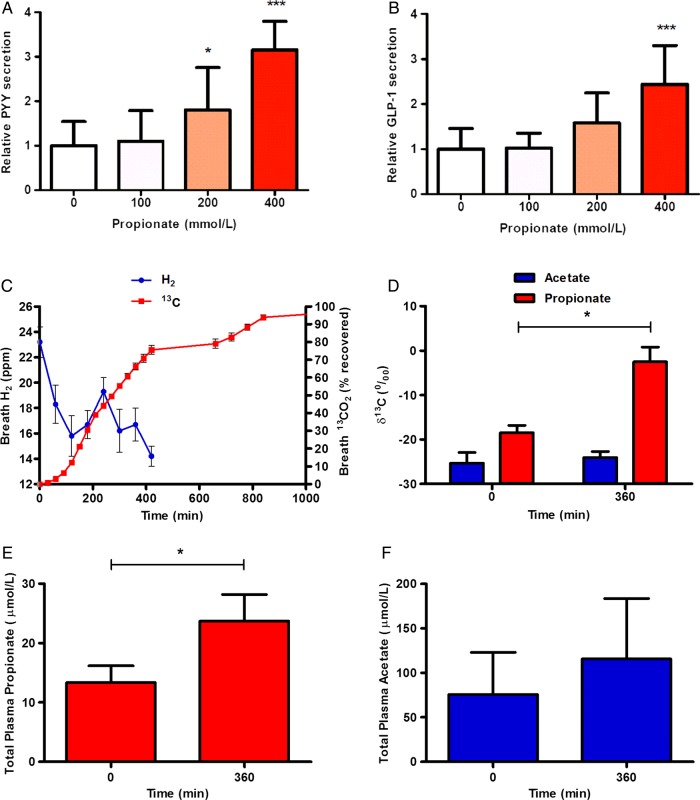
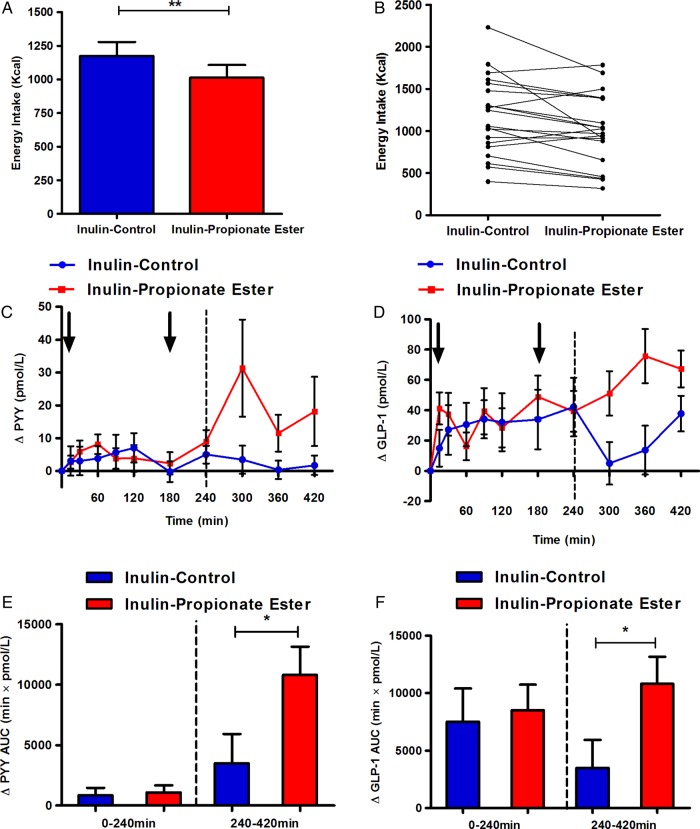
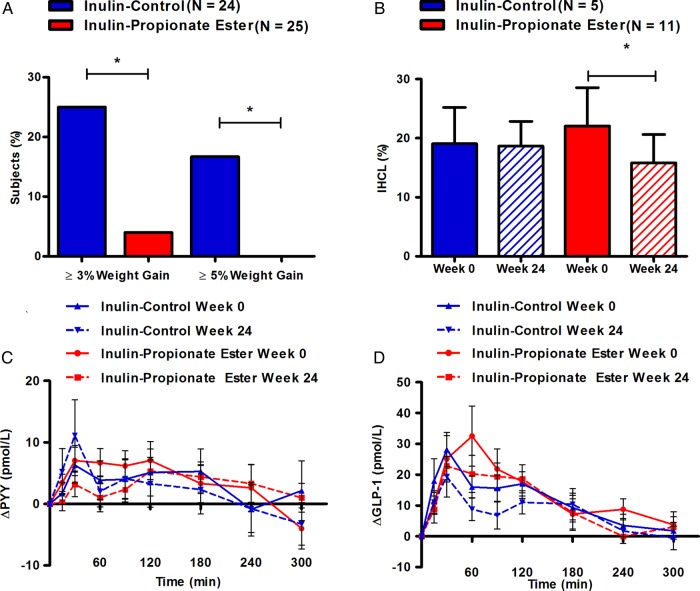
Objective: The colonic microbiota ferment dietary fibres, producing short chain fatty acids. Recent evidence suggests that the short chain fatty acid propionate may play an important role in appetite regulation. We hypothesised that colonic delivery of propionate would increase peptide YY (PYY) and glucagon like peptide-1 (GLP-1) secretion in humans, and reduce energy intake and weight gain in overweight adults. Design: To investigate whether propionate promotes PYY and GLP-1 secretion, a primary cultured human colonic cell model was developed. To deliver propionate specifically to the colon, we developed a novel inulin-propionate ester. An acute randomised, controlled cross-over study was used to assess the effects of this inulin-propionate ester on energy intake and plasma PYY and GLP-1 concentrations. The long-term effects of inulin-propionate ester on weight gain were subsequently assessed in a randomised, controlled 24-week study involving 60 overweight adults. Results: Propionate significantly stimulated the release of PYY and GLP-1 from human colonic cells. Acute ingestion of 10 g inulin-propionate ester significantly increased postprandial plasma PYY and GLP-1 and reduced energy intake. Over 24 weeks, 10 g/day inulin-propionate ester supplementation significantly reduced weight gain, intra-abdominal adipose tissue distribution, intrahepatocellular lipid content and prevented the deterioration in insulin sensitivity observed in the inulin-control group. Conclusions: These data demonstrate for the first time that increasing colonic propionate prevents weight gain in overweight adult humans. Trial registration number: NCT00750438.
Overview
The claims and statistics of this paper haven’t been checked yet.
Free: it reads the open-access text and checks the first 5 claims that cite a source we can check. Create a free account to check every claim.
Integrity signals
Registry
Cites
Statistics
Figures
Verification
Claims the paper makes
The claims and statistics of this paper haven’t been checked yet.
Free: it reads the open-access text and checks the first 5 claims that cite a source we can check. Create a free account to check every claim.
Claims other papers make about this one
Each is checked against this paper’s own text: does it say what the citing paper says it does?
The source backs part of the claim, not all of it — or backs it for a different population, condition or comparison.
In the citing paper
“Human-based studies corroborate the beneficial effects of SCFAs, including the effects of propionate (a common SCFA produced by human gut microbiota) on enhanced incretin response (including plasma Peptide YY [PYY] and GLP-1 excursions), weight loss, reduced intra-abdominal adipose tissue volume and intra-hepatocellular lipid content and preservation of insulin sensitivity [59].”
From The Health Benefits of Dietary Fibre (2020) · cites this paper as [59]
Experimental — accuracy not yet measuredThe cited source says what the claim attributes to it.
In the citing paper
“Short-chain fatty-acid production is primarily derived from non-digestible-carbohydrate (i.e., dietary fiber) consumption [213] during colonic bacterial fermentation [214].”
From Impact of Protein Intake in Older Adults with Sarcopenia and Obesity: A Gut Microbiota Perspective (2020) · cites this paper as [213]
Self-check
Percentages, sums and reported differences re-computed from the paper’s own numbers.
The self-check needs the paper’s full text.
Citations
Cites
Diet rapidly and reproducibly alters the human gut microbiome
David, L. A., Maurice, C. F., Carmody, R. N., Gootenberg, D. B., Button, J. E., Wolfe, B. E., Ling, A. V., Devlin, A. S., Varma, Y., Fischbach, M. A., et al. (2014) · Nature · doi:10.1038/nature12820 · Cited by 10,100 · cited 1×
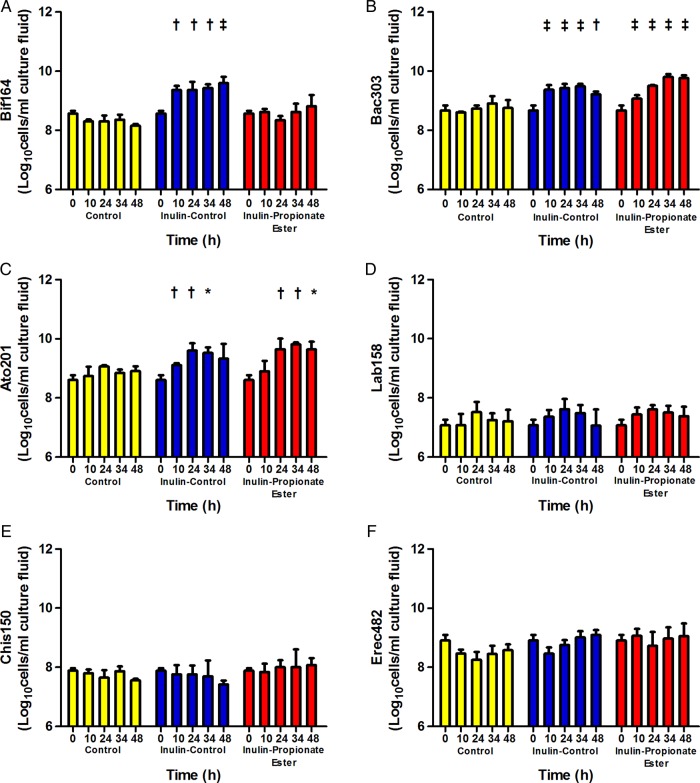
“41 Data from batch culture experiments demonstrated that inulin-control and inulin-propionate ester stimulate changes to the gut microbiota, although only inulin-control had a selective effect on Bi fi dobacterium .”
BackgroundAbdominal obesity and metabolic syndrome
Després, J.-P., & Lemieux, I. (2006) · Nature · doi:10.1038/nature05488 · Cited by 4,354 · cited 1×
“44 Interestingly, in this long-term study we were unable to detect any change in PYY or GLP-1 release following ingestion of the inulin-propionate ester compared with inulin-control, in contrast to our acute administration studies.”
ResultGut Microbiota from Twins Discordant for Obesity Modulate Metabolism in Mice
Ridaura, V. K., Faith, J. J., Rey, F. E., Cheng, J., Duncan, A. E., Kau, A. L., Griffin, N. W., Lombard, V., Henrissat, B., Bain, J. R., et al. (2013) · Science · doi:10.1126/science.1241214 · Cited by 3,788
Short chain fatty acids in human large intestine, portal, hepatic and venous blood
Cummings, J. H., Pomare, E. W., Branch, W. J., Naylor, C. P., & Macfarlane, G. T. (1987) · Gut · doi:10.1136/gut.28.10.1221 · Cited by 3,119 · cited 1×
“31 To overcome the unpalatably high levels of ferment-able dietary fi bre needed to signi fi cantly increase colonic propionate levels, and the unpredictability in the production of the resulting SCFAs, we have developed a novel delivery system targeting the release of gram quantities of propionate…”
BackgroundChanges in diet and lifestyle and long-term weight gain in women and men
Mozaffarian, D., Hao, T., Rimm, E. B., Willett, W. C., & Hu, F. B. (2011) · New England Journal of Medicine · doi:10.1056/nejmoa1014296 · Cited by 2,527
Brown, A. J., Goldsworthy, S. M., Barnes, A. A., Eilert, M. M., Tcheang, L., Daniels, D., Muir, A. I., Wigglesworth, M. J., Kinghorn, I., Fraser, N. J., et al. (2003) · Journal of Biological Chemistry · doi:10.1074/jbc.m211609200 · Cited by 2,409
Tolhurst, G., Heffron, H., Lam, Y. S., Parker, H. E., Habib, A. M., Diakogiannaki, E., Cameron, J., Grosse, J., Reimann, F., & Gribble, F. M. (2012) · Diabetes · doi:10.2337/db11-1019 · Cited by 2,404 · cited 2×
“21 Of the SCFAs produced by colonic fermentation of dietary fi bre, propionate has the highest af fi nity for FFAR 2.”
BackgroundMethodGut hormone PYY3-36 physiologically inhibits food intake
Batterham, R. L., Cowley, M. A., Small, C. J., Herzog, H., Cohen, M. A., Dakin, C. L., Wren, A. M., Brynes, A. E., Low, M. J., Ghatei, M. A., et al. (2002) · Nature · doi:10.1038/nature00887 · Cited by 2,351
Self-citationFlint, A., Raben, A., Blundell, J., & Astrup, A. (2000) · International Journal of Obesity · doi:10.1038/sj.ijo.0801083 · Cited by 2,238
Self-citationMicrobiota-Generated Metabolites Promote Metabolic Benefits via Gut-Brain Neural Circuits
De Vadder, F., Kovatcheva-Datchary, P., Goncalves, D., Vinera, J., Zitoun, C., Duchampt, A., Bäckhed, F., & Mithieux, G. (2014) · Cell · doi:10.1016/j.cell.2013.12.016 · Cited by 2,200
Cited by
Items 901–1,000 of 1,001
Liu, C., Sun, M., Zhao, Z., Yang, Y., Yang, Y., Zhao, Y., Zhang, R., Du, X., Liu, X., Ran, S., et al. (2026) · Frontiers in Endocrinology · doi:10.3389/fendo.2026.1786776 · Cited by 10
Inokuma, K., Sasaki, D., Kurata, K., Ichikawa, M., Otsuka, Y., & Kondo, A. (2023) · Scientific Reports · doi:10.1038/s41598-023-38849-5 · Cited by 10
“…act as natural ligands for several cell-surface G protein-coupled receptors expressed in a wide range of tissues, and they exert various biological regulatory functions, including the suppression of inflammatory responses 27,28 , blood pressure regulation 29,30 , and appetite suppression 31,32 .”
Gut Microbiota Disorders and Metabolic Syndrome: Tales of a Crosstalk Process
Nie, P., Hu, L., Feng, X., & Xu, H. (2024) · Nutrition Reviews · doi:10.1093/nutrit/nuae157 · Cited by 10
Smiljanec, K., Mitchell, C. M., Privitera, O. F., Neilson, A. P., Davy, K. P., & Davy, B. M. (2017) · Nutrition and Health · doi:10.1177/0260106017699632 · Cited by 10
“Email: ksmilja@vt.edu observed (Chambers et al., 2014).”
BackgroundInfluentialYamada, H., Watabe, Y., Suzuki, Y., Koike, S., Shimamoto, S., & Kobayashi, Y. (2020) · Journal of the Science of Food and Agriculture · doi:10.1002/jsfa.10927 · Cited by 10
Metabolic responses of light and taste receptors – unexpected actions of GPCRs in adipocytes
Ekechukwu, O. N., & Christian, M. (2021) · Reviews in Endocrine and Metabolic Disorders · doi:10.1007/s11154-021-09667-9 · Cited by 10
Kaul, R., Paul, P., Harfouche, M., Saliba, R., & Châari, A. (2023) · Diabetes/Metabolism Research and Reviews · doi:10.1002/dmrr.3675 · Cited by 10
Basuray, N., Deehan, E. C., Vieira, F. T., Avedzi, H. M., Duke, R. L., Colin-Ramírez, E., Tun, H. M., Zhang, Z., Wine, E., Madsen, K. L., et al. (2024) · European Journal of Clinical Nutrition · doi:10.1038/s41430-024-01429-5 · Cited by 11
Morris, C., Lynn, A., Neveux, C., Hall, A. C., & Morris, G. A. (2015) · Food & Function · doi:10.1039/c5fo00477b · Cited by 10
Role of Fiber and Healthy Dietary Patterns in Body Weight Regulation and Weight Loss
Dreher, M. L. (2015) · Advances in Obesity Weight Management & Control · doi:10.15406/aowmc.2015.03.00068 · Cited by 10
“In cultured human colonic cells, propionate was shown to stimulate the release of GLP-1 and PYY along with reducing energy intake [123].”
BackgroundThe Bright and Dark Sides of Wheat
Boukid, F. (2021) · Springer eBooks · doi:10.1007/978-3-030-69228-5_9 · Cited by 10
Rezaee, N., Rahmani‐Nia, F., Delfan, M., & Ghahremani, R. (2021) · Life Sciences · doi:10.1016/j.lfs.2021.119973 · Cited by 10
Takeuchi, H., Higuchi, K., Yoshikane, Y., Takagi, R., Tokuhiro, S., Takenaka, K., Oboshi, W., Kimura, A., Islam, J. M., Kaneko, A., et al. (2020) · Nutrients · doi:10.3390/nu12092646 · Cited by 10
Effects of Liver Resection on Hepatic Short-Chain Fatty Acid Metabolism in Humans
Neis, E. P. J. G., Bloemen, J. G., Rensen, S. S., van der Vorst, J. R., van den Broek, M. A. J., Venema, K., Buurman, W. A., & Dejong, C. H. C. (2016) · PLoS ONE · doi:10.1371/journal.pone.0166161 · Cited by 10
Pathogenesis and research progress of nonalcoholic fatty liver disease/nonalcoholic steatohepatitis
Shan, G.-Y., Wan, H., Zhang, Y., Cheng, J.-Y., Qiao, D.-R., Liu, Y.-Y., Shi, W., & Li, H. (2024) · World Journal of Hepatology · doi:10.4254/wjh.v16.i10.1142 · Cited by 11
Chuaykarn, N., Tampanna, N., Wangkulangkul, P., Wanitsuwan, W., Yolsuriyanwong, K., & Wichienchot, S. (2024) · Bioactive Carbohydrates and Dietary Fibre · doi:10.1016/j.bcdf.2024.100443 · Cited by 9
Alzubi, A., Glowacki, H. X., Burns, J. L., Van, K., Martin, J. L. A., & Monk, J. M. (2025) · Nutrients · doi:10.3390/nu17030571 · Cited by 9
“…obese phenotype, NDC supplementation in both humans and obese rodents has been shown to improve critical elements of the obese phenotype, including reducing weight gain [17–29], reducing adipose tissue mass [18,19,28–32], and improving blood glucose regulation and/or insulin resistance [26,33–39].”
Role of plant-derived protein hydrolysates and peptides in appetite regulation
Li, W., Liu, M., Li, Y., Zhou, J., Zhu, S., Liu, L., Yang, H., & Wang, Z. (2025) · Trends in Food Science & Technology · doi:10.1016/j.tifs.2025.104976 · Cited by 9
Luo, N., Guo, Y., Peng, L., & Deng, F. (2023) · Frontiers in Neurology · doi:10.3389/fneur.2022.1026904 · Cited by 9
“Inulin, a type of soluble dietary fiber, promotes the production of glucagon-like peptide-1 (GLP-1) in enteroendocrine cells and suppresses postprandial blood glucose elevation and appetite through short-chain fatty acids (SCFAs) produced by the intestinal microbiota (37, 38).”
BackgroundXie, C. Y., Li, J., Fang, Y., Ma, R., Dang, Z., & Yang, F. (2023) · Journal of the Science of Food and Agriculture · doi:10.1002/jsfa.12480 · Cited by 9
Gut Microbiota and its Metabolites in Pathogenesis of NAFLD
Reshetova, M. S., Zolnikova, O. Y., Ivashkin, V. T., Владимирович, И. К., Appolonova, S. A., & Lapina, T. L. (2023) · Russian Journal of Gastroenterology Hepatology Coloproctology · doi:10.22416/1382-4376-2022-32-5-75-88 · Cited by 10
Steinert, R. E., Mueller, M., Serra, M., Lehner-Sigrist, S., Frost, G. S., Gerö, D., Gerber, P. A., & Bueter, M. (2024) · Nutrition and Diabetes · doi:10.1038/s41387-024-00267-5 · Cited by 9
Self-citationMelatonin Protects Against Colistin‐Induced Intestinal Inflammation and Microbiota Dysbiosis
Jia, Y., Zhang, T., He, M., Yang, B., Wang, Z., & Liu, Y. (2024) · Journal of Pineal Research · doi:10.1111/jpi.12989 · Cited by 9
“Moreover, the supplementation of PA may play a crucial role in regulating appetite and preventing weight gain in overweight adults [52].”
Dual Regulation Mechanism of Obesity: DNA Methylation and Intestinal Flora
Ren, Y., Huang, P., Zhang, L., Tang, Y.-F., Luo, S., She, Z., Peng, H., Chen, Y.-Q., Luo, J., Duan, W.-X., et al. (2024) · Biomedicines · doi:10.3390/biomedicines12081633 · Cited by 9
“Intestinal cells secrete GLP1 and PYY when these SCFAs are combined with GRP41 and GRP43, thereby improving insulin sensitivity [182–185].”
BackgroundSun, S., Zhang, Q., Li, D., Li, H., Ma, H., Wu, X., Li, Y., Wang, P., Liu, R., Feng, H., et al. (2024) · Frontiers in Nutrition · doi:10.3389/fnut.2024.1406070 · Cited by 9
Liu, C.-F., Chuang, H.-T., Wang, C.-S., Hsu, Y.-W., Pan, T., & Lee, C.-L. (2025) · Food & Function · doi:10.1039/d4fo05435k · Cited by 9
Wang, S., Hong, L., Jia, X., Lin, Y., Hu, C., Li, M., Xu, Y., Xu, M., Zheng, J., Zhao, X., et al. (2025) · Life Metabolism · doi:10.1093/lifemeta/loaf001 · Cited by 9
Orlistat ameliorates lipid dysmetabolism in high-fat diet-induced mice via gut microbiota modulation
Huang, C., He, Y., Chai, P., Liu, Z., Su, S., Zhang, Y., Luo, Y., & Fu, S. (2025) · Frontiers in Microbiology · doi:10.3389/fmicb.2025.1480500 · Cited by 9
Kawashima, T., Ogata, M., Fujita, N., & Takahashi, R. (2019) · Frontiers in Physiology · doi:10.3389/fphys.2019.01483 · Cited by 9
Pinheiro, I., Barberá, A., Raurell, I., Estrella, F. R., de Leeuw, M., Bolca, S., Gottardi, D., Horscroft, N., Possemiers, S., Salcedo, M. T., et al. (2022) · Biomedicines · doi:10.3390/biomedicines10051191 · Cited by 9
“In addition, in overweight adult humans, propionate has been shown to prevent weight gain and insulin resistance [41].”
BackgroundPalmqvist, H., Höglund, K., Ringmark, S., Lundh, T., & Dicksved, J. (2023) · Scientific Reports · doi:10.1038/s41598-023-37975-4 · Cited by 9
Monitoring quality and bioactivity of Kakadu plum in the Northern Territory
Sultanbawa, Y. F., Chaliha, M., Cusack, A., Edwards, D., & Williams, D. M. (2018) · Cited by 9
Preparation, structural characteristics and physiological property of resistant starch
Wang, R., Li, M., Strappe, P., & Zhou, Z. (2021) · Advances in food and nutrition research · doi:10.1016/bs.afnr.2020.09.002 · Cited by 9
Xu, B., Cao, J., Fu, J., Li, Z., Jin, M., Wang, X., & Wang, Y. (2021) · Nutrition Reviews · doi:10.1093/nutrit/nuab018 · Cited by 9
Gual‐Grau, A., Guirro, M., Crescenti, A., Boqué, N., & Arola, L. (2021) · International Journal of Food Sciences and Nutrition · doi:10.1080/09637486.2021.1954144 · Cited by 9
Harris, H. C., & Warren, F. J. (2024) · Carbohydrate Polymers · doi:10.1016/j.carbpol.2024.122561 · Cited by 8
Szczuko, M., Duliban, G., Drozd, A., Sochaczewska, D., Pokorska‐Niewiada, K., & Ziętek, M. (2024) · International Journal of Molecular Sciences · doi:10.3390/ijms252312487 · Cited by 8
Dietary strategies for appetite regulation: satiety and obesity management
Xia, P., Li, B., Yu, Y., Yu, W., Youssef, M., Hou, T., & Li, J. (2025) · Food & Function · doi:10.1039/d5fo01349f · Cited by 8
Shi, F., & Chen, J. (2025) · Aging and Disease · doi:10.14336/ad.2025.0670 · Cited by 8
“Another study further demonstrated that supplementation with inulin-propionate ester elevates colonic propionate levels and attenuates weight gain, primarily through the stimulation of glucagon-like peptide-1 (GLP-1) secretion [40].”
Patoine, C., Sheffler, J., Sims, T., Gutierrez, V., Park, G., Mayonu, M., Wang, B., & Nagpal, R. (2025) · Gut Microbes Reports · doi:10.1080/29933935.2025.2605879 · Cited by 8
“105 Elevated fecal propionate was associated with lower adiposity in our cohort.”
A gut-liver lipid flux checkpoint mediates FAHFA protection from MASLD
Xie, H., Cheng, H. S., Ng, J. X. J., Zhang, S., Kim, J. H. S., Tan, S. H., Tan, C., & Tan, N. S. (2026) · Pharmacological Research · doi:10.1016/j.phrs.2025.108085 · Cited by 8
Elbehiry, A., Marzouk, E., Alhumaydhi, F. A., & Abalkhail, A. (2026) · Journal of Clinical Medicine · doi:10.3390/jcm15051788 · Cited by 9
The Role of Diet in Shaping Gut Microbiota and Its Impact on Host Metabolic Regulation
Hernández-Valles, A. E., Martínez-Machado, G., Alvarado-Mata, L. Y., Ortíz, C. E., Nimmakayala, P., Balagurusamy, N., & Reddy, U. K. (2026) · International Journal of Molecular Sciences · doi:10.3390/ijms27062768 · Cited by 8
Dagbasi, A., Cai, M., Hirdaramani, A., Hanyaloglu, A. C., Morrison, D. J., & Frost, G. S. (2026) · Nature Metabolism · doi:10.1038/s42255-026-01579-9 · Cited by 11
Self-citationKomorniak, N., Kley, A. M., Nalian, A. G., Wardziukiewicz, W., Skonieczna‐Żydecka, K., Styburski, D., Palma, J., Kowalewski, B., Kaseja, K., & Stachowska, E. (2020) · Nutrients · doi:10.3390/nu12092621 · Cited by 8
Effects of intestinal bacteria on cardiovascular disease
Zhao, Y., & Chen, L. (2022) · Biotechnology and Genetic Engineering Reviews · doi:10.1080/02648725.2022.2074696 · Cited by 8
“In many studies, SCFA have been shown to mitigate cardiovascular disease (Chambers et al., 2015; Chang et al., 2014; Flint et al., 2012; Koh et al., 2016), but some reports have described their potential to trigger cardiovascular disease, as shown in Figure 1.”
BackgroundAfriansyah, A., Setiawati, M., Suprayudi, M. A., & Fauzi, I. A. (2023) · Jurnal Akuakultur Indonesia · doi:10.19027/jai.22.1.18-26 · Cited by 8
Yang, Q., Cai, X., Zhu, Y., Hu, Z., Wei, Y., Dang, Q., Zhang, Y., Zhao, X., Jiang, X., & Yu, H. (2023) · Food & Function · doi:10.1039/d3fo00429e · Cited by 8
Belloumi, D., Garcia-Rebollar, P., Calvet, S., Francino, M. P., Reyes‐Prieto, M., González-Garrido, J., Piquer, L., Jiménez-Belenguer, A. I., Bermejo, A., Cano, C., et al. (2024) · Frontiers in Microbiology · doi:10.3389/fmicb.2024.1359670 · Cited by 8
Alarifi, S. N., Alyamani, E. J., Alarawi, M. S., Alquait, A. A., Alolayan, M. A., Aldossary, A. M., EL-Rahman, R. A. A., & Mir, R. (2024) · Metabolites · doi:10.3390/metabo14120720 · Cited by 8
“Likewise, acute supplementation of propionate increased postprandial plasma levels of these two gut hormones in humans, and its long-term supplementation prevented weight gain and worsening insulin sensitivity in overweight adults [54].”
Xiang, M., Li, Q., Han, Q., Zha, Y., Sui, X., & Wang, Q. (2025) · Nutrition Reviews · doi:10.1093/nutrit/nuae193 · Cited by 8
Fecal Short-Chain Fatty Acids Are Associated with Obesity in Gestational Diabetes
Molan, K., Avguštin, J. A., Likar, M., Barlovič, D. P., Barlovič, D. P., & Erjavec, M. S. (2025) · Biomedicines · doi:10.3390/biomedicines13020387 · Cited by 8
“Further studies including larger sample sizes and additional measurements of serum SCFAs are needed to deepen our understanding of the underlying mechanisms and their implications for maternal and fetal health.”
Liang, Z., Chen, S., Zhang, X., Li, J., Guo, W., Ni, L., & Lv, X. (2025) · Foods · doi:10.3390/foods14061054 · Cited by 8
“…acid are considered as preferred energy sources for intestinal epithelial cells, helping to promote the integrity and function of the intestinal wall and indirectly promoting the absorption of nutrients [24]. of the intestinal wall and indirectly promoting the absorption of nutrients [24].”
Human Gut Microbiota and the Influence of Probiotics, Prebiotics, and Micronutrients
Pyle, S. (2021) · Elsevier eBooks · doi:10.1016/b978-0-12-819265-8.00076-0 · Cited by 8
Diet dependent impact of benzoate on diabetes and obesity in mice
Brial, F., Matsuda, F., & Gauguier, D. (2021) · Biochimie · doi:10.1016/j.biochi.2021.12.010 · Cited by 8
Sun, H., Zhang, Q., Xu, C., Mao, A., Zhao, H., Chen, M., Sun, W., Li, G., & Zhang, T. (2023) · Metabolites · doi:10.3390/metabo13040554 · Cited by 8
“In addition, a sustained increase in glucagonlike peptide-1 (GLP-1) and PYY induced by propionate affects appetite regulation circuits in the brain and inhibits food intake [83,84].”
BackgroundEfecto de inulina en la saciedad en humanos
Tomás, U. S., Vilma Quitral, R., Torres, M. I., Tomás, U. S., Velásquez, M., Tomás, U. S., Bobadilla, M., & Tomás, U. S. (2018) · Perspectivas en Nutrición Humana · doi:10.17533/udea.penh.v20n1a07 · Cited by 8
Huang, R. Y., Herr, D. R., & Moochhala, S. (2020) · Microorganisms · doi:10.3390/microorganisms8050773 · Cited by 8
“Although the literature has indicated that increased levels of propionate promote liver gluconeogenesis in mice [29], results from a clinical study illustrated that propionate supplementation remarkably reduced intrahepatocellular lipid content [30].”
BackgroundAnti-obesity Effects of SCOBY Jackfruit Beverages and Their Influence on Gut Microbiota
Koh, S. P., Sew, Y. S., Sabidi, S., Maarof, S., Sharifudin, S. A., & Abdullah, R. (2022) · Exploratory Research and Hypothesis in Medicine · doi:10.14218/erhm.2021.00072 · Cited by 8
Wang, X., Bai, P., Li, Z., Zhu, Q., Wei, Z., & Feng, Y. (2022) · Angewandte Chemie · doi:10.1002/ange.202208138 · Cited by 8
Patel, N., Dinesh, S., & Sharma, S. (2023) · Current Diabetes Reviews · doi:10.2174/0115733998266653231005072450 · Cited by 9
The need to standardize ad libitum eating protocols in dietary fibre appetite research
Zaremba, S., Drummond, S., & Steinert, R. E. (2016) · European Journal of Clinical Nutrition · doi:10.1038/ejcn.2016.253 · Cited by 8
Herrera, C., Fernández, L., Ortega, J., López-Tosco, S., & Sosa, A. (2018) · Industrial & Engineering Chemistry Research · doi:10.1021/acs.iecr.8b03986 · Cited by 8
Identifying crop variants with high resistant starch content to maintain healthy glucose homeostasis
Petropoulou, K., Chambers, E. S., Morrison, D. J., Preston, T., Godsland, I. F., Wilde, P., Narbad, A., Parker, R., Salt, L., Morris, V. J., et al. (2016) · Nutrition Bulletin · doi:10.1111/nbu.12240 · Cited by 7
Self-citationVariation in Intramuscular Fat Deposition of Goats and Sheep and Its Correlation with Gut Microbiota
Lei, Y., Zhao, F., Li, S., Tang, Z., Shi, B., Luo, Y., Wang, J., & 侯家公 (2025) · Foods · doi:10.3390/foods14111885 · Cited by 7
“…the impact of gut microbiota on host fat accumulation may occur through microbial metabolites, such as short-chain fatty acids (SCFAs), which can influence host lipid metabolism by modulating nutrient detection, nerve signal transmission, and hormone release within the digestive system [12].”
Incorporating Postbiotics into Intervention for Managing Obesity
Hijová, E., Bertková, I., & Štofilová, J. (2025) · International Journal of Molecular Sciences · doi:10.3390/ijms26115362 · Cited by 7
“Long-term intake of inulin-propionate ester led to reduced calorie intake, reduced weight gain and distribution in intra-abdominal adipose tissue, and also decreased intra-hepatocellular lipid content [100].”
The Impact of Environmental Factors on the Secretion of Gastrointestinal Hormones
Smarkusz-Zarzecka, J., Ostrowska, L., & Radziszewska, M. (2025) · Nutrients · doi:10.3390/nu17152544 · Cited by 8
“Moreover, observations suggest that this bacterium may inhibit further weight gain in overweight individuals [58,61].”
Gao, D., Dong, Y., Jia, Z., Bian, C., Zhu, J., Wu, Y., Fang, S., & Gu, S. (2025) · Probiotics and Antimicrobial Proteins · doi:10.1007/s12602-025-10885-9 · Cited by 7
“Concurrent elevations in key SCFAs (acetate, propionate, butyrate, and select branched-chain species) were directionally consistent with increases in GLP-1/PYY, supporting a cooperative gut microbiota-SCFA-incretin/immune signaling axis that modulates energy intake and insulin sensitivity [ 44 ].”
Varnas, D., Kunevičius, A., Burokas, A., & Urbonas, V. (2025) · Medicina · doi:10.3390/medicina62010065 · Cited by 7
Yu, X., Ma, F., Dai, H., Liu, J., Hashem, N. M., & Sun, P. (2023) · Animals · doi:10.3390/ani13213366 · Cited by 7
“Moreover, SCFAs produced by GOS fermentation can inhibit appetite by binding to free fatty acid receptors (FFAR2, GRP43), further activating the release of GLP-1, CCK, insulin, and LP and modulating the appetite system [72,73].”
BackgroundMetabolic syndrome’s new therapy: Supplement the gut microbiome
Xu, Y.-W., Tian, J., Song, Y., Zhang, B.-C., & Wang, J. (2024) · World Journal of Diabetes · doi:10.4239/wjd.v15.i4.793 · Cited by 7
Pugh, J. E., Petropoulou, K., Vasconcelos, J. C., Anjum, A., Thom, G., McCombie, L., Tashkova, M., Alshehhi, S., Babalis, D. S., Holroyd, L., et al. (2024) · EClinicalMedicine · doi:10.1016/j.eclinm.2024.102844 · Cited by 8
Self-citationGilsenan, S., Leong, D., Cotter, P. D., Brennan, L., & Nilaweera, K. N. (2024) · Nutrition Research Reviews · doi:10.1017/s0954422424000374 · Cited by 7
Orally Administrated Inulin-Modified Nanozymes for CT-Guided IBD Theranostics
Li, X., Cao, L. H., Li, J.-M., Li, Z., Ma, H., Cheng, S., Xu, H., & Zhao, Y. (2025) · International Journal of Nanomedicine · doi:10.2147/ijn.s497558 · Cited by 7
Zhang, Y., Liu, J., Chen, X., Xu, F., Zhang, X., Zhu, K., Zhang, J., & Zhang, Y. (2025) · International Journal of Biological Macromolecules · doi:10.1016/j.ijbiomac.2025.143452 · Cited by 7
Pokushalov, E., Garcia, C., Ponomarenko, A., Самойлова, Ю. Г., Smith, J. W., Johnson, M., Алексеевна, П. И., Shrainer, E., Kudlay, D. A., Romanova, A., et al. (2025) · Clinical Nutrition ESPEN · doi:10.1016/j.clnesp.2025.06.035 · Cited by 7
Correlation analysis of intestinal flora and pathological process of type 2 diabetes mellitus
An, Y., Duan, Y., Dai, H., Wang, C., Shi, L., He, C., Lv, Y., Li, H., Dai, S., & Zhao, B. (2022) · Journal of Traditional Chinese Medical Sciences · doi:10.1016/j.jtcms.2022.04.003 · Cited by 7
Cherta-Murillo, A., Danckert, N. P., Valdivia‐Garcia, M., Chambers, E. S., Roberts, L. A., Blanco, J. M., McDonald, J. A. K., Marchesi, J. R., & Frost, G. S. (2023) · International Journal of Food Sciences and Nutrition · doi:10.1080/09637486.2023.2216404 · Cited by 7
Self-citationThe role of gut microbiota in metabolic regulation
Кравчук, Е. Н., Неймарк, А. Е., Grineva, E. N., & Galagudza, M. M. (2016) · Diabetes Mellitus · doi:10.14341/dm7704 · Cited by 7
Peran mikrobiota usus dalam perkembangan obesitas
Susmiati, S. (2019) · Majalah Kedokteran Andalas · doi:10.25077/mka.v42.i1.p41-49.2019 · Cited by 7
Host—microbial interactions in metabolic diseases: from diet to immunity
Lee, J.-H., & Park, J. (2022) · The Journal of Microbiology · doi:10.1007/s12275-022-2087-y · Cited by 7
“Administration of SCFAs increases plasma levels of glucagon-like protein 1 (GLP-1) and peptide YY (PYY), which are secreted from colonocytes in a manner dependent primarily on G protein-coupled receptor 43 (GPR43 or FFAR2) and weakly on GPR41 (FFAR3) (Freeland and Wolever, 2010; Lin et al., 2012; Tolhurst et al., 2012…”
BackgroundGut microbial community differentially characterizes patients with nonalcoholic fatty liver disease
Jee, J. J., Lim, J., Park, S., Koh, H., & Lee, H. W. (2022) · Journal of Gastroenterology and Hepatology · doi:10.1111/jgh.15903 · Cited by 7
Hilakivi-Clarke, L. A., Verma, V., McDermott, M., Koak, P., & Andrade, F. D. O. (2022) · Frontiers in Microbiomes · doi:10.3389/frmbi.2022.1049688 · Cited by 7
“Similar to fecal SCFAs of which only very small amounts enter peripheral blood once they reach the liver, SCFAs in foods are rapidly absorbed in the stomach or small intestine and cleared from circulated blood within 1 hr (Pomare et al., 1985; Chambers et al., 2015).”
BackgroundLiu, Z., Dai, J., Liu, R., Shen, Z., Huang, A., Huang, Y., Wang, L., Chen, P., Zhou, Z., Xiao, H., et al. (2024) · Journal of the Science of Food and Agriculture · doi:10.1002/jsfa.13380 · Cited by 7
Paterson, S., Majchrzak, M., Gómez-Garre, D., Ortega-Hernández, A., Sánchez-González, S., de la Fuente, M. Á., Gómez-Cortés, P., & Hernández-Ledesma, B. (2024) · doi:10.20944/preprints202411.1270.v1 · Cited by 6
Hydrogen-rich water upregulates fecal propionic acid levels in overweight adults
Korovljev, D., Todorović, N., Ranisavljev, M., Andjelic, B., Kladar, N., Štajer, V., & Ostojić, S. M. (2023) · Nutrition · doi:10.1016/j.nut.2023.112200 · Cited by 6
Role of the Intestinal Microbiota in the Molecular Pathogenesis of Atypical Parkinsonian Syndromes
Przewodowska, D., Alster, P., & Madetko‐Alster, N. (2025) · International Journal of Molecular Sciences · doi:10.3390/ijms26093928 · Cited by 6
“SCFAs inhibit the accumulation of lipids in adipose tissue and participate in the regulation of carbohydrate metabolism, improving glucose tolerance [82].”
Patra, S., & Chelikani, P. K. (2025) · Nutrients · doi:10.3390/nu17132180 · Cited by 6
“For example, in humans, inulin–propionate ester at 10 g/day significantly reduced food intake, weight gain, body fat accumulation [31,32] and at 20 g/day improved insulin sensitivity and altered gut microbiota composition by increasing the relative abundance of Actinobacteria and decreasing…”
Safety of inulin‐propionate ester as a novel food pursuant to Regulation (EU) 2015/2283
(NDA), E. P. O. N. N. F. A. F. A., Turck, D., Bohn, T., Hurtado, M. D. L. M. C., Castenmiller, J. J. M., Henauw, S. D., Jos, A. M., Maciuk, A., Mangelsdorf, I., McNulty, B. A., et al. (2025) · EFSA Journal · doi:10.2903/j.efsa.2025.9534 · Cited by 6
“…C-labelled inulin-propionate ester, show that the NF dissociates in the GI tract to the soluble fibre inulin and the SCFA propionic acid, and that propionic acid becomes then available for absorption and metabolism, being oxidised to CO 2 within 24 h (Chambers et al., 2015; Polyviou et al., 2016).”
InfluentialSteering protein fermentation by adding fibres in pig diets
Noorman, L., Bekebrede, A. F., de Vries, S., Kies, A. K., & Gerrits, W. J. J. (2025) · animal · doi:10.1016/j.animal.2025.101615 · Cited by 6
Puig, R., Rojo-López, M. I., Julve, J., Castelblanco, E., Ponomarenko, J. V., Amézqueta, S., Vendrell, J. J., Franch‐Nadal, J., Torres, J. L., Mauricio, D., et al. (2025) · Nutrients · doi:10.3390/nu17183003 · Cited by 6
“This observation is consistent with previous evidence indicating that propionic acid may enhance insulin sensitivity and exert anti-inflammatory effects, which together may delay or prevent metabolic deterioration [46,47].”
Govindan, A., Du, H., Manjaly, J. P., Patangia, D. V., Zannini, E., Woods, T., Donoghue, D. O., Ross, R. P., & Stanton, C. (2025) · Food Nutrition · doi:10.1016/j.fnutr.2025.100050 · Cited by 6
Gui, X., Wu, L., Huang, K., Zeng, R., Zhao, X., Yang, A., Yin, X., Cai, S., Yi, J., & Chu, C. (2025) · Food Research International · doi:10.1016/j.foodres.2025.117714 · Cited by 6
Irfan, Z., Halder, J., Giri, S., Molla, E. A., & Khanam, S. (2026) · Diabetes Research and Clinical Practice · doi:10.1016/j.diabres.2026.113102 · Cited by 7
Hirdaramani, A., Cheng, C., Hanyaloglu, A. C., & Frost, G. S. (2026) · Communications Biology · doi:10.1038/s42003-026-09830-5 · Cited by 7
“All statistical data analyses were performed on GraphPad Prism 9.”
Self-citationMetabolic Profile and Metabolite Analyses in Extreme Weight Responders to Gastric Bypass Surgery
Fries, C., Haange, S., Rolle-Kampczyk, U. E., Till, A., Lammert, M., Grasser, L., Medawar, E., Dietrich, A., Horstmann, A., von Bergen�, M., et al. (2022) · Metabolites · doi:10.3390/metabo12050417 · Cited by 6
“In overweight human individuals, propionate supplementation also showed anti-obesity effects by increasing postprandial GLP-1 and PYY release and reducing energy intake [61].”
BackgroundProbiotic Effects on Disease Prevention and Treatment
Farahmandi, K., & Sulaimany, S. (2024) · IntechOpen eBooks · doi:10.5772/intechopen.109717 · Cited by 6
Guo, C., He, S., Barz, M. L., Binda, S., & Wang, H. (2024) · Molecular Nutrition & Food Research · doi:10.1002/mnfr.202300672 · Cited by 6
Endogenous Metabolites in Metabolic Diseases: Pathophysiologic Roles and Therapeutic Implications
Xiao, M., Zhou, N., Tian, Z., & Sun, C. (2025) · Journal of Nutrition · doi:10.1016/j.tjnut.2025.04.017 · Cited by 6
Trautwein, E. A., Peters, H. P. F., Mela, D. J., Edwards, C. A., Herrema, H., Fu, J., Geldof, M., & Albers, R. (2018) · Trends in Food Science & Technology · doi:10.1016/j.tifs.2018.09.005 · Cited by 6
Metadata
- Authors
- Chambers, E. S., Viardot, A., Psichas, A., Morrison, D. J., Murphy, K. G., Zac-Varghese, S. E. K., MacDougall, K., Preston, T., Tedford, C., Finlayson, G. S., Blundell, J. E., Bell, J. D., Thomas, E. L., Mt-Isa, S., Ashby, D., Gibson, G. R., Kolida, S., Dhillo, W. S., Bloom, S. R., Morley, W., Clegg, S., & Frost, G.
- Affiliations
- Hammersmith Hospital (GB)
- Garvan Institute of Medical Research (AU)
- Scottish Universities Environmental Research Centre (GB)
- Section of Investigative Medicine, Imperial College London, Hammersmith Hospital, London, UK
- University of the West of Scotland (GB)
- University of Leeds (GB)
- Imperial Clinical Trials Unit, School of Public Health, Imperial College London, London, UK
- Imperial College London (GB)
- University of Reading (GB)
- Department of Food and Nutritional Sciences, University of Reading, Reading, UK
- Leatherhead Food Research (GB)
- Corresponding author
- Frost, Gary
- ORCID
- Venue
- Gut
- Publisher
- BMJ
- Published
- 2014-12-10
- Volume
- 64
- Issue
- 11
- Pages
- 1744-1754
- ISSN
- 0017-5749 (ISSN-L)
- 1468-3288
- PMC
- PMC4680171
- OpenAlex
- W2106348916
- Cited by
- 1,424
- References
- 52
- Citations by year
- 2026: 125 · 2025: 171 · 2024: 149 · 2023: 144 · 2022: 167 · 2021: 172 · 2020: 138 · 2019: 120 · 2018: 97 · 2017: 54 · 2016: 61 · 2015: 25
- FWCI
- 22.75
- Type
- journal article
- Language
- en
- Open access
- hybrid
- doi.org
- Licence
- cc-by
- Locations
- Gut (publishedVersion, cc-by)
- PubMed Central (publishedVersion, cc-by)
- PubMed (publishedVersion)
- White Rose Research Online (University of Leeds, The University of Sheffield, University of York) (acceptedVersion)
- WestminsterResearch (University of Westminster) (acceptedVersion)
- ENLIGHTEN (Jurnal Bimbingan dan Konseling Islam) (acceptedVersion)
- Funders
- Wellcome Trust
- National Institute for Health and Care Research (FP7-HEALTH-2009-241592, CDF-2009-02-05, NF-SI-0513-10080, NF-SI-0507-10337, NF-SI-0513-10029, 03/DHCS/03/G121/48)
- Imperial College London
- Directorate for Biological Sciences
- Medical Research Council (FP7-HEALTH-2009-241592)
- Biotechnology and Biological Sciences Research Council (BB/H005072/1, 1527476, BB/L004259/1, BB/H004971/1, BB/H004815/1, FP7-HEALTH-2009-241592)
- National Health and Medical Research Council
- NIHR Imperial Biomedical Research Centre
- FP7 Health
- Topics
- Life Sciences › Neuroscience › Endocrine and Autonomic Systems › Regulation of Appetite and Obesity
- Life Sciences › Biochemistry, Genetics and Molecular Biology › Molecular Biology › Gut microbiota and health
- Health Sciences › Nursing › Nutrition and Dietetics › Microbial Metabolites in Food Biotechnology
- Keywords
- propionate, short-chain fatty acids, colonic fermentation, peptide YY, glucagon-like peptide-1, appetite regulation, energy intake, weight gain, overweight adults, intra-abdominal adipose tissue, hepatic steatosis, insulin sensitivity
- MeSH terms
- Body Weight Maintenance, Appetite Regulation, Cells, Cultured, Colon, Double-Blind Method, Female, Humans, Male, Middle Aged, Propionates, Cross-Over Studies, Peptide YY, Adiposity, Overweight, Glucagon-Like Peptide 1
About these checks
Registry, retraction, Cites and statistics results are computed, not judged, with one exception: a printed reference that no index lists is read once by a model before it counts as a citation error. Claims are extracted by a model and kept only when their quote appears verbatim in the text; each cited source is then checked, with a model’s help, for whether it says what the claim relies on. Those verdicts can be wrong — read the claim’s quote and the cited source before relying on one.
Statistics and arithmetic are recomputed, not judged.
Confidence bands are shown only for fields calibrated on our annotated test set. None is calibrated yet, so no band is shown.
What counts as a claim ›How we measure confidence ›How we check this ›
Are you an author, or do you see a problem with this page? Request a review
Data sources
Bibliographic data: Semantic Scholar, OpenAlex, Crossref.
Contains information from the Semantic Scholar Academic Graph Datasets, made available under the ODC Attribution License (ODC-BY 1.0).
Semantic Scholar’s data is described in: Kinney, R., et al. (2023). The Semantic Scholar Open Data Platform. arXiv:2301.10140.
