

Effects of targeted delivery of propionate to the human colon on appetite regulation, body weight maintenance and adiposity in overweight adults
Open accessThe DOI matches its Crossref record; 51 of the 52 references it cites were found in a registry or an index.
Abstract
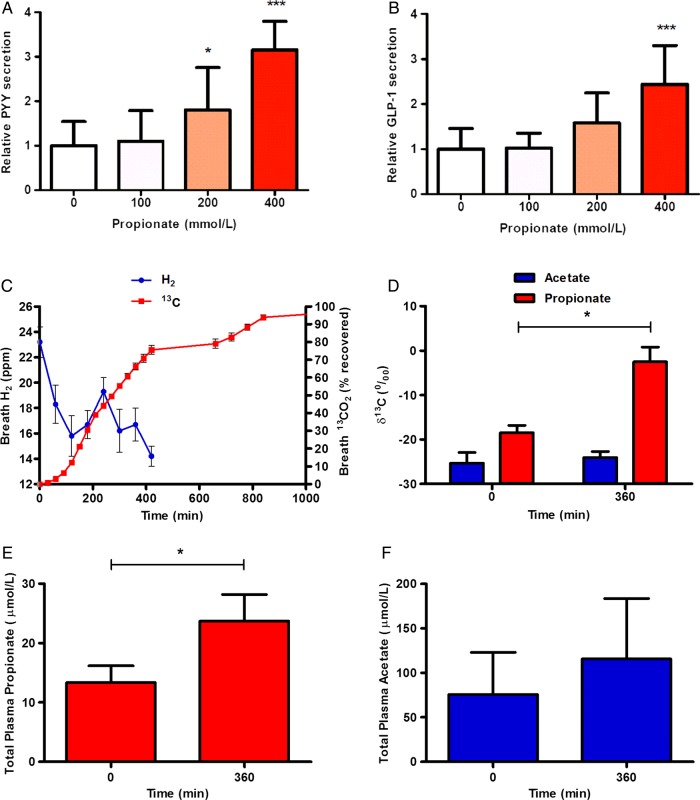
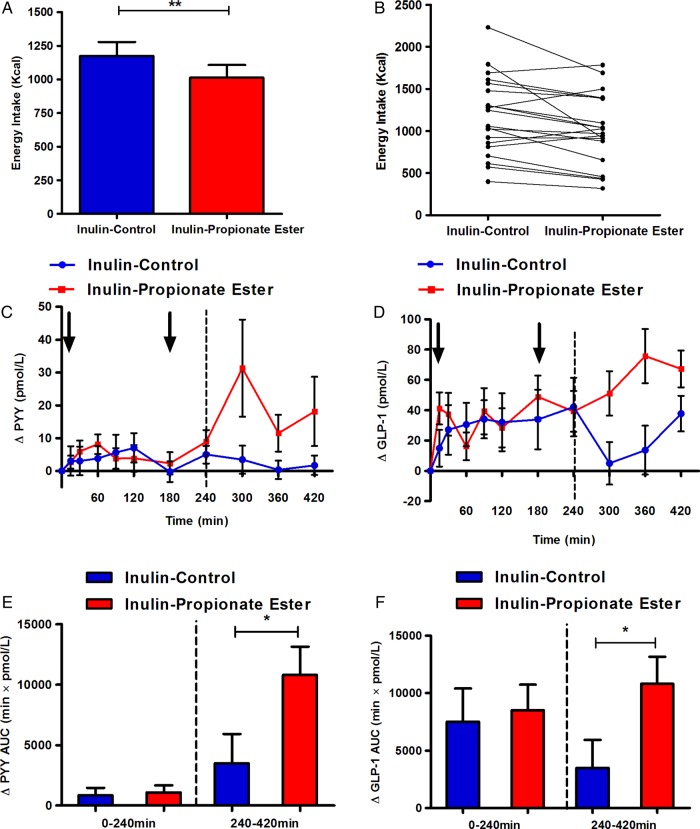
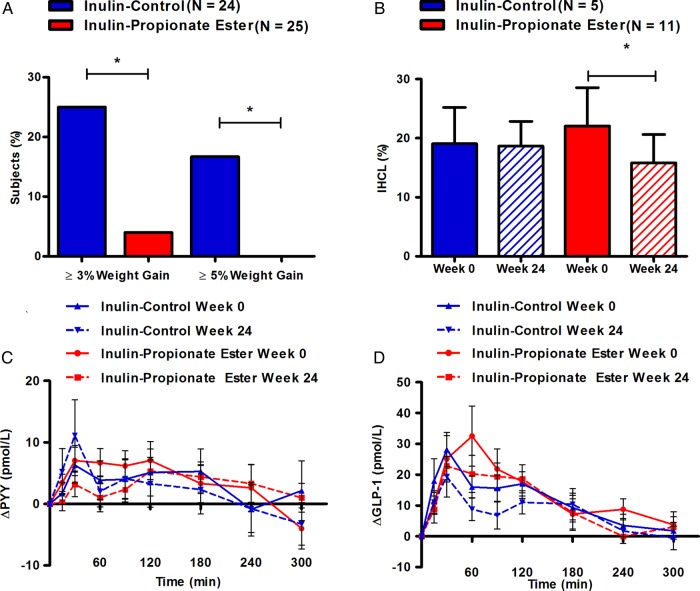
Objective: The colonic microbiota ferment dietary fibres, producing short chain fatty acids. Recent evidence suggests that the short chain fatty acid propionate may play an important role in appetite regulation. We hypothesised that colonic delivery of propionate would increase peptide YY (PYY) and glucagon like peptide-1 (GLP-1) secretion in humans, and reduce energy intake and weight gain in overweight adults. Design: To investigate whether propionate promotes PYY and GLP-1 secretion, a primary cultured human colonic cell model was developed. To deliver propionate specifically to the colon, we developed a novel inulin-propionate ester. An acute randomised, controlled cross-over study was used to assess the effects of this inulin-propionate ester on energy intake and plasma PYY and GLP-1 concentrations. The long-term effects of inulin-propionate ester on weight gain were subsequently assessed in a randomised, controlled 24-week study involving 60 overweight adults. Results: Propionate significantly stimulated the release of PYY and GLP-1 from human colonic cells. Acute ingestion of 10 g inulin-propionate ester significantly increased postprandial plasma PYY and GLP-1 and reduced energy intake. Over 24 weeks, 10 g/day inulin-propionate ester supplementation significantly reduced weight gain, intra-abdominal adipose tissue distribution, intrahepatocellular lipid content and prevented the deterioration in insulin sensitivity observed in the inulin-control group. Conclusions: These data demonstrate for the first time that increasing colonic propionate prevents weight gain in overweight adult humans. Trial registration number: NCT00750438.
Overview
The claims and statistics of this paper haven’t been checked yet.
Free: it reads the open-access text and checks the first 5 claims that cite a source we can check. Create a free account to check every claim.
Integrity signals
Registry
Cites
Statistics
Figures
Verification
Claims the paper makes
The claims and statistics of this paper haven’t been checked yet.
Free: it reads the open-access text and checks the first 5 claims that cite a source we can check. Create a free account to check every claim.
Claims other papers make about this one
Each is checked against this paper’s own text: does it say what the citing paper says it does?
The source backs part of the claim, not all of it — or backs it for a different population, condition or comparison.
In the citing paper
“Human-based studies corroborate the beneficial effects of SCFAs, including the effects of propionate (a common SCFA produced by human gut microbiota) on enhanced incretin response (including plasma Peptide YY [PYY] and GLP-1 excursions), weight loss, reduced intra-abdominal adipose tissue volume and intra-hepatocellular lipid content and preservation of insulin sensitivity [59].”
From The Health Benefits of Dietary Fibre (2020) · cites this paper as [59]
Experimental — accuracy not yet measuredThe cited source says what the claim attributes to it.
In the citing paper
“Short-chain fatty-acid production is primarily derived from non-digestible-carbohydrate (i.e., dietary fiber) consumption [213] during colonic bacterial fermentation [214].”
From Impact of Protein Intake in Older Adults with Sarcopenia and Obesity: A Gut Microbiota Perspective (2020) · cites this paper as [213]
Self-check
Percentages, sums and reported differences re-computed from the paper’s own numbers.
The self-check needs the paper’s full text.
Citations
Cites
Diet rapidly and reproducibly alters the human gut microbiome
David, L. A., Maurice, C. F., Carmody, R. N., Gootenberg, D. B., Button, J. E., Wolfe, B. E., Ling, A. V., Devlin, A. S., Varma, Y., Fischbach, M. A., et al. (2014) · Nature · doi:10.1038/nature12820 · Cited by 10,100 · cited 1×
“41 Data from batch culture experiments demonstrated that inulin-control and inulin-propionate ester stimulate changes to the gut microbiota, although only inulin-control had a selective effect on Bi fi dobacterium .”
BackgroundAbdominal obesity and metabolic syndrome
Després, J.-P., & Lemieux, I. (2006) · Nature · doi:10.1038/nature05488 · Cited by 4,354 · cited 1×
“44 Interestingly, in this long-term study we were unable to detect any change in PYY or GLP-1 release following ingestion of the inulin-propionate ester compared with inulin-control, in contrast to our acute administration studies.”
ResultGut Microbiota from Twins Discordant for Obesity Modulate Metabolism in Mice
Ridaura, V. K., Faith, J. J., Rey, F. E., Cheng, J., Duncan, A. E., Kau, A. L., Griffin, N. W., Lombard, V., Henrissat, B., Bain, J. R., et al. (2013) · Science · doi:10.1126/science.1241214 · Cited by 3,788
Short chain fatty acids in human large intestine, portal, hepatic and venous blood
Cummings, J. H., Pomare, E. W., Branch, W. J., Naylor, C. P., & Macfarlane, G. T. (1987) · Gut · doi:10.1136/gut.28.10.1221 · Cited by 3,119 · cited 1×
“31 To overcome the unpalatably high levels of ferment-able dietary fi bre needed to signi fi cantly increase colonic propionate levels, and the unpredictability in the production of the resulting SCFAs, we have developed a novel delivery system targeting the release of gram quantities of propionate…”
BackgroundChanges in diet and lifestyle and long-term weight gain in women and men
Mozaffarian, D., Hao, T., Rimm, E. B., Willett, W. C., & Hu, F. B. (2011) · New England Journal of Medicine · doi:10.1056/nejmoa1014296 · Cited by 2,527
Brown, A. J., Goldsworthy, S. M., Barnes, A. A., Eilert, M. M., Tcheang, L., Daniels, D., Muir, A. I., Wigglesworth, M. J., Kinghorn, I., Fraser, N. J., et al. (2003) · Journal of Biological Chemistry · doi:10.1074/jbc.m211609200 · Cited by 2,409
Tolhurst, G., Heffron, H., Lam, Y. S., Parker, H. E., Habib, A. M., Diakogiannaki, E., Cameron, J., Grosse, J., Reimann, F., & Gribble, F. M. (2012) · Diabetes · doi:10.2337/db11-1019 · Cited by 2,404 · cited 2×
“21 Of the SCFAs produced by colonic fermentation of dietary fi bre, propionate has the highest af fi nity for FFAR 2.”
BackgroundMethodGut hormone PYY3-36 physiologically inhibits food intake
Batterham, R. L., Cowley, M. A., Small, C. J., Herzog, H., Cohen, M. A., Dakin, C. L., Wren, A. M., Brynes, A. E., Low, M. J., Ghatei, M. A., et al. (2002) · Nature · doi:10.1038/nature00887 · Cited by 2,351
Self-citationFlint, A., Raben, A., Blundell, J., & Astrup, A. (2000) · International Journal of Obesity · doi:10.1038/sj.ijo.0801083 · Cited by 2,238
Self-citationMicrobiota-Generated Metabolites Promote Metabolic Benefits via Gut-Brain Neural Circuits
De Vadder, F., Kovatcheva-Datchary, P., Goncalves, D., Vinera, J., Zitoun, C., Duchampt, A., Bäckhed, F., & Mithieux, G. (2014) · Cell · doi:10.1016/j.cell.2013.12.016 · Cited by 2,200
Cited by
Items 801–900 of 1,001
Kamakura, R., Raza, G. S., Sodum, N., Lehto, V., Kovalainen, M., & Herzig, K. (2022) · Molecular Nutrition & Food Research · doi:10.1002/mnfr.202200192 · Cited by 16
Clinical benefits of β-glucan supplementation in children: a review
Bhoite, R., Satyavrat, V., & Sadananda, M. P. (2022) · Discover Food · doi:10.1007/s44187-022-00038-0 · Cited by 16
The Leap of Inulin Fructans from Food Industry to Medical Application
Zhou, X., Wang, S., Xu, C., Li, J., Liu, H., He, L., Zhong, S., & Li, K. (2023) · Chemistry & Biodiversity · doi:10.1002/cbdv.202201126 · Cited by 16
Fiber in Our Diet and Its Role in Health and Disease
Mandaliya, D. K., Patel, S. J., & Seshadri, S. (2018) · Springer eBooks · doi:10.1007/978-981-13-1123-9_12 · Cited by 16
Rumpagaporn, P., Reuhs, B. L., Cantu-Jungles, T. M., Kaur, A., Patterson, J. A., Keshavarzian, A., & Hamaker, B. R. (2016) · Food & Function · doi:10.1039/c6fo00975a · Cited by 16
Shou, D., Luo, Q., Tang, W., Cao, C.-Y., Huang, H., Chen, H., & Zhou, Y. (2023) · Journal of Gastroenterology and Hepatology · doi:10.1111/jgh.16359 · Cited by 15
Xu, H.-J., Liu, Z., Xu, W., & Zhang, Y. (2024) · Molecules · doi:10.3390/molecules29122791 · Cited by 15
“Butyric acid delays the occurrence of T1D by promoting the proliferation of regulatory T cells [31].”
BackgroundFaradilah, A., Bukhari, A., Aminuddin, A., & Syauki, A. Y. (2025) · Clinical Nutrition Open Science · doi:10.1016/j.nutos.2025.01.011 · Cited by 15
Postbiotic potential of SCFAs on metaflammation and gut microbiota alteration in diabetes
Mandaliya, D. K., Patel, S. J., & Seshadri, S. (2025) · Journal of Biosciences · doi:10.1007/s12038-025-00531-5 · Cited by 15
“Chambers et al. (2015) showed that inulin-propionate ester improves insulin resistance by reducing intra-hepatocellular fat content and intra-abdominal adipose tissue distribution.”
Wang, Z., Rong, X.-L., Dai, C.-X., Wang, Q., Lu, L.-F., Zhang, L., Zhang, L., Chen, Q., & Liu, E. (2025) · Phytomedicine · doi:10.1016/j.phymed.2025.157060 · Cited by 15
Research advances in current drugs targeting hyperlipidemia (Review)
Zhao, H., Wang, Y., Li, Y., Cheng, R., & Chen, W. (2025) · Molecular Medicine Reports · doi:10.3892/mmr.2025.13623 · Cited by 15
Changes in Metabolic Hormones in Malaysian Young Adults following Helicobacter pylori Eradication
Yap, T. W.-C., Leow, A. H., Azmi, A. N., François, F., Perez-Perez, G. I., Blaser, M. J., Poh, B. H., Loke, M. F., Goh, K., & Vadivelu, J. (2015) · PLoS ONE · doi:10.1371/journal.pone.0135771 · Cited by 15
Saputri, R., A’yun, R. Q., Huriyati, E., Lestari, L. A., Rahayoe, S., Yusmiati, Y., Sulistyo, O. H., & Harmayani, E. (2021) · Jurnal Gizi Klinik Indonesia · doi:10.22146/ijcn.58343 · Cited by 15
Liao, W., Li, W., Liu, S., Tang, D., Chen, Y., Wang, Y., Xie, Z., & Huang, J. (2022) · Food Science and Human Wellness · doi:10.1016/j.fshw.2021.12.022 · Cited by 16
Noronha, J. C., Thom, G., & Lean, M. E. J. (2022) · Frontiers in Endocrinology · doi:10.3389/fendo.2022.888557 · Cited by 15
Xiao, R., Chen, H., Han, H., Luo, G., & Lin, Y. (2022) · RSC Advances · doi:10.1039/d2ra05053f · Cited by 16
Gao, H., Sun, F., Lin, G., Guo, Y., & Zhao, J. (2022) · Food & Function · doi:10.1039/d2fo02243e · Cited by 15
Rahman, S., Trone, K. E., Kelly, C. J., Stroud, A., & Martindale, R. G. (2022) · Current Gastroenterology Reports · doi:10.1007/s11894-022-00858-1 · Cited by 15
“This study also demonstrated a reduction in weight gain, intra-abdominal adipose tissue distribution, hepatocellular lipid content, and prevented the deterioration of insulin sensitivity compared to the control group [109].”
BackgroundGuimarães, V. H. D., Marinho, B. M., Motta‐Santos, D., Mendes, G. D. R. L., & Santos, S. H. S. (2022) · The Journal of Nutritional Biochemistry · doi:10.1016/j.jnutbio.2022.109252 · Cited by 15
Gut Microbiota and Atrial Fibrillation: Pathogenesis, Mechanisms and Therapies
Al‐Kaisey, A., Figgett, W. A., Hawson, J. J., Mackay, F., Joseph, S., & Kalman, J. M. (2023) · Arrhythmia & Electrophysiology Review · doi:10.15420/aer.2022.33 · Cited by 15
Cao, G., Yang, S., Wang, H., Zhang, R., Wu, Y., Liu, J., Qiu, K., Dong, Y., & Yue, M. (2023) · Animals · doi:10.3390/ani13132172 · Cited by 15
“Numerous studies have indicated that intestinal-derived SCFAs not only provide the major energy for the growth of colonocytes but also modulate the immune and inflammatory responses in the host, while simultaneously regulating the microbial community [28].”
BackgroundHage, K., Ma, P., Ghusn, W., Ikemiya, K., Acosta, A. J., Vierkant, R. A., Dayyeh, B. K. A., Higa, K. D., & Ghanem, O. M. (2024) · Surgical Innovation · doi:10.1177/15533506241229040 · Cited by 15
“38 Moreover, multiples studies demonstrated a decrease in speci fi c metabolic biomarkers implicated in T2DM progression after MBS including branched chained and aromatic amino acids.”
Backgroundİlhan, N. (2018) · International journal of medical biochemistry/International journal of medical biochemistry : · doi:10.14744/ijmb.2018.92400 · Cited by 15
Fatty Acids, Gut Microbiota, and the Genesis of Obesity
de Velasco, P. C., Ferreira, A. R. D. C., Crovesy, L., Marine, T., & do Carmo, M. D. G. T. (2018) · IntechOpen eBooks · doi:10.5772/intechopen.80664 · Cited by 15
“Both hormones promote satiety by acting on the hypothalamic arcuate nucleus, suppressing the neuropeptide Y (NPY), which has an orexigenic effect, and stimulating POMC, which is anorexigenic, in addition to delaying gastric emptying [28].”
BackgroundRequena, T., Song, Y., Peláez, C., & Martínez‐Cuesta, M. C. (2021) · LWT · doi:10.1016/j.lwt.2021.110921 · Cited by 15
Chansa, O., Shantavasinkul, P. C., Monsuwan, W., & Sirivarasai, J. (2024) · Foods · doi:10.3390/foods13162592 · Cited by 14
Propionate Induces Energy Expenditure via Browning in Mesenteric Adipose Tissue
Lu, B., Hanyaloglu, A. C., Ma, Y., Frampton, A. E., Limb, C., Merali, N., Pai, M., Ahmed, R., Christian, M., & Frost, G. S. (2025) · The Journal of Clinical Endocrinology & Metabolism · doi:10.1210/clinem/dgaf280 · Cited by 13
Self-citationWang, Z., Ling, N., Guo, C., Tian, H., Gao, M., Li, W., & Ji, C. (2025) · Phytomedicine · doi:10.1016/j.phymed.2025.157219 · Cited by 14
Reljic, D., Hermann, H. J., Dieterich, W., Neurath, M. F., & Zopf, Y. (2025) · Gut Microbes · doi:10.1080/19490976.2025.2579354 · Cited by 16
“55 Moreover, elevated SCFA levels have been linked to improved muscle health and performance.”
Gut‐derived short‐chain fatty acids: A friend or foe for hepatic lipid metabolism?
Chambers, E. S. (2019) · Nutrition Bulletin · doi:10.1111/nbu.12377 · Cited by 14
Self-citationKamakura, R., Kovalainen, M., Riikonen, J., Nissinen, T., Raza, G. S., Walkowiak, J., Lehto, V., & Herzig, K. (2019) · European Journal of Pharmaceutics and Biopharmaceutics · doi:10.1016/j.ejpb.2019.09.009 · Cited by 14
“Most studies have reported only the use of nutritional compounds without any specific formulation, despite existing technologies for colonic drug delivery (40, 41).”
BackgroundChristiansen, C. B., Veedfald, S., Hartmann, B., Gauguin, A. M., Møller, S., Möritz, T., Madsbad, S., & Holst, J. J. (2021) · The Journal of Clinical Endocrinology & Metabolism · doi:10.1210/clinem/dgab666 · Cited by 14
Gut lumen-targeted oral delivery system for bioactive agents to regulate gut microbiome
Liu, J., Li, X., Zhang, X., Wang, R., Han, S., Qin, P., Xing, X., & Zhang, C. Y. (2022) · Journal of Future Foods · doi:10.1016/j.jfutfo.2022.08.003 · Cited by 14
Xu, X., Huang, P., Cui, X., Li, X., Sun, J., Ji, Q., Wei, Q., Huang, Y., Li, Z., Bao, G., et al. (2022) · Antibiotics · doi:10.3390/antibiotics11111470 · Cited by 14
“Short-chain fatty acids are metabolites of intestinal anaerobic microorganisms that can not only provide energy for intestinal epithelial cells but also play a role in regulating the intestinal flora [46,47].”
BackgroundLoo, Y. T., Howell, K. S., Suleria, H. A. R., Zhang, P., Liu, S., & Ng, K. (2023) · International Journal of Food Sciences and Nutrition · doi:10.1080/09637486.2023.2187329 · Cited by 14
“Evidence reported that Prevotella species were positively correlated to propionic acid production, and they claimed this correlation has important roles in the prevention of obesity by decreasing hepatic lipogenesis and serum cholesterol (Chambers et al. 2015).”
Lim, J. Y., & Kim, E. (2023) · Metabolites · doi:10.3390/metabo13090979 · Cited by 14
Wang, S., Zheng, C., Guo, D., Chen, W., Xie, Q., & Zhai, Q. (2023) · Journal of Dairy Science · doi:10.3168/jds.2023-23361 · Cited by 14
Dong, S., Zeng, B., Hu, L., Zhang, Y., Xiong, J., Deng, J., Huang, L., Liao, Z., Wang, J., Wei, H., et al. (2021) · Frontiers in Nutrition · doi:10.3389/fnut.2021.633738 · Cited by 14
“Butyrate can prevent high-fat diet-induced obesity and insulin resistance (44, 45), and propionate can prevent weight gain in obese people (46).”
BackgroundLuo, C., Liu, H., Wang, X., Xia, L., Huang, H., Peng, X., Xia, C., & Liu, L. (2021) · American Journal of Clinical Nutrition · doi:10.1093/ajcn/nqab102 · Cited by 14
Adesina, P. A., Isayama, K., Sitolo, G. C., Yamamoto, Y., & Suzuki, T. (2021) · Journal of Agricultural and Food Chemistry · doi:10.1021/acs.jafc.1c03036 · Cited by 14
Hu, Y., Li, C., & Hou, Y. (2021) · Food & Function · doi:10.1039/d1fo02416g · Cited by 14
Chang, D., Ma, Z., Li, X., & Hu, X. (2021) · Food & Function · doi:10.1039/d1fo02094c · Cited by 14
Determination of Short Chain Fatty Acids in Mice Feces by Capillary Electrophoresis
Marques, L. A., Cazarin, C. B. B., Bicas, J. L., Maróstica, M. R., Carrilho, E., & Bogusz, S. (2019) · Journal of the Brazilian Chemical Society · doi:10.21577/0103-5053.20190031 · Cited by 14
Yang, Z., Tan, D.-M., Chen, W.-W., Hu, J., Huang, R., Wu, X.-Y., Georgiev, M., Bai, W.-B., & Tian, L.-M. (2023) · Carbohydrate Polymers · doi:10.1016/j.carbpol.2023.121486 · Cited by 11
Fecal short chain fatty acids modify therapeutic effects of sleeve gastrectomy
Shen, C., Chen, Y., Wang, Q., Sun, Y., Lin, H., Ni, M., Chen, Y., Zhang, L., Jin, J., Ying, X., et al. (2023) · Frontiers in Endocrinology · doi:10.3389/fendo.2023.1277035 · Cited by 13
Microbial-Based Bioactive Compounds to Alleviate Inflammation in Obesity
Apalowo, O. E., Adegoye, G. A., & Obuotor, T. M. (2024) · Current Issues in Molecular Biology · doi:10.3390/cimb46030119 · Cited by 13
“The gut microbiota produces SCFAs as metabolic byproducts when non-digestible carbohydrates—mainly acetate, propionate, and butyrate—are fermented [179].”
BackgroundYin, X., Sui, Y., Chu, Z., Han, S., Ge, X., Liu, T., Zeng, F., Chen, L., Shao, R., & Xu, W. (2024) · Frontiers in Nutrition · doi:10.3389/fnut.2024.1499196 · Cited by 13
Gut dysbiosis: Nutritional causes and risk prevention in poultry, with reference to other animals
Salahi, A., El‐Ghany, W. A. A., Attia, Y. A., Zabermawi, N. M., Bovera, F., & Tufarelli, V. (2025) · South African Journal of Animal Science · doi:10.4314/sajas.v55i2.01 · Cited by 14
Chen, L., Peng, W., Wang, T., Ma, S., Wang, X., Dai, B., Zhang, R., Yang, C., & Wu, Y. (2025) · Poultry Science · doi:10.1016/j.psj.2025.105741 · Cited by 13
“Intestinal volatile fatty acids play a crucial role in nutrient metabolism, immune regulation, and the modulation of gut microbiota (Chambers et al., 2015).”
Vacca, A., Brosolo, G., Marcante, S., Mora, S. D., Bulfone, L., Porto, A. D., Pagano, C., Catena, C., & Sechi, L. A. (2026) · Nutrients · doi:10.3390/nu18020321 · Cited by 13
“PYY can facilitate glucose clearance in adipose tissue and muscle, whereas GLP-1 enhances insulin secretion and suppresses glucagon release from the pancreas, thereby contributing to blood glucose regulation [89].”
Zhang, Y., & Wang, D. D. (2026) · Gut Microbes · doi:10.1080/19490976.2026.2644682 · Cited by 15
“64 Human intervention evidence supports these mechanisms in the context of T2D.”
The Other Obesity Epidemic—Of Drugs and Bugs
Sfera, A., Osorio, C. P., Diaz, E. L., Maguire, G. A., & Cummings, M. (2020) · Frontiers in Endocrinology · doi:10.3389/fendo.2020.00488 · Cited by 13
“For example, most studies in humans show that AAP-treated patients develop an obesogenic microbial pattern, marked by increased Firmicutes Abbreviations: SSD, schizophrenia-spectrum disorders; OLZ, olanzapine; CZP, clozapine; RSP, risperidone; QTP, quetiapine; AhR, aryl hydrocarbon receptor; PXR, pregnane X receptor;…”
BackgroundInfluentialThe Influence of Diet and Sex on the Gut Microbiota of Lean and Obese JCR:LA-cp Rats
Resch, C. T., Parikh, M., Austria, J. A., Proctor, S. D., Netticadan, T., Blewett, H., & Pierce, G. N. (2021) · Microorganisms · doi:10.3390/microorganisms9051037 · Cited by 13
“Propionate administration to obese patients reduced excess adiposity and overall weight gain by enhancing the secretion of glucagon-like peptide-1 and gut hormone peptide YY [63].”
BackgroundLipids from gut microbiota: pursuing a personalized treatment
Carneiro, P. V., Montenegro, N. D. A., Lana, A. J., Amato, A. A., & Santos, G. M. (2022) · Trends in Molecular Medicine · doi:10.1016/j.molmed.2022.06.001 · Cited by 13
The first taxonomic and functional characterization of human CAVD-associated microbiota
Curini, L., Alushi, B., Christopher, M. R., Baldi, S., Gloria, L. D., Stefàno, P., Laganà, A., Iannone, L., Grubitzsch, H., Landmesser, U., et al. (2023) · Microbial Cell · doi:10.15698/mic2023.02.791 · Cited by 13
Effect of Agave Fructan Bioconjugates on Metabolic Syndrome Parameters in a Murine Model
Padilla‐Camberos, E., Arrizón, J., & Sandoval, G. (2023) · Pharmaceuticals · doi:10.3390/ph16030412 · Cited by 13
“Functionalization of fructans, such as acylation with fatty acids has also been reported, for instance, for inulin by chemical esterification [20], and by enzymatic bioconjugation of Agave tequilana fructans [21].”
BackgroundInfluentialWang, M., Huang, Y., Xin, M., Li, T., Wang, X., Fang, Y., Liang, S., Cai, T., Xu, X., Dong, L., et al. (2023) · Frontiers in Immunology · doi:10.3389/fimmu.2023.1156471 · Cited by 13
Colonic acetate in obesity: location matters!
Bindels, L. B., & Leclercq, I. A. (2016) · Clinical Science · doi:10.1042/cs20160556 · Cited by 13
Planes-Muñoz, D., Frontela‐Saseta, C., Ros, G., & López‐Nicolás, R. (2021) · Foods · doi:10.3390/foods10030606 · Cited by 13
“In the case of high fibre foods, digestion seems to increase satiety [32]; however, it is probably that other food components generated by breakdown during digestion can also modify satiety feelings.”
BackgroundHunt, J. E., Christiansen, C. B., Yassin, M., Hartmann, B., Offermanns, S., Dragsted, L. O., Holst, J. J., & Kissow, H. (2024) · Metabolites · doi:10.3390/metabo14070395 · Cited by 12
“SCFAs are recognised as secretagogues of glucagon-like peptides based on multiple experimental approaches, including primary cell culture [20,22,23], isolated colonic perfusion [28], and human trials [29].”
BackgroundRienzi, S. C. D., Danhof, H. A., Forshee, M. D., Roberts, A., & Britton, R. A. (2025) · The FASEB Journal · doi:10.1096/fj.202401669r · Cited by 12
Forsan, C. F., Ávila, P. F., Masarin, F., Lopes, P. R. M., & Brienzo, M. (2025) · Food Research International · doi:10.1016/j.foodres.2025.117661 · Cited by 12
Gut microbiota circadian rhythms: a key regulator of immunometabolic homeostasis
Zhao, Z., Wu, S., Wang, T., & Zhao, Y. L. (2025) · Acta Biochimica et Biophysica Sinica · doi:10.3724/abbs.2025220 · Cited by 12
“These hormones act via the bloodstream on the brain’s appetite regulation center, thereby reducing food intake and improving energy balance and metabolic health [109].”
Otsuka, R., Zhang, S., Furuya, K., Tange, C., Sala, G., Ando, F., Shimokata, H., Nishita, Y., & Arai, H. (2023) · Experimental Gerontology · doi:10.1016/j.exger.2023.112080 · Cited by 12
Effects of rye inclusion in dog food on fecal microbiota and short-chain fatty acids
Palmqvist, H., Ringmark, S., Höglund, K., Pelve, E. A., Lundh, T., & Dicksved, J. (2023) · BMC Veterinary Research · doi:10.1186/s12917-023-03623-2 · Cited by 12
“SCFA have been shown to increase satiety, both directly through central appetite regulation [13] and indirectly by stimulating release of satiety hormones [14, 15].”
BackgroundPetakh, P., Kamyshna, I. I., & Kamyshnyi, O. (2023) · Frontiers in Molecular Biosciences · doi:10.3389/fmolb.2023.1260633 · Cited by 12
Yang, X., Xue, C., Chen, K., Gao, D., Wang, H., & Tang, C. C. (2024) · Frontiers in Pharmacology · doi:10.3389/fphar.2023.1339744 · Cited by 12
Dong, M., Liang, X., Zhu, T., Xu, T., Xie, L., & Feng, Y. (2024) · Nature and Science of Sleep · doi:10.2147/nss.s454297 · Cited by 13
“62 Another microbial community, Lactobacillus , tends to decrease in obese IH rats and increase after reoxygenation treatment.”
BackgroundCalabrese, F. M., Genchi, V. A., Serale, N., Celano, G., Vacca, M., Palma, G. D., Svelto, M., Gesualdo, L., Angelis, M. D., Giorgino, F., et al. (2024) · Journal of Endocrinological Investigation · doi:10.1007/s40618-024-02379-2 · Cited by 12
“Moreover, this taxa is active in reducing serum cholesterol and hepatic lipogenesis, acting on anti-inflammatory pathways, thus preventing weight gain in human and rodents [34].”
Zhu, X., Jia, C., Meng, X., Xing, M., Yi, Y., & Gao, X. (2018) · Starch - Stärke · doi:10.1002/star.201800037 · Cited by 12
Chicory Inulin: A Versatile Biopolymer with Nutritional and Therapeutic Properties
Malik, B., & Rehman, R. U. (2021) · Springer eBooks · doi:10.1007/978-3-030-58975-2_16 · Cited by 12
Moon, S., Tsay, J. J., Lampert, H. C., Dom, Z. I. M., Kostic, A. D., Smiles, A. M., & Niewczas, M. A. (2021) · Scientific Reports · doi:10.1038/s41598-021-87585-1 · Cited by 12
Yaşar, A., Ryu, H.-J., Esen, E., Sarıoğlan, İ., Deemer, D. G., Çetin, B., Yoo, S., Lindemann, S. R., Lee, B.-H., & Tunçil, Y. E. (2024) · Carbohydrate Polymers · doi:10.1016/j.carbpol.2024.122087 · Cited by 12
Yan, Z., & Zhao, G. (2024) · Journal of Parkinson s Disease · doi:10.3233/jpd-240244 · Cited by 11
Ding, Y., Lan, J., Wang, Y., Pan, Y., Song, T., Liu, S., Gu, Z., & Ge, Y. (2025) · npj Science of Food · doi:10.1038/s41538-024-00359-7 · Cited by 11
“Studies have con fi rmed that propionate promotes gluconeogenesis in the liver, while butyrate and acetate reduce fat deposition 49,50 .”
Lázaro, A., Tiago, I., Mendes, J., Ribeiro, J., Bernardes, A. J. D. S., Oliveira, F. J., Regateiro, F., Caramelo, F. J., & Silva, H. C. (2025) · Obesity Surgery · doi:10.1007/s11695-025-07708-9 · Cited by 11
“…gram-negative from the phylum Firmicutes that ferments lactate into acetate and propionate, which are short-chain fatty acids with relevant physiological roles, namely in maintaining colonic barrier integrity, local and systemic immunity, or regulation of appetite and energy balance [39, 40].”
Ekwudo, M. N., Masson, B. A., Natale, M. R. D., Kiridena, P., van de Garde, N., Lei, E., Sarkar, S. K., Narayana, V. K., Renoir, T., Furness, J. B., et al. (2025) · Brain Behavior and Immunity · doi:10.1016/j.bbi.2025.106074 · Cited by 11
Gut Microbiome in Obesity: A Narrative Review of Mechanisms, Interventions, and Future Directions
Vishwakarma, R. K., Gautam, P., Sahu, M., Nath, G., & Yadav, B. S. (2025) · Probiotics and Antimicrobial Proteins · doi:10.1007/s12602-025-10855-1 · Cited by 11
“GLP-1 and PYY can cross the blood–brain bar - rier and act as neuropeptides to stimulate POMC neurons while inhibiting agouti-related peptide (AgRP) neurons in the hypothalamus, thereby promoting satiety [71, 137 – 140].”
Sex-Specific Diet–Microbiota Interactions in Ageing: Implications for Healthy Longevity
Hernández-Acosta, J., Tovar, A. R., & Torres, N. (2025) · Nutrients · doi:10.3390/nu17243833 · Cited by 11
“Clinical trials show that colonic infusion of propionate and acetate reduces plasma lipolysis [116], and that targeted colonic delivery of propionate stimulates Glucagon-like peptide-1 (GLP-1) and Peptide tyrosine tyrosine (PYY) release, reducing appetite and adiposity [117] (Figure 2).”
Kouraki, A., Franks, S. J., Vijay, A., Kurien, T., Taylor, M. A., Smith, S. L., Smith, B. E., Kelly, T., & Valdes, A. M. (2026) · Nutrients · doi:10.3390/nu18050714 · Cited by 11
“Dietary fibres, particularly prebiotic types such as inulin, have been shown to enhance GLP-1 secretion in both preclinical and human studies [13,14].”
Designing fiber–gut microbiome interactions with active learning
Connors, B., Thompson, J. C., Gangan, M. S., Quinn-Bohmann, N., Gibbons, S. M., Grant, J., Castellanos-Sanchez, A., McCann, J. R., Rawls, J. F., & Venturelli, O. S. (2026) · Nature Chemical Biology · doi:10.1038/s41589-026-02272-4 · Cited by 11
Hiseni, P., Snipen, L. G., Wilson, R. C., Furu, K., Hegge, F. T., & Rudi, K. (2023) · BioTechniques · doi:10.2144/btn-2022-0045 · Cited by 11
Guse, K., Sharma, A. K., Weyenberg, E., Davison, S., Ma, Y., Choi, Y., Johnson, A. J., Chen, C., & Gomez, A. M. (2023) · Gut Microbiome · doi:10.1017/gmb.2023.9 · Cited by 13
“Dietary SCFAs are almost completely absorbed in the small intestine (Chambers et al., 2015).”
BackgroundOh, J., Kim, J., Lee, S., Park, G., Baritugo, K., Han, K. J., Lee, S., & Sung, G. (2024) · Metabolites · doi:10.3390/metabo14010039 · Cited by 11
“For example, a clinical study demonstrated that the supplementation of propionate to the colon reduced weight gain and intrahepatocellular lipid content [22].”
BackgroundKundra, P., Greppi, A., Duppenthaler, M., Plüss, S., Pugin, B., Lacroix, C., & Geirnaert, A. (2024) · Frontiers in Nutrition · doi:10.3389/fnut.2024.1360199 · Cited by 11
Applied physiology: gut microbiota and antimicrobial therapy
Suslov, A. V., Panas, A., Sinelnikov, M. Y., Maslennikov, R. V., Trishina, A. S., Zharikova, T. S., Zharova, N. V., Kalinin, D. V., Pontes‐Silva, A., & Zharikov, Y. O. (2024) · European Journal of Applied Physiology · doi:10.1007/s00421-024-05496-1 · Cited by 11
“In addition, the study (Psichas et al. 2015; Chambers et al. 2015) shows the effect of SCFAs on body saturation.”
Kumbhare, S. V., Pedroso, I., Joshi, B., Muthukumar, K., Saravanan, S. K., Irudayanathan, C., Kochhar, G. S., Dulai, P. S., Sinha, R., & Almonacid, D. E. (2024) · Frontiers in Nutrition · doi:10.3389/fnut.2024.1363079 · Cited by 12
Sun, S., Zhang, G., Lv, S., & Sun, J. (2024) · Frontiers in Microbiology · doi:10.3389/fmicb.2024.1407991 · Cited by 11
Impact of low FODMAP sourdough bread on gut microbiota using an in vitro colonic fermentation model
Koç, F., Arendt, E. K., Coffey, A., Ross, R. P., & Stanton, C. (2024) · Frontiers in Microbiology · doi:10.3389/fmicb.2024.1496022 · Cited by 11
Park, J. Y., Mok, B., Chung, H., Park, H. Y., & Kim, H. (2024) · International Journal of Biological Macromolecules · doi:10.1016/j.ijbiomac.2024.137597 · Cited by 11
Pickett‐Blakely, O., & Newberry, C. A. (2016) · Gastroenterology Clinics of North America · doi:10.1016/j.gtc.2016.07.008 · Cited by 11
Diet-Induced Alterations in Gut Microbiota Composition and Function
Rinninella, E., Cintoni, M., Raoul, P. C., Ianiro, G., Laterza, L., Ponziani, F. R., Pulcini, G., Gasbarrini, A., & Mele, M. C. (2021) · Elsevier eBooks · doi:10.1016/b978-0-12-819265-8.00035-8 · Cited by 11
Metformin acts on the gut-brain axis to ameliorate antipsychotic-induced metabolic dysfunction
Wang, X., Huang, H., Zhu, Y., Li, S., Zhang, P., Jiang, J., Xi, C., Wu, L., Gao, X., Fu, Y., et al. (2021) · BioScience Trends · doi:10.5582/bst.2021.01317 · Cited by 11
Docherty, N. G., & le Roux, C. W. (2015) · Current Opinion in Pharmacology · doi:10.1016/j.coph.2015.09.012 · Cited by 11
“Direct colonic delivery of esterified propionate elicited increases in circulating GLP-1 and PYY (3-36) accompanied by reductions in food intake in controlled cross-over studies while 6 month improvements in weight, insulin sensitivity, abdominal fat distribution and intra-hepatic fat content were noted following 10 g…”
BackgroundNewman, M. A., Zebeli, Q., van der Velde, K., Grüll, D., Molnar, T., Kandler, W., & Metzler-Zebeli, B. U. (2016) · PLoS ONE · doi:10.1371/journal.pone.0167784 · Cited by 11
Chapter 2 Mono- and Disaccharides Selected Physicochemical and Functional Aspects
Jouppila, K. (2016) · CRC Press eBooks · doi:10.1201/9781315372822-3 · Cited by 11
Ecklu-Mensah, G., Choo-Kang, C., Maseng, M. G., Donato, S., Bovet, P., Bedu-Addo, K., Plange‐Rhule, J., Forrester, T., Lambert, E. V., Rae, D. E., et al. (2023) · bioRxiv (Cold Spring Harbor Laboratory) · doi:10.1101/2023.03.21.533195 · Cited by 11
Malcomson, F. C., Louca, P., Nelson, A., Willis, N. D., McCallum, I. J. D., Xie, L., Ouwehand, A. C., Stowell, J. D., Preston, T., Morrison, D. J., et al. (2024) · British Journal Of Nutrition · doi:10.1017/s000711452400271x · Cited by 10
Self-citationModification of cellulosic structures from fruit by-products: Toward better nutritional properties
Zhu, H., Li, H., Fan, X., Wang, T., & Dhital, S. (2025) · Food Research International · doi:10.1016/j.foodres.2025.116604 · Cited by 10
Al-Juhani, A. A., Desoky, M. S., Almuhaimid, A. A., Zaheer, M., Alhaqbani, H. F., Abalkhail, E. A., Alanazi, S. A., Alzahrani, R. S., Alrefaai, M. M., & Desoky, R. M. (2025) · Cureus · doi:10.7759/cureus.92881 · Cited by 10
“Human and multi-omic research indicate that microbiome diversity, functional capacity, and metabolite production (particularly short-chain fatty acids) are associated with insulin sensitivity and metabolic risk [20-24].”
Metadata
- Authors
- Chambers, E. S., Viardot, A., Psichas, A., Morrison, D. J., Murphy, K. G., Zac-Varghese, S. E. K., MacDougall, K., Preston, T., Tedford, C., Finlayson, G. S., Blundell, J. E., Bell, J. D., Thomas, E. L., Mt-Isa, S., Ashby, D., Gibson, G. R., Kolida, S., Dhillo, W. S., Bloom, S. R., Morley, W., Clegg, S., & Frost, G.
- Affiliations
- Hammersmith Hospital (GB)
- Garvan Institute of Medical Research (AU)
- Scottish Universities Environmental Research Centre (GB)
- Section of Investigative Medicine, Imperial College London, Hammersmith Hospital, London, UK
- University of the West of Scotland (GB)
- University of Leeds (GB)
- Imperial Clinical Trials Unit, School of Public Health, Imperial College London, London, UK
- Imperial College London (GB)
- University of Reading (GB)
- Department of Food and Nutritional Sciences, University of Reading, Reading, UK
- Leatherhead Food Research (GB)
- Corresponding author
- Frost, Gary
- ORCID
- Venue
- Gut
- Publisher
- BMJ
- Published
- 2014-12-10
- Volume
- 64
- Issue
- 11
- Pages
- 1744-1754
- ISSN
- 0017-5749 (ISSN-L)
- 1468-3288
- PMC
- PMC4680171
- OpenAlex
- W2106348916
- Cited by
- 1,424
- References
- 52
- Citations by year
- 2026: 125 · 2025: 171 · 2024: 149 · 2023: 144 · 2022: 167 · 2021: 172 · 2020: 138 · 2019: 120 · 2018: 97 · 2017: 54 · 2016: 61 · 2015: 25
- FWCI
- 22.75
- Type
- journal article
- Language
- en
- Open access
- hybrid
- doi.org
- Licence
- cc-by
- Locations
- Gut (publishedVersion, cc-by)
- PubMed Central (publishedVersion, cc-by)
- PubMed (publishedVersion)
- White Rose Research Online (University of Leeds, The University of Sheffield, University of York) (acceptedVersion)
- WestminsterResearch (University of Westminster) (acceptedVersion)
- ENLIGHTEN (Jurnal Bimbingan dan Konseling Islam) (acceptedVersion)
- Funders
- Wellcome Trust
- National Institute for Health and Care Research (FP7-HEALTH-2009-241592, CDF-2009-02-05, NF-SI-0513-10080, NF-SI-0507-10337, NF-SI-0513-10029, 03/DHCS/03/G121/48)
- Imperial College London
- Directorate for Biological Sciences
- Medical Research Council (FP7-HEALTH-2009-241592)
- Biotechnology and Biological Sciences Research Council (BB/H005072/1, 1527476, BB/L004259/1, BB/H004971/1, BB/H004815/1, FP7-HEALTH-2009-241592)
- National Health and Medical Research Council
- NIHR Imperial Biomedical Research Centre
- FP7 Health
- Topics
- Life Sciences › Neuroscience › Endocrine and Autonomic Systems › Regulation of Appetite and Obesity
- Life Sciences › Biochemistry, Genetics and Molecular Biology › Molecular Biology › Gut microbiota and health
- Health Sciences › Nursing › Nutrition and Dietetics › Microbial Metabolites in Food Biotechnology
- Keywords
- propionate, short-chain fatty acids, colonic fermentation, peptide YY, glucagon-like peptide-1, appetite regulation, energy intake, weight gain, overweight adults, intra-abdominal adipose tissue, hepatic steatosis, insulin sensitivity
- MeSH terms
- Body Weight Maintenance, Appetite Regulation, Cells, Cultured, Colon, Double-Blind Method, Female, Humans, Male, Middle Aged, Propionates, Cross-Over Studies, Peptide YY, Adiposity, Overweight, Glucagon-Like Peptide 1
About these checks
Registry, retraction, Cites and statistics results are computed, not judged, with one exception: a printed reference that no index lists is read once by a model before it counts as a citation error. Claims are extracted by a model and kept only when their quote appears verbatim in the text; each cited source is then checked, with a model’s help, for whether it says what the claim relies on. Those verdicts can be wrong — read the claim’s quote and the cited source before relying on one.
Statistics and arithmetic are recomputed, not judged.
Confidence bands are shown only for fields calibrated on our annotated test set. None is calibrated yet, so no band is shown.
What counts as a claim ›How we measure confidence ›How we check this ›
Are you an author, or do you see a problem with this page? Request a review
Data sources
Bibliographic data: Semantic Scholar, OpenAlex, Crossref.
Contains information from the Semantic Scholar Academic Graph Datasets, made available under the ODC Attribution License (ODC-BY 1.0).
Semantic Scholar’s data is described in: Kinney, R., et al. (2023). The Semantic Scholar Open Data Platform. arXiv:2301.10140.
