

Effects of targeted delivery of propionate to the human colon on appetite regulation, body weight maintenance and adiposity in overweight adults
Open accessThe DOI matches its Crossref record; 51 of the 52 references it cites were found in a registry or an index.
Abstract
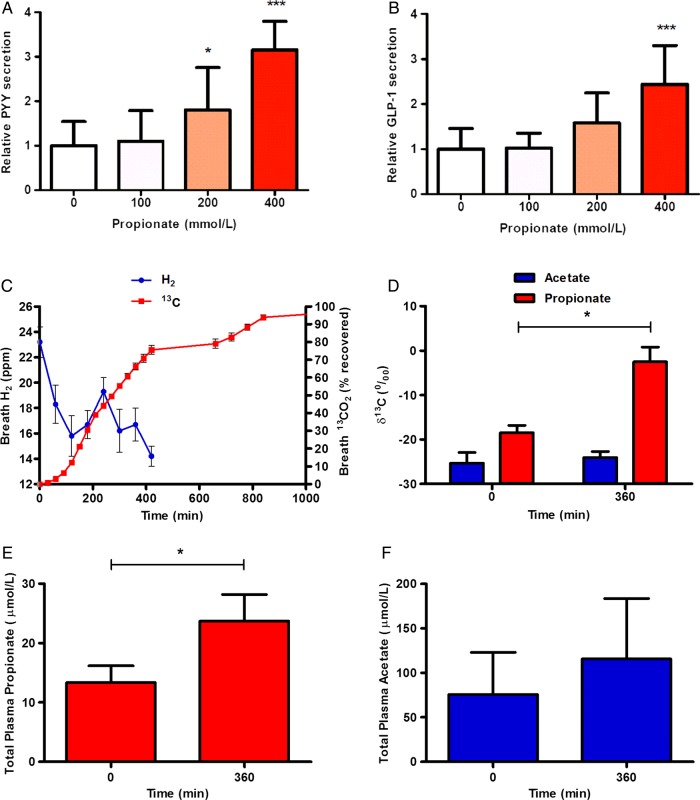
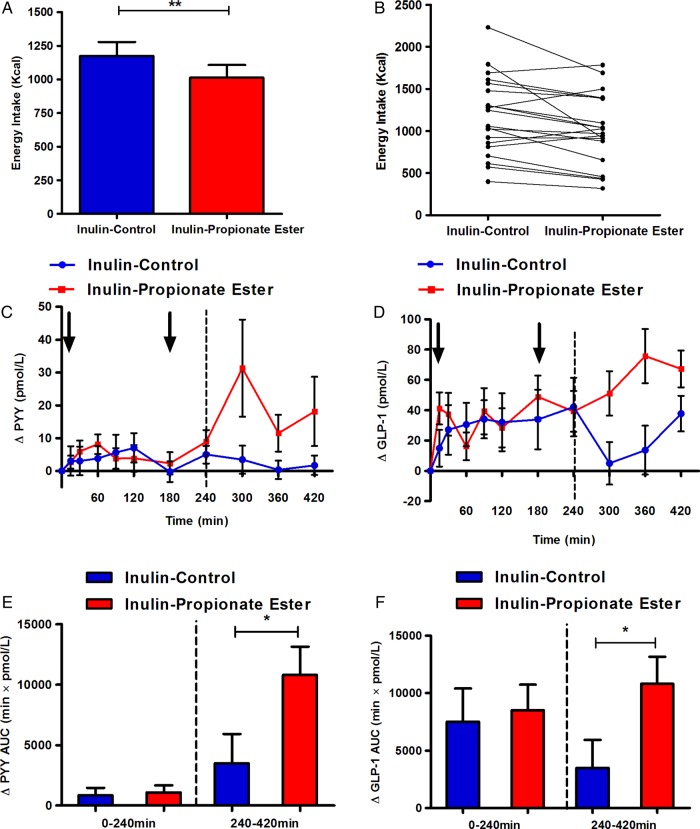
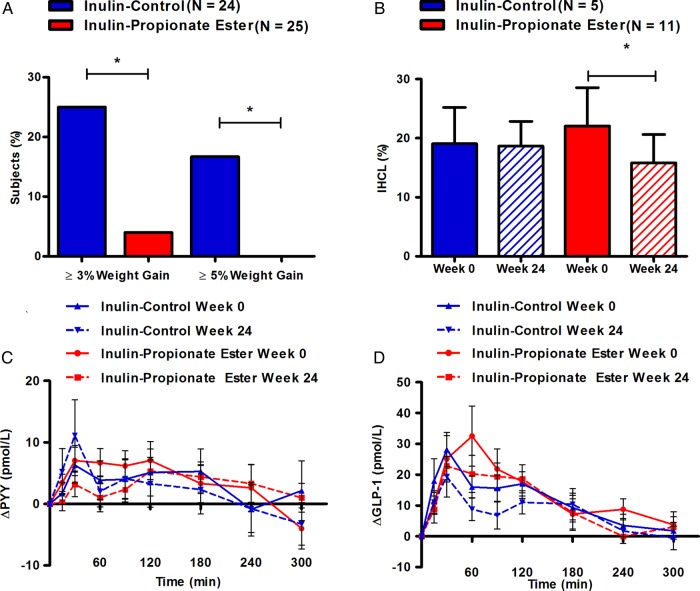
Objective: The colonic microbiota ferment dietary fibres, producing short chain fatty acids. Recent evidence suggests that the short chain fatty acid propionate may play an important role in appetite regulation. We hypothesised that colonic delivery of propionate would increase peptide YY (PYY) and glucagon like peptide-1 (GLP-1) secretion in humans, and reduce energy intake and weight gain in overweight adults. Design: To investigate whether propionate promotes PYY and GLP-1 secretion, a primary cultured human colonic cell model was developed. To deliver propionate specifically to the colon, we developed a novel inulin-propionate ester. An acute randomised, controlled cross-over study was used to assess the effects of this inulin-propionate ester on energy intake and plasma PYY and GLP-1 concentrations. The long-term effects of inulin-propionate ester on weight gain were subsequently assessed in a randomised, controlled 24-week study involving 60 overweight adults. Results: Propionate significantly stimulated the release of PYY and GLP-1 from human colonic cells. Acute ingestion of 10 g inulin-propionate ester significantly increased postprandial plasma PYY and GLP-1 and reduced energy intake. Over 24 weeks, 10 g/day inulin-propionate ester supplementation significantly reduced weight gain, intra-abdominal adipose tissue distribution, intrahepatocellular lipid content and prevented the deterioration in insulin sensitivity observed in the inulin-control group. Conclusions: These data demonstrate for the first time that increasing colonic propionate prevents weight gain in overweight adult humans. Trial registration number: NCT00750438.
Overview
The claims and statistics of this paper haven’t been checked yet.
Free: it reads the open-access text and checks the first 5 claims that cite a source we can check. Create a free account to check every claim.
Integrity signals
Registry
Cites
Statistics
Figures
Verification
Claims the paper makes
The claims and statistics of this paper haven’t been checked yet.
Free: it reads the open-access text and checks the first 5 claims that cite a source we can check. Create a free account to check every claim.
Claims other papers make about this one
Each is checked against this paper’s own text: does it say what the citing paper says it does?
The source backs part of the claim, not all of it — or backs it for a different population, condition or comparison.
In the citing paper
“Human-based studies corroborate the beneficial effects of SCFAs, including the effects of propionate (a common SCFA produced by human gut microbiota) on enhanced incretin response (including plasma Peptide YY [PYY] and GLP-1 excursions), weight loss, reduced intra-abdominal adipose tissue volume and intra-hepatocellular lipid content and preservation of insulin sensitivity [59].”
From The Health Benefits of Dietary Fibre (2020) · cites this paper as [59]
Experimental — accuracy not yet measuredThe cited source says what the claim attributes to it.
In the citing paper
“Short-chain fatty-acid production is primarily derived from non-digestible-carbohydrate (i.e., dietary fiber) consumption [213] during colonic bacterial fermentation [214].”
From Impact of Protein Intake in Older Adults with Sarcopenia and Obesity: A Gut Microbiota Perspective (2020) · cites this paper as [213]
Self-check
Percentages, sums and reported differences re-computed from the paper’s own numbers.
The self-check needs the paper’s full text.
Citations
Cites
Diet rapidly and reproducibly alters the human gut microbiome
David, L. A., Maurice, C. F., Carmody, R. N., Gootenberg, D. B., Button, J. E., Wolfe, B. E., Ling, A. V., Devlin, A. S., Varma, Y., Fischbach, M. A., et al. (2014) · Nature · doi:10.1038/nature12820 · Cited by 10,100 · cited 1×
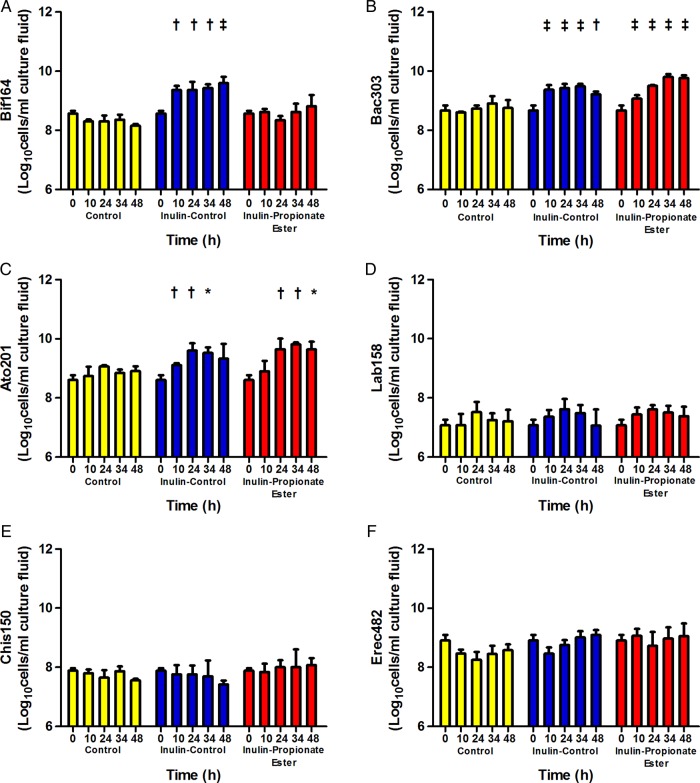
“41 Data from batch culture experiments demonstrated that inulin-control and inulin-propionate ester stimulate changes to the gut microbiota, although only inulin-control had a selective effect on Bi fi dobacterium .”
BackgroundAbdominal obesity and metabolic syndrome
Després, J.-P., & Lemieux, I. (2006) · Nature · doi:10.1038/nature05488 · Cited by 4,354 · cited 1×
“44 Interestingly, in this long-term study we were unable to detect any change in PYY or GLP-1 release following ingestion of the inulin-propionate ester compared with inulin-control, in contrast to our acute administration studies.”
ResultGut Microbiota from Twins Discordant for Obesity Modulate Metabolism in Mice
Ridaura, V. K., Faith, J. J., Rey, F. E., Cheng, J., Duncan, A. E., Kau, A. L., Griffin, N. W., Lombard, V., Henrissat, B., Bain, J. R., et al. (2013) · Science · doi:10.1126/science.1241214 · Cited by 3,788
Short chain fatty acids in human large intestine, portal, hepatic and venous blood
Cummings, J. H., Pomare, E. W., Branch, W. J., Naylor, C. P., & Macfarlane, G. T. (1987) · Gut · doi:10.1136/gut.28.10.1221 · Cited by 3,119 · cited 1×
“31 To overcome the unpalatably high levels of ferment-able dietary fi bre needed to signi fi cantly increase colonic propionate levels, and the unpredictability in the production of the resulting SCFAs, we have developed a novel delivery system targeting the release of gram quantities of propionate…”
BackgroundChanges in diet and lifestyle and long-term weight gain in women and men
Mozaffarian, D., Hao, T., Rimm, E. B., Willett, W. C., & Hu, F. B. (2011) · New England Journal of Medicine · doi:10.1056/nejmoa1014296 · Cited by 2,527
Brown, A. J., Goldsworthy, S. M., Barnes, A. A., Eilert, M. M., Tcheang, L., Daniels, D., Muir, A. I., Wigglesworth, M. J., Kinghorn, I., Fraser, N. J., et al. (2003) · Journal of Biological Chemistry · doi:10.1074/jbc.m211609200 · Cited by 2,409
Tolhurst, G., Heffron, H., Lam, Y. S., Parker, H. E., Habib, A. M., Diakogiannaki, E., Cameron, J., Grosse, J., Reimann, F., & Gribble, F. M. (2012) · Diabetes · doi:10.2337/db11-1019 · Cited by 2,404 · cited 2×
“21 Of the SCFAs produced by colonic fermentation of dietary fi bre, propionate has the highest af fi nity for FFAR 2.”
BackgroundMethodGut hormone PYY3-36 physiologically inhibits food intake
Batterham, R. L., Cowley, M. A., Small, C. J., Herzog, H., Cohen, M. A., Dakin, C. L., Wren, A. M., Brynes, A. E., Low, M. J., Ghatei, M. A., et al. (2002) · Nature · doi:10.1038/nature00887 · Cited by 2,351
Self-citationFlint, A., Raben, A., Blundell, J., & Astrup, A. (2000) · International Journal of Obesity · doi:10.1038/sj.ijo.0801083 · Cited by 2,238
Self-citationMicrobiota-Generated Metabolites Promote Metabolic Benefits via Gut-Brain Neural Circuits
De Vadder, F., Kovatcheva-Datchary, P., Goncalves, D., Vinera, J., Zitoun, C., Duchampt, A., Bäckhed, F., & Mithieux, G. (2014) · Cell · doi:10.1016/j.cell.2013.12.016 · Cited by 2,200
Cited by
Items 601–700 of 1,001
Wijdeveld, M., Nieuwdorp, M., & IJzerman, R. G. (2020) · Expert Opinion on Therapeutic Targets · doi:10.1080/14728222.2020.1761958 · Cited by 34
“SCFA supplementation also tends to result in a reduction in body weight in humans [37].”
BackgroundOduro-Donkor, D., Turner, M. C., Farnaud, S., Renshaw, D., Kyrou, I., Hanson, P., Hattersley, J., Weickert, M. O., Menon, V., Randeva, H. S., et al. (2020) · Expert Review of Endocrinology & Metabolism · doi:10.1080/17446651.2020.1801412 · Cited by 33
Modulation of adipose tissue metabolism by microbial-derived metabolites
Liu, W., Ge, Y., Liu, P., Jiang, X. M., & Xin, Y. (2022) · Frontiers in Microbiology · doi:10.3389/fmicb.2022.1031498 · Cited by 34
“Butyrate protected adipose tissue from infiltration by leukocytes in high-fat-fed mice; reduced the expression of IL-1β, monocyte chemotactic protein 1(MCP-1), IL-6, and TNF-α; and restored the production of the insulin-sensitized adipokine lipocalin (Meijer et al., 2010; Chambers et al., 2015).”
BackgroundAraújo, J. R., Marques, C., Rodrigues, C., Calhau, C., & Faria, A. (2024) · Ageing Research Reviews · doi:10.1016/j.arr.2024.102451 · Cited by 33
Koutoukidis, D. A., Yen, S., Castro, P. G., Misheva, M., Jebb, S. A., Aveyard, P. N., Tomlinson, J., Mózes, F. E., Cobbold, J., Johnson, J. S., et al. (2024) · Gut Microbes · doi:10.1080/19490976.2024.2392864 · Cited by 33
Propionate promotes intestinal lipolysis and metabolic benefits via AMPK/LSD1 pathway in mice
Wang, D., Liu, C.-D., Tian, M.-L., Tan, C., Shu, G., Jiang, Q., Zhang, L., & Yin, Y. (2019) · Journal of Endocrinology · doi:10.1530/joe-19-0188 · Cited by 33
den Abbeele, P. V., Ghyselinck, J., Marzorati, M., Villar, A., Zangara, A., Smidt, C. R., & Risco, E. (2020) · Nutrients · doi:10.3390/nu12061552 · Cited by 33
“Propionate metabolites have been shown to reduce cholesterol and fatty acid synthesis in liver, improve glucose metabolism, and regulate immune status in adipose tissue, and thus elicit health-promoting activities [18,35].”
BackgroundLu, S., Huang, Q., Wei, B., & Chen, Y. (2020) · Current Microbiology · doi:10.1007/s00284-020-02198-7 · Cited by 34
Modulating the Gut Microbiota of Humans by Dietary Intervention with Plant Glycans
Tannock, G. W. (2020) · Applied and Environmental Microbiology · doi:10.1128/aem.02757-20 · Cited by 33
Host–Microbiota Interactions in Liver Inflammation and Cancer
Giraud, J., & Saleh, M. (2021) · Cancers · doi:10.3390/cancers13174342 · Cited by 33
“For instance, in a randomized controlled trial that administered the fermentable fiber inulin coupled to a propionate ester to overweight adults reported decreased abdominal adiposity, lipid accumulation in the liver and body weight gain compared to controls receiving inulin alone [79].”
BackgroundKong, D., Schipper, L., & van Dijk, G. (2021) · Frontiers in Neuroscience · doi:10.3389/fnins.2021.755845 · Cited by 33
The Interaction between the Gut Microbiome and Bile Acids in Cardiometabolic Diseases
Callender, C., Attaye, I., & Nieuwdorp, M. (2022) · Metabolites · doi:10.3390/metabo12010065 · Cited by 35
“However, oral supplementation of butyrate did not improve insulin sensitivity in obese metabolic syndrome subjects [61], whereas oral propionate could improve insulin resistance in these subjects [62].”
BackgroundLiu, J., Chen, J., Wang, S., Xie, J., Wang, Y., Chai, T., Ong, M. K., Wu, J., Tian, L., & Bai, W. (2022) · Food Chemistry · doi:10.1016/j.foodchem.2021.132000 · Cited by 33
Human Milk Microbiome and Microbiome-Related Products: Potential Modulators of Infant Growth
Ma, J., Palmer, D. J., Geddes, D. T., Lai, C. T., & Stinson, L. F. (2022) · Nutrients · doi:10.3390/nu14235148 · Cited by 33
“In vitro, acetate, butyrate, and propionate have been shown to stimulate the production of the satiety hormone peptide YY and glucagon-like peptide 1 [97,98].”
BackgroundThe microbial-mammalian metabolic axis: a critical symbiotic relationship
Chilloux, J., Neves, A. L., Boulangé, C. L., & Dumas, M. (2016) · Current Opinion in Clinical Nutrition & Metabolic Care · doi:10.1097/mco.0000000000000284 · Cited by 33
The contribution of behavioural science to nutrition: Appetite control
Blundell, J. E. (2017) · Nutrition Bulletin · doi:10.1111/nbu.12279 · Cited by 33
Self-citationKanmani, S., Son, T., Kim, K., & Koo, B. (2020) · Microbial Pathogenesis · doi:10.1016/j.micpath.2020.104583 · Cited by 33
Herman, A., & Bajaka, A. (2021) · Psychiatry Research · doi:10.1016/j.psychres.2021.113923 · Cited by 32
Plant Extracts in Obesity: A Role of Gut Microbiota
Weng, G., Duan, Y., Zhong, Y., Song, B., Zheng, J., Zhang, S., Yin, Y., & Deng, J. (2021) · Frontiers in Nutrition · doi:10.3389/fnut.2021.727951 · Cited by 33
“On one hand, propionate stimulated the secretion of glucagon like peptide-1 (GLP-1) and peptide YY (PYY, an important regulator of appetite and energy homeostasis) from colonic cells via activation of free fatty acid receptor 2 (FFAR 2), further inhibiting energy intake and fat accumulation (117, 122, 123).”
BackgroundShen, W.-D., Xu, L., Li, H., Li, B., Qiu, X., Lv, W., Zhu, X.-Z., Greenbaum, J., Liu, R.-K., Shen, J., et al. (2022) · International Journal of Obesity · doi:10.1038/s41366-022-01137-9 · Cited by 32
Chen, H., Zhao, H., Qi, X., Sun, Y., Ma, Y., & Li, Q. (2023) · Journal of the Science of Food and Agriculture · doi:10.1002/jsfa.12538 · Cited by 32
Mouse Model of Anti-Obesity Effects of Blautia hansenii on Diet-Induced Obesity
Shibata, M., Ozato, N., TSUDA, H., Mori, K., Kinoshita, K., Katashima, M., Katsuragi, Y., Nakaji, S., & Maeda, H. (2023) · Current Issues in Molecular Biology · doi:10.3390/cimb45090452 · Cited by 32
“Peptide YY is a gastrointestinal hormone that acts on the hypothalamus of the brain, exerting a suppressive effect on appetite [44].”
BackgroundAn Integrated Multi-Disciplinary Perspective for Addressing Challenges of the Human Gut Microbiome
Shah, R., McKenzie, E. J., Rosin, M., Jadhav, S. R., Gondalia, S. V., Rosendale, D., & Beale, D. J. (2020) · Metabolites · doi:10.3390/metabo10030094 · Cited by 32
Microbiota-Associated Therapy for Non-Alcoholic Steatohepatitis-Induced Liver Cancer: A Review
Chen, Y., Wu, W., & Wu, M. (2020) · International Journal of Molecular Sciences · doi:10.3390/ijms21175999 · Cited by 32
Gibson, R., Eriksen, R., Chambers, E., Gao, H., Aresu, M., Heard, A., Chan, Q., Elliott, P., & Frost, G. (2019) · Nutrients · doi:10.3390/nu11081839 · Cited by 31
Self-citationFrom gut microbiota to brain: implications on binge eating disorders
Guo, W., & Xiong, W. (2024) · Gut Microbes · doi:10.1080/19490976.2024.2357177 · Cited by 33
“28,29 32 The gut microbiota-derived SCFAs, when released into the bloodstream, have the remarkable ability to traverse the blood–brain barrier (BBB) and directly exert their effects on appetite-related neurons within the central nervous system.”
BackgroundProbiotics alleviate painful diabetic neuropathy by modulating the microbiota–gut–nerve axis in rats
Jiang, Y., Yang, J. H., Wei, M., Shou, J., Shen, S., Yu, Z., Zhang, Z., Cai, J., Lyu, Y., Yang, D., et al. (2025) · Journal of Neuroinflammation · doi:10.1186/s12974-025-03352-3 · Cited by 31
“Some studies suggest beneficial outcomes; for example, increasing colonic propionate in overweight adults may help prevent weight gain [63].”
Microbiota-dependent metabolites – New engine for T cell warriors
Tang, Y., Fu, A., Wang, L., & Ge, Q. (2025) · Gut Microbes · doi:10.1080/19490976.2025.2523815 · Cited by 31
“132 These metabolites, acting via the AhR, promote anti-inflammatory cytokine IL-22 in colonic T cells and innate lymphoid cells (ILCs), reducing colitis.”
Synbiotic Supplements in the Prevention of Obesity and Obesity-Related Diseases
Hijová, E. (2022) · Metabolites · doi:10.3390/metabo12040313 · Cited by 31
“Up-regulation of IGN by propionate decreases body weight gain and adiposity, independent of food supply [37,38].”
BackgroundNutraceutical Properties of Unripe Banana Flour Resistant Starch: A Review
Dibakoane, S. R., Meiring, B., Silva, L. S. D., Anyasi, T. A., Emmambux, M. N., Mlambo, V., & Wokadala, O. C. (2022) · Starch - Stärke · doi:10.1002/star.202200041 · Cited by 31
Gutiérrez‐Repiso, C., Molina‐Vega, M., Bernal-López, M. R., Garrido‐Sánchez, L., García‐Almeida, J. M., Sajoux, I., Moreno‐Indias, I., & Tinahones, F. J. (2021) · Journal of Personalized Medicine · doi:10.3390/jpm11020109 · Cited by 31
“In overweight patients, it has been shown the involvement of SCFAs in appetite regulation, the administration of SCFAs, inulinpropionate, increased postprandial plasma PYY and glucagon-like peptide-1, significantly reducing weight gain and adiposity [41].”
BackgroundDing, Q., Tian, J., Li, M., Lian, F., Zhao, L., Wei, X., Han, L., Zheng, Y., Gao, Z., Yang, H., et al. (2020) · Frontiers in Cellular and Infection Microbiology · doi:10.3389/fcimb.2020.530160 · Cited by 31
“By regulating the release of intestinal hormones, such as peptide YY and glucagon-like peptide-1 (GLP-1), SCFAs can suppress appetite, increase energy expenditure, and prevent diet-induced obesity (Gao et al., 2009; Lin et al., 2012; Chambers et al., 2015).”
BackgroundZhang, S., Xu, M., Sun, X., Liu, X., Choueiry, F., Xu, R., Shi, H., & Zhu, J. (2021) · Journal of Chromatography B · doi:10.1016/j.jchromb.2021.123027 · Cited by 30
Chen, D., Wang, Y., Li, S.-P., Zhao, H., Jiang, F., Wu, Y., Tong, Y., & Pang, Q. (2022) · Food & Function · doi:10.1039/d2fo01481e · Cited by 30
Latteri, S., Sofia, M., Puleo, S., Vincenzo, A. D., Cinti, S., & Castorina, S. (2023) · Langenbeck s Archives of Surgery · doi:10.1007/s00423-023-02821-8 · Cited by 30
“SCFAs suppress the inflammatory immune response in the gut [88, 89] and they are involved in the release of GLP-1 and leptine, which may downregulate appetite and thus reduce caloric intake [90].”
BackgroundBartsch, M., Hahn, A., & Berkemeyer, S. (2023) · Metabolites · doi:10.3390/metabo13121182 · Cited by 31
“A high-fiber diet, which also raises SCFA levels, is associated with reduced weight gain in humans [91].”
BackgroundZheng, B., Zhao, X., Ao, T., Chen, Y., Xie, J., Gao, X., Liu, L., Hu, X., & Yu, Q. (2024) · Food Chemistry · doi:10.1016/j.foodchem.2024.140345 · Cited by 30
Biomarkers of appetite: is there a potential role for metabolomics?
Horner, K. M., Hopkins, M., Finlayson, G., Gibbons, C., & Brennan, L. (2020) · Nutrition Research Reviews · doi:10.1017/s0954422420000062 · Cited by 30
“and PYY levels, and reduced subsequent energy intake(61),”
BackgroundSelf-citationFecal Short-Chain Fatty Acids (SCFAs) and Their Role in Metabolic Disorders: A Systematic Review
Ahmad, S., Assaf, M., Thomas, B., Ibrahim, H. M., Muppuri, G., Chand, P., Mercy, A., Kumar, M., Kumar, R., & Khan, A. S. (2025) · Cureus · doi:10.7759/cureus.91579 · Cited by 30
Cani, P. D. (2019) · Gut · doi:10.1136/gutjnl-2019-318776 · Cited by 29
Hepatic Mitochondria-Gut Microbiota Interactions in Metabolism-Associated Fatty Liver Disease
Bellanti, F., Buglio, A. L., & Vendemiale, G. (2023) · Metabolites · doi:10.3390/metabo13030322 · Cited by 29
Deptula, P., Laine, P., Roberts, R. J., Smolander, O., Vihinen, H., Piironen, V. I., Paulin, L. G., Jokitalo, E., Savijoki, K., Auvinen, P., et al. (2017) · BMC Genomics · doi:10.1186/s12864-017-4165-9 · Cited by 29
Martinussen, C., Bojsen-Møller, K. N., Dirksen, C., Svane, M. S., Kristiansen, V. B., Hartmann, B., Holst, J. J., & Madsbad, S. (2019) · The Journal of Clinical Endocrinology & Metabolism · doi:10.1210/jc.2018-02661 · Cited by 29
Adams, S., Kong, X., Hailong, J., Guixin, Q., Sossah, F. L., & Che, D. (2019) · RSC Advances · doi:10.1039/c9ra01251f · Cited by 29
Yu, K., Zhang, Y., Chen, H., & Zhu, W. (2019) · Journal of Agricultural and Food Chemistry · doi:10.1021/acs.jafc.9b05070 · Cited by 30
A comprehensive review for gut microbes: technologies, interventions, metabolites and diseases
Qi, C., Wang, P., Fu, T., Lu, M., Cai, Y., Chen, X., & Cheng, L. (2021) · Briefings in Functional Genomics · doi:10.1093/bfgp/elaa029 · Cited by 29
Anthocyanin biofortified colored wheat modifies gut microbiota in mice
Kapoor, P., Kumari, A., Sheoran, B., Sharma, S., Kaur, S., Bhunia, R. K., Rajarammohan, S., Bishnoi, M., Kondepudi, K. K., & Garg, M. (2022) · Journal of Cereal Science · doi:10.1016/j.jcs.2022.103433 · Cited by 29
Bartsch, M., Vital, M., Woltemate, S., Bouwman, F. G., Berkemeyer, S., Hahn, A., & Müller, M. (2025) · Journal of Nutrition · doi:10.1016/j.tjnut.2025.08.034 · Cited by 28
“Additionally, SCFAs contribute to body weight regulation by modulating energy intake, expenditure, and insulin sensitivity [25,26].”
Targeting the gastrointestinal tract to treat type 2 diabetes
Bauer, P. V., & Duca, F. A. (2016) · Journal of Endocrinology · doi:10.1530/joe-16-0056 · Cited by 29
“2003), and prebiotic treatment may not readily increase propionate production (Chambers et al. 2015).”
BackgroundMetabolic factors in the regulation of hypothalamic innate immune responses in obesity
Folick, A., Cheang, R. T., Valdearcos, M., & Koliwad, S. K. (2022) · Experimental & Molecular Medicine · doi:10.1038/s12276-021-00666-z · Cited by 28
Zhao, G., Teng, J., Dong, R., Ban, Q., Yang, L., Du, K., Wang, Y., Pu, H., Yang, C. S., & Ren, Z. (2023) · Food Science and Human Wellness · doi:10.1016/j.fshw.2023.02.023 · Cited by 30
Roussel, C., Sola, M., Lessard‐Lord, J., Nallabelli, N., Généreux, P., Cavestri, C., Wallen, O. A., Villano, R., Raymond, F., Flamand, N., et al. (2024) · Gut Microbes · doi:10.1080/19490976.2024.2335879 · Cited by 28
“48 Both clusters exhibited an overall increase in L_AC propionate and a reduction in acetate.”
BackgroundLunedo, R., Furlan, L. R., Alarcon, M. F. F., Squassoni, G. H., Campos, D. M. B., Perondi, D., & Macari, M. (2019) · Journal of Animal Physiology and Animal Nutrition · doi:10.1111/jpn.13093 · Cited by 28
Ma, S., Wang, Y., Ji, X., Dong, S., Wang, S., Zhang, S., Deng, F., Chen, J., Lin, B., Khan, B. A., et al. (2024) · Frontiers in Cellular and Infection Microbiology · doi:10.3389/fcimb.2024.1364545 · Cited by 27
Personal diet–microbiota interactions and weight loss
Roager, H. M., & Christensen, L. H. (2022) · Proceedings of The Nutrition Society · doi:10.1017/s0029665122000805 · Cited by 27
Zhang, S., Xu, M., Sun, X., Shi, H., & Zhu, J. (2022) · Food Research International · doi:10.1016/j.foodres.2022.111762 · Cited by 27
Key regulators of intestinal stem cells: diet, microbiota, and microbial metabolites
Yao, C., Gou, X., Tian, C., Zhou, L., Hao, R., Li, W., Wang, Z., Li, M., & Tong, X. (2022) · Journal of genetics and genomics/Journal of Genetics and Genomics · doi:10.1016/j.jgg.2022.12.002 · Cited by 27
Bioactive Compounds from Brown Algae Alleviate Nonalcoholic Fatty Liver Disease: An Extensive Review
Wu, Y., Jin, X., Zhang, Y., Liu, J., Wu, M., & Tong, H. (2023) · Journal of Agricultural and Food Chemistry · doi:10.1021/acs.jafc.2c06578 · Cited by 27
van Trijp, M. P. H., Ríos-Morales, M., Witteman, B. J. M., Abegaz, F., Gerding, A., An, R., Koehorst, M., Evers, B., van Dongen, K. C. W., Zoetendal, E. G., et al. (2024) · iScience · doi:10.1016/j.isci.2024.109208 · Cited by 27
Liu, X., Wang, B., Tang, S., Yue, Y., Xi, W., Tan, X. S., Li, G., Bai, J., & Huang, L. (2024) · International Journal of Biological Macromolecules · doi:10.1016/j.ijbiomac.2024.131798 · Cited by 27
Mandøe, M. J., Hansen, K. B., Windeløv, J. A., Knop, F. K., Rehfeld, J. F., ROSENKILDE, M. M., Holst, J. J., & Hansen, H. S. (2018) · Nutrition and Diabetes · doi:10.1038/s41387-017-0011-z · Cited by 27
“Targeted delivery of another shortchain fatty acid, propionate, had beneficial effect on body weight maintenance and adiposity in overweight adults.(26)”
BackgroundMa, C., Gao, Q., Zhang, W., Zhu, Q., Tang, W., Blachier, F., Ding, H., & Kong, X. (2020) · Frontiers in Veterinary Science · doi:10.3389/fvets.2020.575685 · Cited by 27
“Colonic SCFAs can exert crucial effects on intestinal function and health of the host before and after absorption in the blood (46).”
BackgroundYu, D., Yang, Y., Long, J., Xu, W., Cai, Q., Wu, J., Cai, H., Zheng, W., & Shu, X. (2021) · Current Developments in Nutrition · doi:10.1093/cdn/nzab026 · Cited by 27
“For example, SCFAs are known for their potential health benefits to reduce obesity, inflammation, and insulin resistance (42, 43), whereas methylglyoxal is a toxic byproduct of glycolysis, which can cause endothelial cell loss and inflammation (44).”
BackgroundZapata, J. L., Gallardo, A., Romero, C., Valenzuela, R., Garcia-Diaz, D., Duarte-Silva, L., Bustamante, A., Gasaly, N., Gotteland, M., & Echeverría, F. (2021) · Prostaglandins Leukotrienes and Essential Fatty Acids · doi:10.1016/j.plefa.2021.102388 · Cited by 27
Koller, A. M., Săsăran, M. O., & Mărginean, C. O. (2025) · Nutrients · doi:10.3390/nu17111883 · Cited by 26
“Dietary fiber, a hallmark of the MD, serves as a primary substrate for beneficial gut microbes, stimulating the production of short-chain fatty acids, particularly propionate, that regulate appetite and support metabolic health [130,131].”
Alqahtani, M. S. (2025) · Medicina · doi:10.3390/medicina61112017 · Cited by 26
“In fact, clinical trials showed that propionate supplementation can reduce food intake and prevent the loss of insulin sensitivity that normally occurs with weight gain [67].”
Elevated levels of proinflammatory volatile metabolites in feces of high fat diet fed KK-Ay mice
Uchikawa, M., Kato, M., Nagata, A., Sanada, S., Yoshikawa, Y., Tsunematsu, Y., Sato, M., Suzuki, T., Hashidume, T., Watanabe, K., et al. (2020) · Scientific Reports · doi:10.1038/s41598-020-62541-7 · Cited by 26
Nishimoto, Y., Nomaguchi, T., Mori, Y., Ito, M. A., Nakamura, Y., Fujishima, M., Murakami, S., Yamada, T., & Fukuda, S. (2021) · Frontiers in Nutrition · doi:10.3389/fnut.2021.648073 · Cited by 26
“Propionate has beneficial effects, such as anti-inflammatory activity (24) and body weight maintenance (25).”
Cardiometabolic impacts of saturated fatty acids: are they all comparable?
Bloise, A. M. N. D. L. G., Simões-Alves, A. C., Alves, D., Morio, B., & Costa‐Silva, J. H. (2021) · International Journal of Food Sciences and Nutrition · doi:10.1080/09637486.2021.1940885 · Cited by 26
Miao, M., Shi, Y., Li, Y., Jiang, Z., Liu, J., & Yang, S. (2021) · Journal of Functional Foods · doi:10.1016/j.jff.2021.104705 · Cited by 26
Amalia, R., Pramono, A., Afifah, D. N., Noer, E. R., Muniroh, M., & Kumoro, A. C. (2022) · Heliyon · doi:10.1016/j.heliyon.2022.e10887 · Cited by 26
Genda, T., Kondo, T., Sugiura, S., Hino, S., Shimamoto, S., Nakamura, T., UKITA, S., & Morita, T. (2018) · Journal of Agricultural and Food Chemistry · doi:10.1021/acs.jafc.8b04093 · Cited by 26
Kimura-Todani, T., Hata, T., Miyata, N., Takakura, S., Yoshihara, K., Zhang, X., Asano, Y., Altaisaikhan, A., Tsukahara, T., & Sudo, N. (2020) · Physiology & Behavior · doi:10.1016/j.physbeh.2020.113004 · Cited by 27
“In fact, in some clinical studies [68,69], it was demonstrated that propionate chemically bound by an ester bond to inulin successfully reached the colon, and then propionate was locally released from its chemical compound.”
BackgroundGil‐Gómez, A., Brescia, P., Rescigno, M., & Romero‐Gómez, M. (2021) · Seminars in Liver Disease · doi:10.1055/s-0041-1723752 · Cited by 26
Decoding the Role of Gut-Microbiome in the Food Addiction Paradigm
Novelle, M. G. (2021) · International Journal of Environmental Research and Public Health · doi:10.3390/ijerph18136825 · Cited by 26
Raevuori, A., Lukkariniemi, L., Suokas, J. T., Gissler, M., Suvisaari, J., & Haukka, J. K. (2016) · International Journal of Eating Disorders · doi:10.1002/eat.22497 · Cited by 26
“For instance, it was recently shown that increase in a short chain fatty acid propionate, which is normally produced by colonic microbiota, affects appetite regulation and prevents weight gain through the secretion of peptide YY (PYY) and glucagon like peptide-1 (GLP-1) in overweight adults.(38)”
BackgroundWang, X., Guo, Q., Liu, Z., Wang, Y., Cao, C., Jin, L., Li, C., Xiao, J., & Zhao, W. (2024) · Diabetes Metabolic Syndrome and Obesity · doi:10.2147/dmso.s477494 · Cited by 25
“30 In accordance, our study indicated Prevotella_9 was negatively associated with triglyceride and positively associated with HDL-c.”
ResultHimmerich, H., Keeler, J. L., King, J. A., Ehrlich, S., Kaufmann, L., Bulik, C. M., Cohen‐Woods, S., Wade, T. D., Steiger, H., Booij, L., et al. (2026) · The World Journal of Biological Psychiatry · doi:10.1080/15622975.2026.2626934 · Cited by 26
Duan, H., Yu, Q., Ni, Y., Li, J., & Fan, L. (2023) · Foods · doi:10.3390/foods12040859 · Cited by 25
“For example, acetate can activate G protein-coupled receptors that boost microbiota and thus regulate adipose–insulin signaling transduction [6]; butyrate can maintain gut barrier integrity and exert immune-modulating, anti-inflammatory and anti-carcinogenic effects [52]; propionate is considered to induce satiety and…”
BackgroundYang, S., Yu, D., Liu, J., Qiao, Y., Gu, S., Yang, R., Chai, X., & Wang, W. (2023) · Frontiers in Endocrinology · doi:10.3389/fendo.2023.1121540 · Cited by 26
Bezzina, A., Clarke, E. D., Ashton, L., Watson, T., & James, C. L. (2023) · Health Education & Behavior · doi:10.1177/10901981231208396 · Cited by 25
“This is especially relevant considering global obesity rates have nearly tripled since 1975 (WHO, 2021), and how annual global weight gain for adults ranges from 0.3 to 0.8 kg/year (Edward et al., 2015).”
BackgroundInfluentialAmbrogi, M., & Vezina, C. M. (2024) · Frontiers in Cellular and Infection Microbiology · doi:10.3389/fcimb.2024.1346087 · Cited by 27
Neuroendocrine peptide mechanisms controlling intestinal epithelial function
Cox, H. M. (2016) · Current Opinion in Pharmacology · doi:10.1016/j.coph.2016.08.010 · Cited by 25
Metabiotics and their Health Benefits
Shaikh, A. M., & Sreeja, V. (2017) · International Journal of Fermented Foods · doi:10.5958/2321-712x.2017.00002.3 · Cited by 25
“It has also improved insulin resistant in the inulin control group when taken with inulin (Chambers et al., 2014).”
BackgroundThe role of gut microbiota in insulin resistance: recent progress
Ji, H., Su, S., Chen, M., Liu, S., Liu, S., & Guo, J. (2025) · Frontiers in Microbiology · doi:10.3389/fmicb.2025.1633029 · Cited by 24
“Mice fed a phenylalanine-rich diet, phenylalanine-producing aspartame, or engineered to overexpress human phenylalanine-tRNA synthetase (hFARS) develop IR and (Chambers et al., 2015; Zhao et al., 2018) Clostridium, Bacteroides, Christensenella minuta”
Lv, J., Zhao, H., Yu, Y., Wang, J.-H., Zhang, X., Guo, Z.-Q., Jiang, W., Wang, K., & Guo, L. (2025) · World Journal of Gastroenterology · doi:10.3748/wjg.v31.i30.108680 · Cited by 24
“…the largest proportion of SCFAs, undergoes peripheral oxidation, participates in adipocyte lipogenesis, or may be converted to butyrate by the GM[92]; butyrate preferentially serves as the primary energy source for colonocytes while simultaneously enhancing barrier function and suppressing…”
Parental diet and offspring health: a role for the gut microbiome via epigenetics
Yang, C., Snelson, M., El‐Osta, A., & Marques, F. Z. (2025) · Nature Reviews Gastroenterology & Hepatology · doi:10.1038/s41575-025-01106-3 · Cited by 24
Aldriwesh, M. G., Alotibi, R. S., Alqurainy, N., Alrabiah, S., Arafah, A. M., Alghoribi, M. F., & Ajina, R. (2025) · Gut Microbes · doi:10.1080/19490976.2025.2607076 · Cited by 24
“216,217 In T2DM, insufficient levels of acetate and propionate contribute to insulin resistance, 57,218 while low butyrate exacerbates systemic inflammation.”
He, Z., Wang, T., Zhang, S., Shi, K., Wang, F., Li, Y., Lin, C., & Chen, J. (2023) · Frontiers in Microbiology · doi:10.3389/fmicb.2023.1279996 · Cited by 24
Shin, H., Kim, J., Jung, Y., Kwak, M., Sung, M., & Imm, J. (2024) · Heliyon · doi:10.1016/j.heliyon.2024.e25263 · Cited by 24
“There is a growing body of evidences that the ingestion of postbiotics can provide beneficial effects on body weight gain, blood cholesterol and adipose tissue weights [27,28].”
BackgroundTulstrup, M. V.-L., Roager, H. M., Thaarup, I. C., Frandsen, H. L., Frøkiær, H., Licht, T. R., & Bahl, M. I. (2018) · Communications Biology · doi:10.1038/s42003-018-0140-5 · Cited by 25
Effect of Short Chain Fatty Acids on Age-Related Disorders
Fernandes, M. F., de Oliveira, S., Portovedo, M., Rodrigues, P. B., & Vinolo, M. A. R. (2020) · Advances in experimental medicine and biology · doi:10.1007/978-3-030-42667-5_4 · Cited by 26
Zhu, X., Zhang, X., Gao, X., Yi, Y., Hou, Y., Meng, X., Jia, C., Chao, B., Fan, W., Li, X., et al. (2020) · ACS Omega · doi:10.1021/acsomega.0c00649 · Cited by 24
Tong, L., Feng, Q., Lu, Q., Zhang, J., & Xiong, Z. (2022) · Journal of Pharmaceutical and Biomedical Analysis · doi:10.1016/j.jpba.2022.114843 · Cited by 24
Peters, B., Schwarz, J., Schuppelius, B., Ottawa, A., Koppold, D. A., Weber, D., Steckhan, N., Mai, K., Grune, T., Pfeiffer, A. F. H., et al. (2025) · Science Translational Medicine · doi:10.1126/scitranslmed.adv6787 · Cited by 25
He, H., Sun, Y., Zhang, S., Zhang, H., Su, W., Guo, Z., Zhang, Y. L., Wen, J.-J., Li, X., Hu, J., et al. (2022) · eFood · doi:10.1002/efd2.1 · Cited by 23
Seicaru, E. M., Ilie, I. R. P., Cătinean, A., Craciun, A. M., & Ghervan, C. (2022) · Journal of Gastrointestinal and Liver Diseases · doi:10.15403/jgld-4248 · Cited by 23
The effect of intermittent fasting on microbiota as a therapeutic approach in obesity
Cadena-Ullauri, S., Guevara‐Ramírez, P., Ruiz‐Pozo, V. A., Tamayo‐Trujillo, R., Paz‐Cruz, E., Zambrano-Villacres, R., Simancas‐Racines, D., & Zambrano, A. K. (2024) · Frontiers in Nutrition · doi:10.3389/fnut.2024.1393292 · Cited by 23
Cante, R. C., Nigro, F., Passannanti, F., Lentini, G., Gallo, M., Nigro, R., & Budelli, A. (2024) · Comprehensive Reviews in Food Science and Food Safety · doi:10.1111/1541-4337.13356 · Cited by 23
Host–diet–microbiota interplay in intestinal nutrition and health
Ignatiou, A., & Pitsouli, C. (2024) · FEBS Letters · doi:10.1002/1873-3468.14966 · Cited by 23
“Each plays a key metabolic regulatory role by impinging on pathways such as lipid metabolism, blood glucose homeostasis, and energy metabolism [174], in addition to intestinal epithelial barrier integrity, and immune and inflammatory responses [175].”
Influential
Metadata
- Authors
- Chambers, E. S., Viardot, A., Psichas, A., Morrison, D. J., Murphy, K. G., Zac-Varghese, S. E. K., MacDougall, K., Preston, T., Tedford, C., Finlayson, G. S., Blundell, J. E., Bell, J. D., Thomas, E. L., Mt-Isa, S., Ashby, D., Gibson, G. R., Kolida, S., Dhillo, W. S., Bloom, S. R., Morley, W., Clegg, S., & Frost, G.
- Affiliations
- Hammersmith Hospital (GB)
- Garvan Institute of Medical Research (AU)
- Scottish Universities Environmental Research Centre (GB)
- Section of Investigative Medicine, Imperial College London, Hammersmith Hospital, London, UK
- University of the West of Scotland (GB)
- University of Leeds (GB)
- Imperial Clinical Trials Unit, School of Public Health, Imperial College London, London, UK
- Imperial College London (GB)
- University of Reading (GB)
- Department of Food and Nutritional Sciences, University of Reading, Reading, UK
- Leatherhead Food Research (GB)
- Corresponding author
- Frost, Gary
- ORCID
- Venue
- Gut
- Publisher
- BMJ
- Published
- 2014-12-10
- Volume
- 64
- Issue
- 11
- Pages
- 1744-1754
- ISSN
- 0017-5749 (ISSN-L)
- 1468-3288
- PMC
- PMC4680171
- OpenAlex
- W2106348916
- Cited by
- 1,424
- References
- 52
- Citations by year
- 2026: 125 · 2025: 171 · 2024: 149 · 2023: 144 · 2022: 167 · 2021: 172 · 2020: 138 · 2019: 120 · 2018: 97 · 2017: 54 · 2016: 61 · 2015: 25
- FWCI
- 22.75
- Type
- journal article
- Language
- en
- Open access
- hybrid
- doi.org
- Licence
- cc-by
- Locations
- Gut (publishedVersion, cc-by)
- PubMed Central (publishedVersion, cc-by)
- PubMed (publishedVersion)
- White Rose Research Online (University of Leeds, The University of Sheffield, University of York) (acceptedVersion)
- WestminsterResearch (University of Westminster) (acceptedVersion)
- ENLIGHTEN (Jurnal Bimbingan dan Konseling Islam) (acceptedVersion)
- Funders
- Wellcome Trust
- National Institute for Health and Care Research (FP7-HEALTH-2009-241592, CDF-2009-02-05, NF-SI-0513-10080, NF-SI-0507-10337, NF-SI-0513-10029, 03/DHCS/03/G121/48)
- Imperial College London
- Directorate for Biological Sciences
- Medical Research Council (FP7-HEALTH-2009-241592)
- Biotechnology and Biological Sciences Research Council (BB/H005072/1, 1527476, BB/L004259/1, BB/H004971/1, BB/H004815/1, FP7-HEALTH-2009-241592)
- National Health and Medical Research Council
- NIHR Imperial Biomedical Research Centre
- FP7 Health
- Topics
- Life Sciences › Neuroscience › Endocrine and Autonomic Systems › Regulation of Appetite and Obesity
- Life Sciences › Biochemistry, Genetics and Molecular Biology › Molecular Biology › Gut microbiota and health
- Health Sciences › Nursing › Nutrition and Dietetics › Microbial Metabolites in Food Biotechnology
- Keywords
- propionate, short-chain fatty acids, colonic fermentation, peptide YY, glucagon-like peptide-1, appetite regulation, energy intake, weight gain, overweight adults, intra-abdominal adipose tissue, hepatic steatosis, insulin sensitivity
- MeSH terms
- Body Weight Maintenance, Appetite Regulation, Cells, Cultured, Colon, Double-Blind Method, Female, Humans, Male, Middle Aged, Propionates, Cross-Over Studies, Peptide YY, Adiposity, Overweight, Glucagon-Like Peptide 1
About these checks
Registry, retraction, Cites and statistics results are computed, not judged, with one exception: a printed reference that no index lists is read once by a model before it counts as a citation error. Claims are extracted by a model and kept only when their quote appears verbatim in the text; each cited source is then checked, with a model’s help, for whether it says what the claim relies on. Those verdicts can be wrong — read the claim’s quote and the cited source before relying on one.
Statistics and arithmetic are recomputed, not judged.
Confidence bands are shown only for fields calibrated on our annotated test set. None is calibrated yet, so no band is shown.
What counts as a claim ›How we measure confidence ›How we check this ›
Are you an author, or do you see a problem with this page? Request a review
Data sources
Bibliographic data: Semantic Scholar, OpenAlex, Crossref.
Contains information from the Semantic Scholar Academic Graph Datasets, made available under the ODC Attribution License (ODC-BY 1.0).
Semantic Scholar’s data is described in: Kinney, R., et al. (2023). The Semantic Scholar Open Data Platform. arXiv:2301.10140.
