

Effects of targeted delivery of propionate to the human colon on appetite regulation, body weight maintenance and adiposity in overweight adults
Open accessThe DOI matches its Crossref record; 51 of the 52 references it cites were found in a registry or an index.
Abstract
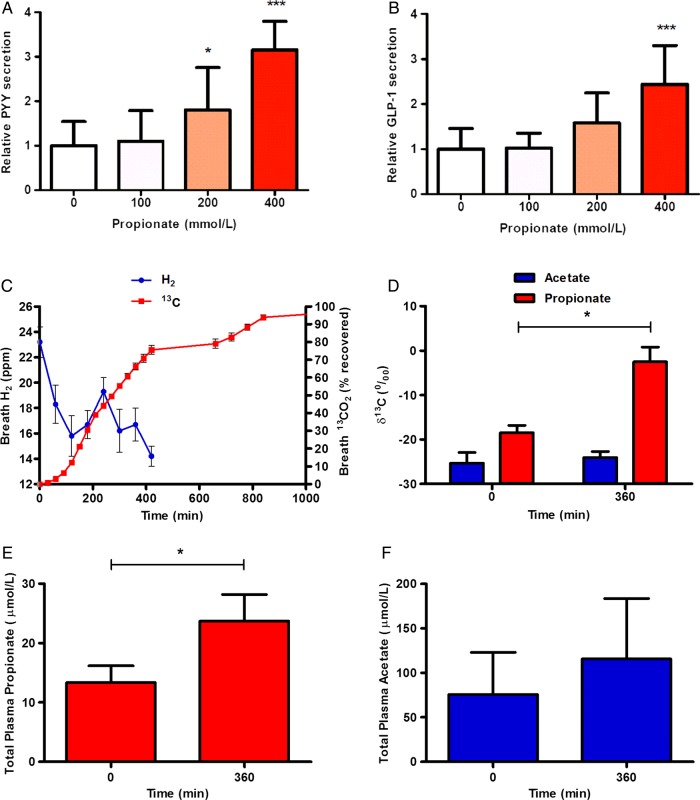
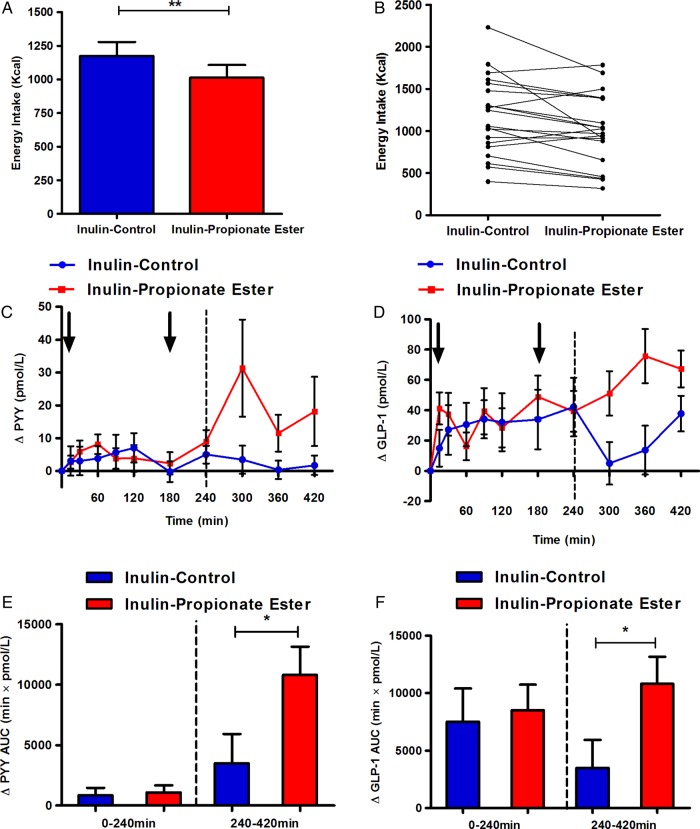
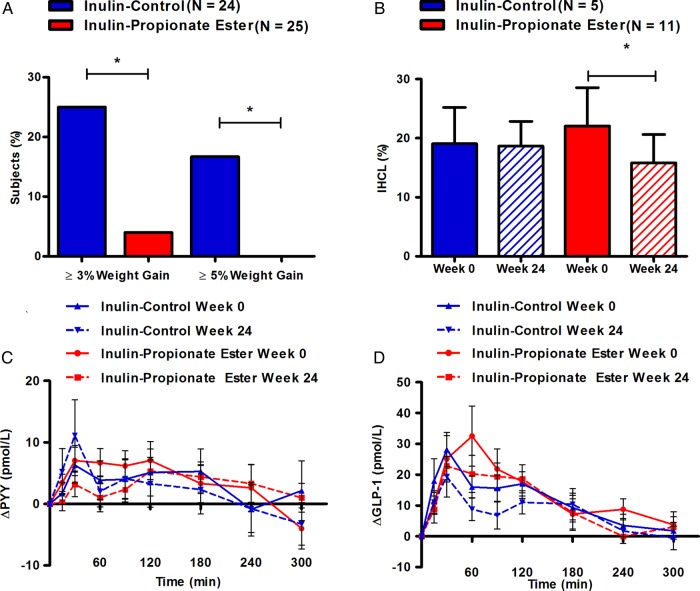
Objective: The colonic microbiota ferment dietary fibres, producing short chain fatty acids. Recent evidence suggests that the short chain fatty acid propionate may play an important role in appetite regulation. We hypothesised that colonic delivery of propionate would increase peptide YY (PYY) and glucagon like peptide-1 (GLP-1) secretion in humans, and reduce energy intake and weight gain in overweight adults. Design: To investigate whether propionate promotes PYY and GLP-1 secretion, a primary cultured human colonic cell model was developed. To deliver propionate specifically to the colon, we developed a novel inulin-propionate ester. An acute randomised, controlled cross-over study was used to assess the effects of this inulin-propionate ester on energy intake and plasma PYY and GLP-1 concentrations. The long-term effects of inulin-propionate ester on weight gain were subsequently assessed in a randomised, controlled 24-week study involving 60 overweight adults. Results: Propionate significantly stimulated the release of PYY and GLP-1 from human colonic cells. Acute ingestion of 10 g inulin-propionate ester significantly increased postprandial plasma PYY and GLP-1 and reduced energy intake. Over 24 weeks, 10 g/day inulin-propionate ester supplementation significantly reduced weight gain, intra-abdominal adipose tissue distribution, intrahepatocellular lipid content and prevented the deterioration in insulin sensitivity observed in the inulin-control group. Conclusions: These data demonstrate for the first time that increasing colonic propionate prevents weight gain in overweight adult humans. Trial registration number: NCT00750438.
Overview
The claims and statistics of this paper haven’t been checked yet.
Free: it reads the open-access text and checks the first 5 claims that cite a source we can check. Create a free account to check every claim.
Integrity signals
Registry
Cites
Statistics
Figures
Verification
Claims the paper makes
The claims and statistics of this paper haven’t been checked yet.
Free: it reads the open-access text and checks the first 5 claims that cite a source we can check. Create a free account to check every claim.
Claims other papers make about this one
Each is checked against this paper’s own text: does it say what the citing paper says it does?
The source backs part of the claim, not all of it — or backs it for a different population, condition or comparison.
In the citing paper
“Human-based studies corroborate the beneficial effects of SCFAs, including the effects of propionate (a common SCFA produced by human gut microbiota) on enhanced incretin response (including plasma Peptide YY [PYY] and GLP-1 excursions), weight loss, reduced intra-abdominal adipose tissue volume and intra-hepatocellular lipid content and preservation of insulin sensitivity [59].”
From The Health Benefits of Dietary Fibre (2020) · cites this paper as [59]
Experimental — accuracy not yet measuredThe cited source says what the claim attributes to it.
In the citing paper
“Short-chain fatty-acid production is primarily derived from non-digestible-carbohydrate (i.e., dietary fiber) consumption [213] during colonic bacterial fermentation [214].”
From Impact of Protein Intake in Older Adults with Sarcopenia and Obesity: A Gut Microbiota Perspective (2020) · cites this paper as [213]
Self-check
Percentages, sums and reported differences re-computed from the paper’s own numbers.
The self-check needs the paper’s full text.
Citations
Cites
Diet rapidly and reproducibly alters the human gut microbiome
David, L. A., Maurice, C. F., Carmody, R. N., Gootenberg, D. B., Button, J. E., Wolfe, B. E., Ling, A. V., Devlin, A. S., Varma, Y., Fischbach, M. A., et al. (2014) · Nature · doi:10.1038/nature12820 · Cited by 10,100 · cited 1×
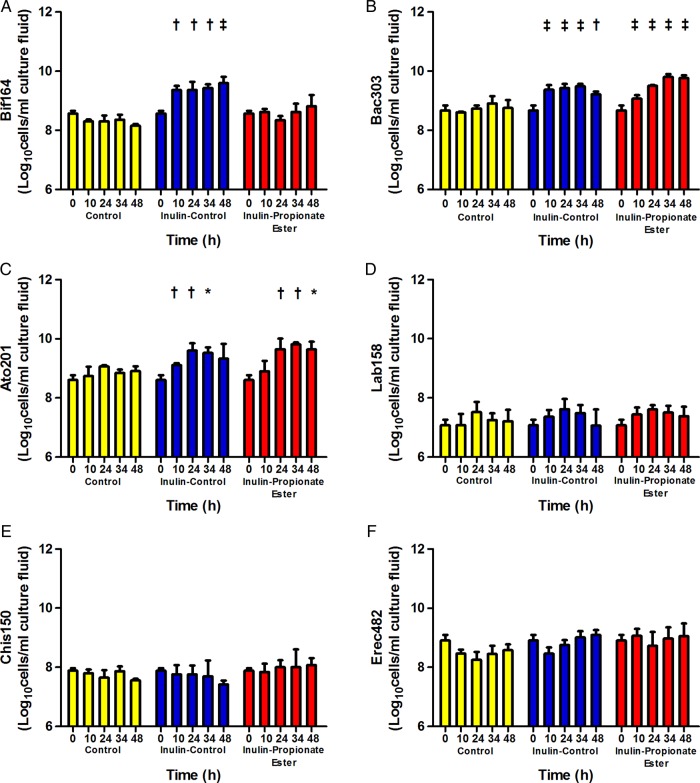
“41 Data from batch culture experiments demonstrated that inulin-control and inulin-propionate ester stimulate changes to the gut microbiota, although only inulin-control had a selective effect on Bi fi dobacterium .”
BackgroundAbdominal obesity and metabolic syndrome
Després, J.-P., & Lemieux, I. (2006) · Nature · doi:10.1038/nature05488 · Cited by 4,354 · cited 1×
“44 Interestingly, in this long-term study we were unable to detect any change in PYY or GLP-1 release following ingestion of the inulin-propionate ester compared with inulin-control, in contrast to our acute administration studies.”
ResultGut Microbiota from Twins Discordant for Obesity Modulate Metabolism in Mice
Ridaura, V. K., Faith, J. J., Rey, F. E., Cheng, J., Duncan, A. E., Kau, A. L., Griffin, N. W., Lombard, V., Henrissat, B., Bain, J. R., et al. (2013) · Science · doi:10.1126/science.1241214 · Cited by 3,788
Short chain fatty acids in human large intestine, portal, hepatic and venous blood
Cummings, J. H., Pomare, E. W., Branch, W. J., Naylor, C. P., & Macfarlane, G. T. (1987) · Gut · doi:10.1136/gut.28.10.1221 · Cited by 3,119 · cited 1×
“31 To overcome the unpalatably high levels of ferment-able dietary fi bre needed to signi fi cantly increase colonic propionate levels, and the unpredictability in the production of the resulting SCFAs, we have developed a novel delivery system targeting the release of gram quantities of propionate…”
BackgroundChanges in diet and lifestyle and long-term weight gain in women and men
Mozaffarian, D., Hao, T., Rimm, E. B., Willett, W. C., & Hu, F. B. (2011) · New England Journal of Medicine · doi:10.1056/nejmoa1014296 · Cited by 2,527
Brown, A. J., Goldsworthy, S. M., Barnes, A. A., Eilert, M. M., Tcheang, L., Daniels, D., Muir, A. I., Wigglesworth, M. J., Kinghorn, I., Fraser, N. J., et al. (2003) · Journal of Biological Chemistry · doi:10.1074/jbc.m211609200 · Cited by 2,409
Tolhurst, G., Heffron, H., Lam, Y. S., Parker, H. E., Habib, A. M., Diakogiannaki, E., Cameron, J., Grosse, J., Reimann, F., & Gribble, F. M. (2012) · Diabetes · doi:10.2337/db11-1019 · Cited by 2,404 · cited 2×
“21 Of the SCFAs produced by colonic fermentation of dietary fi bre, propionate has the highest af fi nity for FFAR 2.”
BackgroundMethodGut hormone PYY3-36 physiologically inhibits food intake
Batterham, R. L., Cowley, M. A., Small, C. J., Herzog, H., Cohen, M. A., Dakin, C. L., Wren, A. M., Brynes, A. E., Low, M. J., Ghatei, M. A., et al. (2002) · Nature · doi:10.1038/nature00887 · Cited by 2,351
Self-citationFlint, A., Raben, A., Blundell, J., & Astrup, A. (2000) · International Journal of Obesity · doi:10.1038/sj.ijo.0801083 · Cited by 2,238
Self-citationMicrobiota-Generated Metabolites Promote Metabolic Benefits via Gut-Brain Neural Circuits
De Vadder, F., Kovatcheva-Datchary, P., Goncalves, D., Vinera, J., Zitoun, C., Duchampt, A., Bäckhed, F., & Mithieux, G. (2014) · Cell · doi:10.1016/j.cell.2013.12.016 · Cited by 2,200
Cited by
Items 701–800 of 1,001
Feng, G., Mikkelsen, D., Hoedt, E. C., Williams, B. A., Flanagan, B. M., Morrison, M., & Gidley, M. J. (2020) · Food & Function · doi:10.1039/d0fo01103g · Cited by 23
Wang, M., Li, L., Chen, Y., Lian, G., Wang, J., Zhang, J., Shan, K., Shang, L., Tian, F., & Jing, C. (2020) · Obesity Surgery · doi:10.1007/s11695-020-04974-7 · Cited by 23
“Recent studies have suggested that bile diversion to the ileum (BG-IL) surgery can improve glucose homeostasis through the intestinal FXR-GLP-1 axis and alter intestinal bile acid availability.”
BackgroundInfluentialCheng, T., Li, J., Chen, J., Chen, P., Ma, L.-R., Zhang, G., & Yan, P. (2021) · Chinese Medicine · doi:10.1186/s13020-021-00516-0 · Cited by 23
“Ingestion of propionate significantly increased peptide YY and GLP-1, ultimately reducing food intake and improving insulin sensitivity [49].”
BackgroundSpent coffee (Coffea arabica L.) grounds promote satiety and attenuate energy intake: A pilot study
Campos‐Vega, R., Arreguín‐Campos, A., Cruz‐Medrano, M. A., & Castillo Bilbao, M. D. (2020) · Journal of Food Biochemistry · doi:10.1111/jfbc.13204 · Cited by 22
Gut Microbiota as Emerging Players in the Development of Alcohol-Related Liver Disease
Li, W., Gao, W., Yan, Q. S., Yang, L., Zhu, Q., & Chu, H. (2024) · Biomedicines · doi:10.3390/biomedicines13010074 · Cited by 22
“Acetate plays a role in the synthesis of cholesterol and fats, while propionate has an inhibitory effect on this process [139,145].”
Aalipanah, E., Askarpour, M., Eskandari, M. H., Zare, M., Famouri, M., Bedeltavana, A., Mohsenpour, M. A., & Sohrabi, Z. (2025) · Clinical Nutrition ESPEN · doi:10.1016/j.clnesp.2025.05.045 · Cited by 23
Gut microbiota in non-alcoholic fatty liver disease: Pathophysiology, diagnosis, and therapeutics
Pandey, H., Goel, P., Srinivasan, V. M., Tang, D. W. T., Wong, S. H., & Lal, D. (2025) · World Journal of Hepatology · doi:10.4254/wjh.v17.i6.106849 · Cited by 23
Interactions of Non-Nutritive Artificial Sweeteners with the Microbiome in Metabolic Syndrome
Harrington, V. M., +, L. L., Crits‐Christoph, A., & Suez, J. (2022) · Immunometabolism · doi:10.20900/immunometab20220012 · Cited by 23
Chen, M., Pan, P., Zhang, H., Li, R., Ren, D., & Jiang, B. (2024) · Food & Function · doi:10.1039/d4fo02316a · Cited by 22
Wang, L. J., Sun, J., Chen, S., Sun, Y., Zheng, Y., & Feng, J. C. (2025) · Frontiers in Medicine · doi:10.3389/fmed.2024.1490929 · Cited by 22
Steensels, S., Cools, L., Avau, B., Vancleef, L., Farré, R., Verbeke, K., & Depoortere, I. (2016) · Molecular Nutrition & Food Research · doi:10.1002/mnfr.201600716 · Cited by 22
Byrne, C., Preston, T., Brignardello, J., García‐Pérez, I., Holmes, E. C., Frost, G. S., & Morrison, D. J. (2018) · Journal of Breath Research · doi:10.1088/1752-7163/aad3f1 · Cited by 22
Self-citationOncoprotective Effects of Short-Chain Fatty Acids on Uterine Cervical Neoplasia
Matsuya-Ogawa, M., Shibata, T. K., Itoh, H., Murakami, H., Yaguchi, C., Sugihara, K., & Kanayama, N. (2019) · Nutrition and Cancer · doi:10.1080/01635581.2019.1578388 · Cited by 22
“demonstrated that increased intestinal SCFAs have been suggested to have a function to prevent weight gain by the stimulation to release of peptide YY and glucagon like peptide-1 (23).”
BackgroundCarbohydrates: Separating fact from fiction
Blaak, E. E., Riccardi, G., & Cho, L. (2021) · Atherosclerosis · doi:10.1016/j.atherosclerosis.2021.03.025 · Cited by 23
Effect of Obesity on the Expression of Nutrient Receptors and Satiety Hormones in the Human Colon
Baumard, L., Weerts, Z. Z. R. M., Masclee, A., Keszthelyi, D., Michael-Titus, A. T., & Peiris, M. (2021) · Nutrients · doi:10.3390/nu13041271 · Cited by 22
“We have previously shown that agonist action at GPR41, GPR40, and GPR119 induces colonic EEC activation [49] and, importantly, that stimulation of GPR84 increases the release of GLP-1, PYY, and serotonin, demonstrating functional modulation of L and EC cells [45].”
BackgroundInfluentialLyu, B., Wang, Y., Fu, H., Li, J., Yang, X., Shen, Y., Swallah, M. S., Yu, Z., Li, Y., Wang, H., et al. (2022) · Food & Function · doi:10.1039/d1fo02264d · Cited by 22
Corona-Cervantes, K., Parra‐Carriedo, A., Hernández-Quiroz, F., Martínez-Castro, N., Vélez-Ixta, J. M., Guajardo-López, D., García-Mena, J., & Hernández‐Guerrero, C. (2022) · Nutrients · doi:10.3390/nu14051008 · Cited by 22
“In other studies, positive associations were found between Prevotella species and propionate production, which has essential roles in the prevention of weight gain by reducing decreasing hepatic lipogenesis [27,29].”
BackgroundWen, J., Zhao, W., Li, J., Hu, C., Zou, X., & Dong, X. (2022) · Frontiers in Immunology · doi:10.3389/fimmu.2022.926162 · Cited by 22
“According to the reports on the function of SCFAs on humans, SCFAs may offer persistently energy and nutrition to epithelial cells in the gastrointestinal tract and hence promote appetite and intestinal motility of the hosts (57, 58).”
BackgroundPetelin, A., Novak, K. Š., Hladnik, M., Bandelj, D., Arbeiter, A. B., Kramberger, K., Kenig, S., & Pražnikar, Z. J. (2022) · Foods · doi:10.3390/foods11203277 · Cited by 22
“Nevertheless, Prevotella species were shown to be positively associated with propionate production that has an important role in preventing weight gain by reducing serum cholesterol and decreasing hepatic lipogenesis [72].”
BackgroundTree Nut Consumption and Adipose Tissue Mass: Mechanisms of Action
Tindall, A. M., Petersen, K. S., Lamendella, R., Shearer, G. C., Murray‐Kolb, L. E., Proctor, D. N., & Kris‐Etherton, P. M. (2018) · Current Developments in Nutrition · doi:10.1093/cdn/nzy069 · Cited by 22
Investigating the Role of Diet and Exercise in Gut Microbe-Host Cometabolism
Penney, N. C., Barton, W., Posma, J. M., Darzi, A. W., Frost, G. S., Cotter, P. D., Holmes, E. C., Shanahan, F., O’Sullivan, Ó., & García‐Pérez, I. (2020) · mSystems · doi:10.1128/msystems.00677-20 · Cited by 22
“Importantly, SCFAs have been associated with reduced appetite and weight loss through stimulating release of the anorectic gut hormones peptide YY (PYY) and glucagon-like peptide-1 (GLP-1) (36, 39).”
BackgroundSelf-citationGuerrero-Hreins, E., Foldi, C. J., Oldfield, B. J., Stefanidis, A., Sumithran, P., & Brown, R. M. (2022) · Reviews in Endocrine and Metabolic Disorders · doi:10.1007/s11154-021-09696-4 · Cited by 21
“Amplifying colonic propionate in humans reduces anticipatory reward to high calorie food pictures in the caudate and NAcc in men without obesity [120] and propionate supplementation prevented weight gain and insulin resistance in overweight adults [121] potentially due to upregulation of GLP-1 receptor signalling.”
BackgroundMechanism of actions of probiotics on type 2 diabetes: Development and complications
Ağagündüz, D., Çelik, E., Cemali, Ö., Yeşildemir, Ö., Demirci, K. Ş., Akkuş, G., Esatbeyoglu, T., & Özoğul, F. (2025) · Biomedicine & Pharmacotherapy · doi:10.1016/j.biopha.2025.118421 · Cited by 21
Zhang, W., Liu, W., Leng, F., Shen, M., & Xie, J. (2025) · Carbohydrate Polymers · doi:10.1016/j.carbpol.2025.124074 · Cited by 22
Age-Dependent Prebiotic Effects of Soluble Corn Fiber in M-SHIME® Gut Microbial Ecosystems
Calatayud, M., Laurie, I., Rotsaert, C., Marzorati, M., Risso, D. S., & Karnik, K. (2023) · Plant Foods for Human Nutrition · doi:10.1007/s11130-023-01043-z · Cited by 21
Zhang, L., Wang, Y., Sun, Y., & Zhang, X. (2023) · Nutrients · doi:10.3390/nu15102277 · Cited by 21
“For instance, overweight adults supplemented with propionate stimulated the release of GLP-1, coupled with weight and liver steatosis reduction [21].”
BackgroundThe relationship between the gut microbiome and resistance training: a rapid review
Wagner, A., Kapounková, K., & Struhár, I. (2024) · BMC Sports Science Medicine and Rehabilitation · doi:10.1186/s13102-023-00791-4 · Cited by 21
“Furthermore, it can also reduce the occurrence of fat in the blood and energy storage in the adipose tissue through activation of AMP (AMP – activated protein kinase) which is involved in the regulation of fatty acids [12].”
BackgroundZou, Y., Shi, Y., Liao, S., Li, E., Yang, Q., Chen, R., & Li, Q. (2024) · LWT · doi:10.1016/j.lwt.2024.115830 · Cited by 21
McCoubrey, L. E., Ferraro, F., Seegobin, N., Vérin, J., Alfassam, H. A., Awad, A., Marzorati, M., Verstrepen, L., Ghyselinck, J., Munck, J. D., et al. (2024) · Journal of Controlled Release · doi:10.1016/j.jconrel.2024.03.039 · Cited by 21
“…shown numerous benefits of IPE administration, including significant reductions in weight gain, intrahepatocellular lipid content, pro-inflammatory IL-8 in serum, and abdominal adipose tissue distribution in overweight and obese adults, alongside changes in faecal microbiome composition [17 – 19].”
García, S. G., Rondinella, D., Ponziani, F. R., Miele, L., Gasbarrini, A., Cammarota, G., Lanas, Á., & Gomollón, F. (2024) · Best Practice & Research Clinical Gastroenterology · doi:10.1016/j.bpg.2024.101924 · Cited by 21
Naya-Català, F., Wiggers, G. A., Piazzon, M. C., López-Martínez, M. I., Estensoro, I., Calduch-Giner, J. À., Martínez‐Cuesta, M. C., Requena, T., Sitjà‐Bobadilla, A., Miguel, M., et al. (2021) · Frontiers in Marine Science · doi:10.3389/fmars.2021.698484 · Cited by 21
“, 2016) and triggering the secretion of satiety peptides, such as glucagon-like peptide-1 and peptide YY (Chambers et al., 2015).”
BackgroundDing, Y., Fang, Y., Pan, Y., Lan, J., Xu, T., Zhang, W., Mao, H., Gu, Z., Chen, X., & Shen, Q. (2023) · Food & Function · doi:10.1039/d2fo02463b · Cited by 21
The impact of dietary fibres on the physiological processes of the large intestine
Gill, S., Chater, P. I., Wilcox, M. D., Pearson, J. P., & Brownlee, I. A. (2018) · Bioactive Carbohydrates and Dietary Fibre · doi:10.1016/j.bcdf.2018.06.001 · Cited by 21
Guo, Y., Zou, J., Xu, X., Zhou, H., Sun, X., Wu, L., Zhang, S., Zhong, X., Xiong, Z., Lin, Y., et al. (2021) · Clinical Nutrition · doi:10.1016/j.clnu.2021.04.007 · Cited by 20
Association between rumen microbiota and marbling grade in Hu sheep
Wang, J., Zhang, Y., Wang, X., Li, F., Zhang, D., Li, X., Zhao, Y., Zhao, L., Xu, D., Cheng, J., et al. (2022) · Frontiers in Microbiology · doi:10.3389/fmicb.2022.978263 · Cited by 20
“, 2011) and is involved in hepatic gluconeogenesis and reduces the expression of enzymes participating in the de novo synthesis of fatty acids and cholesterol (Demigné et al., 1995; Chambers et al., 2015).”
BackgroundRad, Z. A., Mousavi, S. N., & Chiti, H. (2023) · Scientific Reports · doi:10.1038/s41598-023-45054-x · Cited by 20
“In human studies, propionate supplementation increased the satiety hormones including peptide YY (PYY) and glucagon-like peptide (GLP-1), which have been related to lower serum FBS and higher insulin secrection in the body 48,49 .”
BackgroundEdible fungi polysaccharides modulate gut microbiota and lipid metabolism: A review
Xu, H., Xue, Z., Wang, P., Lee, Q., Chen, Z., Liu, B., Liu, X., & Zeng, F. (2024) · International Journal of Biological Macromolecules · doi:10.1016/j.ijbiomac.2024.137427 · Cited by 20
Jalil, A. M. M., Combet, E., Edwards, C. A., & García, A. L. (2019) · International Journal of Environmental Research and Public Health · doi:10.3390/ijerph16020227 · Cited by 20
“Another study showed that an in vitro batch fermentation of inulin-propionate ester increased the microbial activity of Bifidobacterium spp, Bacteroides/Prevotella and Atopobium cluster compared with baseline (0 h) but did not differ significantly compared with the control (no substrate) and inulin-only control [53].”
BackgroundSeegers, J. F. M. L., Bui, T. P. N., & de Vos, W. M. (2021) · Microorganisms for sustainability · doi:10.1007/978-981-16-0223-8_5 · Cited by 20
Collins, S. M., Gibson, G. R., Kennedy, O. B., Walton, G., Rowland, I. R., & Commane, D. M. (2021) · FEMS Microbiology Ecology · doi:10.1093/femsec/fiab101 · Cited by 20
Self-citationMukorako, P., Lemoine, N., Biertho, L. D., Lebel, S., Roy, M.-C., Plamondon, J., Tchernof, A., Varin, T. V., Anhê, F. F., St-Pierre, D. H., et al. (2021) · International Journal of Obesity · doi:10.1038/s41366-021-00973-5 · Cited by 20
Yde, C. C., Jensen, H. M., Christensen, N. J., Servant, F., Lelouvier, B., Lahtinen, S. J., Stenman, L. K., Airaksinen, K., & Kailanto, H.-M. (2021) · PLoS ONE · doi:10.1371/journal.pone.0260765 · Cited by 20
Brauckmann, V., Nambiar, S., Potthoff, A. V., Höxtermann, S., Wach, J., Kayser, A., Tiemann, C., Schuppe, A.-K., Brockmeyer, N. H., & Skaletz‐Rorowski, A. (2022) · Journal of the European Academy of Dermatology and Venereology · doi:10.1111/jdv.18006 · Cited by 20
The impact of psyllium gelation behaviour on in vitro colonic fermentation properties
Harris, H. C., Pereira, N., Koev, T. T., Khimyak, Y. Z., Yakubov, G. E., & Warren, F. J. (2023) · Food Hydrocolloids · doi:10.1016/j.foodhyd.2023.108543 · Cited by 20
Darzi, J., Frost, G. S., Swann, J. R., Costabile, A., & Robertson, M. D. (2015) · Appetite · doi:10.1016/j.appet.2015.12.011 · Cited by 20
Self-citationLv, Z., Zhang, Z., Wang, F., Guo, J., Zhao, X., & Zhao, J. (2022) · Animals · doi:10.3390/ani12121579 · Cited by 19
“G protein-coupled receptors (GPR) and suppress histone deacetylase (HDAC) as active signaling molecules to improve immune function and intestinal integrity of the host [4].”
BackgroundChatonidi, G., Poppe, J., & Verbeke, K. (2023) · Trends in Food Science & Technology · doi:10.1016/j.tifs.2023.02.002 · Cited by 19
Koponen, K., Kambur, O., Joseph, B., Ruuskanen, M. O., Jousilahti, P., Salido, R. A., Brennan, C., Jain, M., Méric, G., Inouye, M., et al. (2023) · Arteriosclerosis Thrombosis and Vascular Biology · doi:10.1161/atvbaha.123.319458 · Cited by 19
“20,21 Also, micro-bially derived metabolites, mainly short-chain fatty acids, have been shown to reduce hepatic fat content 22 and improve peripheral insulin sensitivity.”
Altered gut microbiome associated with metabolic-associated fatty liver disease in Chinese children
Ji, J., Sun, J., Li, J., Xie, J., Xi, B., & Zhao, M. (2023) · Clinical Nutrition · doi:10.1016/j.clnu.2023.11.001 · Cited by 19
HMOs Impact the Gut Microbiome of Children and Adults Starting from Low Predicted Daily Doses
Bajic, D., Wiens, F., Wintergerst, E., Deyaert, S., Baudot, A., & den Abbeele, P. V. (2024) · Metabolites · doi:10.3390/metabo14040239 · Cited by 19
“…hand, when the aim is to upregulate the gut production of propionate, which enters the bloodstream and exerts health benefits beyond the gut [48,49], 6 ′ SL is the preferred HMO, with a propionate production at 1 g/day, exceeding propionate levels observed for any of the other HMOs at this…”
BackgroundHan, L., Zhang, M., Hu, Y., Sun, X., Zhang, R., Zhang, X., Zhang, M., Tang, C., Cui, Q., Zhang, Z., et al. (2025) · International Immunopharmacology · doi:10.1016/j.intimp.2025.114564 · Cited by 19
Nayak, S. P. R. R., Das, A., Choi, K. C., Arasu, M. V., Namasivayam, S. K. R., Guru, A., & Arockiaraj, J. (2025) · Medicine in Microecology · doi:10.1016/j.medmic.2025.100133 · Cited by 19
Deroover, L., Vázquez-Castellanos, J. F., Vandermeulen, G., Luypaerts, A., Raes, J., Courtin, C. M., & Verbeke, K. (2021) · American Journal of Clinical Nutrition · doi:10.1093/ajcn/nqab196 · Cited by 19
Puhlmann, M.-L., Jokela, R., van Dongen, K. C. W., Bui, T. P. N., Hangelbroek, R., Smidt, H., de Vos, W. M., & Feskens, E. J. M. (2022) · Gut Microbiome · doi:10.1017/gmb.2022.4 · Cited by 20
“In another parallel, but longer, 24-week trial in overweight subjects, HOMA-ir decreased over baseline by 14.8% (from 2.7 to 2.3), fasting insulin by 7.8%, and fasting glucose by 2.0% after ITF consumption (Chambers et al., 2015).”
BackgroundInfluentialPlasma Concentrations of Short-Chain Fatty Acids in Active and Recovered Anorexia Nervosa
Nilsson, I. A. K., Xu, J., Landberg, R., Lavebratt, C., Bulik, C. M., & Landén, M. (2022) · Nutrients · doi:10.3390/nu14245247 · Cited by 19
“Targeted delivery of propionate to the colon has been reported to prevent weight gain in overweight adult humans [47].”
BackgroundXie, Z., Yao, M., Castro-Mejía, J. L., Ma, M., Zhu, Y., Fu, X., Huang, Q., & Zhang, B. (2023) · Journal of Functional Foods · doi:10.1016/j.jff.2023.105447 · Cited by 19
Bellucci, E., Chiereghin, F., Pacifici, F., Donadel, G., Stefano, A. D., Malatesta, G., Valente, M. G., Guadagni, F., Infante, M., Rovella, V., et al. (2023) · PubMed · doi:10.26355/eurrev_202303_31558 · Cited by 19
Proceedings of the 2017 ASPEN Research Workshop—Gastric Bypass: Role of the Gut
Jain, A. K., le Roux, C. W., Puri, P., Tavakkoli, A., Gletsu-Miller, N. A., Laferrère, B., Kellermayer, R., DiBaise, J. K., Martindale, R. G., & Wolfe, B. M. (2018) · Journal of Parenteral and Enteral Nutrition · doi:10.1002/jpen.1121 · Cited by 19
Moreira Gobis, M. D. L., Goulart de Souza-Silva, T., & de Almeida Paula, H. A. (2024) · Life Sciences · doi:10.1016/j.lfs.2024.122741 · Cited by 18
Takeuchi, T., Miyauchi, E., Nakanishi, Y., Ito, Y., Kato, T., Yaguchi, K., Kawasumi, M., Tachibana, N., Ito, A., Shimamoto, S., et al. (2025) · Cell Metabolism · doi:10.1016/j.cmet.2025.04.013 · Cited by 18
Ban, Q., Chi, W., Tan, Y., Wang, S., Li, N., Song, L., Huang, X., Wang, D., Peng, W., Granato, D., et al. (2023) · Food Science & Nutrition · doi:10.1002/fsn3.3237 · Cited by 18
“The increased SCFA production or targeted delivery of SCFAs to the human colon is beneficial for the host in mitigating obesity and diabetes (Chambers et al., 2015; Pingitore et al., 2017; Zhao et al., 2018).”
BackgroundDietary Factors Impact Developmental Trajectories in Young Autistic Children
Acosta, A., Khokhlovich, E., Reis, H. I. D. S., & Vyshedskiy, A. (2023) · Journal of Autism and Developmental Disorders · doi:10.1007/s10803-023-06074-8 · Cited by 18
Pan, X., Liu, P., Zhang, Y.-J., Zhang, H.-K., Wei, H., Jiang, J., Hui-yan, Shang, E., Li, W.-W., Wang, Y., et al. (2023) · International Journal of Biological Macromolecules · doi:10.1016/j.ijbiomac.2023.126930 · Cited by 19
Role of short chain fatty acids on astrocytes and microglia in Alzheimer's disease brain
Wtpsk, S., Burton, M., Fernando, W. M. K. T., Jayasena, V., Brennan, C. S., & Fernando, W. M. A. D. B. (2024) · International Journal of Food Science & Technology · doi:10.1111/ijfs.17380 · Cited by 18
Pang, X., Wei, X., Wu, Y., Nan, S., Feng, J., Wang, F., Yao, M., & Nie, C. (2024) · Antioxidants · doi:10.3390/antiox13080942 · Cited by 18
“The following supporting information can be downloaded at: https:// www.mdpi.com/article/10.3390/antiox13080942/s1, Figure S1”
BackgroundInfluentialRegular Consumption of Green Tea as an Element of Diet Therapy in Drug-Induced Liver Injury (DILI)
Winiarska‐Mieczan, A., Jachimowicz-Rogowska, K., Kwiecień, M., Borsuk-Stanulewicz, M., Tomczyk‐Warunek, A., Stamirowska-Krzaczek, E., Purwin, C., Stryjecka, M., & Tomaszewska, M. (2024) · Nutrients · doi:10.3390/nu16172837 · Cited by 18
Investigating serum concentration profiles of orally ingested short-chain fatty acid supplements
Green, C. G., Ong, M. L. Y., Rowland, S. N., Bongiovanni, T., James, L. J., Clifford, T., Bailey, S. J., & Heaney, L. M. (2024) · Food & Function · doi:10.1039/d4fo04028g · Cited by 18
Rattigan, R., Sweeney, T., Vigors, S., Thornton, K., Rajauria, G., & O’Doherty, J. V. (2019) · Marine Drugs · doi:10.3390/md17120680 · Cited by 18
Hyun, K., Yang, J., Kim, K., Yoon, K.-Y., Song, D., Erdene-Ochir, E., Kang, K., Pan, C., & Ko, G. (2020) · Food Research International · doi:10.1016/j.foodres.2020.109495 · Cited by 18
The brain–gut axis, inflammatory bowel disease and bioelectronic medicine
Eberhardson, M., Levine, Y. A., Tarnawski, L., & Olofsson, P. S. (2021) · International Immunology · doi:10.1093/intimm/dxab018 · Cited by 18
Rajeev, R., Seethalakshmi, P. S., Jena, P. K., Prathiviraj, R., Kiran, G. S., & Selvin, J. (2021) · Critical Reviews in Food Science and Nutrition · doi:10.1080/10408398.2021.1916429 · Cited by 20
Brignardello, J., Fountana, S., Posma, J. M., Chambers, E. S., Nicholson, J. K., Wist, J., Frost, G. S., García‐Pérez, I., & Holmes, E. C. (2021) · American Journal of Clinical Nutrition · doi:10.1093/ajcn/nqab211 · Cited by 18
“Another challenge in understanding the behavior of SCFAs is that food in daily life is consumed in mixtures, and unsurprisingly, systemic concentrations of SCFAs derived from a “typical” diet appear to be different compared with SCFAs that are derived from single dietary components or SCFA supplementation (10, 31, 53,…”
Self-citationTargeting the MGBA with -biotics in epilepsy: New insights from preclinical and clinical studies
Riva, A., Pozzati, E., Grasso, M., Caro, C. D., Russo, E., Verrotti, A., & Striano, P. (2022) · Neurobiology of Disease · doi:10.1016/j.nbd.2022.105758 · Cited by 18
Wang, X., Li, L., Bai, M., Zhao, J., Sun, X., Gao, Y., Yu, H., Chen, X., & Zhang, C. (2022) · Frontiers in Immunology · doi:10.3389/fimmu.2022.977528 · Cited by 18
“In addition to being a direct energy supplier, short chain fatty acids also play a role in metabolic regulation after entering the tissues and organs by blood circulation, working as signal molecules by stimulating the release of saturated hormone peptides (60) and glucagon peptides (61, 62).”
BackgroundMalkova, D., Polyviou, T. P., Rizou, E., Gerasimidis, K., Chambers, E. S., Preston, T., Tedford, C. M., Frost, G. S., & Morrison, D. J. (2019) · Metabolism · doi:10.1016/j.metabol.2019.154043 · Cited by 18
Self-citationGuo, C., Shi, X., Luo, B., Yang, Y., Huang, J. H., Xu, J., Zheng, R., Jiang, S., & Chai, J. (2025) · The Journal of Nutritional Biochemistry · doi:10.1016/j.jnutbio.2025.109955 · Cited by 17
Relationships Among Gut Microbiota, Ischemic Stroke and Its Risk Factors: Based on Research Evidence
Huang, Q., Cai, G., Liu, T., & Liu, Z. (2022) · International Journal of General Medicine · doi:10.2147/ijgm.s353276 · Cited by 17
Rehman, A., Pham, V. T., Seifert, N., Richard, N., Sybesma, W., & Steinert, R. E. (2023) · Journal of Dietary Supplements · doi:10.1080/19390211.2023.2198007 · Cited by 17
Gut microbial CAZymes markers for depression
Xie, P., Zhou, X., Li, Y., Wu, J., Zhang, H., Huang, Y., Tan, X., Wen, L., Olasunkanmi, O. I., Zhou, J., et al. (2024) · Translational Psychiatry · doi:10.1038/s41398-024-02850-x · Cited by 17
“Thus, the gut microbiome enables to decompose complex fi bers, and convert sugar units into energy to maintain the host ’ s health [9, 10].”
BackgroundDeli, C. K., Fatouros, I. G., Poulios, A., Liakou, C. A., Draganidis, D., Παπανικολάου, Κ., Rosvoglou, A., Gatsas, A., Georgakouli, K., Tsimeas, P. D., et al. (2024) · Life · doi:10.3390/life14081016 · Cited by 17
“SCFAs also bind to the G protein-coupled receptors GPR41 and GPR43 and promote the release of glucagon-like peptide-1 (GLP-1) and peptide YY (PYY) from enteroendocrine L-cells [110–112].”
BackgroundZheng, M., Ouyang, H., Hong, T., Guo, X., Wu, W., Zhu, Y., Ni, H., & Jiang, Z. (2024) · International Journal of Biological Macromolecules · doi:10.1016/j.ijbiomac.2024.138933 · Cited by 17
Impacts of non-nutritive sweeteners on the human microbiome
Crakes, K. R., Questell, L., Soni, S., & Suez, J. (2025) · Immunometabolism · doi:10.1097/in9.0000000000000060 · Cited by 18
“In contrast, supplementation with either acetate, propionate, or butyrate is generally associated with improved metabolic markers in both humans [77,78] and preclinical models [79–82] .”
Liu, L., Qi, W., Zhang, N., Zhang, J., Liu, S., Wang, H., Jiang, L., & Sun, Y. B. (2025) · Nutrients · doi:10.3390/nu17091551 · Cited by 17
Yamamura, R., Nakamura, K., Ukawa, S., Okada, E., Nakagawa, T., Imae, A., Kunihiro, T., Kimura, T., Hirata, T., & Tamakoshi, A. (2021) · Obesity Research & Clinical Practice · doi:10.1016/j.orcp.2021.06.003 · Cited by 17
“Additionally, 188 several animal experiments [32-34] and an interventional study [35] have found that the oral 189 administration of every SCFA subtype prevents weight gain.”
BackgroundDaniel, N., Barz, M. L., Mitchell, P. L., Varin, T. V., Bourdeau‐Julien, I., Farabos, D., Pilon, G., Gauthier, J., Garofalo, C., Kang, J. X., et al. (2022) · Function · doi:10.1093/function/zqac069 · Cited by 17
Listeria monocytogenes Response to Propionate Is Differentially Modulated by Anaerobicity
Rinehart, E., Newton, E. E., Marasco, M. A., Beemiller, K., Zani, A., Muratore, M. K., Weis, J., Steinbicker, N., Wallace, N., & Sun, Y. (2018) · Pathogens · doi:10.3390/pathogens7030060 · Cited by 17
Dréan, G. L., Pocheron, A.-L., Billard, H., Grit, I., Pagniez, A., Parnet, P., Chappuis, E., Rolli‐Derkinderen, M., & Michel, C. (2019) · Nutrients · doi:10.3390/nu11091967 · Cited by 17
Overall Rebalancing of Gut Microbiota Is Key to Autism Intervention
Lu, C. F., Rong, J., Fu, C., Wang, W., Xu, J. B., & Ju, X. (2022) · Frontiers in Psychology · doi:10.3389/fpsyg.2022.862719 · Cited by 18
Tuning gut microbiota by advanced nanotechnology
Qi, Y., Wang, Y., Wang, X., Zheng, H., & Lu, Y. (2025) · Materials Futures · doi:10.1088/2752-5724/ada62b · Cited by 16
Sarmiento, J., Pulgar, R., Mandaković, D., Porras, O. H., Flores, C. A., Luco, D., Trujillo, C., Díaz-Esquivel, B., Alvarez, C., Acevedo, A., et al. (2022) · International Journal of Molecular Sciences · doi:10.3390/ijms23031673 · Cited by 16
“Indeed, colonic administration of propionate for six months effectively reduced weight and fat tissue in humans displaying overweight [15].”
BackgroundZhu, T., Zhang, B., Yan, F., Li, Z., Tang, X., Ban, X., Kong, H., & Li, C. (2022) · Foods · doi:10.3390/foods11081118 · Cited by 16
“Findings from studies involving humans revealed that propionate reduces energy intake by exciting the release of PYY and GLP-1 from human colon cells, inhibiting weight gain, improving adipose tissue distribution in the abdomen, and reducing intrahepatic fat levels [45].”
BackgroundReview of the Health Benefits of Cereals and Pseudocereals on Human Gut Microbiota
Zeyneb, H., Al‐Dalali, S., Pei, H., & Cao, X. (2023) · Food and Bioprocess Technology · doi:10.1007/s11947-023-03069-2 · Cited by 16
“It stimulates the secretion of two hormones glucagon-like peptide 1 (GLP-1) and peptide YY (PYY) with anorexigenic effects, which are satiety-inducting hormones and are favorable to decreasing the food appetites of obese people (Psichas et al., 2015).”
BackgroundYao, X., Dong, S., Guan, W., Fu, L., Li, G., Wang, Z., Jiao, J., & Wang, X. (2023) · Nutrients · doi:10.3390/nu15092143 · Cited by 16
“Although some studies have shown that intestinal microbiota-derived SCFAs have beneficial glucose metabolic effects [32,33], according to a study by Vishal et al.”
ResultZamani, M. M., Nikbaf‐Shandiz, M., Aali, Y., Rasaei, N., Zarei, M., Shiraseb, F., & Asbaghi, O. (2023) · Frontiers in Nutrition · doi:10.3389/fnut.2023.1084084 · Cited by 16
“On the other hand, GLP-1 hormone is responsible for increasing insulin secretion and decreasing glucagon release (150).”
BackgroundDing, Y., Lan, J., Fang, Y., Pan, Y., Gu, Z., Xue, J., Yang, Y., Jiang, M., Ge, Y., & Shen, Q. (2023) · Molecular Nutrition & Food Research · doi:10.1002/mnfr.202300373 · Cited by 16
Mamun, A. A., Geng, P., Wang, S., Shao, C., & Xiao, J. (2024) · Pharmacological Research · doi:10.1016/j.phrs.2024.107559 · Cited by 16
Peng, F., Yu, Z., Du, B., Niu, K., Xi, Y., Wang, S., & Yang, Y. (2025) · Food Research International · doi:10.1016/j.foodres.2024.115638 · Cited by 16
Reis, A., Rocha, S., & de Freitas, V. A. P. (2021) · Journal of Clinical Medicine · doi:10.3390/jcm10071490 · Cited by 16
“…acids (SCFA), such as propionic acid formed from gut degradation of flavonoids [130] are equally able to stimulate the release of satiety hormones [131,132] leading to reduced weight gain, intra-abdominal adipose tissue distribution, and intrahep-atocellular lipid content in overweight adults [132].”
The emerging role of the gut microbiome in polycystic ovary syndrome
He, Y., Jin, X., Wang, H., Dai, H., Lu, X., Zhao, J., Zhang, H., Chen, W., & Wang, G. (2021) · F&S Reviews · doi:10.1016/j.xfnr.2021.03.003 · Cited by 16
Martínez‐Montoro, J. I., Kuchay, M. S., Román, A. B., Martínez‐Sánchez, M. A., Frutos, M. D., Fernández‐García, J. C., & Ramos‐Molina, B. (2021) · Obesity Reviews · doi:10.1111/obr.13367 · Cited by 16
“Furthermore, in a study with 86 patients with biopsy-proven NAFLD, 37 different bacteria were reported to define mild versus advanced fibrosis.60 Thus, advanced fibrosis was characterized by an increased abundance of Prote- obacteria and Escherichia coli and a decrease in Firmicutes, supporting the possibility that a…”
BackgroundInfluential
Metadata
- Authors
- Chambers, E. S., Viardot, A., Psichas, A., Morrison, D. J., Murphy, K. G., Zac-Varghese, S. E. K., MacDougall, K., Preston, T., Tedford, C., Finlayson, G. S., Blundell, J. E., Bell, J. D., Thomas, E. L., Mt-Isa, S., Ashby, D., Gibson, G. R., Kolida, S., Dhillo, W. S., Bloom, S. R., Morley, W., Clegg, S., & Frost, G.
- Affiliations
- Hammersmith Hospital (GB)
- Garvan Institute of Medical Research (AU)
- Scottish Universities Environmental Research Centre (GB)
- Section of Investigative Medicine, Imperial College London, Hammersmith Hospital, London, UK
- University of the West of Scotland (GB)
- University of Leeds (GB)
- Imperial Clinical Trials Unit, School of Public Health, Imperial College London, London, UK
- Imperial College London (GB)
- University of Reading (GB)
- Department of Food and Nutritional Sciences, University of Reading, Reading, UK
- Leatherhead Food Research (GB)
- Corresponding author
- Frost, Gary
- ORCID
- Venue
- Gut
- Publisher
- BMJ
- Published
- 2014-12-10
- Volume
- 64
- Issue
- 11
- Pages
- 1744-1754
- ISSN
- 0017-5749 (ISSN-L)
- 1468-3288
- PMC
- PMC4680171
- OpenAlex
- W2106348916
- Cited by
- 1,424
- References
- 52
- Citations by year
- 2026: 125 · 2025: 171 · 2024: 149 · 2023: 144 · 2022: 167 · 2021: 172 · 2020: 138 · 2019: 120 · 2018: 97 · 2017: 54 · 2016: 61 · 2015: 25
- FWCI
- 22.75
- Type
- journal article
- Language
- en
- Open access
- hybrid
- doi.org
- Licence
- cc-by
- Locations
- Gut (publishedVersion, cc-by)
- PubMed Central (publishedVersion, cc-by)
- PubMed (publishedVersion)
- White Rose Research Online (University of Leeds, The University of Sheffield, University of York) (acceptedVersion)
- WestminsterResearch (University of Westminster) (acceptedVersion)
- ENLIGHTEN (Jurnal Bimbingan dan Konseling Islam) (acceptedVersion)
- Funders
- Wellcome Trust
- National Institute for Health and Care Research (FP7-HEALTH-2009-241592, CDF-2009-02-05, NF-SI-0513-10080, NF-SI-0507-10337, NF-SI-0513-10029, 03/DHCS/03/G121/48)
- Imperial College London
- Directorate for Biological Sciences
- Medical Research Council (FP7-HEALTH-2009-241592)
- Biotechnology and Biological Sciences Research Council (BB/H005072/1, 1527476, BB/L004259/1, BB/H004971/1, BB/H004815/1, FP7-HEALTH-2009-241592)
- National Health and Medical Research Council
- NIHR Imperial Biomedical Research Centre
- FP7 Health
- Topics
- Life Sciences › Neuroscience › Endocrine and Autonomic Systems › Regulation of Appetite and Obesity
- Life Sciences › Biochemistry, Genetics and Molecular Biology › Molecular Biology › Gut microbiota and health
- Health Sciences › Nursing › Nutrition and Dietetics › Microbial Metabolites in Food Biotechnology
- Keywords
- propionate, short-chain fatty acids, colonic fermentation, peptide YY, glucagon-like peptide-1, appetite regulation, energy intake, weight gain, overweight adults, intra-abdominal adipose tissue, hepatic steatosis, insulin sensitivity
- MeSH terms
- Body Weight Maintenance, Appetite Regulation, Cells, Cultured, Colon, Double-Blind Method, Female, Humans, Male, Middle Aged, Propionates, Cross-Over Studies, Peptide YY, Adiposity, Overweight, Glucagon-Like Peptide 1
About these checks
Registry, retraction, Cites and statistics results are computed, not judged, with one exception: a printed reference that no index lists is read once by a model before it counts as a citation error. Claims are extracted by a model and kept only when their quote appears verbatim in the text; each cited source is then checked, with a model’s help, for whether it says what the claim relies on. Those verdicts can be wrong — read the claim’s quote and the cited source before relying on one.
Statistics and arithmetic are recomputed, not judged.
Confidence bands are shown only for fields calibrated on our annotated test set. None is calibrated yet, so no band is shown.
What counts as a claim ›How we measure confidence ›How we check this ›
Are you an author, or do you see a problem with this page? Request a review
Data sources
Bibliographic data: Semantic Scholar, OpenAlex, Crossref.
Contains information from the Semantic Scholar Academic Graph Datasets, made available under the ODC Attribution License (ODC-BY 1.0).
Semantic Scholar’s data is described in: Kinney, R., et al. (2023). The Semantic Scholar Open Data Platform. arXiv:2301.10140.
