

Effects of targeted delivery of propionate to the human colon on appetite regulation, body weight maintenance and adiposity in overweight adults
Open accessThe DOI matches its Crossref record; 51 of the 52 references it cites were found in a registry or an index.
Abstract
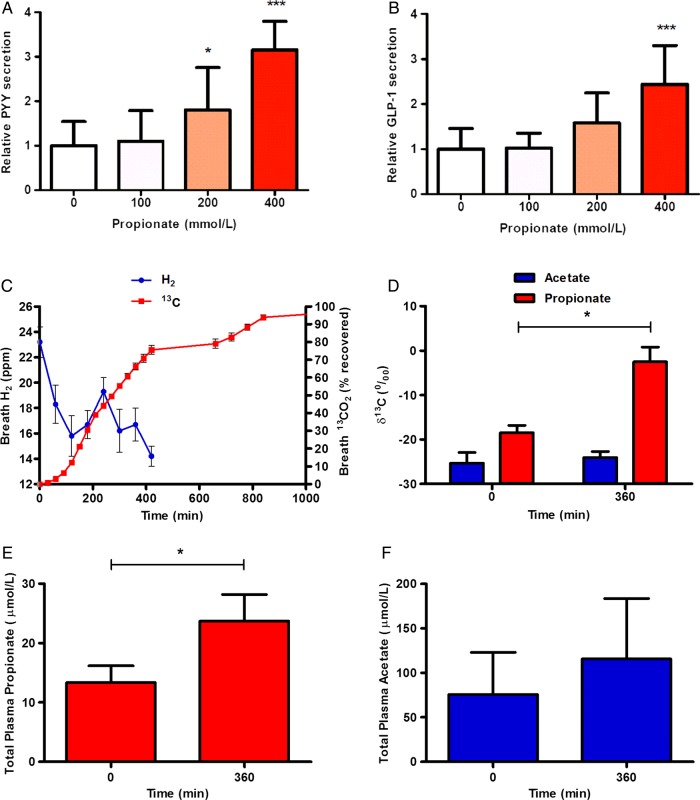
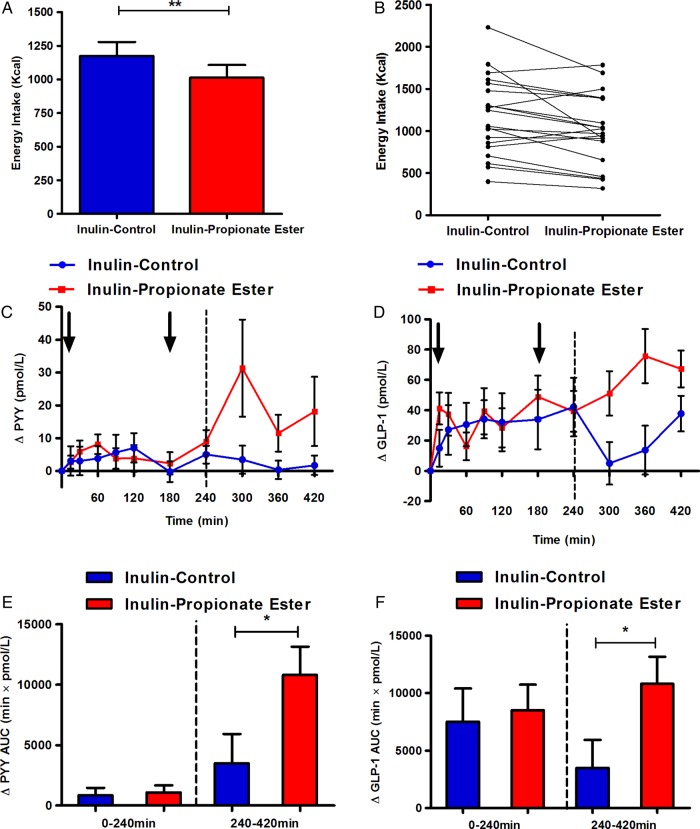
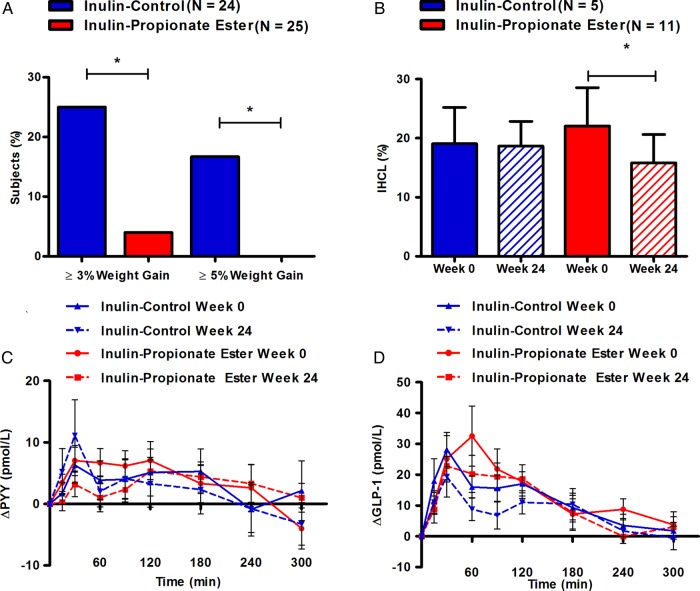
Objective: The colonic microbiota ferment dietary fibres, producing short chain fatty acids. Recent evidence suggests that the short chain fatty acid propionate may play an important role in appetite regulation. We hypothesised that colonic delivery of propionate would increase peptide YY (PYY) and glucagon like peptide-1 (GLP-1) secretion in humans, and reduce energy intake and weight gain in overweight adults. Design: To investigate whether propionate promotes PYY and GLP-1 secretion, a primary cultured human colonic cell model was developed. To deliver propionate specifically to the colon, we developed a novel inulin-propionate ester. An acute randomised, controlled cross-over study was used to assess the effects of this inulin-propionate ester on energy intake and plasma PYY and GLP-1 concentrations. The long-term effects of inulin-propionate ester on weight gain were subsequently assessed in a randomised, controlled 24-week study involving 60 overweight adults. Results: Propionate significantly stimulated the release of PYY and GLP-1 from human colonic cells. Acute ingestion of 10 g inulin-propionate ester significantly increased postprandial plasma PYY and GLP-1 and reduced energy intake. Over 24 weeks, 10 g/day inulin-propionate ester supplementation significantly reduced weight gain, intra-abdominal adipose tissue distribution, intrahepatocellular lipid content and prevented the deterioration in insulin sensitivity observed in the inulin-control group. Conclusions: These data demonstrate for the first time that increasing colonic propionate prevents weight gain in overweight adult humans. Trial registration number: NCT00750438.
Overview
The claims and statistics of this paper haven’t been checked yet.
Free: it reads the open-access text and checks the first 5 claims that cite a source we can check. Create a free account to check every claim.
Integrity signals
Registry
Cites
Statistics
Figures
Verification
Claims the paper makes
The claims and statistics of this paper haven’t been checked yet.
Free: it reads the open-access text and checks the first 5 claims that cite a source we can check. Create a free account to check every claim.
Claims other papers make about this one
Each is checked against this paper’s own text: does it say what the citing paper says it does?
The source backs part of the claim, not all of it — or backs it for a different population, condition or comparison.
In the citing paper
“Human-based studies corroborate the beneficial effects of SCFAs, including the effects of propionate (a common SCFA produced by human gut microbiota) on enhanced incretin response (including plasma Peptide YY [PYY] and GLP-1 excursions), weight loss, reduced intra-abdominal adipose tissue volume and intra-hepatocellular lipid content and preservation of insulin sensitivity [59].”
From The Health Benefits of Dietary Fibre (2020) · cites this paper as [59]
Experimental — accuracy not yet measuredThe cited source says what the claim attributes to it.
In the citing paper
“Short-chain fatty-acid production is primarily derived from non-digestible-carbohydrate (i.e., dietary fiber) consumption [213] during colonic bacterial fermentation [214].”
From Impact of Protein Intake in Older Adults with Sarcopenia and Obesity: A Gut Microbiota Perspective (2020) · cites this paper as [213]
Self-check
Percentages, sums and reported differences re-computed from the paper’s own numbers.
The self-check needs the paper’s full text.
Citations
Cites
Diet rapidly and reproducibly alters the human gut microbiome
David, L. A., Maurice, C. F., Carmody, R. N., Gootenberg, D. B., Button, J. E., Wolfe, B. E., Ling, A. V., Devlin, A. S., Varma, Y., Fischbach, M. A., et al. (2014) · Nature · doi:10.1038/nature12820 · Cited by 10,100 · cited 1×
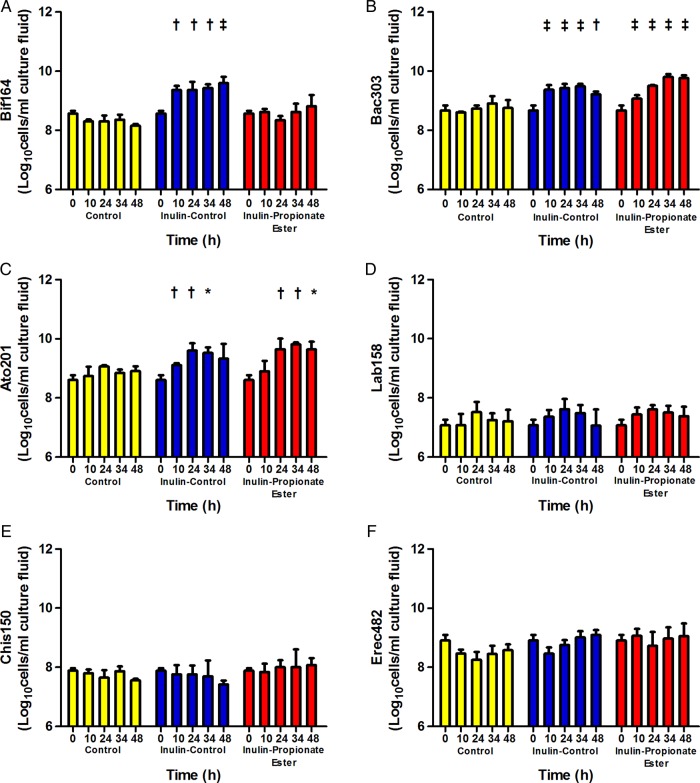
“41 Data from batch culture experiments demonstrated that inulin-control and inulin-propionate ester stimulate changes to the gut microbiota, although only inulin-control had a selective effect on Bi fi dobacterium .”
BackgroundAbdominal obesity and metabolic syndrome
Després, J.-P., & Lemieux, I. (2006) · Nature · doi:10.1038/nature05488 · Cited by 4,354 · cited 1×
“44 Interestingly, in this long-term study we were unable to detect any change in PYY or GLP-1 release following ingestion of the inulin-propionate ester compared with inulin-control, in contrast to our acute administration studies.”
ResultGut Microbiota from Twins Discordant for Obesity Modulate Metabolism in Mice
Ridaura, V. K., Faith, J. J., Rey, F. E., Cheng, J., Duncan, A. E., Kau, A. L., Griffin, N. W., Lombard, V., Henrissat, B., Bain, J. R., et al. (2013) · Science · doi:10.1126/science.1241214 · Cited by 3,788
Short chain fatty acids in human large intestine, portal, hepatic and venous blood
Cummings, J. H., Pomare, E. W., Branch, W. J., Naylor, C. P., & Macfarlane, G. T. (1987) · Gut · doi:10.1136/gut.28.10.1221 · Cited by 3,119 · cited 1×
“31 To overcome the unpalatably high levels of ferment-able dietary fi bre needed to signi fi cantly increase colonic propionate levels, and the unpredictability in the production of the resulting SCFAs, we have developed a novel delivery system targeting the release of gram quantities of propionate…”
BackgroundChanges in diet and lifestyle and long-term weight gain in women and men
Mozaffarian, D., Hao, T., Rimm, E. B., Willett, W. C., & Hu, F. B. (2011) · New England Journal of Medicine · doi:10.1056/nejmoa1014296 · Cited by 2,527
Brown, A. J., Goldsworthy, S. M., Barnes, A. A., Eilert, M. M., Tcheang, L., Daniels, D., Muir, A. I., Wigglesworth, M. J., Kinghorn, I., Fraser, N. J., et al. (2003) · Journal of Biological Chemistry · doi:10.1074/jbc.m211609200 · Cited by 2,409
Tolhurst, G., Heffron, H., Lam, Y. S., Parker, H. E., Habib, A. M., Diakogiannaki, E., Cameron, J., Grosse, J., Reimann, F., & Gribble, F. M. (2012) · Diabetes · doi:10.2337/db11-1019 · Cited by 2,404 · cited 2×
“21 Of the SCFAs produced by colonic fermentation of dietary fi bre, propionate has the highest af fi nity for FFAR 2.”
BackgroundMethodGut hormone PYY3-36 physiologically inhibits food intake
Batterham, R. L., Cowley, M. A., Small, C. J., Herzog, H., Cohen, M. A., Dakin, C. L., Wren, A. M., Brynes, A. E., Low, M. J., Ghatei, M. A., et al. (2002) · Nature · doi:10.1038/nature00887 · Cited by 2,351
Self-citationFlint, A., Raben, A., Blundell, J., & Astrup, A. (2000) · International Journal of Obesity · doi:10.1038/sj.ijo.0801083 · Cited by 2,238
Self-citationMicrobiota-Generated Metabolites Promote Metabolic Benefits via Gut-Brain Neural Circuits
De Vadder, F., Kovatcheva-Datchary, P., Goncalves, D., Vinera, J., Zitoun, C., Duchampt, A., Bäckhed, F., & Mithieux, G. (2014) · Cell · doi:10.1016/j.cell.2013.12.016 · Cited by 2,200
Cited by
Items 401–500 of 1,001
Targeting the gut microbiota by dietary nutrients: A new avenue for human health
Li, D., Wang, P., Wang, P., Hu, X., & Chen, F. (2017) · Critical Reviews in Food Science and Nutrition · doi:10.1080/10408398.2017.1363708 · Cited by 62
“For instance, butyrate can modulate immune responses of intestinal macrophages and DCs via the inhibition of HDAC (Singh et al., 2010; Chang et al., 2014).”
BackgroundGut Microbiota and Body Weight in School‐Aged Children: The KOALA Birth Cohort Study
Mbakwa, C. A., Hermes, G. D. A., Penders, J., Savelkoul, P. H. M., Thijs, C. T., Dagnelie, P. C., Mommers, M., Zoetendal, E. G., Smidt, H., & Arts, I. C. W. (2018) · Obesity · doi:10.1002/oby.22320 · Cited by 63
“has been shown to ferment glucose to acetate in the presence of high formate concentrations (40), and the production of acetate can result in appetite suppression (41), suggesting a mechanism by which these bacteria might be linked to lower weight.”
BackgroundCooper, D., Kable, M., Marco, M., De Leon, A., Rust, B., Baker, J., Horn, W., Burnett, D., & Keim, N. (2017) · Nutrients · doi:10.3390/nu9020173 · Cited by 61
Li, Y., Ji, X., Wu, H., Xiang, L., Zhang, H., & Tang, D. (2021) · Journal of Ethnopharmacology · doi:10.1016/j.jep.2021.114207 · Cited by 61
Mechanisms of hepatic and renal injury in lipid metabolism disorders in metabolic syndrome
Rong, J., Zhang, Z., Peng, X., Li, P., Zhao, T., & Zhong, Y. (2024) · International Journal of Biological Sciences · doi:10.7150/ijbs.100394 · Cited by 62
“Activation of GPR43 on L cells increases the secretion of glucagon-like peptide-1, which in turn promotes insulin secretion [102, 103].”
BackgroundHealth Benefits of Fiber Fermentation
Dahl, W. J., Agro, N. C., Eliasson, Å. M., Mialki, K., Olivera, J. D., Rusch, C. T., & Young, C. N. (2017) · Journal of the American College of Nutrition · doi:10.1080/07315724.2016.1188737 · Cited by 63
“Further evidence in support of this mechanism includes research demonstrating that propionate supplementation maintains insulin sensitivity in overweight adults [25].”
BackgroundThe association of short-chain fatty acids and leptin metabolism: a systematic review
Gabriel, F. C., & Fantuzzi, G. (2019) · Nutrition Research · doi:10.1016/j.nutres.2019.08.006 · Cited by 61
Gene–Environment Interactions on Body Fat Distribution
Li, X., & Qi, L. (2019) · International Journal of Molecular Sciences · doi:10.3390/ijms20153690 · Cited by 61
Gastrointestinal Motility Disorders in Obesity
Miron, I. C., & Dumitrascu, D. L. (2019) · Acta Endocrinologica (Bucharest) · doi:10.4183/aeb.2019.497 · Cited by 61
“GIP is a peptide secreted by the K cells in the duodenal, jejunal and proximal ileal mucosa.”
BackgroundInfluentialLi, J. V., Ashrafian, H., Sarafian, M. H., Homola, D., Rushton, L., Barker, G. F., Cabrera, P. M., Lewis, M. R., Darzi, A. W., Lin, E., et al. (2021) · Microbiome · doi:10.1186/s40168-021-01086-x · Cited by 60
Chen, H., Sun, Y., Zhao, H., Qi, X., Cui, H., Li, Q., & Ma, Y. (2022) · Food & Function · doi:10.1039/d2fo01343f · Cited by 60
Ren, T., Liu, F., Wang, D., Li, B., Jiang, P., Li, J., Li, H., Chen, C., Wu, W. H., & Jiao, L. (2022) · Journal of Ethnopharmacology · doi:10.1016/j.jep.2022.115862 · Cited by 60
Marroncini, G., Naldi, L., Martinelli, S., & Amedei, A. (2024) · Biomedicines · doi:10.3390/biomedicines12071398 · Cited by 60
“Indeed, FCs are believed to stimulate the release of anorectic gut hormones, including peptide YY (PYY) and GLP-1 [15–17].”
BackgroundZhang, R., Yan, Z., Zhong, H., Rong, L., Liu, W., Xiong, S., Liu, Q., & Liu, M. (2024) · Hepatology Communications · doi:10.1097/hc9.0000000000000484 · Cited by 60
“[203] It is noteworthy that a different investigation carried out by the same research group found that oral administration of inulin-propionate ester (20 mg/day) for 6 weeks did not alter intrahepatocellular lipid levels.”
BackgroundCeppa, F., Izzo, L., Sardelli, L., Raimondi, I., Tunesi, M., Albani, D., & Giordano, C. (2020) · Frontiers in Cellular and Infection Microbiology · doi:10.3389/fcimb.2020.00297 · Cited by 60
Selective stimulation of colonic L cells improves metabolic outcomes in mice
Lewis, J. E., Miedzybrodzka, E. L., Foreman, R. E., Woodward, O. R. M., Kay, R. G., Goldspink, D. A., Gribble, F. M., & Reimann, F. (2020) · Diabetologia · doi:10.1007/s00125-020-05149-w · Cited by 59
“Supporting this idea, ingestion of propionate ester, which stimulates release of GLP-1 and PYY from colonic L cells via the SCFA receptor known as free fatty acid receptor 2 (FFAR2), reduced energy intake and weight gain in humans [50], and rectal administration of bile acids in human volunteers also decreased blood g…”
BackgroundTannock, G. W., & Liu, Y. (2019) · Journal of the Royal Society of New Zealand · doi:10.1080/03036758.2019.1657471 · Cited by 59
“Long-term (24 weeks) delivery prevented further weight gain and reduced intra-abdominal fat accretion in overweight participants (Chambers et al. 2015).”
BackgroundAdipokines and Adipose Tissue-Related Metabolites, Nuts and Cardiovascular Disease
Weschenfelder, C., de Quadros, A. S., dos Santos, J. L., Garofallo, S. B., & Marcadenti, A. (2020) · Metabolites · doi:10.3390/metabo10010032 · Cited by 59
The chemistry of gut microbiome in health and diseases
Lau, A., Tan, L. T., Mutalib, N. A., Wong, S. H., Letchumanan, V., & Lee, L. (2021) · Progress In Microbes & Molecular Biology · doi:10.36877/pmmb.a0000175 · Cited by 59
“For example, propionate stimulates GLP-1 and peptide YY secretion, which reduces energy intake([195]).”
BackgroundMicrobial regulation of enteroendocrine cells
Arora, T., Vanslette, A. M., Hjorth, S. A., & Bäckhed, F. (2021) · Med · doi:10.1016/j.medj.2021.03.018 · Cited by 59
Gut microbes and food reward: From the gut to the brain
d’Oplinter, A. D. W., Huwart, S. J. P., Cani, P. D., & Everard, A. (2022) · Frontiers in Neuroscience · doi:10.3389/fnins.2022.947240 · Cited by 59
“In overweight adults, the supplementation in inulinpropionate ester (delivering specifically propionate in the colon) not only increased PYY and GLP-1 plasma concentrations, but decreased also significantly energy intake, leading to weight loss (Chambers et al., 2015).”
BackgroundYan, M., Guo, X., Ji, G., Huang, R., Huang, D., Li, Z., Zhang, D., Chen, S., Cao, R., Yang, X., et al. (2023) · Frontiers in Immunology · doi:10.3389/fimmu.2022.1097853 · Cited by 59
“Propionate in the colon stimulates the release of glucagon-like peptide 1 (GLP-1) and peptide YY (PYY) from L-enteroendocrine cells, thereby suppressing appetite (55).”
BackgroundLiu, X., Xu, M., Wang, H., & Zhu, L. (2025) · Nutrients · doi:10.3390/nu17091463 · Cited by 60
Villar, S. S., Rojo, D., Martínez‐Martínez, M., Deusch, S., Vázquez-Castellanos, J. F., Sainz, T., Vera, M., Moreno, S., Estrada, V., Gosalbes, M. J., et al. (2016) · Scientific Reports · doi:10.1038/srep26192 · Cited by 60
Araújo, M. M., & Botelho, P. B. (2022) · Frontiers in Nutrition · doi:10.3389/fnut.2022.935830 · Cited by 58
“Short-chain fatty acids can also stimulate the secretion of substances such as peptide YY (PYY) and glucagon-like peptide1 (GLP-1) on enteroendocrine cells (105), which promote increased bowel movements and colonic transit.”
BackgroundSobh, M., Montroy, J. R., Daham, Z., Sibbald, S., Lalu, M. M., Stintzi, A., Mack, D. R., & Fergusson, D. A. (2021) · American Journal of Clinical Nutrition · doi:10.1093/ajcn/nqab402 · Cited by 58
New definition of resistant starch types from the gut microbiota perspectives – a review
Li, C., & Hu, Y. (2022) · Critical Reviews in Food Science and Nutrition · doi:10.1080/10408398.2022.2031101 · Cited by 58
Mycoprotein as a meat substitute: production, functional properties, and current challenges‐a review
Khan, R., Brishti, F. H., Arulrajah, B., Goh, Y. M., Rahim, M. H. A., Karim, R., Azhari, S. H., Kit, S. K., Anwar, F., & Saari, N. (2023) · International Journal of Food Science & Technology · doi:10.1111/ijfs.16791 · Cited by 58
Pectic Oligosaccharides and Other Emerging Prebiotics
Míguez, B., Gómez, B., Gullón, P., Gullón, B., & Alonsó, J. L. (2016) · InTech eBooks · doi:10.5772/62830 · Cited by 60
Cheng, D., Song, J., Xie, M., & Song, D. (2019) · Trends in Food Science & Technology · doi:10.1016/j.tifs.2019.07.044 · Cited by 59
Revisiting the Bacterial Phylum Composition in Metabolic Diseases Focused on Host Energy Metabolism
Lee, Y., & Lee, H. (2020) · Diabetes & Metabolism Journal · doi:10.4093/dmj.2019.0220 · Cited by 59
Xia, F., Wen, L., Ge, B., Li, Y., Li, F., & Zhou, B. (2021) · World Journal of Diabetes · doi:10.4239/wjd.v12.i8.1146 · Cited by 60
The intestinal microbiome associated with lipid metabolism and obesity in humans and animals
Jian, Z., Zeng, L., Xu, T., Sun, S., Yan, S., Zhao, S., Su, Z., Ge, C., Zhang, Y., Jia, J., et al. (2022) · Journal of Applied Microbiology · doi:10.1111/jam.15740 · Cited by 57
The Role of the Gut Microbiota in Sustained Weight Loss Following Roux-en-Y Gastric Bypass Surgery
Fouladi, F., Brooks, A. E., Fodor, A. A., Carroll, I. M., Bulik‐Sullivan, E. C., Tsilimigras, M. C. B., Sioda, M., & Steffen, K. J. (2019) · Obesity Surgery · doi:10.1007/s11695-018-03653-y · Cited by 57
Byrne, C. S., Chambers, E. S., Preston, T., Tedford, C., Brignardello, J., Garcia-Perez, I., Holmes, E., Wallis, G. A., Morrison, D. J., & Frost, G. S. (2019) · Nutrients · doi:10.3390/nu11040861 · Cited by 46
“1 AUC were calculated using the trapezoidal rule and then divided by the relevant time period (180 or 240 min) with AUC0-420 representing the total AUC and the AUC0-240 and AUC240–420 representing before and after >80% IPE has been shown to enter the colon, respectively [10].”
BackgroundMethodResultInfluentialSelf-citationRatanpaul, V., Williams, B. A., Black, J. L., & Gidley, M. J. (2019) · animal · doi:10.1017/s1751731119001459 · Cited by 58
“Several studies have indicated that SCFA in the ileum inhibit gastric motility and subsequently slow gastric emptying (Cherbut et al., 1997).”
BackgroundAnti-obesity natural products and gut microbiota
Li, S., Zeng, S.-L., & Liu, E. (2021) · Food Research International · doi:10.1016/j.foodres.2021.110819 · Cited by 59
Shapiro, H., Suez, J., & Elinav, E. (2017) · Journal of Diabetes · doi:10.1111/1753-0407.12501 · Cited by 56
“The beneficial effects of propionate and butyrate on energy expenditure and glucose homeostasis may possibly derive from increased secretion of intestinal incretins such as peptide YY (PYY) and glucagon-like peptide-1 (GLP-1).(55,56) Chambers et al.”
BackgroundGut Microbiome in Non-Alcoholic Fatty Liver Disease: From Mechanisms to Therapeutic Role
Gupta, H., Min, B.-H., Ganesan, R., Gebru, Y. A., Sharma, S. P., Park, E., Won, S., Jeong, J., Lee, S.-B., Cha, M., et al. (2022) · Biomedicines · doi:10.3390/biomedicines10030550 · Cited by 57
Li, J., Li, Y., Zhao, J., Li, L., Wang, Y., Chen, F., Li, Y., Cheng, R., He, F., Ze, X., et al. (2024) · European Journal of Nutrition · doi:10.1007/s00394-024-03447-2 · Cited by 56
Zadeh-Tahmasebi, M., Duca, F. A., Rasmussen, B. A., Bauer, P. V., Côté, C. D., Filippi, B. M., & Lam, T. K. T. (2016) · Journal of Biological Chemistry · doi:10.1074/jbc.m116.718460 · Cited by 53
“The three main SCFAs, acetate, propionate, and butyrate, differentially alter host metabolism (2, 3), and it appears that propionate exerts the most beneficial metabolic outcome as body weight changes via gastric bypass associate with rises in propionate (4), mice fed a high-fat diet supplemented with propionate impro…”
BackgroundUsman, M. A., Zhang, C., Patil, P. J., Mehmood, A., Li, X., Bilal, M., Haider, J., & Ahmad, S. (2020) · Carbohydrate Polymers · doi:10.1016/j.carbpol.2020.117176 · Cited by 56
Azcárate-Peril, M. A., Roach, J. M., Marsh, A. J., Chey, W. D., Sandborn, W. J., Ritter, A. J., Savaiano, D. A., & Klaenhammer, T. R. (2021) · Gut Microbes · doi:10.1080/19490976.2021.1957536 · Cited by 57
Zhao, G., Yang, L., Zhong, W., Hu, Y., Tan, Y., Ren, Z., Ban, Q., Yang, C. S., Wang, Y., & Wang, Z. (2022) · Frontiers in Nutrition · doi:10.3389/fnut.2022.857879 · Cited by 56
“Acetate, butyrate, and propionate participate glucolipid neogenesis in liver (24), facilitate fat storage and fatty acid oxidation by browning of fat tissues (25, 26) or restrict energy intake via promoting the release of glucagon-like peptide 1 and peptide YY in colon (26, 27).”
BackgroundDietary Fiber and Its Potential Role in Obesity: A Focus on Modulating the Gut Microbiota
Tian, S., Chu, Q., Ma, S., Ma, H., & Song, H. (2023) · Journal of Agricultural and Food Chemistry · doi:10.1021/acs.jafc.3c03923 · Cited by 56
Młynarska, E., Wasiak, J., Gajewska, A., Steć, G., Jasińska, J., Rysz, J., & Franczyk, B. (2024) · Nutrients · doi:10.3390/nu16121938 · Cited by 55
“…propionate caused weight gain reduction Probiotics can also modulate immunological activity and reduce the pro-in fl ammatory cytokines levels linked to insulin resistance by interacting with Toll-like receptors (TLRs). prevented the deterioration of sensitivity in overweight adults [70].”
BackgroundZhao, Y., Chen, J., Qin, Y., Yuan, J., Zheng, Y., Ma, R., Liu, F., & Zhao, J. (2025) · Journal of Nutrition and Metabolism · doi:10.1155/jnme/8870958 · Cited by 58
Gut Microbiota of Nonalcoholic Fatty Liver Disease
Abdou, R., Zhu, L., Baker, R. D., & Baker, S. S. (2016) · Digestive Diseases and Sciences · doi:10.1007/s10620-016-4045-1 · Cited by 56
“The inulin-propionate group showed a significant reduction in weight gain, liver fat content, improved dyslipidemia and liver function tests (LFTs) [34].”
Fakhry, J., Wang, J., Martins, P. R., Fothergill, L. J., Hunne, B., Prieur, P., Shulkes, A., Rehfeld, J. F., Callaghan, B. P., & Furness, J. B. (2017) · Cell and Tissue Research · doi:10.1007/s00441-017-2612-1 · Cited by 55
“A link between release of PYY from colonic EEC and satiety has been demonstrated in humans (Chambers et al. 2015).”
Sowah, S. A., Riedl, L., Damms-Machado, A., Johnson, T., Schübel, R., Graf, M. E., Kartal, E., Zeller, G., Schwingshackl, L., Stangl, G. I., et al. (2018) · Advances in Nutrition · doi:10.1093/advances/nmy125 · Cited by 57
“to the colon (11), and acetate infusion among overweight or obese men resulted in reduced intracellular lipolysis, and increased energy expenditure and fat oxidation (12).”
BackgroundPropionate alleviates high-fat diet-induced lipid dysmetabolism by modulating gut microbiota in mice
Song, B., Zhong, Y. Z., Zheng, C. B., Li, F. N., Duan, Y., & Deng, J. (2019) · Journal of Applied Microbiology · doi:10.1111/jam.14389 · Cited by 55
“Series of studies have demonstrated that oral supplementation or rectal infusion of propionate can regulate lipid metabolism and prevent body weight gain and adipose tissue accumulation (De Vadder et al. 2014; Besten et al. 2015; Chambers et al. 2015; Canfora et al. 2017).”
BackgroundLiu, Y., Heath, A. M., Galland, B. C., Rehrer, N. J., Drummond, L., Wu, X., Bell, T. J., Lawley, B., Sims, I. M., & Tannock, G. W. (2019) · Applied and Environmental Microbiology · doi:10.1128/aem.01905-19 · Cited by 56
Ayakdaş, G., & Ağagündüz, D. (2023) · Heliyon · doi:10.1016/j.heliyon.2023.e19888 · Cited by 54
Hira, T., 須藤僚也, Kishimoto, Y., Kanahori, S., & Hara, H. (2017) · European Journal of Nutrition · doi:10.1007/s00394-017-1381-7 · Cited by 54
“Recent reports [51, 52] demonstrated that GLP-1/PYY secretion was potently stimulated by luminal propionate in vivo (rats and mice, and humans), and by exposure to propionate in human and mice colonic culture models in vitro, suggesting roles for propionate in inducing GLP-1/PYY secretion and reducing appetite.”
BackgroundCan the gastrointestinal microbiota be modulated by dietary fibre to treat obesity?
Davis, H. C. (2017) · Irish Journal of Medical Science (1971 -) · doi:10.1007/s11845-017-1686-9 · Cited by 54
Drew, J. E., Reichardt, N., Williams, L. M., Mayer, C., Walker, A. W., Farquharson, A. J., Kastora, S. L., Farquharson, F. M., Milligan, G., Morrison, D. J., et al. (2018) · Scientific Reports · doi:10.1038/s41598-018-34081-8 · Cited by 56
Self-citationGut microbiome and microbial metabolites: a new system affecting metabolic disorders
Federici, M. (2019) · Journal of Endocrinological Investigation · doi:10.1007/s40618-019-01022-9 · Cited by 56
Hage, R. E., Hernandez‐Sanabria, E., Calatayud, M., & de Wiele, T. V. (2020) · American Journal of Physiology-Endocrinology and Metabolism · doi:10.1152/ajpendo.00523.2019 · Cited by 54
Gao, D., Jiao, J., Wang, Z., Huang, X., Ni, X., Fang, S., Zhou, Q., Zhu, X., Sun, L., Yang, Z. R., et al. (2022) · Cytokine & Growth Factor Reviews · doi:10.1016/j.cytogfr.2022.04.002 · Cited by 53
A fishy gut feeling – current knowledge on gut microbiota in teleosts
Tolås, I., Zhou, Z., Zhang, Z., Teame, T., Olsen, R. E., Ringø, E., & Rønnestad, I. (2025) · Frontiers in Marine Science · doi:10.3389/fmars.2024.1495373 · Cited by 55
Butler, M. I., Bastiaanssen, T. F. S., Long-Smith, C., Berding, K., Morkl, S., Cusack, A.-M., Strain, C., Busca, K., Porteous-Allen, P., Claesson, M. J., et al. (2020) · Nutrients · doi:10.3390/nu12051468 · Cited by 46
The effects of SCFAs on glycemic control in humans: a systematic review and meta-analysis
Cherta-Murillo, A., Pugh, J. E., Alshehhi, S., Hajjar, D., Chambers, E. S., & Frost, G. S. (2022) · American Journal of Clinical Nutrition · doi:10.1093/ajcn/nqac085 · Cited by 52
“One study with propionate assessed AEs but did not have any to report (63).”
BackgroundSelf-citationShort-chain fatty acids as a link between diet and cardiometabolic risk: a narrative review
Birkeland, E., Gharagozlian, S., Valeur, J., & Aas, A. (2023) · Lipids in Health and Disease · doi:10.1186/s12944-023-01803-5 · Cited by 52
Oral administration of short chain fatty acids could attenuate fat deposition of pigs
Jiao, A., Diao, H., Yu, B., He, J., Yu, J., Zheng, P., Huang, Z., Luo, Y., Luo, J., Mao, X., et al. (2018) · PLoS ONE · doi:10.1371/journal.pone.0196867 · Cited by 52
Dietary Composition and Cardiovascular Risk: A Mediator or a Bystander?
Korakas, E., Dimitriadis, G., Raptis, A. E., & Lambadiari, V. (2018) · Nutrients · doi:10.3390/nu10121912 · Cited by 56
“A 24-week study involving 60 overweight adults where propionate was specifically delivered to the colon through a novel inulin-propionate ester stimulated the release of anorexigenic peptide YY (PYY) and GLP-1 from colonic cells, leading to eventual weight loss [248].”
BackgroundEffects of Nondigestible Oligosaccharides on Obesity
Nie, Q., Chen, H., Hu, J., Tan, H., Nie, S., & Xie, M. (2020) · Annual Review of Food Science and Technology · doi:10.1146/annurev-food-032519-051743 · Cited by 52
Metabolic and inflammatory functions of short-chain fatty acid receptors
Bolognini, D., Dedeo, D., & Milligan, G. (2020) · Current Opinion in Endocrine and Metabolic Research · doi:10.1016/j.coemr.2020.06.005 · Cited by 53
Microglial Lipid Biology in the Hypothalamic Regulation of Metabolic Homeostasis
Folick, A., Koliwad, S. K., & Valdearcos, M. (2021) · Frontiers in Endocrinology · doi:10.3389/fendo.2021.668396 · Cited by 52
Zhang, Y., Yang, L., Zhao, N., Hong, Z., Cai, B., Le, Q., Yang, T., Shi, L., & He, J. (2021) · Marine Drugs · doi:10.3390/md19120699 · Cited by 52
“Furthermore, it was reported that propionate is metabolized in the liver and decreases hepatic lipogenesis, reduces serum cholesterol and is potent in triggering enteroendocrine L-cells to signal a satiety response [37].”
BackgroundProbiotics and Gut Microbiota in Obesity: Myths and Realities of a New Health Revolution
Aguilera, X. L., Manzano, A., Pírela, D., & Bermúdez, V. (2022) · Journal of Personalized Medicine · doi:10.3390/jpm12081282 · Cited by 52
“fermenting species of these carbohydrates (Figure 3) [60].”
BackgroundZhang, Y., Li, X., Huang, G., Wang, H., Chen, H., Su, Y., Yu, K., & Zhu, W. (2022) · Animal nutrition · doi:10.1016/j.aninu.2022.06.003 · Cited by 51
Harris, H. C., Edwards, C. A., & Morrison, D. J. (2019) · Nutrients · doi:10.3390/nu11040800 · Cited by 51
Self-citationThe Gut Microbiota: How Does It Influence the Development and Progression of Liver Diseases
Kanmani, P., Kanmani, S., & Kim, H. (2020) · Biomedicines · doi:10.3390/biomedicines8110501 · Cited by 52
“Propionate has also been shown to regulate appetite, food intake, and adiposity in adults [14].”
BackgroundInfluence of the gut microbiota on satiety signaling
Bastings, J. J. A. J., Venema, K., Blaak, E. E., & Adam, T. C. (2023) · Trends in Endocrinology and Metabolism · doi:10.1016/j.tem.2023.02.003 · Cited by 50
Evidence for the contribution of the gut microbiome to obesity and its reversal
de Wit, D. F., Hanssen, N. M. J., Wortelboer, K., Herrema, H., Rampanelli, E., & Nieuwdorp, M. (2023) · Science Translational Medicine · doi:10.1126/scitranslmed.adg2773 · Cited by 51
“In another 24-week trial involving 60 overweight adults, oral propionate prevented body weight gain as compared with placebo; however, this was not accompanied by an increase in postprandial GLP-1 and PYY markers ( 111 ).”
BackgroundEffects of mycoprotein on glycaemic control and energy intake in humans: a systematic review
Cherta-Murillo, A., Lett, A. M., Frampton, J., Chambers, E. S., Finnigan, T. J. A., & Frost, G. S. (2020) · British Journal of Nutrition · doi:10.1017/s0007114520000756 · Cited by 43
Self-citationVan Olden, C. C., Van de Laar, A. W., Meijnikman, A. S., Aydin, O., Van Olst, N., Hoozemans, J. B., De Brauw, L. M., Bruin, S. C., Acherman, Y. I. Z., Verheij, J., et al. (2021) · Journal of Internal Medicine · doi:10.1111/joim.13157 · Cited by 47
Li, C., & Hu, Y. (2021) · Critical Reviews in Food Science and Nutrition · doi:10.1080/10408398.2021.1976722 · Cited by 50
The role of gut microbiota in liver regeneration
Xu, Z., Jiang, N., Xiao, Y., Yuan, K., & Wang, Z. (2022) · Frontiers in Immunology · doi:10.3389/fimmu.2022.1003376 · Cited by 50
Thom, G., Dombrowski, S. U., Brosnahan, N., Algindan, Y. Y., Rosario Lopez-Gonzalez, M., Roditi, G., Lean, M. E. J., & Malkova, D. (2020) · European Journal of Clinical Nutrition · doi:10.1038/s41430-020-0568-9 · Cited by 49
“individuals with low concentrations of GLP-1 may help to establish who is likely to respond well or poorly to a weightloss intervention [41] and facilitate targeted treatments, with non-pharmalogical approaches to increase endogenous GLP-1 now under study [42].”
BackgroundFarhadipour, M., Arnauts, K., Clarysse, M., Thijs, T., Liszt, K. I., der Schueren, B. V., Ceulemans, L. J., Deleus, E., Lannoo, M., Ferrante, M., et al. (2023) · iScience · doi:10.1016/j.isci.2023.108517 · Cited by 49
“38 Interestingly, long-term delivery prevented body weight gain but effects on the release of satiety hormones were absent.”
BackgroundComplementary intestinal mucosa and microbiota responses to caloric restriction
Duszka, K., Ellero‐Simatos, S., Ow, G. S., Defernez, M., Paramalingam, E., Tett, A., Shi, Y., König, J. S., Narbad, A., Kuznetsov, V. A., et al. (2018) · Scientific Reports · doi:10.1038/s41598-018-29815-7 · Cited by 49
Martin, W. P., Docherty, N. G., & le Roux, C. W. (2018) · Expert Review of Endocrinology & Metabolism · doi:10.1080/17446651.2018.1518130 · Cited by 50
“GLP-1 and PYY secretion from colonic cells, which was associated with improvements in weight, intra-abdominal adiposity, insulin sensitivity, and intrahepatic steatosis [77].”
BackgroundCelery cellulose hydrogel as carriers for controlled release of short-chain fatty acid by ultrasound
Yan, L., Wang, L., Gao, S., Liu, C., Zhang, Z., Ma, A., & Zheng, L. (2019) · Food Chemistry · doi:10.1016/j.foodchem.2019.125717 · Cited by 49
Jiao, A., Diao, H., Yu, B., He, J., Yu, J., Zheng, P., Luo, Y., Luo, J., Wang, Q., Wang, H., et al. (2020) · Animal nutrition · doi:10.1016/j.aninu.2020.05.009 · Cited by 50
“Acetate was found to improve glucose tolerance in mice and propionate could lower some risk factors of cardiovascular disease and diabetes (Chambers et al., 2014; Yamashita et al., 2007).”
BackgroundThe regulation of gastric ghrelin secretion
Nunez‐Salces, M., Li, H., Feinle‐Bisset, C., Young, R. L., & Page, A. J. (2020) · Acta Physiologica · doi:10.1111/apha.13588 · Cited by 49
Zeng, X., Li, Q., Yang, C., Yu, Y., Fu, Z., Wang, H., Fan, X., Yue, M., & Xu, Y. (2021) · Antibiotics · doi:10.3390/antibiotics10060624 · Cited by 50
“The intestinal SCFAs are mainly derived from the fermentation of polysaccharides by anaerobic intestinal microbiota [32], which play important beneficial roles in nutrient metabolism and immune responses and reversely regulate the intestinal microbiota [33].”
BackgroundWang, Y., Wang, H., Howard, A. G., Meyer, K. A., Tsilimigras, M. C. B., Avery, C. L., Sha, W., Sun, S., Zhang, J., Su, C., et al. (2020) · Nutrients · doi:10.3390/nu12072127 · Cited by 48
“Whereas several studies have demonstrated that dietary SCFA supplementation may be beneficial to weight loss through appetite regulation [10,11] and increases in lipid oxidation and energy expenditure [12], others have suggested that SCFA production may promote obesity [5,13–15] through pathways including de novo lipo…”
BackgroundJuan, Y., Chen, Y., & Xu, M. (2022) · Clinical Immunology · doi:10.1016/j.clim.2022.109013 · Cited by 48
Pham, Q. H., Bui, T. V. A., Sim, W., Lim, K. H., Law, C. O. K., Tan, W., Kim, R. Y., Chow, K. T., Park, H., Ban, K., et al. (2024) · Cardiovascular Research · doi:10.1093/cvr/cvae128 · Cited by 47
Strain, C., Collins, K. C., Naughton, V. R., McSorley, E. M., Stanton, C., Smyth, T. J., Soler‐Vila, A., Rea, M. C., Ross, R. P., Cherry, P., et al. (2019) · European Journal of Nutrition · doi:10.1007/s00394-019-01909-6 · Cited by 49
Li, H., Zhao, L., Liu, S., Zhang, Z., Wang, X., & Lin, H. (2020) · Poultry Science · doi:10.1016/j.psj.2020.10.009 · Cited by 47
Benítez‐Páez, A., Hess, A. L., Krautbauer, S., Liebisch, G., Christensen, L. H., Hjorth, M. F., Larsen, T. M., & Sanz, Y. (2021) · Molecular Nutrition & Food Research · doi:10.1002/mnfr.202000996 · Cited by 47
The Gut/Lung Microbiome Axis in Obesity, Asthma, and Bariatric Surgery: A Literature Review
Kim, Y. J., Womble, J. T., Gunsch, C. K., & Ingram, J. L. (2021) · Obesity · doi:10.1002/oby.23107 · Cited by 47
“Conversely, a study reported reduced fecal propionic and butyric acids concentrations in children with obesity (59) and, in another study, inulin- propionate ester supplementation increased satiety hormones peptide YY and glucagon- like peptide- 1 to achieve reduced weight gain as compared with inulin controls (64).”
ResultMicrobiota’s Role in Diet-Driven Alterations in Food Intake: Satiety, Energy Balance, and Reward
Rautmann, A. W., & Serre, C. B. D. L. (2021) · Nutrients · doi:10.3390/nu13093067 · Cited by 47
“A study in humans found that acute supplementation of inulin-propionate ester increased plasma GLP-1 and PYY and was associated with decreased food intake at a meal post-supplementation when compared to controls [77], showing that propionate has acute effects on food intake.”
BackgroundRole of Gut Microbial Metabolites in Cardiovascular Diseases—Current Insights and the Road Ahead
Datta, S., Pasham, S., Sandeep, I. S., Boini, K. M., & Koka, S. (2024) · International Journal of Molecular Sciences · doi:10.3390/ijms251810208 · Cited by 46
“SCFAs augment postprandial plasma peptide YY (PYY) and glucagon-like peptide-1 (GLP-1) release from colon cells and downregulate intra-abdominal adipose tissue distribution and intrahepatocellular lipid content [82].”
BackgroundShackley, M., Ma, Y., Tate, E. W., Brown, A., Frost, G. S., & Hanyaloglu, A. C. (2020) · Frontiers in Nutrition · doi:10.3389/fnut.2020.568991 · Cited by 46
“It is unknown whether the recently reported 66 health benefits of increased colonic concentrations of SCFAs, such as propionate (5,7,17), are partly 67 mediated by an underlying mechanism that alters the ability of the gut to sense other dietary 68 components/metabolites.”
BackgroundSelf-citationImpact of obesity and diet on brain structure and function: a gut–brain–body crosstalk
Medawar, E., & Witte, A. V. (2022) · Proceedings of The Nutrition Society · doi:10.1017/s0029665122002786 · Cited by 46
Does Whole Grain Consumption Alter Gut Microbiota and Satiety?
Cooper, D., Martin, R., & Keim, N. (2015) · Healthcare · doi:10.3390/healthcare3020364 · Cited by 40
Zhang, Q., Guan, G., Liu, J., Hu, W., & Jin, P. (2024) · mBio · doi:10.1128/mbio.02943-23 · Cited by 45
“Chambers et al. found that overweight individuals who received direct administration of propionic acid to the proximal colon had increased GLP-1 levels and reduced weight gain (39).”
Background
Metadata
- Authors
- Chambers, E. S., Viardot, A., Psichas, A., Morrison, D. J., Murphy, K. G., Zac-Varghese, S. E. K., MacDougall, K., Preston, T., Tedford, C., Finlayson, G. S., Blundell, J. E., Bell, J. D., Thomas, E. L., Mt-Isa, S., Ashby, D., Gibson, G. R., Kolida, S., Dhillo, W. S., Bloom, S. R., Morley, W., Clegg, S., & Frost, G.
- Affiliations
- Hammersmith Hospital (GB)
- Garvan Institute of Medical Research (AU)
- Scottish Universities Environmental Research Centre (GB)
- Section of Investigative Medicine, Imperial College London, Hammersmith Hospital, London, UK
- University of the West of Scotland (GB)
- University of Leeds (GB)
- Imperial Clinical Trials Unit, School of Public Health, Imperial College London, London, UK
- Imperial College London (GB)
- University of Reading (GB)
- Department of Food and Nutritional Sciences, University of Reading, Reading, UK
- Leatherhead Food Research (GB)
- Corresponding author
- Frost, Gary
- ORCID
- Venue
- Gut
- Publisher
- BMJ
- Published
- 2014-12-10
- Volume
- 64
- Issue
- 11
- Pages
- 1744-1754
- ISSN
- 0017-5749 (ISSN-L)
- 1468-3288
- PMC
- PMC4680171
- OpenAlex
- W2106348916
- Cited by
- 1,424
- References
- 52
- Citations by year
- 2026: 125 · 2025: 171 · 2024: 149 · 2023: 144 · 2022: 167 · 2021: 172 · 2020: 138 · 2019: 120 · 2018: 97 · 2017: 54 · 2016: 61 · 2015: 25
- FWCI
- 22.75
- Type
- journal article
- Language
- en
- Open access
- hybrid
- doi.org
- Licence
- cc-by
- Locations
- Gut (publishedVersion, cc-by)
- PubMed Central (publishedVersion, cc-by)
- PubMed (publishedVersion)
- White Rose Research Online (University of Leeds, The University of Sheffield, University of York) (acceptedVersion)
- WestminsterResearch (University of Westminster) (acceptedVersion)
- ENLIGHTEN (Jurnal Bimbingan dan Konseling Islam) (acceptedVersion)
- Funders
- Wellcome Trust
- National Institute for Health and Care Research (FP7-HEALTH-2009-241592, CDF-2009-02-05, NF-SI-0513-10080, NF-SI-0507-10337, NF-SI-0513-10029, 03/DHCS/03/G121/48)
- Imperial College London
- Directorate for Biological Sciences
- Medical Research Council (FP7-HEALTH-2009-241592)
- Biotechnology and Biological Sciences Research Council (BB/H005072/1, 1527476, BB/L004259/1, BB/H004971/1, BB/H004815/1, FP7-HEALTH-2009-241592)
- National Health and Medical Research Council
- NIHR Imperial Biomedical Research Centre
- FP7 Health
- Topics
- Life Sciences › Neuroscience › Endocrine and Autonomic Systems › Regulation of Appetite and Obesity
- Life Sciences › Biochemistry, Genetics and Molecular Biology › Molecular Biology › Gut microbiota and health
- Health Sciences › Nursing › Nutrition and Dietetics › Microbial Metabolites in Food Biotechnology
- Keywords
- propionate, short-chain fatty acids, colonic fermentation, peptide YY, glucagon-like peptide-1, appetite regulation, energy intake, weight gain, overweight adults, intra-abdominal adipose tissue, hepatic steatosis, insulin sensitivity
- MeSH terms
- Body Weight Maintenance, Appetite Regulation, Cells, Cultured, Colon, Double-Blind Method, Female, Humans, Male, Middle Aged, Propionates, Cross-Over Studies, Peptide YY, Adiposity, Overweight, Glucagon-Like Peptide 1
About these checks
Registry, retraction, Cites and statistics results are computed, not judged, with one exception: a printed reference that no index lists is read once by a model before it counts as a citation error. Claims are extracted by a model and kept only when their quote appears verbatim in the text; each cited source is then checked, with a model’s help, for whether it says what the claim relies on. Those verdicts can be wrong — read the claim’s quote and the cited source before relying on one.
Statistics and arithmetic are recomputed, not judged.
Confidence bands are shown only for fields calibrated on our annotated test set. None is calibrated yet, so no band is shown.
What counts as a claim ›How we measure confidence ›How we check this ›
Are you an author, or do you see a problem with this page? Request a review
Data sources
Bibliographic data: Semantic Scholar, OpenAlex, Crossref.
Contains information from the Semantic Scholar Academic Graph Datasets, made available under the ODC Attribution License (ODC-BY 1.0).
Semantic Scholar’s data is described in: Kinney, R., et al. (2023). The Semantic Scholar Open Data Platform. arXiv:2301.10140.
