

The Regulation of Entry
Open accessThe DOI matches its Crossref record, with a small difference in title or year; 39 of the 39 references it cites were found in a registry or an index; none of the 13 sources its claims cite is checked for support yet.
Abstract
1%(5 :25.,1* 3$3(5 6(5,(6 7+( 5(*8/$7,21 2) (175< 6LPHRQ 'MDQNRY 5DIDHO /D 3RUWD )ORUHQ.LR /RSH]GH6LODQHV $QGUHL 6KOHLIHU :RUNLQJ 3DSHU KWWSZZZQEHURUJSDSHUVZ 1$7,21$/ %85($8 2) (&2120,& 5(6($5&+ 0DVVD.KXVHWWV $YHQXH &DPEULGJH 0$ 6HSWHPEHU :H WKDQN 2OJD ,RIIH 7DWLDQD 1HQRYD DQG (NDWHULQD 7UL]ORYD IRU DEOH UHVHDU.K DVVLVWDQ.H DQG +DPLG $ODYL ,ULQD $VWUDNKDQ $EKLMLW %DQHUMHH 5L.KDUG &DYHV -D.TXHOLQH &RROLGJH -DPHV (PHU\ 1LKDO (O0DJKDUEHO -HDQ 3DXO *DXWKLHU (G *ODHVHU 6LPRQ -RKQVRQ /DZUHQ.H .DW] 3HWHU .X.HUD 'DYLG /DLEVRQ ,UD /LHEHUPDQ 'DYLQ 0D.NLQ]LH 0DULH )UDQ.RLVH 0DULH1HOO\ 0DU.HOR 2ODUUHDJD *X\ 3IHIIHUPDQQ 6DQWLDJR 6HGD.D /HLOD :HEVWHU 3HWHU :ULJKW DQG VHPLQDU SDUWL.LSDQWV DW WKH 8QLYHUVLW\ RI 0DU\ODQG DW &ROOHJH 3DUN IRU KHOSIXO .RPPHQWV 7KH .ROOH.WLRQ RI GDWD IRU WKLV SDSHU ZDV RUJDQL]HG DQG ILQDQ.HG E\ WKH :RUOG %DQN $Q DSSHQGL[ GHV
Overview
CoChat Summary
TL;DR
This paper assembles a new cross-country dataset on business entry regulation in 75 countries and uses it to compare the helping-hand, capture, and tollbooth theories of regulation. The evidence is most consistent with the tollbooth view: heavier entry regulation is associated with more corruption, a larger unofficial economy, and less representative, more autocratic governments.
Key findings
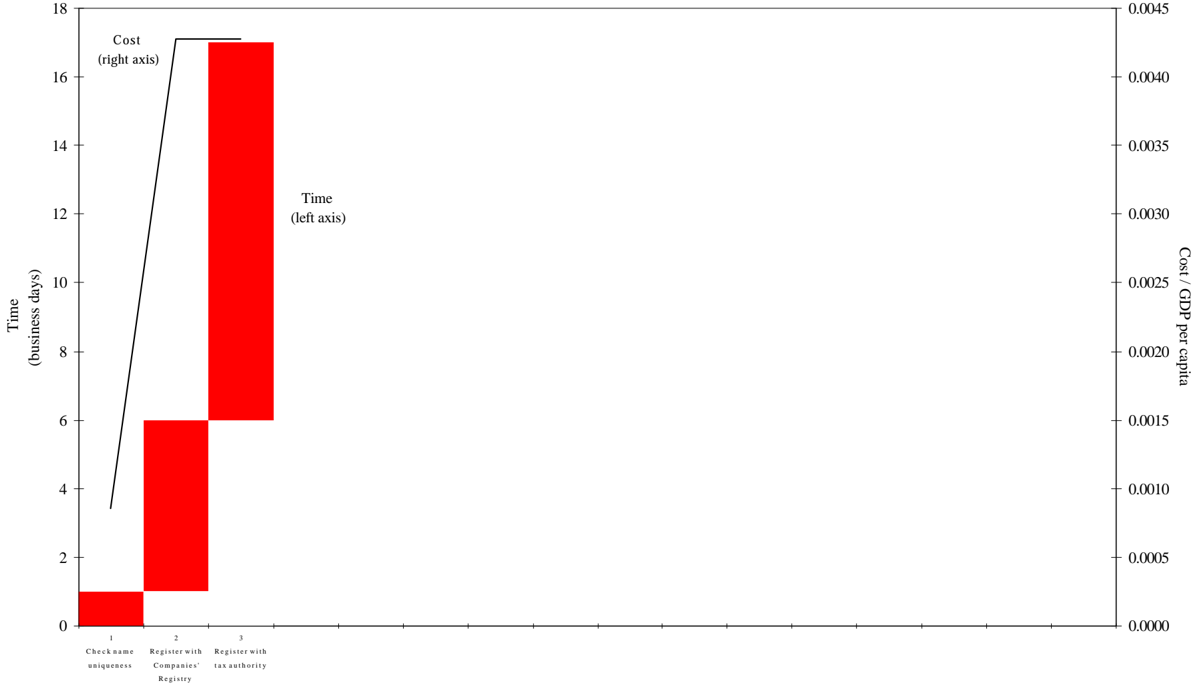
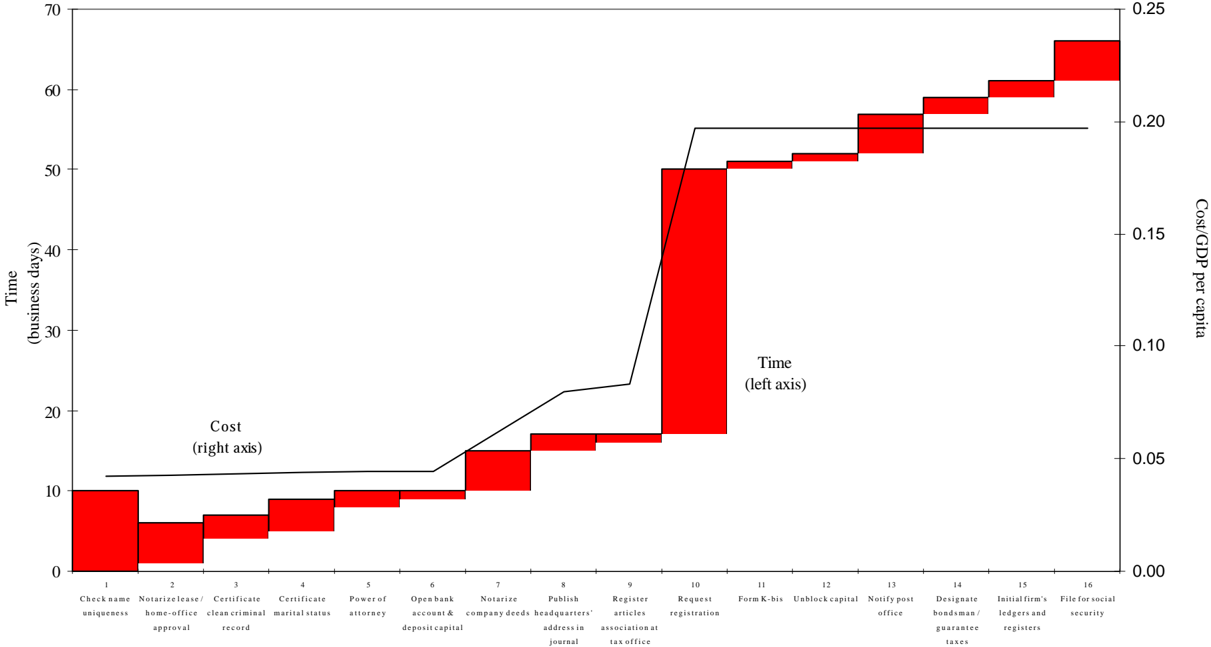
- Across the 75-country sample, the number of entry procedures ranges from 2 in Canada to 20 in Bolivia, with a sample average of 10.17 procedures; the average official time is 63.05 business days and the average cost is 0.34 of GDP per capita.
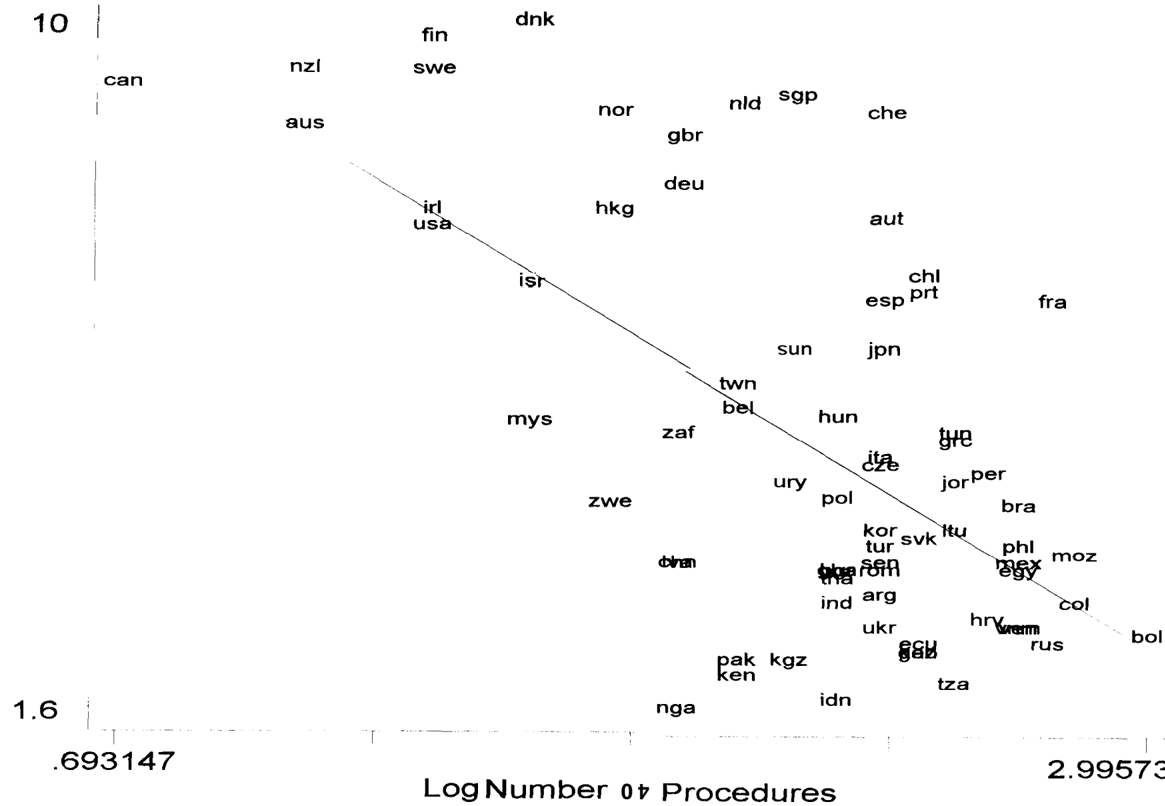
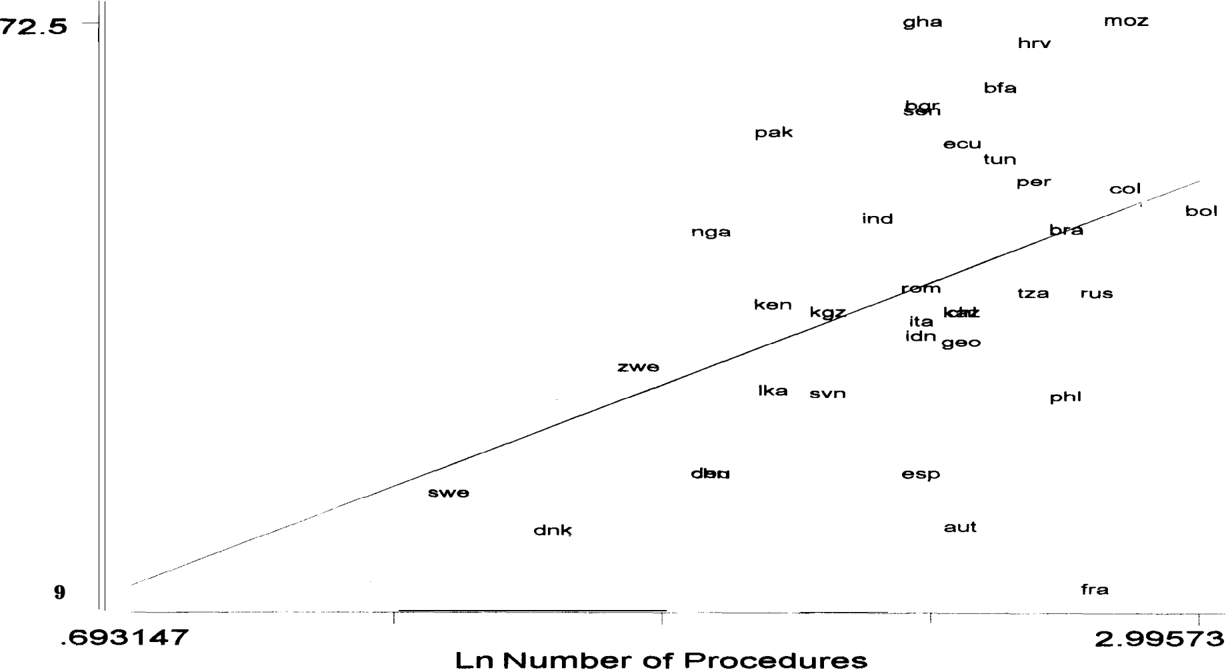
- The number of procedures is strongly correlated with time and cost: the paper reports correlations of 0.75 with log time and 0.62 with log cost.
- The helping-hand tests do not support a beneficial-regulation story: in Table IV, more procedures are associated with lower ISO quality standards (e.g. coefficient -0.2646) and larger unofficial economy measures (e.g. coefficient 13.6277 for size of unofficial economy; 19.8763 for employment in the unofficial economy), while pollution and health outcomes do not improve.
- The tollbooth evidence is stronger: Table VI reports that more procedures are associated with worse corruption scores, with a coefficient of -3.2809 (and -1.7249 with GDP per capita controls) for the corruption regressions.
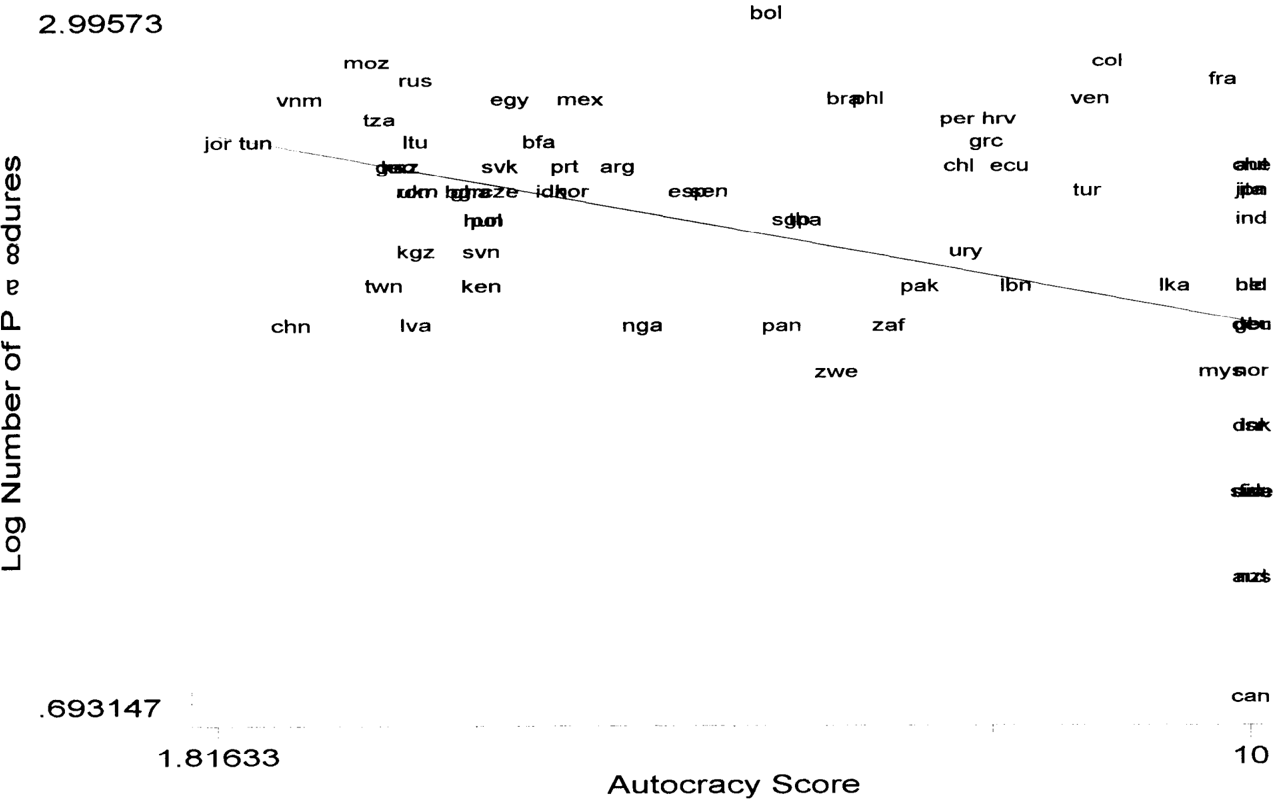
- In Table VIII, better government is associated with lighter regulation; the paper states that countries with more limited and representative governments have statistically significantly fewer procedures using 5 out of 6 measures of better government, and that more autocratic countries regulate more heavily.
Methods
- The paper builds a new database on entry regulation for 75 countries, focusing on the legal requirements, official time, and official cost for a standardized start-up firm.
- Data were gathered from written government sources, World Bank- and USAID-sponsored studies, government web pages, direct contacts with agencies, and independent double-checks in 73 countries via local consulting reports; the remaining 2 countries were double-checked through government contacts.
- The main analysis uses cross-country OLS regressions relating entry regulation measures to outcomes such as quality, pollution, unofficial economy, corruption, political institutions, legal origin, and GDP per capita; the paper also reports correlations and test-of-means comparisons across income quartiles.
Limitations
- The paper itself notes that the capture-theory tests are based on crude measures and that the data are probably least suited to test the capture hypothesis.
- The authors say the data almost surely underestimate the cost and complexity of entry because they focus on the capital city, omit industry-specific requirements and foreign-ownership steps, and ignore some informal delays and bribes.
- Evident from the text: the study is cross-sectional and based on official procedures/costs, so causal interpretation is limited and informal corruption/bureaucratic delays are not directly measured except indirectly through correlations.
Model-written summary. Check it against the paper before relying on it.
Integrity signals
Registry
Cites
Statistics
Figures
Verification
Claims the paper makes
0 Valid · 3 Not valid · 13 Not checked · 114 Own results and interpretations
A result the paper reports from its own data — it cites no other source for it, so there is none to check. The quote shows it is in the paper.
In the paper
“Very few entry regulations cover tax and labor issues.”
plain- Asserted: passes — The authors put it forward as true.
- Checkable: passes — It can be checked against evidence.
- Load-bearing: unclear — It is unclear whether the paper’s conclusions depend on it.
- Based: passes — The paper gives a reason why it holds.
In the paper
“The data show that the numbers of entry and of labor market regulations are positively correlated across countries, contrary to the substitutes hypothesis.”
What the sources say
- Not matchedcites Djankov et al., 2000
An author–year citation the paper’s reference list doesn’t settle. We don’t search these by name.
plainstates an association- Asserted: passes — The authors put it forward as true.
- Checkable: passes — It can be checked against evidence.
- Load-bearing: unclear — It is unclear whether the paper’s conclusions depend on it.
- Based: passes — The paper gives a reason why it holds.
- Not matched
A result the paper reports from its own data — it cites no other source for it, so there is none to check. The quote shows it is in the paper.
In the paper
“It often takes the form of screening procedures.”
- Also stated in: § III. Basic Results. · plain
“Instead, much of what governments do to regulate entry falls into the category of screening procedures.”
plain- Asserted: passes — The authors put it forward as true.
- Checkable: passes — It can be checked against evidence.
- Load-bearing: unclear — It is unclear whether the paper’s conclusions depend on it.
- Based: passes — The paper gives a reason why it holds.
- Also stated in: § III. Basic Results. · plain
A result the paper reports from its own data — it cites no other source for it, so there is none to check. The quote shows it is in the paper.
In the paper
“First, the cost-to-per-capita-GDP ratio decreases uniformly with GDP per capita.”
plainstates an association- Asserted: passes — The authors put it forward as true.
- Checkable: passes — It can be checked against evidence.
- Load-bearing: unclear — It is unclear whether the paper’s conclusions depend on it.
- Based: passes — The paper gives a reason why it holds.
A result the paper reports from its own data — it cites no other source for it, so there is none to check. The quote shows it is in the paper.
In the paper
“In contrast, countries in the other three quartiles of per capita income are not statistically different from each other in terms of the number of procedures and the time required to fulfill them.”
plain- Asserted: passes — The authors put it forward as true.
- Checkable: passes — It can be checked against evidence.
- Load-bearing: passes — The paper’s conclusions depend on it.
- Based: passes — The paper gives a reason why it holds.
49 more claims
Create a free account to see all 130 claims and every source verdict.
- Probably not a substantial claim. 21
- It may state two separate claims as one. 54
- The quote only partly states this claim. 26
Claims other papers make about this one
Each is checked against this paper’s own text: does it say what the citing paper says it does?
The source backs part of the claim, not all of it — or backs it for a different population, condition or comparison.
In the citing paper
“Our findings suggest an explanation for the low level of incorporation in Italy: the average direct cost associated with fulfilling the bureaucratic regulations for registering a new corporation in Italy is 20% of per capita GNP compared to 10% of per capita GNP on average for other G-7 European countries.”
From Entry regulation as a barrier to entrepreneurship (2006) · cites this paper as Djankov et al. (2002)
Experimental — accuracy not yet measuredThe cited source says what the claim attributes to it.
In the citing paper
“Given the explicit link made by Djankov et al . (2002) between the speed and ease with which businesses may be established in a country and its economic performance - and the enthusiasm with which this link has been grasped by European Union policy makers - our findings imply this link needs reconsidering.”
From The Effect of Business Regulations on Nascent and Young Business Entrepreneurship (2007) · cites this paper as Djankov et al . (2002)
Citations
Cites
La Porta, R., Lopez‐de‐Silanes, F., Shleifer, A., & Vishny, R. W. (1998) · Journal of Political Economy · doi:10.1086/250042 · Cited by 18,025
Self-citationThe Theory of Economic Regulation
Stigler, G. J. (1971) · The Bell Journal of Economics and Management Science · doi:10.2307/3003160 · Cited by 8,098
Journal of Economic Literature
(2019) · AEA Papers and Proceedings · doi:10.1257/pandp.109.633 · Cited by 7,468
The Quarterly Journal of Economics
Kuznets, S. (2024) · Business Cycle Theory, Part I Volume 4 · doi:10.4324/9781003549741-8 · Cited by 7,176
La Porta, R. (1999) · Journal of Law, Economics, and Organization · doi:10.1093/jleo/15.1.222 · Cited by 5,699 · cited 2×
“Legal origin has been viewed as a proxy for the government’s proclivity to intervene in the economy and the stance of the law toward the security of property rights in a country [La Porta et al. 1999].”
The Theory of Economic Regulation
Stigler, G. J. (2021) · The Political Economy · doi:10.4324/9781315495811-8 · Cited by 5,483
Pigou, A. C. (1933) · The Economic Journal · doi:10.2307/2224491 · Cited by 5,137
Toward a More General Theory of Regulation
Peltzman, S. (1976) · The Journal of Law and Economics · doi:10.1086/466865 · Cited by 4,729
Moffitt, R. A. (2009) · American Economic Review · doi:10.1257/aer.99.2.660 · Cited by 4,694
Shleifer, A., & Vishny, R. W. (1993) · The Quarterly Journal of Economics · doi:10.2307/2118402 · Cited by 3,778
Self-citation
Research works printed but not linked: 7
- McLiesh Caralee, 2001, NBER Working Paper No., 8288
- Kasnako lu, Zehra, and Münür Yayla, 'Unrecorded Economy in Turkey: A Monetary Approach', 1999. "Unrecorded Economy in Turkey (A Monetary Approach)" in Informal Sector in Turkey (I), Tuncer Bulutay (ed.), SIS, Ankara, forthcoming.
- Fred, 1987, Journal of Legal Studies, 101
- Olson, Mancur, 1991, 'Autocracy, Democracy, and Prosperity,' in Richard Zeckhauser, ed., Strategy of Choice, Cambridge, MA: MIT Press.
- 1967, Western Economic Journal, 232
- World Economic Forum (1999), The Global Competitiveness Report 1999 , Schwab, Klaus et al., eds., New York: Oxford University Press.
- World Economic Forum, The Global Competitiveness Report 2001, Klaus Schwab et al., eds. (New York, NY: Oxford University Press, 2001).
Cited by
Items 201–300 of 3,986
Who Are China's Entrepreneurs?
Djankov, S., Qian, Y., Roland, G., & Zhuravskaya, E. (2006) · American Economic Review · doi:10.1257/000282806777212387 · Cited by 276
Self-citationCredit Constraints, Heterogeneous Firms and International Trade
Manova, K. B. (2011) · SSRN Electronic Journal · doi:10.2139/ssrn.952552 · Cited by 269
Trade Facilitation and Export Diversification
Dennis, A., & Shepherd, B. (2011) · The World Economy · doi:10.1111/j.1467-9701.2010.01303.x · Cited by 271
Ravallion, M. (2012) · The World Bank Research Observer · doi:10.1093/wbro/lkr009 · Cited by 273
Guriev, S. (2004) · Journal of Development Economics · doi:10.1016/j.jdeveco.2003.06.001 · Cited by 269
Start up costs, limited enforcement, and the hidden economy
Antunes, A. R., & Cavalcanti, T. V. D. V. (2007) · European Economic Review · doi:10.1016/j.euroecorev.2005.11.008 · Cited by 265
Institutional Environment and Entrepreneurial Cognitions: A Comparative Business Systems Perspective
Lim, D. S. K., Morse, E. A., Mitchell, R. K., & Seawright, K. K. (2010) · Entrepreneurship Theory and Practice · doi:10.1111/j.1540-6520.2010.00384.x · Cited by 267
“Corruption reflects inefficient, weak institutions governing trust relations (Djankov et al., 2002).”
Krammer, S. M. S., Strange, R., & Lashitew, A. (2018) · International Business Review · doi:10.1016/j.ibusrev.2017.07.003 · Cited by 270
Corruption, inequality, and fairness
Alesina, A., & Angeletos, G.-M. (2005) · Journal of Monetary Economics · doi:10.1016/j.jmoneco.2005.05.003 · Cited by 261
Is entrepreneurship necessarily good? Microeconomic evidence from developed and developing countries
Vivarelli, M. (2013) · Industrial and Corporate Change · doi:10.1093/icc/dtt005 · Cited by 265
The pecking order of cross-border investment
Daude, C., & Fratzscher, M. (2008) · Journal of International Economics · doi:10.1016/j.jinteco.2007.05.010 · Cited by 258
Ciccone, A., & Papaioannou, E. (2007) · Journal of the European Economic Association · doi:10.1162/jeea.2007.5.2-3.444 · Cited by 280
“Possible instruments for administrative entry delay come from Djankov et al. (2002) and Shleifer (2005).”
InfluentialBig Constraints to Small Firms’ Growth? Business Environment and Employment Growth across Firms
Aterido, R., Hallward-Driemeier, M., & Pagés, C. (2011) · Economic Development and Cultural Change · doi:10.1086/658349 · Cited by 258
“A number of studies have focused on cross-country variation to identify the effect of labor regulations (Botero et al. 2004; Heckman and Pagés 2004), regulation of entry (Djankov et al. 2002), or a wide set of regulations (Loayza, Oviedo, and Servén 2006).”
The effectiveness of laws against bribery abroad
Cuervo-Cazurra, A. (2008) · Journal of International Business Studies · doi:10.1057/palgrave.jibs.8400372 · Cited by 249
De Clercq, D., Danis, W. M., & Dakhli, M. (2010) · International Business Review · doi:10.1016/j.ibusrev.2009.09.002 · Cited by 254
Taxation base in developing countries
Auriol, E., & Warlters, M. (2005) · Journal of Public Economics · doi:10.1016/j.jpubeco.2004.04.008 · Cited by 247
“For the panel on average it involves 10.17 steps and 63.05 business days.3 The study by Djankov et al. (2000) concludes that firm entry barriers are higher in countries with lower GDP per capita.”
InfluentialFormal and Informal Institutions and Development
Casson, M. C., Della Giusta, M., & Kambhampati, U. S. (2010) · World Development · doi:10.1016/j.worlddev.2009.10.008 · Cited by 249
The Quality of the Legal System, Firm Ownership, and Firm Size
Laeven, L., & Woodruff, C. (2007) · Review of Economics and Statistics · doi:10.1162/rest.89.4.601 · Cited by 243
Corruption and firm growth: Evidence from China
Wang, Y., & You, J. (2012) · China Economic Review · doi:10.1016/j.chieco.2012.03.003 · Cited by 243
“20The measurement of business entry by Djankov et al. (2002) shows that China required 12 procedures to start a business, more than the average of 10 in 85 sample countries.”
Entrepreneurship in Economic DevelopmentPreprint
Naudé, W. A. (2008) · RePEc: Research Papers in Economics · Cited by 275
Better the devil you don't know: Types of corruption and FDI in transition economies
Cuervo-Cazurra, A. (2008) · Journal of International Management · doi:10.1016/j.intman.2007.02.003 · Cited by 237
China's Financial System: Past, Present, and Future
Allen, F., Qian, J., & Qian, M. (2008) · China's Great Economic Transformation · doi:10.1017/cbo9780511754234.015 · Cited by 242
What Do We Learn From Schumpeterian Growth Theory?
Aghion, P., Akcigit, U., & Howitt, P. (2014) · Handbook of Economic Growth · doi:10.1016/b978-0-444-53540-5.00001-x · Cited by 240
Culture and innovation: The moderating effect of cultural values on corporate entrepreneurship
Turró, A., Urbano, D., & Peris-Ortiz, M. (2014) · Technological Forecasting and Social Change · doi:10.1016/j.techfore.2013.10.004 · Cited by 241
Who are Russia's Entrepreneurs?
Djankov, S., Miguel, E., Qian, Y., Roland, G., & Zhuravskaya, E. (2005) · Journal of the European Economic Association · doi:10.1162/1542476054473314 · Cited by 272
Self-citationHopp, C., & Stephan, U. (2012) · Entrepreneurship & Regional Development · doi:10.1080/08985626.2012.742326 · Cited by 242
Public Procurement in Law and Practice
Bosio, E., Djankov, S., Glaeser, E., & Shleifer, A. (2022) · American Economic Review · doi:10.1257/aer.20200738 · Cited by 237
Self-citationHeterogeneous Markups, Growth, and Endogenous Misallocation
Peters, M. (2020) · Econometrica · doi:10.3982/ecta15565 · Cited by 236
“I express these estimates relative to the values for the Indonesian economy reported 26One widely used measure of entry costs is developed in Djankov et al. (2002).”
Rethinking Indonesia’s Informal Sector
Rothenberg, A. D., Gaduh, A., Burger, N. E., Chazali, C., Tjandraningsih, I., Radikun, R., Sutera, C., & Weilant, S. (2016) · World Development · doi:10.1016/j.worlddev.2015.11.005 · Cited by 239
BENMELECH, E., & MOSKOWITZ, T. J. (2010) · The Journal of Finance · doi:10.1111/j.1540-6261.2010.01560.x · Cited by 239
Financial development and the underground economy
Capasso, S., & Jappelli, T. (2013) · Journal of Development Economics · doi:10.1016/j.jdeveco.2012.10.005 · Cited by 238
“This method provides the widest country coverage and therefore is used extensively in the macroeconomic literature, see Djankov et al. (2002), Loyayza et al., (2005) and La Porta and Shleifer (2008). 15 The social security contribution rate is 33% of the gross wage for private and public employees and 20% in the case…”
InfluentialInstitutional asymmetry: How formal and informal institutions affect entrepreneurship in Bulgaria
Williams, N., & Vorley, T. (2015) · International Small Business Journal: Researching Entrepreneurship · doi:10.1177/0266242614534280 · Cited by 240
“Extant research suggests that institutions governing the economic environment in transition economies impose costly bureaucratic burdens on entrepreneurs, increasing uncertainty as well as operational and transaction costs (Djankov et al., 2002; Puffer et al., 2010).”
Regulation of entry, labor market institutions and the informal sector
Ulyssea, G. (2010) · Journal of Development Economics · doi:10.1016/j.jdeveco.2009.07.001 · Cited by 228
How different formal institutions affect opportunity and necessity entrepreneurship
Fuentelsaz, L., González, C., Maícas, J. P., & Montero, J. (2015) · BRQ Business Research Quarterly · doi:10.1016/j.brq.2015.02.001 · Cited by 237
“We can also add the demotivating effect of the dministrative effort needed when tax payment procedures re complex (Djankov et al., 2002).”
Oligarchic family control, social economic outcomes, and the quality of government
Fogel, K. (2006) · Journal of International Business Studies · doi:10.1057/palgrave.jibs.8400213 · Cited by 227
“(1998); “entry regulation” from Djankov et al. (2001) defined as the log of time it takes to obtain legal status for a new business; “the frequency of price control” ranges from zero to ten, zero being the most frequent price control; and “freedom to compete” from World Competitiveness Report.”
Drivers of national innovation in transition: Evidence from a panel of Eastern European countries
Krammer, S. M. S. (2009) · Research Policy · doi:10.1016/j.respol.2009.01.022 · Cited by 229
Urbano, D., Audretsch, D., Aparicio, S., & Noguera, M. (2020) · International Entrepreneurship and Management Journal · doi:10.1007/s11365-019-00621-5 · Cited by 232
Digitalization of the economy and entrepreneurship intention
Ben Youssef, A., Boubaker, S., Dedaj, B., & Carabregu-Vokshi, M. (2021) · Technological Forecasting and Social Change · doi:10.1016/j.techfore.2020.120043 · Cited by 231
“However, market entry can be hindered by exogenous entry barriers such as initial investment amount (Geroski and Schwalbach, 1991) and bureaucratic entry regulations (Djankov et al., 2002; Ben Youssef et al., 2018), and by endogenous entry barriers such as R&D and advertising costs (Sutton, 1991; ArauzoCarod and Segar…”
The Extent of the Market and the Supply of Regulation
Mulligan, C. B., & Shleifer, A. (2005) · The Quarterly Journal of Economics · doi:10.1162/003355305775097579 · Cited by 219
Self-citationConstrained Gazelles: High Potentials in West Africa’s Informal Economy
Grimm, M., Knorringa, P., & Lay, J. (2012) · World Development · doi:10.1016/j.worlddev.2012.03.009 · Cited by 231
Gurses, K., & Ozcan, P. (2015) · Academy of Management Journal · doi:10.5465/amj.2013.0775 · Cited by 221
“Regulatory costs, both at start-up and subsequently, can diminish available resources and thus lead to fewer businesses being started (Djankov et al., 2002).”
Bank Liquidity Risk and Performance
Chen, Y.-K., Shen, C.-H., Kao, L., & Yeh, C.-Y. (2018) · Review of Pacific Basin Financial Markets and Policies · doi:10.1142/s0219091518500078 · Cited by 228
Why Do Firms Evade Taxes? The Role of Information Sharing and Financial Sector Outreach
BECK, T., LIN, C., & MA, Y. (2014) · The Journal of Finance · doi:10.1111/jofi.12123 · Cited by 228
“Firm-level evidence, however , suggests that informality in developing countries is growth impeding rather than growth enh ancing (La Porta and Shleifer, 2008). Hence, understanding the relationship between finan cial intermediary development and informality helps understand an additional chan nel through which financ…”
InfluentialPollution Haven and Corruption Paradise
Candau, F., & Dienesch, E. (2017) · Journal of Environmental Economics and Management · doi:10.1016/j.jeem.2017.05.005 · Cited by 224
Financial Development, Growth, and Poverty: How Close are the Links?
Honohan, P., & Bank, W. (2004) · World Bank policy research working paper · doi:10.1596/1813-9450-3203 · Cited by 226
Coeurderoy, R., & Murray, G. (2008) · Journal of International Business Studies · doi:10.1057/palgrave.jibs.8400369 · Cited by 222
Armour, J., Deakin, S., Sarkar, P., Siems, M., & Singh, A. (2009) · Journal of Empirical Legal Studies · doi:10.1111/j.1740-1461.2009.01146.x · Cited by 214
“, 2007) regulations governing firm startups; (Djankov et al., 2002) contract enforcement; (Djankov et al.”
Political connections and entrepreneurial investment: Evidence from China's transition economy
Zhou, W. (2013) · Journal of Business Venturing · doi:10.1016/j.jbusvent.2012.05.004 · Cited by 222
Federal regulation and aggregate economic growth
Dawson, J. W., & Seater, J. J. (2013) · Journal of Economic Growth · doi:10.1007/s10887-013-9088-y · Cited by 214
“Djankov et al. (2006) study regulations that help or hinder business performance in 135 countries and in several regulatory areas: starting a business, hiring and firing workers, registering property, getting bank credit, protecting equity investors, enforcing contracts in the courts, and closing a business.”
InfluentialAdvancing Public Policy for High‐Growth, Female, and Social Entrepreneurs
Terjesen, S., Bosma, N., & Stam, E. (2016) · Public Administration Review · doi:10.1111/puar.12472 · Cited by 221
Rulers, Religion, and Riches: Why the West Got Rich and the Middle East Did Not
Rubin, J. (2017) · Cambridge University Press eBooks · doi:10.1017/9781139568272 · Cited by 218
Creditor rights and capital structure: Evidence from international data
Cho, S.-S., El Ghoul, S., Guedhami, O., & Suh, J. (2014) · Journal of Corporate Finance · doi:10.1016/j.jcorpfin.2013.10.007 · Cited by 219
GANI, A. (2012) · Journal of Economic Development · doi:10.35866/caujed.2012.37.1.004 · Cited by 221
Corporate Control around the World
AMINADAV, G., & PAPAIOANNOU, E. (2020) · The Journal of Finance · doi:10.1111/jofi.12889 · Cited by 215
Policy for innovative entrepreneurship: Institutions, interventions, and societal challenges
Bradley, S. W., Kim, P. H., Klein, P. G., McMullen, J. S., & Wennberg, K. (2021) · Strategic Entrepreneurship Journal · doi:10.1002/sej.1395 · Cited by 220
“Given these challenges in designing and evaluating public policies for innovative entrepreneurship, some observers recommend that the most appropriate role for government policy is to establish and enforce a stable institutional environment—the “rules of the game” that undergird a well-functioning legal system, establ…”
Foreign Direct Investment, Regulations and Growth
Busse, M., & Groizard, J. L. (2008) · The World Economy · doi:10.1111/j.1467-9701.2008.01106.x · Cited by 217
Institutions and Development: A View from Below
Pande, R. (2008) · Advances in Economics and Econometrics · doi:10.1017/ccol0521871530.014 · Cited by 215
Al‐Ubaydli, O., & McLaughlin, P. A. (2017) · Regulation & Governance · doi:10.1111/rego.12107 · Cited by 203
“However, regulatory policies may not always be virtuously conceived (Stigler 1971; McChesney 1987), and they may have adverse unintended consequences (see Peltzman 1975; for a more thorough discussion of the different theories of regulation, see Djankov et al. 2002).”
Competition and Corporate Governance in Transition
Estrin, S. (2002) · Journal of Economic Perspectives · doi:10.1257/0895330027139 · Cited by 217
The Regulation of Entry: A Survey
Djankov, S. (2009) · The World Bank Research Observer · doi:10.1093/wbro/lkp005 · Cited by 212
“At the maximum level of 131.3 in the Djankov and others (2002) dataset, a corresponding increase in corruption increases entrepreneurship by 4.2 percentage points.”
InfluentialSelf-citationInformal employment: Two contested policy issues
KUCERA, D., & RONCOLATO, L. (2008) · International Labour Review · doi:10.1111/j.1564-913x.2008.00039.x · Cited by 214
The impact of educational levels on formal and informal entrepreneurship
Jiménez, A., Palmero-Cámara, C., González-Santos, M. J., González-Bernal, J., & Jiménez-Eguizábal, J. A. (2015) · BRQ Business Research Quarterly · doi:10.1016/j.brq.2015.02.002 · Cited by 213
“According to Djankov et al. (2002) and Dau and Cuervoazurra (2009), it is necessary to incorporate the impact f institutions and structural reforms on entrepreneurship ates, taking into account that its effects are very differnt in formal and in informal entrepreneurship.”
Corporate Governance in Emerging Economies
Allen, F. (2005) · Oxford Review of Economic Policy · doi:10.1093/oxrep/gri010 · Cited by 213
The Gravity Model in International Trade
De Benedictis, L., & Taglioni, D. (2011) · The Trade Impact of European Union Preferential Policies · doi:10.1007/978-3-642-16564-1_4 · Cited by 211
Institutional Barriers to Small- and Medium-Sized Enterprise Operations in Transition Countries
Aidis, R. (2005) · Small Business Economics · doi:10.1007/s11187-003-6463-7 · Cited by 209
Cuervo‐Cazurra, A., & Genc, M. E. (2011) · Journal of Management Studies · doi:10.1111/j.1467-6486.2010.00964.x · Cited by 209
Herrera-Echeverri, H., Haar, J., & Estévez-Bretón, J. B. (2014) · Journal of Business Research · doi:10.1016/j.jbusres.2013.11.020 · Cited by 210
Individual capital and social entrepreneurship: Role of formal institutions
Sahasranamam, S., & Nandakumar, M. K. (2020) · Journal of Business Research · doi:10.1016/j.jbusres.2018.09.005 · Cited by 212
Institutional drivers of high-growth firms: country-level evidence from 26 transition economies
Krasniqi, B. A., & Desai, S. (2016) · Small Business Economics · doi:10.1007/s11187-016-9736-7 · Cited by 208
Krammer, S. M. S. (2019) · Journal of Management · doi:10.1177/0149206317736588 · Cited by 204
Pro-market institutions and global strategy: The pendulum of pro-market reforms and reversals
Cuervo-Cazurra, A., Gaur, A., & Singh, D. (2019) · Journal of International Business Studies · doi:10.1057/s41267-019-00221-z · Cited by 204
Public investment in developing countries: A blessing or a curse?
Cavallo, E., & Daude, C. (2011) · Journal of Comparative Economics · doi:10.1016/j.jce.2010.10.001 · Cited by 199
Bribes, Lobbying, and Development
HARSTAD, B., & SVENSSON, J. (2011) · American Political Science Review · doi:10.1017/s0003055410000523 · Cited by 195
“18 De Soto (1989) and Shleifer and Vishny (1993) argue that regulations are partly instituted to provide public officials with the power, or the property rights, to demand and collect bribes. Empirical evidence is provided in Djankov et al. (2002). Country-specific evidence is”
InfluentialChong, A., & Gradstein, M. (2007) · Journal of Public Economics · doi:10.1016/j.jpubeco.2006.08.001 · Cited by 199
Connecting to Power: Political Connections, Innovation, and Firm Dynamics
Akcigit, U., Baslandze, S., & Lotti, F. (2023) · Econometrica · doi:10.3982/ecta18338 · Cited by 194
The European Venture Capital and Private Equity country attractiveness indices
Groh, A. P., von Liechtenstein, H., & Lieser, K. (2010) · Journal of Corporate Finance · doi:10.1016/j.jcorpfin.2009.09.003 · Cited by 221
Do Democracies Have Different Public Policies than Nondemocracies?
Mulligan, C., Sala-i-Martin, X., & Gil, R. (2003) · National Bureau of Economic Research · doi:10.3386/w10040 · Cited by 194
LiPuma, J. A., Newbert, S. L., & Doh, J. P. (2013) · Small Business Economics · doi:10.1007/s11187-011-9395-7 · Cited by 198
Cross-border takeovers, corruption, and related aspects of governance
Weitzel, U., & Berns, S. (2006) · Journal of International Business Studies · doi:10.1057/palgrave.jibs.8400225 · Cited by 191
“Empirical evidence is consistent with these claims (La Porta et al., 1997, 1998, 1999; Djankov et al., 2002), which supports the inclusion of legal origin in Hypothesis 4.”
An Overview of China's Financial System
Allen, F., Qian, J. “., & Gu, X. (2017) · Annual Review of Financial Economics · doi:10.1146/annurev-financial-112116-025652 · Cited by 189
Do Place-Based Policies Promote Local Innovation and Entrepreneurship?*
Tian, X., & Xu, J. (2022) · Review of Finance · doi:10.1093/rof/rfab029 · Cited by 194
Entry regulation and business start-ups: Evidence from Mexico
Kaplan, D. S., Piedra, E., & Seira, E. (2011) · Journal of Public Economics · doi:10.1016/j.jpubeco.2011.03.007 · Cited by 192
Employment laws in developing countries
Djankov, S., & Ramalho, R. (2009) · Journal of Comparative Economics · doi:10.1016/j.jce.2008.10.003 · Cited by 191
“Total tax rate World Bank (Doing Business Dataset), updated from Djankov et al. (2008a) The amount of taxes and mandatory contributions payable by a standardized business in the second year of operation, expressed as a share of commercial profits.”
InfluentialSelf-citationHow Business is Done in the Developing World: Deals versus Rules
Hallward-Driemeier, M., & Pritchett, L. (2015) · Journal of Economic Perspectives · doi:10.1257/jep.29.3.121 · Cited by 189
Taxing the Informal Economy: The Current State of Knowledge and Agendas for Future Research
Joshi, A., Prichard, W., & Heady, C. (2014) · The Journal of Development Studies · doi:10.1080/00220388.2014.940910 · Cited by 192
Why Have Americans Become More Obese?
Cutler, D. M., Glaeser, E. L., & Shapiro, J. M. (2003) · SSRN Electronic Journal · doi:10.2139/ssrn.373121 · Cited by 186
Andersson, T., Wise, E., Schwaag-Serger, S., & Sörvik, J. (2004) · Lund University Publications (Lund University) · Cited by 377
Job creation and job destruction in the presence of informal markets
Bosch, M., & Esteban-Pretel, J. (2012) · Journal of Development Economics · doi:10.1016/j.jdeveco.2011.08.004 · Cited by 185
“See also Djankov et al. (2002) and Schneider (2003) for detailed cross country estimates of the size of the informal economy for developed and developing countries.”
Being independent raises happiness at work
Benz, M., & Frey, B. S. (2004) · Cited by 283
Developing entrepreneurship in Africa: investigating critical resource challenges
Atiase, V. Y., Mahmood, S., Wang, Y., & Botchie, D. (2018) · Journal of Small Business and Enterprise Development · doi:10.1108/jsbed-03-2017-0084 · Cited by 185
“For instance, to meet government requirements to start a venture in Mozambique, an entrepreneur must complete 19 formal procedures, which takes 149 business days, whereas the two necessary procedures to start a venture in Canada can be completed within two business days (Djankov et al., 2002).”
19 The World Distribution of Household Wealth
Davies, J. B., Sandström, S., Shorrocks, A., & Wolff, E. N. (2008) · Personal Wealth from a Global Perspective · doi:10.1093/acprof:oso/9780199548880.003.0019 · Cited by 186
Corporate entrepreneurship: a systematic literature review and future research agenda
Urbano, D., Turro, A., Wright, M., & Zahra, S. (2022) · Small Business Economics · doi:10.1007/s11187-021-00590-6 · Cited by 185
Financial structure, informality and development
D'Erasmo, P. N., & Moscoso Boedo, H. J. (2012) · Journal of Monetary Economics · doi:10.1016/j.jmoneco.2012.03.003 · Cited by 177
Does Corporate Transparency Contribute to Efficient Resource Allocation?
FRANCIS, J. R., HUANG, S., KHURANA, I. K., & PEREIRA, R. (2009) · Journal of Accounting Research · doi:10.1111/j.1475-679x.2009.00340.x · Cited by 169
Reducing bureaucratic corruption: Interdisciplinary perspectives on what works
Gans-Morse, J., Borges, M., Makarin, A., Mannah-Blankson, T., Nickow, A., & Zhang, D. (2018) · World Development · doi:10.1016/j.worlddev.2017.12.015 · Cited by 180
Financing, Regulatory Costs and Entrepreneurial Propensity
Ho, Y.-P., & Wong, P.-K. (2007) · Small Business Economics · doi:10.1007/s11187-006-9015-0 · Cited by 177
Societal Institutions and Tax Effort in Developing Countries
Bird, R. M., Martinez-Vazquez, J., & Torgler, B. (2005) · SSRN Electronic Journal · doi:10.2139/ssrn.662081 · Cited by 176
Trade Facilitation and Manufactured Exports: Is Africa Different?
Iwanow, T., & Kirkpatrick, C. (2009) · World Development · doi:10.1016/j.worlddev.2008.09.014 · Cited by 172
Firm- and country-level determinants of corporate leverage: Some new international evidence
Gungoraydinoglu, A., & Öztekin, Ö. (2011) · Journal of Corporate Finance · doi:10.1016/j.jcorpfin.2011.08.004 · Cited by 197
Business Environment and Firm Entry: Evidence from International Data
Laeven, L., Klapper, L., & Rajan, R. (2004) · World Bank, Washington, DC eBooks · doi:10.1596/1813-9450-3232 · Cited by 174
Metadata
- Authors
- Djankov, S., La Porta, R., Lopez-de-Silanes, F., & Shleifer, A.
- Affiliations
- World Bank (US)
- National Bureau of Economic Research (US)
- ORCID
- Djankov, S.
- Venue
- The Quarterly Journal of Economics
- Publisher
- Oxford University Press (OUP)
- Published
- 2002-02-01
- Volume
- 117
- Issue
- 1
- Pages
- 1-37
- ISSN
- 0033-5533
- 1531-4650
- OpenAlex
- W2139896179
- Cited by
- 3,956
- References
- 30
- Citations by year
- 2026: 223 · 2025: 185 · 2024: 157 · 2023: 120 · 2022: 140 · 2021: 150 · 2020: 151 · 2019: 161 · 2018: 157 · 2017: 162 · 2016: 166 · 2015: 193 · 2014: 200 · 2013: 183 · 2012: 193
- Type
- report
- Language
- en
- Open access
- green
- doi.org
- Licence
- other-oa
- Locations
- World Bank, Washington, DC eBooks (publishedVersion)
- The Quarterly Journal of Economics (publishedVersion)
- The World Bank Open Knowledge Repository (World Bank) (publishedVersion)
- National Bureau of Economic Research (publishedVersion, other-oa)
- RePEc: Research Papers in Economics (submittedVersion)
- Digital Access to Scholarship at Harvard (DASH) (Harvard University) (submittedVersion, cc-by)
- SSRN Electronic Journal (submittedVersion)
- OpenGrey (Institut de l'Information Scientifique et Technique) (submittedVersion)
- The World Bank Open Knowledge Repository (World Bank) (submittedVersion, cc-by)
- Topics
- Social Sciences › Sociology and Political Science › Corruption and Economic Development
- Social Sciences › Economics, Econometrics and Finance › Economics and Econometrics › Taxation and Compliance Studies
- Social Sciences › Business, Management and Accounting › Strategy and Management › Political Influence and Corporate Strategies
- Keywords
- start-up firms, bureaucratic procedures, corruption, informal economy, democracy, government size, public choice theory, public interest theory
About these checks
Registry, retraction, Cites and statistics results are computed, not judged, with one exception: a printed reference that no index lists is read once by a model before it counts as a citation error. Claims are extracted by a model and kept only when their quote appears verbatim in the text; each cited source is then checked, with a model’s help, for whether it says what the claim relies on. Those verdicts can be wrong — read the claim’s quote and the cited source before relying on one.
A language model drew the claims from the paper on 2026-10-01, under version 3 of the claim definition (model deepseek-v4.1-flash, prompt extract-v3).
A second model labelled each claim on 2026-10-01 (model jev-1.13-20260917, definition revision gold-guideline-v0.2).
Statistics and arithmetic are recomputed, not judged.
Confidence bands are shown only for fields calibrated on our annotated test set. None is calibrated yet, so no band is shown.
What counts as a claim ›How we measure confidence ›How we check this ›
Are you an author, or do you see a problem with this page? Request a review
Data sources
Bibliographic data: Semantic Scholar, OpenAlex, Crossref.
Contains information from the Semantic Scholar Academic Graph Datasets, made available under the ODC Attribution License (ODC-BY 1.0).
Semantic Scholar’s data is described in: Kinney, R., et al. (2023). The Semantic Scholar Open Data Platform. arXiv:2301.10140.
