

Safety First! Residential Group Climate and Antisocial Behavior: A Multilevel Meta-analysis
Open accessThe DOI matches its Crossref record; 97 of the 118 references it cites were found in a registry or an index, and 16 are not checked yet; 6 of the 29 sources its claims cite were checked for support.
Abstract
A systematic review and multilevel meta-analysis was performed (28 studies and 313 effect sizes) on the relation between residential group climate (i.e., safety, atmosphere, repression, support, growth, structure) and antisocial behavior, including aggression and criminal recidivism. A systematic search was conducted in PsychINFO, ERIC, and OVID Medline up to February 2023. Results showed a small but significant association (r =.20) between residential group climate and antisocial behavior, equivalent to a 23% reduction of antisocial behavior in all clients receiving care in a residential facility with a therapeutic group climate. Moderator analyses showed that experienced safety was more strongly related to antisocial behavior (r =.30) than the other dimensions of group climate (.17 < r <.20), while the effect size was somewhat larger for adults (r =.24) than for youth (r =.15). We conclude that residential facilities should consider safety as a priority and should involve clients in a positive process of change through the development of a therapeutic environment and delivery of evidence-based treatment, addressing their needs from the perspective of rehabilitation.
Verified 2026-11-22 · 16 references not checked yet
Overview
CoChat Summary
TL;DR
This systematic review and multilevel meta-analysis found a small but significant association between residential group climate and antisocial behavior across 28 studies and 313 effect sizes. Safety was the strongest climate dimension, and the association was somewhat larger for adults than for youth.
Key findings
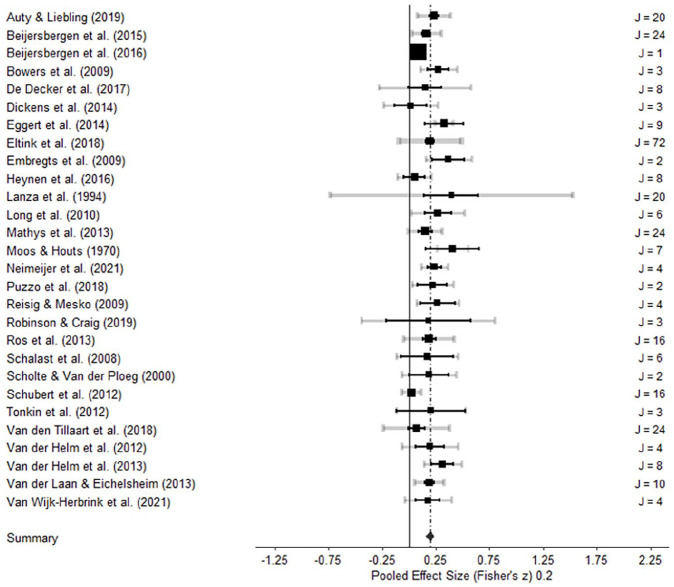
- Across 28 studies and 313 effect sizes, the overall association between residential group climate and antisocial behavior was r = .20 (95% CI .16 to .24, p < .001), which the paper translates to a 23% reduction in antisocial behavior in residential facilities with a therapeutic group climate.
- Safety showed the strongest association with antisocial behavior: r = .30, compared with the other climate dimensions, which ranged from .17 < r < .20.
- The association was stronger for adults (r = .24) than for youth (r = .15).
- Moderator analyses found a stronger effect for the WAS measure (r = .35) than for other instruments (.17 < r < .22), and more recent studies showed smaller effects (b = −0.01, t = −2.759, p < .01), though this was no longer significant in the multiple regression model.
Methods
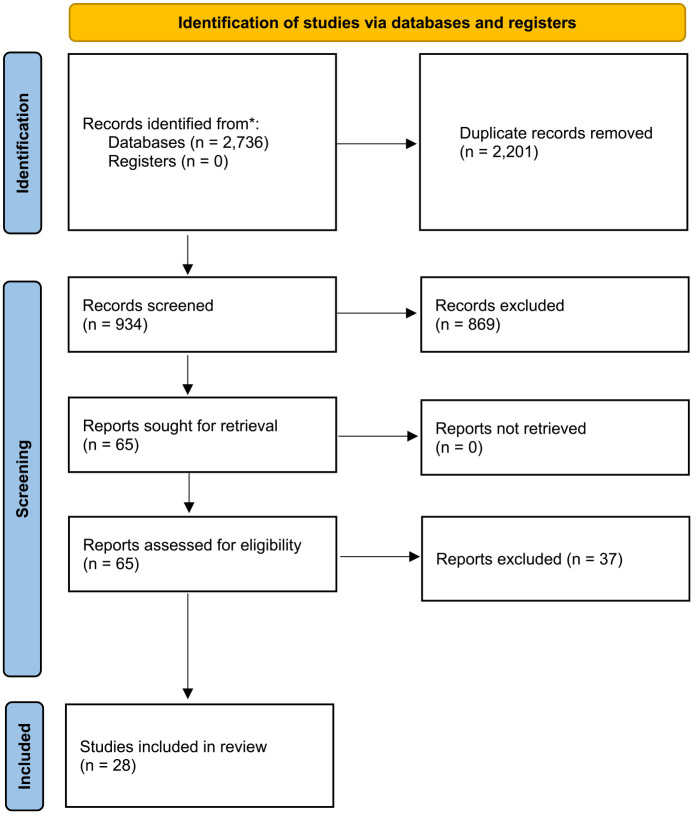
- The authors conducted a systematic review and multilevel meta-analysis following PRISMA, searching PsychINFO, ERIC, and OVID Medline up to February 2023, plus reference-list checks.
- Inclusion required quantitative measures of residential group climate and antisocial behavior (including aggression and delinquent behavior), with peer-reviewed studies of people living in residential facilities; SCED and (quasi-)experimental studies were excluded unless pre-test/control data could be used.
- The analysis used Pearson’s r, transformed to Fisher’s z, and a three-level random-effects model in metafor (rma.mv) to account for dependent effect sizes within studies; moderator and multiple regression analyses tested study, sample, climate, and outcome characteristics.
Limitations
- The paper states that the meta-analysis explained only a small part of the between- and within-study differences via moderators.
- It notes that many potential moderators could not be tested because studies did not report enough information; reported gaps included staff-resident ratio, group size, security level, length of stay, gender mix, physical environment, staff quality, organizational management, treatment delivery, treatment integrity, and whether treatments were evidence-based.
- The text makes evident that the evidence is correlational, because the authors included mostly observational associations and explicitly say that only (quasi-)experimental research can prove causality.
Model-written summary. Check it against the paper before relying on it.
Integrity signals
Registry
Cites
Statistics
Figures
Verification
Claims the paper makes
4 Valid · 3 Not valid · 16 Not checked · 36 Own results and interpretations
The cited sources support only part of this claim — read each source’s verdict below.
In the paper
“residential judicial interventions for youth have been shown to produce only small effects on criminal recidivism (Pappas & Dent, 2021)”
§ Safety First! Residential Group Climate and Antisocial Behavior: A Multilevel Meta-analysis > Discussion
What the sources say
- Partly supportedcites Pappas & Dent, 2021 matched to “The 40-year debate: a meta-review on what works for juvenile offenders” (2023) sourceExperimental — accuracy not yet measured
The Results (Moderators, Criminal justice setting; page unavailable) report a modest association between intervention participation and reduced recidivism for institutionalized juveniles (rΦ = −0.127). But the Discussion (Take-aways; page unavailable) describes a 25.32% difference in recidivism rates and an effect nearly three times that in noninstitutionalized settings, so calling the effects 'only small' without qualification understates the paper's finding. (LLM, conf=0.82)
plain- Asserted: passes — The authors put it forward as true.
- Checkable: passes — It can be checked against evidence.
- Load-bearing: unclear — It is unclear whether the paper’s conclusions depend on it.
- Based: passes — The paper gives a reason why it holds.
- Partly supported
Every source the paper cites for this claim was checked and supports it.
In the paper
“and the accumulation of risk factors for antisocial behavior (Assink et al., 2015)”
§ Safety First! Residential Group Climate and Antisocial Behavior: A Multilevel Meta-analysis > Discussion
What the sources say
- Supportedcites Assink et al., 2015 matched to “Risk factors for persistent delinquent behavior among juveniles: A meta-analytic review” (2015) source
The Limitations section explicitly says that risk factors can coexist and accumulate, and that juveniles exposed to more risk factors have a greater likelihood of future delinquency. The paper reports this as a background finding rather than a relationship tested by its own meta-analysis. (LLM, conf=0.92)
plain- Asserted: passes — The authors put it forward as true.
- Checkable: passes — It can be checked against evidence.
- Load-bearing: passes — The paper’s conclusions depend on it.
- Based: passes — The paper gives a reason why it holds.
- Supported
Every source the paper cites for this claim was checked and supports it.
In the paper
“low genetic susceptibility to (positive) environmental influences (Van IJzendoorn, & Bakermans-Kranenburg, 2015)”
§ Safety First! Residential Group Climate and Antisocial Behavior: A Multilevel Meta-analysis > Discussion
What the sources say
- Supportedcites Van IJzendoorn, & Bakermans-Kranenburg, 2015 matched to “Genetic differential susceptibility on trial: Meta-analytic support from randomized controlled experiments” (2015) source
The Abstract (page unavailable) distinguishes genotypes expected to be low in susceptibility from those expected to be highly susceptible. Across 22 experiments, interventions had a nonsignificant combined effect for the hypothesized low-susceptibility group (r = .08), compared with r = .33 for the susceptible group. The claim is supported as a description of that group, not of genetic susceptibility generally. (LLM, conf=0.87)
plain- Asserted: passes — The authors put it forward as true.
- Checkable: passes — It can be checked against evidence.
- Load-bearing: passes — The paper’s conclusions depend on it.
- Based: passes — The paper gives a reason why it holds.
- Supported
Every source the paper cites for this claim was checked and supports it.
In the paper
“which may be difficult to change due to a relatively strong genetic basis of antisocial behavior (Niv et al., 2013)”
§ Safety First! Residential Group Climate and Antisocial Behavior: A Multilevel Meta-analysis > Discussion
What the sources say
- Supportedcites Niv et al., 2013 matched to “Aggression and rule-breaking: Heritability and stability of antisocial behavior problems in childhood and adolescence” (2013) source
The Results (page not provided) attribute 41% of influences on the childhood antisocial-behavior factor to genetics, supporting the cited point that antisocial behavior has a substantial genetic basis. The paper does not establish that antisocial behavior is difficult to change; that is the citing authors’ inference. (LLM, conf=0.91)
hedged- Asserted: passes — The authors put it forward as true.
- Checkable: passes — It can be checked against evidence.
- Load-bearing: passes — The paper’s conclusions depend on it.
- Based: passes — The paper gives a reason why it holds.
- Supported
The cited sources that could be checked couldn’t confirm or dispute this claim.
In the paper
“Since all studies were published in peer-reviewed journals, study quality was relatively high (M = 18.62; SD = 1.60).”
§ Safety First! Residential Group Climate and Antisocial Behavior: A Multilevel Meta-analysis > Method > Coding the Studies
What the sources say
- Could not verifycites Downes et al., 2016 matched to “Development of a critical appraisal tool to assess the quality of cross-sectional studies (AXIS)” (2016) sourceExperimental — accuracy not yet measured
The AXIS paper describes a tool for appraising cross-sectional studies, but our copy does not report a mean quality score of 18.62 or an SD of 1.60 for the citing paper’s studies. The Discussion (Study strengths and limitations; page unavailable) also says AXIS does not provide a numerical quality scale. Searched for the reported figures and numerical scoring. (LLM, conf=0.76)
plain- Asserted: passes — The authors put it forward as true.
- Checkable: passes — It can be checked against evidence.
- Load-bearing: unclear — It is unclear whether the paper’s conclusions depend on it.
- Based: passes — The paper gives a reason why it holds.
- Could not verify
25 more claims
Create a free account to see all 59 claims and to verify the 4 references still open.
- Probably not a substantial claim. 18
- It may state two separate claims as one. 15
Statistics recomputed
Every reported test result, recomputed from its test statistic and degrees of freedom. A result shows as not adding up only once an independent check has confirmed it.
- Consistentz = -0.19reported p = .853 · recomputed p = .849
“(z = −0.19, p = .853”
- Consistentz = -0.29reported p = .773 · recomputed p = .772
“(z = −0.29, p = .773”
- ConsistentF(5, 304) = 2.482reported p < .05 · recomputed p = .032
“F(5,304) = 2.482, p < .05”
- ConsistentF(1, 311) = 6.429reported p < .05 · recomputed p = .012
“F(1, 311) = 6.429, p < .05”
- ConsistentF(1, 311) = 2.739reported p < .1 · recomputed p = .099
“F(1, 311) = 2.739, p < .10”
2 more recomputed tests
Create a free account to see every test the Stats check recomputed.
Self-check
Percentages, sums and reported differences re-computed from the paper’s own numbers.
Self-check results appear here once an independent check has confirmed them.
Citations
Cites
The PRISMA 2020 statement: An updated guideline for reporting systematic reviews
Page, M. J., McKenzie, J. E., Bossuyt, P. M., Boutron, I., Hoffmann, T. C., Mulrow, C. D., Shamseer, L., Tetzlaff, J. M., Akl, E. A., Brennan, S. E., et al. (2021) · BMJ · doi:10.1136/bmj.n71 · Cited by 108,283
Statistical Power Analysis for the Behavioral Sciences
Muller, K. (1989) · Technometrics · doi:10.1080/00401706.1989.10488618 · Cited by 99,167
Tabachnick, B. G., & Fidell, L. S. (1983) · Cited by 80,058
Bias in meta-analysis detected by a simple, graphical test
Egger, M., Smith, G. D., Schneider, M., & Minder, C. (1997) · BMJ · doi:10.1136/bmj.315.7109.629 · Cited by 56,722 · cited 1×
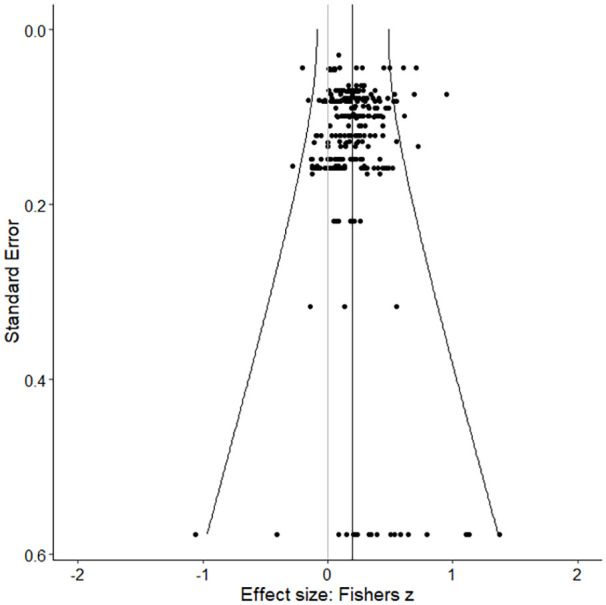
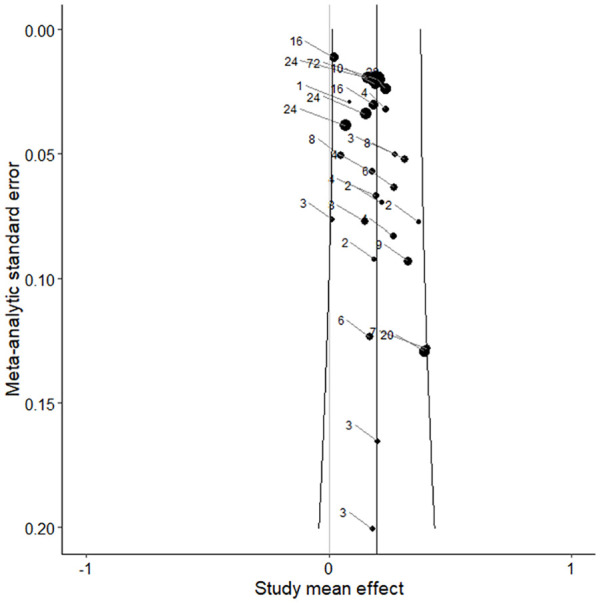
“Finally, we used Egger regression (Egger et al., 1997; Fernández-Castilla et al., 2021), which tests the degree of funnel plot asymmetry as measured by the intercept from regression of standard normal deviates (effect size divided by its standard error) against the estimate’s precision (the inverse…”
Ryan, R. M., & Deci, E. L. (2000) · American Psychologist · doi:10.1037//0003-066x.55.1.68 · Cited by 54,599 · cited 1×
“They based their definition on Self Determination Theory (SDT; Ryan & Deci, 2000), which assumes that the social environment has an impact on human motivation by its effects on competence, relatedness with others, and possibilities to experience or execute personal autonomy.”
Conducting Meta-Analyses in R with the metafor Package
Viechtbauer, W. (2010) · Journal of Statistical Software · doi:10.18637/jss.v036.i03 · Cited by 20,464 · cited 1×
“We used the function “rma.mv” of the metafor package (Viechtbauer, 2010, 2015) in the R environment (version 3.5.2).”
InfluentialDuval, S., & Tweedie, R. (2000) · Biometrics · doi:10.1111/j.0006-341x.2000.00455.x · Cited by 14,099 · cited 1×
“We performed a “trim and fill procedure” (Duval & Tweedie, 2000), which tests whether effect sizes are missing on the left side of the distribution, indicating that the overall estimate found in the meta-analysis is an overestimation of the true effect.”
The file drawer problem and tolerance for null results.
Rosenthal, R. (1979) · Psychological Bulletin · doi:10.1037/0033-2909.86.3.638 · Cited by 9,068 · cited 1×
“Studies reporting significant associations are more likely to be published than studies with non-significant results, which can lead to an overestimation of the true effect size, referred to as the “file drawer problem” or “publication bias” (Rosenthal, 1979).”
Asylums: Essays on the Social Situation of Mental Patients and Other Inmates.
Pfautz, H. W., & Goffman, E. (1962) · American Sociological Review · doi:10.2307/2090043 · Cited by 8,308
Social Theory and Social Structure.
Bock, K. E., & Merton, R. K. (1969) · American Sociological Review · doi:10.2307/2091967 · Cited by 6,660
Development of a critical appraisal tool to assess the quality of cross-sectional studies (AXIS)
Downes, M. J., Brennan, M. L., Williams, H. C., & Dean, R. S. (2016) · BMJ Open · doi:10.1136/bmjopen-2016-011458 · Cited by 2,376 · cited 1×
“In addition, we rated the quality of studies by means of a tool that can be used for correlational studies (AXIS; Downes et al., 2016), which consisted of 20 items assessing aspects of clarity of research aims, quality of methods (e.g., validity of instruments, statistics) and results (e.g.,…”
Fitting three-level meta-analytic models in R: A step-by-step tutorial
Assink, M., & Wibbelink, C. J. M. (2016) · The Quantitative Methods for Psychology · doi:10.20982/tqmp.12.3.p154 · Cited by 1,330 · cited 1×
“The R syntax (Assink & Wibbelink, 2016) was based on procedures outlined by Van den Noortgate et al. (2014).”
Self-citationHandbook of antisocial behavior
(1998) · Choice Reviews Online · doi:10.5860/choice.35-5366 · Cited by 1,318
Lipsey, M. W. (2009) · Victims & Offenders · doi:10.1080/15564880802612573 · Cited by 962 · cited 1×
“In addition, residential rehabilitation programs can decrease re-offending rates among formerly incarcerated offenders (see e.g., Lipsey, 2009; Pompoco et al., 2017; Van Stam et al., 2014).”
Resilience, Trauma, Context, and Culture
Ungar, M. (2013) · Trauma, Violence, & Abuse · doi:10.1177/1524838013487805 · Cited by 906 · cited 1×
“…experiences have been shown to be negatively associated with resilience in youth, a significant group of youth still grow up to be healthy adults (Ungar, 2013), in particular if they have supportive relationships with caregivers, and heightened sensitivity to rewards and positive stimuli…”
Size of Treatment Effects and Their Importance to Clinical Research and Practice
Kraemer, H. C., & Kupfer, D. J. (2006) · Biological Psychiatry · doi:10.1016/j.biopsych.2005.09.014 · Cited by 850 · cited 1×
“For the purpose of clinical importance, we converted the overall effect size into a percentage of change using a formula provided by Kraemer and Kupfer (2006), transforming r into Area Under Curve (AUC), subsequently computing a percentage of change through: (2 * AUC – 1) * 100.”
The Psychology of Criminal Conduct
Andrews, D. A., & Bonta, J. (2014) · Routledge eBooks · doi:10.4324/9781315721279 · Cited by 655
Patton, J., Addams, J., & Franklin, B. (1961) · College Composition and Communication · doi:10.2307/354240 · Cited by 616
Tremblay, R. E. (2010) · Journal of Child Psychology and Psychiatry · doi:10.1111/j.1469-7610.2010.02211.x · Cited by 462 · cited 1×
“…of clients is an important finding, because antisocial behavior has been shown to be rather stable in detained adolescents (Eltink et al., 2018; Tremblay, 2010), which may be difficult to change due to a relatively strong genetic basis of antisocial behavior (Niv et al., 2013), low genetic…”
Meta-analysis of multiple outcomes: a multilevel approach
Van den Noortgate, W., López-López, J. A., Marín-Martínez, F., & Sánchez-Meca, J. (2015) · Behavior Research Methods · doi:10.3758/s13428-014-0527-2 · Cited by 450 · cited 2×
“The R syntax (Assink & Wibbelink, 2016) was based on procedures outlined by Van den Noortgate et al. (2014).”
Child trauma exposure and psychopathology: Mechanisms of risk and resilience
McLaughlin, K. A., & Lambert, H. K. (2017) · Current Opinion in Psychology · doi:10.1016/j.copsyc.2016.10.004 · Cited by 441 · cited 1×
“…group of youth still grow up to be healthy adults (Ungar, 2013), in particular if they have supportive relationships with caregivers, and heightened sensitivity to rewards and positive stimuli (McLaughlin & Lambert, 2017), which emphasizes the importance of a therapeutic living group climate.”
Risk factors for persistent delinquent behavior among juveniles: A meta-analytic review
Assink, M., van der Put, C. E., Hoeve, M., de Vries, S. L. A., Stams, G. J. J. M., & Oort, F. J. (2015) · Clinical Psychology Review · doi:10.1016/j.cpr.2015.08.002 · Cited by 338 · cited 1×
“…to change due to a relatively strong genetic basis of antisocial behavior (Niv et al., 2013), low genetic susceptibility to (positive) environmental influences (Van IJzendoorn, & Bakermans-Kranenburg, 2015), and the accumulation of risk factors for antisocial behavior (Assink et al., 2015).”
Self-citationProcedural justice, legitimacy, and prisoner misconduct
Reisig, M. D., & Mesko, G. (2009) · Psychology, Crime & Law · doi:10.1080/10683160802089768 · Cited by 319
Detecting Selection Bias in Meta-Analyses with Multiple Outcomes: A Simulation Study
Fernández-Castilla, B., Declercq, L., Jamshidi, L., Beretvas, S. N., Onghena, P., & Van den Noortgate, W. (2021) · The Journal of Experimental Education · doi:10.1080/00220973.2019.1582470 · Cited by 285
Lucas, C. G., Bridgers, S., Griffiths, T. L., & Gopnik, A. (2014) · Cognition · doi:10.1016/j.cognition.2013.12.010 · Cited by 240 · cited 1×
“Another explanation may be found in the resilience of youth, who possibly can adjust better to a suboptimal group atmosphere than adults (Lucas et al., 2014).”
Assessment of the social atmospheres of psychiatric wards.
Moos, R. H., & Houts, P. S. (1968) · Journal of Abnormal Psychology · doi:10.1037/h0026600 · Cited by 232 · cited 2×
“The “atmosphere” dimension concerns the degree to which the physical and social environment foster feelings of safety and trust among residents (Moos & Houts, 1968; Van der Helm, Stams, et al., 2011; Robinson et al., 2018).”
EssenCES, a short questionnaire for assessing the social climate of forensic psychiatric wards
Schalast, N., Redies, M., Collins, M., Stacey, J., & Howells, K. (2008) · Criminal Behaviour and Mental Health · doi:10.1002/cbm.677 · Cited by 231 · cited 1×
“…to describe residential group climate is diverse (for an overview, see Tonkin, 2016), and ranges from “social climate” (e.g., Langdon et al., 2004; Schalast et al., 2008; Tonkin, 2016), “ward atmosphere” (Moos, 1975), “prison social climate” (Casey et al., 2016; Ross et al., 2008), “therapeutic…”
Exploring the Relationship between Prison Social Climate and Reoffending*
Auty, K. M., & Liebling, A. (2020) · Justice Quarterly · doi:10.1080/07418825.2018.1538421 · Cited by 227
Offender Coercion in Treatment: A Meta-Analysis of Effectiveness
Parhar, K. K., Wormith, J. S., Derkzen, D. M., & Beauregard, A. M. (2008) · Criminal Justice and Behavior · doi:10.1177/0093854808320169 · Cited by 191 · cited 1×
“…residential care, there is an ongoing discussion on the use and effectiveness of residential care for youth (Gutterswijk et al., 2020) and adults (Parhar et al., 2008), in particular because residential care deprives people of their freedom, and can result in repression by staff and antisocial…”
Reoffending After Release: Does Procedural Justice During Imprisonment Matter?
Beijersbergen, K. A., Dirkzwager, A., & Nieuwbeerta, P. (2015) · Criminal Justice and Behavior · doi:10.1177/0093854815609643 · Cited by 178
Van Dam, L., Smit, D., Wildschut, B., Branje, S. J. T., Rhodes, J. E., Assink, M., & Stams, G. J. J. M. (2018) · American Journal of Community Psychology · doi:10.1002/ajcp.12248 · Cited by 174 · cited 1×
“…environmental influences that are associated with residential placement itself, such as repression, deprivation of meaningful relationships with important others, such as attachment figures or natural mentors (DeLisi et al., 2011; De Valk et al., 2019; Eltink et al., 2018; Van Dam et al., 2018).”
Self-citationDevelopmental origins of early antisocial behavior
Calkins, S. D., & Keane, S. P. (2009) · Development and Psychopathology · doi:10.1017/s095457940999006x · Cited by 174 · cited 1×
“…residential facilities have a history of antisocial behavior, defined as behavior that psychically or psychologically harms others or their property, which shows lack of consideration for the well-being of others, or violates the basic rights of others (Calkins & Keane, 2009; Stoff et al., 1997).”
Identifying Key Factors Associated with Aggression on Acute Inpatient Psychiatric Wards
Bowers, L., Allan, T., Simpson, A., Jones, J., Van Der Merwe, M., & Jeffery, D. (2009) · Issues in Mental Health Nursing · doi:10.1080/01612840802710829 · Cited by 171 · cited 2×
“…for youth and adults with complex or special needs, such as clients with emotional and behavioral disorders and/or intellectual disabilities, and individuals showing criminal behavior and/or substance abuse (Bowers et al., 2009; Dickens et al., 2014; Knotter et al., 2016; Leipoldt et al., 2019).”
Inside the Prison Black Box: Toward a Life Course Importation Model of Inmate Behavior
DeLisi, M., Trulson, C. R., Marquart, J. W., Drury, A. J., & Kosloski, A. E. (2011) · International Journal of Offender Therapy and Comparative Criminology · doi:10.1177/0306624x11383956 · Cited by 169
Procedural Justice, Anger, and Prisoners’ Misconduct: A Longitudinal Study
Beijersbergen, K. A., Dirkzwager, A. J. E., Eichelsheim, V. I., Van der Laan, P. H., & Nieuwbeerta, P. (2015) · Criminal Justice and Behavior · doi:10.1177/0093854814550710 · Cited by 167
Yoon, I. A., Slade, K., & Fazel, S. (2017) · Journal of Consulting and Clinical Psychology · doi:10.1037/ccp0000214 · Cited by 167 · cited 1×
“Three meta-analyses showed that residential treatment may lead to positive outcomes for children (Strijbosch et al., 2015), adolescents (De Swart et al., 2012), and adults (Yoon et al., 2017).”
Smith, M. (2015) · British Journal of Social Work · doi:10.1093/bjsw/bcv013 · Cited by 163
van Ijzendoorn, M. H., & Bakermans-Kranenburg, M. J. (2015) · Development and Psychopathology · doi:10.1017/s0954579414001369 · Cited by 146
Developing the Prison Environment Inventory
Wright, K. N. (1985) · Journal of Research in Crime and Delinquency · doi:10.1177/0022427885022003005 · Cited by 143 · cited 2×
“Safety is the degree to which residents are protected against harm, threat, danger, and bullying from fellow-residents (Leipoldt et al., 2019; Robinson et al., 2018; Ross et al., 2008; Wright, 1985).”
Measuring Group Climate in Prison
van der Helm, P., Stams, G. J., & van der Laan, P. (2011) · The Prison Journal · doi:10.1177/0032885511403595 · Cited by 140
Self-citationTonkin, M. (2016) · International Journal of Offender Therapy and Comparative Criminology · doi:10.1177/0306624x15578834 · Cited by 128 · cited 3×
“…group climate is diverse (for an overview, see Tonkin, 2016), and ranges from “social climate” (e.g., Langdon et al., 2004; Schalast et al., 2008; Tonkin, 2016), “ward atmosphere” (Moos, 1975), “prison social climate” (Casey et al., 2016; Ross et al., 2008), “therapeutic residential care”…”
The effectiveness of institutional youth care over the past three decades: A meta-analysis
De Swart, J. J. W., Van den Broek, H., Stams, G. J. J. M., Asscher, J. J., Van der Laan, P. H., Holsbrink-Engels, G. A., & Van der Helm, G. H. P. (2012) · Children and Youth Services Review · doi:10.1016/j.childyouth.2012.05.015 · Cited by 116 · cited 1×
“Three meta-analyses showed that residential treatment may lead to positive outcomes for children (Strijbosch et al., 2015), adolescents (De Swart et al., 2012), and adults (Yoon et al., 2017).”
Self-citationPerceptions of Institutional Experience and Community Outcomes for Serious Adolescent Offenders
Schubert, C. A., Mulvey, E. P., Loughran, T. A., & Losoya, S. H. (2012) · Criminal Justice and Behavior · doi:10.1177/0093854811426710 · Cited by 111
An Evolutionary Approach to Emotion in Mental Health With a Focus on Affiliative Emotions
Gilbert, P. (2015) · Emotion Review · doi:10.1177/1754073915576552 · Cited by 109 · cited 1×
“The link between safety and antisocial behavior can also be understood as feeling safe in interactions with others, thus making a distinction between physical safety (including perceived threat to physical safety) and emotional safety (Gilbert, 2015).”
Reducing Inmate Misconduct and Prison Returns with Facility Education Programs
Pompoco, A., Wooldredge, J., Lugo, M., Sullivan, C., & Latessa, E. J. (2017) · Criminology & Public Policy · doi:10.1111/1745-9133.12290 · Cited by 107 · cited 1×
“In addition, residential rehabilitation programs can decrease re-offending rates among formerly incarcerated offenders (see e.g., Lipsey, 2009; Pompoco et al., 2017; Van Stam et al., 2014).”
van der Laan, A., & Eichelsheim, V. (2013) · European Journal of Criminology · doi:10.1177/1477370812473530 · Cited by 105 · cited 1×
“Furthermore, experiencing safety has a positive relation with social interaction with youth in a residential institution (Van der Laan & Eichelsheim, 2013).”
Environmental Characteristics Related to Patient Assault
Lanza, M. L., Kayne, H. L., Hicks, C., & Milner, J. (1994) · Issues in Mental Health Nursing · doi:10.3109/01612849409009393 · Cited by 102 · cited 1×
“The studies reporting on the residential group climate-antisocial behavior association included a total of N = 30,404 clients, and N = 1,321 staff; two of the studies only reported number of wards included (Bowers et al., 2009; Lanza et al., 1994).”
van der Helm, P. G., Beunk, L., Stams, G. J. J. M., & van der Laan, P. H. (2014) · The Prison Journal · doi:10.1177/0032885514524884 · Cited by 94 · cited 1×
“Van der Helm et al. (2014) showed that therapeutic group climate was positively associated with active coping and treatment motivation among detained juvenile delinquents; a positive longitudinal association between residential group climate and motivation of detained justice-involved adolescents…”
Self-citationMeasurement of prison social climate
Ross, M. W., Diamond, P. M., Liebling, A., & Saylor, W. G. (2008) · Punishment & Society · doi:10.1177/1462474508095320 · Cited by 92 · cited 3×
“Safety is the degree to which residents are protected against harm, threat, danger, and bullying from fellow-residents (Leipoldt et al., 2019; Robinson et al., 2018; Ross et al., 2008; Wright, 1985).”
A Culture of Enquiry: Research Evidence and the Therapeutic Community
Lees, J., Manning, N., & Rawlings, B. (2004) · Psychiatric Quarterly · doi:10.1023/b:psaq.0000031797.74295.f8 · Cited by 89 · cited 1×
“Another meta-analysis supported the overall effectiveness of prison-based therapeutic communities for adults (Lees et al., 2004).”
Moore, T., McArthur, M., Death, J., Tilbury, C., & Roche, S. (2017) · Children and Youth Services Review · doi:10.1016/j.childyouth.2017.08.010 · Cited by 88 · cited 2×
“The more positive youth experience their interactions with peers and staff, the more safe they feel in an institution (Moore et al., 2017).”
O'DONNELL, I., & EDGAR, K. (1999) · The Prison Journal · doi:10.1177/0032885599079001006 · Cited by 87 · cited 1×
“Support from fellow clients can protect against unsafe situations, because clients can help each other survive dangerous situations, which enhances feelings of safety (Moore et al., 2020; O’Donnell & Edgar, 1999).”
Tonkin, M., Howells, K., Ferguson, E., Clark, A., Newberry, M., & Schalast, N. (2011) · Psychological Assessment · doi:10.1037/a0026267 · Cited by 87
Repression in Residential Youth Care: A Scoping Review
de Valk, S., Kuiper, C. H. Z., van der Helm, P. G., Maas, A. J. J., & Stams, G. J. J. M. (2016) · Adolescent Research Review · doi:10.1007/s40894-016-0029-9 · Cited by 86 · cited 1×
“…has been defined as “a transactional process between youth and authority figures, characterized by an authority figure intentionally acting in a way that harms the youth, or by an authority figure unlawfully or arbitrarily depriving the youth of liberty or autonomy” (De Valk et al., 2016, p. 205).”
Self-citationLong, C. G., Anagnostakis, K., Fox, E., Silaule, P., Somers, J., West, R., & Webster, A. (2010) · Criminal Behaviour and Mental Health · doi:10.1002/cbm.791 · Cited by 83
Leipoldt, J. D., Harder, A. T., Kayed, N. S., Grietens, H., & Rimehaug, T. (2019) · Children and Youth Services Review · doi:10.1016/j.childyouth.2019.02.010 · Cited by 81 · cited 9×
“Research on residential group climate is accumulating (Leipoldt et al., 2019; Schaftenaar et al., 2018; Tonkin, 2016; Whittaker et al., 2015).”
InfluentialSelf-citationEmbregts, P. J. C. M., Didden, R., Huitink, C., & Schreuder, N. (2008) · Journal of Intellectual Disability Research · doi:10.1111/j.1365-2788.2008.01132.x · Cited by 79
Strijbosch, E. L. L., Huijs, J. A. M., Stams, G. J. J. M., Wissink, I. B., van der Helm, G. H. P., de Swart, J. J. W., & van der Veen, Z. (2015) · Children and Youth Services Review · doi:10.1016/j.childyouth.2015.09.018 · Cited by 75 · cited 1×
“Three meta-analyses showed that residential treatment may lead to positive outcomes for children (Strijbosch et al., 2015), adolescents (De Swart et al., 2012), and adults (Yoon et al., 2017).”
Self-citationMolleman, T., & van Ginneken, E. F. J. C. (2014) · International Journal of Offender Therapy and Comparative Criminology · doi:10.1177/0306624x14525912 · Cited by 73 · cited 1×
“Other factors that may affect the relation between group climate and aggression are working climate, scale of the facility, and policies regarding aggression and seclusion (Molleman & Van Ginneken, 2015; Van Gink et al., 2018).”
van der Helm, G. H. P., Kuiper, C. H. Z., & Stams, G. J. J. M. (2018) · Children and Youth Services Review · doi:10.1016/j.childyouth.2018.07.028 · Cited by 73 · cited 7×
“Van der Helm et al. (2018) defined residential group climate as: The quality of the social-and physical environment in terms of the provision of sufficient and necessary conditions for physical and mental health, well-being, contact and personal growth of the residents, with respect for their human…”
InfluentialSelf-citationThe 40-year debate: a meta-review on what works for juvenile offenders
Pappas, L. N., & Dent, A. L. (2023) · Journal of Experimental Criminology · doi:10.1007/s11292-021-09472-z · Cited by 72 · cited 1×
“…group climate, although health service utilization in detained youth (White et al., 2019) and adults (Persson et al., 2017) has been shown to be low, and residential judicial interventions for youth have been shown to produce only small effects on criminal recidi-vism (Pappas & Dent, 2021).”
Institutional climate and aggression in a secure psychiatric setting
Ros, N., Van der Helm, P., Wissink, I., Stams, G.-J., & Schaftenaar, P. (2013) · Journal of Forensic Psychiatry & Psychology · doi:10.1080/14789949.2013.848460 · Cited by 69
Self-citationNiv, S., Tuvblad, C., Raine, A., & Baker, L. A. (2013) · Journal of Criminal Justice · doi:10.1016/j.jcrimjus.2013.06.014 · Cited by 64 · cited 1×
“…adolescents (Eltink et al., 2018; Tremblay, 2010), which may be difficult to change due to a relatively strong genetic basis of antisocial behavior (Niv et al., 2013), low genetic susceptibility to (positive) environmental influences (Van IJzendoorn, & Bakermans-Kranenburg, 2015), and the…”
Gutterswijk, R. V., Kuiper, C. H. Z., Lautan, N., Kunst, E. G., van der Horst, F. C. P., Stams, G. J. J. M., & Prinzie, P. (2020) · Children and Youth Services Review · doi:10.1016/j.childyouth.2020.104950 · Cited by 59 · cited 1×
“…demonstrating positive effects of residential care, there is an ongoing discussion on the use and effectiveness of residential care for youth (Gutterswijk et al., 2020) and adults (Parhar et al., 2008), in particular because residential care deprives people of their freedom, and can result…”
Self-citationde Valk, S., Kuiper, C. H. Z., van der Helm, P. G., Maas, A. J. J., & Stams, G. J. J. M. (2017) · Journal of Adolescent Research · doi:10.1177/0743558417719188 · Cited by 58 · cited 3×
“…environmental influences that are associated with residential placement itself, such as repression, deprivation of meaningful relationships with important others, such as attachment figures or natural mentors (DeLisi et al., 2011; De Valk et al., 2019; Eltink et al., 2018; Van Dam et al., 2018).”
Self-citationStability and Change of Adolescents’ Aggressive Behavior in Residential Youth Care
Eltink, E., ten Hoeve, J., Jongh, T. D., van der Helm, P. G., Wissink, I. B., & Stams, G. J. J. M. (2017) · Child & Youth Care Forum · doi:10.1007/s10566-017-9425-y · Cited by 57
Self-citationGroup climate, personality, and self-reported aggression in incarcerated male youth
van der Helm, P., Stams, G.-J., van Genabeek, M., & van der Laan, P. (2012) · The Journal of Forensic Psychiatry & Psychology · doi:10.1080/14789949.2011.633615 · Cited by 57 · cited 1×
“Also, Van der Helm, Stams, Van Genabeek, & Van der Laan (2012) showed that therapeutic group climate was positively associated with the Big Five personality factors openness and agreeableness, and buffered against aggression through its positive effect on emotional stability in juvenile…”
Self-citationFear is the key: keeping the balance between flexibility and control in a Dutch youth prison
van der Helm, P., Boekee, I., Jan Stams, G., & van der Laan, P. (2011) · Journal of Children's Services · doi:10.1108/17466661111190947 · Cited by 54 · cited 2×
“The “atmosphere” dimension concerns the degree to which the physical and social environment foster feelings of safety and trust among residents (Moos & Houts, 1968; Van der Helm, Stams, et al., 2011; Robinson et al., 2018).”
Self-citationPinchover, S., & Attar‐Schwartz, S. (2014) · Children and Youth Services Review · doi:10.1016/j.childyouth.2014.07.005 · Cited by 50 · cited 1×
“Structure concerns a predictable and consistent institutional order, with clear rules and regulations, and adequate supervision (e.g., Langdon et al., 2004; Leipoldt et al., 2019; Pinchover & Attar-Schwartz, 2014).”
Developmental Group Care of Children and Youth: Concepts and Practice
Maier, H. W. (1987) · Cited by 49
SCHOLTE, E. M., & VAN DER PLOEG, J. D. (2000) · Childhood · doi:10.1177/0907568200007002002 · Cited by 48
Group Climate and Empathy in a Sample of Incarcerated Boys
van der Helm, G. H. P., Stams, G. J. J. M., van der Stel, J. C., van Langen, M. A. M., & van der Laan, P. H. (2012) · International Journal of Offender Therapy and Comparative Criminology · doi:10.1177/0306624x11421649 · Cited by 45 · cited 2×
“…domains (Leipoldt et al., 2019; Schubert et al., 2012; Van der Helm et al., 2018), such as empathy and emotional stability (Heynen et al., 2017; Van der Helm, Stams, Van der Stel, et al., 2012), quality of life (Leipoldt et al., 2019), and social information processing (Eltink et al., 2015).”
Self-citationPerceptions of Social Climate and Aggressive Behavior in Forensic Services: A Systematic Review
Robinson, J., Craig, L. A., & Tonkin, M. (2016) · Trauma Violence & Abuse · doi:10.1177/1524838016663936 · Cited by 44 · cited 4×
“Safety is the degree to which residents are protected against harm, threat, danger, and bullying from fellow-residents (Leipoldt et al., 2019; Robinson et al., 2018; Ross et al., 2008; Wright, 1985).”
InfluentialAggressive Incidents in Residential Youth Care
den Tillaart, J. V., Eltink, E., Stams, G. J. J. M., van der Helm, P. G., & Wissink, I. B. (2018) · International Journal of Offender Therapy and Comparative Criminology · doi:10.1177/0306624x18758898 · Cited by 43
Self-citationSpruit, A., van der Put, C., Gubbels, J., & Bindels, A. (2017) · Journal of Criminal Justice · doi:10.1016/j.jcrimjus.2017.04.006 · Cited by 39 · cited 1×
“One explanation for this result may be found in a study by Spruit et al. (2017), showing that dynamic (i.e., change-able) risk and protective factors for antisocial behavior, which are targets for judicial interventions, were more strongly related to criminal recidivism in adults than in youth.”
de Vries, M. G., Brazil, I. A., Tonkin, M., & Bulten, B. H. (2015) · Archives of Psychiatric Nursing · doi:10.1016/j.apnu.2015.12.007 · Cited by 39
White, L. M., Aalsma, M. C., Salyers, M. P., Hershberger, A. R., Anderson, V. R., Schwartz, K., Dir, A. L., & McGrew, J. H. (2019) · Journal of Adolescent Health · doi:10.1016/j.jadohealth.2019.02.010 · Cited by 37 · cited 1×
“…that reduces antisocial behavior and goes together with a therapeutic group climate, although health service utilization in detained youth (White et al., 2019) and adults (Persson et al., 2017) has been shown to be low, and residential judicial interventions for youth have been shown to…”
Hoogsteder, L. M., Stams, G. J. J. M., Schippers, E. E., & Bonnes, D. (2018) · International Journal of Offender Therapy and Comparative Criminology · doi:10.1177/0306624x18761267 · Cited by 34 · cited 1×
“An example of evidence-based treatment that may successfully reduce antisocial behavior is Responsive Aggression Regulation Therapy (Re-ART; Hoogsteder et al., 2018).”
Self-citationDickens, G. L., Suesse, M., Snyman, P., & Picchioni, M. (2014) · The Journal of Forensic Psychiatry & Psychology · doi:10.1080/14789949.2014.903505 · Cited by 32 · cited 1×
“…for youth and adults with complex or special needs, such as clients with emotional and behavioral disorders and/or intellectual disabilities, and individuals showing criminal behavior and/or substance abuse (Bowers et al., 2009; Dickens et al., 2014; Knotter et al., 2016; Leipoldt et al., 2019).”
Heynen, E. J. E., van der Helm, P. G., Cima, M., Stams, G. J. J. M., & Korebrits, A. (2016) · International Journal of Offender Therapy and Comparative Criminology · doi:10.1177/0306624x16630543 · Cited by 31 · cited 2×
“…outcomes in various domains (Leipoldt et al., 2019; Schubert et al., 2012; Van der Helm et al., 2018), such as empathy and emotional stability (Heynen et al., 2017; Van der Helm, Stams, Van der Stel, et al., 2012), quality of life (Leipoldt et al., 2019), and social information processing…”
Self-citationDifferential Effects of the Social Atmosphere of Psychiatric Wards
Moos, R. H., & Houts, P. S. (1970) · Human Relations · doi:10.1177/001872677002300106 · Cited by 31
The Influence of Incarceration Length and Protection Status on Perceptions of Prison Social Climate
Casey, S., Day, A., & Reynolds, J. (2015) · Criminal Justice and Behavior · doi:10.1177/0093854815603747 · Cited by 30 · cited 1×
“…from “social climate” (e.g., Langdon et al., 2004; Schalast et al., 2008; Tonkin, 2016), “ward atmosphere” (Moos, 1975), “prison social climate” (Casey et al., 2016; Ross et al., 2008), “therapeutic residential care” (Leipoldt et al., 2019; Whittaker et al., 2015) to “(living) group climate”…”
Social Climate within an Adolescent Medium-Secure Facility
Langdon, P. E., Cosgrave, N., & Tranah, T. (2004) · International Journal of Offender Therapy and Comparative Criminology · doi:10.1177/0306624x03261559 · Cited by 30 · cited 2×
“Structure concerns a predictable and consistent institutional order, with clear rules and regulations, and adequate supervision (e.g., Langdon et al., 2004; Leipoldt et al., 2019; Pinchover & Attar-Schwartz, 2014).”
When I Am Little Again and The Child's Right to Respect
Korczak, J., Kulawiec, E. P., Parsegian, V. P., & Gawronski, G. (1992) · Cited by 30
van der Helm, P., Matthys, W., Moonen, X., Giesen, N., Heide, E. V. D., & Stams, G. J. J. M. (2012) · Journal of Interpersonal Violence · doi:10.1177/0886260512468322 · Cited by 29
Self-citationEltink, E. M. A., van der Helm, P., Wissink, I. B., & Stams, G.-J. J. M. (2015) · International Journal of Forensic Mental Health · doi:10.1080/14999013.2015.1033110 · Cited by 25 · cited 2×
“Finally, Eltink et al. (2015) showed that therapeutic group climate was negatively associated with aggressiveness-related deficits in social information processing in detained adolescent offenders.”
Self-citationBarton, W. H., & Mackin, J. R. (2012) · Journal of Offender Rehabilitation · doi:10.1080/10509674.2012.700688 · Cited by 24 · cited 1×
“For instance, Barton and Mackin (2012) and Schaftenaar et al. (2018) carried out quasi-experimental research, showing that group climate did positively affect criminal recidivism in youth and adult offenders.”
Developmental Group Care of Children and Youth
Beker, J., & Maier, H. W. (2014) · Routledge eBooks · doi:10.4324/9781315804217 · Cited by 24
Puzzo, I., Aldridge‐Waddon, L., Bush, E., & Farr, C. (2018) · International Journal of Forensic Mental Health · doi:10.1080/14999013.2018.1532972 · Cited by 23
Moore, T., McArthur, M., & Death, J. (2020) · Residential Treatment for Children & Youth · doi:10.1080/0886571x.2019.1682487 · Cited by 22 · cited 2×
“Support from fellow clients can protect against unsafe situations, because clients can help each other survive dangerous situations, which enhances feelings of safety (Moore et al., 2020; O’Donnell & Edgar, 1999).”
de Decker, A., Lemmens, L., van der Helm, P. G., Bruckers, L. M., Molenberghs, G., & Tremmery, S. (2017) · International Journal of Offender Therapy and Comparative Criminology · doi:10.1177/0306624x17712347 · Cited by 22
Self-citationPerson–Environment Interaction in a New Secure Forensic State Psychiatric Hospital
Eggert, J. E., Kelly, S. P., Margiotta, D. T., Hegvik, D. K., Vaher, K. A., & Kaya, R. T. (2014) · Behavioral Sciences & the Law · doi:10.1002/bsl.2127 · Cited by 21
Neimeijer, E. G., Delforterie, M. J., Roest, J. J., van der Helm, P. G., & Didden, R. (2020) · Journal of Applied Research in Intellectual Disabilities · doi:10.1111/jar.12841 · Cited by 19
Self-citationMathys, C., Lanctôt, N., & Touchette, L. (2013) · European Review of Applied Psychology · doi:10.1016/j.erap.2012.11.001 · Cited by 19
van Gink, K., Vermeiren, R. R. J. M., Goddard, N., van Domburgh, L., van der Stegen, B., Twisk, J. W. R., Popma, A., & Jansen, L. M. C. (2018) · Children and Youth Services Review · doi:10.1016/j.childyouth.2018.08.009 · Cited by 19 · cited 1×
“Other factors that may affect the relation between group climate and aggression are working climate, scale of the facility, and policies regarding aggression and seclusion (Molleman & Van Ginneken, 2015; Van Gink et al., 2018).”
The Dynamics of Residential Treatment: A Social System Analysis
Claster, D. S., & Polsky, H. W. (1968) · Cited by 15
Knotter, M. H., Stams, G. J. J. M., Moonen, X. M. H., & Wissink, I. B. (2016) · Research in Developmental Disabilities · doi:10.1016/j.ridd.2016.09.008 · Cited by 12 · cited 1×
“…for youth and adults with complex or special needs, such as clients with emotional and behavioral disorders and/or intellectual disabilities, and individuals showing criminal behavior and/or substance abuse (Bowers et al., 2009; Dickens et al., 2014; Knotter et al., 2016; Leipoldt et al., 2019).”
Self-citationvan Wijk‐Herbrink, M. F., Arntz, A. R., Broers, N. J., Roelofs, J., & Bernstein, D. P. (2019) · Residential Treatment for Children & Youth · doi:10.1080/0886571x.2019.1692758 · Cited by 12
Persson, M., Belfrage, H., & Kristiansson, M. (2017) · BMC Psychiatry · doi:10.1186/s12888-017-1251-0 · Cited by 11 · cited 1×
“…behavior and goes together with a therapeutic group climate, although health service utilization in detained youth (White et al., 2019) and adults (Persson et al., 2017) has been shown to be low, and residential judicial interventions for youth have been shown to produce only small effects on…”
Relational caring and contact after treatment. An evaluation study on criminal recidivism
Schaftenaar, P., van Outheusden, I., Stams, G.-J., & Baart, A. (2018) · International Journal of Law and Psychiatry · doi:10.1016/j.ijlp.2018.07.011 · Cited by 11 · cited 2×
“For instance, Barton and Mackin (2012) and Schaftenaar et al. (2018) carried out quasi-experimental research, showing that group climate did positively affect criminal recidivism in youth and adult offenders.”
Self-citationInside the Prison Black Box: Toward a Life Course Importation Model of Inmate Behavior
DeLisi, M., Trulson, C. R., Marquart, J. W., et al. (2010) · International Journal of Offender Therapy and Comparative Criminology · doi:10.1177/0306624x10383956 · Cited by 7
Social climate and aggression in IDD services
Robinson, J., & Craig, L. A. (2019) · Journal of Intellectual Disabilities and Offending Behaviour · doi:10.1108/jidob-11-2018-0013 · Cited by 6
Studies included in the meta-analysis are denoted with an asterisk (*)
(n.d.)
UnresolvedAddams J. (1910). Twenty years at Hull House. Macmillan.
Addams, J. (1910)
UnresolvedAndrews D. A., Bonta J. (Eds.). (2010). The psychology of criminal conduct (6th ed.). Routledge.
A., A. D. (2010)
UnresolvedThe three pillars of traumawise care: Healing in the other 23 hours
Bath, H. (2015) · Reclaiming Children and Youth
UnresolvedClemmer D. (1940). The prison community. Christopher.
Clemmer, D. (1940)
UnresolvedCohen J. (1988). Statistical power analysis for the behavioral sciences (2nd ed.). Erlbaum.
Cohen, J. (1988)
UnresolvedFoucault M., Mailänder E. (1975). Surveiller et punir (Vol. 225). Editions Gallimard.
Foucault, M. (1975) · Surveiller et punir
UnresolvedGoffman E. (1961). Asylums: Essays on the social situation of mental patients and other inmates. Dubledzay.
Goffman, E. (1961)
UnresolvedKorczak J. (1992). When I am little again and the child’s right to respect. University Press of America. (Original work published 1925)
Korczak, J. (1992)
UnresolvedMerton R. K., Merton R. C. (1968). Social theory and social structure. Simon and Schuster.
K., M. R. (1968)
UnresolvedMoos R.H. (1975). Evaluating correctional and community institutions. Wiley-Interscience.
Moos, R. H. (1975)
UnresolvedPolsky H., Claster D., Goldberg C. (1968). The dynamics of residential treatment: A social system analysis. University of North Carolina Press.
Polsky, H. (1968)
UnresolvedTabachnik B. G., Fidell L. S. (2013). Using multivariate statistics (6th ed.). Allyn and Bacon.
G., T. B. (2013)
UnresolvedViechtbauer W. (2015). Meta-analysis package for R. https://cran.rproject.org/web/packages/metafor/metafor.pdf
(n.d.)
UnresolvedWhittaker J. K., Del Valle J. F., Holmes L. (2015). Therapeutic residential care for children and youth: Developing evidence-based international practice. Jessica Kingsley Publishers.
K., W. J. (2015)
UnresolvedWillis J., Willis M. (2020). Based Strategies to ignite student learning: Insights from neuroscience and the classroom. ASCD.
Willis, J. (2020)
Unresolved
Cited by
Gutterswijk, R. V., Kuiper, C. H. Z., Lautan, N., Kunst, E. G., van der Horst, F. C. P., Stams, G. J. J. M., & Prinzie, P. (2020) · Children and Youth Services Review · doi:10.1016/j.childyouth.2020.104950 · Cited by 59
Self-citation
Metadata
- Authors
- E. M. A, E., J. J, R., G. H. P, V. D. H., E. J. E, H., C. H. Z, K., K. S, N., S, V., J. D, L., G. J. J. M, S., E, K., A.T, H., & M, A.
- Affiliations
- University of Amsterdam; GGZ Centraal, the Netherlands
- University of Applied Sciences Leiden, the Netherlands
- University of Amsterdam; University of Applied Sciences Leiden, the Netherlands
- Open University Netherlands, the Netherlands
- Academic Workplace for at-risk Youth (AWRJ); Pluryn; Radboud University Nijmegen, the Netherlands
- Ghent University, Belgium
- University of Amsterdam, the Netherlands
- University of Groningen, the Netherlands
- Erasmus University Rotterdam, the Netherlands
- Venue
- International Journal of Offender Therapy and Comparative Criminology
- Publisher
- SAGE Publications
- Published
- 2024-06-10
- Volume
- 69
- Issue
- 12
- Pages
- 1663-1687
- ISSN
- 0020-7497 (ISSN-L)
- 0306-624X
- 1552-6933
- PMC
- PMC12287560
- OpenAlex
- W4399501193
- Cited by
- 4
- References
- 106
- Citations by year
- 2025: 2 · 2024: 2
- FWCI
- 0.42
- Type
- journal article
- Language
- en
- Open access
- hybrid
- doi.org
- Licence
- cc-by
- creativecommons.org/licenses/by/4.0/ (unspecified)
- journals.sagepub.com/page/policies/text-and-data-mining-license (tdm)
- Locations
- International Journal of Offender Therapy and Comparative Criminology (publishedVersion, cc-by)
- PubMed Central (publishedVersion, cc-by)
- PubMed (publishedVersion)
- Ghent University Academic Bibliography (Ghent University) (submittedVersion, cc-by)
- Topics
- Social Sciences › Sociology and Political Science › Crime Patterns and Interventions
- Social Sciences › Psychology › Clinical Psychology › Psychotherapy Techniques and Applications
- Social Sciences › Sociology and Political Science › Criminal Justice and Corrections Analysis
- Keywords
- antisocial behavior, aggression, recidivism, residential treatment centers, offender rehabilitation, juvenile offenders, adult offenders, group atmosphere, repression, social support
- MeSH terms
- Recidivism, Aggression, Antisocial Personality Disorder, Humans, Residential Facilities, Safety, Social Environment
About these checks
Registry, retraction, Cites and statistics results are computed, not judged, with one exception: a printed reference that no index lists is read once by a model before it counts as a citation error. Claims are extracted by a model and kept only when their quote appears verbatim in the text; each cited source is then checked, with a model’s help, for whether it says what the claim relies on. Those verdicts can be wrong — read the claim’s quote and the cited source before relying on one.
The claim verdicts this report counts are experimental: their accuracy is not yet measured.
A language model drew the claims from the paper on 2026-10-09, under version 3 of the claim definition (model deepseek-v4.1-flash, prompt extract-v3).
A second model labelled each claim on 2026-10-09 (model jev-1.13-20260917, definition revision gold-guideline-v0.2).
Cited sources are checked with a language model’s help (gpt-6-sol).
Statistics and arithmetic are recomputed, not judged.
Confidence bands are shown only for fields calibrated on our annotated test set. None is calibrated yet, so no band is shown.
What counts as a claim ›How we measure confidence ›How we check this ›
Are you an author, or do you see a problem with this page? Request a review
Data sources
Bibliographic data: Semantic Scholar, OpenAlex, Crossref.
Contains information from the Semantic Scholar Academic Graph Datasets, made available under the ODC Attribution License (ODC-BY 1.0).
Semantic Scholar’s data is described in: Kinney, R., et al. (2023). The Semantic Scholar Open Data Platform. arXiv:2301.10140.
