

Cognitive behavioural therapy for the treatment of depression in people with multiple sclerosis: a systematic review and meta-analysis
Open accessThe DOI matches its Crossref record; 78 of the 79 references it cites were found in a registry or an index.
Abstract
BACKGROUND: Depression is a common symptom in people with multiple sclerosis. We systematically reviewed published controlled trials on the effectiveness of cognitive behavioural therapy (CBT) for the treatment of depression in people with multiple sclerosis. METHODS: Publications were identified using MEDLINE, PsycINFO and the Cochrane Central Register of Controlled Trials to June/July 2013. We combined thesaurus and free-text terms which were synonyms of the concepts multiple sclerosis, depression and cognitive behavioural therapy. We included published controlled trials which compared individual, group CBT, conducted face-to-face or remotely, to no CBT. Two reviewers extracted data to calculate standardized mean differences (SMD) for self-reported symptoms of depression and weighted mean differences (WMD) for the Multiple Sclerosis Impact Scale (MSIS-29), with 95% Confidence Intervals (CIs). We investigated statistical heterogeneity using I². RESULTS: Seven eligible studies (n = 433) were identified, which evaluated the effect on depression of CBT delivered individually (3 studies), in a group (3 studies) and by computer (1 study). The summary effect (SMD -0.61, 95% CI -0.96 to -0.26, p=0.0006) was reduced (SMD -0.46, 95% CI -0.75 to -0.17, p=0.002) when an outlying study was removed in a sensitivity analysis to examine statistical heterogeneity. Three studies (n=213) observed a direction of effect using the MSIS-29 which was not statistically significant (WMD -4.36, 95% CI -9.33 to 0.62, p=0.09). There was no between-subgroup heterogeneity (I²=0). CONCLUSIONS: CBT can be an effective treatment for depression in MS. Further research should explore optimal durations and modalities of treatment for patients with different characteristics.
Overview
The claims and statistics of this paper haven’t been checked yet.
Free: it reads the open-access text and checks the first 5 claims that cite a source we can check. Create a free account to check every claim.
Integrity signals
Registry
Cites
Statistics
Figures

Verification
Claims the paper makes
The claims and statistics of this paper haven’t been checked yet.
Free: it reads the open-access text and checks the first 5 claims that cite a source we can check. Create a free account to check every claim.
Claims other papers make about this one
Each is checked against this paper’s own text: does it say what the citing paper says it does?
The cited source says what the claim attributes to it.
In the citing paper
“The magnitude of these effects are consistent with several smaller disorder-specific meta-analyses in PD (Ghielen et al., 2019), MS (Hind et al., 2014), and epilepsy (Li et al., 2023), as well as in adults with long-term physical health conditions (Scott et al., 2023).”
From Cognitive behavioral interventions for depression and anxiety in adults with neurological disorders: a systematic review and meta-analysis (2024) · cites this paper as Hind et al., 2014
The cited source says what the claim attributes to it.
In the citing paper
“A meta-analysis on seven clinical trials showed considerable effect of CBT on mitigating the depression symptomsof PwMSposttest(46).”
The cited source says what the claim attributes to it.
In the citing paper
“A review of seven CBT studies (individual (3 studies), group (3 studies) and by computer (1 study)) found a medium treatment effect of 0.5 SD [12].”
Self-check
Percentages, sums and reported differences re-computed from the paper’s own numbers.
The self-check needs the paper’s full text.
Citations
Cites
Statistical Power Analysis for the Behavioral Sciences
Muller, K. (1989) · Technometrics · doi:10.1080/00401706.1989.10488618 · Cited by 99,167
Statistical power analysis for the behavioral sciences
(1990) · Computers, Environment and Urban Systems · doi:10.1016/0198-9715(90)90050-4 · Cited by 65,269
Measuring inconsistency in meta-analyses
Higgins, J. P. T., Thompson, S. G., Deeks, J. J., & Altman, D. G. (2003) · BMJ · doi:10.1136/bmj.327.7414.557 · Cited by 63,139 · cited 1×
“Conventionally, I(2) values of 25%, 50%, and 75% denote low, moderate, and high levels of inconsistency [41].”
BackgroundMeta-analysis in clinical trials
DerSimonian, R., & Laird, N. (1986) · Controlled Clinical Trials · doi:10.1016/0197-2456(86)90046-2 · Cited by 39,552 · cited 1×
“Trials were combined using the DerSimonian and Laird random effects model [40].”
MethodLiberati, A., Altman, D. G., Tetzlaff, J., Mulrow, C., Gøtzsche, P. C., Ioannidis, J. P. A., Clarke, M., Devereaux, P. J., Kleijnen, J., & Moher, D. (2009) · PLoS Medicine · doi:10.1371/journal.pmed.1000100 · Cited by 28,164 · cited 1×
“Reporting conforms to the PRISMA statement [31].”
Liberati, A., Altman, D. G., Tetzlaff, J., Mulrow, C., Gotzsche, P. C., Ioannidis, J. P. A., Clarke, M., Devereaux, P. J., Kleijnen, J., & Moher, D. (2009) · BMJ · doi:10.1136/bmj.b2700 · Cited by 17,648
Rating neurologic impairment in multiple sclerosis: An expanded disability status scale (EDSS)
Kurtzke, J. F. (1983) · Neurology · doi:10.1212/wnl.33.11.1444 · Cited by 15,011 · cited 1×
“We abstracted baseline prognostic characteristics, including age, sex, duration and course of disease, MS-specific disability measured by the Expanded Disability Status Scale or the Guy’s Neurological Disability Scale [33,34] and selfreported depression, however measured.”
MethodCochrane Handbook for Systematic Reviews of Interventions Version 5.0.1. The Cochrane Collaboration
Higgins, J. P. T., Green, S. R., & Higgins, J. P. T. (2008) · Cited by 7,259
(1975) · Medical Entomology and Zoology · Cited by 7,245
Schulz (1995) · doi:10.1001/jama.1995.03520290060030 · Cited by 5,634 · cited 1×
“AT and JC assessed the included studies, unblinded, for generic dimensions of methodological quality associated with estimates of treatment effects in controlled trials: (1) concealment of the allocation schedule; (2) generation of the allocation sequences (randomization); and, (3) inclusion in the analysis of all ran…”
Development of AMSTAR: A measurement tool to assess the methodological quality of systematic reviews
Shea, B. J., Grimshaw, J. M., Wells, G. A., Boers, M., Andersson, N., Hamel, C., Porter, A. C., Tugwell, P., Moher, D., & Bouter, L. M. (2007) · BMC Medical Research Methodology · doi:10.1186/1471-2288-7-10 · Cited by 4,374
Interaction revisited: the difference between two estimates.
Altman, D. G., & Bland, J. M. (2003) · BMJ · doi:10.1136/bmj.326.7382.219 · Cited by 3,203 · cited 1×
“In the absence of direct comparisons, we used a test for interaction to test the null hypothesis that there is no difference between individual CBT and group CBT [42].”
Kirsch, I., Deacon, B. J., Huedo-Medina, T. B., Scoboria, A., Moore, T. J., & Johnson, B. T. (2008) · PLoS Medicine · doi:10.1371/journal.pmed.0050045 · Cited by 2,442 · cited 1×
“A meta-analysis of data submitted to the Food and Drug Administration found “virtually no difference” in treatment effect between people with moderate levels of initial depression receiving antidepressants or placebo [61].”
MethodThe nuts and bolts of PROSPERO: an international prospective register of systematic reviews
Booth, A., Clarke, M., Dooley, G., Ghersi, D., Moher, D., Petticrew, M., & Stewart, L. (2012) · Systematic Reviews · doi:10.1186/2046-4053-1-2 · Cited by 1,433 · cited 2×
“As initial data extraction was completed prior to the inception of the PROSPERO database [32], the protocol was not registered.”
MethodCognitive therapy and emotional disorders
Wolpe, J. (1977) · Journal of Behavior Therapy and Experimental Psychiatry · doi:10.1016/0005-7916(77)90053-2 · Cited by 1,273
Morrison, A., Polisena, J., Husereau, D., Moulton, K., Clark, M., Fiander, M., Mierzwinski-Urban, M., Clifford, T., Hutton, B., & Rabb, D. (2012) · International Journal of Technology Assessment in Health Care · doi:10.1017/s0266462312000086 · Cited by 1,257 · cited 1×
“the precision of pooled estimates [56].”
Kirkham, J. J., Dwan, K. M., Altman, D. G., Gamble, C., Dodd, S., Smyth, R., & Williamson, P. R. (2010) · BMJ · doi:10.1136/bmj.c365 · Cited by 1,133 · cited 1×
“The assessment of outcome reporting bias was undertaken because became best practice, while the review was ongoing [51].”
MethodNatural history of multiple sclerosis: a unifying concept
Confavreux, C., & Vukusic, S. (2006) · Brain · doi:10.1093/brain/awl007 · Cited by 905 · cited 1×
“Permanent physical and cognitive disabilities often follow later [1].”
BackgroundDepression in multiple sclerosis: a review
Siegert, R. J. (2005) · Journal of Neurology, Neurosurgery & Psychiatry · doi:10.1136/jnnp.2004.054635 · Cited by 718 · cited 1×
“Up to 50% of people with MS will experience major depressive disorder in their lifetime [2], a figure considerably higher”
BackgroundClark, D. M. (2011) · International Review of Psychiatry · doi:10.3109/09540261.2011.606803 · Cited by 699 · cited 1×
“some countries of low-intensity telephone CBT [66] and the drive to manage a range of MS symptoms, including”
BackgroundMeasurement of Depression in Patients With Cancer
Endicott, J. (1984) · Cancer · doi:10.1002/cncr.1984.53.s10.2243 · Cited by 558 · cited 1×
“Researchers who consider the use of somatic symptoms common to MS in depression inventories as potentially flawed may also consider the burden of affective symptoms reported by the trial populations to be exaggerated [59,60].”
BackgroundCuijpers, P., van Straten, A., Bohlmeijer, E., Hollon, S. D., & Andersson, G. (2010) · Psychological Medicine · doi:10.1017/s0033291709006114 · Cited by 533 · cited 8×
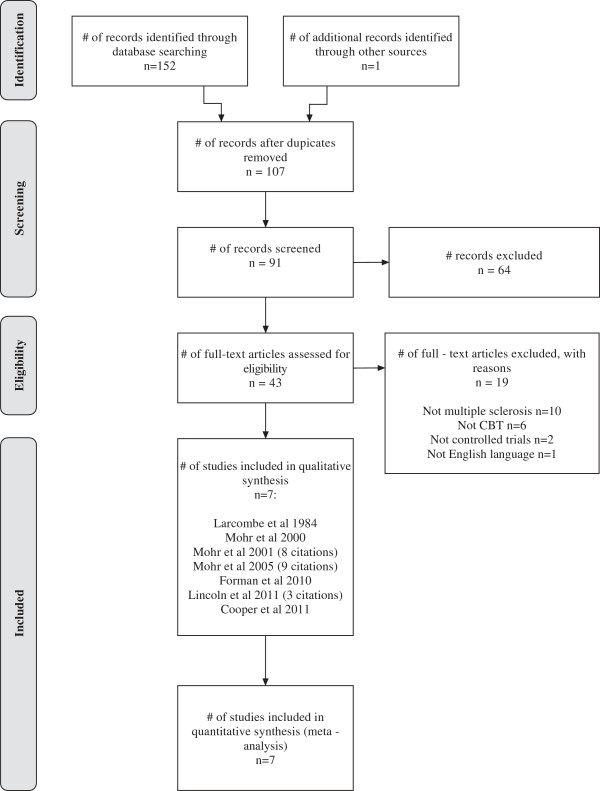
“Two studies used advanced postgraduate-level researchers with several years' experience in providing psychotherapy and prior treatment for MS patients [45] [48] # of studies included in qualitative synthesis n=7: Larcombe et al 1984 Mohr et al 2000 Mohr et al 2001 (8 citations) Mohr et al 2005 (9 citations) Forman et…”
InfluentialMajor depression in multiple sclerosis: A population-based perspective
Patten, S. B., Beck, C. A., Williams, J. V. A., Barbui, C., & Metz, L. M. (2003) · Neurology · doi:10.1212/01.wnl.0000095964.34294.b4 · Cited by 529
Mitchell, A. J., Benito-León, J., González, J.-M. M., & Rivera-Navarro, J. (2005) · The Lancet Neurology · doi:10.1016/s1474-4422(05)70166-6 · Cited by 519 · cited 1×
“Depression in MS has been associated with breakdowns in interpersonal relationships and employment [5], cognitive impairment [6,7], decreased medication adherence [8], heightened suicide risk [9,10] and has been recognised as a major determinant of patient quality of life [11-14].”
BackgroundQuality of life in patients with multiple sclerosis
Janardhan, V., & Bakshi, R. (2002) · Journal of the Neurological Sciences · doi:10.1016/s0022-510x(02)00312-x · Cited by 489 · cited 1×
“Depression in MS has been associated with breakdowns in interpersonal relationships and employment [5], cognitive impairment [6,7], decreased medication adherence [8], heightened suicide risk [9,10] and has been recognised as a major determinant of patient quality of life [11-14].”
BackgroundA review about the impact of multiple sclerosis on health-related quality of life
Benito-León, J., Manuel Morales, J., Rivera-Navarro, J., & Mitchell, A. J. (2003) · Disability and Rehabilitation · doi:10.1080/09638280310001608591 · Cited by 348 · cited 1×
“clinicians and researchers [30,57,71].”
Multiple sclerosis and depression
Feinstein, A. (2011) · Multiple Sclerosis Journal · doi:10.1177/1352458511417835 · Cited by 337
Mohr, D. C., Boudewyn, A. C., Goodkin, D. E., Bostrom, A., & Epstein, L. (2001) · Journal of Consulting and Clinical Psychology · doi:10.1037/0022-006x.69.6.942 · Cited by 334 · cited 11×
“In the six studies where data was available, [30,43,45-48] a median of 9% (range 5% [47] to 31% [45]) of those randomised to CBT interventions failed to complete their course.”
BackgroundMethodInfluentialPsychiatric Disorder in the General Hospital
Mayou, R., & Hawton, K. (1986) · British Journal of Psychiatry · doi:10.1192/bjp.149.2.172 · Cited by 332 · cited 1×
“Researchers who consider the use of somatic symptoms common to MS in depression inventories as potentially flawed may also consider the burden of affective symptoms reported by the trial populations to be exaggerated [59,60].”
BackgroundA review of psychological correlates of adjustment in patients with multiple sclerosis
Dennison, L., Moss-Morris, R., & Chalder, T. (2009) · Clinical Psychology Review · doi:10.1016/j.cpr.2008.12.001 · Cited by 330 · cited 2×
“also be applied to reduce perceived disease burden and improve wellbeing [23,26,27].”
BackgroundMethodThe Goldman Consensus statement on depression in multiple sclerosis
Goldman Consensus Group (2005) · Multiple Sclerosis Journal · doi:10.1191/1352458505ms1162oa · Cited by 329
An examination of suicidal intent in patients with multiple sclerosis
Feinstein, A. (2002) · Neurology · doi:10.1212/wnl.59.5.674 · Cited by 327 · cited 1×
“Depression in MS has been associated with breakdowns in interpersonal relationships and employment [5], cognitive impairment [6,7], decreased medication adherence [8], heightened suicide risk [9,10] and has been recognised as a major determinant of patient quality of life [11-14].”
BackgroundTelephone-administered psychotherapy for depression
Mohr, D. C., Hart, S. L., Julian, L., Catledge, C., Honos-Webb, L., Vella, L., & Tasch, E. T. (2005) · Archives of General Psychiatry · doi:10.1001/archpsyc.62.9.1007 · Cited by 298 · cited 10×
“…for MS patients [45] [48] # of studies included in qualitative synthesis n=7: Larcombe et al 1984 Mohr et al 2000 Mohr et al 2001 (8 citations) Mohr et al 2005 (9 citations) Forman et al 2010 Lincoln et al 2011 (3 citations) Cooper et al 2011 # of records identified through database searching…”
BackgroundMethodResultInfluentialStructural brain abnormalities in multiple sclerosis patients with major depression
Feinstein, A., Roy, P., Lobaugh, N., Feinstein, K., O’Connor, P., & Black, S. (2004) · Neurology · doi:10.1212/01.wnl.0000110316.12086.0c · Cited by 294 · cited 1×
“A variety of aetiologies have been proposed, collectively suggesting a complex interrelationship between biological and psychosocial factors [15-17].”
BackgroundThe Guy's Neurological Disability Scale (GNDS): a new disability measure for multiple sclerosis
Sharrack, B., & Hughes, R. A. (1999) · Multiple Sclerosis Journal · doi:10.1177/135245859900500406 · Cited by 293 · cited 1×
“We abstracted baseline prognostic characteristics, including age, sex, duration and course of disease, MS-specific disability measured by the Expanded Disability Status Scale or the Guy’s Neurological Disability Scale [33,34] and selfreported depression, however measured.”
MethodPsychological interventions for multiple sclerosis.
Thomas, P. W., Thomas, S., Hillier, C., Galvin, K., & Baker, R. (2006) · Cochrane Database of Systematic Reviews · doi:10.1002/14651858.cd004431.pub2 · Cited by 271 · cited 1×
“demonstrated promising but inconclusive results in people with MS [28,29].”
ResultCuijpers, P., Dekker, J., Hollon, S. D., & Andersson, G. (2009) · The Journal of Clinical Psychiatry · doi:10.4088/jcp.09r05021 · Cited by 261 · cited 1×
“Systematic reviews suggest that the combination of CBT and antidepressant medication may be the most effective mode of treatment for depression, without taking concomitant physical illness into account [69,70].”
BackgroundCasacalenda, N., Perry, J. C., & Looper, K. (2002) · American Journal of Psychiatry · doi:10.1176/appi.ajp.159.8.1354 · Cited by 246 · cited 2×
“The result that antidepressant medication and CBT show comparable levels of effectiveness in mild to moderately depressed individuals is not exclusive to MS patients [58].”
BackgroundHobart, J., Riazi, A., Lamping, D., Fitzpatrick, R., & Thompson, A. (2004) · Health Technology Assessment · doi:10.3310/hta8090 · Cited by 245 · cited 2×
“ondary outcome was the score on the Multiple Sclerosis Impact Scale (MSIS-29) psychological subscale [38].”
MethodMohr, D. C., Likosky, W., Bertagnolli, A., Goodkin, D. E., Van Der Wende, J., Dwyer, P., & Dick, L. P. (2000) · Journal of Consulting and Clinical Psychology · doi:10.1037/0022-006x.68.2.356 · Cited by 240 · cited 11×
“Patients were provided with a workbook to act as a visual aid in delivering treatment in the two studies that used telephone administered CBT [45,47].”
BackgroundMethodInfluentialBrain MRI lesions and atrophy are related to depression in multiple sclerosis
Bakshi, R., Czarnecki, D., Shaikh, Z. A., Priore, R. L., Janardhan, V., Kaliszky, Z., & Kinkel, P. R. (2000) · NeuroReport · doi:10.1097/00001756-200004270-00003 · Cited by 231
Suicide and multiple sclerosis: an epidemiological investigation.
Stenager, E. N., Stenager, E., Koch-Henriksen, N., Bronnum-Hansen, H., Hyllested, K., Jensen, K., & Bille-Brahe, U. (1992) · Journal of Neurology, Neurosurgery & Psychiatry · doi:10.1136/jnnp.55.7.542 · Cited by 220 · cited 1×
“The causes of depression at this time are likely to differ from those in the early years following diagnosis when patients are at the greatest risk of suicide [62,63].”
BackgroundMoss-Morris, R., McCrone, P., Yardley, L., van Kessel, K., Wills, G., & Dennison, L. (2012) · Behaviour Research and Therapy · doi:10.1016/j.brat.2012.03.001 · Cited by 209
Depression in multiple sclerosis: Relationship to working memory capacity.
Arnett, P. A., Higginson, C. I., Voss, W. D., Bender, W. I., Wurst, J. M., & Tippin, J. M. (1999) · Neuropsychology · doi:10.1037//0894-4105.13.4.546 · Cited by 206 · cited 1×
“Depression in MS has been associated with breakdowns in interpersonal relationships and employment [5], cognitive impairment [6,7], decreased medication adherence [8], heightened suicide risk [9,10] and has been recognised as a major determinant of patient quality of life [11-14].”
BackgroundAntidepressants for depression in physically ill people
Rayner, L., Price, A., Evans, A., Valsraj, K., Higginson, I. J., & Hotopf, M. (2010) · Cochrane Database of Systematic Reviews · doi:10.1002/14651858.cd007503.pub2 · Cited by 195 · cited 1×
“of depression in physically ill people [64].”
Lynch, S. G., Kroencke, D. C., & Denney, D. R. (2001) · Multiple Sclerosis Journal · doi:10.1177/135245850100700611 · Cited by 191 · cited 1×
“related to more negative adjustment [23-25] and CBT can be used to support the adoption of more beneficial”
MethodCoping and Psychological Adjustment among People with Multiple Sclerosis
McCabe, M. P., McKern, S., & McDonald, E. (2004) · Journal of Psychosomatic Research · doi:10.1016/s0022-3999(03)00132-6 · Cited by 188 · cited 1×
“A variety of aetiologies have been proposed, collectively suggesting a complex interrelationship between biological and psychosocial factors [15-17].”
BackgroundD'Alisa, S., Miscio, G., Baudo, S., Simone, A., Tesio, L., & Mauro, A. (2006) · Disability and Rehabilitation · doi:10.1080/09638280500191753 · Cited by 182 · cited 1×
“Depression in MS has been associated with breakdowns in interpersonal relationships and employment [5], cognitive impairment [6,7], decreased medication adherence [8], heightened suicide risk [9,10] and has been recognised as a major determinant of patient quality of life [11-14].”
BackgroundMultiple sclerosis: Empirical literature for the clinical health psychologist
Mohr, D. C., & Cox, D. (2001) · Journal of Clinical Psychology · doi:10.1002/jclp.1042 · Cited by 176 · cited 3×
“Mohr (2001) [25] USA Inadequate Inadequate: Quasi-random, block randomisation None 11/63 (18%) dropped out of treatment (1 CBT, 4 Group therapy, 6 Sertraline).”
MethodMultiple Sclerosis Impact Scale (MSIS-29): reliability and validity in hospital based samples
Riazi, A. (2002) · Journal of Neurology, Neurosurgery & Psychiatry · doi:10.1136/jnnp.73.6.701 · Cited by 168 · cited 1×
“Included studies which did not use the MSIS-29 all commenced prior to published work on its validation [38,49].”
MethodSuicide among Danes with multiple sclerosis
Bronnum-Hansen, H. (2005) · Journal of Neurology, Neurosurgery & Psychiatry · doi:10.1136/jnnp.2004.056747 · Cited by 154 · cited 1×
“The causes of depression at this time are likely to differ from those in the early years following diagnosis when patients are at the greatest risk of suicide [62,63].”
BackgroundSearching multiple databases for systematic reviews: added value or diminishing returns?
Stevinson, C., & Lawlor, D. A. (2004) · Complementary Therapies in Medicine · doi:10.1016/j.ctim.2004.09.003 · Cited by 143 · cited 1×
“be justified under resource constraints in some topic areas [52].”
BackgroundReeves, B. C., Angelini, G. D., Bryan, A. J., Taylor, F. C., Cripps, T., Spyt, T. J., Samani, N. J., Roberts, J., Jacklin, P., Seehra, H. K., et al. (2004) · Health Technology Assessment · doi:10.3310/hta8160 · Cited by 140
Correlates of cognitive dysfunction in multiple sclerosis
Heesen, C., Schulz, K., Fiehler, J., Mark, U., Otte, C., Jung, R., Poettgen, J., Krieger, T., & Gold, S. M. (2010) · Brain Behavior and Immunity · doi:10.1016/j.bbi.2010.05.006 · Cited by 137 · cited 1×
“Depression in MS has been associated with breakdowns in interpersonal relationships and employment [5], cognitive impairment [6,7], decreased medication adherence [8], heightened suicide risk [9,10] and has been recognised as a major determinant of patient quality of life [11-14].”
BackgroundRelationship Between Coping, Cognitive Dysfunction and Depression in Multiple Sclerosis
Arnett, P. A., Higginson, C. I., Voss, W. D., Randolph, J. J., & Grandey, A. A. (2002) · The Clinical Neuropsychologist · doi:10.1076/clin.16.3.341.13852 · Cited by 136 · cited 1×
“focus of CBT has been on the impact of maladaptive coping styles on depression in MS [22].”
BackgroundGaleazzi, G., Ferrari, S., Giaroli, G., Mackinnon, A., Merelli, E., Motti, L., & Rigatelli, M. (2005) · Neurological Sciences · doi:10.1007/s10072-005-0468-8 · Cited by 126 · cited 1×
“; licensee BioMed Central Lt Commons Attribution License (http://creativec reproduction in any medium, provided the or than that reported for either the general public or many other chronic patient populations [3,4].”
BackgroundCognitive–behavioral therapy: what benefits can it offer people with multiple sclerosis?
Dennison, L., & Moss-Morris, R. (2010) · Expert Review of Neurotherapeutics · doi:10.1586/ern.10.111 · Cited by 124 · cited 1×
“also be applied to reduce perceived disease burden and improve wellbeing [23,26,27].”
BackgroundAn evaluation of cognitive-behaviour therapy for depression in patients with multiple sclerosis
Larcombe, N. A., & Wilson, P. H. (1984) · British Journal of Psychiatry · doi:10.1192/bjp.145.4.366 · Cited by 118 · cited 9×
“Larcombe (1984) [48] BDI ≥ 20; Self-reported depression ≥ 3 months; Met Feighner criteria for ‘definite’ or ‘probable’ depression; No psychological co-morbidities; Low suicide risk; Normal memory function; No concurrent or prior treatment with major tranquilisers or lithium.”
BackgroundMethodResultInfluentialMajor Depression and Quality of Life in Individuals with Multiple Sclerosis
Li Wang, J., Reimer, M. A., Metz, L. M., & Patten, S. B. (2000) · The International Journal of Psychiatry in Medicine · doi:10.2190/pgwt-uxj0-7ueh-lgry · Cited by 111 · cited 1×
“Depression in MS has been associated with breakdowns in interpersonal relationships and employment [5], cognitive impairment [6,7], decreased medication adherence [8], heightened suicide risk [9,10] and has been recognised as a major determinant of patient quality of life [11-14].”
BackgroundSuicidal Ideation in Multiple Sclerosis
Turner, A. P., Williams, R. M., Bowen, J. D., Kivlahan, D. R., & Haselkorn, J. K. (2006) · Archives of Physical Medicine and Rehabilitation · doi:10.1016/j.apmr.2006.04.021 · Cited by 111 · cited 1×
“Depression in MS has been associated with breakdowns in interpersonal relationships and employment [5], cognitive impairment [6,7], decreased medication adherence [8], heightened suicide risk [9,10] and has been recognised as a major determinant of patient quality of life [11-14].”
BackgroundHind, D., O’Cathain, A., Cooper, C. L., Parry, G. D., Isaac, C. L., Rose, A., Martin, L., & Sharrack, B. (2010) · Psychology & Health · doi:10.1080/08870440902842739 · Cited by 101 · cited 1×
“Patients have reported finding cCBT physically burdensome, insufficiently supported for proper application of the CBT model and exacerbating feelings of social isolation [57].”
BackgroundSelf-citationMultiple sclerosis relapses and depression
Moore, P., Hirst, C., Harding, K. E., Clarkson, H., Pickersgill, T. P., & Robertson, N. P. (2012) · Journal of Psychosomatic Research · doi:10.1016/j.jpsychores.2012.08.004 · Cited by 80 · cited 1×
“Left untreated, depression in MS does not appear to remit spontaneously [18], however evidence suggests that it is amenable to treatment by both pharmacological and psychotherapeutic interventions [19,20].”
BackgroundContributing factors to depressed mood in multiple sclerosis
Voss, W. (2002) · Archives of Clinical Neuropsychology · doi:10.1016/s0887-6177(00)00094-9 · Cited by 73 · cited 1×
“also be applied to reduce perceived disease burden and improve wellbeing [23,26,27].”
BackgroundLincoln, N. B., Yuill, F., Holmes, J., Drummond, A. E., Constantinescu, C. S., Armstrong, S., & Phillips, C. (2011) · Multiple Sclerosis Journal · doi:10.1177/1352458511408753 · Cited by 73 · cited 11×
“A median of 45% (range 12% [30] to 71% [44]) of those approached about the study screened eligible (with the remainder in some studies refusing as well as failing screening).”
BackgroundMethodResultInfluentialPozzilli, C., Schweikert, B., Ecari, U., & Oentrich, W. (2011) · Journal of the Neurological Sciences · doi:10.1016/j.jns.2011.04.026 · Cited by 70 · cited 1×
“Depression in MS has been associated with breakdowns in interpersonal relationships and employment [5], cognitive impairment [6,7], decreased medication adherence [8], heightened suicide risk [9,10] and has been recognised as a major determinant of patient quality of life [11-14].”
BackgroundAssessing the potential for outcome reporting bias in a review: a tutorial
Dwan, K., Gamble, C., Kolamunnage-Dona, R., Mohammed, S., Powell, C., & Williamson, P. R. (2010) · Trials · doi:10.1186/1745-6215-11-52 · Cited by 63 · cited 1×
“We used the methods described by Dwan and colleagues [37] to assess the presence of Outcome Reporting Bias (ORB).”
MethodCooper, C. L., Hind, D., Parry, G. D., Isaac, C. L., Dimairo, M., O'Cathain, A., Rose, A., Freeman, J. V., Martin, L., Kaltenthaler, E. C., et al. (2011) · Trials · doi:10.1186/1745-6215-12-259 · Cited by 61 · cited 11×
“A median of 45% (range 12% [30] to 71% [44]) of those approached about the study screened eligible (with the remainder in some studies refusing as well as failing screening).”
BackgroundMethodInfluentialSelf-citationForman, A., & Lincoln, N. (2010) · Clinical Rehabilitation · doi:10.1177/0269215509343492 · Cited by 54 · cited 10×
“Of the six studies that included contact with a therapist, three used only a single therapist to deliver treatment to all patients randomised to CBT [43,44,48].”
BackgroundMethodResultInfluentialWatson, R. J. D., & Richardson, P. H. (1999) · British Journal of Medical Psychology · doi:10.1348/000711299160220 · Cited by 53 · cited 1×
“therapy for depression [53], whereas CINAHL in particu-”
MethodSimon, J., Pilling, S., Burbeck, R., & Goldberg, D. (2006) · British Journal of Psychiatry · doi:10.1192/bjp.bp.105.014571 · Cited by 49 · cited 1×
“moderate depression [65].”
Beckner, V., Howard, I., Vella, L., & Mohr, D. C. (2010) · Journal of Behavioral Medicine · doi:10.1007/s10865-009-9235-2 · Cited by 40 · cited 1×
“treatment response including patient social support [72]”
Dennison, L., Moss-Morris, R. E., Yardley, L., Kirby, S. E., & Chalder, T. (2013) · Psychology and Health · doi:10.1080/08870446.2013.767904 · Cited by 36 · cited 1×
“fatigue, through nurse-led group CBT interventions [67,68] may mean that services are available for those who wish to access them.”
BackgroundCognitive Predictors of Response to Treatment for Depression in Multiple Sclerosis
Julian, L. J., & Mohr, D. C. (2006) · Journal of Neuropsychiatry · doi:10.1176/appi.neuropsych.18.3.356 · Cited by 34 · cited 1×
“and measures of neuropsychological functioning [73].”
Green, G., & Todd, J. (2008) · Chronic Illness · doi:10.1177/1742395307087457 · Cited by 33 · cited 1×
“Depression in MS has been associated with breakdowns in interpersonal relationships and employment [5], cognitive impairment [6,7], decreased medication adherence [8], heightened suicide risk [9,10] and has been recognised as a major determinant of patient quality of life [11-14].”
BackgroundSearching CINAHL did not add value to clinical questions posed in NICE guidelines
Beckles, Z., Glover, S., Ashe, J., Stockton, S., Boynton, J., Lai, R., & Alderson, P. (2013) · Journal of Clinical Epidemiology · doi:10.1016/j.jclinepi.2013.04.009 · Cited by 29 · cited 1×
“lar, rarely retrieves unique references for most topic areas [54].”
BackgroundREVIEW OF INTERVENTION STUDIES ON DEPRESSION IN PERSONS WITH MULTIPLE SCLEROSIS
Walker, I., & Gonzalez, E. W. (2007) · Issues in Mental Health Nursing · doi:10.1080/01612840701344480 · Cited by 29 · cited 1×
“demonstrated promising but inconclusive results in people with MS [28,29].”
ResultHumphreys, I., Drummond, A., Phillips, C., & Lincoln, N. (2013) · Clinical Rehabilitation · doi:10.1177/0269215513488608 · Cited by 26 · cited 1×
“One study has compared the cost-effectiveness of group CBT to standard care, concluding that there were statistically significant differences in the average costs of care favouring CBT [74].”
ResultCombined Pharmacotherapy and Psychological Treatment for Depression: A Systematic Review
Pampallona, S., Bollini, P., Tibaldi, G., Kupelnick, B., & Munizza, C. (2004) · Archives of General Psychiatry · doi:10.1001/archpsyc.61.7.714 · Cited by 5 · cited 1×
“Systematic reviews suggest that the combination of CBT and antidepressant medication may be the most effective mode of treatment for depression, without taking concomitant physical illness into account [69,70].”
Background
Cited by
Prevalence of depression and anxiety in Multiple Sclerosis: A systematic review and meta-analysis
Boeschoten, R. E., Braamse, A. M. J., Beekman, A. T. F., Cuijpers, P., van Oppen, P., Dekker, J., & Uitdehaag, B. M. J. (2017) · Journal of the Neurological Sciences · doi:10.1016/j.jns.2016.11.067 · Cited by 713
Comorbid depression in medical diseases
Gold, S. M., Köhler-Forsberg, O., Moss-Morris, R., Mehnert, A., Miranda, J. J., Bullinger, M., Steptoe, A., Whooley, M. A., & Otte, C. (2020) · Nature Reviews Disease Primers · doi:10.1038/s41572-020-0200-2 · Cited by 534
The link between multiple sclerosis and depression
Feinstein, A., Magalhaes, S., Richard, J.-F., Audet, B., & Moore, C. (2014) · Nature Reviews Neurology · doi:10.1038/nrneurol.2014.139 · Cited by 523
Graham, C. D., Gouick, J., Krahé, C., & Gillanders, D. (2016) · Clinical Psychology Review · doi:10.1016/j.cpr.2016.04.009 · Cited by 476
“been widely applied to improve distress and self-management in long-term conditions (Beatty & Lambert, 2013; Greer et al., 1992; Hind et al., 2014; Ismail, Winkley, & Rabe-Hesketh, 2004; Petrie, Perry, Broadbent, & Weinman, 2012).”
Depression in multiple sclerosis
Patten, S. B., Marrie, R. A., & Carta, M. G. (2017) · International Review of Psychiatry · doi:10.1080/09540261.2017.1322555 · Cited by 262
“Comparable results were reported in a 2014 systematic review of cognitive behavioural therapy (Hind et al., 2014).”
Result
Metadata
- Authors
- Hind, D., Cotter, J., Thake, A., Bradburn, M., Cooper, C., Isaac, C., & House, A.
- Affiliations
- University of Sheffield (GB)
- University of Manchester (GB)
- University of Hertfordshire (GB)
- Sheffield Teaching Hospitals NHS Foundation Trust (GB)
- University of Leeds (GB)
- Corresponding author
- Hind, Daniel
- Venue
- BMC Psychiatry
- Published
- 2014-01-09
- Volume
- 14
- Issue
- 1
- Pages
- 5-5
- ISSN
- 1471-244X (ISSN-L)
- PMC
- PMC3890565
- OpenAlex
- W2111272873
- Cited by
- 180
- References
- 79
- Citations by year
- 2026: 7 · 2025: 9 · 2024: 18 · 2023: 13 · 2022: 14 · 2021: 20 · 2020: 14 · 2019: 11 · 2018: 12 · 2017: 18 · 2016: 18 · 2015: 19 · 2014: 7
- FWCI
- 2.93
- Type
- journal article
- Language
- en
- Open access
- gold
- doi.org
- Licence
- Locations
- BMC Psychiatry (publishedVersion, cc-by)
- Europe PMC (PubMed Central) (publishedVersion, cc-by)
- PubMed Central (publishedVersion, cc-by)
- PubMed (publishedVersion)
- White Rose Research Online (University of Leeds, The University of Sheffield, University of York) (acceptedVersion)
- Research Explorer (The University of Manchester) (submittedVersion, cc-by)
- Funders
- Multiple Sclerosis Society (845/06)
- Topics
- Health Sciences › Medicine › Clinical Neurology › Multiple Sclerosis Research Studies
- Social Sciences › Psychology › Experimental and Cognitive Psychology › Anxiety, Depression, Psychometrics, Treatment, Cognitive Processes
- Social Sciences › Psychology › Clinical Psychology › Psychological Treatments and Assessments
- Keywords
- cognitive behavioral therapy, depression, multiple sclerosis, treatment effectiveness, group therapy, individual psychotherapy, MSIS-29, quality of life
- MeSH terms
- Depression, Humans, Multiple Sclerosis, Cognitive Behavioral Therapy, Treatment Outcome
About these checks
Registry, retraction, Cites and statistics results are computed, not judged, with one exception: a printed reference that no index lists is read once by a model before it counts as a citation error. Claims are extracted by a model and kept only when their quote appears verbatim in the text; each cited source is then checked, with a model’s help, for whether it says what the claim relies on. Those verdicts can be wrong — read the claim’s quote and the cited source before relying on one.
Statistics and arithmetic are recomputed, not judged.
Confidence bands are shown only for fields calibrated on our annotated test set. None is calibrated yet, so no band is shown.
What counts as a claim ›How we measure confidence ›How we check this ›
Are you an author, or do you see a problem with this page? Request a review
Data sources
Bibliographic data: Semantic Scholar, OpenAlex, Crossref.
Contains information from the Semantic Scholar Academic Graph Datasets, made available under the ODC Attribution License (ODC-BY 1.0).
Semantic Scholar’s data is described in: Kinney, R., et al. (2023). The Semantic Scholar Open Data Platform. arXiv:2301.10140.
