

Executive and motivational processes in adolescents with Attention-Deficit-Hyperactivity Disorder (ADHD)
Open accessThe DOI matches its Crossref record; 65 of the 66 references it cites were found in a registry or an index, and 1 are not checked yet.
Abstract
Background: The objective of the current study was to examine performance and correlates of performance on a decision-making card task involving risky choices (Iowa Gambling Task) in adolescents with ADHD and comparison controls. Forty-four participants with ADHD and 34 controls were administered measures of estimated intellectual ability, working memory, and the card task. Also, behavioural ratings were obtained from parents and teachers. Results: Adolescents with ADHD scored lower on the measures of intellectual ability, working memory, and made less advantageous selections on the card task compared to controls. Performance on measures of intellectual ability and working memory were unrelated to card task performance in both the ADHD and control samples. Parent ratings of hyperactivity/impulsivity were significantly associated with card task performance in the adolescents with ADHD, but not in controls. Conclusion: These findings demonstrate impaired decision-making in adolescents with ADHD, and the separability of motivational and executive function processes, supporting current dual pathway models of ADHD.
Overview
The claims and statistics of this paper haven’t been checked yet.
Free: it reads the open-access text and checks the first 5 claims that cite a source we can check. Create a free account to check every claim.
Integrity signals
Registry
Cites
Statistics
Figures
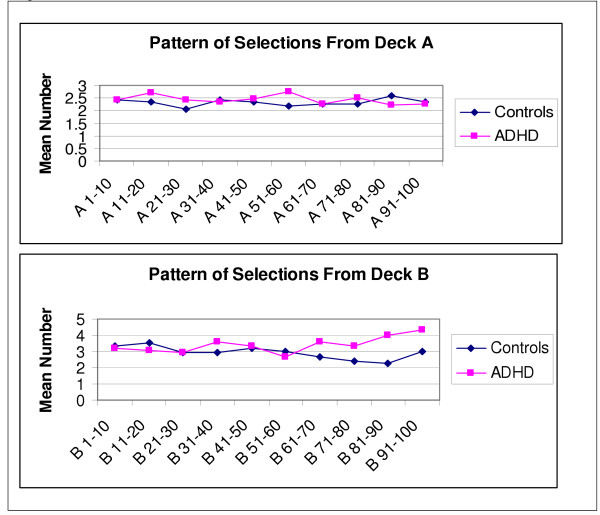
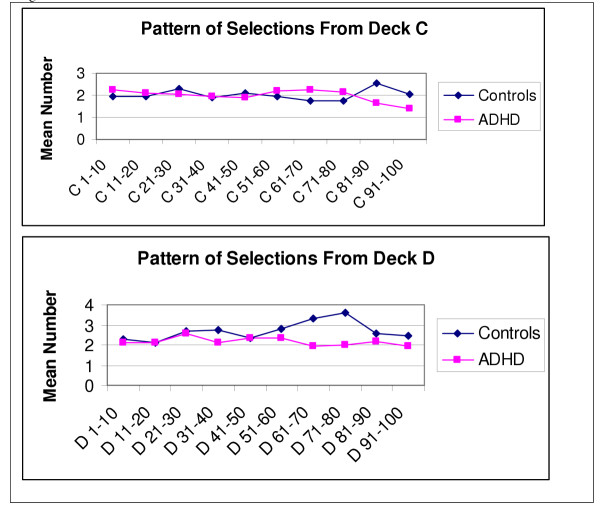
Verification
Claims the paper makes
The claims and statistics of this paper haven’t been checked yet.
Free: it reads the open-access text and checks the first 5 claims that cite a source we can check. Create a free account to check every claim.
Claims other papers make about this one
Each is checked against this paper’s own text: does it say what the citing paper says it does?
The cited source doesn’t support the claim as written.
In the citing paper
“participants with ADHD-C and ADHD-H [52], [54] (2/15 = 13% of studies with null findings)”
From Risky behavior in gambling tasks in individuals with ADHD–a systematic literature review (2013) · cites this paper as [52]
Checked by a reasoning model — may be wrong.
Experimental — accuracy not yet measuredThe source backs part of the claim, not all of it — or backs it for a different population, condition or comparison.
In the citing paper
“Astle and Fletcher-Watson (2020) suggested that this was because studies often used strict exclusion criteria that excluded children with co-occurring difficulties (Willcutt et al., 2001; Toplak et al., 2005).”
From Executive Functions in Neurodevelopmental Disorders: Comorbidity Overlaps Between Attention Deficit and Hyperactivity Disorder and Specific Learning Disorders (2021) · cites this paper as Toplak et al., 2005
Experimental — accuracy not yet measuredThe source backs part of the claim, not all of it — or backs it for a different population, condition or comparison.
In the citing paper
“No group differences were found in the net score and financial outcome of the ADHD group compared to the NCs.”
From Risky behavior in gambling tasks in individuals with ADHD–a systematic literature review (2013) · cites this paper as [52]
Experimental — accuracy not yet measuredThe source backs part of the claim, not all of it — or backs it for a different population, condition or comparison.
In the citing paper
“No difference was found in net score between these two subtypes of ADHD.”
From Risky behavior in gambling tasks in individuals with ADHD–a systematic literature review (2013) · cites this paper as [52]
Experimental — accuracy not yet measuredThe source backs part of the claim, not all of it — or backs it for a different population, condition or comparison.
In the citing paper
“This supports the idea that individuals with ADHD are more sensitive for the frequency than the magnitude of penalties.”
From Risky behavior in gambling tasks in individuals with ADHD–a systematic literature review (2013) · cites this paper as [52]
Experimental — accuracy not yet measured
11 more claims about this paper
Create a free account to see every claim other papers make about this one.
Self-check
Percentages, sums and reported differences re-computed from the paper’s own numbers.
The self-check needs the paper’s full text.
Citations
Cites
Tabachnick, B. G., & Fidell, L. S. (1983) · Cited by 80,058
Diagnostic and Statistical Manual of Mental Disorders, Fourth Edition, Text Revision (DSM-IV-TR)
American Psychiatric Association (2000) · doi:10.1176/appi.books.9780890423349 · Cited by 11,069
(1994) · DigitalGeorgetown (Georgetown University Library) · Cited by 10,542
KAUFMAN, J., BIRMAHER, B., BRENT, D., RAO, U., FLYNN, C., MORECI, P., WILLIAMSON, D., & RYAN, N. (1997) · Journal of the American Academy of Child & Adolescent Psychiatry · doi:10.1097/00004583-199707000-00021 · Cited by 10,148
Cohen, J. (1992) · Psychological Bulletin · doi:10.1037//0033-2909.112.1.155 · Cited by 8,771
DESCARTES' ERROR: Emotion, Reason, and the Human Brain
Marg, E. (1995) · Optometry and Vision Science · doi:10.1002/j.1538-9235.1995.tb03988.x · Cited by 8,118
Insensitivity to future consequences following damage to human prefrontal cortex
Bechara, A., Damasio, A. R., Damasio, H., & Anderson, S. W. (1994) · Cognition · doi:10.1016/0010-0277(94)90018-3 · Cited by 6,128
The feeling of what happens: body and emotion in the making of consciousness
(2000) · Choice Reviews Online · doi:10.5860/choice.37-6553 · Cited by 5,998
Wechsler Intelligence Scale for Children
(2018) · The SAGE Encyclopedia of Intellectual and Developmental Disorders · doi:10.4135/9781483392271.n537 · Cited by 4,109
PINKER, S. (1999) · Annals of the New York Academy of Sciences · doi:10.1111/j.1749-6632.1999.tb08538.x · Cited by 3,738
Research works printed but not linked: 3
- Wechsler D Wechsler Abbreviated Scale of Intelligence (WASI) 1999 USA: The Psychological Corporation
- Kaplan E Fein D Kramer J Delis D Morris R WISC-III-PI Manual 1999 U.S.A: The Psychological Corporation
- Douglas VI Bloomingdale L The response of ADD children to reinforcement: Theoretical and clinical implications Attention deficit disorder: Identification, course and treatment rationale 1985 New York: Spectrum Press 49 66
Cited by
Toplak, M. E., West, R. F., & Stanovich, K. E. (2013) · Journal of Child Psychology and Psychiatry · doi:10.1111/jcpp.12001 · Cited by 1,381
Self-citationCharacterizing cognition in ADHD: beyond executive dysfunction
Castellanos, F. X., Sonuga-Barke, E. J. S., Milham, M. P., & Tannock, R. (2006) · Trends in Cognitive Sciences · doi:10.1016/j.tics.2006.01.011 · Cited by 1,170
Self-citationThe somatic marker hypothesis: A critical evaluation
Dunn, B. D., Dalgleish, T., & Lawrence, A. D. (2006) · Neuroscience & Biobehavioral Reviews · doi:10.1016/j.neubiorev.2005.07.001 · Cited by 894
Executive Function in Typical and Atypical Development
Zelazo, P. D., & Müller, U. (2010) · The Wiley‐Blackwell Handbook of Childhood Cognitive Development · doi:10.1002/9781444325485.ch22 · Cited by 784
Attention‐Deficit‐Hyperactivity Disorder: An Update
Dopheide, J. A., & Pliszka, S. R. (2009) · Pharmacotherapy: The Journal of Human Pharmacology and Drug Therapy · doi:10.1592/phco.29.6.656 · Cited by 645
Rubia, K. (2011) · Biological Psychiatry · doi:10.1016/j.biopsych.2010.09.023 · Cited by 440
Annual Research Review: The transdiagnostic revolution in neurodevelopmental disorders
Astle, D. E., Holmes, J., Kievit, R., & Gathercole, S. E. (2022) · Journal of Child Psychology and Psychiatry · doi:10.1111/jcpp.13481 · Cited by 384
Sonuga-Barke, E. J. S., Sergeant, J. A., Nigg, J., & Willcutt, E. (2008) · Child and Adolescent Psychiatric Clinics of North America · doi:10.1016/j.chc.2007.11.008 · Cited by 348
Noreika, V., Falter, C. M., & Rubia, K. (2013) · Neuropsychologia · doi:10.1016/j.neuropsychologia.2012.09.036 · Cited by 339
Li, C.-S. R., & Sinha, R. (2008) · Neuroscience & Biobehavioral Reviews · doi:10.1016/j.neubiorev.2007.10.003 · Cited by 345
Scheres, A., Dijkstra, M., Ainslie, E., Balkan, J., Reynolds, B., Sonuga-Barke, E., & Castellanos, F. X. (2006) · Neuropsychologia · doi:10.1016/j.neuropsychologia.2005.10.012 · Cited by 327
Toplak, M. E., Sorge, G. B., Benoit, A., West, R. F., & Stanovich, K. E. (2010) · Clinical Psychology Review · doi:10.1016/j.cpr.2010.04.002 · Cited by 326
Self-citationSonuga‐Barke, E. J. S., & Halperin, J. M. (2010) · Journal of Child Psychology and Psychiatry · doi:10.1111/j.1469-7610.2009.02195.x · Cited by 320
Rubia, K., Halari, R., Christakou, A., & Taylor, E. (2009) · Philosophical Transactions of the Royal Society B: Biological Sciences · doi:10.1098/rstb.2009.0014 · Cited by 310
MALLOY-DINIZ, L., FUENTES, D., LEITE, W. B., CORREA, H., & BECHARA, A. (2007) · Journal of the International Neuropsychological Society · doi:10.1017/s1355617707070889 · Cited by 306
Impulsivity is associated with behavioral decision-making deficits
Franken, I. H. A., van Strien, J. W., Nijs, I., & Muris, P. (2008) · Psychiatry Research · doi:10.1016/j.psychres.2007.06.002 · Cited by 283
The relationship between glucocerebrosidase mutations and Parkinson disease
Migdalska‐Richards, A., & Schapira, A. H. V. (2016) · Journal of Neurochemistry · doi:10.1111/jnc.13385 · Cited by 231
Frank, M. J., Santamaria, A., O'Reilly, R. C., & Willcutt, E. (2007) · Neuropsychopharmacology · doi:10.1038/sj.npp.1301278 · Cited by 227
Performance of healthy participants on the Iowa Gambling Task.
Steingroever, H., Wetzels, R., Horstmann, A., Neumann, J., & Wagenmakers, E.-J. (2013) · Psychological Assessment · doi:10.1037/a0029929 · Cited by 210
Parent–teen behavior therapy + motivational interviewing for adolescents with ADHD.
Sibley, M. H., Graziano, P. A., Kuriyan, A. B., Coxe, S., Pelham, W. E., Rodriguez, L., Sanchez, F., Derefinko, K., Helseth, S., & Ward, A. (2016) · Journal of Consulting and Clinical Psychology · doi:10.1037/ccp0000106 · Cited by 200
Multidisciplinary perspectives on attention and the development of self-regulation
Berger, A., Kofman, O., Livneh, U., & Henik, A. (2007) · Progress in Neurobiology · doi:10.1016/j.pneurobio.2007.06.004 · Cited by 199
Is deck B a disadvantageous deck in the Iowa Gambling Task?
Lin, C.-H., Chiu, Y.-C., Lee, P.-L., & Hsieh, J.-C. (2007) · Behavioral and Brain Functions · doi:10.1186/1744-9081-3-16 · Cited by 111
Investigation of cool and hot executive function in ODD/CD independently of ADHD
Hobson, C. W., Scott, S., & Rubia, K. (2011) · Journal of Child Psychology and Psychiatry · doi:10.1111/j.1469-7610.2011.02454.x · Cited by 190
Rogers, M., Hwang, H., Toplak, M., Weiss, M., & Tannock, R. (2011) · Child Neuropsychology · doi:10.1080/09297049.2010.544648 · Cited by 181
Self-citationPawlikowski, M., & Brand, M. (2011) · Psychiatry Research · doi:10.1016/j.psychres.2011.05.017 · Cited by 178
ADHD-like behavior and entrepreneurial intentions
Verheul, I., Block, J., Burmeister-Lamp, K., Thurik, R., Tiemeier, H., & Turturea, R. (2015) · Small Business Economics · doi:10.1007/s11187-015-9642-4 · Cited by 166
The effects of methylphenidate on decision making in attention-deficit/hyperactivity disorder
DeVito, E. E., Blackwell, A. D., Kent, L., Ersche, K. D., Clark, L., Salmond, C. H., Dezsery, A. M., & Sahakian, B. J. (2008) · Biological Psychiatry · doi:10.1016/j.biopsych.2008.04.017 · Cited by 142
Huizenga, H. M., Crone, E. A., & Jansen, B. J. (2007) · Developmental Science · doi:10.1111/j.1467-7687.2007.00621.x · Cited by 140
de Visser, L. (2011) · Frontiers in Neuroscience · doi:10.3389/fnins.2011.00109 · Cited by 139
Worthy, D. A., Hawthorne, M. J., & Otto, A. R. (2012) · Psychonomic Bulletin & Review · doi:10.3758/s13423-012-0324-9 · Cited by 141
Pollak, Y., Dekkers, T. J., Shoham, R., & Huizenga, H. M. (2019) · Current Psychiatry Reports · doi:10.1007/s11920-019-1019-y · Cited by 165
Toplak, M. E., Pitch, A., Flora, D. B., Iwenofu, L., Ghelani, K., Jain, U., & Tannock, R. (2009) · Research on Child and Adolescent Psychopathology · doi:10.1007/s10802-009-9336-y · Cited by 151
Self-citationBeyond the core-deficit hypothesis in developmental disorders
Astle, D. E., & Fletcher-Watson, S. (2020) · Current Directions in Psychological Science · doi:10.1177/0963721420925518 · Cited by 132
Risky behavior in gambling tasks in individuals with ADHD–a systematic literature review
Groen, Y., Gaastra, G. F., Lewis-Evans, B., & Tucha, O. (2013) · PLoS ONE · doi:10.1371/journal.pone.0074909 · Cited by 127
Baas, M., Nijstad, B. A., Boot, N. C., & De Dreu, C. K. W. (2016) · Psychological Bulletin · doi:10.1037/bul0000049 · Cited by 124
Drechsler, R., Rizzo, P., & Steinhausen, H.-C. (2008) · Journal of Neural Transmission · doi:10.1007/s00702-007-0814-5 · Cited by 122
Risky decision making in attention-deficit/hyperactivity disorder: a meta-regression analysis
Dekkers, T. J., Popma, A., Agelink van Rentergem, J. A., Bexkens, A., & Huizenga, H. M. (2016) · Clinical Psychology Review · doi:10.1016/j.cpr.2016.03.001 · Cited by 119
Christakou, A., Brammer, M., Giampietro, V., & Rubia, K. (2009) · The Journal of Neuroscience · doi:10.1523/jneurosci.1279-09.2009 · Cited by 114
Immediate gain is long-term loss: Are there foresighted decision makers in the Iowa Gambling Task?
Chiu, Y.-C., Lin, C.-H., Huang, J.-T., Lin, S., Lee, P.-L., & Hsieh, J.-C. (2008) · Behavioral and Brain Functions · doi:10.1186/1744-9081-4-13 · Cited by 110
Bikic, A., Reichow, B., McCauley, S. A., Ibrahim, K., & Sukhodolsky, D. G. (2017) · Clinical Psychology Review · doi:10.1016/j.cpr.2016.12.004 · Cited by 108
Origins of altered reinforcement effects in ADHD
Johansen, E., Killeen, P. R., Russell, V. A., Tripp, G., Wickens, J. R., Tannock, R., Williams, J., & Sagvolden, T. (2009) · Behavioral and Brain Functions · doi:10.1186/1744-9081-5-7 · Cited by 108
Self-citationCrisci, G., Caviola, S., Cardillo, R., & Mammarella, I. C. (2021) · Frontiers in Human Neuroscience · doi:10.3389/fnhum.2021.594234 · Cited by 103
Agay, N., Yechiam, E., Carmel, Z., & Levkovitz, Y. (2010) · Psychopharmacology · doi:10.1007/s00213-010-1853-4 · Cited by 101
Mueller, E. M., Nguyen, J., Ray, W. J., & Borkovec, T. D. (2009) · Journal of Behavior Therapy and Experimental Psychiatry · doi:10.1016/j.jbtep.2009.12.002 · Cited by 123
Furczyk, K., & Thome, J. (2014) · ADHD Attention Deficit and Hyperactivity Disorders · doi:10.1007/s12402-014-0150-1 · Cited by 99
Hoogman, M., Aarts, E., Zwiers, M., Slaats-Willemse, D., Naber, M., Onnink, M., Cools, R., Kan, C., Buitelaar, J., & Franke, B. (2011) · American Journal of Psychiatry · doi:10.1176/appi.ajp.2011.10101446 · Cited by 97
Iowa gambling task performance in currently depressed suicide attempters
Gorlyn, M., Keilp, J. G., Oquendo, M. A., Burke, A. K., & John Mann, J. (2013) · Psychiatry Research · doi:10.1016/j.psychres.2013.01.030 · Cited by 94
Becker, S. P., & Langberg, J. M. (2013) · Child Psychiatry & Human Development · doi:10.1007/s10578-013-0372-z · Cited by 111
Lambek, R., Tannock, R., Dalsgaard, S., Trillingsgaard, A., Damm, D., & Thomsen, P. H. (2010) · Journal of Child Psychology and Psychiatry · doi:10.1111/j.1469-7610.2010.02248.x · Cited by 88
Self-citationCubillo, A., Smith, A. B., Barrett, N., Giampietro, V., Brammer, M., Simmons, A., & Rubia, K. (2014) · Psychological Medicine · doi:10.1017/s0033291713000676 · Cited by 88
Hofvander, B., Ossowski, D., Lundström, S., & Anckarsäter, H. S. (2009) · International Journal of Law and Psychiatry · doi:10.1016/j.ijlp.2009.04.004 · Cited by 104
Risky decision making in adults with ADHD
Matthies, S., Philipsen, A., & Svaldi, J. (2012) · Journal of Behavior Therapy and Experimental Psychiatry · doi:10.1016/j.jbtep.2012.02.002 · Cited by 85
Decision making in adults with ADHD
Mäntylä, T., Still, J., Gullberg, S., & Del Missier, F. (2012) · Journal of Attention Disorders · doi:10.1177/1087054709360494 · Cited by 84
Absolute performance of reinforcement-learning models for the Iowa Gambling Task.
Steingroever, H., Wetzels, R., & Wagenmakers, E.-J. (2014) · Decision · doi:10.1037/dec0000005 · Cited by 84
Preserved hippocampal function during learning in the context of risk in adolescent suicide attempt
Pan, L., Segreti, A., Almeida, J., Jollant, F., Lawrence, N., Brent, D., & Phillips, M. (2013) · Psychiatry Research Neuroimaging · doi:10.1016/j.pscychresns.2012.07.008 · Cited by 82
Relationships between affective states and decision-making
Werner, N. S., Duschek, S., & Schandry, R. (2009) · International Journal of Psychophysiology · doi:10.1016/j.ijpsycho.2009.09.010 · Cited by 97
Risky Decision Making in Substance Dependent Adolescents with a Disruptive Behavior Disorder
Schutter, D. J. L. G., van Bokhoven, I., Vanderschuren, L. J. M. J., Lochman, J. E., & Matthys, W. (2011) · Journal of Abnormal Child Psychology · doi:10.1007/s10802-010-9475-1 · Cited by 75
Impact of ADHD and cannabis use on executive functioning in young adults
Tamm, L., Epstein, J. N., Lisdahl, K. M., Molina, B., Tapert, S., Hinshaw, S. P., Arnold, L. E., Velanova, K., Abikoff, H., & Swanson, J. M. (2013) · Drug and Alcohol Dependence · doi:10.1016/j.drugalcdep.2013.08.001 · Cited by 73
Brain maps of Iowa gambling task
Lin, C.-H., Chiu, Y.-C., Cheng, C.-M., & Hsieh, J.-C. (2008) · BMC Neuroscience · doi:10.1186/1471-2202-9-72 · Cited by 73
Decision-making in ADHD: Sensitive to frequency but blind to the magnitude of penalty?
Luman, M., Oosterlaan, J., Knol, D. L., & Sergeant, J. A. (2008) · Journal of Child Psychology and Psychiatry · doi:10.1111/j.1469-7610.2008.01910.x · Cited by 72
Antonini, T. N., Becker, S. P., Tamm, L., & Epstein, J. N. (2015) · Journal of the International Neuropsychological Society · doi:10.1017/s1355617715000752 · Cited by 72
Skogli, E. W., Egeland, J., Andersen, P. N., Hovik, K. T., & Øie, M. (2014) · Child Neuropsychology · doi:10.1080/09297049.2012.753998 · Cited by 72
Dissociation of emotional decision-making from cognitive decision-making in chronic schizophrenia
Lee, Y., Kim, Y., Seo, E., Park, O. T., Jeong, S.-H., Kim, S., & Lee, S. (2007) · Psychiatry Research · doi:10.1016/j.psychres.2006.02.001 · Cited by 85
Neuropsychological assessment of impulsive behavior in abstinent alcohol-dependent subjects
Salgado, J. V., Malloy‐Diniz, L. F., Campos, V. R., Abrantes, S. S. C., Fuentes, D., Bechara, A., & Corrêa, H. (2009) · Brazilian Journal of Psychiatry · doi:10.1590/s1516-44462009000100003 · Cited by 87
Is deck C an advantageous deck in the Iowa Gambling Task?
Chiu, Y.-C., & Lin, C.-H. (2007) · Behavioral and Brain Functions · doi:10.1186/1744-9081-3-37 · Cited by 41
Malloy-Diniz, L. F., Leite, W. B., Moraes, P. H. P. D., Correa, H., Bechara, A., & Fuentes, D. (2008) · Revista Brasileira de Psiquiatria · doi:10.1590/s1516-44462008005000009 · Cited by 65
Creativity in ADHD: Goal-Directed Motivation and Domain Specificity
Boot, N., Nevicka, B., & Baas, M. (2020) · Journal of Attention Disorders · doi:10.1177/1087054717727352 · Cited by 63
Masunami, T., Okazaki, S., & Maekawa, H. (2009) · International Journal of Psychophysiology · doi:10.1016/j.ijpsycho.2009.01.007 · Cited by 63
A review and analysis of the relationship between neuropsychological measures and DAT1 in ADHD
Rommelse, N. N. J., Altink, M. E., Arias‐Vásquez, A., Buschgens, C. J. M., Fliers, E., Faraone, S. V., Buitelaar, J. K., Sergeant, J. A., Franke, B., & Oosterlaan, J. (2008) · American Journal of Medical Genetics Part B: Neuropsychiatric Genetics · doi:10.1002/ajmg.b.30848 · Cited by 63
Luman, M., van Meel, C. S., Oosterlaan, J., Sergeant, J. A., & Geurts, H. M. (2009) · Psychiatry Research · doi:10.1016/j.psychres.2008.08.012 · Cited by 69
Skogli, E. W., Andersen, P. N., Hovik, K. T., & Øie, M. (2017) · Journal of Attention Disorders · doi:10.1177/1087054714524984 · Cited by 61
Horstmann, A., Villringer, A., & Neumann, J. (2012) · Frontiers in Neuroscience · doi:10.3389/fnins.2012.00061 · Cited by 70
Parent–Teen Group versus Dyadic Treatment for Adolescent ADHD: What Works for Whom?
Sibley, M. H., Rodriguez, L., Coxe, S., Page, T., & Espinal, K. (2020) · Journal of Clinical Child & Adolescent Psychology · doi:10.1080/15374416.2019.1585257 · Cited by 59
Payne, J. M., Arnold, S. S., Pride, N. A., & North, K. N. (2012) · Developmental Medicine & Child Neurology · doi:10.1111/j.1469-8749.2012.04357.x · Cited by 70
Lin, C.-H., Song, T.-J., Chen, Y.-Y., Lee, W.-K., & Chiu, Y.-C. (2013) · Frontiers in Psychology · doi:10.3389/fpsyg.2013.00220 · Cited by 72
Sibley, M. H., Graziano, P. A., Ortiz, M., Rodriguez, L., & Coxe, S. (2019) · Journal of School Psychology · doi:10.1016/j.jsp.2019.10.005 · Cited by 57
Drechsler, R., Rizzo, P., & Steinhausen, H.-C. (2010) · Child Neuropsychology · doi:10.1080/09297040903190774 · Cited by 56
Roshani, F., Piri, R., Malek, A., Michel, T. M., & Vafaee, M. S. (2019) · Psychiatry Research · doi:10.1016/j.psychres.2019.112494 · Cited by 71
Wikström, P. H., Treiber, K., & Roman, G. D. (2024) · doi:10.1093/oso/9780198865865.001.0001 · Cited by 76
Delivering Parent-Teen Therapy for ADHD through Videoconferencing: a Preliminary Investigation
Sibley, M. H., Comer, J. S., & Gonzalez, J. (2017) · Journal of Psychopathology and Behavioral Assessment · doi:10.1007/s10862-017-9598-6 · Cited by 64
Xiao, Q., Zhong, Y., Lu, D., Gao, W., Jiao, Q., Lu, G., & Su, L. (2013) · PLoS ONE · doi:10.1371/journal.pone.0057978 · Cited by 56
Boot, N. C., Nevicka, B., & Baas, M. (2017) · Personality and Individual Differences · doi:10.1016/j.paid.2017.03.050 · Cited by 73
The developmental psychopathology of motivation in adolescence
Fairchild, G. (2011) · Developmental Cognitive Neuroscience · doi:10.1016/j.dcn.2011.07.009 · Cited by 53
Dolan, M., & Lennox, C. (2013) · Psychological Medicine · doi:10.1017/s0033291712003078 · Cited by 53
Dissociation of working memory impairments and attention-deficit/hyperactivity disorder in the brain
Mattfeld, A. T., Whitfield, S., Biederman, J., Spencer, T. J., Brown, A., Fried, R. S., & Gabrieli, J. D. E. (2015) · NeuroImage Clinical · doi:10.1016/j.nicl.2015.12.003 · Cited by 60
Linhartová, P., Látalová, A., Barteček, R., Širůček, J., Theiner, P., Ejova, A., Hlavatá, P., Kóša, B., Jeřábková, B., Bareš, M., et al. (2019) · Psychological Medicine · doi:10.1017/s0033291719001892 · Cited by 60
Weller, J. A., Moholy, M., Bossard, E., & Levin, I. P. (2014) · Journal of Behavioral Decision Making · doi:10.1002/bdm.1822 · Cited by 61
Langberg, J. M., Evans, S. W., Schultz, B. K., Becker, S. P., Altaye, M., & Girio-Herrera, E. (2016) · Behavior Therapy · doi:10.1016/j.beth.2016.01.001 · Cited by 48
Subjective impulsivity and baseline EEG in relation to stopping performance
Lansbergen, M. M., Schutter, D. J. L. G., & Kenemans, J. L. (2007) · Brain Research · doi:10.1016/j.brainres.2007.02.034 · Cited by 61
Sjöwall, D., Backman, A., & Thorell, L. B. (2015) · Journal of Abnormal Child Psychology · doi:10.1007/s10802-014-9942-1 · Cited by 46
Crane, N. A., Schuster, R. M., Mermelstein, R. J., & Gonzalez, R. (2015) · Journal of Clinical and Experimental Neuropsychology · doi:10.1080/13803395.2015.1020770 · Cited by 46
Development of decision making: Sequential versus integrative rules
Jansen, B. R. J., van Duijvenvoorde, A. C. K., & Huizenga, H. M. (2011) · Journal of Experimental Child Psychology · doi:10.1016/j.jecp.2011.07.006 · Cited by 53
Steingroever, H., Wetzels, R., & Wagenmakers, E. (2013) · The Journal of Problem Solving · doi:10.7771/1932-6246.1150 · Cited by 52
Sinopoli, K. J., Schachar, R., & Dennis, M. (2011) · Journal of Clinical and Experimental Neuropsychology · doi:10.1080/13803395.2011.562864 · Cited by 43
Ameringer, K. J., & Leventhal, A. M. (2013) · The American Journal on Addictions · doi:10.1111/j.1521-0391.2013.00325.x · Cited by 41
Executive and motivational inhibition: Associations with self-report measures related to inhibition
Shuster, J., & Toplak, M. E. (2009) · Consciousness and Cognition · doi:10.1016/j.concog.2009.01.004 · Cited by 62
Self-citationDekkers, T. J., van Rentergem, J. A. A., Huizenga, H. M., Raber, H., Shoham, R., Popma, A., & Pollak, Y. (2018) · Journal of Attention Disorders · doi:10.1177/1087054718815572 · Cited by 47
High versus Low Intensity Summer Treatment for ADHD Delivered at Secondary School Transitions
Sibley, M. H., Coxe, S. J., Campez, M., Morley, C., Olson, S., Hidalgo-Gato, N., Gnagy, E. M., Greiner, A. R., Coles, E. K., Page, T. F., et al. (2018) · Journal of Clinical Child & Adolescent Psychology · doi:10.1080/15374416.2018.1426005 · Cited by 43
Dai, J., Kerestes, R., Upton, D. J., Busemeyer, J. R., & Stout, J. C. (2015) · Frontiers in Psychology · doi:10.3389/fpsyg.2015.00229 · Cited by 41
Behavioral Approach in ADHD: Testing a Motivational Dysfunction Hypothesis
Mitchell, J. T. (2010) · Journal of Attention Disorders · doi:10.1177/1087054709332409 · Cited by 35
Metadata
- Authors
- Toplak, M. E., Jain, U., & Tannock, R.
- Affiliations
- Hospital for Sick Children (CA)
- Centre for Addiction and Mental Health (CA)
- Norwegian Academy of Science and Letters (NO)
- Corresponding author
- Toplak, Maggie E
- ORCID
- Toplak, Maggie E
- Venue
- Behavioral and Brain Functions
- Published
- 2005-06-27
- Volume
- 1
- Issue
- 1
- Pages
- 8-8
- ISSN
- 1744-9081 (ISSN-L)
- PMC
- PMC1183187
- OpenAlex
- W1923665259
- Cited by
- 303
- References
- 66
- Citations by year
- 2026: 7 · 2025: 4 · 2024: 28 · 2023: 11 · 2022: 7 · 2021: 18 · 2020: 11 · 2019: 16 · 2018: 10 · 2017: 14 · 2016: 23 · 2015: 21 · 2014: 12 · 2013: 22 · 2012: 16
- FWCI
- 7.05
- Type
- journal article
- Language
- en
- Open access
- gold
- doi.org
- Licence
- cc-by
- Locations
- Behavioral and Brain Functions (publishedVersion, cc-by)
- PubMed Central (publishedVersion, cc-by)
- PubMed (publishedVersion)
- DOAJ (DOAJ: Directory of Open Access Journals) (submittedVersion, cc-by-sa)
- Funders
- National Institutes of Health (5r21mh066393-03)
- Canadian Institutes of Health Research
- National Institute of Mental Health (R21-MH066393)
- Topics
- Health Sciences › Medicine › Psychiatry and Mental health › Attention Deficit Hyperactivity Disorder
- Life Sciences › Neuroscience › Cognitive Neuroscience › Neural and Behavioral Psychology Studies
- Social Sciences › Psychology › Neuropsychology and Physiological Psychology › Developmental and Educational Neuropsychology
- Keywords
- attention deficit hyperactivity disorder, adolescents, decision-making, decision making under risk, Iowa Gambling Task, executive function, motivation, working memory, hyperactivity/impulsivity, dual-pathway model, intellectual ability
About these checks
Registry, retraction, Cites and statistics results are computed, not judged, with one exception: a printed reference that no index lists is read once by a model before it counts as a citation error. Claims are extracted by a model and kept only when their quote appears verbatim in the text; each cited source is then checked, with a model’s help, for whether it says what the claim relies on. Those verdicts can be wrong — read the claim’s quote and the cited source before relying on one.
Statistics and arithmetic are recomputed, not judged.
Confidence bands are shown only for fields calibrated on our annotated test set. None is calibrated yet, so no band is shown.
What counts as a claim ›How we measure confidence ›How we check this ›
Are you an author, or do you see a problem with this page? Request a review
Data sources
Bibliographic data: Semantic Scholar, OpenAlex, Crossref.
Contains information from the Semantic Scholar Academic Graph Datasets, made available under the ODC Attribution License (ODC-BY 1.0).
Semantic Scholar’s data is described in: Kinney, R., et al. (2023). The Semantic Scholar Open Data Platform. arXiv:2301.10140.
