

A putative RNA-interference-based immune system in prokaryotes: computational analysis of the predicted enzymatic machinery, functional analogies with eukaryotic RNAi, and hypothetical mechanisms of action
Open accessThe DOI matches its Crossref record; 75 of the 77 references it cites were found in a registry or an index.
Abstract
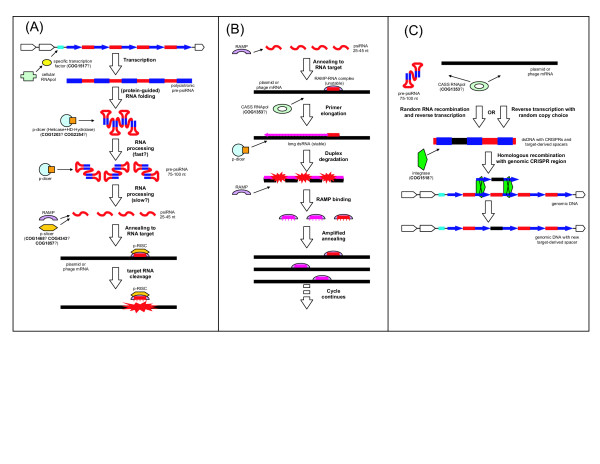
Background: All archaeal and many bacterial genomes contain Clustered Regularly Interspaced Short Palindrome Repeats (CRISPR) and variable arrays of the CRISPR-associated ( cas ) genes that have been previously implicated in a novel form of DNA repair on the basis of comparative analysis of their protein product sequences. However, the proximity of CRISPR and cas genes strongly suggests that they have related functions which is hard to reconcile with the repair hypothesis. Results: The protein sequences of the numerous cas gene products were classified into ~25 distinct protein families; several new functional and structural predictions are described. Comparative-genomic analysis of CRISPR and cas genes leads to the hypothesis that the CRISPR-Cas system (CASS) is a mechanism of defense against invading phages and plasmids that functions analogously to the eukaryotic RNA interference (RNAi) systems. Specific functional analogies are drawn between several components of CASS and proteins involved in eukaryotic RNAi, including the double-stranded RNA-specific helicase-nuclease (dicer), the endonuclease cleaving target mRNAs (slicer), and the RNA-dependent RNA polymerase. However, none of the CASS components is orthologous to its apparent eukaryotic functional counterpart. It is proposed that unique inserts of CRISPR, some of which are homologous to fragments of bacteriophage and plasmid genes, function as prokaryotic siRNAs (psiRNA), by base-pairing with the target mRNAs and promoting their degradation or translation shutdown. Specific hypothetical schemes are developed for the functioning of the predicted prokaryotic siRNA system and for the formation of new CRISPR units with unique inserts encoding psiRNA conferring immunity to the respective newly encountered phages or plasmids. The unique inserts in CRISPR show virtually no similarity even between closely related bacterial strains which suggests their rapid turnover, on evolutionary scale. Corollaries of this finding are that, even among closely related prokaryotes, the most commonly encountered phages and plasmids are different and/or that the dominant phages and plasmids turn over rapidly. Conclusion: We proposed previously that Cas proteins comprise a novel DNA repair system. The association of the cas genes with CRISPR and, especially, the presence, in CRISPR units, of unique inserts homologous to phage and plasmid genes make us abandon this hypothesis. It appears most likely that CASS is a prokaryotic system of defense against phages and plasmids that functions via the RNAi mechanism. The functioning of this system seems to involve integration of fragments of foreign genes into archaeal and bacterial chromosomes yielding heritable immunity to the respective agents. However, it appears that this inheritance is extremely unstable on the evolutionary scale such that the repertoires of unique psiRNAs are completely replaced even in closely related prokaryotes, presumably, in response to rapidly changing repertoires of dominant phages and plasmids. This article was reviewed by : Eric Bapteste, Patrick Forterre, and Martijn Huynen. Open peer review: Reviewed by Eric Bapteste, Patrick Forterre, and Martijn Huynen. For the full reviews, please go to the Reviewers' comments section.
Overview
The claims and statistics of this paper haven’t been checked yet.
Free: it reads the open-access text and checks the first 5 claims that cite a source we can check. Create a free account to check every claim.
Integrity signals
Registry
Cites
Statistics
Figures
Verification
Claims the paper makes
The claims and statistics of this paper haven’t been checked yet.
Free: it reads the open-access text and checks the first 5 claims that cite a source we can check. Create a free account to check every claim.
Claims other papers make about this one
Each is checked against this paper’s own text: does it say what the citing paper says it does?
The source backs part of the claim, not all of it — or backs it for a different population, condition or comparison.
In the citing paper
“Some are present in most systems, such as Cas1 and Cas2, which participate in adaptation [17]”
From CRISPR-Cas: Converting A Bacterial Defence Mechanism into A State-of-the-Art Genetic Manipulation Tool (2019) · cites this paper as [17]
Experimental — accuracy not yet measuredThe source backs part of the claim, not all of it — or backs it for a different population, condition or comparison.
In the citing paper
“Cas1 and Cas2 are the key proteins that mediate the adaptation step, and they are ubiquitous in CRISPR-Cas systems, irrespective of the type [17].”
From CRISPR-Cas: Converting A Bacterial Defence Mechanism into A State-of-the-Art Genetic Manipulation Tool (2019) · cites this paper as [17]
Experimental — accuracy not yet measuredThe cited source says what the claim attributes to it.
In the citing paper
“Cas9 proteins are predicted to contain RuvC and HNH motifs 15 , which possess autonomous ssDNA cleavage activity.”
From Harnessing the CRISPR/Cas9 system to disrupt latent HIV-1 provirus (2013) · cites this paper as [15]
The cited source says what the claim attributes to it.
In the citing paper
“The need to further comprehend the adaptation machineries for other types of Cas systems persists, although since Cas1 and Cas2 are widely present in nearly all CRISPR systems [17], the function of this complex in most CRISPR systems is thought to be similar to the well understood adaptation mechanisms of type I and type II systems.”
From CRISPR-Cas: Converting A Bacterial Defence Mechanism into A State-of-the-Art Genetic Manipulation Tool (2019) · cites this paper as [17]
Self-check
Percentages, sums and reported differences re-computed from the paper’s own numbers.
The self-check needs the paper’s full text.
Citations
Cites
Gapped BLAST and PSI-BLAST: a new generation of protein database search programs
Altschul, S. (1997) · Nucleic Acids Research · doi:10.1093/nar/25.17.3389 · Cited by 73,302
MUSCLE: multiple sequence alignment with high accuracy and high throughput
Edgar, R. C. (2004) · Nucleic Acids Research · doi:10.1093/nar/gkh340 · Cited by 44,662 · cited 2×
“To determine the repeat boundaries more precisely, sequences of all loci with short (20 nt) flanks added were collected and aligned using the MUSCLE program [61].”
Mfold web server for nucleic acid folding and hybridization prediction
Zuker, M. (2003) · Nucleic Acids Research · doi:10.1093/nar/gkg595 · Cited by 13,404 · cited 1×
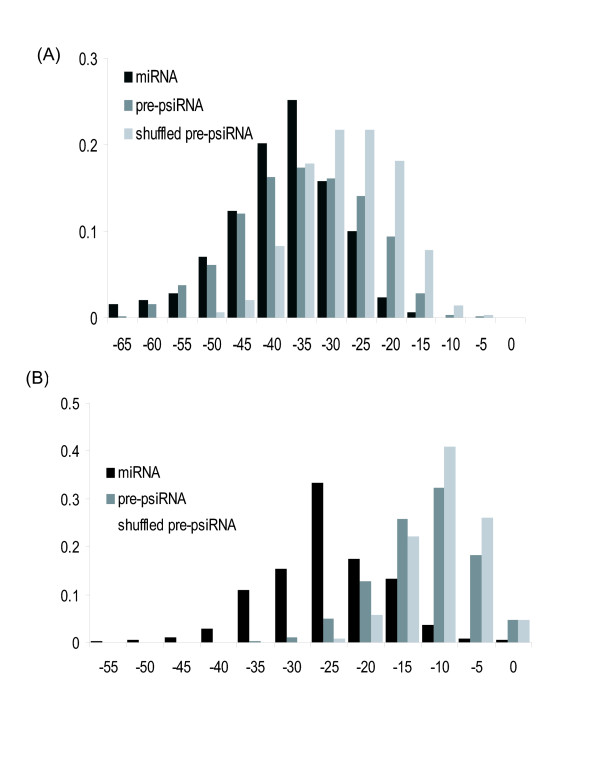
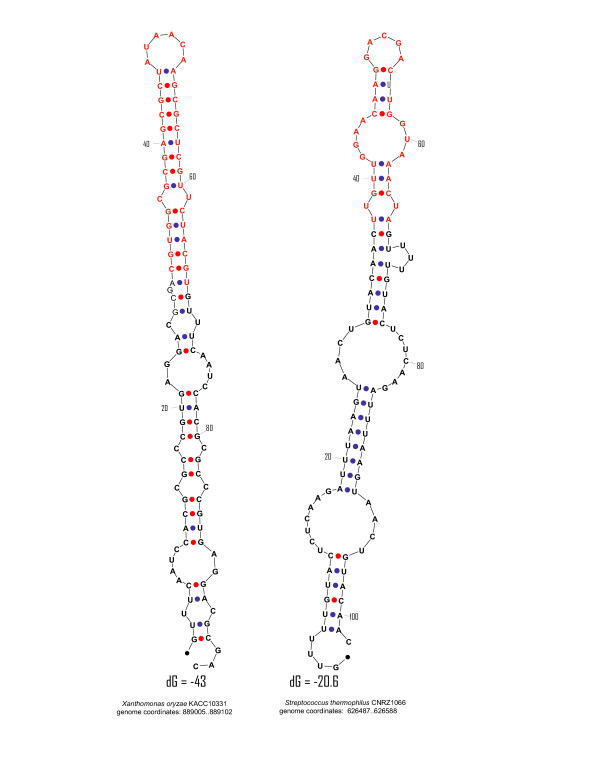
“Sequences of eukaryotic miRNAs precursors, CRISPRs, and randomly shuffled CRISPR sequences were computationally folded, and the free energy of the most stable secondary structure was calculated using a a dynamic programming algorithm that employs nearest neighbor parameters to evaluate free energy [71].”
The COG database: an updated version includes eukaryotes
Tatusov, R. L., Fedorova, N. D., Jackson, J. D., Jacobs, A. R., Kiryutin, B., Koonin, E. V., Krylov, D. M., Mazumder, R., Mekhedov, S. L., Nikolskaya, A. N., et al. (2003) · BMC Bioinformatics · doi:10.1186/1471-2105-4-41 · Cited by 4,430 · cited 1×
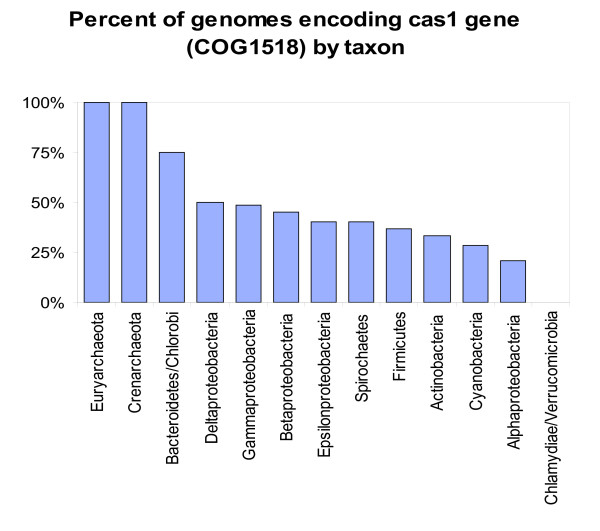
“COG1518, a universal marker of CASS In agreement with the previous observations [23], we found that Cas1 (COG1518 in the Clusters of Orthologous Group of proteins classification system [32]) is the best marker of the CRISPR-associated systems (CASS).”
Self-citationMathews, D. H., Sabina, J., Zuker, M., & Turner, D. H. (1999) · Journal of Molecular Biology · doi:10.1006/jmbi.1999.2700 · Cited by 3,795 · cited 1×
“Energy minimization was performed by dynamic programming method that finds the secondary structures with the minimum free energy by summing up the contributions from stacking, loop length, and other structural features, using improved thermodynamic parameters [72].”
Fitch, W. M., & Margoliash, E. (1967) · Science · doi:10.1126/science.155.3760.279 · Cited by 3,610 · cited 1×
“Phylogenetic analysis Distance trees were constructed from multiple protein sequence alignments after excluding poorly aligned positions, by using the least-square method as implemented in the FITCH program of the PHYLIP package [65,66].”
Hannon, G. J. (2002) · Nature · doi:10.1038/418244a · Cited by 3,538
BLAST: at the core of a powerful and diverse set of sequence analysis tools
McGinnis, S., & Madden, T. L. (2004) · Nucleic Acids Research · doi:10.1093/nar/gkh435 · Cited by 2,169 · cited 12×
“A PSI-BLAST search for COG1518 members in the completely sequenced prokaryotic genomes revealed the presence of at least one representative of this COG in 77 of the 177 analyzed genomes.”
InfluentialIntervening Sequences of Regularly Spaced Prokaryotic Repeats Derive from Foreign Genetic Elements
Mojica, F. J. M., D�ez-Villase�or, C., Garc�a-Mart�nez, J., & Soria, E. (2005) · Journal of Molecular Evolution · doi:10.1007/s00239-004-0046-3 · Cited by 2,042 · cited 8×
“Indeed, Mojica et al [27] mention the analogy between the CRISPR and eukaryotic RNA interference systems but propose no specific mechanisms for the action of the putative defense systems and, crucially, do not explore the connection between the putative psiRNA and the predicted activities of Cas proteins.”
InfluentialIdentification of genes that are associated with DNA repeats in prokaryotes
Jansen, R., Embden, J. D. A. V., Gaastra, W., & Schouls, L. M. (2002) · Molecular Microbiology · doi:10.1046/j.1365-2958.2002.02839.x · Cited by 1,802 · cited 3×
“Most of the genomes contain a single array of CRISPR in which the sequences of the repeats are (nearly) identical; some, however, possess multiple CRISPR cassettes that may have substantially different sequences [24,25].”
Influential
Research works printed but not linked: 1
- Adachi J Hasegawa M MOLPHY: Programs for Molecular Phylogenetics 1992 Tokyo, Institute of Statistical Mathematics
Cited by
Items 901–1,000 of 1,004
Kumar, A., Singh, P., Sharma, S., & Pandey, A. K. (2021) · Springer eBooks · doi:10.1007/978-981-16-2339-4_22 · Cited by 4
CRISPR/Cas-Based Genome Editing to Enhance Heat Stress Tolerance in Crop Plants
Mote, G., Jadhav, P. V., Magar, S., Thakur, P., Moharil, M. P., & Biradar, R. (2022) · Springer eBooks · doi:10.1007/978-981-19-3800-9_13 · Cited by 4
Weinberger, A. D., & Gilmore, M. S. (2015) · Cell · doi:10.1016/j.cell.2015.05.003 · Cited by 4
Golubov, A. (2016) · Elsevier eBooks · doi:10.1016/b978-0-12-803309-8.00006-9 · Cited by 4
From the Immune Response to the Genome Design; CRISPR-Cas9 System: Review
Çetintaş, V. B., Kotmakçı, M., & Kaymaz, B. T. (2017) · Turkiye Klinikleri Journal of Medical Sciences · doi:10.5336/medsci.2016-54153 · Cited by 4
Resilient Turns: Epistrophe, Incrementum, Metonymy
Abeles, O. M., Jack, J., & Singer, S. A. (2020) · Poroi · doi:10.13008/2151-2957.1300 · Cited by 4
The Azotobacter vinelandii Genome: An Update
Setúbal, J. C., & Almeida, N. F. (2015) · Wiley eBooks · doi:10.1002/9781119053095.ch22 · Cited by 4
Wang, X., Tipton, J. D., Emmett, M. R., & Marshall, A. G. (2010) · Rapid Communications in Mass Spectrometry · doi:10.1002/rcm.4655 · Cited by 4
Understanding antigen processing in chickens using genome editing technology
Wise, D. (2018) · Apollo (University of Cambridge) · doi:10.17863/cam.40666 · Cited by 4
Wiedenheft, B. (2006) · Montana State University ScholarWorks (Montana State University) · Cited by 4
Essoh, C. (2013) · theses.fr (ABES) · doi:10.70675/48436bcbz89dez46f9z85caz34e709017c89 · Cited by 4
Michoud, G. (2014) · theses.fr (ABES) · doi:10.70675/6a59199fz72c9z490fza442za61213584128 · Cited by 4
Esquerra-Ruvira, B., Baquedano, I., Ruiz, R., Fernandez, A., Montoliu, L., & Mojica, F. J. (2022) · doi:10.1101/2022.10.31.514646 · Cited by 4
CoCoNuTs are a diverse subclass of Type IV restriction systems predicted to target RNA
Bell, R. T., Sahakyan, H., Makarova, K. S., Wolf, Y. I., & Koonin, E. V. (2024) · eLife · doi:10.7554/elife.94800.3 · Cited by 3
Self-citationCRISPR-Mediated Genome Editing in Peanuts: Unlocking Trait Improvement for a Sustainable Future
Han, S. J., Chae, J., Kim, H. J., Kim, J. H., Chung, Y., Karthik, S., & Heo, J. B. (2025) · Plants · doi:10.3390/plants14213302 · Cited by 3
Emerging CRISPR Approaches for Countering Immune Evasion: Insight from Recent Studies
Abubakar, S., Abdulsalam, L., Fatty, L., Kanwal, R., Naeem, M., & Ahmad, I. (2026) · International Journal of Molecular Sciences · doi:10.3390/ijms27072930 · Cited by 3
Hu, C., & Ke, A. (2022) · Methods in enzymology on CD-ROM/Methods in enzymology · doi:10.1016/bs.mie.2022.03.059 · Cited by 3
Mistry, A., Tanga, S., & Maji, B. (2023) · Springer eBooks · doi:10.1007/978-981-19-8520-1_11 · Cited by 3
CRISPR-Based Approaches for Cancer Immunotherapy
Malla, R. R., & Middela, K. (2023) · Critical Reviews™ in Oncogenesis · doi:10.1615/critrevoncog.2023048723 · Cited by 3
CRISPR/Cas9 Genome Editing and Plant Stress Management
Chongtham, I., & Yadav, P. (2023) · Wiley eBooks · doi:10.1002/9781119858553.ch23 · Cited by 4
Golden Gate Cloning of Synthetic CRISPR RNA Spacer Sequences
Rust, S., & Randau, L. (2024) · Methods in molecular biology · doi:10.1007/978-1-0716-4220-7_16 · Cited by 3
CRISPR-assisted bioanalytical sensing of cytokines
Gaba, S., Deng, F., & Jain, U. (2025) · TrAC Trends in Analytical Chemistry · doi:10.1016/j.trac.2025.118318 · Cited by 3
CRISPR/Cas9 technology for targeted genome editing
Lomov, N. A., Borunova, V. V., & Rubtsov, M. A. (2015) · Biopolymers and Cell · doi:10.7124/bc.0008e7 · Cited by 3
A Long-Short Term Memory Network for Detecting CRISPR Arrays
Deshmukh, S. V., Heller, P., & Khuri, N. (2019) · International Conference on Machine Learning and Applications · doi:10.1109/icmla.2019.00114 · Cited by 3
Structure and Functional Role of Bacterial CRISPR System
Shashkova, A. V., Анатольевич, Г. А., & Smirnova, N. I. (2011) · Problems of Particularly Dangerous Infections · doi:10.21055/0370-1069-2011-2(108)-49-52 · Cited by 3
Using the CRISPR-Cas System to Solve Porcine Viral Infection–related Issues
Liao, F., Tang, Y., Tan, L., Yao, J. H., Zheng, C., & Wang, A. (2021) · The CRISPR Journal · doi:10.1089/crispr.2021.0091 · Cited by 3
Yim, A., Alberto, M., Herold, M. J., Woon, D. T. S., Ischia, J. J., & Bolton, D. M. (2024) · Société Internationale d’Urologie Journal · doi:10.3390/siuj5010006 · Cited by 3
CRISPR/CAS GENOME EDITING TO ENHANCE RESISTANCE LEADING TO ENHANCED PRODUCTIVITY IN CROPS
Marium, A., Tariq, S., Arshad, H., Khalid, M. S., Murtaza, B., Aslam, H., Gul, A., Naheed, N., Aziz, A., & Jabeen, A. (2025) · Kashf Journal of Multidisciplinary Research · doi:10.71146/kjmr298 · Cited by 3
Future Perspectives for Cancer Therapy Using the CRISPR Genome Editing Technology
Isakov, N. (2017) · Journal of Clinical & Cellular Immunology · doi:10.4172/2155-9899.1000e120 · Cited by 3
CRISPR/Cas-9 System: Magnificent Tool for Genome Editing
Vasdev, K. (2017) · International Journal of Biotechnology and Bioengineering · doi:10.25141/2475-3432-2017-9.0293 · Cited by 3
Domadenik, A. (2018) · Acta agriculturae Slovenica · doi:10.14720/aas.2018.112.1.3 · Cited by 3
Prostate-specific Membrane Antigen (PSMA) Aptamers for Prostate Cancer Imaging and Therapy
Shubham, S., Lin, L., Udofot, O., Krupse, S., & Giangrande, P. H. (2019) · Royal Society of Chemistry eBooks · doi:10.1039/9781788015714-00339 · Cited by 3
A brief introduction to microbiology and biotechnology
Rodrigues, A. G. (2020) · Elsevier eBooks · doi:10.1016/b978-0-444-64301-8.00001-9 · Cited by 3
Lemak, S., Serbanescu, M. A., Khusnutdinova, A. N., Ruszkowski, M., Beloglazova, N. G., Xu, X., Brown, G., Cui, H., Tan, K., Joachimiak, A., et al. (2021) · Journal of Biological Chemistry · doi:10.1016/j.jbc.2021.101251 · Cited by 3
Fehse, B., Walter, J., Jg, R., Marx-Stölting, L., Pichl, A., & Schickl, H. (2021) · Nomos Verlagsgesellschaft mbH & Co. KG eBooks · doi:10.5771/9783748927242-219 · Cited by 3
Tailoring Disease Resilience Crops through CRISPR/Cas
Yadav, M., Patel, P., Kumar, A., Modi, A. R., Babu, P. J., Zothanpuia, Z., Chhakchhuak, L., Kaushalendra, K., Singh, G., Mishra, A. K., et al. (2022) · Springer eBooks · doi:10.1007/978-3-030-87289-2_7 · Cited by 3
A Review on CRISPR/Cas9 as a Novel Technique for Cancer Therapy
Saleem, A. A., & Al-Kelaby, K. K. A. (2022) · Cellular Therapy and Transplantation · doi:10.18620/ctt-1866-8836-2022-11-3-4-10-24 · Cited by 3
Research progress of CRISPR/Cas systemsin nucleic acid detection
ZiYuan, Z. H. A. O., & JunPing, P. E. N. G. (2023) · Scientia Sinica Vitae · doi:10.1360/ssv-2022-0270 · Cited by 3
Roles of CRISPR in Regulation of Physiological Processes
Amitai, G., & Sorek, R. (2012) · Springer eBooks · doi:10.1007/978-3-642-34657-6_10 · Cited by 3
Small RNA-guided adaptive immunity
Plagens, A., & Randau, L. (2013) · Physics of Life Reviews · doi:10.1016/j.plrev.2013.11.015 · Cited by 3
MicroRNA expression in the vildagliptin-treated two- and three-dimensional HepG2 cells
Yamashita, Y., Asakura, M., Mitsugi, R., Fujii, H., Nagai, K., Atsuda, K., Itoh, T., & Fujiwara, R. (2016) · Drug Metabolism and Pharmacokinetics · doi:10.1016/j.dmpk.2016.02.004 · Cited by 3
Evolutionary Analysis of CRISPRs in Archaea: An Evidence for Horizontal Gene Transfer
Rajan, A. S. A. (2014) · Journal of Proteomics & Bioinformatics · doi:10.4172/jpb.s9-005 · Cited by 3
Analysis of CRISPR Pre-crRNA Cleavage
Garside, E. L., & MacMillan, A. M. (2015) · Methods in molecular biology · doi:10.1007/978-1-4939-2687-9_3 · Cited by 3
CRISPR-Cas system and coevolution of bacteria and phages
Tie-Min, L. I., & Du, B. X. (2011) · Hereditas (Beijing) · doi:10.3724/sp.j.1005.2011.00213 · Cited by 3
CRISPR Systems: RNA-Guided Defence Mechanisms in Bacteria and Archaea
Dhawan, M. K., Sharma, M. D., & Grewal, R. S. (2015) · Cited by 3
Effects of the Bio-accumulative Environmental Pollutants on the Gut Microbiota
Feng, P., Xiao, X., Zhou, T., & Li, X. (2020) · Springer eBooks · doi:10.1007/978-981-15-4759-1_4 · Cited by 3
Review on Recent Advancement of Therapeutic Interventions in Combating Multidrug Resistant Bacteria
Chakraborty, T., Ranjana, S., Sumana, C. D., Datta, L., & Sengupta, A. (2020) · International Journal of Life Science and Pharma Research · doi:10.22376/ijpbs/ijlpr.2020.10.5.l166-179 · Cited by 4
Sistema CRISPR/Cas9 e perspectivas de aplicações na cadeia produtiva animal
da Costa, C. P., Assumpção, M. E. O. D., & Goissis, M. D. (2021) · Revista Brasileira de Reprodução Animal · doi:10.21451/1809-3000.rbra2021.003 · Cited by 3
Type III CRISPR-Cas Systems and the Roles of CRISPR-Cas in Bacterial Virulence
Hatoum-Aslan, A., Palmer, K. L., Gilmore, M. S., & Marraffini, L. A. (2012) · Springer eBooks · doi:10.1007/978-3-662-45794-8_8 · Cited by 3
Phage-mediated biological control of Erwinia amylovora: The role of CRISPRs and exopolysaccharide
Yagubi, A. (2017) · Brock University Digital Repository (Brock University) · Cited by 4
Examining the Role of Horizontal Gene Transfer on the Evolution of CRISPR-Cas
O'Meara, D. M. (2018) · eScholarship (California Digital Library) · Cited by 3
Westra, E. R., & Levin, B. R. (2020) · bioRxiv (Cold Spring Harbor Laboratory) · doi:10.1101/2020.02.05.935965 · Cited by 3
CRISPR/Cas9-mediated Viral Interference in Plants
Tashkandi, M. (2018) · King Abdullah University of Science and Technology Repository (King Abdullah University of Science and Technology) · doi:10.25781/kaust-rdg1n · Cited by 3
Lignin: Possible Manipulations in Forages
Katoch, R. (2022) · Springer eBooks · doi:10.1007/978-981-16-5437-4_16 · Cited by 2
Applying the CRISPR/Cas9 for Treating Human and Animal Diseases – Comprehensive Review
Abdelnour, S. A., Salaka, A. S., Shakoori, A. M., Alsaffar, N., Hassanin, A. A., Abukhalil, M. H., & El-Hack, M. E. A. (2023) · Annals of Animal Science · doi:10.2478/aoas-2023-0009 · Cited by 2
RNA editing: an emerging frontier in cancer therapy – explorations, opportunities, and challenges
Chen, J., Sun, Q., Gong, N., Du, Z., Zhao, Z., Ding, D., Zhang, H., Yan, Q., 袁声贤, & Jiang, S. (2026) · International Journal of Surgery · doi:10.1097/js9.0000000000004547 · Cited by 2
Autobiography of a gut bacterium
Schmidt, F. (2022) · Science · doi:10.1126/science.adf4442 · Cited by 2
Ilyina, T. S. (2022) · Molecular Genetics Microbiology and Virology (Russian) · doi:10.17116/molgen20224003113 · Cited by 2
CRISPR- Cas9 Technology: Mechanism and Its Application in The Field of Entomology
Banerjee, S., Gupta, S., Raj, R., Kaushal, U., Kaur, G., & Gharde, S. K. (2023) · Journal Of Advanced Zoology · doi:10.17762/jaz.v44i5.2642 · Cited by 2
CRISPR/Cas9 for Genome Engineering: the Next Genomic Revolution
Zhang, Y., Yeo, W. S., Ng, K. H., & Yap, H. (2015) · Journal of Biochemistry and Molecular Biology Research · Cited by 2
Gabrielsen, P. (2017) · Proceedings of the National Academy of Sciences · doi:10.1073/pnas.1621406114 · Cited by 2
A biotecnologia envolvida no sistema CRISPR
Barbosa, K. L., & Cavalcante, G. S. S. (2019) · Revista de Ciências Médicas e Biológicas · doi:10.9771/cmbio.v18i1.25090 · Cited by 2
Use of CRISPR in Infection Control
Khan, A. U., Khan, I. S., & Faiyaz, Z. (2022) · Current Protein and Peptide Science · doi:10.2174/1389203723666220627152112 · Cited by 2
Introducción a los sistemas CRISPR y sus aplicaciones en levaduras
Mendoza-Téllez, B., Zamora-Bello, A., Rosas-Paz, M., Villarreal-Huerta, D., de la Fuente-Colmenares, I., Segal‐Kischinevzky, C., & González, J. (2022) · TIP Revista Especializada en Ciencias Químico-Biológicas · doi:10.22201/fesz.23958723e.2022.502 · Cited by 2
Gene Editing and Human iPSCs in Cardiovascular and Metabolic Diseases
Giallongo, S., Re, O. L., Resnick, I. B., Raffaele, M., & Vinciguerra, M. (2022) · Advances in experimental medicine and biology · doi:10.1007/978-981-19-5642-3_18 · Cited by 2
Matinyan, N., & Potter, C. J. (2022) · Wageningen Academic Publishers eBooks · doi:10.3920/978-90-8686-932-9_29 · Cited by 2
Nutritional Enhancement in Horticultural Crops by CRISPR/Cas9: Status and Future Prospects
Priti, P., Kamboj, D., Chaudhary, V., Baliyan, N., Rani, R., & Jangra, S. (2023) · Springer eBooks · doi:10.1007/978-3-031-15568-0_19 · Cited by 2
Deng, X., Wang, J., & Wang, Y. (2023) · Scientia Sinica Vitae · doi:10.1360/ssv-2022-0309 · Cited by 2
Assaf, B. T., Harper, C. G., & Phillips, J. A. (2023) · Elsevier eBooks · doi:10.1016/b978-0-12-821047-5.00034-8 · Cited by 2
Applications and Prospects of CRISPR-Cas system in Cyanobacteria
Jing, Y. (2023) · BIO Web of Conferences · doi:10.1051/bioconf/20236101009 · Cited by 2
Pan, T.-L., Cha, J., Wang, H., Zhang, J., Xiao, J., Shen, J., Zhou, M., Li, Y., JiQiong, M., Zhao, K., et al. (2025) · Veterinary Sciences · doi:10.3390/vetsci12030249 · Cited by 2
Ishlimova, D., & Urshev, Z. L. (2013) · Biotechnology & Biotechnological Equipment · doi:10.5504/bbeq.2013.0043 · Cited by 2
FitzPatrick, L. M., & McKay, T. R. (2015) · Current Stem Cell Reports · doi:10.1007/s40778-014-0009-6 · Cited by 2
Sequence Analysis of the Cas2 Gene in Riemerella anatipestifer
He, Y., Cheng, A. C., Wang, M. S., Zhu, D. K., Wang, X. J., & Zhang, X. (2013) · Advanced materials research · doi:10.4028/www.scientific.net/amr.647.570 · Cited by 2
RNA Networks in Prokaryotes I: CRISPRs and Riboswitches
Biggs, P. J., & Collins, L. J. (2011) · Advances in experimental medicine and biology · doi:10.1007/978-1-4614-0332-6_13 · Cited by 2
Bacteriophages in Industrial Food Processing: Incidence and Control in Industrial Fermentation
Labrie, S. J., & Moineau, S. (2014) · ASM Press eBooks · doi:10.1128/9781555816629.ch10 · Cited by 2
Fenner, M. W. (2007) · eScholarship (California Digital Library) · Cited by 2
Gallo, G., Augusto, G. S., Rangel, G., Zelanis, A., Mori, M. A., de Campos, C. B. L., & Würtele, M. (2015) · Acta Crystallographica Section F Structural Biology Communications · doi:10.1107/s2053230x15014776 · Cited by 2
A simple biosynthetic pathway for large product generation from small substrate amounts
Djordjević, M., & Djordjevic, M. (2012) · Physical Biology · doi:10.1088/1478-3975/9/5/056004 · Cited by 2
Hara, Y., Hayashi, K., Nakajima, T., Kagawa, S., Tazumi, A., Moore, J. E., & Matsuda, M. (2012) · Folia Microbiologica · doi:10.1007/s12223-012-0217-3 · Cited by 2
CRISPR Cas9 system for plant genome editing within the European Union
Eriksson, I. (2015) · Cited by 2
Identification of high-efficiency 3′GG gRNA motifs in indexed FASTA files with ngg2
Roberson, E. D. O. (2015) · PeerJ Computer Science · doi:10.7717/peerj-cs.33 · Cited by 2
New Method of Genome Editing Derived From CRISPR/Cas9
Rui, F. A. N. G., Chang, F., Sun, Z., Li, N., & Meng, Q. (2013) · ACTA AGRONOMICA SINICA · doi:10.3724/sp.j.1206.2013.00215 · Cited by 2
Krentz, N. A. J., & Lynn, F. C. (2016) · Springer eBooks · doi:10.1007/978-3-319-34148-4_8 · Cited by 2
Лаборатория генетики микроорганизмов, И. О. Г. И. Н. И. В. Р. А. Н., Зайчикова, М. В., Zakharevich, N. V., Лаборатория генетики микроорганизмов, И. О. Г. И. Н. И. В. Р. А. Н., Чекалина, М. С., Лаборатория генетики микроорганизмов, И. О. Г. И. Н. И. В. Р. А. Н., Даниленко, В. Н., Лаборатория генетики микроорганизмов, И. О. Г. И. Н. И. В. Р. А. Н., & Кафедра биоинформатики, Ф. Б. И. М. Ф. (2018) · Bulletin of Russian State Medical University · doi:10.24075/brsmu.2018.016/translation · Cited by 2
Lohrasbi, V., Shirmohammadlou, N., Jahanshahi, A., & Razavi, S. (2018) · Reviews in Medical Microbiology · doi:10.1097/mrm.0000000000000153 · Cited by 2
Genome editing technologies for value-added traits in plants
Kiran, U., Abdin, M. Z., & Kamaluddin, K. (2020) · Elsevier eBooks · doi:10.1016/b978-0-12-818632-9.00003-4 · Cited by 2
Genetic Manipulation/Modulation for Target Discovery and Validation
Lanneau, C., Kalouche, G., Cai, X., Lo-Presti, F., & Potting, C. (2019) · Methods and principles in medicinal chemistry · doi:10.1002/9783527818242.ch9 · Cited by 2
Selected Aspects Of The Crispr-Cas Biology And Applications
Wawszczak-Kasza, M., Filipiak, A., Majchrzak, M., Głuszek, S., & Adamus-Białek, W. (2021) · Postępy Mikrobiologii - Advancements of Microbiology · doi:10.21307/pm-2021.60.1.01 · Cited by 2
CRISPR – Bacterial immune system
Golubov, A. (2021) · Elsevier eBooks · doi:10.1016/b978-0-323-85679-9.00006-4 · Cited by 2
CRISPR-based Approaches for the Point-of-Care Diagnosis of COVID19
Uzay, İ. A., & Dinçer, P. (2022) · Acta Medica · doi:10.32552/2022.actamedica.626 · Cited by 2
Balgir, P. P., Rani, S., & Vishal (2018) · Springer eBooks · doi:10.1007/978-981-10-4702-2_2 · Cited by 2
CRISPR: Genome Editing and Beyond
Aiana, & Singh, K. (2022) · Springer eBooks · doi:10.1007/978-981-16-4345-3_12 · Cited by 2
CRISPR‐Cas Systems: Core Features and Common Mechanisms
Barrangou, R., Marraffini, L. A., & Sontheimer, E. J. (2022) · Wiley eBooks · doi:10.1002/9781683673798.ch1 · Cited by 2
CRISPR Technology - Recent Advances
Chen, Y. (2022) · IntechOpen eBooks · doi:10.5772/intechopen.102156 · Cited by 2
Site-Specific Recombination for Gene Locus-Directed Transgene Integration and Modification
Ahmed, H. M. M., & Wimmer, E. A. (2022) · CABI eBooks · doi:10.1079/9781800621176.0005 · Cited by 2
Maximizing the Efficacy of CRISPR/Cas Homology-Directed Repair Gene Targeting
Elton, T. S., Hossain, M. I., Carvajal‐Moreno, J., Wang, X., Skaggs, D. J., & Yalowich, J. C. (2022) · IntechOpen eBooks · doi:10.5772/intechopen.109051 · Cited by 2
Prospects for using CRISPR-Cas9 system in the treatment of human viral diseases
Зиганшин, А. М., Рамильевич, М. А., Абдурахманович, О. М., Мудров, В. А., & Khalitova, R. S. (2023) · Бюллетень Восточно-Сибирского научного центра Сибирского отделения Российской академии медицинских наук · doi:10.29413/abs.2023-8.1.5 · Cited by 2
CRISPR e edição genômica: técnica, bioética e controvérsias
Nohama, N., Simão-Silva, D. P., Vaz, R. S., da Cunha, T. R., Fischer, M. L., Gomy, I., de Carvalho, K. A. T., Paes, A. L. F. D., Reynoso, F. A. W., Borgmann, A. V., et al. (2023) · doi:10.22533/at.ed.846232605 · Cited by 2
Metadata
- Authors
- Makarova, K. S., Grishin, N. V., Shabalina, S. A., Wolf, Y. I., & Koonin, E. V.
- Affiliations
- National Institutes of Health (US)
- The University of Texas Southwestern Medical Center (US)
- Corresponding author
- Koonin, Eugene V
- Venue
- Biology Direct
- Published
- 2006-03-16
- Volume
- 1
- Issue
- 1
- Pages
- 7-7
- ISSN
- 1745-6150 (ISSN-L)
- PMC
- PMC1462988
- OpenAlex
- W2123965484
- Cited by
- 1,199
- References
- 77
- Citations by year
- 2026: 17 · 2025: 43 · 2024: 54 · 2023: 73 · 2022: 88 · 2021: 88 · 2020: 78 · 2019: 78 · 2018: 51 · 2017: 73 · 2016: 62 · 2015: 73 · 2014: 60 · 2013: 73 · 2012: 70
- FWCI
- 16.02
- Type
- journal article
- Language
- en
- Open access
- gold
- doi.org
- Licence
- cc-by
- Locations
- Biology Direct (publishedVersion, cc-by)
- PubMed Central (publishedVersion, cc-by)
- PubMed (publishedVersion)
- DOAJ (DOAJ: Directory of Open Access Journals) (submittedVersion)
- Funders
- U.S. Department of Health and Human Services
- National Institutes of Health
- U.S. National Library of Medicine
- Topics
- Life Sciences › Biochemistry, Genetics and Molecular Biology › Molecular Biology › CRISPR and Genetic Engineering
- Life Sciences › Biochemistry, Genetics and Molecular Biology › Genetics › Bacterial Genetics and Biotechnology
- Life Sciences › Immunology and Microbiology › Virology › Bacteriophages and microbial interactions
- Keywords
- CRISPR-Cas, RNA interference, CRISPR-associated proteins, phage defense, plasmid defense, Cas9, RNA-dependent RNA polymerase, comparative genomics
About these checks
Registry, retraction, Cites and statistics results are computed, not judged, with one exception: a printed reference that no index lists is read once by a model before it counts as a citation error. Claims are extracted by a model and kept only when their quote appears verbatim in the text; each cited source is then checked, with a model’s help, for whether it says what the claim relies on. Those verdicts can be wrong — read the claim’s quote and the cited source before relying on one.
Statistics and arithmetic are recomputed, not judged.
Confidence bands are shown only for fields calibrated on our annotated test set. None is calibrated yet, so no band is shown.
What counts as a claim ›How we measure confidence ›How we check this ›
Are you an author, or do you see a problem with this page? Request a review
Data sources
Bibliographic data: Semantic Scholar, OpenAlex, Crossref.
Contains information from the Semantic Scholar Academic Graph Datasets, made available under the ODC Attribution License (ODC-BY 1.0).
Semantic Scholar’s data is described in: Kinney, R., et al. (2023). The Semantic Scholar Open Data Platform. arXiv:2301.10140.
