

A putative RNA-interference-based immune system in prokaryotes: computational analysis of the predicted enzymatic machinery, functional analogies with eukaryotic RNAi, and hypothetical mechanisms of action
Open accessThe DOI matches its Crossref record; 75 of the 77 references it cites were found in a registry or an index.
Abstract
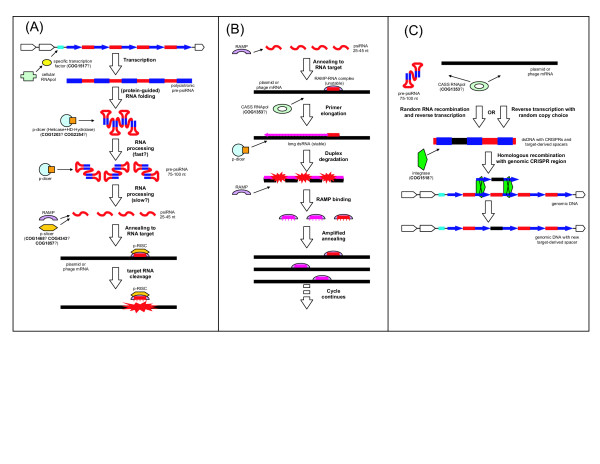
Background: All archaeal and many bacterial genomes contain Clustered Regularly Interspaced Short Palindrome Repeats (CRISPR) and variable arrays of the CRISPR-associated ( cas ) genes that have been previously implicated in a novel form of DNA repair on the basis of comparative analysis of their protein product sequences. However, the proximity of CRISPR and cas genes strongly suggests that they have related functions which is hard to reconcile with the repair hypothesis. Results: The protein sequences of the numerous cas gene products were classified into ~25 distinct protein families; several new functional and structural predictions are described. Comparative-genomic analysis of CRISPR and cas genes leads to the hypothesis that the CRISPR-Cas system (CASS) is a mechanism of defense against invading phages and plasmids that functions analogously to the eukaryotic RNA interference (RNAi) systems. Specific functional analogies are drawn between several components of CASS and proteins involved in eukaryotic RNAi, including the double-stranded RNA-specific helicase-nuclease (dicer), the endonuclease cleaving target mRNAs (slicer), and the RNA-dependent RNA polymerase. However, none of the CASS components is orthologous to its apparent eukaryotic functional counterpart. It is proposed that unique inserts of CRISPR, some of which are homologous to fragments of bacteriophage and plasmid genes, function as prokaryotic siRNAs (psiRNA), by base-pairing with the target mRNAs and promoting their degradation or translation shutdown. Specific hypothetical schemes are developed for the functioning of the predicted prokaryotic siRNA system and for the formation of new CRISPR units with unique inserts encoding psiRNA conferring immunity to the respective newly encountered phages or plasmids. The unique inserts in CRISPR show virtually no similarity even between closely related bacterial strains which suggests their rapid turnover, on evolutionary scale. Corollaries of this finding are that, even among closely related prokaryotes, the most commonly encountered phages and plasmids are different and/or that the dominant phages and plasmids turn over rapidly. Conclusion: We proposed previously that Cas proteins comprise a novel DNA repair system. The association of the cas genes with CRISPR and, especially, the presence, in CRISPR units, of unique inserts homologous to phage and plasmid genes make us abandon this hypothesis. It appears most likely that CASS is a prokaryotic system of defense against phages and plasmids that functions via the RNAi mechanism. The functioning of this system seems to involve integration of fragments of foreign genes into archaeal and bacterial chromosomes yielding heritable immunity to the respective agents. However, it appears that this inheritance is extremely unstable on the evolutionary scale such that the repertoires of unique psiRNAs are completely replaced even in closely related prokaryotes, presumably, in response to rapidly changing repertoires of dominant phages and plasmids. This article was reviewed by : Eric Bapteste, Patrick Forterre, and Martijn Huynen. Open peer review: Reviewed by Eric Bapteste, Patrick Forterre, and Martijn Huynen. For the full reviews, please go to the Reviewers' comments section.
Overview
The claims and statistics of this paper haven’t been checked yet.
Free: it reads the open-access text and checks the first 5 claims that cite a source we can check. Create a free account to check every claim.
Integrity signals
Registry
Cites
Statistics
Figures
Verification
Claims the paper makes
The claims and statistics of this paper haven’t been checked yet.
Free: it reads the open-access text and checks the first 5 claims that cite a source we can check. Create a free account to check every claim.
Claims other papers make about this one
Each is checked against this paper’s own text: does it say what the citing paper says it does?
The source backs part of the claim, not all of it — or backs it for a different population, condition or comparison.
In the citing paper
“Some are present in most systems, such as Cas1 and Cas2, which participate in adaptation [17]”
From CRISPR-Cas: Converting A Bacterial Defence Mechanism into A State-of-the-Art Genetic Manipulation Tool (2019) · cites this paper as [17]
Experimental — accuracy not yet measuredThe source backs part of the claim, not all of it — or backs it for a different population, condition or comparison.
In the citing paper
“Cas1 and Cas2 are the key proteins that mediate the adaptation step, and they are ubiquitous in CRISPR-Cas systems, irrespective of the type [17].”
From CRISPR-Cas: Converting A Bacterial Defence Mechanism into A State-of-the-Art Genetic Manipulation Tool (2019) · cites this paper as [17]
Experimental — accuracy not yet measuredThe cited source says what the claim attributes to it.
In the citing paper
“Cas9 proteins are predicted to contain RuvC and HNH motifs 15 , which possess autonomous ssDNA cleavage activity.”
From Harnessing the CRISPR/Cas9 system to disrupt latent HIV-1 provirus (2013) · cites this paper as [15]
The cited source says what the claim attributes to it.
In the citing paper
“The need to further comprehend the adaptation machineries for other types of Cas systems persists, although since Cas1 and Cas2 are widely present in nearly all CRISPR systems [17], the function of this complex in most CRISPR systems is thought to be similar to the well understood adaptation mechanisms of type I and type II systems.”
From CRISPR-Cas: Converting A Bacterial Defence Mechanism into A State-of-the-Art Genetic Manipulation Tool (2019) · cites this paper as [17]
Self-check
Percentages, sums and reported differences re-computed from the paper’s own numbers.
The self-check needs the paper’s full text.
Citations
Cites
Gapped BLAST and PSI-BLAST: a new generation of protein database search programs
Altschul, S. (1997) · Nucleic Acids Research · doi:10.1093/nar/25.17.3389 · Cited by 73,302
MUSCLE: multiple sequence alignment with high accuracy and high throughput
Edgar, R. C. (2004) · Nucleic Acids Research · doi:10.1093/nar/gkh340 · Cited by 44,662 · cited 2×
“To determine the repeat boundaries more precisely, sequences of all loci with short (20 nt) flanks added were collected and aligned using the MUSCLE program [61].”
Mfold web server for nucleic acid folding and hybridization prediction
Zuker, M. (2003) · Nucleic Acids Research · doi:10.1093/nar/gkg595 · Cited by 13,404 · cited 1×
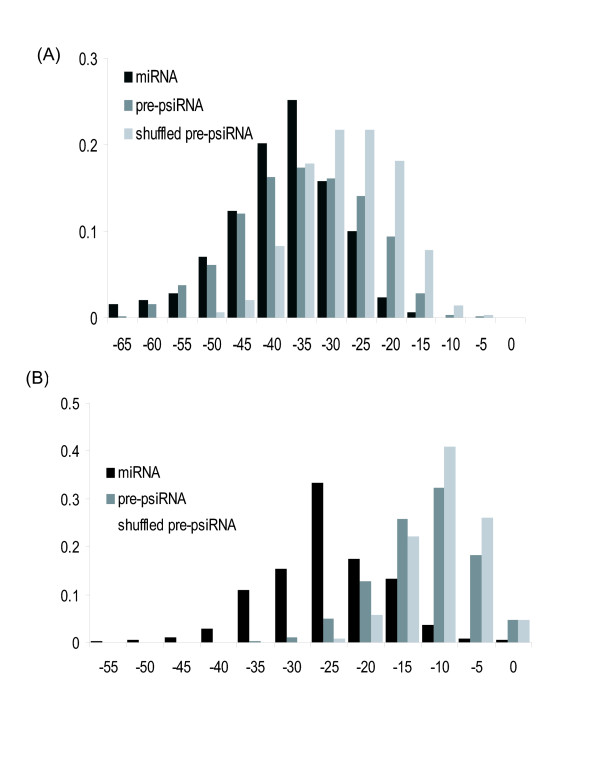
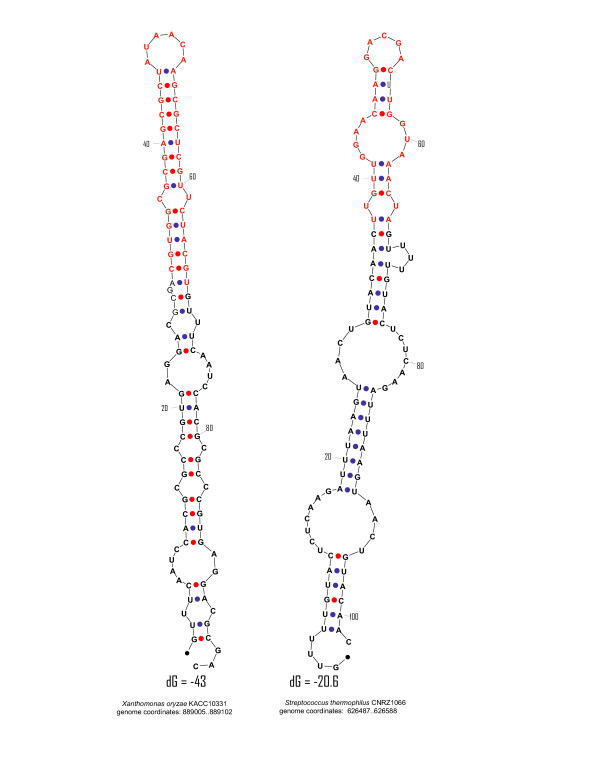
“Sequences of eukaryotic miRNAs precursors, CRISPRs, and randomly shuffled CRISPR sequences were computationally folded, and the free energy of the most stable secondary structure was calculated using a a dynamic programming algorithm that employs nearest neighbor parameters to evaluate free energy [71].”
The COG database: an updated version includes eukaryotes
Tatusov, R. L., Fedorova, N. D., Jackson, J. D., Jacobs, A. R., Kiryutin, B., Koonin, E. V., Krylov, D. M., Mazumder, R., Mekhedov, S. L., Nikolskaya, A. N., et al. (2003) · BMC Bioinformatics · doi:10.1186/1471-2105-4-41 · Cited by 4,430 · cited 1×
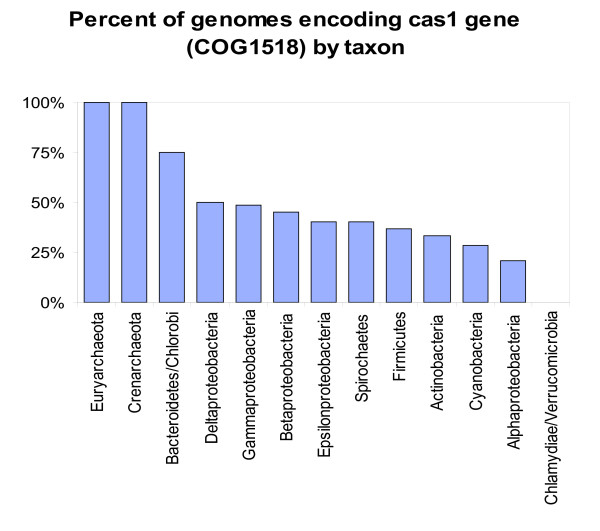
“COG1518, a universal marker of CASS In agreement with the previous observations [23], we found that Cas1 (COG1518 in the Clusters of Orthologous Group of proteins classification system [32]) is the best marker of the CRISPR-associated systems (CASS).”
Self-citationMathews, D. H., Sabina, J., Zuker, M., & Turner, D. H. (1999) · Journal of Molecular Biology · doi:10.1006/jmbi.1999.2700 · Cited by 3,795 · cited 1×
“Energy minimization was performed by dynamic programming method that finds the secondary structures with the minimum free energy by summing up the contributions from stacking, loop length, and other structural features, using improved thermodynamic parameters [72].”
Fitch, W. M., & Margoliash, E. (1967) · Science · doi:10.1126/science.155.3760.279 · Cited by 3,610 · cited 1×
“Phylogenetic analysis Distance trees were constructed from multiple protein sequence alignments after excluding poorly aligned positions, by using the least-square method as implemented in the FITCH program of the PHYLIP package [65,66].”
Hannon, G. J. (2002) · Nature · doi:10.1038/418244a · Cited by 3,538
BLAST: at the core of a powerful and diverse set of sequence analysis tools
McGinnis, S., & Madden, T. L. (2004) · Nucleic Acids Research · doi:10.1093/nar/gkh435 · Cited by 2,169 · cited 12×
“A PSI-BLAST search for COG1518 members in the completely sequenced prokaryotic genomes revealed the presence of at least one representative of this COG in 77 of the 177 analyzed genomes.”
InfluentialIntervening Sequences of Regularly Spaced Prokaryotic Repeats Derive from Foreign Genetic Elements
Mojica, F. J. M., D�ez-Villase�or, C., Garc�a-Mart�nez, J., & Soria, E. (2005) · Journal of Molecular Evolution · doi:10.1007/s00239-004-0046-3 · Cited by 2,042 · cited 8×
“Indeed, Mojica et al [27] mention the analogy between the CRISPR and eukaryotic RNA interference systems but propose no specific mechanisms for the action of the putative defense systems and, crucially, do not explore the connection between the putative psiRNA and the predicted activities of Cas proteins.”
InfluentialIdentification of genes that are associated with DNA repeats in prokaryotes
Jansen, R., Embden, J. D. A. V., Gaastra, W., & Schouls, L. M. (2002) · Molecular Microbiology · doi:10.1046/j.1365-2958.2002.02839.x · Cited by 1,802 · cited 3×
“Most of the genomes contain a single array of CRISPR in which the sequences of the repeats are (nearly) identical; some, however, possess multiple CRISPR cassettes that may have substantially different sequences [24,25].”
Influential
Research works printed but not linked: 1
- Adachi J Hasegawa M MOLPHY: Programs for Molecular Phylogenetics 1992 Tokyo, Institute of Statistical Mathematics
Cited by
Items 701–800 of 1,004
Yiğider, E., Taşpınar, M. S., & Ağar, G. (2023) · Planta · doi:10.1007/s00425-023-04199-9 · Cited by 15
Application of CRISPR/Cas9-based genome editing in ecotoxicology
Zhao, F., Ding, X., Liu, Z., Yan, X. F., Chen, Y., Jiang, Y., Chen, S., Wang, Y., Kang, T., Xie, C., et al. (2023) · Environmental Pollution · doi:10.1016/j.envpol.2023.122458 · Cited by 16
The structural biology of type III CRISPR-Cas systems
Li, X., Han, J., Yang, J., & Zhang, H. (2024) · Journal of Structural Biology · doi:10.1016/j.jsb.2024.108070 · Cited by 15
Chung, I.-Y., & Cho, Y. (2012) · Journal of Virology · doi:10.1128/jvi.01127-12 · Cited by 15
Expansion of the CRISPR/Cas Genome-Sculpting Toolbox: Innovations, Applications and Challenges
Batool, A., Malik, F. A., & Andrabi, K. I. (2020) · Molecular Diagnosis & Therapy · doi:10.1007/s40291-020-00500-8 · Cited by 15
CRISPR Diversity in E. coli Isolates from Australian Animals, Humans and Environmental Waters
Sheludchenko, M. S., Huygens, F., Stratton, H. M., & Hargreaves, M. H. (2015) · PLoS ONE · doi:10.1371/journal.pone.0124090 · Cited by 15
Gene essentiality, conservation index and co-evolution of genes in cyanobacteria
Tiruveedula, G. S. S., & Wangikar, P. P. (2017) · PLoS ONE · doi:10.1371/journal.pone.0178565 · Cited by 15
Diverse genetic contexts of HicA toxin domains propose a role in anti-phage defense
Gerdes, K. (2024) · mBio · doi:10.1128/mbio.03293-23 · Cited by 14
Applications and Prospects of CRISPR/Cas9 Technology in the Breeding of Major Tropical Crops
Zhou, L., Zeng, X., Yang, Y., Li, R., & Zhao, Z. (2024) · Plants · doi:10.3390/plants13233388 · Cited by 14
A review on the mechanism and potential diagnostic application of CRISPR/Cas13a system
Basit, A., Liu, A., Zheng, W., & Zhu, J. (2025) · Mammalian Genome · doi:10.1007/s00335-025-10143-x · Cited by 14
CRISPR/Cas9 Genome-Editing Technology and Potential Clinical Application in Gastric Cancer
Almeida, R. S., Wisnieski, F., Karia, B. T. R., & Smith, M. D. A. C. (2022) · Genes · doi:10.3390/genes13112029 · Cited by 14
Tailoring crops with superior product quality through genome editing: an update
Ravikiran, K. T., Thribhuvan, R., Sheoran, S., Kumar, S., Kushwaha, A. K., Vineeth, T. V., & Saini, M. (2023) · Planta · doi:10.1007/s00425-023-04112-4 · Cited by 14
Delivery of gene editing therapeutics
Kevadiya, B. D., Islam, F. S., Deol, P., Zaman, L. A., Mosselhy, D. A., Ashaduzzaman, M., Bajwa, N., Routhu, N. K., Singh, P. A., Dawre, S., et al. (2023) · Nanomedicine Nanotechnology Biology and Medicine · doi:10.1016/j.nano.2023.102711 · Cited by 14
The ring of confidence: a haloarchaeal CRISPR/Cas system
Maier, L., Stoll, B., Brendel, J., Fischer, S. M., Pfeiffer, F., Dyall‐Smith, M., & Marchfelder, A. (2013) · Biochemical Society Transactions · doi:10.1042/bst20120263 · Cited by 14
Cas9 regulated gene expression and pathogenicity in Riemerella anatipestifer
Wang, Y., Yin, X., Zhou, Z., Hu, S., Li, S., Liu, M., Wang, X., Xiao, Y., Shi, D., Bi, D., et al. (2019) · Microbial Pathogenesis · doi:10.1016/j.micpath.2019.103706 · Cited by 14
Zink, I. A., Fouqueau, T., Risa, G. T., Werner, F., Baum, B., Bläsi, U., & Schleper, C. (2020) · RNA Biology · doi:10.1080/15476286.2020.1813411 · Cited by 14
Prime editing: A potential treatment option for β‐thalassemia
Arif, T., Farooq, A., Ahmad, F. J., Akhtar, M., & Choudhery, M. S. (2022) · Cell Biology International · doi:10.1002/cbin.11972 · Cited by 14
Müller, J. S., Giunta, M., & Horváth, R. (2015) · Journal of Neuromuscular Diseases · doi:10.3233/jnd-150086 · Cited by 14
Talukdar, M., Das, D., Bora, C., Bora, T. C., Boruah, H. P. D., & Singh, A. K. (2016) · Gene · doi:10.1016/j.gene.2016.09.005 · Cited by 14
Recent developments in genome editing for potential use in plants
Townson, J. (2017) · Bioscience Horizons The International Journal of Student Research · doi:10.1093/biohorizons/hzx016 · Cited by 14
Charpentier, E., John van der, O. O. S. T., & White, M. F. (2012) · Springer eBooks · doi:10.1007/978-3-662-45794-8_5 · Cited by 14
Evolution and Classification of CRISPR-Cas Systems and Cas Protein Families
Makarova, K. S., & Koonin, E. V. (2012) · Springer eBooks · doi:10.1007/978-3-642-34657-6_3 · Cited by 14
Self-citationA Unifying Scenario on the Origin and Evolution of Cellular and Viral DomainsPreprint
BANDEA, C. I. (2009) · Nature Precedings · doi:10.1038/npre.2009.3888.1 · Cited by 14
Diverse Genetic Contexts of HicA Toxin Domains Propose a Role in Anti-Phage Defense
Gerdes, K. (2023) · doi:10.1101/2023.12.08.570793 · Cited by 14
The history, use, and challenges of therapeutic somatic cell and germline gene editing
Ryu, J., Adashi, E. Y., & Hennebold, J. D. (2023) · Fertility and Sterility · doi:10.1016/j.fertnstert.2023.02.040 · Cited by 13
Tackling hepatitis B Virus with CRISPR/Cas9: advances, challenges, and delivery strategies
Nair, D. M., Vajravelu, L. K., Thulukanam, J., Panneerselvam, V. P., Vimala, P. B., & Lathakumari, R. H. (2024) · Virus Genes · doi:10.1007/s11262-024-02105-3 · Cited by 13
Same Same but Different: New Structural Insight into CRISPR-Cas Complexes
Heidrich, N., & Vogel, J. (2013) · Molecular Cell · doi:10.1016/j.molcel.2013.09.023 · Cited by 13
The effects of length and sequence of gRNA on Cas13b and Cas13d activity in vitro and in vivo
Liu, Y., Jing, P., Zhou, Y., Zhang, J., Shi, J., Zhang, M., Yang, H., & Fei, J. (2023) · Biotechnology Journal · doi:10.1002/biot.202300002 · Cited by 13
“[3,4] Four Cas variants (Class 1–4) have been found.[1,5] After”
Ma, Y., Zhang, M., Gong, L., Liu, X., Long, G., Guo, H., Hull, J. J., Dewer, Y., He, M., & He, P. (2023) · Insect Science · doi:10.1111/1744-7917.13203 · Cited by 13
The CRISPR/Cas system as an antimicrobial resistance strategy in aquatic ecosystems
Gupta, S. S., Muneeb, K. H., Sones, C. L., Zhang, X., & Sivaraman, G. K. (2024) · Functional & Integrative Genomics · doi:10.1007/s10142-024-01362-7 · Cited by 13
Crystal structure and CRISPR RNA-binding site of the Cmr1 subunit of the Cmr interference complex
Sun, J., Jeon, J., Shin, M., Shin, H., Oh, B., & Kim, J. (2014) · Acta Crystallographica Section D Biological Crystallography · doi:10.1107/s1399004713030290 · Cited by 13
CRISPR: a journey of gene-editing based medicine
Golkar, Z. (2020) · Genes & Genomics · doi:10.1007/s13258-020-01002-x · Cited by 13
Das, D. N., Karuthadurai, T., & Gnanasekaran, S. (2020) · Elsevier eBooks · doi:10.1016/b978-0-12-820595-2.00010-2 · Cited by 13
Bröker, D., Arenskötter, M., & Steinbüchel, A. (2007) · Applied Microbiology and Biotechnology · doi:10.1007/s00253-007-1262-8 · Cited by 13
Ethical, legal and social issues in newborn screening in the United States.
Therrell, B. L. (2003) · PubMed · Cited by 13
Topuzlu, E., & Lawrence, C. M. (2016) · RNA Biology · doi:10.1080/15476286.2015.1130209 · Cited by 13
Understanding off-target effects through hybridization kinetics and thermodynamics
Nazipova, N. N., & Shabalina, S. A. (2019) · Cell Biology and Toxicology · doi:10.1007/s10565-019-09505-4 · Cited by 13
Self-citationCRISPR applications in microbial World: Assessing the opportunities and challenges
Kursheed, F., Naz, E., Mateen, S., & Kulsoom, U. (2024) · Gene · doi:10.1016/j.gene.2024.149075 · Cited by 12
Advances in genome editing and future prospects for Sorghum improvement: A review
Weldemichael, M. Y., Gebremedhn, H. M., & Teklu, T. H. (2024) · Plant Gene · doi:10.1016/j.plgene.2024.100464 · Cited by 12
Genome Editing with Crispr-Cas9 Systems: Basic Research and Clinical Applications
Meiliana, A., Dewi, N. M., & Wijaya, A. (2017) · The Indonesian Biomedical Journal · doi:10.18585/inabj.v9i1.272 · Cited by 12
Hug, J. J., & Müller, R. (2020) · Elsevier eBooks · doi:10.1016/b978-0-12-409547-2.14818-8 · Cited by 12
Exploiting DNA Endonucleases to Advance Mechanisms of DNA Repair
Thompson, M. K., Sobol, R. W., & Prakash, A. (2021) · Biology · doi:10.3390/biology10060530 · Cited by 12
Metal Dependence and Functional Diversity of Type I Cas3 Nucleases
Sun, S., He, Z., Jiang, P. Y., Baral, R., & Pandelia, M. (2022) · Biochemistry · doi:10.1021/acs.biochem.1c00779 · Cited by 12
Investigating the Genomic Background of CRISPR-Cas Genomes for CRISPR-Based Antimicrobials
Shim, H. (2022) · Evolutionary Bioinformatics · doi:10.1177/11769343221103887 · Cited by 12
Crisprs/Cas9 May Provide New Method for Drug Discovery and Development
Golkar, Z., & Rochelle, L. (2016) · Journal of Molecular Biomarkers & Diagnosis · doi:10.4172/2155-9929.1000280 · Cited by 12
Ka, D., Hong, S., Jeong, U., Jeong, M., Suh, N., Suh, J., & Bae, E. (2017) · Structural Dynamics · doi:10.1063/1.4984052 · Cited by 12
Shao, Y., Ma, L., Zhang, T., Xu, T., Ye, Y., & Liu, Y. (2019) · Current Topics in Medicinal Chemistry · doi:10.2174/1568026619666190828162217 · Cited by 12
CRISPR/Cas and CRISPR/Cmr Immune Systems of Archaea
Shah, S. A., Vestergaard, G., & Garrett, R. A. (2012) · Springer eBooks · doi:10.1007/978-3-7091-0218-3_9 · Cited by 12
Importance of genetic screens in precision oncology
Mulero‐Sánchez, A., Pogacar, Z., & Vecchione, L. (2019) · ESMO Open · doi:10.1136/esmoopen-2019-000505 · Cited by 12
Advancements in CRISPR-Based Therapies for Genetic Modulation in Neurodegenerative Disorders
Bhushan, B., Singh, K., Kumar, S., & Bhardwaj, A. (2024) · Current Gene Therapy · doi:10.2174/0115665232292246240426125504 · Cited by 11
Bilger, R., Migur, A., Wulf, A., Steglich, C., Urlaub, H., & Hess, W. R. (2024) · Cell Reports · doi:10.1016/j.celrep.2024.114485 · Cited by 11
The use of high-resolution melting analysis for Salmonella spp. CRISPR sequence genotyping
Bratčikov, M., & Mauricas, M. (2009) · Acta medica Lituanica · doi:10.2478/v10140-009-0014-8 · Cited by 11
CRISPR/Cas9 applications for improvement of soybeans, current scenarios, and future perspectives
Guan, J., ZHIMING, X., Rasheed, A., TIANCONG, W., Zhao, Q. I. A. N., Zhang, Z., Zhuo, Z., GARDINER, J. J., Ahmad, I., XIAOXUE, W., et al. (2022) · Notulae Botanicae Horti Agrobotanici Cluj-Napoca · doi:10.15835/nbha50212678 · Cited by 11
CRISPR/Cas‐Mediated Genome Editing in Plants
Kumar, A., Shumayla, & Upadhyay, S. K. (2023) · Wiley eBooks · doi:10.1002/9781394183913.ch1 · Cited by 11
Detailed Insight into Various Classes of the CRISPR/Cas System to Develop Future Crops
Thakur, N., Lakhani, H., & Tiwari, S. (2024) · Springer eBooks · doi:10.1007/978-981-99-8529-6_9 · Cited by 11
Mobile-CRISPRi as a powerful tool for modulating Vibrio gene expression
Geyman, L. J., Tanner, M. P., Rosario-Meléndez, N., Peters, J. M., Mandel, M. J., & van Kessel, J. C. (2024) · Applied and Environmental Microbiology · doi:10.1128/aem.00065-24 · Cited by 11
Chellapandi, P., & Ranjani, J. (2015) · Systems and Synthetic Biology · doi:10.1007/s11693-015-9176-8 · Cited by 11
Cas1 and Fen1 Display Equivalent Functions During Archaeal DNA Repair
Wörtz, J., Smith, V., Fallmann, J., König, S., Thuraisingam, T., Walther, P., Urlaub, H., Stadler, P. F., Allers, T., Hille, F., et al. (2022) · Frontiers in Microbiology · doi:10.3389/fmicb.2022.822304 · Cited by 11
Nanopores Reveal the Stoichiometry of Single Oligoadenylates Produced by Type III CRISPR-Cas
Navas, D. F., Steens, J. A., de Lannoy, C. V., Noordijk, B., Pfeffer, M., de Ridder, D., Staals, R. H. J., & Schmid, S. (2024) · ACS Nano · doi:10.1021/acsnano.3c11769 · Cited by 11
Gene-specific silencing induced by parallel complementary RNA in Pseudomonas aeruginosa
Liu, Y. S., Zhang, Y. Q., Yang, L., Yao, T.-J., & Xiao, C. L. (2009) · Biotechnology Letters · doi:10.1007/s10529-009-0046-x · Cited by 11
Artificial antisense RNAs silence lacZ in E. coli by decreasing target mRNA concentration
Stefan, A., Tonelli, A., Schwarz, F., & Hochkoeppler, A. (2008) · BMB Reports · doi:10.5483/bmbrep.2008.41.8.568 · Cited by 11
Alonso, C. A., de Toro, M., de la Cruz, F., & Torres, C. (2021) · Microorganisms · doi:10.3390/microorganisms9050999 · Cited by 11
Crystal structure of T hermobifida fusca C se1 reveals target DNA binding site
Tay, M., Liu, S., & Yuan, Y. A. (2014) · Protein Science · doi:10.1002/pro.2609 · Cited by 11
Wan, L., Bian, X., Evivie, S. E., & Huo, G. (2016) · Current Microbiology · doi:10.1007/s00284-016-1076-y · Cited by 11
El sistema de edición genética CRISPR/Cas y su uso como antimicrobiano específico
Chávez-Jacobo, V. M. (2018) · TIP Revista Especializada en Ciencias Químico-Biológicas · doi:10.22201/fesz.23958723e.2018.2.138 · Cited by 11
CRISPR-Cas9 Based Genome Engineering: Opportunities in Agri-Food-Nutrition and Healthcare
Rajendran, S. R. C. K., Yau, Y.-Y., Pandey, D., & Kumar, A. (2015) · OMICS: A Journal of Integrative Biology · doi:10.1089/omi.2015.0023 · Cited by 10
CRISPR-Cas system: a precise tool for plant genome editing
Saraswat, P., & Ranjan, R. (2021) · The Nucleus · doi:10.1007/s13237-021-00353-4 · Cited by 10
Applying CRISPR-Cas9 screens to dissect hematological malignancies
Iyer, D. N., Schimmer, A. D., & Chang, H. (2023) · Blood Advances · doi:10.1182/bloodadvances.2022008966 · Cited by 10
An archaeal Cas3 protein facilitates rapid recovery from DNA damage
Miezner, G., Turgeman-Grott, I., Zatopek, K. M., Gardner, A. F., Reshef, L., Choudhary, D. K., Alstetter, M., Allers, T., Marchfelder, A., & Gophna, U. (2023) · microLife · doi:10.1093/femsml/uqad007 · Cited by 10
Methods of genome engineering: a new era of molecular biology
Chugunova, A. A., Донцова, О. А., & Владимирович, С. П. (2016) · Biochemistry (Moscow) · doi:10.1134/s0006297916070038 · Cited by 10
Xia, K., Ma, J., & Liang, X. (2021) · Applied Microbiology and Biotechnology · doi:10.1007/s00253-021-11357-0 · Cited by 10
Muzyukina, P., Shkaruta, A., Guzman, N. M., Andréani, J., Borges, A. L., Bondy‐Denomy, J., Maikova, A., Semenova, E., Severinov, K., & Soutourina, O. A. (2023) · mSphere · doi:10.1128/msphere.00401-23 · Cited by 10
Yakimov, M. M., Crisafi, F., Messina, E., Smedile, F., Lopatina, A., Denaro, R., Pieper, D. H., Golyshin, P. N., & Giuliano, L. (2016) · Environmental Microbiology Reports · doi:10.1111/1758-2229.12424 · Cited by 10
Cas3 Nuclease–Helicase Activity Assays
Šinkūnas, T., Gasiūnas, G., & Šikšnys, V. (2015) · Methods in molecular biology · doi:10.1007/978-1-4939-2687-9_18 · Cited by 10
A hypothesis: CRISPR-Cas as a minimal cognitive system
Yakura, H. (2018) · Adaptive Behavior · doi:10.1177/1059712318821102 · Cited by 10
Lunge, A., Choudhary, E., Sharma, R., Gupta, R., & Agarwal, N. (2020) · Elsevier eBooks · doi:10.1016/b978-0-12-818140-9.00017-9 · Cited by 10
Newman, D. K., & Coleman, M. L. (2011) · Environmental Microbiology Reports · doi:10.1111/j.1758-2229.2010.00236.x · Cited by 11
Hypothesis for heritable, anti-viral immunity in crustaceans and insects
Flegel, T. W. (2009) · Biology Direct · doi:10.1186/1745-6150-4-36 · Cited by 10
Evolution and molecular mechanism of CRISPR/Cas9 systems
Bhushan, K. (2020) · Elsevier eBooks · doi:10.1016/b978-0-12-818140-9.00002-7 · Cited by 11
Nandre, R., Eom, H., Choi, Y. J., Zhang, Y., & Ro, H. (2025) · Fungal Biology Reviews · doi:10.1016/j.fbr.2025.100446 · Cited by 9
Sudhakar, S., Barkau, C. L., Chilamkurthy, R., Barber, H. M., Pater, A. A., Moran, S. D., Damha, M. J., Pradeepkumar, P. I., & Gagnon, K. T. (2023) · Journal of Biological Chemistry · doi:10.1016/j.jbc.2023.104700 · Cited by 10
Genetic transformation via plant tissue culture techniques: Current and future approaches
Purwantoro, A., Purwestri, Y. A., Lawrie, M. D., & Semiarti, E. (2022) · Elsevier eBooks · doi:10.1016/b978-0-323-90795-8.00001-1 · Cited by 9
Development of smart fruit crops by genome editing
Butiuc-Keul, A. L., Farkas, A., Carpa, R., DOBROTA, C. T., & Iordache, D. (2022) · TURKISH JOURNAL OF AGRICULTURE AND FORESTRY · doi:10.55730/1300-011x.2965 · Cited by 9
Lactic Acid Bacteria Defenses Against Phages
Barrangou, R., & Horvath, P. (2011) · Springer eBooks · doi:10.1007/978-0-387-92771-8_19 · Cited by 9
RNA-Guided CRISPR-Cas9 System for Removal of Microbial Pathogens
Bhattacharjee, G., Khambhati, K., & Singh, V. (2019) · Springer eBooks · doi:10.1007/978-981-13-8739-5_12 · Cited by 10
Will CRISPR-Cas9 Have Cards to Play Against Cancer? An Update on its Applications
Senthilathiban, D. P., Kuduvalli, S. S., & Anitha, T. S. (2021) · Molecular Biotechnology · doi:10.1007/s12033-020-00289-1 · Cited by 9
A Quest to the Therapeutic Arsenal: Novel Strategies to Combat Multidrug- resistant Bacteria
Ashwath, P., & Sannejal, A. D. (2021) · Current Gene Therapy · doi:10.2174/1566523221666210419084836 · Cited by 9
Immune lag is a major cost of prokaryotic adaptive immunity during viral outbreaks
Weissman, J., Alseth, E., Meaden, S., Westra, E. R., & Fuhrman, J. A. (2021) · Proceedings of the Royal Society B Biological Sciences · doi:10.1098/rspb.2021.1555 · Cited by 9
How CRISPR/Cas9 Gene Editing Is Revolutionizing T Cell Research
Johansen, K. H. (2022) · DNA and Cell Biology · doi:10.1089/dna.2021.0579 · Cited by 9
CRISPR genotyping methods: Tracing the evolution from spoligotyping to machine learning
Muzyukina, P., & Soutourina, O. A. (2023) · Biochimie · doi:10.1016/j.biochi.2023.07.017 · Cited by 9
Young, R. (2008) · Science · doi:10.1126/science.1162910 · Cited by 9
Guzina, J., Chen, W., Stankovic, T., Djordjevic, M., Zdobnov, E. M., & Djordjević, M. (2018) · Frontiers in Genetics · doi:10.3389/fgene.2018.00474 · Cited by 9
Ouagrham-Gormley, S. B., & Fye-Marnien, S. (2019) · Springer eBooks · doi:10.1007/978-3-030-03053-7_12 · Cited by 9
CRISPR-Cas9: A Precise Approach to Genome Engineering
Tanquero, J. S., Rodríguez-Pazmiño, Á. S., & Vispo, N. S. (2018) · Therapeutic Innovation & Regulatory Science · doi:10.1177/2168479018762798 · Cited by 9
CRISPR-Cas: From bacterial immunity to precision genome engineering
Abbas, S., Saeed, A., Bibi, M., Perveen, S., & Masood, N. (2025) · Gene Reports · doi:10.1016/j.genrep.2025.102296 · Cited by 8
Docherty, J. A. D., Cook, R., Kiu, R., Dyball, X., Brown, T. L., Kujawska, M., Smith, R.-L., Phillips, S., Watt, R., Telatin, A., et al. (2025) · Cell Reports · doi:10.1016/j.celrep.2025.116542 · Cited by 8
Bucheeri, S., Alcibahy, Y., Bucheeri, Y., Bucheeri, S., Alhermi, A., & Butler, A. E. (2025) · Cells · doi:10.3390/cells14221769 · Cited by 8
Delannoy, S., Beutin, L., & Fach, P. (2015) · Environmental Science and Pollution Research · doi:10.1007/s11356-015-5446-y · Cited by 8
Exploring the evolutionary links: Innate immunity in bacteria and eukaryotes
Abavisani, M., Faraji, S., Ansari, B., Ebadpour, N., Kesharwani, P., & Sahebkar, A. (2024) · Process Biochemistry · doi:10.1016/j.procbio.2024.08.023 · Cited by 8
Metadata
- Authors
- Makarova, K. S., Grishin, N. V., Shabalina, S. A., Wolf, Y. I., & Koonin, E. V.
- Affiliations
- National Institutes of Health (US)
- The University of Texas Southwestern Medical Center (US)
- Corresponding author
- Koonin, Eugene V
- Venue
- Biology Direct
- Published
- 2006-03-16
- Volume
- 1
- Issue
- 1
- Pages
- 7-7
- ISSN
- 1745-6150 (ISSN-L)
- PMC
- PMC1462988
- OpenAlex
- W2123965484
- Cited by
- 1,199
- References
- 77
- Citations by year
- 2026: 17 · 2025: 43 · 2024: 54 · 2023: 73 · 2022: 88 · 2021: 88 · 2020: 78 · 2019: 78 · 2018: 51 · 2017: 73 · 2016: 62 · 2015: 73 · 2014: 60 · 2013: 73 · 2012: 70
- FWCI
- 16.02
- Type
- journal article
- Language
- en
- Open access
- gold
- doi.org
- Licence
- cc-by
- Locations
- Biology Direct (publishedVersion, cc-by)
- PubMed Central (publishedVersion, cc-by)
- PubMed (publishedVersion)
- DOAJ (DOAJ: Directory of Open Access Journals) (submittedVersion)
- Funders
- U.S. Department of Health and Human Services
- National Institutes of Health
- U.S. National Library of Medicine
- Topics
- Life Sciences › Biochemistry, Genetics and Molecular Biology › Molecular Biology › CRISPR and Genetic Engineering
- Life Sciences › Biochemistry, Genetics and Molecular Biology › Genetics › Bacterial Genetics and Biotechnology
- Life Sciences › Immunology and Microbiology › Virology › Bacteriophages and microbial interactions
- Keywords
- CRISPR-Cas, RNA interference, CRISPR-associated proteins, phage defense, plasmid defense, Cas9, RNA-dependent RNA polymerase, comparative genomics
About these checks
Registry, retraction, Cites and statistics results are computed, not judged, with one exception: a printed reference that no index lists is read once by a model before it counts as a citation error. Claims are extracted by a model and kept only when their quote appears verbatim in the text; each cited source is then checked, with a model’s help, for whether it says what the claim relies on. Those verdicts can be wrong — read the claim’s quote and the cited source before relying on one.
Statistics and arithmetic are recomputed, not judged.
Confidence bands are shown only for fields calibrated on our annotated test set. None is calibrated yet, so no band is shown.
What counts as a claim ›How we measure confidence ›How we check this ›
Are you an author, or do you see a problem with this page? Request a review
Data sources
Bibliographic data: Semantic Scholar, OpenAlex, Crossref.
Contains information from the Semantic Scholar Academic Graph Datasets, made available under the ODC Attribution License (ODC-BY 1.0).
Semantic Scholar’s data is described in: Kinney, R., et al. (2023). The Semantic Scholar Open Data Platform. arXiv:2301.10140.
