

Influence of diet on the gut microbiome and implications for human health
Open accessThe DOI matches its Crossref record; 198 of the 198 references it cites were found in a registry or an index.
Abstract
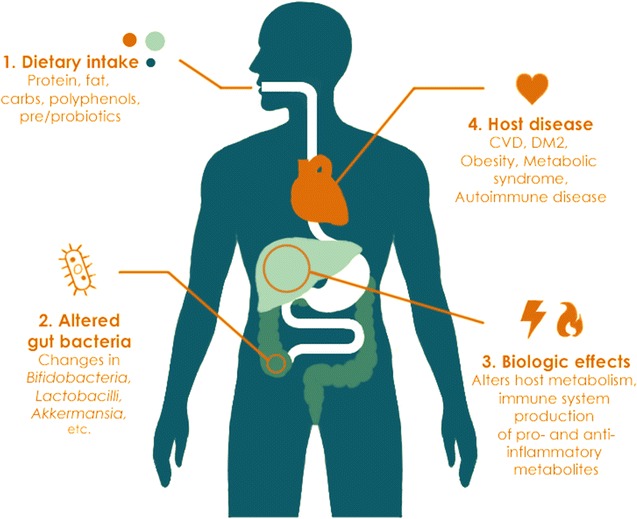
Recent studies have suggested that the intestinal microbiome plays an important role in modulating risk of several chronic diseases, including inflammatory bowel disease, obesity, type 2 diabetes, cardiovascular disease, and cancer. At the same time, it is now understood that diet plays a significant role in shaping the microbiome, with experiments showing that dietary alterations can induce large, temporary microbial shifts within 24 h. Given this association, there may be significant therapeutic utility in altering microbial composition through diet. This review systematically evaluates current data regarding the effects of several common dietary components on intestinal microbiota. We show that consumption of particular types of food produces predictable shifts in existing host bacterial genera. Furthermore, the identity of these bacteria affects host immune and metabolic parameters, with broad implications for human health. Familiarity with these associations will be of tremendous use to the practitioner as well as the patient.
Overview
The claims and statistics of this paper haven’t been checked yet.
Free: it reads the open-access text and checks the first 5 claims that cite a source we can check. Create a free account to check every claim.
Integrity signals
Registry
Cites
Statistics
Figures
Verification
Claims the paper makes
The claims and statistics of this paper haven’t been checked yet.
Free: it reads the open-access text and checks the first 5 claims that cite a source we can check. Create a free account to check every claim.
Claims other papers make about this one
Each is checked against this paper’s own text: does it say what the citing paper says it does?
The source backs part of the claim, not all of it — or backs it for a different population, condition or comparison.
In the citing paper
“Many bacteria associated with ICI response have known dietary associations, such that specific dietary patterns (e.g., plant-based versus western diet) are associated with increased or decreased relative abundances of these candidate taxa.131–135”
From Melanoma and microbiota: Current understanding and future directions (2024) · cites this paper as [134]
Experimental — accuracy not yet measuredThe cited source says what the claim attributes to it.
In the citing paper
“In addition, strategies that could mitigate the likelihood of LPS release into the blood and, thus, endotoxin-associated symptoms, include limiting the consumption of saturated fat [138], avoiding the consumption of non-steroidal anti-inflammatory drugs (NSAIDs) [139], and maintaining an adequate water intake [139].”
From International Society of Sports Nutrition Position Stand: nutritional considerations for single-stage ultra-marathon training and racing (2019) · cites this paper as [138]
The cited source says what the claim attributes to it.
In the citing paper
“Different sources of protein in a diet has been shown to influence different gut microbiota profiles (Singh et al., 2017).”
From The Microbiota-Gut-Brain Axis (2019) · cites this paper as Singh et al., 2017
In the citing paper
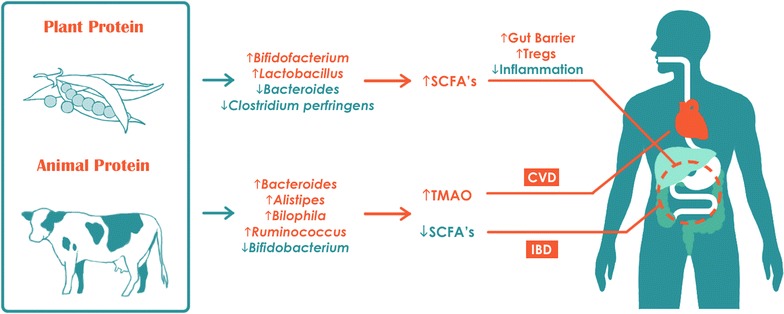
“In mice, animal-based protein increases potential detrimental gut microbes, e.g., Peptostreptococcaceae, Ruminococcaceae, Enterococcus, Streptococcus, Turicibacter, or Escherichia (92), and plant-based protein boosts the abundance of Bifidobacterium, Roseburia, and Lactobacillus and lowers the abundance of pathogens such as Bacteroides fragilis and Clostridium perfringens (37,42,80).”
From Diet and the Microbiota–Gut–Brain Axis: Sowing the Seeds of Good Mental Health (2021) · cites this paper as [80]
Self-check
Percentages, sums and reported differences re-computed from the paper’s own numbers.
The self-check needs the paper’s full text.
Citations
Cites
An obesity-associated gut microbiome with increased capacity for energy harvest
Turnbaugh, P. J., Ley, R. E., Mahowald, M. A., Magrini, V., Mardis, E. R., & Gordon, J. I. (2006) · Nature · doi:10.1038/nature05414 · Cited by 12,444 · cited 1×
“Furthermore, studies involving microbiota transplantation from obese to lean mice have shown that the obese phenotype is transmissible and may be promoted by microbiota that have increased capacity to harvest energy from the host diet [23].”
BackgroundDiet rapidly and reproducibly alters the human gut microbiome
David, L. A., Maurice, C. F., Carmody, R. N., Gootenberg, D. B., Button, J. E., Wolfe, B. E., Ling, A. V., Devlin, A. S., Varma, Y., Fischbach, M. A., et al. (2014) · Nature · doi:10.1038/nature12820 · Cited by 10,100
Human gut microbes associated with obesity
Ley, R. E., Turnbaugh, P. J., Klein, S., & Gordon, J. I. (2006) · Nature · doi:10.1038/4441022a · Cited by 8,785
Enterotypes of the human gut microbiome
MetaHIT Consortium (additional members), Arumugam, M., Raes, J., Pelletier, E., Le Paslier, D., Yamada, T., Mende, D. R., Fernandes, G. R., Tap, J., Bruls, T., et al. (2011) · Nature · doi:10.1038/nature09944 · Cited by 7,548 · cited 1×
“Recently, it has been shown that microbiota can effectively be subdivided into different enterotypes, each enriched by particular bacterial genera, but that all seem to share high functional uniformity [4].”
BackgroundChanges of Intestinal Functions in Liver Cirrhosis
Fukui, H., & Wiest, R. (2016) · Inflammatory Intestinal Diseases · doi:10.1159/000444436 · Cited by 6,808
A metagenome-wide association study of gut microbiota in type 2 diabetes
Qin, J., Li, Y., Cai, Z., Li, S., Zhu, J., Zhang, F., Liang, S., Zhang, W., Guan, Y., Shen, D., et al. (2012) · Nature · doi:10.1038/nature11450 · Cited by 6,762
Linking long-term dietary patterns with gut microbial enterotypes
Wu, G. D., Chen, J., Hoffmann, C., Bittinger, K., Chen, Y.-Y., Keilbaugh, S. A., Bewtra, M., Knights, D., Walters, W. A., Knight, R., et al. (2011) · Science · doi:10.1126/science.1208344 · Cited by 6,513 · cited 2×
“While the microbiome of a healthy individual is relatively stable, gut microbial dynamics can certainly be influenced by host lifestyle and dietary choices [26].”
BackgroundTrumbo, P., Schlicker, S., Yates, A. A., & Poos, M. (2002) · Journal of the American Dietetic Association · doi:10.1016/s0002-8223(02)90346-9 · Cited by 5,993
De Filippo, C., Cavalieri, D., Di Paola, M., Ramazzotti, M., Poullet, J. B., Massart, S., Collini, S., Pieraccini, G., & Lionetti, P. (2010) · Proceedings of the National Academy of Sciences · doi:10.1073/pnas.1005963107 · Cited by 5,579
Commensal microbe-derived butyrate induces the differentiation of colonic regulatory T cells
Furusawa, Y., Obata, Y., Fukuda, S., Endo, T. A., Nakato, G., Takahashi, D., Nakanishi, Y., Uetake, C., Kato, K., Kato, T., et al. (2013) · Nature · doi:10.1038/nature12721 · Cited by 5,549
Research works printed but not linked: 3
- Baron S Clostridium. Baron’s Med. microbiol 1996 4 Galveston University of Texas Medical Branch
- Todar K Pathogenic E coli. Online textbook of bacteriology 2007 Wisconsin University of Wisconsin-Madison Deparment of Bacteriology 11 30
- Patterson M. Streptococcus. In: Baron S, editor. Baron’s Med Microbiol. 4th ed. Galveston: University of Texas Medical Branch. 21413248
Cited by
Items 601–700 of 1,006
Ren, G., Zhang, J., Li, M., Tang, Z., Yang, Z., Cheng, G., & Wang, J. (2020) · Clinical Nutrition · doi:10.1016/j.clnu.2020.04.030 · Cited by 43
Panebianco, C., Latiano, T. P., & Pazienza, V. (2020) · Frontiers in Oncology · doi:10.3389/fonc.2020.00679 · Cited by 46
“The mechanisms through which these beneficial microbes influence host health include synthesis of vitamins and essential amino acids, production of metabolites such as short chain fatty acids derived from fibers’ fermentation, reinforcement of the intestinal mucosal barrier, defense against pathogen colonization, deto…”
BackgroundCabral, D. J., Wurster, J. I., Korry, B. J., Penumutchu, S., & Belenky, P. A. (2020) · mSystems · doi:10.1128/msystems.00317-20 · Cited by 48
“Previous studies have demonstrated that dietary changes induce 480 rapid shifts in gut microbiome composition [32,34,43,56,102-105].”
BackgroundMethamphetamine and Cannabis: A Tale of Two Drugs and their Effects on HIV, Brain, and Behavior
Saloner, R., Fields, J. A., Marcondes, M. C. G., Iudicello, J. E., von Känel, S., Cherner, M., Letendre, S. L., Kaul, M., & Grant, I. (2020) · Journal of Neuroimmune Pharmacology · doi:10.1007/s11481-020-09957-0 · Cited by 41
Noh, H., Jang, H., Kim, G.-C., Zouiouich, S., Cho, S.-Y., Kim, H.-J., Kim, J., Choe, J., Gunter, M. J., Ferrari, P., et al. (2021) · Nutrients · doi:10.3390/nu13020366 · Cited by 49
“The differences of relative abundance (% OTU) of the four major phyla and the Firmicutes-to-Bacteroidetes (F/B) ratio, which are the two major phyla in human gut microbiota and are known to be modulated by diet [9,11], by basic characteristics and lifestyle factors (sex; age group: <40 years vs.”
Mańkowska-Wierzbicka, D., Stelmach-Mardas, M., Gabryel, M., Tomczak, H., Skrzypczak-Zielińska, M., Zakerska-Banaszak, O., Sowińska, A., Mahadea, D., Baturo, A., Wolko, Ł., et al. (2020) · Biomedicines · doi:10.3390/biomedicines8080268 · Cited by 39
The Quest for a Universal Theory of Life: Searching for Life As We Don't Know It
Cleland, C. E. (2019) · Cambridge University Press eBooks · doi:10.1017/9781139046893 · Cited by 94
Host Factors Affect the Gut Microbiome More Significantly than Diet Shift
Lkhagva, E., Chung, H., Ahn, J., & Hong, S. (2021) · Microorganisms · doi:10.3390/microorganisms9122520 · Cited by 41
Li, X., Feng, X., & Li, X. (2022) · Aging · doi:10.18632/aging.203854 · Cited by 53
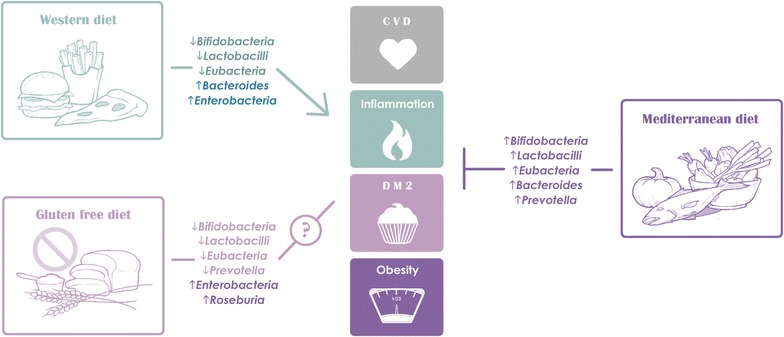
“Highfat and carbohydrate-rich foods in Western countries can decrease beneficial gut microbes and increase total anaerobic microflora and counts of Bacteroides and Enterobacteriales [54].”
BackgroundGalena, A. E., Chai, J., Zhang, J., Bednarzyk, M. S., Perez, D., Ochrietor, J. D., Jahan-Mihan, A., & Arikawa, A. Y. (2022) · PLoS ONE · doi:10.1371/journal.pone.0275275 · Cited by 44
Ratajczak, A. E., Festa, S., Aratari, A., Papi, C., Dobrowolska, A., & Krela‐Kaźmierczak, I. (2023) · Frontiers in Nutrition · doi:10.3389/fnut.2022.1088693 · Cited by 53
“MD stimulates Bifidobacteria, Lactobacilli, Eubacteria, Bacteroides, and Prevotella (49).”
BackgroundChoy, C. T., Chan, U. K., Siu, P. L. K., Zhou, J., Wong, C. H., Lee, Y. W., Chan, H. W., Tsui, J. C. C., Loo, S. K. F., & Tsui, S. K. (2023) · International Journal of Molecular Sciences · doi:10.3390/ijms24076571 · Cited by 41
Mruk-Mazurkiewicz, H., Kulaszyńska, M., Czarnecka, W., Podkówka, A., Ekstedt, N., Zawodny, P., Wierzbicka-Woś, A., Marlicz, W. M., Skupin, B., Stachowska, E., et al. (2024) · Nutrients · doi:10.3390/nu16111695 · Cited by 43
“Overall, plant-based diets, due to a large amount of fibers, predominantly were shown to increase the abundance of A. muciniphila [161,162].”
BackgroundRadiation-Induced Intestinal Injury: Molecular Mechanisms and Therapeutic Status
Gao, D., Zhang, H., Sun, W., Wang, H., & Wang, H. (2024) · DNA and Cell Biology · doi:10.1089/dna.2024.0105 · Cited by 46
“These microbes play crucial roles in nutrient absorption and immune regulation (Singh et al., 2017).”
Shabani, M., Ghoshehy, A., Mottaghi, A. M., Chegini, Z., Kerami, A., Shariati, A., & Moghadam, M. T. (2025) · Frontiers in Cellular and Infection Microbiology · doi:10.3389/fcimb.2025.1516010 · Cited by 58
Giollabhui, N. M., Slaney, C., Hemani, G., Foley, É. M., van der Most, P. J., Nolte, I. M., Snieder, H., Smith, G. D., Khandaker, G. M., & Hartman, C. A. (2025) · Translational Psychiatry · doi:10.1038/s41398-025-03372-w · Cited by 57
The food-associated resistome is shaped by processing and production environments
Quijada, N. M., Cobo-Díaz, J. F., Valentino, V., Barcenilla, C., Filippis, F. D., Cabrera‐Rubio, R., Carlino, N., Pinto, F., Dzieciol, M., Calvete‐Torre, I., et al. (2025) · Nature Microbiology · doi:10.1038/s41564-025-02059-8 · Cited by 49
“However, despite the predicted high impact that the microbial content of foods may have on the human microbiome and health 8 , the diversity of resistant bacteria and AMR genes (AMRGs) in food production systems remains poorly characterized, with the available studies focusing exclusively on…”
James, C. S., Fraser, K., Young, W., McNabb, W. C., & Roy, N. C. (2019) · Journal of Nutrition · doi:10.1093/jn/nxz302 · Cited by 47
“A similar study comparing the microbiota of children from Italy and Africa found that Italian children who consumed more protein in their dietary intake had higher concentrations of Alisipes and Bacteroides (86, 87).”
BackgroundEvidence for the Contribution of Gut Microbiota to Age-Related Anabolic Resistance
Watson, M. D., Cross, B. L., & Grosicki, G. J. (2021) · Nutrients · doi:10.3390/nu13020706 · Cited by 39
Figueroa, C., Echeverría, G., Villarreal, G. A., Martínez, X., Ferreccio, C., & Rigotti, A. (2021) · Frontiers in Nutrition · doi:10.3389/fnut.2021.680452 · Cited by 48
Szabó, Z., Koczka, V., Marosvölgyi, T., Szabó, É., Frank, E., Polyák, É., Fekete, K., Erdelyi, A., Verzár, Z., & Figler, M. (2021) · Nutrients · doi:10.3390/nu13082593 · Cited by 47
Potential Clinical Applications of the Postbiotic Butyrate in Human Skin Diseases
Coppola, S., Avagliano, C., Sacchi, A., Laneri, S., Calignano, A., Voto, L., Luzzetti, A., & Canani, R. B. (2022) · Molecules · doi:10.3390/molecules27061849 · Cited by 45
“Among environmental factors, diet plays a pivotal role in shaping the GM, which in turn it is dependent on food metabolites for its survival and metabolism [17].”
BackgroundRew, L., Harris, M. D., & Goldie, J. H. (2022) · Gastroenterology and hepatology from bed to bench. · doi:10.22037/ghfbb.v15i4.2600 · Cited by 73
Food allergy and gut microbiota
Liang, J., Zheng, B., Zhang, Y., & Zeng, H. (2023) · Trends in Food Science & Technology · doi:10.1016/j.tifs.2023.104141 · Cited by 39
Notarbartolo, V., Carta, M., Accomando, S., & Giuffrè, M. (2023) · Nutrients · doi:10.3390/nu15184014 · Cited by 55
“Diet is able to influence the composition of the microbiota via different mechanisms: by regulating intestinal barrier function, modifying the composition of the bacterial gut microbiota, and influencing gene expression, intestinal motility, and the immune system response [22,23].”
BackgroundTemporal variations in the gut microbial diversity in response to high-fat diet and exercise
Imdad, S., So, B., Jang, J.-H., Park, J.-H., Lee, S., Kim, J., & Kang, C. (2024) · Scientific Reports · doi:10.1038/s41598-024-52852-4 · Cited by 41
Gut Microbiota Dysbiosis in Children with Relapsing Idiopathic Nephrotic Syndrome
Tsuji, S., Suruda, C., Hashiyada, M., Kimata, T., Yamanouchi, S., Kitao, T., Kino, J., Akane, A., & Kaneko, K. (2018) · American Journal of Nephrology · doi:10.1159/000487557 · Cited by 43
The lung and gut microbiome: what has to be taken into consideration for cystic fibrosis?
Héry-Arnaud, G., Boutin, S., Cuthbertson, L., Elborn, J. S., & Tunney, M. M. (2018) · Journal of Cystic Fibrosis · doi:10.1016/j.jcf.2018.11.003 · Cited by 41
Nutritional Feeding Strategies in Pediatric Intestinal Failure
Olieman, J. F., & Kastelijn, W. (2020) · Nutrients · doi:10.3390/nu12010177 · Cited by 43
“The majority of the microorganisms reside within the distal parts of the gastrointestinal tract [96].”
BackgroundInfluentialZhou, X., Singh, S., Baumann, R., Barba, P. J., Landefeld, J., Casaccia, P., Sand, I. K., Xia, Z., Weiner, H. L., Chitnis, T., et al. (2020) · Multiple Sclerosis Journal · doi:10.1177/1352458520924594 · Cited by 42
Gut Microbiota in Bone Health and Diabetes
Knudsen, J. K., Leutscher, P., & Sørensen, S. (2021) · Current Osteoporosis Reports · doi:10.1007/s11914-020-00629-9 · Cited by 42
Jia, B., Park, D., Chun, B. H., Hahn, Y., & Jeon, C. O. (2021) · International Journal of Molecular Sciences · doi:10.3390/ijms22073652 · Cited by 41
“The majority of studies regarding the effects of diet on the human gut microbiota have focused on the microbial community structure based on 16S rDNA analysis [22,23].”
BackgroundBadri, D. V., Jackson, M. I., & Jewell, D. E. (2021) · Journal of Nutrition · doi:10.1093/jn/nxab308 · Cited by 51
Natural Products for the Prevention and Control of the COVID-19 Pandemic: Sustainable Bioresources
Singla, R. K., He, X., Chopra, H., Tsagkaris, C., Shen, L., Kamal, M. A., & Shen, B. (2021) · Frontiers in Pharmacology · doi:10.3389/fphar.2021.758159 · Cited by 45
Liu, X., Zou, L., Nie, C., Qin, Y., Tong, X., Wang, J., Yang, H., Xu, X., Jin, X., Xiao, L., et al. (2023) · Scientific Reports · doi:10.1038/s41598-023-31115-8 · Cited by 50
“…“westernized” diet 51,52 , indicating that long-lived individuals may genetically tend to prefer healthier diets with higher intakes of vegetables and lower intakes of chloride, sodium, and saturated fat food that caused higher Prevotella and lower Bacteroides abundances,respectively 53,54 .”
BackgroundPastor-Ibáñez, R., Blanco-Heredia, J., Etcheverry, M. F., Sánchez‐Palomino, S., Díez‐Fuertes, F., Casas, R. M., Navarrete-Muñoz, M. A., Castro‐Barquero, S., Lucero, C., Fernández, I., et al. (2021) · Nutrients · doi:10.3390/nu13041141 · Cited by 39
“Bifidobacterium has been associated in the literature with the metabolisation of complex carbohydrates, such as vegetal fibre, and is considered one of the main short chain fatty acid (SCFA) producing bacterial genera in the gut [40,41].”
BackgroundHolman, J. M., Hurd, M., Moses, P. L., Mawe, G. M., Zhang, T., Ishaq, S. L., & Li, Y. (2022) · The Journal of Nutritional Biochemistry · doi:10.1016/j.jnutbio.2022.109238 · Cited by 42
Links between Diet, Intestinal Anaerobes, Microbial Metabolites and Health
Duncan, S. H., Conti, E., Ricci, L., & Walker, A. W. (2023) · Biomedicines · doi:10.3390/biomedicines11051338 · Cited by 46
“In addition, human volunteer studies that involve precise control over dietary intake have provided further evidence of the impact of host diet on the species composition of the gut microbiota over relatively short time intervals [99].”
BackgroundBile acid profile associated with CSF and PET biomarkers in Alzheimer’s disease
Nabizadeh, F., Valizadeh, P., Fallahi, M. S., & Initiative, A. D. N. (2024) · Aging Clinical and Experimental Research · doi:10.1007/s40520-024-02729-3 · Cited by 41
“For instance, numerous factors, such as sleep patterns, medications, nutrition, and environmental influ - ences, impact the gut microbiota population, potentially contributing to the onset of AD [39 , 40].”
BackgroundAdjibade, M., Lemogne, C., Touvier, M., Herçberg, S., Galan, P., Assmann, K. E., Julia, C., & Kesse‐Guyot, E. (2019) · Journal of Nutrition · doi:10.1093/jn/nxz045 · Cited by 43
Nogay, N. H., & Nahikian-Nelms, M. (2021) · Nutritional Neuroscience · doi:10.1080/1028415x.2019.1630894 · Cited by 36
“in the diet increase the growth rates of Lactobacillus, Streptococcus, and Bifidobacterium [13].”
BackgroundInfluentialComparison of serum microbiome composition in bipolar and major depressive disorders
Rhee, S. J., Kim, H.-Y., Lee, Y., Lee, H. J., Park, C. H. K., Yang, J., Kim, Y.-K., Kym, S., & Ahn, Y. M. (2020) · Journal of Psychiatric Research · doi:10.1016/j.jpsychires.2020.01.004 · Cited by 43
Kim, Y., Leung, M. H. Y., Kwok, W., Fournié, G., Li, J., Lee, P. K. H., & Pfeiffer, D. U. (2020) · Animal Microbiome · doi:10.1186/s42523-020-0022-2 · Cited by 55
Gemikonakli, G., Mach, J., & Hilmer, S. N. (2020) · The Journals of Gerontology Series A · doi:10.1093/gerona/glaa047 · Cited by 44
Obesity and gut microbiome: review of potential role of probiotics
Schütz, F., Figueiredo‐Braga, M., Barata, P., & Martins, N. A. (2021) · Porto Biomedical Journal · doi:10.1097/j.pbj.0000000000000111 · Cited by 44
“In addition, butyrate, a type of SCFA, as the main source of energy for enterocytes, is also involved in the regulation of cell differentiation and proliferation and promotes the production of GLP-2, reducing intestinal permeability and increasing intestinal glucose transport,(14) ultimately reducing inflammation and…”
BackgroundThe immune‐supportive diet in allergy management: A narrative review and proposal
Vlieg‐Boerstra, B., Groetch, M., Vassilopoulou, Ε., Meyer, R. W., Laitinen, K., Swain, A., Durban, R., Aalst, O. B., Bottse, R., Grimshaw, K. E. C., et al. (2023) · Allergy · doi:10.1111/all.15687 · Cited by 46
Fülling, C., Lach, G., Bastiaanssen, T. F. S., Fouhy, F., O'Donovan, A. N., Ventura-Silva, A.-P., Stanton, C., Dinan, T. G., & Cryan, J. F. (2020) · Brain Behavior and Immunity · doi:10.1016/j.bbi.2020.02.013 · Cited by 36
Reciprocal interactions between gut microbiota and autophagy
Lapaquette, P., Bizeau, J.-B., Acar, N., & Bringer, M.-A. (2021) · World Journal of Gastroenterology · doi:10.3748/wjg.v27.i48.8283 · Cited by 39
Measuring food insecurity: An introduction to tools for human biologists and ecologists
Piperata, B. A., Scaggs, S. A., Dufour, D. L., & Adams, I. K. R. (2022) · American Journal of Human Biology · doi:10.1002/ajhb.23821 · Cited by 46
“Diet is one of the major factors influencing the bacterial composition of the gut (Singh et al., 2017).”
BackgroundGut microbial response to host metabolic phenotypes
Hou, J., Xiang, J., Li, D., Liu, X., & Pan, W. (2022) · Frontiers in Nutrition · doi:10.3389/fnut.2022.1019430 · Cited by 40
“Studies have reported that a large number of carbohydrate-activating enzymes are found in the human gut flora, such as Bacteroides thetaiotaomicron, which has 260 glycoside hydrolases in its genome (43, 44).”
BackgroundMeneguelli, T. S., Mishima, M. D. V., Hermsdorff, H. H. M., Martino, H. S. D., Bressan, J., & Tako, E. (2023) · Critical Reviews in Food Science and Nutrition · doi:10.1080/10408398.2023.2234025 · Cited by 41
“Also, SCFA can provide anti-inflammatory effects in the gut (R. K. Singh et al. 2017).”
Jacquier, E. F., van de Wouw, M., Nekrasov, E., Contractor, N., Kassis, A. N., & Marcu, D. E. (2024) · Foods · doi:10.3390/foods13050739 · Cited by 48
“Despite the growing body of evidence supporting the relationship of specific functional ingredients with gut health, the field itself is a complex one, as the gut holds a bidirectional relationship with other organs and systems in the body.”
BackgroundWang, Q., Huang, H., Yang, Y., Yang, X., Li, X., Zhong, W., Wen, B., He, F., & Li, J. (2024) · Frontiers in Nutrition · doi:10.3389/fnut.2024.1491821 · Cited by 65
Dietary and Nutritional Interventions for the Management of Endometriosis
Abulughod, N., Valakas, S., & El‐Assaad, F. (2024) · Nutrients · doi:10.3390/nu16233988 · Cited by 66
“Importantly, the microbiome can be modified by diet, with varied diets influencing the composition of the microbiome [74–76], and gut-microbiota modulating nutritional-derived therapies have potential to promote health [77].”
Diet-microbiome interactions in cancer
Abdeen, S. K., Mastandrea, I., Stinchcombe, N., Puschhof, J., & Elinav, E. (2025) · Cancer Cell · doi:10.1016/j.ccell.2025.03.013 · Cited by 36
Lim, S. H., Methé, B. A., Knoll, B. M., Morris, A., & Obaro, S. (2018) · Journal of Translational Medicine · doi:10.1186/s12967-018-1622-4 · Cited by 42
Marungruang, N., Kovalenko, T., Osadchenko, I., Voss, U., Huang, F., Burleigh, S., Ушакова, Г. А., Skibo, G. G., Nyman, M., Prykhodko, O., et al. (2018) · Nutritional Neuroscience · doi:10.1080/1028415x.2018.1536423 · Cited by 40
Yang, J., Moon, H. E., Park, H. W., McDowell, A., Shin, T.-S., Jee, Y., Kym, S., Paek, S. H., & Kim, Y. (2020) · Experimental & Molecular Medicine · doi:10.1038/s12276-020-00501-x · Cited by 40
Jayawardena, R., Swarnamali, H., Lanerolle, P., & Ranasinghe, P. D. (2020) · Diabetes & Metabolic Syndrome Clinical Research & Reviews · doi:10.1016/j.dsx.2020.09.033 · Cited by 52
Bickett, T. E., Knitz, M. W., Darragh, L. B., Bhatia, S., Court, B. V., Gadwa, J., Bhuvane, S., Piper, M., Nguyen, D., Tu, H., et al. (2021) · Clinical Cancer Research · doi:10.1158/1078-0432.ccr-21-0971 · Cited by 42
Tian, J., Bai, B., Gao, Z., Yang, Y., Wu, H., Wang, X., Wang, J., Li, M., & Tong, X. (2021) · Frontiers in Cellular and Infection Microbiology · doi:10.3389/fcimb.2021.740236 · Cited by 42
Diet and microbiome in the beginning of the sequence of gut inflammation
CEBALLOS, D. S., Hernández-Camba, A., & Ramos, L. (2021) · World Journal of Clinical Cases · doi:10.12998/wjcc.v9.i36.11122 · Cited by 38
Cuevas‐Sierra, A., Milagro, F. I., Guruceaga, E., Cuervo, M., Goñi, L., García‐Granero, M., Martínez, J. A., & Riezu‐Boj, J. I. (2022) · Clinical Nutrition · doi:10.1016/j.clnu.2022.06.008 · Cited by 43
Estrada, K. B., Sandoval-Cuellar, C. E., Rojas-Muñoz, Y. V., & Quintanilla‐Carvajal, M. X. (2023) · Food & Function · doi:10.1039/d2fo02723b · Cited by 44
Maes, M. H. J., Vasupanrajit, A., Jirakran, K., Klomkliew, P., Chanchaem, P., Tunvirachaisakul, C., & Payungporn, S. (2023) · Cells · doi:10.3390/cells12091240 · Cited by 45
“As microbiome compositum is heavily impacted by diet [83], it is likely that microbiome features of a human disorder are culture-specific and may not always correspond with the profiles established in other countries.”
ResultA relational framework for microbiome research with Indigenous communities
Bader, A. C., Zuylen, E. M. V., Handsley‐Davis, M., Alegado, R. ʻ., Benezra, A., Pollet, R. M., Ehau‐Taumaunu, H., Weyrich, L. S., & Anderson, M. Z. (2023) · Nature Microbiology · doi:10.1038/s41564-023-01471-2 · Cited by 37
Lou, Y. C., Rubin, B. E., Schoelmerich, M. C., DiMarco, K. S., Borges, A. L., Rovinsky, R., Song, L., Doudna, J. A., & Banfield, J. F. (2023) · Nature Communications · doi:10.1038/s41467-023-43279-y · Cited by 38
Hamamah, S., Iatcu, O. C., & Covașă, M. (2024) · Nutrients · doi:10.3390/nu16020269 · Cited by 43
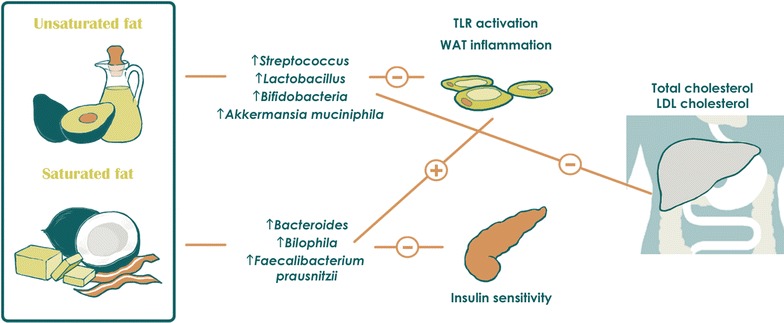
“Also, an increased intake of fats is also associated with an increase in the abundance of Rikenellaceae and Bacteroides and other anaerobic genera [79,222].”
BackgroundInfluentialKasperek, M. C., Galeas, A. V., Caetano‐Silva, M. E., Xie, Z., ULANOV, A. V., Frano, M. R. L., Devkota, S., Miller, M. J., & Allen, J. M. (2024) · Food Chemistry · doi:10.1016/j.foodchem.2024.139798 · Cited by 41
Dietary Patterns, Gut Microbiota and Sports Performance in Athletes: A Narrative Review
Chen, Y., Yang, K., Xu, M., Zhang, Y., Weng, X., Luo, J., Li, Y., & Mao, Y.-H. (2024) · Nutrients · doi:10.3390/nu16111634 · Cited by 53
“Although further research is needed to fully understand the intricate relationship between diet and the gut microbiota, numerous studies have highlighted the significant impact of different types of dietary patterns on the composition of the gut microbiota within 24 h [66,67].”
BackgroundNelson, B. N., & Friedman, J. E. (2024) · International Journal of Molecular Sciences · doi:10.3390/ijms25115951 · Cited by 43
“Maternal diet can also shift the community of commensals [114,116].”
BackgroundLiu, S. H., Yang, X. F., Liang, L., Song, B. B., Song, X. M., Yang, Y., & Alhoot, M. A. (2025) · Frontiers in Microbiology · doi:10.3389/fmicb.2025.1689597 · Cited by 43
Exploring the microbiota to better understand gastrointestinal cancers physiology
Panebianco, C., Potenza, A., Andriulli, A., & Pazienza, V. (2018) · Clinical Chemistry and Laboratory Medicine (CCLM) · doi:10.1515/cclm-2017-1163 · Cited by 46
Lyte, J. M. (2019) · Frontiers in Endocrinology · doi:10.3389/fendo.2018.00796 · Cited by 35
“Although it is well-recognized that host diet causes alterations in the microbiome (10), little attention has been given to how food-induced changes in host physiology may affect the microbiome.”
BackgroundMetabolic networks of the human gut microbiota
Selber‐Hnatiw, S., Sultana, T., Tse, W., Abdollahi, N., Abdullah, S., Rahbani, J. A., Alazar, D., Alrumhein, N. J., Aprikian, S., Arshad, R., et al. (2019) · Microbiology · doi:10.1099/mic.0.000853 · Cited by 41
The Unique Impact of COVID-19 on Human Gut Microbiome Research
Burchill, E., Lymberopoulos, E., Menozzi, E., Budhdeo, S., Mcilroy, J. R., Macnaughtan, J., & Sharma, N. (2021) · Frontiers in Medicine · doi:10.3389/fmed.2021.652464 · Cited by 41
“Beyond modulation of host immunity, gut bacteria can also impact metabolic health, with specific gut bacteria changes and gut dysbiosis observed in metabolic disorders such as obesity and diabetes, known to be diet associated (32).”
BackgroundThe Association between Healthy Diet and Burnout Symptoms among Finnish Municipal Employees
Penttinen, M. A., Virtanen, J., Laaksonen, M. M. L., Erkkola, M., Vepsäläinen, H., Kautiainen, H., & Korhonen, P. E. (2021) · Nutrients · doi:10.3390/nu13072393 · Cited by 50
Clark, J. S., Simpson, B. S., & Murphy, K. J. (2021) · British Journal Of Nutrition · doi:10.1017/s0007114521003251 · Cited by 38
“As research into the gut microbiota has developed, it has been widely accepted that an individual’s diet and lifestyle is one of the strongest modifiable factors that influences microbial richness, diversity and composition(40,41).”
BackgroundAxolotl: A resourceful vertebrate model for regeneration and beyond
Bölük, A., Yavuz, M., & Demircan, T. (2022) · Developmental Dynamics · doi:10.1002/dvdy.520 · Cited by 37
Godínez-Méndez, L. A., Gurrola‐Díaz, C. M., Zepeda-Nuño, J. S., Vega‐Magaña, N., López-Roa, R. I., Íñiguez-Gutiérrez, L., García‐López, P. M., Fafutis‐Morris, M., & Delgado‐Rizo, V. (2021) · Biomolecules · doi:10.3390/biom11111658 · Cited by 37
“On the other hand, intestinal health may be disrupted by a loss of proportion in the microbiota phyla [11].”
BackgroundDietary and microbiome evidence in multiple myeloma and other plasma cell disorders
Shah, U. A., Parikh, R., Castro, F., Bellone, M., & Lesokhin, A. M. (2023) · Leukemia · doi:10.1038/s41375-023-01874-4 · Cited by 38
“MICROBIOME Diet substantially alters the gut microbiome within short periods of time (even 24 h) and additionally may affect disease outcomes, providing a rationale for investigating this relationship in plasma cell disorders [15, 98].”
BackgroundLee, D. H., Seong, H., Chang, D., Gupta, V. K., Kim, J., Cheon, S., Kim, G., Sung, J., & Han, N. S. (2023) · npj Science of Food · doi:10.1038/s41538-023-00195-1 · Cited by 42
Environmentally dependent interactions shape patterns in gene content across natural microbiomes
Crocker, K., Lee, K. K., Chakraverti-Wuerthwein, M. S., Li, Z., Tikhonov, M., Mani, M., Gowda, K., & Kuehn, S. (2024) · Nature Microbiology · doi:10.1038/s41564-024-01752-4 · Cited by 41
Self-citationChoe, U., Li, Y., Gao, B., Yu, L., Wang, T. T. Y., Sun, J., Chen, P. C., Liu, J., & Yu, L. L. (2018) · Journal of Agricultural and Food Chemistry · doi:10.1021/acs.jafc.8b03343 · Cited by 37
Executive function and dietary intake in youth: A systematic review of the literature
Egbert, A. H., Creber, C., Loren, D. M., & Bohnert, A. M. (2019) · Appetite · doi:10.1016/j.appet.2019.04.013 · Cited by 40
Guo, G., Li, C., Xia, B., Jiang, S., Zhou, S., Men, X., & Ren, Y. (2020) · Fish & Shellfish Immunology · doi:10.1016/j.fsi.2020.03.003 · Cited by 40
Brown, R., Moore, L. J., Mani, A., Patel, S., & Salinas, I. (2021) · PLoS ONE · doi:10.1371/journal.pone.0243684 · Cited by 34
“Previous studies have determined that microbiome assemblies are influenced by a number of factors including environment, diet and host genetics [35, 36].”
BackgroundModification of Gut Microbiota in Inflammatory Arthritis: Highlights and Future Challenges
Horta‐Baas, G., Sandoval-Cabrera, A., & Romero‐Figueroa, M. D. S. (2021) · Current Rheumatology Reports · doi:10.1007/s11926-021-01031-9 · Cited by 35
Fabersani, E., Marquez, A., Russo, M., Ross, R., Torres, S., Fontana, C. A., Puglisi, E., Medina, R. B., & Gauffin-Cano, P. (2021) · Frontiers in Nutrition · doi:10.3389/fnut.2021.718564 · Cited by 39
Li, Q., Li, L., Li, Q., Wang, J., Nie, S., & Xie, M. (2022) · Foods · doi:10.3390/foods11081084 · Cited by 44
“Over the past few decades, the impact of intestinal microbiota on host intestinal health has increasingly attracted the attention of researchers [32].”
BackgroundPapadopoulos, P., Tsigalou, C., Valsamaki, P. N., Konstantinidis, T. G., Voidarou, C. C., & Bezirtzoglou, E. (2022) · Biomedicines · doi:10.3390/biomedicines10050948 · Cited by 43
“Gut dysbiosis is considered to be an impactful pro-inflammatory factor with a major effect on the aforementioned health conditions [50,51].”
BackgroundGenetic analysis of seed traits in Sorghum bicolor that affect the human gut microbiome
Yang, Q., Haute, M. J. S. V., Korth, N., Sattler, S. E., Toy, J. J., Rose, D. J., Schnable, J. C., & Benson, A. K. (2022) · Nature Communications · doi:10.1038/s41467-022-33419-1 · Cited by 41
Molecular Aspects of MAFLD—New Insights on Pathogenesis and Treatment
Filipović, B. F., Marjanovic-Haljilji, M., Mijac, D. D., Lukić, S., Kapor, S., Kapor, S., Starčević, A., Popovic, D. D., & Djoković, A. (2023) · Current Issues in Molecular Biology · doi:10.3390/cimb45110573 · Cited by 37
The Role of Phytochemicals and Gut Microbiome in Atherosclerosis in Preclinical Mouse Models
Centner, A. M., Khalili, L., Ukhanov, V., Kadyan, S., Nagpal, R., & Salazar, G. (2023) · Nutrients · doi:10.3390/nu15051212 · Cited by 35
“For example, trimethylamine N-oxide (TMAO) [11] and the short-chain fatty acid (SCFA) butyrate [6] are increased and decreased in CVD and T2D, respectively.”
BackgroundUltra-Processed Food and Gut Microbiota: Do Additives Affect Eubiosis? A Narrative Review
Bevilacqua, A., Speranza, B., Racioppo, A., Santillo, A., Albenzio, M., Derossi, A., Caporizzi, R., Francavilla, M., Racca, D., Flagella, Z., et al. (2024) · Nutrients · doi:10.3390/nu17010002 · Cited by 51
“Fiber-rich diets promote the growth of beneficial bacteria such as Bifidobacterium and Lactobacillus , which are crucial for carbohydrate fermentation and short-chain fatty acid (SCFA) production [11].”
Chaudhari, D. S., Dhotre, D. P., Agarwal, D. M., Gondhali, A., Nagarkar, A., Lad, V., Patil, U. K., Juvekar, S. K., Sinkar, V. P., & Shouche, Y. S. (2019) · Journal of Biosciences · doi:10.1007/s12038-019-9939-6 · Cited by 37
Emerging role of microbiota in immunomodulation and cancer immunotherapy
Singh, R. P., Bashir, H., & Kumar, R. (2020) · Seminars in Cancer Biology · doi:10.1016/j.semcancer.2020.06.008 · Cited by 35
Self-citationThe Influence of Feed and Drinking Water on Terrestrial Animal Research and Study Replicability
Kurtz, D. M., & Feeney, W. P. (2019) · ILAR Journal · doi:10.1093/ilar/ilaa012 · Cited by 37
A rather dry subject; investigating the study of arid-associated microbial communities
Osborne, P., Hall, L. J., Kronfeld‐Schor, N., Thybert, D., & Haerty, W. (2020) · Environmental Microbiome · doi:10.1186/s40793-020-00367-6 · Cited by 39
Xu, X., Lu, W.-J., Shi, J., Su, Y.-L., Liu, Y.-C., Wang, L., Xiao, C.-X., Chen, C., & Lu, Q. (2020) · Archives of Biochemistry and Biophysics · doi:10.1016/j.abb.2020.108720 · Cited by 33
Metadata
- Authors
- Singh, R. K., Chang, H.-W., Yan, D., Lee, K. M., Ucmak, D., Wong, K., Abrouk, M., Farahnik, B., Nakamura, M., Zhu, T. H., Bhutani, T., & Liao, W.
- Affiliations
- University of California, Los Angeles (US)
- University of California, San Francisco (US)
- University of California, Irvine (US)
- University of Vermont (US)
- University of Southern California (US)
- Corresponding author
- Liao, Wilson
- ORCID
- Venue
- Journal of Translational Medicine
- Published
- 2017-04-08
- Volume
- 15
- Issue
- 1
- Pages
- 73-73
- ISSN
- 1479-5876 (ISSN-L)
- PMC
- PMC5385025
- OpenAlex
- W2605052214
- Cited by
- 2,599
- References
- 198
- Citations by year
- 2026: 202 · 2025: 287 · 2024: 341 · 2023: 375 · 2022: 364 · 2021: 381 · 2020: 299 · 2019: 219 · 2018: 109 · 2017: 22
- FWCI
- 16.61
- Type
- journal article
- Language
- en
- Open access
- gold
- doi.org
- Licence
- cc-by
- creativecommons.org/licenses/by/4.0/ (tdm)
- creativecommons.org/licenses/by/4.0/ (vor)
- Locations
- Journal of Translational Medicine (publishedVersion, cc-by)
- PubMed Central (publishedVersion, cc-by)
- PubMed (publishedVersion)
- DOAJ (DOAJ: Directory of Open Access Journals) (submittedVersion)
- eScholarship (California Digital Library) (submittedVersion)
- eScholarship (California Digital Library) (submittedVersion, cc-by)
- Funders
- National Institute of Arthritis and Musculoskeletal and Skin Diseases (R01AR065174)
- National Institute of Allergy and Infectious Diseases (U01AI119125)
- Topics
- Life Sciences › Biochemistry, Genetics and Molecular Biology › Molecular Biology › Gut microbiota and health
- Health Sciences › Medicine › Public Health, Environmental and Occupational Health › Nutritional Studies and Diet
- Life Sciences › Agricultural and Biological Sciences › Food Science › Probiotics and Fermented Foods
- Keywords
- diet, gut microbiota, food components, chronic disease, inflammatory bowel disease, obesity, type 2 diabetes, cardiovascular disease, cancer, host immune function, host metabolism, microbiota-based therapy
- MeSH terms
- Gastrointestinal Microbiome, Diet, Health, Humans, Probiotics, Polyphenols
About these checks
Registry, retraction, Cites and statistics results are computed, not judged, with one exception: a printed reference that no index lists is read once by a model before it counts as a citation error. Claims are extracted by a model and kept only when their quote appears verbatim in the text; each cited source is then checked, with a model’s help, for whether it says what the claim relies on. Those verdicts can be wrong — read the claim’s quote and the cited source before relying on one.
Statistics and arithmetic are recomputed, not judged.
Confidence bands are shown only for fields calibrated on our annotated test set. None is calibrated yet, so no band is shown.
What counts as a claim ›How we measure confidence ›How we check this ›
Are you an author, or do you see a problem with this page? Request a review
Data sources
Bibliographic data: Semantic Scholar, OpenAlex, Crossref.
Contains information from the Semantic Scholar Academic Graph Datasets, made available under the ODC Attribution License (ODC-BY 1.0).
Semantic Scholar’s data is described in: Kinney, R., et al. (2023). The Semantic Scholar Open Data Platform. arXiv:2301.10140.
