

Influence of diet on the gut microbiome and implications for human health
Open accessThe DOI matches its Crossref record; 198 of the 198 references it cites were found in a registry or an index.
Abstract
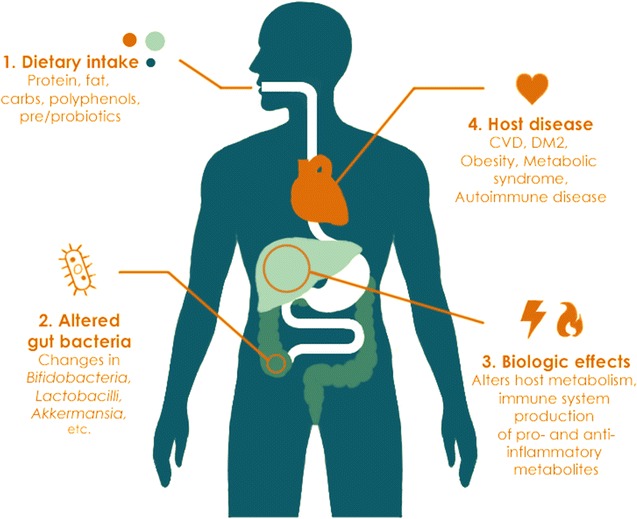
Recent studies have suggested that the intestinal microbiome plays an important role in modulating risk of several chronic diseases, including inflammatory bowel disease, obesity, type 2 diabetes, cardiovascular disease, and cancer. At the same time, it is now understood that diet plays a significant role in shaping the microbiome, with experiments showing that dietary alterations can induce large, temporary microbial shifts within 24 h. Given this association, there may be significant therapeutic utility in altering microbial composition through diet. This review systematically evaluates current data regarding the effects of several common dietary components on intestinal microbiota. We show that consumption of particular types of food produces predictable shifts in existing host bacterial genera. Furthermore, the identity of these bacteria affects host immune and metabolic parameters, with broad implications for human health. Familiarity with these associations will be of tremendous use to the practitioner as well as the patient.
Overview
The claims and statistics of this paper haven’t been checked yet.
Free: it reads the open-access text and checks the first 5 claims that cite a source we can check. Create a free account to check every claim.
Integrity signals
Registry
Cites
Statistics
Figures
Verification
Claims the paper makes
The claims and statistics of this paper haven’t been checked yet.
Free: it reads the open-access text and checks the first 5 claims that cite a source we can check. Create a free account to check every claim.
Claims other papers make about this one
Each is checked against this paper’s own text: does it say what the citing paper says it does?
The source backs part of the claim, not all of it — or backs it for a different population, condition or comparison.
In the citing paper
“Many bacteria associated with ICI response have known dietary associations, such that specific dietary patterns (e.g., plant-based versus western diet) are associated with increased or decreased relative abundances of these candidate taxa.131–135”
From Melanoma and microbiota: Current understanding and future directions (2024) · cites this paper as [134]
Experimental — accuracy not yet measuredThe cited source says what the claim attributes to it.
In the citing paper
“In addition, strategies that could mitigate the likelihood of LPS release into the blood and, thus, endotoxin-associated symptoms, include limiting the consumption of saturated fat [138], avoiding the consumption of non-steroidal anti-inflammatory drugs (NSAIDs) [139], and maintaining an adequate water intake [139].”
From International Society of Sports Nutrition Position Stand: nutritional considerations for single-stage ultra-marathon training and racing (2019) · cites this paper as [138]
The cited source says what the claim attributes to it.
In the citing paper
“Different sources of protein in a diet has been shown to influence different gut microbiota profiles (Singh et al., 2017).”
From The Microbiota-Gut-Brain Axis (2019) · cites this paper as Singh et al., 2017
In the citing paper
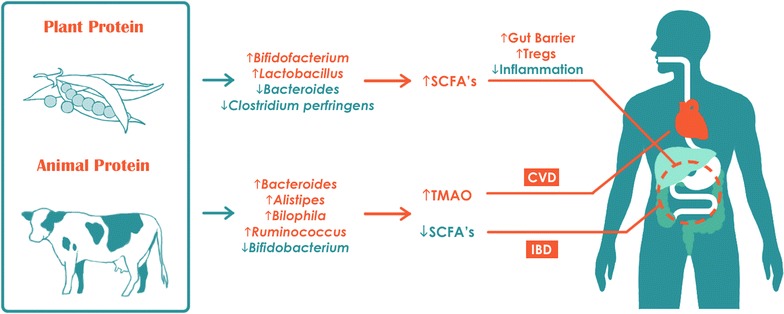
“In mice, animal-based protein increases potential detrimental gut microbes, e.g., Peptostreptococcaceae, Ruminococcaceae, Enterococcus, Streptococcus, Turicibacter, or Escherichia (92), and plant-based protein boosts the abundance of Bifidobacterium, Roseburia, and Lactobacillus and lowers the abundance of pathogens such as Bacteroides fragilis and Clostridium perfringens (37,42,80).”
From Diet and the Microbiota–Gut–Brain Axis: Sowing the Seeds of Good Mental Health (2021) · cites this paper as [80]
Self-check
Percentages, sums and reported differences re-computed from the paper’s own numbers.
The self-check needs the paper’s full text.
Citations
Cites
An obesity-associated gut microbiome with increased capacity for energy harvest
Turnbaugh, P. J., Ley, R. E., Mahowald, M. A., Magrini, V., Mardis, E. R., & Gordon, J. I. (2006) · Nature · doi:10.1038/nature05414 · Cited by 12,444 · cited 1×
“Furthermore, studies involving microbiota transplantation from obese to lean mice have shown that the obese phenotype is transmissible and may be promoted by microbiota that have increased capacity to harvest energy from the host diet [23].”
BackgroundDiet rapidly and reproducibly alters the human gut microbiome
David, L. A., Maurice, C. F., Carmody, R. N., Gootenberg, D. B., Button, J. E., Wolfe, B. E., Ling, A. V., Devlin, A. S., Varma, Y., Fischbach, M. A., et al. (2014) · Nature · doi:10.1038/nature12820 · Cited by 10,100
Human gut microbes associated with obesity
Ley, R. E., Turnbaugh, P. J., Klein, S., & Gordon, J. I. (2006) · Nature · doi:10.1038/4441022a · Cited by 8,785
Enterotypes of the human gut microbiome
MetaHIT Consortium (additional members), Arumugam, M., Raes, J., Pelletier, E., Le Paslier, D., Yamada, T., Mende, D. R., Fernandes, G. R., Tap, J., Bruls, T., et al. (2011) · Nature · doi:10.1038/nature09944 · Cited by 7,548 · cited 1×
“Recently, it has been shown that microbiota can effectively be subdivided into different enterotypes, each enriched by particular bacterial genera, but that all seem to share high functional uniformity [4].”
BackgroundChanges of Intestinal Functions in Liver Cirrhosis
Fukui, H., & Wiest, R. (2016) · Inflammatory Intestinal Diseases · doi:10.1159/000444436 · Cited by 6,808
A metagenome-wide association study of gut microbiota in type 2 diabetes
Qin, J., Li, Y., Cai, Z., Li, S., Zhu, J., Zhang, F., Liang, S., Zhang, W., Guan, Y., Shen, D., et al. (2012) · Nature · doi:10.1038/nature11450 · Cited by 6,762
Linking long-term dietary patterns with gut microbial enterotypes
Wu, G. D., Chen, J., Hoffmann, C., Bittinger, K., Chen, Y.-Y., Keilbaugh, S. A., Bewtra, M., Knights, D., Walters, W. A., Knight, R., et al. (2011) · Science · doi:10.1126/science.1208344 · Cited by 6,513 · cited 2×
“While the microbiome of a healthy individual is relatively stable, gut microbial dynamics can certainly be influenced by host lifestyle and dietary choices [26].”
BackgroundTrumbo, P., Schlicker, S., Yates, A. A., & Poos, M. (2002) · Journal of the American Dietetic Association · doi:10.1016/s0002-8223(02)90346-9 · Cited by 5,993
De Filippo, C., Cavalieri, D., Di Paola, M., Ramazzotti, M., Poullet, J. B., Massart, S., Collini, S., Pieraccini, G., & Lionetti, P. (2010) · Proceedings of the National Academy of Sciences · doi:10.1073/pnas.1005963107 · Cited by 5,579
Commensal microbe-derived butyrate induces the differentiation of colonic regulatory T cells
Furusawa, Y., Obata, Y., Fukuda, S., Endo, T. A., Nakato, G., Takahashi, D., Nakanishi, Y., Uetake, C., Kato, K., Kato, T., et al. (2013) · Nature · doi:10.1038/nature12721 · Cited by 5,549
Research works printed but not linked: 3
- Baron S Clostridium. Baron’s Med. microbiol 1996 4 Galveston University of Texas Medical Branch
- Todar K Pathogenic E coli. Online textbook of bacteriology 2007 Wisconsin University of Wisconsin-Madison Deparment of Bacteriology 11 30
- Patterson M. Streptococcus. In: Baron S, editor. Baron’s Med Microbiol. 4th ed. Galveston: University of Texas Medical Branch. 21413248
Cited by
Items 401–500 of 1,006
Gut microbiome changes induced by a diet rich in fruits and vegetables
van der Merwe, M. (2020) · International Journal of Food Sciences and Nutrition · doi:10.1080/09637486.2020.1852537 · Cited by 59
“The genus Prevotella is expanded with complex carbohydrate intake as these microbes contain specific enzymes that are capable of degrading plant fibres (Singh et al. 2017).”
BackgroundNutrition and Rheumatoid Arthritis in the ‘Omics’ Era
Cassotta, M., Forbes-Hernández, T. Y., Cianciosi, D., Elexpuru-Zabaleta, M., Cano, S. S., Azpíroz, I. D., Bullón, B., Regolo, L., Álvarez-Suárez, J. M., Giampieri, F., et al. (2021) · Nutrients · doi:10.3390/nu13030763 · Cited by 66
Borry, M., Hübner, A., Rohrlach, A. B., & Warinner, C. (2021) · PeerJ · doi:10.7717/peerj.11845 · Cited by 66
Zhang, M., Hu, R., Huang, Y., Zhou, F., Li, F., Liu, Z., Geng, Y., Dong, H., Ma, W., Song, K., et al. (2022) · Frontiers in Endocrinology · doi:10.3389/fendo.2022.933110 · Cited by 66
Li, Q., Xu, T., Shao, C., Gao, W., Wang, M., Dong, Y., Wang, X., Lu, F., Li, D., Tan, H., et al. (2023) · Scientific Reports · doi:10.1038/s41598-023-27784-0 · Cited by 68
From DNA barcoding to personalized nutrition: the evolution of food traceability
Galimberti, A., Casiraghi, M., Bruni, I., Guzzetti, L., Cortis, P., Berterame, N. M., & Labra, M. (2019) · Current Opinion in Food Science · doi:10.1016/j.cofs.2019.07.008 · Cited by 64
Tang, X., Kudo, Y., Baker, J. L., LaBonte, S. A., Jordan, P. A., McKinnie, S. M. K., Guo, J., Huan, T., Moore, B. S., & Edlund, A. (2020) · ACS Infectious Diseases · doi:10.1021/acsinfecdis.9b00365 · Cited by 63
Wang, M., & Cernava, T. (2020) · Environmental Science and Ecotechnology · doi:10.1016/j.ese.2020.100061 · Cited by 67
Wu, X., Unno, T., Kang, S., & Park, S. (2021) · Nutrients · doi:10.3390/nu13020495 · Cited by 57
“A crucial factor to affect the abundance and function of intestinal microbes is the host’s dietary intake [5].”
BackgroundDietary and developmental shifts in butterfly-associated bacterial communities
Phalnikar, K., Kunte, K. K., & Agashe, D. (2018) · Royal Society Open Science · doi:10.1098/rsos.171559 · Cited by 53
Revisiting the Bacterial Phylum Composition in Metabolic Diseases Focused on Host Energy Metabolism
Lee, Y., & Lee, H. (2020) · Diabetes & Metabolism Journal · doi:10.4093/dmj.2019.0220 · Cited by 59
“org Host and microbiota competition in dietary energy harvest Recently, we reported a study suggesting that an increased Firmicutes to Bacteroidetes ratio is not necessarily associated with an increase in intestinal energy harvest and obesity [69].”
BackgroundBeneficial Effects of Organosulfur Compounds from Allium cepa on Gut Health: A Systematic Review
Guillamón, E., Andreo‐Martínez, P., Mut‐Salud, N., Fonollá, J., & Baños, A. (2021) · Foods · doi:10.3390/foods10081680 · Cited by 68
“Reciprocally, some components of the diet can modulate the composition and functional capacity of GM, inducing the growth of probiotic bacteria [41].”
BackgroundThe Role of the Gut Microbiome in Cancer Immunotherapy: Current Knowledge and Future Directions
Kiousi, D. E., Kouroutzidou, A. Z., Neanidis, K., Karavanis, E., Matthaios, D., Pappa, A., & Galanis, Α. (2023) · Cancers · doi:10.3390/cancers15072101 · Cited by 76
“and Bilophila spp, whereas both digestible carbohydrates and undigestible fiber induce the proliferation of lactobacilli and bifidobacteria while decreasing Clostridium populations [83].”
BackgroundPrescott, S. L., & Logan, A. C. (2017) · Economics & Human Biology · doi:10.1016/j.ehb.2017.09.004 · Cited by 57
Relationship between diet, the gut microbiota, and brain function
Tengeler, A. C., Kozicz, T., & Kiliaan, A. J. (2018) · Nutrition Reviews · doi:10.1093/nutrit/nuy016 · Cited by 56
Stencel, A., & Wloch‐Salamon, D. (2018) · Theory in Biosciences · doi:10.1007/s12064-018-0268-3 · Cited by 61
Li, H., Liu, B., Song, J., An, Z., Zeng, X., Li, J., Jiang, J., Xie, L., & Wu, W. (2019) · Microorganisms · doi:10.3390/microorganisms7100399 · Cited by 65
“Geography in particular exerts a strong effect on human gut microbiota [14,15].”
BackgroundDietary resistant starch modifies the composition and function of caecal microbiota of broilers
Zhang, Y., Liu, Y., Li, J., Xing, T., Jiang, Y., Zhang, L., & Gao, F. (2019) · Journal of the Science of Food and Agriculture · doi:10.1002/jsfa.10139 · Cited by 65
Gwilt, K. B., González-Dávila, P., Olliffe, N., Oller, H. R., Hoffing, R. A., Puzan, M. L., Aidy, S. E., & Miller, G. M. (2019) · Cellular and Molecular Neurobiology · doi:10.1007/s10571-019-00772-7 · Cited by 65
The impact of maternal and early life malnutrition on health: a diet-microbe perspective
Forgie, A. J., Drall, K. M., Bourque, S. L., Field, C. J., Kozyrskyj, A. L., & Willing, B. P. (2020) · BMC Medicine · doi:10.1186/s12916-020-01584-z · Cited by 72
“It is well established that their functional coexistence within the gut can be manipulated by altering their environment, of which host nutrition has the greatest impact [1].”
BackgroundDietary sphinganine is selectively assimilated by members of the mammalian gut microbiome
Lee, M.-T., Le, H. H., & Johnson, E. L. (2020) · Journal of Lipid Research · doi:10.1194/jlr.ra120000950 · Cited by 62
Circulating glucuronic acid predicts healthspan and longevity in humans and mice
Ho, A., Sinick, J., Esko, T., Fischer, K., Menni, C., Zierer, J., Matey-Hernandez, M. L., Fortney, K., & Morgen, E. K. (2019) · Aging · doi:10.18632/aging.102281 · Cited by 66
“For example, red meat consumption alters the gut microbiome [53, 54], elevates fecal β-glucuronidase activity [55], and correlates with increased future diabetes, cardiovascular disease, and mortality [56].”
BackgroundSelvamani, S., Mehta, V. K., Enshasy, H. A. E., Thevarajoo, S., Adawi, H. E., Zeini, I. M., Pham, K., Varzakas, T. H., & Abomoelak, B. (2022) · Saudi Journal of Biological Sciences · doi:10.1016/j.sjbs.2022.02.044 · Cited by 66
Emerging nanotechnologies for targeting antimicrobial resistance
Weldrick, P. J., Wang, A., Halbus, A. F., & Paunov, V. N. (2022) · Nanoscale · doi:10.1039/d1nr08157h · Cited by 55
Structure, functions, and diversity of the healthy human microbiome
Ahrodia, T., Das, S., Bakshi, S., & Das, B. (2022) · Progress in molecular biology and translational science · doi:10.1016/bs.pmbts.2022.07.003 · Cited by 64
The Gut-Prostate Axis: A New Perspective of Prostate Cancer Biology through the Gut Microbiome
Fujita, K., Matsushita, M., Velasco, M. A. D., Hatano, K., Minami, T., Nonomura, N., & Uemura, H. (2023) · Cancers · doi:10.3390/cancers15051375 · Cited by 67
“Bifidobacterium, known to improve the gut mucosal barrier and lower intestinal LPS levels, is reduced in the feces of obese people [25,38].”
BackgroundExploring the microbiome in health and disease: Implications for toxicology
Scotti, E., Boué, S., Sasso, G. L., Zanetti, F., Belcastro, V., Poussin, C., Sierro, N., Battey, J. N. D., Gimalac, A., Ivanov, N. V., et al. (2017) · Toxicology Research and Application · doi:10.1177/2397847317741884 · Cited by 97
“Source: Adapted from “Influence of diet on the gut microbiome and implications for human health,” 2017.(32) BCAA: branched-chain amino acids; BMI: body mass index; CD: Crohn’s disease; COPD: chronic obstructive pulmonary disease; CS: cigarette smoke; IBD: inflammatory bowel disease; IR: insulin resistance; PD: Parkins…”
BackgroundAmyotrophic lateral sclerosis and intestinal microbiota—toward establishing cause and effect
Gotkine, M., Kviatcovsky, D., & Elinav, E. (2020) · Gut Microbes · doi:10.1080/19490976.2020.1767464 · Cited by 59
“All these changes may impact the microbiome.(31) Poor nutrition results in accelerated weight loss, including loss of muscle mass which worsens the prognosis.”
BackgroundEyüpoğlu, D., Ergünay, K., Açıkgöz, A., Akyön, Y., Yılmaz, E., & Yıldız, B. O. (2020) · The Journal of Clinical Endocrinology & Metabolism · doi:10.1210/clinem/dgaa600 · Cited by 66
Challenges in Human Skin Microbial Profiling for Forensic Science: A Review
Neckovic, A., van Oorschot, R. A. H., Szkuta, B., & Durdle, A. (2020) · Genes · doi:10.3390/genes11091015 · Cited by 57
“Research has revealed that human microbiomes are highly individualised [3,4]; human gut microbial compositions, for example, may reveal microbiota that are intrinsically linked to factors such as an individual’s diet [5], lifestyle [6] and biogeography [7].”
BackgroundBatista, K. S., de Albuquerque, J. G., de Vasconcelos, M. H. A., Bezerra, M. L. R., Barbalho, M. B. D. S., Pinheiro, R. O., & Aquino, J. D. S. (2021) · Nutrition Research Reviews · doi:10.1017/s0954422421000317 · Cited by 60
“Depending on the structure and composition, prebiotics can be used by specific bacteria as a source of carbon and energy(89).”
BackgroundLoss of Gut Barrier Integrity In Lupus
Ma, L., & Morel, L. M. (2022) · Frontiers in Immunology · doi:10.3389/fimmu.2022.919792 · Cited by 59
Dissecting the Relationship Between Neuropsychiatric and Neurodegenerative Disorders
Gupta, R. V., Advani, D., Yadav, D., Ambasta, R. K., & Kumar, P. (2023) · Molecular Neurobiology · doi:10.1007/s12035-023-03502-9 · Cited by 64
“In addition, in AD, alteration in the gut microbiota led to leaky gut development and related dysfunction, such as mismatch circulation of lipopolysaccharides and β-amyloid fibers [113].”
BackgroundDeng, J., Yun, J., Gu, Y. M., Yan, B., Yin, B., & Huang, C. (2023) · International Journal of Molecular Sciences · doi:10.3390/ijms241713422 · Cited by 60
“acidophilus), which are essential for maintaining a healthy gut microecological balance in humans [2].”
BackgroundShang, Z., Pai, L., & Patil, S. (2024) · Frontiers in Nutrition · doi:10.3389/fnut.2024.1395664 · Cited by 71
Christofi, T., Panayidou, S., Dieronitou, I., Michael, C., & Apidianakis, Y. (2019) · Scientific Reports · doi:10.1038/s41598-019-51058-3 · Cited by 65
Alzheimer’s disease and gut microbiota: does trimethylamine N-oxide (TMAO) play a role?
Arrona Cardoza, P., Spillane, M. B., & Morales Marroquin, E. (2022) · Nutrition Reviews · doi:10.1093/nutrit/nuab022 · Cited by 53
Revisiting the intestinal microbiome and its role in Diarrhea and constipation
Iancu, M. A., Profir, M., Roşu, O. A., Ionescu, R. F., Cretoiu, S. M., & Gaspar, B. S. (2023) · Microorganisms · doi:10.3390/microorganisms11092177 · Cited by 53
“Specific foods and dietary substances can modulate the intestinal microbial composition and activity and thus confer health to the host [109].”
BackgroundPrescott, S. L., Wegienka, G., Logan, A. C., & Katz, D. L. (2018) · BioPsychoSocial Medicine · doi:10.1186/s13030-018-0126-z · Cited by 53
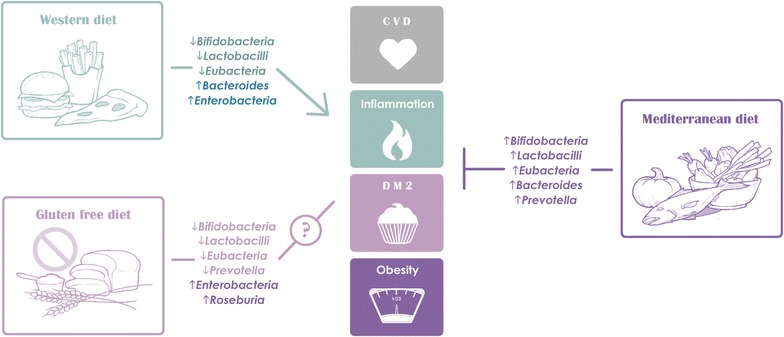
“As mentioned above, the most obvious provocateur of microbial dysbiosis is the insidious western dietary pattern with its ultra-processed foods, refined fats and excess sugar [100].”
BackgroundDiet–Microbiota Interactions Alter Mosquito Development
Martinson, V. G., & Strand, M. R. (2021) · Frontiers in Microbiology · doi:10.3389/fmicb.2021.650743 · Cited by 58
The gut microbiota in retinal diseases
Bringer, M.-A., Gabrielle, P., Bron, A. M., Creuzot-Garcher, C. P., & Acar, N. (2021) · Experimental Eye Research · doi:10.1016/j.exer.2021.108867 · Cited by 53
Recent insights of obesity-induced gut and adipose tissue dysbiosis in type 2 diabetes
Patra, D., Banerjee, D., Ramprasad, P., Roy, S., Pal, D., & Dasgupta, S. (2023) · Frontiers in Molecular Biosciences · doi:10.3389/fmolb.2023.1224982 · Cited by 77
“On the contrary, Bacteroidetes are linked with weight management either by oxidation of SCFAs or the digestion of complex carbohydrates (Singh et al., 2017).”
BackgroundNovelties on Neuroinflammation in Alzheimer’s Disease–Focus on Gut and Oral Microbiota Involvement
Popescu, C., Munteanu, C., Anghelescu, A., Ciobanu, V., Spînu, A., Andone, I., Mandu, M., Bistriceanu, R., Băilă, M., Postoiu, R.-L., et al. (2024) · International Journal of Molecular Sciences · doi:10.3390/ijms252011272 · Cited by 63
“These microorganisms produce lipopolysaccharides (LPS), potent pro-inflammatory endo-toxins that can exacerbate systemic inflammation, a critical contributor to the pathogenesis of AD [15].”
BackgroundGastrointestinal Barrier Breakdown and Adipose Tissue Inflammation
Cheru, L., Saylor, C. F., & Lo, J. (2019) · Current Obesity Reports · doi:10.1007/s13679-019-00332-6 · Cited by 57
Effect of raw potato starch on the gut microbiome and metabolome in mice
Bang, S.-J., Lee, E., Song, E., Nam, Y., Seo, M., Kim, H., Park, C., Lim, M. Y., & Seo, D. (2019) · International Journal of Biological Macromolecules · doi:10.1016/j.ijbiomac.2019.04.085 · Cited by 56
Increased mucosal neutrophil survival is associated with altered microbiota in HIV infection
Hensley‐McBain, T., Wu, M. C., Manuzak, J. A., Cheu, R. K., Gustin, A. T., Driscoll, C. B., Zevin, A. S., Miller, C. J., Coronado, E., Smith, E. A., et al. (2019) · PLoS Pathogens · doi:10.1371/journal.ppat.1007672 · Cited by 65
“D.) Percentage of active Caspase-3low, CD16high neutrophils in whole blood incubated with LPS alone, Lactobacillus plantarum alone, and LPS with L. plantarum as measured by flow cytometry.”
BackgroundInfluentialPayahoo, L., Khajebishak, Y., Alivand, M. R., Soleimanzade, H., Alipour, S., Barzegari, A., & Ostadrahimi, A. (2019) · Appetite · doi:10.1016/j.appet.2019.05.032 · Cited by 58
He, M., Gao, J., Wu, J., Zhou, Y., Fu, H., Ke, S., Yang, H., Chen, C., & Huang, L. (2019) · Frontiers in Microbiology · doi:10.3389/fmicb.2019.01359 · Cited by 66
“In particular, the two-component system is involved in signal transduction (Alm et al., 2006; Cui et al., 2011) and regarded as a metabolic reaction center that couples nutrient sensing to the dynamic regulation of monosaccharide metabolism (Sonnenburg et al., 2006).”
BackgroundBao, N. T. Y., Chen, F., & Dai, D. (2020) · Frontiers in Immunology · doi:10.3389/fimmu.2019.02981 · Cited by 58
“Bifidobacterium is a widely used probiotic strain with documented health benefits in areas such as immuno-modulation, cancer prevention, and IBD control (57).”
BackgroundProgression and survival of patients with motor neuron disease relative to their fecal microbiota
Ngo, S. T., Restuadi, R., McCrae, A. F., Van Eijk, R. P., Garton, F., Henderson, R. D., Wray, N. R., McCombe, P. A., & Steyn, F. J. (2020) · Amyotrophic Lateral Sclerosis and Frontotemporal Degeneration · doi:10.1080/21678421.2020.1772825 · Cited by 53
Rodríguez-Morató, J., & Matthan, N. R. (2020) · Current Atherosclerosis Reports · doi:10.1007/s11883-020-00863-7 · Cited by 57
Swarte, J. C., Eelderink, C., Douwes, R. M., Said, M. Y., Hu, S., Post, A., Westerhuis, R., Bakker, S. J. L., & Harmsen, H. J. M. (2020) · Nutrients · doi:10.3390/nu12072129 · Cited by 57
“The most vital function of the gut microbiota in the distal digestive tract is the breakdown and fermentation of nutrients into short-chain fatty acids, amino acids, vitamins, and other metabolites [1].”
BackgroundUnraveling the Metabolic Requirements of the Gut Commensal Bacteroides ovatus
Fultz, R., Ticer, T. D., Ihekweazu, F. D., Horvath, T. D., Haidacher, S. J., Hoch, K. M., Bajaj, M., Spinler, J. K., Haag, A. M., Buffington, S. A., et al. (2021) · Frontiers in Microbiology · doi:10.3389/fmicb.2021.745469 · Cited by 70
Doré, É., Joly-Beauparlant, C., Morozumi, S., Mathieu, A., Lévesque, T., Allaeys, I., Duchez, A., Cloutier, N., Leclercq, M., Bodein, A., et al. (2022) · JCI Insight · doi:10.1172/jci.insight.152638 · Cited by 56
The Neglected Gut Microbiome: Fungi, Protozoa, and Bacteriophages in Inflammatory Bowel Disease
Guzzo, G. L., Andrews, J. M., & Weyrich, L. S. (2022) · Inflammatory Bowel Diseases · doi:10.1093/ibd/izab343 · Cited by 60
Searching for a Consensus Among Inflammatory Bowel Disease Studies: A Systematic Meta-Analysis
Abdel-Rahman, L. I. H., & Morgan, X. C. (2022) · Inflammatory Bowel Diseases · doi:10.1093/ibd/izac194 · Cited by 59
Fecal microbiota transplantation in non-communicable diseases: Recent advances and protocols
Hamamah, S., Gheorghita, R. E., Lobiuc, A., Sîrbu, I. O., & Covașă, M. (2022) · Frontiers in Medicine · doi:10.3389/fmed.2022.1060581 · Cited by 61
“Reduced liver stiffness, total and LDL cholesterol with weight loss in the FMT + LSI group at 24 weeks Nausea, vomiting, abdominal pain No FMT related serious adverse effects FMT alone: ↑ Faecalibacterium, Roseburia, Eubacterium FMT + LSI: ↑ Bifidobacterium, Lactobacillus (20) Type 2 diabetes mellitus (T2DM) Transendo…”
BackgroundInfluentialDietary Patterns Affect the Gut Microbiome—The Link to Risk of Cardiometabolic Diseases
Tindall, A. M., Petersen, K. S., & Kris-Etherton, P. M. (2018) · The Journal of Nutrition · doi:10.1093/jn/nxy141 · Cited by 51
Ko, C., Fan, J., Hu, A., Su, H., Yang, J., Huang, L., Yan, F., Zhang, H., & Zeng, Y. (2019) · Brain and Behavior · doi:10.1002/brb3.1287 · Cited by 52
Tuck, C. J., De Palma, G., Takami, K., Brant, B., Caminero, A., Reed, D. E., Muir, J. G., Gibson, P. R., Winterborn, A., Verdu, E. F., et al. (2020) · Scientific Reports · doi:10.1038/s41598-020-74460-8 · Cited by 52
Eshraghi, R. S., Davies, C., Iyengar, R., Perez, L., Mittal, R., & Eshraghi, A. A. (2020) · Journal of Clinical Medicine · doi:10.3390/jcm10010027 · Cited by 62
“In general, microbial components are known to interact directly with toll-like receptors (TLRs), antigenpresenting cells, differentiated T cells, CD4 T cells, and B cells [58].”
BackgroundHassouneh, R., & Bajaj, J. S. (2021) · Journal of Clinical Medicine · doi:10.3390/jcm10020330 · Cited by 54
“Plant protein has been linked to greater abundance of autochthonous organisms and reduction in pro-inflammatory organisms [64].”
BackgroundJarett, J. K., Carlson, A., Serao, M. C. R., Strickland, J., Serfilippi, L. M., & Ganz, H. H. (2019) · PeerJ · doi:10.7717/peerj.7661 · Cited by 56
Potential Roles for Gamma-Aminobutyric Acid Signaling in Bacterial Communities
Quillin, S. J., Tran, P., & Prindle, A. B. (2021) · Bioelectricity · doi:10.1089/bioe.2021.0012 · Cited by 59
Gut Microbiome and Organ Fibrosis
Costa, C. F. F. A., Sampaio‐Maia, B., Araújo, R., Nascimento, D. S., Ferreira‐Gomes, J., Pestana, M., Azevedo, M. J., & Alencastre, I. S. (2022) · Nutrients · doi:10.3390/nu14020352 · Cited by 57
“Diet plays a significant role in shaping the gut microbiome, with studies showing that dietary alterations are capable of inducing large microbial shifts [208].”
BackgroundAlsharairi, N. A. (2023) · Life · doi:10.3390/life13020561 · Cited by 62
“The genus Enterococcus belongs to a large group of LAB in the class Bacilli that is typically identified as facultative anaerobic bacteria within the Firmicutes phylum [66,79,91].”
BackgroundHarrison, R. E., Yang, X., Eum, J. H., Martinson, V. G., Dou, X., Valzania, L., Wang, Y., Boyd, B. M., Brown, M. R., & Strand, M. R. (2023) · Communications Biology · doi:10.1038/s42003-023-05545-z · Cited by 62
Hediyal, T. A., Vichitra, C., Anand, N., Bhaskaran, M., Essa, S. M., Kumar, P., Qoronfleh, M. W., Akbar, M. D., Kaul-Ghanekar, R., Mahalakshmi, A. M., et al. (2024) · Frontiers in Immunology · doi:10.3389/fimmu.2024.1324018 · Cited by 59
Munteanu, C., Onose, G., Rotariu, M., Poştaru, M., Turnea, M. A., & Galaction, A. (2024) · Biomedicines · doi:10.3390/biomedicines12122670 · Cited by 64
“In neurodegenerative disease models, they have mitigated cognitive decline and motor dysfunction by promoting neuroprotective microbial metabolites and reducing harmful H 2 S levels [142].”
The gut microbiome, immune modulation, and cognitive decline: insights on the gut-brain axis
Zhang, R., Ding, N., Feng, X., & Liao, W. (2025) · Frontiers in Immunology · doi:10.3389/fimmu.2025.1529958 · Cited by 81
Self-citationEffects of bacteriophages on gut microbiome functionality
Kurilovich, E., & Geva-Zatorsky, N. (2025) · Gut Microbes · doi:10.1080/19490976.2025.2481178 · Cited by 51
“18 Given the high impact of diet on the gut microbiota, 19,20 one could also expect considerable differences in phageome composition in populations consuming different diets.”
Benefits of tree nut consumption on aging and age-related diseases: Mechanisms of actions
Rusu, M. E., Simedrea, R., Gheldiu, A.-M., Mocan, A., Vlase, L., Popa, D., & Ferreira, I. C. F. R. (2019) · Trends in Food Science & Technology · doi:10.1016/j.tifs.2019.03.006 · Cited by 60
Can Gut Microbiota Composition Predict Response to Dietary Treatments?
Biesiekierski, J. R., Jalanka, J., & Staudacher, H. M. (2019) · Nutrients · doi:10.3390/nu11051134 · Cited by 62
“Clinical research in humans supports this, with evidence of fewer Bacteroides and more Firmicutes [21], as well as a lower abundance of Bifidobacteria [23] compared with lean controls.”
InfluentialFarhangi, M. A. (2020) · Nutrition · doi:10.1016/j.nut.2020.110856 · Cited by 53
Kohnert, E., Kreutz, C., Binder, N., Hannibal, L., Gorkiewicz, G., Müller, A., Storz, M. A., Huber, R., & Lederer, A. (2021) · Microorganisms · doi:10.3390/microorganisms9040727 · Cited by 55
“Gastrointestinal microorganisms are directly promoted or inhibited by nutrients selecting a diet-related microbiota composition, which is further indirectly affected by known factors such as metabolic processes and immunological modulation [2,6].”
BackgroundResultZhang, X., Zhao, A., Sandhu, A. K., Edirisinghe, I., & Burton‐Freeman, B. M. (2022) · Journal of Nutrition · doi:10.1093/jn/nxac037 · Cited by 58
Role of plant-based diets in promoting health and longevity
Herpich, C., Müller‐Werdan, U., & Norman, K. (2022) · Maturitas · doi:10.1016/j.maturitas.2022.07.003 · Cited by 70
Butyrate Properties in Immune-Related Diseases: Friend or Foe?
Anshory, M., Effendi, R. M. R. A., Kalim, H., Dwiyana, R. F., Suwarsa, O., Nijsten, T. E. C., Nouwen, J. L., & Thio, H. B. (2023) · Fermentation · doi:10.3390/fermentation9030205 · Cited by 62
Mari, A., Baker, F. A., Mahamid, M., Sbeit, W., & Khoury, T. (2020) · Journal of Clinical Medicine · doi:10.3390/jcm9030685 · Cited by 62
“However, large and long-term RCTs are still lacking, and various concerns have been raised including diet complexity and cost, risk of nutritional deficiencies, and importantly, an unclear impact on gut microbiome [97,98,99].”
BackgroundLong‐Term Vegan Meditation Improved Human Gut Microbiota
Jia, W., Zhen, J., Liu, A., Yuan, J., Wu, X.-L., Zhao, P., Zhao, L., Li, X., Liu, Q., Huang, G., et al. (2020) · Evidence-based Complementary and Alternative Medicine · doi:10.1155/2020/9517897 · Cited by 56
The Potential Gut Microbiota-Mediated Treatment Options for Liver Cancer
Zhang, C., Yang, M. J., & Ericsson, A. C. (2020) · Frontiers in Oncology · doi:10.3389/fonc.2020.524205 · Cited by 54
“Osteomicrobiology”: The Nexus Between Bone and Bugs
Bhardwaj, A., Sapra, L., Tiwari, A., Mishra, P. K., Sharma, S., & Srivastava, R. K. (2022) · Frontiers in Microbiology · doi:10.3389/fmicb.2021.812466 · Cited by 60
Pohl, A., Schünemann, F., Bersiner, K., & Gehlert, S. (2021) · Nutrients · doi:10.3390/nu13113884 · Cited by 49
Host Genetic Determinants of the Microbiome Across Animals: From Caenorhabditis elegans to Cattle
Ryu, E. P., & Davenport, E. (2022) · Annual Review of Animal Biosciences · doi:10.1146/annurev-animal-020420-032054 · Cited by 60
Relationships between Inflammation and Age-Related Neurocognitive Changes
Jin, R., Chan, A. K. Y., Wu, J., & Lee, T. M. C. (2022) · International Journal of Molecular Sciences · doi:10.3390/ijms232012573 · Cited by 63
“Dietary and nutritional patterns not only affect the gut microbiota diversity [153] but also alter the patterns of metabolites and regulate epithelial cells’ immune responses [154] as well as the circulating levels of proand/or anti-inflammatory cytokines [155].”
BackgroundInfluence of the gut microbiota on satiety signaling
Bastings, J. J. A. J., Venema, K., Blaak, E. E., & Adam, T. C. (2023) · Trends in Endocrinology and Metabolism · doi:10.1016/j.tem.2023.02.003 · Cited by 50
Świrkosz, G., Szczygieł, A., Logoń, K., Wrześniewska, M., & Gomułka, K. (2023) · Biomedicines · doi:10.3390/biomedicines11123144 · Cited by 68
Gaulke, C. A., Rolshoven, J., Wong, C. P., Hudson, L. G., Ho, E., & Sharpton, T. J. (2018) · mSphere · doi:10.1128/msphere.00521-18 · Cited by 54
“, fat and protein) on the gut microbiome is well described (6, 13, 14), less is known about how dietary micronutrient variation, such as zinc deficiency, impacts the microbiome and how these impacts may influence host health.”
BackgroundPast, Present, and Future of Gastrointestinal Microbiota Research in Cats
Lyu, Y., Su, C., Verbrugghe, A., de Wiele, T. V., Martinez-Caja, A. M., & Hesta, M. (2020) · Frontiers in Microbiology · doi:10.3389/fmicb.2020.01661 · Cited by 61
Exploring the impact of intestinal ion transport on the gut microbiota
Engevik, A. C., & Engevik, M. A. (2020) · Computational and Structural Biotechnology Journal · doi:10.1016/j.csbj.2020.12.008 · Cited by 56
Statistical analysis of microbiome data: The challenge of sparsity
Pan, A. (2021) · Current Opinion in Endocrine and Metabolic Research · doi:10.1016/j.coemr.2021.05.005 · Cited by 60
Das, G., Heredia, J. B., Pereira, M. D. L., Coy-Barrera, E. D., Oliveira, S. M. R., Gutiérrez‐Grijalva, E. P., Cabanillas-Bojórquez, L. Á., Shin, H., & Patra, J. K. (2021) · Trends in Food Science & Technology · doi:10.1016/j.tifs.2021.07.037 · Cited by 54
Zou, X., Wu, J., Ye, H.-X., Feng, D.-Y., Meng, P., Yang, H., Wu, W., Li, H., He, Z., & Zhang, T. (2021) · Journal of Asthma and Allergy · doi:10.2147/jaa.s320088 · Cited by 55
Zhong, Z., McCafferty, S., Opsomer, L., Wang, H., Huysmans, H., De Temmerman, J., Lienenklaus, S., Portela Catani, J. P., Combes, F., & Sanders, N. N. (2021) · Molecular Therapy · doi:10.1016/j.ymthe.2021.01.023 · Cited by 48
Islam, T., Albracht-Schulte, K., Ramalingam, L., Schlabritz-Lutsevich, N., Park, O.-H., Zabet-Moghaddam, M., Kalupahana, N. S., & Moustaid-Moussa, N. (2023) · The Journal of Nutritional Biochemistry · doi:10.1016/j.jnutbio.2022.109242 · Cited by 48
Konkol, Y. M., Keskitalo, A., Vuorikoski, H., Pietilä, S., Elo, L. L., Munukka, E., Bernoulli, J., & Tuomela, J. M. (2018) · British Journal of Urology · doi:10.1111/bju.14553 · Cited by 52
Olmo, R., Wetzels, S. U., Armanhi, J. S. L., Arruda, P., Berg, G., Cernava, T., Cotter, P. D., Araujo, S. C., de Souza, R. S. C., Ferrocino, I., et al. (2022) · Frontiers in Microbiology · doi:10.3389/fmicb.2022.834622 · Cited by 53
Jin, N., Li, J., Wang, S., Meng, X., Ma, X., He, X., Zhang, G., Luo, S., Lyu, J., & Yu, J. (2022) · Antioxidants · doi:10.3390/antiox11081585 · Cited by 48
“The health value of fruit and vegetable polyphenols may be mediated by their effects on intestinal microbiota [47].”
BackgroundThe Gut Microbiome Modulates Body Temperature Both in Sepsis and Health
Bongers, K. S., Chanderraj, R., Woods, R. J., McDonald, R. A., Adame, M. D., Falkowski, N. R., Brown, C. A., Baker, J. M., Winner, K. M., Fergle, D. J., et al. (2023) · American Journal of Respiratory and Critical Care Medicine · doi:10.1164/rccm.202201-0161oc · Cited by 54
Daele, E. V., Knol, J., & Belzer, C. (2019) · Critical Reviews in Microbiology · doi:10.1080/1040841x.2019.1680601 · Cited by 51
“…on maternal metabolic disorders concluded that a large longitudinal cohort with mother-child-pairs is needed to map the consequences for the mother’s and child’s intestinal microbiota and thus asses the role for MTCT in metabolic disease predisposition (Soderborg et al. 2016; Singh et al. 2017).”
Background
Metadata
- Authors
- Singh, R. K., Chang, H.-W., Yan, D., Lee, K. M., Ucmak, D., Wong, K., Abrouk, M., Farahnik, B., Nakamura, M., Zhu, T. H., Bhutani, T., & Liao, W.
- Affiliations
- University of California, Los Angeles (US)
- University of California, San Francisco (US)
- University of California, Irvine (US)
- University of Vermont (US)
- University of Southern California (US)
- Corresponding author
- Liao, Wilson
- ORCID
- Venue
- Journal of Translational Medicine
- Published
- 2017-04-08
- Volume
- 15
- Issue
- 1
- Pages
- 73-73
- ISSN
- 1479-5876 (ISSN-L)
- PMC
- PMC5385025
- OpenAlex
- W2605052214
- Cited by
- 2,599
- References
- 198
- Citations by year
- 2026: 202 · 2025: 287 · 2024: 341 · 2023: 375 · 2022: 364 · 2021: 381 · 2020: 299 · 2019: 219 · 2018: 109 · 2017: 22
- FWCI
- 16.61
- Type
- journal article
- Language
- en
- Open access
- gold
- doi.org
- Licence
- cc-by
- creativecommons.org/licenses/by/4.0/ (tdm)
- creativecommons.org/licenses/by/4.0/ (vor)
- Locations
- Journal of Translational Medicine (publishedVersion, cc-by)
- PubMed Central (publishedVersion, cc-by)
- PubMed (publishedVersion)
- DOAJ (DOAJ: Directory of Open Access Journals) (submittedVersion)
- eScholarship (California Digital Library) (submittedVersion)
- eScholarship (California Digital Library) (submittedVersion, cc-by)
- Funders
- National Institute of Arthritis and Musculoskeletal and Skin Diseases (R01AR065174)
- National Institute of Allergy and Infectious Diseases (U01AI119125)
- Topics
- Life Sciences › Biochemistry, Genetics and Molecular Biology › Molecular Biology › Gut microbiota and health
- Health Sciences › Medicine › Public Health, Environmental and Occupational Health › Nutritional Studies and Diet
- Life Sciences › Agricultural and Biological Sciences › Food Science › Probiotics and Fermented Foods
- Keywords
- diet, gut microbiota, food components, chronic disease, inflammatory bowel disease, obesity, type 2 diabetes, cardiovascular disease, cancer, host immune function, host metabolism, microbiota-based therapy
- MeSH terms
- Gastrointestinal Microbiome, Diet, Health, Humans, Probiotics, Polyphenols
About these checks
Registry, retraction, Cites and statistics results are computed, not judged, with one exception: a printed reference that no index lists is read once by a model before it counts as a citation error. Claims are extracted by a model and kept only when their quote appears verbatim in the text; each cited source is then checked, with a model’s help, for whether it says what the claim relies on. Those verdicts can be wrong — read the claim’s quote and the cited source before relying on one.
Statistics and arithmetic are recomputed, not judged.
Confidence bands are shown only for fields calibrated on our annotated test set. None is calibrated yet, so no band is shown.
What counts as a claim ›How we measure confidence ›How we check this ›
Are you an author, or do you see a problem with this page? Request a review
Data sources
Bibliographic data: Semantic Scholar, OpenAlex, Crossref.
Contains information from the Semantic Scholar Academic Graph Datasets, made available under the ODC Attribution License (ODC-BY 1.0).
Semantic Scholar’s data is described in: Kinney, R., et al. (2023). The Semantic Scholar Open Data Platform. arXiv:2301.10140.
