

Influence of diet on the gut microbiome and implications for human health
Open accessThe DOI matches its Crossref record; 198 of the 198 references it cites were found in a registry or an index.
Abstract
Recent studies have suggested that the intestinal microbiome plays an important role in modulating risk of several chronic diseases, including inflammatory bowel disease, obesity, type 2 diabetes, cardiovascular disease, and cancer. At the same time, it is now understood that diet plays a significant role in shaping the microbiome, with experiments showing that dietary alterations can induce large, temporary microbial shifts within 24 h. Given this association, there may be significant therapeutic utility in altering microbial composition through diet. This review systematically evaluates current data regarding the effects of several common dietary components on intestinal microbiota. We show that consumption of particular types of food produces predictable shifts in existing host bacterial genera. Furthermore, the identity of these bacteria affects host immune and metabolic parameters, with broad implications for human health. Familiarity with these associations will be of tremendous use to the practitioner as well as the patient.
Overview
The claims and statistics of this paper haven’t been checked yet.
Free: it reads the open-access text and checks the first 5 claims that cite a source we can check. Create a free account to check every claim.
Integrity signals
Registry
Cites
Statistics
Figures
Verification
Claims the paper makes
The claims and statistics of this paper haven’t been checked yet.
Free: it reads the open-access text and checks the first 5 claims that cite a source we can check. Create a free account to check every claim.
Claims other papers make about this one
Each is checked against this paper’s own text: does it say what the citing paper says it does?
The source backs part of the claim, not all of it — or backs it for a different population, condition or comparison.
In the citing paper
“Many bacteria associated with ICI response have known dietary associations, such that specific dietary patterns (e.g., plant-based versus western diet) are associated with increased or decreased relative abundances of these candidate taxa.131–135”
From Melanoma and microbiota: Current understanding and future directions (2024) · cites this paper as [134]
Experimental — accuracy not yet measuredThe cited source says what the claim attributes to it.
In the citing paper
“In addition, strategies that could mitigate the likelihood of LPS release into the blood and, thus, endotoxin-associated symptoms, include limiting the consumption of saturated fat [138], avoiding the consumption of non-steroidal anti-inflammatory drugs (NSAIDs) [139], and maintaining an adequate water intake [139].”
From International Society of Sports Nutrition Position Stand: nutritional considerations for single-stage ultra-marathon training and racing (2019) · cites this paper as [138]
The cited source says what the claim attributes to it.
In the citing paper
“Different sources of protein in a diet has been shown to influence different gut microbiota profiles (Singh et al., 2017).”
From The Microbiota-Gut-Brain Axis (2019) · cites this paper as Singh et al., 2017
In the citing paper
“In mice, animal-based protein increases potential detrimental gut microbes, e.g., Peptostreptococcaceae, Ruminococcaceae, Enterococcus, Streptococcus, Turicibacter, or Escherichia (92), and plant-based protein boosts the abundance of Bifidobacterium, Roseburia, and Lactobacillus and lowers the abundance of pathogens such as Bacteroides fragilis and Clostridium perfringens (37,42,80).”
From Diet and the Microbiota–Gut–Brain Axis: Sowing the Seeds of Good Mental Health (2021) · cites this paper as [80]
Self-check
Percentages, sums and reported differences re-computed from the paper’s own numbers.
The self-check needs the paper’s full text.
Citations
Cites
An obesity-associated gut microbiome with increased capacity for energy harvest
Turnbaugh, P. J., Ley, R. E., Mahowald, M. A., Magrini, V., Mardis, E. R., & Gordon, J. I. (2006) · Nature · doi:10.1038/nature05414 · Cited by 12,444 · cited 1×
“Furthermore, studies involving microbiota transplantation from obese to lean mice have shown that the obese phenotype is transmissible and may be promoted by microbiota that have increased capacity to harvest energy from the host diet [23].”
BackgroundDiet rapidly and reproducibly alters the human gut microbiome
David, L. A., Maurice, C. F., Carmody, R. N., Gootenberg, D. B., Button, J. E., Wolfe, B. E., Ling, A. V., Devlin, A. S., Varma, Y., Fischbach, M. A., et al. (2014) · Nature · doi:10.1038/nature12820 · Cited by 10,100
Human gut microbes associated with obesity
Ley, R. E., Turnbaugh, P. J., Klein, S., & Gordon, J. I. (2006) · Nature · doi:10.1038/4441022a · Cited by 8,785
Enterotypes of the human gut microbiome
MetaHIT Consortium (additional members), Arumugam, M., Raes, J., Pelletier, E., Le Paslier, D., Yamada, T., Mende, D. R., Fernandes, G. R., Tap, J., Bruls, T., et al. (2011) · Nature · doi:10.1038/nature09944 · Cited by 7,548 · cited 1×
“Recently, it has been shown that microbiota can effectively be subdivided into different enterotypes, each enriched by particular bacterial genera, but that all seem to share high functional uniformity [4].”
BackgroundChanges of Intestinal Functions in Liver Cirrhosis
Fukui, H., & Wiest, R. (2016) · Inflammatory Intestinal Diseases · doi:10.1159/000444436 · Cited by 6,808
A metagenome-wide association study of gut microbiota in type 2 diabetes
Qin, J., Li, Y., Cai, Z., Li, S., Zhu, J., Zhang, F., Liang, S., Zhang, W., Guan, Y., Shen, D., et al. (2012) · Nature · doi:10.1038/nature11450 · Cited by 6,762
Linking long-term dietary patterns with gut microbial enterotypes
Wu, G. D., Chen, J., Hoffmann, C., Bittinger, K., Chen, Y.-Y., Keilbaugh, S. A., Bewtra, M., Knights, D., Walters, W. A., Knight, R., et al. (2011) · Science · doi:10.1126/science.1208344 · Cited by 6,513 · cited 2×
“While the microbiome of a healthy individual is relatively stable, gut microbial dynamics can certainly be influenced by host lifestyle and dietary choices [26].”
BackgroundTrumbo, P., Schlicker, S., Yates, A. A., & Poos, M. (2002) · Journal of the American Dietetic Association · doi:10.1016/s0002-8223(02)90346-9 · Cited by 5,993
De Filippo, C., Cavalieri, D., Di Paola, M., Ramazzotti, M., Poullet, J. B., Massart, S., Collini, S., Pieraccini, G., & Lionetti, P. (2010) · Proceedings of the National Academy of Sciences · doi:10.1073/pnas.1005963107 · Cited by 5,579
Commensal microbe-derived butyrate induces the differentiation of colonic regulatory T cells
Furusawa, Y., Obata, Y., Fukuda, S., Endo, T. A., Nakato, G., Takahashi, D., Nakanishi, Y., Uetake, C., Kato, K., Kato, T., et al. (2013) · Nature · doi:10.1038/nature12721 · Cited by 5,549
Research works printed but not linked: 3
- Baron S Clostridium. Baron’s Med. microbiol 1996 4 Galveston University of Texas Medical Branch
- Todar K Pathogenic E coli. Online textbook of bacteriology 2007 Wisconsin University of Wisconsin-Madison Deparment of Bacteriology 11 30
- Patterson M. Streptococcus. In: Baron S, editor. Baron’s Med Microbiol. 4th ed. Galveston: University of Texas Medical Branch. 21413248
Cited by
Items 301–400 of 1,006
Syeda, T., Sanchez-Tapia, M., Pinedo-Vargas, L., Granados, O., Cuervo-Zanatta, D., Rojas-Santiago, E., Díaz-Cintra, S., Torres, N., & Perez-Cruz, C. (2018) · Journal of Alzheimer's Disease · doi:10.3233/jad-180556 · Cited by 76
Sheyholislami, H., & Connor, K. L. (2021) · Nutrients · doi:10.3390/nu13072382 · Cited by 75
“Dietary intake and other supplement intake were chosen as the comparator variable of the exposed/intervention group to the non-exposed/no intervention group in the quality assessments, as diet exerts one of the largest pressures on the gut microbiome [41] and thus, may alter one’s response to interventions that target…”
MethodThe Role of Bacteria, Probiotics and Diet in Irritable Bowel Syndrome
Harper, A., Naghibi, M., & Garcha, D. (2018) · Foods · doi:10.3390/foods7020013 · Cited by 75
“The tetra- or pentacylated lipid A of the Bacteroidetes (abundant colonic commensal phylum) LPS seems not to be agonistic to TLR4, whereas the hexacylated lipid A of Enterobacteriaceae (a family within the Proteobacteria phylum that are 4–6-fold less abundant than Bacteroidetes in humans) is agonistic [67].”
BackgroundPatusco, R., & Ziegler, J. (2018) · Advances in Nutrition · doi:10.1093/advances/nmy031 · Cited by 75
The crosstalk between microbiome and asthma: Exploring associations and challenges
Abdel‐Aziz, M. I., Vijverberg, S. J. H., Neerincx, A. H., Kraneveld, A. D., & Maitland‐van der Zee, A. H. (2019) · Clinical & Experimental Allergy · doi:10.1111/cea.13444 · Cited by 75
Seasonal variation in gut microbiota composition: cross-sectional evidence from Ukrainian population
Koliada, A., Moseiko, V., Romanenko, M., Piven, L., Lushchak, O., Kryzhanovska, N., Guryanov, V., & Vaiserman, A. (2020) · BMC Microbiology · doi:10.1186/s12866-020-01786-8 · Cited by 75
“In addition, the Western-style diet associated with reduced fiber intake and excess intake of sucrose and saturated fats can result in an insufficient supply of dietary prebiotics necessary to promote the growth of important bacterial taxa [25, 26].”
BackgroundGut Microbiome: Profound Implications for Diet and Disease
Hills, R. D., Pontefract, B., Mishcon, H. R., Black, C. A., Sutton, S. C., & Theberge, C. R. (2022) · Kompass Nutrition & Dietetics · doi:10.1159/000523712 · Cited by 87
“By influencing metabolism and inflammation, diet and nutrition can outweigh genetic and environmental factors in determining health outcomes for chronic Western conditions such as diabetes, obesity, IBS, IBD, colorectal cancer, and depression [1,2,318].”
BackgroundQi, B., Ren, D., Li, T., Niu, P., Zhang, X., Yang, X., & Xiao, J. (2022) · Journal of Agricultural and Food Chemistry · doi:10.1021/acs.jafc.2c02400 · Cited by 80
Kok, C. R., Rose, D., & Hutkins, R. (2023) · Annual Review of Food Science and Technology · doi:10.1146/annurev-food-060721-015516 · Cited by 73
Baassiri, M. G. E., Raouf, Z., Badin, S., Escobosa, A., Sodhi, C. P., & Nasr, I. W. (2024) · Journal of Neuroinflammation · doi:10.1186/s12974-024-03118-3 · Cited by 91
“Moreover, the heterogeneity in individual’s dietary patterns and pre-existing microbiome diversity present additional challenges in detecting microbiome variations [305].”
BackgroundSt‐Onge, M., & Zuraikat, F. M. (2019) · Current Atherosclerosis Reports · doi:10.1007/s11883-019-0772-z · Cited by 84
The gut microbiome in anorexia nervosa: relevance for nutritional rehabilitation
Ruusunen, A., Rocks, T., Jacka, F., & Loughman, A. (2019) · Psychopharmacology · doi:10.1007/s00213-018-5159-2 · Cited by 74
“In particular, diets high in fat and protein and low in non-digestible carbohydrate and other fibre may lead to altered microbial diversity and potential dysbiosis (De Filippo et al. 2010; Simpson and Campbell 2015; Singh et al. 2017).”
BackgroundInfluentialDaïen, C., Czernichow, S., Letarouilly, J.-G., Nguyen, Y., Sanchez, P., Sigaux, J., Beauvais, C., Desouches, S., Puillandre, R. L., Rigalleau, V., et al. (2021) · Joint Bone Spine · doi:10.1016/j.jbspin.2021.105319 · Cited by 94
Shin, J. H., Bozadjieva-Kramer, N., Shao, Y., Lyons‐Abbott, S., Rupp, A. C., Sandoval, D. A., & Seeley, R. J. (2022) · Cell Metabolism · doi:10.1016/j.cmet.2022.09.024 · Cited by 85
Dovrolis, N., Michalopoulos, G., Theodoropoulos, G. E., Arvanitidis, K. I., Kolios, G. C., Sechi, L. A., Eliopoulos, A. G., & Gazouli, M. (2020) · Microorganisms · doi:10.3390/microorganisms8030438 · Cited by 77
“Our results may also pave the way for modulation of microbiota composition via diet [78], probiotic and prebiotic products [79] or fecal microbiota transplantation [80,81] that could contribute towards improving the clinical benefits of anti-TNF therapy in IBD.”
BackgroundJensen, S. N., Cady, N. M., Shahi, S. K., Peterson, S. R., Gupta, A. A., Gibson-Corley, K. N., & Mangalam, A. K. (2021) · Science Advances · doi:10.1126/sciadv.abd4595 · Cited by 80
Lu, S. S. M., Mohammed, Z., Häggström, C., Myte, R., Lindquist, E., Gylfe, Å., Guelpen, B. R. V., & Harlid, S. (2021) · JNCI Journal of the National Cancer Institute · doi:10.1093/jnci/djab125 · Cited by 87
“Many established CRC risk factors, including excess body fat and dietary factors, could alter the gut microbiome (12,13).”
Tesei, D., Jewczynko, A., Lynch, A., & Urbaniak, C. (2022) · Life · doi:10.3390/life12040495 · Cited by 88
Dietary Interventions in Inflammatory Bowel Disease
Godala, M. M., Gaszyńska, E., Zatorski, H., & Małecka-Wojciesko, E. (2022) · Nutrients · doi:10.3390/nu14204261 · Cited by 91
“SCFAs also participate in maintaining the continuity of intestinal epithelial tissue, provide a rich source of energy, both for bacteria and colonocytes, and counteract the development of diseases, including guiding potentially cancerous cells into the apoptosis pathway [21].”
BackgroundExploring the Influence of Gut Microbiome on Energy Metabolism in Humans
Montenegro, J., Armet, A. M., Willing, B. P., Deehan, E. C., Fassini, P. G., Mota, J. F., Walter, J., & Prado, C. M. M. (2023) · Advances in Nutrition · doi:10.1016/j.advnut.2023.03.015 · Cited by 89
The Role of Gut Microbiome in Sleep Quality and Health: Dietary Strategies for Microbiota Support
Sejbuk, M., Siebieszuk, A., & Witkowska, A. M. (2024) · Nutrients · doi:10.3390/nu16142259 · Cited by 92
“Additionally, a diet high in animal fats can contribute to decreased production of SCFAs and lipopolysaccharides, leading to systemic low-grade inflammation [16,195].”
BackgroundAbundance of gut Prevotella at baseline and metabolic response to barley prebiotics
Sandberg, J., Kovatcheva-Datchary, P., Björck, I., Bäckhed, F., & Nilsson, A. (2019) · European Journal of Nutrition · doi:10.1007/s00394-018-1788-9 · Cited by 71
Mirpuri, J. (2020) · Pediatric Research · doi:10.1038/s41390-020-01121-x · Cited by 79
“Diet can alter the composition of bacteria in the intestine in as little as 1–2 days.(32,33) This study highlights how transient bacterial colonization during pregnancy with a specific strain affects development of the immune system of the fetus with effects lasting through to adulthood in mice.”
BackgroundArtificial intelligence and synthetic biology approaches for human gut microbiome
Kumar, P., Sinha, R., & Shukla, P. (2022) · Critical Reviews in Food Science and Nutrition · doi:10.1080/10408398.2020.1850415 · Cited by 71
“…to have gut microbial population that increases the levels of trime-thylamine-N-oxide (TMAO) and decreases the content of short chain fatty acids (SCFAs), eventually leading to an increased risk of contracting cardiovascular diseases and inflammatory bowel disease conditions (Singh et al. 2017).”
BackgroundGuérin, M. C., Silva, C. R. D., Garcia, C., & Remize, F. (2020) · Fermentation · doi:10.3390/fermentation6040115 · Cited by 83
The roles of dietary lipids and lipidomics in gut-brain axis in type 2 diabetes mellitus
Ağagündüz, D., İçer, M. A., Yeşildemir, Ö., Koçak, T., Koçyiğit, E., & Capasso, R. (2023) · Journal of Translational Medicine · doi:10.1186/s12967-023-04088-5 · Cited by 89
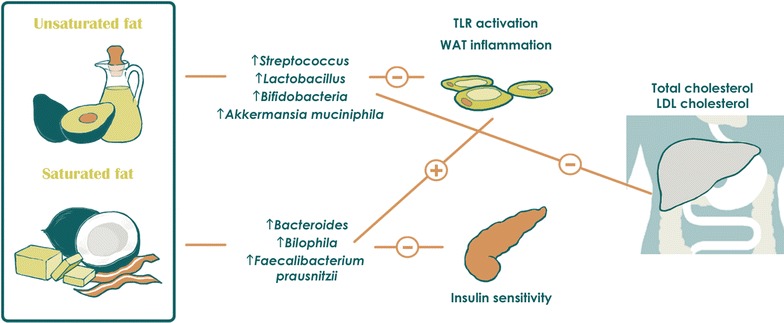
“A diet rich in saturated FAs can adversely affect the microbiota composition and reduce insulin sensitivity [182].”
BackgroundInterrelation of Diet, Gut Microbiome, and Autoantibody Production
Petta, I., Fraussen, J., Somers, V., & Kleinewietfeld, M. (2018) · Frontiers in Immunology · doi:10.3389/fimmu.2018.00439 · Cited by 72
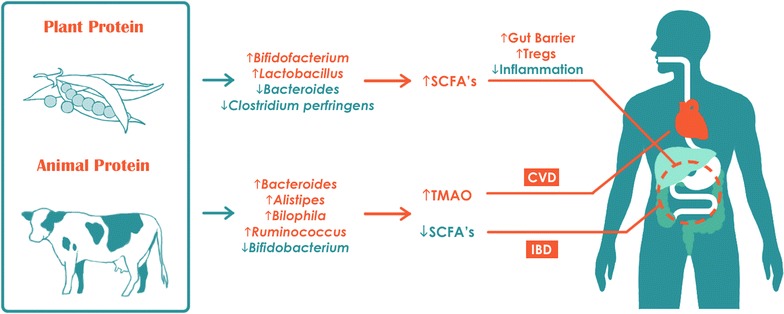
“Interestingly, contrary to animal-derived proteins that can lead to inflammatory bowel disease and cardiovascular diseases, plant-derived proteins increase SCFAs and regulatory T cells, counteracting inflammatory responses (101).”
Old Friends, immunoregulation, and stress resilience
Langgartner, D., Lowry, C. A., & Reber, S. O. (2018) · Pflügers Archiv - European Journal of Physiology · doi:10.1007/s00424-018-2228-7 · Cited by 81
Altered Metabolome of Lipids and Amino Acids Species: A Source of Early Signature Biomarkers of T2DM
Hameed, A., Mojsak, P., Buczyńska, A., Suleria, H. A. R., Kretowski, A. J., & Ciborowski, M. (2020) · Journal of Clinical Medicine · doi:10.3390/jcm9072257 · Cited by 89
Sroka-Oleksiak, A., Młodzińska, A., Bulanda, M., Salamon, D., Major, P., Stanek, M., & Gosiewski, T. (2020) · Journal of Clinical Medicine · doi:10.3390/jcm9020369 · Cited by 70
“Undoubtedly, one of the important factors initiating the cascade of changes taking place in the organism is the excessive and long-term use of a diet rich in fats and sugars, which leads to a decrease in the abundance of Bifidobacterium, while increasing fasting glucose and total cholesterol [30].”
BackgroundThe postharvest microbiome: The other half of sustainability
Wisniewski, M., & Droby, S. (2019) · Biological Control · doi:10.1016/j.biocontrol.2019.104025 · Cited by 76
Gastrointestinal Microbiota and Type 1 Diabetes Mellitus: The State of Art
Durazzo, M., Ferro, A., & Gruden, G. (2019) · Journal of Clinical Medicine · doi:10.3390/jcm8111843 · Cited by 80
“These genera are also enhanced by supplementation with probiotics [31,33].”
BackgroundHillman, E. T., Kozik, A. J., Hooker, C. A., Burnett, J. L., Heo, Y., Kiesel, V. A., Nevins, C. J., Oshiro, J., Robins, M. M., Thakkar, R., et al. (2020) · Microbial Genomics · doi:10.1099/mgen.0.000399 · Cited by 87
Sankaranarayanan, R., Kumar, D. R., Altinoz, M. A., & Bhat, G. J. (2020) · International Journal of Molecular Sciences · doi:10.3390/ijms21239018 · Cited by 79
Health Benefits of Nut Consumption in Middle-Aged and Elderly Population
Rusu, M. E., Mocan, A., Ferreira, I. C. F. R., & Popa, D. (2019) · Antioxidants · doi:10.3390/antiox8080302 · Cited by 82
“Nut polyphenols were reported to increase the abundance of Bifidobacterium and Lactobacillus bacteria, probiotic strains related to significant lowering of CRP concentrations and increase in plasma HDL-C, cancer prevention, immune-modulation, as well as reductions of pathogenic Clostridium species and enteropathogens…”
BackgroundGanci, M., Suleyman, E., Butt, H., & Ball, M. (2019) · Brain and Behavior · doi:10.1002/brb3.1408 · Cited by 85
“An extensive review of the relationship between diet and GM is beyond the scope of this paper, but can be found else‐ where (e.g., Sheflin, Melby, Carbonero, & Weir, 2017; Singh et al., 2017; Wu et al., 2011).”
BackgroundAguilera, J., Gálvez-Ontiveros, Y., & Rivas, A. (2020) · Frontiers in Microbiology · doi:10.3389/fmicb.2020.578007 · Cited by 74
Drivers of Infectious Disease Seasonality: Potential Implications for COVID-19
Kronfeld‐Schor, N., Stevenson, T. J., Nickbakhsh, S., Schernhammer, E. S., Dopico, X. C., Dayan, T., Martinez, M. E., & Helm, B. (2021) · Journal of Biological Rhythms · doi:10.1177/0748730420987322 · Cited by 75
“As demonstrated by investigations of humans and seasonal animal species, dietary metabolism is critical for immune competence (Luca et al., 2010; Singh et al., 2013; Carrillo et al., 2016; Singh et al., 2017; Zandkarimi et al., 2018).”
BackgroundNutritional and ethnomedicinal scenario of koumiss: A concurrent review
Afzaal, M., Saeed, F., Anjum, F., Waris, N., Husaain, M., Ikram, A., Ateeq, H., Anjum, F. M., & Suleria, H. A. R. (2021) · Food Science & Nutrition · doi:10.1002/fsn3.2595 · Cited by 84
“This is particularly beneficial for people that cannot absorb lactose due to a lack of the enzyme lactase (Singh et al., 2017).”
BackgroundMechanisms Involved in Gut Microbiota Regulation of Skeletal Muscle
Li, G., Jin, B., & Fan, Z. (2022) · Oxidative Medicine and Cellular Longevity · doi:10.1155/2022/2151191 · Cited by 81
“the microbiota that are important for the function of the organism [119].”
Bruyne, T. D., Steenput, B., Roth, L., Meyer, G. R. Y. D., dos Santos, C. N., Valentová, K., Dambrova, M., & Hermans, N. (2019) · Nutrients · doi:10.3390/nu11030578 · Cited by 74
“However, lifestyle and diet can induce major changes: an acute change in diet alters microbial composition within 24 h [46,47].”
BackgroundNoonan, S., Zaveri, M., Macaninch, E., & Martyn, K. (2020) · BMJ Nutrition, Prevention & Health · doi:10.1136/bmjnph-2019-000053 · Cited by 67
Fecal Viral Community Responses to High-Fat Diet in Mice
Schulfer, A. F., Santiago-Rodríguez, T. M., Ly, M., Borin, J. M., Chopyk, J., Blaser, M. J., & Pride, D. T. (2020) · mSphere · doi:10.1128/msphere.00833-19 · Cited by 73
“While it has been well described that changes in diet significantly affect gut bacterial communities (41, 42), substantially less is known about how viral communities respond.”
Wei, Y., Liang, J., Su, Y., Wang, J., Amakye, W. K., Pan, J., Chu, X., Ma, B., Song, Y., Li, Y., et al. (2020) · Clinical Nutrition · doi:10.1016/j.clnu.2020.11.014 · Cited by 71
Białecka-Dębek, A., Granda, D., Szmidt, M. K., & Zielińska, D. (2021) · Nutrients · doi:10.3390/nu13082514 · Cited by 75
“Several popular diets, including the Western, vegetarian, vegan, ketogenic diet, and elimination diets such as low-FODMAP and gluten-free diet, have been studied for their ability to modulate the gut microbiota diversity [45,64].”
BackgroundModerate-Intensity Physical Exercise Affects the Exercise Performance and Gut Microbiota of Mice
Yang, W., Liu, Y., Yang, G., Meng, B., Yi, Z., Yang, G., Chen, M., Hou, P., Wang, H., & Xu, X. (2021) · Frontiers in Cellular and Infection Microbiology · doi:10.3389/fcimb.2021.712381 · Cited by 74
“SCFAs also improve the intestinal pH and inhibit the growth of harmful bacteria such as indole-producing bacteria and hydrogen sulfide-producing bacteria within the intestinal tract (Singh et al., 2017).”
BackgroundLiang, L., Saunders, C., & Sanossian, N. (2023) · Food Science & Nutrition · doi:10.1002/fsn3.3229 · Cited by 85
Gut permeability and depressive symptom severity in unmedicated adolescents
Calarge, C. A., Devaraj, S., & Shulman, R. J. (2018) · Journal of Affective Disorders · doi:10.1016/j.jad.2018.12.077 · Cited by 69
Panpetch, W., Somboonna, N., Palasuk, M., Hiengrach, P., Finkelman, M., Tumwasorn, S., & Leelahavanichkul, A. (2019) · PLOS ONE · doi:10.1371/journal.pone.0210798 · Cited by 66
Owolabi, I. O., Dat-arun, P., Yupanqui, C. T., & Wichienchot, S. (2020) · Journal of Functional Foods · doi:10.1016/j.jff.2020.103787 · Cited by 71
The diet-microbiome tango: how nutrients lead the gut brain axis
Ezra-Nevo, G., Henriques, S. F., & Ribeiro, C. (2020) · Current Opinion in Neurobiology · doi:10.1016/j.conb.2020.02.005 · Cited by 66
“Other dietary components, such as proteins, probiotics and simple carbohydrates have also been shown to affect microbiome composition [81].”
BackgroundDaniel, S., Phillippi, D., Schneider, L. J., Nguyen, K. N., Mirpuri, J., & Lund, A. K. (2021) · Particle and Fibre Toxicology · doi:10.1186/s12989-020-00393-9 · Cited by 75
Protein Ingredients in Bread: Technological, Textural and Health Implications
del Mercado, P. A. P.-V., Mojica, L., & Morales-Hernández, N. (2022) · Foods · doi:10.3390/foods11162399 · Cited by 94
Damanti, S., Azzolino, D., Roncaglione, C., Arosio, B., Rossi, P. D., & Cesari, M. (2019) · Nutrients · doi:10.3390/nu11091991 · Cited by 91
Diet-Derived Phytochemicals Targeting Colon Cancer Stem Cells and Microbiota in Colorectal Cancer
Ganesan, K., Jayachandran, M., & Xu, B. (2020) · International Journal of Molecular Sciences · doi:10.3390/ijms21113976 · Cited by 73
“Gut microbiota facilitates converting a large group of flavonoids into simple active metabolites (aromatic catabolites and small phenolic acids) by oxidation and demethylation [14,79].”
BackgroundHippuric acid: Could became a barometer for frailty and geriatric syndromes?
Simone, G. D., Balducci, C., Forloni, G., Pastorelli, R., & Brunelli, L. (2021) · Ageing Research Reviews · doi:10.1016/j.arr.2021.101466 · Cited by 74
Greathouse, K. L., Wyatt, M., Johnson, A. J., Toy, E. P., Khan, J., Dunn, K., Clegg, D. J., & Reddy, S. (2022) · Neoplasia · doi:10.1016/j.neo.2022.100800 · Cited by 73
Dietary fibre definition revisited - The case of low molecular weight carbohydrates
Stribling, P., & Ibrahim, F. (2023) · Clinical Nutrition ESPEN · doi:10.1016/j.clnesp.2023.04.014 · Cited by 80
“Under the Skin” and into the Gut: Social Epidemiology of the Microbiome
Dowd, J. B., & Renson, A. (2018) · Current Epidemiology Reports · doi:10.1007/s40471-018-0167-7 · Cited by 77
Flux, M. C., & Lowry, C. A. (2020) · Neurobiology of Disease · doi:10.1016/j.nbd.2019.104578 · Cited by 65
Perspective: Striking a Balance between Planetary and Human Health—Is There a Path Forward?
Moreno, L. A., Meyer, R. W., Donovan, S. M., Goulet, O., Haines, J., Kok, F. J., & Veer, P. V. (2021) · Advances in Nutrition · doi:10.1093/advances/nmab139 · Cited by 80
“chronic diseases including obesity, type 2 diabetes, cardiovascular disease, some cancers, inflammatory disorders, and autism (145, 146).”
BackgroundHuman Gut Microbiota in Health and Selected Cancers
Sędzikowska, A., & Szablewski, L. (2021) · International Journal of Molecular Sciences · doi:10.3390/ijms222413440 · Cited by 78
Singh, J., Vanlallawmzuali, Singh, A. K., Biswal, S., Zomuansangi, R., Lalbiaktluangi, C., Singh, B. P., Singh, P. K., Vellingiri, B., Iyer, M., et al. (2024) · Asian Journal of Psychiatry · doi:10.1016/j.ajp.2024.104068 · Cited by 76
The Role of the Gut-Brain Axis in Attention-Deficit/Hyperactivity Disorder
Dam, S. A., Mostert, J. C., Szopinska-Tokov, J. W., Bloemendaal, M., Amato, M., & Arias-Vasquez, A. (2019) · Gastroenterology Clinics of North America · doi:10.1016/j.gtc.2019.05.001 · Cited by 64
Mulder, D., Aarts, E., Vásquez, A. A., & Bloemendaal, M. (2023) · Molecular Psychiatry · doi:10.1038/s41380-023-02146-4 · Cited by 77
Huang, H., Wang, Q., Yang, Y., Zhong, W., He, F., & Li, J. (2024) · Gut Microbes · doi:10.1080/19490976.2024.2440111 · Cited by 80
Does the microbiome and virome contribute to myalgic encephalomyelitis/chronic fatigue syndrome?
Newberry, F., Hsieh, S.-Y., Wileman, T., & Carding, S. R. (2018) · Clinical Science · doi:10.1042/cs20171330 · Cited by 69
Mechanisms of Action of Kefir in Chronic Cardiovascular and Metabolic Diseases
Pimenta, F. S., Luaces-Regueira, M., Ton, A. M. M., Campagnaro, B. P., Campos‐Toimil, M., Pereira, T. M., & Vasquez, E. C. (2018) · Cellular Physiology and Biochemistry · doi:10.1159/000492511 · Cited by 82
Characterization of Electrogenic Gut Bacteria
Tahernia, M., Plotkin-Kaye, E., Mohammadifar, M., Gao, Y., Oefelein, M. R., Cook, L. C., & Choi, S. (2020) · ACS Omega · doi:10.1021/acsomega.0c04362 · Cited by 70
Dorelli, B., Gallé, F., Vito, C. D., Duranti, G., Iachini, M., Zaccarin, M., Standoli, J. P., Ceci, R., Romano, F., Liguori, G., et al. (2021) · Nutrients · doi:10.3390/nu13061890 · Cited by 75
Varesi, A., Deumer, U.-S., Ananth, S. V., & Ricevuti, G. (2021) · Journal of Clinical Medicine · doi:10.3390/jcm10215077 · Cited by 73
Kalia, V. C., Shim, W. Y., Patel, S. K. S., Gong, C., & Lee, J.-K. (2022) · The Science of The Total Environment · doi:10.1016/j.scitotenv.2022.155300 · Cited by 74
Dietary Polysaccharides in the Amelioration of Gut Microbiome Dysbiosis and Metabolic Diseases.
Ahmadi, S., Mainali, R., Nagpal, R., Sheikh‐Zeinoddin, M., Soleimanian‐Zad, S., Wang, S., Deep, G., Mishra, S. K., & Yadav, H. (2017) · PubMed · doi:10.15226/2374-8354/4/2/00140 · Cited by 71
“Bile acids are known to activate intestinal L-cells and increase the release of GLP-1, that exhibit several beneficial effects in obese and diabetic individuals [71-74].”
O'Toole, P. W., & Shiels, P. G. (2020) · Journal of Internal Medicine · doi:10.1111/joim.13021 · Cited by 62
Sleep and Microbiome in Psychiatric Diseases
Wagner‐Skacel, J., Dalkner, N., Mörkl, S., Kreuzer, K., Farzi, A., Lackner, S., Painold, A., Reininghaus, E. Z., Butler, M., & Bengesser, S. (2020) · Nutrients · doi:10.3390/nu12082198 · Cited by 70
“The potential impact of dietary composition and nutrient intake on gut microbiota composition and mental health has already been reviewed comprehensively by others [42,43].”
BackgroundEffect of hay type on cecal and fecal microbiome and fermentation parameters in horses
Sorensen, R. J., Drouillard, J. S., Douthit, T. L., Ran, Q., Marthaler, D., Kang, Q., Vahl, C. I., & Lattimer, J. M. (2020) · Journal of Animal Science · doi:10.1093/jas/skaa407 · Cited by 78
Emerging Evidence on the Effects of Dietary Factors on the Gut Microbiome in Colorectal Cancer
Appunni, S., Rubens, M., Ramamoorthy, V., Saxena, A., Tonse, R., McGranaghan, P., Kaiser, A., & Kotecha, R. R. (2021) · Frontiers in Nutrition · doi:10.3389/fnut.2021.718389 · Cited by 68
The Association Between Intestinal Bacteria and Allergic Diseases—Cause or Consequence?
Han, P., Gu, J., Li, L., Wang, X., Wang, H., Wang, Y., Chang, C. C.-C., & Sun, J. (2021) · Frontiers in Cellular and Infection Microbiology · doi:10.3389/fcimb.2021.650893 · Cited by 72
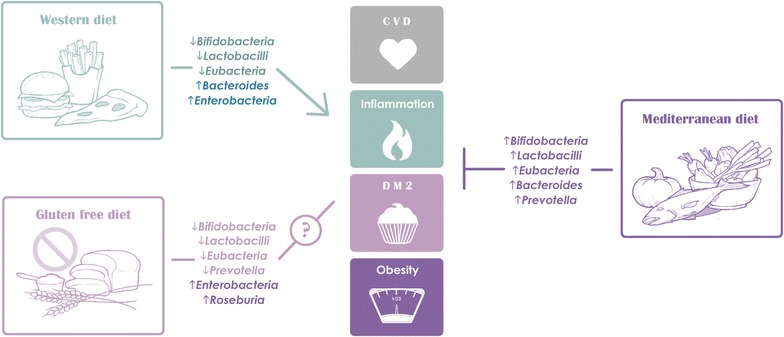
“Studies revealed that Mediterranean diet is good for amelioration of obesity and inflammation which might be intervened by these diet-derived bacterial strains (Singh et al., 2017).”
BackgroundGlioma and the gut–brain axis: opportunities and future perspectives
Dono, A., Nickles, J., Rodriguez-Armendariz, A. G., McFarland, B. C., Ajami, N. J., Ballester, L. Y., Wargo, J. A., & Esquenazi, Y. (2022) · Neuro-Oncology Advances · doi:10.1093/noajnl/vdac054 · Cited by 68
Lactobacillus rhamnosus GG cell-free supernatant as a novel anti-cancer adjuvant
Salemi, R., Vivarelli, S., Ricci, D., Scillato, M., Santagati, M., Gattuso, G., Falzone, L., & Libra, M. (2023) · Journal of Translational Medicine · doi:10.1186/s12967-023-04036-3 · Cited by 72
Major Depressive Disorder and Gut Microbiota: Role of Physical Exercise
de Souza, P. B., Borba, L. A., de Jesus, L. C., Valverde, A. P., Gil‐Mohapel, J., & Rodrigues, A. L. S. (2023) · International Journal of Molecular Sciences · doi:10.3390/ijms242316870 · Cited by 63
Human gut microbiome, diet, and mental disorders
Borrego-Ruiz, A., & Borrego, J. J. (2024) · International Microbiology · doi:10.1007/s10123-024-00518-6 · Cited by 81
“Intermediate metabolites of the gut microbiome (e.g., short-chain fatty acids [SCFAs] and tryptophan catab-olites), cytokines, and neurotransmitters, may be involved in various brain functions (Cryan et al. 2019; O’Mahony et al. 2015; Sandhu et al. 2017).”
InfluentialIn Vitro Fermentation Patterns of Rice Bran Components by Human Gut Microbiota
Pham, T. T., Teoh, K. H., Savary, B. J., Chen, M., McClung, A. M., & Lee, S. (2017) · Nutrients · doi:10.3390/nu9111237 · Cited by 63
“Interactions of human gut microbiota and non-digested dietary components play important roles in health and disease [1,2].”
BackgroundDietary Carbohydrate Constituents Related to Gut Dysbiosis and Health
Seo, Y.-S., Lee, H., Kim, Y., & Park, H. (2020) · Microorganisms · doi:10.3390/microorganisms8030427 · Cited by 69
“Instead, they reach the large intestine where they may undergo fermentation by resident microorganisms [7].”
BackgroundRole of Probiotics in the Management of COVID-19: A Computational Perspective
Nguyen, Q. V., Chong, L. C., Hor, Y.-Y., Lew, L.-C., Rather, I. A., & Choi, S.-B. (2022) · Nutrients · doi:10.3390/nu14020274 · Cited by 60
“gut microbiota plays a crucial role in modulating human health [93], the gut microbiota can be influenced by diet [94].”
BackgroundGut Microbiota Modulation as a Novel Therapeutic Strategy in Cardiometabolic Diseases
Mutalub, Y. B., Abdulwahab, M., Mohammed, A., Yahkub, A. M., Al-Mhanna, S. B., Yusof, W., Tang, S. P., Rasool, A. H. G., & Mokhtar, S. S. (2022) · Foods · doi:10.3390/foods11172575 · Cited by 72
“The gut microbiota also participate in the production of essential amino acids, folic acid, vitamin B12, vitamin K, thiamine, and riboflavin through the breakdown of the residual substrates [59,60].”
BackgroundMaes, M. H. J., Vasupanrajit, A., Jirakran, K., Klomkliew, P., Chanchaem, P., Tunvirachaisakul, C., Plaimas, K., Suratanee, A., & Payungporn, S. (2023) · Acta Neuropsychiatrica · doi:10.1017/neu.2023.21 · Cited by 63
“As described in our Introduction, this lack of consistency among studiesmay be explained by using the inaccurate diagnosis of MDD (Maes, 2022) and by the knowledge that the composition of the microbiome is greatly influenced by nutrition (Singh et al., 2017).”
BackgroundRong, L., Ch’ng, D., Jia, P., Tsoi, K. K. F., Wong, S. H., & Sung, J. J. �. (2023) · Journal of Gastroenterology and Hepatology · doi:10.1111/jgh.16256 · Cited by 64
Whelan, K., Alexander, M., Gaïani, C., Lunken, G., Holmes, A. J., Staudacher, H. M., Theis, S., & Marco, M. L. (2024) · Nature Microbiology · doi:10.1038/s41564-024-01831-6 · Cited by 69
“Factors such as diet, medications and underlying disease are known determinants of microbiome differences between individuals 3,4 .”
Rusu, M. E., Gheldiu, A.-M., Mocan, A., Vlase, L., & Popa, D. (2018) · Food & Function · doi:10.1039/c7fo01967j · Cited by 60
Interplay of Human Gut Microbiome in Health and Wellness
Singhvi, N., Gupta, V., Gaur, M., Sharma, V., Puri, A., Singh, Y. P., Dubey, G. P., & Lal, R. (2019) · Indian Journal of Microbiology · doi:10.1007/s12088-019-00825-x · Cited by 66
Immunometabolism: new insights and lessons from antigen-directed cellular immune responses
Ramalho, R., Rao, M., Zhang, C., Agrati, C., Ippolito, G., Wang, F., Zumla, A. I., & Maeurer, M. J. (2020) · Seminars in Immunopathology · doi:10.1007/s00281-020-00798-w · Cited by 70
Bilal, M., Ashraf, S., & Zhao, X. (2022) · Frontiers in Nutrition · doi:10.3389/fnut.2022.931458 · Cited by 58
“A lower population of healthy bacteria (Bifidobacterium and Lactobacilli) have been observed in Western diet compared with Mediterranean diet (3).”
BackgroundInfluentialIshida, S., Kato, K., Tanaka, M., Odamaki, T., Kubo, R., Mitsuyama, E., Xiao, J., Yamaguchi, R., Uematsu, S., Imoto, S., et al. (2020) · Communications Biology · doi:10.1038/s42003-020-01416-z · Cited by 75
Gut microbiota as the critical correlation of polycystic ovary syndrome and type 2 diabetes mellitus
Duan, L., An, X., Zhang, Y., Jin, D., Zhao, S., Zhou, R., Duan, Y., Zhang, Y., Liu, X., & Lian, F. (2021) · Biomedicine & Pharmacotherapy · doi:10.1016/j.biopha.2021.112094 · Cited by 70
Hydrogen sulfide in ageing, longevity and disease
Wilkie, S. E., Borland, G., Carter, R. N., Morton, N. M., & Selman, C. (2021) · Biochemical Journal · doi:10.1042/bcj20210517 · Cited by 63
Are We What We Eat? Impact of Diet on the Gut–Brain Axis in Parkinson’s Disease
Alfonsetti, M., Castelli, V., & d’Angelo, M. (2022) · Nutrients · doi:10.3390/nu14020380 · Cited by 56
“Dietary habits represent the main factor that influence the microbiome variety and the effects of nutrients and diet on gut microbiota were widely studied [45].”
BackgroundUnveiling roles of beneficial gut bacteria and optimal diets for health
Kumar, S., Mukherjee, R., Gaur, P., Leal, E. D. S., Lyu, X., Ahmad, S., Puri, P., Chang, C.-M., Raj, V. S., & Pandey, R. P. (2025) · Frontiers in Microbiology · doi:10.3389/fmicb.2025.1527755 · Cited by 77
Rettedal, E. A., Cree, J. M. E., Adams, S. E., MacRae, C. L., Skidmore, P. M. L., Cameron‐Smith, D., Gant, N., Blenkiron, C., & Merry, T. L. (2020) · Experimental Physiology · doi:10.1113/ep088744 · Cited by 72
“…especially antibiotics, are recognised to modulate the composition and functionality of the gut microbes (Falony et al., 2016; Sekirov et al., 2008; Singh et al., 2017), there is also growing evidence that physical activity status (Barton et al., 2018; Bressa et al., 2017; Clarke et al., 2014;…”
BackgroundCancer Chemoprevention by Flavonoids, Dietary Polyphenols and Terpenoids
(2020) · Biointerface Research in Applied Chemistry · doi:10.33263/briac111.85028537 · Cited by 68
“Recent research has shown that certain flavonoids can inhibit intestinal microflora and the associated processes of fermentation [135].”
Background
Metadata
- Authors
- Singh, R. K., Chang, H.-W., Yan, D., Lee, K. M., Ucmak, D., Wong, K., Abrouk, M., Farahnik, B., Nakamura, M., Zhu, T. H., Bhutani, T., & Liao, W.
- Affiliations
- University of California, Los Angeles (US)
- University of California, San Francisco (US)
- University of California, Irvine (US)
- University of Vermont (US)
- University of Southern California (US)
- Corresponding author
- Liao, Wilson
- ORCID
- Venue
- Journal of Translational Medicine
- Published
- 2017-04-08
- Volume
- 15
- Issue
- 1
- Pages
- 73-73
- ISSN
- 1479-5876 (ISSN-L)
- PMC
- PMC5385025
- OpenAlex
- W2605052214
- Cited by
- 2,599
- References
- 198
- Citations by year
- 2026: 202 · 2025: 287 · 2024: 341 · 2023: 375 · 2022: 364 · 2021: 381 · 2020: 299 · 2019: 219 · 2018: 109 · 2017: 22
- FWCI
- 16.61
- Type
- journal article
- Language
- en
- Open access
- gold
- doi.org
- Licence
- cc-by
- creativecommons.org/licenses/by/4.0/ (tdm)
- creativecommons.org/licenses/by/4.0/ (vor)
- Locations
- Journal of Translational Medicine (publishedVersion, cc-by)
- PubMed Central (publishedVersion, cc-by)
- PubMed (publishedVersion)
- DOAJ (DOAJ: Directory of Open Access Journals) (submittedVersion)
- eScholarship (California Digital Library) (submittedVersion)
- eScholarship (California Digital Library) (submittedVersion, cc-by)
- Funders
- National Institute of Arthritis and Musculoskeletal and Skin Diseases (R01AR065174)
- National Institute of Allergy and Infectious Diseases (U01AI119125)
- Topics
- Life Sciences › Biochemistry, Genetics and Molecular Biology › Molecular Biology › Gut microbiota and health
- Health Sciences › Medicine › Public Health, Environmental and Occupational Health › Nutritional Studies and Diet
- Life Sciences › Agricultural and Biological Sciences › Food Science › Probiotics and Fermented Foods
- Keywords
- diet, gut microbiota, food components, chronic disease, inflammatory bowel disease, obesity, type 2 diabetes, cardiovascular disease, cancer, host immune function, host metabolism, microbiota-based therapy
- MeSH terms
- Gastrointestinal Microbiome, Diet, Health, Humans, Probiotics, Polyphenols
About these checks
Registry, retraction, Cites and statistics results are computed, not judged, with one exception: a printed reference that no index lists is read once by a model before it counts as a citation error. Claims are extracted by a model and kept only when their quote appears verbatim in the text; each cited source is then checked, with a model’s help, for whether it says what the claim relies on. Those verdicts can be wrong — read the claim’s quote and the cited source before relying on one.
Statistics and arithmetic are recomputed, not judged.
Confidence bands are shown only for fields calibrated on our annotated test set. None is calibrated yet, so no band is shown.
What counts as a claim ›How we measure confidence ›How we check this ›
Are you an author, or do you see a problem with this page? Request a review
Data sources
Bibliographic data: Semantic Scholar, OpenAlex, Crossref.
Contains information from the Semantic Scholar Academic Graph Datasets, made available under the ODC Attribution License (ODC-BY 1.0).
Semantic Scholar’s data is described in: Kinney, R., et al. (2023). The Semantic Scholar Open Data Platform. arXiv:2301.10140.
